

Jealousy尼卡
170 Posts

Jealousy尼卡
 Square Verified
“善妒者无大为,行而不远”!
管理学博士,金融学硕士。聊聊Web3 | 美股 | AI。
20 Following
682 Followers
400 Liked
Posts
All
Quotes
Videos
Live
Jealousy尼卡
·
--
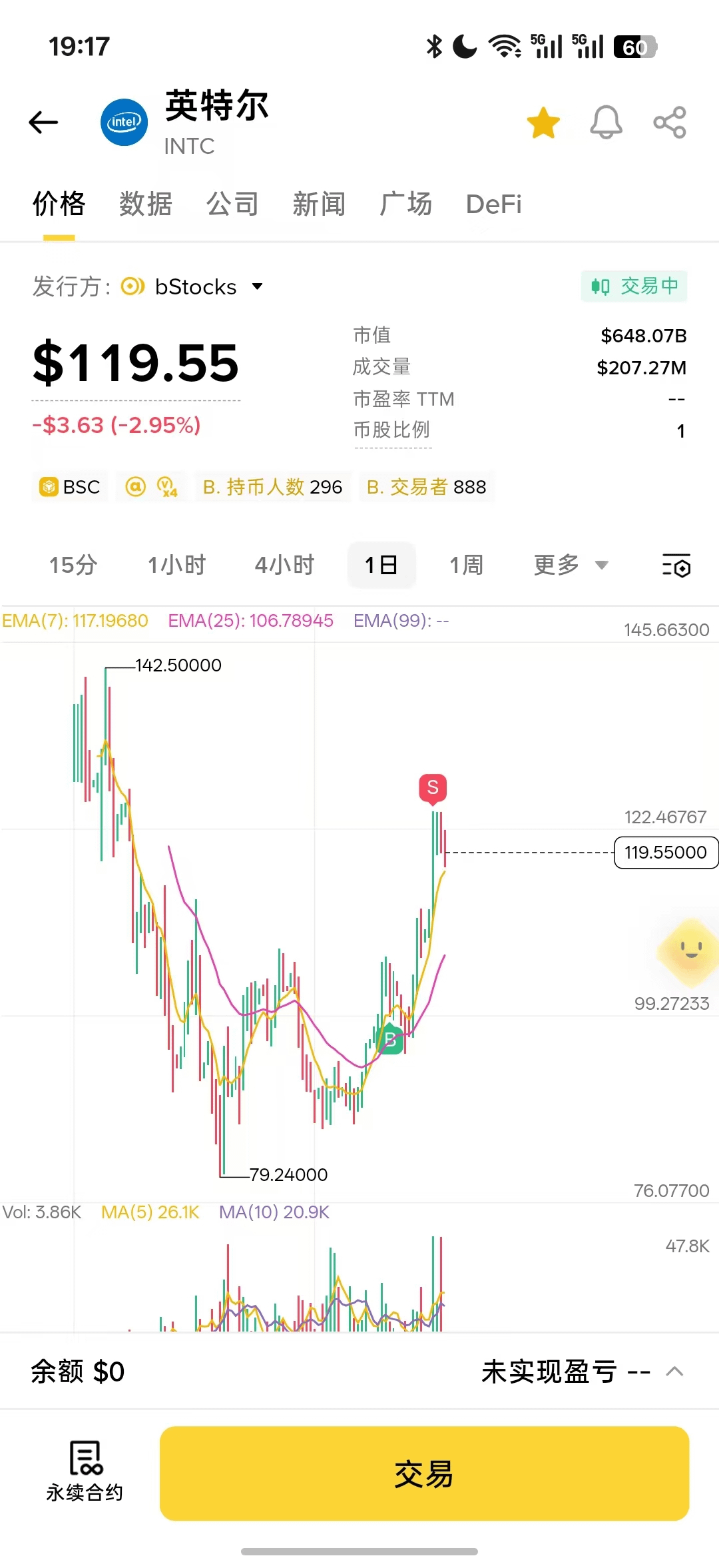
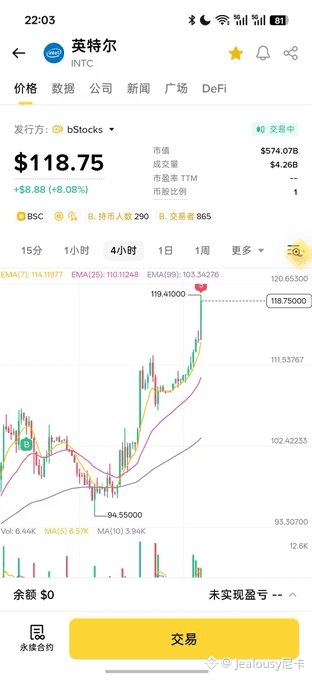
A drop isn’t scary—if it drops, I’ll buy more. I’m optimistic in the long term about $INTCB . Also, I believe $INTC is the stock with the highest level of certainty within the next five years.
You should know that in the world, there are only two companies that manufacture high-end CPUs: TSMC and Intel. If, in the future, mainland China were to reunify Taiwan (no political discussion here—just talking about the possibility), Intel would have the uniqueness of the supply chain. It would carry the United States’ security strategy for large-scale domestic chip manufacturing.
For the U.S., there is no second option besides Intel.
#英特尔拟扩大股票发行募约200亿美元
You should know that in the world, there are only two companies that manufacture high-end CPUs: TSMC and Intel. If, in the future, mainland China were to reunify Taiwan (no political discussion here—just talking about the possibility), Intel would have the uniqueness of the supply chain. It would carry the United States’ security strategy for large-scale domestic chip manufacturing.
For the U.S., there is no second option besides Intel.
#英特尔拟扩大股票发行募约200亿美元
Jealousy尼卡
·
--
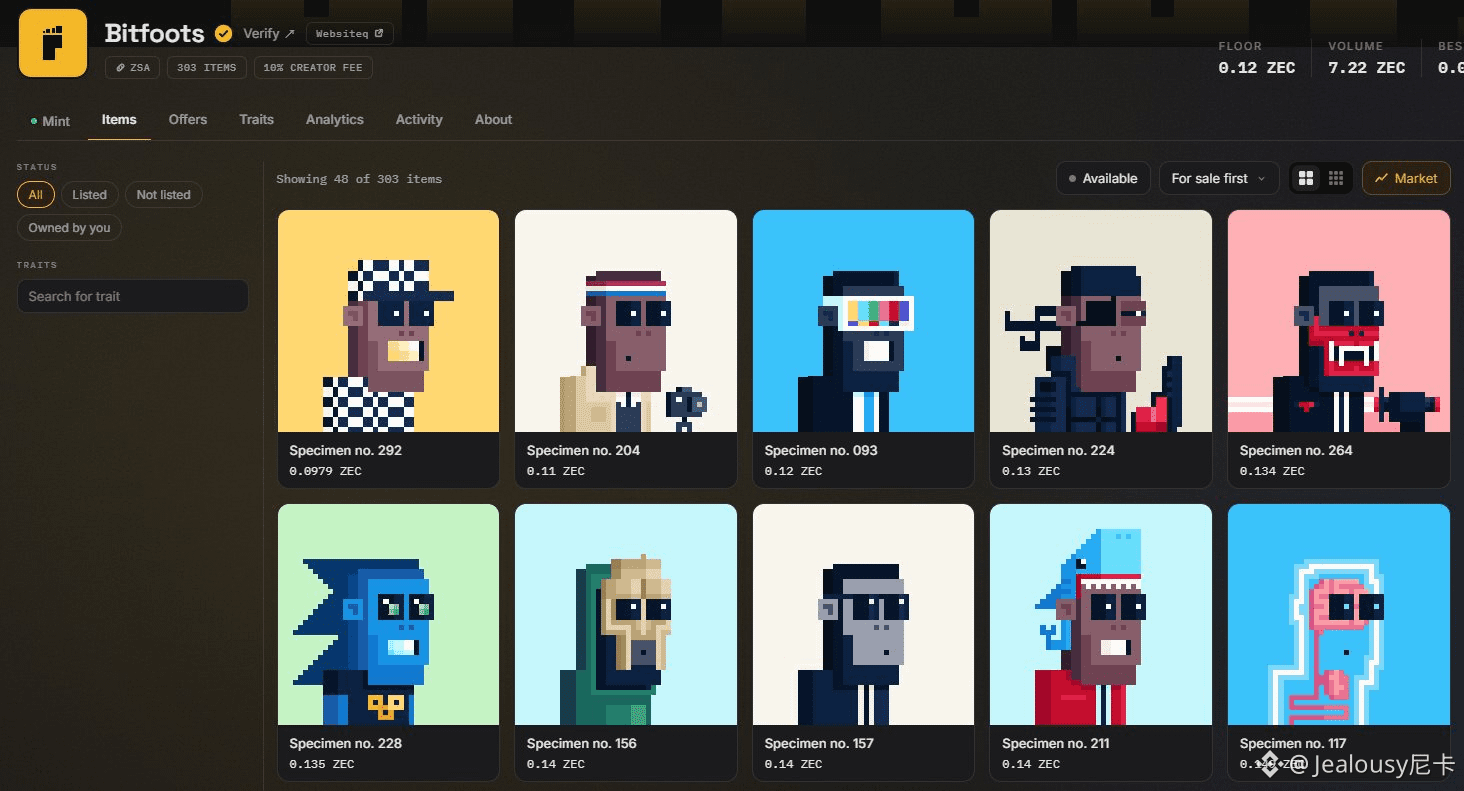
To be honest, @BITFOOTS_, for this price, I’m genuinely a bit disappointed.
I was hoping it might restore the glory of the $ZEC NFT, but looking at it now… it feels like it’s kind of emptied your pocket a bit.
People might say, isn’t there still a 0.1 ZEC floor price? But don’t forget, BITFOOTS only has 303 in total. A 0.1 ZEC floor means that if you value the entire collection at the floor, the market cap would be just 30.3 ZEC. With this size, honestly, it’s hard to imagine much room for potential.
On the ZEC chain, there’s only one last thing worth expecting: @zkghosts_. It’s currently in the blind auction stage, with a starting price of 0.01 ZEC. Let’s see how this lone hopeful turns out.
I was hoping it might restore the glory of the $ZEC NFT, but looking at it now… it feels like it’s kind of emptied your pocket a bit.
People might say, isn’t there still a 0.1 ZEC floor price? But don’t forget, BITFOOTS only has 303 in total. A 0.1 ZEC floor means that if you value the entire collection at the floor, the market cap would be just 30.3 ZEC. With this size, honestly, it’s hard to imagine much room for potential.
On the ZEC chain, there’s only one last thing worth expecting: @zkghosts_. It’s currently in the blind auction stage, with a starting price of 0.01 ZEC. Let’s see how this lone hopeful turns out.
BTC-0.91%
IEFETF+0.29%
Jealousy尼卡
·
--
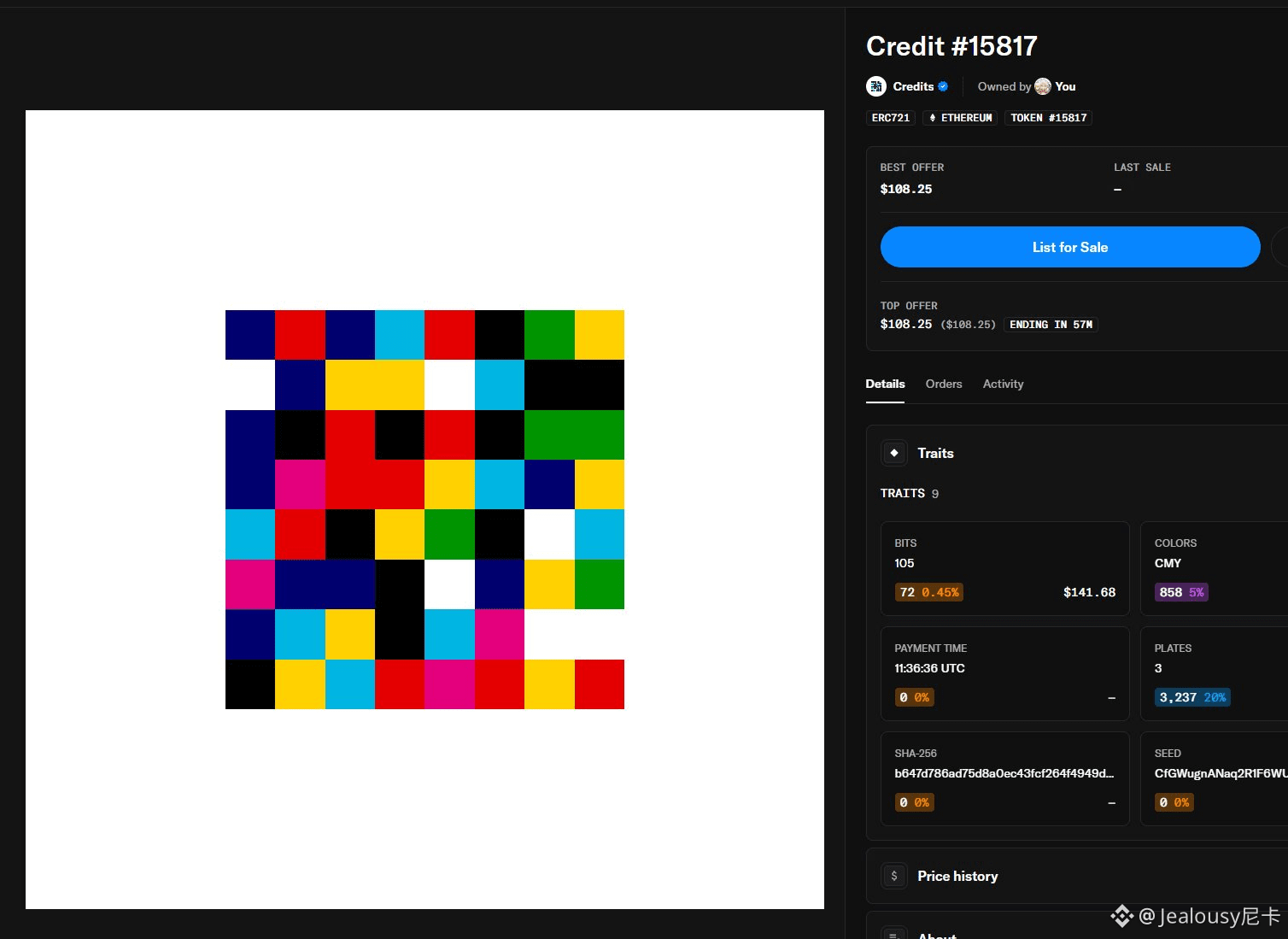
The 8-dao NFTs have been dealt with; now the floor price is 100 dao.
The NFT on chain with ID $ZEC made me lose money and cry.
@jackbutcher One casual move and it turned 8 dao into more than 10 times.
It’s back to that familiar part everyone knows: “Damn, I should’ve gone all in.”
I’m a little regretful. Actually, I also have two relatives in the US, but we haven’t been in touch for a long time. Reaching out suddenly because of this feels a bit strange. Who knew the result would make me miss out on a big amount of money.
If heaven gave me another chance... I might still make the same choice. Some money just shouldn’t be mine to earn.
The NFT on chain with ID $ZEC made me lose money and cry.
@jackbutcher One casual move and it turned 8 dao into more than 10 times.
It’s back to that familiar part everyone knows: “Damn, I should’ve gone all in.”
I’m a little regretful. Actually, I also have two relatives in the US, but we haven’t been in touch for a long time. Reaching out suddenly because of this feels a bit strange. Who knew the result would make me miss out on a big amount of money.
If heaven gave me another chance... I might still make the same choice. Some money just shouldn’t be mine to earn.
Jealousy尼卡
·
--
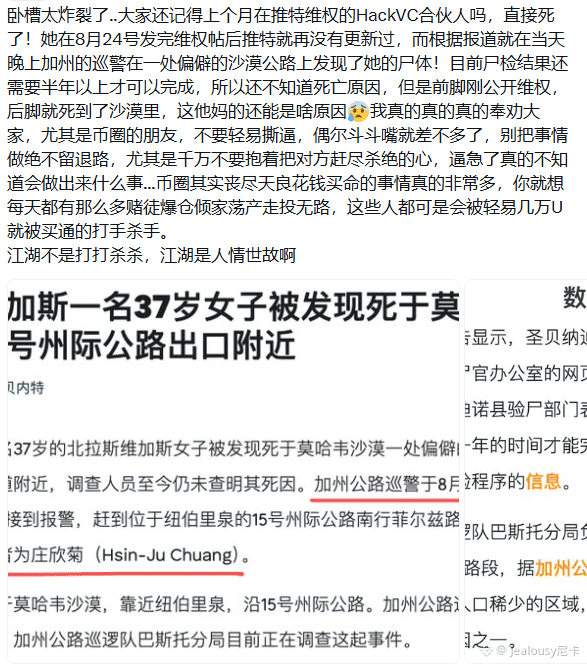
【Death】Actually, it’s the ending she had already foreseen.
In the past few years, every year I’ve been able to hear about a big shot in the crypto world dying abnormally. No wonder many crypto executives have bodyguards by their side when attending public events. I believe these guys also live with bodyguards close at hand in private. As for why crypto big shots are so often targeted, I think there are a few reasons:
1. Money is too easy to take, and it’s very hard to get back.
Crypto money isn’t traditional assets. Traditional rich people keep their money in banks or in corporate equity—if someone wants to get their money, there are many uncontrollable risks in between. But in crypto, it’s different. You only need to make the wallet holder click “send,” and it can be transferred across borders in a very short time.
2. Many whales’ wealth is too easy to “see.”
As long as you know the whale’s on-chain wealth is publicly transparent, it’s obvious at a glance how much they have. As the saying goes: “It’s not that thieves steal—it’s that thieves keep thinking about it.” So much money constantly attracts criminals.
3. The crypto world itself is a dark jungle.
The rules of crypto are survival of the fittest—profits and losses are on you. There are plenty of opportunities, but there’s basically no supervision and no real rules. Also, some people in the industry have wealth that didn’t come from entirely aboveboard sources. After being immersed in this kind of environment for the long term, people may start to ignore the laws and order of the real world and do things that are out of bounds.
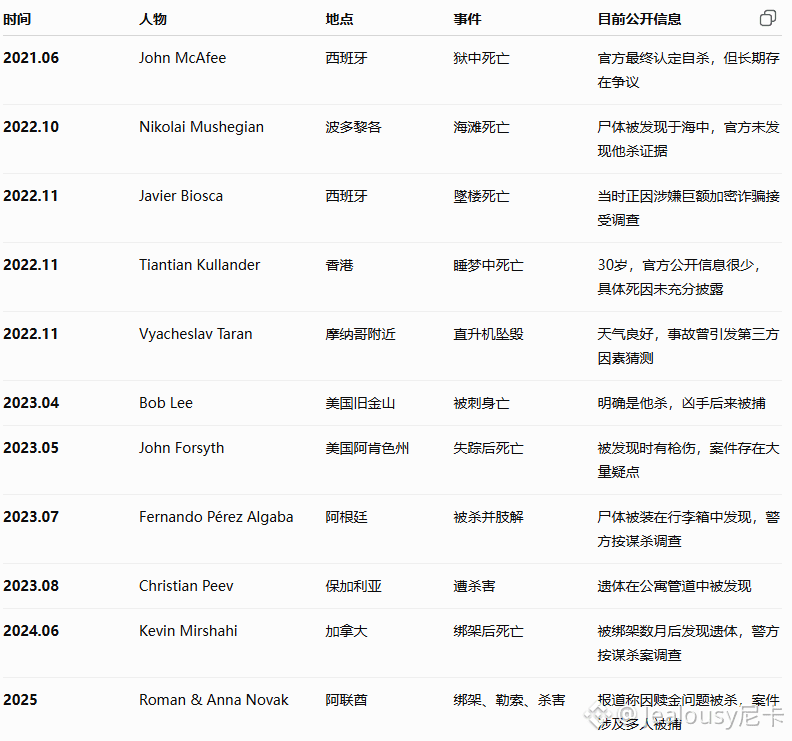
In the end, these years’ accidental death cases involving crypto are mostly abroad. There are still very few domestically, so wealthy big shots should, if possible, stay in the country. Don’t go out traveling everywhere—it’s really not that safe. I casually used GPT to look up cases of abnormal deaths among crypto executives over the past few years, and there really are so many that it’s genuinely frightening.
In the past few years, every year I’ve been able to hear about a big shot in the crypto world dying abnormally. No wonder many crypto executives have bodyguards by their side when attending public events. I believe these guys also live with bodyguards close at hand in private. As for why crypto big shots are so often targeted, I think there are a few reasons:
1. Money is too easy to take, and it’s very hard to get back.
Crypto money isn’t traditional assets. Traditional rich people keep their money in banks or in corporate equity—if someone wants to get their money, there are many uncontrollable risks in between. But in crypto, it’s different. You only need to make the wallet holder click “send,” and it can be transferred across borders in a very short time.
2. Many whales’ wealth is too easy to “see.”
As long as you know the whale’s on-chain wealth is publicly transparent, it’s obvious at a glance how much they have. As the saying goes: “It’s not that thieves steal—it’s that thieves keep thinking about it.” So much money constantly attracts criminals.
3. The crypto world itself is a dark jungle.
The rules of crypto are survival of the fittest—profits and losses are on you. There are plenty of opportunities, but there’s basically no supervision and no real rules. Also, some people in the industry have wealth that didn’t come from entirely aboveboard sources. After being immersed in this kind of environment for the long term, people may start to ignore the laws and order of the real world and do things that are out of bounds.
In the end, these years’ accidental death cases involving crypto are mostly abroad. There are still very few domestically, so wealthy big shots should, if possible, stay in the country. Don’t go out traveling everywhere—it’s really not that safe. I casually used GPT to look up cases of abnormal deaths among crypto executives over the past few years, and there really are so many that it’s genuinely frightening.

Jealousy尼卡
·
--
Alpha rejoining and getting things done! The reasons are as follows:

Jealousy尼卡
·
--
The NFT market on ZEC is most likely over. Most projects are here to scam money. Last night, four projects all collapsed.
1. @zaddrnet The most talked-about—mint price 0.02 $ZEC . It was revealed that the team has a prior record and has started over again.
2. @ZeckersNFT It’s basically confirmed to be a RUG. The mint price was 0.0026 $ZEC , and there’s absolutely no liquidity.
3. @ShieldedWizards This is the most makeshift, slapdash project I’ve ever seen. They didn’t even have a mint website. The official posted a QR code address for direct transfers. The funniest part is that the official collected T1 addresses on the whitelist—but transfers can only go to U1 addresses. So the official basically can’t even tell whether the transfer is coming from a whitelisted address 😥😥😥. All I can say is this scam team didn’t even bother to “dress it up.”
4. @zecfrogs This one is also ridiculous. They started with talk about FM, and then the mint price suddenly changed to 0.0076 $ZEC —and supposedly the whitelist was massively overissued.
Right now, only 2 of the most anticipated ZEC-chain NFTs remain: @BITFOOTS_ and @zkghosts_. If these two also fail in the end, ZEC-chain NFTs will be completely dead.
#zec
1. @zaddrnet The most talked-about—mint price 0.02 $ZEC . It was revealed that the team has a prior record and has started over again.
2. @ZeckersNFT It’s basically confirmed to be a RUG. The mint price was 0.0026 $ZEC , and there’s absolutely no liquidity.
3. @ShieldedWizards This is the most makeshift, slapdash project I’ve ever seen. They didn’t even have a mint website. The official posted a QR code address for direct transfers. The funniest part is that the official collected T1 addresses on the whitelist—but transfers can only go to U1 addresses. So the official basically can’t even tell whether the transfer is coming from a whitelisted address 😥😥😥. All I can say is this scam team didn’t even bother to “dress it up.”
4. @zecfrogs This one is also ridiculous. They started with talk about FM, and then the mint price suddenly changed to 0.0076 $ZEC —and supposedly the whitelist was massively overissued.
Right now, only 2 of the most anticipated ZEC-chain NFTs remain: @BITFOOTS_ and @zkghosts_. If these two also fail in the end, ZEC-chain NFTs will be completely dead.
#zec

Jealousy尼卡
·
--
Starting from August, the crypto market has felt like three different lines. If you haven’t made any money from all of them, you really need to check your circle and your information sources:
1. The MEME season. This includes on-chain opportunities and opportunities on exchanges. On-chain, it mainly started with RH from August, represented by $AI and $CASHCAT . There are also launch platforms like $PONS , and many of the later clones’ mechanics and玩法 were learned from it. After RH, the shitcoin-on-chain boom spread to SOL and BSC, represented by $STONK $MARSCOIN $牛来, etc.
2. The old fake-tokens season. RH kicked off the rallies in $UNI and $ARB, and I’ve already written about the logic earlier. There’s also the expectation of a spot ETF for $ZEC that drove the price up. I don’t know whether this wave can also pull a privacy-coin rally—I've noticed that today $ZAMA is also doing well. Other coins like $ENA, $INJ, and $PENDLE are also up nicely.
3. The NFT season. Both RH and ETH have been extremely hot, with brand-new NFT projects seeing big price increases. Just to name a few: Argonauts, @OriginalBlokyz, @RareFriendsNFT. Over the past couple of days, NFT hype has started shifting toward the ZEC chain. Yesterday, @zksnarks_ had an auction with nearly 20 million in funding involved, and the final sale price actually reached over $2,000. In the past few days, a lot of ZEC-chain projects have popped up as well, such as @zaddrnet, @zecfrogs, and @BITFOOTS_, with so many people competing and grinding. Besides projects on the ZEC chain, there are also a few hot RH-chain projects, such as
@YieldFields_RH.
1. The MEME season. This includes on-chain opportunities and opportunities on exchanges. On-chain, it mainly started with RH from August, represented by $AI and $CASHCAT . There are also launch platforms like $PONS , and many of the later clones’ mechanics and玩法 were learned from it. After RH, the shitcoin-on-chain boom spread to SOL and BSC, represented by $STONK $MARSCOIN $牛来, etc.
2. The old fake-tokens season. RH kicked off the rallies in $UNI and $ARB, and I’ve already written about the logic earlier. There’s also the expectation of a spot ETF for $ZEC that drove the price up. I don’t know whether this wave can also pull a privacy-coin rally—I've noticed that today $ZAMA is also doing well. Other coins like $ENA, $INJ, and $PENDLE are also up nicely.
3. The NFT season. Both RH and ETH have been extremely hot, with brand-new NFT projects seeing big price increases. Just to name a few: Argonauts, @OriginalBlokyz, @RareFriendsNFT. Over the past couple of days, NFT hype has started shifting toward the ZEC chain. Yesterday, @zksnarks_ had an auction with nearly 20 million in funding involved, and the final sale price actually reached over $2,000. In the past few days, a lot of ZEC-chain projects have popped up as well, such as @zaddrnet, @zecfrogs, and @BITFOOTS_, with so many people competing and grinding. Besides projects on the ZEC chain, there are also a few hot RH-chain projects, such as
@YieldFields_RH.
Jealousy尼卡
·
--
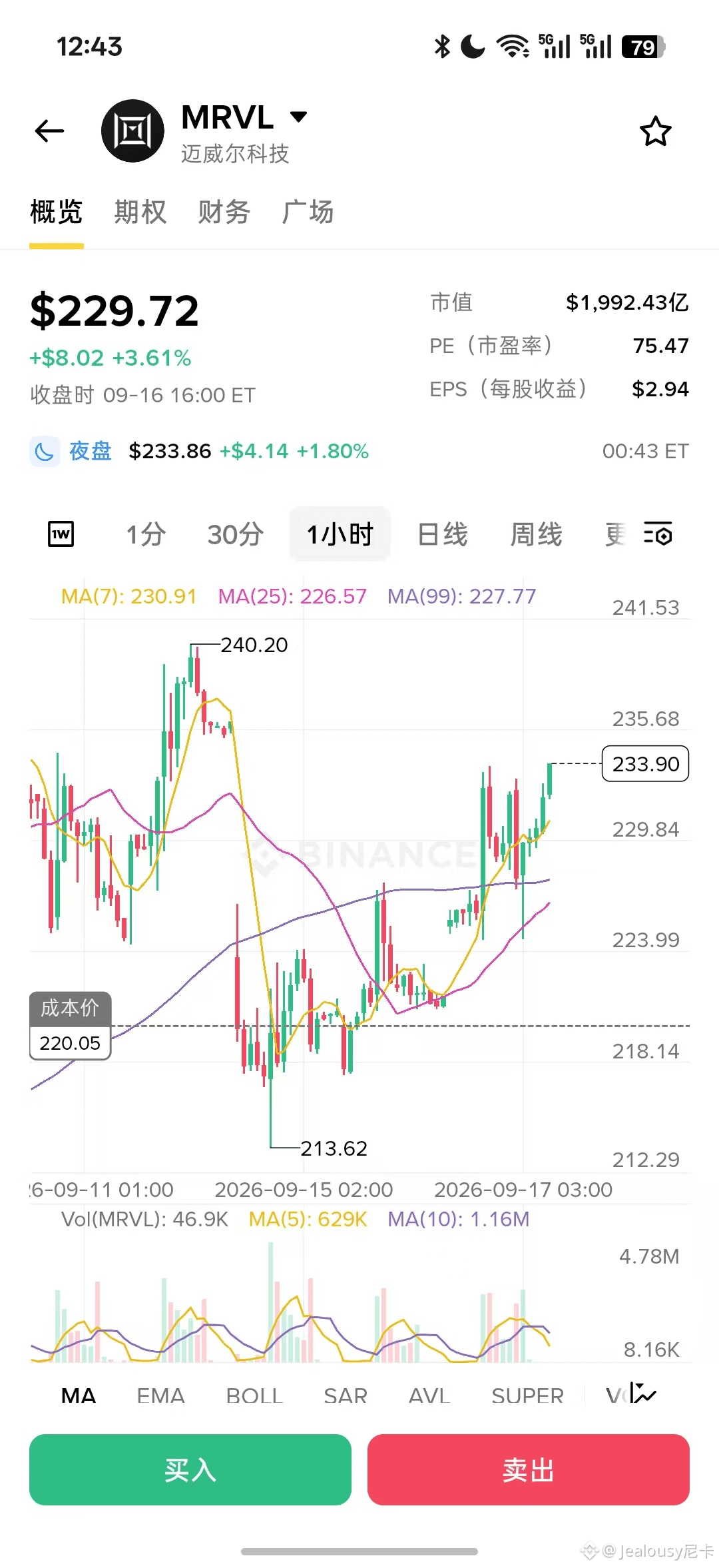
I just said that the market would rebound the night the rate hike happened, because the bearish expectations from the rate hike had already been mostly priced in by the market, and Worsh’s comments would absolutely end up disappointing everyone in tone, and the dot plot wouldn’t look too bad either.
No surprises—I guessed it all correctly.
But this move is still short-term, and it can only be used to pick up some tech stocks (the crypto stocks were really惨 yesterday, because crypto stocks have too strong a correlation with BTC—the impact of the clear bill not passing was bigger than everyone expected).
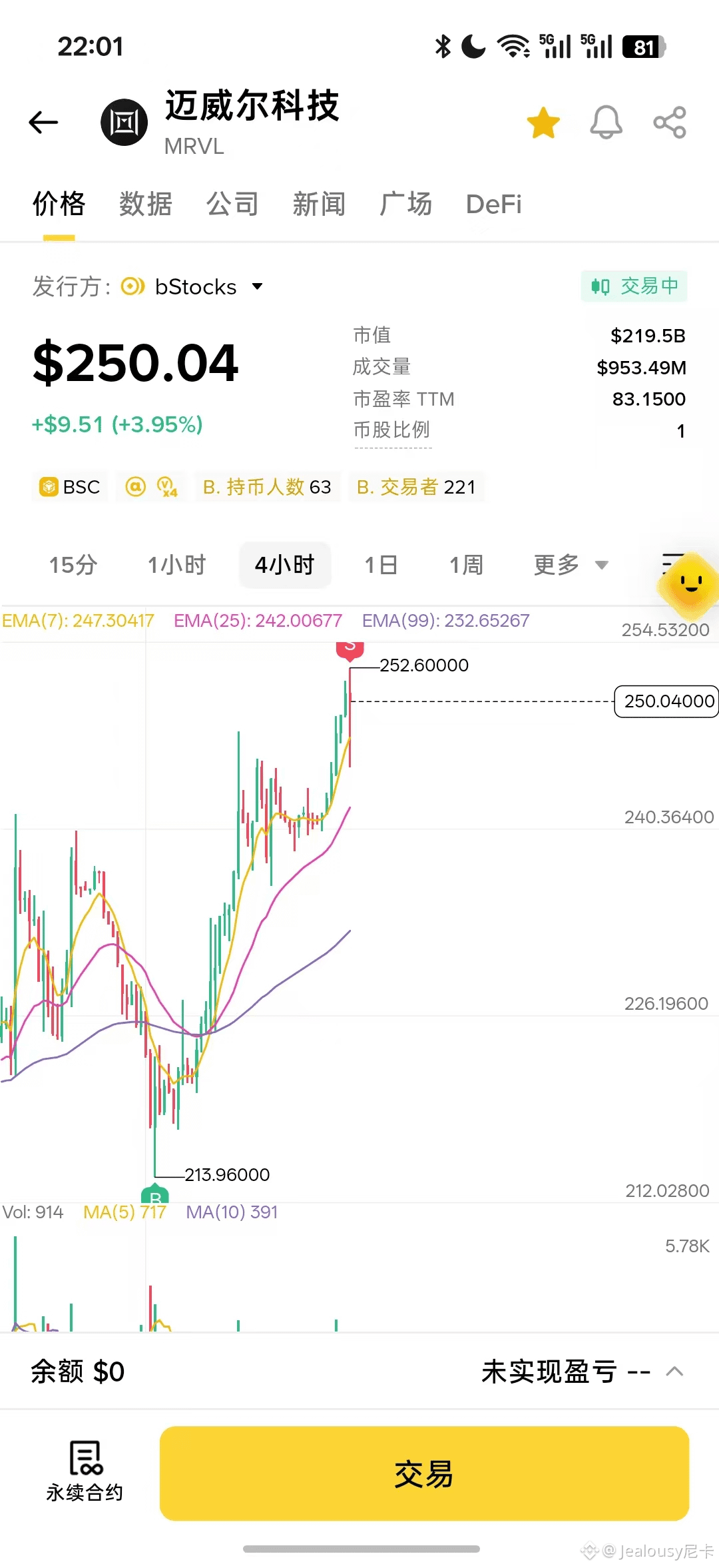
$MRVL Will this rally reach 300+? A short-term move of 30 points is enough.
#美联储加息25基点美股收跌
No surprises—I guessed it all correctly.
But this move is still short-term, and it can only be used to pick up some tech stocks (the crypto stocks were really惨 yesterday, because crypto stocks have too strong a correlation with BTC—the impact of the clear bill not passing was bigger than everyone expected).
$MRVL Will this rally reach 300+? A short-term move of 30 points is enough.
#美联储加息25基点美股收跌
Jealousy尼卡
·
--
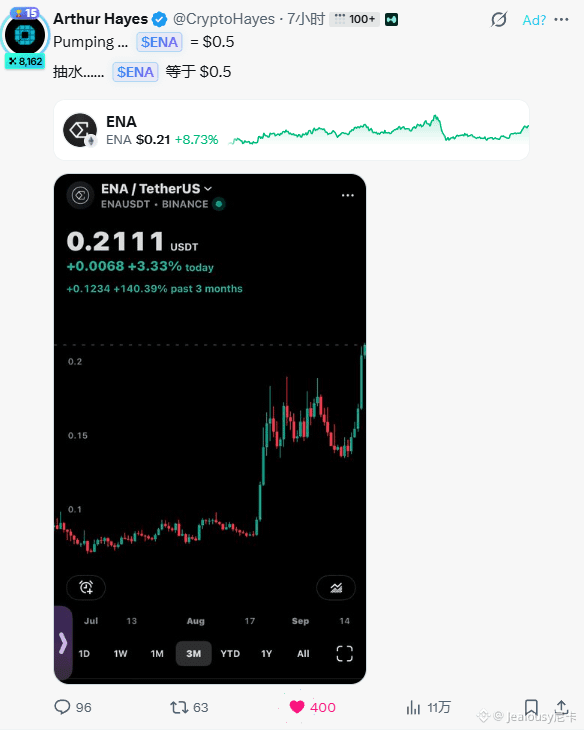
$ENA It’s rising so well—I’m very happy. But all over the internet everyone is going long, and that makes me really scared. Even @CryptoHayes is calling trades.
I feel like every time he calls trades, it’s almost at the top....
I want to get out—what should I do? Should I sell half first?
#ena
I feel like every time he calls trades, it’s almost at the top....
I want to get out—what should I do? Should I sell half first?
#ena
Jealousy尼卡
·
--
Starting from August, the crypto market has felt like three different lines. If you haven’t made any money from all of them, you really need to check your circle and your information sources:
1. The MEME season. This includes on-chain opportunities and opportunities on exchanges. On-chain, it mainly started with RH from August, represented by $AI and $CASHCAT . There are also launch platforms like $PONS , and many of the later clones’ mechanics and玩法 were learned from it. After RH, the shitcoin-on-chain boom spread to SOL and BSC, represented by $STONK $MARSCOIN $牛来, etc.
2. The old fake-tokens season. RH kicked off the rallies in $UNI and $ARB, and I’ve already written about the logic earlier. There’s also the expectation of a spot ETF for $ZEC that drove the price up. I don’t know whether this wave can also pull a privacy-coin rally—I've noticed that today $ZAMA is also doing well. Other coins like $ENA, $INJ, and $PENDLE are also up nicely.
3. The NFT season. Both RH and ETH have been extremely hot, with brand-new NFT projects seeing big price increases. Just to name a few: Argonauts, @OriginalBlokyz, @RareFriendsNFT. Over the past couple of days, NFT hype has started shifting toward the ZEC chain. Yesterday, @zksnarks_ had an auction with nearly 20 million in funding involved, and the final sale price actually reached over $2,000. In the past few days, a lot of ZEC-chain projects have popped up as well, such as @zaddrnet, @zecfrogs, and @BITFOOTS_, with so many people competing and grinding. Besides projects on the ZEC chain, there are also a few hot RH-chain projects, such as
@YieldFields_RH.
1. The MEME season. This includes on-chain opportunities and opportunities on exchanges. On-chain, it mainly started with RH from August, represented by $AI and $CASHCAT . There are also launch platforms like $PONS , and many of the later clones’ mechanics and玩法 were learned from it. After RH, the shitcoin-on-chain boom spread to SOL and BSC, represented by $STONK $MARSCOIN $牛来, etc.
2. The old fake-tokens season. RH kicked off the rallies in $UNI and $ARB, and I’ve already written about the logic earlier. There’s also the expectation of a spot ETF for $ZEC that drove the price up. I don’t know whether this wave can also pull a privacy-coin rally—I've noticed that today $ZAMA is also doing well. Other coins like $ENA, $INJ, and $PENDLE are also up nicely.
3. The NFT season. Both RH and ETH have been extremely hot, with brand-new NFT projects seeing big price increases. Just to name a few: Argonauts, @OriginalBlokyz, @RareFriendsNFT. Over the past couple of days, NFT hype has started shifting toward the ZEC chain. Yesterday, @zksnarks_ had an auction with nearly 20 million in funding involved, and the final sale price actually reached over $2,000. In the past few days, a lot of ZEC-chain projects have popped up as well, such as @zaddrnet, @zecfrogs, and @BITFOOTS_, with so many people competing and grinding. Besides projects on the ZEC chain, there are also a few hot RH-chain projects, such as
@YieldFields_RH.

Jealousy尼卡
·
--
Master, I got it—this is just like gambling.
Beginner: Can I make money today depends on whether my luck is good.
Intermediate: I’m skilled, and with a bit of luck I can win.
Expert: As long as I cheat, luck and skill don’t matter.
You think everyone is playing within the rules. But the rules only limit you.
Why was he able to become a gambling god? It wasn’t luck or skill—it was the art of cheating.
A “mouse” position is the cheating technique used in crypto trading.
Beginner: Can I make money today depends on whether my luck is good.
Intermediate: I’m skilled, and with a bit of luck I can win.
Expert: As long as I cheat, luck and skill don’t matter.
You think everyone is playing within the rules. But the rules only limit you.
Why was he able to become a gambling god? It wasn’t luck or skill—it was the art of cheating.
A “mouse” position is the cheating technique used in crypto trading.

Jealousy尼卡
·
--
Damn, that’s racial discrimination! 🥲🥲🥲
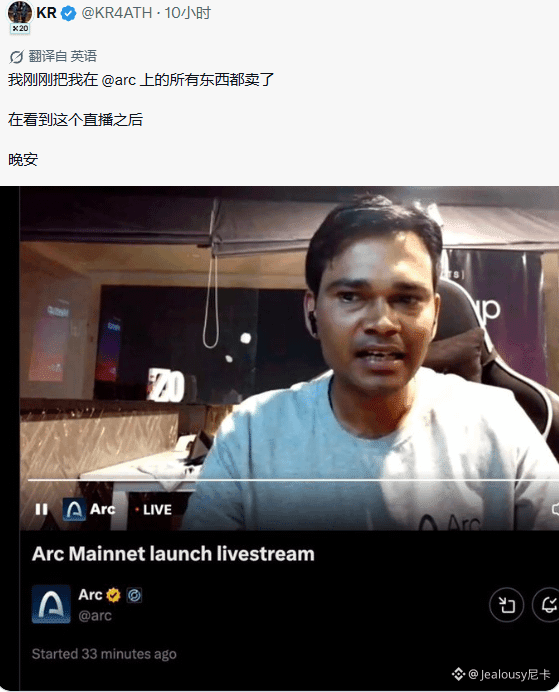
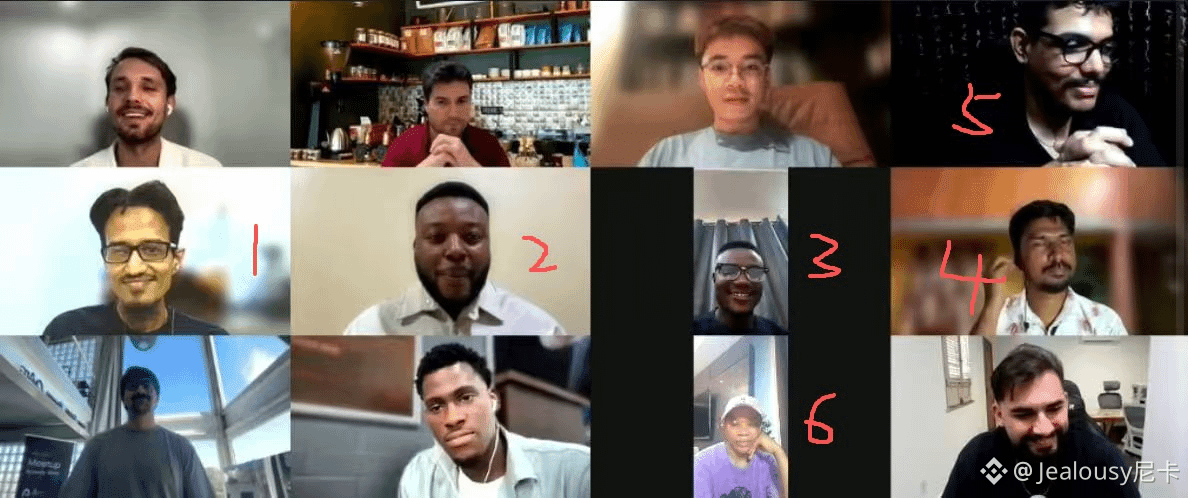
Below is ARC’s team group photo—looks like the volume of embedded documents is indeed high.
Those filthy dogs above ARC are completely unplayable now...
Good news for @RobinhoodApp and $PONS !
Below is ARC’s team group photo—looks like the volume of embedded documents is indeed high.
Those filthy dogs above ARC are completely unplayable now...
Good news for @RobinhoodApp and $PONS !
Jealousy尼卡
·
--
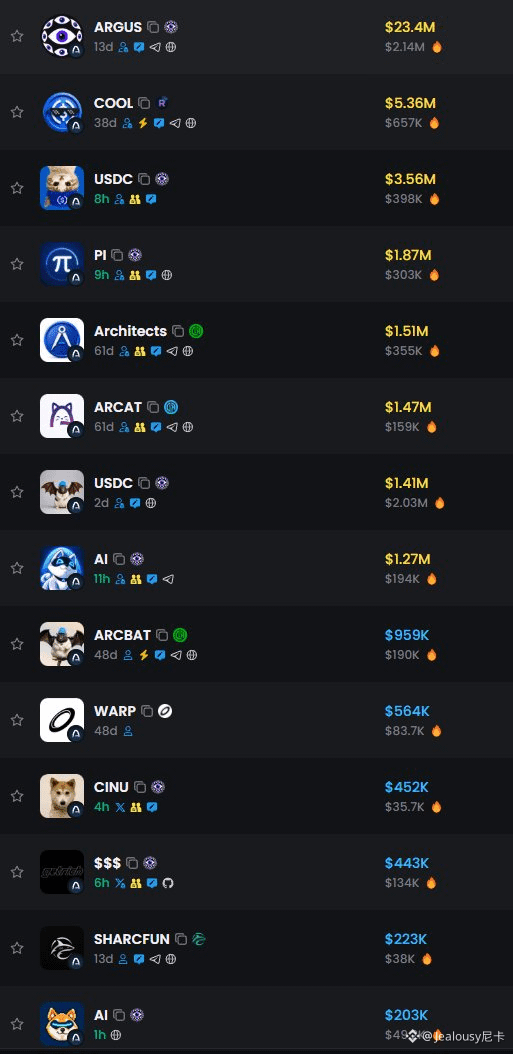
#ARC 上面的土狗P了一天亏了200u,有以下几个感想:
1. The volume/market momentum can’t compare to RH
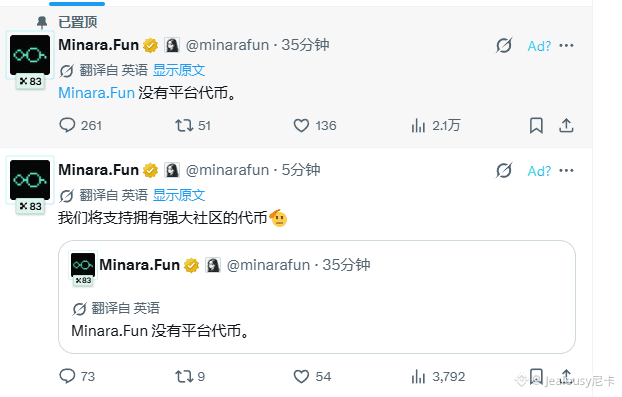
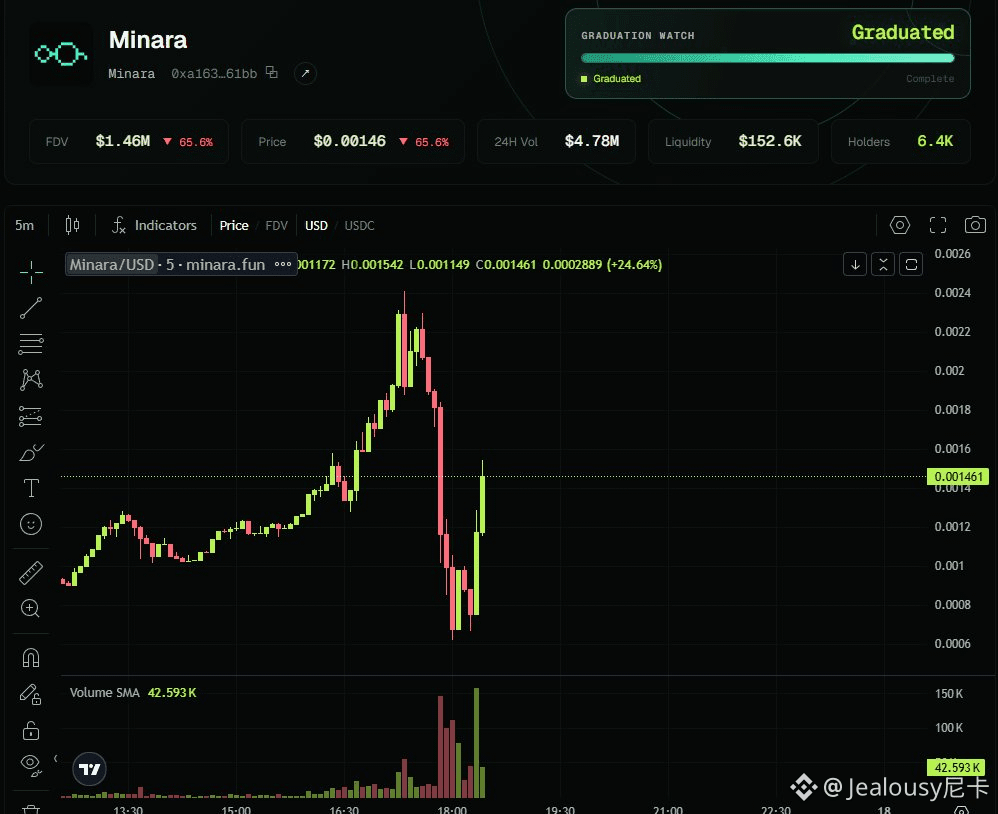
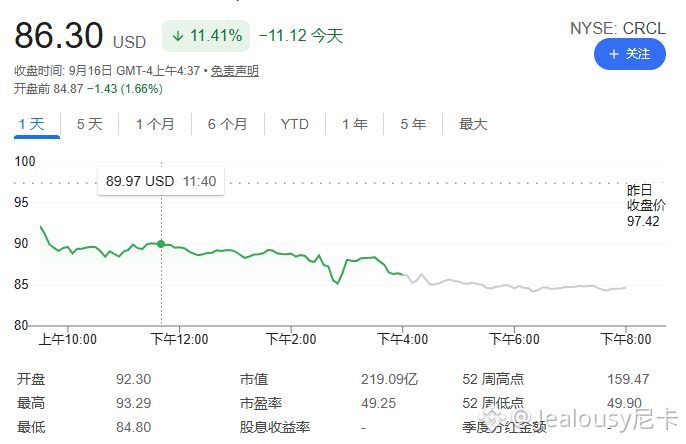
2. Not a single launch platform has really taken off—most anticipated is @minarafun. (Its parent company, Minara, is invested in by CRCL, so it’s basically ARC’s own kid.) It pumped to 5m and then started dropping; it’s still only at 2m. Peach also looks pretty good, but there’s no officially Verified token—most of it is just people trying to scam hookups.
3. Tonight, see if foreigners can pull up a big moneymaking memecoin. If there isn’t a big one, ARC’s ceiling will never be opened; or hopefully $ARGUS can keep going up.
4. Right now, the biggest winner in arc is still $UNI . Even without a big moneymaker, the fees are still insanely high.
1. The volume/market momentum can’t compare to RH
2. Not a single launch platform has really taken off—most anticipated is @minarafun. (Its parent company, Minara, is invested in by CRCL, so it’s basically ARC’s own kid.) It pumped to 5m and then started dropping; it’s still only at 2m. Peach also looks pretty good, but there’s no officially Verified token—most of it is just people trying to scam hookups.
3. Tonight, see if foreigners can pull up a big moneymaking memecoin. If there isn’t a big one, ARC’s ceiling will never be opened; or hopefully $ARGUS can keep going up.
4. Right now, the biggest winner in arc is still $UNI . Even without a big moneymaker, the fees are still insanely high.
Log in to explore more content