

b圈菜鸟
56 Posts

b圈菜鸟
Report
Block User

SOL Holder
Occasional Trader
3.4 Years
19 Following
260 Followers
145 Liked
Posts
All
Quotes
·
--
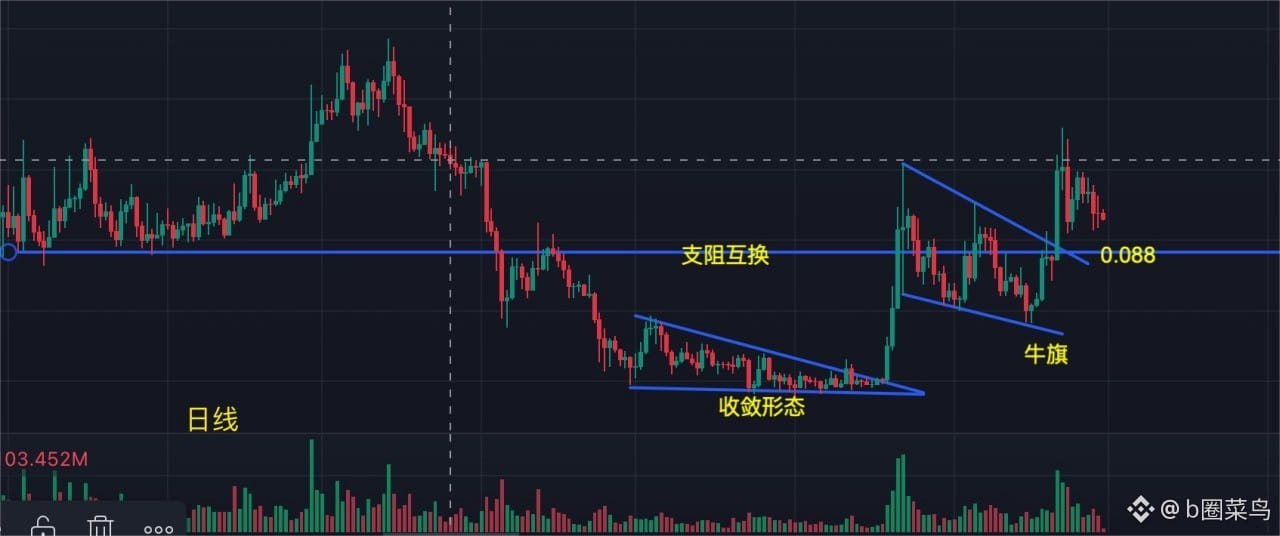
After #DOGE passed through an extremely convergent pattern and then broke out on increased volume, DOGE has also moved out of the accumulation range. Currently, attention should be paid to the consolidation around 0.088. The support-flip level presents a false breakdown and recovery, creating a long opportunity.
After #DOGE passed through an extremely convergent pattern and then broke out on increased volume, DOGE has also moved out of the accumulation range. Currently, attention should be paid to the consolidation around 0.088. The support-flip level presents a false breakdown and recovery, creating a long opportunity.
374
·
--
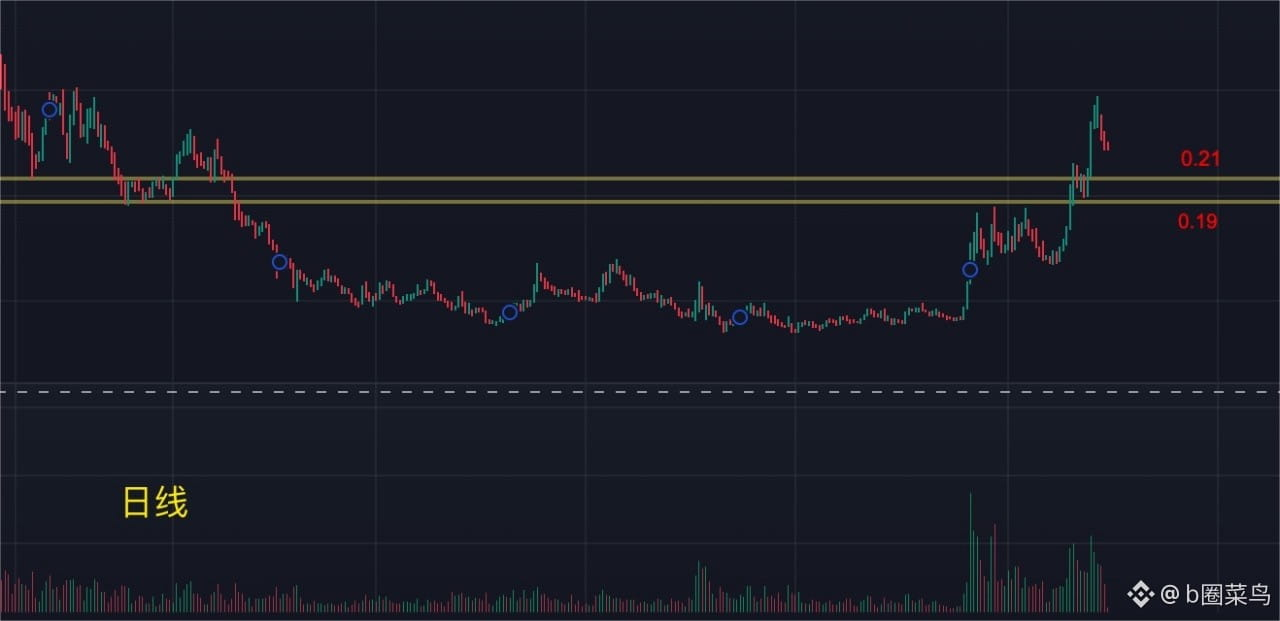
If ENA, at the daily level, returns to the yellow consolidation range and continues to trade in a range without truly breaking below 0.19. On one hand, it will exhaust the sell pressure above; on the other hand, the buying volume is strong enough. Then the upward structure has not been broken, and after consolidating for a while it will still rise. Wait and observe the behavior when it returns to the yellow range before entering #ENA
If ENA, at the daily level, returns to the yellow consolidation range and continues to trade in a range without truly breaking below 0.19. On one hand, it will exhaust the sell pressure above; on the other hand, the buying volume is strong enough. Then the upward structure has not been broken, and after consolidating for a while it will still rise. Wait and observe the behavior when it returns to the yellow range before entering #ENA
411
·
--
HBAR
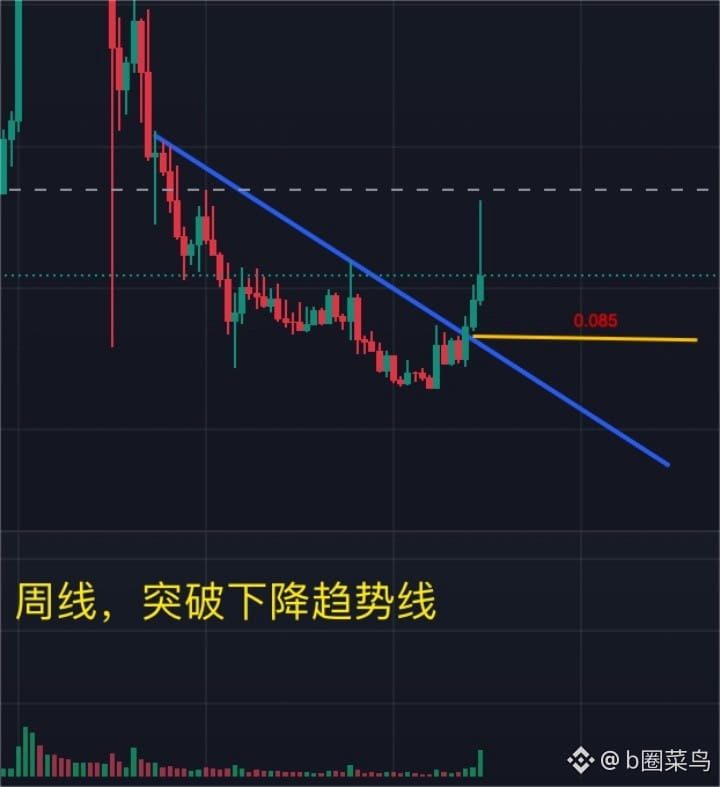
Weekly breakout of the descending trendline. If the price retraces and holds above 0.085, it may still continue upward toward 0.13–0.15.
If the price returns below 0.085, the bullish structure will fail #hbar
HBAR
Weekly breakout of the descending trendline. If the price retraces and holds above 0.085, it may still continue upward toward 0.13–0.15.
If the price returns below 0.085, the bullish structure will fail #hbar
Weekly breakout of the descending trendline. If the price retraces and holds above 0.085, it may still continue upward toward 0.13–0.15.
If the price returns below 0.085, the bullish structure will fail #hbar
491
·
--
FARTCOIN
Sol-based meme coin
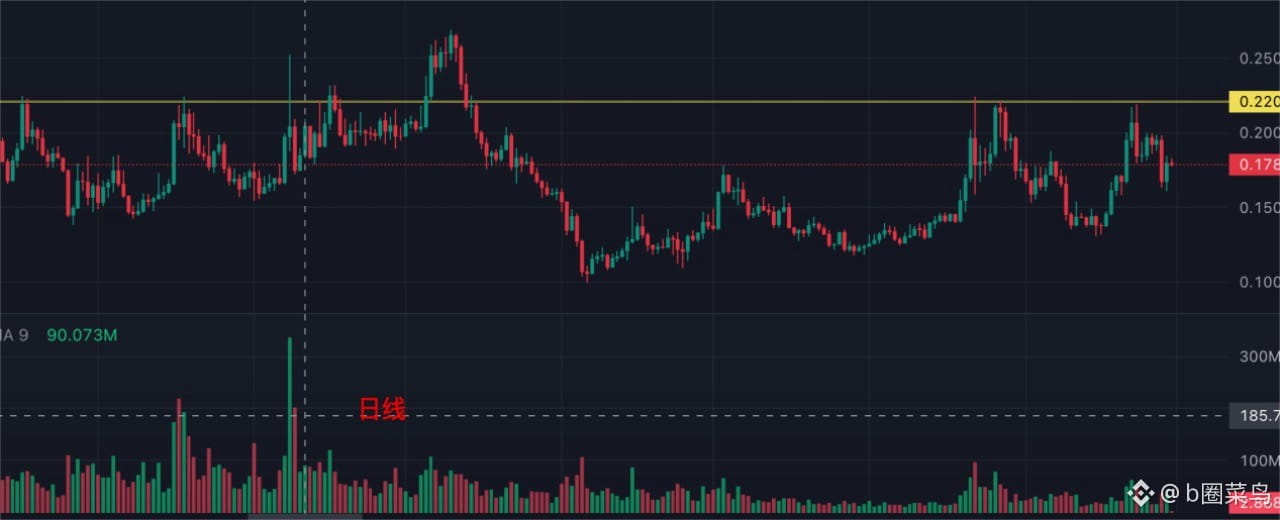
The previous peak market cap was 1.6 billion; now it is 178 million—down 10 times
Current main resistance is around 0.2. If the price breaks through and holds above 0.2, it may accelerate upward toward the previous high point, around 0.26. Wait patiently #FARTCOİN
FARTCOIN
Sol-based meme coin
The previous peak market cap was 1.6 billion; now it is 178 million—down 10 times
Current main resistance is around 0.2. If the price breaks through and holds above 0.2, it may accelerate upward toward the previous high point, around 0.26. Wait patiently #FARTCOİN
Sol-based meme coin
The previous peak market cap was 1.6 billion; now it is 178 million—down 10 times
Current main resistance is around 0.2. If the price breaks through and holds above 0.2, it may accelerate upward toward the previous high point, around 0.26. Wait patiently #FARTCOİN
114
·
--
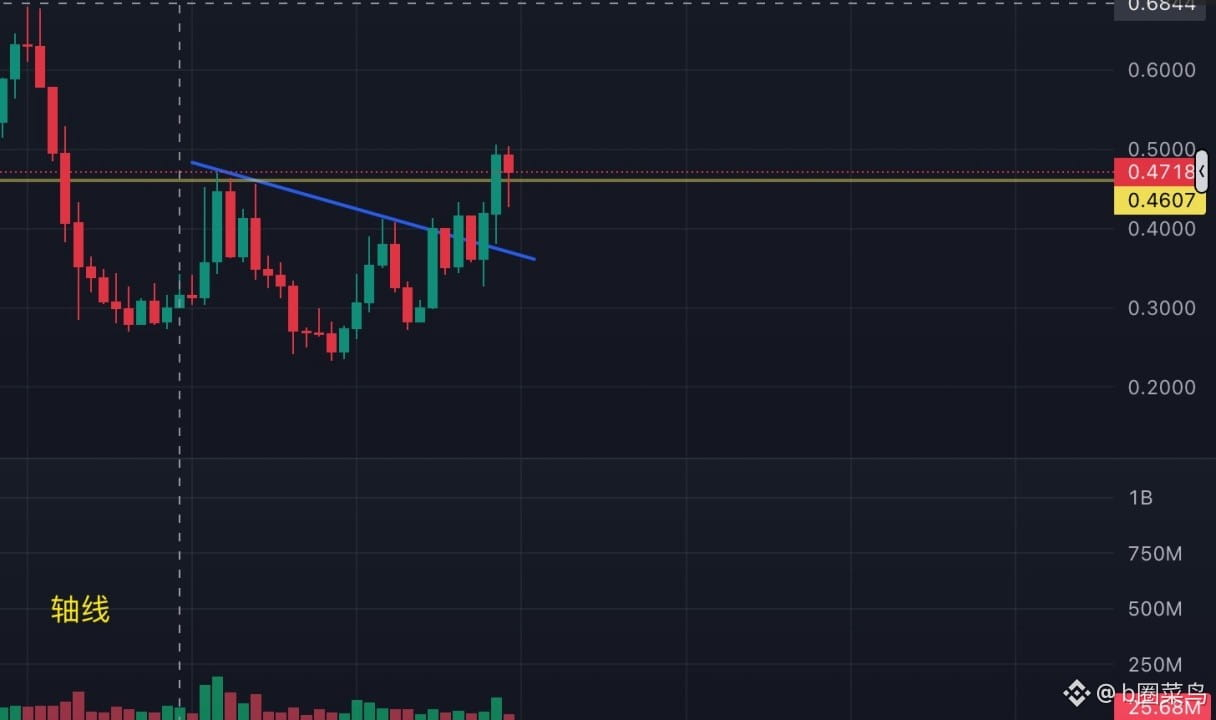
From the weekly LDO level, if it breaks above the trendline and then continues to pull back above the trendline (0.35-0.4), the upward move will have more momentum. Currently, the overall market index is in a pullback phase $LDO
{spot}(LDOUSDT)
From the weekly LDO level, if it breaks above the trendline and then continues to pull back above the trendline (0.35-0.4), the upward move will have more momentum. Currently, the overall market index is in a pullback phase $LDO
1
322
·
--
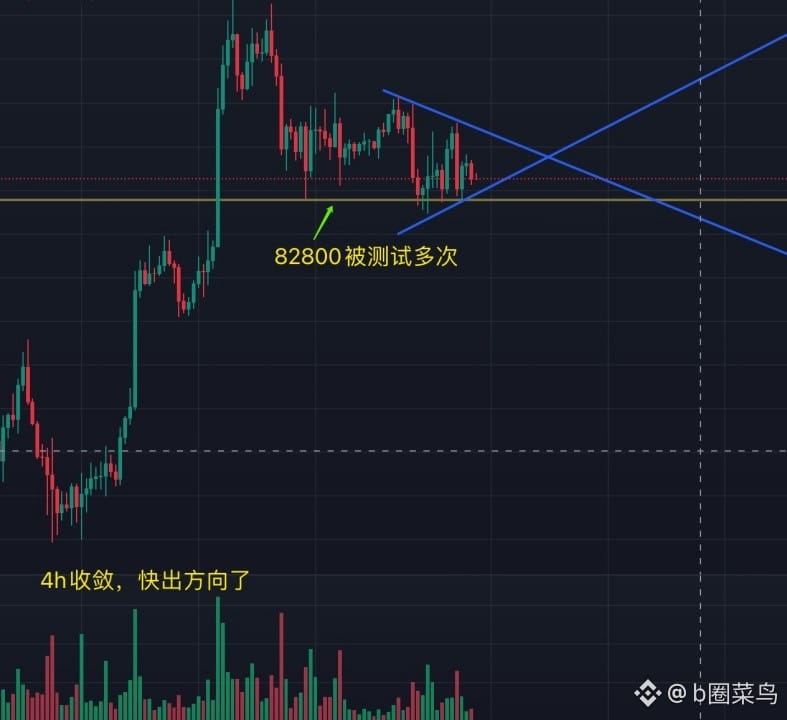
BTC 4h converging pattern—direction is about to break out. The key thing to note is that the 82800 level has been tested multiple times; rebounds have also been relatively weak. There’s PCE later tonight—wait patiently and don’t make random moves. $BTC
{spot}(BTCUSDT)
BTC 4h converging pattern—direction is about to break out. The key thing to note is that the 82800 level has been tested multiple times; rebounds have also been relatively weak. There’s PCE later tonight—wait patiently and don’t make random moves. $BTC
152
·
--
Once a trade begins with resentment, regret, and nonstop complaining about the market, your mindset is already out of control.
After losing money, cursing the行情 (price action), cursing your luck, and resenting everything and anything—at the core, you’re unwilling to accept that your judgment was wrong. When emotions run hot, it’s easy to rush to get back to even, open positions too frequently, and go all-in to bet one last time, leading to a second round of losses—falling into a vicious cycle of “the more you lose, the more frantic you get; the more frantic you get, the more you lose.”
The market won’t change its course because of your complaints. Losses are already a fact, and your tirades only cloud your reason.
If you’ve made a mistake, stop and review. If you need to cut losses, do it decisively. Separate your emotions from your trading.
Price action is objective; your emotions are the biggest risk.
Steady your composure—no anger, no resentment—only follow your own trading rules, and you can go the distance for the long term.#黄金跌至4144美元
Once a trade begins with resentment, regret, and nonstop complaining about the market, your mindset is already out of control.
After losing money, cursing the行情 (price action), cursing your luck, and resenting everything and anything—at the core, you’re unwilling to accept that your judgment was wrong. When emotions run hot, it’s easy to rush to get back to even, open positions too frequently, and go all-in to bet one last time, leading to a second round of losses—falling into a vicious cycle of “the more you lose, the more frantic you get; the more frantic you get, the more you lose.”
The market won’t change its course because of your complaints. Losses are already a fact, and your tirades only cloud your reason.
If you’ve made a mistake, stop and review. If you need to cut losses, do it decisively. Separate your emotions from your trading.
Price action is objective; your emotions are the biggest risk.
Steady your composure—no anger, no resentment—only follow your own trading rules, and you can go the distance for the long term.#黄金跌至4144美元
After losing money, cursing the行情 (price action), cursing your luck, and resenting everything and anything—at the core, you’re unwilling to accept that your judgment was wrong. When emotions run hot, it’s easy to rush to get back to even, open positions too frequently, and go all-in to bet one last time, leading to a second round of losses—falling into a vicious cycle of “the more you lose, the more frantic you get; the more frantic you get, the more you lose.”
The market won’t change its course because of your complaints. Losses are already a fact, and your tirades only cloud your reason.
If you’ve made a mistake, stop and review. If you need to cut losses, do it decisively. Separate your emotions from your trading.
Price action is objective; your emotions are the biggest risk.
Steady your composure—no anger, no resentment—only follow your own trading rules, and you can go the distance for the long term.#黄金跌至4144美元
157
·
--
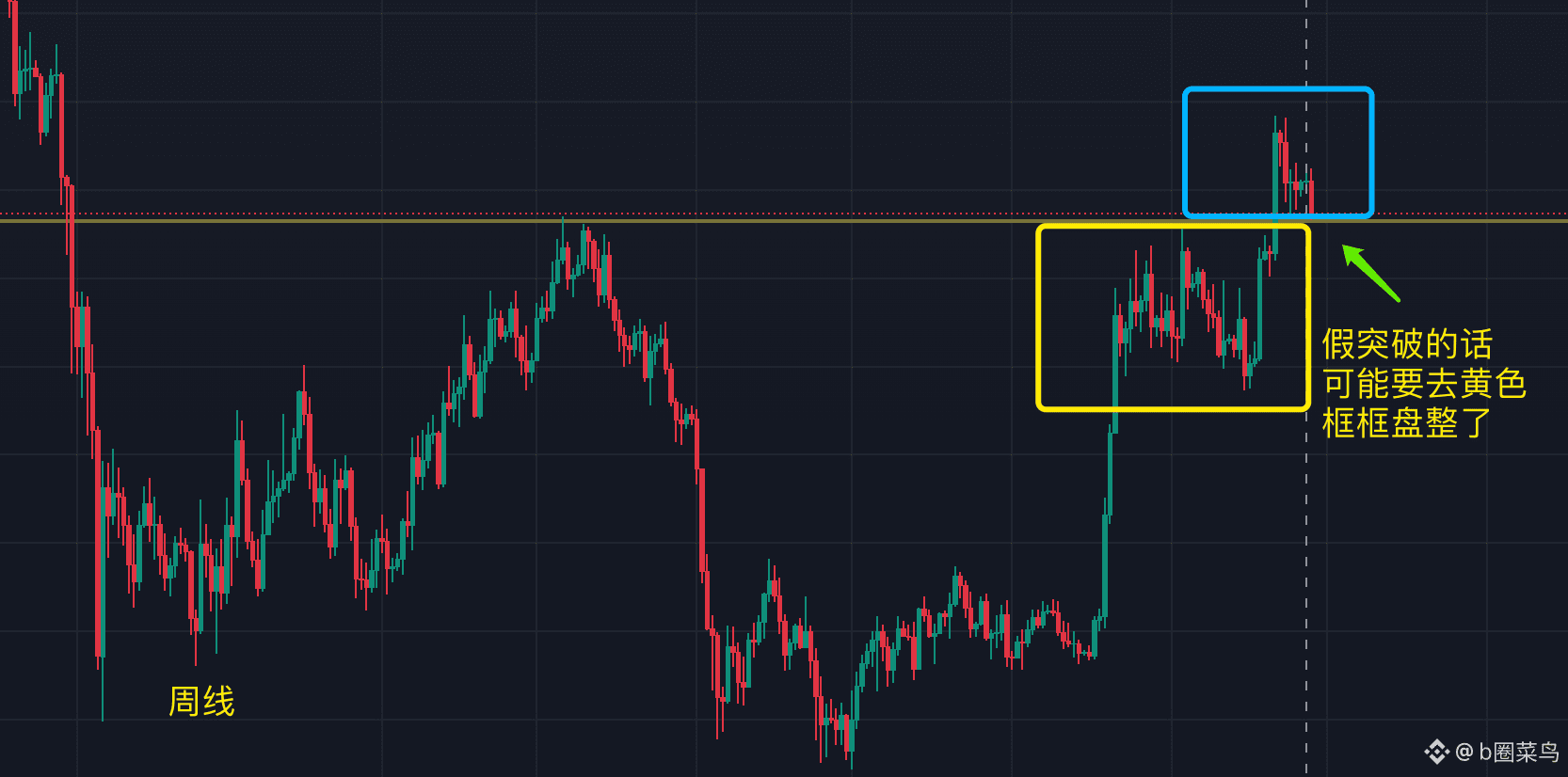
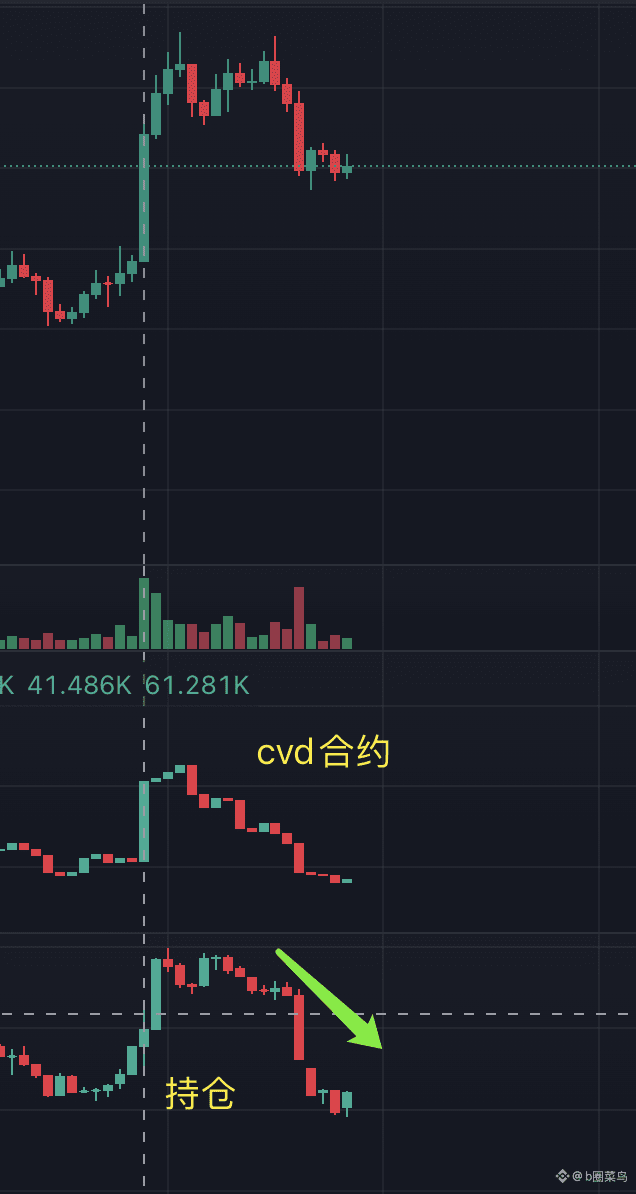
If the yellow line breaks down with increased volume, it may mean entering a phase of consolidation within the yellow box. In that case, the blue frame above should be treated as a false breakout.#比特币跌破8.3万美元
If the yellow line breaks down with increased volume, it may mean entering a phase of consolidation within the yellow box. In that case, the blue frame above should be treated as a false breakout.#比特币跌破8.3万美元
209
·
--
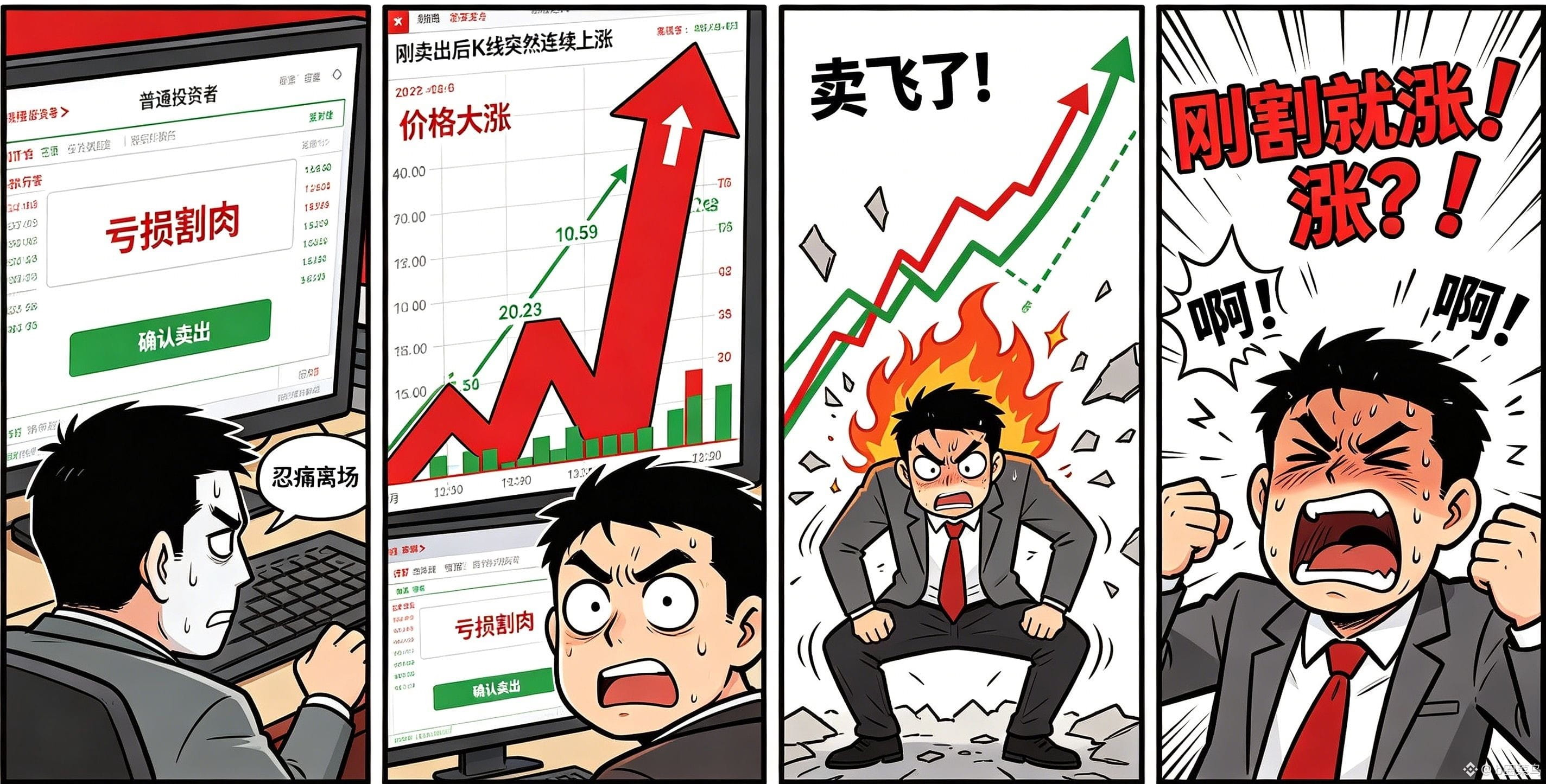
When you cut losses and sell out, the price rises again not long after.
Angry and embarrassed, you lash out and curse, occasionally lowering the price—yet the price keeps rising. In the heat of impulse, you chase the market with a market order, only to end up trapped at the peak.
Many people have run into this, including me. At this point, don’t place orders in the heat of emotion.
After cutting losses, don’t immediately check the chart. Give yourself a half-hour cooling-off period to block out emotional triggers.
Distinguish whether this rise is only a rebound or a new trend—don’t chase orders based on feelings.
Accept that cutting losses is itself a trading cost. Don’t expect to get back to even immediately.
Strictly wait for trading signals before considering an entry. If you don’t have a plan, don’t place an order$
When you cut losses and sell out, the price rises again not long after.
Angry and embarrassed, you lash out and curse, occasionally lowering the price—yet the price keeps rising. In the heat of impulse, you chase the market with a market order, only to end up trapped at the peak.
Many people have run into this, including me. At this point, don’t place orders in the heat of emotion.
After cutting losses, don’t immediately check the chart. Give yourself a half-hour cooling-off period to block out emotional triggers.
Distinguish whether this rise is only a rebound or a new trend—don’t chase orders based on feelings.
Accept that cutting losses is itself a trading cost. Don’t expect to get back to even immediately.
Strictly wait for trading signals before considering an entry. If you don’t have a plan, don’t place an order$
Angry and embarrassed, you lash out and curse, occasionally lowering the price—yet the price keeps rising. In the heat of impulse, you chase the market with a market order, only to end up trapped at the peak.
Many people have run into this, including me. At this point, don’t place orders in the heat of emotion.
After cutting losses, don’t immediately check the chart. Give yourself a half-hour cooling-off period to block out emotional triggers.
Distinguish whether this rise is only a rebound or a new trend—don’t chase orders based on feelings.
Accept that cutting losses is itself a trading cost. Don’t expect to get back to even immediately.
Strictly wait for trading signals before considering an entry. If you don’t have a plan, don’t place an order$
119
·
--
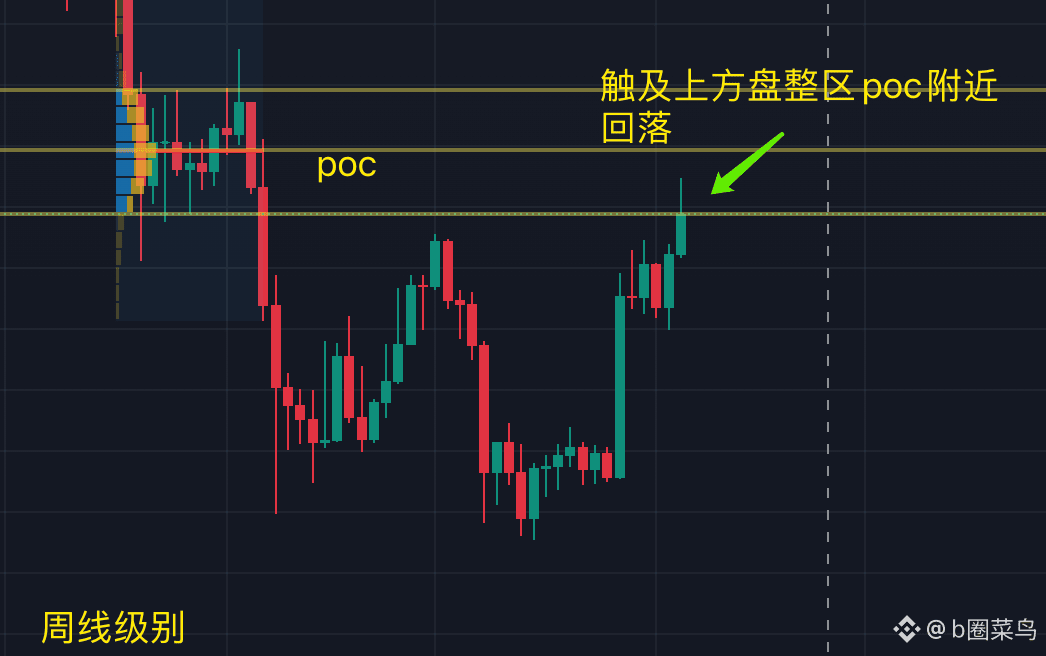
There are many locked-in positions in the upper consolidation range. When the price reaches the nearby level, people who have been trapped for a few months, after suffering through several months of declines, start thinking about breaking even and selling. With selling pressure, when the price pulls back, they look for something—anything—that can absorb the selling pressure and open up space above the price, #比特币两度受阻87300美元
There are many locked-in positions in the upper consolidation range. When the price reaches the nearby level, people who have been trapped for a few months, after suffering through several months of declines, start thinking about breaking even and selling. With selling pressure, when the price pulls back, they look for something—anything—that can absorb the selling pressure and open up space above the price, #比特币两度受阻87300美元
217
·
--
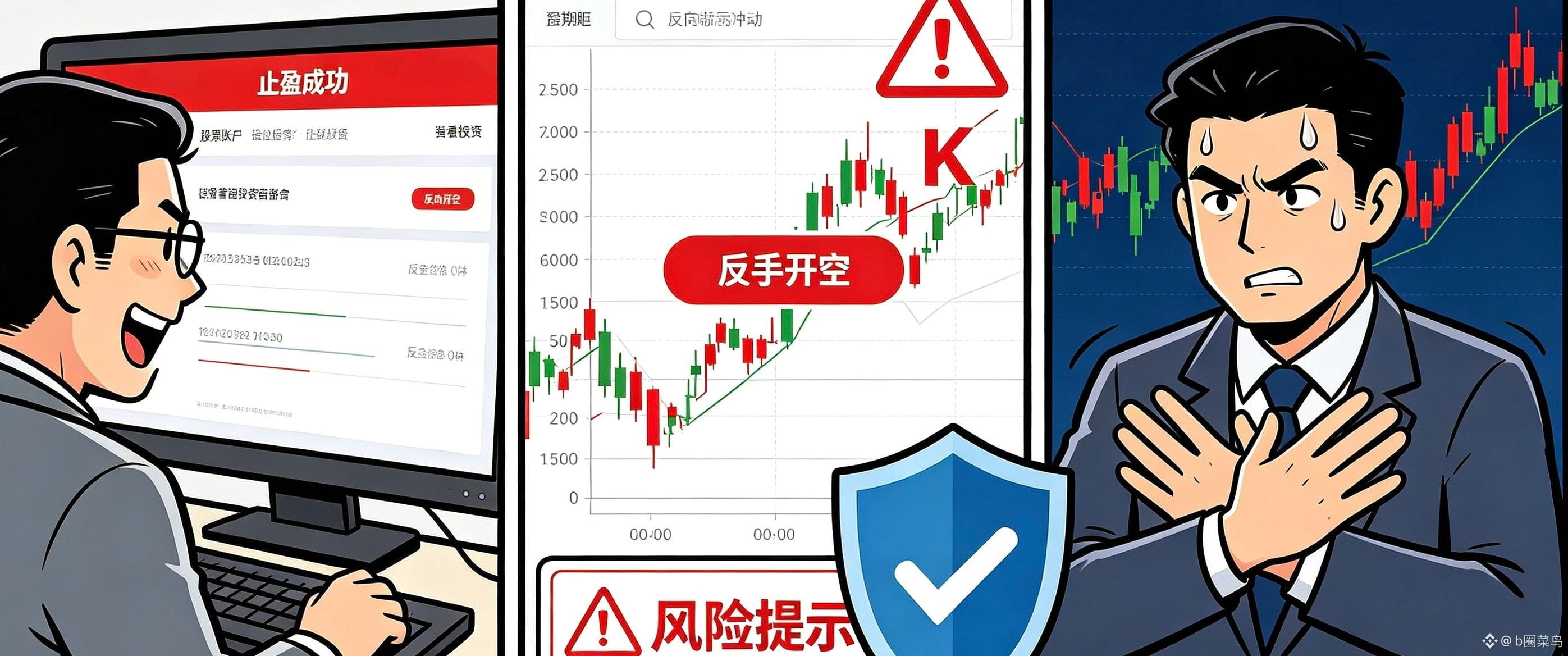
After taking profit, flipping to open a short—people like this, please hold back
The essence of this mindset is the urge to prolong the thrill of trading, believing that since the price has already risen enough, the market will reverse immediately. It ignores the possibility that the trend may continue and over-trusts short-term turning points. In many cases, it’s emotion-driven rather than based on objective signals. The excitement caused by profits masks the risks; if the trend continues, it’s easy to quickly give back the earlier gains.
Wait until a short signal appears—there’s no rush to short. Trying to short without confirmation carries too much risk.
After taking profit, flipping to open a short—people like this, please hold back
The essence of this mindset is the urge to prolong the thrill of trading, believing that since the price has already risen enough, the market will reverse immediately. It ignores the possibility that the trend may continue and over-trusts short-term turning points. In many cases, it’s emotion-driven rather than based on objective signals. The excitement caused by profits masks the risks; if the trend continues, it’s easy to quickly give back the earlier gains.
Wait until a short signal appears—there’s no rush to short. Trying to short without confirmation carries too much risk.
The essence of this mindset is the urge to prolong the thrill of trading, believing that since the price has already risen enough, the market will reverse immediately. It ignores the possibility that the trend may continue and over-trusts short-term turning points. In many cases, it’s emotion-driven rather than based on objective signals. The excitement caused by profits masks the risks; if the trend continues, it’s easy to quickly give back the earlier gains.
Wait until a short signal appears—there’s no rush to short. Trying to short without confirmation carries too much risk.
1
116
·
--
Psychological activities that retail investors can’t hold onto,
1. Panic after a small rise: Will it pull back immediately? Take profits first—this little gain is okay; don’t wait until the profit gets given back.
2. Doubt yourself after a drop: Did I choose the wrong stocks? Is there some negative news?
3. Constantly watch the account’s gains and losses, treating unrealized profit/loss as money already earned/lost—the emotions fluctuate with the numbers.
4. Compare with other people’s stocks: The neighbor’s stock is doing better—mine is too slow. Sell and switch to chase stronger momentum.
5. Confused preset goals: Buy with the intention of holding long-term, but after a few down days it turns into a short-term trade—no fixed holding rules.
6. Fear missing out and fear being trapped: When it rises, you worry you didn’t buy enough; when it falls, you worry you’ll get trapped deeper. You get stuck between both sides.
7. Easily influenced by information: You scroll through stock forums or short videos with bearish/bullish news, and instantly waver from your original judgment.
8. Hold onto hope after losses: Wait a bit more; if it rebounds a little, I’ll exit. But the result is getting trapped deeper and deeper, until you finally cut losses.
9. No sense of time: Expect it to jump right after buying; can’t tolerate weeks—or even months—of sideways consolidation.
10. Lack of position management awareness: Go all-in at once. When the fluctuation is slightly larger, the psychological pressure becomes unbearable.
Psychological activities that retail investors can’t hold onto,
1. Panic after a small rise: Will it pull back immediately? Take profits first—this little gain is okay; don’t wait until the profit gets given back.
2. Doubt yourself after a drop: Did I choose the wrong stocks? Is there some negative news?
3. Constantly watch the account’s gains and losses, treating unrealized profit/loss as money already earned/lost—the emotions fluctuate with the numbers.
4. Compare with other people’s stocks: The neighbor’s stock is doing better—mine is too slow. Sell and switch to chase stronger momentum.
5. Confused preset goals: Buy with the intention of holding long-term, but after a few down days it turns into a short-term trade—no fixed holding rules.
6. Fear missing out and fear being trapped: When it rises, you worry you didn’t buy enough; when it falls, you worry you’ll get trapped deeper. You get stuck between both sides.
7. Easily influenced by information: You scroll through stock forums or short videos with bearish/bullish news, and instantly waver from your original judgment.
8. Hold onto hope after losses: Wait a bit more; if it rebounds a little, I’ll exit. But the result is getting trapped deeper and deeper, until you finally cut losses.
9. No sense of time: Expect it to jump right after buying; can’t tolerate weeks—or even months—of sideways consolidation.
10. Lack of position management awareness: Go all-in at once. When the fluctuation is slightly larger, the psychological pressure becomes unbearable.
1. Panic after a small rise: Will it pull back immediately? Take profits first—this little gain is okay; don’t wait until the profit gets given back.
2. Doubt yourself after a drop: Did I choose the wrong stocks? Is there some negative news?
3. Constantly watch the account’s gains and losses, treating unrealized profit/loss as money already earned/lost—the emotions fluctuate with the numbers.
4. Compare with other people’s stocks: The neighbor’s stock is doing better—mine is too slow. Sell and switch to chase stronger momentum.
5. Confused preset goals: Buy with the intention of holding long-term, but after a few down days it turns into a short-term trade—no fixed holding rules.
6. Fear missing out and fear being trapped: When it rises, you worry you didn’t buy enough; when it falls, you worry you’ll get trapped deeper. You get stuck between both sides.
7. Easily influenced by information: You scroll through stock forums or short videos with bearish/bullish news, and instantly waver from your original judgment.
8. Hold onto hope after losses: Wait a bit more; if it rebounds a little, I’ll exit. But the result is getting trapped deeper and deeper, until you finally cut losses.
9. No sense of time: Expect it to jump right after buying; can’t tolerate weeks—or even months—of sideways consolidation.
10. Lack of position management awareness: Go all-in at once. When the fluctuation is slightly larger, the psychological pressure becomes unbearable.
121
·
--
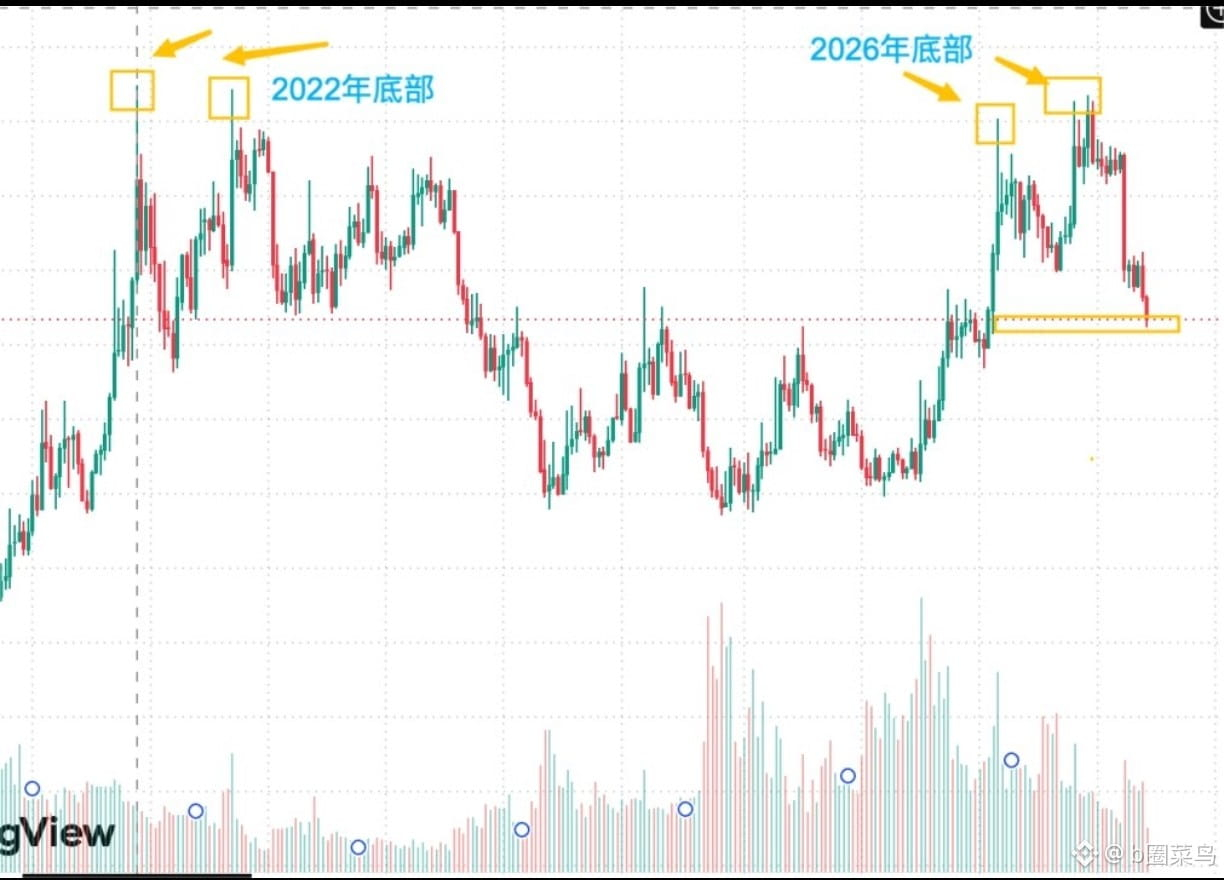
USDT.D
Looking back, it turns out I was right in the bottom without knowing it.
In this bull market, retail investors all missed the ride. #USDT🔥🔥🔥
USDT.D
Looking back, it turns out I was right in the bottom without knowing it.
In this bull market, retail investors all missed the ride. #USDT🔥🔥🔥
Looking back, it turns out I was right in the bottom without knowing it.
In this bull market, retail investors all missed the ride. #USDT🔥🔥🔥
108
·
--
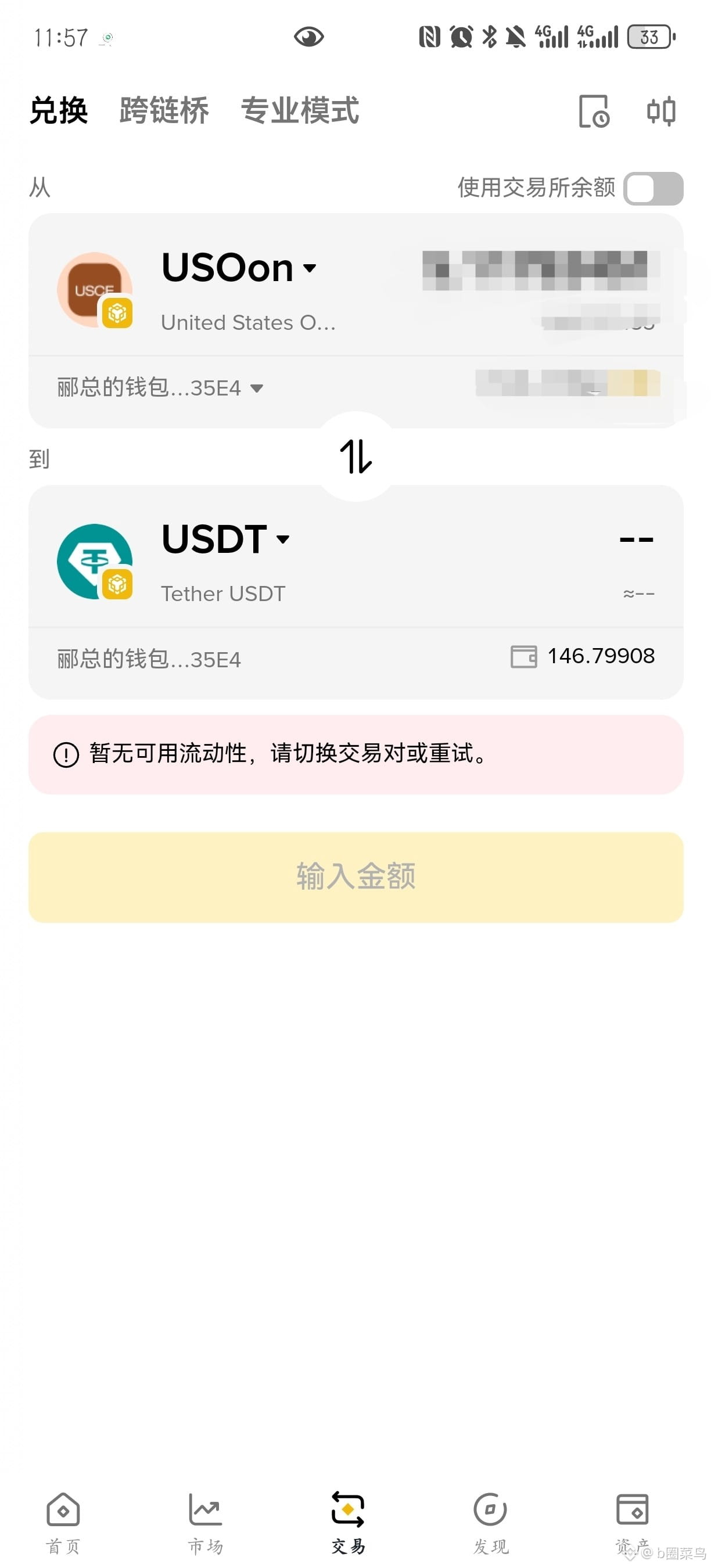
Mom's kiss, the wallet bought American crude oil, but it didn't sell, directly no trading against it. How to play #国际油价突破100美元
Mom's kiss, the wallet bought American crude oil, but it didn't sell, directly no trading against it. How to play #国际油价突破100美元
610
·
--
LTC stands for Litecoin, which is referred to as "Lettuce" in Chinese, commonly called "Spicy Strips" in the community. It was created in 2011 by former Google engineer Charlie Lee and is considered a "lightweight version" of Bitcoin, focusing on faster, cheaper, and more suitable daily payments. It is known as "digital silver," while Bitcoin is referred to as "digital gold."
Its birth was quite simple: at that time, Bitcoin transactions took 10 minutes for confirmation, and the fees were high, making it unsuitable for small purchases. Charlie Lee modified the parameters based on Bitcoin to create Litecoin, positioning it as a supplement to Bitcoin, not a competitor.
The core features are straightforward: transaction confirmation takes only 2.5 minutes, which is four times faster than Bitcoin, with extremely low fees, making small transactions very cost-effective; the total supply cap is 84 million coins, four times that of Bitcoin, making it more suitable for circulation; it uses the Scrypt algorithm, allowing early ordinary computers to mine it, unlike Bitcoin, which is easily monopolized by professional mining machines.
The operational logic is similar to Bitcoin: decentralized, no official control, transactions are public and traceable, relying on mining output, approximately halving every four years, with diminishing returns.
Litecoin is an established mainstream cryptocurrency, launched early with a stable network and a large user base, consistently ranking high in market capitalization. It does not engage in flashy ecosystems but focuses on being a practical digital cash, supported by many exchanges and wallets, making it one of the most stable and established cryptocurrencies in the crypto space. #LTC📈
LTC stands for Litecoin, which is referred to as "Lettuce" in Chinese, commonly called "Spicy Strips" in the community. It was created in 2011 by former Google engineer Charlie Lee and is considered a "lightweight version" of Bitcoin, focusing on faster, cheaper, and more suitable daily payments. It is known as "digital silver," while Bitcoin is referred to as "digital gold."
Its birth was quite simple: at that time, Bitcoin transactions took 10 minutes for confirmation, and the fees were high, making it unsuitable for small purchases. Charlie Lee modified the parameters based on Bitcoin to create Litecoin, positioning it as a supplement to Bitcoin, not a competitor.
The core features are straightforward: transaction confirmation takes only 2.5 minutes, which is four times faster than Bitcoin, with extremely low fees, making small transactions very cost-effective; the total supply cap is 84 million coins, four times that of Bitcoin, making it more suitable for circulation; it uses the Scrypt algorithm, allowing early ordinary computers to mine it, unlike Bitcoin, which is easily monopolized by professional mining machines.
The operational logic is similar to Bitcoin: decentralized, no official control, transactions are public and traceable, relying on mining output, approximately halving every four years, with diminishing returns.
Litecoin is an established mainstream cryptocurrency, launched early with a stable network and a large user base, consistently ranking high in market capitalization. It does not engage in flashy ecosystems but focuses on being a practical digital cash, supported by many exchanges and wallets, making it one of the most stable and established cryptocurrencies in the crypto space. #LTC📈
Its birth was quite simple: at that time, Bitcoin transactions took 10 minutes for confirmation, and the fees were high, making it unsuitable for small purchases. Charlie Lee modified the parameters based on Bitcoin to create Litecoin, positioning it as a supplement to Bitcoin, not a competitor.
The core features are straightforward: transaction confirmation takes only 2.5 minutes, which is four times faster than Bitcoin, with extremely low fees, making small transactions very cost-effective; the total supply cap is 84 million coins, four times that of Bitcoin, making it more suitable for circulation; it uses the Scrypt algorithm, allowing early ordinary computers to mine it, unlike Bitcoin, which is easily monopolized by professional mining machines.
The operational logic is similar to Bitcoin: decentralized, no official control, transactions are public and traceable, relying on mining output, approximately halving every four years, with diminishing returns.
Litecoin is an established mainstream cryptocurrency, launched early with a stable network and a large user base, consistently ranking high in market capitalization. It does not engage in flashy ecosystems but focuses on being a practical digital cash, supported by many exchanges and wallets, making it one of the most stable and established cryptocurrencies in the crypto space. #LTC📈
299
·
--
Dogecoin (abbreviated as DOGE) may be the most "down-to-earth" cryptocurrency—it's not a high-end financial innovation; it was initially just a product made for fun. In December 2013, two programmers, Billy Markus and Jackson Palmer, saw the then-booming Bitcoin market and felt that the market was too serious and too hyped, so they casually created this coin, using the now-popular Shiba Inu meme, Doge, as its logo. The original intention was just for laughs, poking fun at the speculative frenzy in the crypto market.
Unlike Bitcoin, Dogecoin does not have a total supply limit; it is issued at a fixed rate every year, avoiding the "scarcity" approach. Its advantages are obvious: fast transfer speeds and transaction fees so low they are almost negligible. Initially, it was used for tipping bloggers and sending small red envelopes on social platforms, akin to "tips" on the internet.
With its cute Shiba Inu image and laid-back positioning, Dogecoin quickly became popular in overseas social communities, where users formed a particularly active community and often used it for charitable donations. The phrase "1 DOGE=1 DOGE" became a consensus among users, meaning no speculation or comparison, just enjoying its fun. In 2021, celebrities like Elon Musk mentioned Dogecoin multiple times, causing its price to skyrocket, completely transforming it from a "joke coin" into a mainstream crypto asset that many people pay attention to.
Dogecoin is still very popular today, and many merchants support using it for payments. However, everyone should note that its price fluctuations are particularly large, and the risks are high. Ultimately, it is both a fun product for internet users and a very special presence in the crypto market, witnessing the wonderful collision of internet culture and finance.
#Dogecoin #doge⚡
Dogecoin (abbreviated as DOGE) may be the most "down-to-earth" cryptocurrency—it's not a high-end financial innovation; it was initially just a product made for fun. In December 2013, two programmers, Billy Markus and Jackson Palmer, saw the then-booming Bitcoin market and felt that the market was too serious and too hyped, so they casually created this coin, using the now-popular Shiba Inu meme, Doge, as its logo. The original intention was just for laughs, poking fun at the speculative frenzy in the crypto market.
Unlike Bitcoin, Dogecoin does not have a total supply limit; it is issued at a fixed rate every year, avoiding the "scarcity" approach. Its advantages are obvious: fast transfer speeds and transaction fees so low they are almost negligible. Initially, it was used for tipping bloggers and sending small red envelopes on social platforms, akin to "tips" on the internet.
With its cute Shiba Inu image and laid-back positioning, Dogecoin quickly became popular in overseas social communities, where users formed a particularly active community and often used it for charitable donations. The phrase "1 DOGE=1 DOGE" became a consensus among users, meaning no speculation or comparison, just enjoying its fun. In 2021, celebrities like Elon Musk mentioned Dogecoin multiple times, causing its price to skyrocket, completely transforming it from a "joke coin" into a mainstream crypto asset that many people pay attention to.
Dogecoin is still very popular today, and many merchants support using it for payments. However, everyone should note that its price fluctuations are particularly large, and the risks are high. Ultimately, it is both a fun product for internet users and a very special presence in the crypto market, witnessing the wonderful collision of internet culture and finance.
#Dogecoin #doge⚡
Unlike Bitcoin, Dogecoin does not have a total supply limit; it is issued at a fixed rate every year, avoiding the "scarcity" approach. Its advantages are obvious: fast transfer speeds and transaction fees so low they are almost negligible. Initially, it was used for tipping bloggers and sending small red envelopes on social platforms, akin to "tips" on the internet.
With its cute Shiba Inu image and laid-back positioning, Dogecoin quickly became popular in overseas social communities, where users formed a particularly active community and often used it for charitable donations. The phrase "1 DOGE=1 DOGE" became a consensus among users, meaning no speculation or comparison, just enjoying its fun. In 2021, celebrities like Elon Musk mentioned Dogecoin multiple times, causing its price to skyrocket, completely transforming it from a "joke coin" into a mainstream crypto asset that many people pay attention to.
Dogecoin is still very popular today, and many merchants support using it for payments. However, everyone should note that its price fluctuations are particularly large, and the risks are high. Ultimately, it is both a fun product for internet users and a very special presence in the crypto market, witnessing the wonderful collision of internet culture and finance.
#Dogecoin #doge⚡
443
·
--
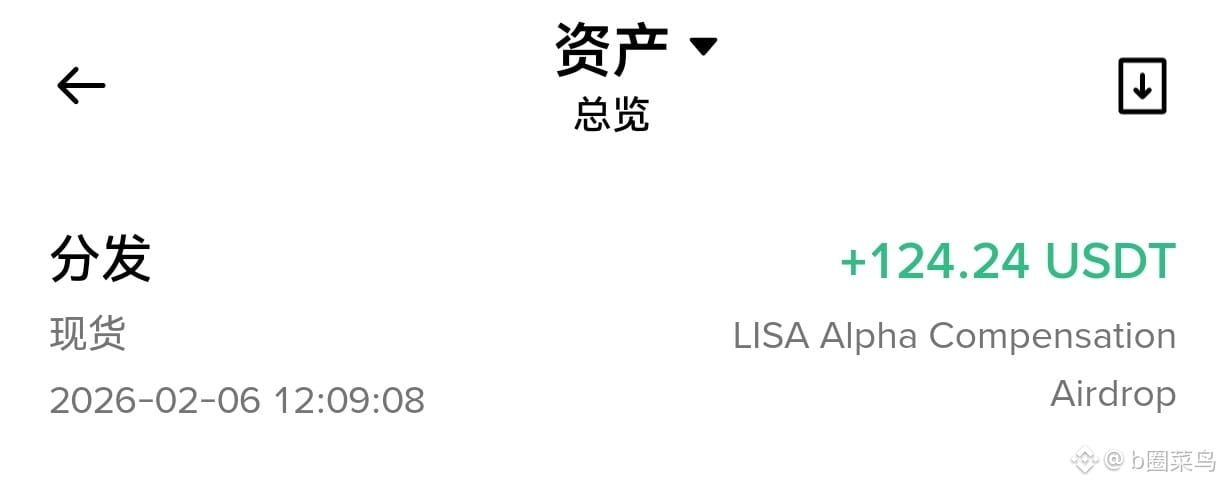
The LISA project team is indeed visionary. I always thought it was a scam, but I didn't expect there would actually be compensation. Everyone can check if they have received compensation #加密市场回调 $BTC $LISA .
The LISA project team is indeed visionary. I always thought it was a scam, but I didn't expect there would actually be compensation. Everyone can check if they have received compensation #加密市场回调 $BTC $LISA .
1
2
537
·
--
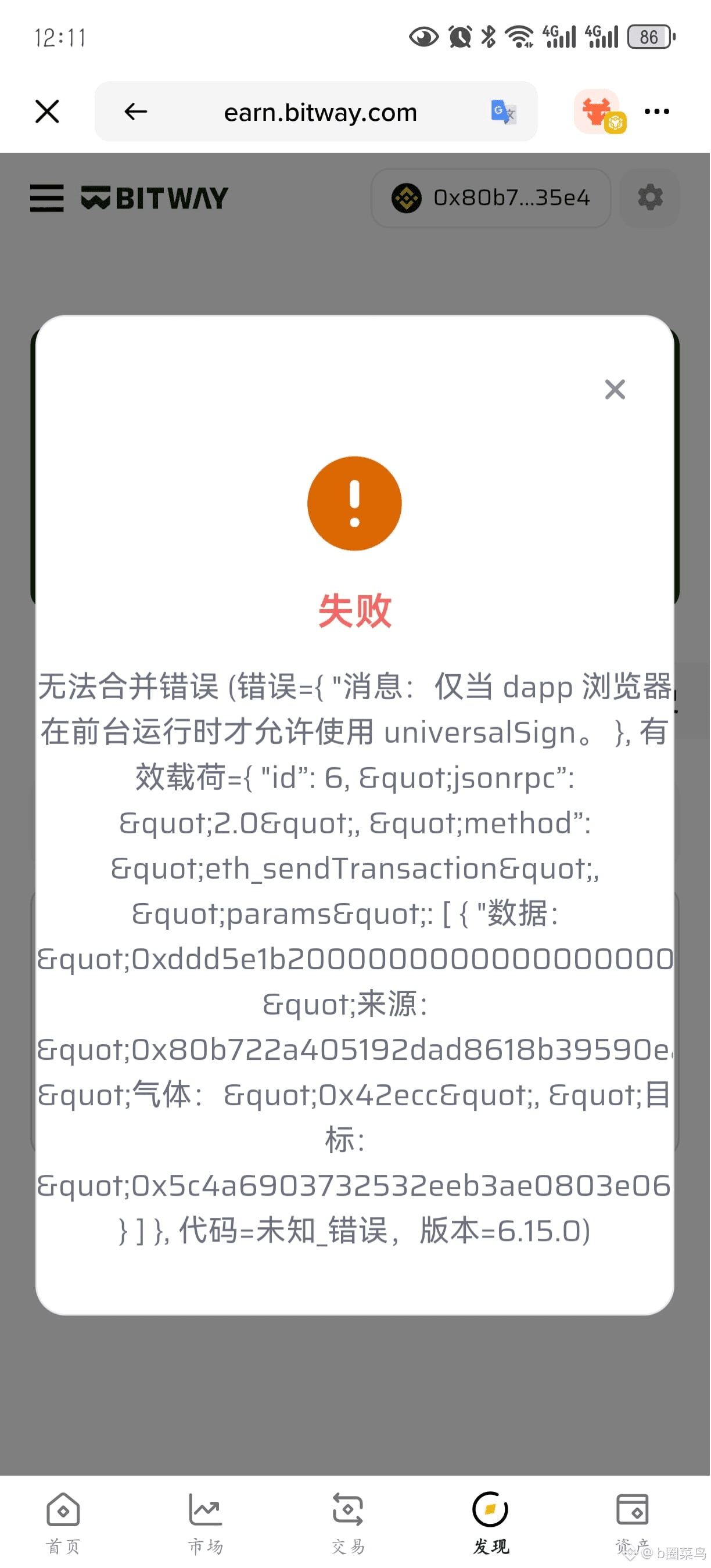
Does anyone know what's going on? The staked U cannot be withdrawn.
Does anyone know what's going on? The staked U cannot be withdrawn.
1
1
1
353
Log in to explore more content
Join global crypto users on Binance Square
⚡️ Get latest and useful information about crypto.
💬 Trusted by the world’s largest crypto exchange.
👍 Discover real insights from verified creators.
Email / Phone number
Trending Topics
EtherGains70.9%InQ3
140,658 views
1,110 Discussing
One of the best third quarters in history 💰
September closed out last night, and with it, the quarter. For the quarter, BTC is up 42%—the second-best Q3 on record. ETH had a record-breaking Q3 overall, up 70%.
Looking at the chart, things are still looking good: we’re holding support, but we’re testing it more and more often. Plus, ETF momentum is weakening — inflows are gradually declining, and yesterday saw outflows for the first time in a long while.
Yes, historically, October has been a good month for crypto — it’s not called “Uptober” for nothing. But it’s also one of the most volatile months. Last year, for example, we managed to hit a new all-time high (ATH) and experience a flash crash.
🚀 High Accuracy Trades.
$BTC
$ETH
$SOL
#EtherGains70.9%InQ3 #DollarIndexHitsHighestSinceMay2025 #CFTCSubmitsTwoEventContractRulesToWhiteHouse #MicronBeatsEarningsLiftsGuidance
Knowledge is Power
·0 Likes
·226 views
TreasuryLetsStatesFileStablecoinCertificationsEarly
7,475 views
78 Discussing
US10YearYieldNears5.3%
144,891 views
1,110 Discussing