

DAVID FURI
8.4k Posts

DAVID FURI
Report
Block User
RISK IT ALL MATE OF WORTH CJASE GOALS
Open Trade
Occasional Trader
1.2 Years
74 Following
23.0K+ Followers
17.7K+ Liked
Posts
Portfolio
All
Quotes
Live
PINNED
·
--
Article
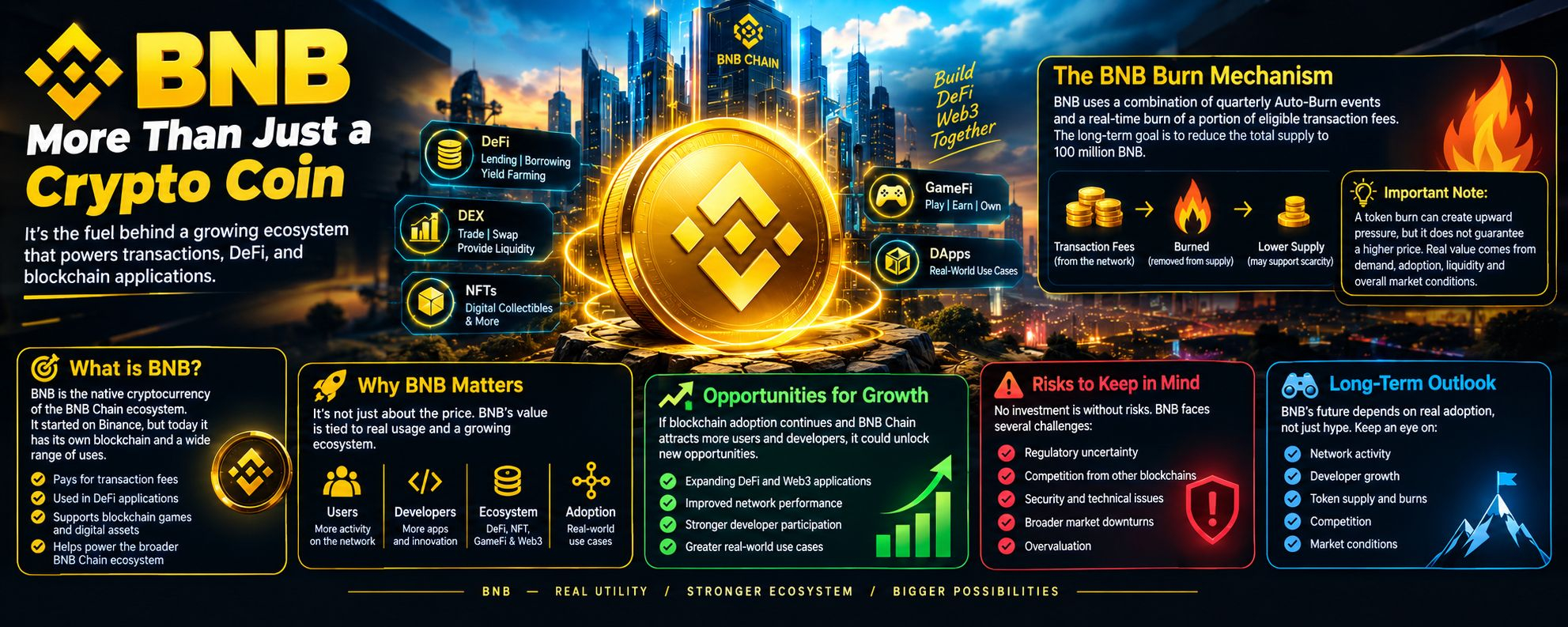
BNB More Than Just a Crypto Coin The Real Story Behind Its FutureThe crypto market is full of projects promising big things, but not every project manages to build something people actually use. BNB is interesting for a different reason: its value story is connected to an ecosystem that people can use for trading, transactions, decentralized finance, and blockchain applications.
But here is the part worth thinking about: a strong ecosystem does not automatically mean a rising token price.
BNB has grown beyond its original identity as a token associated with Binance. Today, it serves as the native cryptocurrency of BNB Chain and is used to pay network transaction fees and interact with supported decentralized applications. That gives it a practical role beyond simply being an asset people buy and sell.
What Makes BNB Different?
For me, the most interesting thing about BNB is its connection to real blockchain activity. Every time someone uses an application on BNB Chain, the network's infrastructure becomes part of that experience.
Whether people are swapping tokens, interacting with smart contracts, or exploring decentralized financial services, BNB can play a role in making those transactions happen.
This is important because long-term crypto projects need more than attention. They need users, developers, useful applications, and reasons for people to keep coming back.
Of course, competition is fierce. Other blockchain networks are working toward the same goals, and BNB Chain cannot afford to depend on its reputation alone. Its future will depend on how well it continues to serve users and attract new activity.
The BNB Burn Mechanism: An Important Piece of the Puzzle
One feature that often attracts attention is BNB's token-burning system. The network uses periodic Auto-Burn events and a real-time mechanism that burns a portion of eligible transaction fees. Its long-term objective is to reduce the total supply toward 100 million BNB.
The idea is straightforward: fewer tokens in circulation can potentially support scarcity.
However, scarcity alone does not create value. If demand falls faster than supply, the price can still decline. That is why I believe token burns should be viewed alongside network adoption, liquidity, and the broader market rather than treated as an automatic bullish signal.
The real question is whether people will continue finding BNB useful as the ecosystem develops.
Could BNB Have More Room to Grow?
BNB's future could become more interesting if blockchain adoption continues expanding and BNB Chain manages to attract lasting activity.
Growth in decentralized finance, better applications, improvements to network performance, and stronger developer participation could all help strengthen the ecosystem.
But there is another side to the story. Regulatory uncertainty, security problems, competition, and a broader crypto market downturn could all put pressure on BNB.
That is why I would rather focus on measurable progress than make dramatic price predictions. A project can have promising technology and still disappoint investors if expectations become too high.
What Should Investors Watch?
Instead of focusing only on daily price movements, investors can pay attention to a few important factors:
- Network activity: Are people genuinely using BNB Chain?
- Developer growth: Are useful applications continuing to emerge?
- Token supply: How are burns changing the available supply over time?
- Competition: Are other blockchains offering better alternatives?
- Market conditions: Is the wider crypto market supporting risk-taking or moving into a defensive phase?
These factors will not predict every price move, but they can help investors build a more balanced understanding of BNB's position.
For traders, timing and risk management remain essential. Even a promising asset can experience sharp corrections, and using leverage can turn an ordinary market move into a significant loss.
My Final Take on BNB
I don't think BNB should be judged only by its next rally or correction. The more important question is whether its underlying ecosystem can keep delivering value to users.
Its utility, established presence, and token-burning mechanisms give investors several things to examine. At the same time, none of these factors guarantees future returns.
The crypto market has a habit of rewarding excitement in the short term and testing conviction in the long term. For BNB, sustainable adoption will matter far more than temporary hype.
The real opportunity is not simply predicting how high BNB might go. It is understanding whether the ecosystem can keep giving people a reason to use it.
What do you think: will BNB's long-term growth be driven more by real network adoption or by market sentiment?
Disclaimer: This article is for educational purposes only and is not financial advice. Cryptocurrency investments are volatile, and you should conduct your own research before making any investment decision.
$BNB @CZ #BNB_Market_Update
{spot}(BNBUSDT)
BNB More Than Just a Crypto Coin The Real Story Behind Its Future
The crypto market is full of projects promising big things, but not every project manages to build something people actually use. BNB is interesting for a different reason: its value story is connected to an ecosystem that people can use for trading, transactions, decentralized finance, and blockchain applications.
But here is the part worth thinking about: a strong ecosystem does not automatically mean a rising token price.
BNB has grown beyond its original identity as a token associated with Binance. Today, it serves as the native cryptocurrency of BNB Chain and is used to pay network transaction fees and interact with supported decentralized applications. That gives it a practical role beyond simply being an asset people buy and sell.
What Makes BNB Different?
For me, the most interesting thing about BNB is its connection to real blockchain activity. Every time someone uses an application on BNB Chain, the network's infrastructure becomes part of that experience.
Whether people are swapping tokens, interacting with smart contracts, or exploring decentralized financial services, BNB can play a role in making those transactions happen.
This is important because long-term crypto projects need more than attention. They need users, developers, useful applications, and reasons for people to keep coming back.
Of course, competition is fierce. Other blockchain networks are working toward the same goals, and BNB Chain cannot afford to depend on its reputation alone. Its future will depend on how well it continues to serve users and attract new activity.
The BNB Burn Mechanism: An Important Piece of the Puzzle
One feature that often attracts attention is BNB's token-burning system. The network uses periodic Auto-Burn events and a real-time mechanism that burns a portion of eligible transaction fees. Its long-term objective is to reduce the total supply toward 100 million BNB.
The idea is straightforward: fewer tokens in circulation can potentially support scarcity.
However, scarcity alone does not create value. If demand falls faster than supply, the price can still decline. That is why I believe token burns should be viewed alongside network adoption, liquidity, and the broader market rather than treated as an automatic bullish signal.
The real question is whether people will continue finding BNB useful as the ecosystem develops.
Could BNB Have More Room to Grow?
BNB's future could become more interesting if blockchain adoption continues expanding and BNB Chain manages to attract lasting activity.
Growth in decentralized finance, better applications, improvements to network performance, and stronger developer participation could all help strengthen the ecosystem.
But there is another side to the story. Regulatory uncertainty, security problems, competition, and a broader crypto market downturn could all put pressure on BNB.
That is why I would rather focus on measurable progress than make dramatic price predictions. A project can have promising technology and still disappoint investors if expectations become too high.
What Should Investors Watch?
Instead of focusing only on daily price movements, investors can pay attention to a few important factors:
- Network activity: Are people genuinely using BNB Chain?
- Developer growth: Are useful applications continuing to emerge?
- Token supply: How are burns changing the available supply over time?
- Competition: Are other blockchains offering better alternatives?
- Market conditions: Is the wider crypto market supporting risk-taking or moving into a defensive phase?
These factors will not predict every price move, but they can help investors build a more balanced understanding of BNB's position.
For traders, timing and risk management remain essential. Even a promising asset can experience sharp corrections, and using leverage can turn an ordinary market move into a significant loss.
My Final Take on BNB
I don't think BNB should be judged only by its next rally or correction. The more important question is whether its underlying ecosystem can keep delivering value to users.
Its utility, established presence, and token-burning mechanisms give investors several things to examine. At the same time, none of these factors guarantees future returns.
The crypto market has a habit of rewarding excitement in the short term and testing conviction in the long term. For BNB, sustainable adoption will matter far more than temporary hype.
The real opportunity is not simply predicting how high BNB might go. It is understanding whether the ecosystem can keep giving people a reason to use it.
What do you think: will BNB's long-term growth be driven more by real network adoption or by market sentiment?
Disclaimer: This article is for educational purposes only and is not financial advice. Cryptocurrency investments are volatile, and you should conduct your own research before making any investment decision.
$BNB @CZ #BNB_Market_Update
But here is the part worth thinking about: a strong ecosystem does not automatically mean a rising token price.
BNB has grown beyond its original identity as a token associated with Binance. Today, it serves as the native cryptocurrency of BNB Chain and is used to pay network transaction fees and interact with supported decentralized applications. That gives it a practical role beyond simply being an asset people buy and sell.
What Makes BNB Different?
For me, the most interesting thing about BNB is its connection to real blockchain activity. Every time someone uses an application on BNB Chain, the network's infrastructure becomes part of that experience.
Whether people are swapping tokens, interacting with smart contracts, or exploring decentralized financial services, BNB can play a role in making those transactions happen.
This is important because long-term crypto projects need more than attention. They need users, developers, useful applications, and reasons for people to keep coming back.
Of course, competition is fierce. Other blockchain networks are working toward the same goals, and BNB Chain cannot afford to depend on its reputation alone. Its future will depend on how well it continues to serve users and attract new activity.
The BNB Burn Mechanism: An Important Piece of the Puzzle
One feature that often attracts attention is BNB's token-burning system. The network uses periodic Auto-Burn events and a real-time mechanism that burns a portion of eligible transaction fees. Its long-term objective is to reduce the total supply toward 100 million BNB.
The idea is straightforward: fewer tokens in circulation can potentially support scarcity.
However, scarcity alone does not create value. If demand falls faster than supply, the price can still decline. That is why I believe token burns should be viewed alongside network adoption, liquidity, and the broader market rather than treated as an automatic bullish signal.
The real question is whether people will continue finding BNB useful as the ecosystem develops.
Could BNB Have More Room to Grow?
BNB's future could become more interesting if blockchain adoption continues expanding and BNB Chain manages to attract lasting activity.
Growth in decentralized finance, better applications, improvements to network performance, and stronger developer participation could all help strengthen the ecosystem.
But there is another side to the story. Regulatory uncertainty, security problems, competition, and a broader crypto market downturn could all put pressure on BNB.
That is why I would rather focus on measurable progress than make dramatic price predictions. A project can have promising technology and still disappoint investors if expectations become too high.
What Should Investors Watch?
Instead of focusing only on daily price movements, investors can pay attention to a few important factors:
- Network activity: Are people genuinely using BNB Chain?
- Developer growth: Are useful applications continuing to emerge?
- Token supply: How are burns changing the available supply over time?
- Competition: Are other blockchains offering better alternatives?
- Market conditions: Is the wider crypto market supporting risk-taking or moving into a defensive phase?
These factors will not predict every price move, but they can help investors build a more balanced understanding of BNB's position.
For traders, timing and risk management remain essential. Even a promising asset can experience sharp corrections, and using leverage can turn an ordinary market move into a significant loss.
My Final Take on BNB
I don't think BNB should be judged only by its next rally or correction. The more important question is whether its underlying ecosystem can keep delivering value to users.
Its utility, established presence, and token-burning mechanisms give investors several things to examine. At the same time, none of these factors guarantees future returns.
The crypto market has a habit of rewarding excitement in the short term and testing conviction in the long term. For BNB, sustainable adoption will matter far more than temporary hype.
The real opportunity is not simply predicting how high BNB might go. It is understanding whether the ecosystem can keep giving people a reason to use it.
What do you think: will BNB's long-term growth be driven more by real network adoption or by market sentiment?
Disclaimer: This article is for educational purposes only and is not financial advice. Cryptocurrency investments are volatile, and you should conduct your own research before making any investment decision.
$BNB @CZ #BNB_Market_Update
129
·
--
BNB THE NEXT BIG MOVE COULD BE CLOSER THAN YOU THINK!
$BNB remains a coin worth watching as traders look for the next decisive move. The key is simple: wait for confirmation, watch critical support and resistance, and avoid chasing a breakout without volume.
📈 Bullish Scenario: A confirmed breakout above resistance could open the door to further upside.
📉 Bearish Scenario: Losing key support could trigger a deeper pullback.
🎯 Trade Strategy: Wait for confirmation before entering. Set a clear stop-loss and manage risk carefully.
BNB is on the watchlist — will the bulls take control, or will sellers strike back?
{spot}(BNBUSDT)
#BinancePick
#ArgentineCourtDismissesLIBRACaseAgainstMilei
#USQ3GDPAndSeptemberPCEDueNextWeek
#ElectrumFixesHighRiskExploitInVersionsBefore4.8.3
#ElectrumFixesHighRiskExploitInVersionsBefore4.8.3
BNB THE NEXT BIG MOVE COULD BE CLOSER THAN YOU THINK!
$BNB remains a coin worth watching as traders look for the next decisive move. The key is simple: wait for confirmation, watch critical support and resistance, and avoid chasing a breakout without volume.
📈 Bullish Scenario: A confirmed breakout above resistance could open the door to further upside.
📉 Bearish Scenario: Losing key support could trigger a deeper pullback.
🎯 Trade Strategy: Wait for confirmation before entering. Set a clear stop-loss and manage risk carefully.
BNB is on the watchlist — will the bulls take control, or will sellers strike back?
#BinancePick
#ArgentineCourtDismissesLIBRACaseAgainstMilei
#USQ3GDPAndSeptemberPCEDueNextWeek
#ElectrumFixesHighRiskExploitInVersionsBefore4.8.3
#ElectrumFixesHighRiskExploitInVersionsBefore4.8.3
$BNB remains a coin worth watching as traders look for the next decisive move. The key is simple: wait for confirmation, watch critical support and resistance, and avoid chasing a breakout without volume.
📈 Bullish Scenario: A confirmed breakout above resistance could open the door to further upside.
📉 Bearish Scenario: Losing key support could trigger a deeper pullback.
🎯 Trade Strategy: Wait for confirmation before entering. Set a clear stop-loss and manage risk carefully.
BNB is on the watchlist — will the bulls take control, or will sellers strike back?
#BinancePick
#ArgentineCourtDismissesLIBRACaseAgainstMilei
#USQ3GDPAndSeptemberPCEDueNextWeek
#ElectrumFixesHighRiskExploitInVersionsBefore4.8.3
#ElectrumFixesHighRiskExploitInVersionsBefore4.8.3
57
·
--
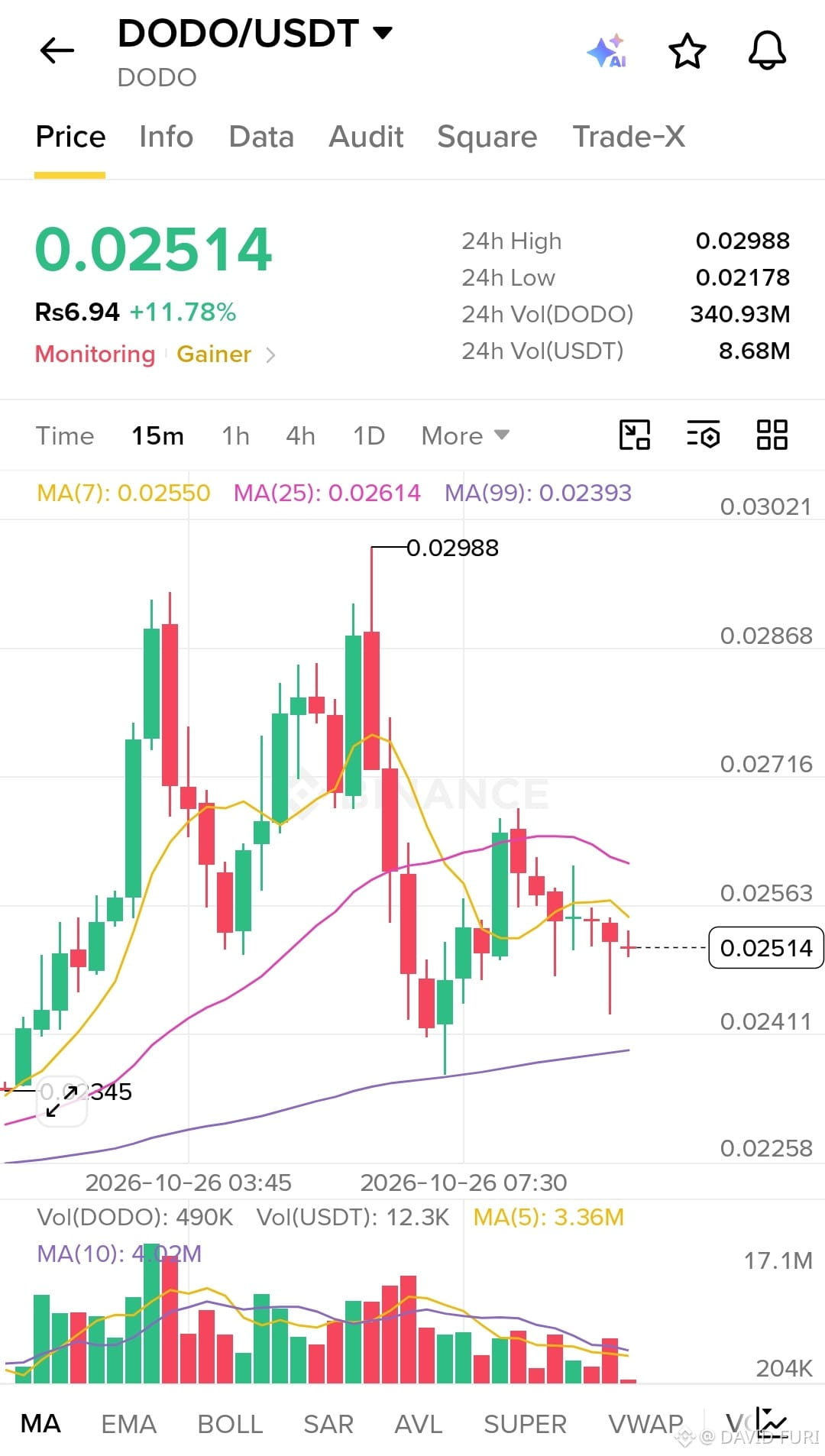
$DODO /USDT BULLS LOSING MOMENTUM? WATCH THIS LEVEL!
Current Price: $0.02514 (+11.78%)
Trade Setup | 15M Chart
🟢 Long Entry: $0.02500–$0.02520 (only after bullish confirmation)
🎯 TP1: $0.02563
🎯 TP2: $0.02614
🎯 TP3: $0.02716
🔴 Stop Loss: $0.02470
🔑 Key Levels:
Support: $0.02411–$0.02470
Resistance: $0.02563–$0.02614
📈 Bullish Scenario: Reclaim $0.02563 and hold it to target $0.02614, followed by $0.02716.
📉 Bearish Scenario: Continued rejection below resistance could send DODO toward $0.02411. A break below support weakens the bullish case.
⚠️ Price is below MA(7) at $0.02550 and MA(25) at $0.02614, showing short-term weakness despite the daily gain. Wait for confirmation and manage risk.
{future}(DODOXUSDT)
#BinancePick
#ArgentineCourtDismissesLIBRACaseAgainstMilei
#MARCUSB
#SouthKoreaDelaysCryptoIncomeTax
#ElectrumFixesHighRiskExploitInVersionsBefore4.8.3
$DODO /USDT BULLS LOSING MOMENTUM? WATCH THIS LEVEL!
Current Price: $0.02514 (+11.78%)
Trade Setup | 15M Chart
🟢 Long Entry: $0.02500–$0.02520 (only after bullish confirmation)
🎯 TP1: $0.02563
🎯 TP2: $0.02614
🎯 TP3: $0.02716
🔴 Stop Loss: $0.02470
🔑 Key Levels:
Support: $0.02411–$0.02470
Resistance: $0.02563–$0.02614
📈 Bullish Scenario: Reclaim $0.02563 and hold it to target $0.02614, followed by $0.02716.
📉 Bearish Scenario: Continued rejection below resistance could send DODO toward $0.02411. A break below support weakens the bullish case.
⚠️ Price is below MA(7) at $0.02550 and MA(25) at $0.02614, showing short-term weakness despite the daily gain. Wait for confirmation and manage risk.
#BinancePick
#ArgentineCourtDismissesLIBRACaseAgainstMilei
#MARCUSB
#SouthKoreaDelaysCryptoIncomeTax
#ElectrumFixesHighRiskExploitInVersionsBefore4.8.3
Current Price: $0.02514 (+11.78%)
Trade Setup | 15M Chart
🟢 Long Entry: $0.02500–$0.02520 (only after bullish confirmation)
🎯 TP1: $0.02563
🎯 TP2: $0.02614
🎯 TP3: $0.02716
🔴 Stop Loss: $0.02470
🔑 Key Levels:
Support: $0.02411–$0.02470
Resistance: $0.02563–$0.02614
📈 Bullish Scenario: Reclaim $0.02563 and hold it to target $0.02614, followed by $0.02716.
📉 Bearish Scenario: Continued rejection below resistance could send DODO toward $0.02411. A break below support weakens the bullish case.
⚠️ Price is below MA(7) at $0.02550 and MA(25) at $0.02614, showing short-term weakness despite the daily gain. Wait for confirmation and manage risk.
#BinancePick
#ArgentineCourtDismissesLIBRACaseAgainstMilei
#MARCUSB
#SouthKoreaDelaysCryptoIncomeTax
#ElectrumFixesHighRiskExploitInVersionsBefore4.8.3
89
·
--
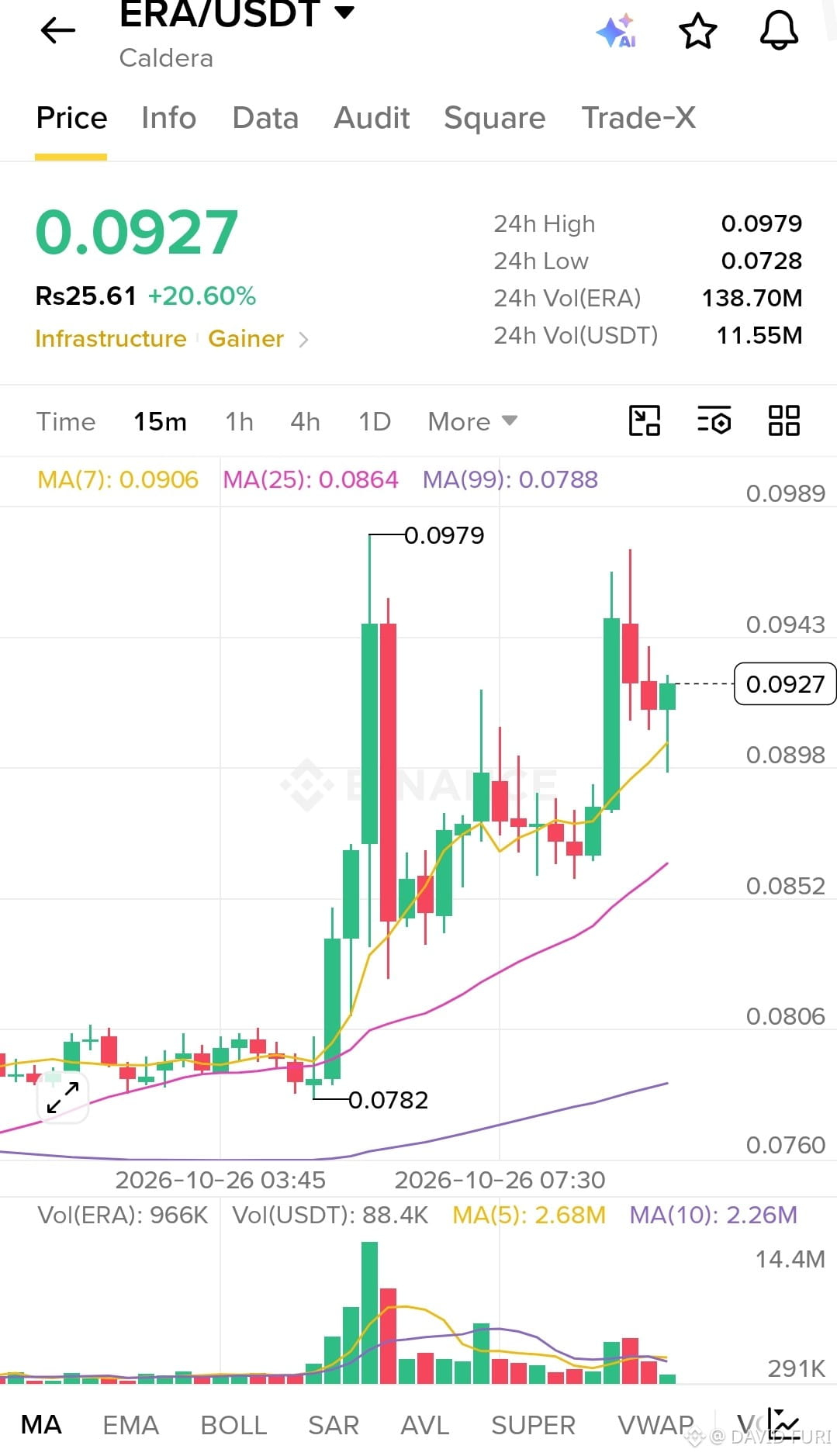
$ERA /USDT BULLS ARE BACK IN ACTION!
Current Price: $0.0927 (+20.60%)
Trade Setup (15M Chart)
🟢 Long Entry: $0.0910–$0.0925
🎯 TP1: $0.0943
🎯 TP2: $0.0960
🎯 TP3: $0.0979
🛑 Stop Loss: $0.0895
🔑 Key Levels: Resistance at $0.0943 and $0.0979. Support around $0.0898–$0.0906.
Bulls remain in control while price holds above support, but rejection near resistance could trigger a pullback. A breakout above $0.0943 may open the door toward $0.0979.
⚠️ Wait for confirmation before entering. Manage risk carefully—volatility is high.
{future}(ERAUSDT)
#BinancePick
#ArgentineCourtDismissesLIBRACaseAgainstMilei
#MARCUSB
#SouthKoreaDelaysCryptoIncomeTax
#ElectrumFixesHighRiskExploitInVersionsBefore4.8.3
$ERA /USDT BULLS ARE BACK IN ACTION!
Current Price: $0.0927 (+20.60%)
Trade Setup (15M Chart)
🟢 Long Entry: $0.0910–$0.0925
🎯 TP1: $0.0943
🎯 TP2: $0.0960
🎯 TP3: $0.0979
🛑 Stop Loss: $0.0895
🔑 Key Levels: Resistance at $0.0943 and $0.0979. Support around $0.0898–$0.0906.
Bulls remain in control while price holds above support, but rejection near resistance could trigger a pullback. A breakout above $0.0943 may open the door toward $0.0979.
⚠️ Wait for confirmation before entering. Manage risk carefully—volatility is high.
#BinancePick
#ArgentineCourtDismissesLIBRACaseAgainstMilei
#MARCUSB
#SouthKoreaDelaysCryptoIncomeTax
#ElectrumFixesHighRiskExploitInVersionsBefore4.8.3
Current Price: $0.0927 (+20.60%)
Trade Setup (15M Chart)
🟢 Long Entry: $0.0910–$0.0925
🎯 TP1: $0.0943
🎯 TP2: $0.0960
🎯 TP3: $0.0979
🛑 Stop Loss: $0.0895
🔑 Key Levels: Resistance at $0.0943 and $0.0979. Support around $0.0898–$0.0906.
Bulls remain in control while price holds above support, but rejection near resistance could trigger a pullback. A breakout above $0.0943 may open the door toward $0.0979.
⚠️ Wait for confirmation before entering. Manage risk carefully—volatility is high.
#BinancePick
#ArgentineCourtDismissesLIBRACaseAgainstMilei
#MARCUSB
#SouthKoreaDelaysCryptoIncomeTax
#ElectrumFixesHighRiskExploitInVersionsBefore4.8.3
142
·
--
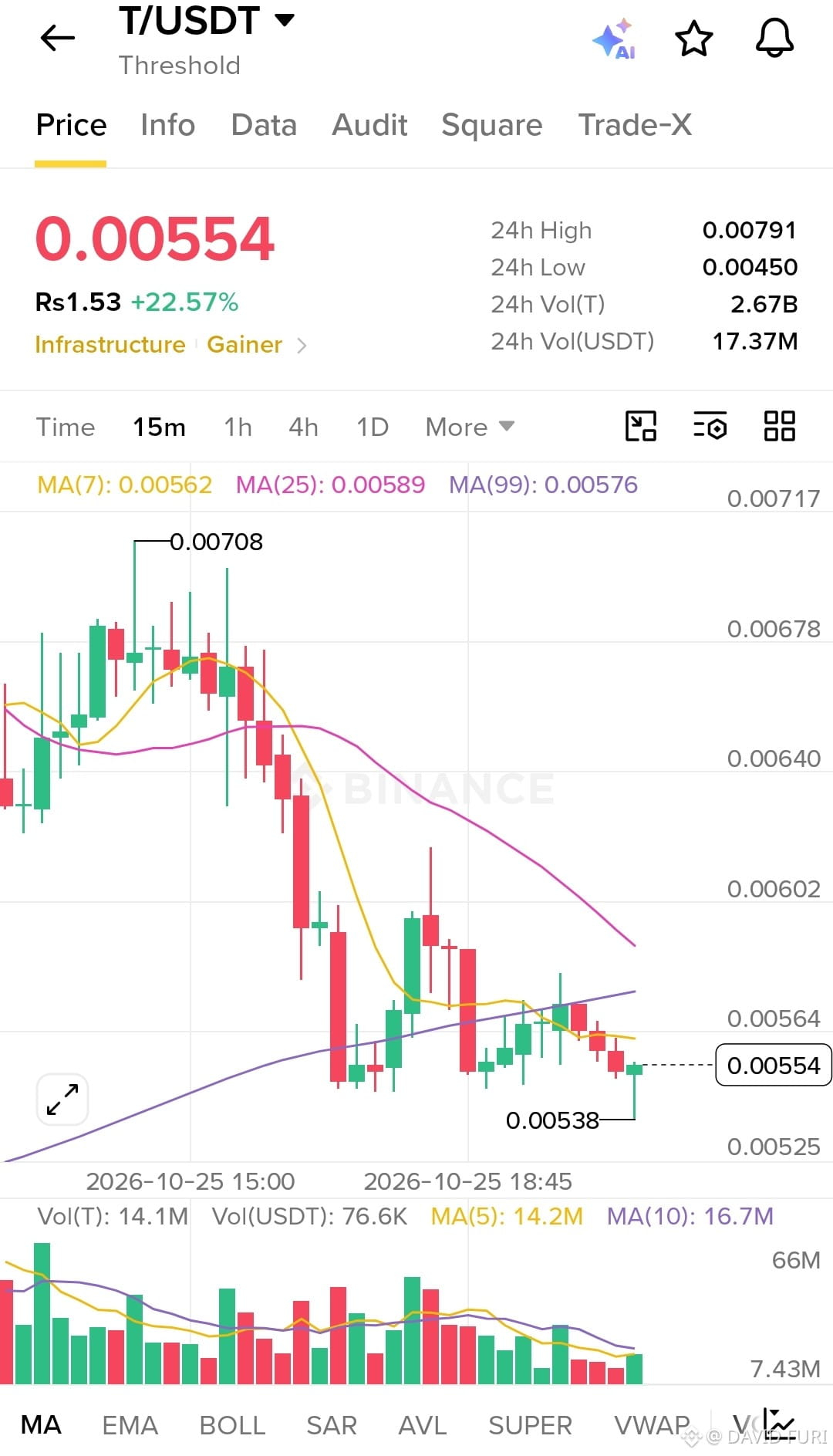
$TWST is trading at $0.00554, up 22.57% in 24 hours, but the 15m chart shows strong selling pressure after rejection from $0.00708.
Trade Setup — SHORT BIAS
- Entry: $0.00555–$0.00565
- Stop Loss: $0.00580
- TP1: $0.00538
- TP2: $0.00525
- TP3: $0.00500
Bullish Scenario: Reclaim $0.00576–$0.00589 to signal potential recovery.
Bearish Trigger: Break below $0.00538 could open the door to further downside.
Price is below the MA(7), MA(25), and MA(99)—momentum remains weak.
Will $T bounce from support or break down further?
{spot}(TUSDT)
#MARCUSB
#USQ3GDPAndSeptemberPCEDueNextWeek
#SouthKoreaDelaysCryptoIncomeTax
#ElectrumFixesHighRiskExploitInVersionsBefore4.8.3
#SouthKoreaPlansToRegulateStablecoinsUnderFXLaw
$TWST is trading at $0.00554, up 22.57% in 24 hours, but the 15m chart shows strong selling pressure after rejection from $0.00708.
Trade Setup — SHORT BIAS
- Entry: $0.00555–$0.00565
- Stop Loss: $0.00580
- TP1: $0.00538
- TP2: $0.00525
- TP3: $0.00500
Bullish Scenario: Reclaim $0.00576–$0.00589 to signal potential recovery.
Bearish Trigger: Break below $0.00538 could open the door to further downside.
Price is below the MA(7), MA(25), and MA(99)—momentum remains weak.
Will $T bounce from support or break down further?
#MARCUSB
#USQ3GDPAndSeptemberPCEDueNextWeek
#SouthKoreaDelaysCryptoIncomeTax
#ElectrumFixesHighRiskExploitInVersionsBefore4.8.3
#SouthKoreaPlansToRegulateStablecoinsUnderFXLaw
Trade Setup — SHORT BIAS
- Entry: $0.00555–$0.00565
- Stop Loss: $0.00580
- TP1: $0.00538
- TP2: $0.00525
- TP3: $0.00500
Bullish Scenario: Reclaim $0.00576–$0.00589 to signal potential recovery.
Bearish Trigger: Break below $0.00538 could open the door to further downside.
Price is below the MA(7), MA(25), and MA(99)—momentum remains weak.
Will $T bounce from support or break down further?
#MARCUSB
#USQ3GDPAndSeptemberPCEDueNextWeek
#SouthKoreaDelaysCryptoIncomeTax
#ElectrumFixesHighRiskExploitInVersionsBefore4.8.3
#SouthKoreaPlansToRegulateStablecoinsUnderFXLaw
144
·
--

Article
Bitcoin vs BNB Two Different Crypto Stories Worth WatchingThe crypto market never stays quiet for long. One day, everyone is talking about a breakout. The next day, a sudden drop has traders questioning everything. But if you look beyond the daily price movements, you start to notice something more interesting: not every cryptocurrency grows for the same reason.
Bitcoin (BTC) and BNB are good examples of this.
Bitcoin has built its reputation around scarcity, decentralization, and the idea that people should have access to money that doesn't depend on a central authority. BNB has a different story. Its value is closely connected to the activity happening across the BNB Chain ecosystem.
Both are important names in crypto, but understanding what makes them different is where the real conversation begins.
Bitcoin: Why People Still Believe in BTC
Bitcoin has something that is difficult to reproduce: a clear identity.
Since its launch, Bitcoin has attracted people who believe digital money should have a limited supply and operate independently of traditional financial institutions. Its maximum supply is capped at 21 million BTC, which is one of the main reasons people often compare it to gold.
But Bitcoin's story isn't just about scarcity. It's also about trust in its network, its global recognition, and the growing number of ways investors can gain exposure to it.
Of course, Bitcoin isn't immune to fear or uncertainty. When market liquidity dries up or investors become nervous, BTC can fall sharply. Even people who believe in its long-term future have to deal with those uncomfortable moments.
That's what makes Bitcoin interesting. Its long-term idea can remain the same while its market price changes dramatically.
BNB: A Token With a Different Purpose
BNB is interesting for another reason. It isn't simply a coin people buy and hold while waiting for the market to rise.
BNB has a practical role in the BNB Chain ecosystem. Users can spend it on network transaction fees and use it in supported blockchain applications. Its ecosystem includes decentralized finance platforms and other services that depend on blockchain infrastructure.
Think about it this way: a blockchain becomes more useful when people have genuine reasons to use it. They might want to transfer assets, interact with applications, or access decentralized financial services.
That activity can support demand for the network's native token, although demand and token prices don't always move together.
BNB also has token-burning mechanisms that remove coins from circulation. This is an important part of its supply story, but it shouldn't be mistaken for a guarantee of price growth.
Ultimately, BNB's future depends partly on whether its ecosystem continues to offer something people actually want to use.
BTC vs BNB: Which Story Is Stronger?
Honestly, there isn't one answer that works in every market condition.
Bitcoin appeals to people who believe decentralized digital scarcity will remain valuable over time. BNB appeals to those who see potential in the growth and usefulness of its blockchain ecosystem.
The difference becomes especially important during uncertain markets.
If Bitcoin starts falling sharply, fear can spread across the crypto market, putting pressure on altcoins as investors reduce risk. BNB can be affected by that broader movement, but its own ecosystem developments may also influence performance.
The reverse is possible, too. A strong altcoin rally doesn't automatically mean Bitcoin will outperform every other asset.
Instead of choosing a side based on excitement, investors should understand what they're buying and what would make their original reasons for buying no longer valid.
The Part Many Traders Ignore: Patience
One of the biggest mistakes in crypto is believing that a good project must be a good buy at every price.
It doesn't work that way.
Bitcoin can have strong fundamentals and still experience a major correction. BNB can have a useful ecosystem and still lose value during a market downturn.
This is where patience and risk management matter.
Before entering a trade, it's worth asking a few simple questions. Is the market trending upward or downward? Is price approaching an important support or resistance level? Is there real confirmation of a breakout, or is everyone reacting to a temporary move?
And perhaps most importantly, how much could you afford to lose if the trade goes against you?
These questions might not sound exciting, but they can help prevent emotional decisions when the market becomes unpredictable.
What Could Come Next?
For Bitcoin, continued demand, broader adoption, and favorable market conditions could support its long-term outlook. On the other hand, weaker demand, tighter liquidity, or changing regulations could create pressure.
For BNB, continued use of BNB Chain, healthy application activity, and meaningful ecosystem development could strengthen its investment case. Competition, security issues, regulatory changes, or declining network activity could weaken it.
Neither outcome is guaranteed.
The smart move is to follow the evidence as it develops rather than becoming attached to a price prediction. Markets change, and a good investment thesis should be flexible enough to change with them.
Final Thoughts
What makes Bitcoin and BNB worth watching isn't simply the possibility of another price rally. It's the fact that they represent two different ideas about where cryptocurrency could go next.
Bitcoin is built around the appeal of decentralized money with a limited supply. BNB is tied to the usefulness and growth of a blockchain ecosystem.
Both have strengths. Both have risks. And both deserve more analysis than a quick social-media prediction.
If you're following these assets, don't just ask when the next pump will happen. Ask what is driving demand, what the market is already pricing in, and what could change the picture.
Because in crypto, excitement can bring people into the market, but understanding is what helps them make more considered decisions.
What do you think matters more over the long run: Bitcoin's scarcity or BNB's real-world ecosystem utility?
$T $APR $BTC
{spot}(TUSDT)
{future}(APRUSDT)
{future}(BTCUSDT)
Bitcoin vs BNB Two Different Crypto Stories Worth Watching
The crypto market never stays quiet for long. One day, everyone is talking about a breakout. The next day, a sudden drop has traders questioning everything. But if you look beyond the daily price movements, you start to notice something more interesting: not every cryptocurrency grows for the same reason.
Bitcoin (BTC) and BNB are good examples of this.
Bitcoin has built its reputation around scarcity, decentralization, and the idea that people should have access to money that doesn't depend on a central authority. BNB has a different story. Its value is closely connected to the activity happening across the BNB Chain ecosystem.
Both are important names in crypto, but understanding what makes them different is where the real conversation begins.
Bitcoin: Why People Still Believe in BTC
Bitcoin has something that is difficult to reproduce: a clear identity.
Since its launch, Bitcoin has attracted people who believe digital money should have a limited supply and operate independently of traditional financial institutions. Its maximum supply is capped at 21 million BTC, which is one of the main reasons people often compare it to gold.
But Bitcoin's story isn't just about scarcity. It's also about trust in its network, its global recognition, and the growing number of ways investors can gain exposure to it.
Of course, Bitcoin isn't immune to fear or uncertainty. When market liquidity dries up or investors become nervous, BTC can fall sharply. Even people who believe in its long-term future have to deal with those uncomfortable moments.
That's what makes Bitcoin interesting. Its long-term idea can remain the same while its market price changes dramatically.
BNB: A Token With a Different Purpose
BNB is interesting for another reason. It isn't simply a coin people buy and hold while waiting for the market to rise.
BNB has a practical role in the BNB Chain ecosystem. Users can spend it on network transaction fees and use it in supported blockchain applications. Its ecosystem includes decentralized finance platforms and other services that depend on blockchain infrastructure.
Think about it this way: a blockchain becomes more useful when people have genuine reasons to use it. They might want to transfer assets, interact with applications, or access decentralized financial services.
That activity can support demand for the network's native token, although demand and token prices don't always move together.
BNB also has token-burning mechanisms that remove coins from circulation. This is an important part of its supply story, but it shouldn't be mistaken for a guarantee of price growth.
Ultimately, BNB's future depends partly on whether its ecosystem continues to offer something people actually want to use.
BTC vs BNB: Which Story Is Stronger?
Honestly, there isn't one answer that works in every market condition.
Bitcoin appeals to people who believe decentralized digital scarcity will remain valuable over time. BNB appeals to those who see potential in the growth and usefulness of its blockchain ecosystem.
The difference becomes especially important during uncertain markets.
If Bitcoin starts falling sharply, fear can spread across the crypto market, putting pressure on altcoins as investors reduce risk. BNB can be affected by that broader movement, but its own ecosystem developments may also influence performance.
The reverse is possible, too. A strong altcoin rally doesn't automatically mean Bitcoin will outperform every other asset.
Instead of choosing a side based on excitement, investors should understand what they're buying and what would make their original reasons for buying no longer valid.
The Part Many Traders Ignore: Patience
One of the biggest mistakes in crypto is believing that a good project must be a good buy at every price.
It doesn't work that way.
Bitcoin can have strong fundamentals and still experience a major correction. BNB can have a useful ecosystem and still lose value during a market downturn.
This is where patience and risk management matter.
Before entering a trade, it's worth asking a few simple questions. Is the market trending upward or downward? Is price approaching an important support or resistance level? Is there real confirmation of a breakout, or is everyone reacting to a temporary move?
And perhaps most importantly, how much could you afford to lose if the trade goes against you?
These questions might not sound exciting, but they can help prevent emotional decisions when the market becomes unpredictable.
What Could Come Next?
For Bitcoin, continued demand, broader adoption, and favorable market conditions could support its long-term outlook. On the other hand, weaker demand, tighter liquidity, or changing regulations could create pressure.
For BNB, continued use of BNB Chain, healthy application activity, and meaningful ecosystem development could strengthen its investment case. Competition, security issues, regulatory changes, or declining network activity could weaken it.
Neither outcome is guaranteed.
The smart move is to follow the evidence as it develops rather than becoming attached to a price prediction. Markets change, and a good investment thesis should be flexible enough to change with them.
Final Thoughts
What makes Bitcoin and BNB worth watching isn't simply the possibility of another price rally. It's the fact that they represent two different ideas about where cryptocurrency could go next.
Bitcoin is built around the appeal of decentralized money with a limited supply. BNB is tied to the usefulness and growth of a blockchain ecosystem.
Both have strengths. Both have risks. And both deserve more analysis than a quick social-media prediction.
If you're following these assets, don't just ask when the next pump will happen. Ask what is driving demand, what the market is already pricing in, and what could change the picture.
Because in crypto, excitement can bring people into the market, but understanding is what helps them make more considered decisions.
What do you think matters more over the long run: Bitcoin's scarcity or BNB's real-world ecosystem utility?
$T $APR $BTC
Bitcoin (BTC) and BNB are good examples of this.
Bitcoin has built its reputation around scarcity, decentralization, and the idea that people should have access to money that doesn't depend on a central authority. BNB has a different story. Its value is closely connected to the activity happening across the BNB Chain ecosystem.
Both are important names in crypto, but understanding what makes them different is where the real conversation begins.
Bitcoin: Why People Still Believe in BTC
Bitcoin has something that is difficult to reproduce: a clear identity.
Since its launch, Bitcoin has attracted people who believe digital money should have a limited supply and operate independently of traditional financial institutions. Its maximum supply is capped at 21 million BTC, which is one of the main reasons people often compare it to gold.
But Bitcoin's story isn't just about scarcity. It's also about trust in its network, its global recognition, and the growing number of ways investors can gain exposure to it.
Of course, Bitcoin isn't immune to fear or uncertainty. When market liquidity dries up or investors become nervous, BTC can fall sharply. Even people who believe in its long-term future have to deal with those uncomfortable moments.
That's what makes Bitcoin interesting. Its long-term idea can remain the same while its market price changes dramatically.
BNB: A Token With a Different Purpose
BNB is interesting for another reason. It isn't simply a coin people buy and hold while waiting for the market to rise.
BNB has a practical role in the BNB Chain ecosystem. Users can spend it on network transaction fees and use it in supported blockchain applications. Its ecosystem includes decentralized finance platforms and other services that depend on blockchain infrastructure.
Think about it this way: a blockchain becomes more useful when people have genuine reasons to use it. They might want to transfer assets, interact with applications, or access decentralized financial services.
That activity can support demand for the network's native token, although demand and token prices don't always move together.
BNB also has token-burning mechanisms that remove coins from circulation. This is an important part of its supply story, but it shouldn't be mistaken for a guarantee of price growth.
Ultimately, BNB's future depends partly on whether its ecosystem continues to offer something people actually want to use.
BTC vs BNB: Which Story Is Stronger?
Honestly, there isn't one answer that works in every market condition.
Bitcoin appeals to people who believe decentralized digital scarcity will remain valuable over time. BNB appeals to those who see potential in the growth and usefulness of its blockchain ecosystem.
The difference becomes especially important during uncertain markets.
If Bitcoin starts falling sharply, fear can spread across the crypto market, putting pressure on altcoins as investors reduce risk. BNB can be affected by that broader movement, but its own ecosystem developments may also influence performance.
The reverse is possible, too. A strong altcoin rally doesn't automatically mean Bitcoin will outperform every other asset.
Instead of choosing a side based on excitement, investors should understand what they're buying and what would make their original reasons for buying no longer valid.
The Part Many Traders Ignore: Patience
One of the biggest mistakes in crypto is believing that a good project must be a good buy at every price.
It doesn't work that way.
Bitcoin can have strong fundamentals and still experience a major correction. BNB can have a useful ecosystem and still lose value during a market downturn.
This is where patience and risk management matter.
Before entering a trade, it's worth asking a few simple questions. Is the market trending upward or downward? Is price approaching an important support or resistance level? Is there real confirmation of a breakout, or is everyone reacting to a temporary move?
And perhaps most importantly, how much could you afford to lose if the trade goes against you?
These questions might not sound exciting, but they can help prevent emotional decisions when the market becomes unpredictable.
What Could Come Next?
For Bitcoin, continued demand, broader adoption, and favorable market conditions could support its long-term outlook. On the other hand, weaker demand, tighter liquidity, or changing regulations could create pressure.
For BNB, continued use of BNB Chain, healthy application activity, and meaningful ecosystem development could strengthen its investment case. Competition, security issues, regulatory changes, or declining network activity could weaken it.
Neither outcome is guaranteed.
The smart move is to follow the evidence as it develops rather than becoming attached to a price prediction. Markets change, and a good investment thesis should be flexible enough to change with them.
Final Thoughts
What makes Bitcoin and BNB worth watching isn't simply the possibility of another price rally. It's the fact that they represent two different ideas about where cryptocurrency could go next.
Bitcoin is built around the appeal of decentralized money with a limited supply. BNB is tied to the usefulness and growth of a blockchain ecosystem.
Both have strengths. Both have risks. And both deserve more analysis than a quick social-media prediction.
If you're following these assets, don't just ask when the next pump will happen. Ask what is driving demand, what the market is already pricing in, and what could change the picture.
Because in crypto, excitement can bring people into the market, but understanding is what helps them make more considered decisions.
What do you think matters more over the long run: Bitcoin's scarcity or BNB's real-world ecosystem utility?
$T $APR $BTC
1
72
·
--
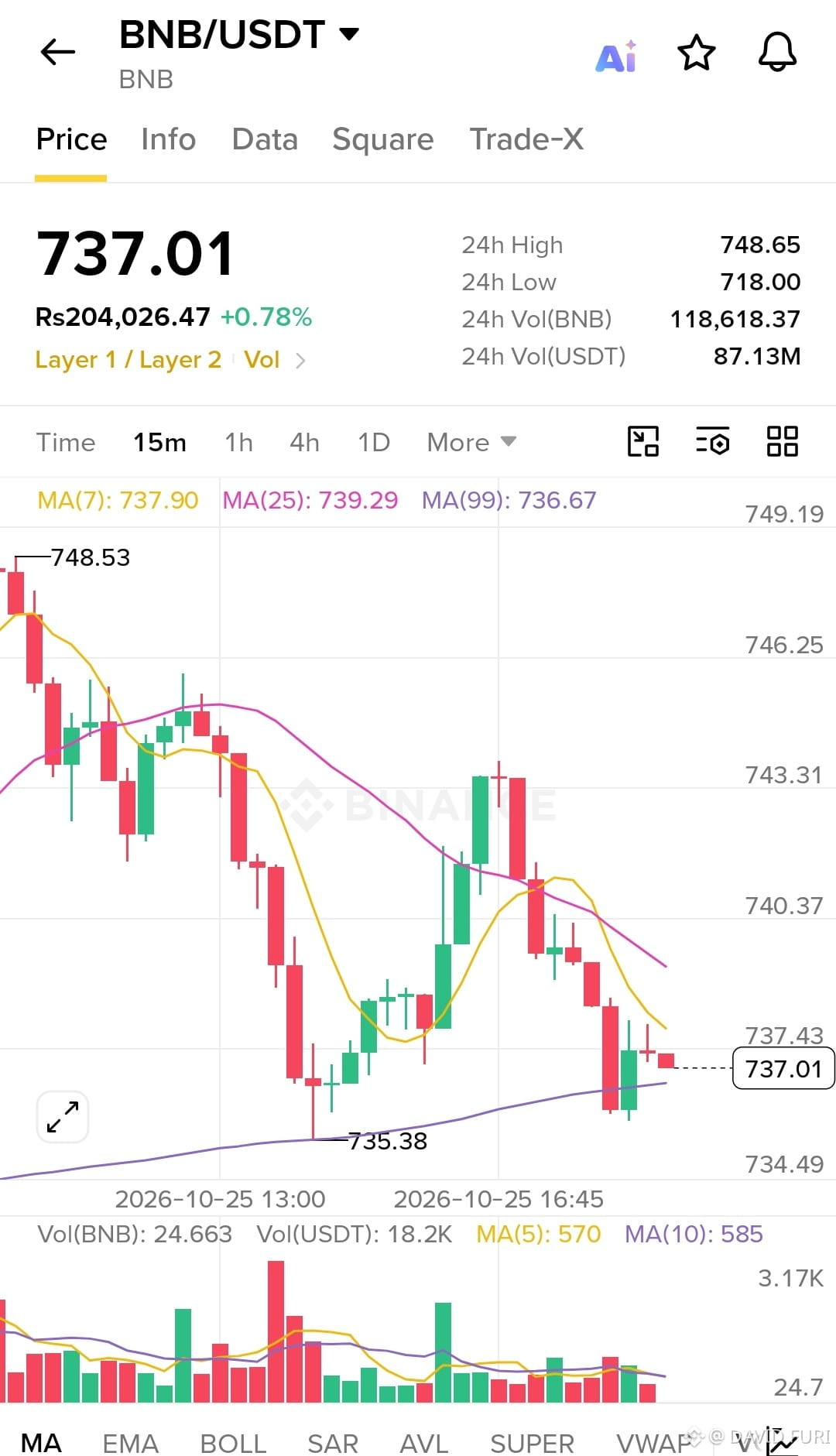
$BNB is trading at $737.01 (+0.78%) on the 15m chart, struggling below key moving averages.
Trade Setup SHORT
Entry: $737.00–$738.00
Stop Loss: $740.50
TP1: $735.40
TP2: $733.50
TP3: $731.50
Bullish Scenario: Reclaim $739.30–$740.40 to challenge higher resistance.
Key Support: $735.38
A breakdown could trigger another bearish move. A bounce may invalidate the short setup.
{spot}(BNBUSDT)
#EarningsSeason
#MARCUSB
#ElectrumFixesHighRiskExploitInVersionsBefore4.8.3
#SouthKoreaPlansToRegulateStablecoinsUnderFXLaw
#OCCRemovesStablecoinSevenDayRedemptionExtension
$BNB is trading at $737.01 (+0.78%) on the 15m chart, struggling below key moving averages.
Trade Setup SHORT
Entry: $737.00–$738.00
Stop Loss: $740.50
TP1: $735.40
TP2: $733.50
TP3: $731.50
Bullish Scenario: Reclaim $739.30–$740.40 to challenge higher resistance.
Key Support: $735.38
A breakdown could trigger another bearish move. A bounce may invalidate the short setup.
#EarningsSeason
#MARCUSB
#ElectrumFixesHighRiskExploitInVersionsBefore4.8.3
#SouthKoreaPlansToRegulateStablecoinsUnderFXLaw
#OCCRemovesStablecoinSevenDayRedemptionExtension
Trade Setup SHORT
Entry: $737.00–$738.00
Stop Loss: $740.50
TP1: $735.40
TP2: $733.50
TP3: $731.50
Bullish Scenario: Reclaim $739.30–$740.40 to challenge higher resistance.
Key Support: $735.38
A breakdown could trigger another bearish move. A bounce may invalidate the short setup.
#EarningsSeason
#MARCUSB
#ElectrumFixesHighRiskExploitInVersionsBefore4.8.3
#SouthKoreaPlansToRegulateStablecoinsUnderFXLaw
#OCCRemovesStablecoinSevenDayRedemptionExtension
56
·
--
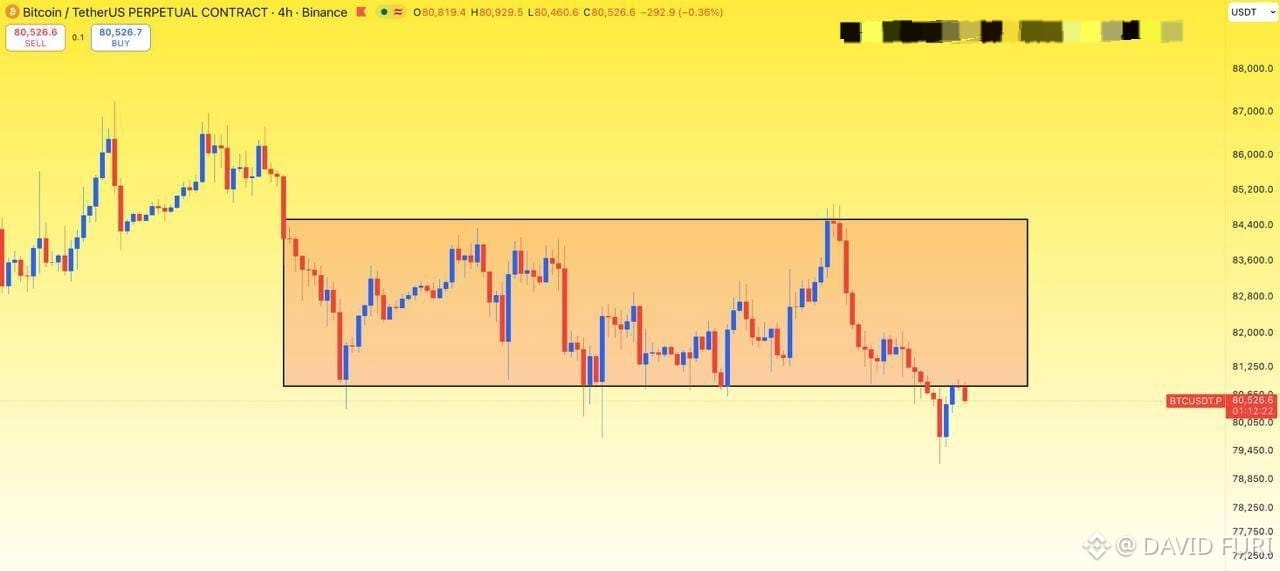
BTC AT THE EDGE: BREAKDOWN OR BOUNCE
$BTC is trading near $80,526 on the 4H chart after breaking below a key consolidation range. Bulls must reclaim the broken support quickly, or sellers could push price lower.
Trade Setup — BTCUSDT
- Current Price: $80,526
- Resistance: $81,250–$81,500
- Major Resistance: $84,400
- Support: $80,000–$79,450
- Bearish Entry: $80,000 breakdown and failed retest
- Stop Loss: $80,650
- Take Profit: $79,450 / $78,850 / $77,750
- Bullish Scenario: Reclaim $81,250 and hold for a potential move toward $82,000.
Key Trigger: A failed reclaim favors bears; a strong 4H recovery could trap late shorts.
{spot}(BTCUSDT)
#MARCUSB
#USQ3GDPAndSeptemberPCEDueNextWeek
#ElectrumFixesHighRiskExploitInVersionsBefore4.8.3
#SouthKoreaPlansToRegulateStablecoinsUnderFXLaw
#DowDrops653Points
BTC AT THE EDGE: BREAKDOWN OR BOUNCE
$BTC is trading near $80,526 on the 4H chart after breaking below a key consolidation range. Bulls must reclaim the broken support quickly, or sellers could push price lower.
Trade Setup — BTCUSDT
- Current Price: $80,526
- Resistance: $81,250–$81,500
- Major Resistance: $84,400
- Support: $80,000–$79,450
- Bearish Entry: $80,000 breakdown and failed retest
- Stop Loss: $80,650
- Take Profit: $79,450 / $78,850 / $77,750
- Bullish Scenario: Reclaim $81,250 and hold for a potential move toward $82,000.
Key Trigger: A failed reclaim favors bears; a strong 4H recovery could trap late shorts.
#MARCUSB
#USQ3GDPAndSeptemberPCEDueNextWeek
#ElectrumFixesHighRiskExploitInVersionsBefore4.8.3
#SouthKoreaPlansToRegulateStablecoinsUnderFXLaw
#DowDrops653Points
$BTC is trading near $80,526 on the 4H chart after breaking below a key consolidation range. Bulls must reclaim the broken support quickly, or sellers could push price lower.
Trade Setup — BTCUSDT
- Current Price: $80,526
- Resistance: $81,250–$81,500
- Major Resistance: $84,400
- Support: $80,000–$79,450
- Bearish Entry: $80,000 breakdown and failed retest
- Stop Loss: $80,650
- Take Profit: $79,450 / $78,850 / $77,750
- Bullish Scenario: Reclaim $81,250 and hold for a potential move toward $82,000.
Key Trigger: A failed reclaim favors bears; a strong 4H recovery could trap late shorts.
#MARCUSB
#USQ3GDPAndSeptemberPCEDueNextWeek
#ElectrumFixesHighRiskExploitInVersionsBefore4.8.3
#SouthKoreaPlansToRegulateStablecoinsUnderFXLaw
#DowDrops653Points
92
·
--
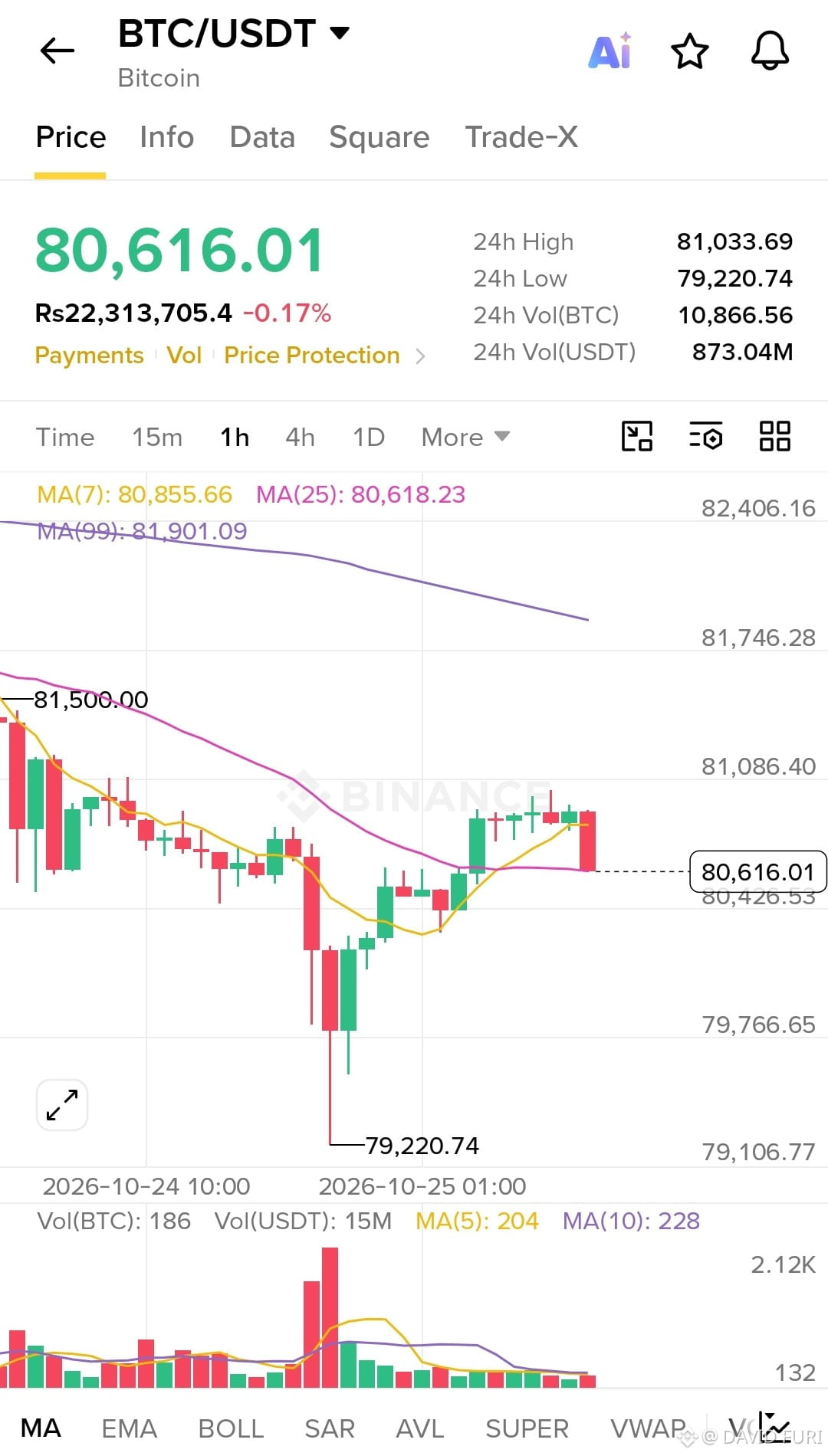
$BTC /USDT: BEARS STRIKE BACK AT $80.6K!Bitcoin is trading at $80,616.01 (-0.17%) on the 1H chart after rebounding from $79,220.74 and facing fresh selling pressure.
Trade Setup — SHORT
- Entry Zone: $80,600–$80,850
- Stop Loss: $81,100
- TP1: $80,426
- TP2: $79,766
- TP3: $79,220
Resistance: $80,850–$81,086
Support: $80,426, then $79,766
Bearish Scenario: A confirmed break below $80,426 could expose lower support levels.
Bullish Scenario: Reclaiming $80,850 and breaking $81,086 may invalidate the short-term bearish setup.
⚠️ BTC is below MA(7) $80,855 and MA(99) $81,901. Wait for confirmation before entering; these levels are based on the supplied chart.
#MARCUSB
#SouthKoreaDelaysCryptoIncomeTax
#SouthKoreaPlansToRegulateStablecoinsUnderFXLaw
#DowDrops653Points #MarketsPriceJust10%ChanceOfFedHikeNextWeek
$BTC /USDT: BEARS STRIKE BACK AT $80.6K!Bitcoin is trading at $80,616.01 (-0.17%) on the 1H chart after rebounding from $79,220.74 and facing fresh selling pressure.
Trade Setup — SHORT
- Entry Zone: $80,600–$80,850
- Stop Loss: $81,100
- TP1: $80,426
- TP2: $79,766
- TP3: $79,220
Resistance: $80,850–$81,086
Support: $80,426, then $79,766
Bearish Scenario: A confirmed break below $80,426 could expose lower support levels.
Bullish Scenario: Reclaiming $80,850 and breaking $81,086 may invalidate the short-term bearish setup.
⚠️ BTC is below MA(7) $80,855 and MA(99) $81,901. Wait for confirmation before entering; these levels are based on the supplied chart.
#MARCUSB
#SouthKoreaDelaysCryptoIncomeTax
#SouthKoreaPlansToRegulateStablecoinsUnderFXLaw
#DowDrops653Points #MarketsPriceJust10%ChanceOfFedHikeNextWeek
Trade Setup — SHORT
- Entry Zone: $80,600–$80,850
- Stop Loss: $81,100
- TP1: $80,426
- TP2: $79,766
- TP3: $79,220
Resistance: $80,850–$81,086
Support: $80,426, then $79,766
Bearish Scenario: A confirmed break below $80,426 could expose lower support levels.
Bullish Scenario: Reclaiming $80,850 and breaking $81,086 may invalidate the short-term bearish setup.
⚠️ BTC is below MA(7) $80,855 and MA(99) $81,901. Wait for confirmation before entering; these levels are based on the supplied chart.
#MARCUSB
#SouthKoreaDelaysCryptoIncomeTax
#SouthKoreaPlansToRegulateStablecoinsUnderFXLaw
#DowDrops653Points #MarketsPriceJust10%ChanceOfFedHikeNextWeek
64
·
--
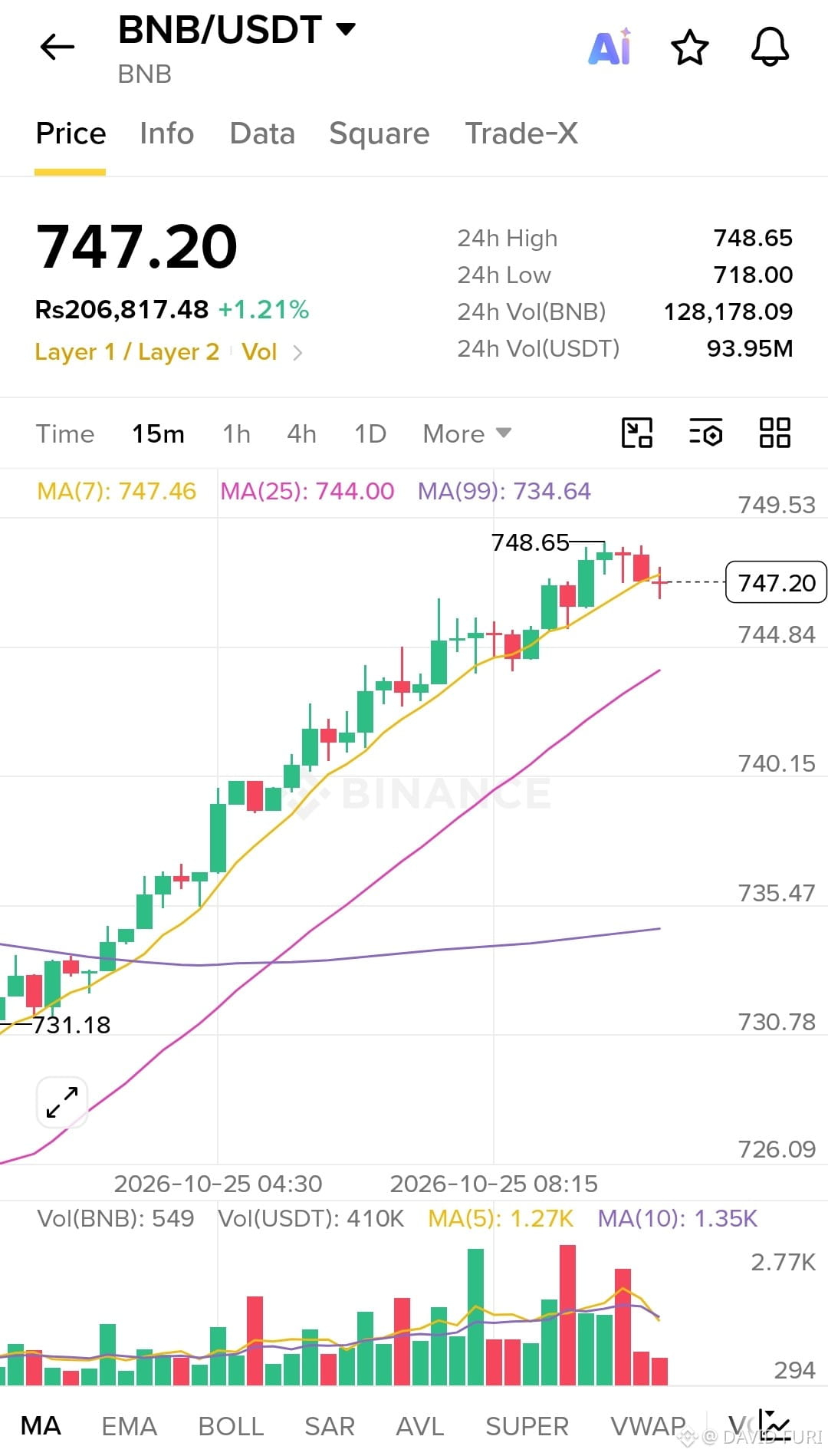
BNB/USDT: BULLS TARGET A NEW BREAKOUT!$BNB is trading at $747.20 (+1.21%) on the 15m chart after climbing from $731.18 to a fresh 24H high of $748.65. Bulls remain in control, but resistance is approaching!
Trade Setup — LONG
- Entry Zone: $745.00–$747.00
- Stop Loss: $743.80
- TP1: $748.65
- TP2: $751.00
- TP3: $754.00
Key Resistance: $748.65
Key Support: $744.00–$745.00
Bullish Scenario: A strong breakout above $748.65 could open the door toward $751–$754.
Bearish Scenario: Losing $744 may trigger a pullback toward $740.
⚠️ Wait for breakout confirmation—BNB is near resistance, and chasing the move carries risk.
{spot}(BNBUSDT)
#BinancePick
#SouthKoreaDelaysCryptoIncomeTax
#SouthKoreaPlansToRegulateStablecoinsUnderFXLaw #MARCUSB
#MarketsPriceJust10%ChanceOfFedHikeNextWeek
BNB/USDT: BULLS TARGET A NEW BREAKOUT!$BNB is trading at $747.20 (+1.21%) on the 15m chart after climbing from $731.18 to a fresh 24H high of $748.65. Bulls remain in control, but resistance is approaching!
Trade Setup — LONG
- Entry Zone: $745.00–$747.00
- Stop Loss: $743.80
- TP1: $748.65
- TP2: $751.00
- TP3: $754.00
Key Resistance: $748.65
Key Support: $744.00–$745.00
Bullish Scenario: A strong breakout above $748.65 could open the door toward $751–$754.
Bearish Scenario: Losing $744 may trigger a pullback toward $740.
⚠️ Wait for breakout confirmation—BNB is near resistance, and chasing the move carries risk.
#BinancePick
#SouthKoreaDelaysCryptoIncomeTax
#SouthKoreaPlansToRegulateStablecoinsUnderFXLaw #MARCUSB
#MarketsPriceJust10%ChanceOfFedHikeNextWeek
Trade Setup — LONG
- Entry Zone: $745.00–$747.00
- Stop Loss: $743.80
- TP1: $748.65
- TP2: $751.00
- TP3: $754.00
Key Resistance: $748.65
Key Support: $744.00–$745.00
Bullish Scenario: A strong breakout above $748.65 could open the door toward $751–$754.
Bearish Scenario: Losing $744 may trigger a pullback toward $740.
⚠️ Wait for breakout confirmation—BNB is near resistance, and chasing the move carries risk.
#BinancePick
#SouthKoreaDelaysCryptoIncomeTax
#SouthKoreaPlansToRegulateStablecoinsUnderFXLaw #MARCUSB
#MarketsPriceJust10%ChanceOfFedHikeNextWeek
83
·
--
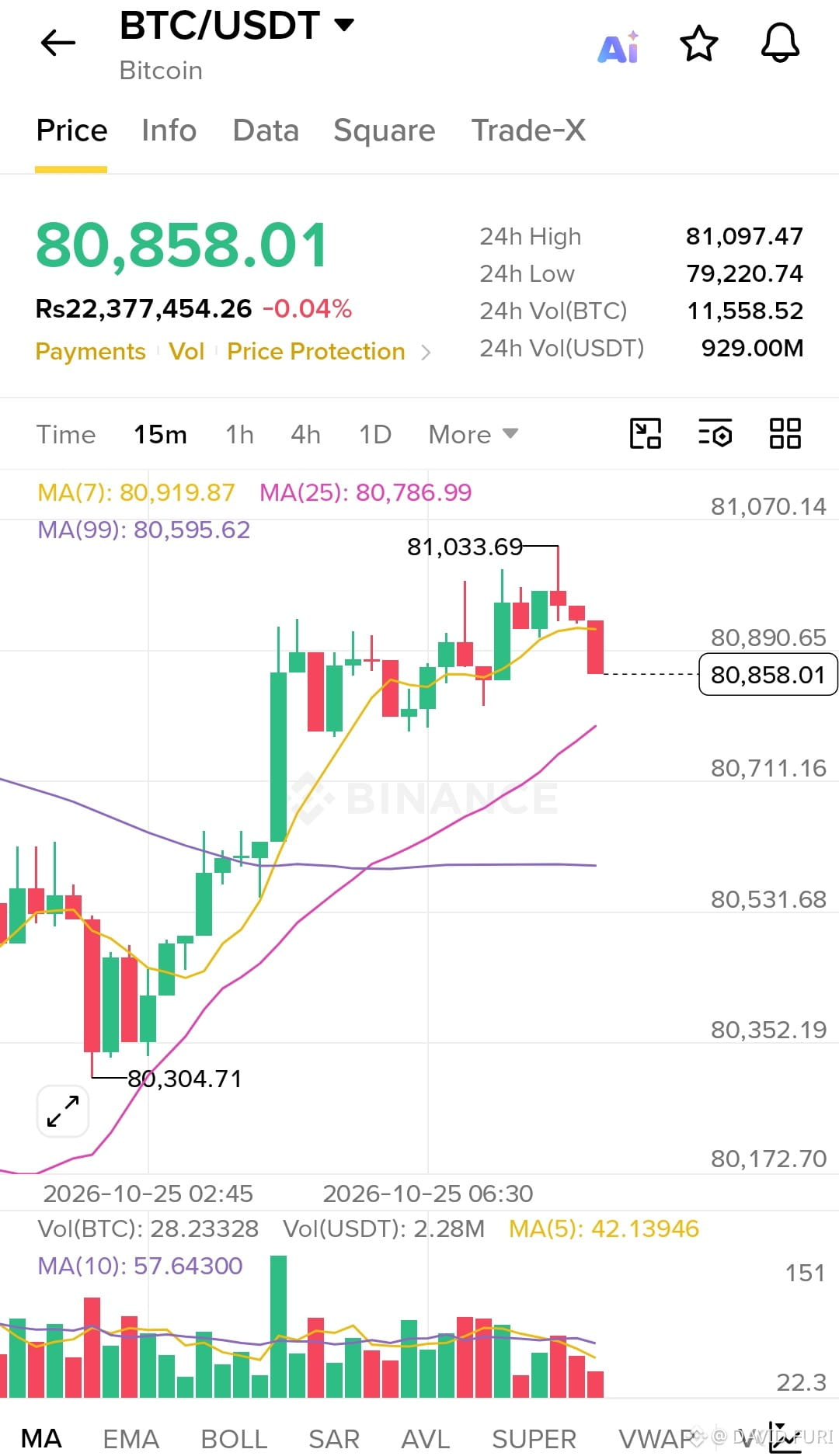
BTC/USDT: BULLS VS BEARS AT $80,858!
$BTC is cooling off after a strong rally, with sellers stepping in near $81,033 resistance. The next move could decide the short-term trend.
Current Price: $80,858.01
Resistance: $80,900–$81,033
Support: $80,787 / $80,596
Major Support: $80,531
🟢 LONG SETUP
Entry: Above $80,920 after confirmation
TP1: $81,000
TP2: $81,100
SL: $80,780
🔴 SHORT SETUP
Entry: Below $80,780 after confirmation
TP1: $80,711
TP2: $80,596
SL: $80,920
Market Bias: Cautiously bullish above support, but short-term selling pressure is visible. A breakout or breakdown confirmation is crucial.
⚠️ 15m chart setup only. Levels are conditional, not guaranteed. Manage risk carefully.
{spot}(BTCUSDT)
#BinancePick
#SouthKoreaPlansToRegulateStablecoinsUnderFXLaw
#MARCUSB
#OCCRemovesStablecoinSevenDayRedemptionExtension
#IRSPlansLowerTaxDisclosurePenaltiesForCryptoCases
BTC/USDT: BULLS VS BEARS AT $80,858!
$BTC is cooling off after a strong rally, with sellers stepping in near $81,033 resistance. The next move could decide the short-term trend.
Current Price: $80,858.01
Resistance: $80,900–$81,033
Support: $80,787 / $80,596
Major Support: $80,531
🟢 LONG SETUP
Entry: Above $80,920 after confirmation
TP1: $81,000
TP2: $81,100
SL: $80,780
🔴 SHORT SETUP
Entry: Below $80,780 after confirmation
TP1: $80,711
TP2: $80,596
SL: $80,920
Market Bias: Cautiously bullish above support, but short-term selling pressure is visible. A breakout or breakdown confirmation is crucial.
⚠️ 15m chart setup only. Levels are conditional, not guaranteed. Manage risk carefully.
#BinancePick
#SouthKoreaPlansToRegulateStablecoinsUnderFXLaw
#MARCUSB
#OCCRemovesStablecoinSevenDayRedemptionExtension
#IRSPlansLowerTaxDisclosurePenaltiesForCryptoCases
$BTC is cooling off after a strong rally, with sellers stepping in near $81,033 resistance. The next move could decide the short-term trend.
Current Price: $80,858.01
Resistance: $80,900–$81,033
Support: $80,787 / $80,596
Major Support: $80,531
🟢 LONG SETUP
Entry: Above $80,920 after confirmation
TP1: $81,000
TP2: $81,100
SL: $80,780
🔴 SHORT SETUP
Entry: Below $80,780 after confirmation
TP1: $80,711
TP2: $80,596
SL: $80,920
Market Bias: Cautiously bullish above support, but short-term selling pressure is visible. A breakout or breakdown confirmation is crucial.
⚠️ 15m chart setup only. Levels are conditional, not guaranteed. Manage risk carefully.
#BinancePick
#SouthKoreaPlansToRegulateStablecoinsUnderFXLaw
#MARCUSB
#OCCRemovesStablecoinSevenDayRedemptionExtension
#IRSPlansLowerTaxDisclosurePenaltiesForCryptoCases
260
·
--
CPI could be the Fed’s next big decision trigger.August NFP came in strong at 162K jobs, while unemployment held at 4.1%. Now all eyes are on CPI.
A hotter-than-expected print could keep the Fed hawkish, pushing yields and the dollar higher while pressuring stocks.
But if inflation cools, rate-hike expectations could fade and risk assets may catch a bid.
I’m watching core CPI most closely.
🟢 Soft CPI → Fed pressure eases → bullish for risk assets
🔴 Hot CPI → hawkish Fed → USD/yields rise → stocks pressured
Gold could be especially interesting if CPI surprises.
#CPIWatch
$TFUEL
{spot}(TFUELUSDT)
$MET
{spot}(METUSDT)
$MEME
{spot}(MEMEUSDT)
CPI could be the Fed’s next big decision trigger.August NFP came in strong at 162K jobs, while unemployment held at 4.1%. Now all eyes are on CPI.
A hotter-than-expected print could keep the Fed hawkish, pushing yields and the dollar higher while pressuring stocks.
But if inflation cools, rate-hike expectations could fade and risk assets may catch a bid.
I’m watching core CPI most closely.
🟢 Soft CPI → Fed pressure eases → bullish for risk assets
🔴 Hot CPI → hawkish Fed → USD/yields rise → stocks pressured
Gold could be especially interesting if CPI surprises.
#CPIWatch
$TFUEL
$MET
$MEME
A hotter-than-expected print could keep the Fed hawkish, pushing yields and the dollar higher while pressuring stocks.
But if inflation cools, rate-hike expectations could fade and risk assets may catch a bid.
I’m watching core CPI most closely.
🟢 Soft CPI → Fed pressure eases → bullish for risk assets
🔴 Hot CPI → hawkish Fed → USD/yields rise → stocks pressured
Gold could be especially interesting if CPI surprises.
#CPIWatch
$TFUEL
$MET
$MEME
Strong Potential
50%
Smart Technology
0%
Growing Community
0%
Future Ready
50%
4 votes • Voting closed
2
479
·
--
$RAY /USDT is heating up! 🚀
Price: 1.6761 (+28.64%)
24H High: 1.7900 | Low: 1.2835
15m trend is bullish, with price above MA7 1.6347, MA25 1.5921 & MA99 1.4988.
Entry: 1.67–1.65
Targets: 1.72 → 1.79
Stop: 1.59
Watch volume for breakout confirmation.
{spot}(RAYUSDT)
#CPIWatch
#USCoreCPIRises0.3%InAugustBeatingForecasts
#OracleJumpsOver6%OnEarningsBeat
#CLARITYActRevisionToRuleNonDeFiControllers
#TrumpDeclinesSaudiRequestToStrikeHouthis
$RAY /USDT is heating up! 🚀
Price: 1.6761 (+28.64%)
24H High: 1.7900 | Low: 1.2835
15m trend is bullish, with price above MA7 1.6347, MA25 1.5921 & MA99 1.4988.
Entry: 1.67–1.65
Targets: 1.72 → 1.79
Stop: 1.59
Watch volume for breakout confirmation.
#CPIWatch
#USCoreCPIRises0.3%InAugustBeatingForecasts
#OracleJumpsOver6%OnEarningsBeat
#CLARITYActRevisionToRuleNonDeFiControllers
#TrumpDeclinesSaudiRequestToStrikeHouthis
Price: 1.6761 (+28.64%)
24H High: 1.7900 | Low: 1.2835
15m trend is bullish, with price above MA7 1.6347, MA25 1.5921 & MA99 1.4988.
Entry: 1.67–1.65
Targets: 1.72 → 1.79
Stop: 1.59
Watch volume for breakout confirmation.
#CPIWatch
#USCoreCPIRises0.3%InAugustBeatingForecasts
#OracleJumpsOver6%OnEarningsBeat
#CLARITYActRevisionToRuleNonDeFiControllers
#TrumpDeclinesSaudiRequestToStrikeHouthis

123
·
--
$AXTIB Trade Setup
Entry: $0.0115–0.0125
Target 1: $0.0140
Target 2: $0.0165
Target 3: $0.0190
Stop Loss: Below $0.0108
$AXTIB is holding a strong accumulation zone. A breakout with rising volume could trigger a fast upside move toward the targets. Stay disciplined, wait for confirmation, and manage your risk.
{spot}(AXTIBUSDT)
#AppleChipShortageHurtsSalesForecast
#KospiHitsIntradayRecordUp17%
#NasdaqRebounds2.8%EndingSixDaySlide
#AnthropicClaudeModelsGainedUnauthorizedAccess
#USStocksOpenHigherStorageSharesRebound
$AXTIB Trade Setup
Entry: $0.0115–0.0125
Target 1: $0.0140
Target 2: $0.0165
Target 3: $0.0190
Stop Loss: Below $0.0108
$AXTIB is holding a strong accumulation zone. A breakout with rising volume could trigger a fast upside move toward the targets. Stay disciplined, wait for confirmation, and manage your risk.
#AppleChipShortageHurtsSalesForecast
#KospiHitsIntradayRecordUp17%
#NasdaqRebounds2.8%EndingSixDaySlide
#AnthropicClaudeModelsGainedUnauthorizedAccess
#USStocksOpenHigherStorageSharesRebound
Entry: $0.0115–0.0125
Target 1: $0.0140
Target 2: $0.0165
Target 3: $0.0190
Stop Loss: Below $0.0108
$AXTIB is holding a strong accumulation zone. A breakout with rising volume could trigger a fast upside move toward the targets. Stay disciplined, wait for confirmation, and manage your risk.
#AppleChipShortageHurtsSalesForecast
#KospiHitsIntradayRecordUp17%
#NasdaqRebounds2.8%EndingSixDaySlide
#AnthropicClaudeModelsGainedUnauthorizedAccess
#USStocksOpenHigherStorageSharesRebound
1
1
81
·
--
$SNXXB Trade Setup
Entry: $0.024–0.026
Target 1: $0.030
Target 2: $0.036
Target 3: $0.042
Stop Loss: Below $0.022
$SNXXB is consolidating above a key support zone. A breakout with strong volume could trigger a sharp bullish move toward the targets. Stay disciplined, wait for confirmation, and manage your risk.
{spot}(SNXXBUSDT)
#AppleChipShortageHurtsSalesForecast
#KospiHitsIntradayRecordUp17%
#NasdaqRebounds2.8%EndingSixDaySlide
#AnthropicClaudeModelsGainedUnauthorizedAccess
#USStocksOpenHigherStorageSharesRebound
$SNXXB Trade Setup
Entry: $0.024–0.026
Target 1: $0.030
Target 2: $0.036
Target 3: $0.042
Stop Loss: Below $0.022
$SNXXB is consolidating above a key support zone. A breakout with strong volume could trigger a sharp bullish move toward the targets. Stay disciplined, wait for confirmation, and manage your risk.
#AppleChipShortageHurtsSalesForecast
#KospiHitsIntradayRecordUp17%
#NasdaqRebounds2.8%EndingSixDaySlide
#AnthropicClaudeModelsGainedUnauthorizedAccess
#USStocksOpenHigherStorageSharesRebound
Entry: $0.024–0.026
Target 1: $0.030
Target 2: $0.036
Target 3: $0.042
Stop Loss: Below $0.022
$SNXXB is consolidating above a key support zone. A breakout with strong volume could trigger a sharp bullish move toward the targets. Stay disciplined, wait for confirmation, and manage your risk.
#AppleChipShortageHurtsSalesForecast
#KospiHitsIntradayRecordUp17%
#NasdaqRebounds2.8%EndingSixDaySlide
#AnthropicClaudeModelsGainedUnauthorizedAccess
#USStocksOpenHigherStorageSharesRebound
1
91
·
--
$HOLO Trade Setup
Entry: $0.17–0.19
Target 1: $0.22
Target 2: $0.27
Target 3: $0.33
Stop Loss: Below $0.16
$HOLO is holding a key demand zone. A breakout with strong buying volume could ignite a fast upside move toward the targets. Stay patient, trade the confirmation, and manage your risk.
{spot}(HOLOUSDT)
#AppleChipShortageHurtsSalesForecast
#KospiHitsIntradayRecordUp17%
#NasdaqRebounds2.8%EndingSixDaySlide
#AnthropicClaudeModelsGainedUnauthorizedAccess
#USStocksOpenHigherStorageSharesRebound
$HOLO Trade Setup
Entry: $0.17–0.19
Target 1: $0.22
Target 2: $0.27
Target 3: $0.33
Stop Loss: Below $0.16
$HOLO is holding a key demand zone. A breakout with strong buying volume could ignite a fast upside move toward the targets. Stay patient, trade the confirmation, and manage your risk.
#AppleChipShortageHurtsSalesForecast
#KospiHitsIntradayRecordUp17%
#NasdaqRebounds2.8%EndingSixDaySlide
#AnthropicClaudeModelsGainedUnauthorizedAccess
#USStocksOpenHigherStorageSharesRebound
Entry: $0.17–0.19
Target 1: $0.22
Target 2: $0.27
Target 3: $0.33
Stop Loss: Below $0.16
$HOLO is holding a key demand zone. A breakout with strong buying volume could ignite a fast upside move toward the targets. Stay patient, trade the confirmation, and manage your risk.
#AppleChipShortageHurtsSalesForecast
#KospiHitsIntradayRecordUp17%
#NasdaqRebounds2.8%EndingSixDaySlide
#AnthropicClaudeModelsGainedUnauthorizedAccess
#USStocksOpenHigherStorageSharesRebound
167
·
--
$GIGGLE Trade Setup
Entry: $0.028–0.031
Target 1: $0.036
Target 2: $0.043
Target 3: $0.052
Stop Loss: Below $0.026
$GIGGLE is holding a key accumulation zone. A breakout backed by strong volume could trigger a rapid upside move toward the targets. Stay disciplined, wait for confirmation, and manage your risk.
{spot}(GIGGLEUSDT)
#AppleChipShortageHurtsSalesForecast
#KospiHitsIntradayRecordUp17%
#NasdaqRebounds2.8%EndingSixDaySlide
#AnthropicClaudeModelsGainedUnauthorizedAccess
#KospiJumpsRecord15%
$GIGGLE Trade Setup
Entry: $0.028–0.031
Target 1: $0.036
Target 2: $0.043
Target 3: $0.052
Stop Loss: Below $0.026
$GIGGLE is holding a key accumulation zone. A breakout backed by strong volume could trigger a rapid upside move toward the targets. Stay disciplined, wait for confirmation, and manage your risk.
#AppleChipShortageHurtsSalesForecast
#KospiHitsIntradayRecordUp17%
#NasdaqRebounds2.8%EndingSixDaySlide
#AnthropicClaudeModelsGainedUnauthorizedAccess
#KospiJumpsRecord15%
Entry: $0.028–0.031
Target 1: $0.036
Target 2: $0.043
Target 3: $0.052
Stop Loss: Below $0.026
$GIGGLE is holding a key accumulation zone. A breakout backed by strong volume could trigger a rapid upside move toward the targets. Stay disciplined, wait for confirmation, and manage your risk.
#AppleChipShortageHurtsSalesForecast
#KospiHitsIntradayRecordUp17%
#NasdaqRebounds2.8%EndingSixDaySlide
#AnthropicClaudeModelsGainedUnauthorizedAccess
#KospiJumpsRecord15%
244
·
--
$MUUB Trade Setup
Entry: $0.038–0.042
Target 1: $0.048
Target 2: $0.056
Target 3: $0.065
Stop Loss: Below $0.035
$MUUB is building momentum near a key demand zone. A breakout with strong buying volume could trigger a swift rally toward the targets. Stay disciplined, wait for confirmation, and manage your risk.
{spot}(MUUBUSDT)
#AppleChipShortageHurtsSalesForecast
#KospiHitsIntradayRecordUp17%
#NasdaqRebounds2.8%EndingSixDaySlide
#AnthropicClaudeModelsGainedUnauthorizedAccess
#KospiJumpsRecord15%
$MUUB Trade Setup
Entry: $0.038–0.042
Target 1: $0.048
Target 2: $0.056
Target 3: $0.065
Stop Loss: Below $0.035
$MUUB is building momentum near a key demand zone. A breakout with strong buying volume could trigger a swift rally toward the targets. Stay disciplined, wait for confirmation, and manage your risk.
#AppleChipShortageHurtsSalesForecast
#KospiHitsIntradayRecordUp17%
#NasdaqRebounds2.8%EndingSixDaySlide
#AnthropicClaudeModelsGainedUnauthorizedAccess
#KospiJumpsRecord15%
Entry: $0.038–0.042
Target 1: $0.048
Target 2: $0.056
Target 3: $0.065
Stop Loss: Below $0.035
$MUUB is building momentum near a key demand zone. A breakout with strong buying volume could trigger a swift rally toward the targets. Stay disciplined, wait for confirmation, and manage your risk.
#AppleChipShortageHurtsSalesForecast
#KospiHitsIntradayRecordUp17%
#NasdaqRebounds2.8%EndingSixDaySlide
#AnthropicClaudeModelsGainedUnauthorizedAccess
#KospiJumpsRecord15%
115
·
--
$NBISB Trade Setup
Entry: $0.014–0.015
Target 1: $0.017
Target 2: $0.020
Target 3: $0.024
Stop Loss: Below $0.0132
$NBISB is holding a strong support zone. A breakout with increasing volume could trigger a sharp bullish move toward the targets. Stay patient, trade the confirmation, and manage your risk.
{spot}(NBISBUSDT)
#SpaceXExtendsSlide
#ZhongjiInnolightFalls12.77%OnHKDebut
#SouthKoreaProposesSuspiciousCryptoAccountFreeze
#KoreanStocksReboundOnSamsungResults
#FOMCWatching
$NBISB Trade Setup
Entry: $0.014–0.015
Target 1: $0.017
Target 2: $0.020
Target 3: $0.024
Stop Loss: Below $0.0132
$NBISB is holding a strong support zone. A breakout with increasing volume could trigger a sharp bullish move toward the targets. Stay patient, trade the confirmation, and manage your risk.
#SpaceXExtendsSlide
#ZhongjiInnolightFalls12.77%OnHKDebut
#SouthKoreaProposesSuspiciousCryptoAccountFreeze
#KoreanStocksReboundOnSamsungResults
#FOMCWatching
Entry: $0.014–0.015
Target 1: $0.017
Target 2: $0.020
Target 3: $0.024
Stop Loss: Below $0.0132
$NBISB is holding a strong support zone. A breakout with increasing volume could trigger a sharp bullish move toward the targets. Stay patient, trade the confirmation, and manage your risk.
#SpaceXExtendsSlide
#ZhongjiInnolightFalls12.77%OnHKDebut
#SouthKoreaProposesSuspiciousCryptoAccountFreeze
#KoreanStocksReboundOnSamsungResults
#FOMCWatching
1
41
·
--
$CAP Trade Setup
Entry: $0.18–0.20
Target 1: $0.23
Target 2: $0.27
Target 3: $0.32
Stop Loss: Below $0.17
$CAP is holding a key accumulation zone. A breakout with strong volume could ignite a powerful rally toward the targets. Stay disciplined, wait for confirmation, and manage your risk.
{future}(CAPUSDT)
#USGDPGrows1.5%InQ2
#SpaceXExtendsSlide
#ZhongjiInnolightFalls12.77%OnHKDebut
#FOMCWatching
#SouthKoreaProposesSuspiciousCryptoAccountFreeze
$CAP Trade Setup
Entry: $0.18–0.20
Target 1: $0.23
Target 2: $0.27
Target 3: $0.32
Stop Loss: Below $0.17
$CAP is holding a key accumulation zone. A breakout with strong volume could ignite a powerful rally toward the targets. Stay disciplined, wait for confirmation, and manage your risk.
#USGDPGrows1.5%InQ2
#SpaceXExtendsSlide
#ZhongjiInnolightFalls12.77%OnHKDebut
#FOMCWatching
#SouthKoreaProposesSuspiciousCryptoAccountFreeze
Entry: $0.18–0.20
Target 1: $0.23
Target 2: $0.27
Target 3: $0.32
Stop Loss: Below $0.17
$CAP is holding a key accumulation zone. A breakout with strong volume could ignite a powerful rally toward the targets. Stay disciplined, wait for confirmation, and manage your risk.
#USGDPGrows1.5%InQ2
#SpaceXExtendsSlide
#ZhongjiInnolightFalls12.77%OnHKDebut
#FOMCWatching
#SouthKoreaProposesSuspiciousCryptoAccountFreeze
1
146
Log in to explore more content
Join global crypto users on Binance Square
⚡️ Get latest and useful information about crypto.
💬 Trusted by the world’s largest crypto exchange.
👍 Discover real insights from verified creators.
Email / Phone number