

大弟壹号
195 Posts

大弟壹号
Report
Block User
⭐ 币安首批神盾严选商家
⭐ 已加入平台严选商家保障计划(冻结包赔)
⭐ 已签署平台严选冻结赔付协议
Open Trade
Frequent Trader
4.5 Years
27 Following
273 Followers
134 Liked
Posts
Portfolio
All
Quotes
Videos
PINNED
·
--
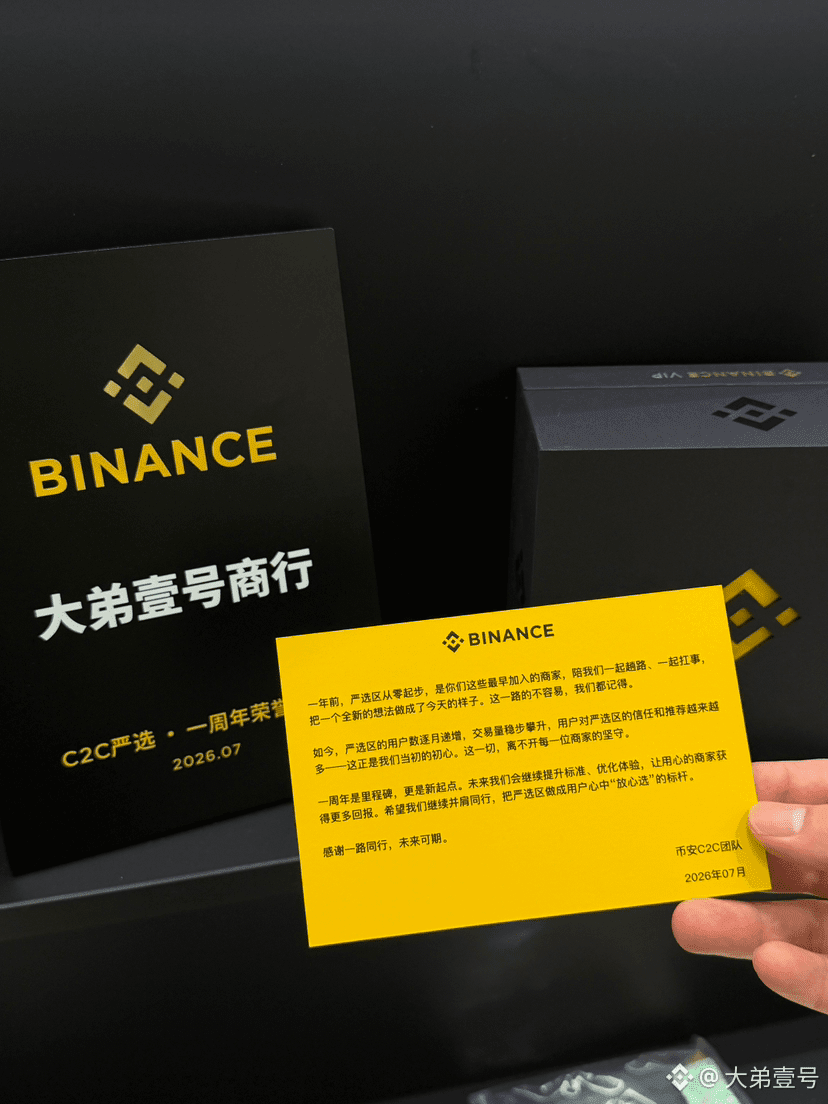
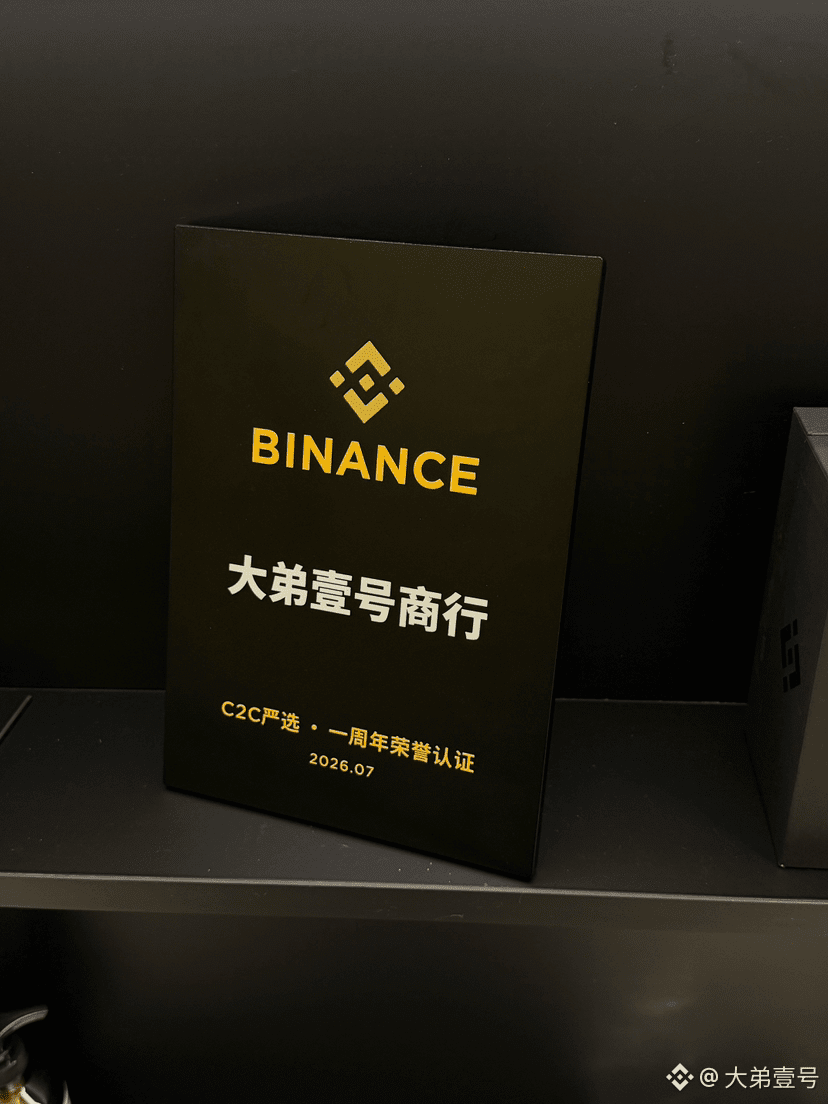
Binance C2C Selected One-Year Anniversary🎉
Officially certified as one of the first Shielded Selection merchants🎉
Five years ago, I joined Binance C2C—from being an ordinary merchant at the beginning, to becoming part of the Shielded system, and then to being among the first merchants in the Selected area. Along the way, I’ve witnessed the platform’s rules being continuously refined and the ecosystem growing steadily. I feel truly honored to participate in, and witness, Binance C2C’s journey toward maturity ❤️
For me, this medal is not only a recognition, but also a responsibility. Because behind every transaction is the trust users place in us. Over the past five years, I’ve remained committed to handling every order diligently—building a reputation through time, and safeguarding trust through actions.
Thank you, Binance C2C, for this recognition. And thank you to every friend who has supported and trusted me along the way. Five years together, with the original intention unchanged. Going forward, I will continue to stay professional, deliver every service with care, and cherish every bit of trust 🙏
#神盾严选 #安全出金 @Binance C2C Chinese
Binance C2C Selected One-Year Anniversary🎉
Officially certified as one of the first Shielded Selection merchants🎉
Five years ago, I joined Binance C2C—from being an ordinary merchant at the beginning, to becoming part of the Shielded system, and then to being among the first merchants in the Selected area. Along the way, I’ve witnessed the platform’s rules being continuously refined and the ecosystem growing steadily. I feel truly honored to participate in, and witness, Binance C2C’s journey toward maturity ❤️
For me, this medal is not only a recognition, but also a responsibility. Because behind every transaction is the trust users place in us. Over the past five years, I’ve remained committed to handling every order diligently—building a reputation through time, and safeguarding trust through actions.
Thank you, Binance C2C, for this recognition. And thank you to every friend who has supported and trusted me along the way. Five years together, with the original intention unchanged. Going forward, I will continue to stay professional, deliver every service with care, and cherish every bit of trust 🙏
#神盾严选 #安全出金 @Binance C2C Chinese
Officially certified as one of the first Shielded Selection merchants🎉
Five years ago, I joined Binance C2C—from being an ordinary merchant at the beginning, to becoming part of the Shielded system, and then to being among the first merchants in the Selected area. Along the way, I’ve witnessed the platform’s rules being continuously refined and the ecosystem growing steadily. I feel truly honored to participate in, and witness, Binance C2C’s journey toward maturity ❤️
For me, this medal is not only a recognition, but also a responsibility. Because behind every transaction is the trust users place in us. Over the past five years, I’ve remained committed to handling every order diligently—building a reputation through time, and safeguarding trust through actions.
Thank you, Binance C2C, for this recognition. And thank you to every friend who has supported and trusted me along the way. Five years together, with the original intention unchanged. Going forward, I will continue to stay professional, deliver every service with care, and cherish every bit of trust 🙏
#神盾严选 #安全出金 @Binance C2C Chinese

164
PINNED
·
--
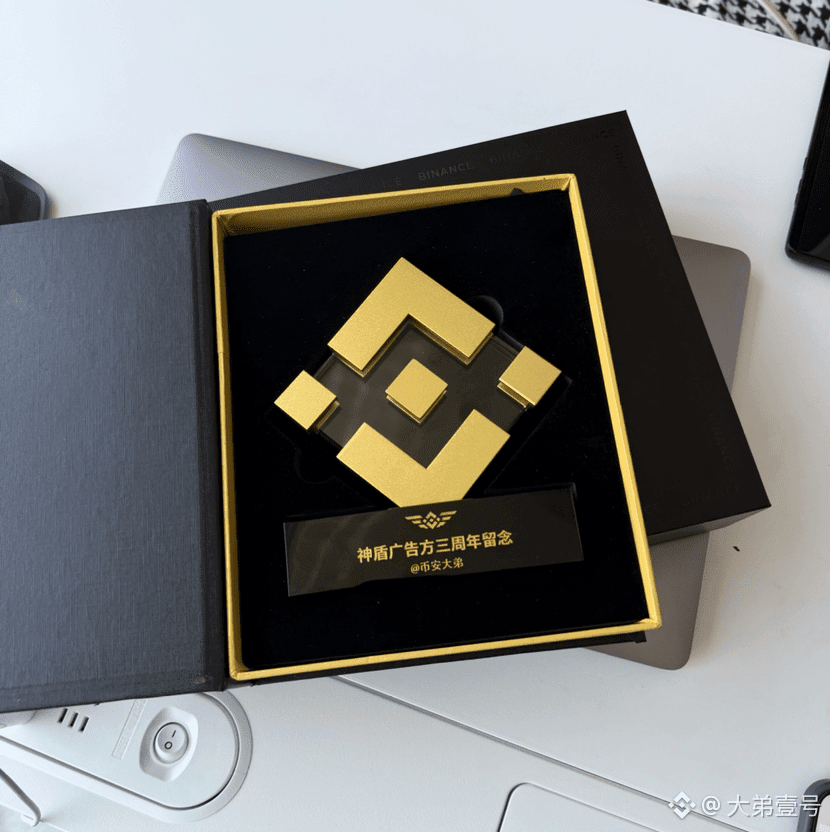
Big Brother No.1 Professional Digital Currency Trading Merchant
Veteran Shield Selection Ad Partner🔥
* Online Service Days 1300+
* Number of Service Clients 60,000+
* Total Trading Orders 100,000+
Binance Big Brother Online, Focused on Fund Security
Only Accepts On-Chain USDT and Trades Only on Binance Exchange, Deep Partnership with Binance Platform Ad Partner with Trillions in Transaction Volume!
Zero Online Freeze, Zero Judicial Holders, Honest Operation, Long-Term Online, Binance Platform Signed Freeze Compensation Agreement!
Payment Accounts Use Separation of Receipt and Payment + Fund Accumulation + Investment Fund Payment, Commitment to Full Compensation in Case of Judicial Issues Due to Personal Payouts!
If You Value Fund Security and Reject Any Risks
Then Prioritize Following Big Brother No.1
Time Is the Best Testimony of Trust!
Big Brother No.1 Professional Digital Currency Trading Merchant
Veteran Shield Selection Ad Partner🔥
* Online Service Days 1300+
* Number of Service Clients 60,000+
* Total Trading Orders 100,000+
Binance Big Brother Online, Focused on Fund Security
Only Accepts On-Chain USDT and Trades Only on Binance Exchange, Deep Partnership with Binance Platform Ad Partner with Trillions in Transaction Volume!
Zero Online Freeze, Zero Judicial Holders, Honest Operation, Long-Term Online, Binance Platform Signed Freeze Compensation Agreement!
Payment Accounts Use Separation of Receipt and Payment + Fund Accumulation + Investment Fund Payment, Commitment to Full Compensation in Case of Judicial Issues Due to Personal Payouts!
If You Value Fund Security and Reject Any Risks
Then Prioritize Following Big Brother No.1
Time Is the Best Testimony of Trust!
Veteran Shield Selection Ad Partner🔥
* Online Service Days 1300+
* Number of Service Clients 60,000+
* Total Trading Orders 100,000+
Binance Big Brother Online, Focused on Fund Security
Only Accepts On-Chain USDT and Trades Only on Binance Exchange, Deep Partnership with Binance Platform Ad Partner with Trillions in Transaction Volume!
Zero Online Freeze, Zero Judicial Holders, Honest Operation, Long-Term Online, Binance Platform Signed Freeze Compensation Agreement!
Payment Accounts Use Separation of Receipt and Payment + Fund Accumulation + Investment Fund Payment, Commitment to Full Compensation in Case of Judicial Issues Due to Personal Payouts!
If You Value Fund Security and Reject Any Risks
Then Prioritize Following Big Brother No.1
Time Is the Best Testimony of Trust!

1
251
·
--
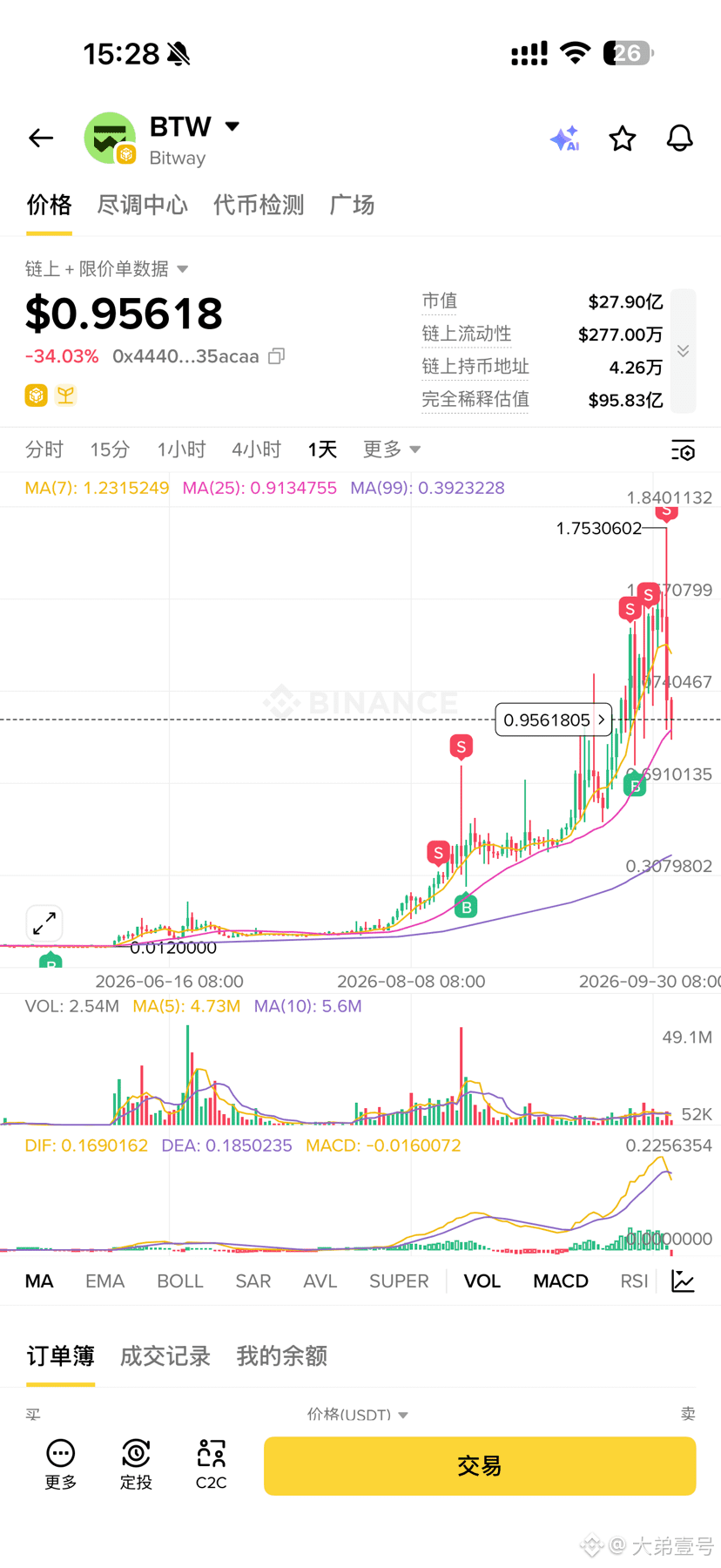
$BTW will still surge up to 3-5, whether high or low; I can’t hold it.
$BTW will still surge up to 3-5, whether high or low; I can’t hold it.
328
·
--
Holding $BTW 24.2K USDT
$BTW This thing has to get to 2.5-3, go up, go up
$BTW This thing has to get to 2.5-3, go up, go up
211
·
--
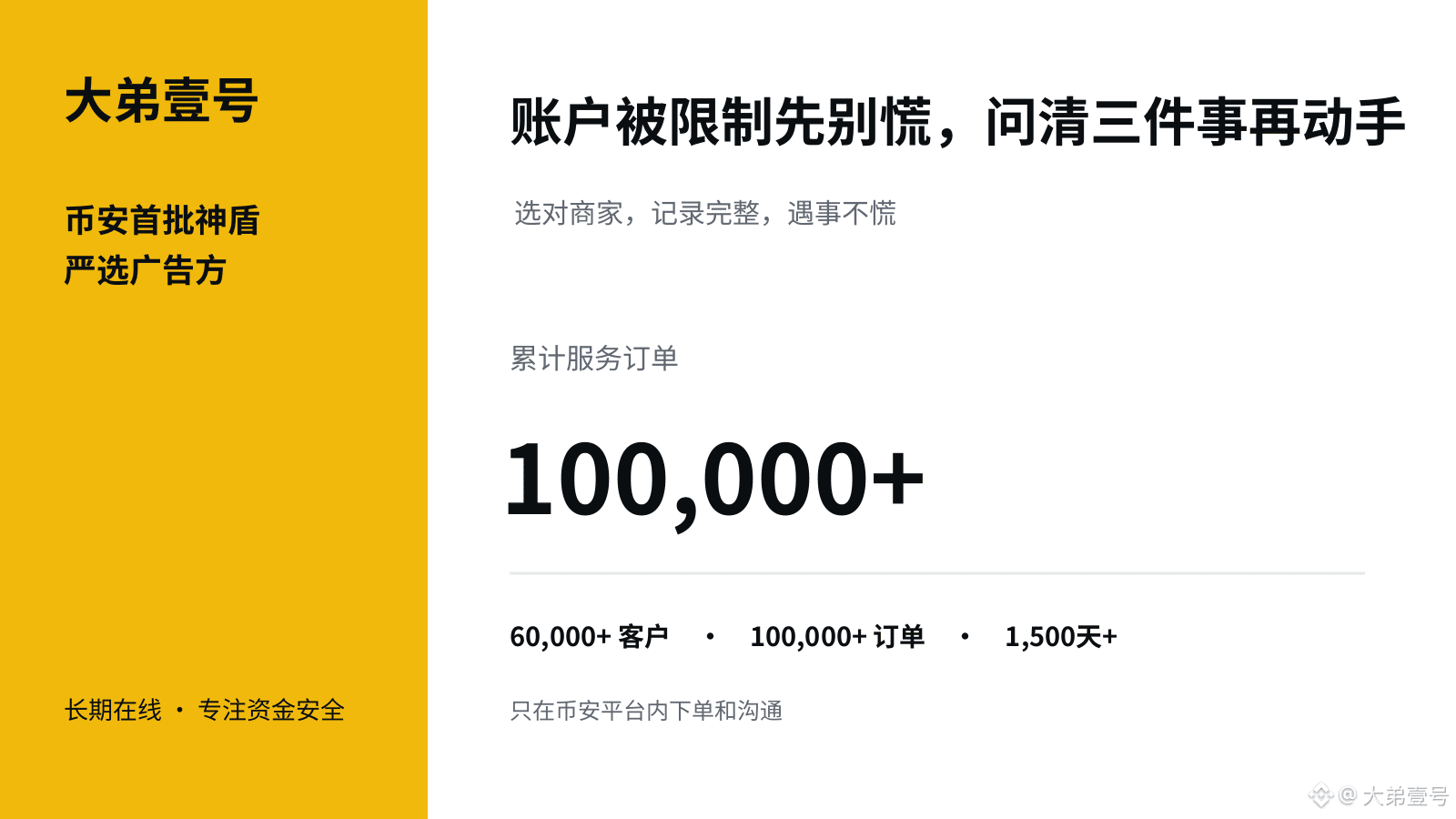
After your bank card is restricted, the first thing to do is not to think about how to transfer the money out, but to first clarify the restriction type, duration, and the contacting authority. Many people panic as soon as they see account abnormalities, rush to delete chat records, transfer U to another card, or even argue with merchants, and end up scaring themselves before they have even asked all the relevant information; in the end, a small issue gets turned into a big trouble. A bank restriction always has a specific trigger and scope. Only by asking whether it is just a non-counter service suspension or a freeze on funds, how long the restriction will last, and which authority requested it can you judge how to cooperate next, instead of blindly acting and wiping out normal transaction records. These records are actually the key to proving your innocence: orders, payment receipts, platform chats—do not delete any of them. So from the very beginning, when choosing a merchant, you must stick to a few hard standards: prioritize merchants who are online for long periods, have stable transaction records, use real-name payment and receipt, have clear procedures, and are included in platform protection. For merchants like this, every transfer and every conversation you make has a complete chain of evidence. If the bank ever asks, you can produce complete proof and won’t be left helpless. Keep your records well in normal times, and you won’t panic when problems arise. If your account becomes abnormal, confirm first and then handle it; that is more useful than any temporary fix.
For withdrawals, find Da Di No. 1. An early selected Ad partner for Binance Shendun, focused on fund safety, and has signed the platform’s selected merchant freeze 100% compensation agreement. Please go to the homepage and follow, and contact me directly when needed.
$USDT $BTC
After your bank card is restricted, the first thing to do is not to think about how to transfer the money out, but to first clarify the restriction type, duration, and the contacting authority. Many people panic as soon as they see account abnormalities, rush to delete chat records, transfer U to another card, or even argue with merchants, and end up scaring themselves before they have even asked all the relevant information; in the end, a small issue gets turned into a big trouble. A bank restriction always has a specific trigger and scope. Only by asking whether it is just a non-counter service suspension or a freeze on funds, how long the restriction will last, and which authority requested it can you judge how to cooperate next, instead of blindly acting and wiping out normal transaction records. These records are actually the key to proving your innocence: orders, payment receipts, platform chats—do not delete any of them. So from the very beginning, when choosing a merchant, you must stick to a few hard standards: prioritize merchants who are online for long periods, have stable transaction records, use real-name payment and receipt, have clear procedures, and are included in platform protection. For merchants like this, every transfer and every conversation you make has a complete chain of evidence. If the bank ever asks, you can produce complete proof and won’t be left helpless. Keep your records well in normal times, and you won’t panic when problems arise. If your account becomes abnormal, confirm first and then handle it; that is more useful than any temporary fix.
For withdrawals, find Da Di No. 1. An early selected Ad partner for Binance Shendun, focused on fund safety, and has signed the platform’s selected merchant freeze 100% compensation agreement. Please go to the homepage and follow, and contact me directly when needed.
$USDT $BTC
For withdrawals, find Da Di No. 1. An early selected Ad partner for Binance Shendun, focused on fund safety, and has signed the platform’s selected merchant freeze 100% compensation agreement. Please go to the homepage and follow, and contact me directly when needed.
$USDT $BTC
1
231
·
--
What makes people most uneasy when buying U is not the review itself, but that the other party never clearly says what the information is for. They make you fill in a bunch of account details and upload a bunch of screenshots right away, and when you ask why, they just say it’s for risk control. I can’t keep doing business like that. On the flip side, it’s even scarier when they don’t verify anything at all and just let things through. That only shows they can’t even be bothered to handle basic fund security, and if something goes wrong, you’re left to bear it all yourself. A real review should have boundaries and should explain things clearly: which information must be verified, why it’s being verified, where in the platform the submission should be made, and who has access after submission. All of that should be clearly written into the process. The merchants I choose only need to meet a few hard standards: long-term online, stable transaction history, verified name-based payment and receipt, clear procedures, and participation in platform protection. Necessary information should be submitted within the platform with the purpose explained. If someone can’t accept this kind of process, just switch to someone else. Don’t keep pushing each other halfway through. More review does not mean more safety; understanding the boundaries is what professionalism is.
For withdrawals, find Dadi No. 1. One of Binance’s first officially selected Shendun advertisers, focused on fund security, and already signed the platform’s selected merchant frozen-funds 100% compensation agreement. Please go to the homepage and follow me; contact me directly when needed.
$USDT $BTC
What makes people most uneasy when buying U is not the review itself, but that the other party never clearly says what the information is for. They make you fill in a bunch of account details and upload a bunch of screenshots right away, and when you ask why, they just say it’s for risk control. I can’t keep doing business like that. On the flip side, it’s even scarier when they don’t verify anything at all and just let things through. That only shows they can’t even be bothered to handle basic fund security, and if something goes wrong, you’re left to bear it all yourself. A real review should have boundaries and should explain things clearly: which information must be verified, why it’s being verified, where in the platform the submission should be made, and who has access after submission. All of that should be clearly written into the process. The merchants I choose only need to meet a few hard standards: long-term online, stable transaction history, verified name-based payment and receipt, clear procedures, and participation in platform protection. Necessary information should be submitted within the platform with the purpose explained. If someone can’t accept this kind of process, just switch to someone else. Don’t keep pushing each other halfway through. More review does not mean more safety; understanding the boundaries is what professionalism is.
For withdrawals, find Dadi No. 1. One of Binance’s first officially selected Shendun advertisers, focused on fund security, and already signed the platform’s selected merchant frozen-funds 100% compensation agreement. Please go to the homepage and follow me; contact me directly when needed.
$USDT $BTC
For withdrawals, find Dadi No. 1. One of Binance’s first officially selected Shendun advertisers, focused on fund security, and already signed the platform’s selected merchant frozen-funds 100% compensation agreement. Please go to the homepage and follow me; contact me directly when needed.
$USDT $BTC
83
·
--
BTC has fallen by a little over one point in the past 24 hours. In the crypto market, a drop of this magnitude doesn’t even count as a ripple, but some people still treat it as a signal of a trend reversal. Those who sell in panic aren’t really bearish; they’re just afraid they won’t be able to hold on. Those who buy the dip aren’t really bullish either; they’re afraid of missing the rebound. In fact, this kind of small red candle says nothing at all. It hasn’t broken down on volume, and it hasn’t flushed out the panic sellers; it just means the market moved around a bit out of boredom. A real decline comes with volume and smashes through key levels, catching everyone off guard. A real bottom appears after despair, not in a slow, grinding drift lower. So my view is very clear: this small drop doesn’t count as a drop, and even if it bounces back, that doesn’t count as a real rise. Right now, taking any direction is just paying fees to the market. If you’re heavily positioned, don’t scare yourself; if the logic hasn’t broken, just hold. If you’re in cash, don’t think it’s cheap either; without panic and volume, it’s not a bottom.
$BTC
BTC has fallen by a little over one point in the past 24 hours. In the crypto market, a drop of this magnitude doesn’t even count as a ripple, but some people still treat it as a signal of a trend reversal. Those who sell in panic aren’t really bearish; they’re just afraid they won’t be able to hold on. Those who buy the dip aren’t really bullish either; they’re afraid of missing the rebound. In fact, this kind of small red candle says nothing at all. It hasn’t broken down on volume, and it hasn’t flushed out the panic sellers; it just means the market moved around a bit out of boredom. A real decline comes with volume and smashes through key levels, catching everyone off guard. A real bottom appears after despair, not in a slow, grinding drift lower. So my view is very clear: this small drop doesn’t count as a drop, and even if it bounces back, that doesn’t count as a real rise. Right now, taking any direction is just paying fees to the market. If you’re heavily positioned, don’t scare yourself; if the logic hasn’t broken, just hold. If you’re in cash, don’t think it’s cheap either; without panic and volume, it’s not a bottom.
$BTC
$BTC
125
·
--
Many people see the words “Binance Select” and immediately assume it’s safer than elsewhere. They click the ad and simply go with whoever appears first, but that actually equates platform review with merchant reliability. When the platform lets you trade, it is only managing the venue and the guarantee rules. A merchant posting a deposit and passing real-name verification only means they are qualified to place orders; it does not mean every transaction will be smooth, and it certainly does not mean their fund flow is clean. In the end, the person who pays you and has financial dealings with you is the specific individual behind the ad. The platform cannot watch over their operating status every minute on your behalf. So when choosing a merchant, you should check a few hard indicators yourself: prioritize those who are online long-term with stable trading records, and skip those who fish for three days and dry nets for two, with wildly fluctuating成交; the real-name payment and collection process must be clearly stated in the ad, with the receiving account and identity information verified step by step within the platform, rather than only being revealed at the last minute before transfer; then see whether they have joined the platform’s protection program, because the few cents of price difference are simply not worth mentioning compared with this standard. “Select” is only a threshold, not a conclusion. Choosing an ad blindly is like handing your receiving account over to an opponent you have never checked at all.
For withdrawals, find Dadeyihao. One of the first Binance Shield Select advertisers, focused on fund safety, and has signed the platform’s Select freeze 100% compensation agreement. Please visit the homepage and follow me; contact me directly when needed.
$USDT $BTC
Many people see the words “Binance Select” and immediately assume it’s safer than elsewhere. They click the ad and simply go with whoever appears first, but that actually equates platform review with merchant reliability. When the platform lets you trade, it is only managing the venue and the guarantee rules. A merchant posting a deposit and passing real-name verification only means they are qualified to place orders; it does not mean every transaction will be smooth, and it certainly does not mean their fund flow is clean. In the end, the person who pays you and has financial dealings with you is the specific individual behind the ad. The platform cannot watch over their operating status every minute on your behalf. So when choosing a merchant, you should check a few hard indicators yourself: prioritize those who are online long-term with stable trading records, and skip those who fish for three days and dry nets for two, with wildly fluctuating成交; the real-name payment and collection process must be clearly stated in the ad, with the receiving account and identity information verified step by step within the platform, rather than only being revealed at the last minute before transfer; then see whether they have joined the platform’s protection program, because the few cents of price difference are simply not worth mentioning compared with this standard. “Select” is only a threshold, not a conclusion. Choosing an ad blindly is like handing your receiving account over to an opponent you have never checked at all.
For withdrawals, find Dadeyihao. One of the first Binance Shield Select advertisers, focused on fund safety, and has signed the platform’s Select freeze 100% compensation agreement. Please visit the homepage and follow me; contact me directly when needed.
$USDT $BTC
For withdrawals, find Dadeyihao. One of the first Binance Shield Select advertisers, focused on fund safety, and has signed the platform’s Select freeze 100% compensation agreement. Please visit the homepage and follow me; contact me directly when needed.
$USDT $BTC
111
·
--
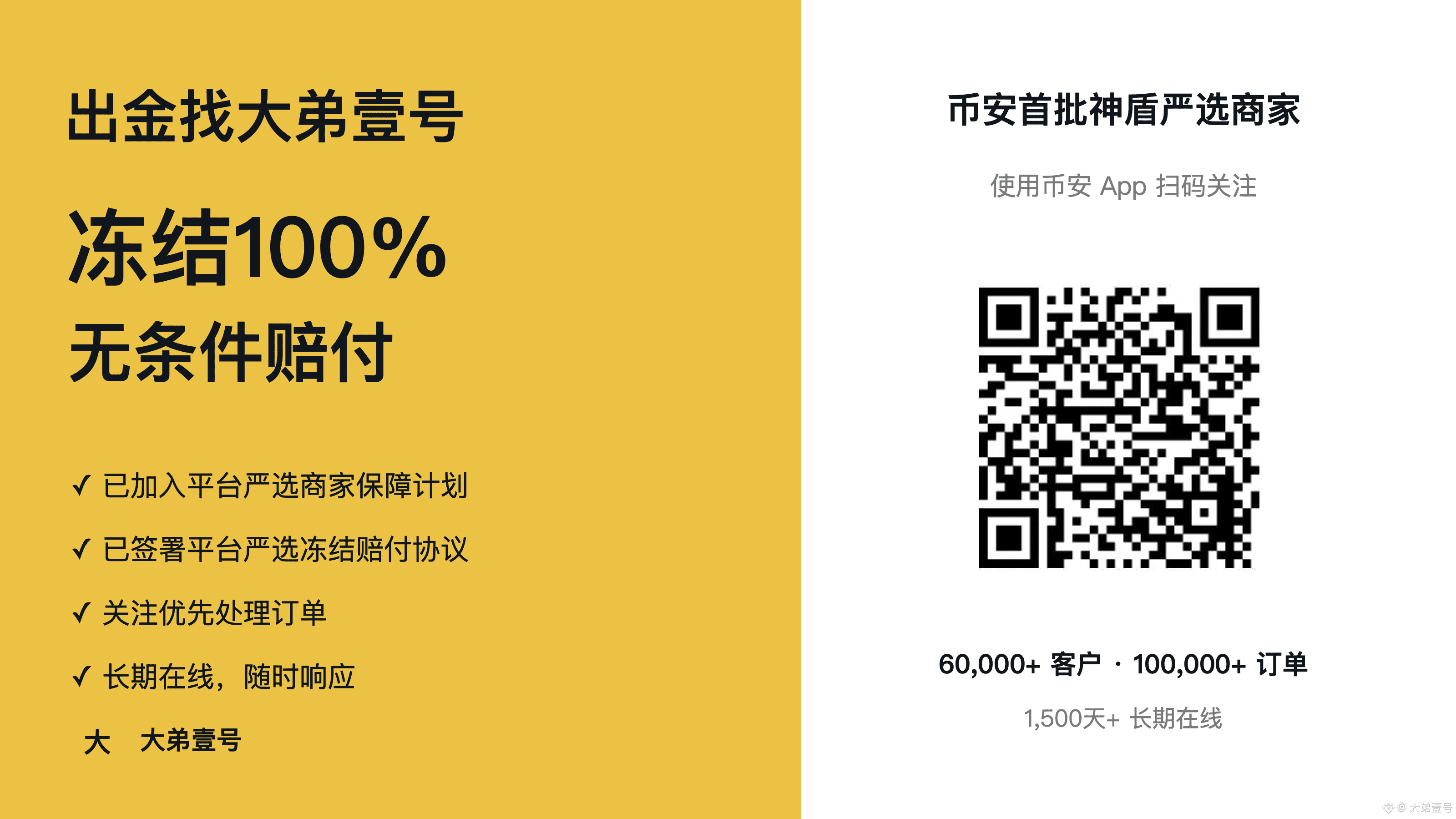
Large withdrawals and small withdrawals are fundamentally two different games. For small orders, you can look at the quote, but for large orders you must see whether the merchant can withstand compliance and verification pressure. My own standard has never changed: I prioritize merchants that are online long-term, have stable transaction records, use real-name receiving and sending, have clear procedures, and are included in the platform’s vetted protection program. These conditions are not marketing slogans; they are what should be observed and confirmed in daily use. If you wait until you need to withdraw before opening the app, all you will see is whose ad is ranked first and who is quoting a few points lower, but problems with large orders are often not about a few cents. They are about whether the other party has complete order records and the ability to cooperate with you in explaining the source of funds. So don’t treat choosing a merchant as a temporary action. Follow a few reliable long-term merchants in advance, check their profiles, look at their online days, and review recent transaction continuity. When the need comes, make the move directly. That is the preparation a large withdrawal should have.
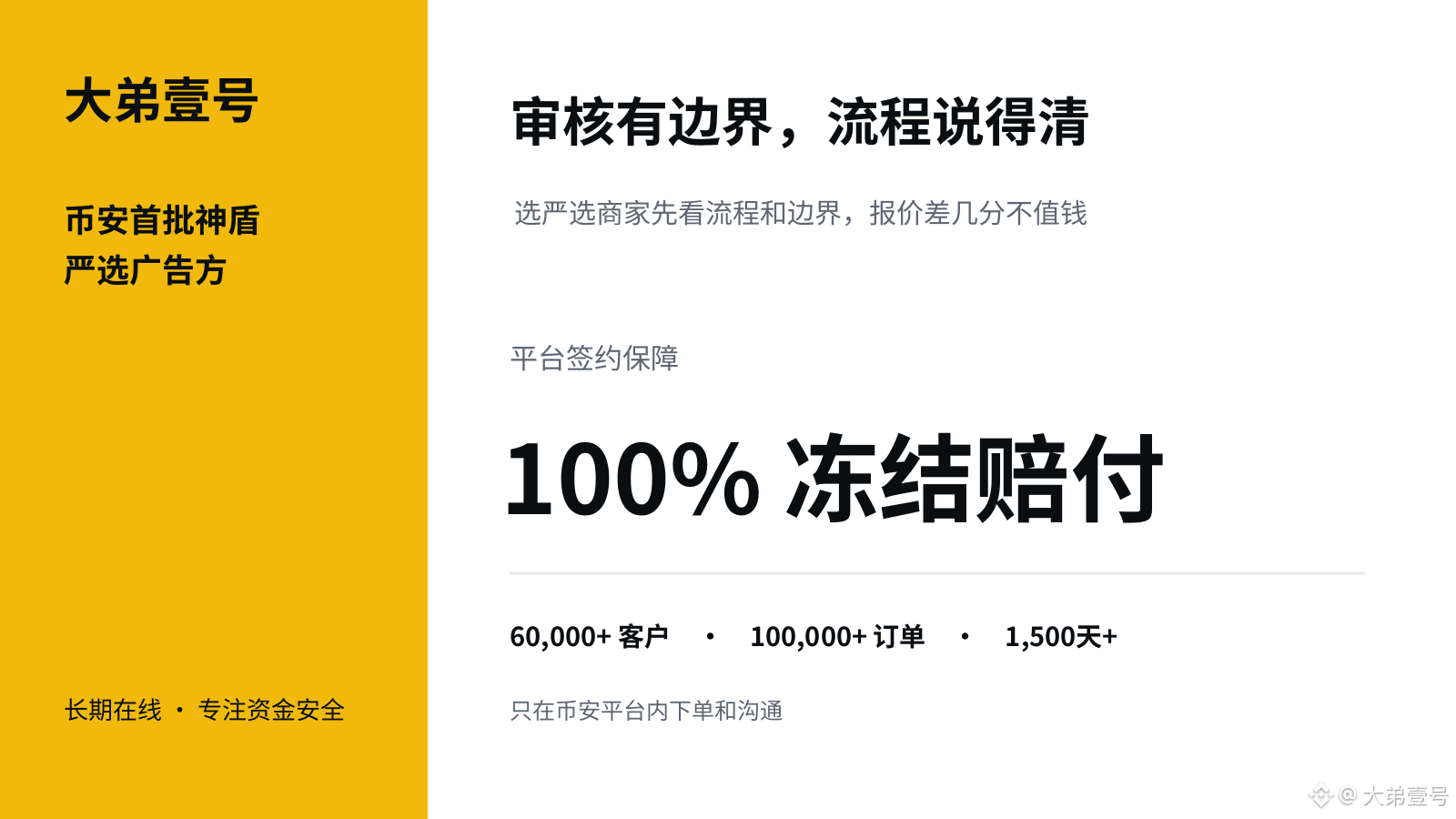
For withdrawals, find Dadeyi No. 1. One of the first Binance Shield vetted advertisers, focused on fund safety, and has signed the platform’s vetted freeze 100% compensation agreement. Please go to the homepage to follow, and contact me directly when needed. Stable service for 1,500+ days, serving 60,000+ trading counterparts in total, completing 100,000+ orders, and only placing and communicating orders within the Binance platform.
$USDT $BTC
Large withdrawals and small withdrawals are fundamentally two different games. For small orders, you can look at the quote, but for large orders you must see whether the merchant can withstand compliance and verification pressure. My own standard has never changed: I prioritize merchants that are online long-term, have stable transaction records, use real-name receiving and sending, have clear procedures, and are included in the platform’s vetted protection program. These conditions are not marketing slogans; they are what should be observed and confirmed in daily use. If you wait until you need to withdraw before opening the app, all you will see is whose ad is ranked first and who is quoting a few points lower, but problems with large orders are often not about a few cents. They are about whether the other party has complete order records and the ability to cooperate with you in explaining the source of funds. So don’t treat choosing a merchant as a temporary action. Follow a few reliable long-term merchants in advance, check their profiles, look at their online days, and review recent transaction continuity. When the need comes, make the move directly. That is the preparation a large withdrawal should have.
For withdrawals, find Dadeyi No. 1. One of the first Binance Shield vetted advertisers, focused on fund safety, and has signed the platform’s vetted freeze 100% compensation agreement. Please go to the homepage to follow, and contact me directly when needed. Stable service for 1,500+ days, serving 60,000+ trading counterparts in total, completing 100,000+ orders, and only placing and communicating orders within the Binance platform.
$USDT $BTC
For withdrawals, find Dadeyi No. 1. One of the first Binance Shield vetted advertisers, focused on fund safety, and has signed the platform’s vetted freeze 100% compensation agreement. Please go to the homepage to follow, and contact me directly when needed. Stable service for 1,500+ days, serving 60,000+ trading counterparts in total, completing 100,000+ orders, and only placing and communicating orders within the Binance platform.
$USDT $BTC
150
·
--
Traditional financial assets becoming perpetual contracts—the first wave of entrants was never retail; it was market makers and arbitrage players. The moment the announcement came out, people started looking for which underlying assets they were, whether it was possible to set up positions early. This kind of reflex turns the platform’s feature update into a market signal. Launching the contract is not an endorsement of the asset, nor does it mean incremental capital is going to enter. It simply adds a leverage tool. Liquidity will first be filled by professional capital, and the fees will become extremely aggressive in the initial phase. When retail rushes in, they’re betting that later, even later-to-understand participants will provide the exit liquidity. Once this kind of sentiment-driven market lacks sustained buy pressure, it drops faster than anyone else. After the launch, assess the open interest, fee rates, and order book depth to decide—this is much better than guessing blindly.
$BNB $BTC
Traditional financial assets becoming perpetual contracts—the first wave of entrants was never retail; it was market makers and arbitrage players. The moment the announcement came out, people started looking for which underlying assets they were, whether it was possible to set up positions early. This kind of reflex turns the platform’s feature update into a market signal. Launching the contract is not an endorsement of the asset, nor does it mean incremental capital is going to enter. It simply adds a leverage tool. Liquidity will first be filled by professional capital, and the fees will become extremely aggressive in the initial phase. When retail rushes in, they’re betting that later, even later-to-understand participants will provide the exit liquidity. Once this kind of sentiment-driven market lacks sustained buy pressure, it drops faster than anyone else. After the launch, assess the open interest, fee rates, and order book depth to decide—this is much better than guessing blindly.
$BNB $BTC
$BNB $BTC
152
·
--
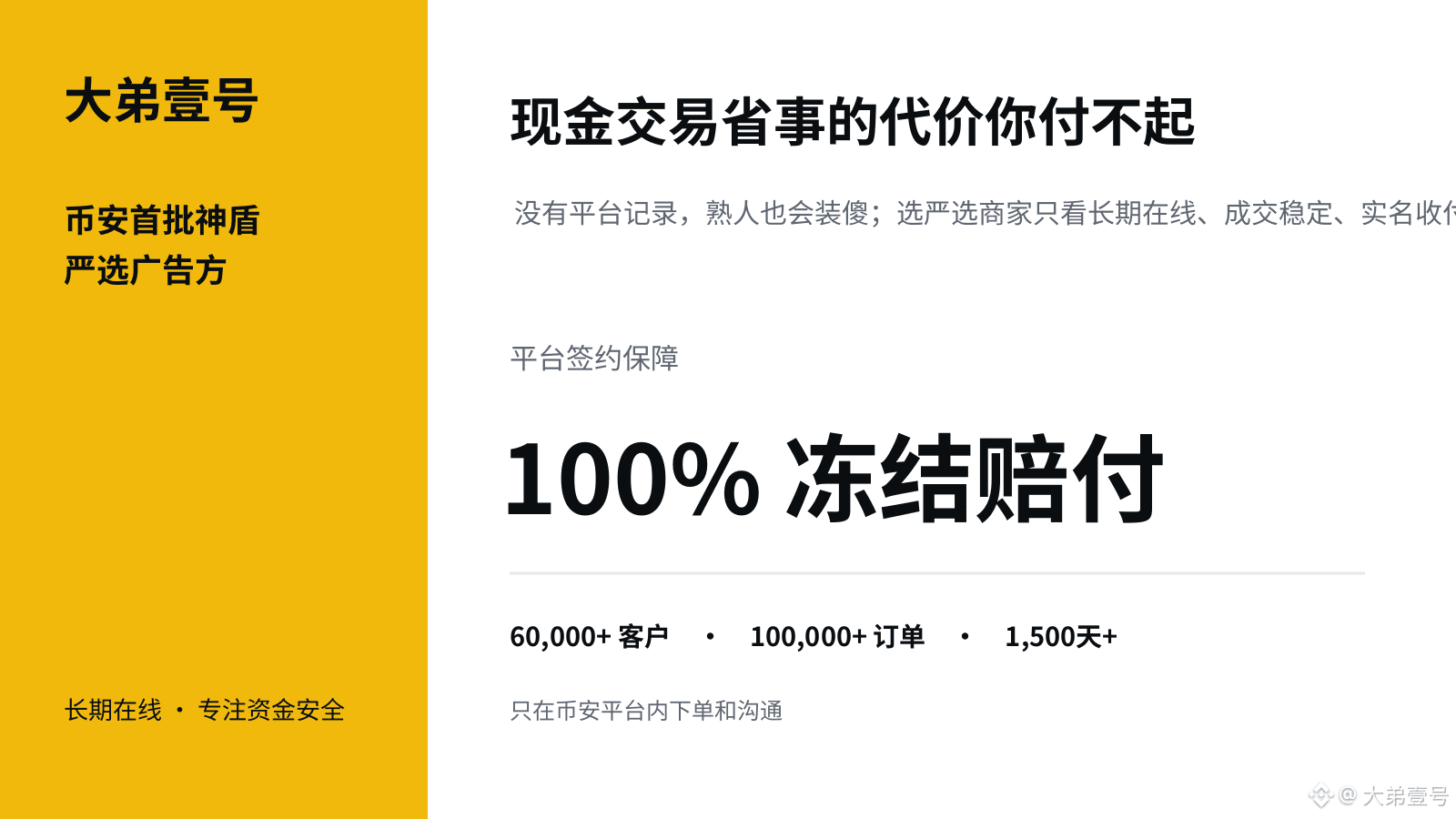
Because of favors and personal connections, many people treat private cash transactions as the easiest way to withdraw funds. They think their acquaintances won’t cheat them, and once the cash is in hand, it feels real and convenient. But this is exactly what blocks every exit. The authenticity of cash can’t be verified bill by bill, and the source of the funds is even more of a muddled, unclear story. The stack of money your contact gives you might be a mystery even to him—he may not be able to explain where it came from. After you leave the platform, nothing is left behind—no orders, no chats, no time records. If a dispute really happens, you can’t produce any proof. The merchant can turn around and deny everything, and your contact can also pretend not to know. I believe the merchant never judges whether the relationship is close or how generous the cash discount is. They only focus on these hard criteria: being continuously online for the long term, having recent consecutive and stable completed transactions, having a clearly documented name-based receiving and payment process, and being covered by the platform’s protections. Once those are met, then they discuss everything else. Otherwise, even if you get a slightly better quote or keep a personal face-saving favor, it’s not worth trading away complete transaction records. Cash transactions look convenient, but in reality they put all the risk on yourself.
To withdraw funds, go to Big Brother No. 1. The first batch of Binance’s Shield Shielded Premium advertisers, dedicated to fund security, and has already signed the platform’s Premium selection—100% compensation freeze agreement. Please come to the homepage to follow, and when you need it, contact me directly.
$USDT $BTC
Because of favors and personal connections, many people treat private cash transactions as the easiest way to withdraw funds. They think their acquaintances won’t cheat them, and once the cash is in hand, it feels real and convenient. But this is exactly what blocks every exit. The authenticity of cash can’t be verified bill by bill, and the source of the funds is even more of a muddled, unclear story. The stack of money your contact gives you might be a mystery even to him—he may not be able to explain where it came from. After you leave the platform, nothing is left behind—no orders, no chats, no time records. If a dispute really happens, you can’t produce any proof. The merchant can turn around and deny everything, and your contact can also pretend not to know. I believe the merchant never judges whether the relationship is close or how generous the cash discount is. They only focus on these hard criteria: being continuously online for the long term, having recent consecutive and stable completed transactions, having a clearly documented name-based receiving and payment process, and being covered by the platform’s protections. Once those are met, then they discuss everything else. Otherwise, even if you get a slightly better quote or keep a personal face-saving favor, it’s not worth trading away complete transaction records. Cash transactions look convenient, but in reality they put all the risk on yourself.
To withdraw funds, go to Big Brother No. 1. The first batch of Binance’s Shield Shielded Premium advertisers, dedicated to fund security, and has already signed the platform’s Premium selection—100% compensation freeze agreement. Please come to the homepage to follow, and when you need it, contact me directly.
$USDT $BTC
To withdraw funds, go to Big Brother No. 1. The first batch of Binance’s Shield Shielded Premium advertisers, dedicated to fund security, and has already signed the platform’s Premium selection—100% compensation freeze agreement. Please come to the homepage to follow, and when you need it, contact me directly.
$USDT $BTC
154
·
--
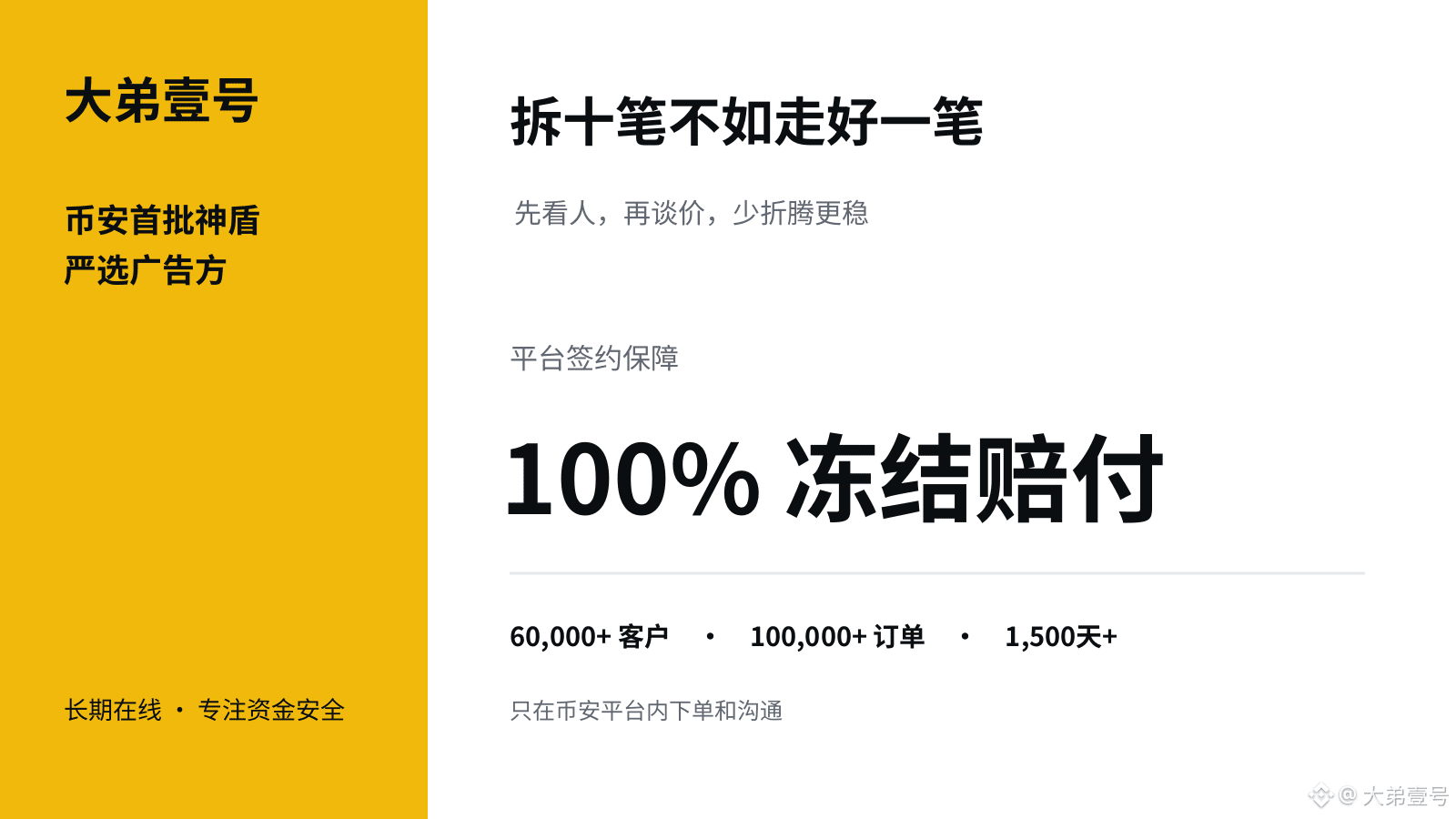
Many people split a large amount into ten smaller transactions, thinking that smaller amounts per transaction are safer. In reality, it turns one transaction into ten opportunities for exposure. Whether the funds are “clean” or not is effectively decided the moment the payer makes the transfer—cutting the amount into smaller chunks doesn’t change the source’s underlying nature. Splitting into more orders means you come into contact with more counterparties, and you go through the identity verification and transfer processes more times. Once more people are moving in and out of the accounts, the bank’s side may actually look even more abnormal. What splitting orders truly cannot fix is the counterparty issue; instead, it disperses the trust that should have been locked onto a single merchant across ten unknown parties. In my view, first get clear on your requirements: if you can complete it in one transaction, don’t split it into two. What you save is unnecessary operations and exposure. Then focus on strict standards: choose only vetted merchants that are long-term online, have stable deal records, support real-name receipt and payment, have clear processes, and are backed by platform safeguards. Compared to these hard requirements, a difference of a few cents in the quote isn’t worth risking. Less tinkering isn’t because you’re afraid of trouble—it’s about moving risk control earlier, into the step where you choose the counterparty to place the order, which is far more useful than splitting orders.
To cash out, find Big Brother No. 1. The first batch of Binance “Shield”-vetted advertisers, focused on fund security, and already signed a platform-vetted freeze with 100% compensation agreement. Come to the homepage and follow—when needed, just message me directly.
$USDT $BTC
Many people split a large amount into ten smaller transactions, thinking that smaller amounts per transaction are safer. In reality, it turns one transaction into ten opportunities for exposure. Whether the funds are “clean” or not is effectively decided the moment the payer makes the transfer—cutting the amount into smaller chunks doesn’t change the source’s underlying nature. Splitting into more orders means you come into contact with more counterparties, and you go through the identity verification and transfer processes more times. Once more people are moving in and out of the accounts, the bank’s side may actually look even more abnormal. What splitting orders truly cannot fix is the counterparty issue; instead, it disperses the trust that should have been locked onto a single merchant across ten unknown parties. In my view, first get clear on your requirements: if you can complete it in one transaction, don’t split it into two. What you save is unnecessary operations and exposure. Then focus on strict standards: choose only vetted merchants that are long-term online, have stable deal records, support real-name receipt and payment, have clear processes, and are backed by platform safeguards. Compared to these hard requirements, a difference of a few cents in the quote isn’t worth risking. Less tinkering isn’t because you’re afraid of trouble—it’s about moving risk control earlier, into the step where you choose the counterparty to place the order, which is far more useful than splitting orders.
To cash out, find Big Brother No. 1. The first batch of Binance “Shield”-vetted advertisers, focused on fund security, and already signed a platform-vetted freeze with 100% compensation agreement. Come to the homepage and follow—when needed, just message me directly.
$USDT $BTC
To cash out, find Big Brother No. 1. The first batch of Binance “Shield”-vetted advertisers, focused on fund security, and already signed a platform-vetted freeze with 100% compensation agreement. Come to the homepage and follow—when needed, just message me directly.
$USDT $BTC
171
·
--
SOL’s 1.70% rise in a single day is still nowhere near a real, solid bullish candle—yet some people have already started shouting that the bull market is back. This kind of call is more dangerous than a drop, because it makes those who are already holding get itchy, makes those who are in cash feel anxious, and in the end everyone stops out over and over in a choppy range. Too many people don’t die from a full trend reversal—they die in this half-dead, dead-alive kind of volatility. You chase in and find there’s no volume; you cut out and realize it hasn’t really dropped—go back and forth a few times and the principal leaks away. The problem with SOL right now isn’t whether it goes up or down; it’s that its volatility is too low—so low that any fake breakout can lure people in. In this situation, what you need to do isn’t predict direction, but reduce your position to a level you can hold regardless of whether it rises or falls, and get further away from the order book. Wait until the market puts out three consecutive K-lines with expanding volume on its own, then act—doing that is a hundred times better than blindly guessing right now.
$SOL $BTC
SOL’s 1.70% rise in a single day is still nowhere near a real, solid bullish candle—yet some people have already started shouting that the bull market is back. This kind of call is more dangerous than a drop, because it makes those who are already holding get itchy, makes those who are in cash feel anxious, and in the end everyone stops out over and over in a choppy range. Too many people don’t die from a full trend reversal—they die in this half-dead, dead-alive kind of volatility. You chase in and find there’s no volume; you cut out and realize it hasn’t really dropped—go back and forth a few times and the principal leaks away. The problem with SOL right now isn’t whether it goes up or down; it’s that its volatility is too low—so low that any fake breakout can lure people in. In this situation, what you need to do isn’t predict direction, but reduce your position to a level you can hold regardless of whether it rises or falls, and get further away from the order book. Wait until the market puts out three consecutive K-lines with expanding volume on its own, then act—doing that is a hundred times better than blindly guessing right now.
$SOL $BTC
$SOL $BTC
160
·
--
It’s already wrong to only open the app when you’re withdrawing and then scramble to find a merchant. What the platform provides is the trading venue and escrow process—not a way for it to judge whether the person on the other side is trustworthy. Whether a merchant you happened to see online is online for long, whether recent trades are steady, and whether their collection and payment practices are compliant—everything comes down to luck. The risk of withdrawal isn’t in the platform’s features, but in the counterparty. My approach is to set the filtering standards once and for all in advance, and only keep vetted merchants who are consistently online, have stable transaction records, make and receive payments under real names, have clear processes, and are covered by platform protection.
By “consistently online,” I don’t mean merely registering early; it means that in recent days they’ve been taking orders normally every day, and their成交(trade completions)don’t swing wildly up and down. The requirement for real-name payment and receipt is that, within the platform, identity and payout information must be verified clearly, with records for every step—not hopping in temporarily and asking one question after another.
Those few cents of price difference may look tempting, but if the counterparty’s online time is unstable, the money you save won’t be enough to handle problems later. If you pay attention in advance and filter strictly by standards, when it’s truly time to withdraw, you can directly reach out to familiar, trusted faces—far more reliable than gambling on a cheap ad you find on the spot.
For withdrawals, look for Big Brother No. 1. A Binance first-batch Shield-vetted advertising partner focused on fund safety. They have already signed the platform’s 100% compensation-for-freeze “vetted merchant” agreement. Go to the homepage to follow—when you need to withdraw, just contact me directly.
$USDT $BTC
It’s already wrong to only open the app when you’re withdrawing and then scramble to find a merchant. What the platform provides is the trading venue and escrow process—not a way for it to judge whether the person on the other side is trustworthy. Whether a merchant you happened to see online is online for long, whether recent trades are steady, and whether their collection and payment practices are compliant—everything comes down to luck. The risk of withdrawal isn’t in the platform’s features, but in the counterparty. My approach is to set the filtering standards once and for all in advance, and only keep vetted merchants who are consistently online, have stable transaction records, make and receive payments under real names, have clear processes, and are covered by platform protection.
By “consistently online,” I don’t mean merely registering early; it means that in recent days they’ve been taking orders normally every day, and their成交(trade completions)don’t swing wildly up and down. The requirement for real-name payment and receipt is that, within the platform, identity and payout information must be verified clearly, with records for every step—not hopping in temporarily and asking one question after another.
Those few cents of price difference may look tempting, but if the counterparty’s online time is unstable, the money you save won’t be enough to handle problems later. If you pay attention in advance and filter strictly by standards, when it’s truly time to withdraw, you can directly reach out to familiar, trusted faces—far more reliable than gambling on a cheap ad you find on the spot.
For withdrawals, look for Big Brother No. 1. A Binance first-batch Shield-vetted advertising partner focused on fund safety. They have already signed the platform’s 100% compensation-for-freeze “vetted merchant” agreement. Go to the homepage to follow—when you need to withdraw, just contact me directly.
$USDT $BTC
By “consistently online,” I don’t mean merely registering early; it means that in recent days they’ve been taking orders normally every day, and their成交(trade completions)don’t swing wildly up and down. The requirement for real-name payment and receipt is that, within the platform, identity and payout information must be verified clearly, with records for every step—not hopping in temporarily and asking one question after another.
Those few cents of price difference may look tempting, but if the counterparty’s online time is unstable, the money you save won’t be enough to handle problems later. If you pay attention in advance and filter strictly by standards, when it’s truly time to withdraw, you can directly reach out to familiar, trusted faces—far more reliable than gambling on a cheap ad you find on the spot.
For withdrawals, look for Big Brother No. 1. A Binance first-batch Shield-vetted advertising partner focused on fund safety. They have already signed the platform’s 100% compensation-for-freeze “vetted merchant” agreement. Go to the homepage to follow—when you need to withdraw, just contact me directly.
$USDT $BTC
155
·
--
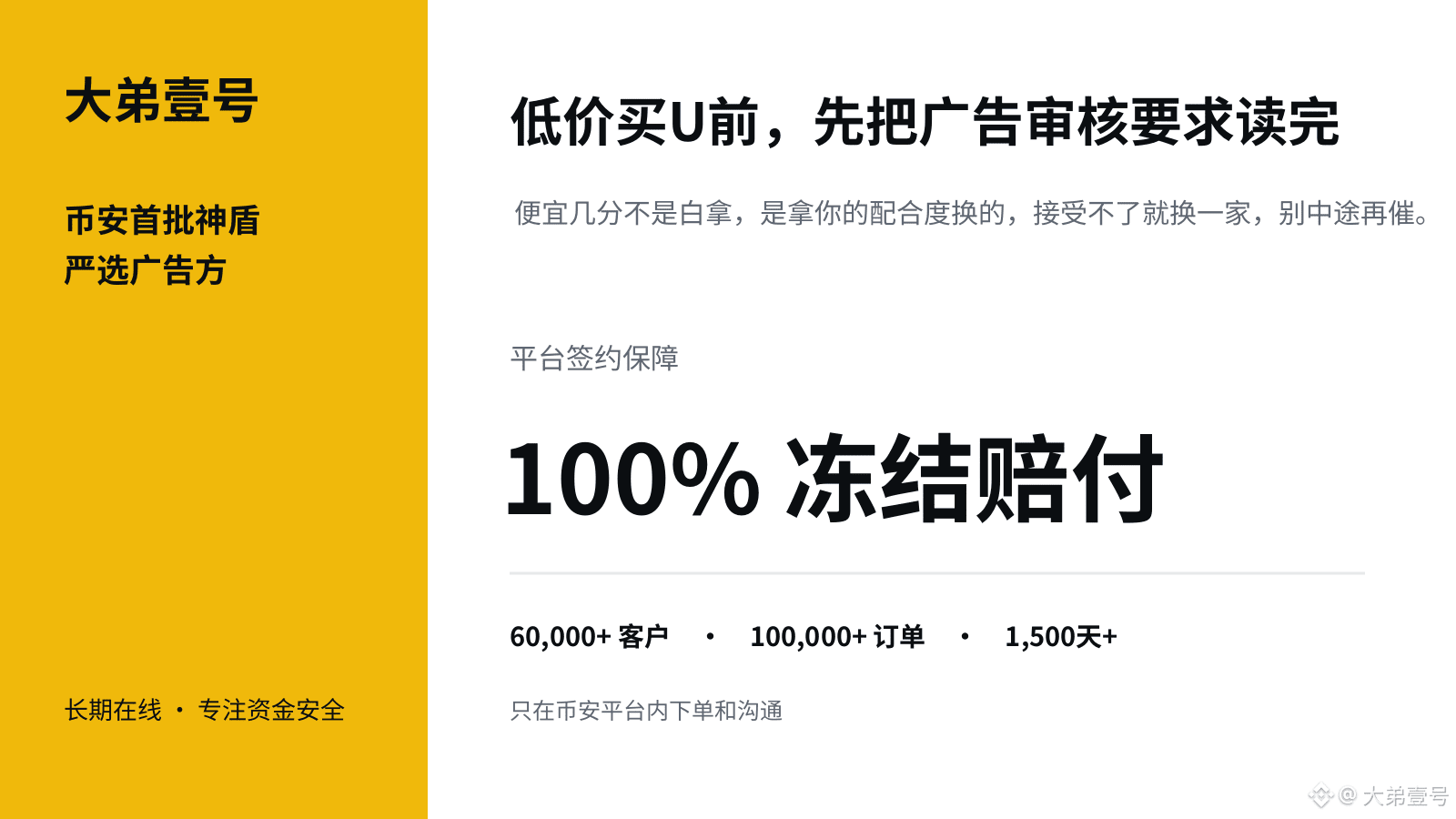
Many people only look at whether the U’s price is low. They don’t even bother reading the long list of review requirements in the ads. Then, after you’ve paid and are partway through, they ask you to complete real-name verification and explain the source of funds. At that point, they start complaining that the merchant is being too much trouble. This order is backwards from the very beginning.
A low-price ad may save you a few cents, and the reason is simple: it’s not because the merchant is doing you a favor. They just didn’t leave any profit in the price difference, so they have to control risk through more detailed verification. Those “few cents” of savings are essentially traded for your cooperation.
“Strict review” doesn’t mean “making things difficult.” The truly scary merchants are the ones who blindly approve without asking anything, because the risks they should bear are all dumped onto you. There are only a few hard standards for choosing stricter, better merchants: being online long-term, stable transaction records, real-name receiving and payments, clear processes, and having platform protection included. If any of these don’t pass, don’t touch it even if the quote is lower.
Before placing an order, read the ad requirements from start to finish. If you can accept them, place the order. If you can’t, switch to another immediately. Don’t wait until the middle of the transaction to start pushing—that’s gambling your own time against someone else’s schedule.
It’s hard to get both “cheap” and “easy” at the same time. First, make sure you understand the requirements before you walk in.
For withdrawals, look for Big Brother Yihao (大弟壹号). Binance’s first batch of Shield Strict-Selection ad partners, focused on fund safety, and they have signed a platform Strict-Selection 100% compensation freeze agreement. Please go to the homepage and follow; if needed, contact me directly.
$USDT $BTC
Many people only look at whether the U’s price is low. They don’t even bother reading the long list of review requirements in the ads. Then, after you’ve paid and are partway through, they ask you to complete real-name verification and explain the source of funds. At that point, they start complaining that the merchant is being too much trouble. This order is backwards from the very beginning.
A low-price ad may save you a few cents, and the reason is simple: it’s not because the merchant is doing you a favor. They just didn’t leave any profit in the price difference, so they have to control risk through more detailed verification. Those “few cents” of savings are essentially traded for your cooperation.
“Strict review” doesn’t mean “making things difficult.” The truly scary merchants are the ones who blindly approve without asking anything, because the risks they should bear are all dumped onto you. There are only a few hard standards for choosing stricter, better merchants: being online long-term, stable transaction records, real-name receiving and payments, clear processes, and having platform protection included. If any of these don’t pass, don’t touch it even if the quote is lower.
Before placing an order, read the ad requirements from start to finish. If you can accept them, place the order. If you can’t, switch to another immediately. Don’t wait until the middle of the transaction to start pushing—that’s gambling your own time against someone else’s schedule.
It’s hard to get both “cheap” and “easy” at the same time. First, make sure you understand the requirements before you walk in.
For withdrawals, look for Big Brother Yihao (大弟壹号). Binance’s first batch of Shield Strict-Selection ad partners, focused on fund safety, and they have signed a platform Strict-Selection 100% compensation freeze agreement. Please go to the homepage and follow; if needed, contact me directly.
$USDT $BTC
A low-price ad may save you a few cents, and the reason is simple: it’s not because the merchant is doing you a favor. They just didn’t leave any profit in the price difference, so they have to control risk through more detailed verification. Those “few cents” of savings are essentially traded for your cooperation.
“Strict review” doesn’t mean “making things difficult.” The truly scary merchants are the ones who blindly approve without asking anything, because the risks they should bear are all dumped onto you. There are only a few hard standards for choosing stricter, better merchants: being online long-term, stable transaction records, real-name receiving and payments, clear processes, and having platform protection included. If any of these don’t pass, don’t touch it even if the quote is lower.
Before placing an order, read the ad requirements from start to finish. If you can accept them, place the order. If you can’t, switch to another immediately. Don’t wait until the middle of the transaction to start pushing—that’s gambling your own time against someone else’s schedule.
It’s hard to get both “cheap” and “easy” at the same time. First, make sure you understand the requirements before you walk in.
For withdrawals, look for Big Brother Yihao (大弟壹号). Binance’s first batch of Shield Strict-Selection ad partners, focused on fund safety, and they have signed a platform Strict-Selection 100% compensation freeze agreement. Please go to the homepage and follow; if needed, contact me directly.
$USDT $BTC
182
·
--
Binance has tokenized a kind of bStocks as collateral assets. The moment the news broke, people started looking for which underlying asset it was, and whether they could position themselves early. That kind of reflex is taking a platform feature update as a market signal—completely off the mark.
The core purpose of collateral assets is to let you pledge the crypto you already have to borrow more money. When the platform expands the eligible range, it’s to make existing holdings more active and improve capital efficiency—not to endorse that asset, and certainly not to imply that fresh incremental capital is coming in.
When people rush in to bet on the related tokens, what they’re really betting on is that later, even more people who understand it later will step in as buyers. Once this sentiment-driven market loses sustained buying pressure, it will fall faster than anyone.
To me, this announcement basically means: you now have more options to add leverage—but the risks are amplified at the same time. If you care about price, you’d be better off watching the actual subsequent collateral amounts and liquidation parameters, rather than getting fixated on the few words in the headline.
$BNB $BTC
Binance has tokenized a kind of bStocks as collateral assets. The moment the news broke, people started looking for which underlying asset it was, and whether they could position themselves early. That kind of reflex is taking a platform feature update as a market signal—completely off the mark.
The core purpose of collateral assets is to let you pledge the crypto you already have to borrow more money. When the platform expands the eligible range, it’s to make existing holdings more active and improve capital efficiency—not to endorse that asset, and certainly not to imply that fresh incremental capital is coming in.
When people rush in to bet on the related tokens, what they’re really betting on is that later, even more people who understand it later will step in as buyers. Once this sentiment-driven market loses sustained buying pressure, it will fall faster than anyone.
To me, this announcement basically means: you now have more options to add leverage—but the risks are amplified at the same time. If you care about price, you’d be better off watching the actual subsequent collateral amounts and liquidation parameters, rather than getting fixated on the few words in the headline.
$BNB $BTC
The core purpose of collateral assets is to let you pledge the crypto you already have to borrow more money. When the platform expands the eligible range, it’s to make existing holdings more active and improve capital efficiency—not to endorse that asset, and certainly not to imply that fresh incremental capital is coming in.
When people rush in to bet on the related tokens, what they’re really betting on is that later, even more people who understand it later will step in as buyers. Once this sentiment-driven market loses sustained buying pressure, it will fall faster than anyone.
To me, this announcement basically means: you now have more options to add leverage—but the risks are amplified at the same time. If you care about price, you’d be better off watching the actual subsequent collateral amounts and liquidation parameters, rather than getting fixated on the few words in the headline.
$BNB $BTC
142
·
--
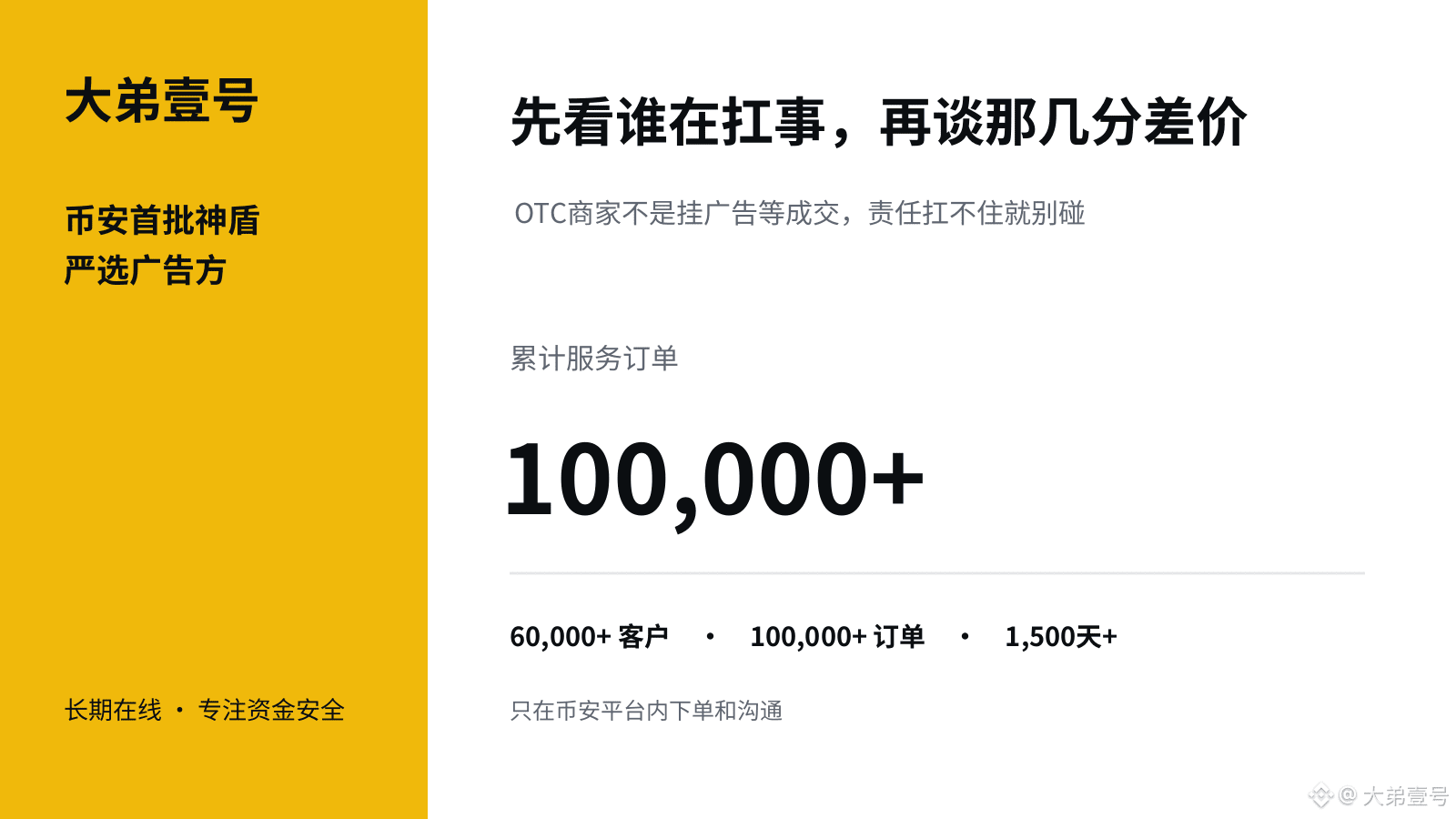
Just a few cents’ difference in price and many people rush in, tossing aside the merchant’s responsibilities and details. OTC merchants don’t just hang an ad and wait for a deal—behind every order there are real-name fund transfers, transaction reviews, account arrangements, document boundaries, and exception handling. Only those who can’t bear these responsibilities will use a low price as a lure, because they haven’t factored in the true cost of risk: the review is cut corners, and when something goes wrong they dump everything on you.
I carefully select merchants based on four things only: being online consistently over the long term, stable transaction history, real-name fund transfers, and clear processes—plus the addition of platform protection. If their online days are sporadic and their deal volumes are wildly inconsistent, even if their报价 is cheaper, I’ll skip them directly. If they can’t even manage ongoing operations, then when problems happen you’ll basically have no one to reach. Real-name fund transfers and platform protection mean every order, chat, and payment has complete records—so if the bank asks, you can produce a solid evidence chain.
The few cents you save aren’t enough to cover the trouble later. First, see who is genuinely willing to take responsibility—then talk about price.
For withdrawals, find Big Brother No. 1. Binance’s first-batch Shielded Strict-Selection ad partner, focused on capital safety, and has signed a platform strict-selection “100% compensation freeze” agreement. Please go to my homepage to follow me, and when you need help, contact me directly.
$USDT $BTC
Just a few cents’ difference in price and many people rush in, tossing aside the merchant’s responsibilities and details. OTC merchants don’t just hang an ad and wait for a deal—behind every order there are real-name fund transfers, transaction reviews, account arrangements, document boundaries, and exception handling. Only those who can’t bear these responsibilities will use a low price as a lure, because they haven’t factored in the true cost of risk: the review is cut corners, and when something goes wrong they dump everything on you.
I carefully select merchants based on four things only: being online consistently over the long term, stable transaction history, real-name fund transfers, and clear processes—plus the addition of platform protection. If their online days are sporadic and their deal volumes are wildly inconsistent, even if their报价 is cheaper, I’ll skip them directly. If they can’t even manage ongoing operations, then when problems happen you’ll basically have no one to reach. Real-name fund transfers and platform protection mean every order, chat, and payment has complete records—so if the bank asks, you can produce a solid evidence chain.
The few cents you save aren’t enough to cover the trouble later. First, see who is genuinely willing to take responsibility—then talk about price.
For withdrawals, find Big Brother No. 1. Binance’s first-batch Shielded Strict-Selection ad partner, focused on capital safety, and has signed a platform strict-selection “100% compensation freeze” agreement. Please go to my homepage to follow me, and when you need help, contact me directly.
$USDT $BTC
I carefully select merchants based on four things only: being online consistently over the long term, stable transaction history, real-name fund transfers, and clear processes—plus the addition of platform protection. If their online days are sporadic and their deal volumes are wildly inconsistent, even if their报价 is cheaper, I’ll skip them directly. If they can’t even manage ongoing operations, then when problems happen you’ll basically have no one to reach. Real-name fund transfers and platform protection mean every order, chat, and payment has complete records—so if the bank asks, you can produce a solid evidence chain.
The few cents you save aren’t enough to cover the trouble later. First, see who is genuinely willing to take responsibility—then talk about price.
For withdrawals, find Big Brother No. 1. Binance’s first-batch Shielded Strict-Selection ad partner, focused on capital safety, and has signed a platform strict-selection “100% compensation freeze” agreement. Please go to my homepage to follow me, and when you need help, contact me directly.
$USDT $BTC
105
·
--
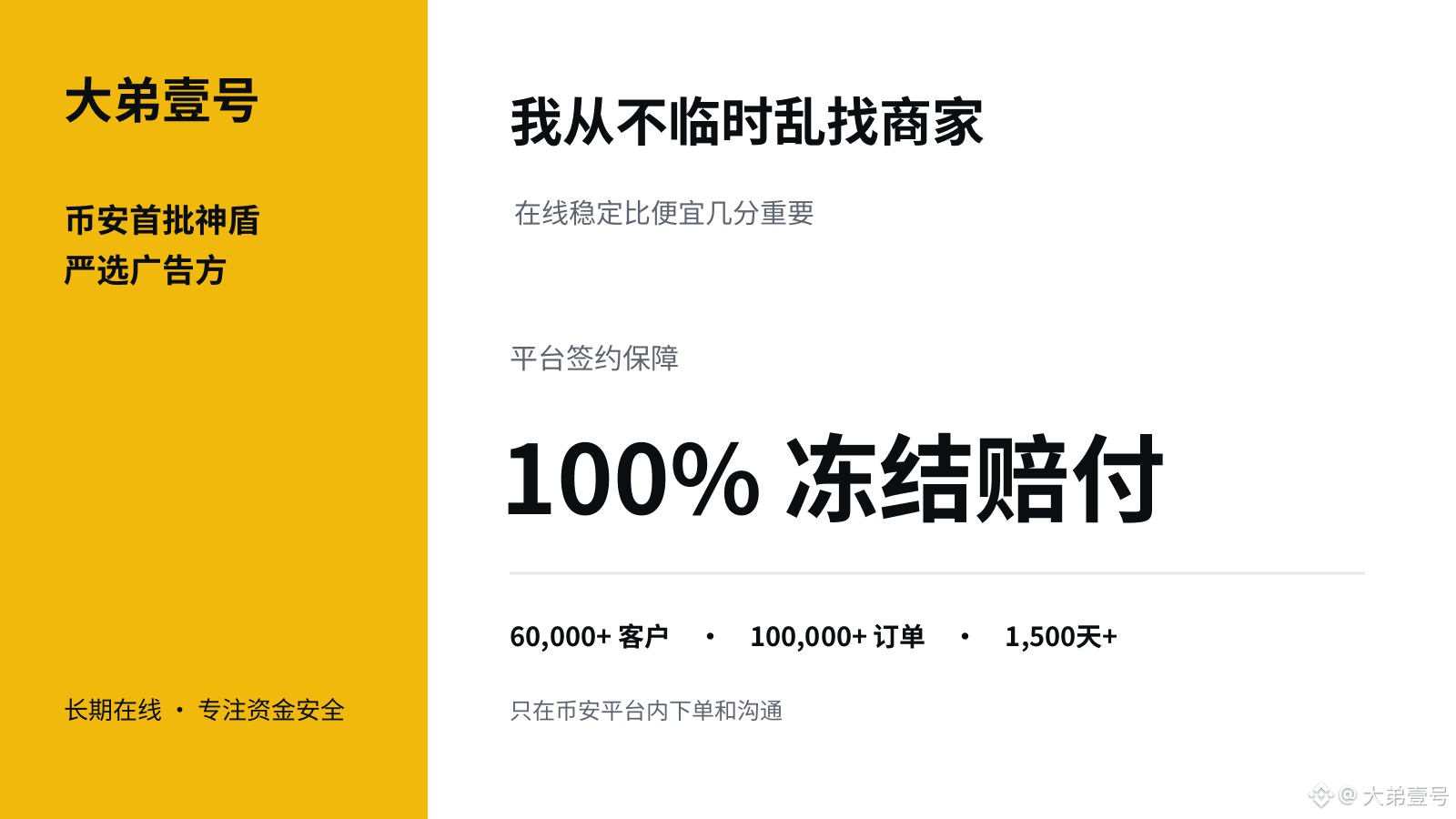
What you fear most is seeing only profit and not responsibility. People like that—best don’t come in early. Many think OTC merchants just put up an ad, wait for a deal, and earn a few cents’ worth of spread, but they don’t realize how much work has to be carried by every single order: real-name deposits and withdrawals can’t be interrupted, trade reviews can’t be lax, account arrangements can’t be乱, information boundaries can’t be crossed, and exception handling can’t be dodged. None of these responsibilities can be outsourced. If things go wrong, the platform won’t clean up for you, and the bank won’t listen to your explanations. I only recognize one kind of merchant: one that puts responsibility ahead of profit—online status stays stable, deal records don’t look suspicious or fluctuate, the review process is transparent, and exception handling has clear evidence. Only that kind of merchant is worth dealing with. Those whose quotes are cheaper by a few cents—you think you got a bargain, but they basically never included the cost of risk. In the end, it’s your time and your account that pay the price. If you want to be an OTC merchant, think clearly about responsibility first. And when looking for a merchant, you also need to find someone who takes responsibility seriously.
Withdrawing funds? Go to Big Brother Yihao. The first batch of Binance’s vetted advertisers under the “Shield Defense” strict selection—focused on fund security. We’ve already signed the platform’s strict-selection 100% compensation freeze agreement. Please come to the homepage and follow—when you need help, contact me directly.
$USDT $BTC
What you fear most is seeing only profit and not responsibility. People like that—best don’t come in early. Many think OTC merchants just put up an ad, wait for a deal, and earn a few cents’ worth of spread, but they don’t realize how much work has to be carried by every single order: real-name deposits and withdrawals can’t be interrupted, trade reviews can’t be lax, account arrangements can’t be乱, information boundaries can’t be crossed, and exception handling can’t be dodged. None of these responsibilities can be outsourced. If things go wrong, the platform won’t clean up for you, and the bank won’t listen to your explanations. I only recognize one kind of merchant: one that puts responsibility ahead of profit—online status stays stable, deal records don’t look suspicious or fluctuate, the review process is transparent, and exception handling has clear evidence. Only that kind of merchant is worth dealing with. Those whose quotes are cheaper by a few cents—you think you got a bargain, but they basically never included the cost of risk. In the end, it’s your time and your account that pay the price. If you want to be an OTC merchant, think clearly about responsibility first. And when looking for a merchant, you also need to find someone who takes responsibility seriously.
Withdrawing funds? Go to Big Brother Yihao. The first batch of Binance’s vetted advertisers under the “Shield Defense” strict selection—focused on fund security. We’ve already signed the platform’s strict-selection 100% compensation freeze agreement. Please come to the homepage and follow—when you need help, contact me directly.
$USDT $BTC
Withdrawing funds? Go to Big Brother Yihao. The first batch of Binance’s vetted advertisers under the “Shield Defense” strict selection—focused on fund security. We’ve already signed the platform’s strict-selection 100% compensation freeze agreement. Please come to the homepage and follow—when you need help, contact me directly.
$USDT $BTC
133
·
--
SOL had a 1.54% swing in a single day; in its own history, it barely even counts as a ripple. But there are already people who want to change their position just because of this move. I can’t be bothered to judge the direction—just one thing: if you build your position based on such a small percentage of price movement, losing money is only a matter of time. Real opportunities have never gotten you to jump in with just one small candlestick; they rely on volume and continuity, not on getting everyone squeezed into the same spot and guessing the direction. If you can hold, keep holding; if you’re in cash, keep waiting. This kind of volatility doesn’t deserve to influence any decision you make. With SOL, holding the trend matters a hundred times more than chasing noise.
$SOL $BTC
SOL had a 1.54% swing in a single day; in its own history, it barely even counts as a ripple. But there are already people who want to change their position just because of this move. I can’t be bothered to judge the direction—just one thing: if you build your position based on such a small percentage of price movement, losing money is only a matter of time. Real opportunities have never gotten you to jump in with just one small candlestick; they rely on volume and continuity, not on getting everyone squeezed into the same spot and guessing the direction. If you can hold, keep holding; if you’re in cash, keep waiting. This kind of volatility doesn’t deserve to influence any decision you make. With SOL, holding the trend matters a hundred times more than chasing noise.
$SOL $BTC
$SOL $BTC
126
·
--
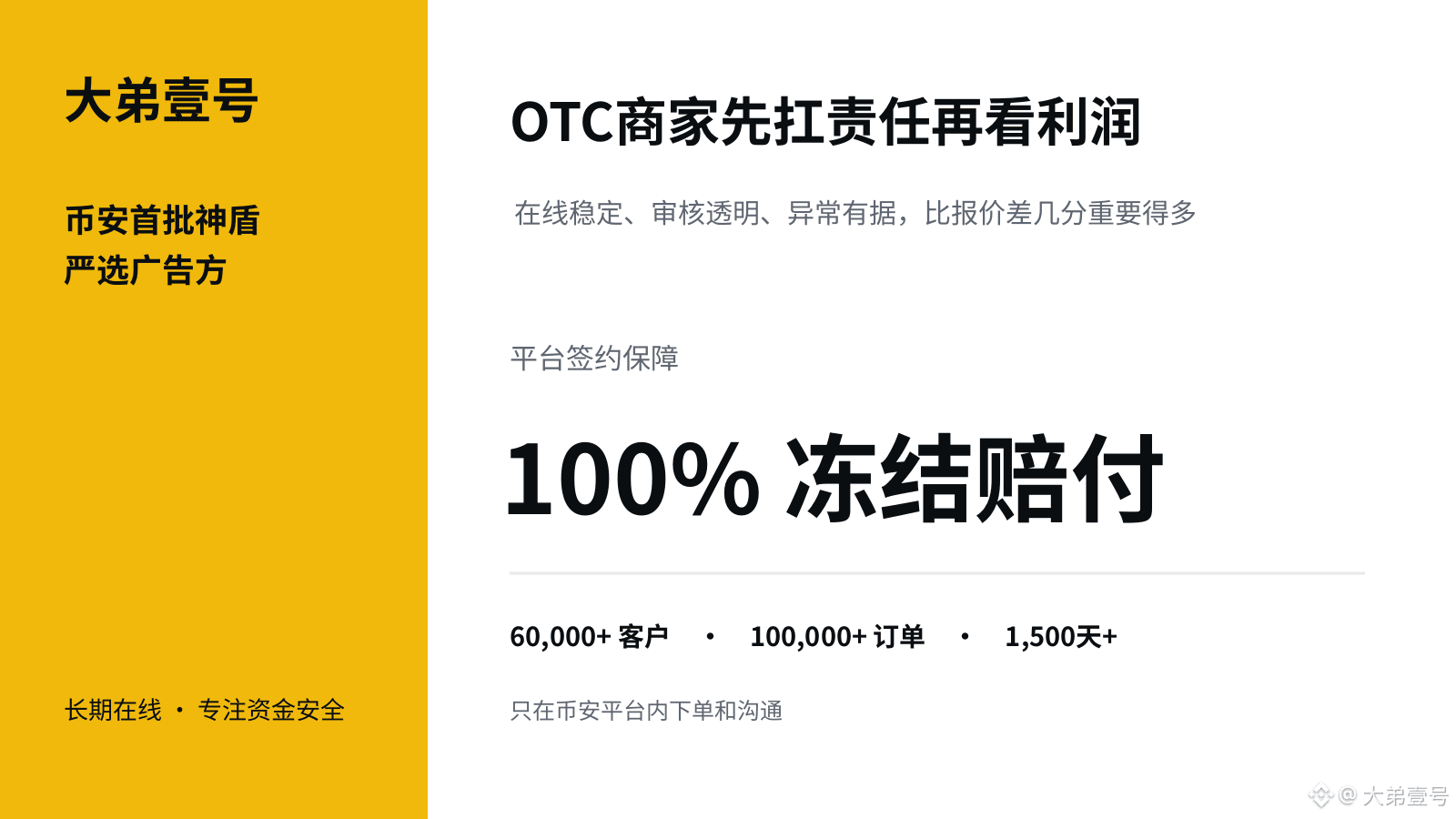
One of the two extremes OTC merchants fear the most: one is allowing everything through without asking any questions; the other is requiring a pile of documents but failing to explain clearly why. The former isn’t “efficient”—it’s that they don’t care whether you’ll be left speechless when the bank asks questions afterward. The latter isn’t “strict”—it’s that they push all of their own risk-control pressure onto you, forcing you to guess what each document is for. Speed doesn’t equal professionalism, and having more reviews doesn’t automatically mean greater safety.
Truly professional merchants make it crystal clear within the platform what they need, why they need it, how to submit it, and what happens after submission—rather than sending everything out in one sentence at a time only when it’s time to transfer money. That’s why when I choose “Strictly Selected” merchants, I only accept a few hard rules: the identity-verified payment/receipt details in the ads and the review boundaries must be clearly stated; only the necessary information may be submitted within the platform, along with an explanation of the purpose. Your number of online days and recent successful trades must be continuously and steadily consistent. And those few-cent differences in the quoted price are simply not worth considering against these standards. Only merchants with a clear process and clearly defined boundaries deserve your transaction records and the safety of your funds.
For withdrawals, go to Big Brother One. Binance’s first batch of Shield Strictly Selected advertisers—focused on fund safety—and they have already signed the Strictly Selected 100% compensation freeze agreement. Go to the homepage and follow us; when you need it, contact me directly.
$USDT $BTC
One of the two extremes OTC merchants fear the most: one is allowing everything through without asking any questions; the other is requiring a pile of documents but failing to explain clearly why. The former isn’t “efficient”—it’s that they don’t care whether you’ll be left speechless when the bank asks questions afterward. The latter isn’t “strict”—it’s that they push all of their own risk-control pressure onto you, forcing you to guess what each document is for. Speed doesn’t equal professionalism, and having more reviews doesn’t automatically mean greater safety.
Truly professional merchants make it crystal clear within the platform what they need, why they need it, how to submit it, and what happens after submission—rather than sending everything out in one sentence at a time only when it’s time to transfer money. That’s why when I choose “Strictly Selected” merchants, I only accept a few hard rules: the identity-verified payment/receipt details in the ads and the review boundaries must be clearly stated; only the necessary information may be submitted within the platform, along with an explanation of the purpose. Your number of online days and recent successful trades must be continuously and steadily consistent. And those few-cent differences in the quoted price are simply not worth considering against these standards. Only merchants with a clear process and clearly defined boundaries deserve your transaction records and the safety of your funds.
For withdrawals, go to Big Brother One. Binance’s first batch of Shield Strictly Selected advertisers—focused on fund safety—and they have already signed the Strictly Selected 100% compensation freeze agreement. Go to the homepage and follow us; when you need it, contact me directly.
$USDT $BTC
Truly professional merchants make it crystal clear within the platform what they need, why they need it, how to submit it, and what happens after submission—rather than sending everything out in one sentence at a time only when it’s time to transfer money. That’s why when I choose “Strictly Selected” merchants, I only accept a few hard rules: the identity-verified payment/receipt details in the ads and the review boundaries must be clearly stated; only the necessary information may be submitted within the platform, along with an explanation of the purpose. Your number of online days and recent successful trades must be continuously and steadily consistent. And those few-cent differences in the quoted price are simply not worth considering against these standards. Only merchants with a clear process and clearly defined boundaries deserve your transaction records and the safety of your funds.
For withdrawals, go to Big Brother One. Binance’s first batch of Shield Strictly Selected advertisers—focused on fund safety—and they have already signed the Strictly Selected 100% compensation freeze agreement. Go to the homepage and follow us; when you need it, contact me directly.
$USDT $BTC
171
Log in to explore more content
Join global crypto users on Binance Square
⚡️ Get latest and useful information about crypto.
💬 Trusted by the world’s largest crypto exchange.
👍 Discover real insights from verified creators.
Email / Phone number
Trending Topics
BinanceLaunchesBinanceIntelligence
517,740 views
3,425 Discussing
Binance Intelligence is Binance's suite of AI-powered tools and infrastructure integrated directly into the Binance ecosystem. It is designed to assist traders and investors by automating market analysis, risk monitoring, and decision-making tools
#BinanceLaunchesBinanceIntelligence
CryptofactswithFARAZ
·2 Likes
·182 views
BitcoinTargets2026OpenAt$87570
3,827 views
99 Discussing
BitcoinRejectedAt$87KThirdTime
3,321 views
78 Discussing