

Web3小韭菜888
138 Posts

Web3小韭菜888
Report
Block User
Open Trade
Occasional Trader
2.1 Years
35 Following
10.9K+ Followers
2.2K+ Liked
Posts
Portfolio
All
Quotes
Videos
Live
·
--
Bullish
The only thing I dislike about X is that
I really like getting accounts banned
Although CZ is also a shareholder
That’s right, my account was banned
From now on, I’ll play on Binance Square
$BNB
The only thing I dislike about X is that
I really like getting accounts banned
Although CZ is also a shareholder
That’s right, my account was banned
From now on, I’ll play on Binance Square
$BNB
I really like getting accounts banned
Although CZ is also a shareholder
That’s right, my account was banned
From now on, I’ll play on Binance Square
$BNB
381
·
--
Add one last sentence
In the long run with people like this
Going bust and going bankrupt under margin calls is the final destination
Add one last sentence
In the long run with people like this
Going bust and going bankrupt under margin calls is the final destination
In the long run with people like this
Going bust and going bankrupt under margin calls is the final destination
Web3小韭菜888
·
--
BearishI suggest that anyone who runs a multiplier of less than 20 in the plaza should not watch.
Because their so-called technical skills are not there.
What they have is referral-based head-hunting, earning commission from bringing people in.
When the capital is large, the profits are higher.
If you use 10U to play, with the same multiplier, by the time you get liquidated, you won’t even want to close—because deep down you think you can earn that much too.
But actually it’s because your principal is different, so you can’t make that much.
A truly amazing technical expert—if they don’t even talk about going all the way to triple digits, at least they should start with 20x or higher, not just putting up “1x2x” and showing off profits.
You can also run a 10WU 1X.
The best approach is to create a small account and have yourself refer yourself to collect the referral commission—that’s all your money.
A conscientious creator—doesn’t cut the grass and fleece the followers.
$BTC
Because their so-called technical skills are not there.
What they have is referral-based head-hunting, earning commission from bringing people in.
When the capital is large, the profits are higher.
If you use 10U to play, with the same multiplier, by the time you get liquidated, you won’t even want to close—because deep down you think you can earn that much too.
But actually it’s because your principal is different, so you can’t make that much.
A truly amazing technical expert—if they don’t even talk about going all the way to triple digits, at least they should start with 20x or higher, not just putting up “1x2x” and showing off profits.
You can also run a 10WU 1X.
The best approach is to create a small account and have yourself refer yourself to collect the referral commission—that’s all your money.
A conscientious creator—doesn’t cut the grass and fleece the followers.
$BTC
20
·
--
Bearish
I suggest that anyone who runs a multiplier of less than 20 in the plaza should not watch.
Because their so-called technical skills are not there.
What they have is referral-based head-hunting, earning commission from bringing people in.
When the capital is large, the profits are higher.
If you use 10U to play, with the same multiplier, by the time you get liquidated, you won’t even want to close—because deep down you think you can earn that much too.
But actually it’s because your principal is different, so you can’t make that much.
A truly amazing technical expert—if they don’t even talk about going all the way to triple digits, at least they should start with 20x or higher, not just putting up “1x2x” and showing off profits.
You can also run a 10WU 1X.
The best approach is to create a small account and have yourself refer yourself to collect the referral commission—that’s all your money.
A conscientious creator—doesn’t cut the grass and fleece the followers.
$BTC
I suggest that anyone who runs a multiplier of less than 20 in the plaza should not watch.
Because their so-called technical skills are not there.
What they have is referral-based head-hunting, earning commission from bringing people in.
When the capital is large, the profits are higher.
If you use 10U to play, with the same multiplier, by the time you get liquidated, you won’t even want to close—because deep down you think you can earn that much too.
But actually it’s because your principal is different, so you can’t make that much.
A truly amazing technical expert—if they don’t even talk about going all the way to triple digits, at least they should start with 20x or higher, not just putting up “1x2x” and showing off profits.
You can also run a 10WU 1X.
The best approach is to create a small account and have yourself refer yourself to collect the referral commission—that’s all your money.
A conscientious creator—doesn’t cut the grass and fleece the followers.
$BTC
Because their so-called technical skills are not there.
What they have is referral-based head-hunting, earning commission from bringing people in.
When the capital is large, the profits are higher.
If you use 10U to play, with the same multiplier, by the time you get liquidated, you won’t even want to close—because deep down you think you can earn that much too.
But actually it’s because your principal is different, so you can’t make that much.
A truly amazing technical expert—if they don’t even talk about going all the way to triple digits, at least they should start with 20x or higher, not just putting up “1x2x” and showing off profits.
You can also run a 10WU 1X.
The best approach is to create a small account and have yourself refer yourself to collect the referral commission—that’s all your money.
A conscientious creator—doesn’t cut the grass and fleece the followers.
$BTC
1
214
·
--
Stablecoins solve how money flows on-chain, but there’s a bigger question: how does the money on-chain truly enter the real economy?
Polyflow_PayFi is trying to solve this problem
PolyFlow’s position is PayFi infrastructure. Its core is not just simple payments, but connecting payments, identity, credit, and on-chain finance.
Two key mechanisms are worth paying attention to:
🔹 PID (Payment ID)
Links user identity, payment behavior, and compliance credentials, and uses zero-knowledge proofs to balance data verification with privacy.
🔹 PLP (Payment Liquidity Pool)
Manages payment funds through on-chain liquidity pools, further connecting payment capital to DeFi financial scenarios
In simple terms:
Consumption → payment data → on-chain identity → credit → financial services
This is also where PayFi has real potential
The team behind PolyFlow also has experience in traditional cross-border payments and finance. Founder Raymond Qu previously founded Geoswift
If in the future stablecoins become an important global payment infrastructure, then the next step is likely to be: making payments not just payments, but an entry point to on-chain finance.
This is also why I think PolyFlow is worth continued attention
#polyflow
Stablecoins solve how money flows on-chain, but there’s a bigger question: how does the money on-chain truly enter the real economy?
Polyflow_PayFi is trying to solve this problem
PolyFlow’s position is PayFi infrastructure. Its core is not just simple payments, but connecting payments, identity, credit, and on-chain finance.
Two key mechanisms are worth paying attention to:
🔹 PID (Payment ID)
Links user identity, payment behavior, and compliance credentials, and uses zero-knowledge proofs to balance data verification with privacy.
🔹 PLP (Payment Liquidity Pool)
Manages payment funds through on-chain liquidity pools, further connecting payment capital to DeFi financial scenarios
In simple terms:
Consumption → payment data → on-chain identity → credit → financial services
This is also where PayFi has real potential
The team behind PolyFlow also has experience in traditional cross-border payments and finance. Founder Raymond Qu previously founded Geoswift
If in the future stablecoins become an important global payment infrastructure, then the next step is likely to be: making payments not just payments, but an entry point to on-chain finance.
This is also why I think PolyFlow is worth continued attention
#polyflow
Polyflow_PayFi is trying to solve this problem
PolyFlow’s position is PayFi infrastructure. Its core is not just simple payments, but connecting payments, identity, credit, and on-chain finance.
Two key mechanisms are worth paying attention to:
🔹 PID (Payment ID)
Links user identity, payment behavior, and compliance credentials, and uses zero-knowledge proofs to balance data verification with privacy.
🔹 PLP (Payment Liquidity Pool)
Manages payment funds through on-chain liquidity pools, further connecting payment capital to DeFi financial scenarios
In simple terms:
Consumption → payment data → on-chain identity → credit → financial services
This is also where PayFi has real potential
The team behind PolyFlow also has experience in traditional cross-border payments and finance. Founder Raymond Qu previously founded Geoswift
If in the future stablecoins become an important global payment infrastructure, then the next step is likely to be: making payments not just payments, but an entry point to on-chain finance.
This is also why I think PolyFlow is worth continued attention
#polyflow

108
·
--
Oh wow—after Biden’s son’s coin went live, it dropped 96%.
What’s the difference from going to zero?
Oh wow—after Biden’s son’s coin went live, it dropped 96%.
What’s the difference from going to zero?
What’s the difference from going to zero?
Web3小韭菜888
·
--
BearishI really can’t imagine what would happen if Trump steps down
What if we get a president who doesn’t like playing with cryptocurrencies?
Or what if we get another one who’s just there to make money off the system?
After all, Biden’s son came to cash in too
People in the crypto world are really pitiful
$BTC
#美加关税战升级
What if we get a president who doesn’t like playing with cryptocurrencies?
Or what if we get another one who’s just there to make money off the system?
After all, Biden’s son came to cash in too
People in the crypto world are really pitiful
$BTC
#美加关税战升级
1
111
·
--
Bearish
I really can’t imagine what would happen if Trump steps down
What if we get a president who doesn’t like playing with cryptocurrencies?
Or what if we get another one who’s just there to make money off the system?
After all, Biden’s son came to cash in too
People in the crypto world are really pitiful
$BTC
#美加关税战升级
I really can’t imagine what would happen if Trump steps down
What if we get a president who doesn’t like playing with cryptocurrencies?
Or what if we get another one who’s just there to make money off the system?
After all, Biden’s son came to cash in too
People in the crypto world are really pitiful
$BTC
#美加关税战升级
What if we get a president who doesn’t like playing with cryptocurrencies?
Or what if we get another one who’s just there to make money off the system?
After all, Biden’s son came to cash in too
People in the crypto world are really pitiful
$BTC
#美加关税战升级
1
139
·
--
Bullish
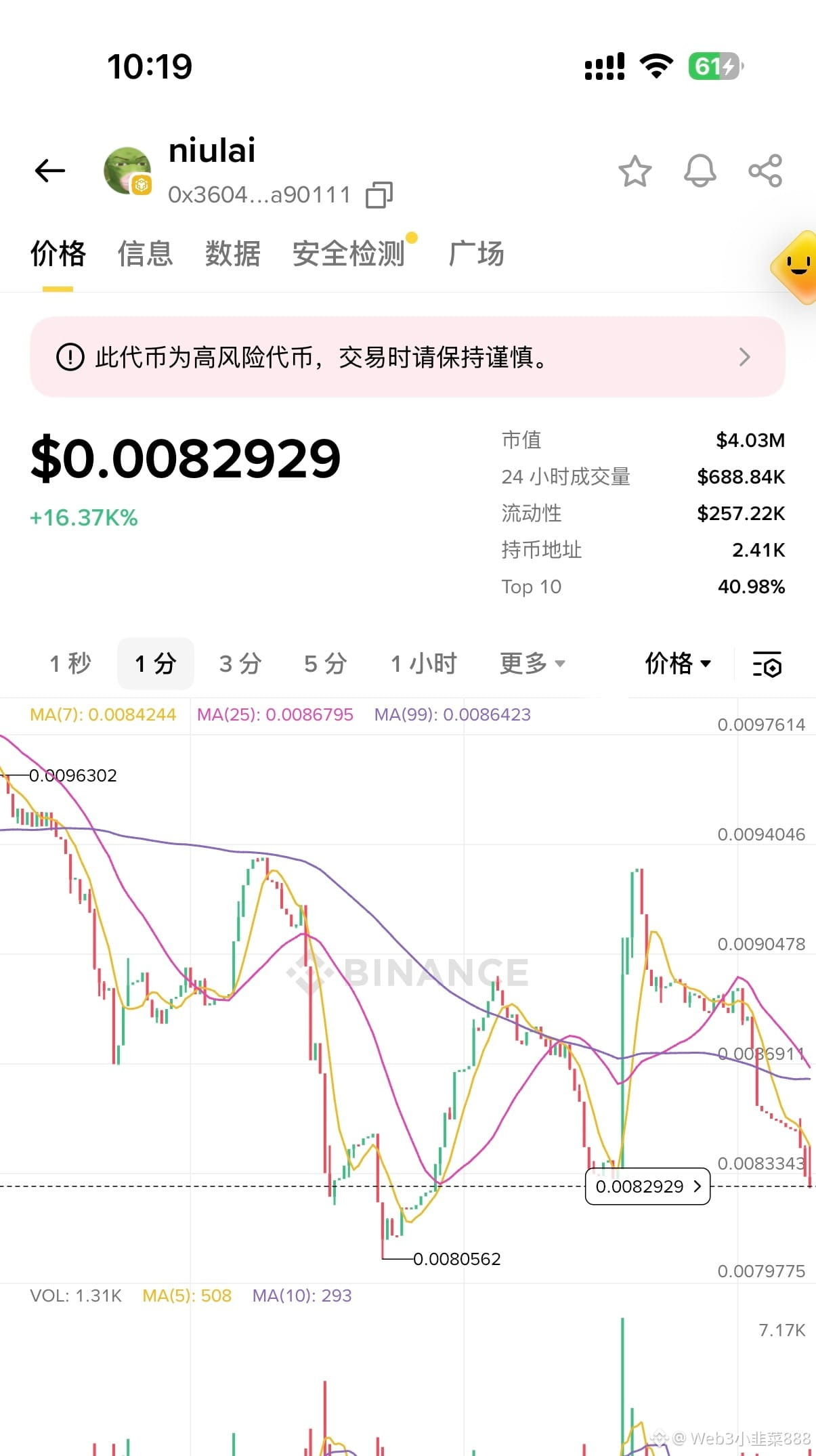
Today I chatted with a friend about a project $niulai
He asked me what was special about it.
I think the answer is actually very simple: film IP.
It revolves around 《牛来》 and the direction of film coins. The goal is to leverage Meme’s power of spreading so that影视 content can enter Web3.
Traditional film promotion and Web3 community communication are two completely different sets of logic. If they can truly be combined, then it’s definitely something worth looking forward to in terms of future development.
#niulai #牛来
Today I chatted with a friend about a project $niulai
He asked me what was special about it.
I think the answer is actually very simple: film IP.
It revolves around 《牛来》 and the direction of film coins. The goal is to leverage Meme’s power of spreading so that影视 content can enter Web3.
Traditional film promotion and Web3 community communication are two completely different sets of logic. If they can truly be combined, then it’s definitely something worth looking forward to in terms of future development.
#niulai #牛来
He asked me what was special about it.
I think the answer is actually very simple: film IP.
It revolves around 《牛来》 and the direction of film coins. The goal is to leverage Meme’s power of spreading so that影视 content can enter Web3.
Traditional film promotion and Web3 community communication are two completely different sets of logic. If they can truly be combined, then it’s definitely something worth looking forward to in terms of future development.
#niulai #牛来
115
·
--
Bullish
In the first half of public chain development, the logic of technological evolution is often a compromise between “performance and generality.”
However, when real-world assets and institutional funds try to cross the boundary between TradFi and Web3, existing blockchain architectures reveal fundamental flaws: the Account-based architecture in the Ethereum ecosystem lacks native privacy capabilities, while traditional zk/UTXO systems, due to limited EVM compatibility and liquidity isolation, also fall short.
@Dusk_Foundation chooses an extremely hardcore and unique evolution path at the level of underlying architecture:
By decoupling the settlement layer and the execution layer, and introducing a cryptographic engine specifically developed for EVM, it redefines the implementation routes for “dark pool transactions” and “compliance audits.”
Most traditional Layer-1 public chains adopt a “monolithic” design, binding consensus, data availability, and smart contract execution together in a single network layer.
When faced with complex confidential computation, this design often results in prohibitively high hardware requirements or severe network congestion.
@Dusk_Foundation adopts a three-layer modular architecture:
Introducing a pre-validation mechanism based on MIPS, performing validity verification of state transitions directly before data is packaged
Using an EVM execution environment dedicated to completing settlement on the Dusk ledger, enabling traditional institutions to deploy their existing financial logic to the chain seamlessly without rewriting code.
@Dusk_Foundation ’s breakthrough in this area is the introduction of the Hedger engine: a privacy paradigm shift custom-tailored for DuskEVM.
The technical depth demonstrated by @Dusk_Foundation in its modular architecture and DuskEVM indicates that it has long moved beyond the crude competitive stage of merely stacking TPS.
By decoupling the consensus layer and the execution layer from the ground up—and, with the help of the Hedger engine, embedding native homomorphic encryption and zero-knowledge proof capabilities into the EVM environment—Dusk has successfully built an infrastructure platform for institutional-grade encrypted applications that combines “business privacy,” “deterministic settlement,” and “compliance audits.”
#dusk $DUSK
{spot}(DUSKUSDT)
In the first half of public chain development, the logic of technological evolution is often a compromise between “performance and generality.”
However, when real-world assets and institutional funds try to cross the boundary between TradFi and Web3, existing blockchain architectures reveal fundamental flaws: the Account-based architecture in the Ethereum ecosystem lacks native privacy capabilities, while traditional zk/UTXO systems, due to limited EVM compatibility and liquidity isolation, also fall short.
@Dusk chooses an extremely hardcore and unique evolution path at the level of underlying architecture:
By decoupling the settlement layer and the execution layer, and introducing a cryptographic engine specifically developed for EVM, it redefines the implementation routes for “dark pool transactions” and “compliance audits.”
Most traditional Layer-1 public chains adopt a “monolithic” design, binding consensus, data availability, and smart contract execution together in a single network layer.
When faced with complex confidential computation, this design often results in prohibitively high hardware requirements or severe network congestion.
@Dusk adopts a three-layer modular architecture:
Introducing a pre-validation mechanism based on MIPS, performing validity verification of state transitions directly before data is packaged
Using an EVM execution environment dedicated to completing settlement on the Dusk ledger, enabling traditional institutions to deploy their existing financial logic to the chain seamlessly without rewriting code.
@Dusk ’s breakthrough in this area is the introduction of the Hedger engine: a privacy paradigm shift custom-tailored for DuskEVM.
The technical depth demonstrated by @Dusk in its modular architecture and DuskEVM indicates that it has long moved beyond the crude competitive stage of merely stacking TPS.
By decoupling the consensus layer and the execution layer from the ground up—and, with the help of the Hedger engine, embedding native homomorphic encryption and zero-knowledge proof capabilities into the EVM environment—Dusk has successfully built an infrastructure platform for institutional-grade encrypted applications that combines “business privacy,” “deterministic settlement,” and “compliance audits.”
#dusk $DUSK
However, when real-world assets and institutional funds try to cross the boundary between TradFi and Web3, existing blockchain architectures reveal fundamental flaws: the Account-based architecture in the Ethereum ecosystem lacks native privacy capabilities, while traditional zk/UTXO systems, due to limited EVM compatibility and liquidity isolation, also fall short.
@Dusk chooses an extremely hardcore and unique evolution path at the level of underlying architecture:
By decoupling the settlement layer and the execution layer, and introducing a cryptographic engine specifically developed for EVM, it redefines the implementation routes for “dark pool transactions” and “compliance audits.”
Most traditional Layer-1 public chains adopt a “monolithic” design, binding consensus, data availability, and smart contract execution together in a single network layer.
When faced with complex confidential computation, this design often results in prohibitively high hardware requirements or severe network congestion.
@Dusk adopts a three-layer modular architecture:
Introducing a pre-validation mechanism based on MIPS, performing validity verification of state transitions directly before data is packaged
Using an EVM execution environment dedicated to completing settlement on the Dusk ledger, enabling traditional institutions to deploy their existing financial logic to the chain seamlessly without rewriting code.
@Dusk ’s breakthrough in this area is the introduction of the Hedger engine: a privacy paradigm shift custom-tailored for DuskEVM.
The technical depth demonstrated by @Dusk in its modular architecture and DuskEVM indicates that it has long moved beyond the crude competitive stage of merely stacking TPS.
By decoupling the consensus layer and the execution layer from the ground up—and, with the help of the Hedger engine, embedding native homomorphic encryption and zero-knowledge proof capabilities into the EVM environment—Dusk has successfully built an infrastructure platform for institutional-grade encrypted applications that combines “business privacy,” “deterministic settlement,” and “compliance audits.”
#dusk $DUSK
132
·
--
Kaito said, this is what Nikita looks like after stepping down as X product lead:
Kaito said, this is what Nikita looks like after stepping down as X product lead:

228
·
--
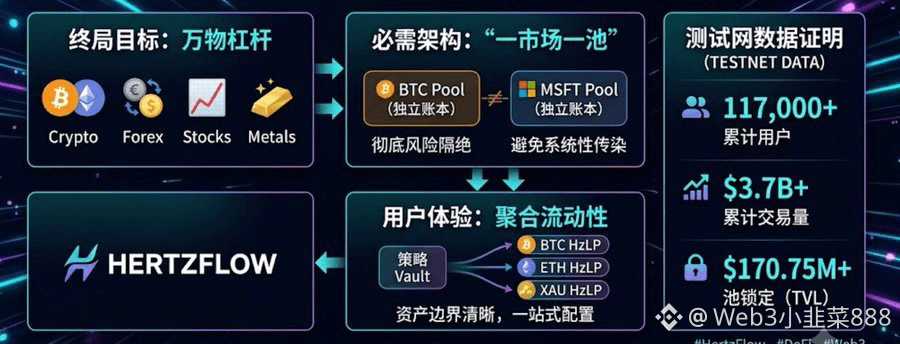
If the endgame of DeFi derivatives is to enable true leverage on everything, then what kind of underlying infrastructure do we actually need?
If an all-asset leverage protocol must simultaneously achieve “excellent capital efficiency” and “strict risk isolation,” it must not mix all assets into a single massive risk pool. Otherwise, extreme volatility in U.S. equities or the gold market would directly undermine the liquidity pool of BTC/ETH traders.
That’s why we’re optimistic about the underlying logic of @HertzFlow_xyz : From the goal to the mechanism: To prevent systemic risk contagion, Hertzflow uses an “one market, one Pool” isolated ledger structure. BTC, ETH, MSFT, and XAU settle independently, blocking from the source the risk of cross-asset cascading liquidations.
From the experience to the aggregation: To avoid fragmenting liquidity, the Vault strategy entry at the top level combines multiple HzLPs—keeping clear boundaries for underlying assets while still providing users with a one-stop configuration experience.
Testnet data has already validated market recognition of this approach:
117,000+ cumulative testnet users
$3.7B+ cumulative trading volume
$170.75M+ capital pool locked (TVL)
As the testnet resets and preparations for the mainnet expand, this architecture—separating ledgers while aligning leverage—will soon face the real liquidity stress test.
The next breakthrough for on-chain all-asset derivatives may very well be pioneered by @HertzFlow_xyz
If the endgame of DeFi derivatives is to enable true leverage on everything, then what kind of underlying infrastructure do we actually need?
If an all-asset leverage protocol must simultaneously achieve “excellent capital efficiency” and “strict risk isolation,” it must not mix all assets into a single massive risk pool. Otherwise, extreme volatility in U.S. equities or the gold market would directly undermine the liquidity pool of BTC/ETH traders.
That’s why we’re optimistic about the underlying logic of @HertzFlow : From the goal to the mechanism: To prevent systemic risk contagion, Hertzflow uses an “one market, one Pool” isolated ledger structure. BTC, ETH, MSFT, and XAU settle independently, blocking from the source the risk of cross-asset cascading liquidations.
From the experience to the aggregation: To avoid fragmenting liquidity, the Vault strategy entry at the top level combines multiple HzLPs—keeping clear boundaries for underlying assets while still providing users with a one-stop configuration experience.
Testnet data has already validated market recognition of this approach:
117,000+ cumulative testnet users
$3.7B+ cumulative trading volume
$170.75M+ capital pool locked (TVL)
As the testnet resets and preparations for the mainnet expand, this architecture—separating ledgers while aligning leverage—will soon face the real liquidity stress test.
The next breakthrough for on-chain all-asset derivatives may very well be pioneered by @HertzFlow
If an all-asset leverage protocol must simultaneously achieve “excellent capital efficiency” and “strict risk isolation,” it must not mix all assets into a single massive risk pool. Otherwise, extreme volatility in U.S. equities or the gold market would directly undermine the liquidity pool of BTC/ETH traders.
That’s why we’re optimistic about the underlying logic of @HertzFlow : From the goal to the mechanism: To prevent systemic risk contagion, Hertzflow uses an “one market, one Pool” isolated ledger structure. BTC, ETH, MSFT, and XAU settle independently, blocking from the source the risk of cross-asset cascading liquidations.
From the experience to the aggregation: To avoid fragmenting liquidity, the Vault strategy entry at the top level combines multiple HzLPs—keeping clear boundaries for underlying assets while still providing users with a one-stop configuration experience.
Testnet data has already validated market recognition of this approach:
117,000+ cumulative testnet users
$3.7B+ cumulative trading volume
$170.75M+ capital pool locked (TVL)
As the testnet resets and preparations for the mainnet expand, this architecture—separating ledgers while aligning leverage—will soon face the real liquidity stress test.
The next breakthrough for on-chain all-asset derivatives may very well be pioneered by @HertzFlow
201
·
--
Bullish
Non-Farm Payrolls release
Up first, then down
Let’s go, Oli!
Non-Farm Payrolls release
Up first, then down
Let’s go, Oli!
Up first, then down
Let’s go, Oli!
141
·
--
Bearish
Is a big bear market coming?
Exchanges are shutting down one after another
#SHIB up 36%
Is a big bear market coming?
Exchanges are shutting down one after another
#SHIB up 36%
Exchanges are shutting down one after another
#SHIB up 36%
2
399
·
--
Bought $AKE
No matter what wrongs were committed in the past, it all gets wiped clean
This dog of a dealer isn’t human—always selling
Sold another more than 9.2 billion chips, and paid out more than $2 million
$$AKE
{alpha}(560x2c3a8ee94ddd97244a93bc48298f97d2c412f7db)
#比特币未能守住6.44万美元
Bought $AKE
No matter what wrongs were committed in the past, it all gets wiped clean
This dog of a dealer isn’t human—always selling
Sold another more than 9.2 billion chips, and paid out more than $2 million
$$AKE
#比特币未能守住6.44万美元
No matter what wrongs were committed in the past, it all gets wiped clean
This dog of a dealer isn’t human—always selling
Sold another more than 9.2 billion chips, and paid out more than $2 million
$$AKE
#比特币未能守住6.44万美元
482
·
--
The reason why 'chives' are called 'chives' in the crypto space
Is because they hold their positions stubbornly, you know what I mean?
The reason why 'chives' are called 'chives' in the crypto space
Is because they hold their positions stubbornly, you know what I mean?
Is because they hold their positions stubbornly, you know what I mean?
146
·
--
Bearish
2.5k
4
134
2.5k
·
--
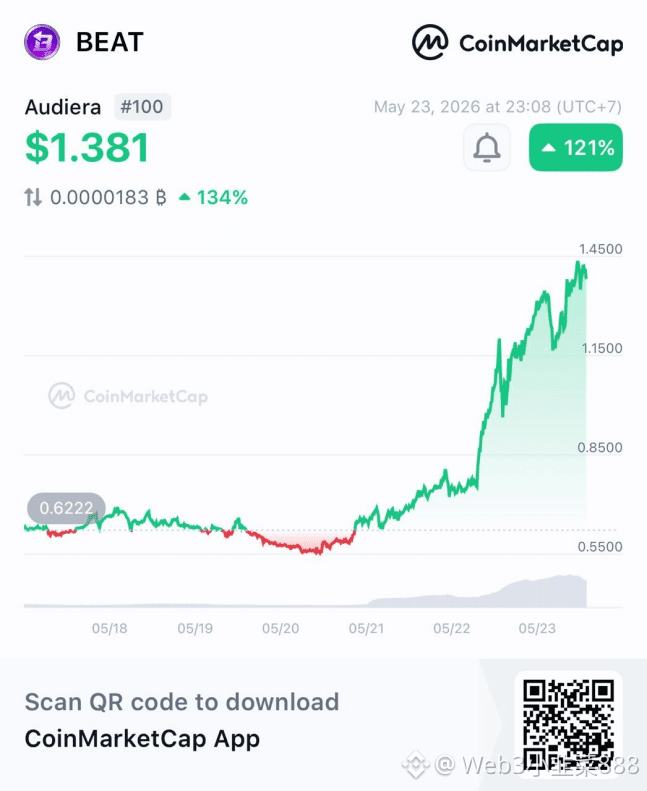
Those who understand $BEAT this round should realize a truth: Holders Win. From $0.26 to $1.44, a 450% leap wasn’t driven by capital pumping, but by each of us stacking up with real cash retail buys, one bite at a time.
With on-chain data as proof and ecological value backing it up, we’re moving more solidly than anyone else.
The old-timers in the community know that $BEAT has withstood countless market noise, rewarding those who held firm at every critical juncture.
Real demand, organic growth, and a community with ironclad consensus—this is our underlying logic that drives our success.
The first phase wraps up perfectly, but a new storm is brewing. Are you still on the ride?
$BEAT
Those who understand $BEAT this round should realize a truth: Holders Win. From $0.26 to $1.44, a 450% leap wasn’t driven by capital pumping, but by each of us stacking up with real cash retail buys, one bite at a time.
With on-chain data as proof and ecological value backing it up, we’re moving more solidly than anyone else.
The old-timers in the community know that $BEAT has withstood countless market noise, rewarding those who held firm at every critical juncture.
Real demand, organic growth, and a community with ironclad consensus—this is our underlying logic that drives our success.
The first phase wraps up perfectly, but a new storm is brewing. Are you still on the ride?
$BEAT
With on-chain data as proof and ecological value backing it up, we’re moving more solidly than anyone else.
The old-timers in the community know that $BEAT has withstood countless market noise, rewarding those who held firm at every critical juncture.
Real demand, organic growth, and a community with ironclad consensus—this is our underlying logic that drives our success.
The first phase wraps up perfectly, but a new storm is brewing. Are you still on the ride?
$BEAT
261
Log in to explore more content
Join global crypto users on Binance Square
⚡️ Get latest and useful information about crypto.
💬 Trusted by the world’s largest crypto exchange.
👍 Discover real insights from verified creators.
Email / Phone number
Trending Topics
BinancePick
3.4M views
164,520 Discussing
Join #EarningsSeason: Predict Earnings on Binance Pick, Share Your Take on Binance Square!
Binance Square Official
·419 Likes
·345.4k views
EarningsSeason
5.5M views
26,859 Discussing
StrategySkipsBitcoinPurchasesSpends$205MOnSTRCBuybacks
823 views
24 Discussing