

CryptoZeno
6.5k Posts

CryptoZeno
Report
Block User
On Chain Research and Market Insights with Smart Trading Signals

SIREN Holder
Frequent Trader
5.5 Years
30 Following
9.3K+ Followers
36.5K+ Liked
Posts
All
Quotes
Videos
PINNED
·
--
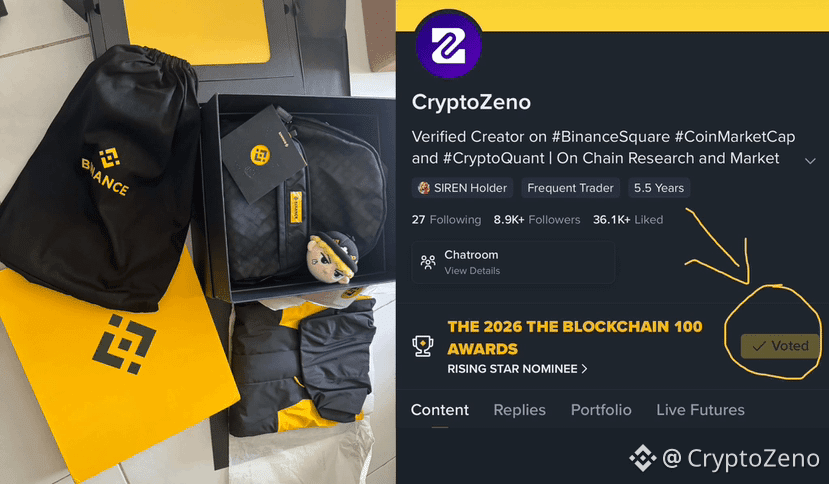
CRYPTOZENO IS NOMINATED FOR THE BLOCKCHAIN 100 AWARDS 2026 🏆
Vote for CryptoZeno for the Blockchain 100 Awards! [Vote now](https://app.binance.com/uni-qr/cact26user/516)
I'm excited to share that I've been nominated for the Rising Star category at The Blockchain 100 Awards 2026 on Binance Square!
Over the years, I've dedicated my time to sharing on chain research, market analysis, and trading insights with the crypto community. This nomination is a meaningful milestone in my journey as a content creator.
Your support would mean a lot to me. If you've ever found value in my research, analysis, or market updates, I'd truly appreciate your vote.
Voting is simple! Just visit my Binance Square profile, where you'll find the Blockchain 100 Awards voting section right below my profile information. You can cast your vote for me directly there.
Every vote counts, and I'm grateful to everyone who has supported CryptoZeno along the way. Let's make this milestone happen together! ❤️ [Vote now](https://app.binance.com/uni-qr/cact26user/516)
#Blockchain100 #BinanceSquare #CryptoZeno
CRYPTOZENO IS NOMINATED FOR THE BLOCKCHAIN 100 AWARDS 2026 🏆
Vote for CryptoZeno for the Blockchain 100 Awards! Vote now
I'm excited to share that I've been nominated for the Rising Star category at The Blockchain 100 Awards 2026 on Binance Square!
Over the years, I've dedicated my time to sharing on chain research, market analysis, and trading insights with the crypto community. This nomination is a meaningful milestone in my journey as a content creator.
Your support would mean a lot to me. If you've ever found value in my research, analysis, or market updates, I'd truly appreciate your vote.
Voting is simple! Just visit my Binance Square profile, where you'll find the Blockchain 100 Awards voting section right below my profile information. You can cast your vote for me directly there.
Every vote counts, and I'm grateful to everyone who has supported CryptoZeno along the way. Let's make this milestone happen together! ❤️ Vote now
#Blockchain100 #BinanceSquare #CryptoZeno

23
28
7.9k
PINNED
·
--
Article
The Breakout Trading Strategy I Use to Catch Big MovesI’ve longed resistance and shorted support for 9 years… This is the exact opposite of what every trader tries to do.
In this article, I will share my entire strategy so you can skip years of testing and losses.
This is something you will want to bookmark, take notes on, and set time aside to think about.
Lesson 1: The Only 2 Trading Strategies
Before you can identify good momentum setups, you need to understand what momentum trading actually is.
Momentum and mean reversion are opposite strategies based on opposite assumptions.
The Two Trading Styles
Momentum (where you take a trade betting on a continuation of the current trend)Mean Reversion (where you take a trade betting on a reversal of the current trend)
One assumes strength continues; the other assumes strength exhausts.
Let’s consider this through a visual example.
Suppose price is approaching a resistance level (in other words, a level where there was previously selling pressure, preventing the price from moving higher).
Momentum assumes the level will break.
You’re betting on continuation.Price approaches resistance, you buy, expecting it to push through and keep running.The level becomes support once broken.
Mean reversion assumes the level will hold.
You’re betting on rejection.Price approaches resistance, you short, expecting it to bounce back down.The level acts as a ceiling.
Same chart. Same resistance level. Opposite strategies.
There is no right or wrong. The key is to understand when you are in a momentum trade environment, such that momentum strategies are highly aligned.
The next section shows you exactly how to identify when the environment favours momentum (my best strategy).
Lesson 1 Summary
There are 2 trading styles: momentum and mean reversionMean reversion bets levels will hold; momentum bets levels will breakOne is not better than the other; it depends entirely on the trade environment
Lesson 2: Optimal Trade Environment
Just opening a long every time price hits resistance won't make us any money.
Without the right conditions, momentum dies immediately after the breakout.
You enter. It reverses. You're stopped out.
That's not bad luck, that's a bad trading environment.
The Rowing Analogy
Imagine you’re rowing a boat.
You either row against or with the current.
One makes it easier to row while the other takes a lot more effort.
Your boat, or rowing technique, didn’t change… Only your environment did.
Trading is the same.
Your strategy is your boat.
Your optimal trade environment is the current.
Now use this 3-filter checklist to ensure you only take trades where a breakout is likely (with the current).
Filter 1: How Did Price Approach the Level?
What you WANT:
A slow, grinding staircase pattern approaching resistance.Each candle makes incremental progress.Higher lows are stacking up.Controlled, deliberate movement.
What you DON’T want:
A fast vertical spike into resistance.Price shoots up in one or two large candles.After a spike, buyers' strength is depleted and price typically consolidates or reverses.This is exhaustion, not momentum.
The staircase pattern shows sustained buying pressure building gradually. When this breaks through resistance, buyers are still engaged and ready to push further.
Common mistake: Traders see a strong candle break resistance and assume momentum is strong. But these fast moves often reverse quickly.
→ Do this instead: Take momentum trades when price approaches resistance in a slow, grinding staircase over multiple candles.
Real Trade Example:
Slow clear grind into resistance showing an optimal ‘price approach to level’ for momentum.
Filter 1: slow grindy staircase ✅
Filter 2: What Did Volume Look Like?
Volume confirms whether the price movement has conviction behind it.
What you WANT:
Gradual increase in volume as price approaches resistanceThis pattern shows controlled, sustainable momentum.
What you DON’T want:
Flat volume (no conviction) or sudden volume spikes (exhaustion).Flat volume means the move lacks participation.Volume spikes often mark climax points where momentum exhausts.Decreasing volume (why would price break out of resistance now, if volume was lower than before?)
Volume should mirror the price pattern, steady and building, not erratic.
This strategy works because momentum continuation is most likely when participation is sustained, supply is absorbed gradually, and structure remains intact.
Real Trade Example:
Around the time the grindy staircase begins to emerge, we see a slow, consistent increase in volume.
Filter 1: slow grindy staircase ✅Filter 2: clearly increasing volume ✅
Lastly,
Filter 3: Moving Average Crossovers
This filter distinguishes trending markets (good for momentum) from choppy, indecisive markets (bad for momentum).
What you WANT to see: Moving averages with minimal crossovers. This indicates a directional trend.
What you DON’T want to see: Frequent crossovers. This signals chop and indecision.
Fewer crossovers = cleaner trend or range = better momentum continuation.
Use the 30SMMA (Smoothed Moving Average).
✍️Quick Actionable Step:
To add the 30SMMA on your charts:
Search for the Smoothed Moving Average Indicator in TradingViewAdd it to your chartGo into settings and change the "Length" to "30"
Real Trade Example:
Filter 1 (Price Action): slow grindy staircase ✅
Filter 2 (Volume): clearly increasing volume ✅
Filter 3 (Crossovers): minimal MA crossovers ✅
🎓Lesson 2 Summary
Slow grinding staircase approaches have better follow-through than fast spikesVolume should be gradual (increasing or decreasing), not flat or spikingFewer MA crossovers indicate cleaner directional conditions for momentum
Lesson 3: Identifying Setups
Now you know what momentum is.
You also know the optimal conditions for it.
Next, you need to know where to execute these trades.
Step 1: Draw Support and Resistance Levels
Momentum trades happen at these key levels. You need to identify them consistently.
I've already written an in-depth masterclass on how to set these levels. I'll link it at the end of this article.
Common mistake: Traders draw levels randomly or inconsistently, leading to missed setups or false signals.
Do this instead: Use my step-by-step approach at the end of this article.
Step 2: Await Your Entry Trigger on the 1-Minute Chart
Once you’ve identified a resistance level on your primary timeframe, switch to the 1-minute chart for precise entry timing.
Why 1-minute chart?
You learn faster.
More trades, more chart exposure and more oppurtunities to practice psychology.
I’ve added a bonus guide on why you should be trading the 1-minute chart at the end of this article.
Real Trade Example:
Step 3: Three Filters
Before entering, check the three filters from Section 2:
Is price approaching resistance in a slow staircase pattern?Is volume gradually increasing or decreasing (not flat or spiking)?Are there minimal MA crossovers (not choppy)?
If any filter fails, reduce your risk on the trade. Only take full risk on A-grade setups, not forcing trades in poor conditions.
🎓Lesson 3 Summary
Draw levels using the ZCT masterclass approach at the end of this articleUse your entry trigger on the 1-minute timeframe: 2 candle closes above for confirmationCheck all three filters before entering, allocate risk and size accordingly
Lesson 4: Strategy Logic: Stop Loss, and Take Profit
You've drawn your levels. You've confirmed the setup aligns with optimal momentum conditions.
Now you need precise execution.
Entry timing, stop placement, and profit targets determine whether you capture the momentum move or get stopped out on a good setup.
This is where most traders lose, not in analysis, but in execution.
Step 4: Entry Trigger
We have established to wait for two consecutive 1-minute candles to close fully above the resistance level. This confirms the level broke and momentum is continuing.
Critical execution detail: After the second candle closes above resistance, place a limit order AT the resistance level (now acting as support), not above it. Price often pulls back slightly after breaking out. Your limit order gets filled on the pullback without chasing.
Common mistake: Traders wait for confirmation, then market-buy above resistance as price runs away. They enter late with a wider stop and worse risk/reward.
→ Do this instead: Preset your limit order AT resistance after the second candle closes. Let price come back to you.
Real Trade Example:
Step 5: Stop Loss
A swing low is:
the lowest wick in a pullback.
Your stop loss goes at the most recent swing low before the breakout.
Common mistake: Traders place stops at the nearest swing low, even if it’s only 0.3% away, leading to frequent stop-outs from normal volatility
Do this instead: Always measure the distance of your stop loss using the ruler tool on TradingView. If it’s less than 1%, use the next swing low down.
Step 6: Take Profit 1R (Equal Distance to Stop)
Your take profit target is 1R, the same distance as your stop loss, but in the profit direction
If your stop loss is 1.982% away from entry, your target is also 1.982% away, but on the upside. This gives you a 1:1 risk/reward ratio.
Why 1R? It’s conservative and achievable. Momentum trades often hit 1R quickly because the breakout has follow-through. You’re not trying to catch the entire move, you’re taking a high-probability piece of it.
Over time, as you get data in your journal, you can start extending your profit targets when you see how far your average winning trades go beyond 1R. This way, you’re not guessing where to take profits, but following a systematic approach.
Real Trade Example:
🎓Lesson 4 summary
Enter after two 1-minute candle closes above resistance, using a limit order at prior resistance (now support) to avoid chasing price.Place stop losses at the most recent valid swing low, ensuring enough distance to avoid normal volatility and minor stop hunts.Set initial profit targets at 1R to capture high-probability momentum continuation in a repeatable, systematic way.
Immediate Next Steps✍️:
Read the Support and Resistance Masterclass to learn how to draw levels (shared at end of article)Look at 3 charts using the 3 filter checklist to identify a momentum trade environmentUse the strategy steps to enter your tradeGather 30 trades using this method, journalled and reviewed against the criteria
🎓 Final Summary
Lesson 1: Momentum vs Mean Reversion
Momentum trades bet that price will continue through a level, while mean reversion trades bet that a level will hold and reject price.Both strategies are valid, but performance depends entirely on matching the strategy to the correct trade environment.
Understanding this distinction prevents applying breakout logic in conditions where it has no edge.
Lesson 2: Optimal Trade Environment
High-quality breakouts form when price approaches resistance in a slow, grinding staircase rather than fast vertical spikes.Volume should build gradually to confirm sustained participation, not remain flat or spike from exhaustion.Minimal moving average crossovers indicate cleaner directional conditions where momentum continuation is more likely.
Lesson 3: Identifying Setups
Momentum trades should be executed at consistently drawn support and resistance levels.Entries are triggered on the 1-minute chart using two consecutive candle closes above resistance for confirmation.All three environment filters must align before taking full risk; weaker conditions require reduced sizing or passing the trade.
Lesson 4: Stop Loss and Take Profit
Enter using a limit order at prior resistance (now support) after two confirmed 1-minute candle closes to avoid chasing price.Stop losses should be placed at the most recent valid swing low with enough distance to avoid normal volatility and minor stop hunts.Initial profit targets are set at 1R to capture high-probability momentum continuation in a repeatable way.
🎓What Changes From Here
The next time price approaches resistance, you won’t have to guess if it will break out.
You’ll know when a breakout has real momentum, when volume confirms it, and when conditions support follow-through.
You’ll also execute with defined entries, stops, and targets.
#CryptoZeno #tradingStrategy
The Breakout Trading Strategy I Use to Catch Big Moves
I’ve longed resistance and shorted support for 9 years… This is the exact opposite of what every trader tries to do.
In this article, I will share my entire strategy so you can skip years of testing and losses.
This is something you will want to bookmark, take notes on, and set time aside to think about.
Lesson 1: The Only 2 Trading Strategies
Before you can identify good momentum setups, you need to understand what momentum trading actually is.
Momentum and mean reversion are opposite strategies based on opposite assumptions.
The Two Trading Styles
Momentum (where you take a trade betting on a continuation of the current trend)Mean Reversion (where you take a trade betting on a reversal of the current trend)
One assumes strength continues; the other assumes strength exhausts.
Let’s consider this through a visual example.
Suppose price is approaching a resistance level (in other words, a level where there was previously selling pressure, preventing the price from moving higher).
Momentum assumes the level will break.
You’re betting on continuation.Price approaches resistance, you buy, expecting it to push through and keep running.The level becomes support once broken.
Mean reversion assumes the level will hold.
You’re betting on rejection.Price approaches resistance, you short, expecting it to bounce back down.The level acts as a ceiling.
Same chart. Same resistance level. Opposite strategies.
There is no right or wrong. The key is to understand when you are in a momentum trade environment, such that momentum strategies are highly aligned.
The next section shows you exactly how to identify when the environment favours momentum (my best strategy).
Lesson 1 Summary
There are 2 trading styles: momentum and mean reversionMean reversion bets levels will hold; momentum bets levels will breakOne is not better than the other; it depends entirely on the trade environment
Lesson 2: Optimal Trade Environment
Just opening a long every time price hits resistance won't make us any money.
Without the right conditions, momentum dies immediately after the breakout.
You enter. It reverses. You're stopped out.
That's not bad luck, that's a bad trading environment.
The Rowing Analogy
Imagine you’re rowing a boat.
You either row against or with the current.
One makes it easier to row while the other takes a lot more effort.
Your boat, or rowing technique, didn’t change… Only your environment did.
Trading is the same.
Your strategy is your boat.
Your optimal trade environment is the current.
Now use this 3-filter checklist to ensure you only take trades where a breakout is likely (with the current).
Filter 1: How Did Price Approach the Level?
What you WANT:
A slow, grinding staircase pattern approaching resistance.Each candle makes incremental progress.Higher lows are stacking up.Controlled, deliberate movement.
What you DON’T want:
A fast vertical spike into resistance.Price shoots up in one or two large candles.After a spike, buyers' strength is depleted and price typically consolidates or reverses.This is exhaustion, not momentum.
The staircase pattern shows sustained buying pressure building gradually. When this breaks through resistance, buyers are still engaged and ready to push further.
Common mistake: Traders see a strong candle break resistance and assume momentum is strong. But these fast moves often reverse quickly.
→ Do this instead: Take momentum trades when price approaches resistance in a slow, grinding staircase over multiple candles.
Real Trade Example:
Slow clear grind into resistance showing an optimal ‘price approach to level’ for momentum.
Filter 1: slow grindy staircase ✅
Filter 2: What Did Volume Look Like?
Volume confirms whether the price movement has conviction behind it.
What you WANT:
Gradual increase in volume as price approaches resistanceThis pattern shows controlled, sustainable momentum.
What you DON’T want:
Flat volume (no conviction) or sudden volume spikes (exhaustion).Flat volume means the move lacks participation.Volume spikes often mark climax points where momentum exhausts.Decreasing volume (why would price break out of resistance now, if volume was lower than before?)
Volume should mirror the price pattern, steady and building, not erratic.
This strategy works because momentum continuation is most likely when participation is sustained, supply is absorbed gradually, and structure remains intact.
Real Trade Example:
Around the time the grindy staircase begins to emerge, we see a slow, consistent increase in volume.
Filter 1: slow grindy staircase ✅Filter 2: clearly increasing volume ✅
Lastly,
Filter 3: Moving Average Crossovers
This filter distinguishes trending markets (good for momentum) from choppy, indecisive markets (bad for momentum).
What you WANT to see: Moving averages with minimal crossovers. This indicates a directional trend.
What you DON’T want to see: Frequent crossovers. This signals chop and indecision.
Fewer crossovers = cleaner trend or range = better momentum continuation.
Use the 30SMMA (Smoothed Moving Average).
✍️Quick Actionable Step:
To add the 30SMMA on your charts:
Search for the Smoothed Moving Average Indicator in TradingViewAdd it to your chartGo into settings and change the "Length" to "30"
Real Trade Example:
Filter 1 (Price Action): slow grindy staircase ✅
Filter 2 (Volume): clearly increasing volume ✅
Filter 3 (Crossovers): minimal MA crossovers ✅
🎓Lesson 2 Summary
Slow grinding staircase approaches have better follow-through than fast spikesVolume should be gradual (increasing or decreasing), not flat or spikingFewer MA crossovers indicate cleaner directional conditions for momentum
Lesson 3: Identifying Setups
Now you know what momentum is.
You also know the optimal conditions for it.
Next, you need to know where to execute these trades.
Step 1: Draw Support and Resistance Levels
Momentum trades happen at these key levels. You need to identify them consistently.
I've already written an in-depth masterclass on how to set these levels. I'll link it at the end of this article.
Common mistake: Traders draw levels randomly or inconsistently, leading to missed setups or false signals.
Do this instead: Use my step-by-step approach at the end of this article.
Step 2: Await Your Entry Trigger on the 1-Minute Chart
Once you’ve identified a resistance level on your primary timeframe, switch to the 1-minute chart for precise entry timing.
Why 1-minute chart?
You learn faster.
More trades, more chart exposure and more oppurtunities to practice psychology.
I’ve added a bonus guide on why you should be trading the 1-minute chart at the end of this article.
Real Trade Example:
Step 3: Three Filters
Before entering, check the three filters from Section 2:
Is price approaching resistance in a slow staircase pattern?Is volume gradually increasing or decreasing (not flat or spiking)?Are there minimal MA crossovers (not choppy)?
If any filter fails, reduce your risk on the trade. Only take full risk on A-grade setups, not forcing trades in poor conditions.
🎓Lesson 3 Summary
Draw levels using the ZCT masterclass approach at the end of this articleUse your entry trigger on the 1-minute timeframe: 2 candle closes above for confirmationCheck all three filters before entering, allocate risk and size accordingly
Lesson 4: Strategy Logic: Stop Loss, and Take Profit
You've drawn your levels. You've confirmed the setup aligns with optimal momentum conditions.
Now you need precise execution.
Entry timing, stop placement, and profit targets determine whether you capture the momentum move or get stopped out on a good setup.
This is where most traders lose, not in analysis, but in execution.
Step 4: Entry Trigger
We have established to wait for two consecutive 1-minute candles to close fully above the resistance level. This confirms the level broke and momentum is continuing.
Critical execution detail: After the second candle closes above resistance, place a limit order AT the resistance level (now acting as support), not above it. Price often pulls back slightly after breaking out. Your limit order gets filled on the pullback without chasing.
Common mistake: Traders wait for confirmation, then market-buy above resistance as price runs away. They enter late with a wider stop and worse risk/reward.
→ Do this instead: Preset your limit order AT resistance after the second candle closes. Let price come back to you.
Real Trade Example:
Step 5: Stop Loss
A swing low is:
the lowest wick in a pullback.
Your stop loss goes at the most recent swing low before the breakout.
Common mistake: Traders place stops at the nearest swing low, even if it’s only 0.3% away, leading to frequent stop-outs from normal volatility
Do this instead: Always measure the distance of your stop loss using the ruler tool on TradingView. If it’s less than 1%, use the next swing low down.
Step 6: Take Profit 1R (Equal Distance to Stop)
Your take profit target is 1R, the same distance as your stop loss, but in the profit direction
If your stop loss is 1.982% away from entry, your target is also 1.982% away, but on the upside. This gives you a 1:1 risk/reward ratio.
Why 1R? It’s conservative and achievable. Momentum trades often hit 1R quickly because the breakout has follow-through. You’re not trying to catch the entire move, you’re taking a high-probability piece of it.
Over time, as you get data in your journal, you can start extending your profit targets when you see how far your average winning trades go beyond 1R. This way, you’re not guessing where to take profits, but following a systematic approach.
Real Trade Example:
🎓Lesson 4 summary
Enter after two 1-minute candle closes above resistance, using a limit order at prior resistance (now support) to avoid chasing price.Place stop losses at the most recent valid swing low, ensuring enough distance to avoid normal volatility and minor stop hunts.Set initial profit targets at 1R to capture high-probability momentum continuation in a repeatable, systematic way.
Immediate Next Steps✍️:
Read the Support and Resistance Masterclass to learn how to draw levels (shared at end of article)Look at 3 charts using the 3 filter checklist to identify a momentum trade environmentUse the strategy steps to enter your tradeGather 30 trades using this method, journalled and reviewed against the criteria
🎓 Final Summary
Lesson 1: Momentum vs Mean Reversion
Momentum trades bet that price will continue through a level, while mean reversion trades bet that a level will hold and reject price.Both strategies are valid, but performance depends entirely on matching the strategy to the correct trade environment.
Understanding this distinction prevents applying breakout logic in conditions where it has no edge.
Lesson 2: Optimal Trade Environment
High-quality breakouts form when price approaches resistance in a slow, grinding staircase rather than fast vertical spikes.Volume should build gradually to confirm sustained participation, not remain flat or spike from exhaustion.Minimal moving average crossovers indicate cleaner directional conditions where momentum continuation is more likely.
Lesson 3: Identifying Setups
Momentum trades should be executed at consistently drawn support and resistance levels.Entries are triggered on the 1-minute chart using two consecutive candle closes above resistance for confirmation.All three environment filters must align before taking full risk; weaker conditions require reduced sizing or passing the trade.
Lesson 4: Stop Loss and Take Profit
Enter using a limit order at prior resistance (now support) after two confirmed 1-minute candle closes to avoid chasing price.Stop losses should be placed at the most recent valid swing low with enough distance to avoid normal volatility and minor stop hunts.Initial profit targets are set at 1R to capture high-probability momentum continuation in a repeatable way.
🎓What Changes From Here
The next time price approaches resistance, you won’t have to guess if it will break out.
You’ll know when a breakout has real momentum, when volume confirms it, and when conditions support follow-through.
You’ll also execute with defined entries, stops, and targets.
#CryptoZeno #tradingStrategy
40
16
128
75.4k
·
--

Article
Why 95% of Market Participants Ride Every Cycle Back to ZeroNinety-five percent of participants will hold all the way through the crash. Profits will disappear, portfolios will implode, and the market will reset like it always does. I have no intention of being part of that majority.
I’m not here to sell the exact top. I’m here to exit before the illusion breaks. November 2025 is my exit window, not because I can predict the future, but because I understand cycles. Historically, peak euphoria tends to arrive roughly twelve to eighteen months after a Bitcoin halving. That phase is defined by confidence, not caution, and that’s precisely why it’s dangerous.
Every bull market ends the same way, with an explosive altcoin phase. Meme coins, Layer 2s, AI tokens, and whatever narrative captures attention will move aggressively higher. This is not the beginning of a new expansion. It is the final acceleration before exhaustion. Retail chases performance, momentum feeds on itself, and prices detach from reality.
What comes after the peak is never gradual. Tokens routinely lose ninety to ninety-nine percent of their value. Liquidity dries up, teams vanish, and selling becomes impossible. By the time fear becomes obvious, the exit is already gone. Most losses in crypto are not caused by bad entries, but by refusing to leave when conditions are favorable.
To avoid that outcome, I rely heavily on three on-chain signals that have consistently provided early warnings in previous cycles. Market Value to Realized Value highlights when price is far above aggregate cost basis. Net Unrealized Profit and Loss reveals when the majority of the market is sitting on excessive paper gains. Spent Output Profit Ratio shows whether coins are being distributed at a profit. When these metrics align and signal overheating, I don’t debate narratives. I start reducing exposure.
Unrealized profit is not success. Numbers on a screen are meaningless until they are converted into stable value. I treat profit-taking like income, not speculation. It is structured, repetitive, and intentionally boring. If it feels uneventful, it usually means it’s being done correctly.
My exit strategy is straightforward and disciplined. I distribute in stages while the market is strong, not during weakness. Capital rotates into stable yield, cash, and real-world assets. When the market begins talking about one final pump, I disengage from the noise. Cycles rarely offer more than one clean exit.
Operational discipline matters just as much as market timing. Cold wallets are for long-term wealth preservation. Hot wallets are for experimentation and curiosity. Mixing the two is how conviction capital gets destroyed during late-cycle speculation.
Altseason also attracts a predictable wave of scams. Fake launches, malicious airdrops, and phishing campaigns thrive when greed is high. Burner wallets, verified links, and assuming everything is hostile are not paranoia at this stage. They are survival skills.
Importantly, market tops never feel threatening. They feel comfortable. The dominant emotion is optimism, not fear, and the common belief is that the real move is just beginning. Historically, that mindset marks the end. If selling feels emotionally wrong, it is often a sign that timing is correct.
As my exit window approaches, diversification becomes essential. Altcoins appear safe until liquidity disappears. Capital rotates toward Bitcoin, Ethereum, stablecoins, and income streams outside of crypto. Heavy exposure to microcaps late in the cycle is not aggressive positioning. It is delayed liquidation.
Those who survived the bear market and accumulated early earned their advantage. But endurance alone does not create wealth. If you do not leave the market with realized gains, none of the conviction matters. You did not come this far to give it all back.
My plan is to exit completely and wait. If the market offers deep drawdowns again in 2026 or 2027, I will re-enter from a position of strength. That is where asymmetric opportunity truly exists.
Exiting is not about prediction. It is about discipline. Most participants lose everything chasing one more green candle. Exiting well is the rarest skill in crypto, and the most valuable one. This cycle, I intend to execute it properly.
#CryptoZeno #BinancePick
Why 95% of Market Participants Ride Every Cycle Back to Zero
Ninety-five percent of participants will hold all the way through the crash. Profits will disappear, portfolios will implode, and the market will reset like it always does. I have no intention of being part of that majority.
I’m not here to sell the exact top. I’m here to exit before the illusion breaks. November 2025 is my exit window, not because I can predict the future, but because I understand cycles. Historically, peak euphoria tends to arrive roughly twelve to eighteen months after a Bitcoin halving. That phase is defined by confidence, not caution, and that’s precisely why it’s dangerous.
Every bull market ends the same way, with an explosive altcoin phase. Meme coins, Layer 2s, AI tokens, and whatever narrative captures attention will move aggressively higher. This is not the beginning of a new expansion. It is the final acceleration before exhaustion. Retail chases performance, momentum feeds on itself, and prices detach from reality.
What comes after the peak is never gradual. Tokens routinely lose ninety to ninety-nine percent of their value. Liquidity dries up, teams vanish, and selling becomes impossible. By the time fear becomes obvious, the exit is already gone. Most losses in crypto are not caused by bad entries, but by refusing to leave when conditions are favorable.
To avoid that outcome, I rely heavily on three on-chain signals that have consistently provided early warnings in previous cycles. Market Value to Realized Value highlights when price is far above aggregate cost basis. Net Unrealized Profit and Loss reveals when the majority of the market is sitting on excessive paper gains. Spent Output Profit Ratio shows whether coins are being distributed at a profit. When these metrics align and signal overheating, I don’t debate narratives. I start reducing exposure.
Unrealized profit is not success. Numbers on a screen are meaningless until they are converted into stable value. I treat profit-taking like income, not speculation. It is structured, repetitive, and intentionally boring. If it feels uneventful, it usually means it’s being done correctly.
My exit strategy is straightforward and disciplined. I distribute in stages while the market is strong, not during weakness. Capital rotates into stable yield, cash, and real-world assets. When the market begins talking about one final pump, I disengage from the noise. Cycles rarely offer more than one clean exit.
Operational discipline matters just as much as market timing. Cold wallets are for long-term wealth preservation. Hot wallets are for experimentation and curiosity. Mixing the two is how conviction capital gets destroyed during late-cycle speculation.
Altseason also attracts a predictable wave of scams. Fake launches, malicious airdrops, and phishing campaigns thrive when greed is high. Burner wallets, verified links, and assuming everything is hostile are not paranoia at this stage. They are survival skills.
Importantly, market tops never feel threatening. They feel comfortable. The dominant emotion is optimism, not fear, and the common belief is that the real move is just beginning. Historically, that mindset marks the end. If selling feels emotionally wrong, it is often a sign that timing is correct.
As my exit window approaches, diversification becomes essential. Altcoins appear safe until liquidity disappears. Capital rotates toward Bitcoin, Ethereum, stablecoins, and income streams outside of crypto. Heavy exposure to microcaps late in the cycle is not aggressive positioning. It is delayed liquidation.
Those who survived the bear market and accumulated early earned their advantage. But endurance alone does not create wealth. If you do not leave the market with realized gains, none of the conviction matters. You did not come this far to give it all back.
My plan is to exit completely and wait. If the market offers deep drawdowns again in 2026 or 2027, I will re-enter from a position of strength. That is where asymmetric opportunity truly exists.
Exiting is not about prediction. It is about discipline. Most participants lose everything chasing one more green candle. Exiting well is the rarest skill in crypto, and the most valuable one. This cycle, I intend to execute it properly.
#CryptoZeno #BinancePick
69
5
148
·
--
🎁🎁🎁 EVERY VOTE OF SUPPORT MATTERS!
👉 [VOTE NOW](https://app.binance.com/uni-qr/cact26user/516)
Every single vote brings me one step closer to my goal! ❤️
🎁 Don't forget to join my group chat for surprise gifts! And make sure to follow me so you don't miss the giveaways in my upcoming posts!
Thank you to everyone who has voted for me! If possible, please invite your friends to join too! 🤝
🎁🎁🎁 EVERY VOTE OF SUPPORT MATTERS!
👉 VOTE NOW
Every single vote brings me one step closer to my goal! ❤️
🎁 Don't forget to join my group chat for surprise gifts! And make sure to follow me so you don't miss the giveaways in my upcoming posts!
Thank you to everyone who has voted for me! If possible, please invite your friends to join too! 🤝

152
1
11
248
·
--
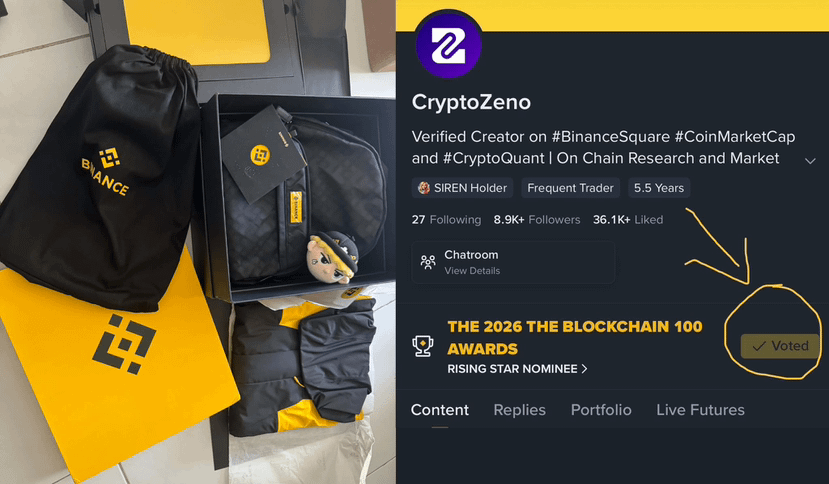
🎁🎁🎁 DAY 6 | [VOTING](https://app.binance.com/uni-qr/cact26user/516) ENTERS THE FINAL STAGES
👉 [VOTE NOW](https://app.binance.com/uni-qr/cact26user/516)
We're getting closer to the finish line, and every vote counts! I'd really appreciate your vote! ❤️
Don't forget to join my group or add me as a friend and send me your voting screenshot for a chance to win a gift worth over $100! 🎁
🎁🎁🎁 DAY 6 | VOTING ENTERS THE FINAL STAGES
👉 [VOTE NOW](https://app.binance.com/uni-qr/cact26user/516)
We're getting closer to the finish line, and every vote counts! I'd really appreciate your vote! ❤️
Don't forget to join my group or add me as a friend and send me your voting screenshot for a chance to win a gift worth over $100! 🎁
👉 [VOTE NOW](https://app.binance.com/uni-qr/cact26user/516)
We're getting closer to the finish line, and every vote counts! I'd really appreciate your vote! ❤️
Don't forget to join my group or add me as a friend and send me your voting screenshot for a chance to win a gift worth over $100! 🎁
138
2
13
138
·
--
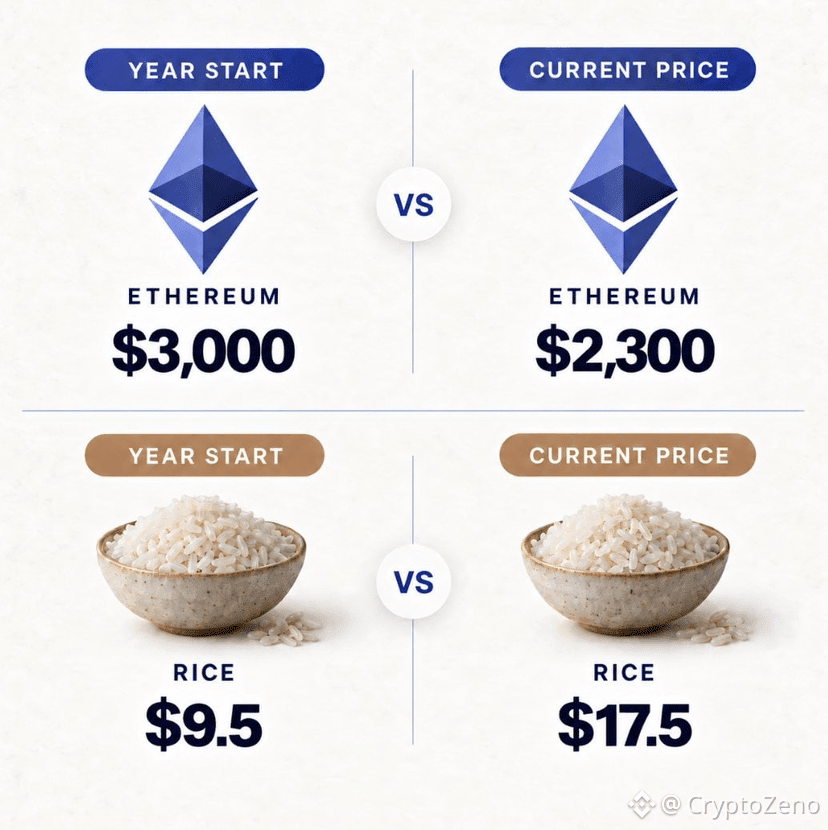
$ETH is getting outperformed by rice. 🍚
Don't forget to vote for me! ❤️ 👉 [VOTE NOW](https://app.binance.com/uni-qr/cact26user/516)
$ETH is getting outperformed by rice. 🍚
Don't forget to vote for me! ❤️ 👉 VOTE NOW
Don't forget to vote for me! ❤️ 👉 VOTE NOW
197
20
236
·
--
🎁🎁🎁 EVERY [VOTE](https://app.binance.com/uni-qr/cact26user/516) OF SUPPORT MATTERS!
👉 [VOTE NOW](https://app.binance.com/uni-qr/cact26user/516)
Every single vote brings me one step closer to my goal! ❤️
🎁 Don't forget to join my group chat for surprise gifts! And make sure to follow me so you don't miss the giveaways in my upcoming posts!
Thank you to everyone who has voted for me! If possible, please invite your friends to join too! 🤝
🎁🎁🎁 EVERY VOTE OF SUPPORT MATTERS!
👉 VOTE NOW
Every single vote brings me one step closer to my goal! ❤️
🎁 Don't forget to join my group chat for surprise gifts! And make sure to follow me so you don't miss the giveaways in my upcoming posts!
Thank you to everyone who has voted for me! If possible, please invite your friends to join too! 🤝
👉 VOTE NOW
Every single vote brings me one step closer to my goal! ❤️
🎁 Don't forget to join my group chat for surprise gifts! And make sure to follow me so you don't miss the giveaways in my upcoming posts!
Thank you to everyone who has voted for me! If possible, please invite your friends to join too! 🤝

125
13
382
·
--
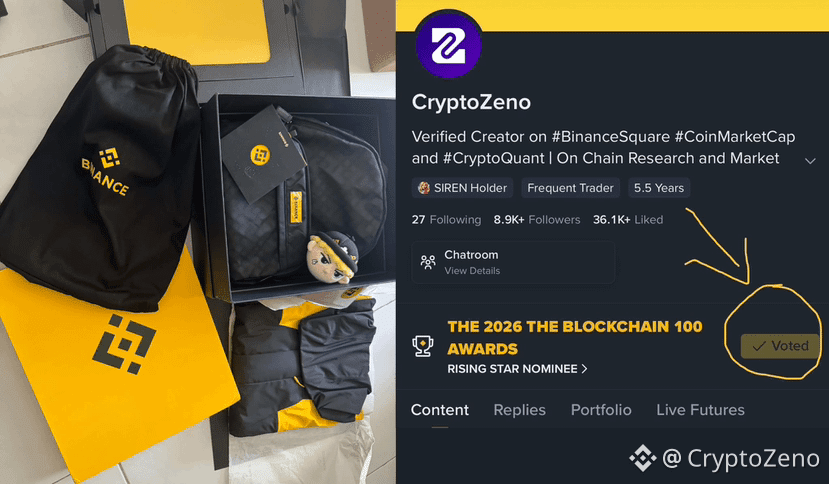
🎁🎁🎁 DAY 7 | [VOTING](https://app.binance.com/uni-qr/cact26user/516) ENTERS THE FINAL STAGES
👉 [VOTE NOW](https://app.binance.com/uni-qr/cact26user/516)
We're getting closer to the finish line, and every vote counts! I'd really appreciate your vote! ❤️
Don't forget to join my group or add me as a friend and send me your voting screenshot for a chance to win a gift worth over $100! 🎁
🎁🎁🎁 DAY 7 | VOTING ENTERS THE FINAL STAGES
👉 VOTE NOW
We're getting closer to the finish line, and every vote counts! I'd really appreciate your vote! ❤️
Don't forget to join my group or add me as a friend and send me your voting screenshot for a chance to win a gift worth over $100! 🎁
👉 VOTE NOW
We're getting closer to the finish line, and every vote counts! I'd really appreciate your vote! ❤️
Don't forget to join my group or add me as a friend and send me your voting screenshot for a chance to win a gift worth over $100! 🎁
207
20
210
·
--
16 years ago, Laszlo Hanyecz spent 10,000 #bitcoin worth $30 on two Papa John's pizzas.
Today, that 10,000 $BTC is worth $773,361,294.
Legend! 🙌 [VOTE NOW](https://app.binance.com/uni-qr/cact26user/516)
16 years ago, Laszlo Hanyecz spent 10,000 #bitcoin worth $30 on two Papa John's pizzas.
Today, that 10,000 $BTC is worth $773,361,294.
Legend! 🙌 VOTE NOW
Today, that 10,000 $BTC is worth $773,361,294.
Legend! 🙌 VOTE NOW

87
11
268
·
--
Just made some modifications to my Lamborghini
Imagine not having a flying car in 2026 😹🫵 [VOTE NOW](https://app.binance.com/uni-qr/cact26user/516)
Just made some modifications to my Lamborghini
Imagine not having a flying car in 2026 😹🫵 VOTE NOW
Imagine not having a flying car in 2026 😹🫵 VOTE NOW


113
12
345
·
--
🏆 EVERY VOTE OF SUPPORT MATTERS!
👉 [VOTE NOW](https://app.binance.com/uni-qr/cact26user/516)
Every single vote brings me one step closer to my goal! ❤️
🎁 Don't forget to join my group chat for surprise gifts! And make sure to follow me so you don't miss the giveaways in my upcoming posts!
Thank you to everyone who has voted for me! If possible, please invite your friends to join too! 🤝
🏆 EVERY VOTE OF SUPPORT MATTERS!
👉 VOTE NOW
Every single vote brings me one step closer to my goal! ❤️
🎁 Don't forget to join my group chat for surprise gifts! And make sure to follow me so you don't miss the giveaways in my upcoming posts!
Thank you to everyone who has voted for me! If possible, please invite your friends to join too! 🤝

75
12
429
·
--
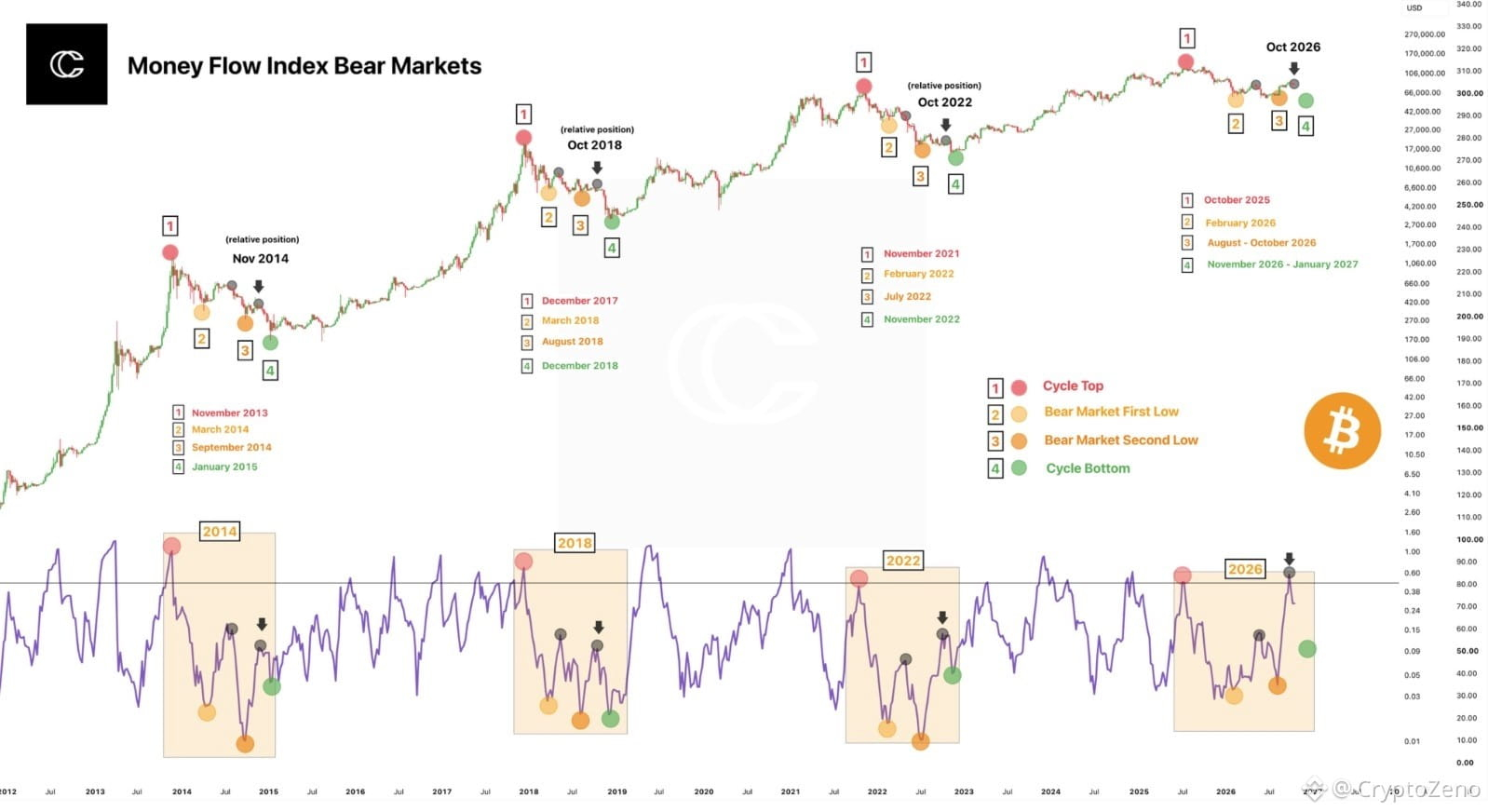
🚨 $BTC BEAR MARKET WARNING: HISTORY POINTS TO ONE FINAL CRITICAL PHASE!
#Bitcoin Money Flow Index (MFI) is tracing a pattern that deserves serious attention. In 2014, 2018 and 2022, major cycle peaks were followed by two bear market lows before the final bottom emerged. Now, the 2026 structure is showing a potentially similar sequence.
The chart marks October 2025 as the cycle peak, February 2026 as the first low, and August to October 2026 as the second low phase. If historical timing repeats, November 2026 to January 2027 could become a critical bottoming window.
But the bottom is NOT confirmed. If MFI weakens again and BTC loses key support, further downside remains possible. A sustained recovery in money flow alongside stronger price action would provide a more convincing reversal signal.
The big question is whether $BTC is approaching its next major accumulation zone or still has one final shakeout ahead.
2
12
9.8k
·
--

Article
I Lost $136,000 in a Single Hack - It Forced Me to Build a System That Can’t Be Broken Twice.In crypto, losses do not come with warnings. There is no fraud department, no reversal button, no customer support that can restore what is gone. When I lost $136,000 in a single exploit, it was not because I was careless. It was because I underestimated how sophisticated the threat landscape had become.
That loss forced me to redesign everything. What emerged was not just better storage, but a layered security architecture built around one principle: assume compromise is always possible.
Here is the system.
1. Understand the New Threat Model
Crypto attacks in 2025 are no longer simple phishing emails. AI-generated scams, malicious smart contracts, wallet drainers embedded in fake social posts, and cloned decentralized applications are everywhere. If you interact on-chain, you are a potential target. Security begins with paranoia, not convenience.
2. Treat Your Seed Phrase as Absolute Authority
Your seed phrase is your wallet. Whoever controls it controls everything. It should never be photographed, typed into cloud storage, saved in password managers, or stored digitally in any form. The only acceptable formats are physical, preferably metal backups resistant to fire and water. Multiple copies stored in separate secure locations reduce single-point failure risk.
3. Separate Storage by Function
The biggest mistake I made was using one wallet for everything. Now the structure is strict. A cold wallet stores long-term holdings and never connects to risky applications. A hot wallet handles routine transactions. A burner wallet interacts with experimental dApps, mints, and unknown contracts. Exposure is compartmentalized. If the burner is compromised, the core remains untouched. This rule alone prevented another five-figure loss later.
4. Hardware Is Mandatory, Not Optional
Browser wallets alone are insufficient for meaningful capital. Hardware wallets such as Ledger, Trezor, Keystone, or air-gapped devices dramatically reduce remote attack surfaces. Cold storage is not about convenience. It is about eliminating entire categories of risk.
5. Assume Every Link Is Malicious
Fake websites can perfectly replicate legitimate platforms. Search engine ads and social media links are frequently weaponized. Access important platforms through bookmarked URLs only. Verify domains carefully before signing any transaction.
6. Control Smart Contract Permissions
Every token approval grants spending rights. Many users forget that these permissions persist indefinitely. Regularly auditing and revoking unused approvals reduces exposure dramatically. Security is not a one-time setup. It is maintenance.
7. Strengthen Account-Level Protection
Text message two-factor authentication is vulnerable to SIM swap attacks. Authentication apps or hardware security keys provide stronger protection. Every exchange account, email, and connected service must meet the same standard.
8. Remove Counterparty Dependency
Funds left on exchanges are not under your control. Platform freezes, insolvency, or breaches can block access instantly. Self-custody is not ideology. It is risk management.
9. Build Redundancy and Recovery Plans
Backups must survive theft, fire, and natural disasters. The three-two-one principle applies well: multiple backups, stored in different physical locations, with at least one offsite. Additionally, plan inheritance structures so assets are accessible to trusted parties if something happens to you.
10. Conduct Routine Security Audits
Once a month, review wallet history, revoke unnecessary permissions, verify backup integrity, and reassess exposure. Complacency is the silent vulnerability that eventually costs the most.
The hardest lesson I learned is that in crypto, one mistake is enough. Years of caution can be erased by a single signature on a malicious contract.
There is no safety net. No recovery desk. No forgiveness from the blockchain.
Security is not a product you buy. It is a system you design and a mindset you maintain.
In crypto, you are not just the investor. You are the bank, the vault, and the security team.
#CryptoZeno #ScamAware
I Lost $136,000 in a Single Hack - It Forced Me to Build a System That Can’t Be Broken Twice.
In crypto, losses do not come with warnings. There is no fraud department, no reversal button, no customer support that can restore what is gone. When I lost $136,000 in a single exploit, it was not because I was careless. It was because I underestimated how sophisticated the threat landscape had become.
That loss forced me to redesign everything. What emerged was not just better storage, but a layered security architecture built around one principle: assume compromise is always possible.
Here is the system.
1. Understand the New Threat Model
Crypto attacks in 2025 are no longer simple phishing emails. AI-generated scams, malicious smart contracts, wallet drainers embedded in fake social posts, and cloned decentralized applications are everywhere. If you interact on-chain, you are a potential target. Security begins with paranoia, not convenience.
2. Treat Your Seed Phrase as Absolute Authority
Your seed phrase is your wallet. Whoever controls it controls everything. It should never be photographed, typed into cloud storage, saved in password managers, or stored digitally in any form. The only acceptable formats are physical, preferably metal backups resistant to fire and water. Multiple copies stored in separate secure locations reduce single-point failure risk.
3. Separate Storage by Function
The biggest mistake I made was using one wallet for everything. Now the structure is strict. A cold wallet stores long-term holdings and never connects to risky applications. A hot wallet handles routine transactions. A burner wallet interacts with experimental dApps, mints, and unknown contracts. Exposure is compartmentalized. If the burner is compromised, the core remains untouched. This rule alone prevented another five-figure loss later.
4. Hardware Is Mandatory, Not Optional
Browser wallets alone are insufficient for meaningful capital. Hardware wallets such as Ledger, Trezor, Keystone, or air-gapped devices dramatically reduce remote attack surfaces. Cold storage is not about convenience. It is about eliminating entire categories of risk.
5. Assume Every Link Is Malicious
Fake websites can perfectly replicate legitimate platforms. Search engine ads and social media links are frequently weaponized. Access important platforms through bookmarked URLs only. Verify domains carefully before signing any transaction.
6. Control Smart Contract Permissions
Every token approval grants spending rights. Many users forget that these permissions persist indefinitely. Regularly auditing and revoking unused approvals reduces exposure dramatically. Security is not a one-time setup. It is maintenance.
7. Strengthen Account-Level Protection
Text message two-factor authentication is vulnerable to SIM swap attacks. Authentication apps or hardware security keys provide stronger protection. Every exchange account, email, and connected service must meet the same standard.
8. Remove Counterparty Dependency
Funds left on exchanges are not under your control. Platform freezes, insolvency, or breaches can block access instantly. Self-custody is not ideology. It is risk management.
9. Build Redundancy and Recovery Plans
Backups must survive theft, fire, and natural disasters. The three-two-one principle applies well: multiple backups, stored in different physical locations, with at least one offsite. Additionally, plan inheritance structures so assets are accessible to trusted parties if something happens to you.
10. Conduct Routine Security Audits
Once a month, review wallet history, revoke unnecessary permissions, verify backup integrity, and reassess exposure. Complacency is the silent vulnerability that eventually costs the most.
The hardest lesson I learned is that in crypto, one mistake is enough. Years of caution can be erased by a single signature on a malicious contract.
There is no safety net. No recovery desk. No forgiveness from the blockchain.
Security is not a product you buy. It is a system you design and a mindset you maintain.
In crypto, you are not just the investor. You are the bank, the vault, and the security team.
#CryptoZeno #ScamAware
8
1.2k
·
--
Article
This Risk Management Mistake Wipes More Accounts Than Any IndicatorWe manage risks every single day, often without realizing it. From driving a car to making long-term plans about health or insurance, risk assessment is something humans do almost instinctively. But when it comes to financial markets, especially trading, risk management becomes a conscious and decisive factor that separates those who survive from those who don’t.
In trading, most losses don’t come from not knowing indicators. They come from poor reactions to risk. A trader can lose money simply because the market moves against their position, but more often, losses are amplified when emotions take over. Panic selling, revenge trading, or abandoning a plan halfway through a trade are patterns that wipe accounts far faster than any bad entry.
This emotional breakdown is especially visible during bear markets and capitulation phases. Volatility increases, confidence drops, and many traders abandon their original strategy right when discipline matters most. At that point, indicators stop helping if risk is not already under control.
That’s why risk management is not an optional add-on to a trading system. It is the foundation. In its simplest form, it can be as basic as defining where to cut losses or where to secure profits. But at a deeper level, it is a framework that defines how a trader reacts under pressure, across different market conditions.
A robust trading approach always provides clarity before the trade begins. What happens if price goes against you? What action do you take if volatility spikes? What is the maximum damage this trade can do to your account? When these questions are answered in advance, decision-making becomes mechanical rather than emotional.
Risk management itself is not static. Markets change, volatility shifts, and strategies that worked before may no longer be optimal. Because of that, risk control methods should be reviewed and adjusted continuously, not treated as a one-time setup.
In practice, traders face multiple types of risk. Market risk is the most obvious one, where price moves against a position. This is commonly managed through stop-loss orders that automatically close trades before losses grow beyond control. Liquidity risk appears when trading low-volume assets, where entering or exiting a position becomes difficult without slippage. This risk is reduced by focusing on high-volume, highly capitalized markets.
There is also credit risk, which becomes relevant when using platforms or counterparties that cannot be trusted. Choosing reliable exchanges significantly reduces this exposure. Operational risk, on the other hand, relates to failures within projects or systems themselves. In crypto, this can include smart contract bugs, team issues, or infrastructure failures, which is why research and portfolio distribution matter.
Systemic risk is harder to predict. It refers to events that affect the entire market, such as regulatory shocks or macroeconomic crises. While it cannot be eliminated, exposure can be reduced by spreading capital across assets or narratives that are not perfectly correlated.
To manage these risks, traders usually rely on a combination of practical strategies rather than a single rule. One widely used principle is the 1% risk rule. This approach limits the potential loss of any single trade to a small portion of total capital. Whether through position sizing or stop-loss placement, the idea is simple: no single mistake should be able to destroy the account.
Another essential tool is the use of stop-loss and take-profit orders. Defining exit points before entering a trade removes emotion from the equation. It also allows traders to calculate the risk-reward ratio in advance, ensuring that potential gains justify the risk taken. Knowing when to exit is often more important than knowing when to enter.
Some traders also use hedging to reduce exposure. By holding opposing positions, losses in one direction can be partially offset by gains in another. In crypto, this is often done through futures markets, allowing traders to hedge spot holdings without selling the underlying asset.
Diversification plays a role as well, particularly in crypto. Concentrating capital into a single asset or narrative increases vulnerability. Spreading exposure across different projects limits the maximum damage any single failure can cause.
Finally, the risk-reward ratio ties everything together. A trade where potential loss outweighs potential gain is rarely worth taking, regardless of how strong the setup looks. Over time, prioritizing favorable risk-reward scenarios allows traders to stay profitable even with a modest win rate.
In the end, risk management does not eliminate losses. Losses are unavoidable in trading. What risk management does is decide whether those losses are survivable or fatal. It defines how efficiently unavoidable risks are taken and how long a trader can stay in the game.
Most accounts are not blown by bad indicators. They are blown by ignoring risk, abandoning discipline, and letting emotions override structure. And that is the mistake that wipes more accounts than anything else.
#CryptoZeno #EarningsSeason
This Risk Management Mistake Wipes More Accounts Than Any Indicator
We manage risks every single day, often without realizing it. From driving a car to making long-term plans about health or insurance, risk assessment is something humans do almost instinctively. But when it comes to financial markets, especially trading, risk management becomes a conscious and decisive factor that separates those who survive from those who don’t.
In trading, most losses don’t come from not knowing indicators. They come from poor reactions to risk. A trader can lose money simply because the market moves against their position, but more often, losses are amplified when emotions take over. Panic selling, revenge trading, or abandoning a plan halfway through a trade are patterns that wipe accounts far faster than any bad entry.
This emotional breakdown is especially visible during bear markets and capitulation phases. Volatility increases, confidence drops, and many traders abandon their original strategy right when discipline matters most. At that point, indicators stop helping if risk is not already under control.
That’s why risk management is not an optional add-on to a trading system. It is the foundation. In its simplest form, it can be as basic as defining where to cut losses or where to secure profits. But at a deeper level, it is a framework that defines how a trader reacts under pressure, across different market conditions.
A robust trading approach always provides clarity before the trade begins. What happens if price goes against you? What action do you take if volatility spikes? What is the maximum damage this trade can do to your account? When these questions are answered in advance, decision-making becomes mechanical rather than emotional.
Risk management itself is not static. Markets change, volatility shifts, and strategies that worked before may no longer be optimal. Because of that, risk control methods should be reviewed and adjusted continuously, not treated as a one-time setup.
In practice, traders face multiple types of risk. Market risk is the most obvious one, where price moves against a position. This is commonly managed through stop-loss orders that automatically close trades before losses grow beyond control. Liquidity risk appears when trading low-volume assets, where entering or exiting a position becomes difficult without slippage. This risk is reduced by focusing on high-volume, highly capitalized markets.
There is also credit risk, which becomes relevant when using platforms or counterparties that cannot be trusted. Choosing reliable exchanges significantly reduces this exposure. Operational risk, on the other hand, relates to failures within projects or systems themselves. In crypto, this can include smart contract bugs, team issues, or infrastructure failures, which is why research and portfolio distribution matter.
Systemic risk is harder to predict. It refers to events that affect the entire market, such as regulatory shocks or macroeconomic crises. While it cannot be eliminated, exposure can be reduced by spreading capital across assets or narratives that are not perfectly correlated.
To manage these risks, traders usually rely on a combination of practical strategies rather than a single rule. One widely used principle is the 1% risk rule. This approach limits the potential loss of any single trade to a small portion of total capital. Whether through position sizing or stop-loss placement, the idea is simple: no single mistake should be able to destroy the account.
Another essential tool is the use of stop-loss and take-profit orders. Defining exit points before entering a trade removes emotion from the equation. It also allows traders to calculate the risk-reward ratio in advance, ensuring that potential gains justify the risk taken. Knowing when to exit is often more important than knowing when to enter.
Some traders also use hedging to reduce exposure. By holding opposing positions, losses in one direction can be partially offset by gains in another. In crypto, this is often done through futures markets, allowing traders to hedge spot holdings without selling the underlying asset.
Diversification plays a role as well, particularly in crypto. Concentrating capital into a single asset or narrative increases vulnerability. Spreading exposure across different projects limits the maximum damage any single failure can cause.
Finally, the risk-reward ratio ties everything together. A trade where potential loss outweighs potential gain is rarely worth taking, regardless of how strong the setup looks. Over time, prioritizing favorable risk-reward scenarios allows traders to stay profitable even with a modest win rate.
In the end, risk management does not eliminate losses. Losses are unavoidable in trading. What risk management does is decide whether those losses are survivable or fatal. It defines how efficiently unavoidable risks are taken and how long a trader can stay in the game.
Most accounts are not blown by bad indicators. They are blown by ignoring risk, abandoning discipline, and letting emotions override structure. And that is the mistake that wipes more accounts than anything else.
#CryptoZeno #EarningsSeason
5
503
·
--
$BTC My timeline is flooded with comments of people who are expecting lower prices.
{future}(BTCUSDT)
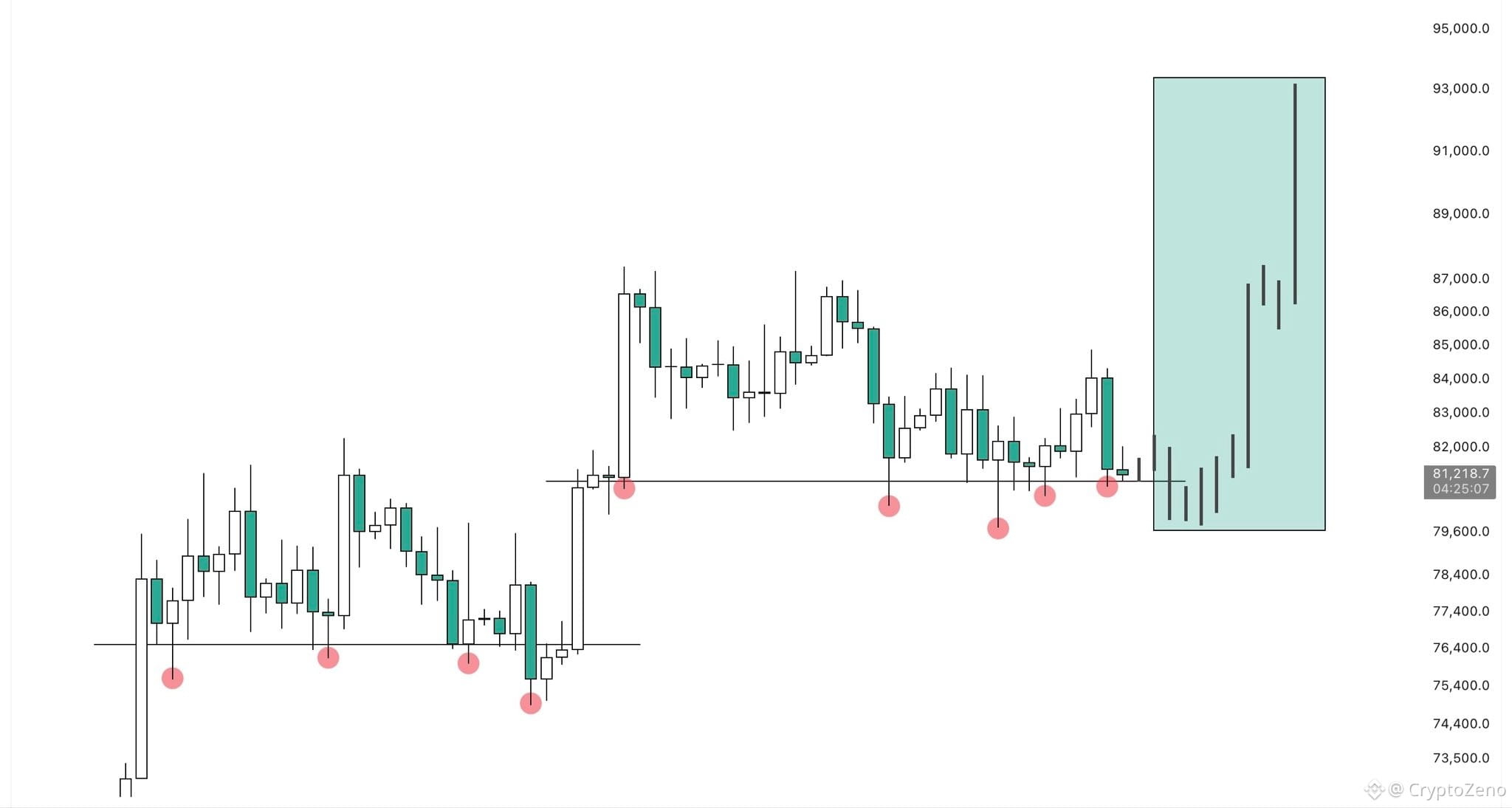
However, to me it’s pretty simple. $80k remains support until proven otherwise.
You see for some reason people assume that support weakens the more often it gets tested.
But if you take a look at both the bottoming range and the previous range we broke out from you’ll see that there were plenty of retests of the lows before price eventually expanded further to the upside.
Ranges are designed to shake people out before the real move happens and to me it looks like this is exactly what’s
happening right now.
The plan remains the same. Stay patient and keep bidding any sweeps of the lows.
$BTC My timeline is flooded with comments of people who are expecting lower prices.
However, to me it’s pretty simple. $80k remains support until proven otherwise.
You see for some reason people assume that support weakens the more often it gets tested.
But if you take a look at both the bottoming range and the previous range we broke out from you’ll see that there were plenty of retests of the lows before price eventually expanded further to the upside.
Ranges are designed to shake people out before the real move happens and to me it looks like this is exactly what’s
happening right now.
The plan remains the same. Stay patient and keep bidding any sweeps of the lows.
7
300
·
--
🏆 DAY 6 | [VOTING](https://app.binance.com/uni-qr/cact26user/516) ENTERS THE FINAL STAGES
👉 [VOTE NOW](https://app.binance.com/uni-qr/cact26user/516)
We're getting closer to the finish line, and every vote counts! I'd really appreciate your vote! ❤️
Don't forget to join my group or add me as a friend and send me your voting screenshot for a chance to win a gift worth over $100! 🎁
🏆 DAY 6 | VOTING ENTERS THE FINAL STAGES
👉 VOTE NOW
We're getting closer to the finish line, and every vote counts! I'd really appreciate your vote! ❤️
Don't forget to join my group or add me as a friend and send me your voting screenshot for a chance to win a gift worth over $100! 🎁
👉 VOTE NOW
We're getting closer to the finish line, and every vote counts! I'd really appreciate your vote! ❤️
Don't forget to join my group or add me as a friend and send me your voting screenshot for a chance to win a gift worth over $100! 🎁

108
7
336
·
--
🎁 EXCLUSIVE GIVEAWAY | GIFT SET WORTH OVER $100!
👉 [VOTE NOW](https://app.binance.com/uni-qr/cact26user/516)
Don't forget to pick your lucky number from 1 to 1000 and share it along with your voting screenshot in the group chat, or add me as a friend and send me a DM. Hope you're the lucky winner! 🍀
And don't forget to give me a vote as a little encouragement for all my hard work. Thank you! 🤝 [VOTE NOW](https://app.binance.com/uni-qr/cact26user/516)
🎁 EXCLUSIVE GIVEAWAY | GIFT SET WORTH OVER $100!
👉 VOTE NOW
Don't forget to pick your lucky number from 1 to 1000 and share it along with your voting screenshot in the group chat, or add me as a friend and send me a DM. Hope you're the lucky winner! 🍀
And don't forget to give me a vote as a little encouragement for all my hard work. Thank you! 🤝 VOTE NOW
CryptoZeno
·
--
🎁 EXCLUSIVE GIVEAWAY | GIFT SET WORTH OVER $100!
👉 VOTE NOW
I have a special Binance gift set for one lucky member of my community! 🎉
The rules are simple! Pick a lucky number from 1 to 1000 and share it in the comments or send me a DM, along with a screenshot of your vote for CryptoZeno in the Blockchain 100 Awards 2026.
🎯 The winning number will be drawn randomly and recorded on video to ensure transparency. If multiple people guess the correct number, the earliest entry wins. If nobody guesses the exact number, the closest guess wins!
❤️ All these gifts and little red packets are simply my way of thanking everyone who has been part of my journey. This is not about buying or selling votes, so there's no need to message me with offers to trade votes or ask me to pay for your vote.
I hope you'll vote for me as a way of recognizing my efforts and encouraging me to keep going. Thank you, everyone! 🤝
142
9
323
·
--
Article
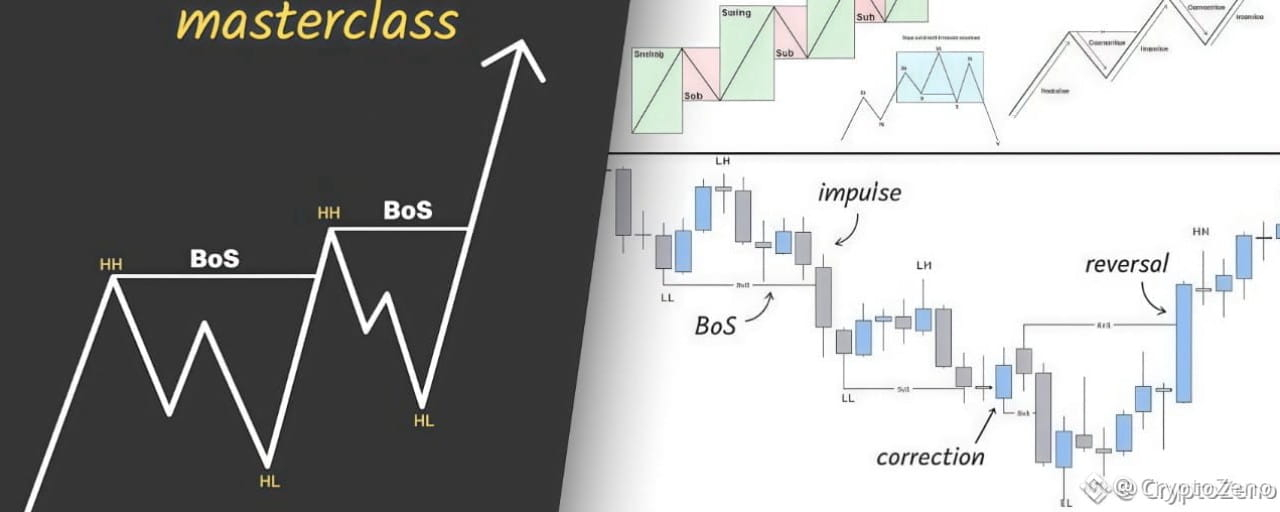
How Market Structure Really Works and What Most Traders Completely MissIn this THREAD I will explain "Market Structure"
Market Structure is a framework used to determine the overall direction and trend of price.
There are two main types:
- Bullish Structure
Price forms higher highs and higher lows, signaling an upward trend.
1.1 What is Market Structure?
The other type of Structure is:
- Bearish Structure
A Bearish Structure is characterized by Lower Lows (LL) and Lower Highs (LH)
The structure shifts only when a Higher High (HH) is established.
1.2 What is Market Structure?
Minor Structure:
Highs and lows formed within a larger swing, seen on lower timeframes (LTF)
Major Market Structure:
Key structural levels on higher timeframes (HTF) that define the overall trend direction
2. POI
Points of Interest (POI) are key levels or zones on a price chart.
Where significant trading activity or market reactions are likely to occur.
2.1 POI
Common Types of POIs:
- FVGs
- Order Blocks
- Breaker Blocks
- Rejection Blocks
2.2 POI
The Optimal Trade Entry (OTE) zone lies between the 0.618 and 0.79 retracement levels.
When a POI aligns with an OTE level, the likelihood of price reacting significantly increases.
2.3 POI
To identify a valid Point of Interest (POI), follow these rules:
- The POI must have swept Liquidity before reacting
- There should be no remaining liquidity beyond the POI
- The level must be untested
- Presence of Inducement before the POI
3. Order Block
Order Blocks are price zones with a high concentration of pending limit orders, often placed by institutions.
Bullish OB: An area with a high concentration of limit buy orders
Bearish OB: An area with a high concentration of limit sell orders
3.1 Order Block
After an OB forms, the presence of an imbalance is essential.
An imbalance reflects strong buying or selling pressure.
A sharp move away from the OB confirms the strength and validity of the price action.
#CryptoZeno #Marketstructure
How Market Structure Really Works and What Most Traders Completely Miss
In this THREAD I will explain "Market Structure"
Market Structure is a framework used to determine the overall direction and trend of price.
There are two main types:
- Bullish Structure
Price forms higher highs and higher lows, signaling an upward trend.
1.1 What is Market Structure?
The other type of Structure is:
- Bearish Structure
A Bearish Structure is characterized by Lower Lows (LL) and Lower Highs (LH)
The structure shifts only when a Higher High (HH) is established.
1.2 What is Market Structure?
Minor Structure:
Highs and lows formed within a larger swing, seen on lower timeframes (LTF)
Major Market Structure:
Key structural levels on higher timeframes (HTF) that define the overall trend direction
2. POI
Points of Interest (POI) are key levels or zones on a price chart.
Where significant trading activity or market reactions are likely to occur.
2.1 POI
Common Types of POIs:
- FVGs
- Order Blocks
- Breaker Blocks
- Rejection Blocks
2.2 POI
The Optimal Trade Entry (OTE) zone lies between the 0.618 and 0.79 retracement levels.
When a POI aligns with an OTE level, the likelihood of price reacting significantly increases.
2.3 POI
To identify a valid Point of Interest (POI), follow these rules:
- The POI must have swept Liquidity before reacting
- There should be no remaining liquidity beyond the POI
- The level must be untested
- Presence of Inducement before the POI
3. Order Block
Order Blocks are price zones with a high concentration of pending limit orders, often placed by institutions.
Bullish OB: An area with a high concentration of limit buy orders
Bearish OB: An area with a high concentration of limit sell orders
3.1 Order Block
After an OB forms, the presence of an imbalance is essential.
An imbalance reflects strong buying or selling pressure.
A sharp move away from the OB confirms the strength and validity of the price action.
#CryptoZeno #Marketstructure
2
8
6.7k
·
--
A 22 year old helped launder $263 MILLION in stolen crypto to fund half million dollar nightclub tabs.
> Evan Tangeman went by E, Tate and Evan|Exchanger online.
> His job was converting stolen crypto into clean cash for the rest of his group.
> The crew stole over $263 MILLION using social engineering.
> Hacked databases, fake tech support calls and physical break-ins to seize hardware wallets.
> Most of the members were teenagers. None had real jobs.
> The ringleader was a 20 year old named Malone Lam who became “TikTok famous” while in jail awaiting trial.
> They burned $500,000 in a single night at clubs.
> Private jets. Private security teams.
> Rented mansions for $40,000 to $80,000 a month across LA, the Hamptons and Miami. Some valued at $9 MILLION.
> Bought supercars ranging from $100,000 up to $3.8 MILLION.
> A 2022 Rolls Royce Ghost and a Porsche GT3 RS were seized from his home.
> When the first arrests came down, he directed another co-defendant to destroy the group’s digital devices.
> Lam was tipped off by an off-duty officer that police were on their way.
> He threw his phone into Biscayne Bay before the FBI raided his Miami home.
> Tangeman watched the raid play out in real-time through Lam’s home security cameras and shared the footage with the rest of the group.
> He pleaded guilty to RICO conspiracy.
> Ninth plea in an investigation still ongoing.
> 70 months in prison. Three years supervised release.
They lived like BILLIONAIRES for 18 months. Now they’re going to prison one by one.
{future}(BTCUSDT)
A 22 year old helped launder $263 MILLION in stolen crypto to fund half million dollar nightclub tabs.
> Evan Tangeman went by E, Tate and Evan|Exchanger online.
> His job was converting stolen crypto into clean cash for the rest of his group.
> The crew stole over $263 MILLION using social engineering.
> Hacked databases, fake tech support calls and physical break-ins to seize hardware wallets.
> Most of the members were teenagers. None had real jobs.
> The ringleader was a 20 year old named Malone Lam who became “TikTok famous” while in jail awaiting trial.
> They burned $500,000 in a single night at clubs.
> Private jets. Private security teams.
> Rented mansions for $40,000 to $80,000 a month across LA, the Hamptons and Miami. Some valued at $9 MILLION.
> Bought supercars ranging from $100,000 up to $3.8 MILLION.
> A 2022 Rolls Royce Ghost and a Porsche GT3 RS were seized from his home.
> When the first arrests came down, he directed another co-defendant to destroy the group’s digital devices.
> Lam was tipped off by an off-duty officer that police were on their way.
> He threw his phone into Biscayne Bay before the FBI raided his Miami home.
> Tangeman watched the raid play out in real-time through Lam’s home security cameras and shared the footage with the rest of the group.
> He pleaded guilty to RICO conspiracy.
> Ninth plea in an investigation still ongoing.
> 70 months in prison. Three years supervised release.
They lived like BILLIONAIRES for 18 months. Now they’re going to prison one by one.


4
2k
·
--
In 2012 a man bet his entire life savings on Bitcoin at $5 a coin.
In January 2012, Erik Finman was 12 years old
His grandmother gave him $1,000
He put all of it into Bitcoin
Bitcoin was trading at roughly $10 to $12 per coin at the time
He bought around 100 Bitcoin
His parents and teachers told him it was a waste
His high school teachers told him he was going nowhere
He made a bet with his parents
If he became a millionaire before turning 18 they would not force him to go to college
By 2013 Bitcoin hit $1,200 and his $1,000 had grown to around $100,000
He used some of the gains to start a small educational startup called Botangle at 13 years old
He sold Botangle in 2014 for 300 Bitcoin
At that point Bitcoin was around $200
That sale added 300 more coins to his stack at what turned out to be the cycle low
By 2017, when Bitcoin hit $18,000, Erik Finman was 18 years old
His Bitcoin was worth over $4 million
• He won the bet
• He never went to college
• His parents had to put it in writing
• He said in interviews that his teachers had told him he would end up working at McDonald's
At Bitcoin's peak in October 2025 at $126,198, his original 100 coins from the $1,000 investment would have been worth $12.6 million
His additional 300 Bitcoin from the Botangle sale would have been worth $37.8 million
$1,000 given by a grandmother
A 12 year old who believed his teachers were wrong
The teachers were wrong
{future}(BTCUSDT)
In 2012 a man bet his entire life savings on Bitcoin at $5 a coin.
In January 2012, Erik Finman was 12 years old
His grandmother gave him $1,000
He put all of it into Bitcoin
Bitcoin was trading at roughly $10 to $12 per coin at the time
He bought around 100 Bitcoin
His parents and teachers told him it was a waste
His high school teachers told him he was going nowhere
He made a bet with his parents
If he became a millionaire before turning 18 they would not force him to go to college
By 2013 Bitcoin hit $1,200 and his $1,000 had grown to around $100,000
He used some of the gains to start a small educational startup called Botangle at 13 years old
He sold Botangle in 2014 for 300 Bitcoin
At that point Bitcoin was around $200
That sale added 300 more coins to his stack at what turned out to be the cycle low
By 2017, when Bitcoin hit $18,000, Erik Finman was 18 years old
His Bitcoin was worth over $4 million
• He won the bet
• He never went to college
• His parents had to put it in writing
• He said in interviews that his teachers had told him he would end up working at McDonald's
At Bitcoin's peak in October 2025 at $126,198, his original 100 coins from the $1,000 investment would have been worth $12.6 million
His additional 300 Bitcoin from the Botangle sale would have been worth $37.8 million
$1,000 given by a grandmother
A 12 year old who believed his teachers were wrong
The teachers were wrong


13
2.7k
Log in to explore more content
Join global crypto users on Binance Square
⚡️ Get latest and useful information about crypto.
💬 Trusted by the world’s largest crypto exchange.
👍 Discover real insights from verified creators.
Email / Phone number
Trending Topics
BinancePick
2.7M views
143,489 Discussing
Join #EarningsSeason: Predict Earnings on Binance Pick, Share Your Take on Binance Square!
Binance Square Official
·402 Likes
·339.1k views
EarningsSeason
5M views
24,628 Discussing
SouthKoreaReportedlyWeighsFourthCryptoTaxDelay
1,176 views
94 Discussing