

cryptoscoping
1.7k Posts

cryptoscoping
Report
Block User
Get early access to what's happening in the crypto world here
42 Following
1.5K+ Followers
1.6K+ Liked
Posts
All
Quotes
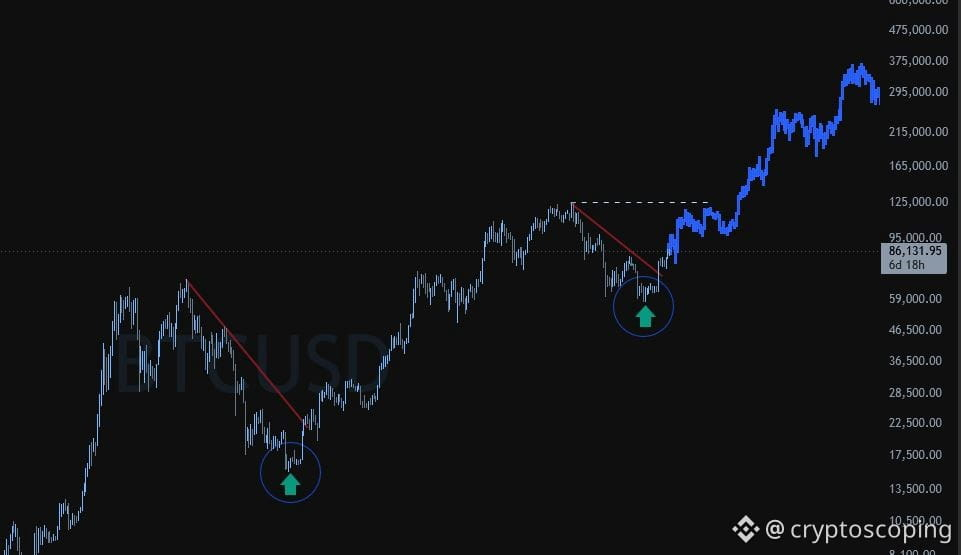
$BTC MAY BE REPLAYING ONE OF ITS BIGGEST MOVES.
The setup is starting to look familiar.
Bitcoin has seen this kind of structure before and if history repeats itself, the next move could catch the market off guard.
Is another major #BTC☀ breakout loading?
$BTC MAY BE REPLAYING ONE OF ITS BIGGEST MOVES.
The setup is starting to look familiar.
Bitcoin has seen this kind of structure before and if history repeats itself, the next move could catch the market off guard.
Is another major #BTC☀ breakout loading?
The setup is starting to look familiar.
Bitcoin has seen this kind of structure before and if history repeats itself, the next move could catch the market off guard.
Is another major #BTC☀ breakout loading?
33
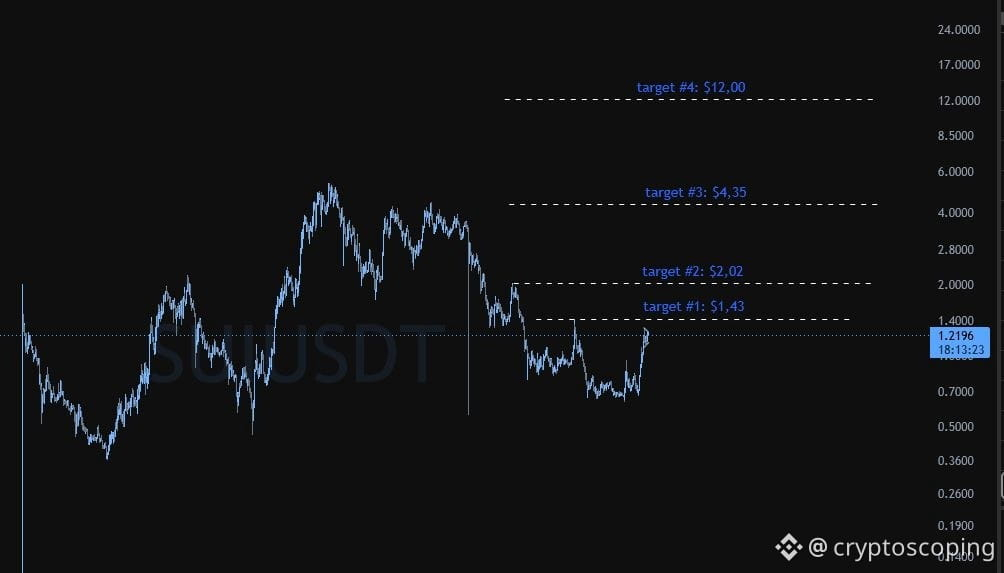
$SUI is starting to wake up, and the road ahead could get interesting. 👀🌊
The levels I’m watching are:
🎯 $1.43
🎯 $2.02
🎯 $4.35
🎯 $12.00
One level at a time. If momentum keeps building, how high can SUI go this bull run?
#DriftHackVictimsBeginClaims
$SUI is starting to wake up, and the road ahead could get interesting. 👀🌊
The levels I’m watching are:
🎯 $1.43
🎯 $2.02
🎯 $4.35
🎯 $12.00
One level at a time. If momentum keeps building, how high can SUI go this bull run?
#DriftHackVictimsBeginClaims
The levels I’m watching are:
🎯 $1.43
🎯 $2.02
🎯 $4.35
🎯 $12.00
One level at a time. If momentum keeps building, how high can SUI go this bull run?
#DriftHackVictimsBeginClaims
68
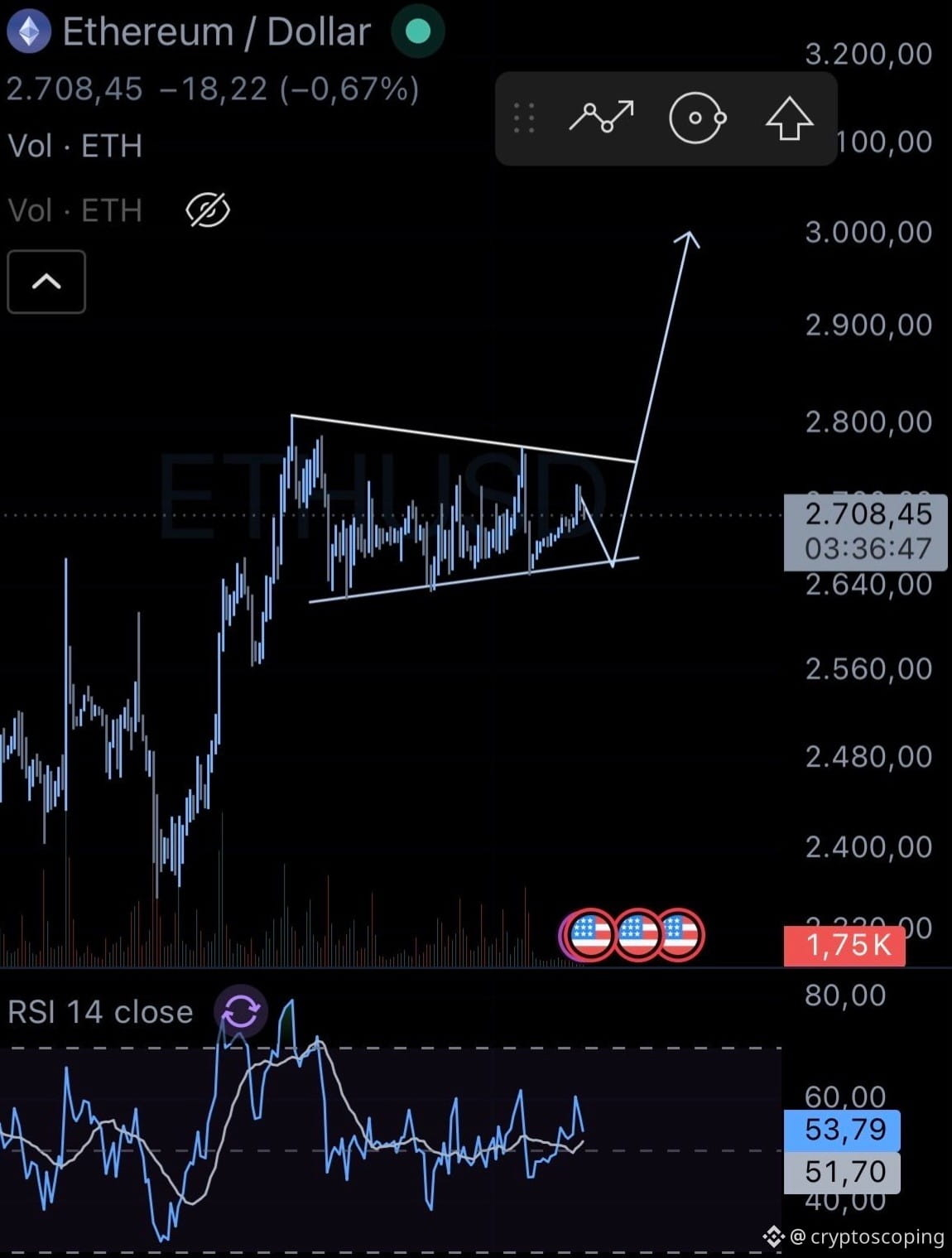
$ETH might be closer to $3,000 than most people think.
The chart is starting to shift, momentum is building, and the path toward $3K is getting clearer.
If buyers stay in control, that level could be next.
#SECHaltsCryptoETFReviewsAmidFundingLapse
$ETH might be closer to $3,000 than most people think.
The chart is starting to shift, momentum is building, and the path toward $3K is getting clearer.
If buyers stay in control, that level could be next.
#SECHaltsCryptoETFReviewsAmidFundingLapse
The chart is starting to shift, momentum is building, and the path toward $3K is getting clearer.
If buyers stay in control, that level could be next.
#SECHaltsCryptoETFReviewsAmidFundingLapse
54
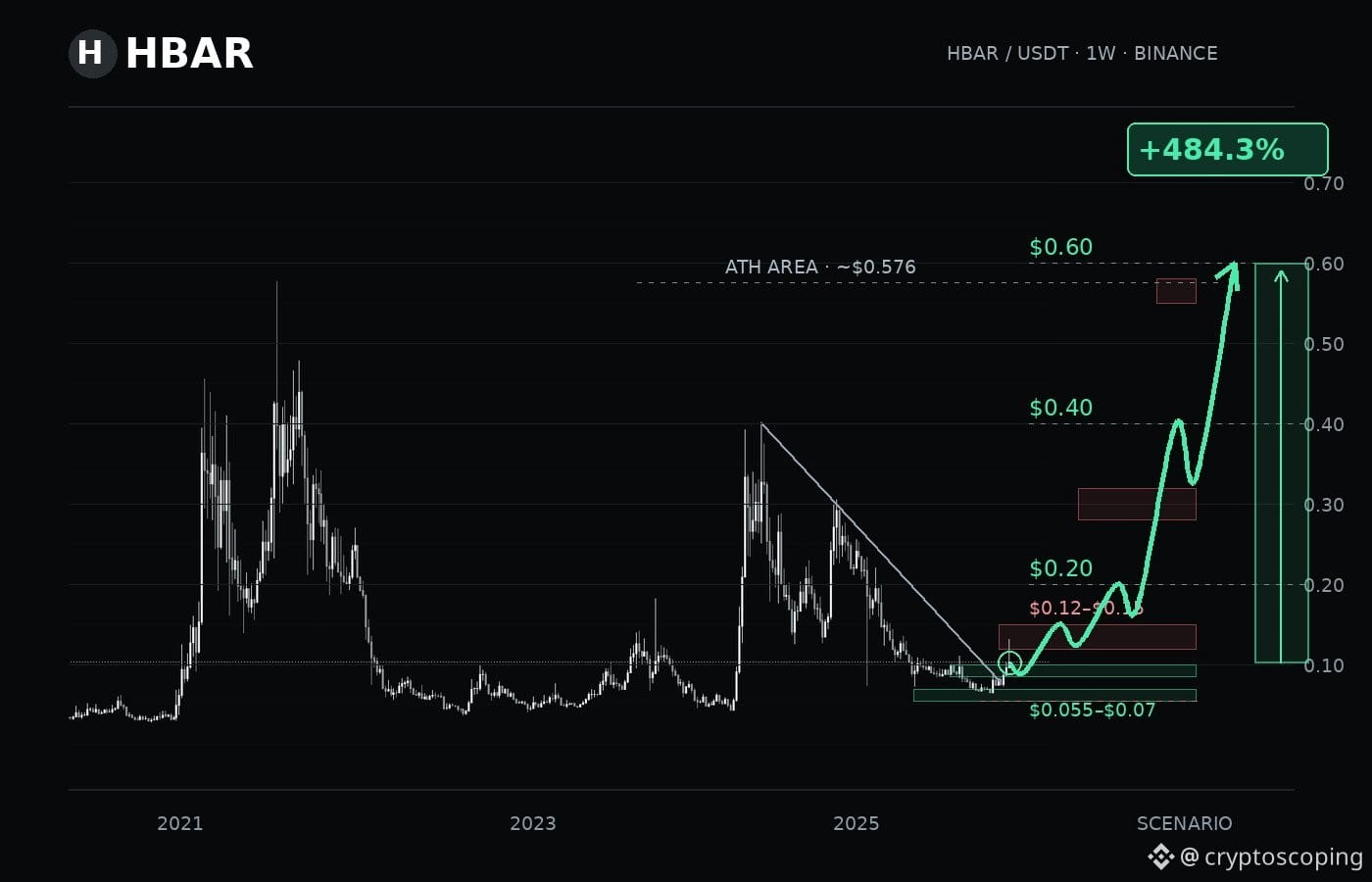
$HBAR is starting to make its way back toward $0.12–$0.15, but that’s only the first test.
I want to see $0.085–$0.10 hold on a retest. If buyers can reclaim $0.12–$0.15 and stay above it, $0.20 and $0.40 come into focus.
Beyond that, a full recovery could take HBAR back toward its old high near $0.576, with $0.60 as the bigger target.
That’s roughly 484% from the chart’s current price. A weekly close below $0.055 would invalidate this setup.
#EthereumValidatorExitQueueJumps392%
$HBAR is starting to make its way back toward $0.12–$0.15, but that’s only the first test.
I want to see $0.085–$0.10 hold on a retest. If buyers can reclaim $0.12–$0.15 and stay above it, $0.20 and $0.40 come into focus.
Beyond that, a full recovery could take HBAR back toward its old high near $0.576, with $0.60 as the bigger target.
That’s roughly 484% from the chart’s current price. A weekly close below $0.055 would invalidate this setup.
#EthereumValidatorExitQueueJumps392%
I want to see $0.085–$0.10 hold on a retest. If buyers can reclaim $0.12–$0.15 and stay above it, $0.20 and $0.40 come into focus.
Beyond that, a full recovery could take HBAR back toward its old high near $0.576, with $0.60 as the bigger target.
That’s roughly 484% from the chart’s current price. A weekly close below $0.055 would invalidate this setup.
#EthereumValidatorExitQueueJumps392%
239
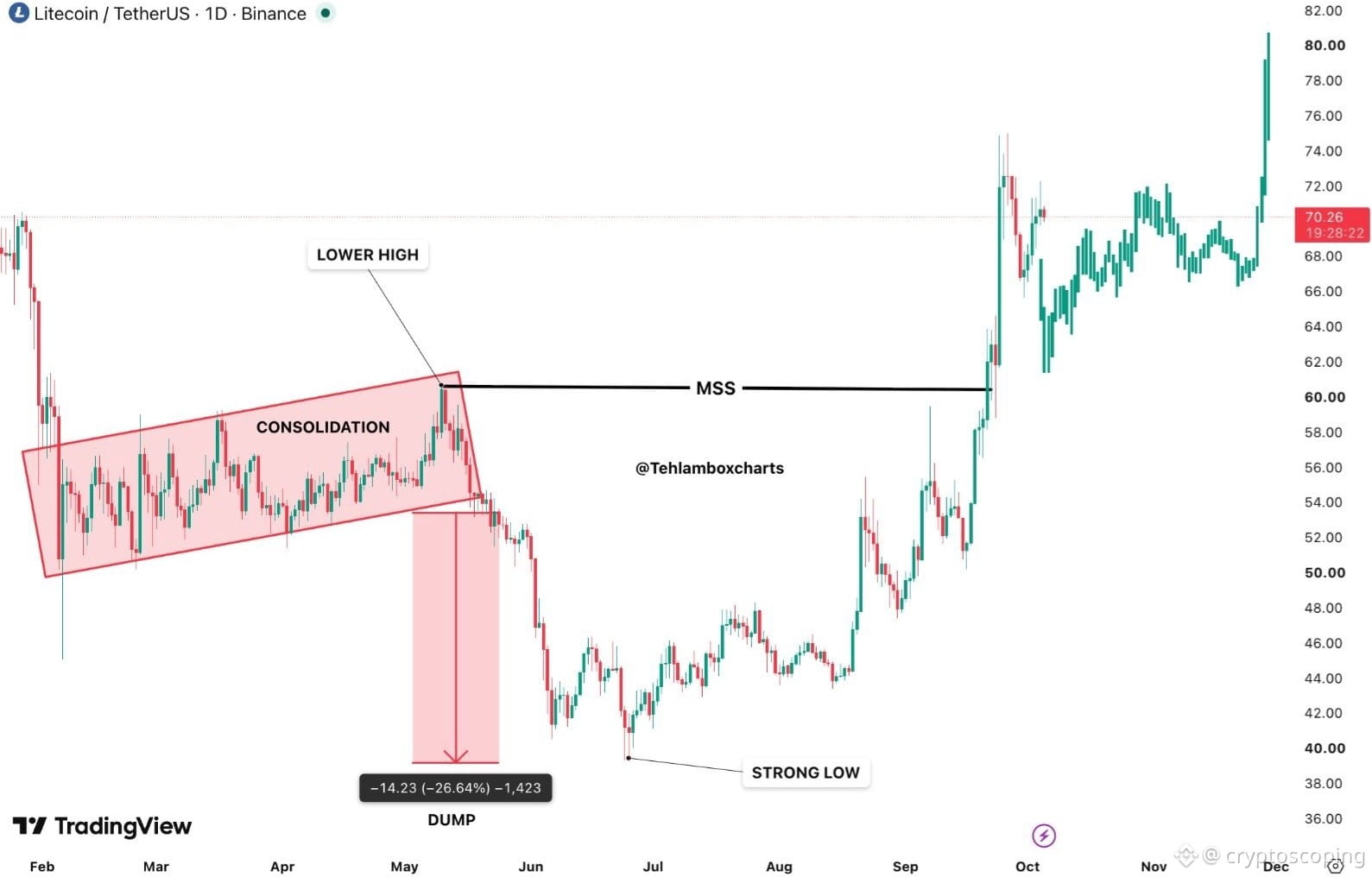
$LTC is finally breaking out of a 6-month range.
The market structure shift is confirmed,
the breakout is here, and now the big question is whether buyers can keep the momentum going.
$80 could be the next level to watch.
#DriftHackVictimsBeginClaims
$LTC is finally breaking out of a 6-month range.
The market structure shift is confirmed,
the breakout is here, and now the big question is whether buyers can keep the momentum going.
$80 could be the next level to watch.
#DriftHackVictimsBeginClaims
The market structure shift is confirmed,
the breakout is here, and now the big question is whether buyers can keep the momentum going.
$80 could be the next level to watch.
#DriftHackVictimsBeginClaims
152
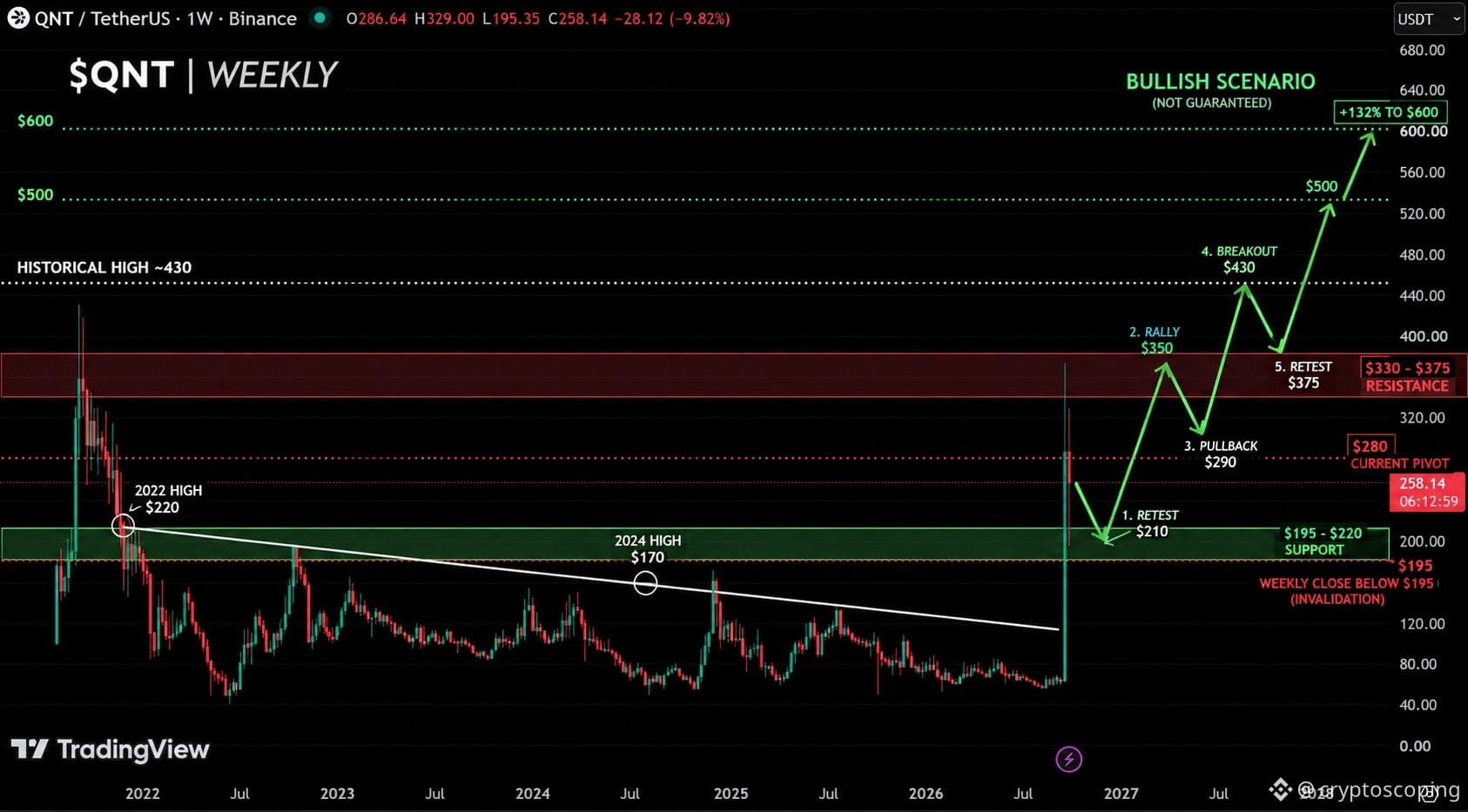
$QNT just broke through a resistance that has held for nearly four years.
Now I’m watching what happens next.
If $195–$220 holds on a pullback, I’d want to see $280 reclaimed. From there, the next levels I’m watching are $330–$375, followed by the previous high around $430.
A clean break above that high could open the door toward $500–$600.
$600 would be roughly 132% above the chart’s $258 price.
For me, the setup changes if $195 is lost on a weekly close.
#DriftHackVictimsBeginClaims
$QNT just broke through a resistance that has held for nearly four years.
Now I’m watching what happens next.
If $195–$220 holds on a pullback, I’d want to see $280 reclaimed. From there, the next levels I’m watching are $330–$375, followed by the previous high around $430.
A clean break above that high could open the door toward $500–$600.
$600 would be roughly 132% above the chart’s $258 price.
For me, the setup changes if $195 is lost on a weekly close.
#DriftHackVictimsBeginClaims
Now I’m watching what happens next.
If $195–$220 holds on a pullback, I’d want to see $280 reclaimed. From there, the next levels I’m watching are $330–$375, followed by the previous high around $430.
A clean break above that high could open the door toward $500–$600.
$600 would be roughly 132% above the chart’s $258 price.
For me, the setup changes if $195 is lost on a weekly close.
#DriftHackVictimsBeginClaims
411
Hbar or $XLM ?
Imagine $HBAR gets more real-world adoption, but XLM ends up delivering better returns.
Which one would matter more to you as an investor?
Would you pick stronger adoption or better price performance?
#DriftHackVictimsBeginClaims
Hbar or $XLM ?
Imagine $HBAR gets more real-world adoption, but XLM ends up delivering better returns.
Which one would matter more to you as an investor?
Would you pick stronger adoption or better price performance?
#DriftHackVictimsBeginClaims
Imagine $HBAR gets more real-world adoption, but XLM ends up delivering better returns.
Which one would matter more to you as an investor?
Would you pick stronger adoption or better price performance?
#DriftHackVictimsBeginClaims
311
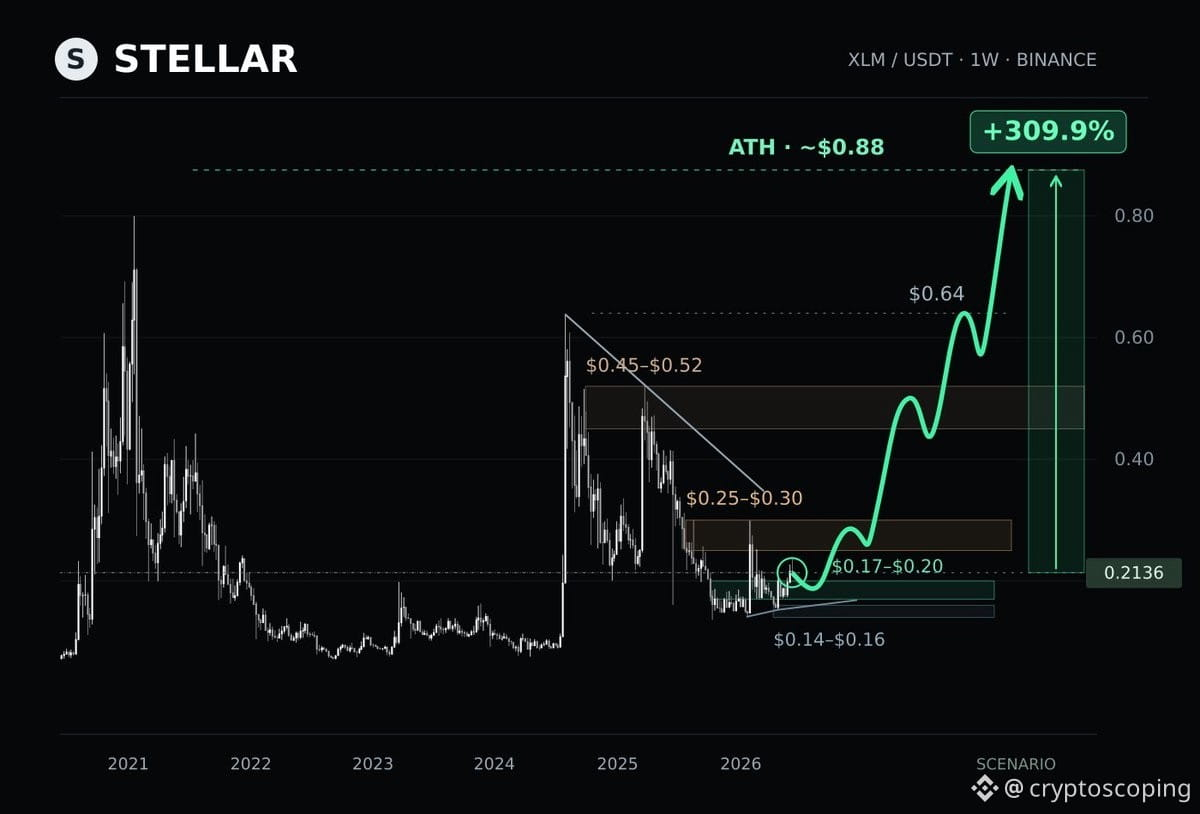
$XLM has been sitting below its peak for years, but the recovery story may be starting to take shape.
From the $0.14–$0.16 zone, I’m watching for buyers to defend $0.17–$0.20 first.
If that holds, $0.25–$0.30 comes next, followed by the descending trendline. A breakout there could open $0.45–$0.52, then $0.64.
The bigger target is the old ATH near $0.8756, which would be roughly 310% upside from $0.2136.
For me, the key is simple: higher lows and resistance turning into support. A weekly close below $0.14 would invalidate the setup.
#SECHaltsCryptoETFReviewsAmidFundingLapse
$XLM has been sitting below its peak for years, but the recovery story may be starting to take shape.
From the $0.14–$0.16 zone, I’m watching for buyers to defend $0.17–$0.20 first.
If that holds, $0.25–$0.30 comes next, followed by the descending trendline. A breakout there could open $0.45–$0.52, then $0.64.
The bigger target is the old ATH near $0.8756, which would be roughly 310% upside from $0.2136.
For me, the key is simple: higher lows and resistance turning into support. A weekly close below $0.14 would invalidate the setup.
#SECHaltsCryptoETFReviewsAmidFundingLapse
From the $0.14–$0.16 zone, I’m watching for buyers to defend $0.17–$0.20 first.
If that holds, $0.25–$0.30 comes next, followed by the descending trendline. A breakout there could open $0.45–$0.52, then $0.64.
The bigger target is the old ATH near $0.8756, which would be roughly 310% upside from $0.2136.
For me, the key is simple: higher lows and resistance turning into support. A weekly close below $0.14 would invalidate the setup.
#SECHaltsCryptoETFReviewsAmidFundingLapse
121
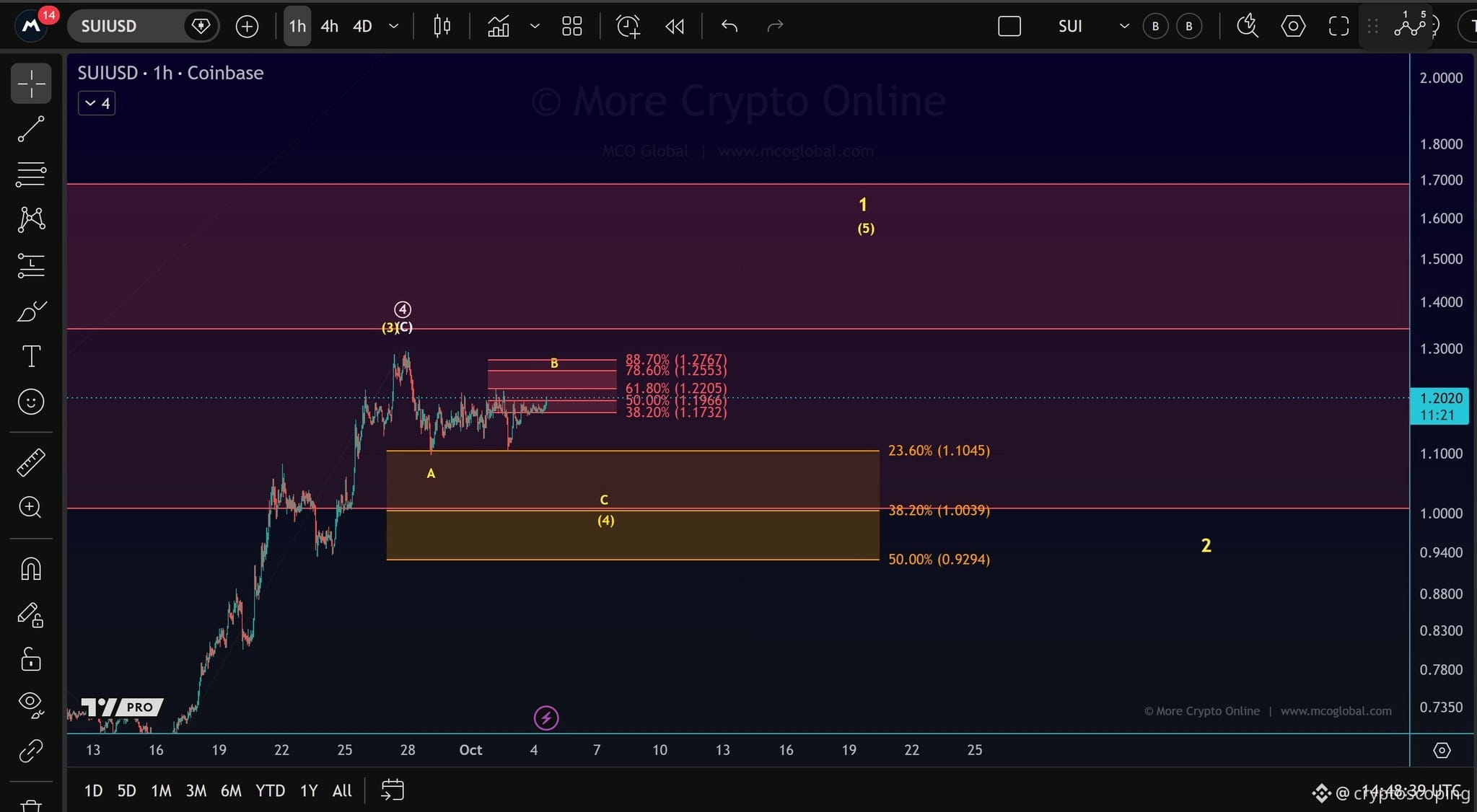
$SUI is pushing higher today.
Now the big question is whether buyers have enough strength to break the resistance.
A clean breakout could set up the next move higher.
#SECHaltsCryptoETFReviewsAmidFundingLapse
$SUI is pushing higher today.
Now the big question is whether buyers have enough strength to break the resistance.
A clean breakout could set up the next move higher.
#SECHaltsCryptoETFReviewsAmidFundingLapse
Now the big question is whether buyers have enough strength to break the resistance.
A clean breakout could set up the next move higher.
#SECHaltsCryptoETFReviewsAmidFundingLapse
87
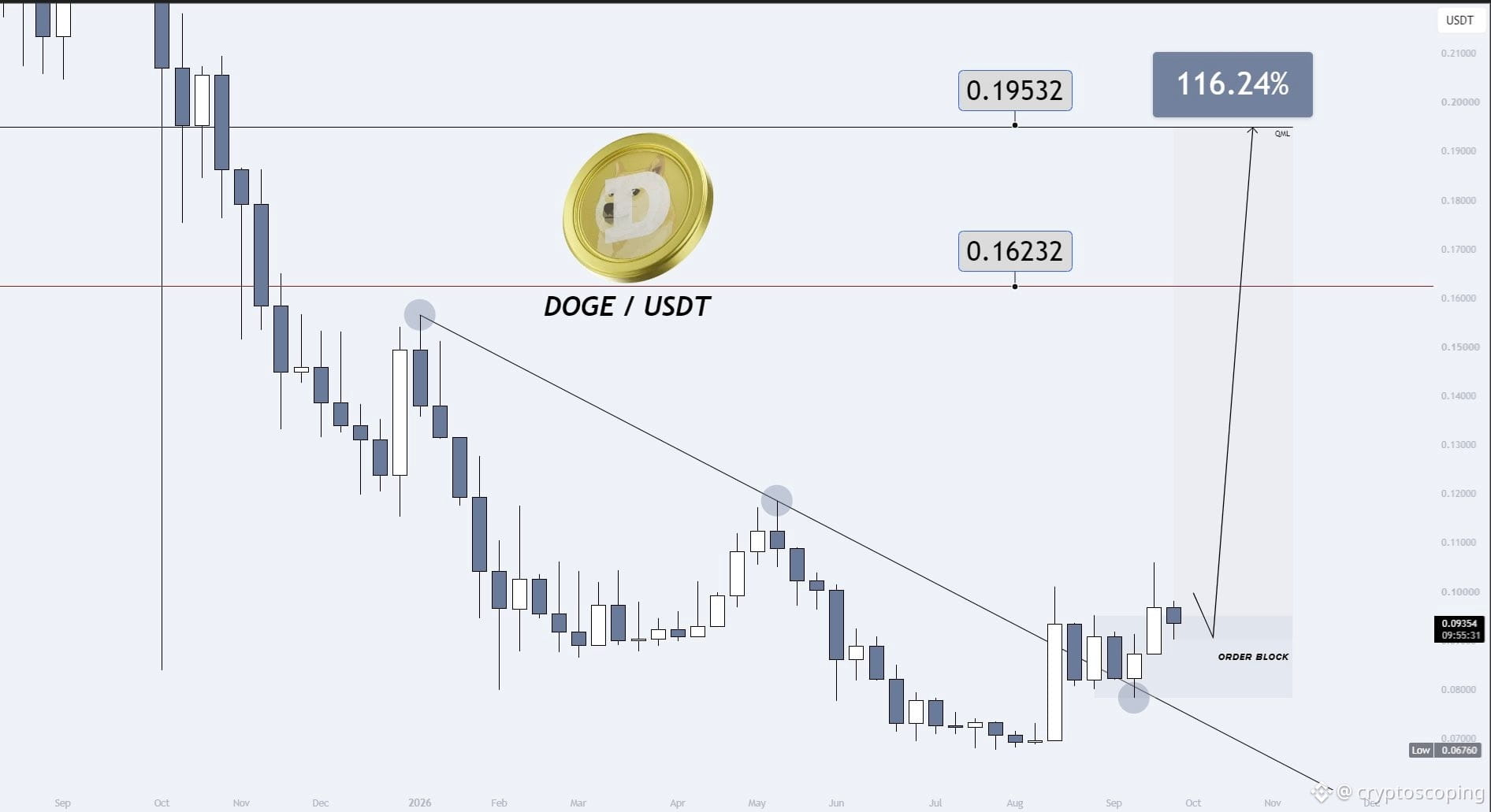
Something is starting to line up on $DOGE .
I don’t think there’s much to explain here.
The chart is already telling the story.
Are you ready for the next move?
#SECHaltsCryptoETFReviewsAmidFundingLapse
Something is starting to line up on $DOGE .
I don’t think there’s much to explain here.
The chart is already telling the story.
Are you ready for the next move?
#SECHaltsCryptoETFReviewsAmidFundingLapse
I don’t think there’s much to explain here.
The chart is already telling the story.
Are you ready for the next move?
#SECHaltsCryptoETFReviewsAmidFundingLapse
116
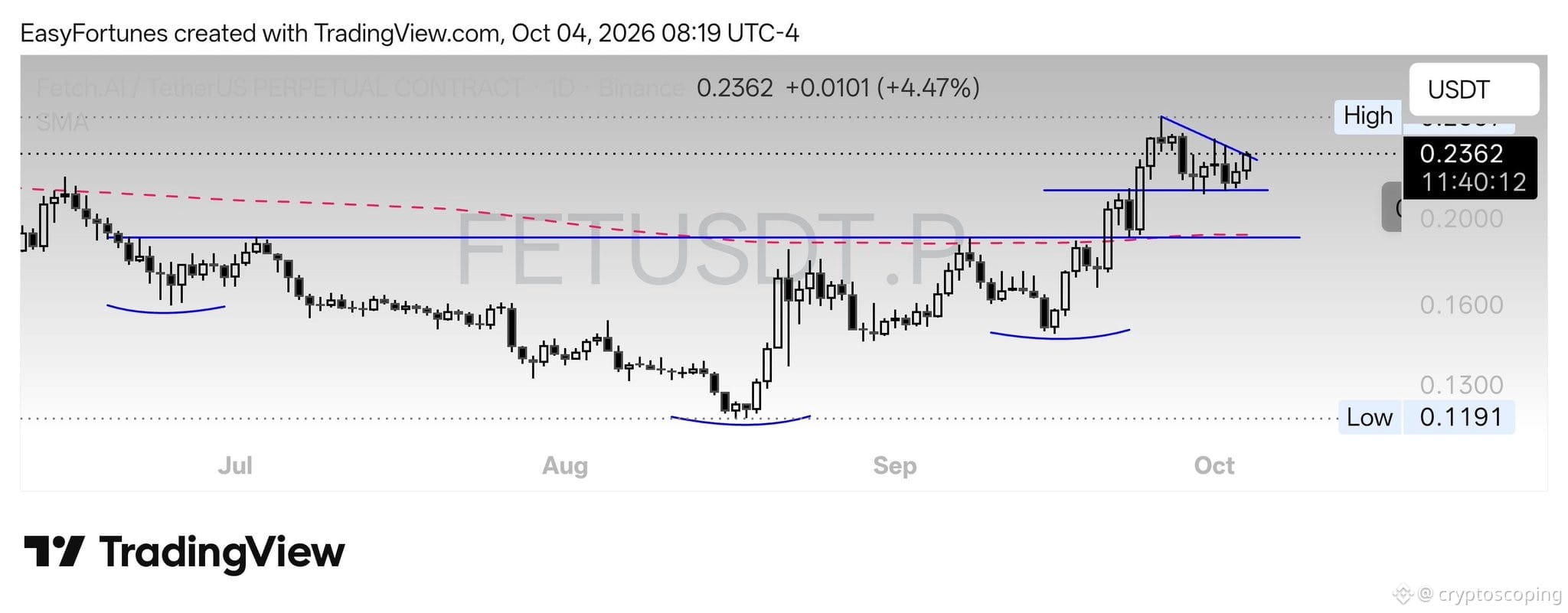
$FET is starting to look really interesting here.
After breaking through a major resistance
price is now forming what looks like a flag and pole.
If buyers keep control, another move higher could be coming.
#SECHaltsCryptoETFReviewsAmidFundingLapse
$FET is starting to look really interesting here.
After breaking through a major resistance
price is now forming what looks like a flag and pole.
If buyers keep control, another move higher could be coming.
#SECHaltsCryptoETFReviewsAmidFundingLapse
After breaking through a major resistance
price is now forming what looks like a flag and pole.
If buyers keep control, another move higher could be coming.
#SECHaltsCryptoETFReviewsAmidFundingLapse
241
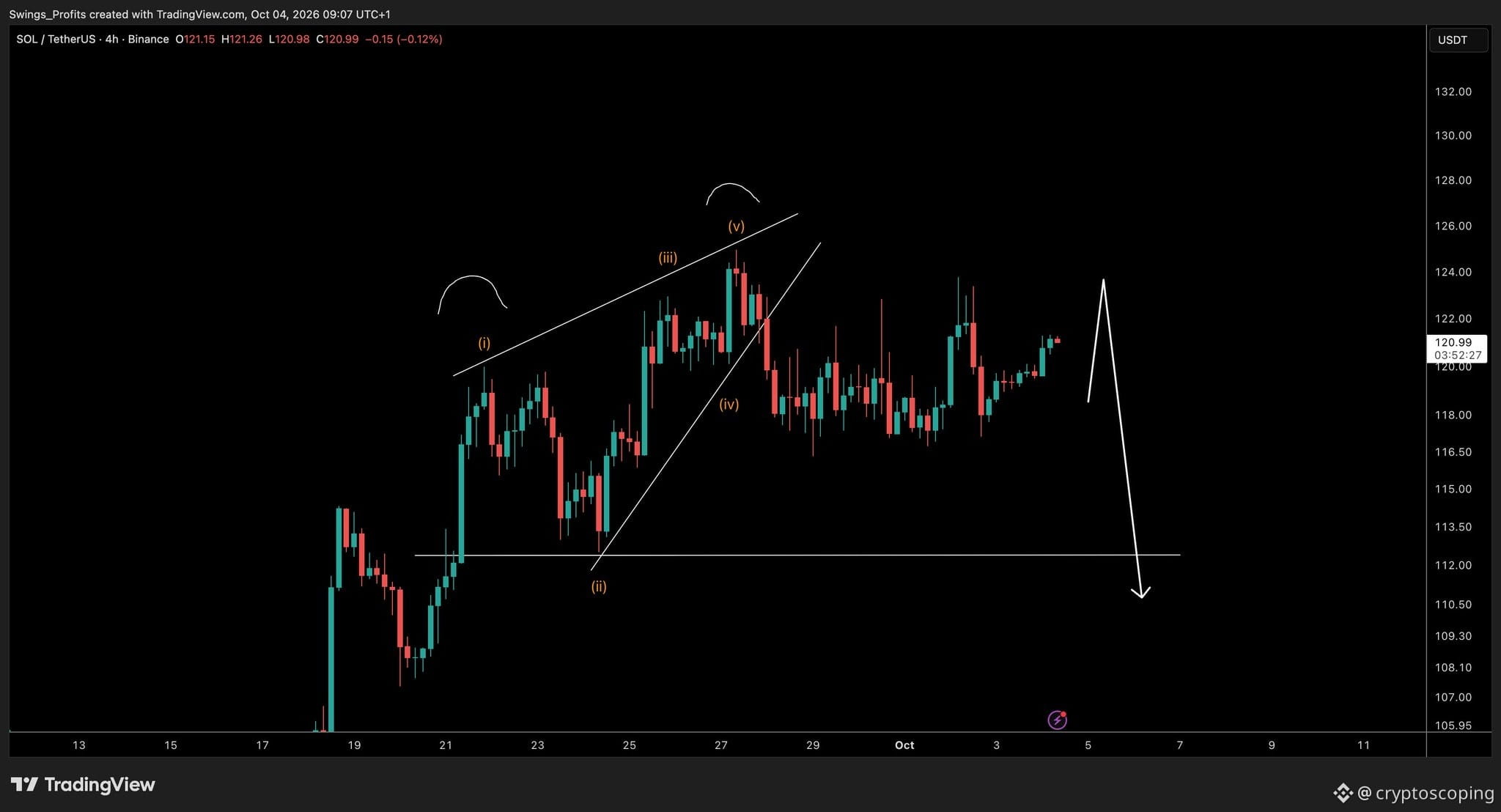
$SOL is taking out the highs, but I’m watching the reaction closely.
If price gets rejected here, another leg down could follow.
Breakout or rejection?
#SECHaltsCryptoETFReviewsAmidFundingLapse
$SOL is taking out the highs, but I’m watching the reaction closely.
If price gets rejected here, another leg down could follow.
Breakout or rejection?
#SECHaltsCryptoETFReviewsAmidFundingLapse
If price gets rejected here, another leg down could follow.
Breakout or rejection?
#SECHaltsCryptoETFReviewsAmidFundingLapse
51
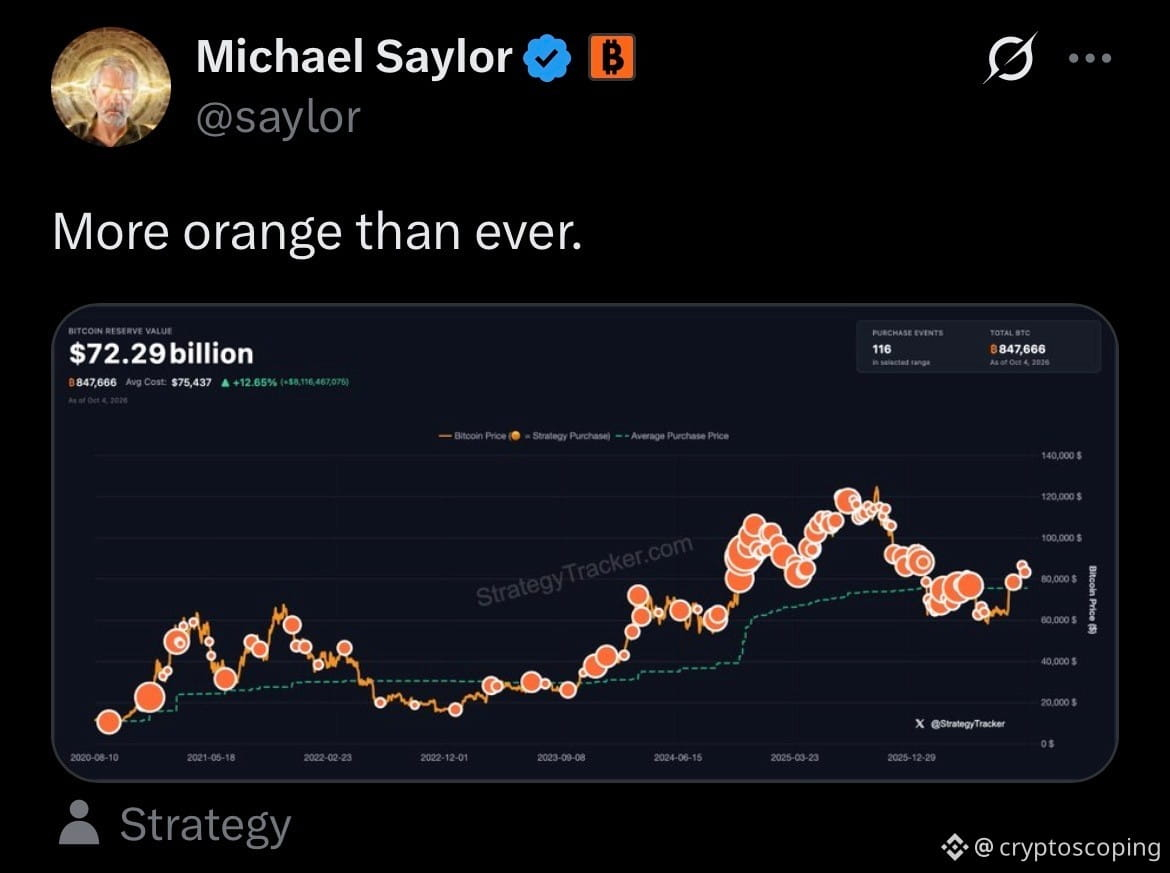
Michael Saylor may have just hinted at another Bitcoin buy for Strategy $MSTR .
If that happens, it would add more fuel to the bullish sentiment around $BTC .
Do you think Strategy is about to buy more Bitcoin?
Michael Saylor may have just hinted at another Bitcoin buy for Strategy $MSTR .
If that happens, it would add more fuel to the bullish sentiment around $BTC .
Do you think Strategy is about to buy more Bitcoin?
If that happens, it would add more fuel to the bullish sentiment around $BTC .
Do you think Strategy is about to buy more Bitcoin?
167
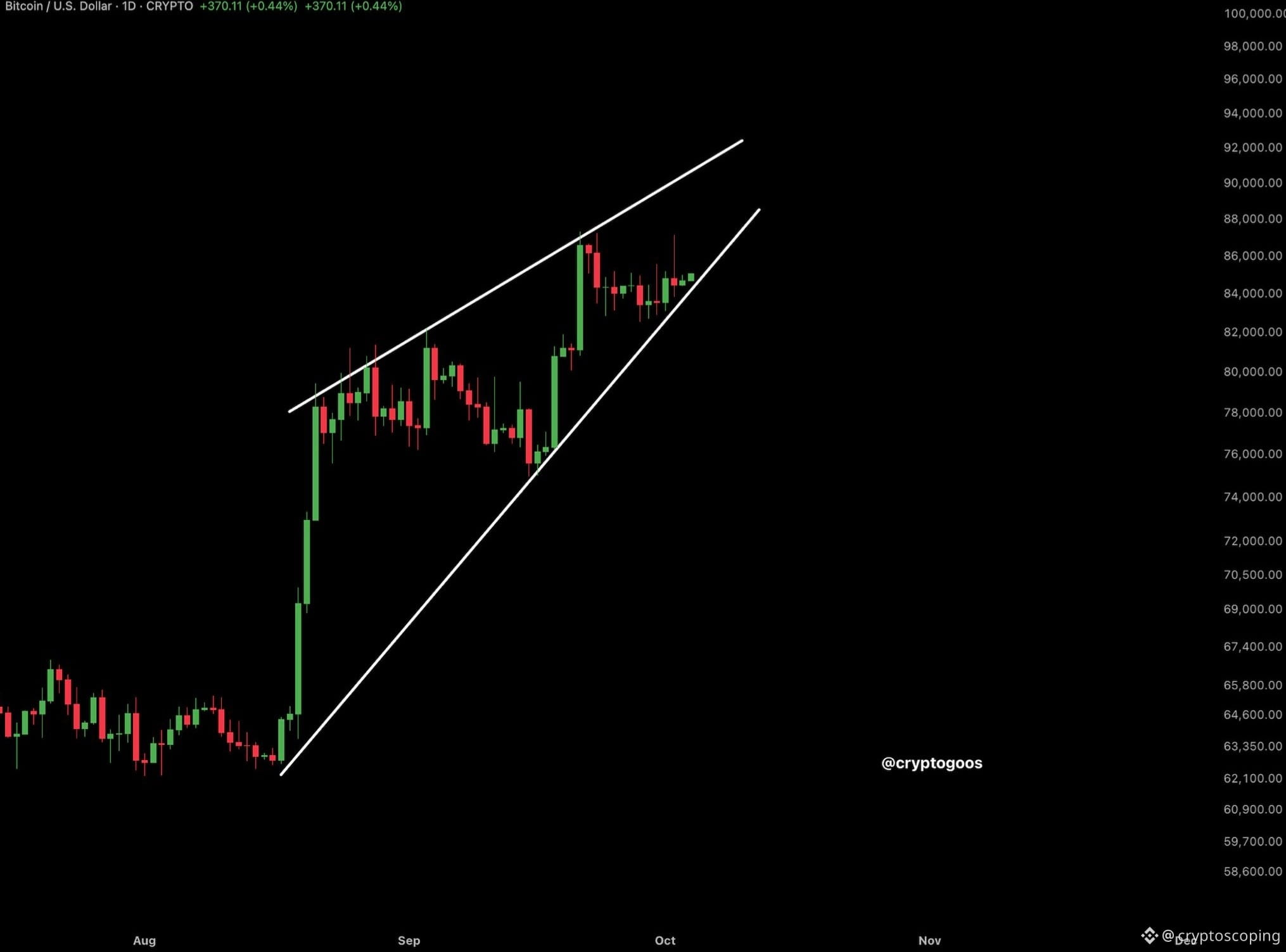
$BTC is still trading inside this rising wedge.
The support line is the level I’m watching now.
Hold it, and the move can continue.
Lose it, and we could see a deeper pullback.
What do you think happens next?
#SECHaltsCryptoETFReviewsAmidFundingLapse
$BTC is still trading inside this rising wedge.
The support line is the level I’m watching now.
Hold it, and the move can continue.
Lose it, and we could see a deeper pullback.
What do you think happens next?
#SECHaltsCryptoETFReviewsAmidFundingLapse
The support line is the level I’m watching now.
Hold it, and the move can continue.
Lose it, and we could see a deeper pullback.
What do you think happens next?
#SECHaltsCryptoETFReviewsAmidFundingLapse
57
$QNT has a digital euro connection worth watching.
The ECB is preparing a 2027 pilot, with online retailers being invited to participate.
Quant has already worked with the ECB on conditional payments, giving it a real connection to the project.
Lagarde’s past mentions of Ripple don’t confirm an #XRP role in the pilot.
Could QNTplay a bigger role than expected?
$QNT has a digital euro connection worth watching.
The ECB is preparing a 2027 pilot, with online retailers being invited to participate.
Quant has already worked with the ECB on conditional payments, giving it a real connection to the project.
Lagarde’s past mentions of Ripple don’t confirm an #XRP role in the pilot.
Could QNTplay a bigger role than expected?
The ECB is preparing a 2027 pilot, with online retailers being invited to participate.
Quant has already worked with the ECB on conditional payments, giving it a real connection to the project.
Lagarde’s past mentions of Ripple don’t confirm an #XRP role in the pilot.
Could QNTplay a bigger role than expected?
64
Partly True
Two big token unlocks are coming, and traders will be watching closely.
$ENA goes first on October 5, with around 172M tokens worth roughly $41M entering circulation.
Then on October 6, $HYPE has around 3.75M tokens unlocking, worth about $339M and equal to roughly 1.69% of its circulating supply.
That’s a lot of fresh supply hitting the market within two days.
will demand absorb it, or will sellers take control?
#GreekPoliceBustCryptoScamRingArrest17
Two big token unlocks are coming, and traders will be watching closely.
$ENA goes first on October 5, with around 172M tokens worth roughly $41M entering circulation.
Then on October 6, $HYPE has around 3.75M tokens unlocking, worth about $339M and equal to roughly 1.69% of its circulating supply.
That’s a lot of fresh supply hitting the market within two days.
will demand absorb it, or will sellers take control?
#GreekPoliceBustCryptoScamRingArrest17
$ENA goes first on October 5, with around 172M tokens worth roughly $41M entering circulation.
Then on October 6, $HYPE has around 3.75M tokens unlocking, worth about $339M and equal to roughly 1.69% of its circulating supply.
That’s a lot of fresh supply hitting the market within two days.
will demand absorb it, or will sellers take control?
#GreekPoliceBustCryptoScamRingArrest17

1
587
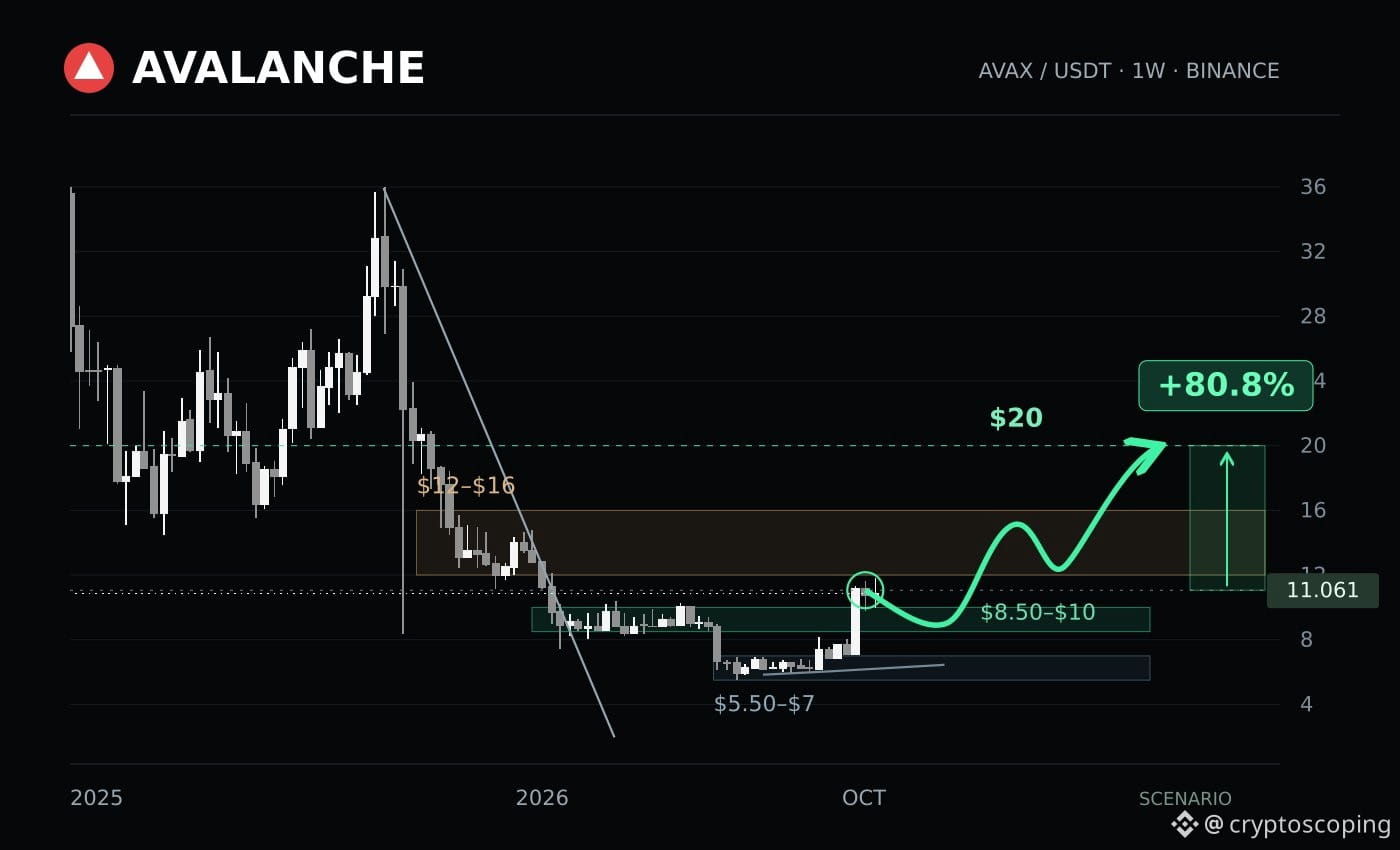
$AVAX is at one of those levels where the next move could tell us a lot.
After months of selling, buyers are finally starting to push back.
I’m watching $8.50–$10 for the retest. If buyers defend that zone, AVAX could form a higher low and start working toward $12–$16.
Reclaim $16 with a weekly close and successful retest, and $20 comes into focus.
That’s roughly 80% upside from $11.06.
Lose $5.50 on a weekly close and I’d scrap this setup.
Would you take the $9 entry, or wait for confirmation above $16?
#SECHaltsCryptoETFReviewsAmidFundingLapse
$AVAX is at one of those levels where the next move could tell us a lot.
After months of selling, buyers are finally starting to push back.
I’m watching $8.50–$10 for the retest. If buyers defend that zone, AVAX could form a higher low and start working toward $12–$16.
Reclaim $16 with a weekly close and successful retest, and $20 comes into focus.
That’s roughly 80% upside from $11.06.
Lose $5.50 on a weekly close and I’d scrap this setup.
Would you take the $9 entry, or wait for confirmation above $16?
#SECHaltsCryptoETFReviewsAmidFundingLapse
After months of selling, buyers are finally starting to push back.
I’m watching $8.50–$10 for the retest. If buyers defend that zone, AVAX could form a higher low and start working toward $12–$16.
Reclaim $16 with a weekly close and successful retest, and $20 comes into focus.
That’s roughly 80% upside from $11.06.
Lose $5.50 on a weekly close and I’d scrap this setup.
Would you take the $9 entry, or wait for confirmation above $16?
#SECHaltsCryptoETFReviewsAmidFundingLapse
245
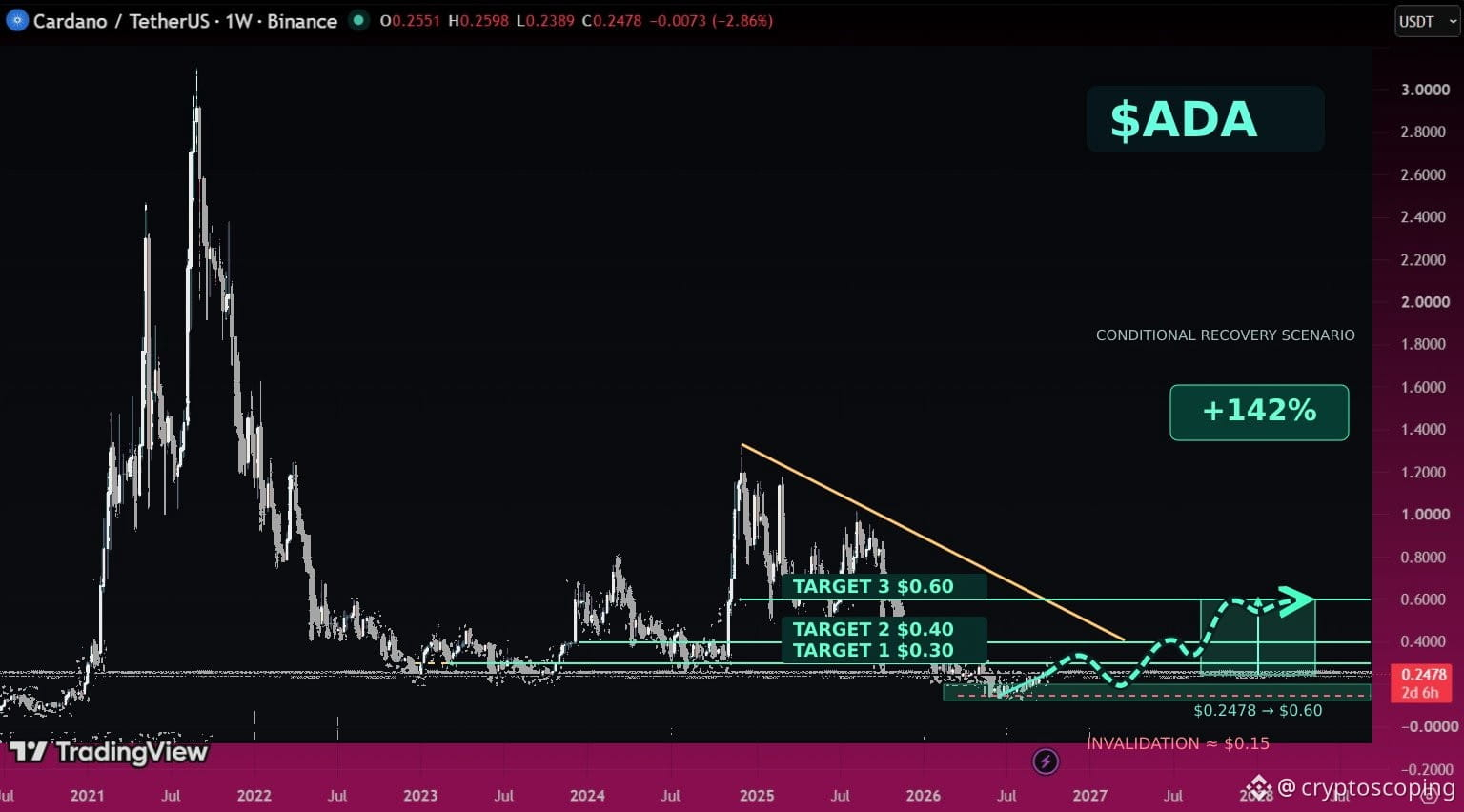
$ADA is sitting at a level where the next few moves could shape the entire recovery.
I’m watching $0.30 first. From there, a pullback toward $0.20–$0.25 could set up the next leg.
If buyers defend that zone, $0.40 becomes the next checkpoint. Reclaim the descending trendline and $0.60 comes into play.
From $0.2478, that would be roughly 142% upside.
The key risk is a weekly close below $0.15.
Will ADA finally turn this structure around?
#FedOctoberRateHikeOddsFallTo17%
$ADA is sitting at a level where the next few moves could shape the entire recovery.
I’m watching $0.30 first. From there, a pullback toward $0.20–$0.25 could set up the next leg.
If buyers defend that zone, $0.40 becomes the next checkpoint. Reclaim the descending trendline and $0.60 comes into play.
From $0.2478, that would be roughly 142% upside.
The key risk is a weekly close below $0.15.
Will ADA finally turn this structure around?
#FedOctoberRateHikeOddsFallTo17%
I’m watching $0.30 first. From there, a pullback toward $0.20–$0.25 could set up the next leg.
If buyers defend that zone, $0.40 becomes the next checkpoint. Reclaim the descending trendline and $0.60 comes into play.
From $0.2478, that would be roughly 142% upside.
The key risk is a weekly close below $0.15.
Will ADA finally turn this structure around?
#FedOctoberRateHikeOddsFallTo17%
223
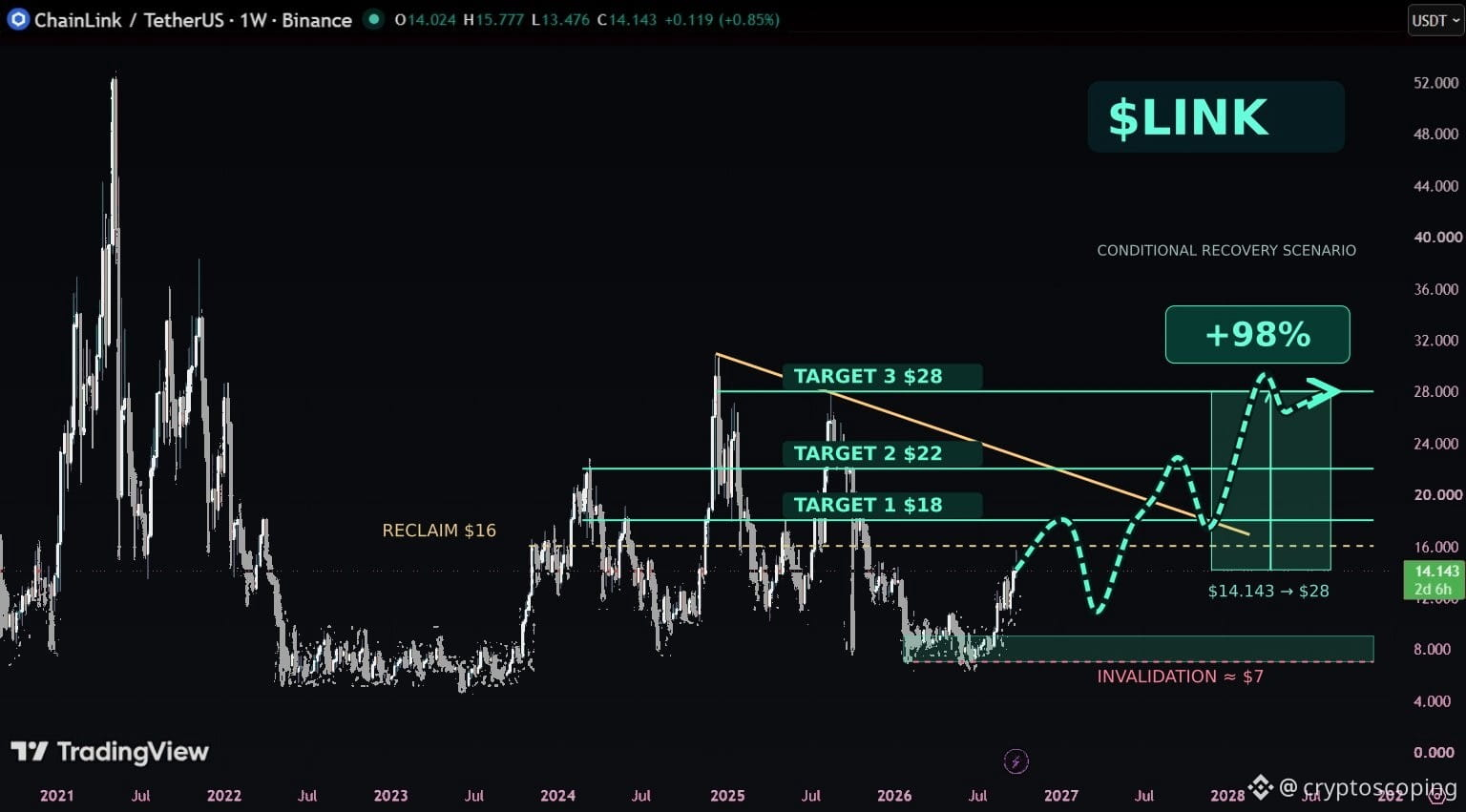
$LINK has a few important levels to clear before the bigger move can begin.
The first area to watch is $16–$18.
A pullback toward $11–$13 could follow. If buyers defend that zone, the next targets are $22 and then $28.
From $14.143, $28 would be roughly +98%.
The $7–$9 area remains the key base. A weekly close below $7 would invalidate this setup.
Can #LINK turn this bounce into a sustained reversal?
$LINK has a few important levels to clear before the bigger move can begin.
The first area to watch is $16–$18.
A pullback toward $11–$13 could follow. If buyers defend that zone, the next targets are $22 and then $28.
From $14.143, $28 would be roughly +98%.
The $7–$9 area remains the key base. A weekly close below $7 would invalidate this setup.
Can #LINK turn this bounce into a sustained reversal?
The first area to watch is $16–$18.
A pullback toward $11–$13 could follow. If buyers defend that zone, the next targets are $22 and then $28.
From $14.143, $28 would be roughly +98%.
The $7–$9 area remains the key base. A weekly close below $7 would invalidate this setup.
Can #LINK turn this bounce into a sustained reversal?
220
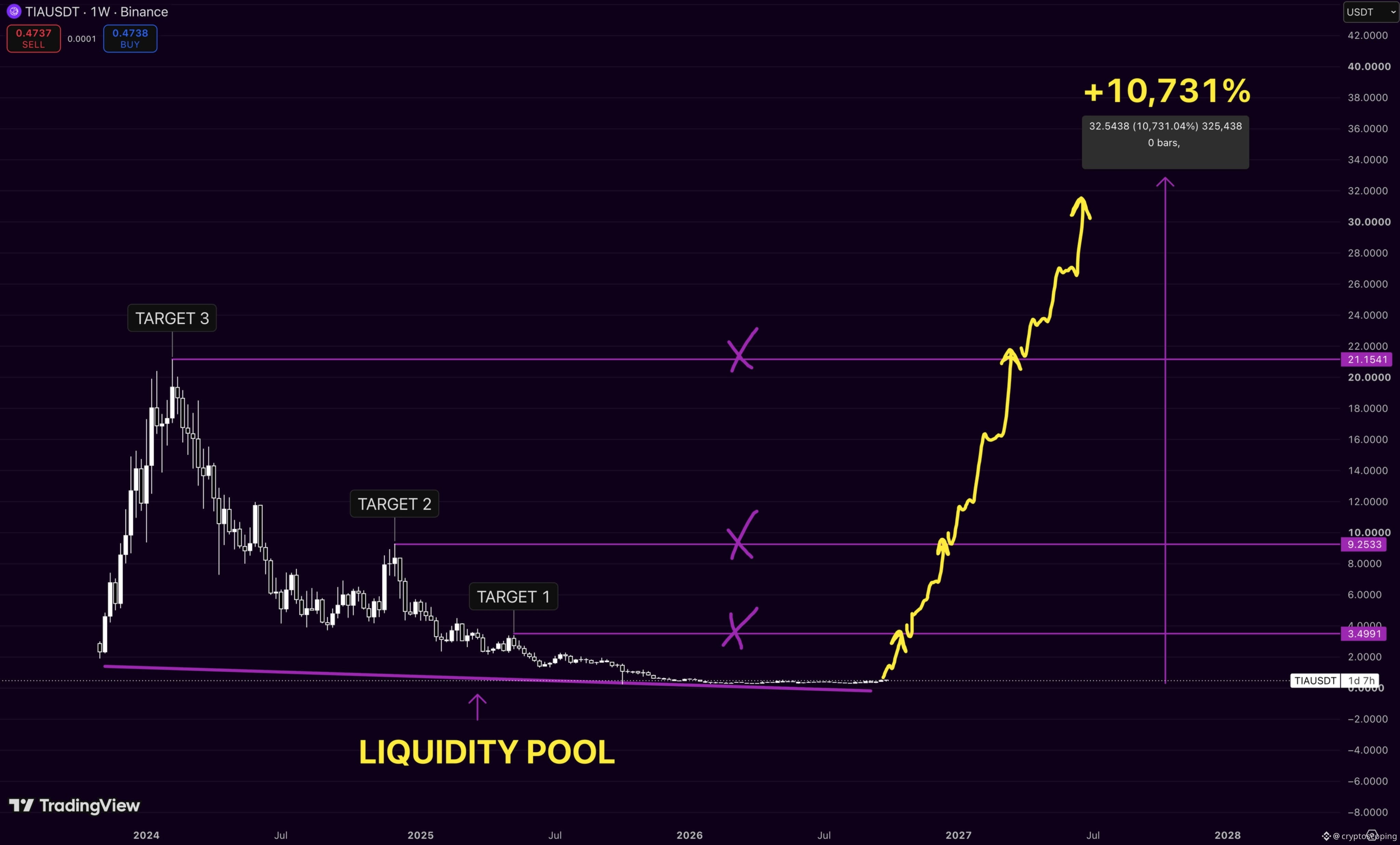
$TIA has gone from nearly $21 to under $0.50.
That kind of drop is hard to ignore.
Now I’m watching to see what happens if the trend finally turns.
My levels are:
$3.50
$9.25
$21.15
If the old highs are eventually reclaimed, I’m watching around $33 as the bigger expansion target.
From the bottom, that would be a massive move.
The question is whether $TIA can wake up again.
$TIA has gone from nearly $21 to under $0.50.
That kind of drop is hard to ignore.
Now I’m watching to see what happens if the trend finally turns.
My levels are:
$3.50
$9.25
$21.15
If the old highs are eventually reclaimed, I’m watching around $33 as the bigger expansion target.
From the bottom, that would be a massive move.
The question is whether $TIA can wake up again.
That kind of drop is hard to ignore.
Now I’m watching to see what happens if the trend finally turns.
My levels are:
$3.50
$9.25
$21.15
If the old highs are eventually reclaimed, I’m watching around $33 as the bigger expansion target.
From the bottom, that would be a massive move.
The question is whether $TIA can wake up again.
282
Log in to explore more content
Join global crypto users on Binance Square
⚡️ Get latest and useful information about crypto.
💬 Trusted by the world’s largest crypto exchange.
👍 Discover real insights from verified creators.
Email / Phone number
Trending Topics
BinanceLaunchesBinanceIntelligence
525,849 views
3,443 Discussing
Binance is making a bet that could change how people trade crypto.
I’ve watched traders spend hours moving between charts, news, funding rates and on-chain data just to answer one question: “What should I do next?” Now Binance is trying to compress that whole process into AI.
Binance AI can personalize market information, AI Pro is moving toward natural-language strategy building, and Agent OS takes it further by connecting AI agents with Binance infrastructure.
But here’s my take:
The next trading advantage may not be who knows the most indicators.
It may be who knows how to:
• Ask better questions
• Give AI better context
• Set better risk limits
That sounds powerful, but it also worries me a little.
If AI makes execution easier, it can remove friction from good decisions. It can also remove friction from bad ones.
And that’s the part I’ll be watching.
Will AI actually make people better traders?
Or will it simply make average traders faster at making mistakes?
What’s your view? 👇
$BNB $BTC $ETH #BİNANCE #AI
#BinanceLaunchesBinanceIntelligence
DevRajCrypto
·3 Likes
·517 views
BitcoinTargets2026OpenAt$87570
4,101 views
101 Discussing
BitcoinRejectedAt$87KThirdTime
3,419 views
78 Discussing