
Wellington Sanctorum
246 Posts

Wellington Sanctorum
Report
Block User
9 anos no mercado cripto. Coautor em blockchain. Sinais com alta assertividade. Não vendo hype, entrego direção. E quem segue, lucra.
45 Following
688 Followers
184 Liked
Posts
All
Quotes
Videos
Live
PINNED
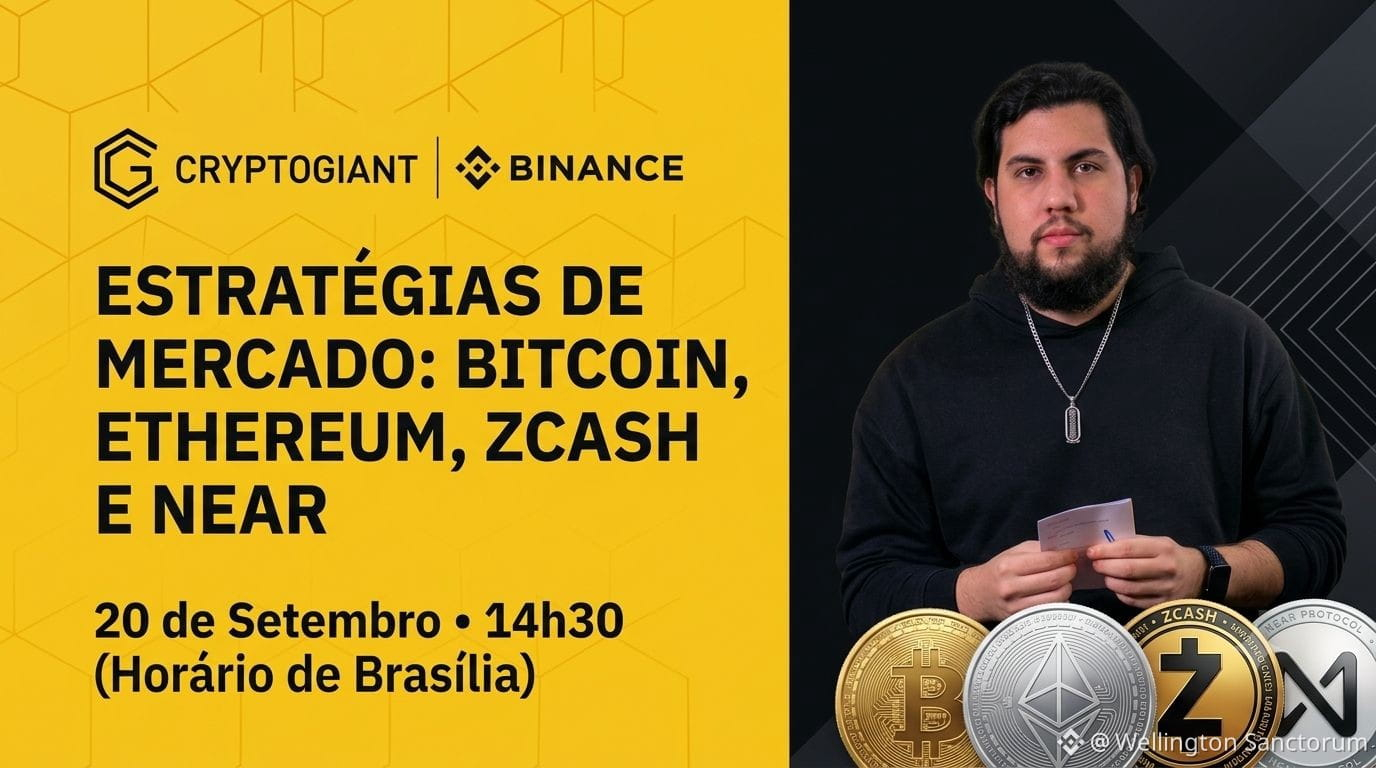
The crypto market is about to define its next big steps! 🚨
This Sunday (20), at 2:30 PM (Brasília time), I’ll go live on Binance Square to map out the route for the main coins of the moment:
⚡ Market Strategies: Bitcoin, Ethereum, Zcash and Near
Let’s break it down:
📊 Key supports and resistances of $BTC and $ETH
🔍 The silent moves of $ZEC (privacy on the rise?)
📈 Upside potential and the NEAR ecosystem
🎯 Points to watch and risk management for the week
Don’t trade in the dark. Join the live, participate in the chat, and get your questions answered in real time!
👉 Access directly via the link and set your reminder:
[https://app.binance.com/uni-qr/cspa/46025626979658?r=KRTDZ643&l=pt-PT&source=host_share&uc=app_square_share_link&us=copylinkt](https://app.binance.com/uni-qr/cspa/46025626979658?r=KRTDZ643&l=pt-PT&source=host_share&uc=app_square_share_link&us=copylinkt)
#Binance #bitcoin
The crypto market is about to define its next big steps! 🚨
This Sunday (20), at 2:30 PM (Brasília time), I’ll go live on Binance Square to map out the route for the main coins of the moment:
⚡ Market Strategies: Bitcoin, Ethereum, Zcash and Near
Let’s break it down:
📊 Key supports and resistances of $BTC and $ETH
🔍 The silent moves of $ZEC (privacy on the rise?)
📈 Upside potential and the NEAR ecosystem
🎯 Points to watch and risk management for the week
Don’t trade in the dark. Join the live, participate in the chat, and get your questions answered in real time!
👉 Access directly via the link and set your reminder:
https://app.binance.com/uni-qr/cspa/46025626979658?r=KRTDZ643&l=pt-PT&source=host_share&uc=app_square_share_link&us=copylinkt
#Binance #bitcoin
4
1.6k
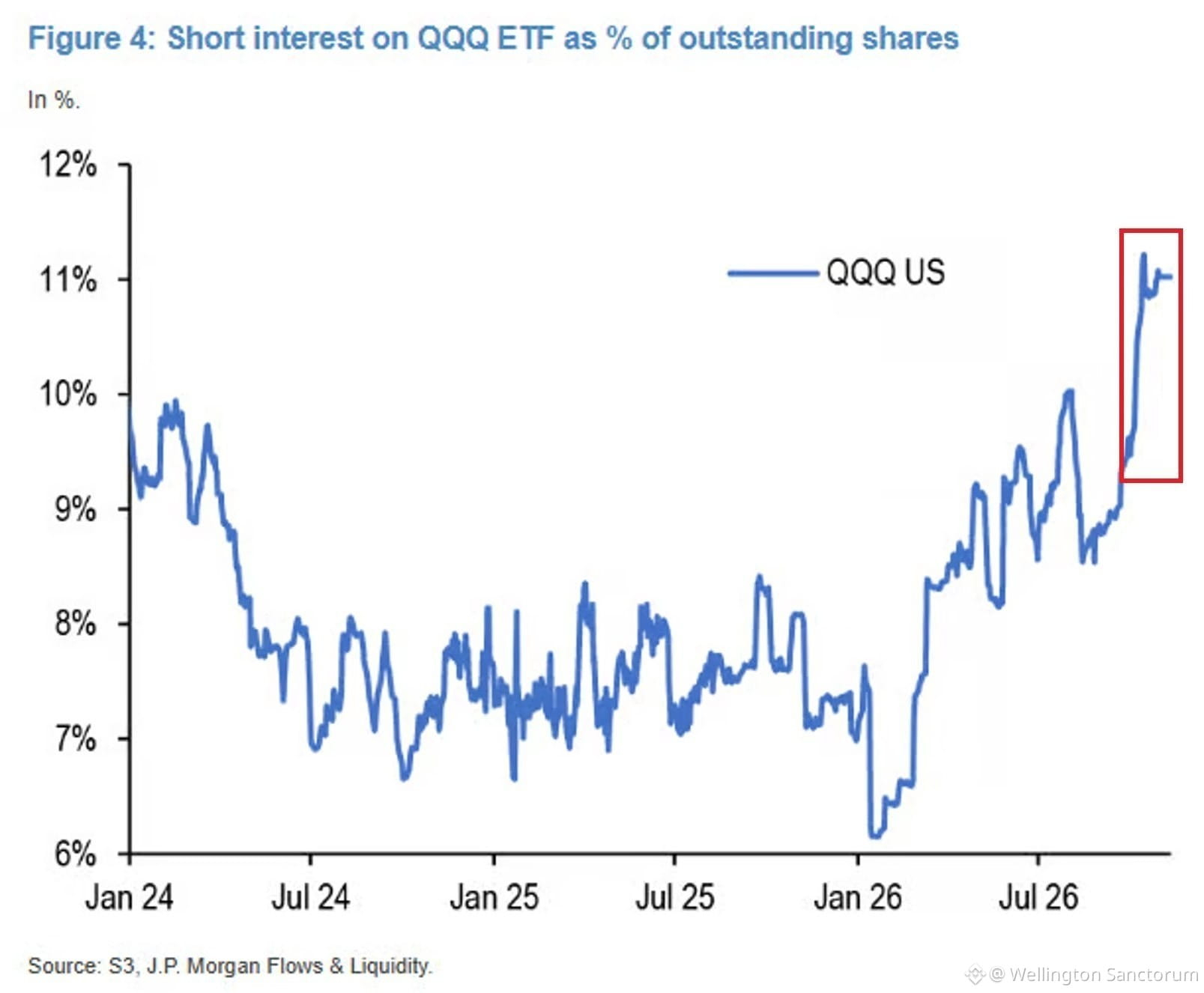
The U.S. tech market is at a critical inflection point, with short interest in the Nasdaq 100 ETF ($QQQ) reaching 11% of shares outstanding. This is the highest level recorded since 2023, representing a 5-percentage-point increase since the start of the year.
To put the severity of the situation into perspective, short interest peaked at approximately 14% during the 2022 bear market. Currently, the ratio of long to short positions at hedge funds has fallen to 1.5, its lowest level since 2016, indicating that major investors are increasingly betting on the sector’s decline.
This extreme concentration of contrarian bets creates the perfect setup for a short squeeze—a sharp upward move driven by the need to close out short positions. For the cryptocurrency market, which is highly correlated with the Nasdaq, this potential breakout could trigger a strong price recovery. 🚀📈
279
·
--
Bullish
The founder of Binance, @CZ , said that the exact reasons for the recent decline in the cryptocurrency market remain unclear, citing several potential factors:
The shift of capital to Anthropic’s IPO;
Approximately US$ 1,9 billion in net outflows from U.S. spot Bitcoin ETFs over seven trading sessions through November 13, along with outflows from Ether ETFs;
Security concerns following the Binance hack, crypto wallet thefts linked to iPhones, a Chrome exploit, and a Microsoft vulnerability;
Higher-than-expected U.S. inflation, fueling expectations of another interest rate hike by the Fed, with higher yields and a stronger dollar potentially weighing on risk assets; and concerns about potentially tighter crypto regulation in the U.S. following the midterm elections.
CZ emphasized that Binance had not sold any crypto assets and said that he had personally bought crypto in recent days after receiving some stablecoins. He added that he expects cryptocurrencies to continue growing in the medium and long term.
171
I see lots of livestreams and very few clear signals.
I see lots of livestreams and very few clear signals.
1
65
Michael Dempsey: Crypto Venture Capital Has Been Nearly Dead for Two Years as AI Diverts Talent
Michael Dempsey, managing partner at Compound, said in an interview with Empire on October 13 that crypto venture capital has been practically inactive for two years. In 2021, tech entrepreneurs flocked to the crypto sector; today, AI is attracting most of these professionals. Dempsey highlighted the need for more talent and better token incentives, warning that tokenization could undermine long-term incentives. At the same time, some fully decentralized tokens are beginning to demonstrate real value, allowing investors to assess fundamentals rather than just narratives. In the venture capital landscape, few founders are exploring new ideas beyond perpetual futures DEXs.
Michael Dempsey, managing partner at Compound, said in an interview with Empire on October 13 that crypto venture capital has been practically inactive for two years. In 2021, tech entrepreneurs flocked to the crypto sector; today, AI is attracting most of these professionals. Dempsey highlighted the need for more talent and better token incentives, warning that tokenization could undermine long-term incentives. At the same time, some fully decentralized tokens are beginning to demonstrate real value, allowing investors to assess fundamentals rather than just narratives. In the venture capital landscape, few founders are exploring new ideas beyond perpetual futures DEXs.
1
227
Too much GURU for too little profit 😂
Too much GURU for too little profit 😂
2
88
Which currency made you the most money?
Which currency made you the most money?
1
97
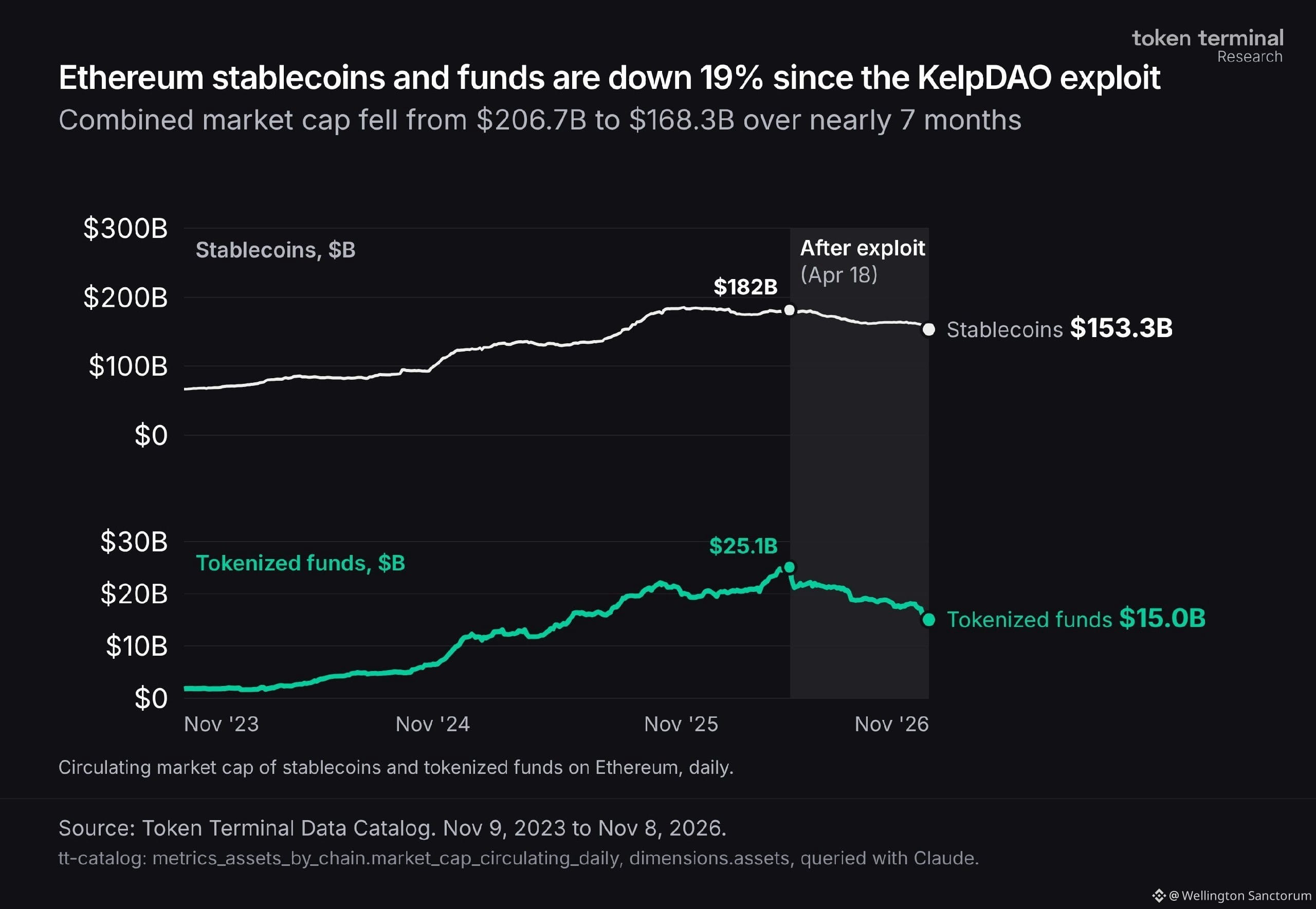
The stablecoin and tokenized fund market on Ethereum experienced a 19% decline in its capitalization, falling from US$ 206,7 billion to US$ 168,3 billion. This sharp drop occurred in the nearly 7 months following the KelpDAO security incident (exploit), reported on April 18.
The data reveal that the stablecoin market cap on the network fell from a peak of US$ 182 billion to US$ 153,3 billion. At the same time, the tokenized fund sector, which had reached US$ 25,1 billion, declined to US$ 15,0 billion, demonstrating a sharp contraction in capital across the ecosystem.
This downward trend suggests that the KelpDAO security incident had a lasting impact on investor confidence, resulting in a significant outflow of liquidity from DeFi protocols on Ethereum. 📉
189
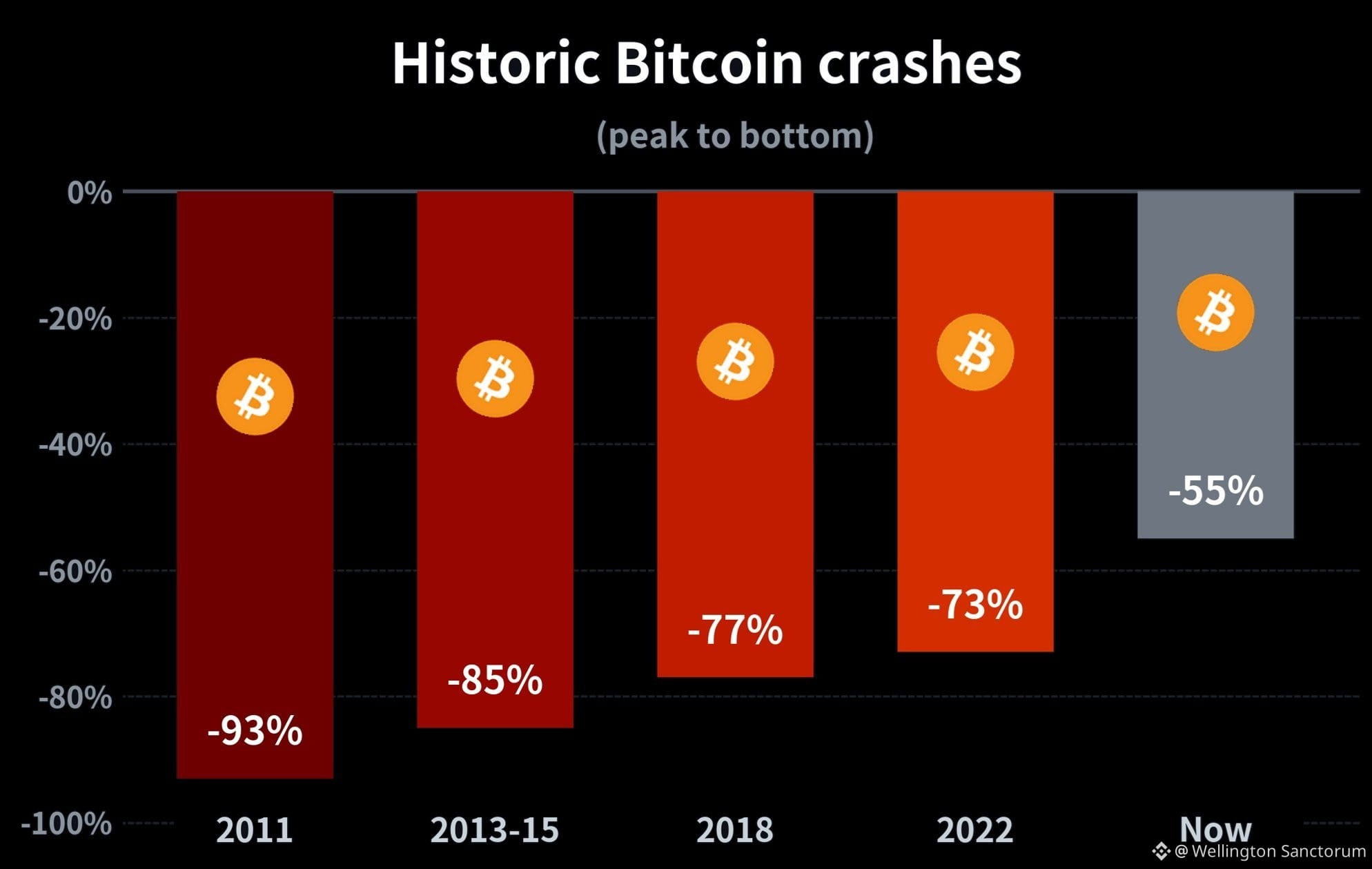
A historical analysis of Bitcoin bear market cycles reveals a clear pattern of increasing resilience. While the steepest drop recorded in 2011 was 93%, subsequent cycles in 2013–15, 2018, and 2022 saw declines of 85%, 77%, and 73%, respectively.
The current situation, with a drop of approximately 55%, suggests that the asset is demonstrating greater structural strength compared with past corrections. Analysts interpret this trend of less severe declines with each cycle as a sign of market maturity and a more solid investor base.
This dynamic suggests that Bitcoin may be building a more resilient bottom, which is seen as an encouraging factor for the market’s next growth phases. 🚀
109
Securitize has just announced the acquisition of River One, marking a historic milestone as its first purchase since becoming a publicly traded company.
This strategic move aims to expand the company's presence in the real-world asset (RWA) finance market, a sector that has already surpassed US$$ 6 trillion in total value.
With this union, the market is witnessing a consolidation trend that promises to accelerate the integration of traditional assets with blockchain infrastructure. 🚀

1
1
138
Charlie Munger: "There are only three ways an intelligent person can lose everything: alcohol, women, and leverage."
Charlie Munger: "There are only three ways an intelligent person can lose everything: alcohol, women, and leverage."
1
193
Fear in the Cryptocurrency Market is an opportunity for Big Investors ... IN THE RIGHT ASSET!
Fear in the Cryptocurrency Market is an opportunity for Big Investors ... IN THE RIGHT ASSET!
1
155
Verified
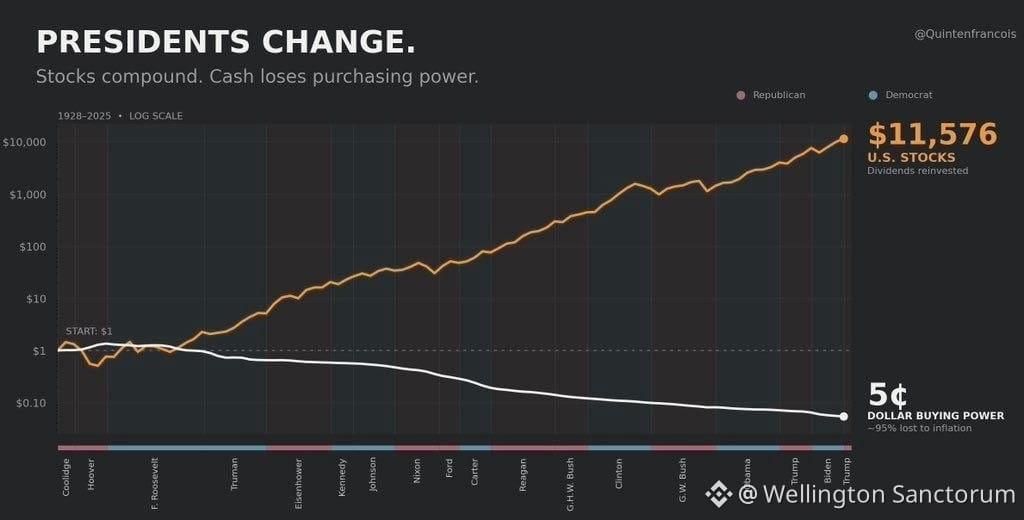
The power of the market outweighs politics. Historical analysis from 1928 to 2025 reveals that U.S. stock performance follows a consistent upward trend, regardless of who occupies the White House. While the stock index accumulated a value of $11,576 with dividends reinvested, the purchasing power of cash plummeted to just 5 cents due to inflation.
This glaring divergence serves as a warning to investors: stagnant, idle capital is the greatest threat to your wealth. The image reinforces that political volatility is irrelevant in the face of the long-term growth of productive assets.
📈 The lesson is clear: don’t get distracted by election noise. The focus should be on protecting your wealth from inflationary erosion, ensuring your investments keep pace with the market’s upward trajectory.
1
1.2k
Partly True
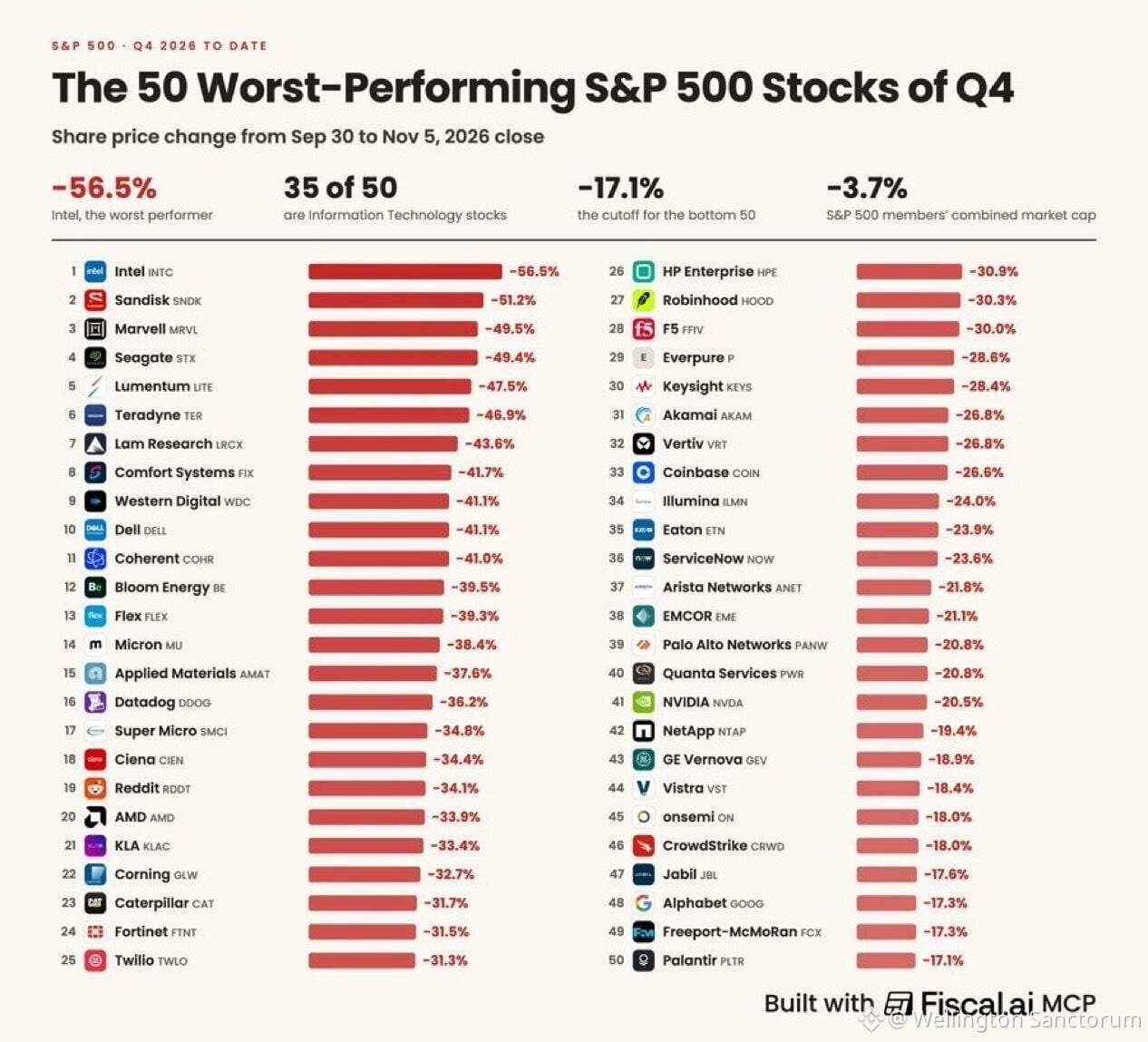
The U.S. stock market suffered a sharp downturn in the fourth quarter, with Intel leading the list of worst-performing S&P 500 stocks after its market value plunged 56.5%. The technology sector was hit hardest, accounting for 35 of the top 50 positions in the loss rankings, signaling a severe correction in high-tech assets.
Among the biggest losers, alongside Intel, were names such as Sandisk, Marvell, and Seagate, which also fell by more than 49%. Selling pressure even hit established giants such as NVIDIA, Alphabet, and Palantir, which ended the period down between 17% and 20%, reflecting investors’ short-term disinterest in growth stocks.
This risk aversion in traditional markets may be interpreted as a sign of capital rotation, with money flowing out of falling technology stocks and seeking refuge in other asset classes, such as the cryptocurrency market. 📉
1
4.9k
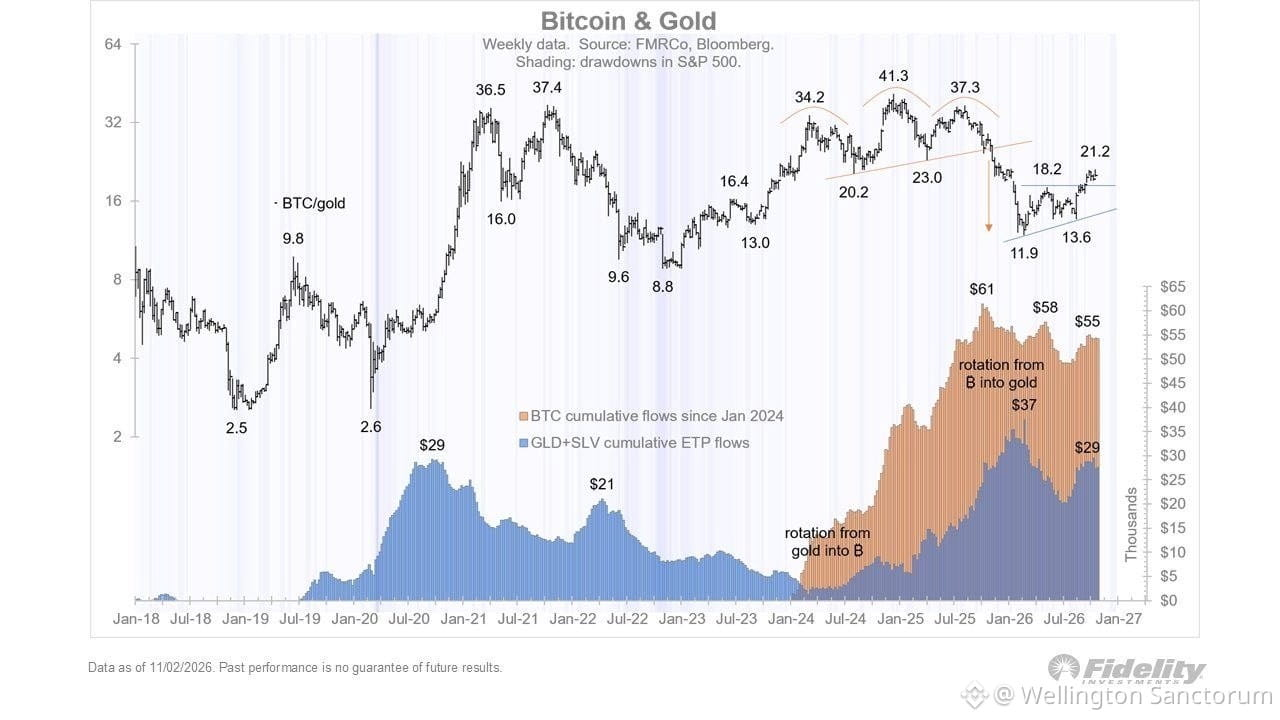
$BTC is showing notable strength by maintaining its price parity with gold, even as the values of both assets fall simultaneously. This resilience suggests that the market continues to view the cryptocurrency as a competitive store of value compared with the traditional metal.
Capital flow data reveal a trend of investment rotation: after a period of capital moving from Bitcoin to gold, we are seeing a significant return of flows to BTC. This dynamic indicates that investors are reassessing their positions and once again betting on the cryptocurrency’s upside potential.
Capital flow data reveal a trend of investment rotation: after a period of capital moving from Bitcoin to gold, we are seeing a significant return of flows to BTC. This dynamic indicates that investors are reassessing their positions and once again betting on the cryptocurrency’s upside potential.
85
Verified
Binance has appointed Justin Yek as its new chief financial officer (CFO), replacing Kaiser Ng, who will leave the company to start a new venture. According to Bloomberg, Binance co-CEO Yi He noted that Ng had been with the company for more than five years and that a transition plan had been in place for six months. Yek previously served as vice president of finance at Airwallex and led Morgan Stanley’s technology investment banking business in Southeast Asia. Ng, meanwhile, was CFO of Kraken.
Binance has appointed Justin Yek as its new chief financial officer (CFO), replacing Kaiser Ng, who will leave the company to start a new venture. According to Bloomberg, Binance co-CEO Yi He noted that Ng had been with the company for more than five years and that a transition plan had been in place for six months. Yek previously served as vice president of finance at Airwallex and led Morgan Stanley’s technology investment banking business in Southeast Asia. Ng, meanwhile, was CFO of Kraken.
1.2k
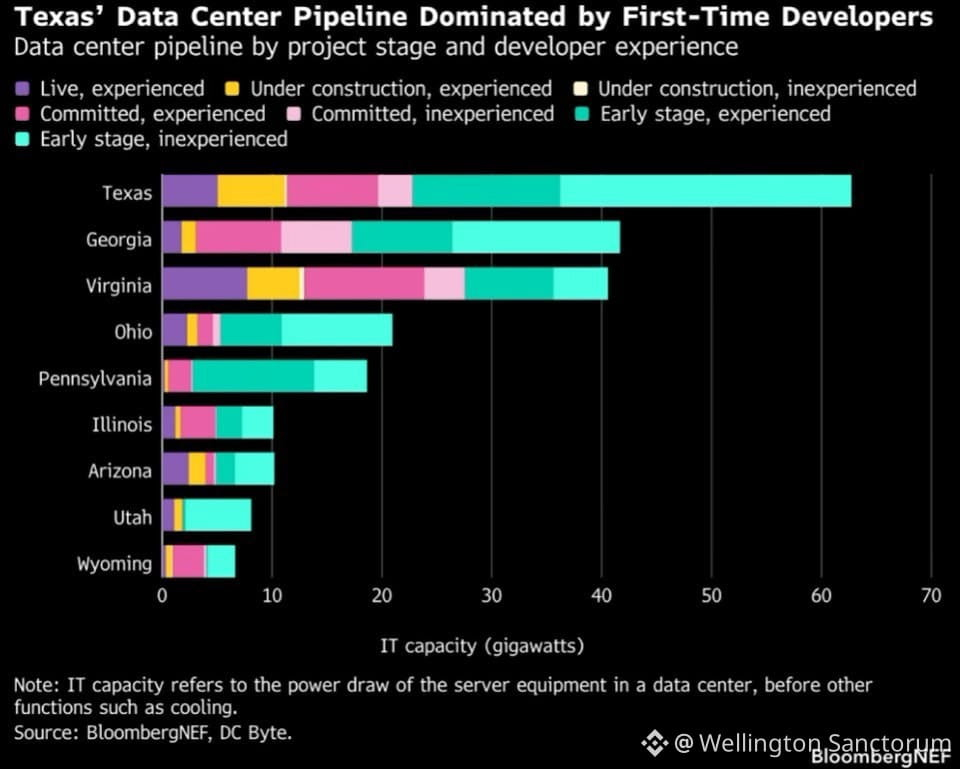
The state of Texas is solidifying its position as the leading data center infrastructure hub in the United States, topping the rankings with IT capacity exceeding 60 gigawatts. The chart reveals that the state is dominated by first-time developers, with a strong presence of early-stage projects and companies with no prior experience in the sector.
This trend of rapid expansion is also evident in neighboring states like Georgia and Virginia, which have large volumes of capacity under construction and committed projects. The entry of new players into the market points to an aggressive race to meet the growing demand for processing power.
For the cryptocurrency sector, this infrastructure is vital for supporting mining and the operation of decentralized networks. The concentration of new data centers in Texas suggests the region will become the computing capacity epicenter for the next generation of digital assets. 🏗️⚡
322
How much experience do you have in the cryptocurrency market? I'll give you tips based on...
How much experience do you have in the cryptocurrency market? I'll give you tips based on...
1
129
Strategy ($MSTR ) bought 811 bitcoins and repurchased US$208 million in preferred stock.
The company acquired 811 BTC for US$65.5 million, at an average price of US$80,846 per Bitcoin, bringing its total holdings to 849,327 BTC.
Additionally, the company sold 1.18 million MSTR shares, raising US$164 million, of which US$98.5 million was allocated to its U.S. dollar reserve.
Strategy repurchased US$208.2 million in STRC preferred stock during the week.
Its dollar reserve stands at US$4.79 billion, with an additional US$132.7 million in cash.
41
Log in to explore more content
Join global crypto users on Binance Square
⚡️ Get latest and useful information about crypto.
💬 Trusted by the world’s largest crypto exchange.
👍 Discover real insights from verified creators.
Email / Phone number
Trending Topics
NvidiaBeatsEstimatesWith$130BQ4Outlook
281 views
10 Discussing
Nvidia Beats With $115.8 Billion in Revenue, Guides to $130 Billion and Adds $150 Billion Buyback
Binance News
·18 Likes
·18.8k views
AnthropicIPOPriceCouldExceed$80
240 views
24 Discussing
CanNvidia’sDataCenterGrowthContinue?
905 views
24 Discussing