
Alpha Structure
485 Posts

Alpha Structure
Tracking BTC & Altcoin Markets
Daily Calls • Structure • Narratives
Charts | Signals | Alpha
17 Following
71 Followers
283 Liked
Posts
Portfolio
All
Quotes
Videos
PINNED
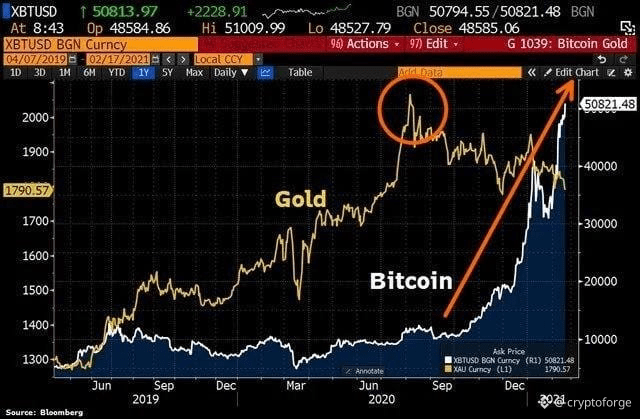
Gold and Bitcoin: A Historical Correlation to KnowThe last time gold reached a major cycle peak (around 2020), Bitcoin followed with a roughly 5x increase in the months that came after. This pattern has been observed in previous gold strength periods, where rising gold often coincided with broader risk-on sentiment that benefited Bitcoin. It’s one of many historical relationships in markets — not a guarantee, but a reminder of how macro assets can influence each other over time.
#bitcoin #GOLD #crypto
#bitcoin #GOLD #crypto
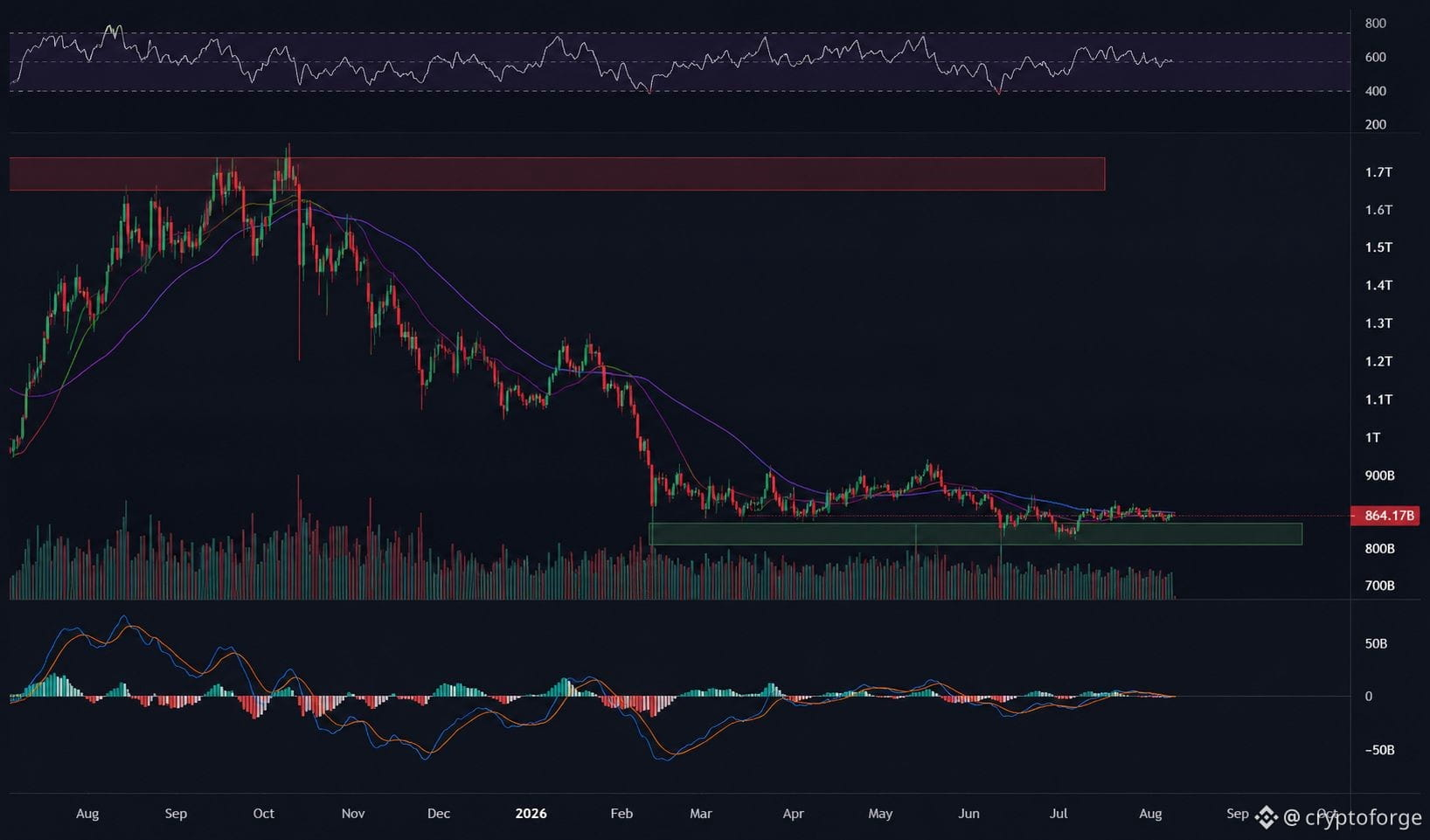
The total #Altcoin market cap has been moving sideways since July, showing little overall momentum.
#altcoins
#altcoins
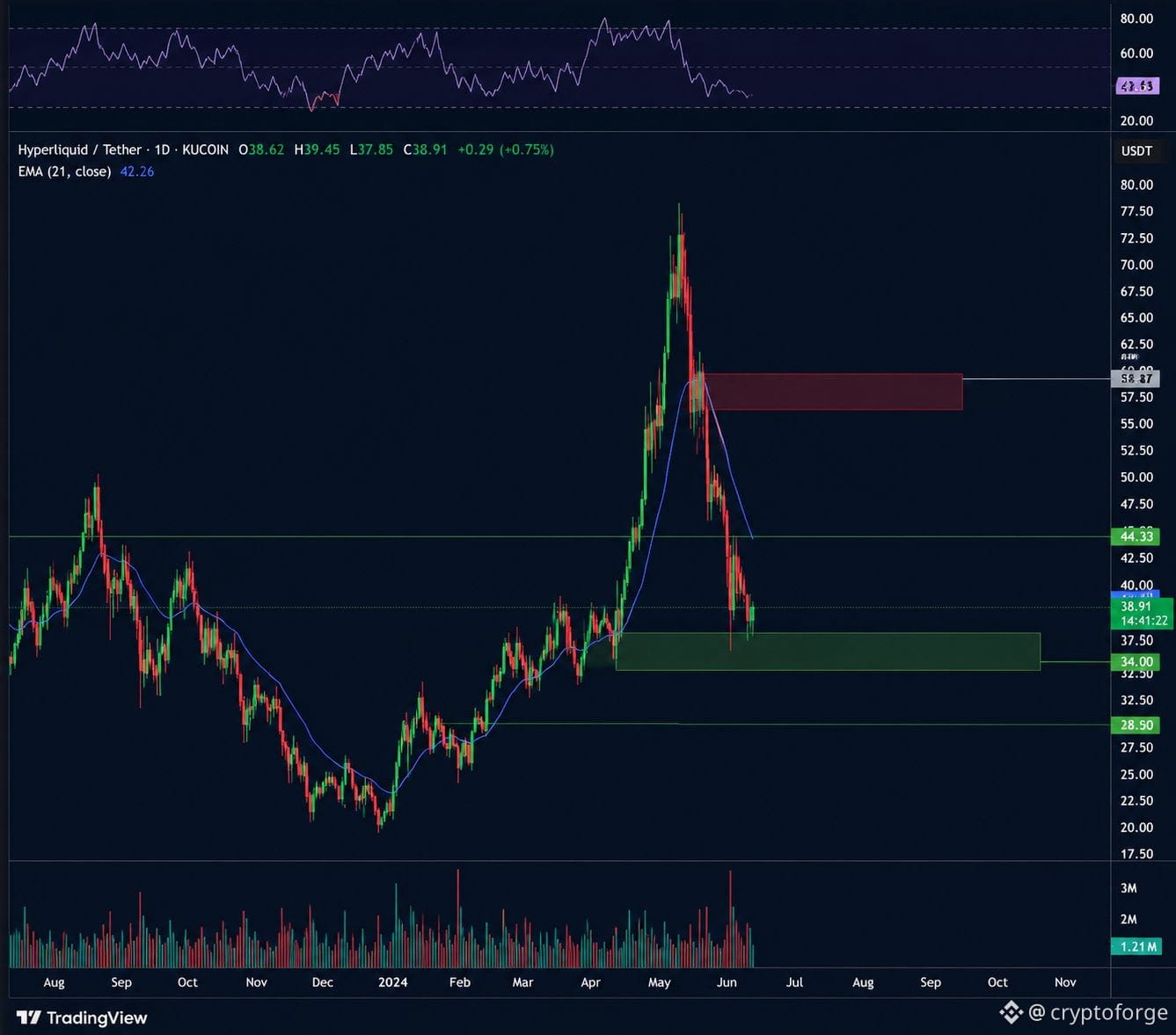
🔥 $HYPE is approaching a key area on the chart.
Right now, the main focus is the resistance zone overhead. A clean break above that level would be an important signal that momentum is returning.
At the same time, after the recent correction, price is moving back into an area that many traders are likely watching closely.
The bigger picture still depends on Bitcoin.
If #Bitcoin starts consolidating and market conditions stabilize, capital will likely rotate back into the strongest setups first.
Based on relative strength so far, $HYPE is one of the assets that could be worth keeping on the watchlist.
For now, it's all about whether buyers can reclaim that resistance and turn it into support.
#hype #bitcoin #BTC #crypto #altcoins
Right now, the main focus is the resistance zone overhead. A clean break above that level would be an important signal that momentum is returning.
At the same time, after the recent correction, price is moving back into an area that many traders are likely watching closely.
The bigger picture still depends on Bitcoin.
If #Bitcoin starts consolidating and market conditions stabilize, capital will likely rotate back into the strongest setups first.
Based on relative strength so far, $HYPE is one of the assets that could be worth keeping on the watchlist.
For now, it's all about whether buyers can reclaim that resistance and turn it into support.
#hype #bitcoin #BTC #crypto #altcoins
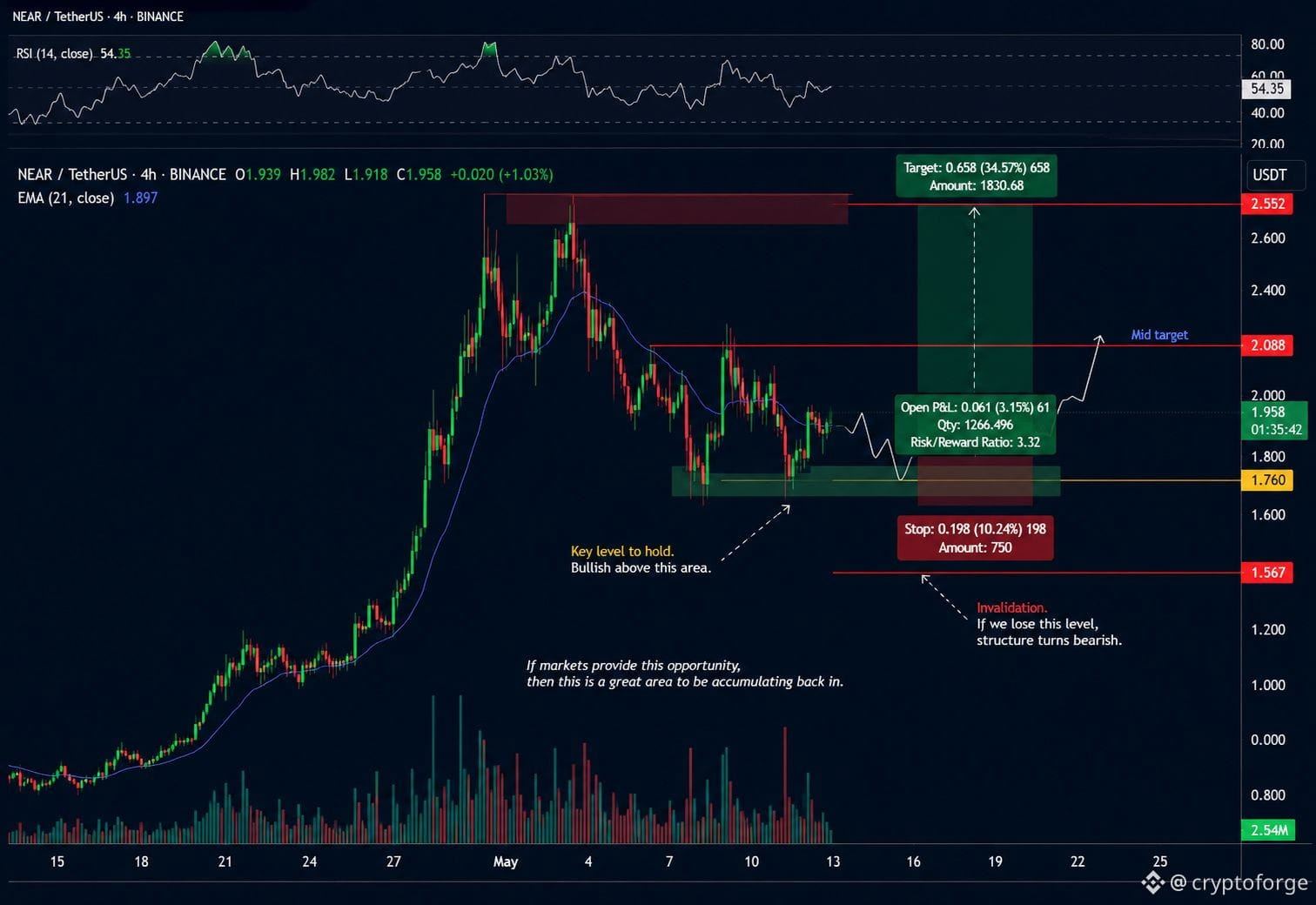
⚡ The market still feels stuck in an unusual equilibrium.
There are plenty of narratives developing, and with major events on the horizon, volatility could return sooner rather than later.
For longer-term investors, periods of uncertainty often become the moments worth paying attention to.
From a trading perspective, I'm watching $NEAR closely.
So far, it's holding up relatively well, but I don't think the real strength has shown itself yet.
A lot will likely depend on Bitcoin. If $BTC can regain momentum and push higher, assets showing relative strength today could quickly become market leaders.
In that scenario, I'd be watching for a move back toward recent highs, where risk management becomes increasingly important.
For now, patience remains the trade.
#Near #bitcoin #BTC #crypto #trading
There are plenty of narratives developing, and with major events on the horizon, volatility could return sooner rather than later.
For longer-term investors, periods of uncertainty often become the moments worth paying attention to.
From a trading perspective, I'm watching $NEAR closely.
So far, it's holding up relatively well, but I don't think the real strength has shown itself yet.
A lot will likely depend on Bitcoin. If $BTC can regain momentum and push higher, assets showing relative strength today could quickly become market leaders.
In that scenario, I'd be watching for a move back toward recent highs, where risk management becomes increasingly important.
For now, patience remains the trade.
#Near #bitcoin #BTC #crypto #trading
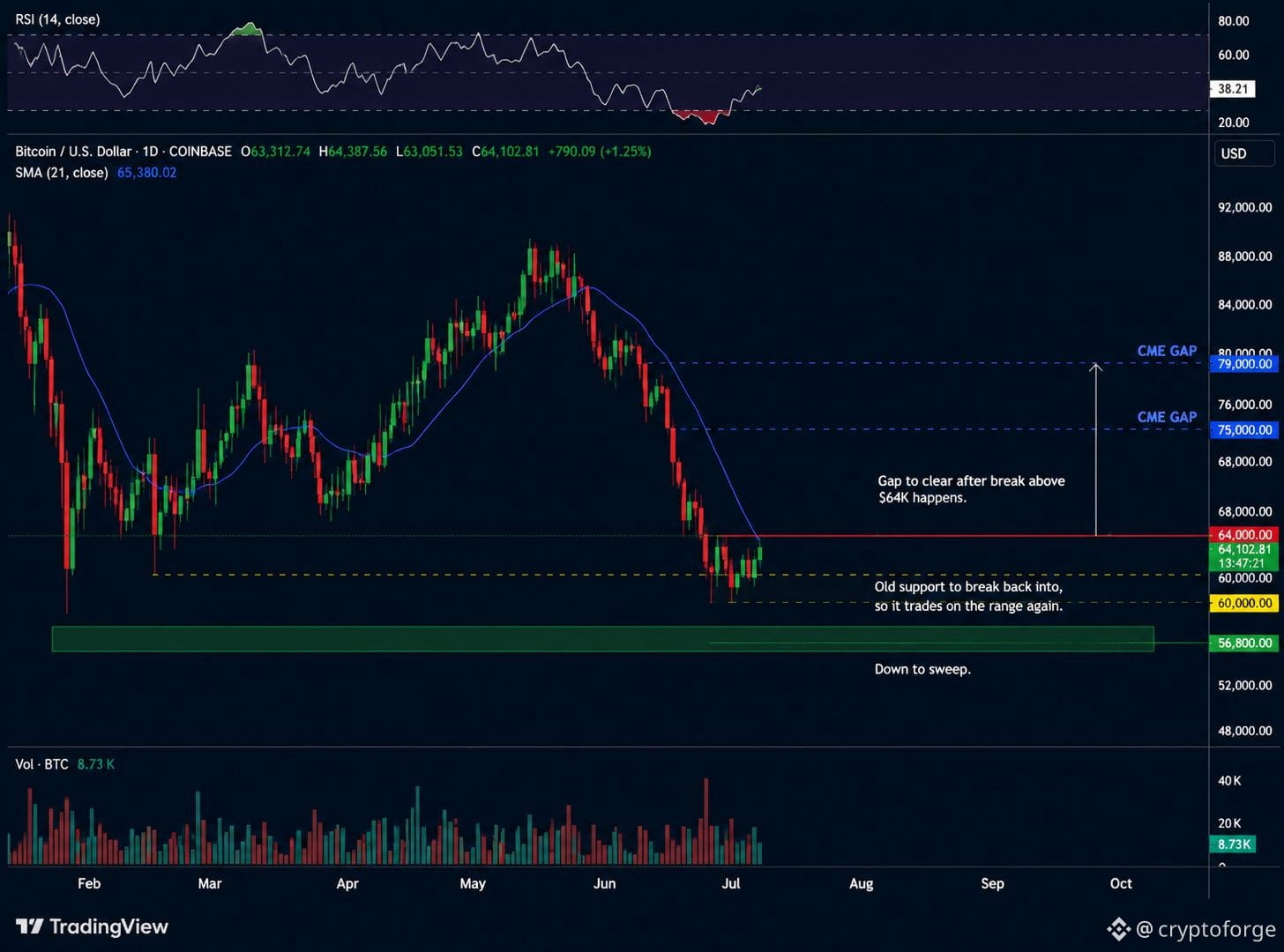
🚨 $BTC remains trapped between key levels, and for now the market is still waiting for a clear breakout.
Price needs more time to build momentum before making a decisive move in either direction.
The level I'm watching most closely is $64K.
If Bitcoin can reclaim and hold above that area, it could open the door for a move toward higher liquidity zones, including the CME gaps around:
• $75K
• $79K
A move like that would likely improve overall market sentiment and reduce some of the downside pressure we've seen recently.
For now, though, nothing has fundamentally changed.
Bitcoin is still below a major resistance area, and there is plenty of ground left to recover before traders can confidently talk about a sustained trend reversal.
Patience remains the key.
#BTC #CryptoMarket #trading #TechnicalAnalysis
Price needs more time to build momentum before making a decisive move in either direction.
The level I'm watching most closely is $64K.
If Bitcoin can reclaim and hold above that area, it could open the door for a move toward higher liquidity zones, including the CME gaps around:
• $75K
• $79K
A move like that would likely improve overall market sentiment and reduce some of the downside pressure we've seen recently.
For now, though, nothing has fundamentally changed.
Bitcoin is still below a major resistance area, and there is plenty of ground left to recover before traders can confidently talk about a sustained trend reversal.
Patience remains the key.
#BTC #CryptoMarket #trading #TechnicalAnalysis
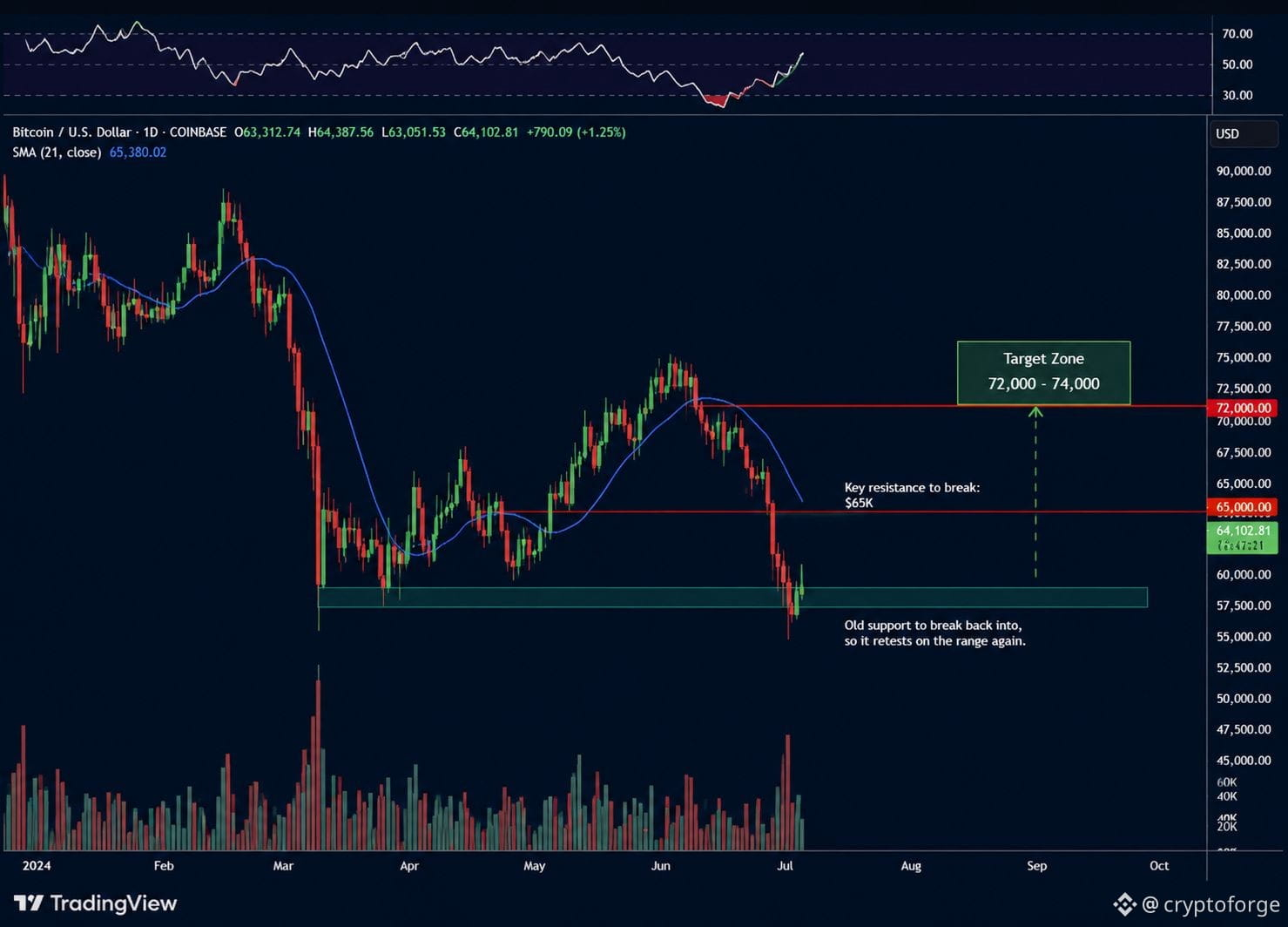
📈 $BTC continues to stall just below the $65K region, which remains one of the most important resistance levels on the chart right now.
Earlier this year, that same area acted as major support following the sharp February selloff. Now, price is testing it from below.
If Bitcoin manages to reclaim and hold above $65K, the next major area of interest could quickly shift toward the $72K-$74K range.
So far, the market reaction after the recent correction still feels largely driven by fear and positioning rather than a major structural breakdown.
That’s why many traders are watching this level closely.
A clean breakout could improve sentiment across the entire market very quickly.
#BTC #crypto #bitcoin #trading
Earlier this year, that same area acted as major support following the sharp February selloff. Now, price is testing it from below.
If Bitcoin manages to reclaim and hold above $65K, the next major area of interest could quickly shift toward the $72K-$74K range.
So far, the market reaction after the recent correction still feels largely driven by fear and positioning rather than a major structural breakdown.
That’s why many traders are watching this level closely.
A clean breakout could improve sentiment across the entire market very quickly.
#BTC #crypto #bitcoin #trading
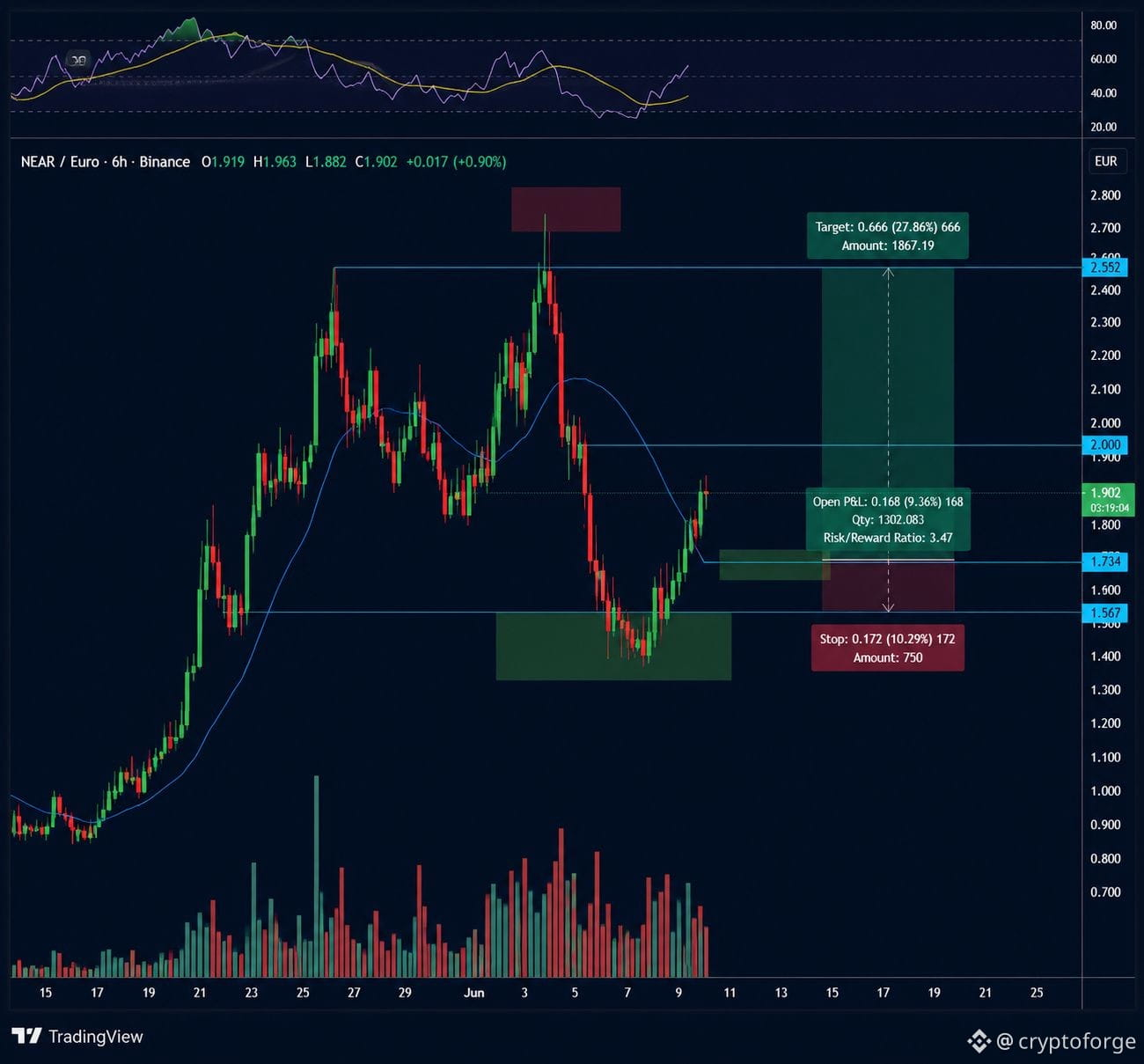
⚡ There are still plenty of day trading opportunities across the market right now, and $NEAR continues to stand out as one of the stronger setups.
After the recent bounce, I’m watching for a short-term correction or consolidation phase over the next few days before looking at stronger continuation setups again.
The focus remains on relative strength.
For me, projects like $NEAR , $ONDO, and $HYPE are among the assets worth watching closely if the market structure continues improving.
At the moment, the market may simply be forming a higher low before another attempt toward recent highs.
If Bitcoin remains stable, momentum across stronger altcoins could return quickly over the next 1-2 weeks.
Patience and timing matter most here.
#Near #ONDO #hype #BTC #trading
After the recent bounce, I’m watching for a short-term correction or consolidation phase over the next few days before looking at stronger continuation setups again.
The focus remains on relative strength.
For me, projects like $NEAR , $ONDO, and $HYPE are among the assets worth watching closely if the market structure continues improving.
At the moment, the market may simply be forming a higher low before another attempt toward recent highs.
If Bitcoin remains stable, momentum across stronger altcoins could return quickly over the next 1-2 weeks.
Patience and timing matter most here.
#Near #ONDO #hype #BTC #trading
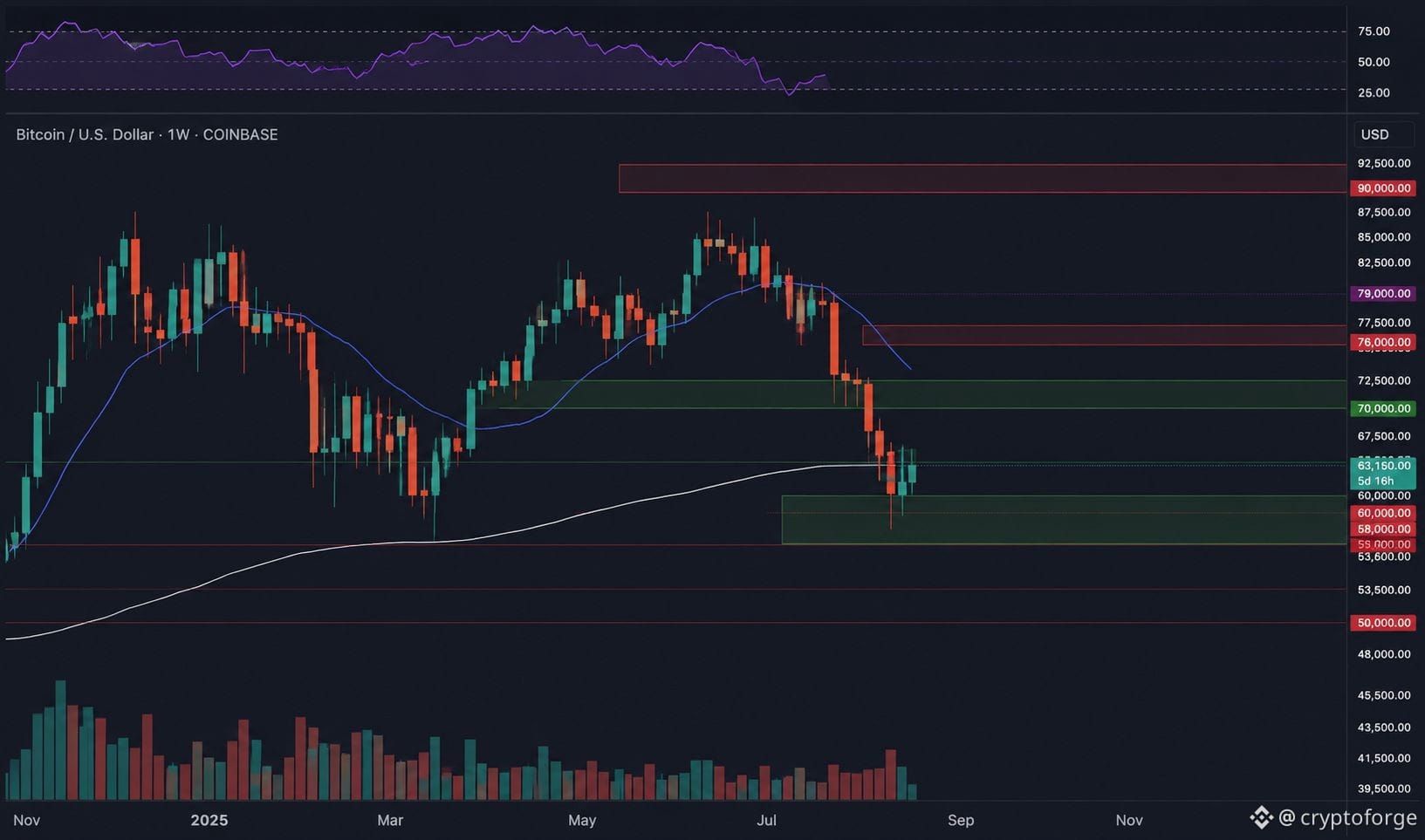
🚨 $BTC is at a key decision point right now.
Price bounced from the 200-week MA, but the real test is still ahead.
The $64K–$65K zone is crucial.
Reclaim it, and momentum could open a move toward $71.5K–$73K and even the CME gap near $79K.
If it fails, expect more sideways structure before any major trend.
Macro conditions and institutional flow are still in play, so confirmation matters more than prediction here.
#bitcoin #crypto #BTC #BinanceSquare
Price bounced from the 200-week MA, but the real test is still ahead.
The $64K–$65K zone is crucial.
Reclaim it, and momentum could open a move toward $71.5K–$73K and even the CME gap near $79K.
If it fails, expect more sideways structure before any major trend.
Macro conditions and institutional flow are still in play, so confirmation matters more than prediction here.
#bitcoin #crypto #BTC #BinanceSquare
🔥 Stronger assets tend to recover faster once market conditions stabilize.
$NEAR is already up around 20% from the recent lows, while many other altcoins are still struggling to produce a meaningful bounce.
That relative strength is worth paying attention to.
If #Bitcoin reclaims the $65K region and manages to hold above it, I think momentum across the broader altcoin market could improve quickly.
In that scenario, $NEAR is one of the projects I’d expect traders to keep watching closely, alongside several other AI-related names.
For now, Bitcoin remains the key driver for overall market direction.
#Near #bitcoin #BTC #crypto
$NEAR is already up around 20% from the recent lows, while many other altcoins are still struggling to produce a meaningful bounce.
That relative strength is worth paying attention to.
If #Bitcoin reclaims the $65K region and manages to hold above it, I think momentum across the broader altcoin market could improve quickly.
In that scenario, $NEAR is one of the projects I’d expect traders to keep watching closely, alongside several other AI-related names.
For now, Bitcoin remains the key driver for overall market direction.
#Near #bitcoin #BTC #crypto
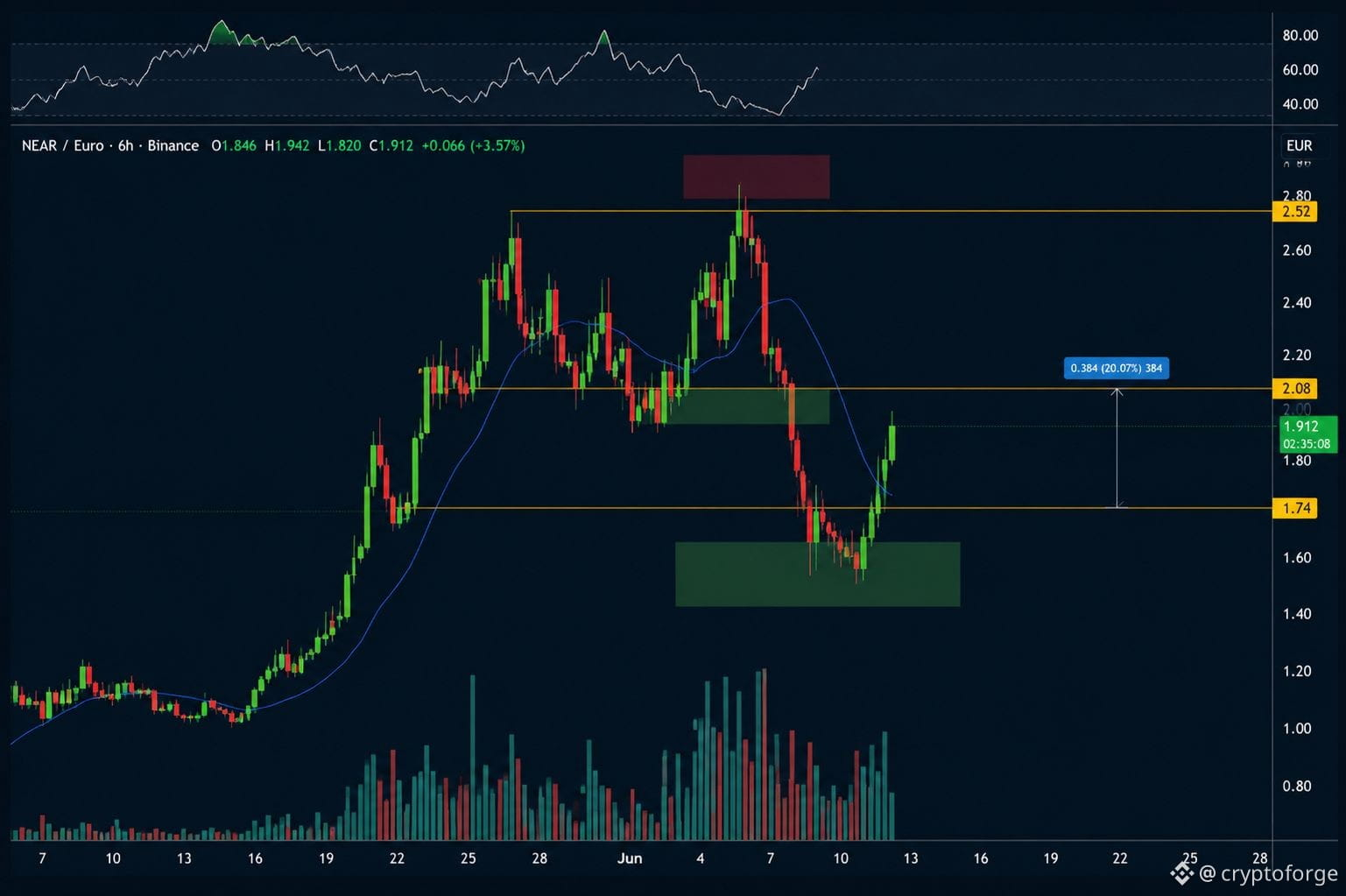
📊 The higher timeframe area for $NEAR is starting to look interesting again.
A large part of the recent weakness appears tied to market positioning and liquidity flows surrounding $ZEC and $BTC activity.
At the same time, the broader long-term thesis around NEAR hasn’t really weakened. If anything, development and AI-related narratives across the sector continue to gain attention.
That’s why this current pullback may become an area many investors watch closely over the coming weeks.
I’m also watching other AI-related projects closely, including $TAO, $FET, and $REZ, especially if market sentiment begins stabilizing again.
For now, Bitcoin consolidation remains the key factor for the rest of the market.
#Near #bitcoin #BTC #Aİ
A large part of the recent weakness appears tied to market positioning and liquidity flows surrounding $ZEC and $BTC activity.
At the same time, the broader long-term thesis around NEAR hasn’t really weakened. If anything, development and AI-related narratives across the sector continue to gain attention.
That’s why this current pullback may become an area many investors watch closely over the coming weeks.
I’m also watching other AI-related projects closely, including $TAO, $FET, and $REZ, especially if market sentiment begins stabilizing again.
For now, Bitcoin consolidation remains the key factor for the rest of the market.
#Near #bitcoin #BTC #Aİ
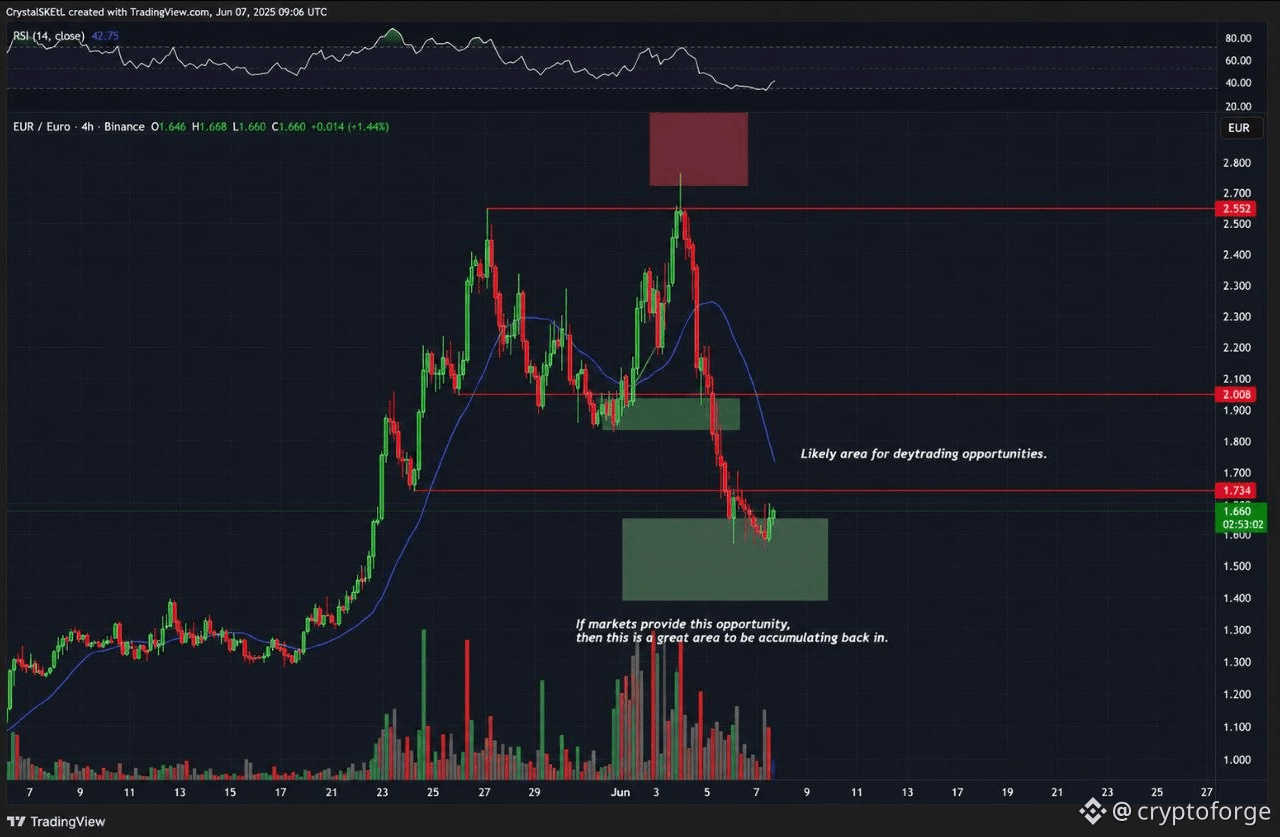
🚨 It has been a brutal week for the crypto market.
Bitcoin briefly dropped toward the $59K region, triggering heavy volatility across the market.
$ETH revisited levels not seen in many months as altcoins continued to weaken.
Spot Bitcoin ETFs recorded major outflows, adding additional pressure to sentiment.
Billions in leveraged positions were liquidated during the sell-off as volatility accelerated.
Several large-cap altcoins experienced extreme downside moves, with traders reacting aggressively to uncertainty and risk-off conditions.
Right now, fear is clearly dominating the market.
The important question is whether this becomes a deeper structural breakdown, or another capitulation phase before stabilization returns.
#bitcoin #BTC #ETH #CryptoMarket #altcoins
Bitcoin briefly dropped toward the $59K region, triggering heavy volatility across the market.
$ETH revisited levels not seen in many months as altcoins continued to weaken.
Spot Bitcoin ETFs recorded major outflows, adding additional pressure to sentiment.
Billions in leveraged positions were liquidated during the sell-off as volatility accelerated.
Several large-cap altcoins experienced extreme downside moves, with traders reacting aggressively to uncertainty and risk-off conditions.
Right now, fear is clearly dominating the market.
The important question is whether this becomes a deeper structural breakdown, or another capitulation phase before stabilization returns.
#bitcoin #BTC #ETH #CryptoMarket #altcoins
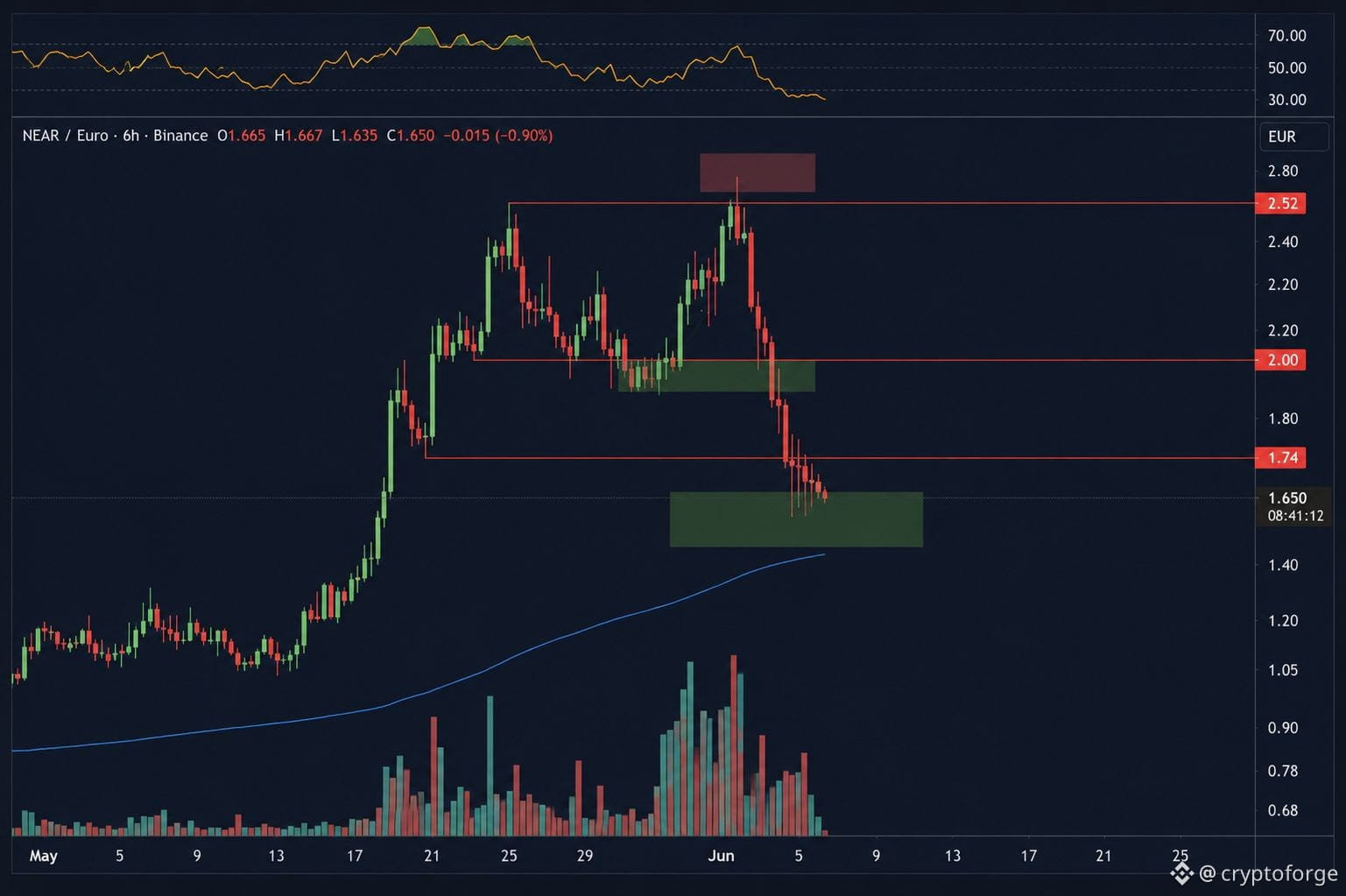
The recent situation around $ZEC is, in my view, creating a strong narrative shift toward $NEAR .
I’ve continued holding a large $NEAR position, and with price returning to a key area, I’m personally looking at this zone for additional accumulation.
Right now, the broader market correction feels more emotional than selective, with most assets being dragged lower regardless of fundamentals.
That’s where potential opportunities start to appear.
If Bitcoin stabilizes and begins consolidating again, liquidity could rotate back into stronger altcoin setups, and NEAR is one of the projects I’m watching closely.
The next few weeks should be interesting.
#Near #BTC #altcoins #trading #CryptoMarket
I’ve continued holding a large $NEAR position, and with price returning to a key area, I’m personally looking at this zone for additional accumulation.
Right now, the broader market correction feels more emotional than selective, with most assets being dragged lower regardless of fundamentals.
That’s where potential opportunities start to appear.
If Bitcoin stabilizes and begins consolidating again, liquidity could rotate back into stronger altcoin setups, and NEAR is one of the projects I’m watching closely.
The next few weeks should be interesting.
#Near #BTC #altcoins #trading #CryptoMarket
$BTC is currently sitting on the 200-week moving average, a key level that has historically acted as strong support in major market cycles.
In past cycles, this zone has often marked areas where longer-term bottoms begin to form.
The only major exception was during the 2022 breakdown, which behaved differently from previous cycles.
Right now, price is again testing this level during one of the sharpest drawdowns we’ve seen in a while.
Whether history repeats or not, this is a level the market is clearly reacting to, and it will be important to watch how price behaves around it in the coming weeks.
#bitcoin #BTC #crypto #trading #TechnicalAnalysis
In past cycles, this zone has often marked areas where longer-term bottoms begin to form.
The only major exception was during the 2022 breakdown, which behaved differently from previous cycles.
Right now, price is again testing this level during one of the sharpest drawdowns we’ve seen in a while.
Whether history repeats or not, this is a level the market is clearly reacting to, and it will be important to watch how price behaves around it in the coming weeks.
#bitcoin #BTC #crypto #trading #TechnicalAnalysis
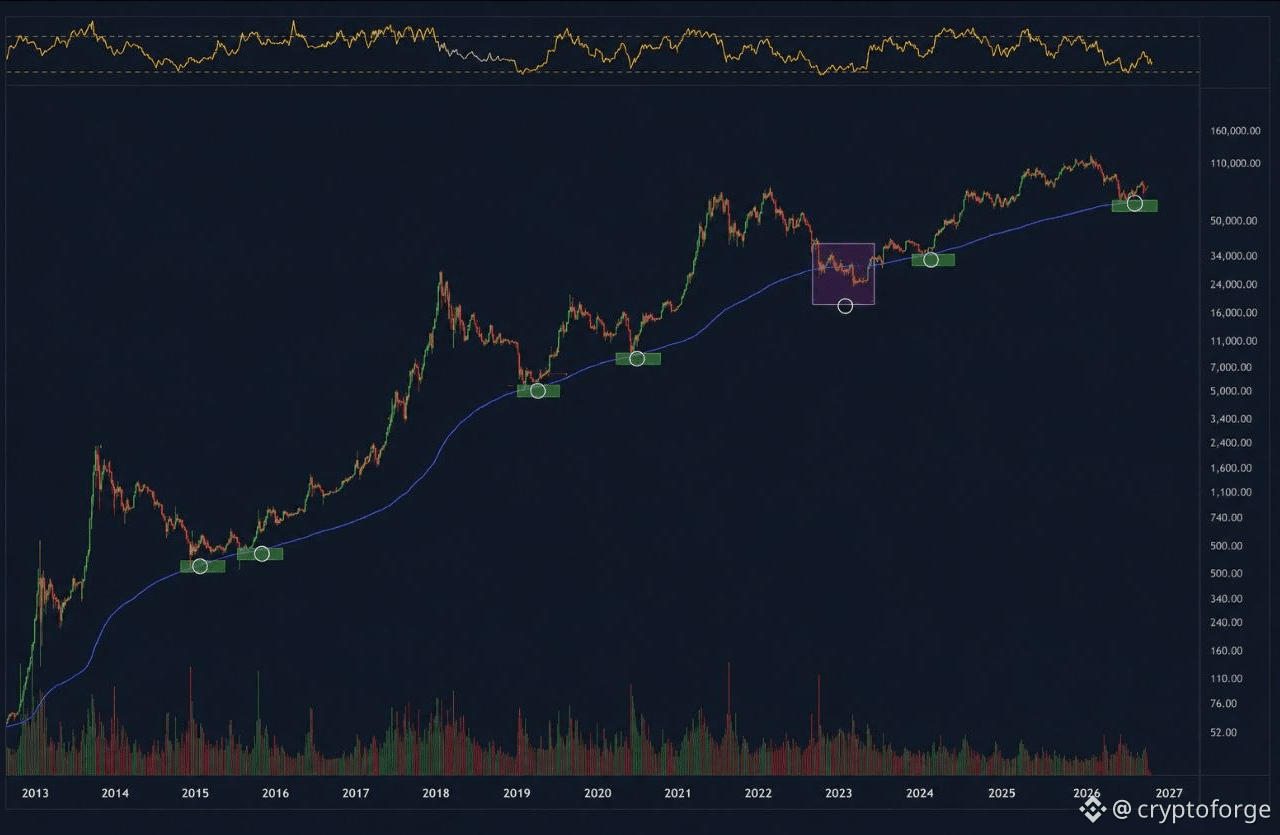
📉 This is the type of $BTC region where accumulation makes sense logically — even if emotionally it feels impossible.
And that emotional disconnect is exactly why these moments matter.
A short story.
During the COVID crash, one of my friends called me at 4AM.
He said:
“Do not stare at the charts. Just open your exchange account and buy as much Bitcoin as you can.”
Of course I looked at the charts anyway.
Everything looked catastrophic. $BTC was collapsing. Fear was everywhere. It genuinely felt like Bitcoin could go to $1,000 or lower.
What I did not fully understand at the time:
the market had become massively overstretched, leverage was imploding, and panic had reached extreme levels.
So I ignored the emotion, logged in, bought $BTC around the $4,100–$4,200 area from my savings account, and went back to sleep.
One year later, Bitcoin had rallied roughly 15x from those levels.
That experience taught me something important:
the best long-term buying opportunities almost never feel safe when they happen.
They feel uncomfortable.
Chaotic.
Hopeless.
Like the market is broken forever.
Right now sentiment feels very similar:
fear is extreme
RSI readings are historically stretched
people are calling for collapse everywhere
confidence is disappearing again
And historically, those conditions have often been where long-term opportunities quietly form.
Nobody can guarantee exact bottoms.
But when quality assets trade at deep discounts during periods of maximum fear, that is usually where future returns begin — not where they end.
#bitcoin #BTC #CryptoMarkets #Investing
And that emotional disconnect is exactly why these moments matter.
A short story.
During the COVID crash, one of my friends called me at 4AM.
He said:
“Do not stare at the charts. Just open your exchange account and buy as much Bitcoin as you can.”
Of course I looked at the charts anyway.
Everything looked catastrophic. $BTC was collapsing. Fear was everywhere. It genuinely felt like Bitcoin could go to $1,000 or lower.
What I did not fully understand at the time:
the market had become massively overstretched, leverage was imploding, and panic had reached extreme levels.
So I ignored the emotion, logged in, bought $BTC around the $4,100–$4,200 area from my savings account, and went back to sleep.
One year later, Bitcoin had rallied roughly 15x from those levels.
That experience taught me something important:
the best long-term buying opportunities almost never feel safe when they happen.
They feel uncomfortable.
Chaotic.
Hopeless.
Like the market is broken forever.
Right now sentiment feels very similar:
fear is extreme
RSI readings are historically stretched
people are calling for collapse everywhere
confidence is disappearing again
And historically, those conditions have often been where long-term opportunities quietly form.
Nobody can guarantee exact bottoms.
But when quality assets trade at deep discounts during periods of maximum fear, that is usually where future returns begin — not where they end.
#bitcoin #BTC #CryptoMarkets #Investing
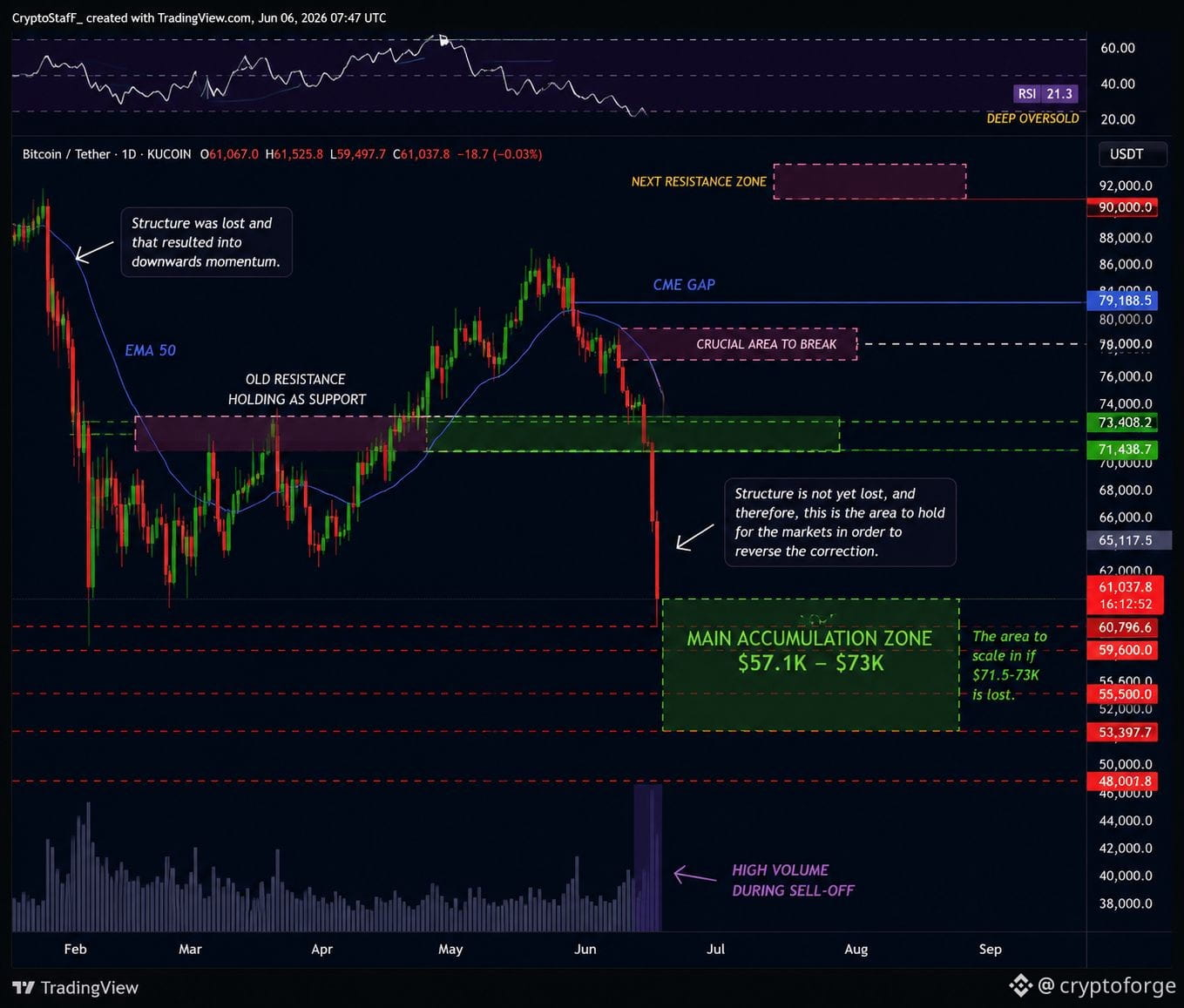
📉 This is the type of $BTC zone that historically ends up looking obvious only in hindsight.
Right now:
Daily RSI is at extreme historical lows
$ETH RSI has also collapsed to record territory
Sentiment is deeply negative across the market
$BTC is testing the 200-Week Moving Average again
That combination rarely happens without major stress already being priced in.
Does that guarantee the exact bottom is here?
No.
Bitcoin could still sweep lower liquidity and briefly take out recent lows before stabilizing. Markets often overshoot during panic phases.
But structurally, this is historically the region where long-term scaling strategies begin to make the most sense for investors with conviction in the broader Bitcoin thesis.
The emotional contradiction is always the same:
people wanted Bitcoin aggressively at $90K
fear arrives when price finally becomes discounted
That is why major opportunities rarely feel comfortable in real time.
The market currently reflects:
maximum uncertainty
forced deleveraging
stablecoin stress
ETF outflows
capitulation-level sentiment
And historically, those are the exact environments where long-term positioning starts becoming attractive again for patient capital.
Whether the final low is exactly here or slightly lower matters far less over multi-year timeframes than whether quality accumulation happened during periods of extreme fear.
#bitcoin #BTC #CryptoMarkets #Investing
Right now:
Daily RSI is at extreme historical lows
$ETH RSI has also collapsed to record territory
Sentiment is deeply negative across the market
$BTC is testing the 200-Week Moving Average again
That combination rarely happens without major stress already being priced in.
Does that guarantee the exact bottom is here?
No.
Bitcoin could still sweep lower liquidity and briefly take out recent lows before stabilizing. Markets often overshoot during panic phases.
But structurally, this is historically the region where long-term scaling strategies begin to make the most sense for investors with conviction in the broader Bitcoin thesis.
The emotional contradiction is always the same:
people wanted Bitcoin aggressively at $90K
fear arrives when price finally becomes discounted
That is why major opportunities rarely feel comfortable in real time.
The market currently reflects:
maximum uncertainty
forced deleveraging
stablecoin stress
ETF outflows
capitulation-level sentiment
And historically, those are the exact environments where long-term positioning starts becoming attractive again for patient capital.
Whether the final low is exactly here or slightly lower matters far less over multi-year timeframes than whether quality accumulation happened during periods of extreme fear.
#bitcoin #BTC #CryptoMarkets #Investing
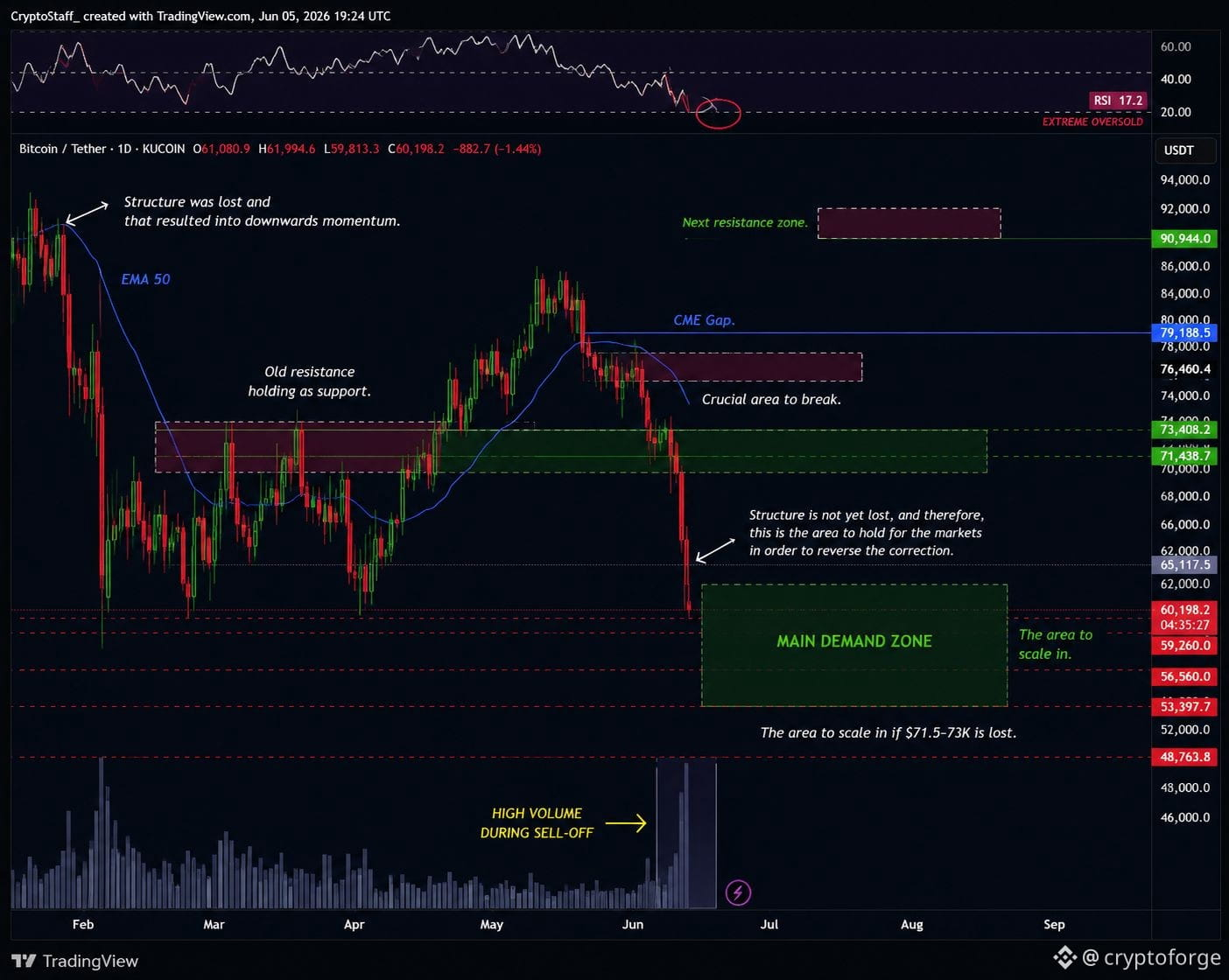
📉 $NEAR got hit alongside the rest of the high-beta market.
$ZEC corrected.
$HYPE corrected. Altcoins across the board got repriced aggressively.
But structurally, this is the exact type of region where long-term accumulation starts becoming interesting again.
Why?
Because strong projects rarely feel comfortable to buy during panic phases. They usually trade at their best-looking charts near local tops — not near fear-driven flushes like this.
For NEAR specifically:
sentiment has cooled sharply
leverage has been cleared
price is revisiting major demand territory
risk/reward improves significantly compared to recent highs
That is why this zone increasingly looks like a DCA region for longer-term positioning rather than an area to chase downside momentum.
The frustrating part:
I already deployed most of the available capital in my altcoin portfolio earlier.
That is the real challenge during deep corrections:
having conviction is one thing — having dry powder available when opportunities finally arrive is another.
Still, if the broader market stabilizes and Bitcoin stops forcing volatility across the board, this type of reset is often where stronger altcoins quietly begin rebuilding their next structure.
#Near #altcoins #CryptoMarkets #DCA
$ZEC corrected.
$HYPE corrected. Altcoins across the board got repriced aggressively.
But structurally, this is the exact type of region where long-term accumulation starts becoming interesting again.
Why?
Because strong projects rarely feel comfortable to buy during panic phases. They usually trade at their best-looking charts near local tops — not near fear-driven flushes like this.
For NEAR specifically:
sentiment has cooled sharply
leverage has been cleared
price is revisiting major demand territory
risk/reward improves significantly compared to recent highs
That is why this zone increasingly looks like a DCA region for longer-term positioning rather than an area to chase downside momentum.
The frustrating part:
I already deployed most of the available capital in my altcoin portfolio earlier.
That is the real challenge during deep corrections:
having conviction is one thing — having dry powder available when opportunities finally arrive is another.
Still, if the broader market stabilizes and Bitcoin stops forcing volatility across the board, this type of reset is often where stronger altcoins quietly begin rebuilding their next structure.
#Near #altcoins #CryptoMarkets #DCA
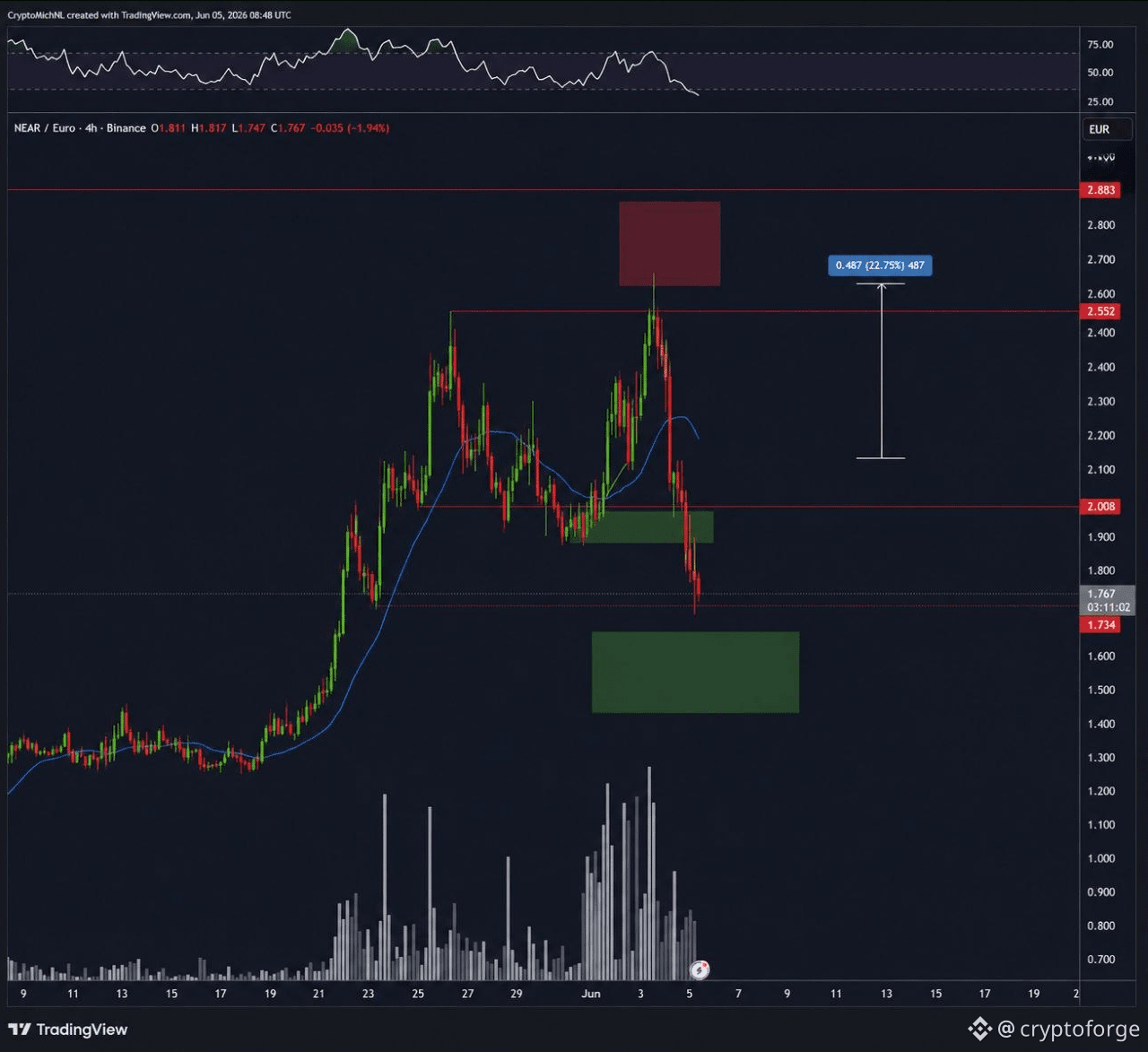
📉 Earlier, I highlighted the $71K–$73K region on $BTC as the critical area that needed to hold for the bullish structure to remain intact.
It failed.
And once that support gave way, the market immediately started searching for lower liquidity zones beneath it — exactly what breakdowns tend to do when key demand disappears.
What is interesting right now:
my #Altcoin portfolio is actually holding up better than Bitcoin itself.
That tells us something important:
some altcoins are already deeply repriced
forced selling pressure is concentrating more heavily into BTC
relative strength is beginning to appear beneath the surface
Now we are entering the zone where long-term buyers start paying attention again.
If I were looking to aggressively accumulate Bitcoin, this is the region I would be watching closely.
The market currently has two completely valid narratives at the same time:
Bearish case:
STRC instability
ETF outflows
macro uncertainty
weakening momentum
broken support structure
Bullish case:
$BTC testing historical cycle support
RSI at extreme fear levels
heavy leverage already flushed
sentiment approaching capitulation
long-term holders still accumulating weakness
That is why this area matters.
Markets usually look the worst near the levels where reversals eventually begin.
The question now is whether this becomes:
a temporary panic flush before recovery
or
the start of a much deeper structural correction
The next reaction around these levels will likely define the direction for the coming months.
#BTC #bitcoin #CryptoMarkets #altcoins
It failed.
And once that support gave way, the market immediately started searching for lower liquidity zones beneath it — exactly what breakdowns tend to do when key demand disappears.
What is interesting right now:
my #Altcoin portfolio is actually holding up better than Bitcoin itself.
That tells us something important:
some altcoins are already deeply repriced
forced selling pressure is concentrating more heavily into BTC
relative strength is beginning to appear beneath the surface
Now we are entering the zone where long-term buyers start paying attention again.
If I were looking to aggressively accumulate Bitcoin, this is the region I would be watching closely.
The market currently has two completely valid narratives at the same time:
Bearish case:
STRC instability
ETF outflows
macro uncertainty
weakening momentum
broken support structure
Bullish case:
$BTC testing historical cycle support
RSI at extreme fear levels
heavy leverage already flushed
sentiment approaching capitulation
long-term holders still accumulating weakness
That is why this area matters.
Markets usually look the worst near the levels where reversals eventually begin.
The question now is whether this becomes:
a temporary panic flush before recovery
or
the start of a much deeper structural correction
The next reaction around these levels will likely define the direction for the coming months.
#BTC #bitcoin #CryptoMarkets #altcoins
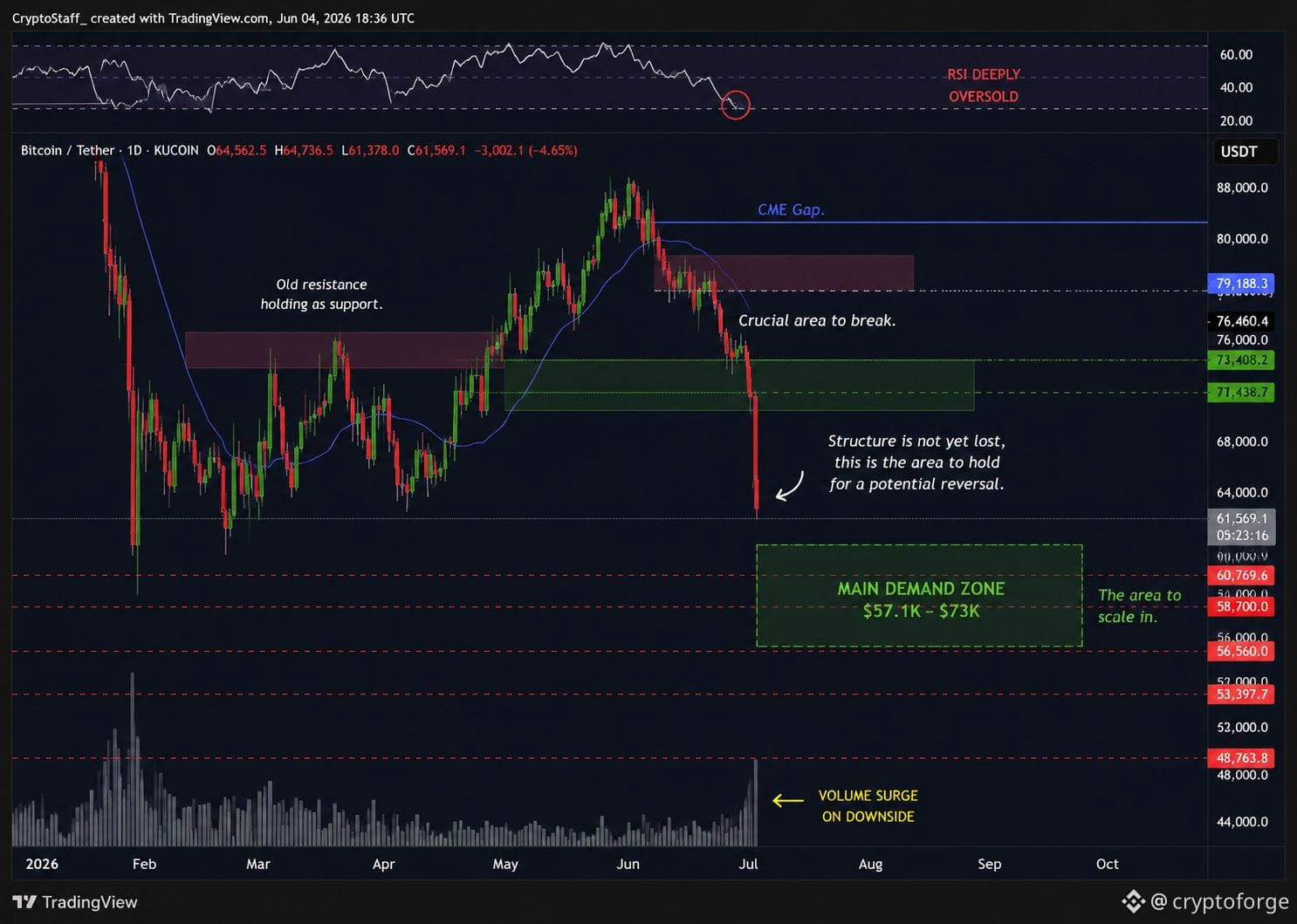
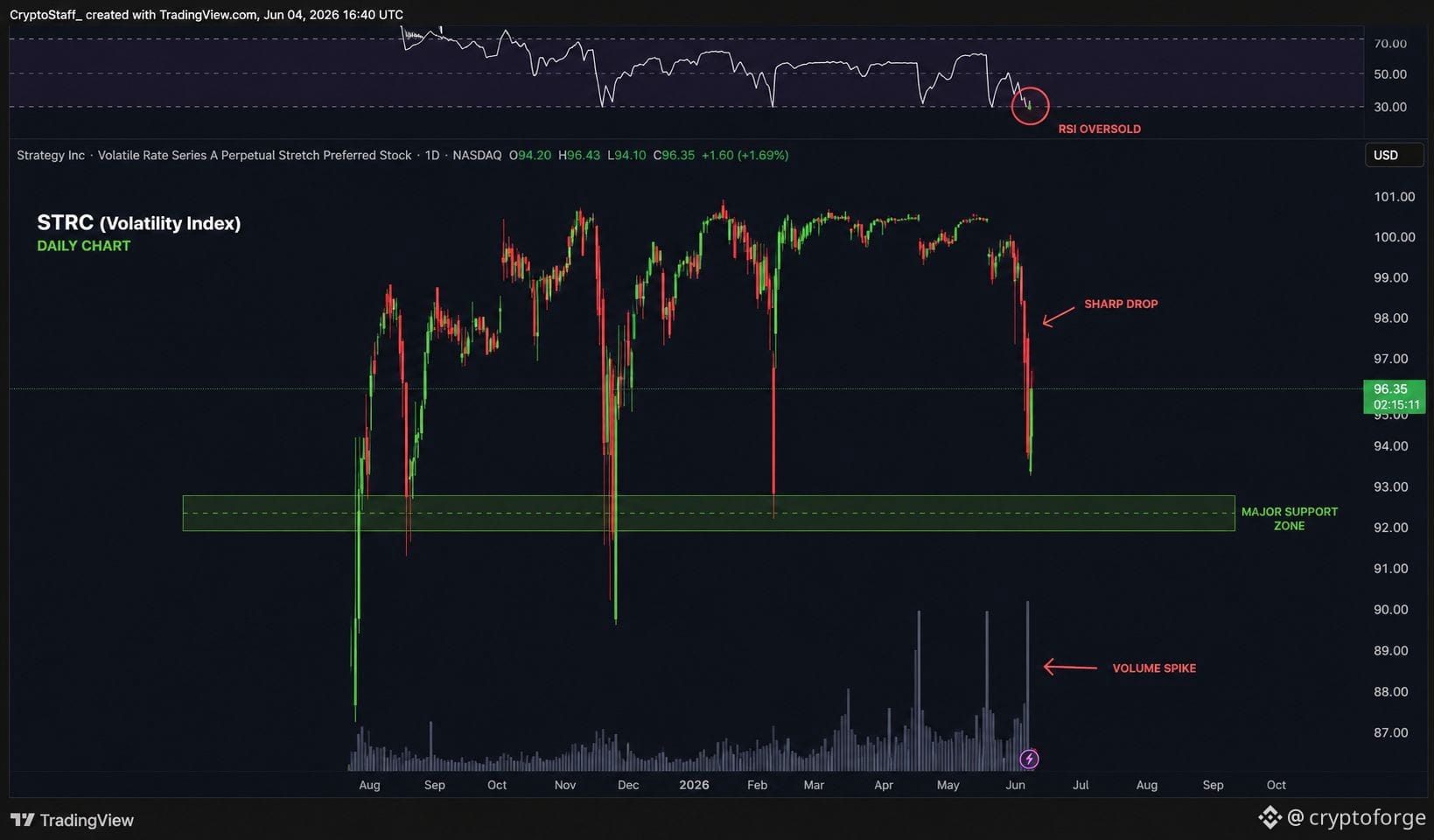
📉 Markets are reacting aggressively to the STRC depeg, but structurally this is not the first stress event crypto has gone through and it will not be the last.
$BTC has already corrected more than 20% in a matter of weeks and is now testing the 200-Week Moving Average, one of the most historically important long-term support zones in the market.
That is why panic and structure are currently colliding:
short-term sentiment feels extremely negative
long-term technical support is now being tested simultaneously
Crypto has repeatedly experienced:
stablecoin stress
exchange failures
liquidity crunches
leverage cascades
forced deleveraging events
And every cycle, the emotional reaction feels like the end while the market is repricing risk in real time.
That does not guarantee an immediate recovery from here. If liquidity conditions worsen, downside volatility can absolutely continue.
But historically, moments of maximum fear near major long-term support zones have also been where some of the strongest long-term opportunities eventually formed.
Right now the market needs:
liquidity stabilization
depeg resolution
confidence returning gradually
leveraged positioning clearing fully
Volatility is high. Emotions are higher.
That is usually when discipline matters most.
#bitcoin #BTC #CryptoMarkets #marketcrash
$BTC has already corrected more than 20% in a matter of weeks and is now testing the 200-Week Moving Average, one of the most historically important long-term support zones in the market.
That is why panic and structure are currently colliding:
short-term sentiment feels extremely negative
long-term technical support is now being tested simultaneously
Crypto has repeatedly experienced:
stablecoin stress
exchange failures
liquidity crunches
leverage cascades
forced deleveraging events
And every cycle, the emotional reaction feels like the end while the market is repricing risk in real time.
That does not guarantee an immediate recovery from here. If liquidity conditions worsen, downside volatility can absolutely continue.
But historically, moments of maximum fear near major long-term support zones have also been where some of the strongest long-term opportunities eventually formed.
Right now the market needs:
liquidity stabilization
depeg resolution
confidence returning gradually
leveraged positioning clearing fully
Volatility is high. Emotions are higher.
That is usually when discipline matters most.
#bitcoin #BTC #CryptoMarkets #marketcrash
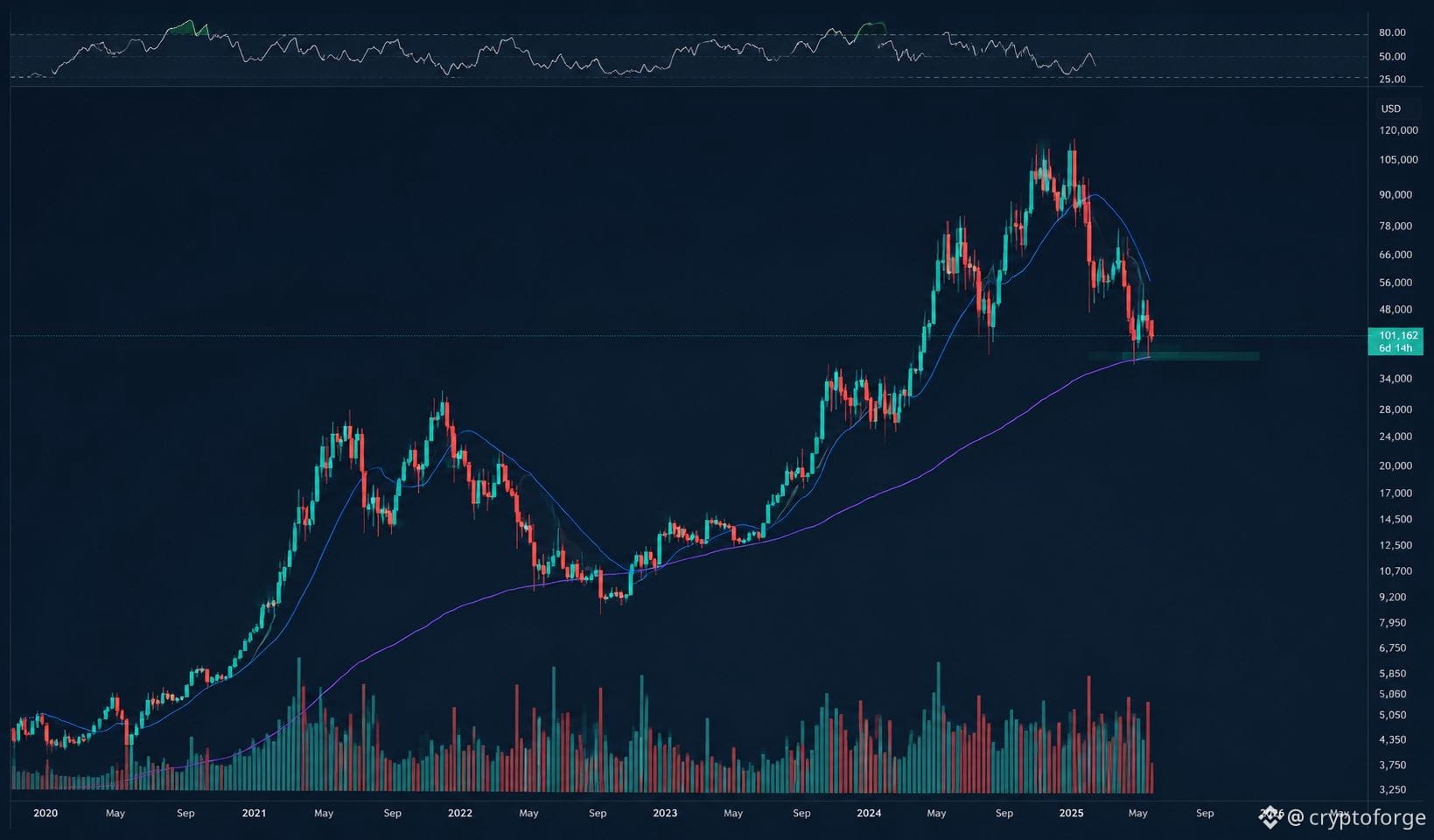
📊 $BTC is back at one of the most historically important levels in the entire cycle structure: the 200-Week Moving Average.
That level mattered in:
2015
2018
2020
Each time, it ultimately marked the broader market bottom.
The exception was 2022, when the FTX collapse created a forced-liquidity event strong enough to temporarily break historical structure.
Now add the second signal:
the Daily RSI has dropped to levels previously seen during the COVID crash and the February 2026 liquidation event.
That combination is why many long-term participants start paying attention here:
historically extreme momentum compression
price testing a major cycle support zone
sentiment deeply negative again
At the same time, this remains highly dependent on broader market stability.
The STRC depeg situation matters because liquidity stress events tend to spread across crypto quickly when confidence weakens. If stabilization returns there, Bitcoin likely has room to rebound sharply from current levels.
If instability continues and liquidity keeps deteriorating, then deeper downside scenarios below $60K become increasingly realistic.
This is the kind of zone where conviction matters most:
either you believe the broader Bitcoin thesis remains intact long term — or you don’t.
Historically, the 200W MA has been where that decision mattered most.
#BTC #bitcoin #CryptoMarkets #TechnicalAnalysis
That level mattered in:
2015
2018
2020
Each time, it ultimately marked the broader market bottom.
The exception was 2022, when the FTX collapse created a forced-liquidity event strong enough to temporarily break historical structure.
Now add the second signal:
the Daily RSI has dropped to levels previously seen during the COVID crash and the February 2026 liquidation event.
That combination is why many long-term participants start paying attention here:
historically extreme momentum compression
price testing a major cycle support zone
sentiment deeply negative again
At the same time, this remains highly dependent on broader market stability.
The STRC depeg situation matters because liquidity stress events tend to spread across crypto quickly when confidence weakens. If stabilization returns there, Bitcoin likely has room to rebound sharply from current levels.
If instability continues and liquidity keeps deteriorating, then deeper downside scenarios below $60K become increasingly realistic.
This is the kind of zone where conviction matters most:
either you believe the broader Bitcoin thesis remains intact long term — or you don’t.
Historically, the 200W MA has been where that decision mattered most.
#BTC #bitcoin #CryptoMarkets #TechnicalAnalysis
Log in to explore more content