

CryptoATY
2.3k Posts

CryptoATY
Report
Block User
Content Creator & Investor | Trader
#bnb Holder 🐳
Youtube : Crypto Aty X @cryptoaty
67 Following
24.7K+ Followers
21.3K+ Liked
Posts
All
Quotes
Videos
Live
PINNED
·
--
So let me get this straight.
Iran is charging $2,000,000 per ship to cross the Strait of Hormuz and they want it in BITCOIN.
Pre-crisis: 130 ships crossed daily.
Iran would accumulate 8x the global monthly mining output - every single MONTH, through the toll booth.
Bitcoin is the only truly unstoppable, neutral money on earth.
So let me get this straight.
Iran is charging $2,000,000 per ship to cross the Strait of Hormuz and they want it in BITCOIN.
Pre-crisis: 130 ships crossed daily.
Iran would accumulate 8x the global monthly mining output - every single MONTH, through the toll booth.
Bitcoin is the only truly unstoppable, neutral money on earth.
Iran is charging $2,000,000 per ship to cross the Strait of Hormuz and they want it in BITCOIN.
Pre-crisis: 130 ships crossed daily.
Iran would accumulate 8x the global monthly mining output - every single MONTH, through the toll booth.
Bitcoin is the only truly unstoppable, neutral money on earth.

67
15
264
344.3k
PINNED
·
--
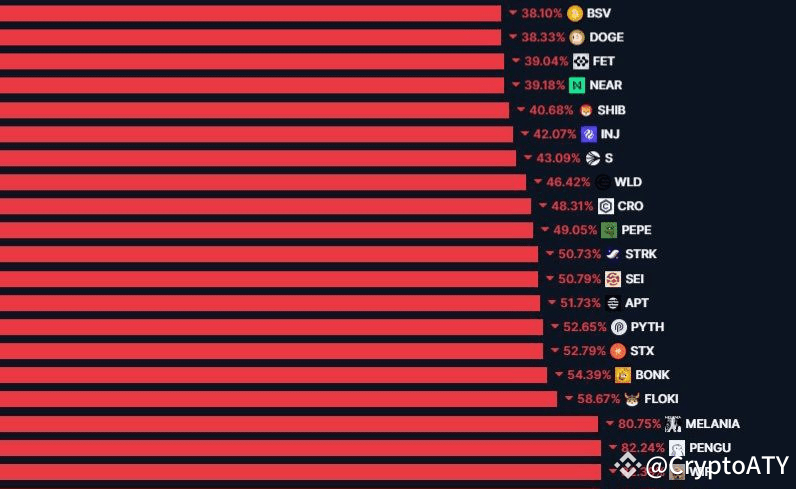
8 of the 20 cryptocurrencies that have fallen the most in the last 90 days are memecoins.
(Out of the top 100 coins)
8 of the 20 cryptocurrencies that have fallen the most in the last 90 days are memecoins.
(Out of the top 100 coins)
(Out of the top 100 coins)
36
23
89
160.4k
·
--
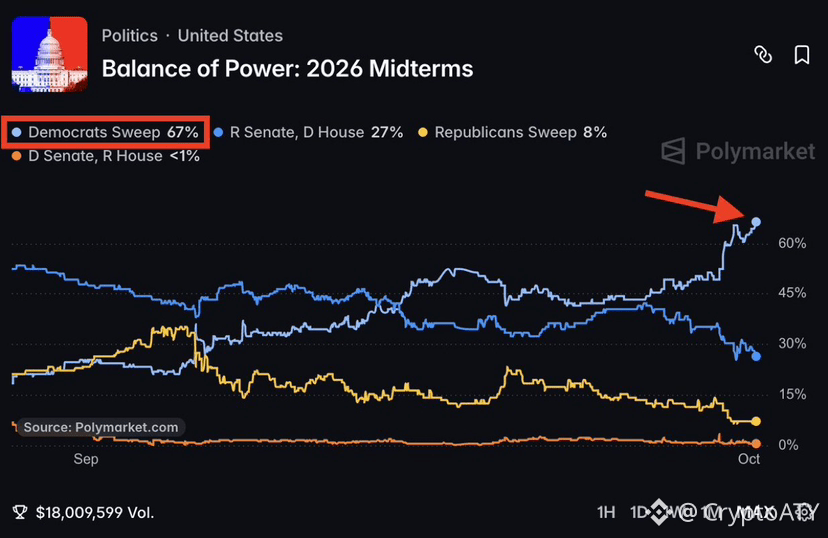
BREAKING: Market expectations of a Democrat "sweep" in the 2026 Midterm elections rise to a record 67%.
Last year at this time, the market saw just a 24% chance of a Democrat "sweep."
Election Day is 29 days away.
BREAKING: Market expectations of a Democrat "sweep" in the 2026 Midterm elections rise to a record 67%.
Last year at this time, the market saw just a 24% chance of a Democrat "sweep."
Election Day is 29 days away.
Last year at this time, the market saw just a 24% chance of a Democrat "sweep."
Election Day is 29 days away.
602
·
--
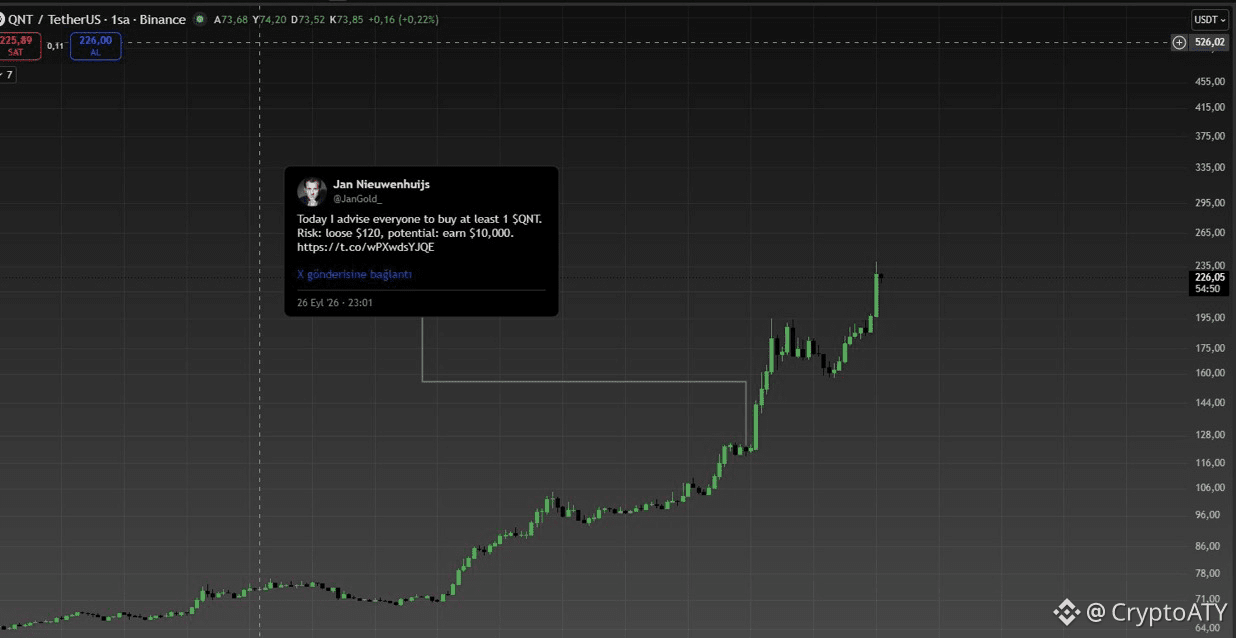
A user named Jan Nieuwenhuijs said 13 years ago to buy bitcoin for $300; today, he tweeted that QUANT would go from 125 $ for 10.000$ a.
The price reached 2x from the level he said within 24 hours.
A user named Jan Nieuwenhuijs said 13 years ago to buy bitcoin for $300; today, he tweeted that QUANT would go from 125 $ for 10.000$ a.
The price reached 2x from the level he said within 24 hours.
The price reached 2x from the level he said within 24 hours.
491
·
--
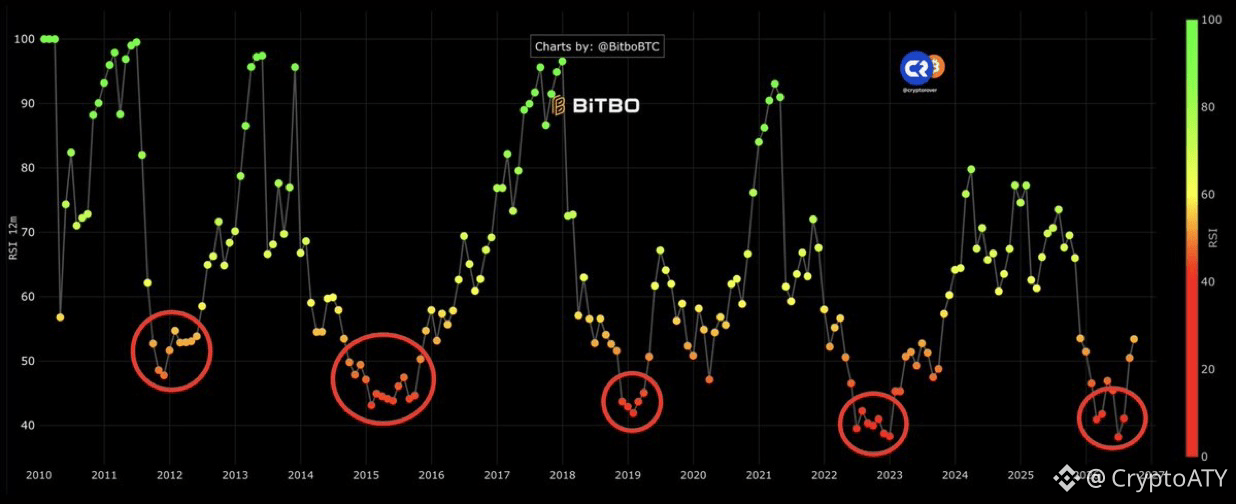
Bitcoin RSI is BOUNCING up!
Everytime this happened, $BTC entered a parabolic bull run.
Take notes.
Bitcoin RSI is BOUNCING up!
Everytime this happened, $BTC entered a parabolic bull run.
Take notes.
Everytime this happened, $BTC entered a parabolic bull run.
Take notes.
1
186
·
--
Bitcoin entered a bull market before the CLARITY Act was approved.
Imagine what will happen when it’s approved…
Bitcoin entered a bull market before the CLARITY Act was approved.
Imagine what will happen when it’s approved…
Imagine what will happen when it’s approved…
1
164
·
--
JUST IN: Strategy proposes daily dividend accruals for $STRF, $STRC, $STRK and $STRD
The proposed dividends would accrue every calendar day, including weekends and holidays, with payments made on the next business day.
JUST IN: Strategy proposes daily dividend accruals for $STRF, $STRC, $STRK and $STRD
The proposed dividends would accrue every calendar day, including weekends and holidays, with payments made on the next business day.
The proposed dividends would accrue every calendar day, including weekends and holidays, with payments made on the next business day.
1
116
·
--
JUST IN: CoinMarketCap acquires Coinglass
The deal adds derivatives metrics including open interest, funding rates and liquidations to CoinMarketCap's platform.
JUST IN: CoinMarketCap acquires Coinglass
The deal adds derivatives metrics including open interest, funding rates and liquidations to CoinMarketCap's platform.
The deal adds derivatives metrics including open interest, funding rates and liquidations to CoinMarketCap's platform.
107
·
--
FED IS LOSING THE WAR WITH INFLATION
Michigan 1Y inflation expectations data jumped to 4.6% today vs. 4% last month.
5Y inflation expectations also rose to 3.4%, the highest level in 4 months.
This is a sign that inflation is going to remain elevated for longer, and there's just one way to deal with it.
Hike the rates aggressively just like the Fed did in 2022.
But there's one major problem right now.
US long-term yields are already at 19+ year highs, with debt surpassing $40 Trillion.
A single hike here would add hundreds of billions in more interest expense for the US government, which isn't sustainable.
So either the US should strike a deal with Iran so that inflation comes down, or the US economy is set for a bumpy ride in the coming months.
FED IS LOSING THE WAR WITH INFLATION
Michigan 1Y inflation expectations data jumped to 4.6% today vs. 4% last month.
5Y inflation expectations also rose to 3.4%, the highest level in 4 months.
This is a sign that inflation is going to remain elevated for longer, and there's just one way to deal with it.
Hike the rates aggressively just like the Fed did in 2022.
But there's one major problem right now.
US long-term yields are already at 19+ year highs, with debt surpassing $40 Trillion.
A single hike here would add hundreds of billions in more interest expense for the US government, which isn't sustainable.
So either the US should strike a deal with Iran so that inflation comes down, or the US economy is set for a bumpy ride in the coming months.
Michigan 1Y inflation expectations data jumped to 4.6% today vs. 4% last month.
5Y inflation expectations also rose to 3.4%, the highest level in 4 months.
This is a sign that inflation is going to remain elevated for longer, and there's just one way to deal with it.
Hike the rates aggressively just like the Fed did in 2022.
But there's one major problem right now.
US long-term yields are already at 19+ year highs, with debt surpassing $40 Trillion.
A single hike here would add hundreds of billions in more interest expense for the US government, which isn't sustainable.
So either the US should strike a deal with Iran so that inflation comes down, or the US economy is set for a bumpy ride in the coming months.
307
·
--
JUST IN: Circle and Tether freeze hacker wallet linked to $352M Bitget exploit
The wallet held about $318,000 in $USDC and $USDT.
JUST IN: Circle and Tether freeze hacker wallet linked to $352M Bitget exploit
The wallet held about $318,000 in $USDC and $USDT.
The wallet held about $318,000 in $USDC and $USDT.
3
704
·
--
🚀 TartSwap is building more than a DEX on #BNBChain — it’s building an on-chain intelligence layer.
Introducing Tart AI 🧠
🐋 Whale movements
💧 Liquidity shifts
👛 Wallet activity
🔗 Holder clustering
⚠️ Contract risks
🚨 Manipulation signals
📊 Unusual on-chain activity
All combined into one intelligence layer inside the TartSwap ecosystem.
Advanced AI tools will be accessible to $TART holders, adding a whole new utility layer to the token.
And it won’t stop on the web. 📱
Tart AI + TartSwap Mobile are being built together.
Swap. Research. Analyze. Understand.
One ecosystem. Powered by $TART. 🔥#tart
🚀 TartSwap is building more than a DEX on #BNBChain — it’s building an on-chain intelligence layer.
Introducing Tart AI 🧠
🐋 Whale movements
💧 Liquidity shifts
👛 Wallet activity
🔗 Holder clustering
⚠️ Contract risks
🚨 Manipulation signals
📊 Unusual on-chain activity
All combined into one intelligence layer inside the TartSwap ecosystem.
Advanced AI tools will be accessible to $TART holders, adding a whole new utility layer to the token.
And it won’t stop on the web. 📱
Tart AI + TartSwap Mobile are being built together.
Swap. Research. Analyze. Understand.
One ecosystem. Powered by $TART. 🔥#tart
Introducing Tart AI 🧠
🐋 Whale movements
💧 Liquidity shifts
👛 Wallet activity
🔗 Holder clustering
⚠️ Contract risks
🚨 Manipulation signals
📊 Unusual on-chain activity
All combined into one intelligence layer inside the TartSwap ecosystem.
Advanced AI tools will be accessible to $TART holders, adding a whole new utility layer to the token.
And it won’t stop on the web. 📱
Tart AI + TartSwap Mobile are being built together.
Swap. Research. Analyze. Understand.
One ecosystem. Powered by $TART. 🔥#tart

2
1
3
362
·
--
Bullish
🇺🇸 ETF FLOWS: Spot ETFs across several crypto assets recorded net inflows on Sept. 22.
BTC: $714.75M
ETH: $162.31M
ZEC: $32.81M
SOL: $28.87M
XRP: $20.02M
LINK: $1.89M
DOGE: $1.17M
AVAX: $1.15M
HBAR: $401.65K
LTC: $152.85K
🇺🇸 ETF FLOWS: Spot ETFs across several crypto assets recorded net inflows on Sept. 22.
BTC: $714.75M
ETH: $162.31M
ZEC: $32.81M
SOL: $28.87M
XRP: $20.02M
LINK: $1.89M
DOGE: $1.17M
AVAX: $1.15M
HBAR: $401.65K
LTC: $152.85K
BTC: $714.75M
ETH: $162.31M
ZEC: $32.81M
SOL: $28.87M
XRP: $20.02M
LINK: $1.89M
DOGE: $1.17M
AVAX: $1.15M
HBAR: $401.65K
LTC: $152.85K
1
143
·
--
🎁 50 USDT Red Packet + 5,000 USDT Trading Reward · No KYC Required
Content:
📱 What is Mixin Messenger?
A decentralized wallet + encrypted messaging, all in one app. Buy/sell, transfers, and chat—everything in the same interface, no need to switch apps.
✅ No KYC required. Create your wallet directly after installing and using it. No identity documents are required at any stage.
How to Participate (4 steps):
1️⃣ Download Mixin Messenger
👉 Search for "Mixin" on the App Store / Google Play or tap here: https://messenger.mixin.one/download?1134
2️⃣ Link the invitation code
👉 Enter the invitation code: https://mixin.one/referrals/ZWHCTQYU
3️⃣ Enter the password →
4️⃣ Wait for the draw
🏆 Reward Rules
🎯 Red Packet Draw · 50 USDT
When the community reaches 50 people → 1 USDT for each of the 50 people
💰 Trading Competition Rewards ·
During the event, 5,000 USDT trading volume → 5 USDT per person, unlimited participants
Spot + Futures are counted. First come, first served—continues until the rewards run out.
📌 Conditions
•
📅 Duration: Until all rewards are fully distributed
• 🤖 Rewards are sent directly via the Mixin bot—no manual claim required
🎁 50 USDT Red Packet + 5,000 USDT Trading Reward · No KYC Required
Content:
📱 What is Mixin Messenger?
A decentralized wallet + encrypted messaging, all in one app. Buy/sell, transfers, and chat—everything in the same interface, no need to switch apps.
✅ No KYC required. Create your wallet directly after installing and using it. No identity documents are required at any stage.
How to Participate (4 steps):
1️⃣ Download Mixin Messenger
👉 Search for "Mixin" on the App Store / Google Play or tap here: https://messenger.mixin.one/download?1134
2️⃣ Link the invitation code
👉 Enter the invitation code: https://mixin.one/referrals/ZWHCTQYU
3️⃣ Enter the password →
4️⃣ Wait for the draw
🏆 Reward Rules
🎯 Red Packet Draw · 50 USDT
When the community reaches 50 people → 1 USDT for each of the 50 people
💰 Trading Competition Rewards ·
During the event, 5,000 USDT trading volume → 5 USDT per person, unlimited participants
Spot + Futures are counted. First come, first served—continues until the rewards run out.
📌 Conditions
•
📅 Duration: Until all rewards are fully distributed
• 🤖 Rewards are sent directly via the Mixin bot—no manual claim required
Content:
📱 What is Mixin Messenger?
A decentralized wallet + encrypted messaging, all in one app. Buy/sell, transfers, and chat—everything in the same interface, no need to switch apps.
✅ No KYC required. Create your wallet directly after installing and using it. No identity documents are required at any stage.
How to Participate (4 steps):
1️⃣ Download Mixin Messenger
👉 Search for "Mixin" on the App Store / Google Play or tap here: https://messenger.mixin.one/download?1134
2️⃣ Link the invitation code
👉 Enter the invitation code: https://mixin.one/referrals/ZWHCTQYU
3️⃣ Enter the password →
4️⃣ Wait for the draw
🏆 Reward Rules
🎯 Red Packet Draw · 50 USDT
When the community reaches 50 people → 1 USDT for each of the 50 people
💰 Trading Competition Rewards ·
During the event, 5,000 USDT trading volume → 5 USDT per person, unlimited participants
Spot + Futures are counted. First come, first served—continues until the rewards run out.
📌 Conditions
•
📅 Duration: Until all rewards are fully distributed
• 🤖 Rewards are sent directly via the Mixin bot—no manual claim required
8
2
1.2k
·
--
Analyst says SpaceX is overvalued by as much as 94%
Analyst says SpaceX is overvalued by as much as 94%
546
·
--
TOMORROW NIGHT, THE ENTIRE MARKET IS FOCUSED ON ONE EVENT.
The new Fed Chairman Warsh's first meeting. The interest rate decision is tomorrow at 9:30 PM.
It's almost certain that interest rates will remain unchanged. That's not the main issue.
The real issue is the first words and the dot plot that will come from the new chairman's mouth. These will determine the market's direction. I will be among the first to report it.
TOMORROW NIGHT, THE ENTIRE MARKET IS FOCUSED ON ONE EVENT.
The new Fed Chairman Warsh's first meeting. The interest rate decision is tomorrow at 9:30 PM.
It's almost certain that interest rates will remain unchanged. That's not the main issue.
The real issue is the first words and the dot plot that will come from the new chairman's mouth. These will determine the market's direction. I will be among the first to report it.
The new Fed Chairman Warsh's first meeting. The interest rate decision is tomorrow at 9:30 PM.
It's almost certain that interest rates will remain unchanged. That's not the main issue.
The real issue is the first words and the dot plot that will come from the new chairman's mouth. These will determine the market's direction. I will be among the first to report it.
1
4
3.3k
·
--
Trump could be the first US president to bomb Israel.
Benjamin Netanyahu is really egging him on.
Trump could be the first US president to bomb Israel.
Benjamin Netanyahu is really egging him on.
Benjamin Netanyahu is really egging him on.
278
·
--
Verified
SPACEX could turn into one of the largest liquidity operations in market history.
SPCX has shot up by 70% since its IPO. However, the circulating supply is only 4% of the total supply.
The remaining 96% is still locked up.
Now, passive funds and FOMO-driven investors are scooping up shares, while unlocks will begin in July-August. Insiders and early investors are ready to dump their bags.
Retail investors think they’re buying the "future of space."
But maybe what they’re really doing is financing the biggest insider exit of this cycle.
SPACEX could turn into one of the largest liquidity operations in market history.
SPCX has shot up by 70% since its IPO. However, the circulating supply is only 4% of the total supply.
The remaining 96% is still locked up.
Now, passive funds and FOMO-driven investors are scooping up shares, while unlocks will begin in July-August. Insiders and early investors are ready to dump their bags.
Retail investors think they’re buying the "future of space."
But maybe what they’re really doing is financing the biggest insider exit of this cycle.
SPCX has shot up by 70% since its IPO. However, the circulating supply is only 4% of the total supply.
The remaining 96% is still locked up.
Now, passive funds and FOMO-driven investors are scooping up shares, while unlocks will begin in July-August. Insiders and early investors are ready to dump their bags.
Retail investors think they’re buying the "future of space."
But maybe what they’re really doing is financing the biggest insider exit of this cycle.
2.3k
·
--
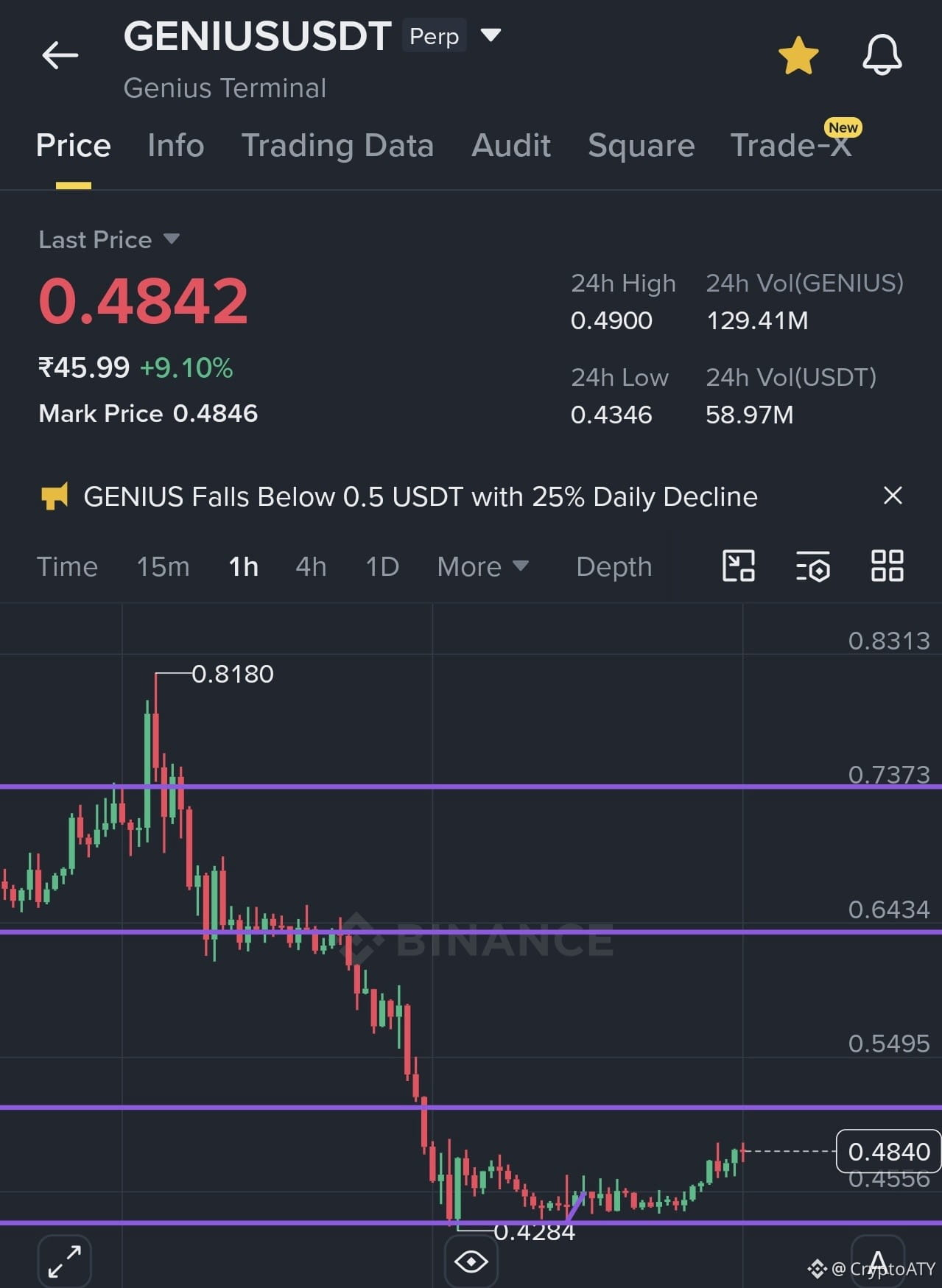
$GENIUS bounced +10% right from support. 📈
I warned earlier:
If $0.64 breaks → downside opens toward $0.43 and below.
That’s exactly what happened after the BNB airdrop panic sell-off.
Now?
$0.43 held perfectly → price bounced to $0.49
Current price: $0.4842
Support is still being respected.
Same levels. Same structure.
Who caught this move from $0.43? 👀
$GENIUS #genius @GeniusOfficial
$GENIUS bounced +10% right from support. 📈
I warned earlier:
If $0.64 breaks → downside opens toward $0.43 and below.
That’s exactly what happened after the BNB airdrop panic sell-off.
Now?
$0.43 held perfectly → price bounced to $0.49
Current price: $0.4842
Support is still being respected.
Same levels. Same structure.
Who caught this move from $0.43? 👀
$GENIUS #genius @GeniusOfficial
I warned earlier:
If $0.64 breaks → downside opens toward $0.43 and below.
That’s exactly what happened after the BNB airdrop panic sell-off.
Now?
$0.43 held perfectly → price bounced to $0.49
Current price: $0.4842
Support is still being respected.
Same levels. Same structure.
Who caught this move from $0.43? 👀
$GENIUS #genius @GeniusOfficial
1
318
Log in to explore more content
Join global crypto users on Binance Square
⚡️ Get latest and useful information about crypto.
💬 Trusted by the world’s largest crypto exchange.
👍 Discover real insights from verified creators.
Email / Phone number
Trending Topics
BinancePick
3.3M views
161,158 Discussing
Join #EarningsSeason: Predict Earnings on Binance Pick, Share Your Take on Binance Square!
Binance Square Official
·417 Likes
·344.5k views
EarningsSeason
5.4M views
26,530 Discussing
StrategySkipsBitcoinPurchasesSpends$205MOnSTRCBuybacks
34 views
5 Discussing