
Crypto_Vazima
4.9k Posts
Crypto_Vazima
Report
Block User
Fresh crypto news EVERY DAY! Subscribe now! Official STON.fi Ambassador! @crypto_vazima
29 Following
866 Followers
4.7K+ Liked
Posts
All
Quotes
·
--
Bullish
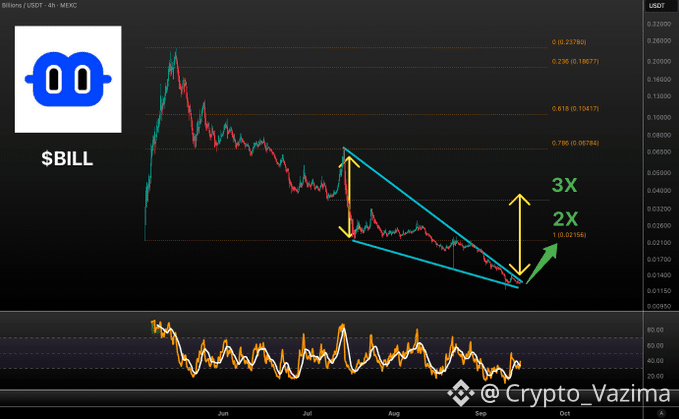
BILL Just Landed in Classic Scam-Pump Territory 👀
This one already did the full movie. Huge May run, then a 95 percent wipe, and now the chart is whispering about a possible 2-3X snapback.
🔥 Why I am watching
- That “typical scam pump” look after a brutal dump is exactly when people start poking the chart again.
- The 4h structure is getting tighter at the lows.
- The marked 2X and 3X arrows are the only reason this is interesting to me.
👀 The part that matters
- I do not care about the old high yet.
- I care whether this low holds.
- If it fails, the bounce story dies fast.
🎯 My trade idea
- Bias: Wait, then Long
- Trigger: buyers defend the squeeze and print a clean bounce
- Target: only the 2X-3X zone if the bounce actually starts
- Invalidation: loss of the recent low
- Confidence: 57 percent
🛡 Where I step back
- No hold, no trade.
- I would rather miss the first spike than buy another fake bounce.
🚀 Market flow
Fast dump-and-bounce names like BILL can suck traders back in the second the chart looks oversold. BILL is the emotional chart play in this post, whereas STON sits on the staking and protocol-participation side of the market.
Its role is longer-term ecosystem involvement, not a 2-3X scalp. That is why the participation angle belongs next to this setup without turning the bounce idea into something safer than it is.
Are you fading this dump or waiting for one real bounce candle? 👇
Drop the level that would make you change your mind.
Not investment advice - research on your own! 🚀
$BILL
{alpha}(560xdf24f8c21cb404b3031a450d8e049d6e39fc1fa5)
BILL Just Landed in Classic Scam-Pump Territory 👀
This one already did the full movie. Huge May run, then a 95 percent wipe, and now the chart is whispering about a possible 2-3X snapback.
🔥 Why I am watching
- That “typical scam pump” look after a brutal dump is exactly when people start poking the chart again.
- The 4h structure is getting tighter at the lows.
- The marked 2X and 3X arrows are the only reason this is interesting to me.
👀 The part that matters
- I do not care about the old high yet.
- I care whether this low holds.
- If it fails, the bounce story dies fast.
🎯 My trade idea
- Bias: Wait, then Long
- Trigger: buyers defend the squeeze and print a clean bounce
- Target: only the 2X-3X zone if the bounce actually starts
- Invalidation: loss of the recent low
- Confidence: 57 percent
🛡 Where I step back
- No hold, no trade.
- I would rather miss the first spike than buy another fake bounce.
🚀 Market flow
Fast dump-and-bounce names like BILL can suck traders back in the second the chart looks oversold. BILL is the emotional chart play in this post, whereas STON sits on the staking and protocol-participation side of the market.
Its role is longer-term ecosystem involvement, not a 2-3X scalp. That is why the participation angle belongs next to this setup without turning the bounce idea into something safer than it is.
Are you fading this dump or waiting for one real bounce candle? 👇
Drop the level that would make you change your mind.
Not investment advice - research on your own! 🚀
$BILL
This one already did the full movie. Huge May run, then a 95 percent wipe, and now the chart is whispering about a possible 2-3X snapback.
🔥 Why I am watching
- That “typical scam pump” look after a brutal dump is exactly when people start poking the chart again.
- The 4h structure is getting tighter at the lows.
- The marked 2X and 3X arrows are the only reason this is interesting to me.
👀 The part that matters
- I do not care about the old high yet.
- I care whether this low holds.
- If it fails, the bounce story dies fast.
🎯 My trade idea
- Bias: Wait, then Long
- Trigger: buyers defend the squeeze and print a clean bounce
- Target: only the 2X-3X zone if the bounce actually starts
- Invalidation: loss of the recent low
- Confidence: 57 percent
🛡 Where I step back
- No hold, no trade.
- I would rather miss the first spike than buy another fake bounce.
🚀 Market flow
Fast dump-and-bounce names like BILL can suck traders back in the second the chart looks oversold. BILL is the emotional chart play in this post, whereas STON sits on the staking and protocol-participation side of the market.
Its role is longer-term ecosystem involvement, not a 2-3X scalp. That is why the participation angle belongs next to this setup without turning the bounce idea into something safer than it is.
Are you fading this dump or waiting for one real bounce candle? 👇
Drop the level that would make you change your mind.
Not investment advice - research on your own! 🚀
$BILL
146
·
--
Bullish
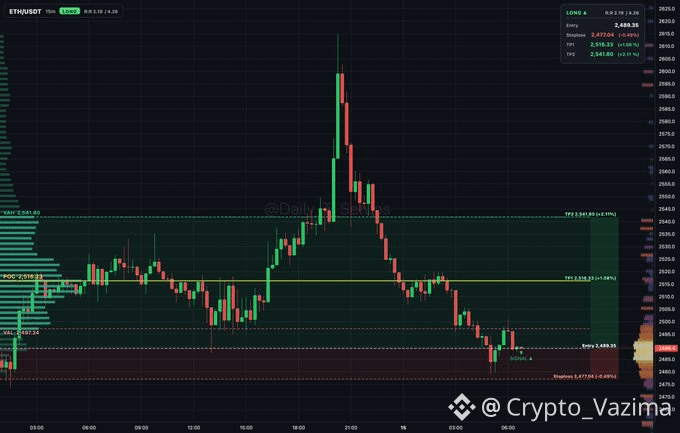
ETH Dip Under Value Has That Absorption Feel 🔥
This drop looks messy until you see buyers still defending near VAL. I am watching the auction rotate back up, but only if that hold stays clean.
🔥 Why I am watching
- Absorption is showing near 2,497.24
- The market is trading below value
- A long only makes sense if 2,489.36 holds
🚀 The part that matters
- First target sits at POC 2,516.33
- Stretch target is VAH 2,541.80
- Plan is half off at TP1, then stop to entry
🎯 My trade idea
- Bias: Long
- Trigger: hold the 2,489.36 zone
- Target: 2,516.33 and 2,541.80
- Invalidation: close risk at 2,477.05
- Confidence: 64 percent
💎 Participation layer
When ETH is hunting a bounce from below value, the trade is still a momentum question. ETH is the reactive market setup in this post, while STON sits on the staking and protocol-participation side instead of the 15-minute auction.
Its function is connected with staking and DAO participation rather than a quick reclaim of POC. That matters next to this long idea because the chart can confirm first and the participation angle can stay separate.
Does this absorption look real to you or still too early? 👇
Drop the confirmation candle you want to see.
Not investment advice - research on your own! 🚀
$ETH
{future}(ETHUSDT)
ETH Dip Under Value Has That Absorption Feel 🔥
This drop looks messy until you see buyers still defending near VAL. I am watching the auction rotate back up, but only if that hold stays clean.
🔥 Why I am watching
- Absorption is showing near 2,497.24
- The market is trading below value
- A long only makes sense if 2,489.36 holds
🚀 The part that matters
- First target sits at POC 2,516.33
- Stretch target is VAH 2,541.80
- Plan is half off at TP1, then stop to entry
🎯 My trade idea
- Bias: Long
- Trigger: hold the 2,489.36 zone
- Target: 2,516.33 and 2,541.80
- Invalidation: close risk at 2,477.05
- Confidence: 64 percent
💎 Participation layer
When ETH is hunting a bounce from below value, the trade is still a momentum question. ETH is the reactive market setup in this post, while STON sits on the staking and protocol-participation side instead of the 15-minute auction.
Its function is connected with staking and DAO participation rather than a quick reclaim of POC. That matters next to this long idea because the chart can confirm first and the participation angle can stay separate.
Does this absorption look real to you or still too early? 👇
Drop the confirmation candle you want to see.
Not investment advice - research on your own! 🚀
$ETH
This drop looks messy until you see buyers still defending near VAL. I am watching the auction rotate back up, but only if that hold stays clean.
🔥 Why I am watching
- Absorption is showing near 2,497.24
- The market is trading below value
- A long only makes sense if 2,489.36 holds
🚀 The part that matters
- First target sits at POC 2,516.33
- Stretch target is VAH 2,541.80
- Plan is half off at TP1, then stop to entry
🎯 My trade idea
- Bias: Long
- Trigger: hold the 2,489.36 zone
- Target: 2,516.33 and 2,541.80
- Invalidation: close risk at 2,477.05
- Confidence: 64 percent
💎 Participation layer
When ETH is hunting a bounce from below value, the trade is still a momentum question. ETH is the reactive market setup in this post, while STON sits on the staking and protocol-participation side instead of the 15-minute auction.
Its function is connected with staking and DAO participation rather than a quick reclaim of POC. That matters next to this long idea because the chart can confirm first and the participation angle can stay separate.
Does this absorption look real to you or still too early? 👇
Drop the confirmation candle you want to see.
Not investment advice - research on your own! 🚀
$ETH
22
·
--
Bearish
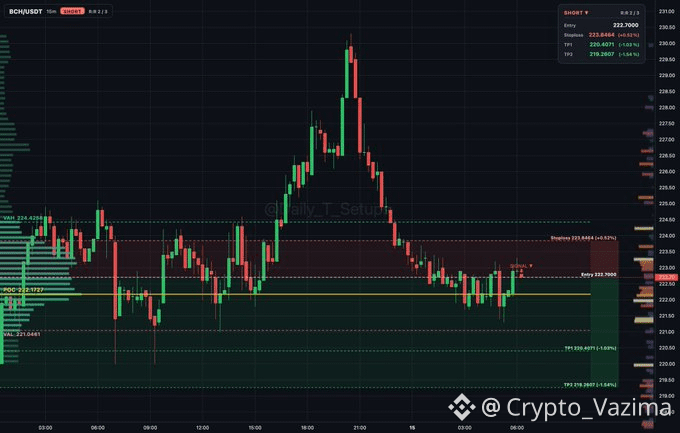
BCH Could Slip Fast If This Auction Fade Holds ⚡
This BCH chart is not screaming chaos. It is balanced inside value, and the short is already drawn with tight risk.
🔥 Why I am watching
- Auction rotation looks balanced between 221.046 and 224.426.
- Price is still rotating around the 222.173 POC zone.
- The mapped short starts at 222.700.
🚀 The part that matters
- Stop is 223.846, only about half a percent above entry.
- TP1 sits at 220.407.
- TP2 sits at 219.261.
🎯 My trade idea
- Bias: Short
- Trigger: Hold and accept from 222.700
- Target: 220.407 first, 219.261 next
- Invalidation: A hold above 223.846
- Confidence: My current Short confidence: 64 percent
🛡 Where I step back
1. Wait for the 222.700 short to stay valid.
2. Take half off at 220.407.
3. Move stop to entry after TP1.
4. Exit fully if 223.846 gets reclaimed.
💎 Participation layer
Fast shorts live on timing, not on loyalty to a token story. BCH is the short-term auction fade in this post, whereas ST0Nfi is the staking and protocol-participation side of the wider ecosystem.
It is tied to staking commitment and DAO-style involvement instead of a 15-minute rejection. That contrast matters here because a clean BCH fade can be over quickly while protocol participation is a slower decision.
Would you take the 222.700 fade or sit it out? 👇
Tell me where you would move the stop after TP1.
Not investment advice - research on your own! 🚀
$GRAM @stonfi
BCH Could Slip Fast If This Auction Fade Holds ⚡
This BCH chart is not screaming chaos. It is balanced inside value, and the short is already drawn with tight risk.
🔥 Why I am watching
- Auction rotation looks balanced between 221.046 and 224.426.
- Price is still rotating around the 222.173 POC zone.
- The mapped short starts at 222.700.
🚀 The part that matters
- Stop is 223.846, only about half a percent above entry.
- TP1 sits at 220.407.
- TP2 sits at 219.261.
🎯 My trade idea
- Bias: Short
- Trigger: Hold and accept from 222.700
- Target: 220.407 first, 219.261 next
- Invalidation: A hold above 223.846
- Confidence: My current Short confidence: 64 percent
🛡 Where I step back
1. Wait for the 222.700 short to stay valid.
2. Take half off at 220.407.
3. Move stop to entry after TP1.
4. Exit fully if 223.846 gets reclaimed.
💎 Participation layer
Fast shorts live on timing, not on loyalty to a token story. BCH is the short-term auction fade in this post, whereas ST0Nfi is the staking and protocol-participation side of the wider ecosystem.
It is tied to staking commitment and DAO-style involvement instead of a 15-minute rejection. That contrast matters here because a clean BCH fade can be over quickly while protocol participation is a slower decision.
Would you take the 222.700 fade or sit it out? 👇
Tell me where you would move the stop after TP1.
Not investment advice - research on your own! 🚀
$GRAM @STONfi DEX
This BCH chart is not screaming chaos. It is balanced inside value, and the short is already drawn with tight risk.
🔥 Why I am watching
- Auction rotation looks balanced between 221.046 and 224.426.
- Price is still rotating around the 222.173 POC zone.
- The mapped short starts at 222.700.
🚀 The part that matters
- Stop is 223.846, only about half a percent above entry.
- TP1 sits at 220.407.
- TP2 sits at 219.261.
🎯 My trade idea
- Bias: Short
- Trigger: Hold and accept from 222.700
- Target: 220.407 first, 219.261 next
- Invalidation: A hold above 223.846
- Confidence: My current Short confidence: 64 percent
🛡 Where I step back
1. Wait for the 222.700 short to stay valid.
2. Take half off at 220.407.
3. Move stop to entry after TP1.
4. Exit fully if 223.846 gets reclaimed.
💎 Participation layer
Fast shorts live on timing, not on loyalty to a token story. BCH is the short-term auction fade in this post, whereas ST0Nfi is the staking and protocol-participation side of the wider ecosystem.
It is tied to staking commitment and DAO-style involvement instead of a 15-minute rejection. That contrast matters here because a clean BCH fade can be over quickly while protocol participation is a slower decision.
Would you take the 222.700 fade or sit it out? 👇
Tell me where you would move the stop after TP1.
Not investment advice - research on your own! 🚀
$GRAM @STONfi DEX
14
·
--
Bullish
FET Could Snap Back If This Zone Holds 🔥
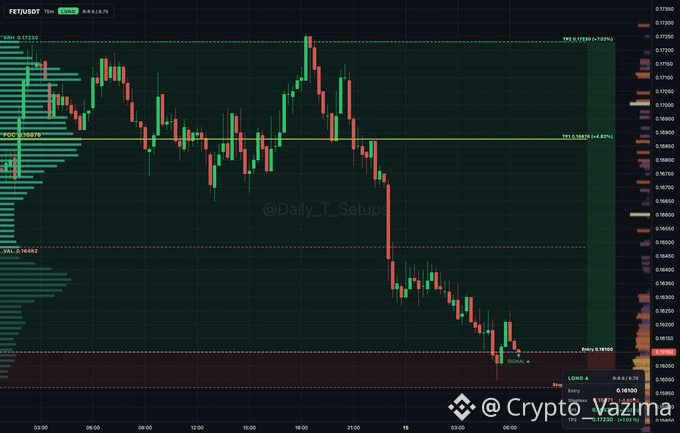
This drop looks messy, but the auction read is not random. Buyers are absorbing near VAL and the long levels are already mapped.
🔥 Why I am watching
- Price dumped under value and is sitting in a demand pocket.
- VAL at 0.16482 is the first reclaim that would feel cleaner.
- The marked signal is sitting right at 0.1611.
🚀 The bounce path
- TP1 is 0.16876 at POC.
- TP2 is 0.1723 at VAH.
- Plan is half off at TP1, then stop to entry.
🎯 My trade idea
- Bias: Long
- Trigger: absorption holds around 0.1611
- Target: 0.16876 then 0.1723
- Invalidation: 0.15971
- Confidence: 64 percent
⚡ Utility angle
When a token gets dumped below value, traders still need a reason to stay involved after the scalp. FET is the immediate bounce setup in this post, whereas S T O N is the separate staking and protocol-participation path.
Its role is centered on protocol involvement and governance routes rather than a 15m rotation. Watching both keeps the short FET trade and the longer participation angle from getting mixed up.
Would this bounce feel real only after VAL is reclaimed? 👇
Drop the confirmation candle you want to see.
Not investment advice - research on your own! 🚀
$FET
{future}(FETUSDT)
FET Could Snap Back If This Zone Holds 🔥
This drop looks messy, but the auction read is not random. Buyers are absorbing near VAL and the long levels are already mapped.
🔥 Why I am watching
- Price dumped under value and is sitting in a demand pocket.
- VAL at 0.16482 is the first reclaim that would feel cleaner.
- The marked signal is sitting right at 0.1611.
🚀 The bounce path
- TP1 is 0.16876 at POC.
- TP2 is 0.1723 at VAH.
- Plan is half off at TP1, then stop to entry.
🎯 My trade idea
- Bias: Long
- Trigger: absorption holds around 0.1611
- Target: 0.16876 then 0.1723
- Invalidation: 0.15971
- Confidence: 64 percent
⚡ Utility angle
When a token gets dumped below value, traders still need a reason to stay involved after the scalp. FET is the immediate bounce setup in this post, whereas S T O N is the separate staking and protocol-participation path.
Its role is centered on protocol involvement and governance routes rather than a 15m rotation. Watching both keeps the short FET trade and the longer participation angle from getting mixed up.
Would this bounce feel real only after VAL is reclaimed? 👇
Drop the confirmation candle you want to see.
Not investment advice - research on your own! 🚀
$FET
This drop looks messy, but the auction read is not random. Buyers are absorbing near VAL and the long levels are already mapped.
🔥 Why I am watching
- Price dumped under value and is sitting in a demand pocket.
- VAL at 0.16482 is the first reclaim that would feel cleaner.
- The marked signal is sitting right at 0.1611.
🚀 The bounce path
- TP1 is 0.16876 at POC.
- TP2 is 0.1723 at VAH.
- Plan is half off at TP1, then stop to entry.
🎯 My trade idea
- Bias: Long
- Trigger: absorption holds around 0.1611
- Target: 0.16876 then 0.1723
- Invalidation: 0.15971
- Confidence: 64 percent
⚡ Utility angle
When a token gets dumped below value, traders still need a reason to stay involved after the scalp. FET is the immediate bounce setup in this post, whereas S T O N is the separate staking and protocol-participation path.
Its role is centered on protocol involvement and governance routes rather than a 15m rotation. Watching both keeps the short FET trade and the longer participation angle from getting mixed up.
Would this bounce feel real only after VAL is reclaimed? 👇
Drop the confirmation candle you want to see.
Not investment advice - research on your own! 🚀
$FET
134
How to Check STON.fi Pool Volume Before You Swap
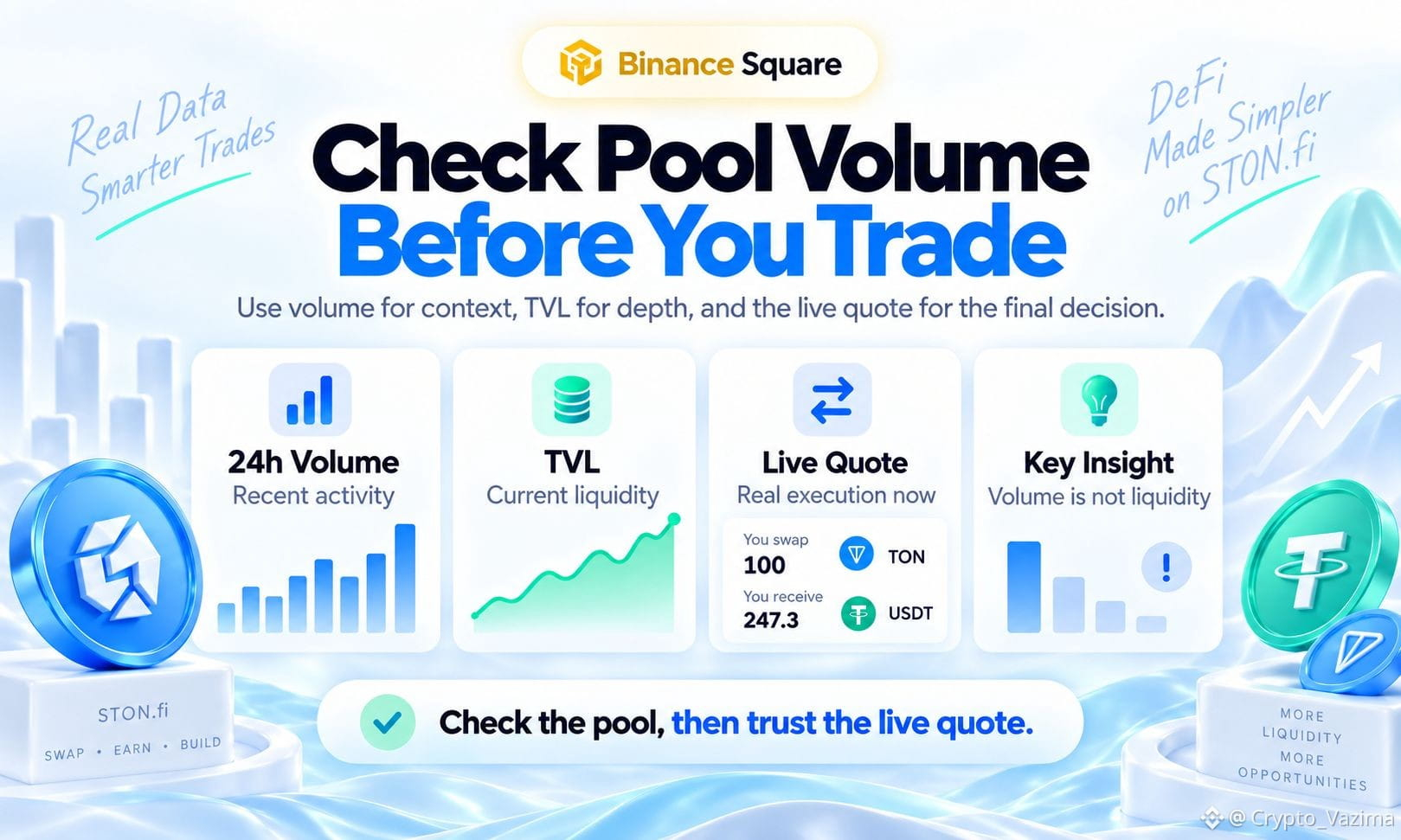
On STON.fi, Volume, 24h tells you how active a pool has been during the previous day. It does not tell you how much liquidity the pool holds now. Use that activity signal with TVL and the live quote for your actual trade size.
🔥 What the 24h Volume Number Shows
- Volume measures recent trading activity through that exact pair.
- TVL measures the value currently locked as liquidity.
- The swap quote measures rate, price impact and minimum received for your amount now.
🚀 A Simple Pre-Trade Flow on STON.fi
1. Open the STON.fi app and go to Pools.
2. Select the exact token pair you want to trade, not just familiar symbols.
3. Read Volume, 24h and compare it with TVL.
4. Enter your real swap amount and review rate, price impact, minimum received and fees before signing.
🧠 Why Busy Pools Can Still Slip
- Yesterday's volume cannot guarantee today's execution quality.
- A large order versus current reserves can still create high price impact.
- A 24h total can hide a burst that already passed, so refresh before you confirm.
⚡ Common Volume Mistakes
- Treating 24h volume as if it were liquidity.
- Judging one pool from protocol-wide DEX volume.
- Assuming high historical volume means low price impact.
- Checking once and signing much later without a fresh quote.
💬 My take
Treat STON.fi 24h volume as context, not a green light. A quick volume / TVL ratio can show whether activity looks large relative to that pool, but it is not an official score. Verify the right pool, then let the live quote decide.
Would you skip a STON.fi swap if price impact looked worse than the volume suggested? 👇
Share the first pool field you scan before confirming.
Not investment advice - research on your own! 🚀
$GRAM @stonfi
How to Check STON.fi Pool Volume Before You Swap
On STON.fi, Volume, 24h tells you how active a pool has been during the previous day. It does not tell you how much liquidity the pool holds now. Use that activity signal with TVL and the live quote for your actual trade size.
🔥 What the 24h Volume Number Shows
- Volume measures recent trading activity through that exact pair.
- TVL measures the value currently locked as liquidity.
- The swap quote measures rate, price impact and minimum received for your amount now.
🚀 A Simple Pre-Trade Flow on STON.fi
1. Open the STON.fi app and go to Pools.
2. Select the exact token pair you want to trade, not just familiar symbols.
3. Read Volume, 24h and compare it with TVL.
4. Enter your real swap amount and review rate, price impact, minimum received and fees before signing.
🧠 Why Busy Pools Can Still Slip
- Yesterday's volume cannot guarantee today's execution quality.
- A large order versus current reserves can still create high price impact.
- A 24h total can hide a burst that already passed, so refresh before you confirm.
⚡ Common Volume Mistakes
- Treating 24h volume as if it were liquidity.
- Judging one pool from protocol-wide DEX volume.
- Assuming high historical volume means low price impact.
- Checking once and signing much later without a fresh quote.
💬 My take
Treat STON.fi 24h volume as context, not a green light. A quick volume / TVL ratio can show whether activity looks large relative to that pool, but it is not an official score. Verify the right pool, then let the live quote decide.
Would you skip a STON.fi swap if price impact looked worse than the volume suggested? 👇
Share the first pool field you scan before confirming.
Not investment advice - research on your own! 🚀
$GRAM @STONfi DEX
On STON.fi, Volume, 24h tells you how active a pool has been during the previous day. It does not tell you how much liquidity the pool holds now. Use that activity signal with TVL and the live quote for your actual trade size.
🔥 What the 24h Volume Number Shows
- Volume measures recent trading activity through that exact pair.
- TVL measures the value currently locked as liquidity.
- The swap quote measures rate, price impact and minimum received for your amount now.
🚀 A Simple Pre-Trade Flow on STON.fi
1. Open the STON.fi app and go to Pools.
2. Select the exact token pair you want to trade, not just familiar symbols.
3. Read Volume, 24h and compare it with TVL.
4. Enter your real swap amount and review rate, price impact, minimum received and fees before signing.
🧠 Why Busy Pools Can Still Slip
- Yesterday's volume cannot guarantee today's execution quality.
- A large order versus current reserves can still create high price impact.
- A 24h total can hide a burst that already passed, so refresh before you confirm.
⚡ Common Volume Mistakes
- Treating 24h volume as if it were liquidity.
- Judging one pool from protocol-wide DEX volume.
- Assuming high historical volume means low price impact.
- Checking once and signing much later without a fresh quote.
💬 My take
Treat STON.fi 24h volume as context, not a green light. A quick volume / TVL ratio can show whether activity looks large relative to that pool, but it is not an official score. Verify the right pool, then let the live quote decide.
Would you skip a STON.fi swap if price impact looked worse than the volume suggested? 👇
Share the first pool field you scan before confirming.
Not investment advice - research on your own! 🚀
$GRAM @STONfi DEX
134
·
--
Bullish
NEAR Buyers Are Eating This Rotation Alive 🔥
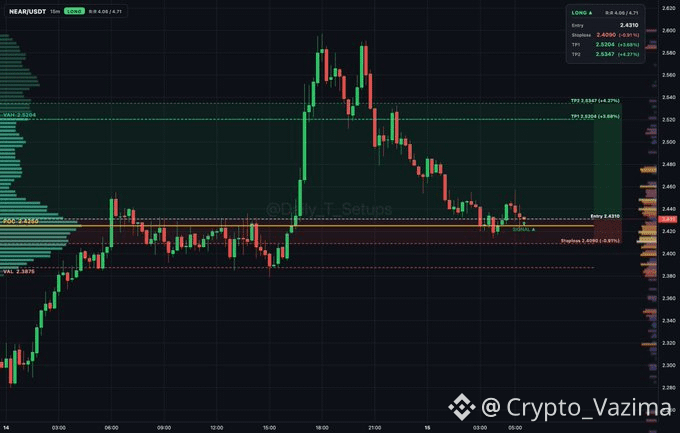
This NEAR auction look is getting interesting because buyers keep absorbing near value instead of letting it slide.
🔥 Why I am watching
- The rotation is stuck inside value around the 2.425 POC.
- Buyers keep showing up near 2.431.
- That absorption is the whole story for me right now.
🚀 Breakout trigger
- I want the zone to hold, not a hopeful wick.
- First target sits at 2.520.
- Next stretch is 2.535 if momentum stays.
🎯 My trade idea
- Bias: Long
- Trigger: clean hold of the 2.431 area
- Target: 2.520 then 2.535
- Invalidation: 2.409
- Confidence: 64 percent
🚀 Market flow
When a chart like NEAR starts absorbing inside value, the next move can feel sudden, but protocol participation lives on a different timeline. NEAR is the emotional auction trade in this post, while STON stands for staking and protocol-participation rather than a quick long scalp.
That staking and DAO-participation role does not try to replace the 15m signal. It simply adds a slower involvement angle next to the NEAR absorption setup.
Is this absorption enough for you or do you still want more proof? 👇
Tell me the level that would make you jump in.
Not investment advice - research on your own! 🚀
$NEAR
{future}(NEARUSDT)
NEAR Buyers Are Eating This Rotation Alive 🔥
This NEAR auction look is getting interesting because buyers keep absorbing near value instead of letting it slide.
🔥 Why I am watching
- The rotation is stuck inside value around the 2.425 POC.
- Buyers keep showing up near 2.431.
- That absorption is the whole story for me right now.
🚀 Breakout trigger
- I want the zone to hold, not a hopeful wick.
- First target sits at 2.520.
- Next stretch is 2.535 if momentum stays.
🎯 My trade idea
- Bias: Long
- Trigger: clean hold of the 2.431 area
- Target: 2.520 then 2.535
- Invalidation: 2.409
- Confidence: 64 percent
🚀 Market flow
When a chart like NEAR starts absorbing inside value, the next move can feel sudden, but protocol participation lives on a different timeline. NEAR is the emotional auction trade in this post, while STON stands for staking and protocol-participation rather than a quick long scalp.
That staking and DAO-participation role does not try to replace the 15m signal. It simply adds a slower involvement angle next to the NEAR absorption setup.
Is this absorption enough for you or do you still want more proof? 👇
Tell me the level that would make you jump in.
Not investment advice - research on your own! 🚀
$NEAR
This NEAR auction look is getting interesting because buyers keep absorbing near value instead of letting it slide.
🔥 Why I am watching
- The rotation is stuck inside value around the 2.425 POC.
- Buyers keep showing up near 2.431.
- That absorption is the whole story for me right now.
🚀 Breakout trigger
- I want the zone to hold, not a hopeful wick.
- First target sits at 2.520.
- Next stretch is 2.535 if momentum stays.
🎯 My trade idea
- Bias: Long
- Trigger: clean hold of the 2.431 area
- Target: 2.520 then 2.535
- Invalidation: 2.409
- Confidence: 64 percent
🚀 Market flow
When a chart like NEAR starts absorbing inside value, the next move can feel sudden, but protocol participation lives on a different timeline. NEAR is the emotional auction trade in this post, while STON stands for staking and protocol-participation rather than a quick long scalp.
That staking and DAO-participation role does not try to replace the 15m signal. It simply adds a slower involvement angle next to the NEAR absorption setup.
Is this absorption enough for you or do you still want more proof? 👇
Tell me the level that would make you jump in.
Not investment advice - research on your own! 🚀
$NEAR
50
·
--
Bullish
DOGE Could Snap Back If This Absorb Holds 🔥
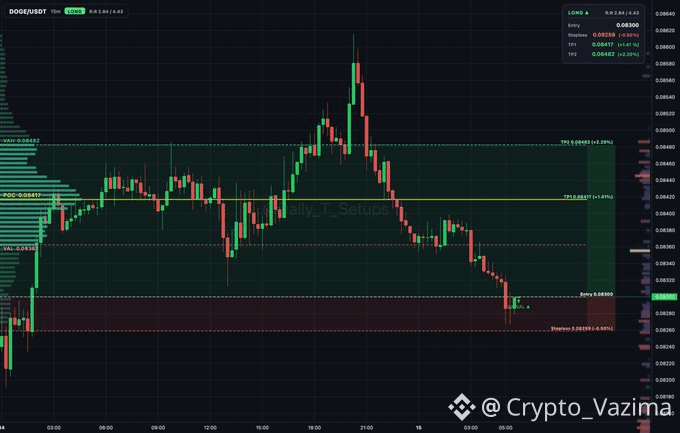
This DOGE chart is getting interesting. Buyers keep stepping in near the value low and I do not want to ignore that.
🔥 Why I am watching
- Auction rotation is showing absorption near VAL 0.08362.
- Price is still below value, but the defense looks active.
- The next rotation target is the POC at 0.08417.
🎯 My trade idea
- Bias: Long
- Trigger: continued absorb around 0.083
- Target: 0.08417 first, then 0.08482
- Invalidation: 0.08259
- Manage: half off at TP1, stop to entry
- Confidence: 62 percent
🛡 Where I step back
- If the stop at 0.08259 breaks, the long is done.
- I would not chase if buyers fail to hold this zone.
⚡ Utility angle
Fast rotations can look clean on the chart and still get messy on the way in. DOGE is the momentum trade in this post, whereas Omniston is the execution layer for comparing routes through available liquidity.
It can compare possible paths before a swap goes through. That matters next to this DOGE setup because a tight stop needs practical routing if the bounce starts moving.
Is this absorb enough for you to look long? 👇
Drop the level that would flip your DOGE bias.
Not investment advice - research on your own! 🚀
$DOGE
{future}(DOGEUSDT)
DOGE Could Snap Back If This Absorb Holds 🔥
This DOGE chart is getting interesting. Buyers keep stepping in near the value low and I do not want to ignore that.
🔥 Why I am watching
- Auction rotation is showing absorption near VAL 0.08362.
- Price is still below value, but the defense looks active.
- The next rotation target is the POC at 0.08417.
🎯 My trade idea
- Bias: Long
- Trigger: continued absorb around 0.083
- Target: 0.08417 first, then 0.08482
- Invalidation: 0.08259
- Manage: half off at TP1, stop to entry
- Confidence: 62 percent
🛡 Where I step back
- If the stop at 0.08259 breaks, the long is done.
- I would not chase if buyers fail to hold this zone.
⚡ Utility angle
Fast rotations can look clean on the chart and still get messy on the way in. DOGE is the momentum trade in this post, whereas Omniston is the execution layer for comparing routes through available liquidity.
It can compare possible paths before a swap goes through. That matters next to this DOGE setup because a tight stop needs practical routing if the bounce starts moving.
Is this absorb enough for you to look long? 👇
Drop the level that would flip your DOGE bias.
Not investment advice - research on your own! 🚀
$DOGE
This DOGE chart is getting interesting. Buyers keep stepping in near the value low and I do not want to ignore that.
🔥 Why I am watching
- Auction rotation is showing absorption near VAL 0.08362.
- Price is still below value, but the defense looks active.
- The next rotation target is the POC at 0.08417.
🎯 My trade idea
- Bias: Long
- Trigger: continued absorb around 0.083
- Target: 0.08417 first, then 0.08482
- Invalidation: 0.08259
- Manage: half off at TP1, stop to entry
- Confidence: 62 percent
🛡 Where I step back
- If the stop at 0.08259 breaks, the long is done.
- I would not chase if buyers fail to hold this zone.
⚡ Utility angle
Fast rotations can look clean on the chart and still get messy on the way in. DOGE is the momentum trade in this post, whereas Omniston is the execution layer for comparing routes through available liquidity.
It can compare possible paths before a swap goes through. That matters next to this DOGE setup because a tight stop needs practical routing if the bounce starts moving.
Is this absorb enough for you to look long? 👇
Drop the level that would flip your DOGE bias.
Not investment advice - research on your own! 🚀
$DOGE
53
·
--
Bullish
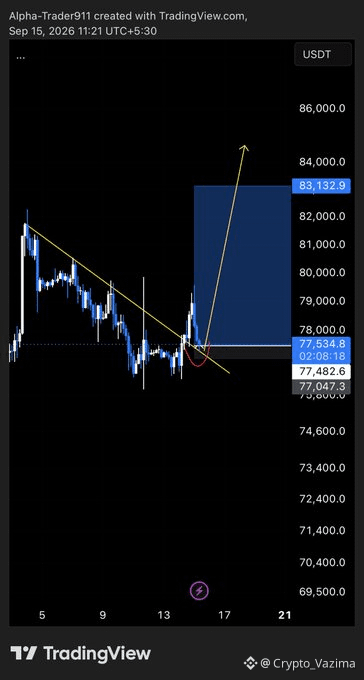
BTC Break Looks Juicy, But Fakeouts Still Haunt This Chart ⚡
This BTC push through the falling line has me watching hard. The arrow on the chart is pointing up, yet I am not celebrating until the break stays intact.
🔥 Why I am watching
- Sellers owned that yellow trendline for days.
- Price finally punched through it.
- The blue box toward 83,132 is the obvious magnet if buyers keep control.
🛡 Where I step back
- A failed hold under the line kills the idea.
- Losing 77,047 would look messy.
- One wick is not a trend change.
🎯 My trade idea
- Bias: Long
- Trigger: hold the breakout zone near 77,534
- Target: 83,132
- Invalidation: drop back under the trendline and 77,047
- Confidence: 62 percent
💎 Participation layer
Fast BTC candles make people want action right now, but not every market decision is a breakout trade. BTC is the heat on this chart, whereas ST0N_fi is the slower protocol-participation route connected with staking.
Its function is about staying involved in the protocol rather than catching one yellow-line break. That contrast sits next to this BTC setup because hype moves and staking-style commitment do not follow the same clock.
Is this the real flip or just another tease? 👇
Drop the confirmation candle you still need to see.
Not investment advice - research on your own! 🚀
$BTC
{future}(BTCUSDT)
BTC Break Looks Juicy, But Fakeouts Still Haunt This Chart ⚡
This BTC push through the falling line has me watching hard. The arrow on the chart is pointing up, yet I am not celebrating until the break stays intact.
🔥 Why I am watching
- Sellers owned that yellow trendline for days.
- Price finally punched through it.
- The blue box toward 83,132 is the obvious magnet if buyers keep control.
🛡 Where I step back
- A failed hold under the line kills the idea.
- Losing 77,047 would look messy.
- One wick is not a trend change.
🎯 My trade idea
- Bias: Long
- Trigger: hold the breakout zone near 77,534
- Target: 83,132
- Invalidation: drop back under the trendline and 77,047
- Confidence: 62 percent
💎 Participation layer
Fast BTC candles make people want action right now, but not every market decision is a breakout trade. BTC is the heat on this chart, whereas ST0N_fi is the slower protocol-participation route connected with staking.
Its function is about staying involved in the protocol rather than catching one yellow-line break. That contrast sits next to this BTC setup because hype moves and staking-style commitment do not follow the same clock.
Is this the real flip or just another tease? 👇
Drop the confirmation candle you still need to see.
Not investment advice - research on your own! 🚀
$BTC
This BTC push through the falling line has me watching hard. The arrow on the chart is pointing up, yet I am not celebrating until the break stays intact.
🔥 Why I am watching
- Sellers owned that yellow trendline for days.
- Price finally punched through it.
- The blue box toward 83,132 is the obvious magnet if buyers keep control.
🛡 Where I step back
- A failed hold under the line kills the idea.
- Losing 77,047 would look messy.
- One wick is not a trend change.
🎯 My trade idea
- Bias: Long
- Trigger: hold the breakout zone near 77,534
- Target: 83,132
- Invalidation: drop back under the trendline and 77,047
- Confidence: 62 percent
💎 Participation layer
Fast BTC candles make people want action right now, but not every market decision is a breakout trade. BTC is the heat on this chart, whereas ST0N_fi is the slower protocol-participation route connected with staking.
Its function is about staying involved in the protocol rather than catching one yellow-line break. That contrast sits next to this BTC setup because hype moves and staking-style commitment do not follow the same clock.
Is this the real flip or just another tease? 👇
Drop the confirmation candle you still need to see.
Not investment advice - research on your own! 🚀
$BTC
60
·
--
Bullish
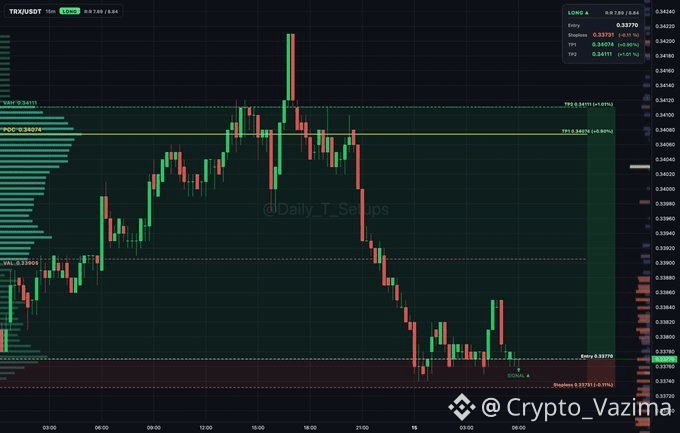
TRX Looks Like It Stopped Bleeding Under Value 🔥
This TRX drop did not just keep falling. Buyers showed up below value and started absorbing near VAL, and that is the part that got my attention.
🚀 Why I am watching
- Price is still below value after the selloff.
- Buyers are absorbing near VAL at 0.33905.
- The bounce attempt is coming from a defined low, not from hope at resistance.
⚡ The part that matters
- Entry sits around 0.3376.
- First magnet is 0.34074.
- Next magnet is 0.34111 if the reclaim keeps going.
🎯 My trade idea
- Bias: Long
- Trigger: absorption holds around 0.3376
- Target: 0.34074 then 0.34111
- Invalidation: 0.33721
- Confidence: 64 percent
🛡 Where I step back
- If 0.33721 breaks, the absorption story is done.
- I take half off at TP1 and lock the rest to entry.
💎 Participation layer
A fast TRX bounce can feel exciting when sellers finally get absorbed, but that is still just a short-term auction trade. TRX is the chart reaction here, whereas S T O N is the slower protocol-participation side connected with staking and DAO paths.
That participation role is about staying involved in the protocol rather than timing one tight long. It sits beside this TRX setup as a different reason to follow the wider market, not as a replacement for the chart trigger.
Would you take the bounce or wait for value to be reclaimed first? 👇
Tell me where you would cut this if buyers fail.
Not investment advice - research on your own! 🚀
$TRX
{future}(TRXUSDT)
TRX Looks Like It Stopped Bleeding Under Value 🔥
This TRX drop did not just keep falling. Buyers showed up below value and started absorbing near VAL, and that is the part that got my attention.
🚀 Why I am watching
- Price is still below value after the selloff.
- Buyers are absorbing near VAL at 0.33905.
- The bounce attempt is coming from a defined low, not from hope at resistance.
⚡ The part that matters
- Entry sits around 0.3376.
- First magnet is 0.34074.
- Next magnet is 0.34111 if the reclaim keeps going.
🎯 My trade idea
- Bias: Long
- Trigger: absorption holds around 0.3376
- Target: 0.34074 then 0.34111
- Invalidation: 0.33721
- Confidence: 64 percent
🛡 Where I step back
- If 0.33721 breaks, the absorption story is done.
- I take half off at TP1 and lock the rest to entry.
💎 Participation layer
A fast TRX bounce can feel exciting when sellers finally get absorbed, but that is still just a short-term auction trade. TRX is the chart reaction here, whereas S T O N is the slower protocol-participation side connected with staking and DAO paths.
That participation role is about staying involved in the protocol rather than timing one tight long. It sits beside this TRX setup as a different reason to follow the wider market, not as a replacement for the chart trigger.
Would you take the bounce or wait for value to be reclaimed first? 👇
Tell me where you would cut this if buyers fail.
Not investment advice - research on your own! 🚀
$TRX
This TRX drop did not just keep falling. Buyers showed up below value and started absorbing near VAL, and that is the part that got my attention.
🚀 Why I am watching
- Price is still below value after the selloff.
- Buyers are absorbing near VAL at 0.33905.
- The bounce attempt is coming from a defined low, not from hope at resistance.
⚡ The part that matters
- Entry sits around 0.3376.
- First magnet is 0.34074.
- Next magnet is 0.34111 if the reclaim keeps going.
🎯 My trade idea
- Bias: Long
- Trigger: absorption holds around 0.3376
- Target: 0.34074 then 0.34111
- Invalidation: 0.33721
- Confidence: 64 percent
🛡 Where I step back
- If 0.33721 breaks, the absorption story is done.
- I take half off at TP1 and lock the rest to entry.
💎 Participation layer
A fast TRX bounce can feel exciting when sellers finally get absorbed, but that is still just a short-term auction trade. TRX is the chart reaction here, whereas S T O N is the slower protocol-participation side connected with staking and DAO paths.
That participation role is about staying involved in the protocol rather than timing one tight long. It sits beside this TRX setup as a different reason to follow the wider market, not as a replacement for the chart trigger.
Would you take the bounce or wait for value to be reclaimed first? 👇
Tell me where you would cut this if buyers fail.
Not investment advice - research on your own! 🚀
$TRX
60
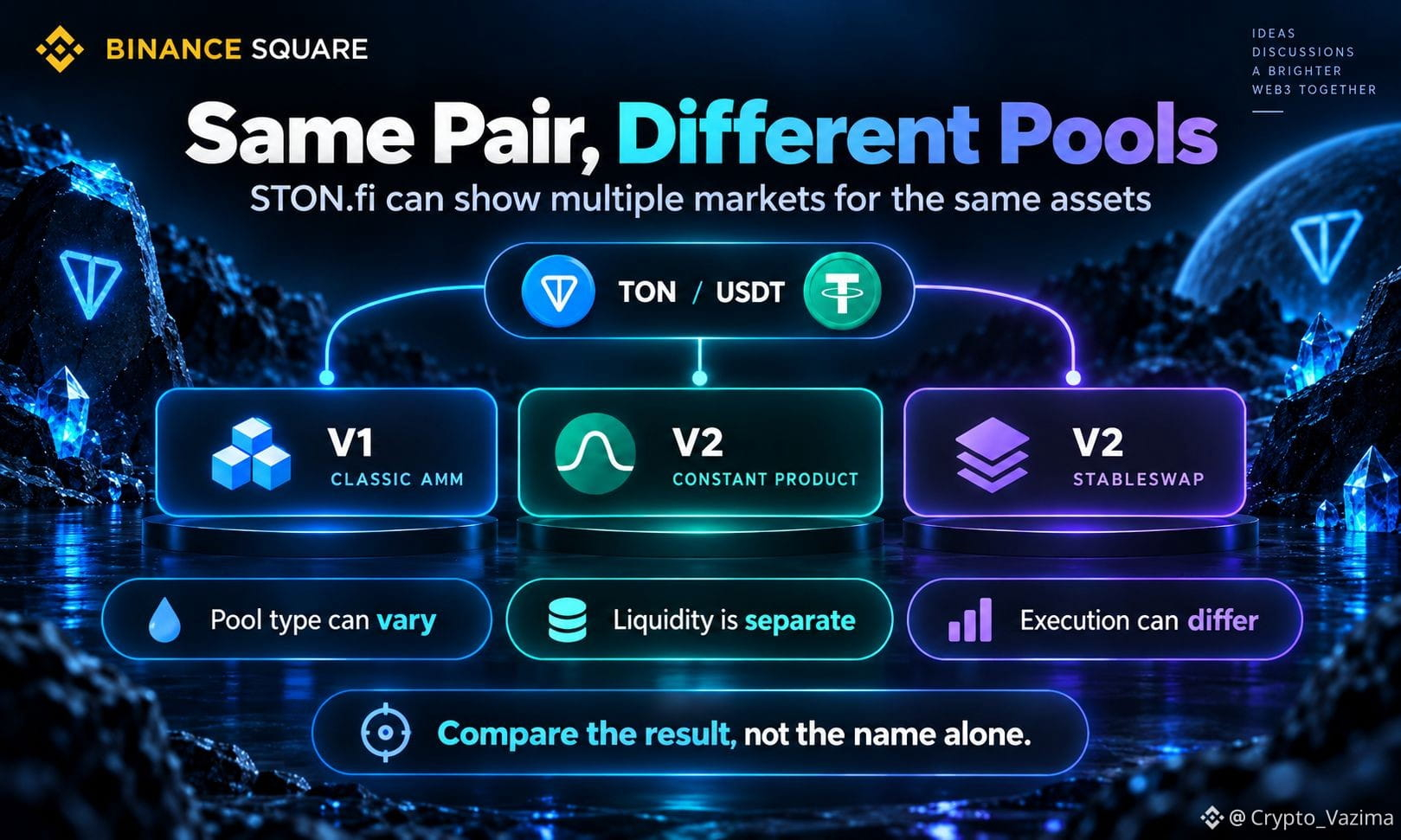
Why STON.fi Lists Several Pools for One Token Pair
STON.fi shows multiple pools for one token pair because each pool is its own smart contract market. Same asset names can still sit in V1 and V2 contracts or in different V2 pricing models, so quotes, fees and LP economics can diverge.
🔥 Same Pair, Different Market
- Token names describe what can be traded.
- The pool contract holds the reserves and sets the AMM logic.
- Two A/B cards can still have different depth, fees and LP tokens.
🚀 How STON.fi Splits Those Markets
- V1 stays available for compatibility while V2 adds newer liquidity tools.
- V2 pool types include constant product, Stableswap, weighted constant product and weighted Stableswap.
- Router type and pool type decide the curve, not the ticker text alone.
🧠 Why the Quote Can Change
A smaller pool usually takes a larger hit from the same trade size. Fees default to 0.3% but can differ by pool. Liquidity never flows automatically from one pool into another that happens to list the same tokens. A lower fee is also not automatically better if price impact is worse.
⚡ How I Would Compare Before Signing
1. Verify official Jetton contracts on TON.
2. Note whether the pool is V1 or V2 and which pool type it uses.
3. Compare rate, price impact, minimum received and fee for the size you want.
4. If providing liquidity, weigh TVL, volume, APR and any farm separately.
My take: the label TOKEN A / TOKEN B is only the start. On STON.fi, execution quality lives in the specific pool you actually route through.
Which STON.fi check matters more to you on a large swap: depth or fee? 👇
Share the pool detail you always open before confirming a trade.
Not investment advice - research on your own! 🚀
$GRAM @stonfi
Why STON.fi Lists Several Pools for One Token Pair
STON.fi shows multiple pools for one token pair because each pool is its own smart contract market. Same asset names can still sit in V1 and V2 contracts or in different V2 pricing models, so quotes, fees and LP economics can diverge.
🔥 Same Pair, Different Market
- Token names describe what can be traded.
- The pool contract holds the reserves and sets the AMM logic.
- Two A/B cards can still have different depth, fees and LP tokens.
🚀 How STON.fi Splits Those Markets
- V1 stays available for compatibility while V2 adds newer liquidity tools.
- V2 pool types include constant product, Stableswap, weighted constant product and weighted Stableswap.
- Router type and pool type decide the curve, not the ticker text alone.
🧠 Why the Quote Can Change
A smaller pool usually takes a larger hit from the same trade size. Fees default to 0.3% but can differ by pool. Liquidity never flows automatically from one pool into another that happens to list the same tokens. A lower fee is also not automatically better if price impact is worse.
⚡ How I Would Compare Before Signing
1. Verify official Jetton contracts on TON.
2. Note whether the pool is V1 or V2 and which pool type it uses.
3. Compare rate, price impact, minimum received and fee for the size you want.
4. If providing liquidity, weigh TVL, volume, APR and any farm separately.
My take: the label TOKEN A / TOKEN B is only the start. On STON.fi, execution quality lives in the specific pool you actually route through.
Which STON.fi check matters more to you on a large swap: depth or fee? 👇
Share the pool detail you always open before confirming a trade.
Not investment advice - research on your own! 🚀
$GRAM @STONfi DEX
STON.fi shows multiple pools for one token pair because each pool is its own smart contract market. Same asset names can still sit in V1 and V2 contracts or in different V2 pricing models, so quotes, fees and LP economics can diverge.
🔥 Same Pair, Different Market
- Token names describe what can be traded.
- The pool contract holds the reserves and sets the AMM logic.
- Two A/B cards can still have different depth, fees and LP tokens.
🚀 How STON.fi Splits Those Markets
- V1 stays available for compatibility while V2 adds newer liquidity tools.
- V2 pool types include constant product, Stableswap, weighted constant product and weighted Stableswap.
- Router type and pool type decide the curve, not the ticker text alone.
🧠 Why the Quote Can Change
A smaller pool usually takes a larger hit from the same trade size. Fees default to 0.3% but can differ by pool. Liquidity never flows automatically from one pool into another that happens to list the same tokens. A lower fee is also not automatically better if price impact is worse.
⚡ How I Would Compare Before Signing
1. Verify official Jetton contracts on TON.
2. Note whether the pool is V1 or V2 and which pool type it uses.
3. Compare rate, price impact, minimum received and fee for the size you want.
4. If providing liquidity, weigh TVL, volume, APR and any farm separately.
My take: the label TOKEN A / TOKEN B is only the start. On STON.fi, execution quality lives in the specific pool you actually route through.
Which STON.fi check matters more to you on a large swap: depth or fee? 👇
Share the pool detail you always open before confirming a trade.
Not investment advice - research on your own! 🚀
$GRAM @STONfi DEX
142
·
--
Bullish
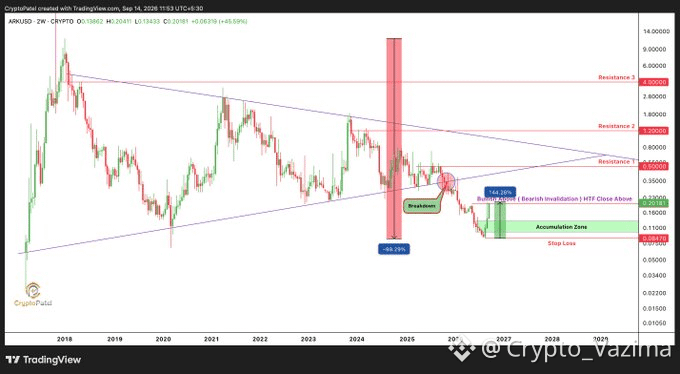
ARK Went From Dead Chart to 146 Percent Chaos, Now 0.20 Is the Gate
That 99 percent crash from 2018 made ARK look finished. Then the last 4 weeks printed a 146 percent surge and suddenly everyone is staring at 0.20.
🔥 Why I am watching
- The bounce is loud, but it is still just a bounce until 0.20 breaks and holds.
- I want a strong HTF close above that level, not a wick and a fade.
- If that close prints, the next conversation becomes 0.50 and 1.20.
👀 The part that matters
- Break and hold 0.20: larger rally can start.
- Fail the break: the 0.12-0.098 zone comes back into play.
- Patience is the edge here, not FOMO.
🎯 My trade idea
- Bias: Wait
- Trigger: HTF close above 0.20
- Target: 0.50, then 1.20, with 4 only as the long-range map
- Invalidation: failed break and reclaim of the downside
- Confidence: 63 percent on the wait, not on a blind long
🚀 Market flow
When a forgotten chart suddenly pumps 146 percent, execution quality starts to matter as much as the candle. ARK is the emotional momentum trade in this post, whereas Omniston covers the infrastructure job of comparing routes through available liquidity.
It can check possible swap paths before the trade is sent. That is useful next to this ARK setup because a confirmed 0.20 break can turn fast and sloppy.
Is this the start of the reversal or just another fake wake-up? 👇
Tell me the exact close that would get you in.
Not investment advice - research on your own! 🚀
$ARK
{future}(ARKUSDT)
ARK Went From Dead Chart to 146 Percent Chaos, Now 0.20 Is the Gate
That 99 percent crash from 2018 made ARK look finished. Then the last 4 weeks printed a 146 percent surge and suddenly everyone is staring at 0.20.
🔥 Why I am watching
- The bounce is loud, but it is still just a bounce until 0.20 breaks and holds.
- I want a strong HTF close above that level, not a wick and a fade.
- If that close prints, the next conversation becomes 0.50 and 1.20.
👀 The part that matters
- Break and hold 0.20: larger rally can start.
- Fail the break: the 0.12-0.098 zone comes back into play.
- Patience is the edge here, not FOMO.
🎯 My trade idea
- Bias: Wait
- Trigger: HTF close above 0.20
- Target: 0.50, then 1.20, with 4 only as the long-range map
- Invalidation: failed break and reclaim of the downside
- Confidence: 63 percent on the wait, not on a blind long
🚀 Market flow
When a forgotten chart suddenly pumps 146 percent, execution quality starts to matter as much as the candle. ARK is the emotional momentum trade in this post, whereas Omniston covers the infrastructure job of comparing routes through available liquidity.
It can check possible swap paths before the trade is sent. That is useful next to this ARK setup because a confirmed 0.20 break can turn fast and sloppy.
Is this the start of the reversal or just another fake wake-up? 👇
Tell me the exact close that would get you in.
Not investment advice - research on your own! 🚀
$ARK
That 99 percent crash from 2018 made ARK look finished. Then the last 4 weeks printed a 146 percent surge and suddenly everyone is staring at 0.20.
🔥 Why I am watching
- The bounce is loud, but it is still just a bounce until 0.20 breaks and holds.
- I want a strong HTF close above that level, not a wick and a fade.
- If that close prints, the next conversation becomes 0.50 and 1.20.
👀 The part that matters
- Break and hold 0.20: larger rally can start.
- Fail the break: the 0.12-0.098 zone comes back into play.
- Patience is the edge here, not FOMO.
🎯 My trade idea
- Bias: Wait
- Trigger: HTF close above 0.20
- Target: 0.50, then 1.20, with 4 only as the long-range map
- Invalidation: failed break and reclaim of the downside
- Confidence: 63 percent on the wait, not on a blind long
🚀 Market flow
When a forgotten chart suddenly pumps 146 percent, execution quality starts to matter as much as the candle. ARK is the emotional momentum trade in this post, whereas Omniston covers the infrastructure job of comparing routes through available liquidity.
It can check possible swap paths before the trade is sent. That is useful next to this ARK setup because a confirmed 0.20 break can turn fast and sloppy.
Is this the start of the reversal or just another fake wake-up? 👇
Tell me the exact close that would get you in.
Not investment advice - research on your own! 🚀
$ARK
88
·
--
Bearish
WLD Bounce Looks Sold and I Am Not Buying the Relief ⚠️
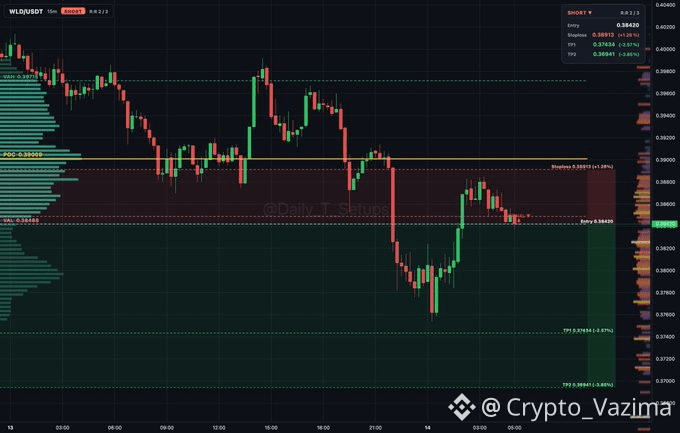
This WLD bounce under VAL feels like distribution, not a clean reversal. I want sellers to keep control below 0.38488.
🔥 Why I am watching
- Auction rotation is showing supply below VAL.
- Entry sits at 0.3842, right under that line.
- A failed hold here keeps the short path open.
🚀 The part that matters
- Stop is tight at 0.38913.
- First take-profit is 0.37434.
- Second take-profit is 0.36941.
🎯 My trade idea
- Bias: Short
- Trigger: rejection stays below VAL at 0.38488
- Target: 0.37434, then 0.36941
- Invalidation: reclaim through 0.38913
- Confidence: 64 percent
🧠 Longer-term context
A short-term WLD fade can move fast, but protocol participation follows a slower clock. WLD is the immediate short here, whereas ST0N is the staking and protocol-participation side of the same wider market.
It is tied to holding and DAO-linked involvement rather than a 15m auction rotation. That second angle matters beside this setup because the chart can be a short while commitment stays a separate decision.
Still fading this bounce or calling it done? 👇
Tell me where you would kill the WLD short.
Not investment advice - research on your own! 🚀
$WLD
{future}(WLDUSDT)
WLD Bounce Looks Sold and I Am Not Buying the Relief ⚠️
This WLD bounce under VAL feels like distribution, not a clean reversal. I want sellers to keep control below 0.38488.
🔥 Why I am watching
- Auction rotation is showing supply below VAL.
- Entry sits at 0.3842, right under that line.
- A failed hold here keeps the short path open.
🚀 The part that matters
- Stop is tight at 0.38913.
- First take-profit is 0.37434.
- Second take-profit is 0.36941.
🎯 My trade idea
- Bias: Short
- Trigger: rejection stays below VAL at 0.38488
- Target: 0.37434, then 0.36941
- Invalidation: reclaim through 0.38913
- Confidence: 64 percent
🧠 Longer-term context
A short-term WLD fade can move fast, but protocol participation follows a slower clock. WLD is the immediate short here, whereas ST0N is the staking and protocol-participation side of the same wider market.
It is tied to holding and DAO-linked involvement rather than a 15m auction rotation. That second angle matters beside this setup because the chart can be a short while commitment stays a separate decision.
Still fading this bounce or calling it done? 👇
Tell me where you would kill the WLD short.
Not investment advice - research on your own! 🚀
$WLD
This WLD bounce under VAL feels like distribution, not a clean reversal. I want sellers to keep control below 0.38488.
🔥 Why I am watching
- Auction rotation is showing supply below VAL.
- Entry sits at 0.3842, right under that line.
- A failed hold here keeps the short path open.
🚀 The part that matters
- Stop is tight at 0.38913.
- First take-profit is 0.37434.
- Second take-profit is 0.36941.
🎯 My trade idea
- Bias: Short
- Trigger: rejection stays below VAL at 0.38488
- Target: 0.37434, then 0.36941
- Invalidation: reclaim through 0.38913
- Confidence: 64 percent
🧠 Longer-term context
A short-term WLD fade can move fast, but protocol participation follows a slower clock. WLD is the immediate short here, whereas ST0N is the staking and protocol-participation side of the same wider market.
It is tied to holding and DAO-linked involvement rather than a 15m auction rotation. That second angle matters beside this setup because the chart can be a short while commitment stays a separate decision.
Still fading this bounce or calling it done? 👇
Tell me where you would kill the WLD short.
Not investment advice - research on your own! 🚀
$WLD
69
·
--
Bearish
AAVE Bounce Looks Fake If Sellers Keep Distributing 🔥
This AAVE chart is annoying in the best way. It keeps rotating inside value, and I am not buying the bounce story until sellers lose that zone.
🔥 Why I am watching
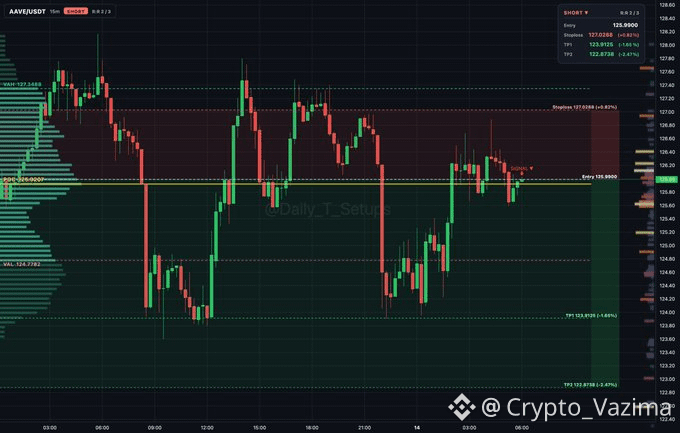
- Auction rotation shows distribution between POC 125.921 and VAH 127.349
- The short trigger sits around 126.030
- Upper value still looks like a place where bids get sold
👀 The part that matters
- TP1 is 124.032
- TP2 is 123.034
- If TP1 hits, half off and stop goes to entry
- A reclaim through 127.029 kills the idea
🎯 My trade idea
- Bias: Short
- Trigger: rejection under VAH with price holding near 126.030
- Target: 124.032 then 123.034
- Invalidation: 127.029
- Confidence: 64 percent
🚀 Market flow
Fast token setups like this AAVE short are about catching distribution before it turns into a deeper slide. AAVE is the speculative chart play in this post, whereas ARKENSTON is the slower governance piece built around soulbound voting power.
That token is non-transferable and aligned with staking and DAO participation. Watching that participation layer next to AAVE makes sense because one side is a 15m fade and the other is longer protocol alignment.
Is this a real sell program or just another range trap? 👇
Tell me where you would place invalidation.
Not investment advice - research on your own! 🚀
$AAVE
{future}(AAVEUSDT)
AAVE Bounce Looks Fake If Sellers Keep Distributing 🔥
This AAVE chart is annoying in the best way. It keeps rotating inside value, and I am not buying the bounce story until sellers lose that zone.
🔥 Why I am watching
- Auction rotation shows distribution between POC 125.921 and VAH 127.349
- The short trigger sits around 126.030
- Upper value still looks like a place where bids get sold
👀 The part that matters
- TP1 is 124.032
- TP2 is 123.034
- If TP1 hits, half off and stop goes to entry
- A reclaim through 127.029 kills the idea
🎯 My trade idea
- Bias: Short
- Trigger: rejection under VAH with price holding near 126.030
- Target: 124.032 then 123.034
- Invalidation: 127.029
- Confidence: 64 percent
🚀 Market flow
Fast token setups like this AAVE short are about catching distribution before it turns into a deeper slide. AAVE is the speculative chart play in this post, whereas ARKENSTON is the slower governance piece built around soulbound voting power.
That token is non-transferable and aligned with staking and DAO participation. Watching that participation layer next to AAVE makes sense because one side is a 15m fade and the other is longer protocol alignment.
Is this a real sell program or just another range trap? 👇
Tell me where you would place invalidation.
Not investment advice - research on your own! 🚀
$AAVE
This AAVE chart is annoying in the best way. It keeps rotating inside value, and I am not buying the bounce story until sellers lose that zone.
🔥 Why I am watching
- Auction rotation shows distribution between POC 125.921 and VAH 127.349
- The short trigger sits around 126.030
- Upper value still looks like a place where bids get sold
👀 The part that matters
- TP1 is 124.032
- TP2 is 123.034
- If TP1 hits, half off and stop goes to entry
- A reclaim through 127.029 kills the idea
🎯 My trade idea
- Bias: Short
- Trigger: rejection under VAH with price holding near 126.030
- Target: 124.032 then 123.034
- Invalidation: 127.029
- Confidence: 64 percent
🚀 Market flow
Fast token setups like this AAVE short are about catching distribution before it turns into a deeper slide. AAVE is the speculative chart play in this post, whereas ARKENSTON is the slower governance piece built around soulbound voting power.
That token is non-transferable and aligned with staking and DAO participation. Watching that participation layer next to AAVE makes sense because one side is a 15m fade and the other is longer protocol alignment.
Is this a real sell program or just another range trap? 👇
Tell me where you would place invalidation.
Not investment advice - research on your own! 🚀
$AAVE
12
·
--
Bearish
ENA Looks Heavy After This Auction Rotation 📉
This does not look like clean buying to me. It looks like distribution inside value.
🔥 Why I am watching
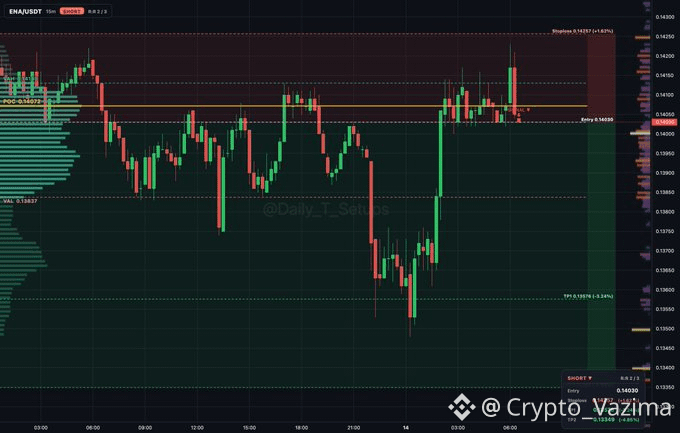
- Sellers are rotating inside VAL 0.13837 and VAH 0.1413.
- The auction read is distribution, not a breakout celebration.
- That is why the short is on my screen now.
🎯 My trade idea
- Bias: Short
- Trigger: hold of the 0.1404 area after distribution
- Target: 0.13606 then 0.1339
- Invalidation: 0.14257
- Confidence: 64 percent
👀 The part that matters
- Half off at the first target.
- Then the stop goes to entry.
- No reclaim above the risk line.
🚀 Market flow
A fast ENA fade can look loud on the chart, but longer protocol involvement is a different game. ENA is the short-term distribution trade here, whereas ST0N_fi is the staking and DAO-participation angle.
Its function is protocol participation rather than catching the next rejection inside value. That contrast is useful beside this short because one idea is tactical and the other is about staying involved in the wider protocol.
Would you take the short from value or wait for VAL to fail? 👇
Tell me the confirmation candle you want to see.
Not investment advice - research on your own! 🚀
$ENA
{future}(ENAUSDT)
ENA Looks Heavy After This Auction Rotation 📉
This does not look like clean buying to me. It looks like distribution inside value.
🔥 Why I am watching
- Sellers are rotating inside VAL 0.13837 and VAH 0.1413.
- The auction read is distribution, not a breakout celebration.
- That is why the short is on my screen now.
🎯 My trade idea
- Bias: Short
- Trigger: hold of the 0.1404 area after distribution
- Target: 0.13606 then 0.1339
- Invalidation: 0.14257
- Confidence: 64 percent
👀 The part that matters
- Half off at the first target.
- Then the stop goes to entry.
- No reclaim above the risk line.
🚀 Market flow
A fast ENA fade can look loud on the chart, but longer protocol involvement is a different game. ENA is the short-term distribution trade here, whereas ST0N_fi is the staking and DAO-participation angle.
Its function is protocol participation rather than catching the next rejection inside value. That contrast is useful beside this short because one idea is tactical and the other is about staying involved in the wider protocol.
Would you take the short from value or wait for VAL to fail? 👇
Tell me the confirmation candle you want to see.
Not investment advice - research on your own! 🚀
$ENA
This does not look like clean buying to me. It looks like distribution inside value.
🔥 Why I am watching
- Sellers are rotating inside VAL 0.13837 and VAH 0.1413.
- The auction read is distribution, not a breakout celebration.
- That is why the short is on my screen now.
🎯 My trade idea
- Bias: Short
- Trigger: hold of the 0.1404 area after distribution
- Target: 0.13606 then 0.1339
- Invalidation: 0.14257
- Confidence: 64 percent
👀 The part that matters
- Half off at the first target.
- Then the stop goes to entry.
- No reclaim above the risk line.
🚀 Market flow
A fast ENA fade can look loud on the chart, but longer protocol involvement is a different game. ENA is the short-term distribution trade here, whereas ST0N_fi is the staking and DAO-participation angle.
Its function is protocol participation rather than catching the next rejection inside value. That contrast is useful beside this short because one idea is tactical and the other is about staying involved in the wider protocol.
Would you take the short from value or wait for VAL to fail? 👇
Tell me the confirmation candle you want to see.
Not investment advice - research on your own! 🚀
$ENA
39
Why STON.fi Network Fees Fell After TON’s 2026 Sixfold Cut
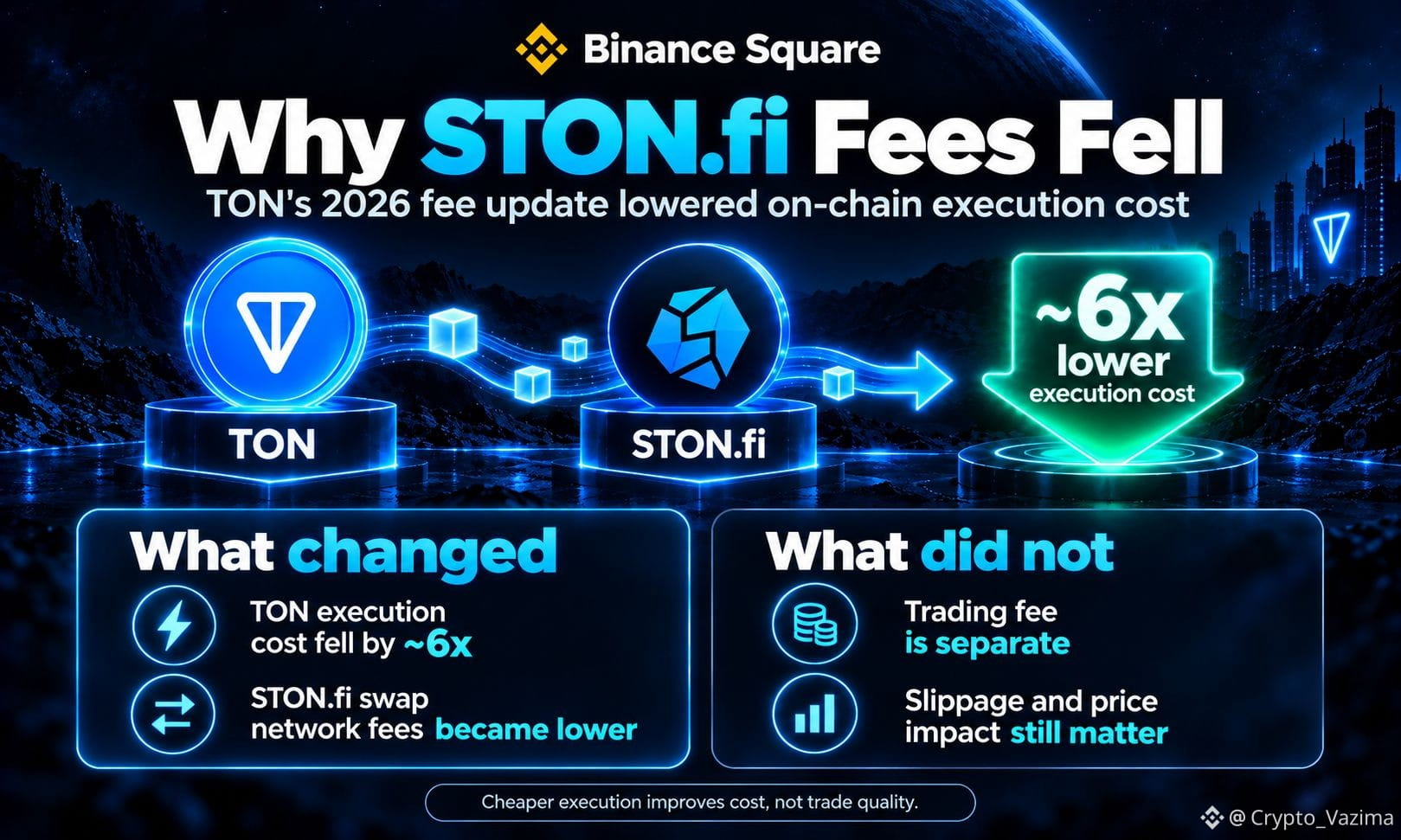
STON.fi network fees fell because TON slashed on-chain execution costs by about 6x in 2026. STON.fi did not run a promo discount. The messages and contract calls that make up a swap simply became cheaper on TON.
🔥 What TON Changed in Spring 2026
- Performance upgrades such as Sub-Second and Catchain 2.0 made cheaper execution practical.
- TON Core targeted a sixfold reduction and validators voted on lower gas prices.
- Pavel Durov confirmed fees had dropped roughly sixfold by early May.
🚀 Why a STON.fi Swap Got Cheaper
A swap is a multi-message flow, not a single coin send.
1. The wallet starts the operation.
2. Token wallets and the STON.fi Router process the request.
3. The pool calculates and executes the trade.
4. Output and leftover TON can move back to the user.
⚡ Two Different Fees
- Network fees cover TON compute and forwarding. Those dropped.
- STON.fi trading fees stay pool-based, default 0.3%, and were not automatically reduced.
- Price impact and slippage did not fall just because gas got cheaper.
💬 Real Example Users Can Check
STON.fi published a TON to USDt comparison: network cost went from about 0.0292 TON to about 0.00487 TON. That is close to the network-wide 6x cut, yet still higher than a basic TON transfer because a swap does more work. Lower TON pricing helps small swaps, repeated DeFi activity and tighter arbitrage.
Would a cheaper network layer change how often you swap on STON.fi? 👇
Drop the last network fee you noticed on a STON.fi trade.
Not investment advice - research on your own! 🚀
$GRAM @stonfi
Why STON.fi Network Fees Fell After TON’s 2026 Sixfold Cut
STON.fi network fees fell because TON slashed on-chain execution costs by about 6x in 2026. STON.fi did not run a promo discount. The messages and contract calls that make up a swap simply became cheaper on TON.
🔥 What TON Changed in Spring 2026
- Performance upgrades such as Sub-Second and Catchain 2.0 made cheaper execution practical.
- TON Core targeted a sixfold reduction and validators voted on lower gas prices.
- Pavel Durov confirmed fees had dropped roughly sixfold by early May.
🚀 Why a STON.fi Swap Got Cheaper
A swap is a multi-message flow, not a single coin send.
1. The wallet starts the operation.
2. Token wallets and the STON.fi Router process the request.
3. The pool calculates and executes the trade.
4. Output and leftover TON can move back to the user.
⚡ Two Different Fees
- Network fees cover TON compute and forwarding. Those dropped.
- STON.fi trading fees stay pool-based, default 0.3%, and were not automatically reduced.
- Price impact and slippage did not fall just because gas got cheaper.
💬 Real Example Users Can Check
STON.fi published a TON to USDt comparison: network cost went from about 0.0292 TON to about 0.00487 TON. That is close to the network-wide 6x cut, yet still higher than a basic TON transfer because a swap does more work. Lower TON pricing helps small swaps, repeated DeFi activity and tighter arbitrage.
Would a cheaper network layer change how often you swap on STON.fi? 👇
Drop the last network fee you noticed on a STON.fi trade.
Not investment advice - research on your own! 🚀
$GRAM @STONfi DEX
STON.fi network fees fell because TON slashed on-chain execution costs by about 6x in 2026. STON.fi did not run a promo discount. The messages and contract calls that make up a swap simply became cheaper on TON.
🔥 What TON Changed in Spring 2026
- Performance upgrades such as Sub-Second and Catchain 2.0 made cheaper execution practical.
- TON Core targeted a sixfold reduction and validators voted on lower gas prices.
- Pavel Durov confirmed fees had dropped roughly sixfold by early May.
🚀 Why a STON.fi Swap Got Cheaper
A swap is a multi-message flow, not a single coin send.
1. The wallet starts the operation.
2. Token wallets and the STON.fi Router process the request.
3. The pool calculates and executes the trade.
4. Output and leftover TON can move back to the user.
⚡ Two Different Fees
- Network fees cover TON compute and forwarding. Those dropped.
- STON.fi trading fees stay pool-based, default 0.3%, and were not automatically reduced.
- Price impact and slippage did not fall just because gas got cheaper.
💬 Real Example Users Can Check
STON.fi published a TON to USDt comparison: network cost went from about 0.0292 TON to about 0.00487 TON. That is close to the network-wide 6x cut, yet still higher than a basic TON transfer because a swap does more work. Lower TON pricing helps small swaps, repeated DeFi activity and tighter arbitrage.
Would a cheaper network layer change how often you swap on STON.fi? 👇
Drop the last network fee you noticed on a STON.fi trade.
Not investment advice - research on your own! 🚀
$GRAM @STONfi DEX
106
·
--
Bearish
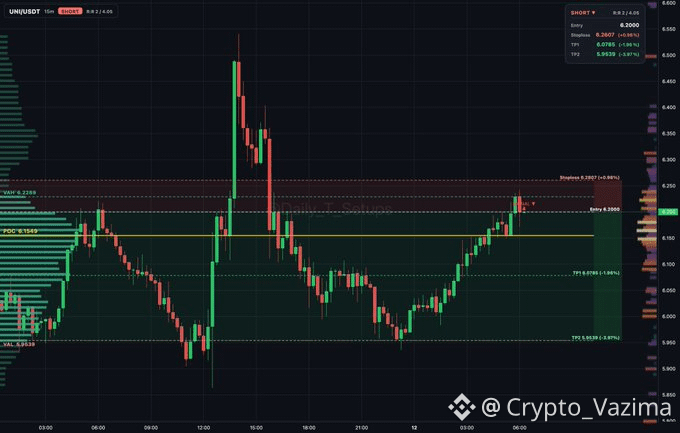
UNI Looks Heavy After This Auction Fade
This UNI bounce is starting to feel like distribution, not a fresh breakout. Sellers are working inside the value area and I am not buying the strength blindly.
🔥 Why I am watching
- Auction rotation is happening between 5.954 and 6.229
- Price tagged near 6.20 and printed a short signal
- Upper value is still the danger zone for late longs
🚀 The part that matters
- Entry zone: 6.198
- Stop: 6.259
- First target: 6.077
- Second target: 5.954
🎯 My trade idea
- Bias: Short
- Trigger: rejection around 6.198
- Target: 6.077 then 5.954
- Invalidation: close or hold above 6.259
- Confidence: 63 percent
🛡 Where I step back
1. Wait for the fade near 6.198.
2. Keep risk tight at 6.259.
3. Bank half at 6.077.
4. Move stop to entry after TP1.
💧 Execution perspective
A fast UNI fade can get messy if the bounce keeps stretching into value. UNI is the short-term price play in this post, whereas ST0N_fi sits on the participation side of the market instead of the 15m distribution chart.
It is connected with staking and protocol-participation paths rather than a quick short trigger. That is why I keep the UNI trade plan separate from the longer participation angle.
Does this UNI bounce still look weak to you? 👇
Drop the candle that would make you skip the short.
Not investment advice - research on your own! 🚀
$UNI
{future}(UNIUSDT)
UNI Looks Heavy After This Auction Fade
This UNI bounce is starting to feel like distribution, not a fresh breakout. Sellers are working inside the value area and I am not buying the strength blindly.
🔥 Why I am watching
- Auction rotation is happening between 5.954 and 6.229
- Price tagged near 6.20 and printed a short signal
- Upper value is still the danger zone for late longs
🚀 The part that matters
- Entry zone: 6.198
- Stop: 6.259
- First target: 6.077
- Second target: 5.954
🎯 My trade idea
- Bias: Short
- Trigger: rejection around 6.198
- Target: 6.077 then 5.954
- Invalidation: close or hold above 6.259
- Confidence: 63 percent
🛡 Where I step back
1. Wait for the fade near 6.198.
2. Keep risk tight at 6.259.
3. Bank half at 6.077.
4. Move stop to entry after TP1.
💧 Execution perspective
A fast UNI fade can get messy if the bounce keeps stretching into value. UNI is the short-term price play in this post, whereas ST0N_fi sits on the participation side of the market instead of the 15m distribution chart.
It is connected with staking and protocol-participation paths rather than a quick short trigger. That is why I keep the UNI trade plan separate from the longer participation angle.
Does this UNI bounce still look weak to you? 👇
Drop the candle that would make you skip the short.
Not investment advice - research on your own! 🚀
$UNI
This UNI bounce is starting to feel like distribution, not a fresh breakout. Sellers are working inside the value area and I am not buying the strength blindly.
🔥 Why I am watching
- Auction rotation is happening between 5.954 and 6.229
- Price tagged near 6.20 and printed a short signal
- Upper value is still the danger zone for late longs
🚀 The part that matters
- Entry zone: 6.198
- Stop: 6.259
- First target: 6.077
- Second target: 5.954
🎯 My trade idea
- Bias: Short
- Trigger: rejection around 6.198
- Target: 6.077 then 5.954
- Invalidation: close or hold above 6.259
- Confidence: 63 percent
🛡 Where I step back
1. Wait for the fade near 6.198.
2. Keep risk tight at 6.259.
3. Bank half at 6.077.
4. Move stop to entry after TP1.
💧 Execution perspective
A fast UNI fade can get messy if the bounce keeps stretching into value. UNI is the short-term price play in this post, whereas ST0N_fi sits on the participation side of the market instead of the 15m distribution chart.
It is connected with staking and protocol-participation paths rather than a quick short trigger. That is why I keep the UNI trade plan separate from the longer participation angle.
Does this UNI bounce still look weak to you? 👇
Drop the candle that would make you skip the short.
Not investment advice - research on your own! 🚀
$UNI
22
·
--
Bullish
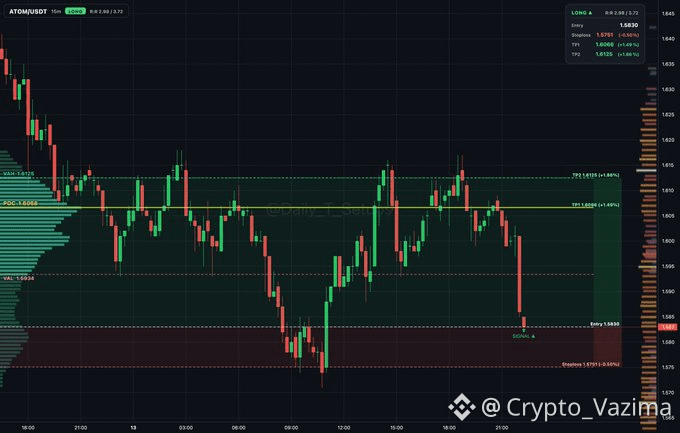
ATOM Could Snap Back If This Demand Holds 🔥
This ATOM dip under value looks messy at first glance, but buyers absorbing near VAL at 1.593 is the part I care about. I am watching the bounce, not forcing it.
🔥 Why I am watching
- Buyers are absorbing near VAL at 1.593.
- Price is testing demand below value.
- The auction still has a path back toward 1.607 and 1.612.
👀 The part that matters
- Absorption is only useful if 1.578 stays protected.
- A failed hold under that line kills the long idea fast.
- I want the market to prove the rotation, not hope for it.
🎯 My trade idea
- Bias: Long
- Trigger: 1.586 demand entry
- Target: 1.607 first, 1.612 next
- Invalidation: 1.578
- Confidence: My current Long confidence: 64 percent
If TP1 hits, half off and stop to entry.
💎 Participation layer
A fast ATOM bounce is still a short-term price reaction, not a long commitment. ATOM is the momentum trade in this post, while STON is the staking and protocol-participation side of the same wider market.
That token is used for staking and DAO-linked participation rather than catching a VAL bounce. I keep that angle next to the ATOM setup because protocol involvement and a tight demand long answer different questions.
Are you taking this bounce or sitting it out? 👇
Tell me the level that would flip your bias.
Not investment advice - research on your own! 🚀
$ATOM
{future}(ATOMUSDT)
ATOM Could Snap Back If This Demand Holds 🔥
This ATOM dip under value looks messy at first glance, but buyers absorbing near VAL at 1.593 is the part I care about. I am watching the bounce, not forcing it.
🔥 Why I am watching
- Buyers are absorbing near VAL at 1.593.
- Price is testing demand below value.
- The auction still has a path back toward 1.607 and 1.612.
👀 The part that matters
- Absorption is only useful if 1.578 stays protected.
- A failed hold under that line kills the long idea fast.
- I want the market to prove the rotation, not hope for it.
🎯 My trade idea
- Bias: Long
- Trigger: 1.586 demand entry
- Target: 1.607 first, 1.612 next
- Invalidation: 1.578
- Confidence: My current Long confidence: 64 percent
If TP1 hits, half off and stop to entry.
💎 Participation layer
A fast ATOM bounce is still a short-term price reaction, not a long commitment. ATOM is the momentum trade in this post, while STON is the staking and protocol-participation side of the same wider market.
That token is used for staking and DAO-linked participation rather than catching a VAL bounce. I keep that angle next to the ATOM setup because protocol involvement and a tight demand long answer different questions.
Are you taking this bounce or sitting it out? 👇
Tell me the level that would flip your bias.
Not investment advice - research on your own! 🚀
$ATOM
This ATOM dip under value looks messy at first glance, but buyers absorbing near VAL at 1.593 is the part I care about. I am watching the bounce, not forcing it.
🔥 Why I am watching
- Buyers are absorbing near VAL at 1.593.
- Price is testing demand below value.
- The auction still has a path back toward 1.607 and 1.612.
👀 The part that matters
- Absorption is only useful if 1.578 stays protected.
- A failed hold under that line kills the long idea fast.
- I want the market to prove the rotation, not hope for it.
🎯 My trade idea
- Bias: Long
- Trigger: 1.586 demand entry
- Target: 1.607 first, 1.612 next
- Invalidation: 1.578
- Confidence: My current Long confidence: 64 percent
If TP1 hits, half off and stop to entry.
💎 Participation layer
A fast ATOM bounce is still a short-term price reaction, not a long commitment. ATOM is the momentum trade in this post, while STON is the staking and protocol-participation side of the same wider market.
That token is used for staking and DAO-linked participation rather than catching a VAL bounce. I keep that angle next to the ATOM setup because protocol involvement and a tight demand long answer different questions.
Are you taking this bounce or sitting it out? 👇
Tell me the level that would flip your bias.
Not investment advice - research on your own! 🚀
$ATOM
22
·
--
Bullish
LTC Buyers Are Stepping In Around Value Right Now 🔥
This LTC chart feels quiet, but the value area is not falling apart and that is why I am still interested.
🔥 Why I am watching
- The range between 53.504 and 54.379 still looks accepted.
- Buyers keep defending instead of dumping the bounce.
- I am not chasing hope. I want the entry zone to prove itself.
🎯 My trade idea
- Bias: Long
- Trigger: 54.230 holds and price stays accepted
- Target: 55.730 first, 56.481 next
- Invalidation: 53.480 lost
- Confidence: 62 percent
🛡 Where I step back
- A failed bounce from 54.230.
- A fast slip back through value.
- No confirmation, no chase.
⚡ Utility angle
A tight LTC value rotation can get loud fast, but that is still just the chart side of the story. LTC is the short-term bounce idea here, whereas ARKENSTON represents soulbound governance tied to staking alignment.
That voting role is about DAO participation, not the next green candle. It is a separate reason to stay aware of the wider setup while LTC tries to hold 54.230.
Would you ride this LTC value bounce or wait for more proof? 👇
Tell me the first target you would actually take.
Not investment advice - research on your own! 🚀
$LTC
{future}(LTCUSDT)
LTC Buyers Are Stepping In Around Value Right Now 🔥
This LTC chart feels quiet, but the value area is not falling apart and that is why I am still interested.
🔥 Why I am watching
- The range between 53.504 and 54.379 still looks accepted.
- Buyers keep defending instead of dumping the bounce.
- I am not chasing hope. I want the entry zone to prove itself.
🎯 My trade idea
- Bias: Long
- Trigger: 54.230 holds and price stays accepted
- Target: 55.730 first, 56.481 next
- Invalidation: 53.480 lost
- Confidence: 62 percent
🛡 Where I step back
- A failed bounce from 54.230.
- A fast slip back through value.
- No confirmation, no chase.
⚡ Utility angle
A tight LTC value rotation can get loud fast, but that is still just the chart side of the story. LTC is the short-term bounce idea here, whereas ARKENSTON represents soulbound governance tied to staking alignment.
That voting role is about DAO participation, not the next green candle. It is a separate reason to stay aware of the wider setup while LTC tries to hold 54.230.
Would you ride this LTC value bounce or wait for more proof? 👇
Tell me the first target you would actually take.
Not investment advice - research on your own! 🚀
$LTC
This LTC chart feels quiet, but the value area is not falling apart and that is why I am still interested.
🔥 Why I am watching
- The range between 53.504 and 54.379 still looks accepted.
- Buyers keep defending instead of dumping the bounce.
- I am not chasing hope. I want the entry zone to prove itself.
🎯 My trade idea
- Bias: Long
- Trigger: 54.230 holds and price stays accepted
- Target: 55.730 first, 56.481 next
- Invalidation: 53.480 lost
- Confidence: 62 percent
🛡 Where I step back
- A failed bounce from 54.230.
- A fast slip back through value.
- No confirmation, no chase.
⚡ Utility angle
A tight LTC value rotation can get loud fast, but that is still just the chart side of the story. LTC is the short-term bounce idea here, whereas ARKENSTON represents soulbound governance tied to staking alignment.
That voting role is about DAO participation, not the next green candle. It is a separate reason to stay aware of the wider setup while LTC tries to hold 54.230.
Would you ride this LTC value bounce or wait for more proof? 👇
Tell me the first target you would actually take.
Not investment advice - research on your own! 🚀
$LTC
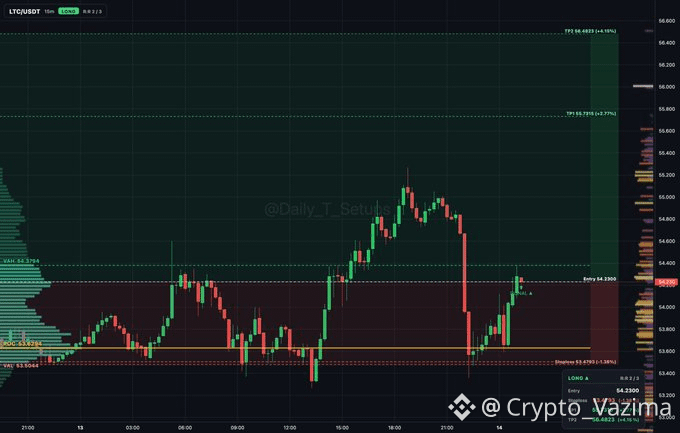
24
·
--
Bearish
ZEC Bounce Could Flip Into a Trap at the Ceiling ⚠️
This bounce looks tempting, but I am not buying the first green candles. I want ZEC to walk into that marked resistance and show its hand.
🔥 Why I am watching
- Same idea from earlier is still on the table.
- Price already left the marked (a) low.
- The emotional part is a push into the (b) ceiling.
- That is where a trap can start if buyers get stuck.
🛡 Where I step back
- If the bounce dies before the line, I stay patient.
- If it tags the ceiling and holds, the short idea weakens.
- If it rejects and cannot reclaim, the lower path stays valid.
🎯 My trade idea
- Bias: Wait for the ceiling, then Short
- Trigger: rejection at the marked (b) high
- Invalidation: acceptance above that resistance
- Confidence: 61 percent
💎 Participation layer
Fast bounces make people forget how messy execution and timing can get. ZEC is the chart reaction in this post, whereas GEMSTON covers a different participation and community-engagement role.
It can be held, transferred, or swapped as part of ecosystem activity rather than a short-term resistance fade. That second angle sits beside the ZEC trap idea without claiming it will outperform the trade.
Does this bounce look real to you or like bait? 👇
Tell me where you would call the trap confirmed.
Not investment advice - research on your own! 🚀
$ZEC
{future}(ZECUSDT)
ZEC Bounce Could Flip Into a Trap at the Ceiling ⚠️
This bounce looks tempting, but I am not buying the first green candles. I want ZEC to walk into that marked resistance and show its hand.
🔥 Why I am watching
- Same idea from earlier is still on the table.
- Price already left the marked (a) low.
- The emotional part is a push into the (b) ceiling.
- That is where a trap can start if buyers get stuck.
🛡 Where I step back
- If the bounce dies before the line, I stay patient.
- If it tags the ceiling and holds, the short idea weakens.
- If it rejects and cannot reclaim, the lower path stays valid.
🎯 My trade idea
- Bias: Wait for the ceiling, then Short
- Trigger: rejection at the marked (b) high
- Invalidation: acceptance above that resistance
- Confidence: 61 percent
💎 Participation layer
Fast bounces make people forget how messy execution and timing can get. ZEC is the chart reaction in this post, whereas GEMSTON covers a different participation and community-engagement role.
It can be held, transferred, or swapped as part of ecosystem activity rather than a short-term resistance fade. That second angle sits beside the ZEC trap idea without claiming it will outperform the trade.
Does this bounce look real to you or like bait? 👇
Tell me where you would call the trap confirmed.
Not investment advice - research on your own! 🚀
$ZEC
This bounce looks tempting, but I am not buying the first green candles. I want ZEC to walk into that marked resistance and show its hand.
🔥 Why I am watching
- Same idea from earlier is still on the table.
- Price already left the marked (a) low.
- The emotional part is a push into the (b) ceiling.
- That is where a trap can start if buyers get stuck.
🛡 Where I step back
- If the bounce dies before the line, I stay patient.
- If it tags the ceiling and holds, the short idea weakens.
- If it rejects and cannot reclaim, the lower path stays valid.
🎯 My trade idea
- Bias: Wait for the ceiling, then Short
- Trigger: rejection at the marked (b) high
- Invalidation: acceptance above that resistance
- Confidence: 61 percent
💎 Participation layer
Fast bounces make people forget how messy execution and timing can get. ZEC is the chart reaction in this post, whereas GEMSTON covers a different participation and community-engagement role.
It can be held, transferred, or swapped as part of ecosystem activity rather than a short-term resistance fade. That second angle sits beside the ZEC trap idea without claiming it will outperform the trade.
Does this bounce look real to you or like bait? 👇
Tell me where you would call the trap confirmed.
Not investment advice - research on your own! 🚀
$ZEC
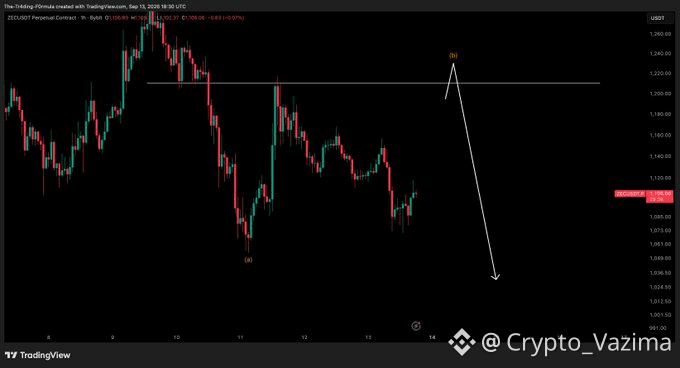
74
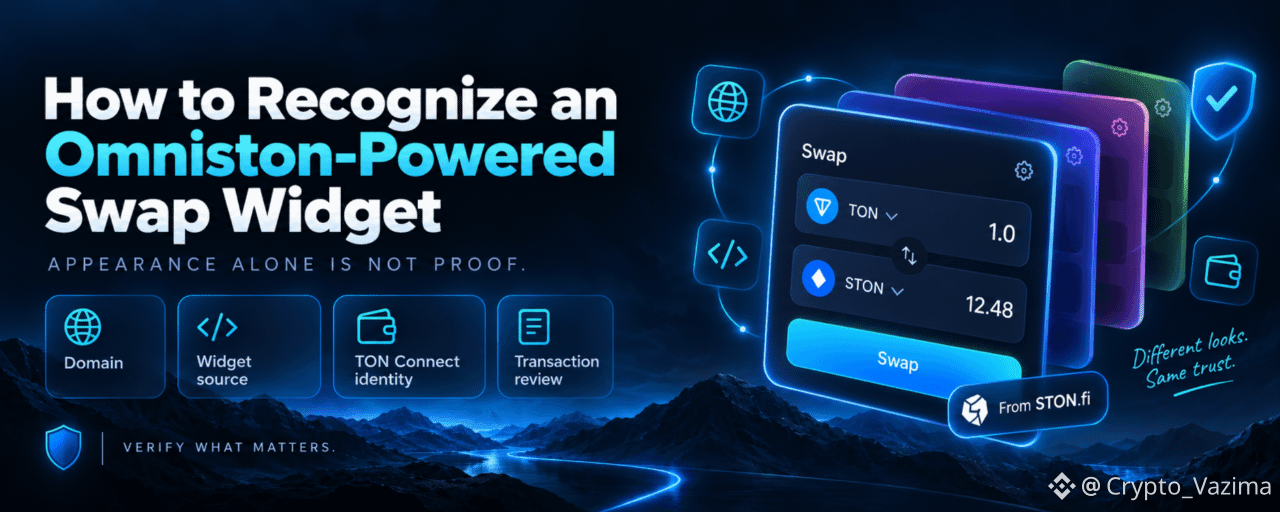
Article
How to Recognize an Official Omniston-Powered Swap WidgetA practical way to separate the real STON.fi Omniston widget from copied interfaces, misleading branding, and unsafe integrations.
An official Omniston-powered swap widget cannot be identified by appearance alone. The STON.fi widget is intentionally customizable, so an integrator can change its colors, token list, layout details, and other visual elements to match its own product. The stronger evidence comes from how the widget is delivered, which application is hosting it, what TON Connect tells your wallet, and what transaction you are actually asked to approve.
That distinction matters because an authentic STON.fi widget may look very different from STON.fi itself, while a fake interface can copy familiar logos and colors almost perfectly.
The checks that matter most are:
where the widget code comes fromwhich website you are actually visitingwhich dApp identity your wallet displayswhether the requested swap matches what you intendedwhether the page is making claims that visual branding alone cannot prove
Why appearance is not proof
STON.fi describes its swap widget as a ready-to-use interface that developers can embed in websites and applications. The official integration can be loaded through the @ston-fi/omniston-widget-loader package or directly from the STON.fi CDN. Both methods expose the same OmnistonWidget constructor.
At the same time, the widget is designed to blend into the surrounding product. Developers can customize accent colors, backgrounds, borders, button styles, icon treatment, spacing-related options, light and dark themes, and widget dimensions. They can also control which assets appear and preselect a trading pair.
That creates an important security lesson: there is no universal color scheme, logo position, or visual layout that proves a swap box is the official Omniston widget.
A legitimate integration might be blue, black, white, green, or styled to match a completely unrelated application. Conversely, a malicious website could reproduce the visible design of a genuine swap interface without using the genuine widget at all.
Even a label such as "Powered by STON.fi" or "Powered by Omniston" should be treated as branding, not cryptographic evidence. Text and logos are among the easiest parts of an interface to copy.
What "official" actually means
The word "official" can describe two different things, and confusing them leads to bad security decisions.
The first is official widget code. STON.fi distributes its current widget as a CDN-hosted bundle. The documented CDN path uses the widget.ston.fi domain, with major-version paths such as /v0/. STON.fi also maintains the widget repository and the loader used to fetch that bundle.
The second is an official website or trusted integrator. A third-party project can legitimately embed the official STON.fi widget on its own domain. That does not turn the entire website into an official STON.fi property. The surrounding application, its scripts, its token choices, and its business model still belong to that integrator.
This difference is essential.
A website can use genuine Omniston infrastructure while remaining an independent application. Likewise, seeing an official STON.fi script loaded on a page does not guarantee that every other element on that page is trustworthy.
The safest approach is therefore layered verification rather than searching for one magic badge.
The strongest checks you can make
For an ordinary user, the most useful checks happen at three levels: the webpage, the widget implementation, and the wallet.
1. Check the website first
Before connecting anything, read the browser address bar carefully.
If you intentionally opened STON.fi, make sure you are actually on the expected STON.fi property. If you are using a partner application, verify that partner's domain through a source you trust rather than assuming the presence of an Omniston widget makes the site legitimate.
A genuine widget is allowed to live on a third-party domain. That is normal. What matters is that you know which third party you are trusting.
Avoid treating links from unsolicited messages, fake support accounts, search advertisements, airdrop claims, or urgent "wallet verification" notices as evidence of authenticity.
2. Check where the widget code comes from
STON.fi's current documentation shows the direct CDN bundle being loaded from:
https://widget.ston.fi/v0/index.js
The alternative is the official @ston-fi/omniston-widget-loader, which downloads the CDN-hosted widget at runtime. STON.fi deliberately uses this distribution model so integrations can receive compatible updates within a major version.
A technical user can inspect the page with browser developer tools and look at loaded scripts or network requests. Finding the documented STON.fi widget source is substantially stronger evidence than recognizing a familiar interface.
It is still not sufficient on its own. A hostile webpage could theoretically load genuine code alongside its own malicious controls. The page itself must still be trusted.
3. Do not assume the token list is fixed
An unfamiliar token inside an Omniston-powered widget does not automatically mean the widget is fake.
STON.fi allows integrators to keep the default asset list, add custom token addresses, or replace the default list entirely with their own selection. Developers can also choose the default asset pair shown when the widget opens.
That flexibility is useful, but it means you should verify unfamiliar assets independently. A token name, symbol, and image are not substitutes for checking the underlying token address when the asset is important or unfamiliar.
4. Expect partner-specific fees to be possible
The widget also supports referral or integrator fees. Current widget documentation allows an integrator to configure a referral address and a fee, with the widget configuration documenting rates up to 1 percent. Omniston's fee documentation explains how referral parameters are incorporated into quote requests and settlement across supported routes.
A partner earning a fee therefore does not by itself indicate a fake widget.
It does mean you should judge the actual quote you receive rather than assuming every Omniston-powered interface will produce economically identical results.
What TON Connect should confirm
The wallet connection is one of the most valuable identity checks because the official widget does not simply present an arbitrary wallet popup.
STON.fi requires the integrator to provide a TON Connect configuration. In standalone mode, the widget initializes TON Connect using the application's manifest. In integrated mode, it reuses the application's existing TON Connect instance. STON.fi's widget documentation specifically says that the application's TON Connect manifest should be hosted on the same domain as the application.
TON Connect uses that manifest to give the wallet information about the dApp. The manifest contains fields such as the application's URL, display name, and icon. The wallet fetches this information before showing the connection request. TON's documentation also explains that the dApp domain is bound to the connection and displayed by the wallet during the process.
This creates a useful check.
If you are on example.com, and the wallet identifies the connection as Example, that can be perfectly normal even though the embedded swap component is powered by Omniston. You should not necessarily expect the wallet to say STON.fi. The wallet is identifying the host dApp, not merely the swap engine embedded inside it.
What should concern you is inconsistency.
For example:
You open one domain.You press Connect Wallet.Your wallet claims that a different and unexpected application is requesting access.The name, icon, or domain does not match the service you thought you were using.
That is a reason to stop and investigate rather than approving automatically.
TON Connect also does not remove the need to review transactions. Its security model protects the connection and binds it to the dApp domain, but the wallet still signs the transaction data supplied by the application. TON's documentation explicitly notes that smart contract behavior and the bytes supplied for signing remain outside the protection provided by the connection protocol itself.
Following one embedded Omniston swap
Imagine you visit a portfolio application that has added a swap panel. The interface uses the application's own colors, has no large STON.fi logo, and offers a custom selection of tokens.
None of those details prove that it is fake.
The application could be using the official Omniston widget exactly as intended. STON.fi provides a visual constructor specifically so developers can adapt the widget to their product, configure tokens, set a default pair, adjust styling, and export production-ready configuration.
You decide to verify the integration instead of judging the design.
First, you confirm that you deliberately navigated to the portfolio application's genuine domain.
Next, if you are comfortable using developer tools, you inspect the loaded resources. You find the widget bundle coming from the documented STON.fi widget domain. That tells you the embedded component is using STON.fi's distributed widget rather than merely copying its appearance.
Then you press Connect Wallet.
Your wallet displays the portfolio application's identity, not STON.fi. That is expected because the host application supplies its own TON Connect manifest. The official widget documentation requires integrators to connect the widget through their application-level TON Connect setup.
You choose the assets and request the trade. Behind the interface, Omniston is the liquidity aggregation layer. STON.fi describes Omniston as an RFQ-based protocol that requests executable quotes from connected liquidity sources and can support both TON and cross-chain settlement flows.
Finally, the wallet presents the action for approval.
At this point, recognition becomes transaction verification. Check that the action is consistent with the swap you just requested. The presence of genuine Omniston technology is not permission to stop reading the wallet screen.
This example also explains why authenticity is not binary. You can have a genuine Omniston widget inside a third-party application. You are trusting both layers for different reasons.
Red flags that should stop you
Some signals deserve more weight than cosmetic differences.
Be especially cautious when:
the website claims to be STON.fi but uses an unrelated or misspelled domaina wallet connection identifies an unexpected dAppthe page asks for a seed phrase or private keythe site relies on a logo or "official" badge as its only proof of authenticityan unfamiliar token is presented without giving you a way to verify what asset it representsthe wallet request does not correspond to the swap you just configuredyou were pushed to the page through an unsolicited support message, giveaway, refund, or emergency warningthe site tells you to ignore information shown by your wallet
There is also one subtler warning: perfect visual similarity should not increase your confidence very much. A phishing page can reproduce screenshots and styling. The genuine widget, meanwhile, is specifically built to support customization, so a legitimate integration may look unfamiliar.
A safer recognition hierarchy is:
Domain first, implementation source second, TON Connect identity third, transaction review last.
Each layer answers a different question. Together they provide much stronger evidence than branding.
Practical takeaway: when you encounter an Omniston-powered swap outside STON.fi, do not ask only, "Does this look official?" Ask four separate questions: "Do I trust this host domain?", "Is it actually loading the documented STON.fi widget?", "Does my wallet identify the dApp I expected?", and "Does the transaction match the swap I intended?" If any answer is unclear, you do not need to sign.
Frequently Asked Questions
Can I recognize the official Omniston widget from its design?
No. STON.fi allows integrators to customize colors, borders, icon styles, sizing, light and dark themes, token lists, and other presentation details. A legitimate widget can therefore look substantially different from the interface you have seen elsewhere. Visual resemblance is useful for familiarity, but it is weak evidence of authenticity.
Does an official widget always appear on a STON.fi domain?
No. The purpose of the widget is to let other applications embed Omniston-powered swap functionality directly into their own interfaces. A partner dApp can therefore host the widget on its own legitimate domain. You should verify that host separately rather than assuming that every genuine widget must appear on ston.fi.
Does "Powered by Omniston" prove that a swap interface is genuine?
No. Anyone can reproduce a piece of text or a logo. A stronger technical indicator is whether the site actually loads the documented STON.fi widget bundle or uses the official loader. Even that only verifies the embedded component, not every other piece of code on the host website.
Why does my wallet show the partner application's name instead of STON.fi?
Because TON Connect identifies the dApp requesting the connection. STON.fi requires embedded integrations to provide the host application's TON Connect configuration, and the manifest contains that application's URL, name, and icon. Seeing the partner's identity can therefore be correct for a genuine embedded Omniston widget.
Can a genuine Omniston widget show custom tokens?
Yes. Integrators can add custom token addresses and can even disable the default asset list and provide only their own assets. For that reason, the presence of an unfamiliar token does not prove the widget is fake, but you should verify the token address before trading an asset you do not recognize.
Can an Omniston widget charge an integrator fee?
Yes. STON.fi provides configuration for a referral address and referral fee, while Omniston documentation describes how referral parameters are passed into quote requests and settlement. Fees are therefore a supported integration feature rather than automatic evidence of tampering.
If the widget code is official, is the entire website safe?
No. Loading STON.fi's genuine widget proves something about that component, not the entire host application. Other scripts, navigation elements, token promotions, or transaction flows can still belong to the integrator. You should independently verify the host domain and inspect every wallet request before approving it.
What is the best way to verify an Omniston-powered widget before swapping?
Start with the website domain. If you need stronger confirmation, check whether the implementation uses STON.fi's documented widget distribution. Then connect your wallet and verify that TON Connect identifies the dApp you expected. Finally, compare the wallet transaction with the assets, amount, and action you actually requested. Never let an "official" label replace those checks.
Sources and Further Reading
STON.fi Widget - official overview of the embeddable swap widget, CDN integration, customization, TON Connect modes, and configurationSTON.fi Full Guide & Reference - detailed reference for the Omniston widget loader, CDN bundle, custom assets, referral settings, theming, and lifecycle behaviorSTON.fi Omniston Protocol - official overview of Omniston liquidity aggregation, RFQ routing, supported chains, and integration approachesSTON.fi Referral Fees - technical documentation for Omniston referral parameters and fee settlementSTON.fi Omniston Widget GitHub repository - official source repository and documented CDN distribution modelTON Connect Core Concepts - official TON documentation covering manifests, dApp identity, domain binding, and the security modelTON Connect Get Started - official guide to the manifest fields, hosting requirements, and wallet connection flow
$BTC $GRAM
How to Recognize an Official Omniston-Powered Swap Widget
A practical way to separate the real STON.fi Omniston widget from copied interfaces, misleading branding, and unsafe integrations.
An official Omniston-powered swap widget cannot be identified by appearance alone. The STON.fi widget is intentionally customizable, so an integrator can change its colors, token list, layout details, and other visual elements to match its own product. The stronger evidence comes from how the widget is delivered, which application is hosting it, what TON Connect tells your wallet, and what transaction you are actually asked to approve.
That distinction matters because an authentic STON.fi widget may look very different from STON.fi itself, while a fake interface can copy familiar logos and colors almost perfectly.
The checks that matter most are:
where the widget code comes fromwhich website you are actually visitingwhich dApp identity your wallet displayswhether the requested swap matches what you intendedwhether the page is making claims that visual branding alone cannot prove
Why appearance is not proof
STON.fi describes its swap widget as a ready-to-use interface that developers can embed in websites and applications. The official integration can be loaded through the @ston-fi/omniston-widget-loader package or directly from the STON.fi CDN. Both methods expose the same OmnistonWidget constructor.
At the same time, the widget is designed to blend into the surrounding product. Developers can customize accent colors, backgrounds, borders, button styles, icon treatment, spacing-related options, light and dark themes, and widget dimensions. They can also control which assets appear and preselect a trading pair.
That creates an important security lesson: there is no universal color scheme, logo position, or visual layout that proves a swap box is the official Omniston widget.
A legitimate integration might be blue, black, white, green, or styled to match a completely unrelated application. Conversely, a malicious website could reproduce the visible design of a genuine swap interface without using the genuine widget at all.
Even a label such as "Powered by STON.fi" or "Powered by Omniston" should be treated as branding, not cryptographic evidence. Text and logos are among the easiest parts of an interface to copy.
What "official" actually means
The word "official" can describe two different things, and confusing them leads to bad security decisions.
The first is official widget code. STON.fi distributes its current widget as a CDN-hosted bundle. The documented CDN path uses the widget.ston.fi domain, with major-version paths such as /v0/. STON.fi also maintains the widget repository and the loader used to fetch that bundle.
The second is an official website or trusted integrator. A third-party project can legitimately embed the official STON.fi widget on its own domain. That does not turn the entire website into an official STON.fi property. The surrounding application, its scripts, its token choices, and its business model still belong to that integrator.
This difference is essential.
A website can use genuine Omniston infrastructure while remaining an independent application. Likewise, seeing an official STON.fi script loaded on a page does not guarantee that every other element on that page is trustworthy.
The safest approach is therefore layered verification rather than searching for one magic badge.
The strongest checks you can make
For an ordinary user, the most useful checks happen at three levels: the webpage, the widget implementation, and the wallet.
1. Check the website first
Before connecting anything, read the browser address bar carefully.
If you intentionally opened STON.fi, make sure you are actually on the expected STON.fi property. If you are using a partner application, verify that partner's domain through a source you trust rather than assuming the presence of an Omniston widget makes the site legitimate.
A genuine widget is allowed to live on a third-party domain. That is normal. What matters is that you know which third party you are trusting.
Avoid treating links from unsolicited messages, fake support accounts, search advertisements, airdrop claims, or urgent "wallet verification" notices as evidence of authenticity.
2. Check where the widget code comes from
STON.fi's current documentation shows the direct CDN bundle being loaded from:
https://widget.ston.fi/v0/index.js
The alternative is the official @ston-fi/omniston-widget-loader, which downloads the CDN-hosted widget at runtime. STON.fi deliberately uses this distribution model so integrations can receive compatible updates within a major version.
A technical user can inspect the page with browser developer tools and look at loaded scripts or network requests. Finding the documented STON.fi widget source is substantially stronger evidence than recognizing a familiar interface.
It is still not sufficient on its own. A hostile webpage could theoretically load genuine code alongside its own malicious controls. The page itself must still be trusted.
3. Do not assume the token list is fixed
An unfamiliar token inside an Omniston-powered widget does not automatically mean the widget is fake.
STON.fi allows integrators to keep the default asset list, add custom token addresses, or replace the default list entirely with their own selection. Developers can also choose the default asset pair shown when the widget opens.
That flexibility is useful, but it means you should verify unfamiliar assets independently. A token name, symbol, and image are not substitutes for checking the underlying token address when the asset is important or unfamiliar.
4. Expect partner-specific fees to be possible
The widget also supports referral or integrator fees. Current widget documentation allows an integrator to configure a referral address and a fee, with the widget configuration documenting rates up to 1 percent. Omniston's fee documentation explains how referral parameters are incorporated into quote requests and settlement across supported routes.
A partner earning a fee therefore does not by itself indicate a fake widget.
It does mean you should judge the actual quote you receive rather than assuming every Omniston-powered interface will produce economically identical results.
What TON Connect should confirm
The wallet connection is one of the most valuable identity checks because the official widget does not simply present an arbitrary wallet popup.
STON.fi requires the integrator to provide a TON Connect configuration. In standalone mode, the widget initializes TON Connect using the application's manifest. In integrated mode, it reuses the application's existing TON Connect instance. STON.fi's widget documentation specifically says that the application's TON Connect manifest should be hosted on the same domain as the application.
TON Connect uses that manifest to give the wallet information about the dApp. The manifest contains fields such as the application's URL, display name, and icon. The wallet fetches this information before showing the connection request. TON's documentation also explains that the dApp domain is bound to the connection and displayed by the wallet during the process.
This creates a useful check.
If you are on example.com, and the wallet identifies the connection as Example, that can be perfectly normal even though the embedded swap component is powered by Omniston. You should not necessarily expect the wallet to say STON.fi. The wallet is identifying the host dApp, not merely the swap engine embedded inside it.
What should concern you is inconsistency.
For example:
You open one domain.You press Connect Wallet.Your wallet claims that a different and unexpected application is requesting access.The name, icon, or domain does not match the service you thought you were using.
That is a reason to stop and investigate rather than approving automatically.
TON Connect also does not remove the need to review transactions. Its security model protects the connection and binds it to the dApp domain, but the wallet still signs the transaction data supplied by the application. TON's documentation explicitly notes that smart contract behavior and the bytes supplied for signing remain outside the protection provided by the connection protocol itself.
Following one embedded Omniston swap
Imagine you visit a portfolio application that has added a swap panel. The interface uses the application's own colors, has no large STON.fi logo, and offers a custom selection of tokens.
None of those details prove that it is fake.
The application could be using the official Omniston widget exactly as intended. STON.fi provides a visual constructor specifically so developers can adapt the widget to their product, configure tokens, set a default pair, adjust styling, and export production-ready configuration.
You decide to verify the integration instead of judging the design.
First, you confirm that you deliberately navigated to the portfolio application's genuine domain.
Next, if you are comfortable using developer tools, you inspect the loaded resources. You find the widget bundle coming from the documented STON.fi widget domain. That tells you the embedded component is using STON.fi's distributed widget rather than merely copying its appearance.
Then you press Connect Wallet.
Your wallet displays the portfolio application's identity, not STON.fi. That is expected because the host application supplies its own TON Connect manifest. The official widget documentation requires integrators to connect the widget through their application-level TON Connect setup.
You choose the assets and request the trade. Behind the interface, Omniston is the liquidity aggregation layer. STON.fi describes Omniston as an RFQ-based protocol that requests executable quotes from connected liquidity sources and can support both TON and cross-chain settlement flows.
Finally, the wallet presents the action for approval.
At this point, recognition becomes transaction verification. Check that the action is consistent with the swap you just requested. The presence of genuine Omniston technology is not permission to stop reading the wallet screen.
This example also explains why authenticity is not binary. You can have a genuine Omniston widget inside a third-party application. You are trusting both layers for different reasons.
Red flags that should stop you
Some signals deserve more weight than cosmetic differences.
Be especially cautious when:
the website claims to be STON.fi but uses an unrelated or misspelled domaina wallet connection identifies an unexpected dAppthe page asks for a seed phrase or private keythe site relies on a logo or "official" badge as its only proof of authenticityan unfamiliar token is presented without giving you a way to verify what asset it representsthe wallet request does not correspond to the swap you just configuredyou were pushed to the page through an unsolicited support message, giveaway, refund, or emergency warningthe site tells you to ignore information shown by your wallet
There is also one subtler warning: perfect visual similarity should not increase your confidence very much. A phishing page can reproduce screenshots and styling. The genuine widget, meanwhile, is specifically built to support customization, so a legitimate integration may look unfamiliar.
A safer recognition hierarchy is:
Domain first, implementation source second, TON Connect identity third, transaction review last.
Each layer answers a different question. Together they provide much stronger evidence than branding.
Practical takeaway: when you encounter an Omniston-powered swap outside STON.fi, do not ask only, "Does this look official?" Ask four separate questions: "Do I trust this host domain?", "Is it actually loading the documented STON.fi widget?", "Does my wallet identify the dApp I expected?", and "Does the transaction match the swap I intended?" If any answer is unclear, you do not need to sign.
Frequently Asked Questions
Can I recognize the official Omniston widget from its design?
No. STON.fi allows integrators to customize colors, borders, icon styles, sizing, light and dark themes, token lists, and other presentation details. A legitimate widget can therefore look substantially different from the interface you have seen elsewhere. Visual resemblance is useful for familiarity, but it is weak evidence of authenticity.
Does an official widget always appear on a STON.fi domain?
No. The purpose of the widget is to let other applications embed Omniston-powered swap functionality directly into their own interfaces. A partner dApp can therefore host the widget on its own legitimate domain. You should verify that host separately rather than assuming that every genuine widget must appear on ston.fi.
Does "Powered by Omniston" prove that a swap interface is genuine?
No. Anyone can reproduce a piece of text or a logo. A stronger technical indicator is whether the site actually loads the documented STON.fi widget bundle or uses the official loader. Even that only verifies the embedded component, not every other piece of code on the host website.
Why does my wallet show the partner application's name instead of STON.fi?
Because TON Connect identifies the dApp requesting the connection. STON.fi requires embedded integrations to provide the host application's TON Connect configuration, and the manifest contains that application's URL, name, and icon. Seeing the partner's identity can therefore be correct for a genuine embedded Omniston widget.
Can a genuine Omniston widget show custom tokens?
Yes. Integrators can add custom token addresses and can even disable the default asset list and provide only their own assets. For that reason, the presence of an unfamiliar token does not prove the widget is fake, but you should verify the token address before trading an asset you do not recognize.
Can an Omniston widget charge an integrator fee?
Yes. STON.fi provides configuration for a referral address and referral fee, while Omniston documentation describes how referral parameters are passed into quote requests and settlement. Fees are therefore a supported integration feature rather than automatic evidence of tampering.
If the widget code is official, is the entire website safe?
No. Loading STON.fi's genuine widget proves something about that component, not the entire host application. Other scripts, navigation elements, token promotions, or transaction flows can still belong to the integrator. You should independently verify the host domain and inspect every wallet request before approving it.
What is the best way to verify an Omniston-powered widget before swapping?
Start with the website domain. If you need stronger confirmation, check whether the implementation uses STON.fi's documented widget distribution. Then connect your wallet and verify that TON Connect identifies the dApp you expected. Finally, compare the wallet transaction with the assets, amount, and action you actually requested. Never let an "official" label replace those checks.
Sources and Further Reading
STON.fi Widget - official overview of the embeddable swap widget, CDN integration, customization, TON Connect modes, and configurationSTON.fi Full Guide & Reference - detailed reference for the Omniston widget loader, CDN bundle, custom assets, referral settings, theming, and lifecycle behaviorSTON.fi Omniston Protocol - official overview of Omniston liquidity aggregation, RFQ routing, supported chains, and integration approachesSTON.fi Referral Fees - technical documentation for Omniston referral parameters and fee settlementSTON.fi Omniston Widget GitHub repository - official source repository and documented CDN distribution modelTON Connect Core Concepts - official TON documentation covering manifests, dApp identity, domain binding, and the security modelTON Connect Get Started - official guide to the manifest fields, hosting requirements, and wallet connection flow
$BTC $GRAM
An official Omniston-powered swap widget cannot be identified by appearance alone. The STON.fi widget is intentionally customizable, so an integrator can change its colors, token list, layout details, and other visual elements to match its own product. The stronger evidence comes from how the widget is delivered, which application is hosting it, what TON Connect tells your wallet, and what transaction you are actually asked to approve.
That distinction matters because an authentic STON.fi widget may look very different from STON.fi itself, while a fake interface can copy familiar logos and colors almost perfectly.
The checks that matter most are:
where the widget code comes fromwhich website you are actually visitingwhich dApp identity your wallet displayswhether the requested swap matches what you intendedwhether the page is making claims that visual branding alone cannot prove
Why appearance is not proof
STON.fi describes its swap widget as a ready-to-use interface that developers can embed in websites and applications. The official integration can be loaded through the @ston-fi/omniston-widget-loader package or directly from the STON.fi CDN. Both methods expose the same OmnistonWidget constructor.
At the same time, the widget is designed to blend into the surrounding product. Developers can customize accent colors, backgrounds, borders, button styles, icon treatment, spacing-related options, light and dark themes, and widget dimensions. They can also control which assets appear and preselect a trading pair.
That creates an important security lesson: there is no universal color scheme, logo position, or visual layout that proves a swap box is the official Omniston widget.
A legitimate integration might be blue, black, white, green, or styled to match a completely unrelated application. Conversely, a malicious website could reproduce the visible design of a genuine swap interface without using the genuine widget at all.
Even a label such as "Powered by STON.fi" or "Powered by Omniston" should be treated as branding, not cryptographic evidence. Text and logos are among the easiest parts of an interface to copy.
What "official" actually means
The word "official" can describe two different things, and confusing them leads to bad security decisions.
The first is official widget code. STON.fi distributes its current widget as a CDN-hosted bundle. The documented CDN path uses the widget.ston.fi domain, with major-version paths such as /v0/. STON.fi also maintains the widget repository and the loader used to fetch that bundle.
The second is an official website or trusted integrator. A third-party project can legitimately embed the official STON.fi widget on its own domain. That does not turn the entire website into an official STON.fi property. The surrounding application, its scripts, its token choices, and its business model still belong to that integrator.
This difference is essential.
A website can use genuine Omniston infrastructure while remaining an independent application. Likewise, seeing an official STON.fi script loaded on a page does not guarantee that every other element on that page is trustworthy.
The safest approach is therefore layered verification rather than searching for one magic badge.
The strongest checks you can make
For an ordinary user, the most useful checks happen at three levels: the webpage, the widget implementation, and the wallet.
1. Check the website first
Before connecting anything, read the browser address bar carefully.
If you intentionally opened STON.fi, make sure you are actually on the expected STON.fi property. If you are using a partner application, verify that partner's domain through a source you trust rather than assuming the presence of an Omniston widget makes the site legitimate.
A genuine widget is allowed to live on a third-party domain. That is normal. What matters is that you know which third party you are trusting.
Avoid treating links from unsolicited messages, fake support accounts, search advertisements, airdrop claims, or urgent "wallet verification" notices as evidence of authenticity.
2. Check where the widget code comes from
STON.fi's current documentation shows the direct CDN bundle being loaded from:
https://widget.ston.fi/v0/index.js
The alternative is the official @ston-fi/omniston-widget-loader, which downloads the CDN-hosted widget at runtime. STON.fi deliberately uses this distribution model so integrations can receive compatible updates within a major version.
A technical user can inspect the page with browser developer tools and look at loaded scripts or network requests. Finding the documented STON.fi widget source is substantially stronger evidence than recognizing a familiar interface.
It is still not sufficient on its own. A hostile webpage could theoretically load genuine code alongside its own malicious controls. The page itself must still be trusted.
3. Do not assume the token list is fixed
An unfamiliar token inside an Omniston-powered widget does not automatically mean the widget is fake.
STON.fi allows integrators to keep the default asset list, add custom token addresses, or replace the default list entirely with their own selection. Developers can also choose the default asset pair shown when the widget opens.
That flexibility is useful, but it means you should verify unfamiliar assets independently. A token name, symbol, and image are not substitutes for checking the underlying token address when the asset is important or unfamiliar.
4. Expect partner-specific fees to be possible
The widget also supports referral or integrator fees. Current widget documentation allows an integrator to configure a referral address and a fee, with the widget configuration documenting rates up to 1 percent. Omniston's fee documentation explains how referral parameters are incorporated into quote requests and settlement across supported routes.
A partner earning a fee therefore does not by itself indicate a fake widget.
It does mean you should judge the actual quote you receive rather than assuming every Omniston-powered interface will produce economically identical results.
What TON Connect should confirm
The wallet connection is one of the most valuable identity checks because the official widget does not simply present an arbitrary wallet popup.
STON.fi requires the integrator to provide a TON Connect configuration. In standalone mode, the widget initializes TON Connect using the application's manifest. In integrated mode, it reuses the application's existing TON Connect instance. STON.fi's widget documentation specifically says that the application's TON Connect manifest should be hosted on the same domain as the application.
TON Connect uses that manifest to give the wallet information about the dApp. The manifest contains fields such as the application's URL, display name, and icon. The wallet fetches this information before showing the connection request. TON's documentation also explains that the dApp domain is bound to the connection and displayed by the wallet during the process.
This creates a useful check.
If you are on example.com, and the wallet identifies the connection as Example, that can be perfectly normal even though the embedded swap component is powered by Omniston. You should not necessarily expect the wallet to say STON.fi. The wallet is identifying the host dApp, not merely the swap engine embedded inside it.
What should concern you is inconsistency.
For example:
You open one domain.You press Connect Wallet.Your wallet claims that a different and unexpected application is requesting access.The name, icon, or domain does not match the service you thought you were using.
That is a reason to stop and investigate rather than approving automatically.
TON Connect also does not remove the need to review transactions. Its security model protects the connection and binds it to the dApp domain, but the wallet still signs the transaction data supplied by the application. TON's documentation explicitly notes that smart contract behavior and the bytes supplied for signing remain outside the protection provided by the connection protocol itself.
Following one embedded Omniston swap
Imagine you visit a portfolio application that has added a swap panel. The interface uses the application's own colors, has no large STON.fi logo, and offers a custom selection of tokens.
None of those details prove that it is fake.
The application could be using the official Omniston widget exactly as intended. STON.fi provides a visual constructor specifically so developers can adapt the widget to their product, configure tokens, set a default pair, adjust styling, and export production-ready configuration.
You decide to verify the integration instead of judging the design.
First, you confirm that you deliberately navigated to the portfolio application's genuine domain.
Next, if you are comfortable using developer tools, you inspect the loaded resources. You find the widget bundle coming from the documented STON.fi widget domain. That tells you the embedded component is using STON.fi's distributed widget rather than merely copying its appearance.
Then you press Connect Wallet.
Your wallet displays the portfolio application's identity, not STON.fi. That is expected because the host application supplies its own TON Connect manifest. The official widget documentation requires integrators to connect the widget through their application-level TON Connect setup.
You choose the assets and request the trade. Behind the interface, Omniston is the liquidity aggregation layer. STON.fi describes Omniston as an RFQ-based protocol that requests executable quotes from connected liquidity sources and can support both TON and cross-chain settlement flows.
Finally, the wallet presents the action for approval.
At this point, recognition becomes transaction verification. Check that the action is consistent with the swap you just requested. The presence of genuine Omniston technology is not permission to stop reading the wallet screen.
This example also explains why authenticity is not binary. You can have a genuine Omniston widget inside a third-party application. You are trusting both layers for different reasons.
Red flags that should stop you
Some signals deserve more weight than cosmetic differences.
Be especially cautious when:
the website claims to be STON.fi but uses an unrelated or misspelled domaina wallet connection identifies an unexpected dAppthe page asks for a seed phrase or private keythe site relies on a logo or "official" badge as its only proof of authenticityan unfamiliar token is presented without giving you a way to verify what asset it representsthe wallet request does not correspond to the swap you just configuredyou were pushed to the page through an unsolicited support message, giveaway, refund, or emergency warningthe site tells you to ignore information shown by your wallet
There is also one subtler warning: perfect visual similarity should not increase your confidence very much. A phishing page can reproduce screenshots and styling. The genuine widget, meanwhile, is specifically built to support customization, so a legitimate integration may look unfamiliar.
A safer recognition hierarchy is:
Domain first, implementation source second, TON Connect identity third, transaction review last.
Each layer answers a different question. Together they provide much stronger evidence than branding.
Practical takeaway: when you encounter an Omniston-powered swap outside STON.fi, do not ask only, "Does this look official?" Ask four separate questions: "Do I trust this host domain?", "Is it actually loading the documented STON.fi widget?", "Does my wallet identify the dApp I expected?", and "Does the transaction match the swap I intended?" If any answer is unclear, you do not need to sign.
Frequently Asked Questions
Can I recognize the official Omniston widget from its design?
No. STON.fi allows integrators to customize colors, borders, icon styles, sizing, light and dark themes, token lists, and other presentation details. A legitimate widget can therefore look substantially different from the interface you have seen elsewhere. Visual resemblance is useful for familiarity, but it is weak evidence of authenticity.
Does an official widget always appear on a STON.fi domain?
No. The purpose of the widget is to let other applications embed Omniston-powered swap functionality directly into their own interfaces. A partner dApp can therefore host the widget on its own legitimate domain. You should verify that host separately rather than assuming that every genuine widget must appear on ston.fi.
Does "Powered by Omniston" prove that a swap interface is genuine?
No. Anyone can reproduce a piece of text or a logo. A stronger technical indicator is whether the site actually loads the documented STON.fi widget bundle or uses the official loader. Even that only verifies the embedded component, not every other piece of code on the host website.
Why does my wallet show the partner application's name instead of STON.fi?
Because TON Connect identifies the dApp requesting the connection. STON.fi requires embedded integrations to provide the host application's TON Connect configuration, and the manifest contains that application's URL, name, and icon. Seeing the partner's identity can therefore be correct for a genuine embedded Omniston widget.
Can a genuine Omniston widget show custom tokens?
Yes. Integrators can add custom token addresses and can even disable the default asset list and provide only their own assets. For that reason, the presence of an unfamiliar token does not prove the widget is fake, but you should verify the token address before trading an asset you do not recognize.
Can an Omniston widget charge an integrator fee?
Yes. STON.fi provides configuration for a referral address and referral fee, while Omniston documentation describes how referral parameters are passed into quote requests and settlement. Fees are therefore a supported integration feature rather than automatic evidence of tampering.
If the widget code is official, is the entire website safe?
No. Loading STON.fi's genuine widget proves something about that component, not the entire host application. Other scripts, navigation elements, token promotions, or transaction flows can still belong to the integrator. You should independently verify the host domain and inspect every wallet request before approving it.
What is the best way to verify an Omniston-powered widget before swapping?
Start with the website domain. If you need stronger confirmation, check whether the implementation uses STON.fi's documented widget distribution. Then connect your wallet and verify that TON Connect identifies the dApp you expected. Finally, compare the wallet transaction with the assets, amount, and action you actually requested. Never let an "official" label replace those checks.
Sources and Further Reading
STON.fi Widget - official overview of the embeddable swap widget, CDN integration, customization, TON Connect modes, and configurationSTON.fi Full Guide & Reference - detailed reference for the Omniston widget loader, CDN bundle, custom assets, referral settings, theming, and lifecycle behaviorSTON.fi Omniston Protocol - official overview of Omniston liquidity aggregation, RFQ routing, supported chains, and integration approachesSTON.fi Referral Fees - technical documentation for Omniston referral parameters and fee settlementSTON.fi Omniston Widget GitHub repository - official source repository and documented CDN distribution modelTON Connect Core Concepts - official TON documentation covering manifests, dApp identity, domain binding, and the security modelTON Connect Get Started - official guide to the manifest fields, hosting requirements, and wallet connection flow
$BTC $GRAM
23
Log in to explore more content
Join global crypto users on Binance Square
⚡️ Get latest and useful information about crypto.
💬 Trusted by the world’s largest crypto exchange.
👍 Discover real insights from verified creators.
Email / Phone number
Trending Topics
FedRateWatch
406,189 views
2,306 Discussing
Share & Win Traffic Reward in our Trending Hashtag Campaign
✨Topic: FOMC September, What's The Fed's Next Move?
👉How to Join:
Publish a short post or article with hashtag #FedRateWatch
Create content based on the below angles:
- August core CPI rose 0.3% month-over-month, and the odds of a 25bp hike this week are now close to 90%. Do you anticipate a rate hike this week? Is it a one-off, or the start of a longer hiking cycle?
- If the hike lands, how does it play out for BTC, tech stocks, and gold? Bullish or bearish?
- How are you planning to trade next? Share your BTC, stocks or gold trade/holdings with our trade sharing widget.
⏰Campaign Period:
- 2026-09-15 11:00 - 2026-09-17 3:00 UTC
🎁Reward:
- Qualified posts that comply with the above guidelines and contain more than 100 words will be reviewed and may receive a random traffic boost of 500 to 3,000 views. You will receive a notification from your feed secretary if your post is selected.
- Get a chance to have your article featured on Binance Square Official
Need ideas for your post? Visit the topic page #FedRateWatch or the Square Guide on How to Post for Better Reach.
Binance Square Official
·352 Likes
·718.8k views
BitcoinSlidesTo$76000
9,761 views
93 Discussing
BitcoinReboundsTo$79K
56,980 views
387 Discussing