

XyraXRP
2.7k Posts

XyraXRP
Report
Block User
Crypto World | Geopolitics | World news | XRPHolder | (X) @XyraXRP

BOB Holder
Occasional Trader
1.9 Years
73 Following
2.5K+ Followers
16.8K+ Liked
Posts
All
Quotes
Videos
·
--
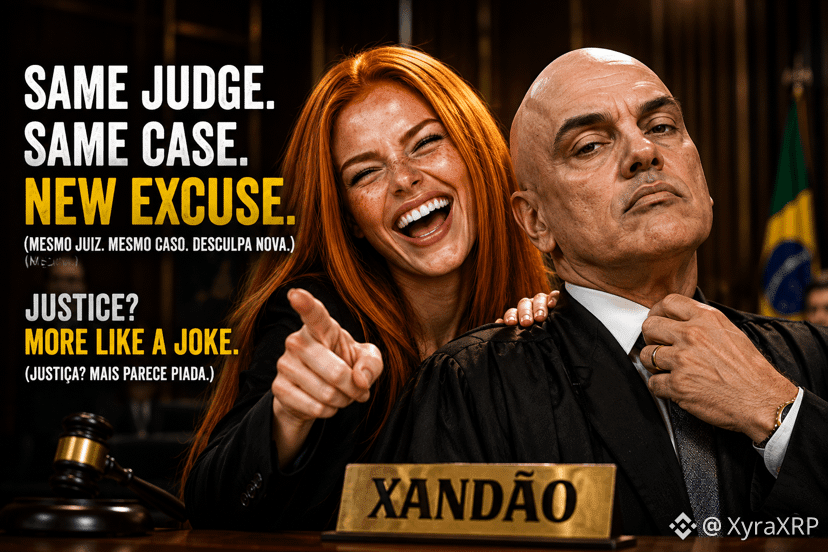
AGORA! Alexandre de Moraes votes to postpone the trial of the minister Alexandre de Moraes. 😂
That’s exactly what you read.
Basically, the guy asked: “My trial? Better leave it for later.” 😂
Not even a TV series script would have the nerve for that.
#xrp #bitcoin
AGORA! Alexandre de Moraes votes to postpone the trial of the minister Alexandre de Moraes. 😂
That’s exactly what you read.
Basically, the guy asked: “My trial? Better leave it for later.” 😂
Not even a TV series script would have the nerve for that.
#xrp #bitcoin
That’s exactly what you read.
Basically, the guy asked: “My trial? Better leave it for later.” 😂
Not even a TV series script would have the nerve for that.
#xrp #bitcoin
11
32
5.9k
·
--
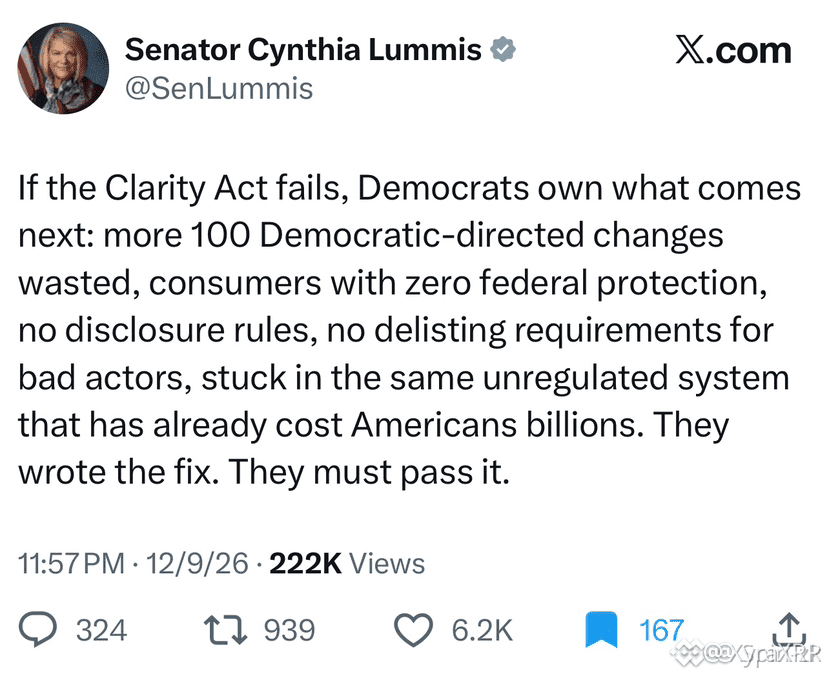
They wrote the correction; they have to pass 🤞🏻
They wrote the correction; they have to pass 🤞🏻
1
1.2k
·
--
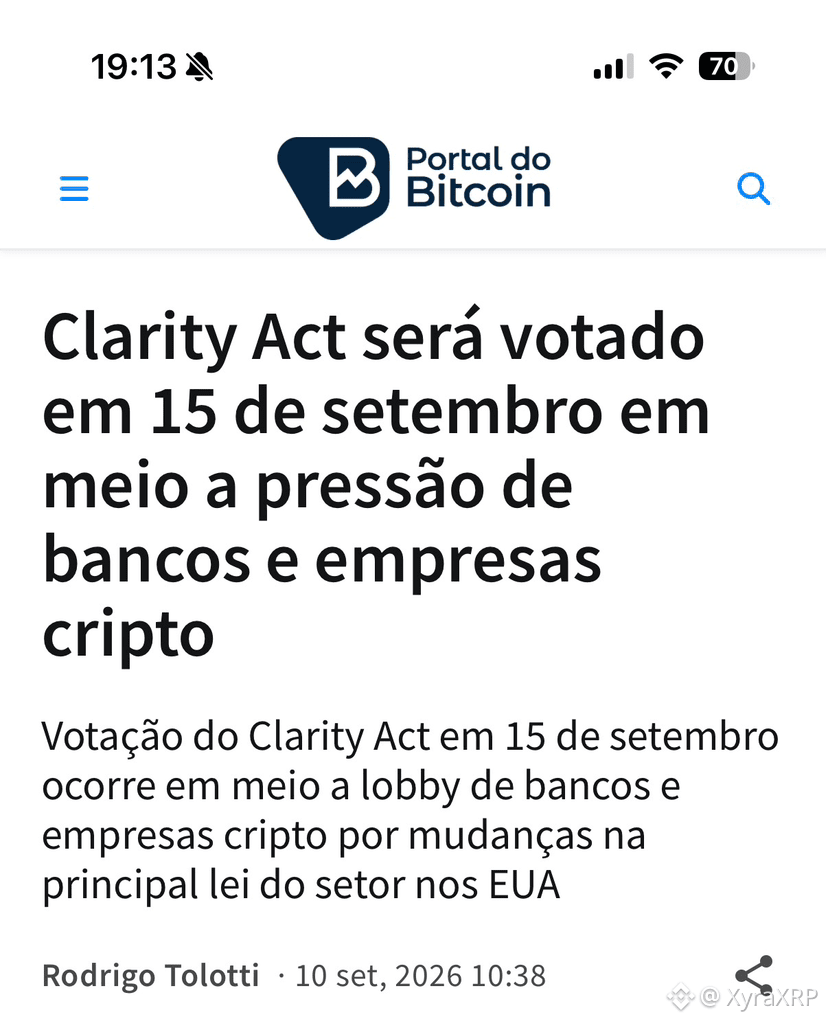
Confirmed, the transparency law will be voted on September 15, the day after tomorrow 🤞🏻🤞🏻
Confirmed, the transparency law will be voted on September 15, the day after tomorrow 🤞🏻🤞🏻
1
308
·
--
🚨 URGENT! 🚨
Lula: “If there’s no meat, we’ll eat eggs.”
Brazilian: “Mr. President, the problem is that pretty soon there won’t be even eggs.” 😂🥚
📉 Expensive meat
📈 Expensive eggs
🇧🇷 Brazilian: “So what am I supposed to eat? The package?” kkkkk
🚨 URGENT! 🚨
Lula: “If there’s no meat, we’ll eat eggs.”
Brazilian: “Mr. President, the problem is that pretty soon there won’t be even eggs.” 😂🥚
📉 Expensive meat
📈 Expensive eggs
🇧🇷 Brazilian: “So what am I supposed to eat? The package?” kkkkk
Lula: “If there’s no meat, we’ll eat eggs.”
Brazilian: “Mr. President, the problem is that pretty soon there won’t be even eggs.” 😂🥚
📉 Expensive meat
📈 Expensive eggs
🇧🇷 Brazilian: “So what am I supposed to eat? The package?” kkkkk

2
3
713
·
--
$BOB 🚀 BOB CREATOR FORCE
If I were ahead of BOB, I would create something much bigger than a simple promotional campaign: the BOB Creator Force, a global program made to turn the community itself into an active part of the ecosystem’s growth.
The idea? Bring together loyal holders, content creators, meme creators, and ambassadors—and reward the people who are truly helping BOB gain more space.
Every week, new challenges: creative content, memes, campaigns on X, local initiatives, and missions that get the community moving. Participants would accumulate points, climb the rankings, and receive on-chain rewards, with everything transparent and verifiable.
Because a strong community shouldn’t just follow a project. It should help build it.
The goal would be to create a continuous cycle: more creators → more content → more reach → more people discovering BOB → an even stronger community.
BOB Creator Force: don’t just talk about BOB. Help build its next chapter. 🔥
#BuildOnBNB
$BOB 🚀 BOB CREATOR FORCE
If I were ahead of BOB, I would create something much bigger than a simple promotional campaign: the BOB Creator Force, a global program made to turn the community itself into an active part of the ecosystem’s growth.
The idea? Bring together loyal holders, content creators, meme creators, and ambassadors—and reward the people who are truly helping BOB gain more space.
Every week, new challenges: creative content, memes, campaigns on X, local initiatives, and missions that get the community moving. Participants would accumulate points, climb the rankings, and receive on-chain rewards, with everything transparent and verifiable.
Because a strong community shouldn’t just follow a project. It should help build it.
The goal would be to create a continuous cycle: more creators → more content → more reach → more people discovering BOB → an even stronger community.
BOB Creator Force: don’t just talk about BOB. Help build its next chapter. 🔥
#BuildOnBNB
If I were ahead of BOB, I would create something much bigger than a simple promotional campaign: the BOB Creator Force, a global program made to turn the community itself into an active part of the ecosystem’s growth.
The idea? Bring together loyal holders, content creators, meme creators, and ambassadors—and reward the people who are truly helping BOB gain more space.
Every week, new challenges: creative content, memes, campaigns on X, local initiatives, and missions that get the community moving. Participants would accumulate points, climb the rankings, and receive on-chain rewards, with everything transparent and verifiable.
Because a strong community shouldn’t just follow a project. It should help build it.
The goal would be to create a continuous cycle: more creators → more content → more reach → more people discovering BOB → an even stronger community.
BOB Creator Force: don’t just talk about BOB. Help build its next chapter. 🔥
#BuildOnBNB
2
1
9
535
·
--
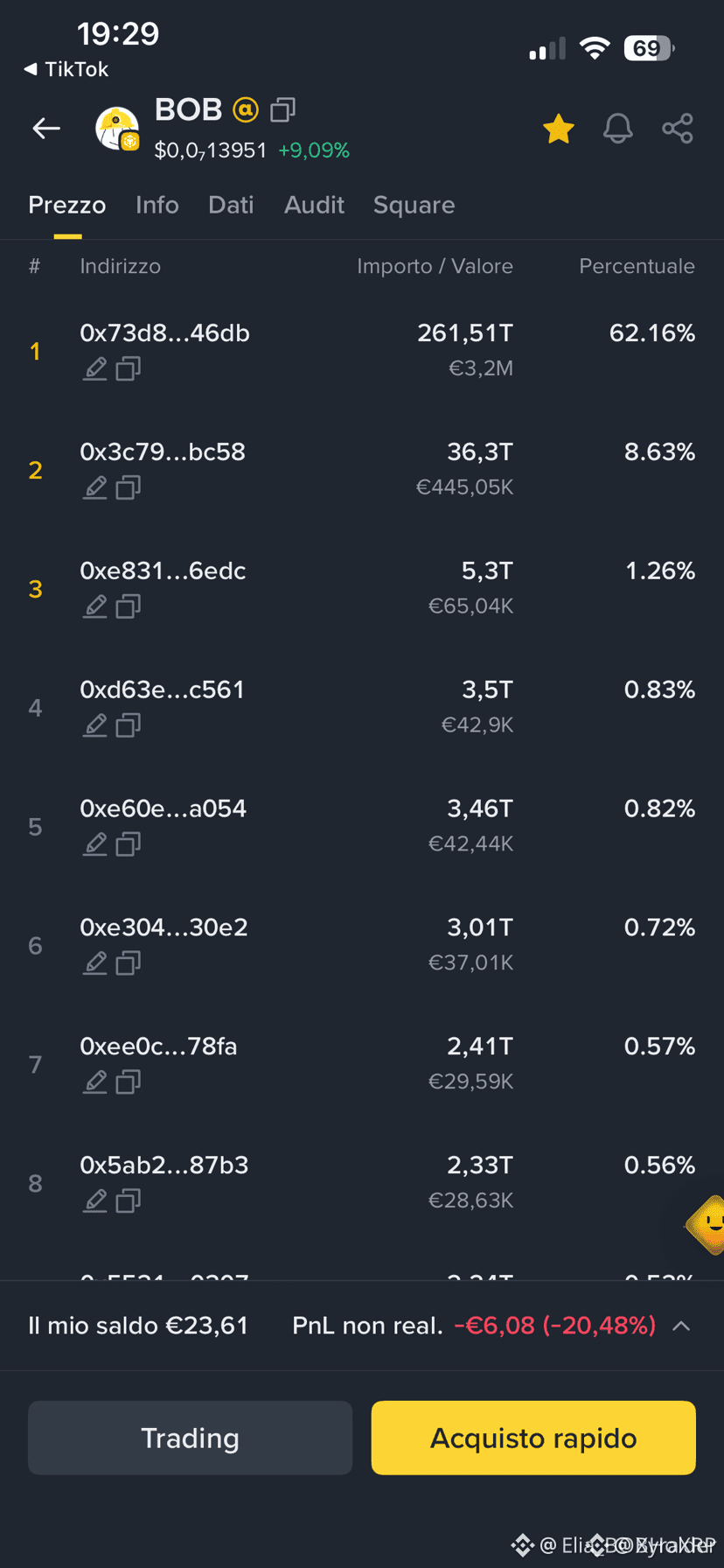
$BOB 🚨CLARITY ABOUT THE LARGEST HOLDER ~62%🚨
*READ EVERYTHING*
Most people are reading BOB the wrong way.
They look at the “top 10 holders = 68.5%” figure and immediately think: the token is highly concentrated, lots of whales, lots of risk.
But if you dig a little deeper, you’ll see the reality is very different.
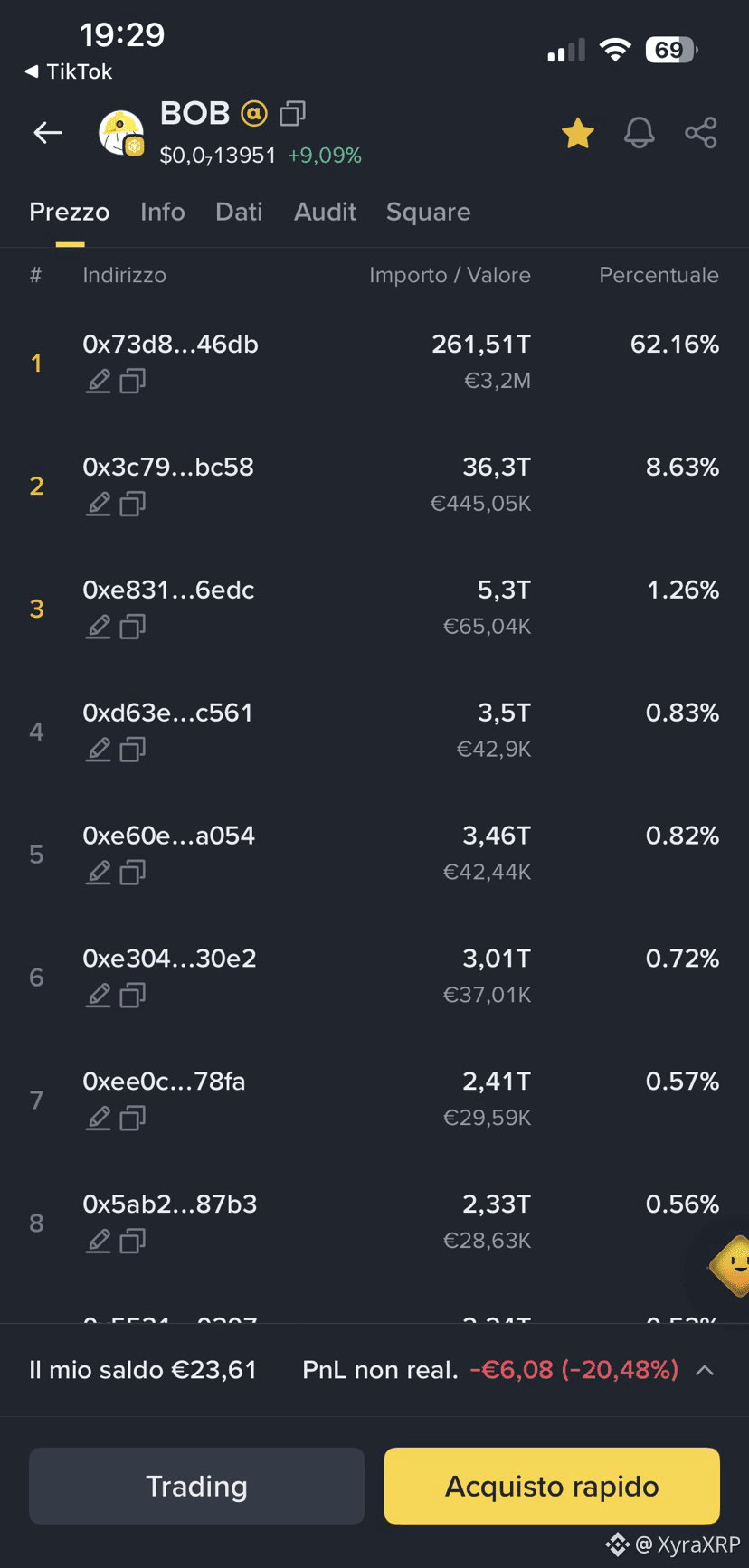
Wallet #1, which alone accounts for about 62.16%, is a CEX/custodial wallet.
That means it’s not a single whale, but most likely the wallet that holds the tokens for thousands of users.
And here comes the point that changes everything:
if you separate that wallet, the other 9 largest holders together have only about 6.34%.
So the truth is simple:
BOB isn’t controlled by a few whales like many people think.💎🔥
( Transcription of the Binanace BIBI response, which you can see in the first photo, about the first wallet and the security of the BOB token (BuildOnBNB). You can also verify for yourself:
“BOB is far less concentrated than it looks at first glance. The data ‘top 10 holders = 68.5%’ is misleading because the first wallet of ~62.16% is a CEX/custodial wallet, so it does not represent a single whale, but most likely the tokens held by many users on the platform. Separating that out, the other 9 main wallets together account for only about 6.34%, so the actual non-custodial concentration appears relatively contained. This significantly improves the security perception of the token on the distribution side, because the risk of a dump by just a few large holders is much lower than the raw data suggests.” )
#BuildOnBNB
$BOB 🚨CLARITY ABOUT THE LARGEST HOLDER ~62%🚨
*READ EVERYTHING*
Most people are reading BOB the wrong way.
They look at the “top 10 holders = 68.5%” figure and immediately think: the token is highly concentrated, lots of whales, lots of risk.
But if you dig a little deeper, you’ll see the reality is very different.
Wallet #1, which alone accounts for about 62.16%, is a CEX/custodial wallet.
That means it’s not a single whale, but most likely the wallet that holds the tokens for thousands of users.
And here comes the point that changes everything:
if you separate that wallet, the other 9 largest holders together have only about 6.34%.
So the truth is simple:
BOB isn’t controlled by a few whales like many people think.💎🔥
( Transcription of the Binanace BIBI response, which you can see in the first photo, about the first wallet and the security of the BOB token (BuildOnBNB). You can also verify for yourself:
“BOB is far less concentrated than it looks at first glance. The data ‘top 10 holders = 68.5%’ is misleading because the first wallet of ~62.16% is a CEX/custodial wallet, so it does not represent a single whale, but most likely the tokens held by many users on the platform. Separating that out, the other 9 main wallets together account for only about 6.34%, so the actual non-custodial concentration appears relatively contained. This significantly improves the security perception of the token on the distribution side, because the risk of a dump by just a few large holders is much lower than the raw data suggests.” )
#BuildOnBNB
*READ EVERYTHING*
Most people are reading BOB the wrong way.
They look at the “top 10 holders = 68.5%” figure and immediately think: the token is highly concentrated, lots of whales, lots of risk.
But if you dig a little deeper, you’ll see the reality is very different.
Wallet #1, which alone accounts for about 62.16%, is a CEX/custodial wallet.
That means it’s not a single whale, but most likely the wallet that holds the tokens for thousands of users.
And here comes the point that changes everything:
if you separate that wallet, the other 9 largest holders together have only about 6.34%.
So the truth is simple:
BOB isn’t controlled by a few whales like many people think.💎🔥
( Transcription of the Binanace BIBI response, which you can see in the first photo, about the first wallet and the security of the BOB token (BuildOnBNB). You can also verify for yourself:
“BOB is far less concentrated than it looks at first glance. The data ‘top 10 holders = 68.5%’ is misleading because the first wallet of ~62.16% is a CEX/custodial wallet, so it does not represent a single whale, but most likely the tokens held by many users on the platform. Separating that out, the other 9 main wallets together account for only about 6.34%, so the actual non-custodial concentration appears relatively contained. This significantly improves the security perception of the token on the distribution side, because the risk of a dump by just a few large holders is much lower than the raw data suggests.” )
#BuildOnBNB
160
·
--
Partly True
🚨 JUST HAPPENED: Franklin’s ETF clients bought $1.55 MILLION in $XRP 💥
THE BIG MONEY IS ON THE MOVE. 👀📈
Is this just the beginning? 🚀
$XRP HOLDERS — ARE YOU READY? 🔥
#XRP
🚨 JUST HAPPENED: Franklin’s ETF clients bought $1.55 MILLION in $XRP 💥
THE BIG MONEY IS ON THE MOVE. 👀📈
Is this just the beginning? 🚀
$XRP HOLDERS — ARE YOU READY? 🔥
#XRP
THE BIG MONEY IS ON THE MOVE. 👀📈
Is this just the beginning? 🚀
$XRP HOLDERS — ARE YOU READY? 🔥
#XRP
1
1
1.5k
·
--
$BOB
🚨CLARITY ON THE LARGEST BOB HOLDER ~62%🚨
*READ EVERYTHING*
Most people are reading BOB data the wrong way.
They look at the “top 10 holders = 68.5%” figure and immediately think: the token is highly concentrated, lots of whales, lots of risk.
But if you dig a little deeper, you’ll understand that the reality is very different.
Wallet #1, which by itself weighs about 62.16%, is a CEX/custodial wallet.
This means it’s not a single whale, but very likely the wallet that custody-tokens for thousands of users.
And here comes the point that changes everything:
if you split that wallet out, the other 9 biggest holders together have only about 6.34%.
So the truth is simple:
BOB isn’t controlled by a few whales like many people think.💎🔥
( Transcription of the response from Binanace BIBI, which you can see in the first photo, about the first wallet and about the security of the BOB token (BuildOnBNB). You can also verify it yourself:
“BOB is far less concentrated than it appears at first glance. The ‘top 10 holders = 68.5%’ figure is misleading because the first wallet of ~62.16% is a CEX/custodial wallet, so it doesn’t represent a single whale, but very likely the tokens held by many users on the platform. Once you separate that, the other 9 main wallets together weigh only about 6.34%, so the real non-custodial concentration seems relatively contained. This greatly improves the perception of the token’s safety on the distribution side, because the risk of a dump by a few large holders is much lower than the raw data suggests.” )
#Bob #BuildOnBNB
$BOB
🚨CLARITY ON THE LARGEST BOB HOLDER ~62%🚨
*READ EVERYTHING*
Most people are reading BOB data the wrong way.
They look at the “top 10 holders = 68.5%” figure and immediately think: the token is highly concentrated, lots of whales, lots of risk.
But if you dig a little deeper, you’ll understand that the reality is very different.
Wallet #1, which by itself weighs about 62.16%, is a CEX/custodial wallet.
This means it’s not a single whale, but very likely the wallet that custody-tokens for thousands of users.
And here comes the point that changes everything:
if you split that wallet out, the other 9 biggest holders together have only about 6.34%.
So the truth is simple:
BOB isn’t controlled by a few whales like many people think.💎🔥
( Transcription of the response from Binanace BIBI, which you can see in the first photo, about the first wallet and about the security of the BOB token (BuildOnBNB). You can also verify it yourself:
“BOB is far less concentrated than it appears at first glance. The ‘top 10 holders = 68.5%’ figure is misleading because the first wallet of ~62.16% is a CEX/custodial wallet, so it doesn’t represent a single whale, but very likely the tokens held by many users on the platform. Once you separate that, the other 9 main wallets together weigh only about 6.34%, so the real non-custodial concentration seems relatively contained. This greatly improves the perception of the token’s safety on the distribution side, because the risk of a dump by a few large holders is much lower than the raw data suggests.” )
#Bob #BuildOnBNB
🚨CLARITY ON THE LARGEST BOB HOLDER ~62%🚨
*READ EVERYTHING*
Most people are reading BOB data the wrong way.
They look at the “top 10 holders = 68.5%” figure and immediately think: the token is highly concentrated, lots of whales, lots of risk.
But if you dig a little deeper, you’ll understand that the reality is very different.
Wallet #1, which by itself weighs about 62.16%, is a CEX/custodial wallet.
This means it’s not a single whale, but very likely the wallet that custody-tokens for thousands of users.
And here comes the point that changes everything:
if you split that wallet out, the other 9 biggest holders together have only about 6.34%.
So the truth is simple:
BOB isn’t controlled by a few whales like many people think.💎🔥
( Transcription of the response from Binanace BIBI, which you can see in the first photo, about the first wallet and about the security of the BOB token (BuildOnBNB). You can also verify it yourself:
“BOB is far less concentrated than it appears at first glance. The ‘top 10 holders = 68.5%’ figure is misleading because the first wallet of ~62.16% is a CEX/custodial wallet, so it doesn’t represent a single whale, but very likely the tokens held by many users on the platform. Once you separate that, the other 9 main wallets together weigh only about 6.34%, so the real non-custodial concentration seems relatively contained. This greatly improves the perception of the token’s safety on the distribution side, because the risk of a dump by a few large holders is much lower than the raw data suggests.” )
#Bob #BuildOnBNB
217
·
--
Friends, I don’t know about this—can someone help us here? This has never happened to me before: buying on Alpha and then listing #BOB #BuildOnBNB $BOB
Friends, I don’t know about this—can someone help us here? This has never happened to me before: buying on Alpha and then listing #BOB #BuildOnBNB $BOB

Nikia Herling SpmO
·
--
hi, good morning. sorry for the ignorance. but i'm new here. if Bob was listed... do i need to do something beforehand so i don't lose money with the fees... because i bought another alpha once and when it was listed i had to pay a huge fee to keep operating with it. do you have any tips??? thank you
193
·
--
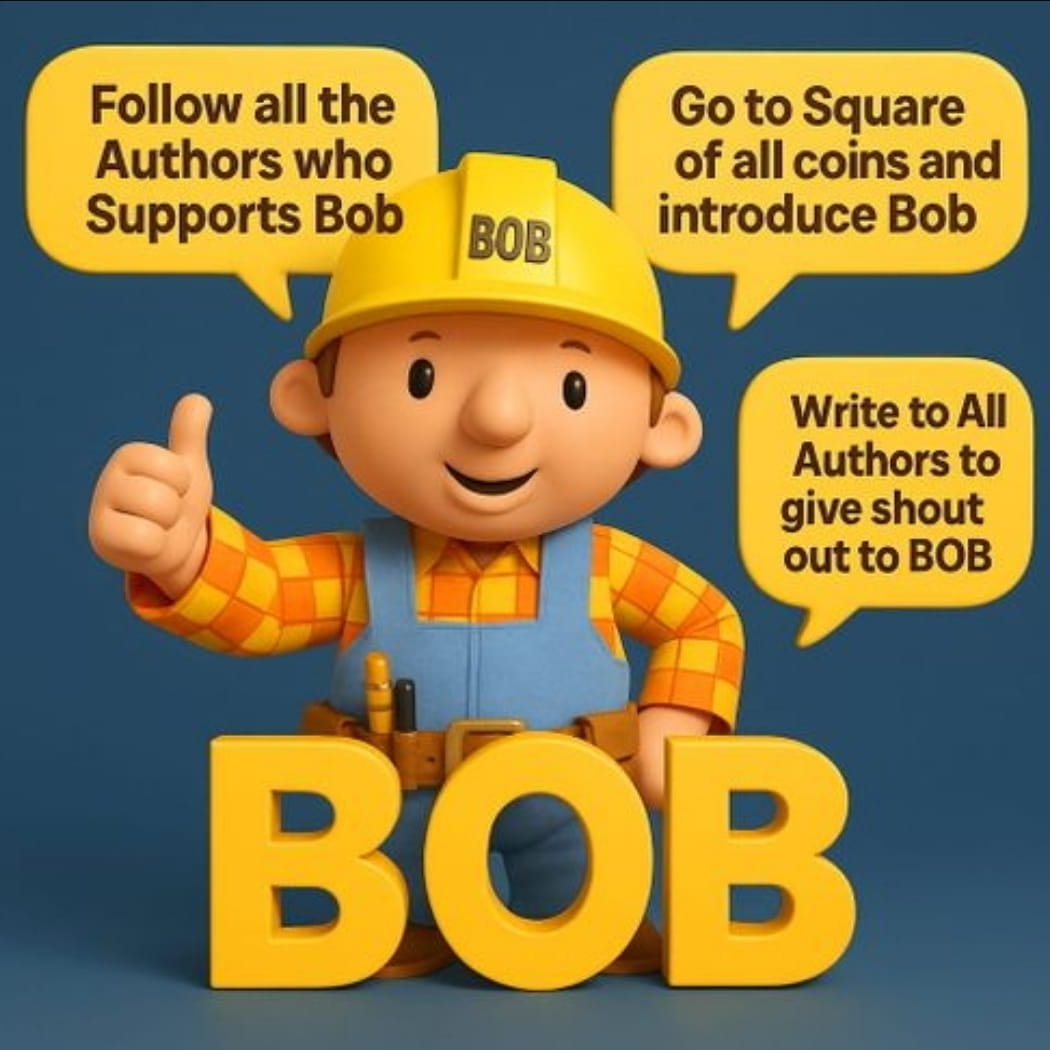
So let's create our own # continue using #BOB e always, ALWAYS add #BuildOnBNB , this will help a lot. We can't let a lack of Binance like this discourage us. Let's go up, builders, let's be seen again! Discouragement helps with nothing. What does this 66k community tell me? Let's go, let's go? $BOB
So let's create our own # continue using #BOB e always, ALWAYS add #BuildOnBNB , this will help a lot. We can't let a lack of Binance like this discourage us. Let's go up, builders, let's be seen again! Discouragement helps with nothing. What does this 66k community tell me? Let's go, let's go? $BOB
Cryptonitamaster
·
--
They’ll steal our hashtag... it demotivated everyone, incl. me
150
·
--
$BOB e we reached 66k holders, the community keeps growing ✨✨
$BOB e we reached 66k holders, the community keeps growing ✨✨
7
511
·
--
$BOB o spot with friends, I don't know when but it will. Be inside when this happens or cry 😉
$BOB o spot with friends, I don't know when but it will. Be inside when this happens or cry 😉
5
11
1.3k
·
--
$BOB Buil community On BNB we have to be more active here, post more.. whoever isn’t seen isn’t remembered 😉
$BOB Buil community On BNB we have to be more active here, post more.. whoever isn’t seen isn’t remembered 😉
11
4
22
2.2k
·
--
$BOB I still believe in Build On BNB, laugh at me if you want but I still believe it will surprise a lot of people
#BOB #BuilOnBNB #BOBBuildonbnb
$BOB I still believe in Build On BNB, laugh at me if you want but I still believe it will surprise a lot of people
#BOB #BuilOnBNB #BOBBuildonbnb
#BOB #BuilOnBNB #BOBBuildonbnb
3
1
9
740
·
--
Verified
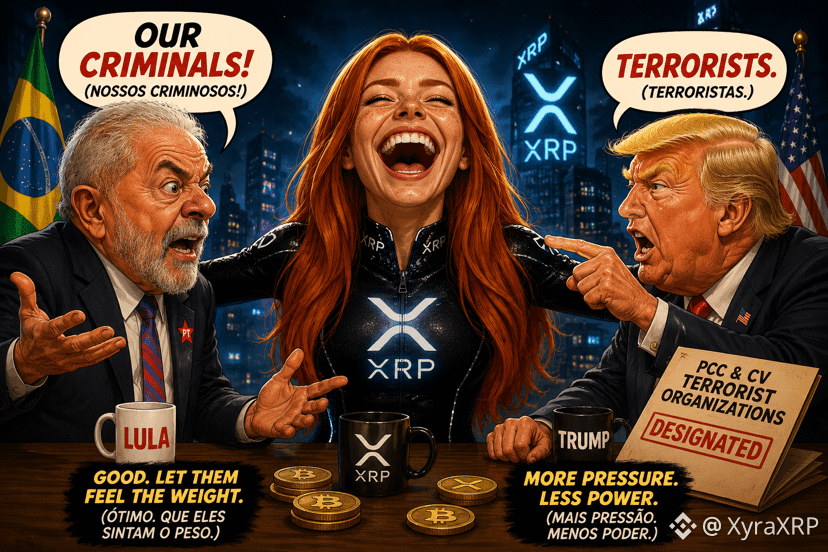
The U.S. has classified PCC and Comando Vermelho as terrorist organizations.
The reaction everyone was expecting:
"Great, more pressure against the factions."
But the phrase that went viral was another:
"Our criminals." 🤡
Man… "our criminals" was such an unfortunate choice of words that it sounds like a meme token name.
$OURCRIMINALS 🚀
Roadmap:
✅ Dominate territory
✅ Spread fear
✅ Become an international topic
✅ Gain brand defense
In the crypto world, when someone says "my bitcoins," I get it.
"My NFTs," I get it.
Now, "our criminals" was a possession that no one wanted to claim. 😂
And let's be real: if a measure can make money laundering harder, move resources, and make life tougher for the factions in general, it's hard to imagine the honest citizen worrying about their well-being.
The Brazilian just wants to know one thing:
If life for PCC and CV is going to get tougher.
The rest seems like a nomenclature discussion.
Because hearing "our criminals" while the country fights against organized crime is almost like opening your wallet and finding out someone slipped a memecoin in there without your permission.
Technically it exists.
But no one asked for it. 🚔🇧🇷
$BTC $XRP $ETH
The U.S. has classified PCC and Comando Vermelho as terrorist organizations.
The reaction everyone was expecting:
"Great, more pressure against the factions."
But the phrase that went viral was another:
"Our criminals." 🤡
Man… "our criminals" was such an unfortunate choice of words that it sounds like a meme token name.
$OURCRIMINALS 🚀
Roadmap:
✅ Dominate territory
✅ Spread fear
✅ Become an international topic
✅ Gain brand defense
In the crypto world, when someone says "my bitcoins," I get it.
"My NFTs," I get it.
Now, "our criminals" was a possession that no one wanted to claim. 😂
And let's be real: if a measure can make money laundering harder, move resources, and make life tougher for the factions in general, it's hard to imagine the honest citizen worrying about their well-being.
The Brazilian just wants to know one thing:
If life for PCC and CV is going to get tougher.
The rest seems like a nomenclature discussion.
Because hearing "our criminals" while the country fights against organized crime is almost like opening your wallet and finding out someone slipped a memecoin in there without your permission.
Technically it exists.
But no one asked for it. 🚔🇧🇷
$BTC $XRP $ETH
The reaction everyone was expecting:
"Great, more pressure against the factions."
But the phrase that went viral was another:
"Our criminals." 🤡
Man… "our criminals" was such an unfortunate choice of words that it sounds like a meme token name.
$OURCRIMINALS 🚀
Roadmap:
✅ Dominate territory
✅ Spread fear
✅ Become an international topic
✅ Gain brand defense
In the crypto world, when someone says "my bitcoins," I get it.
"My NFTs," I get it.
Now, "our criminals" was a possession that no one wanted to claim. 😂
And let's be real: if a measure can make money laundering harder, move resources, and make life tougher for the factions in general, it's hard to imagine the honest citizen worrying about their well-being.
The Brazilian just wants to know one thing:
If life for PCC and CV is going to get tougher.
The rest seems like a nomenclature discussion.
Because hearing "our criminals" while the country fights against organized crime is almost like opening your wallet and finding out someone slipped a memecoin in there without your permission.
Technically it exists.
But no one asked for it. 🚔🇧🇷
$BTC $XRP $ETH
95
1
77
41k
·
--
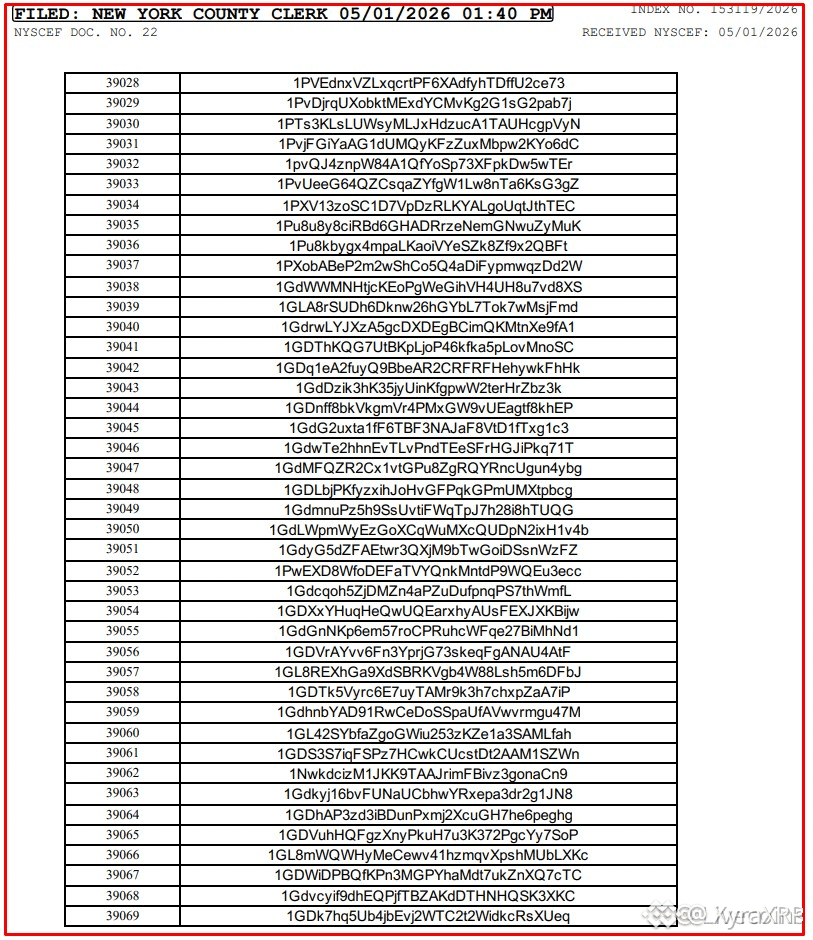
An American named Noah Doe apparently woke up one day and had an idea worthy of someone who watched two law videos on YouTube and thought he discovered a loophole in the legislation. 😂
This guy is trying to use the abandoned property law to claim ownership of tens of thousands of Bitcoin wallets that haven’t moved any funds in over 5 years.
But the best part of the story comes now.
Messages were sent to various Bitcoin addresses with the following tone:
"We are claiming this wallet. Isn't it abandoned? Prove it by making a transaction by September 30."
Translating:
— This wallet is mine.
— No, it’s not.
— Then do something with it so I can see. 🤨
And the funniest part is that it worked. 😅
Investors who hadn’t moved a satoshi since 2011 appeared out of nowhere to prove they were still alive.
Wallets that had been as inactive as a New Year's resolution started to move. 💀
Imagine holding Bitcoin for 14 years, ignoring all market news, surviving crashes, all-time highs, and global crises… and finally opening the wallet because a stranger showed up saying:
"If you don’t respond, I’ll consider it mine." 😂
The scene was practically this:
Noah:
— This wallet is abandoned.
Wallet owner:
— It’s not.
Noah:
— Prove it.
Owner:
— I just moved billions of dollars. Does that work? 💸
In the end, the biggest achievement of the operation wasn’t claiming the wallets.
It was managing to wake up investors who had been in hibernation mode since 2011. 🚀🤣
$XRP $BTC $ETH
An American named Noah Doe apparently woke up one day and had an idea worthy of someone who watched two law videos on YouTube and thought he discovered a loophole in the legislation. 😂
This guy is trying to use the abandoned property law to claim ownership of tens of thousands of Bitcoin wallets that haven’t moved any funds in over 5 years.
But the best part of the story comes now.
Messages were sent to various Bitcoin addresses with the following tone:
"We are claiming this wallet. Isn't it abandoned? Prove it by making a transaction by September 30."
Translating:
— This wallet is mine.
— No, it’s not.
— Then do something with it so I can see. 🤨
And the funniest part is that it worked. 😅
Investors who hadn’t moved a satoshi since 2011 appeared out of nowhere to prove they were still alive.
Wallets that had been as inactive as a New Year's resolution started to move. 💀
Imagine holding Bitcoin for 14 years, ignoring all market news, surviving crashes, all-time highs, and global crises… and finally opening the wallet because a stranger showed up saying:
"If you don’t respond, I’ll consider it mine." 😂
The scene was practically this:
Noah:
— This wallet is abandoned.
Wallet owner:
— It’s not.
Noah:
— Prove it.
Owner:
— I just moved billions of dollars. Does that work? 💸
In the end, the biggest achievement of the operation wasn’t claiming the wallets.
It was managing to wake up investors who had been in hibernation mode since 2011. 🚀🤣
$XRP $BTC $ETH
This guy is trying to use the abandoned property law to claim ownership of tens of thousands of Bitcoin wallets that haven’t moved any funds in over 5 years.
But the best part of the story comes now.
Messages were sent to various Bitcoin addresses with the following tone:
"We are claiming this wallet. Isn't it abandoned? Prove it by making a transaction by September 30."
Translating:
— This wallet is mine.
— No, it’s not.
— Then do something with it so I can see. 🤨
And the funniest part is that it worked. 😅
Investors who hadn’t moved a satoshi since 2011 appeared out of nowhere to prove they were still alive.
Wallets that had been as inactive as a New Year's resolution started to move. 💀
Imagine holding Bitcoin for 14 years, ignoring all market news, surviving crashes, all-time highs, and global crises… and finally opening the wallet because a stranger showed up saying:
"If you don’t respond, I’ll consider it mine." 😂
The scene was practically this:
Noah:
— This wallet is abandoned.
Wallet owner:
— It’s not.
Noah:
— Prove it.
Owner:
— I just moved billions of dollars. Does that work? 💸
In the end, the biggest achievement of the operation wasn’t claiming the wallets.
It was managing to wake up investors who had been in hibernation mode since 2011. 🚀🤣
$XRP $BTC $ETH
1
3
373
·
--
A new era is on the horizon 🚀📈 #XRP $XRP
A new era is on the horizon 🚀📈 #XRP $XRP

Leandro Fumão Crypto
·
--
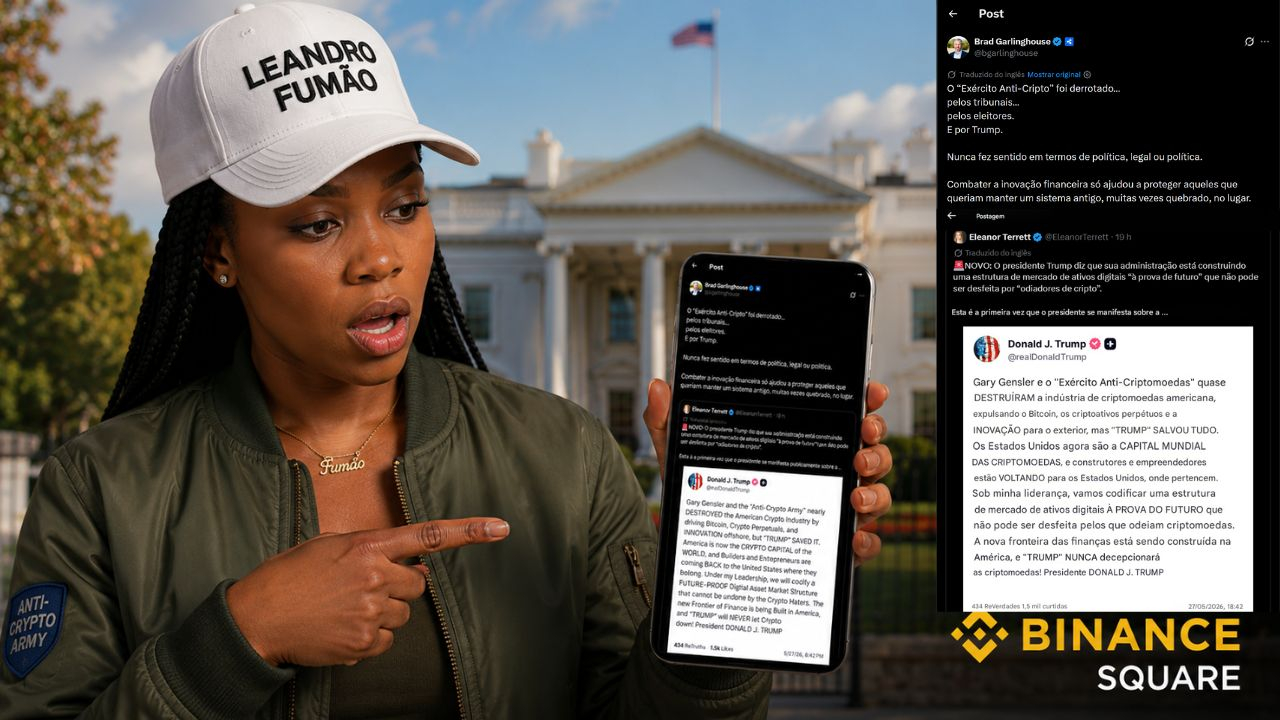
Bullish🏛️⚔ THE ANTI-CRYPTO ARMY HAS BEEN DEFEATED✔️
📢💥 BRAD GARLINGHOUSE AND TRUMP KICK THE BUCKET AGAINST THE OLD SYSTEM 🇺🇸🚀
The institutional gears have shifted for good, and the market sharks are celebrating the new era. Ripple's CEO▸$XRP ▸, Brad Garlinghouse, took to social media to endorse Donald Trump's historic manifesto on Truth Social and fired an unrelenting verdict: The "Anti-Crypto Army" has been completely defeated by the courts, the voters, and Trump.
Garlinghouse, who led one of the biggest legal battles in market history against the regulatory overreach of the old SEC, made it clear that the pursuit of financial innovation never made political, legal, or economic sense. Fighting the digital ecosystem only served one purpose: to try to protect an outdated and broken traditional financial system.
📌 The Three Pillars of the New American Landscape
⚖️ Victory in the Courts
The institutional ecosystem (led by $XRP and Bitcoin) stood firm and proved its legality in court, paving the way for the launch of ETFs and the tokenization of RWAs by giants like DTCC.
🗳️ The Power of the Voters
The Web3 community has transformed into an unbeatable political force, demanding clarity and forcing the creation of a stable digital asset market structure.
🔒 Future-Proof Structure
As highlighted by journalist Eleanor Terrett, the promise of $TRUMP to enshrine an insurmountable barrier against "crypto haters" in federal law removes the last major risk for the big money on Wall Street.
💡 MY ANALYSIS
#LeandroFumao 📣 Garlinghouse declared the end of the anti-crypto era, and Trump promised regulatory shielding by law. For the text, this alignment between the White House and industry leaders provides XRP and Web3 with the institutional and legal support needed to reach new highs in this cycle.
💡 Always do your own research before investing in cryptocurrencies.
#trumpcoin #BradGarlinghouse #Ripple #xrp
📢💥 BRAD GARLINGHOUSE AND TRUMP KICK THE BUCKET AGAINST THE OLD SYSTEM 🇺🇸🚀
The institutional gears have shifted for good, and the market sharks are celebrating the new era. Ripple's CEO▸$XRP ▸, Brad Garlinghouse, took to social media to endorse Donald Trump's historic manifesto on Truth Social and fired an unrelenting verdict: The "Anti-Crypto Army" has been completely defeated by the courts, the voters, and Trump.
Garlinghouse, who led one of the biggest legal battles in market history against the regulatory overreach of the old SEC, made it clear that the pursuit of financial innovation never made political, legal, or economic sense. Fighting the digital ecosystem only served one purpose: to try to protect an outdated and broken traditional financial system.
📌 The Three Pillars of the New American Landscape
⚖️ Victory in the Courts
The institutional ecosystem (led by $XRP and Bitcoin) stood firm and proved its legality in court, paving the way for the launch of ETFs and the tokenization of RWAs by giants like DTCC.
🗳️ The Power of the Voters
The Web3 community has transformed into an unbeatable political force, demanding clarity and forcing the creation of a stable digital asset market structure.
🔒 Future-Proof Structure
As highlighted by journalist Eleanor Terrett, the promise of $TRUMP to enshrine an insurmountable barrier against "crypto haters" in federal law removes the last major risk for the big money on Wall Street.
💡 MY ANALYSIS
#LeandroFumao 📣 Garlinghouse declared the end of the anti-crypto era, and Trump promised regulatory shielding by law. For the text, this alignment between the White House and industry leaders provides XRP and Web3 with the institutional and legal support needed to reach new highs in this cycle.
💡 Always do your own research before investing in cryptocurrencies.
#trumpcoin #BradGarlinghouse #Ripple #xrp
1
3
363
·
--
🎉 GAME OVER, LULA! 🎉
You bet on excuses. The Brazilian people chose results.
Starting from the 5th, CV and PCC will officially be classified as International Terrorist Organizations.
Looks like the criminals just took a major hit… and Brazil just got a major upgrade.
BIG DAY. A VERY BIG DAY. 🇧🇷🔥
$BTC $ETH $XRP
🎉 GAME OVER, LULA! 🎉
You bet on excuses. The Brazilian people chose results.
Starting from the 5th, CV and PCC will officially be classified as International Terrorist Organizations.
Looks like the criminals just took a major hit… and Brazil just got a major upgrade.
BIG DAY. A VERY BIG DAY. 🇧🇷🔥
$BTC $ETH $XRP
You bet on excuses. The Brazilian people chose results.
Starting from the 5th, CV and PCC will officially be classified as International Terrorist Organizations.
Looks like the criminals just took a major hit… and Brazil just got a major upgrade.
BIG DAY. A VERY BIG DAY. 🇧🇷🔥
$BTC $ETH $XRP
2
3
239
·
--
🎉 GAME OVER? AT LEAST THE SCORE HAS CHANGED! 🎉
Starting on the 5th, CV and PCC will be classified as international terrorist organizations.
For those who have advocated for this measure for years, the feeling is one of victory. For others, it’s just another chapter in the long saga of Brazilian public safety.
Amid debates, controversies, and political battles, one thing is clear: when it comes to fighting organized crime, many are celebrating.
A big day for those who believe in tougher penalties for crime. A big day for the public safety debate.
🇧🇷 Here’s to the upcoming chapters.
$BTC $BNB $XRP
🎉 GAME OVER? AT LEAST THE SCORE HAS CHANGED! 🎉
Starting on the 5th, CV and PCC will be classified as international terrorist organizations.
For those who have advocated for this measure for years, the feeling is one of victory. For others, it’s just another chapter in the long saga of Brazilian public safety.
Amid debates, controversies, and political battles, one thing is clear: when it comes to fighting organized crime, many are celebrating.
A big day for those who believe in tougher penalties for crime. A big day for the public safety debate.
🇧🇷 Here’s to the upcoming chapters.
$BTC $BNB $XRP
Starting on the 5th, CV and PCC will be classified as international terrorist organizations.
For those who have advocated for this measure for years, the feeling is one of victory. For others, it’s just another chapter in the long saga of Brazilian public safety.
Amid debates, controversies, and political battles, one thing is clear: when it comes to fighting organized crime, many are celebrating.
A big day for those who believe in tougher penalties for crime. A big day for the public safety debate.
🇧🇷 Here’s to the upcoming chapters.
$BTC $BNB $XRP

1
4
163
Log in to explore more content
Join global crypto users on Binance Square
⚡️ Get latest and useful information about crypto.
💬 Trusted by the world’s largest crypto exchange.
👍 Discover real insights from verified creators.
Email / Phone number
Trending Topics
ZcashETFPostsFirstWeeklyOutflow$93.6M
3,609 views
31 Discussing
🚨 $ZEC ETF SHOCK: $93.6 MILLION GONE IN ONE WEEK! 🐻
Zcash’s ETF has recorded its first weekly net outflow since launching in August, with $93.6M withdrawn from Grayscale’s ZCSH fund. Meanwhile, ZEC dropped toward $1,300, raising fresh concerns about investor demand. Source
📉 Bears gaining control—or just a temporary shakeout?
⚠️ Trader watch: Monitor ETF flows, trading volume, and key support levels. Continued outflows alongside a price breakdown could increase downside risk, while renewed inflows and a confirmed price recovery may signal stabilization.
🔥 Your take: Is $ZEC heading lower, or could bulls stage a comeback?
#ZcashETFPostsFirstWeeklyOutflow$93.6M
$ZEC
ASHFAQ NAEEM
·0 Likes
·16 views
GreekPoliceBustCryptoScamRingArrest17
5,067 views
137 Discussing
BitcoinRejectedAt$87K
62,664 views
96 Discussing