

criptonoticia11
2.1k Posts
criptonoticia11
Report
Block User
las mejores noticias importante de criptomonedas.

#BinanceTurns7 task 2

#BinanceTurns7
Open Trade

TUT Holder
Frequent Trader
4.9 Years
89 Following
21.9K+ Followers
10.8K+ Liked
2 Badges
Posts
Portfolio
All
Quotes
Live
PINNED
#AIStocksWhatNext IA is advancing at a giant leap, big companies are investing in it and it is generating huge profits. The stocks are soaring—this is incredible 😱. The evolution of AI is accelerating and the stocks are soaring. What do you think about this? I want a response in the comments.
$BNB
#AIStocksWhatNext IA is advancing at a giant leap, big companies are investing in it and it is generating huge profits. The stocks are soaring—this is incredible 😱. The evolution of AI is accelerating and the stocks are soaring. What do you think about this? I want a response in the comments.
$BNB
$BNB
1.3k
PINNED
·
--
Bullish
Sorry to my followers and non-followers that in these days I have not brought you good and fresh news as you already know, we suffered a strong earthquake in my country, Colombia, on August 10, 2026 at 7:34 AM. I lost many material things, but thank God, my family and I were okay—that’s what matters. Because with effort, material things can be obtained, but life can’t. My items and equipment got damaged. Now, I’m posting from my cell phone, and that’s why I haven’t uploaded News, because what happened in my country has been going on and many people lost their loved ones 🤧🇨🇴🇨🇴. It’s not easy to start over, my family and I, but the important thing is life. The material things we’ll see how we can get them with effort. Thank you to my followers who are active on my channel. God bless you, and let’s stay together through this pain in my country, Colombia.
On the other hand, Bitcoin is still stable at around 63,345 USD, still showing bearish signals, and many investors are taking advantage of this opportunity to buy before Bitcoin shoots up.
$BTC
Sorry to my followers and non-followers that in these days I have not brought you good and fresh news as you already know, we suffered a strong earthquake in my country, Colombia, on August 10, 2026 at 7:34 AM. I lost many material things, but thank God, my family and I were okay—that’s what matters. Because with effort, material things can be obtained, but life can’t. My items and equipment got damaged. Now, I’m posting from my cell phone, and that’s why I haven’t uploaded News, because what happened in my country has been going on and many people lost their loved ones 🤧🇨🇴🇨🇴. It’s not easy to start over, my family and I, but the important thing is life. The material things we’ll see how we can get them with effort. Thank you to my followers who are active on my channel. God bless you, and let’s stay together through this pain in my country, Colombia.
On the other hand, Bitcoin is still stable at around 63,345 USD, still showing bearish signals, and many investors are taking advantage of this opportunity to buy before Bitcoin shoots up.
$BTC
On the other hand, Bitcoin is still stable at around 63,345 USD, still showing bearish signals, and many investors are taking advantage of this opportunity to buy before Bitcoin shoots up.
$BTC
4
1.9k
·
--
Bullish
The $BTC is at 84.235 USD on the uptrend line; it could surge in the next few days—stay tuned and watch the Bitcoin price. We’re already at October 1; something could happen. And what are you thinking? Are you going to invest, or are you going to wait? Leave it in the comments.
#BTC
The $BTC is at 84.235 USD on the uptrend line; it could surge in the next few days—stay tuned and watch the Bitcoin price. We’re already at October 1; something could happen. And what are you thinking? Are you going to invest, or are you going to wait? Leave it in the comments.
#BTC
#BTC
432
·
--
Bullish
Many are taking advantage already since the $BTC dropped to about 83.234. You're not seeing that much of a difference; they're entering again because Bitcoin keeps showing bullish signals. You're still in time to enter here, or are you going to wait for the decision? It's up to you, although it's the moment to enter.
Many are taking advantage already since the $BTC dropped to about 83.234. You're not seeing that much of a difference; they're entering again because Bitcoin keeps showing bullish signals. You're still in time to enter here, or are you going to wait for the decision? It's up to you, although it's the moment to enter.
1
1.8k
·
--
Bullish
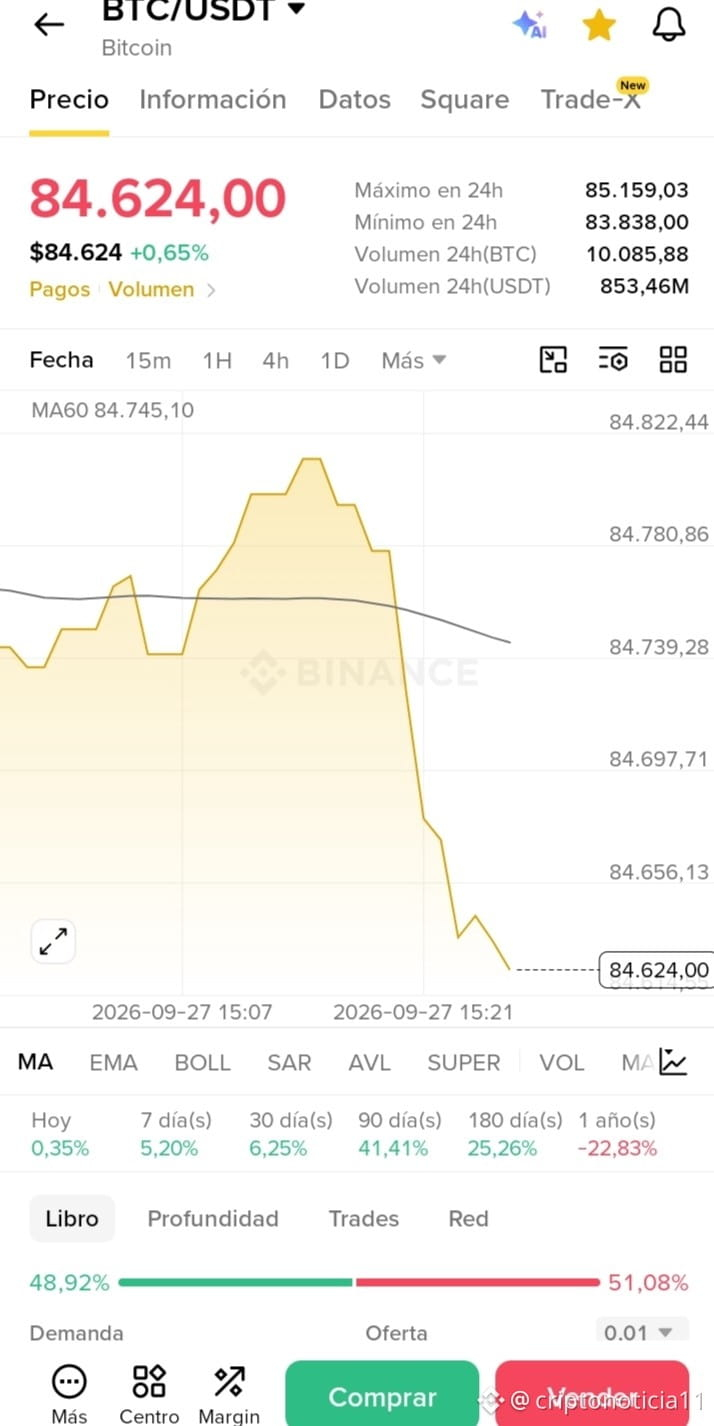
It’s on time. The $BTC is giving a respite since yesterday, September 27, 2026. It’s at 84.635 USD. That means it’s giving a break. You’re going to enter at this price and wait a bit for the signal that shows Bitcoin is bullish. That’s good. You can still analyze the green candle—it’s stronger than ever.
It’s on time. The $BTC is giving a respite since yesterday, September 27, 2026. It’s at 84.635 USD. That means it’s giving a break. You’re going to enter at this price and wait a bit for the signal that shows Bitcoin is bullish. That’s good. You can still analyze the green candle—it’s stronger than ever.
3
1.8k
·
--
Bullish
What’s new, guys? You were missing me here—I’m back again. Let’s talk about $BTC and $TUT . The Bitcoin is taking off again. What I told you two days ago is that Bitcoin was yesterday below 84.123 USD. There was a small drop of about 0.80%, and I told you that what it was showing were bullish signals. I don’t know if you already entered or you’re thinking about it, because many big investors already did. I mean, they haven’t stopped—they always keep watching the price. What do you say? Are you going to enter or wait again for it to drop at least another 0.9%? Although you never know—the crypto market is like that; it goes down or up. Don’t leave with the doubt.
On the other hand, let’s talk about TUTORIAL—O TUT. We’ll also analyze that TUT is more alive than ever. What are the causes? Many people are getting in, and that’s what has kept TUT strong. Tutorial is a meme cryptocurrency, but with a good project, and many people haven’t stopped trading with this coin. I want you to reply in the comments: are you going to enter or are you going to wait? I’ll analyze the market well before investing. Is this a good thing?
What’s new, guys? You were missing me here—I’m back again. Let’s talk about $BTC and $TUT . The Bitcoin is taking off again. What I told you two days ago is that Bitcoin was yesterday below 84.123 USD. There was a small drop of about 0.80%, and I told you that what it was showing were bullish signals. I don’t know if you already entered or you’re thinking about it, because many big investors already did. I mean, they haven’t stopped—they always keep watching the price. What do you say? Are you going to enter or wait again for it to drop at least another 0.9%? Although you never know—the crypto market is like that; it goes down or up. Don’t leave with the doubt.
On the other hand, let’s talk about TUTORIAL—O TUT. We’ll also analyze that TUT is more alive than ever. What are the causes? Many people are getting in, and that’s what has kept TUT strong. Tutorial is a meme cryptocurrency, but with a good project, and many people haven’t stopped trading with this coin. I want you to reply in the comments: are you going to enter or are you going to wait? I’ll analyze the market well before investing. Is this a good thing?
On the other hand, let’s talk about TUTORIAL—O TUT. We’ll also analyze that TUT is more alive than ever. What are the causes? Many people are getting in, and that’s what has kept TUT strong. Tutorial is a meme cryptocurrency, but with a good project, and many people haven’t stopped trading with this coin. I want you to reply in the comments: are you going to enter or are you going to wait? I’ll analyze the market well before investing. Is this a good thing?
6
2
1.1k
·
--
Bullish
The $BTC is having a drop of 0.80%; this isn't a big difference. I think many are taking advantage of this small decline, and you're going to wait for it to drop a bit more or are you going to enter with the price right away? You never know how it could rise or fall; the decision is yours. But even though Bitcoin is experiencing a small decline, what it reflects is a bullish signal.
I hope to hear your response in the comments.
The $BTC is having a drop of 0.80%; this isn't a big difference. I think many are taking advantage of this small decline, and you're going to wait for it to drop a bit more or are you going to enter with the price right away? You never know how it could rise or fall; the decision is yours. But even though Bitcoin is experiencing a small decline, what it reflects is a bullish signal.
I hope to hear your response in the comments.
I hope to hear your response in the comments.
3
894
·
--
Bullish
Go again, the $BTC who entered the operation again because I see that the charts are going up. Many traders are getting in, while others are just watching as Bitcoin goes up. And what do you think? Are you going to enter or are you going to wait? Give me an answer in the comments.
Go again, the $BTC who entered the operation again because I see that the charts are going up. Many traders are getting in, while others are just watching as Bitcoin goes up. And what do you think? Are you going to enter or are you going to wait? Give me an answer in the comments.
928
·
--
Bullish
guys I'm seeing that $TUT is going up in the morning hours You tell me, did you sell or did you stay firm in not selling or did you sell and now you're buying Tell me what you're going to do, seller Or are you buying more I see that you're going up enormously 😱 leave your response in the comments I hope it goes well for you with this cryptocurrency TUT.
guys I'm seeing that $TUT is going up in the morning hours You tell me, did you sell or did you stay firm in not selling or did you sell and now you're buying Tell me what you're going to do, seller Or are you buying more I see that you're going up enormously 😱 leave your response in the comments I hope it goes well for you with this cryptocurrency TUT.
11
1
2.9k
·
--
Bullish
many big investors of $BTC withdrew big profits with this rise and are now again entering to buy more Bitcoin—what do you think? Are you going to wait a little longer if it drops, or are you going to buy already? And what do you think?
many big investors of $BTC withdrew big profits with this rise and are now again entering to buy more Bitcoin—what do you think? Are you going to wait a little longer if it drops, or are you going to buy already? And what do you think?
2
910
·
--
Bullish
Many investors are getting large profits with $BTC and $ETH mientras these two are having Hoi on 23 September 2026 a small decline but nevertheless the market reflects signs; if we analyze the charts of the two cryptocurrencies, they are stronger, something that was not seen for 3 months ago. And what are you thinking: to withdraw profits or wait a bit more? Leave your answer in the comments.
Many investors are getting large profits with $BTC and $ETH mientras these two are having Hoi on 23 September 2026 a small decline but nevertheless the market reflects signs; if we analyze the charts of the two cryptocurrencies, they are stronger, something that was not seen for 3 months ago. And what are you thinking: to withdraw profits or wait a bit more? Leave your answer in the comments.
1.6k
·
--
Bullish
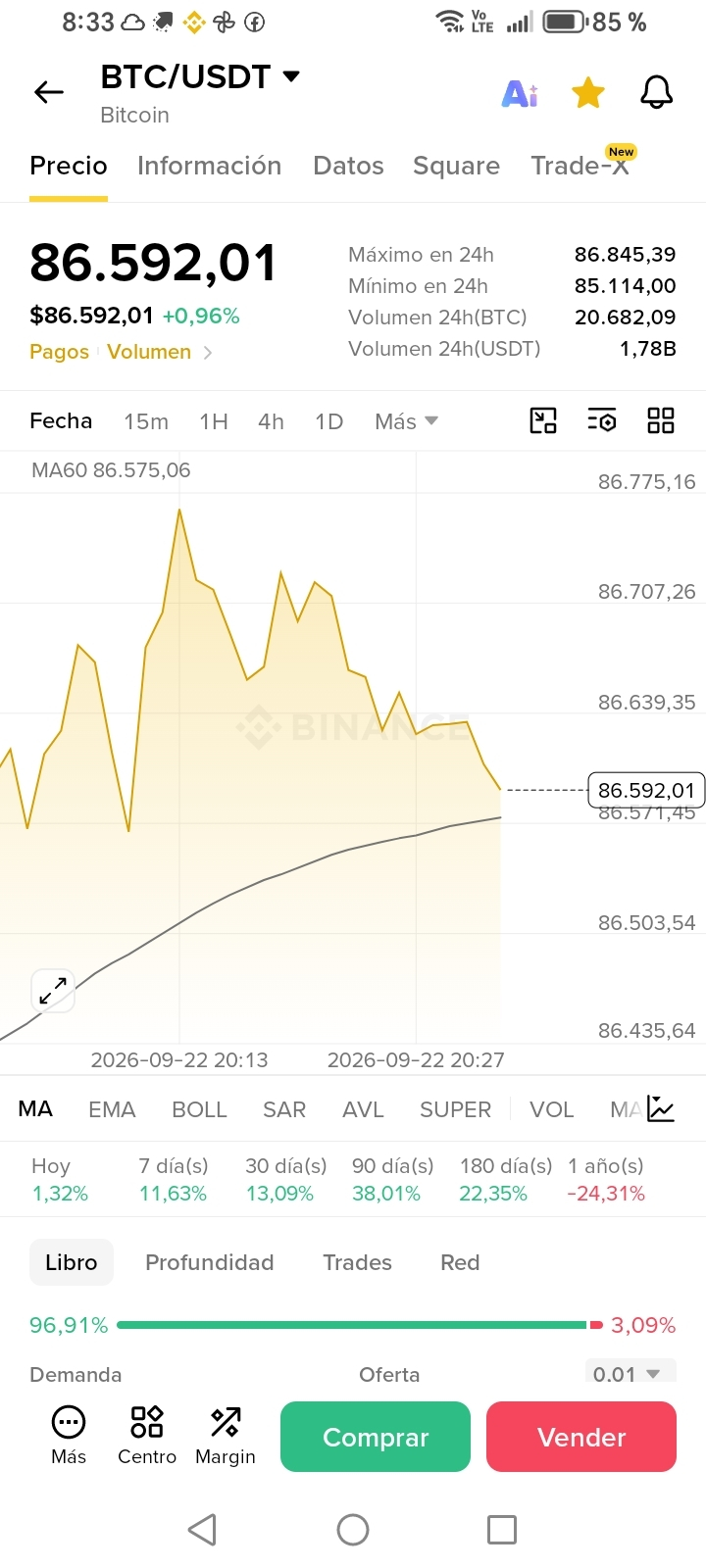
The $BTC made a small drop in the morning hours and in the afternoon hours. Again it started gaining momentum upward. This is impressive. Bitcoin is gaining momentum. I always tell you that great things are coming for Bitcoin. I'm not a fortune teller, but I do research, and as you can see, big investors took advantage when Bitcoin fell—from 66,000 USD to 65,234 USD—and it stayed there for many months. That’s where they began accumulating bitcoin because they knew that at any moment it would take off. What do you think about the price of Bitcoin? And think about buying now or waiting for the dip to take advantage of the drop. Leave your opinions in the comments. Also don’t fall asleep before it’s too late.
The $BTC made a small drop in the morning hours and in the afternoon hours. Again it started gaining momentum upward. This is impressive. Bitcoin is gaining momentum. I always tell you that great things are coming for Bitcoin. I'm not a fortune teller, but I do research, and as you can see, big investors took advantage when Bitcoin fell—from 66,000 USD to 65,234 USD—and it stayed there for many months. That’s where they began accumulating bitcoin because they knew that at any moment it would take off. What do you think about the price of Bitcoin? And think about buying now or waiting for the dip to take advantage of the drop. Leave your opinions in the comments. Also don’t fall asleep before it’s too late.
2.8k
·
--
Bullish
$TUT is experiencing a significant rise while many are Trading but with a lot of concern are watching how the process behaves. I want you to tell me in the comments how much they are entering the market TUT or how much they are selling. Even though it’s having a good rise, many are waiting for the maximum peak—are you going to sell or are you going to wait for it to rise to 0.03 USD or to 0.4 USD.
Leave it in the comments.
$TUT is experiencing a significant rise while many are Trading but with a lot of concern are watching how the process behaves. I want you to tell me in the comments how much they are entering the market TUT or how much they are selling. Even though it’s having a good rise, many are waiting for the maximum peak—are you going to sell or are you going to wait for it to rise to 0.03 USD or to 0.4 USD.
Leave it in the comments.
Leave it in the comments.
3
744
·
--
Bullish
$BTC aguantando en $86k y $BNB en $803 con force today September 21.
I saw the very powerful green line in both.
I don't buy without seeing the 1h candle, but the upward move is interesting.
Are you going to buy this move or are you waiting for a pullback?
$BTC aguantando en $86k y $BNB en $803 con force today September 21.
I saw the very powerful green line in both.
I don't buy without seeing the 1h candle, but the upward move is interesting.
Are you going to buy this move or are you waiting for a pullback?
I saw the very powerful green line in both.
I don't buy without seeing the 1h candle, but the upward move is interesting.
Are you going to buy this move or are you waiting for a pullback?
1
1
1.2k
·
--
Bullish
bnb and bitcoin are leaving huge gains today September 21 something impressive if you see the green line of BNB and the one of Bitcoin are powerful I invite you to analyze the charts before buying BNB or Bitcoin but also don’t get stuck with this surge if you’re going to buy do the analysis but clearly what I can tell you is that this is interesting because it’s rising enormously 😱😱
🚨 Bitcoin at 86,456 USD and it could reach 90k USD if it goes like that
🚨 BNB at 803.96 USD and the line is going up
$BNB $BTC
bnb and bitcoin are leaving huge gains today September 21 something impressive if you see the green line of BNB and the one of Bitcoin are powerful I invite you to analyze the charts before buying BNB or Bitcoin but also don’t get stuck with this surge if you’re going to buy do the analysis but clearly what I can tell you is that this is interesting because it’s rising enormously 😱😱
🚨 Bitcoin at 86,456 USD and it could reach 90k USD if it goes like that
🚨 BNB at 803.96 USD and the line is going up
$BNB $BTC
🚨 Bitcoin at 86,456 USD and it could reach 90k USD if it goes like that
🚨 BNB at 803.96 USD and the line is going up
$BNB $BTC
1
5k
·
--
Bullish
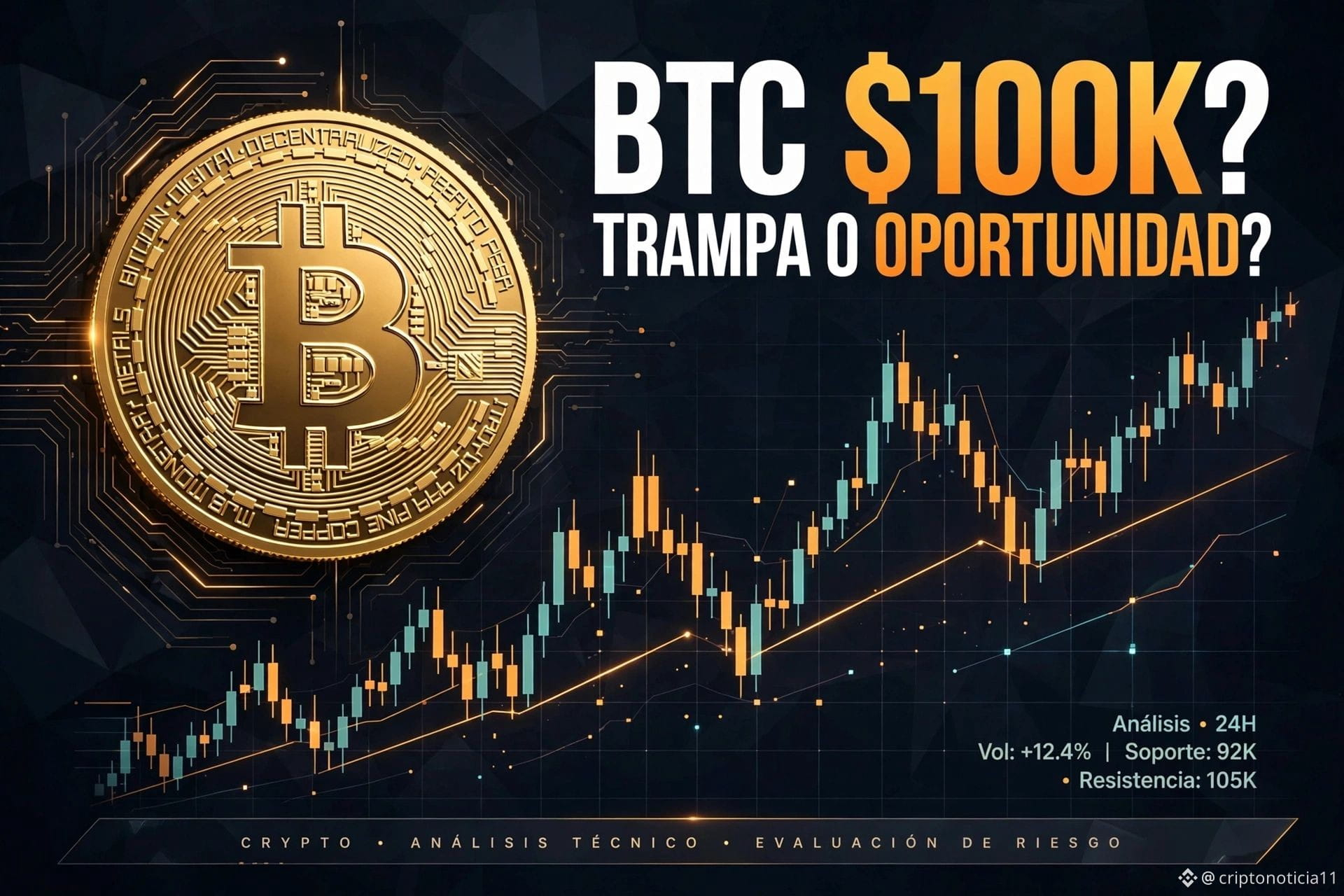
Bitcoin back to $100K again or a trap for beginners?
Lots of people are panicking because BTC drops a little, but if we look at the chart, this is normal.
I don’t sell. When the market is afraid, that’s when those of us who know what to do wait.
My strategy is simple: I don’t check the price every 5 minutes; I accumulate little by little and I wait.
What do you do? Do you sell out of fear, or do you buy?
#BTC #Bitcoin #Crypto
$BTC
{spot}(BTCUSDT)
Bitcoin back to $100K again or a trap for beginners?
Lots of people are panicking because BTC drops a little, but if we look at the chart, this is normal.
I don’t sell. When the market is afraid, that’s when those of us who know what to do wait.
My strategy is simple: I don’t check the price every 5 minutes; I accumulate little by little and I wait.
What do you do? Do you sell out of fear, or do you buy?
#BTC #Bitcoin #Crypto
$BTC
Lots of people are panicking because BTC drops a little, but if we look at the chart, this is normal.
I don’t sell. When the market is afraid, that’s when those of us who know what to do wait.
My strategy is simple: I don’t check the price every 5 minutes; I accumulate little by little and I wait.
What do you do? Do you sell out of fear, or do you buy?
#BTC #Bitcoin #Crypto
$BTC
1.3k
·
--
Bullish
Verified
The United States sanctioned an Iranian cryptocurrency operator who was financing the operations of the Revolutionary Guard
The Treasury accuses BitBank, controlled by financier Babak Zanjani, of having transferred hundreds of millions of dollars in bitcoins to the Revolutionary Guard through the “insurance” scheme that Tehran imposes on ships crossing the maritime route.
The U.S. Department of the Treasury announced this Thursday sanctions against BitBank, an Iranian cryptocurrency exchange controlled by financier Babak Zanjani, which it accuses of processing the payments received by vessels in exchange for safe-passage guarantees through the Strait of Hormuz. The Office of Foreign Assets Control (OFAC) says the platform routed hundreds of millions of dollars (USD) in bitcoins to the Islamic Revolutionary Guard Corps (IRGC), the military arm of the Iranian regime.
According to the Treasury statement, BitBank operated between June and July as the collection mechanism of the Hormuz Safe Maritime Services Authority, the entity Iran presents as maritime insurance for ships transiting the strait, but which Washington describes as a disguised extortion scheme. The agency described the exchange as “a central piece in the regime’s sanctions-evasion infrastructure based on digital assets.”
The measure is part of the “Operation Economic Outcast,” the strategy with which the Treasury seeks to financially isolate Iran and dismantle its commercial, logistics, and transportation networks. Since its launch, the program has targeted the illicit trade in Iranian oil, money-exchange houses, shipping companies, and front companies spread across several countries.
$BTC
The United States sanctioned an Iranian cryptocurrency operator who was financing the operations of the Revolutionary Guard
The Treasury accuses BitBank, controlled by financier Babak Zanjani, of having transferred hundreds of millions of dollars in bitcoins to the Revolutionary Guard through the “insurance” scheme that Tehran imposes on ships crossing the maritime route.
The U.S. Department of the Treasury announced this Thursday sanctions against BitBank, an Iranian cryptocurrency exchange controlled by financier Babak Zanjani, which it accuses of processing the payments received by vessels in exchange for safe-passage guarantees through the Strait of Hormuz. The Office of Foreign Assets Control (OFAC) says the platform routed hundreds of millions of dollars (USD) in bitcoins to the Islamic Revolutionary Guard Corps (IRGC), the military arm of the Iranian regime.
According to the Treasury statement, BitBank operated between June and July as the collection mechanism of the Hormuz Safe Maritime Services Authority, the entity Iran presents as maritime insurance for ships transiting the strait, but which Washington describes as a disguised extortion scheme. The agency described the exchange as “a central piece in the regime’s sanctions-evasion infrastructure based on digital assets.”
The measure is part of the “Operation Economic Outcast,” the strategy with which the Treasury seeks to financially isolate Iran and dismantle its commercial, logistics, and transportation networks. Since its launch, the program has targeted the illicit trade in Iranian oil, money-exchange houses, shipping companies, and front companies spread across several countries.
$BTC
The Treasury accuses BitBank, controlled by financier Babak Zanjani, of having transferred hundreds of millions of dollars in bitcoins to the Revolutionary Guard through the “insurance” scheme that Tehran imposes on ships crossing the maritime route.
The U.S. Department of the Treasury announced this Thursday sanctions against BitBank, an Iranian cryptocurrency exchange controlled by financier Babak Zanjani, which it accuses of processing the payments received by vessels in exchange for safe-passage guarantees through the Strait of Hormuz. The Office of Foreign Assets Control (OFAC) says the platform routed hundreds of millions of dollars (USD) in bitcoins to the Islamic Revolutionary Guard Corps (IRGC), the military arm of the Iranian regime.
According to the Treasury statement, BitBank operated between June and July as the collection mechanism of the Hormuz Safe Maritime Services Authority, the entity Iran presents as maritime insurance for ships transiting the strait, but which Washington describes as a disguised extortion scheme. The agency described the exchange as “a central piece in the regime’s sanctions-evasion infrastructure based on digital assets.”
The measure is part of the “Operation Economic Outcast,” the strategy with which the Treasury seeks to financially isolate Iran and dismantle its commercial, logistics, and transportation networks. Since its launch, the program has targeted the illicit trade in Iranian oil, money-exchange houses, shipping companies, and front companies spread across several countries.
$BTC
1.2k
·
--
Bullish
Attention my people Pepe and Shiba could possibly wake up again after a long sleep, it is expected for the end of this year 2026. Pepe could reach about 0.00007 USD, Shiba could reach about 0.00009 USD up to 0.0001 USD. I’m not sure, it’s an average based on my research.
I advise you to do your own research.
$SHIB $PEPE
Attention my people Pepe and Shiba could possibly wake up again after a long sleep, it is expected for the end of this year 2026. Pepe could reach about 0.00007 USD, Shiba could reach about 0.00009 USD up to 0.0001 USD. I’m not sure, it’s an average based on my research.
I advise you to do your own research.
$SHIB $PEPE
I advise you to do your own research.
$SHIB $PEPE
3
2.8k
·
--
Bullish
incredible guys Although the senate won the vote by a margin of one vote for not approving the regulation, Bitcoin Hoi demonstrated a significant rise, trading at around 81,235 USD—something incredible. I told you that even though the regulation wasn’t approved, Bitcoin was showing a bullish signal, because major investors know how big what’s coming for Bitcoin is, no matter the setbacks. Bitcoin strengthens itself, showing what it’s made of, and for the purposes of this year 2026, according to experts, it could skyrocket suddenly.
$BTC
{spot}(BTCUSDT)
incredible guys Although the senate won the vote by a margin of one vote for not approving the regulation, Bitcoin Hoi demonstrated a significant rise, trading at around 81,235 USD—something incredible. I told you that even though the regulation wasn’t approved, Bitcoin was showing a bullish signal, because major investors know how big what’s coming for Bitcoin is, no matter the setbacks. Bitcoin strengthens itself, showing what it’s made of, and for the purposes of this year 2026, according to experts, it could skyrocket suddenly.
$BTC
$BTC
1
1
755
Log in to explore more content
Join global crypto users on Binance Square
⚡️ Get latest and useful information about crypto.
💬 Trusted by the world’s largest crypto exchange.
👍 Discover real insights from verified creators.
Email / Phone number
Trending Topics
NEARFallsToAround$4.70Down14%
1,504 views
12 Discussing
🚨 $NEAR — FROM ETF HYPE TO A 14% SLAP IN THE FACE.
NEAR has dropped toward $4.70, giving back a big chunk of its recent run after briefly trading above $5.50. The selloff also came as NEAR Intents disclosed a security incident tied to its cross-chain infrastructure, with reported losses around $3.8M. The underlying NEAR blockchain itself was not reported as compromised.
Here’s the part traders should care about:
$4.69–$4.74 is now the key support zone.
Hold it, and this could simply be a violent retest after the September breakout.
Lose it?
The next downside references sit closer to $4.58, then ~$4.30.
And the irony?
The new Bitwise NEAR ETF was still seeing positive inflows around launch week.
So this isn’t a simple “nobody wants NEAR” story.
It’s a battle between:
fresh institutional access
vs.
post-rally profit-taking + security fear.
$NEAR doesn’t need hype right now. It needs $4.70 to hold. 👀
#NEARFallsToAround$4.70Down14% #EvernorthPlansNasdaqListingOct8 #SECProposesCryptoCustodyFramework #IMFApproves$139MDisbursementToElSalvador #AnthropicTargetsIPOAsSoonAsMidNovember
KimHotbae
·0 Likes
·211 views
EthereumFoundationLaunchesZkAPIOnMainnet
3 views
15 Discussing
EvernorthPlansNasdaqListingOct8
2,048 views
50 Discussing