

Commander168
57 Posts

Commander168
Report
Block User
A9 Sprint Mode:ON #Crypto #AI
Open Trade
Frequent Trader
1.7 Months
5 Following
10 Followers
9 Liked
Posts
Portfolio
·
--
$SPX continue watching for long
the friends who followed us ate meat again ✌️
follow me and let’s play with the left-side trading 😎
$SPX continue watching for long
the friends who followed us ate meat again ✌️
follow me and let’s play with the left-side trading 😎
the friends who followed us ate meat again ✌️
follow me and let’s play with the left-side trading 😎
110
·
--
$ETH latest 2,684.68,
Marked price 2,684.88. Execution direction: open a long position on the left. ⚔️
On the daily timeframe, price is still above EMA20 at 2,574, EMA50 at 2,388, and EMA200 at 2,118, with the broader bullish alignment fully intact. The 1-hour active buy/sell ratio has already rebounded to 1.14, and the 4-hour MACD bearish momentum is starting to narrow; however, the 24-hour OI is still down 0.81%, and the market has not yet entered a strong trend acceleration.
Left-side deployment:
🎯 2,625—2,660: first tranche 30%
🎯 2,550—2,590: core position 40%
🎯 2,460—2,500: deep position 30%
🛡️ If only the first tranche is filled, a forced stop-loss at 2,505 applies
📈 Resistance at 2,743 and 2,807; main profit zone 2,920—3,000
When floating profit ROE reaches 25%, the protection line is raised to about +2%; when it reaches 37%, move the take-profit stop and exit when the drawdown from the highest ROE is 5 percentage points.
For ETH, continue to look long on the left side.
Don’t chase the current price—wait for a pullback to enter the trading zone.
$ETH latest 2,684.68,
Marked price 2,684.88. Execution direction: open a long position on the left. ⚔️
On the daily timeframe, price is still above EMA20 at 2,574, EMA50 at 2,388, and EMA200 at 2,118, with the broader bullish alignment fully intact. The 1-hour active buy/sell ratio has already rebounded to 1.14, and the 4-hour MACD bearish momentum is starting to narrow; however, the 24-hour OI is still down 0.81%, and the market has not yet entered a strong trend acceleration.
Left-side deployment:
🎯 2,625—2,660: first tranche 30%
🎯 2,550—2,590: core position 40%
🎯 2,460—2,500: deep position 30%
🛡️ If only the first tranche is filled, a forced stop-loss at 2,505 applies
📈 Resistance at 2,743 and 2,807; main profit zone 2,920—3,000
When floating profit ROE reaches 25%, the protection line is raised to about +2%; when it reaches 37%, move the take-profit stop and exit when the drawdown from the highest ROE is 5 percentage points.
For ETH, continue to look long on the left side.
Don’t chase the current price—wait for a pullback to enter the trading zone.
Marked price 2,684.88. Execution direction: open a long position on the left. ⚔️
On the daily timeframe, price is still above EMA20 at 2,574, EMA50 at 2,388, and EMA200 at 2,118, with the broader bullish alignment fully intact. The 1-hour active buy/sell ratio has already rebounded to 1.14, and the 4-hour MACD bearish momentum is starting to narrow; however, the 24-hour OI is still down 0.81%, and the market has not yet entered a strong trend acceleration.
Left-side deployment:
🎯 2,625—2,660: first tranche 30%
🎯 2,550—2,590: core position 40%
🎯 2,460—2,500: deep position 30%
🛡️ If only the first tranche is filled, a forced stop-loss at 2,505 applies
📈 Resistance at 2,743 and 2,807; main profit zone 2,920—3,000
When floating profit ROE reaches 25%, the protection line is raised to about +2%; when it reaches 37%, move the take-profit stop and exit when the drawdown from the highest ROE is 5 percentage points.
For ETH, continue to look long on the left side.
Don’t chase the current price—wait for a pullback to enter the trading zone.
167
·
--
$NEO 🛰️ Left-Side Trading Tactics Radar
🧱 This morning, NEO formed two hourly candles. The respective lows landed at 2.596 and 2.595. There is some repeat follow-through here, but it’s not enough to prove that a new upswing has already started: the 11:00–12:00 active buy/sell ratio is about 0.99, with both sides essentially tied.
🚦 Only consider buying on pullbacks: 2.584—2.600.
Support is in two layers: 2.583—2.596 and 2.543—2.549.
First check the overhead level at 2.645, then check 2.660—2.661; both come from today’s already completed hourly K-candles.
Execution conditions: within the range, the 15-minute price dips down and then reclaims above 2.595; active buy volume exceeds sell volume; and the close still remains in the long-entry zone. The most recent BTC hourly candle must also hold above 85,948.50.
Initial stop loss: entry fill price 2.529.
Move protection activation: hourly close above 2.661.
After activation, use an approximate volatility trailing distance of 0.074, then update according to new data; do not set a fixed take-profit in advance.
⛔ If, before NEO enters, the hourly candle closes below 2.583, cancel the plan. Current 2.623 is not the position for this trade. This instrument especially needs protection against slippage: the stop-loss trigger price is not equal to the final execution price.
$NEO 🛰️ Left-Side Trading Tactics Radar
🧱 This morning, NEO formed two hourly candles. The respective lows landed at 2.596 and 2.595. There is some repeat follow-through here, but it’s not enough to prove that a new upswing has already started: the 11:00–12:00 active buy/sell ratio is about 0.99, with both sides essentially tied.
🚦 Only consider buying on pullbacks: 2.584—2.600.
Support is in two layers: 2.583—2.596 and 2.543—2.549.
First check the overhead level at 2.645, then check 2.660—2.661; both come from today’s already completed hourly K-candles.
Execution conditions: within the range, the 15-minute price dips down and then reclaims above 2.595; active buy volume exceeds sell volume; and the close still remains in the long-entry zone. The most recent BTC hourly candle must also hold above 85,948.50.
Initial stop loss: entry fill price 2.529.
Move protection activation: hourly close above 2.661.
After activation, use an approximate volatility trailing distance of 0.074, then update according to new data; do not set a fixed take-profit in advance.
⛔ If, before NEO enters, the hourly candle closes below 2.583, cancel the plan. Current 2.623 is not the position for this trade. This instrument especially needs protection against slippage: the stop-loss trigger price is not equal to the final execution price.
🧱 This morning, NEO formed two hourly candles. The respective lows landed at 2.596 and 2.595. There is some repeat follow-through here, but it’s not enough to prove that a new upswing has already started: the 11:00–12:00 active buy/sell ratio is about 0.99, with both sides essentially tied.
🚦 Only consider buying on pullbacks: 2.584—2.600.
Support is in two layers: 2.583—2.596 and 2.543—2.549.
First check the overhead level at 2.645, then check 2.660—2.661; both come from today’s already completed hourly K-candles.
Execution conditions: within the range, the 15-minute price dips down and then reclaims above 2.595; active buy volume exceeds sell volume; and the close still remains in the long-entry zone. The most recent BTC hourly candle must also hold above 85,948.50.
Initial stop loss: entry fill price 2.529.
Move protection activation: hourly close above 2.661.
After activation, use an approximate volatility trailing distance of 0.074, then update according to new data; do not set a fixed take-profit in advance.
⛔ If, before NEO enters, the hourly candle closes below 2.583, cancel the plan. Current 2.623 is not the position for this trade. This instrument especially needs protection against slippage: the stop-loss trigger price is not equal to the final execution price.
332
·
--
$NEO 🚨Stay steady, take off🛫
Did you follow after the left side set up in advance?
$NEO 🚨Stay steady, take off🛫
Did you follow after the left side set up in advance?
Did you follow after the left side set up in advance?
212
·
--
$MSTR 🚨Hold steady and take off🛫
So what about the trades on the left—are you convinced or not?
Brothers, the trend is here—go in hard, do it right!
$MSTR 🚨Hold steady and take off🛫
So what about the trades on the left—are you convinced or not?
Brothers, the trend is here—go in hard, do it right!
So what about the trades on the left—are you convinced or not?
Brothers, the trend is here—go in hard, do it right!
1
161
·
--
The big one with $MSTR is coming soon—please show respect in advance
The big one with $MSTR is coming soon—please show respect in advance
77
·
--
$ZEC 🛰️ Brothers preparing shorts—wait a moment
🧱 Recently, the last three completed 4-hour candlesticks have all closed lower in a row. Short-term selling pressure is still there, but in the 15:00 ordinary-account statistics, shorts make up 68.49%, and the risk of a rebound is also not low.
Don’t chase around 1450. I only consider a short during a rebound within the intraday downward structure.
🚦 Opening a short: 1472—1479
Resistance: 1472.93—1479.06 / 1485.86—1489.49; both are rebound highs already seen today.
Support: 1434.79 / 1420.42—today’s and September 18’s lows, respectively.
Hard stop-loss at 1495. First cut down at 1440, then watch for 1425.
Execution requirements: In 15 minutes, price must rise above 1477; then form a bearish close, and the close must fall back into 1472—1476. The active sell volume should be greater than the buy volume. Also, the most recent hourly close for BTC must not be higher than 80618.
⛔ ZEC: If an hourly close higher than 1489.49 occurs first, the entire plan is canceled. The 1495 stop-loss includes a pressure buffer; do not wait for the close to stop out.
The shorts are crowded in the account, meaning the rebound phase may be even more crowded, but it doesn’t guarantee a stronger downside move.
$ZEC 🛰️ Brothers preparing shorts—wait a moment
🧱 Recently, the last three completed 4-hour candlesticks have all closed lower in a row. Short-term selling pressure is still there, but in the 15:00 ordinary-account statistics, shorts make up 68.49%, and the risk of a rebound is also not low.
Don’t chase around 1450. I only consider a short during a rebound within the intraday downward structure.
🚦 Opening a short: 1472—1479
Resistance: 1472.93—1479.06 / 1485.86—1489.49; both are rebound highs already seen today.
Support: 1434.79 / 1420.42—today’s and September 18’s lows, respectively.
Hard stop-loss at 1495. First cut down at 1440, then watch for 1425.
Execution requirements: In 15 minutes, price must rise above 1477; then form a bearish close, and the close must fall back into 1472—1476. The active sell volume should be greater than the buy volume. Also, the most recent hourly close for BTC must not be higher than 80618.
⛔ ZEC: If an hourly close higher than 1489.49 occurs first, the entire plan is canceled. The 1495 stop-loss includes a pressure buffer; do not wait for the close to stop out.
The shorts are crowded in the account, meaning the rebound phase may be even more crowded, but it doesn’t guarantee a stronger downside move.
🧱 Recently, the last three completed 4-hour candlesticks have all closed lower in a row. Short-term selling pressure is still there, but in the 15:00 ordinary-account statistics, shorts make up 68.49%, and the risk of a rebound is also not low.
Don’t chase around 1450. I only consider a short during a rebound within the intraday downward structure.
🚦 Opening a short: 1472—1479
Resistance: 1472.93—1479.06 / 1485.86—1489.49; both are rebound highs already seen today.
Support: 1434.79 / 1420.42—today’s and September 18’s lows, respectively.
Hard stop-loss at 1495. First cut down at 1440, then watch for 1425.
Execution requirements: In 15 minutes, price must rise above 1477; then form a bearish close, and the close must fall back into 1472—1476. The active sell volume should be greater than the buy volume. Also, the most recent hourly close for BTC must not be higher than 80618.
⛔ ZEC: If an hourly close higher than 1489.49 occurs first, the entire plan is canceled. The 1495 stop-loss includes a pressure buffer; do not wait for the close to stop out.
The shorts are crowded in the account, meaning the rebound phase may be even more crowded, but it doesn’t guarantee a stronger downside move.
167
·
--
$BTC ♟️ After the rate hike lands, the BTC reaction is worth revisiting.
📆 In the early hours of September 17 Beijing time, the Fed announced a 25-basis-point rate increase, raising the interest-rate range to 3.75%—4%. Policy is tight, but BTC subsequently moved back above 81,000. I’d rather study how to go long on pullbacks; you can’t rely on just one macro headline. We need several consecutive days for price to decide direction.
🧮 However, the immediate buying pressure hasn’t recovered yet. From 09:00 to 10:00, the主动买量 (active buy volume) is only about 0.58x the sell volume, and the 4-hour RSI is still near 72.8. The larger timeframe is strong, while the smaller timeframe is in ebbing mode—this is suitable for picking entries, not for chasing the rebound and paying a premium.
↗️ Left-side long zones: 80,820—80,900
Support: 80,803—80,923 / 80,532
Resistance: 81,341—81,403 / 81,934
Hard stop-loss at entry price: 80,680
First partial take-profit: 81,340; second target: 81,880
The first tier of support comes from a confluence of yesterday’s 80,802.60 and today’s early-morning lows at 80,875 and 80,923. Once price reaches the zone, you should see a completed 15-minute K-line: a lower-low test that closes bullish, with active buy volume exceeding sell volume, and volume no less than the average of the prior 20 candles; only then should you consider it if the close remains inside the long zone.
⏸️ If the hourly close before entry is already below 80,802.60, this trade is canceled. 80,680 is a stop-loss buffer reserved outside the support, not the historical lowest price. Weekend liquidity is thin; the main risk to guard against is that a second pullback turns directly into a breakdown.
$BTC ♟️ After the rate hike lands, the BTC reaction is worth revisiting.
📆 In the early hours of September 17 Beijing time, the Fed announced a 25-basis-point rate increase, raising the interest-rate range to 3.75%—4%. Policy is tight, but BTC subsequently moved back above 81,000. I’d rather study how to go long on pullbacks; you can’t rely on just one macro headline. We need several consecutive days for price to decide direction.
🧮 However, the immediate buying pressure hasn’t recovered yet. From 09:00 to 10:00, the主动买量 (active buy volume) is only about 0.58x the sell volume, and the 4-hour RSI is still near 72.8. The larger timeframe is strong, while the smaller timeframe is in ebbing mode—this is suitable for picking entries, not for chasing the rebound and paying a premium.
↗️ Left-side long zones: 80,820—80,900
Support: 80,803—80,923 / 80,532
Resistance: 81,341—81,403 / 81,934
Hard stop-loss at entry price: 80,680
First partial take-profit: 81,340; second target: 81,880
The first tier of support comes from a confluence of yesterday’s 80,802.60 and today’s early-morning lows at 80,875 and 80,923. Once price reaches the zone, you should see a completed 15-minute K-line: a lower-low test that closes bullish, with active buy volume exceeding sell volume, and volume no less than the average of the prior 20 candles; only then should you consider it if the close remains inside the long zone.
⏸️ If the hourly close before entry is already below 80,802.60, this trade is canceled. 80,680 is a stop-loss buffer reserved outside the support, not the historical lowest price. Weekend liquidity is thin; the main risk to guard against is that a second pullback turns directly into a breakdown.
📆 In the early hours of September 17 Beijing time, the Fed announced a 25-basis-point rate increase, raising the interest-rate range to 3.75%—4%. Policy is tight, but BTC subsequently moved back above 81,000. I’d rather study how to go long on pullbacks; you can’t rely on just one macro headline. We need several consecutive days for price to decide direction.
🧮 However, the immediate buying pressure hasn’t recovered yet. From 09:00 to 10:00, the主动买量 (active buy volume) is only about 0.58x the sell volume, and the 4-hour RSI is still near 72.8. The larger timeframe is strong, while the smaller timeframe is in ebbing mode—this is suitable for picking entries, not for chasing the rebound and paying a premium.
↗️ Left-side long zones: 80,820—80,900
Support: 80,803—80,923 / 80,532
Resistance: 81,341—81,403 / 81,934
Hard stop-loss at entry price: 80,680
First partial take-profit: 81,340; second target: 81,880
The first tier of support comes from a confluence of yesterday’s 80,802.60 and today’s early-morning lows at 80,875 and 80,923. Once price reaches the zone, you should see a completed 15-minute K-line: a lower-low test that closes bullish, with active buy volume exceeding sell volume, and volume no less than the average of the prior 20 candles; only then should you consider it if the close remains inside the long zone.
⏸️ If the hourly close before entry is already below 80,802.60, this trade is canceled. 80,680 is a stop-loss buffer reserved outside the support, not the historical lowest price. Weekend liquidity is thin; the main risk to guard against is that a second pullback turns directly into a breakdown.
203
·
--
$SOL 🛰️ Tactical Radar
🧱 The former 97.65—98.05 void is no longer used. The previous 15 minutes already closed down to 98.13, then surged to 98.30; the old pressure cannot simply be reused to reopen positions.
Now it has pulled back; still, do not chase shorts. The next thing to test is the 98.65 early-morning high versus the previously broken low of 98.92.
🚦 Left-side open short area: 98.60—98.85.
Support: 97.27—97.37, then 96.33. Resistance: 98.65—98.92, then 100.68.
Hard stop-loss 99.15 | reduce position to 97.35 | second target 96.40.
Execution conditions: within the range, the 15-minute candle closes bearish;主动 sell volume exceeds buy volume; and the成交量 (volume) is not less than the earlier 20 consecutive 15-minute average volumes. The most recent hourly close for BTC must be no higher than 76,550.60.
⛔ Recheck at 20:45. If the hourly candle closes above 98.92 before entering SOL, cancel the plan.
99.15 is triggered at the contract execution price, serving as a buffer outside the pressure zone. The main risk is that an oversold rebound further expands; do not only look at the weakness in the larger timeframe—ignore short-term buying demand at your peril.
$SOL 🛰️ Tactical Radar
🧱 The former 97.65—98.05 void is no longer used. The previous 15 minutes already closed down to 98.13, then surged to 98.30; the old pressure cannot simply be reused to reopen positions.
Now it has pulled back; still, do not chase shorts. The next thing to test is the 98.65 early-morning high versus the previously broken low of 98.92.
🚦 Left-side open short area: 98.60—98.85.
Support: 97.27—97.37, then 96.33. Resistance: 98.65—98.92, then 100.68.
Hard stop-loss 99.15 | reduce position to 97.35 | second target 96.40.
Execution conditions: within the range, the 15-minute candle closes bearish;主动 sell volume exceeds buy volume; and the成交量 (volume) is not less than the earlier 20 consecutive 15-minute average volumes. The most recent hourly close for BTC must be no higher than 76,550.60.
⛔ Recheck at 20:45. If the hourly candle closes above 98.92 before entering SOL, cancel the plan.
99.15 is triggered at the contract execution price, serving as a buffer outside the pressure zone. The main risk is that an oversold rebound further expands; do not only look at the weakness in the larger timeframe—ignore short-term buying demand at your peril.
🧱 The former 97.65—98.05 void is no longer used. The previous 15 minutes already closed down to 98.13, then surged to 98.30; the old pressure cannot simply be reused to reopen positions.
Now it has pulled back; still, do not chase shorts. The next thing to test is the 98.65 early-morning high versus the previously broken low of 98.92.
🚦 Left-side open short area: 98.60—98.85.
Support: 97.27—97.37, then 96.33. Resistance: 98.65—98.92, then 100.68.
Hard stop-loss 99.15 | reduce position to 97.35 | second target 96.40.
Execution conditions: within the range, the 15-minute candle closes bearish;主动 sell volume exceeds buy volume; and the成交量 (volume) is not less than the earlier 20 consecutive 15-minute average volumes. The most recent hourly close for BTC must be no higher than 76,550.60.
⛔ Recheck at 20:45. If the hourly candle closes above 98.92 before entering SOL, cancel the plan.
99.15 is triggered at the contract execution price, serving as a buffer outside the pressure zone. The main risk is that an oversold rebound further expands; do not only look at the weakness in the larger timeframe—ignore short-term buying demand at your peril.
1
1.1k
·
--
$SOL 🛰️
Tactical Radar🔴 Bias to the left
Pullback-to-rebound candidates; not triggered yet.
⏰ Beijing time: 9/16成交 price 97.15
Mark price 97.28298|Index price 97.34372
🧱 Three checks
Structure: The 4-hour rebound high is 98.04; above that is the hourly high of 98.65.
Trades: From 10:00–11:00 it closed up, but the active buy volume / active sell volume was about 0.94—buyers did not clearly dominate.
Open interest: OI quantity from 08:00–10:00 decreased by about 0.42%. This only confirms shrinking positions; it does not prove that shorts have retreated.
🚦 Execution prices
Support: 96.25—96.39 / 95.72.
Resistance: 97.63—98.04 / 98.65.
Left-side short zone:
97.65—98.05. Hard stop-loss: 98.35.
Target 1: 96.35; Target 2: 95.75.
After reaching the zone, only consider opening a short if the 15-minute candle closes bearish and active sell volume exceeds buy volume, and BTC does not show an hourly closing breakout above 76,550. The current price is below the planned range—remain on standby.
⛔ If the 15-minute directly closes above 98.05, cancel this entry; any existing position should be handled with a hard stop-loss at 98.35. Recheck at 12:00. The biggest risk is oversold-repair directly breaking through the first layer of resistance.
$SOL 🛰️
Tactical Radar🔴 Bias to the left
Pullback-to-rebound candidates; not triggered yet.
⏰ Beijing time: 9/16成交 price 97.15
Mark price 97.28298|Index price 97.34372
🧱 Three checks
Structure: The 4-hour rebound high is 98.04; above that is the hourly high of 98.65.
Trades: From 10:00–11:00 it closed up, but the active buy volume / active sell volume was about 0.94—buyers did not clearly dominate.
Open interest: OI quantity from 08:00–10:00 decreased by about 0.42%. This only confirms shrinking positions; it does not prove that shorts have retreated.
🚦 Execution prices
Support: 96.25—96.39 / 95.72.
Resistance: 97.63—98.04 / 98.65.
Left-side short zone:
97.65—98.05. Hard stop-loss: 98.35.
Target 1: 96.35; Target 2: 95.75.
After reaching the zone, only consider opening a short if the 15-minute candle closes bearish and active sell volume exceeds buy volume, and BTC does not show an hourly closing breakout above 76,550. The current price is below the planned range—remain on standby.
⛔ If the 15-minute directly closes above 98.05, cancel this entry; any existing position should be handled with a hard stop-loss at 98.35. Recheck at 12:00. The biggest risk is oversold-repair directly breaking through the first layer of resistance.
Tactical Radar🔴 Bias to the left
Pullback-to-rebound candidates; not triggered yet.
⏰ Beijing time: 9/16成交 price 97.15
Mark price 97.28298|Index price 97.34372
🧱 Three checks
Structure: The 4-hour rebound high is 98.04; above that is the hourly high of 98.65.
Trades: From 10:00–11:00 it closed up, but the active buy volume / active sell volume was about 0.94—buyers did not clearly dominate.
Open interest: OI quantity from 08:00–10:00 decreased by about 0.42%. This only confirms shrinking positions; it does not prove that shorts have retreated.
🚦 Execution prices
Support: 96.25—96.39 / 95.72.
Resistance: 97.63—98.04 / 98.65.
Left-side short zone:
97.65—98.05. Hard stop-loss: 98.35.
Target 1: 96.35; Target 2: 95.75.
After reaching the zone, only consider opening a short if the 15-minute candle closes bearish and active sell volume exceeds buy volume, and BTC does not show an hourly closing breakout above 76,550. The current price is below the planned range—remain on standby.
⛔ If the 15-minute directly closes above 98.05, cancel this entry; any existing position should be handled with a hard stop-loss at 98.35. Recheck at 12:00. The biggest risk is oversold-repair directly breaking through the first layer of resistance.
174
·
--
#Zama在以太坊开放16个机密Morpho金库
Next, it’s not just one alarm to stand watch: at 02:15 Beijing time on September 16, the CLARITY Act procedural vote; on the same day at 20:30, U.S. retail sales data; and at 02:00 on September 17, the Federal Reserve’s decision.
Even if the first piece of news were to lift the coin price, the next two hurdles still haven’t been cleared. Passing the procedural vote doesn’t mean the bill is officially in effect. As for the retail sales and interest-rate outcomes, nobody really knows what they’ll be right now.
No one-sided conclusion tonight—I want to see, after the first round of volatility, how much of the price can actually hold. $BTC
{future}(BTCUSDT)
#Zama在以太坊开放16个机密Morpho金库
Next, it’s not just one alarm to stand watch: at 02:15 Beijing time on September 16, the CLARITY Act procedural vote; on the same day at 20:30, U.S. retail sales data; and at 02:00 on September 17, the Federal Reserve’s decision.
Even if the first piece of news were to lift the coin price, the next two hurdles still haven’t been cleared. Passing the procedural vote doesn’t mean the bill is officially in effect. As for the retail sales and interest-rate outcomes, nobody really knows what they’ll be right now.
No one-sided conclusion tonight—I want to see, after the first round of volatility, how much of the price can actually hold. $BTC
Next, it’s not just one alarm to stand watch: at 02:15 Beijing time on September 16, the CLARITY Act procedural vote; on the same day at 20:30, U.S. retail sales data; and at 02:00 on September 17, the Federal Reserve’s decision.
Even if the first piece of news were to lift the coin price, the next two hurdles still haven’t been cleared. Passing the procedural vote doesn’t mean the bill is officially in effect. As for the retail sales and interest-rate outcomes, nobody really knows what they’ll be right now.
No one-sided conclusion tonight—I want to see, after the first round of volatility, how much of the price can actually hold. $BTC
182
·
--
$BTC I’ve put my BTC observation zone at 76,300—77,100.
One end is close to yesterday’s low; the other end is near the daily 20-period moving average. Right now it’s still around 78,000, and it’s some distance from the spot I want to study for support/takeover, so there’s no need to take action yet.
If it really comes back there, first check whether the sell volume on the way down shows signs of convergence, and whether the lows can stop making lower lows. If around 76,000 it also can’t hold, then keep waiting further.
When the price reaches the area, that’s only the beginning of the research—it can’t automatically become a reason to buy.
$BTC I’ve put my BTC observation zone at 76,300—77,100.
One end is close to yesterday’s low; the other end is near the daily 20-period moving average. Right now it’s still around 78,000, and it’s some distance from the spot I want to study for support/takeover, so there’s no need to take action yet.
If it really comes back there, first check whether the sell volume on the way down shows signs of convergence, and whether the lows can stop making lower lows. If around 76,000 it also can’t hold, then keep waiting further.
When the price reaches the area, that’s only the beginning of the research—it can’t automatically become a reason to buy.
One end is close to yesterday’s low; the other end is near the daily 20-period moving average. Right now it’s still around 78,000, and it’s some distance from the spot I want to study for support/takeover, so there’s no need to take action yet.
If it really comes back there, first check whether the sell volume on the way down shows signs of convergence, and whether the lows can stop making lower lows. If around 76,000 it also can’t hold, then keep waiting further.
When the price reaches the area, that’s only the beginning of the research—it can’t automatically become a reason to buy.
149
·
--
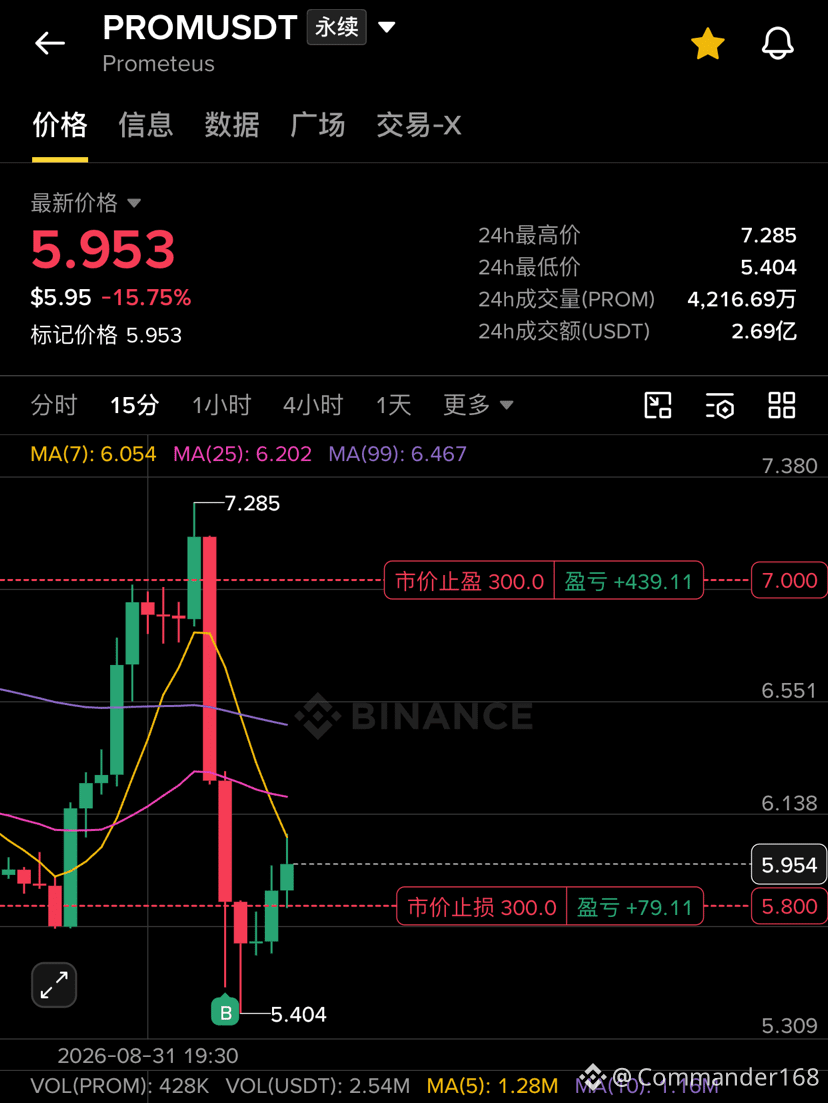
$PROM
I made almost 1 million already
Keep raising the trailing stop line
Brothers, come on—DOG profits, DOG meat 👀
$PROM
I made almost 1 million already
Keep raising the trailing stop line
Brothers, come on—DOG profits, DOG meat 👀
I made almost 1 million already
Keep raising the trailing stop line
Brothers, come on—DOG profits, DOG meat 👀
228
·
--
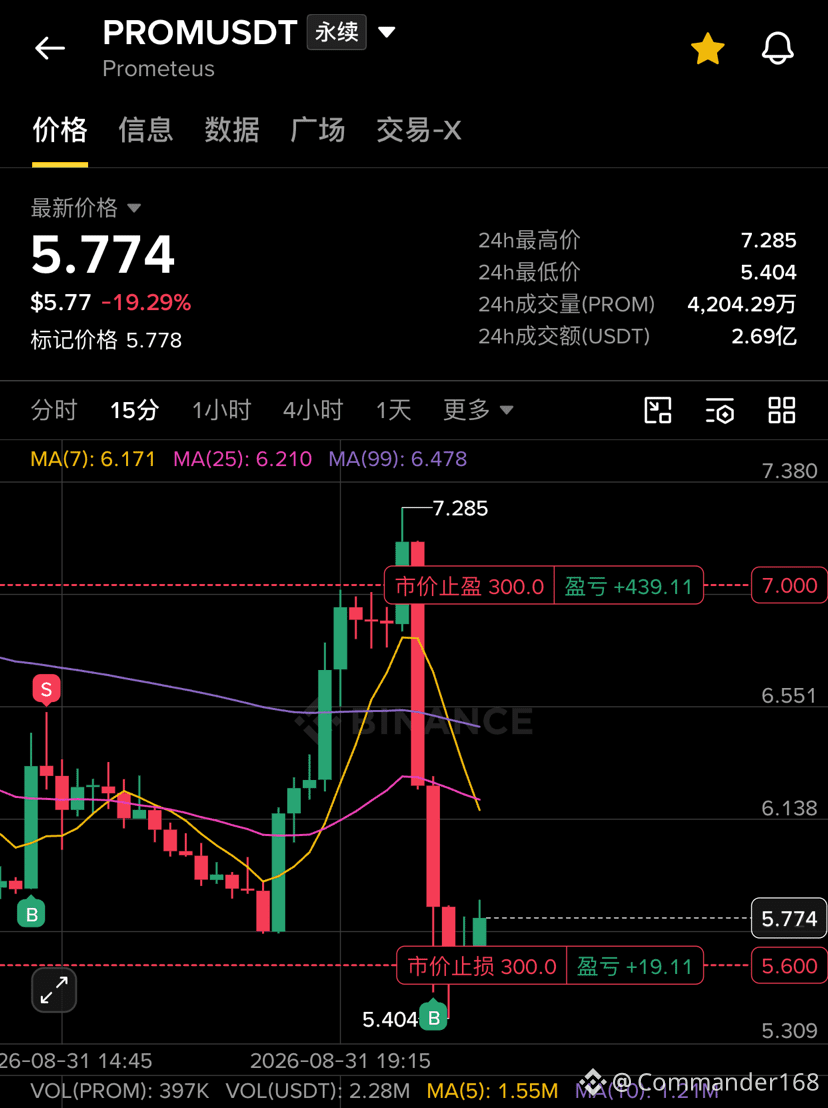
$PROM come on, 🐶 bro
I’ve already drawn the heaven and earth lines—I’m not afraid of your damn thing
I’ve already racked up over 600,000 so far ✌️
$PROM come on, 🐶 bro
I’ve already drawn the heaven and earth lines—I’m not afraid of your damn thing
I’ve already racked up over 600,000 so far ✌️
I’ve already drawn the heaven and earth lines—I’m not afraid of your damn thing
I’ve already racked up over 600,000 so far ✌️
3
2.4k
·
--
$PROM kills🐶 professional
🐶Zhuang, I won't live with you. I'll end you🔪🔪🔪
$PROM kills🐶 professional
🐶Zhuang, I won't live with you. I'll end you🔪🔪🔪
🐶Zhuang, I won't live with you. I'll end you🔪🔪🔪
139
·
--
$VVV Long-side trend remains unchanged
Before daylight, it will definitely break 17. If you understand, come to the together club to see the pretty models ✌️
$VVV Long-side trend remains unchanged
Before daylight, it will definitely break 17. If you understand, come to the together club to see the pretty models ✌️
Before daylight, it will definitely break 17. If you understand, come to the together club to see the pretty models ✌️
2
203
·
--
$PEOPLE Run up🚀
The constitution coin has never lacked stories
What’s missing is the match that ignites the emotion
Now the chips are starting to get restless, and market attention is heating up too
By the time everyone understands
The price may already not be in a comfortable spot
$PEOPLE Run up🚀
The constitution coin has never lacked stories
What’s missing is the match that ignites the emotion
Now the chips are starting to get restless, and market attention is heating up too
By the time everyone understands
The price may already not be in a comfortable spot
The constitution coin has never lacked stories
What’s missing is the match that ignites the emotion
Now the chips are starting to get restless, and market attention is heating up too
By the time everyone understands
The price may already not be in a comfortable spot
246
·
--
Bullish
$PEOPLE 天赐良机
Now is the time—if not now, when? Brothers, go get it—snatch the money ✊
$PEOPLE 天赐良机
Now is the time—if not now, when? Brothers, go get it—snatch the money ✊
Now is the time—if not now, when? Brothers, go get it—snatch the money ✊
1
473
·
--
Before $XMR , people used to think privacy coins were a gray area. Then they discovered that their balances, transfer records, and wallet relationships could all be seen at a glance—and realized that privacy isn’t a fig leaf, but a part of property rights.
The hotspots may keep rotating, but the need to “not be watched” won’t disappear. $XMR doesn’t need to please every exchange. When privacy is truly needed, most people’s first thought is still it.
Next, I’m not only bullish on $XMR —I’m bullish on the entire privacy sector.
Before $XMR , people used to think privacy coins were a gray area. Then they discovered that their balances, transfer records, and wallet relationships could all be seen at a glance—and realized that privacy isn’t a fig leaf, but a part of property rights.
The hotspots may keep rotating, but the need to “not be watched” won’t disappear. $XMR doesn’t need to please every exchange. When privacy is truly needed, most people’s first thought is still it.
Next, I’m not only bullish on $XMR —I’m bullish on the entire privacy sector.
The hotspots may keep rotating, but the need to “not be watched” won’t disappear. $XMR doesn’t need to please every exchange. When privacy is truly needed, most people’s first thought is still it.
Next, I’m not only bullish on $XMR —I’m bullish on the entire privacy sector.
110
·
--
$LINK Hold on tight and steady—taking you to the moon 🚀
$LINK Hold on tight and steady—taking you to the moon 🚀
159
Log in to explore more content
Join global crypto users on Binance Square
⚡️ Get latest and useful information about crypto.
💬 Trusted by the world’s largest crypto exchange.
👍 Discover real insights from verified creators.
Email / Phone number
Trending Topics
StrategyStriveAdd2305BitcoinThisWeek
11,138 views
430 Discussing
#strategystriveadd2305bitcointhisweek 🚨 2,305 BTC just moved into treasuries
While most traders were focused on the Bitcoin price rebound two public companies quietly made big moves. 👀
Strategy and Strive together bought 2,305 BTC for 182.7 million Dollar.
🔹 Strategy bought 950 BTC for 75.7 million dollar
🔹 Strive bought 1,355 BTC for around 107.7 million dollar
This brings their total holdings to:
📊 Strategy. 846,000 BTC
📊 Strive. 26,355 BTC
But the real story isn't the amount of Bitcoin they bought.
It's how they paid for it.
Strategy used cash it already had.
Strive used its stock financing model to fund the purchase. Meaning it’s growing its Bitcoin treasury without relying only on cash flow.
This difference matters.
For traders and investors it adds a layer of analysis: how much Bitcoin is being added, how it’s being funded and what it means for long-term value, per share.
The cost of capital BTC accumulation and share value. These factors are starting to shape the market in ways.
Corporate treasury demand is no longer a side note.
It’s becoming a part of the Bitcoin ecosystem.
💬 What do you think?
Will more companies start buying Bitcoin the way?
Will this trend grow?
#bitcoin #Khan62 #BTC #trading
$MSTR
$MARA $BMNR
Khan 62
·3 Likes
·2.6k views
TrumpRejectsIranHormuzReopening
15,326 views
442 Discussing
CircleTetherFreezeBitgetHackerWallet
36,727 views
580 Discussing