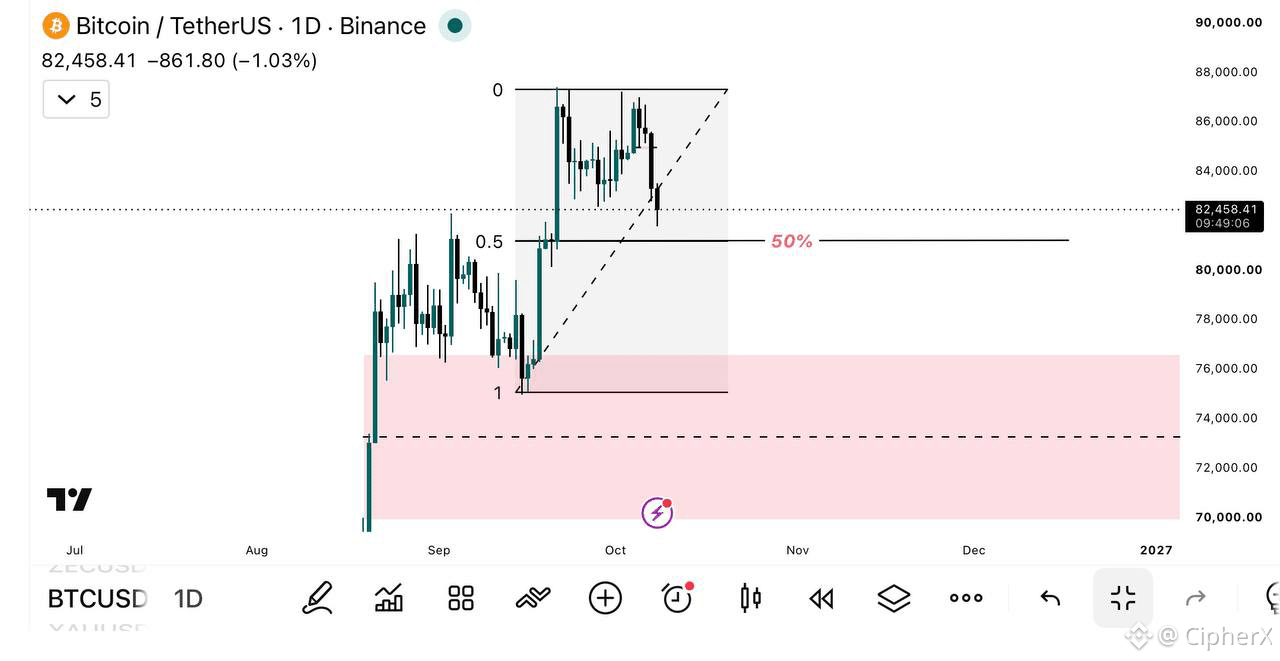
MicroStrategy now holds 214,400 BTC at a $35,180 average and Saylor is still adding above $90K
Cramer’s comments simply underline the obvious: shorts aren’t up against a trader, they’re up against a public company with a multi billion dollar Bitcoin strategy and zero intention to sell.
The setup is simple
A leveraged corporate balance sheet on one side
Short interest on the other
And only one of them is committed for the long haul.
The entire structure around YGG is shifting in a way that feels less like a token finding its footing and more like an ecosystem rediscovering its purpose after years of noise, detours, and diluted narratives. What’s happening now is the emergence of a cleaner, sharper identity—one built around coordination, ownership, and alignment between players and protocols in a world that finally understands that digital economies are not side-quests but the core engine of the next cycle. YGG is no longer trying to convince the market of its relevance; the market is circling back on its own. There’s a difference between forced attention and organic gravity, and YGG’s momentum right now is pure gravity—quiet, heavy, inevitable. You can feel the recalibration taking place, the way old assumptions crumble and new frameworks form in real time as liquidity adjusts to the idea that this network might have been undervalued for far longer than anyone wants to admit. Narratives evolve the moment behavior evolves, and the behavior around YGG is no longer casual. The traders returning to it aren’t looking for temporary rotations; they’re examining structural drivers, dissecting supply paths, revisiting long-term incentives, and realizing that the foundation built during the bear was not wasted scaffolding but a load-bearing frame waiting for the right macro window. You see this in how dips behave. They don’t unravel. They fold. They compress. They invite accumulation instead of fear. The sellers step forward with hesitation; the buyers step in with patience. This isn’t the psychology of a token passing through a hype cycle—it’s the psychology of a community that has reawakened to the idea that YGG is more than a remnant of a previous meta. It’s a blueprint for how coordination will look in the next era of open digital economies. What makes YGG especially dangerous right now is that the market has forgotten how to price networks with social capital embedded into their architecture. Everyone is trained to value raw throughput, TVL spikes, and protocol integrations, but few understand the compounding effect of aligned human liquidity—players, creators, communities, and operators who reinforce each other’s incentives. YGG’s engine has always been that layer, but only now is the market capable of recognizing its value. And once recognition begins, repricing follows. You can feel this repricing in the subtle changes across exchanges, the tightened volatility bands, the rising baseline of liquidity, the shift in how traders talk about the token—not as nostalgia, not as a relic, but as infrastructure with unfinished business. Every strong trend starts not with euphoria but with the steady hum of confidence returning to the people closest to the ground. YGG’s core users and builders aren’t making noise; they’re executing with a precision that contrasts sharply with the chaotic branding of the previous cycle. That restraint, that seriousness, creates a different tone in the market. When insiders grow quiet, the price starts speaking for them. You see this in how clean the chart has become—a series of recoveries that hold, consolidations that tighten, breakouts that don’t collapse under their own weight. It’s the behavior of a market that has decided the asset is no longer cheap enough to waste volatility on. Whenever a token shifts from reactive to intentional movement, the narrative is already two steps behind. Momentum alone doesn’t create conviction, but structural change does. YGG’s shift toward a more refined economic model, one that aligns tokens with real participants rather than speculative wanderers, has altered the trajectory in a way that most traders haven’t fully priced in. A token becomes truly resilient when its upside is not dependent on a single catalyst but emerges from multiple quiet improvements converging. YGG is living through that convergence now: better coordination layers, clearer incentives, more grounded participation, and an expanding footprint across the digital economies forming around AI, gaming, and virtual labor networks. These are not small themes—they are the backbone of where on-chain activity is heading. One of the most overlooked dynamics in the current environment is how rapidly the market forgives tokens that demonstrate evolution rather than desperation. YGG isn’t forcing relevance. It’s earning it. Each update fits into a coherent direction rather than a marketing stunt. Each partnership reinforces a long-term arc instead of chasing temporary visibility. This subtle discipline is what gives traders confidence that YGG’s newfound trajectory isn’t simply reactive to market conditions—it’s indicative of internal strength that persists across cycles. A token that improves during uncertainty becomes a weapon during expansion. YGG’s consolidation phases are telling the real story. They aren’t filled with erratic wicks or liquidity gaps; they’re structured, clean, and remarkably controlled. This is where you see the fingerprints of serious hands. No one is rushing the trend. No one is trying to front-run a narrative. Instead, the market is allowing YGG to rebuild its base layer of conviction at a sustainable pace, one that doesn’t burn holders for the sake of spectacle. That patience is a sign of respect—a market acknowledging that it mispriced something and is now correcting silently, without the drama of retail chasing shadows. The broader sector also plays in YGG’s favor. As gaming, AI-driven digital economies, and virtual asset ownership begin merging into a unified narrative, the assets positioned at the intersection gain leverage. YGG sits exactly at that intersection. It’s not pretending to be infrastructure; it is infrastructure. It’s not trying to reinvent culture; it already commands one. And in a cycle where capital is increasingly narrative-dependent, tokens with cultural weight and operational depth will outperform those built solely for speculative bursts. Traders who understand this shift are already positioning. What’s forming around YGG is not hype—it’s inevitability. The repricing has begun quietly, but once the market collectively recognizes the new baseline, the acceleration phase tends to happen faster than models predict. Trends built on realignment rather than mania tend to travel further, because the foundation beneath them doesn’t crack under pressure. And YGG’s foundation has thickened. The liquidity is stickier. The sentiment is steadier. The volatility is narrowing into upward bias, a sign that the market has mentally reclassified the token into a different tier. Where this movement leads is not a matter of guessing candles but understanding cycles. Every cycle anoints assets that refused to die in the cold, rebuilt in silence, and returned with new architecture beneath an old name. YGG is walking that path now. The market is only beginning to realize it. And once it fully does, the chart will stop looking like a recovery and start looking like discovery—price discovering a range that fits a token whose narrative has matured far beyond the shadow of its past. @Yield Guild Games #YGGPlay $YGG
The story of Injective right now isn’t the easy, surface-level noise people copy into their timelines; it’s the deeper structural shift happening underneath a chain that has quietly outgrown the market’s expectations. Every cycle picks a few assets that stop behaving like the rest of the pack, and this time the conversation keeps circling back to a pattern INJ has mastered: when liquidity tightens, it bends; when liquidity expands, it accelerates. There is a rhythm inside this chart that refuses to flatten, a kind of engineered momentum that feels less like speculation and more like a system designing its own gravitational field. You see it in the order books, the way buyers keep stepping forward even when the market should be exhausted, and you feel it in the narrative—the sense that INJ has slipped out of the category of “altcoin” and into a different class of assets entirely, one where infrastructure meets tempo. The psychology around INJ is shifting faster than most people can articulate. There is no loud explosion, no hype-driven mania, just a slow tightening of belief where traders who used to rent exposure are now holding with a different intent. Sentiment hardens when a coin moves from being a trade to being a position, and that is exactly the transformation happening here. The chart tells only half the story; the other half is the behavior of people who no longer feel comfortable shorting something that consistently breaks the cadence of the broader market. They watch the dips shrink, the recoveries snap faster, and the volatility compress into an upward bias that unnerves anyone betting against it. What makes INJ dangerous—in the good way—is that its momentum isn’t theatrical. It’s methodical, patient, and deeply aware of its own trajectory. Every breakout in this ecosystem is starting to look less like luck and more like architecture. There is something unusually deliberate about how liquidity rotates into INJ, how volume appears at key levels just when the structure demands reinforcement. This isn’t the random pulse of a retail-driven asset; it’s the behavior of a market with mature hands guiding it, shaping a slope rather than chasing candles. And that slope is steepening. The consolidation phases are no longer wide plains where price wanders; they’re tight corridors that push traders against the walls, forcing decisions faster than they expect. When a chart compresses like this, it’s usually preparing for a violent move, but INJ has learned to turn potential violence into sustained pressure—a squeeze that doesn’t release all at once but rather climbs in controlled increments. Technical analysis becomes almost secondary here because the human side of the market is reacting to something subtler. Traders are adapting to the idea that INJ is no longer predictable by the usual frameworks. There’s a sense that it has matured out of the shallow cycles and into a more deliberate form of price discovery. You can see this in how quickly it absorbs fear. Where other tokens bleed on uncertainty, INJ treats uncertainty like fuel. A dip doesn’t trigger panic; it triggers evaluation. People don’t race for exits—they watch, calculate, and reenter with the confidence of those who’ve seen this pattern repeat enough times to trust it. That kind of conviction doesn’t appear often, and when it does, it rewrites the narrative for an entire sector. What catches most analysts off guard is the speed at which INJ rebuilds momentum after every disruption. A normal asset needs time, rest, accumulation, but INJ seems to operate on compressed timelines. The recovery arcs are shorter, sharper, and more disciplined than traditional patterns would suggest. It behaves like a chain that understands the value of time—one that refuses to waste cycles on indecision. Momentum is supposed to be fragile; INJ treats it like a renewable resource, resetting and recharging as if volatility were a controlled environment rather than a threat. That’s why traders who study cycles can’t apply their usual models here. INJ doesn’t repeat the past; it evolves out of it. Underneath all of this is the quiet expansion of the Injective ecosystem itself, which the market is only beginning to price in. Real development doesn’t shout. It accumulates until the narrative can no longer ignore it. What makes INJ compelling is the structural integrity of the builders—the way updates slip into place without theatrics, adding weight to the long-term arc without distorting the short-term rhythm. When infrastructure matures at the same time price action matures, you get a rare convergence where the market stops guessing and starts aligning. And alignment is the precursor to sustained movement. The competitive landscape isn’t pushing INJ up; it’s clearing space for it. Chains that were once considered rivals are losing tempo, and the market always seeks the asset that can carry narrative, liquidity, and conviction at the same time. INJ has quietly become that carrier. There’s a certain inevitability forming around its trajectory, the kind that makes even skeptical traders start watching more closely, not because they believe yet but because they fear being late to a trend that doesn’t offer clean reentry points. Missing INJ doesn’t feel like missing a pump—it feels like missing the beginning of a structural repricing. And that’s the core truth: INJ isn’t trading like it’s discovering short-term value. It’s trading like it’s repricing into a new category altogether. When a chart begins to detach from the noise and follow its own internal logic, you’re witnessing the early stages of a long-term breakout disguised as a series of small steps. Each step is deliberate, each pullback calculated. And for traders who understand market psychology, this is the moment where hesitation becomes the most expensive emotion on the board. Where this ultimately goes is less about prediction and more about recognition. Trends like this don’t announce themselves with fireworks—they accumulate weight until ignoring them becomes irrational. The market is already shifting instinctively toward INJ, treating it like a core asset rather than a speculative rotation. And once that instinct settles in, the chart begins to move with a confidence that feeds on itself, rewriting expectations with every higher low. INJ’s rise isn’t a story of hype; it’s a story of inevitability. The next phase isn’t about speed. It’s about direction. And right now, everything—from liquidity flow to trader behavior to structural rhythm—points upward with the kind of quiet authority only a few assets ever earn. INJ has crossed the line between momentum and identity. It no longer needs to prove anything; the market has already decided what it is. @Injective #Injective $INJ
Yield Guild Games: The Networked Collective Rebuilding the Ownership Layer of Digital Economies
Yield Guild Games has transitioned into a structural force that understands exactly what the next cycle demands: coordination, ownership, distribution, and economic identity built around communities rather than corporations. YGG has shed the early-cycle assumptions that play-to-earn depended on simplistic reward mechanics or inflationary reward systems; instead it has matured into a decentralized network of player-owners, creators, operators, and ecosystem contributors who shape the economic pulse of on-chain gaming from the inside out. This shift is not cosmetic. It is existential. YGG is operating with the precision of a collective that has survived one full market cycle, retained its core mission, and rebuilt the architecture of its systems to reflect the lessons learned from hyper-growth, collapse, and rebirth. The guild model has not only survived; it has evolved into a meta-coordination layer capable of influencing how digital economies emerge, scale, and sustain themselves. The new YGG is not a participation portal; it is the scaffolding for a global digital workforce with financial sovereignty embedded in its DNA. The reason YGG’s momentum feels different now is because the narratives surrounding digital labor, digital identity, and digital asset ownership have converged into a single path: users do not just want to participate in virtual worlds, they want to own the value they create within them. YGG facilitates that shift by transforming fragmented players into structured economic units who collectively generate, govern, and distribute value. Instead of standing as a consumer-facing guild, YGG is becoming an infrastructure backbone for global player liquidity, skill monetization, and economic scaling across multiple game economies. This change elevates the guild model from a niche sector into a macro narrative aligned with the broader migration toward user-owned platforms and decentralized digital economies. When user ownership becomes the centerpiece of on-chain value creation, guilds are not optional—they are essential. And YGG stands at the center of that rebirth. What gives YGG its structural advantage is the way it organizes human capital. Web3 gaming is no longer a race to produce the flashiest graphics or the most viral token mechanics; it is a race to build economies that operate with real participants, real utility, and real relationships. YGG’s network of players functions like a decentralized labor force, capable of distributing economic activity across multiple games simultaneously, balancing supply and demand for skill, assets, and liquidity with a precision no centralized entity can replicate. This architecture allows YGG to adapt instantly to new game economies, shifting manpower, strategy, and engagement without losing coherence. In an industry where attention is volatile and user retention decides survival, YGG becomes the stabilizing engine—a force that brings immediate liquidity, economic activity, and narrative momentum to any ecosystem it touches. This capacity transforms YGG from a participant to a kingmaker. YGG’s evolution into a regional subDAO architecture has become one of the most powerful transformations in its history. Instead of treating the guild as a single monolithic body, YGG has fragmented its operations into autonomous regional units—each optimized for local culture, local gaming behaviors, local infrastructure, and local market conditions. This decentralization deepens resilience, enhances scalability, and removes single-point fragility. Each subDAO develops its own identity, its own economic strategy, and its own operational model while still contributing to the global YGG network. What emerges from this structure is a federation of guilds bound by shared mission but empowered by local autonomy. This is how global digital economies are built—not through central control, but through synchronized sovereignty. YGG’s architecture reflects a blueprint that even non-gaming networks will imitate as digital labor becomes the backbone of emerging virtual worlds. The macro backdrop is aligning precisely with YGG’s long-term design. Gaming is no longer isolated entertainment; it is becoming a major economic sector that merges AI-driven digital agents, tokenized assets, decentralized identity, and interoperable economies. In this environment, guilds become the connective tissue that aligns users, capital, and infrastructure into coherent economic motion. YGG is positioned at this convergence with a clarity few projects possess. It understands the psychology of players, the mechanics of game economies, the incentives that drive long-term participation, and the design constraints that determine whether a virtual world thrives or collapses. This awareness elevates YGG from a guild into a macroeconomic interpreter—an entity capable of predicting, shaping, and scaling the next generation of digital markets. The broader market is only beginning to understand how crucial this positioning is. A defining component of YGG’s resurgence is its repositioning from reward-seeking behavior to value-seeking behavior. Earlier gaming cycles revolved around extracting as much as possible from token emissions and inflationary mechanics. YGG now places its weight behind games that produce sustainable user loops, asset sinks, and real ownership mechanics. This shift filters out noise, directs resources toward economic viability, and transforms the guild into a curator of quality rather than a vacuum of emissions. When YGG endorses an ecosystem, it signals to players, builders, and investors that the economy beneath it has been tested, assessed, and aligned with long-term fundamentals. In a cycle where longevity is the currency that separates winners from collapse, YGG becomes the validator of sustainability. The psychology around YGG has shifted from uncertainty to conviction. Surviving the brutal volatility of previous cycles has given the project narrative maturity, something few gaming tokens possess. The market treats YGG with renewed respect because it is not simply rallying from speculation; it is rallying from a rebuilt foundation. Holders who understand the guild model recognize that YGG is one of the few gaming assets capable of compounding value across multiple ecosystems simultaneously. Each game becomes an income stream, each subDAO becomes a regional engine, each partnership becomes a liquidity multiplier, and each community unit becomes a contributor to the global network effect. This interconnectedness creates price floors that are psychological as much as structural. YGG has turned survival into a competitive advantage. Developer alignment has quietly become one of YGG’s strongest leverage points. Builders who once saw guilds as extractive intermediaries now view YGG as an accelerator—an entity capable of onboarding thousands of players, testing game loops at scale, providing immediate economic throughput, and offering insight that only real user behavior can reveal. This developer-guild synergy transforms YGG into an essential extension of any game’s early and mid-growth stage. Tools, analytics, infrastructure, training modules, player funnels, and skill distribution systems are no longer theoretical constructs; they are operational advantages that YGG provides as part of its ecosystem presence. Protocols that integrate with YGG gain not only users but economic clarity. In a market where user acquisition defines survival, that advantage becomes priceless. The economic mechanics surrounding YGG are entering a fertile phase of structural strength. Token supply, guild participation incentives, subDAO growth mechanics, staking dynamics, and ecosystem expansion all feed into an economic framework where activity generates value rather than dilutes it. As YGG scales across more games and more regions, the economic mass of the network deepens. More players earn, more assets circulate, more guilds form, more games integrate, more subDAOs contribute, and more liquidity flows through the YGG economy. This recursive expansion produces an environment where scarcity meets utility, and utility meets coordination. That fusion is the core ingredient behind multi-cycle appreciation. Yield Guild Games is not simply returning to relevance; it is stepping into the phase it was originally designed for. The early narrative was only the prototype. The new narrative is the system. YGG has become a structural layer for the digital economies of the next decade—a network capable of organizing human capital, coordinating liquidity, validating ecosystems, distributing ownership, and shaping the frameworks of virtual worlds. The surge in momentum is not a spike; it is an emergence. YGG is no longer an accessory to the gaming sector; it is one of the engines driving its maturation. When digital economies become sovereign, player-owned, interoperable, skill-driven, and globally distributed, YGG sits at the center not as a participant but as a foundational force. The next era of digital ownership is unfolding, and YGG is writing its architecture from the inside out. @Yield Guild Games #YGGPlay $YGG
Injective: The Breakout Chain Rewiring Market Structure From the Edges In
Injective is entering a structural phase rarely seen in crypto, a phase where its market behavior resembles a coordinated shift in economic architecture rather than mere speculative enthusiasm. The chain has absorbed years of development, refinement, and strategic positioning, and all of that groundwork is now surfacing in the form of a narrative that extends beyond typical altcoin cycles. Injective is behaving like an indispensable layer for decentralized financial execution, a network whose existence shapes how liquidity moves rather than reacting to it. This is visible in how its price consolidations form: compressed, deliberate, measured, and clearly driven by entities that understand the chain’s evolving influence. With every rotation of the broader market, Injective steps into a more assertive posture, not through news-driven spikes but through the slow gravitational pull that emerges when a chain becomes infrastructural. The shift from speculative interest to structural necessity is the moment altcoins stop behaving like altcoins. Injective is now on that threshold, absorbing volumes, builders, attention, and credibility in a way that is fundamentally altering market expectations around what a purpose-built financial chain should look like. The upcoming phases are no longer about whether Injective catches the next wave, but how much of that wave it will dictate. The backbone of this acceleration comes from Injective’s original philosophy: build a chain optimized purely for trading, execution, precision, and composability without the bottlenecks that constrain general-purpose networks. Years later, that architectural choice has aged into an overwhelming advantage. Injective delivers sub-second block times, near-zero gas fees, and native orderbook systems that allow developers to design markets with institutional-grade latency. These properties aren’t marketing points; they are economic primitives that determine who can build what, and how viable their operations remain at scale. The more builders understand this dynamic, the more they recognize Injective not as a competitor in the Layer-1 race but as the only chain engineered for trading environments that must behave like real financial infrastructure. This is why liquidity providers, derivatives designers, structured product creators, and cross-chain routers are gravitating toward Injective ecosystems. It is not ideology or incentives pulling them in; it is functionality. The chain does not ask builders to reshape their business model; it amplifies it. That is how a network evolves from an option into a necessity. Injective’s liquidity architecture serves as its silent force multiplier. By embedding liquidity mechanisms at the protocol level and enabling composable orderbooks that extend across the ecosystem, Injective solves the hardest problem in DeFi: the cold start. Most networks rely on liquidity incentives, market-maker deals, or bootstrapping programs to kickstart activity. Injective supersedes these tactics by structuring liquidity into the network itself, allowing markets to inherit depth and efficiency from day one. This changes the energy around building. It removes friction, uncertainty, and dependency. It creates an environment where liquidity is not something to be hunted but something to be channeled. And when liquidity flows effortlessly, narratives follow. When narratives solidify, valuations strengthen. Injective’s orderbook-centric design creates a constant feedback loop between usage and market perception, and that loop is driving one of the most resilient token structures in the current cycle. Markets rarely reward potential; they reward systems that reduce risk. Injective reduces risk for builders and traders simultaneously, and that is the seed of its exponential growth. The ecosystem expansion surrounding Injective has reached a level where each new project enhances not just itself but the network’s collective momentum. Ecosystems thrive when builders treat the chain not as a hosting environment but as a strategic partner. That is what is happening now. The emerging platforms are not experimental protocols or marketing-driven ventures; they are full-fledged financial engines running derivatives, execution models, synthetic instruments, liquidity transformation tools, interoperability bridges, and increasingly complex market structures. They choose Injective because the chain’s performance characteristics allow them to achieve objectives that would be prohibitively expensive, slow, or technically impossible elsewhere. This is the phase where narrative momentum becomes ecosystem momentum, and ecosystem momentum becomes capital influx. Injective is crossing that line where every new project compounds the value of the last, forging a network that grows not linearly but hormonally, with every integration multiplying the structural weight of the chain. Macro alignment is becoming Injective’s stealth catalyst. In an environment defined by regulatory tightening, institutional migration into digital assets, and an accelerating shift toward permissionless financial rails, chains optimized for high-throughput trading become natural beneficiaries. Injective fits into the evolving landscape not as an alternative but as the missing link between traditional markets and decentralized infrastructure. Its tokenomics are structured in a way that creates scarcity not through gimmicks but through organic demand for execution. Every time the chain becomes more useful, the supply narrative strengthens. This coupling between real-world utility and token mechanics is what enables Injective to decouple from Bitcoin’s gravitational pull during periods of strong fundamental activity. Few assets in this market possess that kind of dynamic. Injective is one of them, and the market is beginning to price in that asymmetry through increasingly disciplined accumulation patterns. A powerful psychological realignment has taken shape around Injective. Traders who once viewed it as a high-beta altcoin now treat it as a reliable structural play. This shift in mindset is visible in reactions to volatility. Retracements are no longer greeted with panic but with strategic positioning. Breakouts are not dismissed as randomness but understood as structural adjustments to a chain whose fundamentals improve regardless of market turbulence. When an asset gains this kind of psychological floor, sell pressure transforms into rotation pressure, and rotation pressure transforms into long-term anchoring. Injective’s price action has reached the stage where large players identify it as a chain with narrative durability. Narrative durability is the strongest weapon in a cycle defined by constant noise. Injective’s story is no longer a pitch; it is a framework for how decentralized trading infrastructure evolves. Developer velocity is the heartbeat behind Injective’s continued acceleration. This is not a network reliant on sporadic updates or surface-level improvements. Injective’s development culture prioritizes deep protocol refinement, interoperability enhancements, cross-chain expansion, and ecosystem tooling that removes friction for builders. Every upgrade expands the network’s strategic perimeter. Every integration strengthens the liquidity graph. Every new infrastructure layer reduces the gap between what can be imagined and what can be executed. This is how a chain grows into its destiny. Not through hype, announcements, or marketing cycles, but through engineering. Injective’s engineering-first philosophy is what separates it from chains running on momentum rather than architecture. As the ecosystem matures, this engineering advantage compounds into an economic moat that becomes difficult for competitors to replicate. The interplay between Injective’s token mechanics and network expansion is entering a mathematically favorable phase. Fixed supply, real usage, growing ecosystem demand, builder adoption, and liquidity recursion create a token environment where structural scarcity outweighs speculative pressure. This is the inflection point where circulating supply becomes more relevant than emissions, where network usage becomes more important than incentives, and where holder behavior shifts from rotational to accumulative. Injective’s token model was designed for the later stages of an adoption curve, and that stage is now emerging. As more financial primitives build on Injective, more assets route through it. As more assets route through it, more execution fees flow into the ecosystem. As more execution flows accumulate, scarcity deepens. And scarcity, when paired with narrative longevity, becomes the fuel for multi-cycle appreciation. Injective’s trajectory from here is shaped not by speculation but by inevitability. The chain has crossed the threshold where its utilities are no longer optional components of the market but foundational elements for the next generation of decentralized trading systems. This is the moment when a chain transforms from a promising technology into a structural requirement. The liquidity, execution, developer alignment, institutional interest, macro compatibility, and token economics all point toward a network entering compound acceleration. When a system is built with cohesion, intention, and precision, the momentum eventually becomes self-sustaining. Injective is approaching that state where its growth is no longer sensitive to temporary market noise but driven by the intrinsic demand for what the network enables. The market recognizes this, even if quietly. And quiet recognition is often the precursor to loud revaluation. The deeper one studies Injective, the clearer it becomes that its rise is not a moment but an evolution. The chain is built on principles that do not fade with cycles but strengthen as the industry matures. It has positioned itself at the intersection of speed, sovereignty, liquidity, and interoperability — a combination that forms the economic skeleton of modern decentralized markets. Injective is not merely rising; it is defining. And when an asset begins to define an entire segment rather than follow it, its trajectory becomes less constrained by market rhythm and more anchored to structural relevance. Injective is entering that era. The chain is not chasing momentum; it is generating it. And assets that generate momentum become the ones cycles eventually orbit around. @Injective #Injective $INJ
YGG: The Networked Rise of Play-Economies in a Liquidity-Heavy Cycle
The landscape around YGG has shifted from a simple gaming-guild narrative into a far more complex mesh of identity, incentives, and liquidity, reshaping how value clusters inside digital economies. The project is not trying to recycle the play-to-earn meta of 2021; instead, it is building an adaptive rail where users, creators, and protocols can anchor new forms of economic expression without relying on unsustainable subsidies. What makes this moment for YGG structurally interesting is the convergence of token liquidity, on-chain gaming infrastructure, cross-game asset standards, and a broader market rotation back toward communities that own, govern, and benefit from network growth. Unlike projects chasing temporary hype cycles, YGG is shaping a durable layer of digital labor, digital assets, and digital reputation, fused into a coherent participation system that responds to market volatility rather than being consumed by it. This foundation is what gives YGG momentum at a time when speculative markets are rewarding primitives that create their own gravity rather than borrowing it. Beneath the surface, the YGG play economy is no longer about entry-level participation; it is now an ecosystem of progressively tiered incentives, skill-based value distribution, and reputation-anchored earning curves. In other words, contribution has become a measurable, monetizable metric rather than a vague promise. The architecture favors users who behave as micro-operators: people who can navigate multiple games, understand asset meta, leverage in-game yield strategies, and plug into higher-tier quests that align player behavior with ecosystem incentives. This transforms YGG into a dynamic labor marketplace where players shift between titles not because the rewards are random but because the underlying opportunity curve adjusts with liquidity flows, developer demand, and economic progression. As the market warms, this flexibility becomes a structural edge—YGG doesn’t break when cycles rotate; it adapts. Another critical element shaping YGG’s trajectory is the shift from guild-as-middleman to guild-as-infrastructure. The old guild model centralized decision-making and extraction, but YGG’s newer architecture distributes decision rights to localized subDAOs and community clusters. This diffuses the operational load, increases cultural relevance, and allows each micro-ecosystem to specialize. SubDAOs can build deeper, more nuanced relationships with game developers, creating tailored economies that benefit from local strategy while staying connected to YGG’s global liquidity backbone. The outcome is modular scalability: the ability to onboard millions without flattening all participants into identical profiles. In an industry where user engagement is tied to personalization, this is one of the few scalable paths toward real, sustainable digital economies. The demand side has also matured. In 2021, users were extracting value from games with little regard for longevity. Today, YGG attracts a different demographic—players who understand yield mechanics, NFT asset economics, and the compounding effect of reputation tokens. These users behave more like early DeFi farmers than casual gamers, turning in-game activity into structured strategies that optimize time, capital, and skill. YGG sits at the center, providing infrastructure, tools, and cross-game orchestration layers that elevate individual players into coordinated economic contributors. This transforms gaming from a linear activity into a multi-platform yield simulator, where users chase not just tokens, but reputation multipliers, access rights, and long-tail advantages. The macro environment further amplifies YGG’s setup. As liquidity rotates from base-layer safety to thematic speculation, gaming becomes a prime recipient because narrative density is high and user acquisition is predictable. YGG operates as the index layer of this rotation. It captures upside across multiple ecosystems without being tied to the idiosyncratic risks of a single game. When gaming narratives heat up, YGG becomes a leverage point—not through financial leverage, but through exposure to player-driven economies across the sector. This creates a compounding effect during bullish periods, especially when gaming tokens historically outperform during mid-cycle expansions. With BTC volatility increasing and alt-sectors rotating in waves, YGG sits perfectly positioned for liquidity spillover. The reputation infrastructure YGG is building acts as a long-range catalyst: it transforms players into identifiable economic units across multiple networks. Reputation in Web3 is still under-priced, but YGG is actively constructing an interoperable layer where performance, consistency, and contribution can be measured and rewarded. This gives rise to the concept of digital work identity—a portable, verifiable representation of value creation. In a future where thousands of games compete for skilled players, this identity becomes leverage. YGG becomes the passport authority of digital labor, issuing not just access, but status. This is the kind of structural primitive that can sustain multi-cycle relevance. Under the hood, the data flows generated by thousands of players interacting with hundreds of quests create a feedback loop that improves both user experience and economy design. Developers gain real-time behavioral insights, which inform better balancing and more sustainable yield curves. Players benefit because the ecosystem optimizes around genuine engagement rather than artificial constraints. The more YGG expands, the more predictive and efficient the system becomes. Data becomes a liquidity layer in itself—shaping incentives, calibrating difficulty, and ensuring long-term stability for in-game economies. The cross-chain alignment YGG has been building also increases its adaptability. Gaming will not consolidate under a single chain; instead, it will fragment across specialized L1s and L2s that offer different performance and cost trade-offs. YGG behaves as a chain-agnostic distribution engine, capable of routing players across ecosystems depending on opportunity, incentives, and meta conditions. This allows the guild to sit above the chain wars rather than inside them, capturing value as an aggregator rather than a competitor. In a world where interoperability becomes the competitive advantage, YGG’s neutrality acts as a strategic anchor. The liquidity cycle is the final accelerant. As capital seeks new narrative targets after L1 rotations, gaming offers clear asymmetry: low market caps, high user acquisition potential, and strong memeability. YGG, positioned as the sector gateway, absorbs the first and strongest waves of this rotation. Combined with structural upgrades, community expansions, and narrative momentum, the setup creates a wide runway where both fundamentals and speculation align. That alignment is rare—and when it appears, it tends to produce outsized performance relative to baseline market cycles. And ultimately, YGG’s power comes from its ability to make economic systems feel human again. Markets reward systems that translate complexity into intuitive participation, and YGG accomplishes this through familiar mechanics—quests, skill curves, identity, progression—while anchoring them in fully on-chain infrastructure. It merges story, economics, and network effect into a single organism that evolves with the players who sustain it. That is why the project continues gaining strength across cycles: it doesn’t rely on hype; it relies on human behavior scaled through crypto-native design. @Yield Guild Games #YGGPlay $YGG
INJ moves with a kind of deliberate confidence that you only see in assets shaped by real architecture rather than speculative hype. The chart doesn’t wander; it advances with a quiet structural discipline that suggests deeper forces at play. Every contraction carries the weight of preparation, not weakness, and every expansion emerges from zones that have been silently fortified by liquidity actors who understand exactly what Injective represents. There’s a solidity beneath every movement, a thickness to the way support forms and reforms, as if the market instinctively knows this token has work to do beyond simple price performance. It’s not trying to outperform for attention. It’s preparing to outperform because the underlying system demands it. The rhythm of INJ is unmistakable. Liquidity doesn’t rush toward it; it aligns with it, almost like the asset sets the tempo and everything else adjusts. You see higher lows form like deliberate steps, each one placed with intention, never careless, never rushed. When volatility hits the broader market, INJ absorbs it instead of reacting chaotically. There’s a certain patience the protocol communicates through its chart, a sense that every pullback is an inhale and every breakout an exhale. This natural breathing pattern is a signature of assets backed by function rather than noise. The deeper you examine Injective, the more you see how its economic machinery has matured into something resembling a self-sustaining organism. Supply doesn’t just exist; it interacts with demand in a structured loop where staking, burns, utility, and ecosystem growth create a tightening bandwidth around long-term valuation. Every uptick in activity reinforces scarcity. Every integration expands relevance. And because the chain is engineered for high-performance markets, every builder and trader who touches it strengthens the environment that INJ anchors. It becomes less of a token and more of an economic heartbeat. Injective doesn’t behave like a chain searching for identity. It behaves like a chain executing a long-term blueprint. Everything within the ecosystem feels modular but interconnected, as if each new component adds not volume but density. That density turns into narrative mass, the kind that compounds instead of evaporating. When narratives fade, Injective doesn’t lose momentum because its value story isn’t tied to a single theme. It grows as the protocol grows, broadening its field of influence until it becomes one of the few infrastructures capable of hosting institutional-scale financial logic on-chain. Market structure reinforces this truth. INJ’s support zones don’t behave like emotional floors; they behave like engineered buffers. Liquidity consolidates in a way that signals understanding, not speculation. When price approaches key regions, you see disciplined defense, quiet accumulation, a kind of strategic presence that reveals the caliber of holders who anchor this asset. Breakouts don’t explode violently—they glide, clean and intentional, reflecting preparation rather than frenzy. And because volatility compresses before expansion, each bullish cycle feels like a release of stored structural energy instead of a temporary spike. Pullbacks tell you everything you need to know about a token’s future. INJ’s pullbacks never feel like surrender. They feel like recalibration. The market reorganizes itself around new information, long-term holders step forward, short-term noise gets filtered out, and the structure tightens. In these moments, momentum doesn’t disappear—it shifts posture. It coils. It waits. And when it moves again, it moves with a steadiness that mirrors the logic of the ecosystem rather than the chaos of trader psychology. Injective’s dominance comes not from loud announcements but from consistent execution. As new sectors form—real-world asset rails, institutional-grade derivatives, interoperable trading layers—Injective positions itself at the intersection rather than the periphery. The chain doesn’t chase trends; the trends eventually bend toward the kind of infrastructure Injective already provides. And in an industry saturated with experimentation, disciplined infrastructure becomes a rare commodity. INJ becomes a vessel for that discipline. What makes INJ structurally compelling is the way capital behaves around it. Smart liquidity treats it like a long-term anchor rather than a temporary exposure. Retail treats it like a dependable performer. Builders treat it like a foundation. This tri-layer confidence creates a market environment where drawdowns are absorbed, ranges tighten, and upward movement becomes not a possibility but a recurring outcome. Over time, that transforms the token from a participant in the market to a reference point within it. The more the ecosystem expands, the clearer the trajectory becomes. Injective has already crossed the threshold where fundamentals outpace market recognition. The infrastructure is built. The integrations are real. The utility loops are functioning. Now the market simply waits for the liquidity window where assets with structural depth begin their secular climb. INJ sits in that waiting zone with the posture of an asset preparing for long-term repricing rather than chasing short-term rallies. INJ’s journey from here won’t be chaotic. It will be architectural. Every layer of expansion reinforces the next, every improvement tightens the ecosystem’s internal loop, and every cycle of market rediscovery strengthens long-term valuation. Injective isn’t writing a speculative chapter in its story—it’s entering the era where execution becomes destiny and price becomes the mirror of that destiny unfolding. This token is not a moment. It is a trajectory. @Injective #Injective $INJ
YGG: THE NETWORKED FORCE RESHAPING DIGITAL ECONOMIES FROM THE INSIDE OUT
Yield Guild Games evolves through the market with a form of momentum that emerges not from spectacle but from the structural expansion of an economy built on participation, ownership, and coordinated value creation. YGG has always represented more than a gaming token. It behaves like a distribution engine that expands influence across multiple networks at once, transforming fragmented ecosystems into interconnected economic surfaces. Its strength grows not from isolated win conditions but from the collective motion of users, guilds, and digital societies that continuously feed energy back into its core. YGG has positioned itself as a foundation for digital labor, digital identity, and digital economies that grow horizontally across platforms rather than vertically within single ecosystems. This breadth gives it an identity that refuses to shrink under volatility. It absorbs movement from every direction and converts it into long-term structural depth. YGG’s architecture behaves like an adaptive organism built to mirror the expanding complexity of decentralized gaming and metaverse economies. Traditional ecosystems rely on centralized funnels that constrain growth, but YGG removes those limitations by distributing agency to participants who generate real value through activity, engagement, and contribution. This democratic distribution of opportunity forms an economy that thrives when participation scales. The guild model turns passive audiences into active stakeholders, enabling growth through coordinated movement rather than isolated speculation. As web3 gaming matures, the networks that empower users rather than control them become natural centers of gravity. YGG represents this shift, providing the infrastructure and incentives that allow new economies to form with organic velocity, supported by communities that operate like decentralized production engines. The strength of YGG lies in its capacity to unify fragmented digital environments into a single economic sphere. Each new game, platform, or world that integrates with the guild becomes an additional node in a network that compounds value through shared liquidity, shared identity, and shared participation. YGG acts as connective tissue, providing resources, education, distribution, and access to users who would otherwise remain isolated. This interconnected model transforms the guild from a passive aggregator into an active expansion force. As new digital domains emerge, they do not compete for participants. They join a cooperative flow that channels talent, time, and value through YGG’s ecosystem, creating feedback loops that strengthen every component of the network while reinforcing the guild’s central role within it. The token dynamics of YGG reflect the philosophy of an economy built on contribution. Instead of diluting purpose through excessive emissions or shallow incentives, YGG aligns rewards with meaningful activity, ensuring that value circulates through the participants who sustain the network. This creates a closed economic system where user engagement becomes a productive asset rather than a metric. The more players contribute, the stronger the network grows, and the stronger the token becomes as a representation of that collective energy. This alignment produces a form of intrinsic value that does not depend on hype cycles. It expands with genuine behavior, forming a structural base that becomes increasingly robust as participation scales across multiple game worlds and digital environments. The rise of digital labor economies positions YGG at the center of a global transformation. People across the world are discovering income streams, skill pathways, and ownership models that did not exist before. YGG amplifies this shift by providing the infrastructure that enables individuals to enter, learn, and thrive inside web3 environments. This empowerment reshapes economic identity, turning gaming from entertainment into opportunity and collaboration into livelihood. As digital economies become more sophisticated, networks that organize, support, and reward participation will become essential pillars of the new financial landscape. YGG is poised to become one of those pillars, guiding millions into systems where value creation is distributed rather than controlled. YGG’s community operates like a living marketplace of skills, culture, and momentum. The guild model creates collective intelligence that evolves with the ecosystem, absorbing new knowledge and distributing it across participants. This dynamic culture becomes a strategic advantage, enabling YGG to adapt faster than traditional organizations. The community builds, experiments, collaborates, and competes, creating a continuous cycle of innovation that strengthens the guild from within. This grassroots energy forms a foundation that remains stable even during market turbulence, because it is rooted in shared purpose rather than short-term speculation. This stability becomes a defining characteristic of YGG’s long-term potential. Interoperability is a defining strength of YGG’s expansion. Instead of relying on a single platform or ecosystem, the guild integrates seamlessly across multiple networks, absorbing value and distributing it back into its collective base. This ability to operate fluidly across worlds transforms YGG into a multi-dimensional entity capable of thriving in any environment where digital economies form. As the metaverse expands into interconnected realms of gaming, identity, social interaction, and virtual commerce, YGG functions as the economic backbone that enables movement, opportunity, and growth across these evolving spaces. YGG’s growth is also driven by its alignment with developers who understand the power of community-driven economies. Game creators increasingly rely on networks that provide distribution, incentives, and user alignment. YGG offers these advantages with an efficiency that accelerates adoption. Developers gain access to ready-made user bases while users gain new worlds to explore and earn within. This mutual reinforcement turns YGG into a catalyst for ecosystem development, enabling new projects to scale faster and stronger than they could independently. Over time, this alignment builds a pipeline of innovation that continues feeding the guild’s expanding network. The culture surrounding YGG forms a unique identity grounded in empowerment, collaboration, and collective progression. The guild represents opportunity and mobility for users who build value through their time, skill, and creativity. This cultural signature strengthens the network because it attracts participants who share the guild’s long-term vision. Culture becomes infrastructure, shaping behavior and anchoring belief. YGG’s identity grows stronger each time a player enters a new world through the guild, each time a community organizes around a new economic opportunity, each time value circulates through the network as a result of collective participation. YGG stands positioned to define the next era of digital economies. Its architecture, community structure, token dynamics, interoperability, and cultural identity converge into a force built for expansion. YGG operates not as a passive token but as a living economic system designed to scale across the metaverse. As digital worlds multiply and users demand ownership, opportunity, and agency, YGG becomes the engine that converts participation into value. The guild is not reacting to the future. It is building it, one world at a time, with the strength of a network that grows through every individual who joins it. @Yield Guild Games #YGGPlay $YGG
INJECTIVE: THE SILENT ARCHITECT OF THE NEXT MARKET CYCLE
Injective moves through the market with the density of a structure designed for longevity rather than spectacle, and this characteristic becomes clearer each time liquidity migrates toward environments that prioritize execution over noise. INJ has formed a presence that feels engineered rather than discovered, a presence built on the way its systems react under pressure and maintain composure even when broader conditions shift violently. The chain does not push itself into narratives; it allows narratives to bend around its consistency. As markets mature, there is increasing demand for infrastructure that behaves like a high-grade engine rather than an experimental concept, and Injective fills that requirement with an elegance that is not loud but unmistakably firm. This unspoken confidence enables its momentum to compound, not through hype but through the steady accumulation of trust from builders and traders who recognize structural superiority when they interact with it. Injective’s architecture reflects a philosophy centered on absolute efficiency. Every component is optimized to remove friction, eliminate latency, and enable applications to function with the precision of professional financial systems. This commitment to performance is more than technical capability; it is a cultural statement about how the chain intends to operate. When markets reach extremes, participants gravitate toward platforms that maintain reliability, and Injective offers exactly that. It becomes a shelter for systems that cannot afford delays or instability. As decentralized trading becomes more sophisticated, INJ’s design absorbs volume without distortion, allowing liquidity to form deeper roots and encouraging builders to expand their ambitions within its environment. This foundation sets the tone for sustainable growth, giving Injective resilience that extends beyond temporary market cycles. Injective’s ecosystem grows with deliberate intention rather than uncontrolled expansion. Instead of attracting random experimentation, the chain attracts precision-driven builders who require speed, predictability, and structural integrity. This selectiveness creates a coherent ecosystem where protocols enhance one another instead of competing for attention. As new components integrate, they strengthen the existing skeleton instead of adding noise. The network becomes a coordinated machine with interlocking parts, each contributing to a greater whole. This interconnectedness transforms Injective into an execution layer that amplifies the capabilities of every participant. The more aligned the ecosystem becomes, the stronger the network’s gravitational pull grows, drawing in liquidity, developers, and capital seeking environments that reflect discipline rather than chaos. The economic layer of INJ mirrors the architectural discipline of the chain. Its supply design is intentionally restrictive, embedding scarcity into the token’s long-term behavior. This scarcity does not exist as a marketing slogan but as a structural mechanic that tightens as adoption accelerates. While many tokens inflate over time through emissions that dilute conviction, INJ strengthens its value base as more activity circulates through the network. Burn mechanisms compress the supply, converting usage into long-term reinforcement. This creates a rare dynamic where growth multiplies the token’s strength rather than stretching it thin. Markets respond to this kind of design because it reflects a philosophy rooted in sustainability. INJ becomes an instrument that benefits from discipline, aligning economic mechanics with the chain’s precision-driven identity. Liquidity formation on Injective happens differently from typical blockchain ecosystems. Instead of short-lived bursts created by incentives, the chain builds liquidity through reliability. Traders remain where execution remains stable, and Injective’s infrastructure delivers that stability consistently. As volume increases, more complex instruments emerge, from derivatives to structured markets and high-frequency tools. This diversity deepens liquidity pools and strengthens feedback loops. Builders deploy systems that thrive under performance pressure, and traders follow the reliability those systems provide. This closed cycle accelerates ecosystem maturity, creating a platform where liquidity compounds rather than dissipates. Such environments tend to become dominant in long-term market structures because they reward commitment and attract capital that seeks predictable execution paths. The institutional dimension of Injective is one of its most underappreciated advantages. Traditional financial entities require environments that approximate the rigor they are accustomed to, and decentralized networks rarely meet those expectations. Injective stands apart by offering the precision, speed, and predictability that align with institutional standards. As professional markets grow more comfortable with blockchain-based execution, INJ becomes a natural bridge that links their operational requirements with decentralized innovation. This alignment attracts liquidity that behaves differently from retail flows. It remains consistent, strategic, and focused on systems that deliver clear value. This gradual integration becomes a transformative force, shaping the chain’s trajectory for cycles to come. Injective’s development pace moves with a quiet confidence that reflects long-term vision rather than reactive adjustment. Every upgrade feels like a step planned well before it is revealed, a measured evolution instead of a rushed expansion. This disciplined approach builds trust among builders who value predictability. The chain never loses its identity amid upgrades. It sharpens it. Enhancements focus on increasing performance, expanding capabilities, and reinforcing the reliability that attracts high-caliber projects. As other ecosystems pivot repeatedly in search of direction, Injective follows a coherent blueprint that echoes through every improvement and strengthens its role in the broader landscape. Interoperability on Injective is built not as an accessory but as a central mechanism that defines how liquidity flows through the chain. This seamless ability to interact with external ecosystems allows Injective to capture activity that originates beyond its borders and anchor it within high-performance infrastructure. As cross-chain strategies grow more advanced, users and builders will require systems that enable smooth transitions without compromising execution. Injective provides this pathway with minimal friction. In a future defined by interconnected liquidity, this structural capability positions the chain as a hub rather than a participant, giving it relevance that expands with every external integration. The community surrounding Injective reflects the same precision-oriented culture that characterizes the chain. It grows through conviction grounded in understanding rather than short-term promotion. Supporters recognize the structural value embedded within the architecture, the tokenomics, and the long-term development approach. This creates a resilient identity that remains intact through volatility. Community alignment of this kind strengthens ecosystems in ways that marketing cannot replicate. It produces a collective intelligence that amplifies innovation, stabilizes sentiment, and reinforces belief during consolidation phases. Injective benefits from this alignment because it carries the chain’s philosophy into broader discourse, strengthening its visibility without relying on artificial hype. Injective stands positioned to become a defining pillar of the next major crypto cycle. The combination of engineering discipline, liquidity architecture, economic scarcity, ecosystem alignment, and institutional compatibility gives INJ a trajectory rooted in structural momentum rather than reactive growth. It moves with the calm force of a network prepared for scale, prepared for volatility, prepared for real financial evolution. As the market transitions into an era shaped by performance and precision, Injective does not adjust to the shift. It embodies it. The chain feels designed for what comes next, carrying a momentum built not from noise but from refined capability and unwavering clarity. @Injective #Injective $INJ
The Reawakening Arc of $YGG and the Return of Networked Game Economies
YGG enters each cycle as a paradox: a token born from gaming culture yet operating with the structural maturity of an economic network rather than a seasonal trend. What separates its trajectory from typical gaming tokens is the shift in how digital labour, asset ownership, and incentive-based participation have evolved since its inception. What once began as a guild infrastructure has transformed into a distribution engine for game economies that now align with the broader macro-trend of on-chain digital property. As this shift unfolds, $YGG ’s design reveals a slow-burning strength: it captures value not from a single game or narrative but from an ecosystem of interoperable experiences layered on-chain. This flexibility prevents obsolescence. Markets eventually recognise assets that refuse to sit still, and YGG quietly reinvented itself while most of the industry was distracted by louder narratives. The result is an asset entering a new expansion with deeper roots, stronger community cohesion, and realigned incentives calibrated for durability instead of hype. The underlying strength of YGG lies in the compounding effect of ownership networks. Every player, creator, and contributor forms a node that reinforces the structural value of the guild model. Unlike ecosystems dependent on one flagship project, $YGG scales its influence horizontally across multiple worlds. This diversification becomes a protective layer during downcycles, allowing the token’s value structure to stabilise instead of fragment. The market often misprices resilience because it prefers short-term bursts of energy, but YGG benefits from the slow accumulation of cultural infrastructure. The guild is no longer a passive participant in the gaming sector; it has become a distribution hub for players entering Web3 economies, reshaping how engagement translates into token demand. As these networks grow deeper, the token’s utility shifts from speculative positioning to functional participation inside a constellation of gaming experiences. The architecture behind YGG adapts to macro shifts in a way that few early-cycle gaming tokens have been capable of doing. When the narrative surrounding play-to-earn dissolved, many tokens disappeared into irrelevance because their models were extractive and linear.YGG, however, transitioned towards a regenerative model built on shared ownership, yield integration, and incentive alignment between guild members and partnered ecosystems. Growth turned from a reactive hype pattern into a layered process supported by actual network activity. As new games launch with better tokenomics, stronger economies, and more durable gameplay loops, the guild becomes a funnel for liquidity, attention, and participation. This is not a revival triggered by nostalgia; it is an evolution driven by market maturation. The token now reflects a structure capable of absorbing multiple narratives, feeding off the emergence of digital identity, interoperable assets, and cross-platform gaming economies. The behavioural dynamics of YGG holders contribute to the maturity of its price structure. Early holders who understood the long-term framework remain deeply anchored, and new entrants are often ecosystem participants rather than short-term traders. This organic alignment creates a holder base less prone to panic and more aligned with the guild’s multi-cycle vision. Distribution patterns reflect confidence, not abandonment. These behavioural traits matter because tokens supported by communities with utility-driven conviction tend to outperform during expansions. The gradual tightening of supply through long-term holding patterns and ecosystem integration reduces the free float available during aggressive rotations, enhancing the reflexive nature of each breakout. What appears at first glance as sudden vertical momentum is often the delayed expression of years of structural compression. Liquidity psychology around YGG has also shifted as institutions and game studios recognise the potential of interoperable digital economies. As capital flows into Web3 gaming infrastructure, guilds serve as a natural on-ramp for users, attention, and network effects. This creates an environment where YGG becomes a beneficiary of broader sector momentum without depending on isolated events. Meanwhile, the token’s role within the guild treasury ecosystem continues to expand. Treasury growth, governance influence, and strategic collaboration placement produce layers of value capture that compound quietly behind the scenes. These mechanics bring stability to the token, providing a foundation strong enough to support aggressive expansion phases when macro liquidity cycles realign. The momentum cycle forming around YGG is not a phenomenon of hype alone; it is built upon structural adjustments that rewired the guild for long-term relevance. Every partnership, asset acquisition, and ecosystem integration deepens the guild’s network value, reinforcing the idea that gaming economies are not seasonal but foundational to the next era of digital consumer behaviour. Players entering these ecosystems no longer view game assets as entertainment byproducts but as digital property with economic meaning. This mindset shift fundamentally alters the demand structure around $YGG because the token becomes part of the ownership architecture powering these economies. Narratives fade, but economic rights persist. As market participants internalise this, supply-demand dynamics begin to skew aggressively in favour of long-term appreciation. Cultural anchoring gives YGG an advantage that most tokens cannot replicate. Culture moves markets in ways that data alone cannot quantify. The guild model created one of the earliest cohesive cultural networks in gaming, where identity, participation, and ownership intertwined. Even as narratives shifted, the cultural foundation remained intact. Now, as gaming re-enters the spotlight with the return of liquidity and the rise of higher-quality on-chain worlds, that cultural base becomes the ignition layer for renewed momentum. Strong cultures convert narratives into movement, attention into liquidity, and participation into network value. This transformation begins subtly but accelerates dramatically once the market realises that $YGG ’s foundation never weakened. The broader macro liquidity cycle adds a structural tailwind to $YGG ’s resurgence. As global risk appetite increases and capital rotates back into thematic sectors, gaming emerges as one of the earliest beneficiaries due to its high engagement cycles and mass-market accessibility. In this environment, tokens anchored to functional ecosystems rather than speculative claims outperform consistently.YGG positions itself in the centre of this rotation, benefiting from rising user activity, improved economic models, and expanding cross-chain interoperability. When the market shifts from survival mode to expansion mode, assets with multi-cycle foundations stretch upward faster and sustain momentum longer, and YGG fits that profile with clarity. The reflexive loop surrounding YGG becomes more powerful as price appreciation accelerates. Higher valuations attract developers, developers attract players, players attract liquidity, and liquidity elevates the ecosystem’s relevance. This feedback loop strengthens every part of the guild architecture, creating a repeating cycle where growth feeds growth. Unlike early expansions dominated by speculative expectations, the upcoming cycle for YGG is supported by layered fundamentals built during the bear market. Reflexivity becomes a structural engine rather than a temporary amplifier, pulling price into sustained discovery modes with rising conviction behind each move. As the cycle deepens,YGG stands on the edge of a multi-year expansion arc shaped by structural evolution, cultural resilience, economic realignment, and the maturation of Web3 gaming itself. Tokens capable of surviving an entire narrative collapse and emerging stronger on the other side become generational winners in subsequent cycles. $YGG represents that category. It is not reacting to the market; it is preparing to lead parts of it. With a hardened community, improved token architecture, diversified ecosystem reach, and the return of attention to digital economies, the guild sits at the beginning of a trajectory defined not by hype but by structural inevitability. The reawakening phase has already begun, and the market will eventually recognise its magnitude. @Yield Guild Games #YGGPlay
The Relentless Architecture of the Expension Curve
The story of INJ is the story of an asset that rejects the standard behavioural map of altcoins and instead constructs its own gravitational field through engineered scarcity. The circulating supply compresses year after year, not through artificial burns meant to excite retail, but through a protocol-level design that eliminates unnecessary emissions and forces markets to engage with a token that behaves more like a diminishing commodity than a speculative chip. This architecture turns every period of drawdown into a structural tightening rather than a collapse of confidence. Traders witnessing a wick see volatility, but analysts who track the long-term holder distribution understand that the free float becomes thinner with every cycle. When an asset’s supply curve bends downward while demand compounds, price ceases to follow sentiment and begins to follow mathematics. This transition defines the first principle of $INJ ’s rise: not hype, not marketing, not noise, but enforced scarcity layered onto active ecosystem expansion. What emerges is a chart that moves with a silent authority, disregarding crowd psychology because its foundational mechanics anchor it to a trajectory few assets in this market can replicate or even approximate. $INJ ’s ascent is not shaped by emotional participation but by an infrastructural alignment that rewards conviction and patience. The ecosystem continues to grow in parallel, adding depth where most tokens add distractions. When developers ship consistently and the chain becomes a venue rather than a promise, speculation eventually gives way to utilisation. This shift is evident in the behaviour of long-term holders who refuse to distribute during consolidation phases, choosing instead to treat each retracement as a recalibration point in a far longer trajectory. The reflexive effect strengthens with time: holders commit, supply compresses, confidence stabilises, and price structure tightens until the next expansion becomes a structural inevitability. The architecture of the token’s supply model functions like a slow economic engine, pulling price gradually upward regardless of market turbulence. Even during volatile macro periods, the token displays resilience that mirrors assets with fixed supply curves and deflationary traits. Each cycle reinforces the idea that the market repeatedly underestimates the mathematical gravity embedded in $INJ ’s design. The fewer tokens available to trade, the more dramatic the impact of incremental demand becomes. This is why every accumulation period stretches longer and every breakout extends further. The chart is not driven by hopes but by constraints, and constraints are far more reliable than emotions. The behavioural aspect of $INJ holders adds another layer of resilience that transforms standard cycle mechanics. These are not holders waiting for a quick rotation or a trend-based exit. They are participants aligned with the long-term structural incentives of the network. When liquidity compresses and volatility spikes, the strongest hands absorb the movement without distributing into it. This creates a distinct signature in price action: shallow sell-offs, swift recoveries, and prolonged basing structures that serve as springboards for renewed momentum. Each cycle, the concentration deepens, turning the token into a progressively more scarce resource. The market’s realisation of this dynamic often comes late, arriving only after the breakout phase has already begun and liquidity thins further. Momentum traders attempt to enter, but their slippage becomes part of the structural upward push. This is not manipulation; it is mechanical scarcity interacting with asymmetrical demand. When a token behaves like this, price discovery becomes nonlinear and sharp, accelerating beyond typical resistance zones because order books lack the depth required to absorb incoming flows. The result is an expansion phase that appears sudden from the outside but is actually the delayed output of long-term structural pressure building quietly over time. Institutional participants eventually recognise assets with engineering-driven scarcity and predictable monetary structures. These investors seek environments with reduced dilution risk and steady fundamental growth, and $INJ naturally aligns with such frameworks. As the protocol matures and its economic design becomes more widely understood, allocation strategies shift from short-term rotations to strategic positioning. The token transitions from a high-beta speculative asset to a structurally appreciating commodity within the crypto landscape. This reframing changes the type of liquidity entering the ecosystem, replacing fast-moving retail flows with slower, deeper institutional capital. The chain-level evolution of Injective continues to anchor the asset’s value beyond speculative narratives. Builders increasingly choose environments that optimise for speed, interoperability, and cost-efficiency, and Injective delivers these elements with a consistency that breeds credibility. As the ecosystem matures, more applications generate organic activity that reinforces long-term sustainability. Economic cycles within the network begin to reflect utility rather than hype, and each new integration compounds the foundational value of the token. This is how a network transitions from an idea to an economic zone with weight and direction. The narrative strength of $INJ is amplified by its isolation from unnecessary trends. While many altcoins dilute themselves chasing narratives that fade within months, $INJ maintains a disciplined identity rooted in deflationary mechanics, structural scarcity, and continuous ecosystem enhancement. This stability allows it to weather macro turbulence with a level of composure that sets it apart from market noise. When sentiment shifts and capital rotates, assets with engineered scarcity and measurable fundamentals rise first and fall last. Injective repeatedly demonstrates this behavioural pattern. The psychological transition from speculative participants to structural participants marks the maturity of any strong asset. In the case of $INJ , this transition has already occurred, and each cycle reinforces it further. The market begins treating the token not as a bet but as an allocation, not as a trade but as a position. These distinctions matter because they reflect the mindset of participants who shape the majority of its supply. When supply is held by individuals and institutions aligned with long-term incentives, volatility becomes an entry mechanism, not an exit trigger. As the broader crypto landscape moves into its next liquidity cycle, assets like INJ stand at the forefront of asymmetric opportunity. Structural scarcity, strong holder concentration, maturing fundamentals, and consistent ecosystem expansion converge into a single directional pressure. The market eventually adapts to this reality, but the advantage belongs to those who recognise structural dominance before narrative dominance. In this sense, $INJ is not merely participating in the upcoming cycle. It is shaping the tempo of its expansion. It is defining the pace of its ascent. It is demonstrating how engineered scarcity, disciplined supply, and committed holders build an asset that moves not with the crowd but above it. @Injective #Injective
YGG: The Network That Turns Players Into an Economy
Yield Guild Games is one of the strangest, most underestimated forces in the crypto landscape because it doesn’t behave like a gaming token; it behaves like a liquidity router disguised as a community layer. People see the brand, the guild model, the gaming nostalgia, but they miss the infrastructure underneath—the economy engine that transforms player activity into value flows. What’s wild about YGG is its ability to remain relevant across every cycle despite never relying on hype waves. It simply evolves. When gaming narratives die, YGG morphs into an ecosystem builder. When metaverse narratives collapse, YGG leans into education, tooling, and community infrastructure. When GameFi becomes a graveyard of ponzis, YGG quietly rebuilds itself into a decentralized distribution network capable of onboarding millions. This quiet adaptability is its moat. Tokens die because their ecosystems are rigid; YGG survives because it shapeshifts. And in every cycle, it emerges with a stronger architecture. What people forget is that YGG was the first real gaming liquidity aggregator in the market—years before anyone even knew what “player liquidity” meant. That head start created an economic skeleton that still supports dozens of ecosystems today. When markets return to gaming—and they always do—YGG sits at the center with a funnel already built. Most gaming tokens are castles without roads. YGG is the road. And roads get used by everyone, regardless of who wins the game-building race. The misconception around YGG comes from assuming it’s a leftover from the Axie era, a relic from a time when play-to-earn was a speculative frenzy. But that’s a shallow reading. YGG is not tied to one game; it is tied to the act of participation itself. The network is modular, multi-ecosystem, and multi-role. It doesn’t depend on the success of a single studio or a single title because it plugs into dozens. That makes it antifragile. The more games exist, the more optionality YGG gains. The fewer survive, the more value consolidates into the networks that remain—and YGG is always positioned as the connective tissue. The simplest way to understand YGG today is this: it is an index of player liquidity, player engagement, and player revenue streams across the entire Web3 gaming landscape. And index-like assets do not vanish; they adapt and compound. While other gaming tokens bleed during downturns because their core product stops producing demand, YGG continues functioning because its product is not a game—it is the network around games. A game failing does not kill YGG; it simply shifts user flow to another part of the network. This structure is why early VCs never abandoned YGG. They understand that ecosystems win long-term, not individual studios. What YGG built is not hype—it is infrastructure for an emerging digital labor class. The quiet strength of YGG lies in its economic design, which is misunderstood because people think gaming equals speculation, but YGG designed its model around contribution. The network’s evolution into subDAOs, localized guilds, and role-based reward systems created a structure where value flows toward activity rather than speculation. Most gaming tokens reward holding; YGG rewards participation. This flips the incentive structure entirely. When you reward activity, you create a liquidity loop that is not dependent on price appreciation to function. That is why YGG still has sticky user bases in regions where crypto penetration is high but capital access is low. For millions of players globally, YGG is not a token—they see it as a digital labor economy, a place to join competitions, earn in-game assets, get scholarships, access marketplaces, and learn skills that are actually monetizable. This layer of utility is not priced into the charts because charts don’t measure social infrastructure. But YGG’s value is not just financial; it is sociotechnical. The protocol accidentally became a bridge between Web3 infrastructure and emerging markets. And bridges create recurring economic flow. That’s the part analysts miss. YGG is not a meme. It’s not a hype cycle. It’s a structural solution to digital participation, and participation scales faster than speculation. One of the most misunderstood aspects of YGG’s resurgence is how deeply integrated it is with the next wave of gaming technology—AI-driven creation, player-owned economies, modular worlds, and interoperable asset layers. The future of gaming isn’t a single IP dominating the market; it’s thousands of micro-worlds connected through economic rails. YGG is building those rails. Think about that carefully: assets that can move between games, players that shift labor from one project to another, guilds that represent entire geographies, competitive structures that span chains, and reward loops that feed back into the token economy. This is not a guild; it is a distribution layer for the future of digital economies. When AI starts generating dynamic game content, user-generated economies will explode. And the question becomes: who organizes these users? Who manages the liquidity? Who distributes incentives? That is YGG’s domain. People underestimate how early we are in Web3 gaming. The studios building today are prototypes compared to what’s coming. But when that wave arrives, it won’t start from zero—it will start from networks like YGG that already have the infrastructure, onboarding tools, educational funnels, role systems, and incentive models. YGG is not preparing for yesterday’s cycle; it’s preparing for the next five years. The behavioral strength of YGG’s token is rooted in its base of holders—one of the most unique demographics in the space. Unlike finance-native tokens held by whales, traders, and institutions, YGG is held by communities who actually use the ecosystem. That means its holder base behaves more like contributors than speculators. They don’t dump on red candles because they’re not holding for price; they’re holding because it gives them access to ecosystems they participate in. This creates a psychological stability that is rare in crypto. When tokens are held by users rather than gamblers, volatility compresses and long-term reliability increases. Ironically, this is why YGG’s chart often looks “boring” to outsiders—but boring charts are the foundation of explosive repricing when narratives rotate back into relevance. Gaming narratives always return because gaming is one of the only universal digital languages. Billions of players exist globally. A fraction of them moving into Web3 is enough to reshape the market. And when those flows begin, they will not start with individual tokens—they will start with networks like YGG because networks reduce friction. That holder base becomes a weapon during expansion cycles. When your holders are users, not tourists, you don’t get exit liquidity crashes. You get gradual, structural lifts that turn into narrative explosions. The cyclical nature of crypto ensures that gaming narratives behave like a pressure cooker. They compress quietly during bear markets, accumulate unnoticed, and then erupt when liquidity searches for the next asymmetric sector. YGG is the coil in that pressure cooker. Every bear cycle adds another layer of infrastructure—more guilds, more partnerships, more tooling, more education funnels, more player pipelines. None of this is reflected immediately in price because gaming tokens do not explode on fundamentals—they explode on catalysts. A single game breakout, a single studio collaboration, a single cross-ecosystem tournament, or a single high-liquidity partner can ignite months of stored pressure. YGG sits in the center of this coil, and when the narrative rotates, it becomes the router of attention and liquidity. The strategic positioning here is insane: YGG doesn’t need any one game to succeed. It just needs the sector to wake up. And gaming always wakes up. The pattern is predictable: infrastructure → silence → buildup → breakout. YGG is currently in the buildup. And buildup periods are where the best moves originate. The advantage YGG carries over standalone gaming tokens is its asymmetry. Most tokens bet on one ecosystem. YGG bets on all of them. That means its upside is not capped by the fate of a single game. If Game A fails, YGG routes liquidity to Game B. If Game B fades, it reroutes to Game C. This multi-ecosystem structure creates a portfolio effect where winners compound and losers don’t destroy the network. It’s the same dynamic that makes indexes outperform individual assets over long time horizons. YGG effectively became the S&P 500 of Web3 gaming, whether intentionally or not. And this is why long-term analysts still treat it as a blue-chip gaming token despite multiple sector resets. Blue chips survive resets because they diversify their exposure. YGG survived every phase of GameFi because it never took a single-studio bet. It took a human-activity bet. And human activity in gaming is one of the safest long-term bets in digital markets. Billions of hours are spent in digital worlds every week. The moment Web3 captures even 5% of that, the demand shock will be violent. YGG is positioned exactly where that shock will hit first. What the market consistently underrates is how well YGG understands geography. Most crypto projects think globally; YGG thinks locally at scale. It builds sub-communities in Southeast Asia, LATAM, India, the Middle East, and emerging digital-native regions. This is a superpower. Global strategies fail because they treat players as one monolithic audience. YGG treats them as localized ecosystems with unique incentives, economic conditions, cultural patterns, and gaming behaviors. This localization is why YGG survived post-Axie and even grew after the play-to-earn collapse. It wasn’t relying on Western speculation; it was building real digital labor networks in regions where Web3 gaming actually matters. When you have guilds functioning like micro-economies, you don’t depend on macro narratives to survive. You depend on human participation. And human participation has no bear market. As long as players exist, YGG has flow. And flow is everything in crypto. Networks that capture flow eventually capture value. YGG is no exception. If you zoom out even further, you begin to see YGG not as a guild but as a movement—one of the first real examples of decentralized digital workforces in crypto. People talk about DAOs, but YGG executed the concept years ago. Distributed teams, distributed participation, distributed earnings, distributed incentives—all coordinated through on-chain systems and community governance. It is a prototype for how future digital labor markets might operate. When the world shifts further into AI-assisted economies and digital value creation becomes more mainstream, guild-based participation structures will scale massively. YGG is already positioned as the blueprint. And blueprints appreciate in value once the world realizes they were early. This is how crypto rewards pioneers: not instantly, but violently, once the narrative swings in their direction. YGG is a pioneer. And the market has not repriced that yet. YGG’s long-term trajectory is not determined by the performance of any single title; it is determined by the maturation of the Web3 gaming sector as a whole. The deeper the industry goes, the more infrastructure becomes the bottleneck. Games are easy to build. Economies are not. Communities are even harder. And distribution is the hardest of all. YGG solved distribution years before the rest of the sector even realized they needed it. This is why its future is so asymmetric. As the next generation of games launches—AI-driven, asset-interoperable, player-owned-worlds—the question will not be “Which game wins?” but “Which network onboards the players?” That answer is increasingly clear. YGG stands at the entry point. And entry points are where value consolidates. @Yield Guild Games #YGGPlay $YGG
Injective is the one chain in this market that behaves like a sovereign asset disguised as an altcoin, a network that doesn’t trade on hype cycles but on structural demand, and that alone reshapes how you value it. Every time liquidity dries up, every time narratives fracture, every time altcoins fold under pressure, INJ does something uncharacteristic for its size: it refuses to follow gravity. That defiance isn’t luck, sentiment, or a fleeting rotation—it’s architectural. When you strip away the noise, the memecoins, the rotating pumps, the farm-and-dump ecosystems, Injective sits there as the quiet chain built for the traders, quants, market makers, derivatives architects, structured-product engineers—the real money that doesn’t tweet but moves eight figures in silence. INJ’s strength is not that it “goes up,” but that it resists going down even when the sector is bleeding. That trait is rare, expensive, and misunderstood, because most participants value coins on vibes while INJ is valued on flows. You’re not buying an idea here. You’re buying a machine that supports perpetual markets, prediction engines, liquidity oracles, native orderbooks, and on-chain routing mechanisms that don’t exist anywhere else with this level of efficiency. INJ doesn’t wait for the cycle; it front-runs the cycle by being the infrastructure the cycle eventually needs when speculation matures into systems. Every major move in INJ’s chart has started weeks before the retail narrative caught on. That’s not coincidence—that’s informed capital acting early while the rest of the market is still looking for memes to latch onto. And that is why INJ is not just another altcoin; it’s a liquidity magnet with a chain wrapped around it. Injective’s architecture is built with unsettling precision, the type you only see in networks that never intended to appeal to the masses but to the people who actually move liquidity. Zero gas MEV resistance, native orderbook frameworks, on-chain matching that embarrasses centralized systems, and composability that lets protocol builders spin up markets the same way developers spin up smart contracts. The chain wasn’t designed for social hype—it was designed for builders who think in latency curves, oracle reliability, and depth distribution. When a chain prioritizes traders over trend-chasers, its foundation becomes anti-fragile. And every cycle exposes this. While other chains need marketing to survive, Injective only needs market activity. That’s the asymmetry. The network earns its relevance from its utility, not from its noise. This is why institutions gravitate toward it: not because it’s loud, but because it’s predictable in its engineering and unpredictable in its upside. The more markets INJ hosts, the more INJ absorbs liquidity without asking for it. And here’s what most retail misses: trading activity is not a seasonal trend—it’s a constant. Human nature guarantees volatility. Volatility guarantees volume. Volume guarantees profit centers. And where do profit centers route? Toward infrastructure like Injective. That’s why INJ feels like it “doesn’t care” about corrections. It doesn’t need to care. Its demand isn’t social—it’s mechanical. And mechanical demand survives sentiment. The beauty of INJ’s token economy isn’t in a reductionist “supply” narrative; it’s in how it channels burn mechanics with actual throughput. Many networks shout about deflation but have no velocity. Injective doesn’t shout—it burns in silence because real usage fuels the mechanism. Every trade, every order, every synthetic product, every market created through its stack pulls INJ into activity, and activity is the one thing you cannot fake. That’s why analysts misprice INJ every cycle—they treat it like a normal L1 when it’s closer to a derivatives clearing layer. INJ is a settlement asset, a collateral layer, a routing engine, and an execution backbone all at once. When you understand this, you understand why price floors form where other chains collapse. INJ’s supply curve is engineered around throughput, and throughput is infinite as long as humans speculate. If you believe cryptocurrency is going away, then yes, Injective fails. But if you believe human speculation is permanent, INJ becomes one of the purest bets on that instinct. The thesis is brutally simple: people will always trade, volatility will always exist, and INJ is the chain built to convert that inevitability into structural demand. This is why the burn tracker steadily rises regardless of sentiment. It’s why whale wallets accumulate without announcing. It’s why the token moves like a commodity instead of an altcoin. INJ’s supply isn’t just scarce—it’s actively weaponized by activity. When you analyze INJ’s market structure, something stands out: the absence of panic. Most high-cap altcoins display emotional charts because their holders are emotional. INJ’s chart behaves like the people holding it—mathematically. You don’t see forced distributions. You don’t see desperation candles. You don’t see liquidity hunts blowing out every support. What you see is controlled accumulation, staircase-style appreciation, and compression zones that break upward with precision rather than chaos. This is not accidental—it’s a symptom of ownership concentration among participants who understand what they’re holding. Retail hasn’t fully claimed INJ yet, and that’s why it’s stable. The chain attracts builders, developers, quants, and strategists—the type of holders who do not chase rotations but design systems. This concentration of informed capital behaves differently. It sells slowly, buys slowly, accumulates in silence, and allows no one easy entries once momentum forms. The chart is a reflection of the chain’s psychology: calm, calculating, inevitable. And when INJ runs, it doesn’t run for a week—it runs for a cycle. The moves stretch, extend, coil, and then detonate in multipliers that feel disproportionate because the token rarely wastes energy during downtrends. You’re not looking at hype-driven impulses; you’re looking at coiled supply structures detonating under real demand. Most chains today try to compete by offering cheaper transactions, faster blocks, or new VM gimmicks. Injective competes by offering something more dangerous: relevance. While L1s fight for retail attention, INJ fights for liquidity. Liquidity is harder to attract but impossible to displace once secured. Traders don’t migrate unless something breaks, and Injective simply doesn’t break. The chain is low-latency, high-consistency, oracle-hardened, and flow-oriented. When you build for professionals, amateurs eventually follow. And this is where the market underestimates INJ again—retail hasn’t arrived yet. The chain is in the pre-explosion phase where infrastructure matures before hype catches up. Every cycle has a moment where the market realizes which networks matter. Solana had that moment. Avalanche had that moment. INJ has not had its moment yet. What you’re seeing now—this slow, relentless grind up—is the preface. When the narrative arrives, it won’t be introduced; it will be recognized. Because the groundwork is already here: builders, exchanges, liquidity engines, oracle providers, synthetics teams. Injective is the chain that gets rediscovered every cycle by people who regret not paying attention earlier. And this cycle will be no different. A hidden edge that Injective carries is cultural alignment with the segment of crypto that actually generates fees. Crypto narratives shift from AI to gaming to DePIN to memes, but trading is the one vertical that never dies. INJ is built for the traders. It is not trying to be a social playground. It is not trying to be a meme farm. It is not trying to be a lifestyle chain. It is unapologetically financial. And because of that, it aligns with the deepest instinct in crypto: speculation. This alignment is what made early Binance powerful. It’s what made early FTX powerful. Infrastructure built for traders eventually becomes the center of gravity for the entire market. Injective has the same DNA—except it’s decentralized and chain-native. Think about what that means: no exchange risk, no custodial trapdoors, no off-chain dependencies. Injective inherits the strengths of centralized platforms but removes the vulnerabilities. That blend is lethal. As the market matures and regulators clamp down on custodial platforms, on-chain trading infrastructure becomes not just attractive but necessary. INJ is positioned for that inevitability. And inevitabilities are where real upside hides. The partnerships around Injective form a halo that the market rarely prices correctly. Every time a major player builds on INJ, it isn’t a marketing event—it’s a structural integration. Oracle teams, derivatives designers, market-making firms, liquidity routers, synthetics platforms—they plug into Injective because it offers them a deterministic environment. Predictability is underrated in crypto. A chain that behaves the same way today, tomorrow, and under stress conditions is a chain that professionals trust. You cannot fake stability. You cannot pretend your chain is built for institutional-grade flows when your block times jitter under load. Injective doesn’t jitter. It processes. And that reliability is why entities that don’t tweet, don’t hype, and don’t entertain noise quietly embed themselves into its ecosystem. INJ’s partnerships don’t pump its price—they deepen its moat. And moats don’t show up in token charts until one day they do, violently, when liquidity realizes it has nowhere more efficient to go. The market is sleeping on what these integrations imply: capital gravity. One of the most fascinating traits of INJ is how it creates psychological discomfort for people who missed it. The token’s refusal to give deep pullbacks creates resentment in spectators who want lower entries. That resentment becomes disbelief, disbelief becomes denial, denial becomes FUD, and FUD becomes fuel because the holders do not care. This cycle reinforces itself. People who do not understand the chain wait for “proper” corrections that never arrive. Meanwhile, the supply tightens, the burns continue, the ecosystem expands, and the base of holders strengthens. When the next impulse begins, the same spectators chase tops and repeat the cycle. This phenomenon is why INJ behaves like a premium asset. Assets that don’t give discounts create emotional volatility in observers. Emotional volatility becomes liquidity, and liquidity becomes growth. INJ, intentionally or not, has engineered a psychological moat: it rewards commitment and punishes hesitation. This trait often appears in assets that go on to become sector leaders. Injective’s endgame isn’t to be another altcoin that performs well in bull markets. Its endgame is to become the execution backbone of crypto-native financial markets. Spot, perps, synthetics, structured products, on-chain orderbooks, oracle-secured execution, liquidity-routing primitives—all under one architecture with a token that binds it economically. If you zoom out, INJ is not competing with L1s; it’s competing with financial infrastructure—centralized and decentralized. And that is a much larger arena. If you believe crypto will eventually replace or parallel traditional markets, there must be a chain that handles the execution layer. INJ is positioning itself for that role. Not loudly, not extravagantly, but surgically. And markets eventually reward surgical builders more than theatrical ones. INJ’s multi-year trajectory looks less like an altcoin trajectory and more like the early ascension of infrastructure assets that become indispensable by simply existing and functioning. The more you zoom out, the more INJ starts resembling inevitability rather than speculation. Injective’s narrative is not built through tweets—it’s built through time. Chains that chase hype die when hype shifts. Chains that chase liquidity survive every cycle. And INJ is the chain liquidity respects. Every bear market has revealed a small group of networks that continue building without noise. Injective has been in that group for years. And what you’re witnessing now is the delayed reward of consistent engineering. The market always returns to the networks that refused to collapse under silence. INJ didn’t need attention to grow; it needed time. And now that time has matured into a narrative, the market will have to catch up—not the other way around. INJ’s rise is not explosive; it is gravitational. The chain is pulling in recognition the same way it pulls in liquidity: slowly, silently, inevitably. @Injective #Injective $INJ