
比特大熊
579 Posts

比特大熊
推特X:比特大熊,🧣比特大熊2 持证职业金融理财师(证书编号:ABJ0087646),拥有十年一线金融交易实战经验,深耕趋势研判、量价结构、关键支撑阻力、波段周期共振、风险头寸管理等核心技术体系,擅长多周期盘面拆解、形态识别与量化信号筛选,专注打造高胜率、低回撤、可复制的标准化交易策略。
Frequent Trader
2.9 Years
3 Following
303 Followers
472 Liked
Posts
All
Quotes
Videos
Brother Sun has yet another thing like this # Sun Yuchen Jingtian

Can I just put it here and eat the meat?
$BTC hourly chart analysis
Current price: 78795.2
1. Moving average status
MA30: 79293.7 (short-term resistance), MA60: 78547.4, MA120: 77829.8 (strong support below)
The price has fallen below the 30-period moving average and is consolidating near the 60-hour moving average. The 120-hour moving average continues to trend upward. The medium-term trend remains biased bullish; in the short term, the market has entered a corrective consolidation phase.
2. Price structure
After previously surging to the 81266.4 high, price faced pressure and fell back; each subsequent high has been lower.
The low at 76663.6 has not been broken—this is a pullback and consolidation in a high range, not an outright one-way crash.
The first resistance zone is 79200–79300. If price regains and holds above the 30 moving average, bulls could push back again.
Key supports are 78500 and 77800. 77800 is the 120-hour moving average; once it is effectively broken, the room for the pullback will open further.
3. Market logic
• Bulls: Medium-term moving averages are pointing upward, and the higher-level trend has not been fully broken. As long as 77800 holds, there is still a chance for a rebound and a push higher.
• Bears: Hourly highs are moving lower; short-term bullish momentum is weakening. If price rebounds into resistance, short-side ideas may be considered.
4. Key levels summary
✅ Resistance levels: 79300, 81266 (prior high)
✅ Support levels: 78500, 77800
$ETH hourly chart analysis
Current price: 2455.08
Moving average status
MA30: 2474.37 (short-term resistance)
MA60: 2467.57
MA120: 2445.28 (key support)
The price has broken below the MA30 short-term moving average and is consolidating above the MA120 moving average. The medium-to-long term moving averages are still trending upward; the larger trend has not completely reversed. On the hourly timeframe, bullish momentum is fading, and the market has entered a high-range pullback and consolidation phase.
Price structure
The prior high at 2533.32 surged up and then fell back under pressure, forming a low at 2413.56, followed by a modest rebound.
Hourly swing highs are gradually moving lower. This is consolidation after an upswing, not a one-way, massive selloff.
• Resistance overhead: 2467–2474 zone, then the prior high at 2533
• Support below: 2445 and the 2413 low
Market logic
1) Bearish view: If the rebound reaches the 2467–2474 moving-average resistance zone, it may be a good area to play for a pullback.
2) Bullish view: As long as the 2445 and 2413 supports are not broken, there is still an opportunity for another push higher.
3) If 2413 is effectively broken, the downside room for the pullback will expand further.
Key levels summary
Resistance: 2474, 2533
Support: 2445, 2413
Current price: 78795.2
1. Moving average status
MA30: 79293.7 (short-term resistance), MA60: 78547.4, MA120: 77829.8 (strong support below)
The price has fallen below the 30-period moving average and is consolidating near the 60-hour moving average. The 120-hour moving average continues to trend upward. The medium-term trend remains biased bullish; in the short term, the market has entered a corrective consolidation phase.
2. Price structure
After previously surging to the 81266.4 high, price faced pressure and fell back; each subsequent high has been lower.
The low at 76663.6 has not been broken—this is a pullback and consolidation in a high range, not an outright one-way crash.
The first resistance zone is 79200–79300. If price regains and holds above the 30 moving average, bulls could push back again.
Key supports are 78500 and 77800. 77800 is the 120-hour moving average; once it is effectively broken, the room for the pullback will open further.
3. Market logic
• Bulls: Medium-term moving averages are pointing upward, and the higher-level trend has not been fully broken. As long as 77800 holds, there is still a chance for a rebound and a push higher.
• Bears: Hourly highs are moving lower; short-term bullish momentum is weakening. If price rebounds into resistance, short-side ideas may be considered.
4. Key levels summary
✅ Resistance levels: 79300, 81266 (prior high)
✅ Support levels: 78500, 77800
$ETH hourly chart analysis
Current price: 2455.08
Moving average status
MA30: 2474.37 (short-term resistance)
MA60: 2467.57
MA120: 2445.28 (key support)
The price has broken below the MA30 short-term moving average and is consolidating above the MA120 moving average. The medium-to-long term moving averages are still trending upward; the larger trend has not completely reversed. On the hourly timeframe, bullish momentum is fading, and the market has entered a high-range pullback and consolidation phase.
Price structure
The prior high at 2533.32 surged up and then fell back under pressure, forming a low at 2413.56, followed by a modest rebound.
Hourly swing highs are gradually moving lower. This is consolidation after an upswing, not a one-way, massive selloff.
• Resistance overhead: 2467–2474 zone, then the prior high at 2533
• Support below: 2445 and the 2413 low
Market logic
1) Bearish view: If the rebound reaches the 2467–2474 moving-average resistance zone, it may be a good area to play for a pullback.
2) Bullish view: As long as the 2445 and 2413 supports are not broken, there is still an opportunity for another push higher.
3) If 2413 is effectively broken, the downside room for the pullback will expand further.
Key levels summary
Resistance: 2474, 2533
Support: 2445, 2413
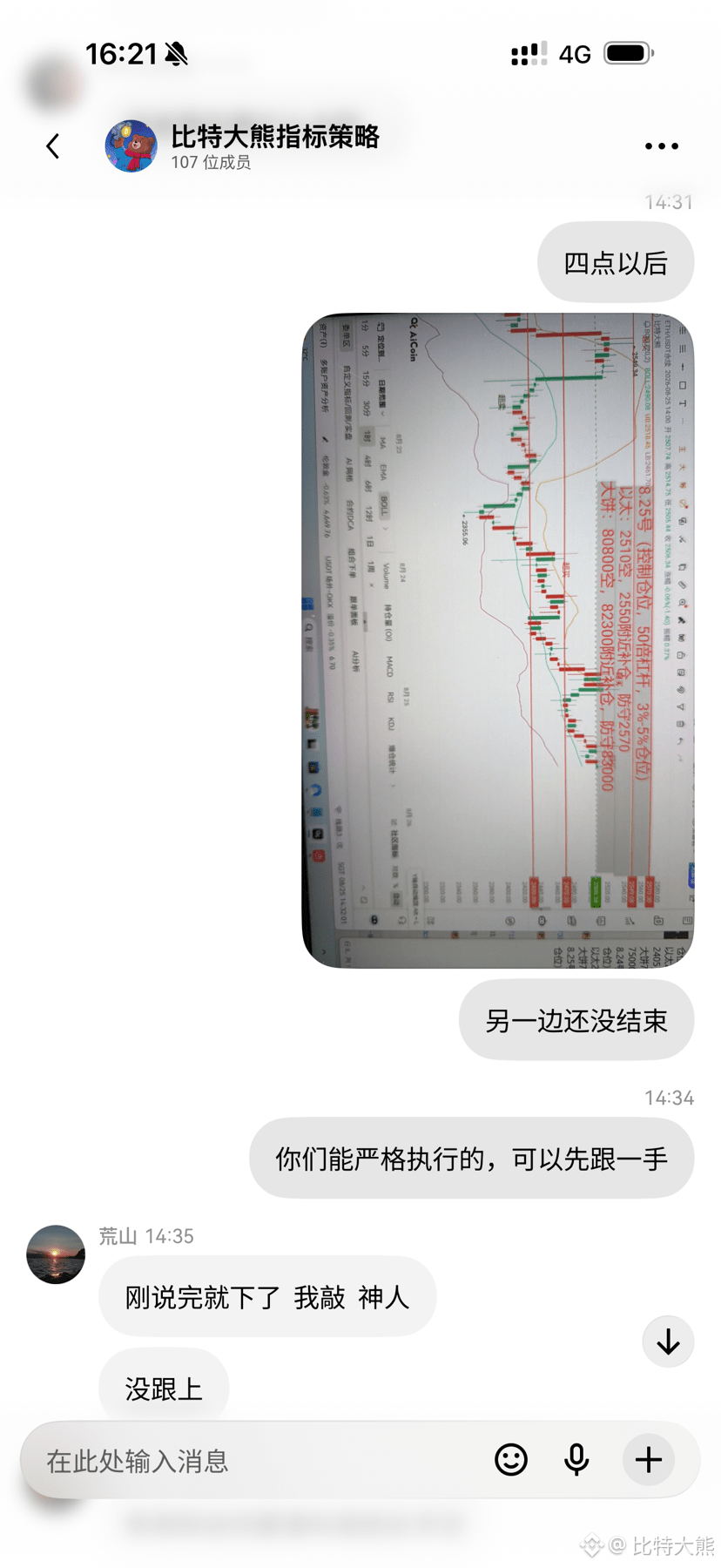
All today’s short positions have been fully closed for profit. The live room and the community are both being set up simultaneously—securing great profit opportunities together!
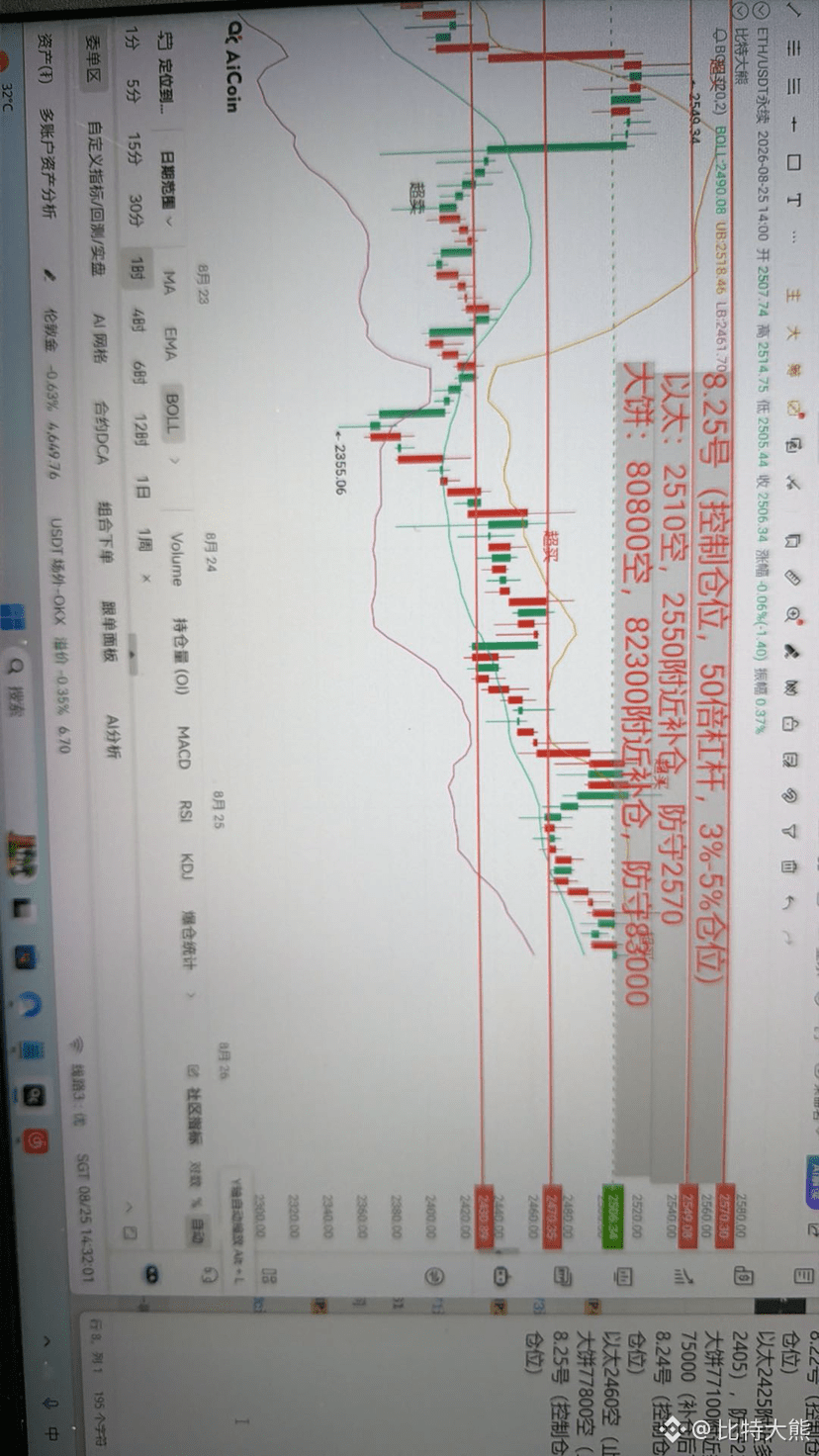
The big BTC short is at 80,800, and Ethereum is at 2,510.
Ethereum has fully reached its first target at 2,470, capturing a 40-point profit window. Meanwhile, BTC has also taken profit in sync, securing a 1,300-point profit window!
Next, the live room will keep setting up and keep taking the profits.
The market won’t give everyone a chance to board the train ⚡
The plan and the levels are provided; the rest depends entirely on execution.
You don’t need to trade frequently—pick one that’s right, and it can outweigh several scattered trades.
Maintain strict position sizing, set up your defense, and leave the rest to the market.
Respect the market—align knowledge with action 📈
The big BTC short is at 80,800, and Ethereum is at 2,510.
Ethereum has fully reached its first target at 2,470, capturing a 40-point profit window. Meanwhile, BTC has also taken profit in sync, securing a 1,300-point profit window!
Next, the live room will keep setting up and keep taking the profits.
The market won’t give everyone a chance to board the train ⚡
The plan and the levels are provided; the rest depends entirely on execution.
You don’t need to trade frequently—pick one that’s right, and it can outweigh several scattered trades.
Maintain strict position sizing, set up your defense, and leave the rest to the market.
Respect the market—align knowledge with action 📈

Brothers, the opportunity to get rich is right in front of us
Success or failure is decided right here—one deal is enough for the rest of your life #Gulf
Success or failure is decided right here—one deal is enough for the rest of your life #Gulf


What exactly is happening?
I woke up and the big pie (BTC) had surged more than 10%, while Ethereum (ETH) was up more than 20%.
No warning whatsoever—just pure brute-force pump.
Does that mean the US stock market is already nearing its end, and funds are about to switch to the crypto market?
Crypto liquidity is going to come back. From now on, BTC and ETH will be like a casino.
Big volatility coming isn’t a good thing. If it’s spot trading, it doesn’t matter.
But if you’re playing with futures/contracts—like this kind of wild, up-and-down行情—many people can’t control it; they’ll completely bungle it.
It’s like SanDisk (SD)—even though it’s had huge spikes and crashes, all I keep hearing is that people are losing money. Every time on the live stream, it’s always “I heard BTC/ETH is making money,” while SanDisk is losing money.
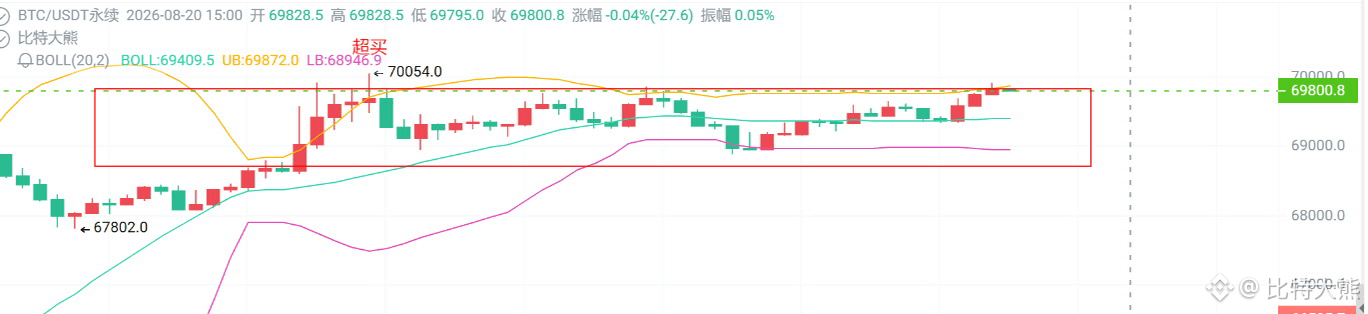
The best kind of market is still range-bound consolidation—like picking up money!
As for the next moves with $BTC and $ETH, for most of the time, you’ll probably be trading based on emotion and instinct. Many indicators will already be useless.
I woke up and the big pie (BTC) had surged more than 10%, while Ethereum (ETH) was up more than 20%.
No warning whatsoever—just pure brute-force pump.
Does that mean the US stock market is already nearing its end, and funds are about to switch to the crypto market?
Crypto liquidity is going to come back. From now on, BTC and ETH will be like a casino.
Big volatility coming isn’t a good thing. If it’s spot trading, it doesn’t matter.
But if you’re playing with futures/contracts—like this kind of wild, up-and-down行情—many people can’t control it; they’ll completely bungle it.
It’s like SanDisk (SD)—even though it’s had huge spikes and crashes, all I keep hearing is that people are losing money. Every time on the live stream, it’s always “I heard BTC/ETH is making money,” while SanDisk is losing money.
The best kind of market is still range-bound consolidation—like picking up money!
As for the next moves with $BTC and $ETH, for most of the time, you’ll probably be trading based on emotion and instinct. Many indicators will already be useless.
Last night, Bitcoin continued to rise slightly with a modest increase; the upside was not very obvious. There are clear signs of heavy pressure and a pullback. From the current perspective, the top has basically formed at this stage of this week. Afterwards, it may continue to fall toward the target profit level we mentioned in the livestream.
After yesterday’s Bitcoin successfully filled the additional position at 645, the average entry price was raised to 640. As for Ethereum, it still hasn’t reached our additional entry price by a large margin; the buy wasn’t completed. However, Ethereum has now pulled back to around our cost basis. Overall, the price action is completely in line with our expectations. Next, it’s a test of patience.
Getting in now is still an opportunity. Over the next few days, it should gradually consume the gains from yesterday’s rally. In a market with low liquidity, the conditions remain very stable—there won’t be any major trend reversals caused by sudden changes. Make friends with time, and use time to create space for upside!
After yesterday’s Bitcoin successfully filled the additional position at 645, the average entry price was raised to 640. As for Ethereum, it still hasn’t reached our additional entry price by a large margin; the buy wasn’t completed. However, Ethereum has now pulled back to around our cost basis. Overall, the price action is completely in line with our expectations. Next, it’s a test of patience.
Getting in now is still an opportunity. Over the next few days, it should gradually consume the gains from yesterday’s rally. In a market with low liquidity, the conditions remain very stable—there won’t be any major trend reversals caused by sudden changes. Make friends with time, and use time to create space for upside!
A new week has started, and Ether has arrived at 1900 again. I was seriously talking in the live room last Friday night as well; over the weekend, the market will definitely swing back and forth between longs and shorts, and people will be getting in and out repeatedly. On Friday night, the big pie at 62500 directly opened the live room for entries. The synchronized longs in Ether, entered at 1860–70. For this round of long positions, I said that the big pie can take profit in the 630–635 range, and Ether only needs to capture about 10 to 20 points of profit at the same time—then that’s enough. This wave of longs is just a minor rebound.
After that, Ether can also open shorts again at 1890–1900 to do another round 🈳. There won’t be too much fluctuation over the weekend. Don’t get greedy—having room for 10 to 20 points of profit is enough.
Today happens to be Monday. In the morning, there was a small pull-up. Ether’s current price is already above 1900. In contrast, the big pie is still around the 630s. When Ether was at 1900 last time, the big pie was above 640, so relatively speaking, the big pie’s rebound is very weak—it feels like it just can’t rise at all. Actually, liquidity in the crypto market right now is really poor.
Going forward, whether the big pie will catch up with a rebound and drive Ether higher further—we need to judge based on the actual situation on the chart, and be ready to enter at any time.
Slow is fast, steady is profit. Only when you’re not rushed and not impatient can you accurately grasp the trend and execute the right strategy!
After that, Ether can also open shorts again at 1890–1900 to do another round 🈳. There won’t be too much fluctuation over the weekend. Don’t get greedy—having room for 10 to 20 points of profit is enough.
Today happens to be Monday. In the morning, there was a small pull-up. Ether’s current price is already above 1900. In contrast, the big pie is still around the 630s. When Ether was at 1900 last time, the big pie was above 640, so relatively speaking, the big pie’s rebound is very weak—it feels like it just can’t rise at all. Actually, liquidity in the crypto market right now is really poor.
Going forward, whether the big pie will catch up with a rebound and drive Ether higher further—we need to judge based on the actual situation on the chart, and be ready to enter at any time.
Slow is fast, steady is profit. Only when you’re not rushed and not impatient can you accurately grasp the trend and execute the right strategy!
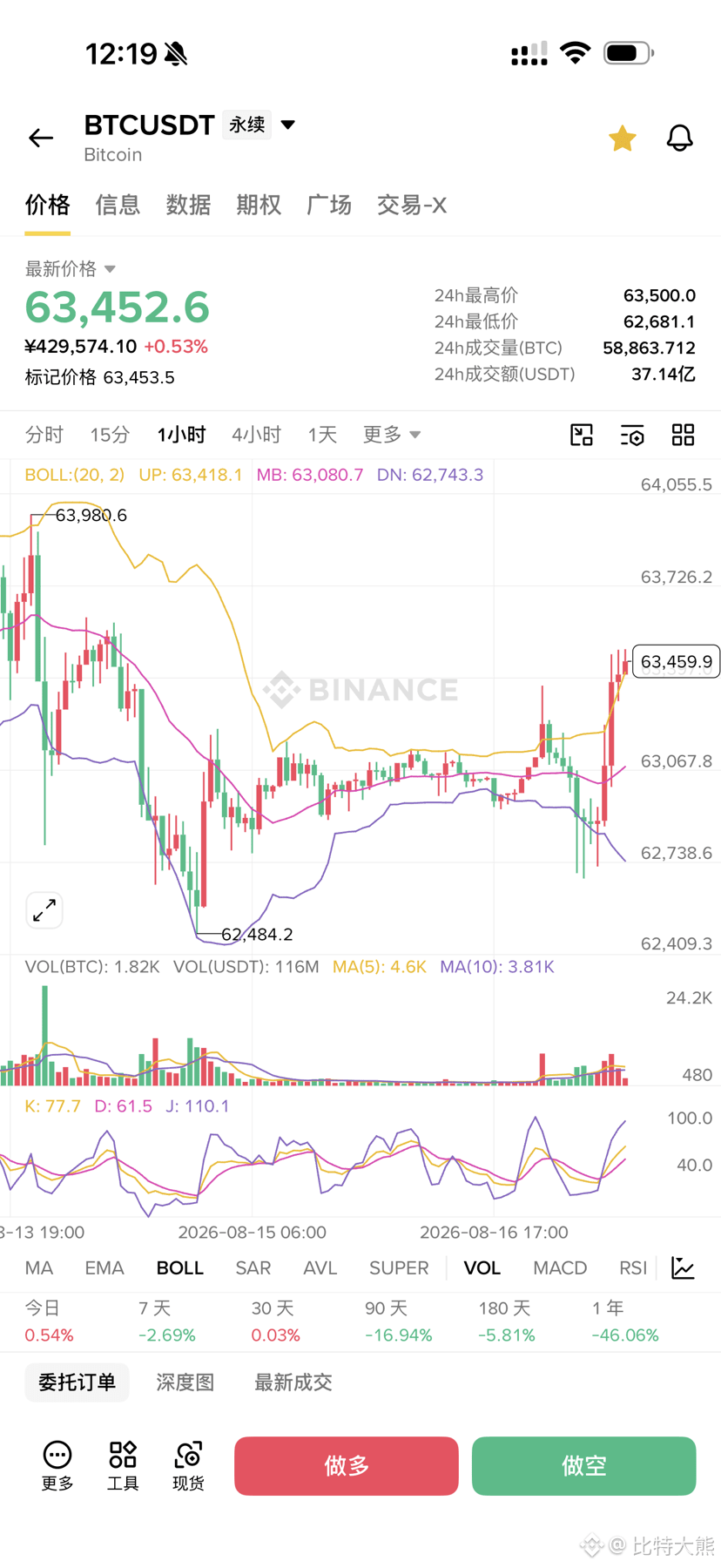
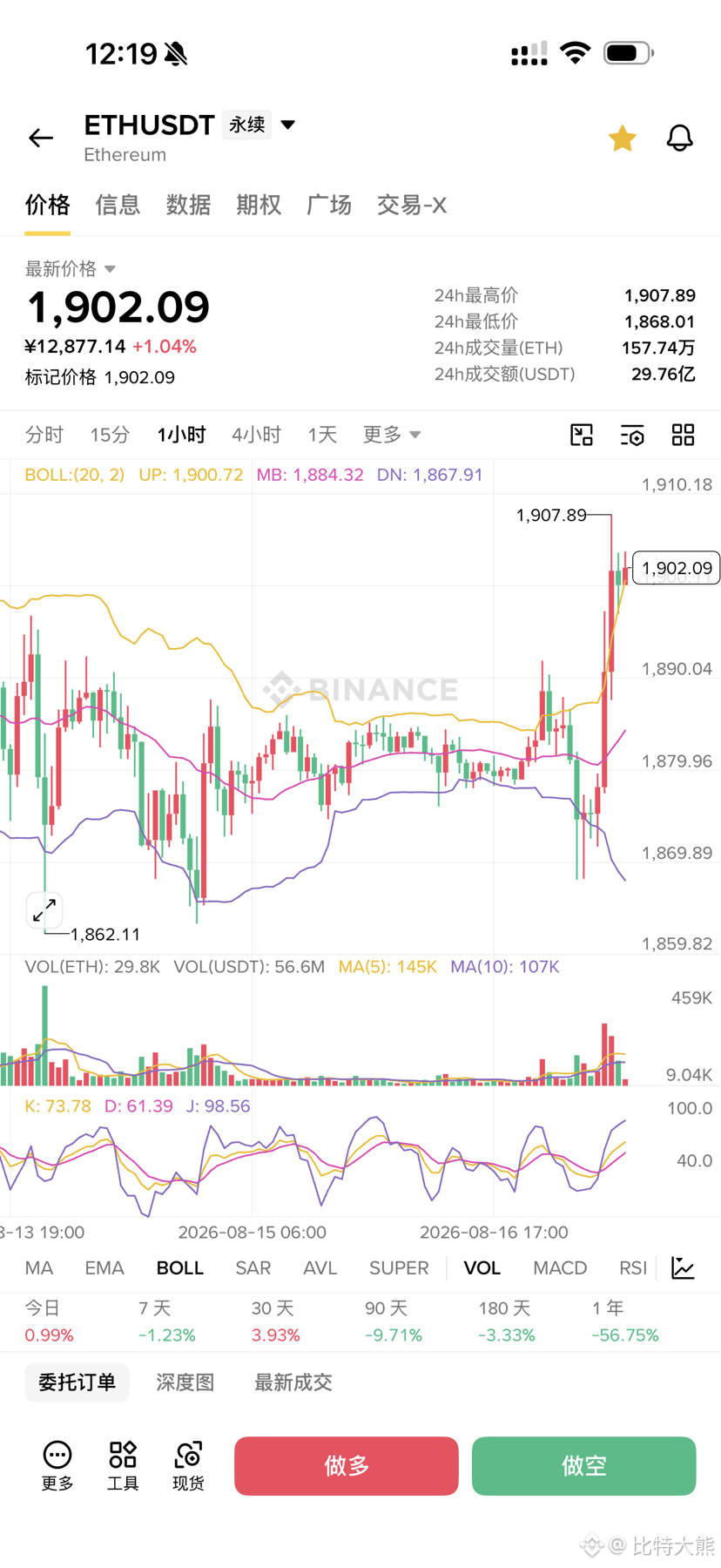
Missed trades create no cost, but reckless trades may make you lose everything
Behind Sandisk's stock price surge, multiple favorable factors are released at once
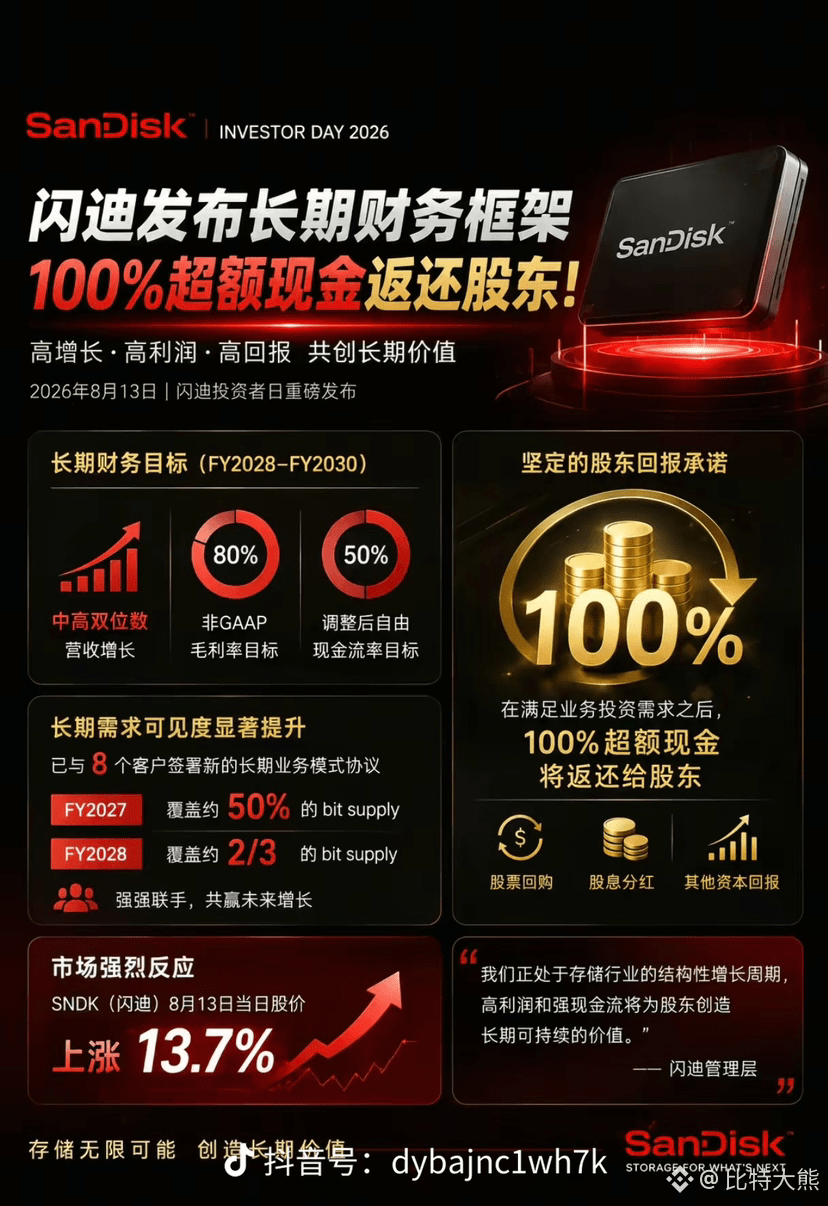
The storage sector is set to receive a major catalyst. At Sandisk Investor Day, the company unveiled a new long-term financial framework. On the day the news landed, the stock jumped 13.7%. This rally was not coincidental—it was the result of a convergence of favorable factors, including performance targets, shareholder returns, and strengthened order demand.
First, it sets clear, hard-core mid-to-long-term operating goals and opens up room for growth expectations. The company provided clear operating guidance for FY2028–FY2030: revenue aims for high double-digit growth; non-GAAP gross margin targets 80%; and the adjusted free cash flow margin targets 50%. With high growth paired with high profitability and strong cash generation, the message to the market is extremely strong earnings confidence, demonstrating that under the structural tailwinds of the storage industry, companies’ profitability can rise significantly.
Second, a heavy-weight shareholder return policy: 100% of excess cash returned to shareholders. After ensuring normal business investment, all excess cash flow will be returned to investors in forms such as stock buybacks and dividend distributions. A concrete dividend and buyback plan greatly boosts capital market confidence and makes the company’s capital attractive to investors.
Third, downstream order certainty has improved significantly, and long-term demand has been locked in. The company has already signed long-term business agreements with eight core customers. In FY2027, these are expected to cover 50% of bit supply, and in FY2028, this will further increase to two-thirds of bit supply. Long-term orders lock in volume, directly smoothing out cyclicality in the industry. Shipment demand for the coming years has been secured in advance, and business visibility has been significantly enhanced.
Management also said that the industry is currently in a structural growth cycle for storage. AI is driving a surge in storage demand. With high profitability and strong cash flow, the company is able to continuously create long-term value for shareholders. With multiple favorable factors stacking together, they jointly propelled this round of strong stock price appreciation.$SNDK
The storage sector is set to receive a major catalyst. At Sandisk Investor Day, the company unveiled a new long-term financial framework. On the day the news landed, the stock jumped 13.7%. This rally was not coincidental—it was the result of a convergence of favorable factors, including performance targets, shareholder returns, and strengthened order demand.
First, it sets clear, hard-core mid-to-long-term operating goals and opens up room for growth expectations. The company provided clear operating guidance for FY2028–FY2030: revenue aims for high double-digit growth; non-GAAP gross margin targets 80%; and the adjusted free cash flow margin targets 50%. With high growth paired with high profitability and strong cash generation, the message to the market is extremely strong earnings confidence, demonstrating that under the structural tailwinds of the storage industry, companies’ profitability can rise significantly.
Second, a heavy-weight shareholder return policy: 100% of excess cash returned to shareholders. After ensuring normal business investment, all excess cash flow will be returned to investors in forms such as stock buybacks and dividend distributions. A concrete dividend and buyback plan greatly boosts capital market confidence and makes the company’s capital attractive to investors.
Third, downstream order certainty has improved significantly, and long-term demand has been locked in. The company has already signed long-term business agreements with eight core customers. In FY2027, these are expected to cover 50% of bit supply, and in FY2028, this will further increase to two-thirds of bit supply. Long-term orders lock in volume, directly smoothing out cyclicality in the industry. Shipment demand for the coming years has been secured in advance, and business visibility has been significantly enhanced.
Management also said that the industry is currently in a structural growth cycle for storage. AI is driving a surge in storage demand. With high profitability and strong cash flow, the company is able to continuously create long-term value for shareholders. With multiple favorable factors stacking together, they jointly propelled this round of strong stock price appreciation.$SNDK
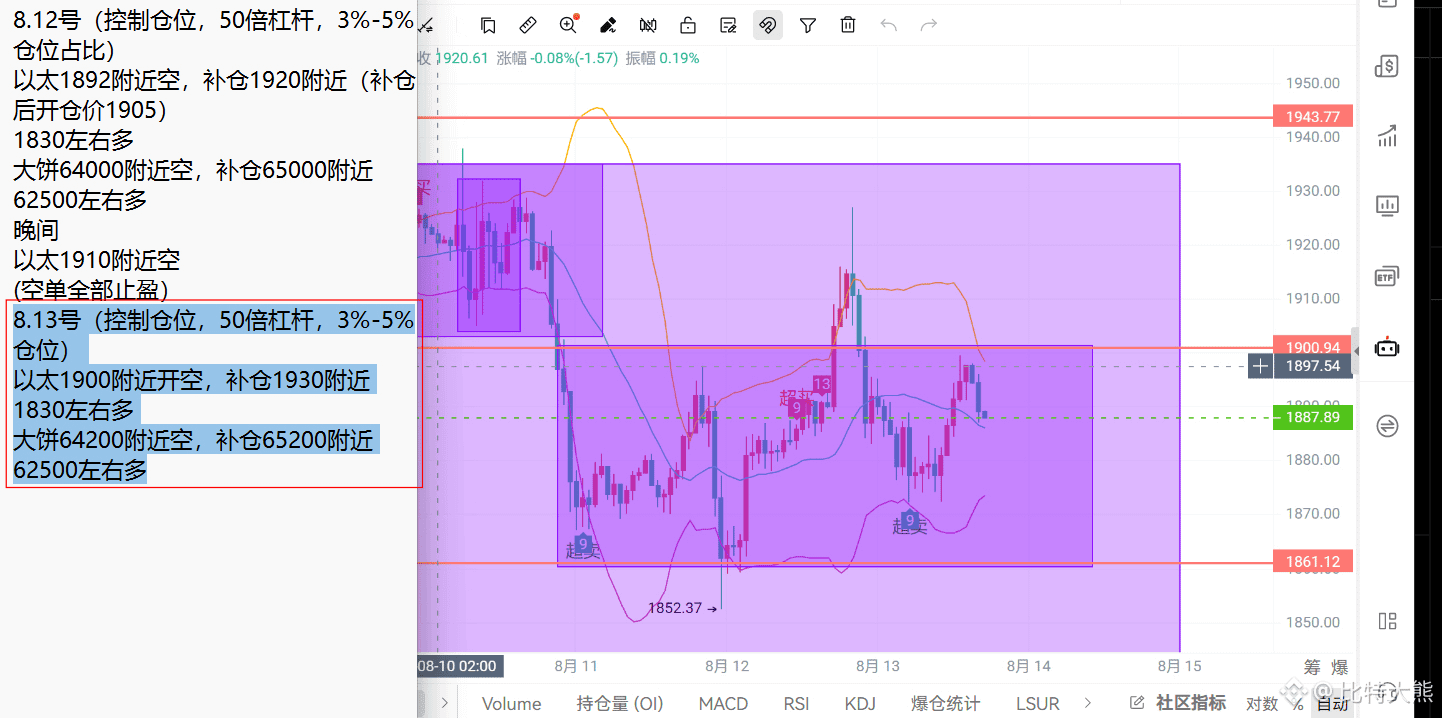
Yesterday in the live room, the short position on Ethereum has already reached the first profit target around 1860. Every entry is planned and executed with rhythm. Based on the current market situation and the order book, make the best trading advice for the moment. In the consolidation range, be careful not to chase highs or sell lows too aggressively—it's easy to get trapped. Yesterday’s BTC also reached the target range I mentioned at the time, 625–630, but the entry position at 642 was a bit on the high side, so I didn’t enter.
At the moment, the overall market conditions haven’t fundamentally changed. The overall approach is still completely consistent with what was said in the live room; the only difference is that entries will be adjusted slightly according to price. Keep an eye on the real-time行情 at all times!
At the moment, the overall market conditions haven’t fundamentally changed. The overall approach is still completely consistent with what was said in the live room; the only difference is that entries will be adjusted slightly according to price. Keep an eye on the real-time行情 at all times!
Extreme fear comes from having no certainty in the heart
Helplessness arises from having no method in hand
Helplessness arises from having no method in hand
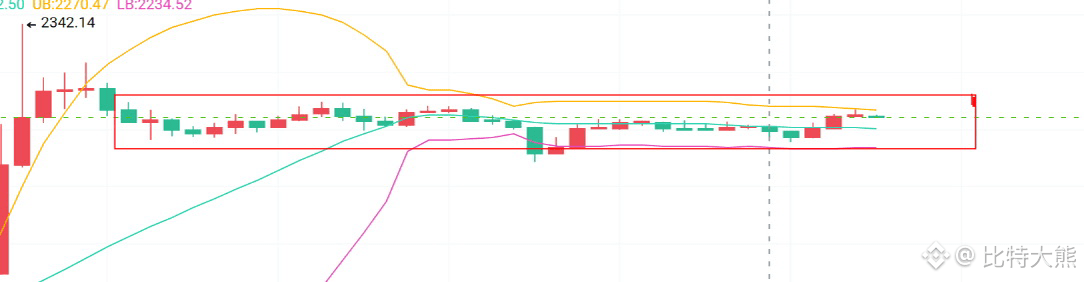
For small-level trends like this, a clearly defined consolidation range has already formed. Last night’s minor rebound has confirmed 1900 as the current resistance point. Below, around 1850, is the key support area at this stage. In broad terms, it’s safe to determine that in the short term, price will fluctuate within a range of 1850–1900—this is a box-range structure that is clearly visible to the naked eye.
From the one-hour Bollinger Bands, the price has been moving back and forth within the channel, repairing along the way. On the rebound, it meets pressure near the upper band; when it falls, there is support near the lower band. In the near term, it’s unlikely to break out into a single-direction trend right away—this is a standard range-bound game.
Under this setup, the idea is very straightforward: trade at the boundaries, and stay on the sidelines in the middle. Near the upper resistance zone of 1890–1900, you can consider short-term selling (high shorts). If price pulls back to the support band around 1850–1860 and stabilizes, then consider a low-entry / accumulation setup.
Try to reduce frequent testing orders at the middle of the range. In a choppy consolidation market, price needles (wicks) happen often, and the mid-range trades have a low tolerance for error. It’s easy to get stopped out repeatedly and bleed capital.
Also, with the data window coming up, the market could show sudden abnormal moves at any time, so be sure to control position sizing and do not over-allocate to gamble on the move. The box range is only a short-term structure. Once either side of the support/resistance is effectively broken, you must promptly adjust your original plan—don’t become fixed in bullish/bearish bias. Let the strategy follow how the market moves. Trading isn’t about catching every tiny fluctuation; the priority is to take boundary opportunities with a better risk-reward profile. Keeping position discipline is the core of range-bound trading.$ETH
From the one-hour Bollinger Bands, the price has been moving back and forth within the channel, repairing along the way. On the rebound, it meets pressure near the upper band; when it falls, there is support near the lower band. In the near term, it’s unlikely to break out into a single-direction trend right away—this is a standard range-bound game.
Under this setup, the idea is very straightforward: trade at the boundaries, and stay on the sidelines in the middle. Near the upper resistance zone of 1890–1900, you can consider short-term selling (high shorts). If price pulls back to the support band around 1850–1860 and stabilizes, then consider a low-entry / accumulation setup.
Try to reduce frequent testing orders at the middle of the range. In a choppy consolidation market, price needles (wicks) happen often, and the mid-range trades have a low tolerance for error. It’s easy to get stopped out repeatedly and bleed capital.
Also, with the data window coming up, the market could show sudden abnormal moves at any time, so be sure to control position sizing and do not over-allocate to gamble on the move. The box range is only a short-term structure. Once either side of the support/resistance is effectively broken, you must promptly adjust your original plan—don’t become fixed in bullish/bearish bias. Let the strategy follow how the market moves. Trading isn’t about catching every tiny fluctuation; the priority is to take boundary opportunities with a better risk-reward profile. Keeping position discipline is the core of range-bound trading.$ETH
Last week we publicly shared the complete logic behind the ETH box-style (range) oscillation and the phased positioning approach. In the livestream, we repeatedly broke down the structure, outlined the key ranges, and now the market’s tempo is fully in line with our forecast.
The short-position layout zone at the highs that we previously indicated—1910-1940—along with the shorts built up in batches, has now seen the price fall as expected to 1860-1880, which is the target profit range we marked in advance.
This area sits in the middle of the range box, where oscillations and back-and-forth moves will become noticeably stronger. In the short term, there are two possible scenarios: one is that it accumulates energy to initiate a second leg downward test of the support below; the other is a rebound and a pullback that retests resistance above 1900. This is a classic long-vs-short battleground zone—trading opportunities exist on both sides, but it puts extreme demands on entry timing, position management, and take-profit discipline.
So here I’d like to remind you again: don’t force trades here. If you can’t read the rhythm or can’t control entry timing, it’s not recommended to blindly and frequently open positions. Instead of trial-trading back and forth in the middle of a range and adding losses, it’s better to stay patient and wait for price to reach the upper and lower box edges—key support and resistance areas. Once clear signals appear, then plan your entries to capture opportunities with a more favorable risk-to-reward profile.
The core of long-term profitability in trading has never been about never missing any move. It’s about learning to filter opportunities, controlling your impulses, and only trading the setups you can understand within your own system. Going forward, I’ll keep tracking changes in the market structure, and I’ll update my thoughts in sync for key levels. $ETH
The short-position layout zone at the highs that we previously indicated—1910-1940—along with the shorts built up in batches, has now seen the price fall as expected to 1860-1880, which is the target profit range we marked in advance.
This area sits in the middle of the range box, where oscillations and back-and-forth moves will become noticeably stronger. In the short term, there are two possible scenarios: one is that it accumulates energy to initiate a second leg downward test of the support below; the other is a rebound and a pullback that retests resistance above 1900. This is a classic long-vs-short battleground zone—trading opportunities exist on both sides, but it puts extreme demands on entry timing, position management, and take-profit discipline.
So here I’d like to remind you again: don’t force trades here. If you can’t read the rhythm or can’t control entry timing, it’s not recommended to blindly and frequently open positions. Instead of trial-trading back and forth in the middle of a range and adding losses, it’s better to stay patient and wait for price to reach the upper and lower box edges—key support and resistance areas. Once clear signals appear, then plan your entries to capture opportunities with a more favorable risk-to-reward profile.
The core of long-term profitability in trading has never been about never missing any move. It’s about learning to filter opportunities, controlling your impulses, and only trading the setups you can understand within your own system. Going forward, I’ll keep tracking changes in the market structure, and I’ll update my thoughts in sync for key levels. $ETH
比特大熊
·
--
$ETH The four-hour market trend continues to maintain large-range box consolidation. The current price is in the upper portion of the box, which places it in the short-selling setup zone at a high level. Use a phased accumulation approach to position.
The current price at 1910 can be used to establish a base position first. If the price later moves up and reaches around 1940, add the second tranche.
The primary overhead pressure is the Bollinger upper band at 1930. Price hitting this level is likely to trigger the first round of selling pressure. The ultimate box pressure zone is the 1940–1960 range—this is also the top area of the current consolidation box. Once it reaches there, bullish momentum will most likely fade.
The key pivot between bulls and bears remains around the Bollinger middle band in the 1880–1860 area. If price later breaks this level down decisively, the rebound structure from this phase will be considered over, and additional downside room will open up.
The lower box support is the 1820–1840 zone, which is also near the Bollinger lower band—this serves as the bottom support range for the current consolidation.
For a range-bound market, remember not to enter with a full position all at once. Phased positioning can effectively buffer the unrealized losses caused by short-term spikes and the back-and-forth whipsaws. Until there is an effective breakout from the box, the overall strategy should rely on selling near the top and buying near the bottom of the range—do not blindly chase rallies. $BTC can be traded in parallel (leverage should not exceed 50x, and a position size ratio of about 3%–5% is sufficient)
The current price at 1910 can be used to establish a base position first. If the price later moves up and reaches around 1940, add the second tranche.
The primary overhead pressure is the Bollinger upper band at 1930. Price hitting this level is likely to trigger the first round of selling pressure. The ultimate box pressure zone is the 1940–1960 range—this is also the top area of the current consolidation box. Once it reaches there, bullish momentum will most likely fade.
The key pivot between bulls and bears remains around the Bollinger middle band in the 1880–1860 area. If price later breaks this level down decisively, the rebound structure from this phase will be considered over, and additional downside room will open up.
The lower box support is the 1820–1840 zone, which is also near the Bollinger lower band—this serves as the bottom support range for the current consolidation.
For a range-bound market, remember not to enter with a full position all at once. Phased positioning can effectively buffer the unrealized losses caused by short-term spikes and the back-and-forth whipsaws. Until there is an effective breakout from the box, the overall strategy should rely on selling near the top and buying near the bottom of the range—do not blindly chase rallies. $BTC can be traded in parallel (leverage should not exceed 50x, and a position size ratio of about 3%–5% is sufficient)
The market is moving so sluggishly because the current liquidity in the crypto market is just too poor. The crypto market today is even less than half of the U.S. stock market’s size—money has all been pulled away by U.S. stocks. With this wave of U.S. stocks, driven by tokenization and the harvesting of global markets, the entry threshold is getting lower and lower.
Recently, the price action has been grinding back and forth repeatedly—pinning up and down with wicks—which makes it hard to break out into a clear, straightforward one-way trend. The core root cause is that there isn’t enough in-market incremental capital. Without fresh capital entering, large funds are also unwilling to proactively pump and smash the order book. This leads to a choppy situation where rallies can’t really gain traction, and sell-offs don’t move smoothly. With even a small amount of volatility, it’s easy to see relatively large slippage. Many people will find that even when they’ve correctly judged the direction, the experience of entering and exiting trades is still very poor.
Meanwhile, tokenization of stocks is continuously diverting the market’s existing liquidity. In the past, many funds that participated in the crypto market can now directly trade U.S. stock assets on-chain. They don’t need complicated overseas brokers, and the barrier to entry has been greatly lowered. Even ordinary retail investors can easily participate in high-quality U.S. stock assets. On one side are U.S. stock assets supported by real companies’ earnings. On the other side are crypto assets that rely heavily on market consensus. With so much capital, it’s only natural that asset allocation will shift again—crypto funds are pulled out and flow into the U.S. stock market.
This migration of funds isn’t a short-term phenomenon; it’s a structural change. Going forward, the crypto market will face the reality of long-term liquidity being siphoned off. In an environment where liquidity is weak, market rhythm will become noticeably slower, range-bound churning and washout patterns will increase, and trend moves will arrive later and last for a shorter time. When trading, you absolutely can’t chase rallies or sell in panic—you’ll need even more patience and stronger position management.
The market environment has already changed. You can’t keep using the mindset of past bull markets to interpret the current price action. Only by understanding the logic behind liquidity can you better adapt to the market’s current pace. #U.S.-Stock-Trading-Chat
Recently, the price action has been grinding back and forth repeatedly—pinning up and down with wicks—which makes it hard to break out into a clear, straightforward one-way trend. The core root cause is that there isn’t enough in-market incremental capital. Without fresh capital entering, large funds are also unwilling to proactively pump and smash the order book. This leads to a choppy situation where rallies can’t really gain traction, and sell-offs don’t move smoothly. With even a small amount of volatility, it’s easy to see relatively large slippage. Many people will find that even when they’ve correctly judged the direction, the experience of entering and exiting trades is still very poor.
Meanwhile, tokenization of stocks is continuously diverting the market’s existing liquidity. In the past, many funds that participated in the crypto market can now directly trade U.S. stock assets on-chain. They don’t need complicated overseas brokers, and the barrier to entry has been greatly lowered. Even ordinary retail investors can easily participate in high-quality U.S. stock assets. On one side are U.S. stock assets supported by real companies’ earnings. On the other side are crypto assets that rely heavily on market consensus. With so much capital, it’s only natural that asset allocation will shift again—crypto funds are pulled out and flow into the U.S. stock market.
This migration of funds isn’t a short-term phenomenon; it’s a structural change. Going forward, the crypto market will face the reality of long-term liquidity being siphoned off. In an environment where liquidity is weak, market rhythm will become noticeably slower, range-bound churning and washout patterns will increase, and trend moves will arrive later and last for a shorter time. When trading, you absolutely can’t chase rallies or sell in panic—you’ll need even more patience and stronger position management.
The market environment has already changed. You can’t keep using the mindset of past bull markets to interpret the current price action. Only by understanding the logic behind liquidity can you better adapt to the market’s current pace. #U.S.-Stock-Trading-Chat
Why can’t you always hold onto your profits in your trades, panicking and leaving the market as soon as you see a small loss?
This is the core issue that most traders fail to achieve stable profitability over the long run. The problem is never just about technical judgment—it’s more about mindset, trading rules, and how you understand position sizing, all working together.
Many people, right after opening a position, start to feel anxious as soon as the account shows floating profit. They worry the market will reverse at any moment and that the profits they’re holding will disappear out of thin air. When the price moves slightly against them, they hurriedly take profit and exit immediately. In the end, the most common result is: they got the larger trend right, but only captured a small portion of the move—missing the big opportunity entirely.
On the other hand, once a trade is only slightly floating at a loss, they can’t handle the psychological pressure of seeing losses on the screen. They don’t want to accept a small pullback, fear that the loss will keep growing, and they stop out before the market even reaches their planned support and resistance levels. Over time, this creates a vicious cycle: small wins happen continuously, while big losses occur occasionally. After a few losing trades, those wins are quickly wiped out, eliminating multiple modest profits.
Digging deeper into the root causes:
First, there are no clear position-holding rules. Before entering, you haven’t planned your take-profit zone or the amount of drawdown you’re allowed to tolerate. You decide when to exit based on subjective feelings from the price action—panic when it rises a bit, anxiety when it drops a bit.
Second, your position size exceeds what you can realistically withstand. If the position is too large, even normal market fluctuations will cause your account’s P&L to swing dramatically. Your psychological capacity is effectively amplified, making it difficult to patiently hold the position.
Third, you lack understanding of trend structure. You can’t distinguish between short-term consolidation/pullbacks and trend reversals. You treat normal retracements during a trend as if the trend has ended—then you exit too early.
Real maturity in trading means that opening the trade is just the beginning; holding the position is the real test. A trend doesn’t move in a straight line. During an uptrend there will be pullbacks, and during a downtrend there will be rebounds. If you want to capture the full profit of the move, you must create a trading plan in advance: which kinds of fluctuations are normal noise, and what signals actually indicate the end of the trend.
Stick to your rules, steady your mindset, and you can avoid repeatedly missing trends—and break the cycle of making small profits while suffering large losses.
This is the core issue that most traders fail to achieve stable profitability over the long run. The problem is never just about technical judgment—it’s more about mindset, trading rules, and how you understand position sizing, all working together.
Many people, right after opening a position, start to feel anxious as soon as the account shows floating profit. They worry the market will reverse at any moment and that the profits they’re holding will disappear out of thin air. When the price moves slightly against them, they hurriedly take profit and exit immediately. In the end, the most common result is: they got the larger trend right, but only captured a small portion of the move—missing the big opportunity entirely.
On the other hand, once a trade is only slightly floating at a loss, they can’t handle the psychological pressure of seeing losses on the screen. They don’t want to accept a small pullback, fear that the loss will keep growing, and they stop out before the market even reaches their planned support and resistance levels. Over time, this creates a vicious cycle: small wins happen continuously, while big losses occur occasionally. After a few losing trades, those wins are quickly wiped out, eliminating multiple modest profits.
Digging deeper into the root causes:
First, there are no clear position-holding rules. Before entering, you haven’t planned your take-profit zone or the amount of drawdown you’re allowed to tolerate. You decide when to exit based on subjective feelings from the price action—panic when it rises a bit, anxiety when it drops a bit.
Second, your position size exceeds what you can realistically withstand. If the position is too large, even normal market fluctuations will cause your account’s P&L to swing dramatically. Your psychological capacity is effectively amplified, making it difficult to patiently hold the position.
Third, you lack understanding of trend structure. You can’t distinguish between short-term consolidation/pullbacks and trend reversals. You treat normal retracements during a trend as if the trend has ended—then you exit too early.
Real maturity in trading means that opening the trade is just the beginning; holding the position is the real test. A trend doesn’t move in a straight line. During an uptrend there will be pullbacks, and during a downtrend there will be rebounds. If you want to capture the full profit of the move, you must create a trading plan in advance: which kinds of fluctuations are normal noise, and what signals actually indicate the end of the trend.
Stick to your rules, steady your mindset, and you can avoid repeatedly missing trends—and break the cycle of making small profits while suffering large losses.
Log in to explore more content