
TVBee
1.6k Posts

TVBee
 Square Verified
Report
Block User
数据分析、宏观、投研,
人肉码字、人肉图表、非AI内容,
100%文章原创、拒绝人云亦云,
从未刷过粉丝和阅读量等数据,
PANews、Foresightnews、AIcoin等媒体专栏作者,
也是韭菜,分析能力大于交易水平,不撸毛。

Creator of the Year

原创之星
Open Trade
Frequent Trader
7.4 Years
233 Following
8.9K+ Followers
8.6K+ Liked
2 Badges
Posts
Portfolio
All
Quotes
Videos
Live
·
--
Not a single trade was filled… Iran suddenly got hard again.
I thought during the period of Sino-U.S. friendship, the market would be relatively peaceful. Turns out I forgot about Iran.
Trump should be busy entertaining guests, while Iran on this end is unusually active.
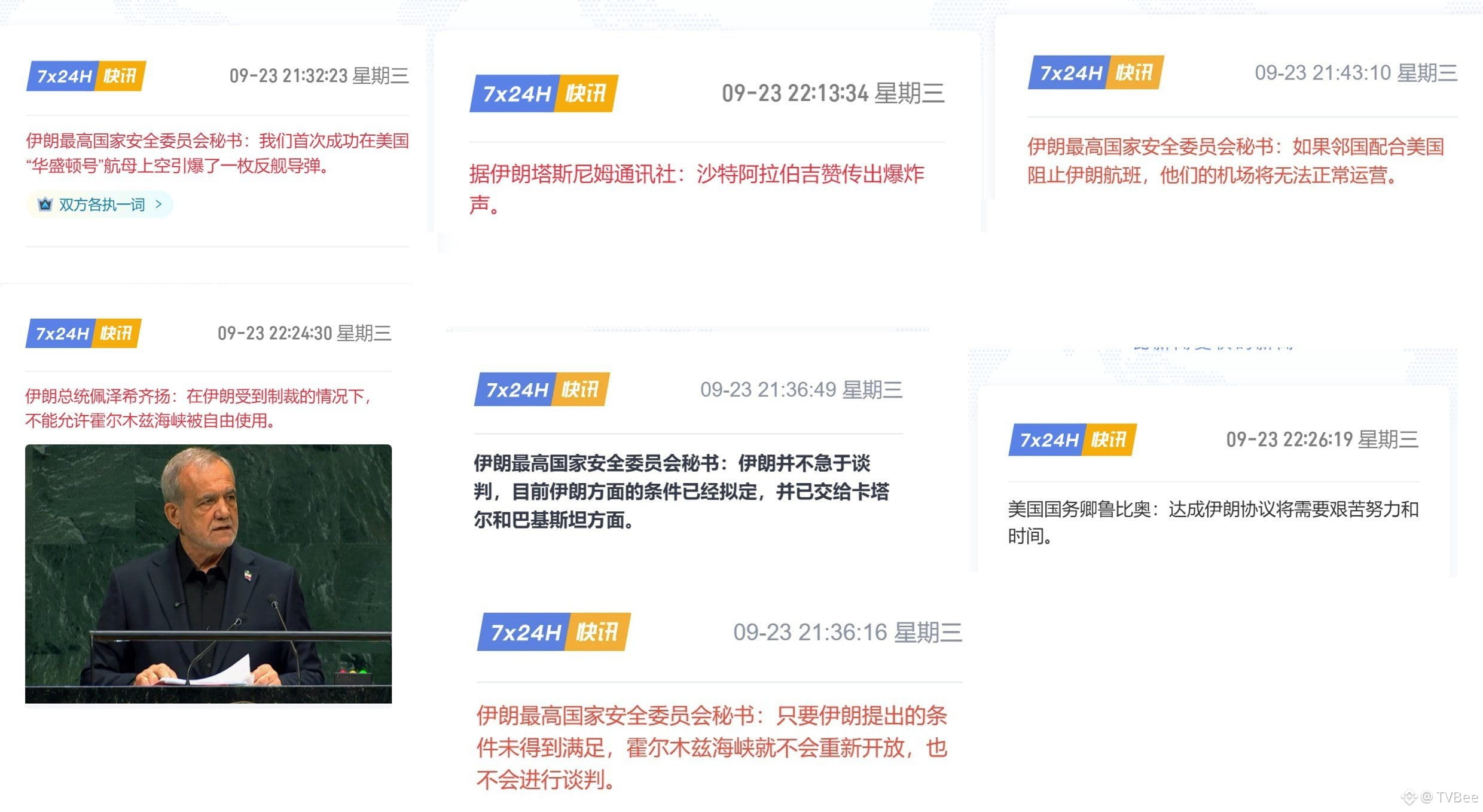
First they claim to have detonated missiles on a U.S. aircraft carrier, and then they say Saudi Arabia was bombed.
First they threaten neighboring countries—if they cooperate with the U.S. to prevent Iran’s navigation, their airports won’t be able to operate normally.
The most important point is that Iran stresses it’s not in a hurry to negotiate, and opening the strait must meet Iran’s conditions.
The U.S. Secretary of State said reaching an agreement with Iran will require hard work and time.
Brent crude oil prices are back to 101, and WTI to 91.
A chain reaction of events:
The yield on 10-year U.S. Treasuries is back to 5.069%, and the yield on 30-year U.S. Treasuries is back to 5.379%.
Gold, the S&P, and BTC all fall together.
A month ago, the market expected WTI crude to trade in a range between 70 and 80. Now it may need to change those expectations.
The WTI top could be at 100 or even higher; the bottom is uncertain whether it’s around 90. Whether it tops at a certain level focuses on Trump—whether he’s TACO. And whether the bottom forms—don’t ignore Iran. Iran doesn’t seem to want oil prices to fall.
Not a single trade was filled… Iran suddenly got hard again.
I thought during the period of Sino-U.S. friendship, the market would be relatively peaceful. Turns out I forgot about Iran.
Trump should be busy entertaining guests, while Iran on this end is unusually active.
First they claim to have detonated missiles on a U.S. aircraft carrier, and then they say Saudi Arabia was bombed.
First they threaten neighboring countries—if they cooperate with the U.S. to prevent Iran’s navigation, their airports won’t be able to operate normally.
The most important point is that Iran stresses it’s not in a hurry to negotiate, and opening the strait must meet Iran’s conditions.
The U.S. Secretary of State said reaching an agreement with Iran will require hard work and time.
Brent crude oil prices are back to 101, and WTI to 91.
A chain reaction of events:
The yield on 10-year U.S. Treasuries is back to 5.069%, and the yield on 30-year U.S. Treasuries is back to 5.379%.
Gold, the S&P, and BTC all fall together.
A month ago, the market expected WTI crude to trade in a range between 70 and 80. Now it may need to change those expectations.
The WTI top could be at 100 or even higher; the bottom is uncertain whether it’s around 90. Whether it tops at a certain level focuses on Trump—whether he’s TACO. And whether the bottom forms—don’t ignore Iran. Iran doesn’t seem to want oil prices to fall.
I thought during the period of Sino-U.S. friendship, the market would be relatively peaceful. Turns out I forgot about Iran.
Trump should be busy entertaining guests, while Iran on this end is unusually active.
First they claim to have detonated missiles on a U.S. aircraft carrier, and then they say Saudi Arabia was bombed.
First they threaten neighboring countries—if they cooperate with the U.S. to prevent Iran’s navigation, their airports won’t be able to operate normally.
The most important point is that Iran stresses it’s not in a hurry to negotiate, and opening the strait must meet Iran’s conditions.
The U.S. Secretary of State said reaching an agreement with Iran will require hard work and time.
Brent crude oil prices are back to 101, and WTI to 91.
A chain reaction of events:
The yield on 10-year U.S. Treasuries is back to 5.069%, and the yield on 30-year U.S. Treasuries is back to 5.379%.
Gold, the S&P, and BTC all fall together.
A month ago, the market expected WTI crude to trade in a range between 70 and 80. Now it may need to change those expectations.
The WTI top could be at 100 or even higher; the bottom is uncertain whether it’s around 90. Whether it tops at a certain level focuses on Trump—whether he’s TACO. And whether the bottom forms—don’t ignore Iran. Iran doesn’t seem to want oil prices to fall.
2
3k
·
--
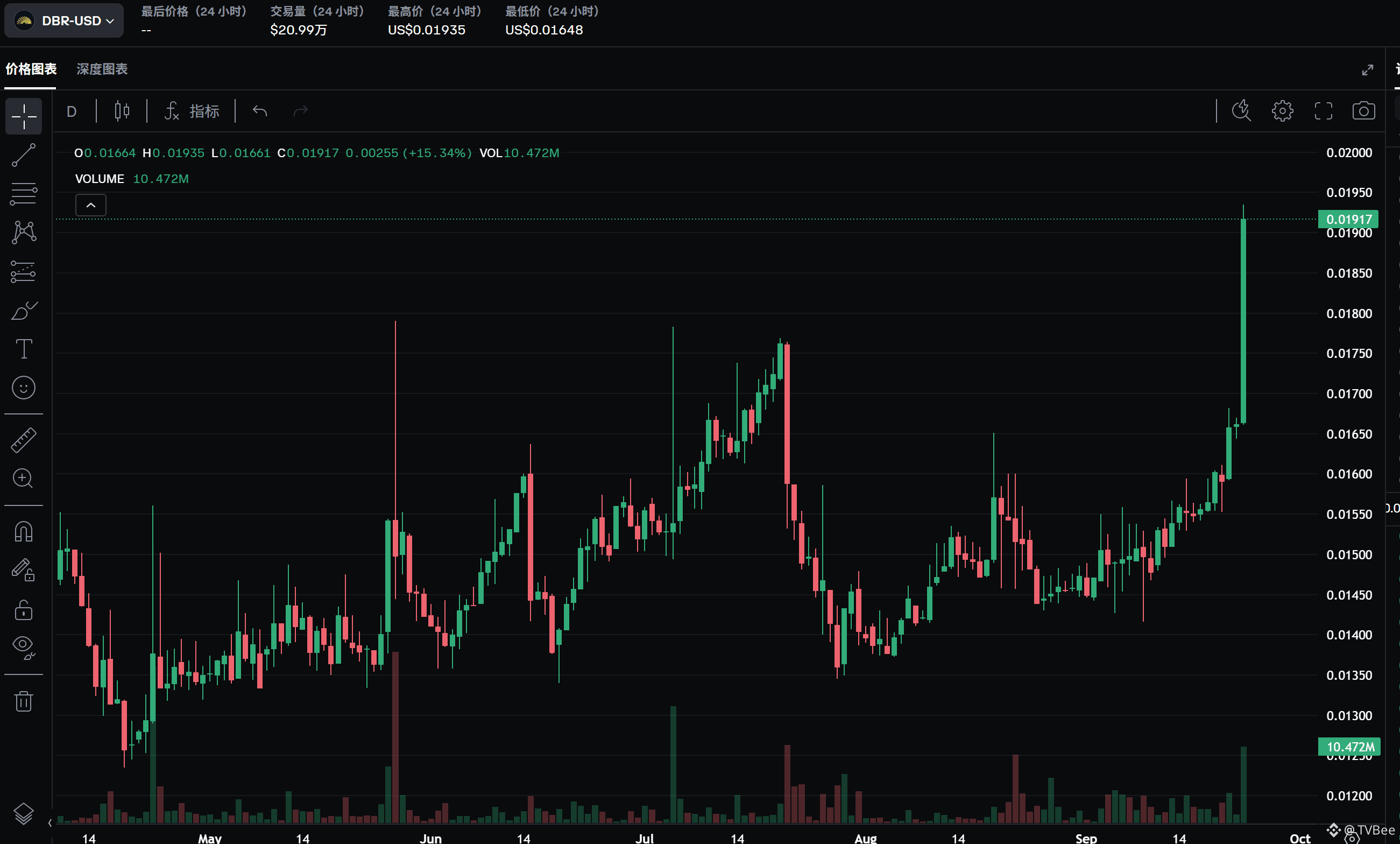
What’s coming will always come! DBR is pulling the market up! Great projects will never disappoint!
In the short term, it’s not recommended to chase the rally, but in the long run, DBR’s room for imagination lies in:
It’s listed on Coinbase, but not on Binance or OKX.
It’s listed on bithumb, but not on upbit. $DBR
What’s coming will always come! DBR is pulling the market up! Great projects will never disappoint!
In the short term, it’s not recommended to chase the rally, but in the long run, DBR’s room for imagination lies in:
It’s listed on Coinbase, but not on Binance or OKX.
It’s listed on bithumb, but not on upbit. $DBR
In the short term, it’s not recommended to chase the rally, but in the long run, DBR’s room for imagination lies in:
It’s listed on Coinbase, but not on Binance or OKX.
It’s listed on bithumb, but not on upbit. $DBR
4
1.1k
·
--
The bearish voices suddenly came in. Now Binance’s funding rate is negative, and the liquidation heatmap shows that the value below is higher.
But Coinbase and OKX’s funding rates are both positive.
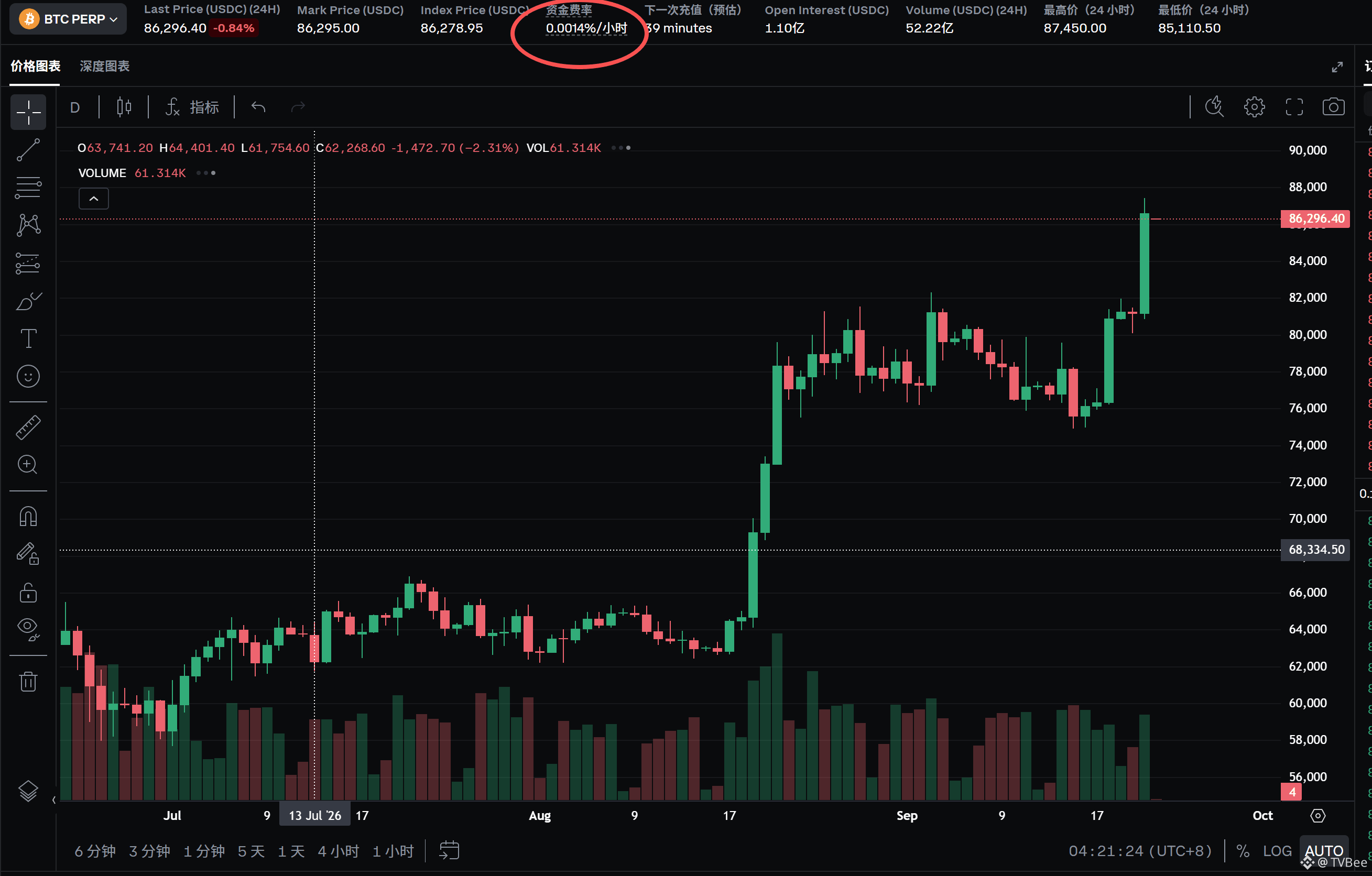
Coinbase’s funding rate is 0.0014%, which isn’t low either.
#比特币突破5月高点逼近8.6万美元
So for now I’m not really confident about going short. If it’s going to drop, there’s also a possibility that it might first get pushed up a bit.
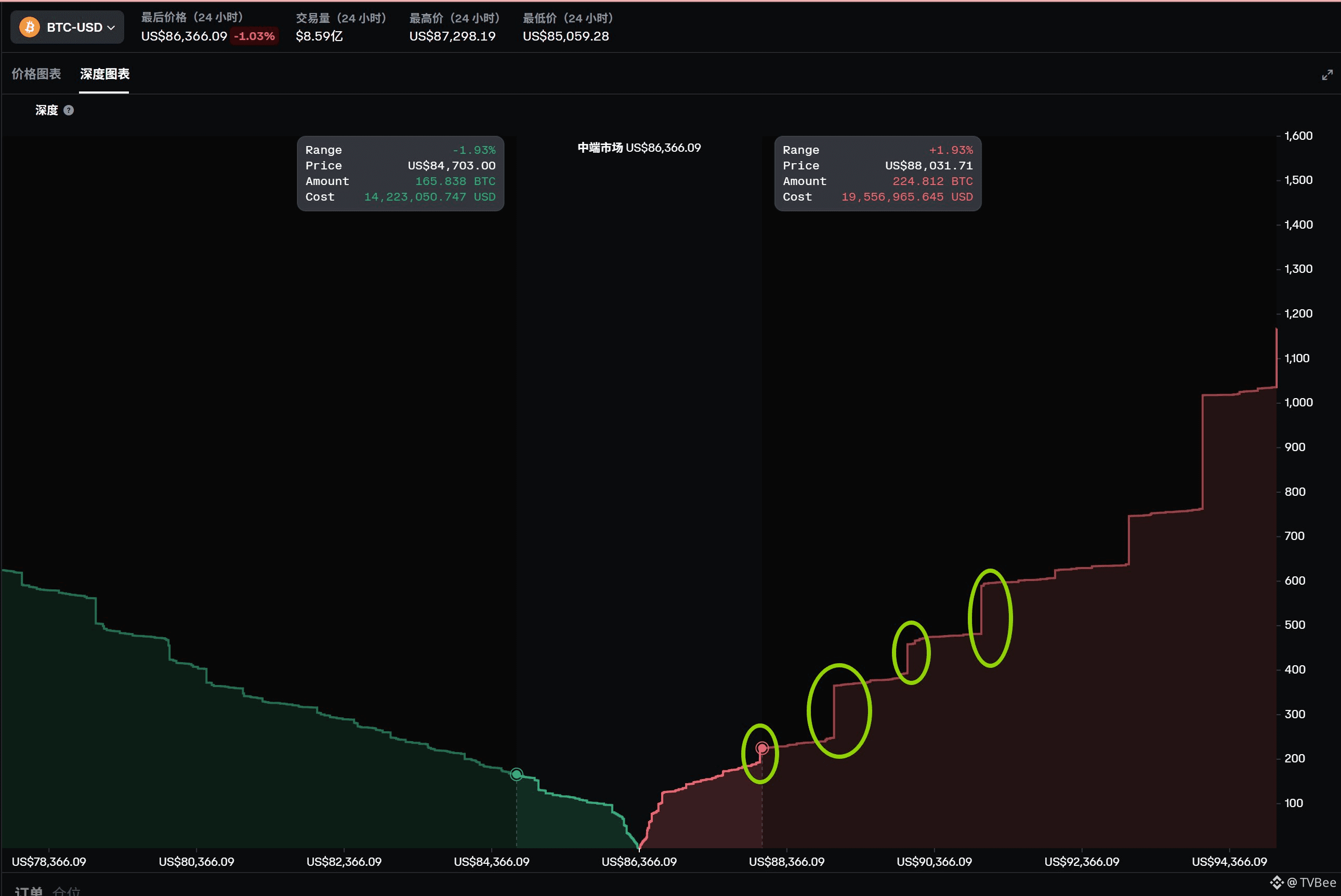
Coinbase spot order book: below 88,000 there are 224 BTC sell orders in total, and there isn’t much concentrated walling here. Pulling it up to around 88,000 probably won’t be too difficult.
Between 88,900 and 89,000 there are about 110–120 BTC worth of sell orders. That area has heavier pressure.
Also, with the US visit in the next few days—there seems to be something to watch. Logically it shouldn’t lead to a drop. Near the end of the US trip, it’s possible that by Beijing time it could already be Saturday.
Bro Bee’s short orders at 88,200 / 88,500 / 89,000 / 90,000 have all had stop-losses set. Let’s see if we can get filled.
Bro Bee, your trading skill is especially bad, especially for BTC and ETH—your futures basically haven’t made any profit, haha. Don’t listen to me, everyone.
But I suggest not going short for now—observe the Coinbase funding rate first, then wait and see for another couple of days before deciding.
The bearish voices suddenly came in. Now Binance’s funding rate is negative, and the liquidation heatmap shows that the value below is higher.
But Coinbase and OKX’s funding rates are both positive.
Coinbase’s funding rate is 0.0014%, which isn’t low either.
#比特币突破5月高点逼近8.6万美元
So for now I’m not really confident about going short. If it’s going to drop, there’s also a possibility that it might first get pushed up a bit.
Coinbase spot order book: below 88,000 there are 224 BTC sell orders in total, and there isn’t much concentrated walling here. Pulling it up to around 88,000 probably won’t be too difficult.
Between 88,900 and 89,000 there are about 110–120 BTC worth of sell orders. That area has heavier pressure.
Also, with the US visit in the next few days—there seems to be something to watch. Logically it shouldn’t lead to a drop. Near the end of the US trip, it’s possible that by Beijing time it could already be Saturday.
Bro Bee’s short orders at 88,200 / 88,500 / 89,000 / 90,000 have all had stop-losses set. Let’s see if we can get filled.
Bro Bee, your trading skill is especially bad, especially for BTC and ETH—your futures basically haven’t made any profit, haha. Don’t listen to me, everyone.
But I suggest not going short for now—observe the Coinbase funding rate first, then wait and see for another couple of days before deciding.
But Coinbase and OKX’s funding rates are both positive.
Coinbase’s funding rate is 0.0014%, which isn’t low either.
#比特币突破5月高点逼近8.6万美元
So for now I’m not really confident about going short. If it’s going to drop, there’s also a possibility that it might first get pushed up a bit.
Coinbase spot order book: below 88,000 there are 224 BTC sell orders in total, and there isn’t much concentrated walling here. Pulling it up to around 88,000 probably won’t be too difficult.
Between 88,900 and 89,000 there are about 110–120 BTC worth of sell orders. That area has heavier pressure.
Also, with the US visit in the next few days—there seems to be something to watch. Logically it shouldn’t lead to a drop. Near the end of the US trip, it’s possible that by Beijing time it could already be Saturday.
Bro Bee’s short orders at 88,200 / 88,500 / 89,000 / 90,000 have all had stop-losses set. Let’s see if we can get filled.
Bro Bee, your trading skill is especially bad, especially for BTC and ETH—your futures basically haven’t made any profit, haha. Don’t listen to me, everyone.
But I suggest not going short for now—observe the Coinbase funding rate first, then wait and see for another couple of days before deciding.
1
1
2k
·
--
Has the bull market really arrived? The disagreement may be between the US and Asia
#比特币突破5月高点逼近8.6万美元
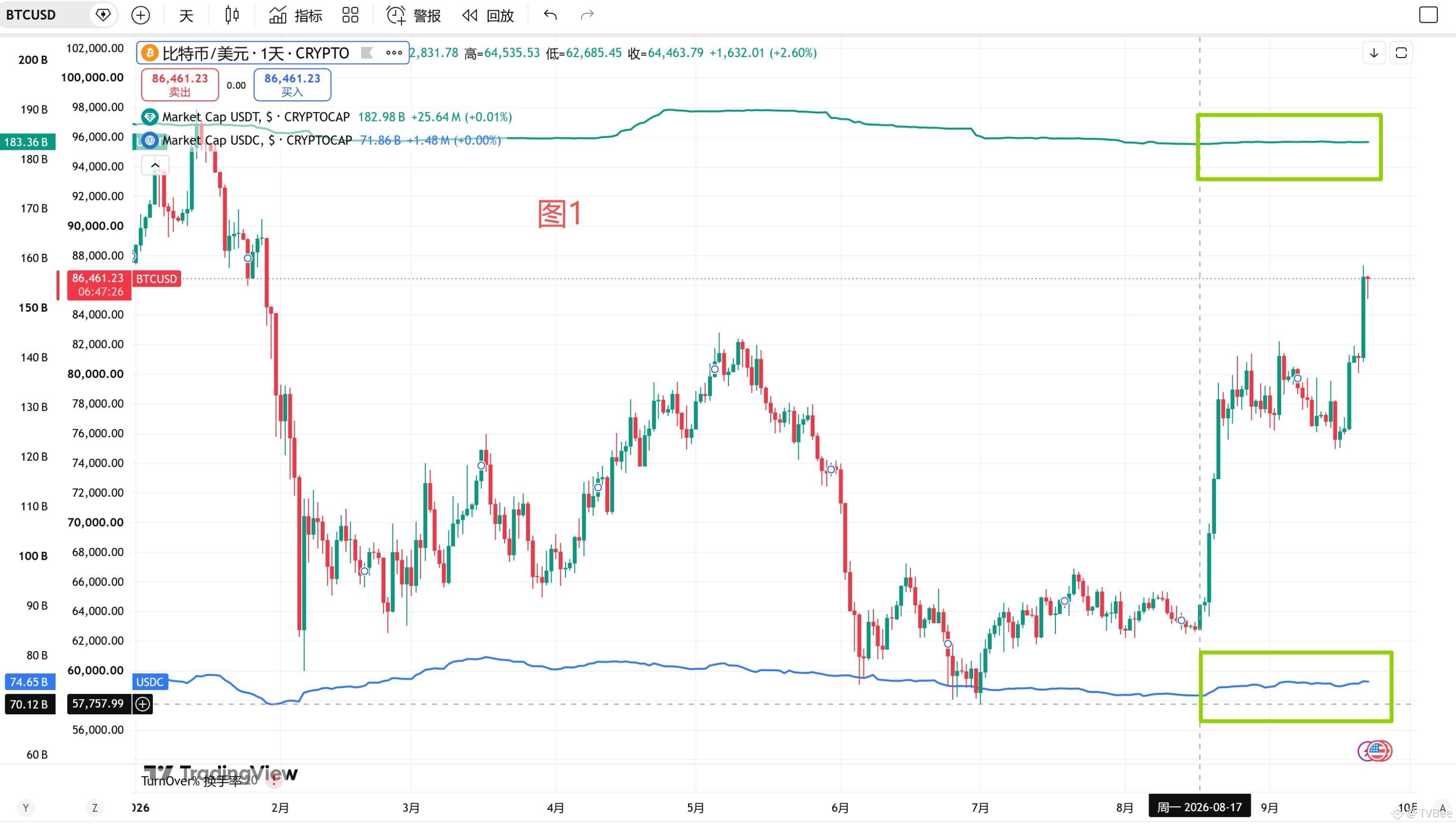
┈➤ The total market cap of USDT is decreasing, while the market cap of USDC is increasing
See Figure 1.
┈➤ USDC is very active, while USDT seems somewhat indifferent
But the issue is: no matter how much BTC is pumped and how USDC flows in, USDT appears to be unmoved.
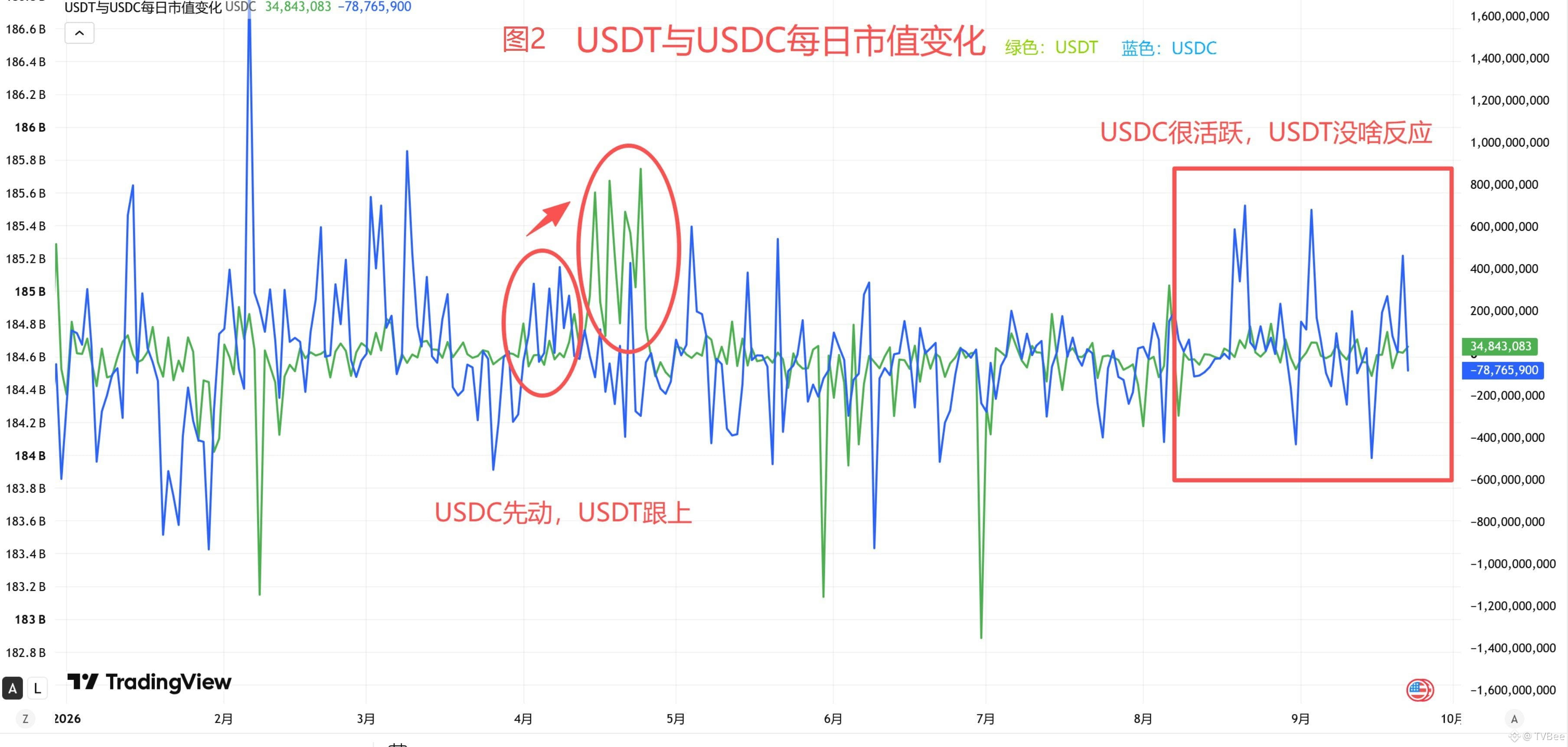
In April of this year, you could see USDC leading with inflows, and then USDT followed quite actively. But now, USDC inflows are very active, yet USDT hasn’t really responded. See Figure 2.
In other words, the US side is bullish, while Asia doesn’t seem to have much follow-through from capital.
┈➤ Has the bull market come—or not?
That’s one of the reasons why Brother Feng’s view is that the market is likely to move sideways: there is no consensus about a bull market.
Of course, another reason is that Brother Feng believes that during the midterm election period, political and economic factors—along with US-Iran relations—have kept oil volatility alive.
So which is driving the market: USDC or USDT?
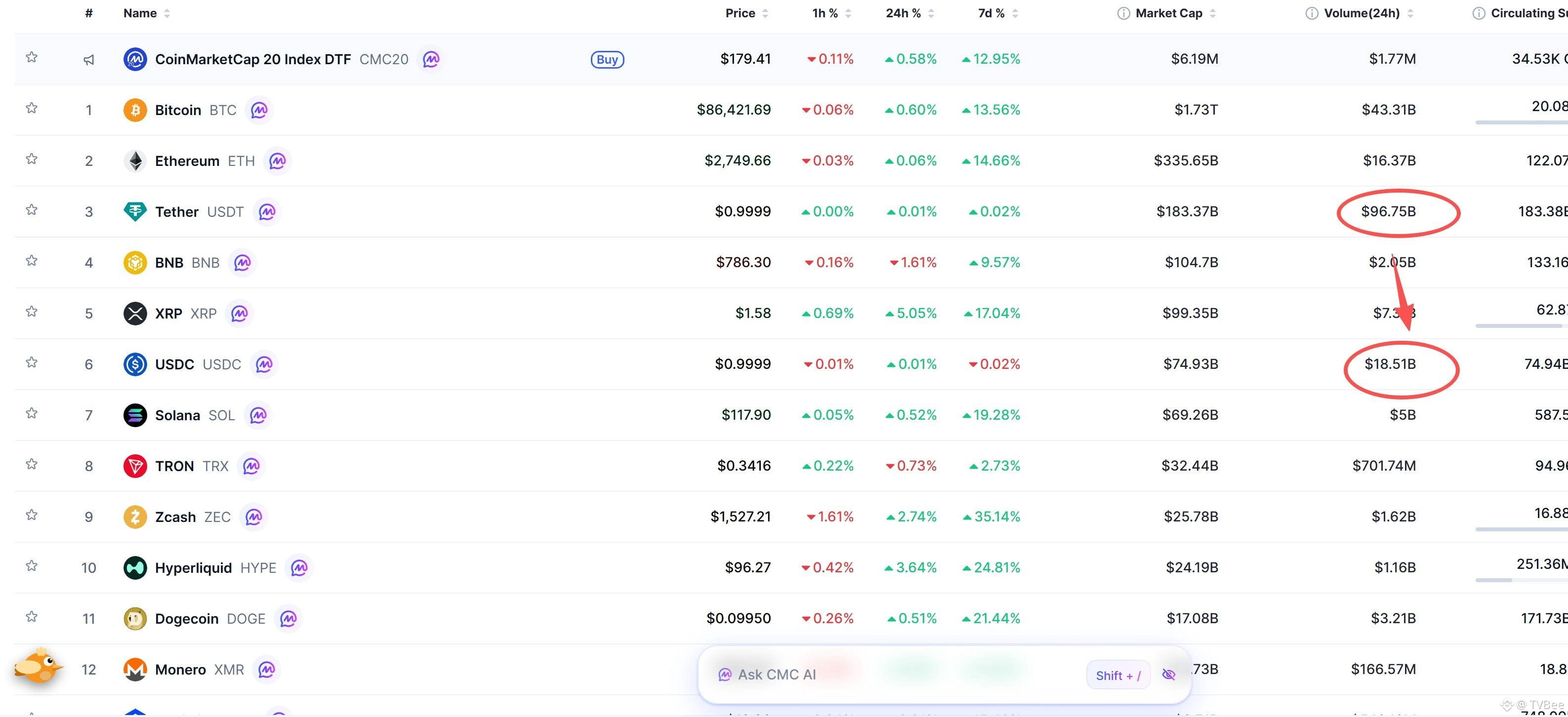
Brother Feng thinks USDC’s dominance is increasing strongly, but you can’t ignore USDT. After all, USDT’s trading volume is more than 5 times that of USDC (CoinGecko data is close to 4 times). See Figure 3. Also, this is only spot trading volume; in the derivatives market, USDT’s impact is even more significant.
So Brother Feng believes you shouldn’t conclude that a bull market is here just because USDC’s market cap is rising.
Brother Feng’s view is that after the drop in this bear market, the market will have a need for a rebound. Combined with the low-frequency rate-hike environment over the next year or so, and the subsequent expectations for rate cuts, there should be something like a small bull run similar to 2019.
But before the small bull run, by observing how USDT is reacting now, together with the US midterm elections, US-Iran relations, and oil prices, Brother Feng can’t shake the feeling that there may be further twists and turns. Hopefully Brother Feng is wrong—because nobody doesn’t like a bull market, no matter how big or small.
Has the bull market really arrived? The disagreement may be between the US and Asia
#比特币突破5月高点逼近8.6万美元
┈➤ The total market cap of USDT is decreasing, while the market cap of USDC is increasing
See Figure 1.
┈➤ USDC is very active, while USDT seems somewhat indifferent
But the issue is: no matter how much BTC is pumped and how USDC flows in, USDT appears to be unmoved.
In April of this year, you could see USDC leading with inflows, and then USDT followed quite actively. But now, USDC inflows are very active, yet USDT hasn’t really responded. See Figure 2.
In other words, the US side is bullish, while Asia doesn’t seem to have much follow-through from capital.
┈➤ Has the bull market come—or not?
That’s one of the reasons why Brother Feng’s view is that the market is likely to move sideways: there is no consensus about a bull market.
Of course, another reason is that Brother Feng believes that during the midterm election period, political and economic factors—along with US-Iran relations—have kept oil volatility alive.
So which is driving the market: USDC or USDT?
Brother Feng thinks USDC’s dominance is increasing strongly, but you can’t ignore USDT. After all, USDT’s trading volume is more than 5 times that of USDC (CoinGecko data is close to 4 times). See Figure 3. Also, this is only spot trading volume; in the derivatives market, USDT’s impact is even more significant.
So Brother Feng believes you shouldn’t conclude that a bull market is here just because USDC’s market cap is rising.
Brother Feng’s view is that after the drop in this bear market, the market will have a need for a rebound. Combined with the low-frequency rate-hike environment over the next year or so, and the subsequent expectations for rate cuts, there should be something like a small bull run similar to 2019.
But before the small bull run, by observing how USDT is reacting now, together with the US midterm elections, US-Iran relations, and oil prices, Brother Feng can’t shake the feeling that there may be further twists and turns. Hopefully Brother Feng is wrong—because nobody doesn’t like a bull market, no matter how big or small.
#比特币突破5月高点逼近8.6万美元
┈➤ The total market cap of USDT is decreasing, while the market cap of USDC is increasing
See Figure 1.
┈➤ USDC is very active, while USDT seems somewhat indifferent
But the issue is: no matter how much BTC is pumped and how USDC flows in, USDT appears to be unmoved.
In April of this year, you could see USDC leading with inflows, and then USDT followed quite actively. But now, USDC inflows are very active, yet USDT hasn’t really responded. See Figure 2.
In other words, the US side is bullish, while Asia doesn’t seem to have much follow-through from capital.
┈➤ Has the bull market come—or not?
That’s one of the reasons why Brother Feng’s view is that the market is likely to move sideways: there is no consensus about a bull market.
Of course, another reason is that Brother Feng believes that during the midterm election period, political and economic factors—along with US-Iran relations—have kept oil volatility alive.
So which is driving the market: USDC or USDT?
Brother Feng thinks USDC’s dominance is increasing strongly, but you can’t ignore USDT. After all, USDT’s trading volume is more than 5 times that of USDC (CoinGecko data is close to 4 times). See Figure 3. Also, this is only spot trading volume; in the derivatives market, USDT’s impact is even more significant.
So Brother Feng believes you shouldn’t conclude that a bull market is here just because USDC’s market cap is rising.
Brother Feng’s view is that after the drop in this bear market, the market will have a need for a rebound. Combined with the low-frequency rate-hike environment over the next year or so, and the subsequent expectations for rate cuts, there should be something like a small bull run similar to 2019.
But before the small bull run, by observing how USDT is reacting now, together with the US midterm elections, US-Iran relations, and oil prices, Brother Feng can’t shake the feeling that there may be further twists and turns. Hopefully Brother Feng is wrong—because nobody doesn’t like a bull market, no matter how big or small.
1.8k
·
--
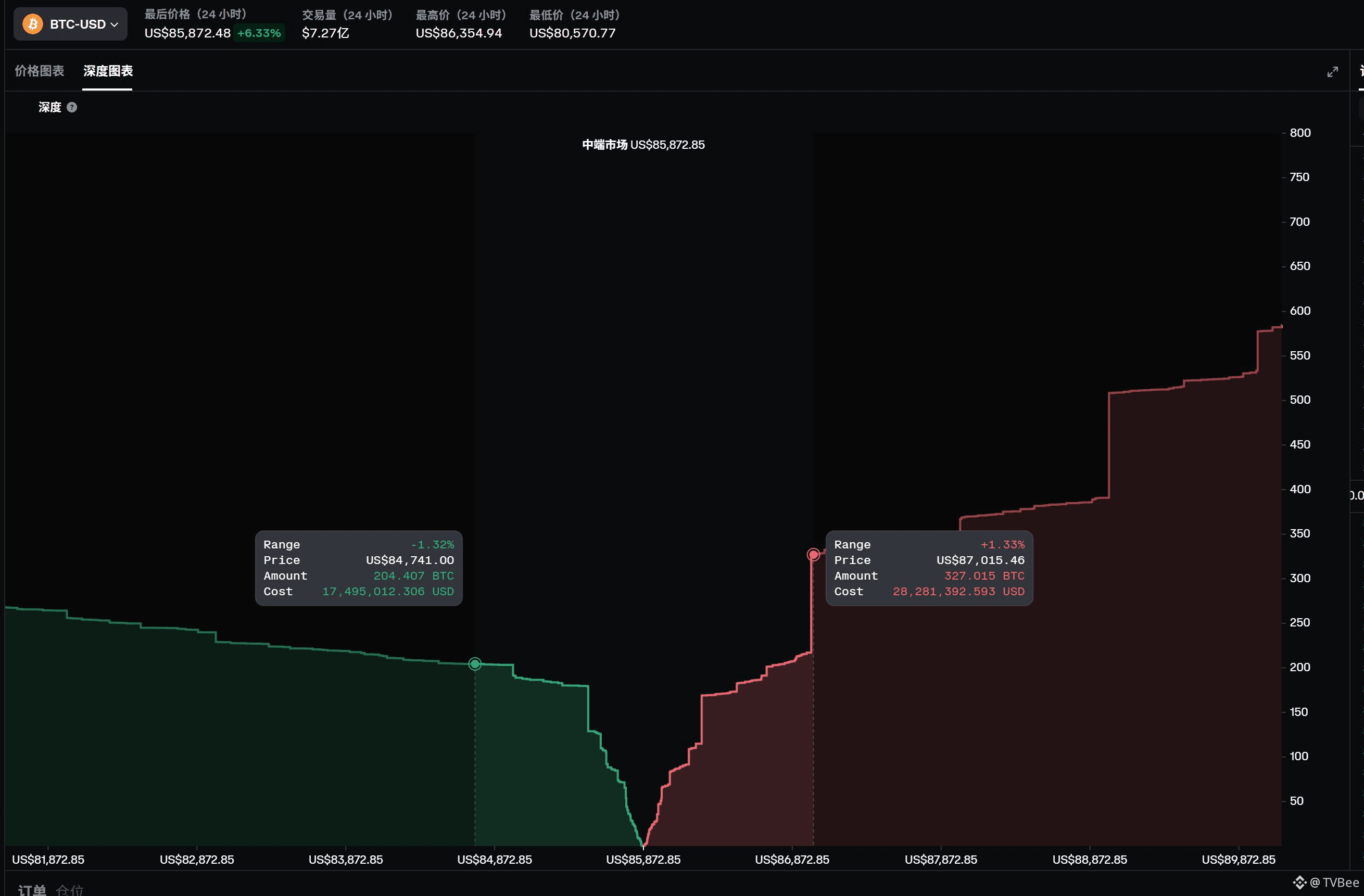
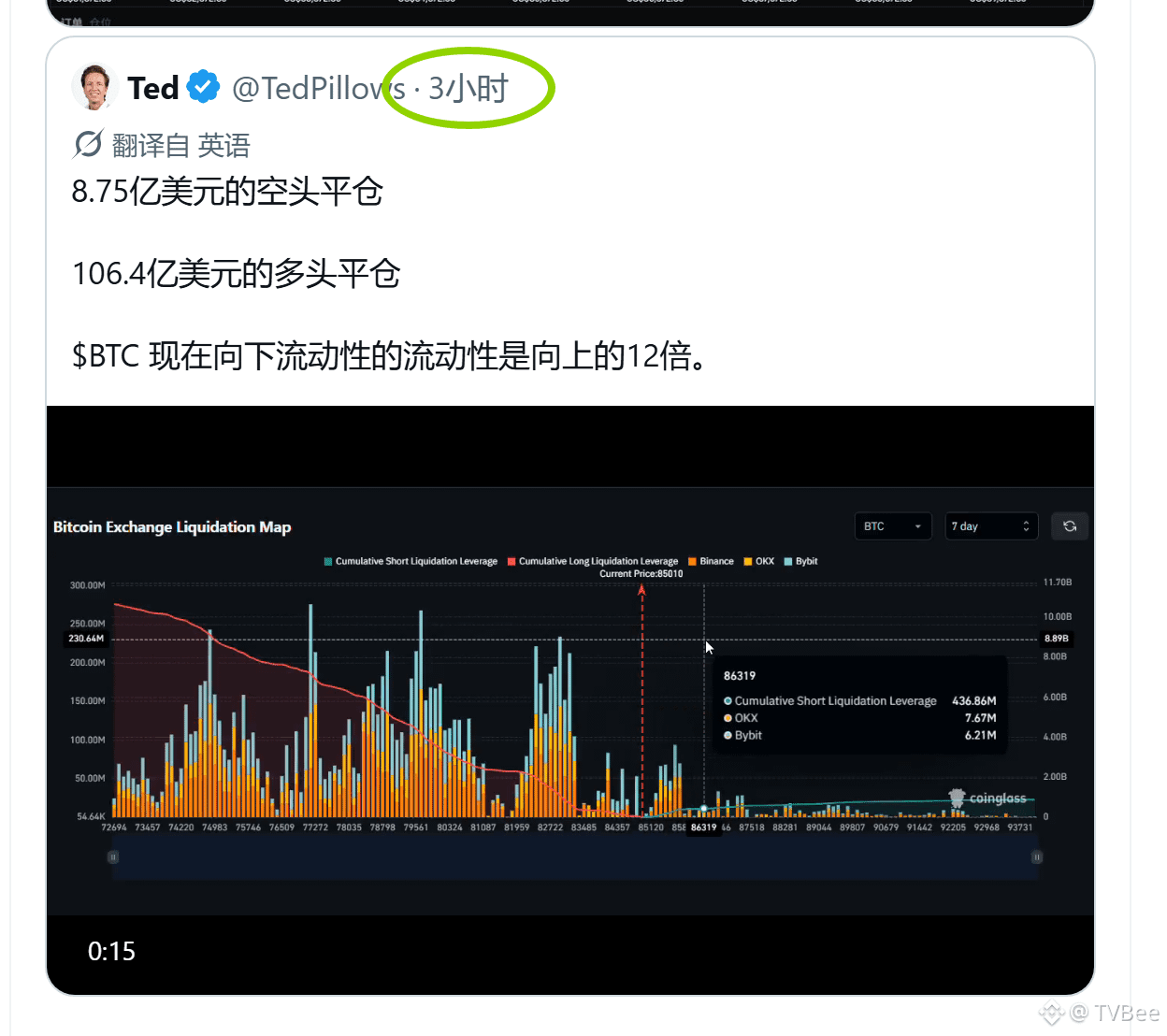
87000 has a bit of sell orders here; below 87000, there are roughly a total of 327 BTC resting orders. Binance is about the same too. This amount isn't big, but it's not small either.
After watching for a while, the past hour or so has been pretty much like this.
The next level is 89000, where the cumulative sell orders are nearly 500 coins.
Coinbase’s BTC funding rate is 0.0013%.
Brother Feng’s view is still mostly bullish for this week; overall it’s more range-bound. Spot positions are at 30% allocation, including a bit of US stock token exposure—I’m slightly missed the move. Other than Unitree, he doesn’t hold any short or long positions.
87000 has a bit of sell orders here; below 87000, there are roughly a total of 327 BTC resting orders. Binance is about the same too. This amount isn't big, but it's not small either.
After watching for a while, the past hour or so has been pretty much like this.
The next level is 89000, where the cumulative sell orders are nearly 500 coins.
Coinbase’s BTC funding rate is 0.0013%.
Brother Feng’s view is still mostly bullish for this week; overall it’s more range-bound. Spot positions are at 30% allocation, including a bit of US stock token exposure—I’m slightly missed the move. Other than Unitree, he doesn’t hold any short or long positions.
After watching for a while, the past hour or so has been pretty much like this.
The next level is 89000, where the cumulative sell orders are nearly 500 coins.
Coinbase’s BTC funding rate is 0.0013%.
Brother Feng’s view is still mostly bullish for this week; overall it’s more range-bound. Spot positions are at 30% allocation, including a bit of US stock token exposure—I’m slightly missed the move. Other than Unitree, he doesn’t hold any short or long positions.
3
11.3k
·
--
The thing that’s coming will always come—SUI finally pulled the trigger.
The data I posted last night was wrong because I misunderstood NEAR’s new technology, so I deleted that post.
But my assessment of SUI is correct!
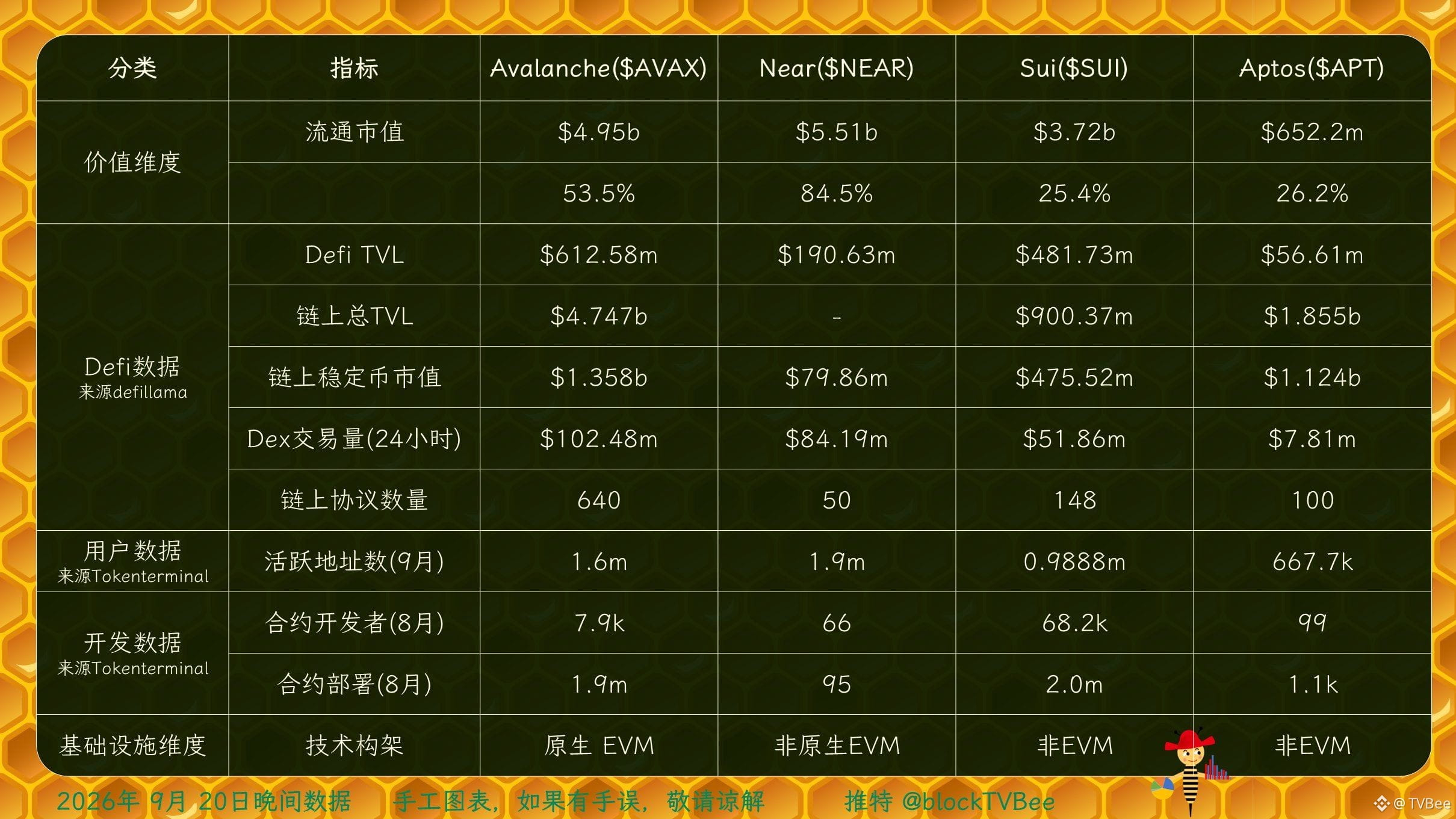
$NEAR : Because of NEAR intents, it enables cross-chain privacy protection and supports Zcash ecosystem cross-chain integration—resulting in an extremely massive cross-chain ecosystem, with the largest ecosystem growth.
Among these four ecosystems, Avalanche has native EVM compatibility, making it suitable for mainstream wallets like OKX and MetaMask. Its addresses are the same as Ethereum’s, so the threshold for building and developing a single-chain ecosystem is the lowest, and the single-chain ecosystem is also the largest.
And $SUI may have the most potential: first, it’s a relatively new ecosystem framework; second, its DeFi data and user activity data are both not weak; third, there are also plenty of on-chain protocols; fourth, the level of developer activity is extremely high, so it can go head-to-head with Avalanche.
Brother Feng’s long-held view is that this world is driven and changed by supply-side forces—the innovations from developers determine how an ecosystem develops. We don’t know what new gameplay developers will bring us in the future.
I just finished writing it yesterday, and today it already got pulled up.
The thing that’s coming will always come—SUI finally pulled the trigger.
The data I posted last night was wrong because I misunderstood NEAR’s new technology, so I deleted that post.
But my assessment of SUI is correct!
$NEAR : Because of NEAR intents, it enables cross-chain privacy protection and supports Zcash ecosystem cross-chain integration—resulting in an extremely massive cross-chain ecosystem, with the largest ecosystem growth.
Among these four ecosystems, Avalanche has native EVM compatibility, making it suitable for mainstream wallets like OKX and MetaMask. Its addresses are the same as Ethereum’s, so the threshold for building and developing a single-chain ecosystem is the lowest, and the single-chain ecosystem is also the largest.
And $SUI may have the most potential: first, it’s a relatively new ecosystem framework; second, its DeFi data and user activity data are both not weak; third, there are also plenty of on-chain protocols; fourth, the level of developer activity is extremely high, so it can go head-to-head with Avalanche.
Brother Feng’s long-held view is that this world is driven and changed by supply-side forces—the innovations from developers determine how an ecosystem develops. We don’t know what new gameplay developers will bring us in the future.
I just finished writing it yesterday, and today it already got pulled up.
The data I posted last night was wrong because I misunderstood NEAR’s new technology, so I deleted that post.
But my assessment of SUI is correct!
$NEAR : Because of NEAR intents, it enables cross-chain privacy protection and supports Zcash ecosystem cross-chain integration—resulting in an extremely massive cross-chain ecosystem, with the largest ecosystem growth.
Among these four ecosystems, Avalanche has native EVM compatibility, making it suitable for mainstream wallets like OKX and MetaMask. Its addresses are the same as Ethereum’s, so the threshold for building and developing a single-chain ecosystem is the lowest, and the single-chain ecosystem is also the largest.
And $SUI may have the most potential: first, it’s a relatively new ecosystem framework; second, its DeFi data and user activity data are both not weak; third, there are also plenty of on-chain protocols; fourth, the level of developer activity is extremely high, so it can go head-to-head with Avalanche.
Brother Feng’s long-held view is that this world is driven and changed by supply-side forces—the innovations from developers determine how an ecosystem develops. We don’t know what new gameplay developers will bring us in the future.
I just finished writing it yesterday, and today it already got pulled up.
TVBee
·
--
Is it an illusion? The more “ecosystem” a project has, the harder it is to pump?
On the contrary, projects with little ecosystem tend to be easier to pump, because there are almost no people on the vehicle, so there’s little selling pressure. $ONE surged 700% in 4 days……
But the problem is: many projects have little ecosystem, and it’s hard to know which one will pump, and when, because people are still more focused on projects with ecosystem.
Do you have to watch the exchange’s candlestick charts every day and scan various coins to find them?
Bro Bee doesn’t care about that either—he’s been holding $DBR all along, and recently added a bit, $SUI . I just feel that in this kind of ecosystem-based project, holding it in your hand is more reassuring.
How do you all choose?
On the contrary, projects with little ecosystem tend to be easier to pump, because there are almost no people on the vehicle, so there’s little selling pressure. $ONE surged 700% in 4 days……
But the problem is: many projects have little ecosystem, and it’s hard to know which one will pump, and when, because people are still more focused on projects with ecosystem.
Do you have to watch the exchange’s candlestick charts every day and scan various coins to find them?
Bro Bee doesn’t care about that either—he’s been holding $DBR all along, and recently added a bit, $SUI . I just feel that in this kind of ecosystem-based project, holding it in your hand is more reassuring.
How do you all choose?
2
1.6k
·
--
I forgot one important thing—the market situation should be okay before Friday.
I forgot about the president’s big visit to the U.S.—that’s a big deal.
The itinerary plan is roughly as follows:
Arrival: Tuesday afternoon in U.S. time, arriving in China during Thursday early morning through the night.
Departure: Friday afternoon to evening in U.S. time, and Saturday early morning to morning in China time.
Recently, President Trump should be mainly focused on preparation and hosting. So over these days, tensions between the U.S. and Iran likely won’t escalate, and there probably won’t be any breakthrough progress on the agreement.
Although there are undercurrents underneath, the surface atmosphere is expected to be relatively calm. Given that sentiment for the BTC bull market is quite good—and on top of that, MicroStrategy has also bought BTC—the market should be okay before Friday.
Brother Feng thinks that over these next few days, BTC should at least attempt to test 83,000. (But overall, Brother Feng is still cautiously expecting a range-bound market for now.)
We’ll discuss again after Saturday.
I forgot one important thing—the market situation should be okay before Friday.
I forgot about the president’s big visit to the U.S.—that’s a big deal.
The itinerary plan is roughly as follows:
Arrival: Tuesday afternoon in U.S. time, arriving in China during Thursday early morning through the night.
Departure: Friday afternoon to evening in U.S. time, and Saturday early morning to morning in China time.
Recently, President Trump should be mainly focused on preparation and hosting. So over these days, tensions between the U.S. and Iran likely won’t escalate, and there probably won’t be any breakthrough progress on the agreement.
Although there are undercurrents underneath, the surface atmosphere is expected to be relatively calm. Given that sentiment for the BTC bull market is quite good—and on top of that, MicroStrategy has also bought BTC—the market should be okay before Friday.
Brother Feng thinks that over these next few days, BTC should at least attempt to test 83,000. (But overall, Brother Feng is still cautiously expecting a range-bound market for now.)
We’ll discuss again after Saturday.
I forgot about the president’s big visit to the U.S.—that’s a big deal.
The itinerary plan is roughly as follows:
Arrival: Tuesday afternoon in U.S. time, arriving in China during Thursday early morning through the night.
Departure: Friday afternoon to evening in U.S. time, and Saturday early morning to morning in China time.
Recently, President Trump should be mainly focused on preparation and hosting. So over these days, tensions between the U.S. and Iran likely won’t escalate, and there probably won’t be any breakthrough progress on the agreement.
Although there are undercurrents underneath, the surface atmosphere is expected to be relatively calm. Given that sentiment for the BTC bull market is quite good—and on top of that, MicroStrategy has also bought BTC—the market should be okay before Friday.
Brother Feng thinks that over these next few days, BTC should at least attempt to test 83,000. (But overall, Brother Feng is still cautiously expecting a range-bound market for now.)
We’ll discuss again after Saturday.
TVBee
·
--
Unless something unexpected happens, BTC weekly line RSI divergence has formed
#以太坊重回2600美元
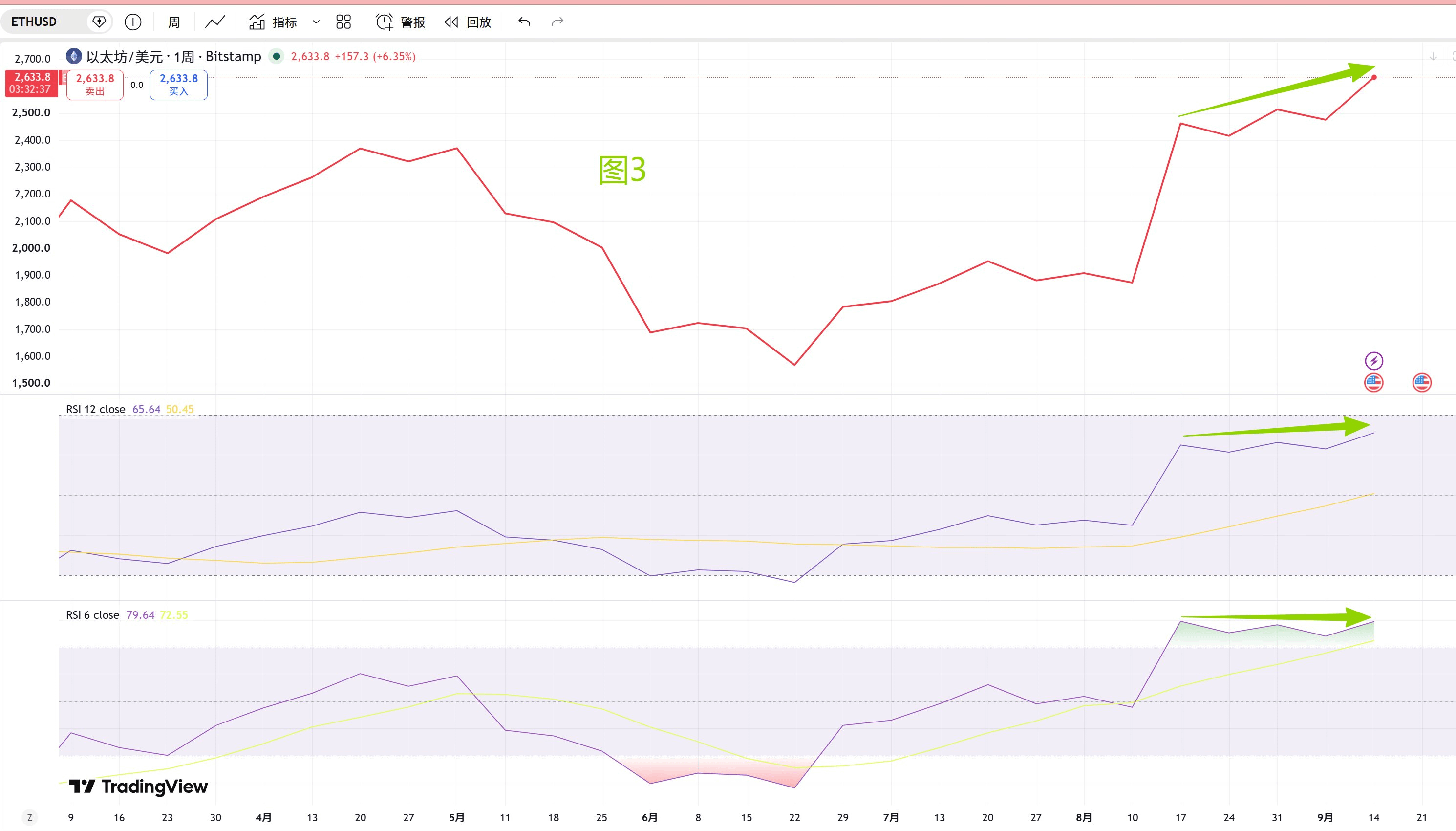
┈➤ BTC weekly line RSI divergence
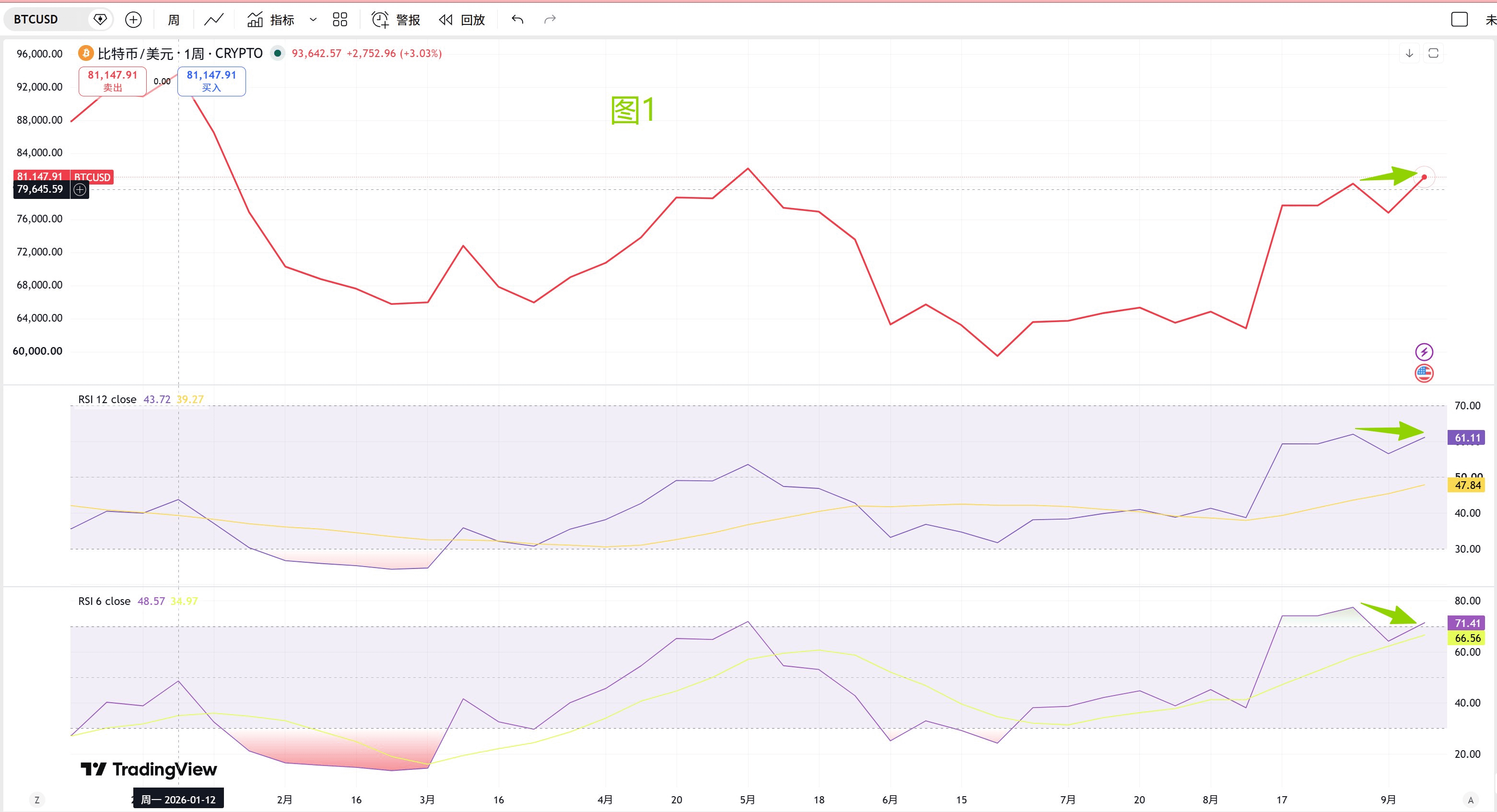
This week’s close is higher than the Aug 31 close of 80,347, but both RSI6 and RSI2 are lower than Aug 31.
RSI6 is very obvious; RSI12 is not that obvious. As shown in Figure 1.
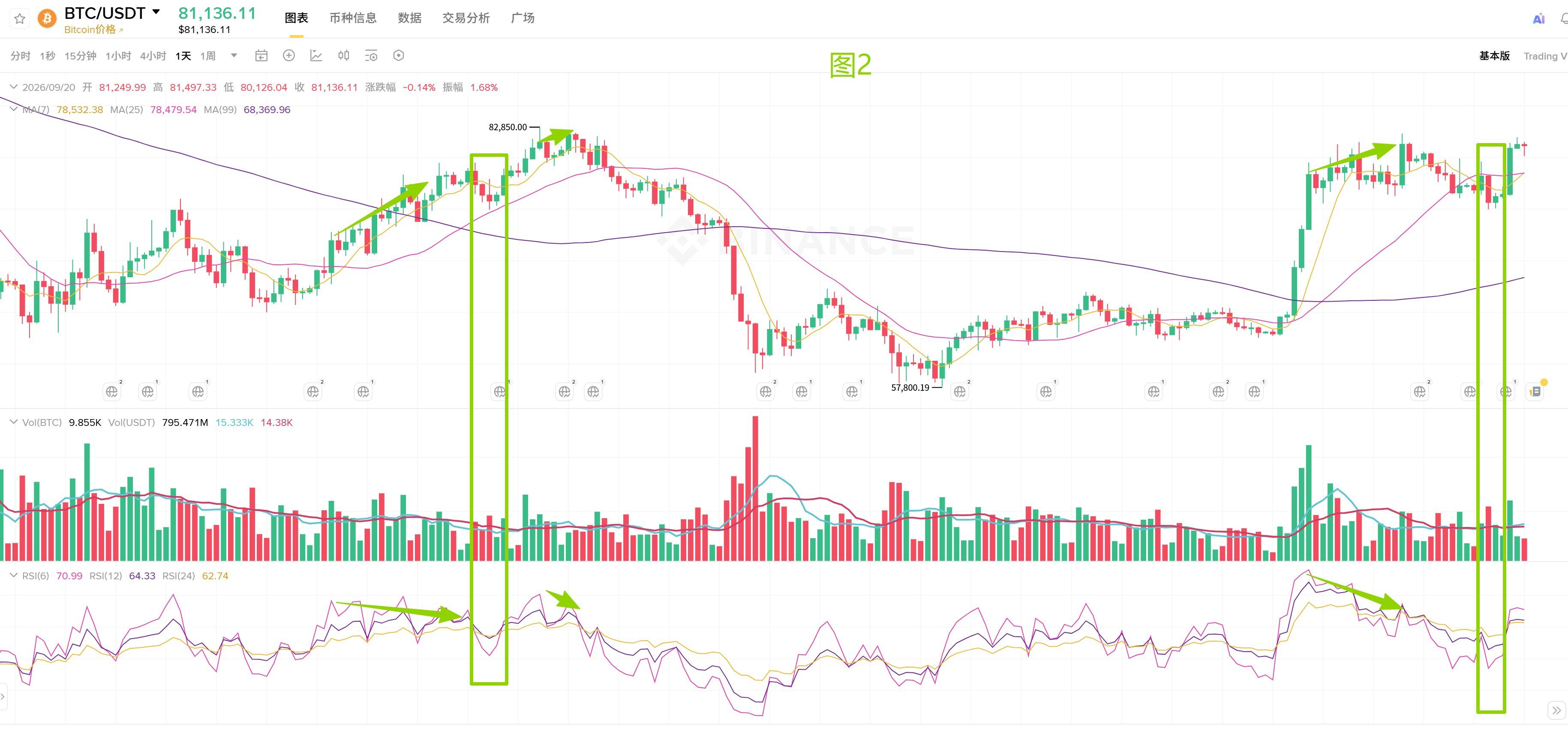
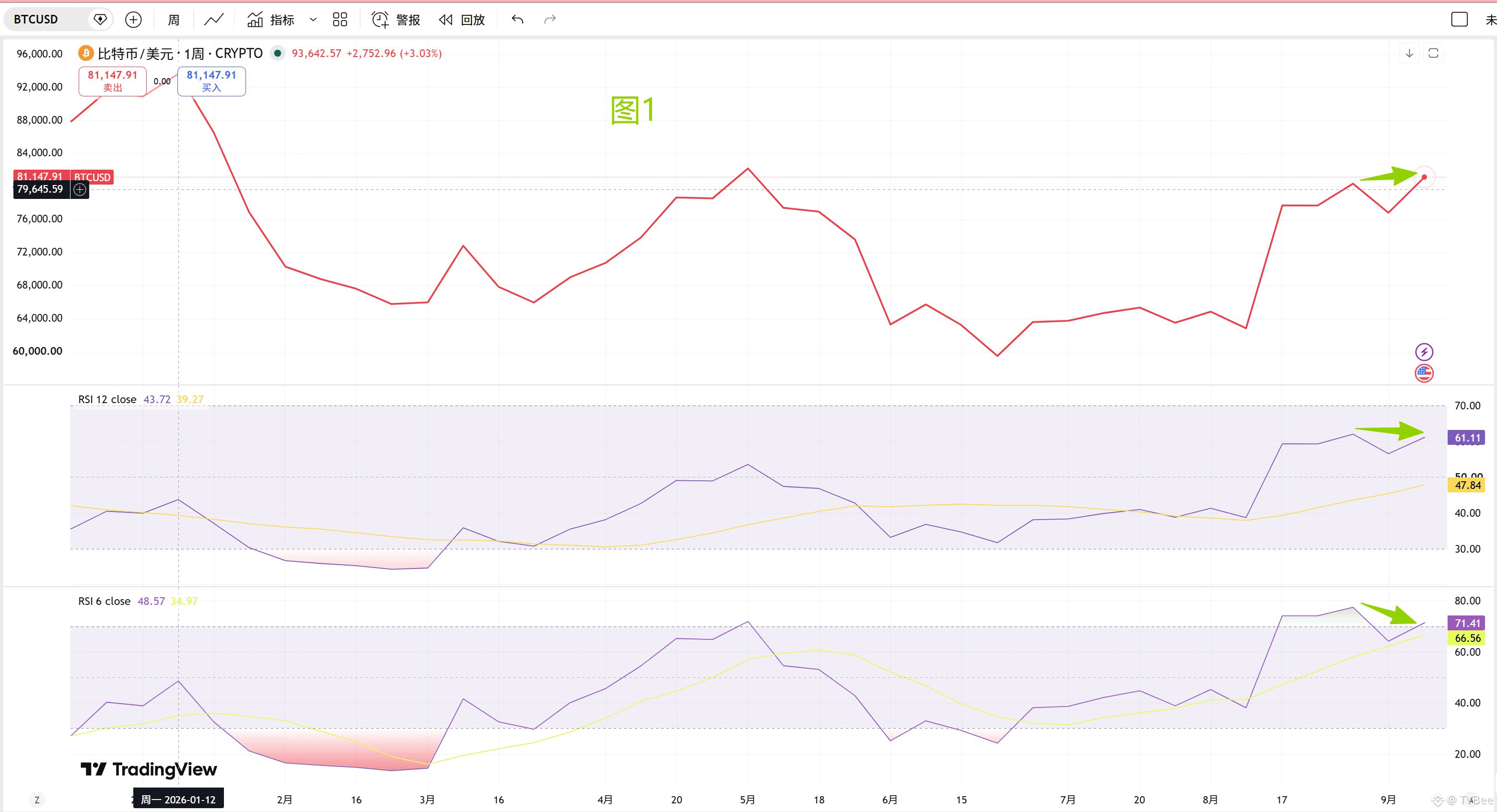
┈➤ BTC daily chart: the second wave upswing RSI does not show divergence
This doesn’t mean it will necessarily go down from now on. If you look at the daily chart, there still isn’t any divergence.
In the May scenario (from Ketch), after the first wave divergence, there was a pullback; for the second wave, price should probe higher again and create an RSI divergence once more to confirm that the upswing has failed. As shown in Figure 2
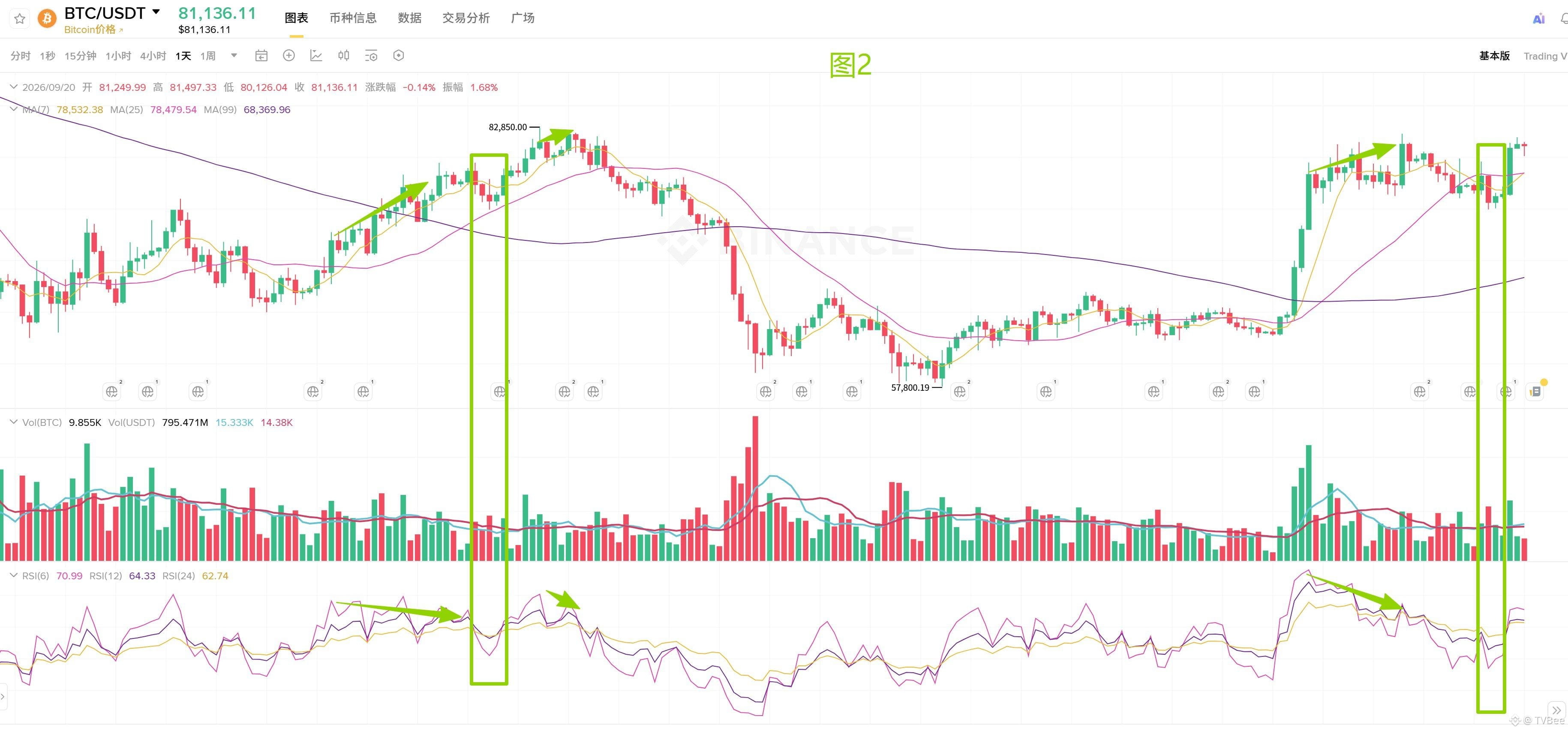
┈➤ ETH weekly line RSI shows slight divergence
Compared with BTC, ETH is in a better position. At the weekly level, RSI12 is clearly rising; RSI6 shows a very slight divergence that is almost imperceptible to the naked eye.
┈➤ The US-Iran situation may be key
Of course, Ketch’s significance is limited. It’s possible to see one more divergence after the first, or that price just won’t break higher anymore.
Brother Feng thinks that right now the US-Iran situation is the key. Iran has proposed three fairly reliable conditions:
If both sides reach an agreement—even if it’s only for a phase—that’s a positive signal;
If both sides fail to reach an agreement but continue negotiations, Brother Feng feels there could be one or two more attempts to push higher;
If both sides can’t talk it through and the conflict escalates, or even if Europe joins in, then that would be a negative signal.
#以太坊重回2600美元
┈➤ BTC weekly line RSI divergence
This week’s close is higher than the Aug 31 close of 80,347, but both RSI6 and RSI2 are lower than Aug 31.
RSI6 is very obvious; RSI12 is not that obvious. As shown in Figure 1.
┈➤ BTC daily chart: the second wave upswing RSI does not show divergence
This doesn’t mean it will necessarily go down from now on. If you look at the daily chart, there still isn’t any divergence.
In the May scenario (from Ketch), after the first wave divergence, there was a pullback; for the second wave, price should probe higher again and create an RSI divergence once more to confirm that the upswing has failed. As shown in Figure 2
┈➤ ETH weekly line RSI shows slight divergence
Compared with BTC, ETH is in a better position. At the weekly level, RSI12 is clearly rising; RSI6 shows a very slight divergence that is almost imperceptible to the naked eye.
┈➤ The US-Iran situation may be key
Of course, Ketch’s significance is limited. It’s possible to see one more divergence after the first, or that price just won’t break higher anymore.
Brother Feng thinks that right now the US-Iran situation is the key. Iran has proposed three fairly reliable conditions:
If both sides reach an agreement—even if it’s only for a phase—that’s a positive signal;
If both sides fail to reach an agreement but continue negotiations, Brother Feng feels there could be one or two more attempts to push higher;
If both sides can’t talk it through and the conflict escalates, or even if Europe joins in, then that would be a negative signal.
2
617
·
--
Unless something unexpected happens, BTC weekly line RSI divergence has formed
#以太坊重回2600美元
┈➤ BTC weekly line RSI divergence
This week’s close is higher than the Aug 31 close of 80,347, but both RSI6 and RSI2 are lower than Aug 31.
RSI6 is very obvious; RSI12 is not that obvious. As shown in Figure 1.
┈➤ BTC daily chart: the second wave upswing RSI does not show divergence
This doesn’t mean it will necessarily go down from now on. If you look at the daily chart, there still isn’t any divergence.
In the May scenario (from Ketch), after the first wave divergence, there was a pullback; for the second wave, price should probe higher again and create an RSI divergence once more to confirm that the upswing has failed. As shown in Figure 2
┈➤ ETH weekly line RSI shows slight divergence
Compared with BTC, ETH is in a better position. At the weekly level, RSI12 is clearly rising; RSI6 shows a very slight divergence that is almost imperceptible to the naked eye.
┈➤ The US-Iran situation may be key
Of course, Ketch’s significance is limited. It’s possible to see one more divergence after the first, or that price just won’t break higher anymore.
Brother Feng thinks that right now the US-Iran situation is the key. Iran has proposed three fairly reliable conditions:
If both sides reach an agreement—even if it’s only for a phase—that’s a positive signal;
If both sides fail to reach an agreement but continue negotiations, Brother Feng feels there could be one or two more attempts to push higher;
If both sides can’t talk it through and the conflict escalates, or even if Europe joins in, then that would be a negative signal.
Unless something unexpected happens, BTC weekly line RSI divergence has formed
#以太坊重回2600美元
┈➤ BTC weekly line RSI divergence
This week’s close is higher than the Aug 31 close of 80,347, but both RSI6 and RSI2 are lower than Aug 31.
RSI6 is very obvious; RSI12 is not that obvious. As shown in Figure 1.
┈➤ BTC daily chart: the second wave upswing RSI does not show divergence
This doesn’t mean it will necessarily go down from now on. If you look at the daily chart, there still isn’t any divergence.
In the May scenario (from Ketch), after the first wave divergence, there was a pullback; for the second wave, price should probe higher again and create an RSI divergence once more to confirm that the upswing has failed. As shown in Figure 2
┈➤ ETH weekly line RSI shows slight divergence
Compared with BTC, ETH is in a better position. At the weekly level, RSI12 is clearly rising; RSI6 shows a very slight divergence that is almost imperceptible to the naked eye.
┈➤ The US-Iran situation may be key
Of course, Ketch’s significance is limited. It’s possible to see one more divergence after the first, or that price just won’t break higher anymore.
Brother Feng thinks that right now the US-Iran situation is the key. Iran has proposed three fairly reliable conditions:
If both sides reach an agreement—even if it’s only for a phase—that’s a positive signal;
If both sides fail to reach an agreement but continue negotiations, Brother Feng feels there could be one or two more attempts to push higher;
If both sides can’t talk it through and the conflict escalates, or even if Europe joins in, then that would be a negative signal.
#以太坊重回2600美元
┈➤ BTC weekly line RSI divergence
This week’s close is higher than the Aug 31 close of 80,347, but both RSI6 and RSI2 are lower than Aug 31.
RSI6 is very obvious; RSI12 is not that obvious. As shown in Figure 1.
┈➤ BTC daily chart: the second wave upswing RSI does not show divergence
This doesn’t mean it will necessarily go down from now on. If you look at the daily chart, there still isn’t any divergence.
In the May scenario (from Ketch), after the first wave divergence, there was a pullback; for the second wave, price should probe higher again and create an RSI divergence once more to confirm that the upswing has failed. As shown in Figure 2
┈➤ ETH weekly line RSI shows slight divergence
Compared with BTC, ETH is in a better position. At the weekly level, RSI12 is clearly rising; RSI6 shows a very slight divergence that is almost imperceptible to the naked eye.
┈➤ The US-Iran situation may be key
Of course, Ketch’s significance is limited. It’s possible to see one more divergence after the first, or that price just won’t break higher anymore.
Brother Feng thinks that right now the US-Iran situation is the key. Iran has proposed three fairly reliable conditions:
If both sides reach an agreement—even if it’s only for a phase—that’s a positive signal;
If both sides fail to reach an agreement but continue negotiations, Brother Feng feels there could be one or two more attempts to push higher;
If both sides can’t talk it through and the conflict escalates, or even if Europe joins in, then that would be a negative signal.
1
1
2
2.5k
·
--
That’s why people think the conditions for a bull market aren’t sufficient?
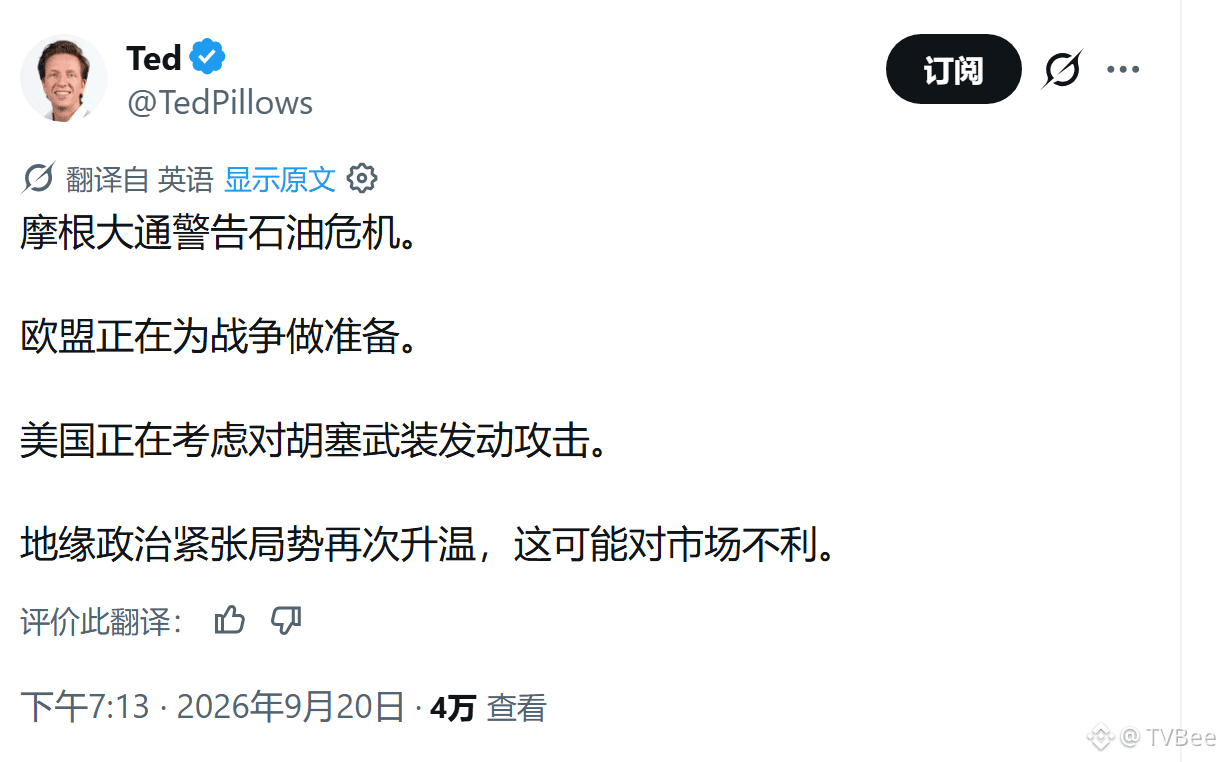
Brother Feng has an irresponsible illusion—that Trump seems to have realized that the overall momentum of the Republicans’ midterm elections is already gone, and is rushing to push through the things he wants to do in the last stretch, including:
passage of a Clear-Clear Bill, and a Bitcoin strategic reserve bill,
cracking down on Iran to prevent it from obtaining nuclear weapons,
and more.
For the former, after the midterm elections, these kinds of positives may pause.
For the latter, a US-Iran conflict, an oil crisis, or even Europe’s involvement in the war could form a black swan.
Of course, without a major liquidity black swan, it’s hard for BTC to return to the area around 60,000. But what worries people is that, during the upward move, various events could happen.
So for now, Brother Feng remains cautious and expects range-bound trading; after the midterm elections, perhaps macro factors will calm down.
That’s why people think the conditions for a bull market aren’t sufficient?
Brother Feng has an irresponsible illusion—that Trump seems to have realized that the overall momentum of the Republicans’ midterm elections is already gone, and is rushing to push through the things he wants to do in the last stretch, including:
passage of a Clear-Clear Bill, and a Bitcoin strategic reserve bill,
cracking down on Iran to prevent it from obtaining nuclear weapons,
and more.
For the former, after the midterm elections, these kinds of positives may pause.
For the latter, a US-Iran conflict, an oil crisis, or even Europe’s involvement in the war could form a black swan.
Of course, without a major liquidity black swan, it’s hard for BTC to return to the area around 60,000. But what worries people is that, during the upward move, various events could happen.
So for now, Brother Feng remains cautious and expects range-bound trading; after the midterm elections, perhaps macro factors will calm down.
Brother Feng has an irresponsible illusion—that Trump seems to have realized that the overall momentum of the Republicans’ midterm elections is already gone, and is rushing to push through the things he wants to do in the last stretch, including:
passage of a Clear-Clear Bill, and a Bitcoin strategic reserve bill,
cracking down on Iran to prevent it from obtaining nuclear weapons,
and more.
For the former, after the midterm elections, these kinds of positives may pause.
For the latter, a US-Iran conflict, an oil crisis, or even Europe’s involvement in the war could form a black swan.
Of course, without a major liquidity black swan, it’s hard for BTC to return to the area around 60,000. But what worries people is that, during the upward move, various events could happen.
So for now, Brother Feng remains cautious and expects range-bound trading; after the midterm elections, perhaps macro factors will calm down.
TVBee
·
--
Is it an illusion? The more “ecosystem” a project has, the harder it is to pump?
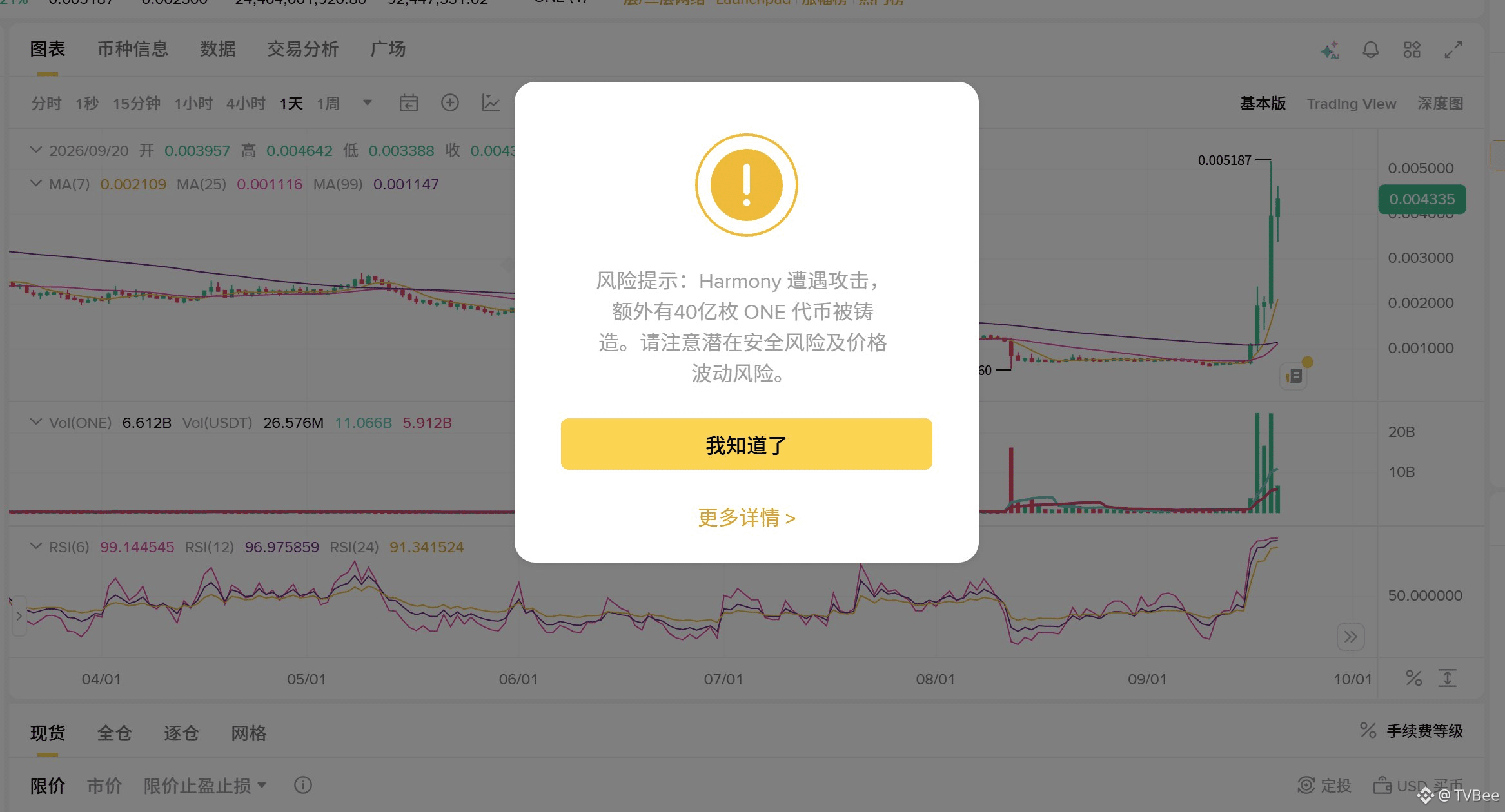
On the contrary, projects with little ecosystem tend to be easier to pump, because there are almost no people on the vehicle, so there’s little selling pressure. $ONE surged 700% in 4 days……
But the problem is: many projects have little ecosystem, and it’s hard to know which one will pump, and when, because people are still more focused on projects with ecosystem.
Do you have to watch the exchange’s candlestick charts every day and scan various coins to find them?
Bro Bee doesn’t care about that either—he’s been holding $DBR all along, and recently added a bit, $SUI . I just feel that in this kind of ecosystem-based project, holding it in your hand is more reassuring.
How do you all choose?
On the contrary, projects with little ecosystem tend to be easier to pump, because there are almost no people on the vehicle, so there’s little selling pressure. $ONE surged 700% in 4 days……
But the problem is: many projects have little ecosystem, and it’s hard to know which one will pump, and when, because people are still more focused on projects with ecosystem.
Do you have to watch the exchange’s candlestick charts every day and scan various coins to find them?
Bro Bee doesn’t care about that either—he’s been holding $DBR all along, and recently added a bit, $SUI . I just feel that in this kind of ecosystem-based project, holding it in your hand is more reassuring.
How do you all choose?
2
969
·
--
Is it an illusion? The more “ecosystem” a project has, the harder it is to pump?
On the contrary, projects with little ecosystem tend to be easier to pump, because there are almost no people on the vehicle, so there’s little selling pressure. $ONE surged 700% in 4 days……
But the problem is: many projects have little ecosystem, and it’s hard to know which one will pump, and when, because people are still more focused on projects with ecosystem.
Do you have to watch the exchange’s candlestick charts every day and scan various coins to find them?
Bro Bee doesn’t care about that either—he’s been holding $DBR all along, and recently added a bit, $SUI . I just feel that in this kind of ecosystem-based project, holding it in your hand is more reassuring.
How do you all choose?
Is it an illusion? The more “ecosystem” a project has, the harder it is to pump?
On the contrary, projects with little ecosystem tend to be easier to pump, because there are almost no people on the vehicle, so there’s little selling pressure. $ONE surged 700% in 4 days……
But the problem is: many projects have little ecosystem, and it’s hard to know which one will pump, and when, because people are still more focused on projects with ecosystem.
Do you have to watch the exchange’s candlestick charts every day and scan various coins to find them?
Bro Bee doesn’t care about that either—he’s been holding $DBR all along, and recently added a bit, $SUI . I just feel that in this kind of ecosystem-based project, holding it in your hand is more reassuring.
How do you all choose?
On the contrary, projects with little ecosystem tend to be easier to pump, because there are almost no people on the vehicle, so there’s little selling pressure. $ONE surged 700% in 4 days……
But the problem is: many projects have little ecosystem, and it’s hard to know which one will pump, and when, because people are still more focused on projects with ecosystem.
Do you have to watch the exchange’s candlestick charts every day and scan various coins to find them?
Bro Bee doesn’t care about that either—he’s been holding $DBR all along, and recently added a bit, $SUI . I just feel that in this kind of ecosystem-based project, holding it in your hand is more reassuring.
How do you all choose?
2
2
3
5.2k
·
--
Is the bull market led by USDC? Do USDC traders think so too?
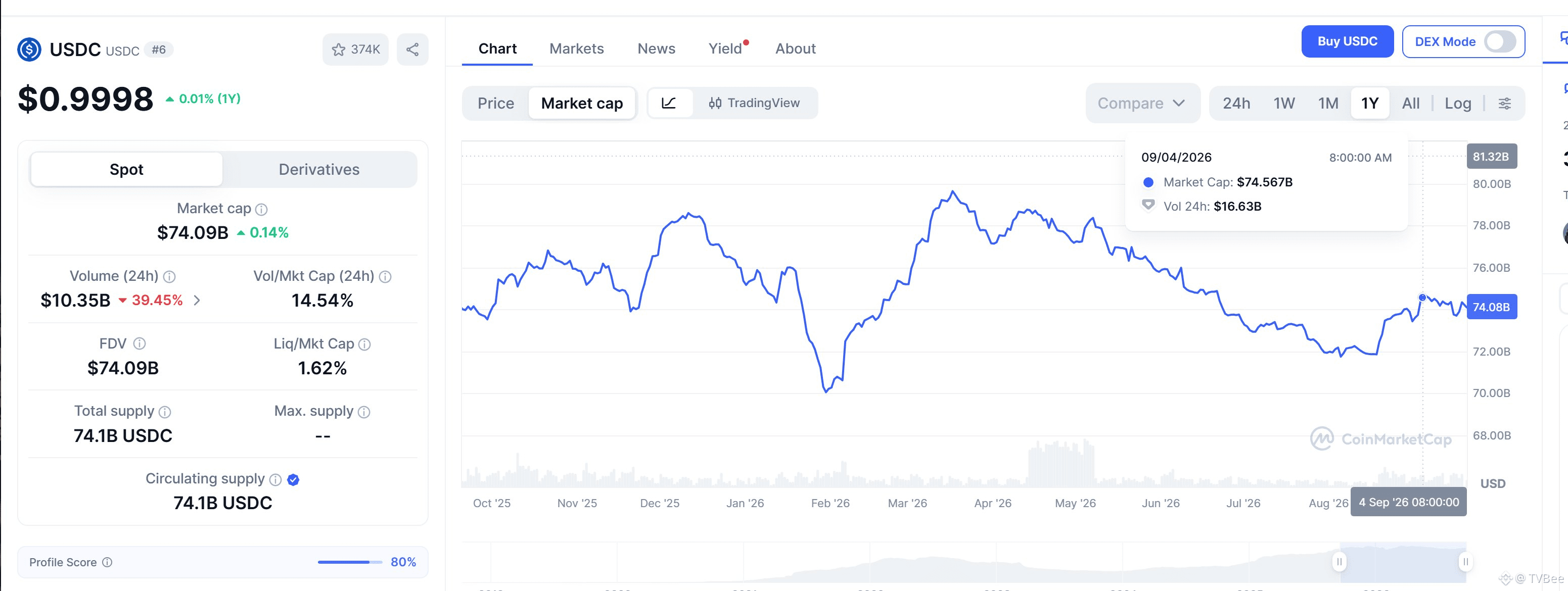
Some people have suggested that the market cap of USDC is rising, and that is indeed true—since the late August period, the market cap of USDC has increased.
However, after September 4, the market cap of USDC has also been on a downward trend. Of course, the decline isn’t large. Let’s observe again next week. See Figure 1.
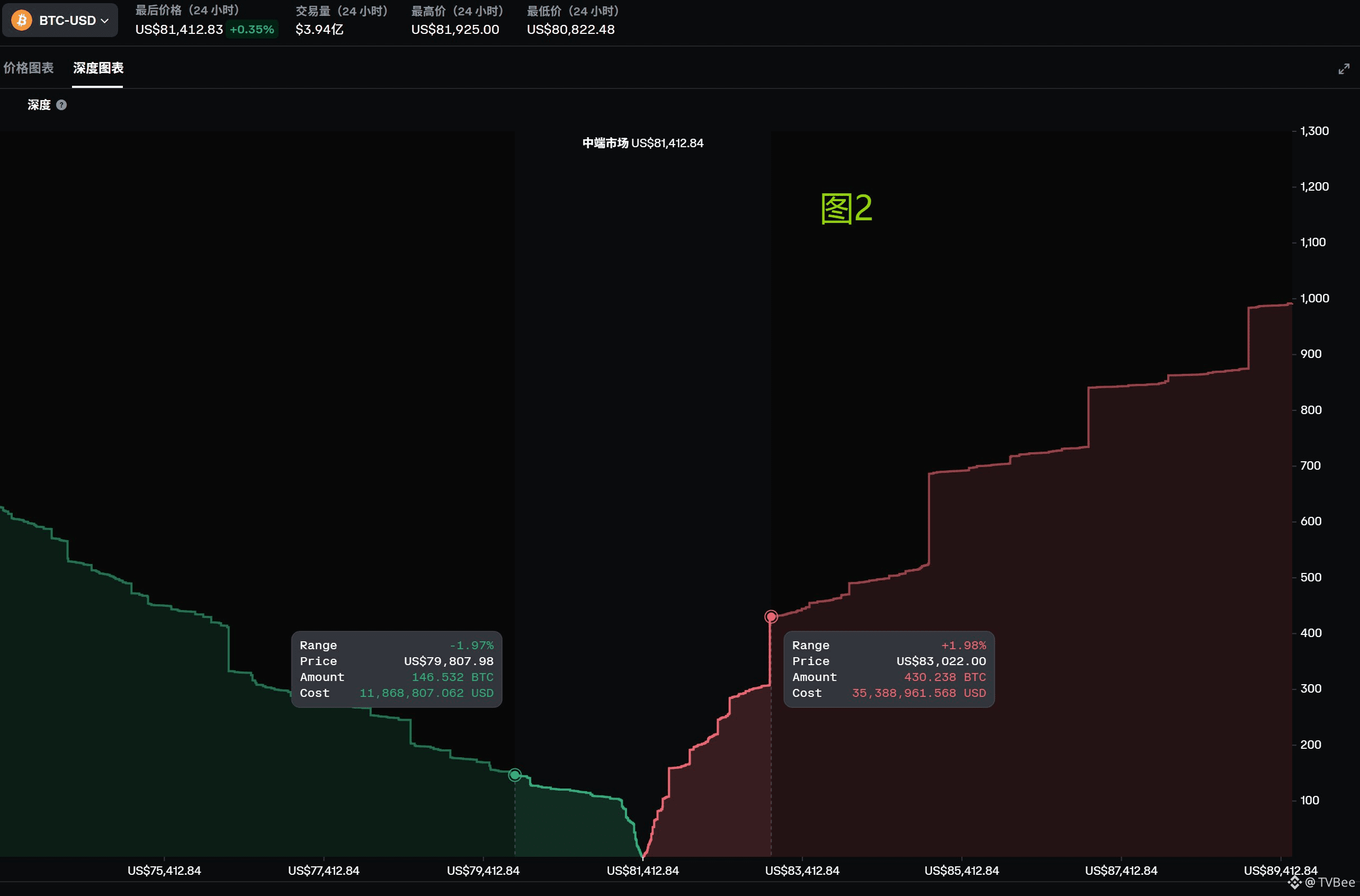
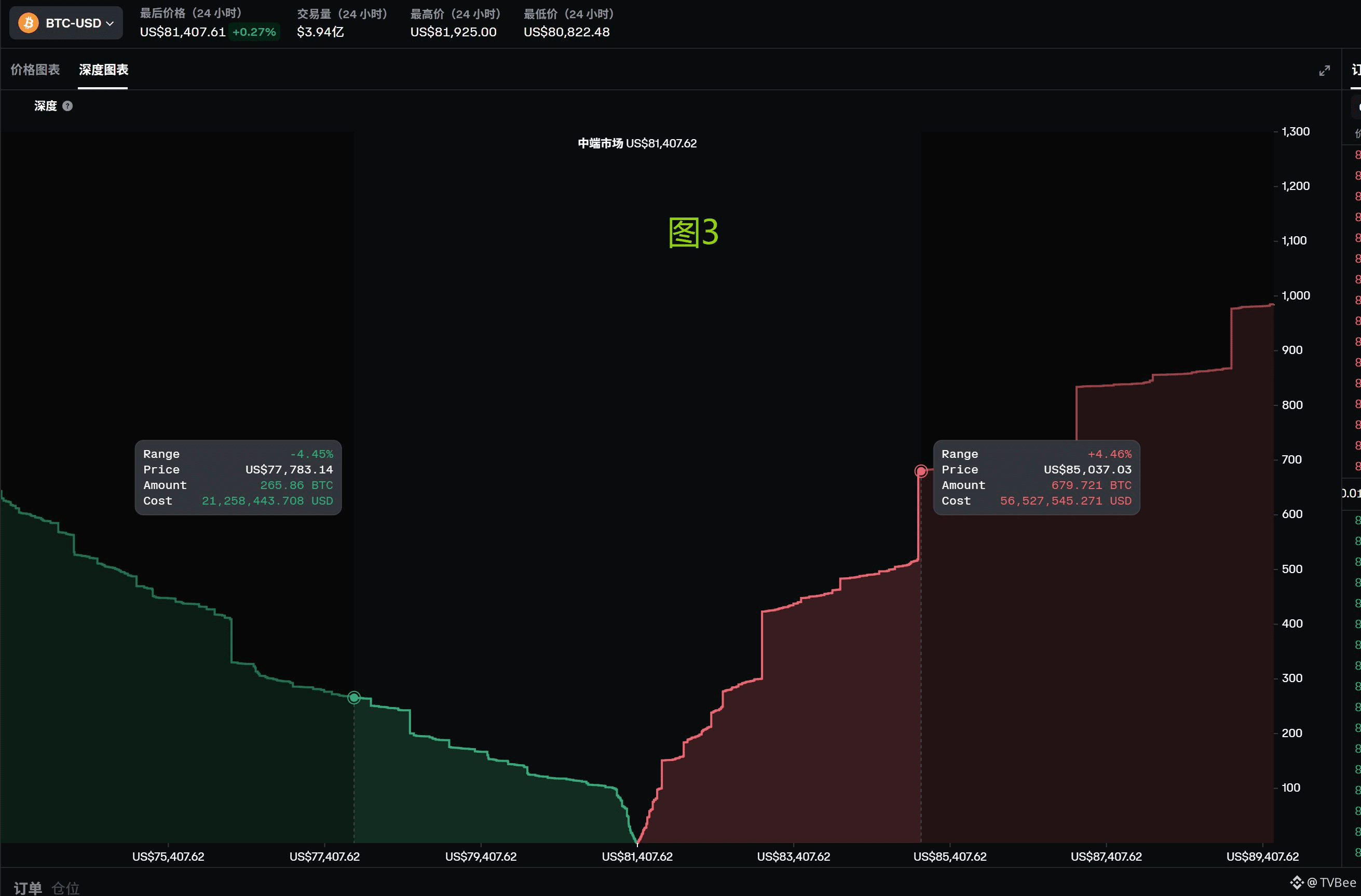
Most importantly, in the Coinbase BTC/USDC market, Coinbase’s sell-side order strength is still stronger.
Before BTC fell to 79,709, there were fewer than 156 buy orders. But before BTC rose to 83,000, there were 430 BTC sell orders. See Figure 2.
Before BTC fell to 77,770, there were 267 buy orders, while below 85,000 there were a total of 679 sell orders. See Figure 3.
Coinbase’s limit orders have been relatively stable for a period of time. Bee Brother took a look at the depth chart tonight into the night, and it’s basically this situation.
Bee Brother isn’t bearish; he just believes the conditions for a bull market are not yet sufficiently convincing, so for now he expects consolidation. As for whether this wave of consolidation has topped out—Bee Brother leans toward the idea that there’s still room to the upside. We’ll see more clearly on Monday next week.
Is the bull market led by USDC? Do USDC traders think so too?
Some people have suggested that the market cap of USDC is rising, and that is indeed true—since the late August period, the market cap of USDC has increased.
However, after September 4, the market cap of USDC has also been on a downward trend. Of course, the decline isn’t large. Let’s observe again next week. See Figure 1.
Most importantly, in the Coinbase BTC/USDC market, Coinbase’s sell-side order strength is still stronger.
Before BTC fell to 79,709, there were fewer than 156 buy orders. But before BTC rose to 83,000, there were 430 BTC sell orders. See Figure 2.
Before BTC fell to 77,770, there were 267 buy orders, while below 85,000 there were a total of 679 sell orders. See Figure 3.
Coinbase’s limit orders have been relatively stable for a period of time. Bee Brother took a look at the depth chart tonight into the night, and it’s basically this situation.
Bee Brother isn’t bearish; he just believes the conditions for a bull market are not yet sufficiently convincing, so for now he expects consolidation. As for whether this wave of consolidation has topped out—Bee Brother leans toward the idea that there’s still room to the upside. We’ll see more clearly on Monday next week.
Some people have suggested that the market cap of USDC is rising, and that is indeed true—since the late August period, the market cap of USDC has increased.
However, after September 4, the market cap of USDC has also been on a downward trend. Of course, the decline isn’t large. Let’s observe again next week. See Figure 1.
Most importantly, in the Coinbase BTC/USDC market, Coinbase’s sell-side order strength is still stronger.
Before BTC fell to 79,709, there were fewer than 156 buy orders. But before BTC rose to 83,000, there were 430 BTC sell orders. See Figure 2.
Before BTC fell to 77,770, there were 267 buy orders, while below 85,000 there were a total of 679 sell orders. See Figure 3.
Coinbase’s limit orders have been relatively stable for a period of time. Bee Brother took a look at the depth chart tonight into the night, and it’s basically this situation.
Bee Brother isn’t bearish; he just believes the conditions for a bull market are not yet sufficiently convincing, so for now he expects consolidation. As for whether this wave of consolidation has topped out—Bee Brother leans toward the idea that there’s still room to the upside. We’ll see more clearly on Monday next week.
TVBee
·
--
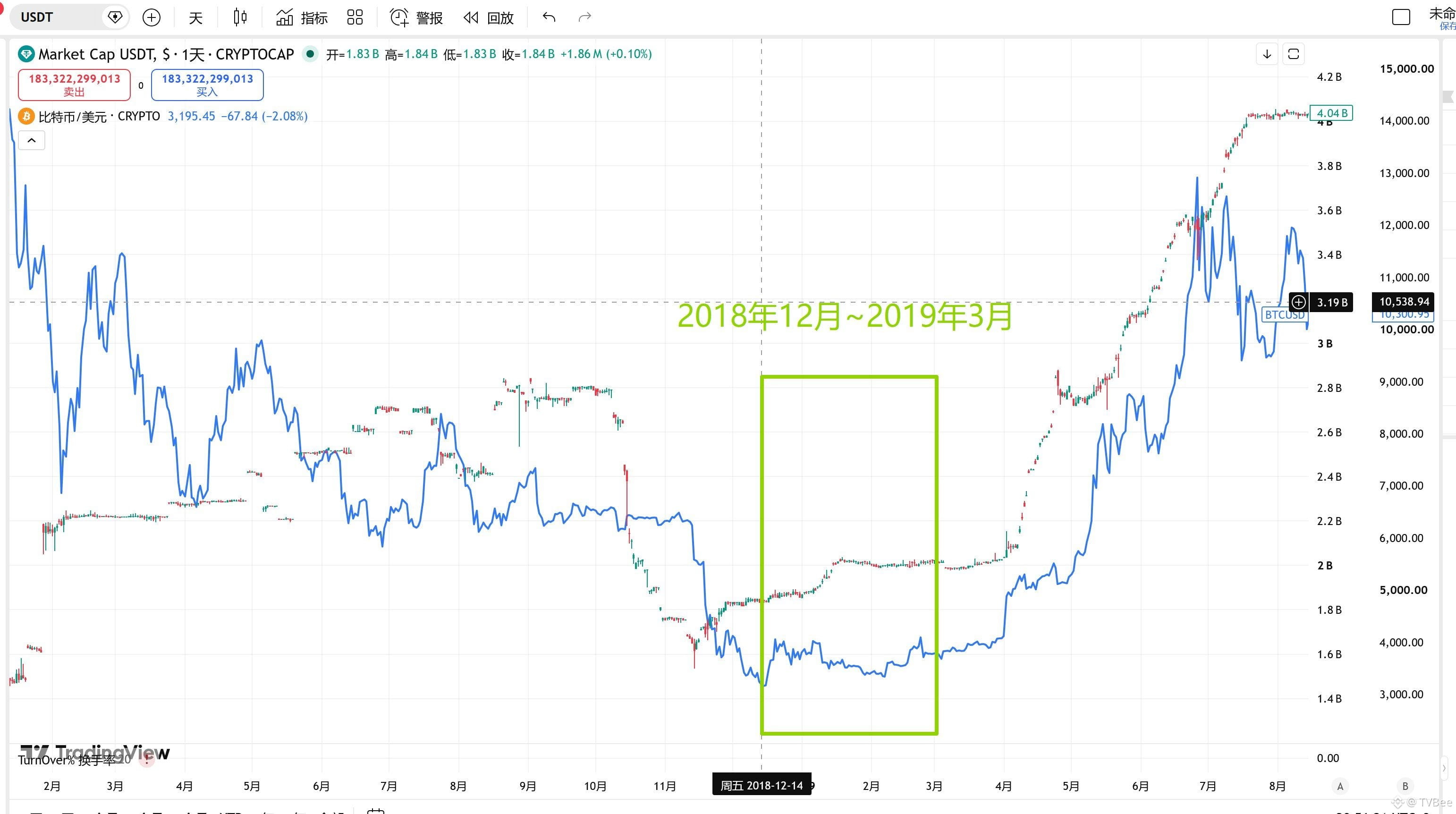
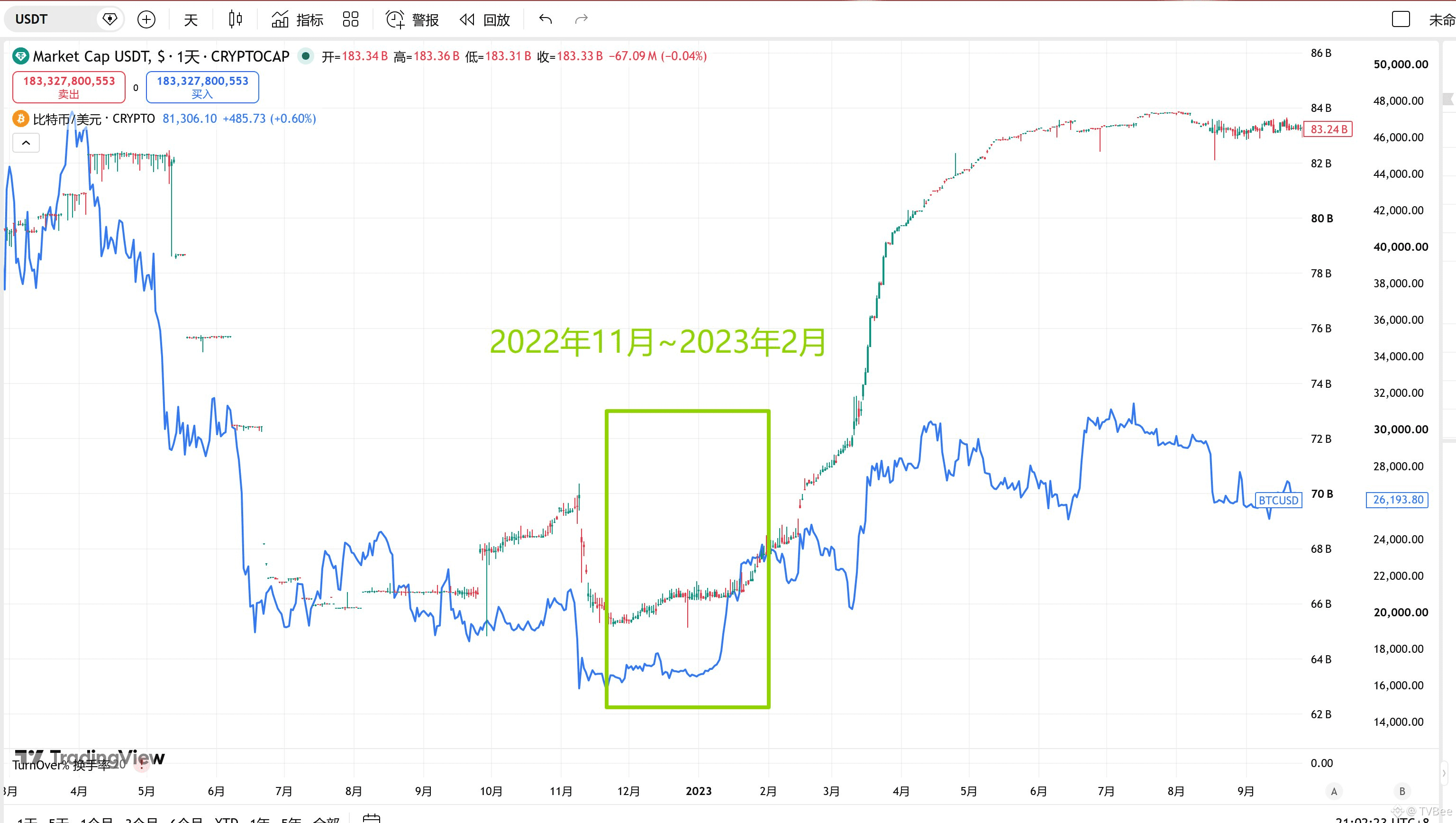
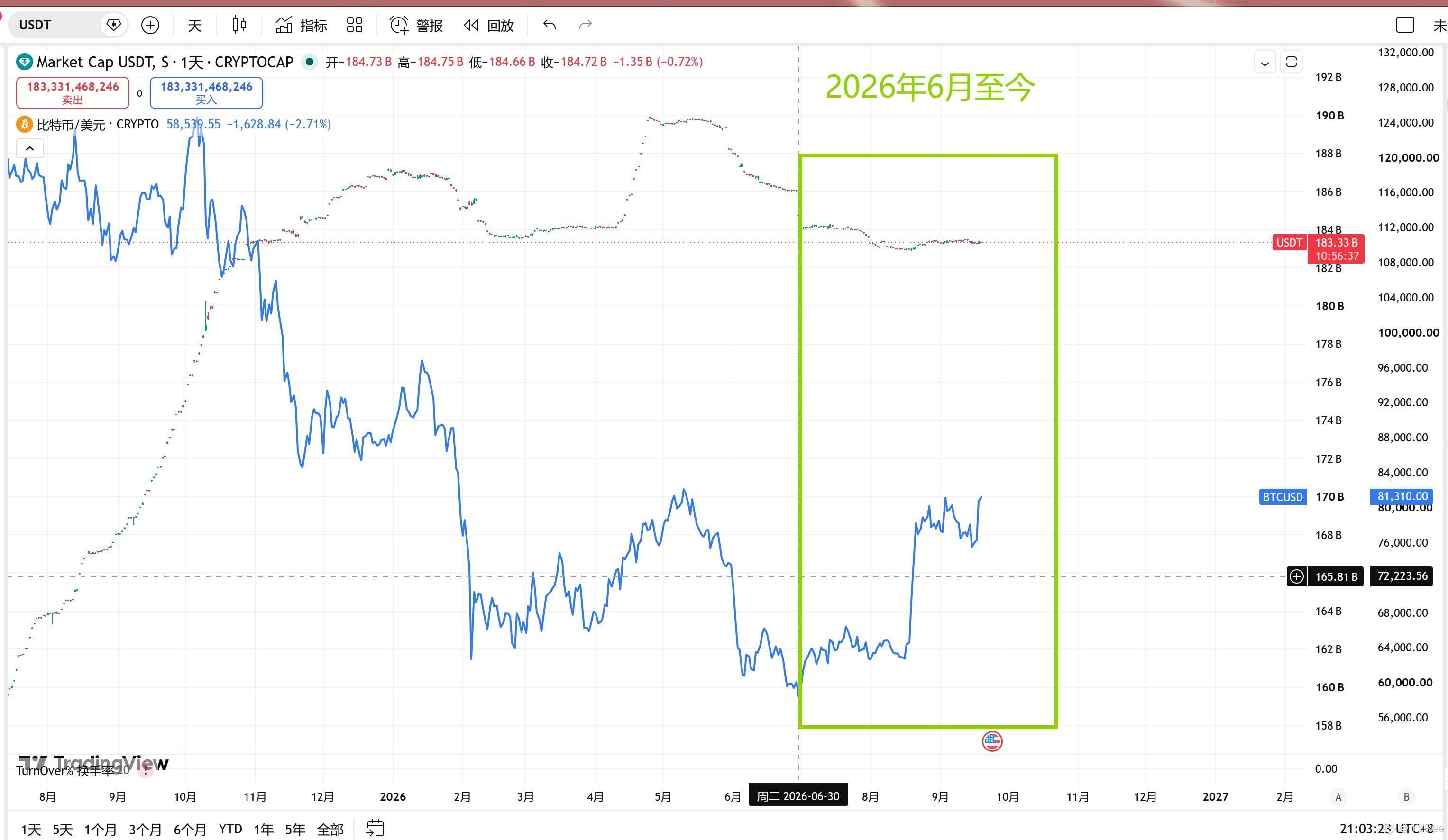
To be honest, I haven’t seen any bull market where it kicked off together with the BTC market value alongside USDT.
Now BTC has a start-up pattern, but the USDT market value shows no signs of starting, which feels overly calm.
#比特币突破8万美元大关
The biggest feature of this bear market is that it drops very fast, but moves sideways and drags on.
Maybe it might require a longer period of consolidation to fill the rhythm of the 4-year cycle?
Now BTC has a start-up pattern, but the USDT market value shows no signs of starting, which feels overly calm.
#比特币突破8万美元大关
The biggest feature of this bear market is that it drops very fast, but moves sideways and drags on.
Maybe it might require a longer period of consolidation to fill the rhythm of the 4-year cycle?
5
3
1.9k
·
--
To be honest, I haven’t seen any bull market where it kicked off together with the BTC market value alongside USDT.
Now BTC has a start-up pattern, but the USDT market value shows no signs of starting, which feels overly calm.
#比特币突破8万美元大关
The biggest feature of this bear market is that it drops very fast, but moves sideways and drags on.
Maybe it might require a longer period of consolidation to fill the rhythm of the 4-year cycle?
To be honest, I haven’t seen any bull market where it kicked off together with the BTC market value alongside USDT.
Now BTC has a start-up pattern, but the USDT market value shows no signs of starting, which feels overly calm.
#比特币突破8万美元大关
The biggest feature of this bear market is that it drops very fast, but moves sideways and drags on.
Maybe it might require a longer period of consolidation to fill the rhythm of the 4-year cycle?
Now BTC has a start-up pattern, but the USDT market value shows no signs of starting, which feels overly calm.
#比特币突破8万美元大关
The biggest feature of this bear market is that it drops very fast, but moves sideways and drags on.
Maybe it might require a longer period of consolidation to fill the rhythm of the 4-year cycle?
23
1
10
6.6k
·
--
Verified
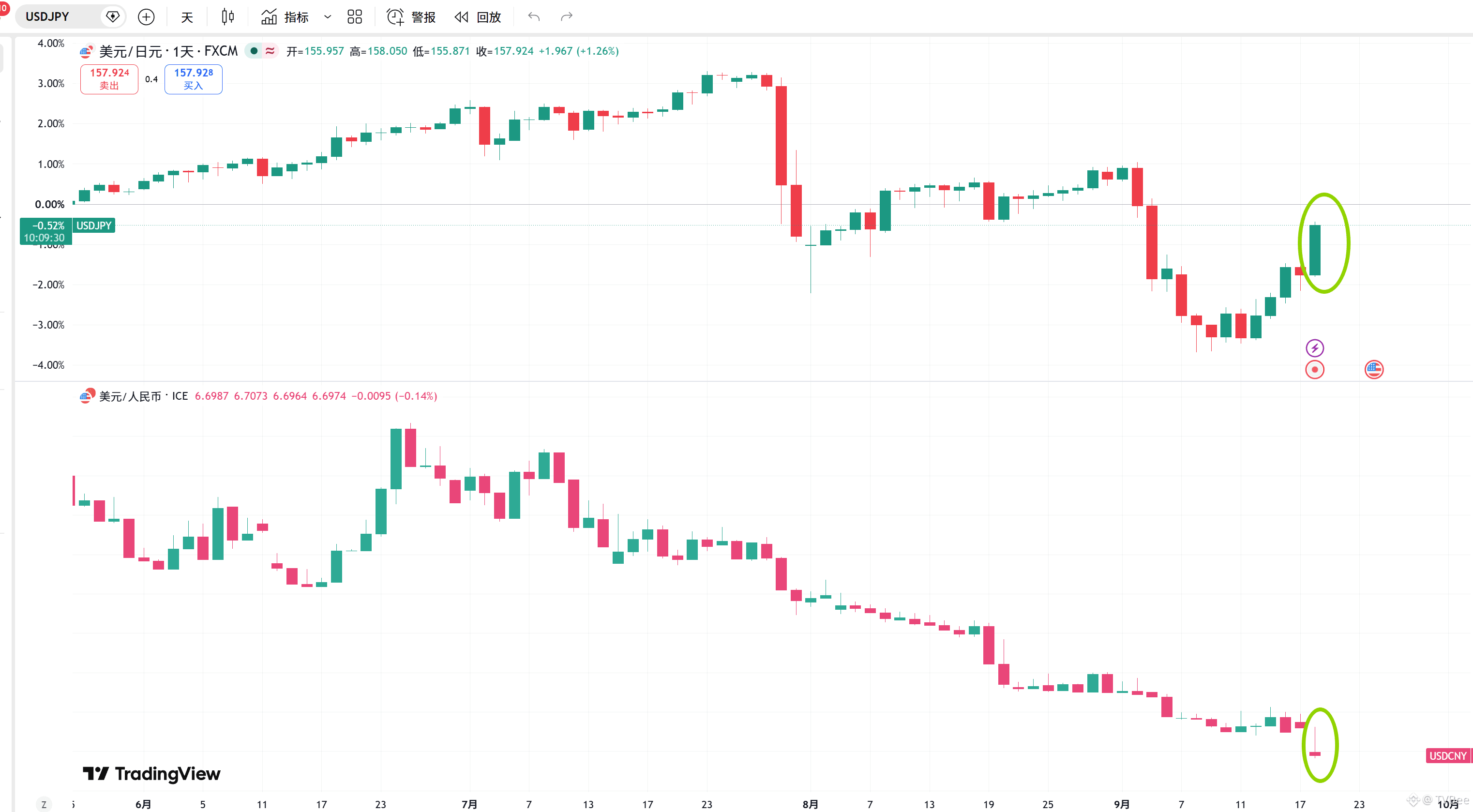
The yen has fallen, but the renminbi suddenly surged, breaking above 6.7.
For a moment, it’s hard to tell whether it was the yen that raised interest rates or the renminbi that did…
The yen has fallen, but the renminbi suddenly surged, breaking above 6.7.
For a moment, it’s hard to tell whether it was the yen that raised interest rates or the renminbi that did…
For a moment, it’s hard to tell whether it was the yen that raised interest rates or the renminbi that did…
1
2
2.6k
·
--
The answer is revealed
The greater the suspense about the bad-news event, the more it falls—this is because the “Clear Act” was not passed;
The smaller the suspense, the less it falls—this is the Federal Reserve rate hike.
With no suspense at all, it rises—this is Japan’s rate hike.
The answer is revealed
The greater the suspense about the bad-news event, the more it falls—this is because the “Clear Act” was not passed;
The smaller the suspense, the less it falls—this is the Federal Reserve rate hike.
With no suspense at all, it rises—this is Japan’s rate hike.
The greater the suspense about the bad-news event, the more it falls—this is because the “Clear Act” was not passed;
The smaller the suspense, the less it falls—this is the Federal Reserve rate hike.
With no suspense at all, it rises—this is Japan’s rate hike.
TVBee
·
--
◆ Encryption Clarity Act, the night it passed, the prediction probability that the Polymarket bill would pass was about 18%~30%.
It didn’t pass; BTC briefly dipped below 75,000 and then returned above 75,000.
◆ The FOMC meeting at the Federal Reserve that night: the probability of not hiking rates on @polymarket was 11%~14%.
As a result, the Federal Reserve raised rates by 25 basis points, and BTC never dropped below 75,000 even briefly.
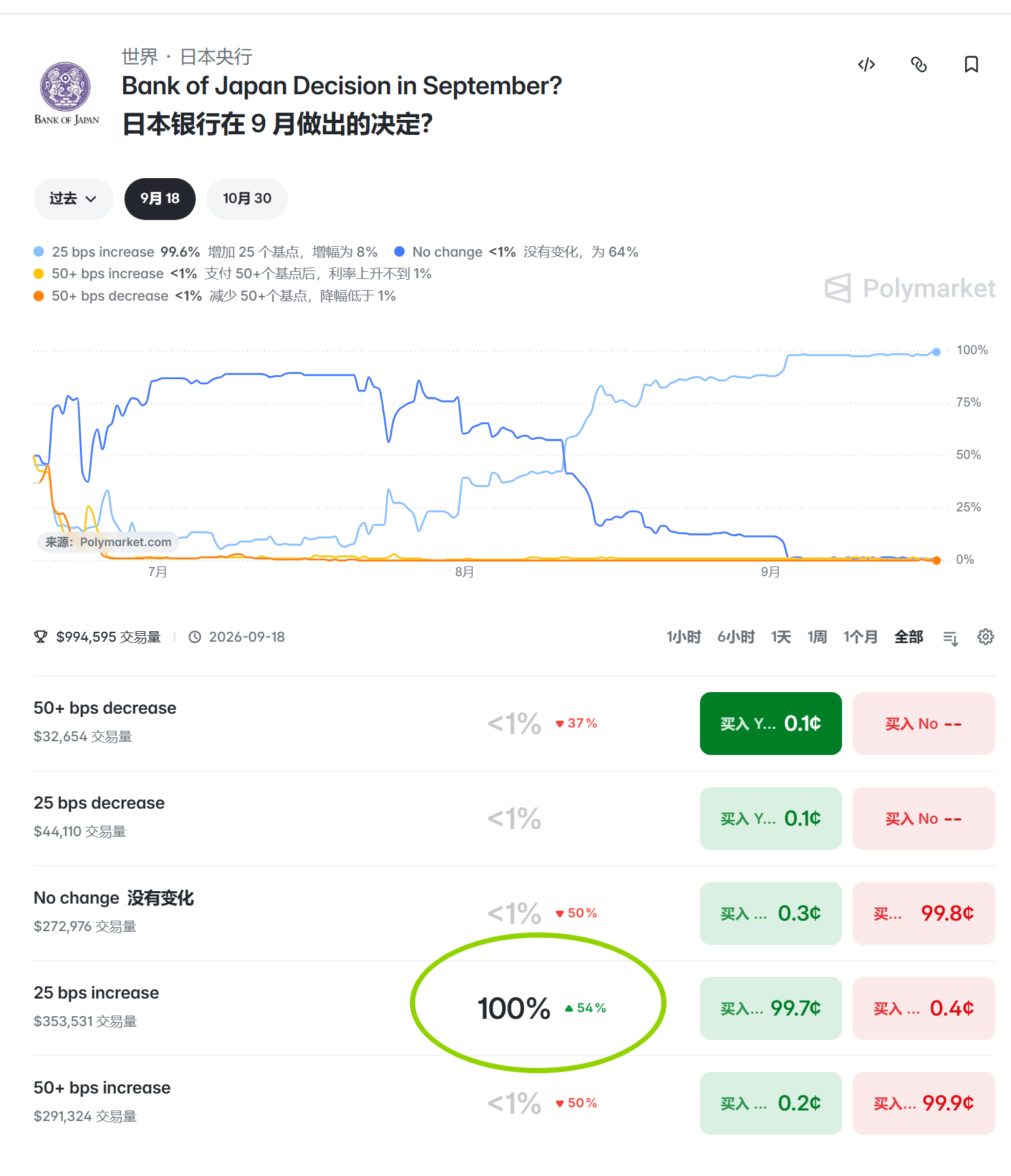
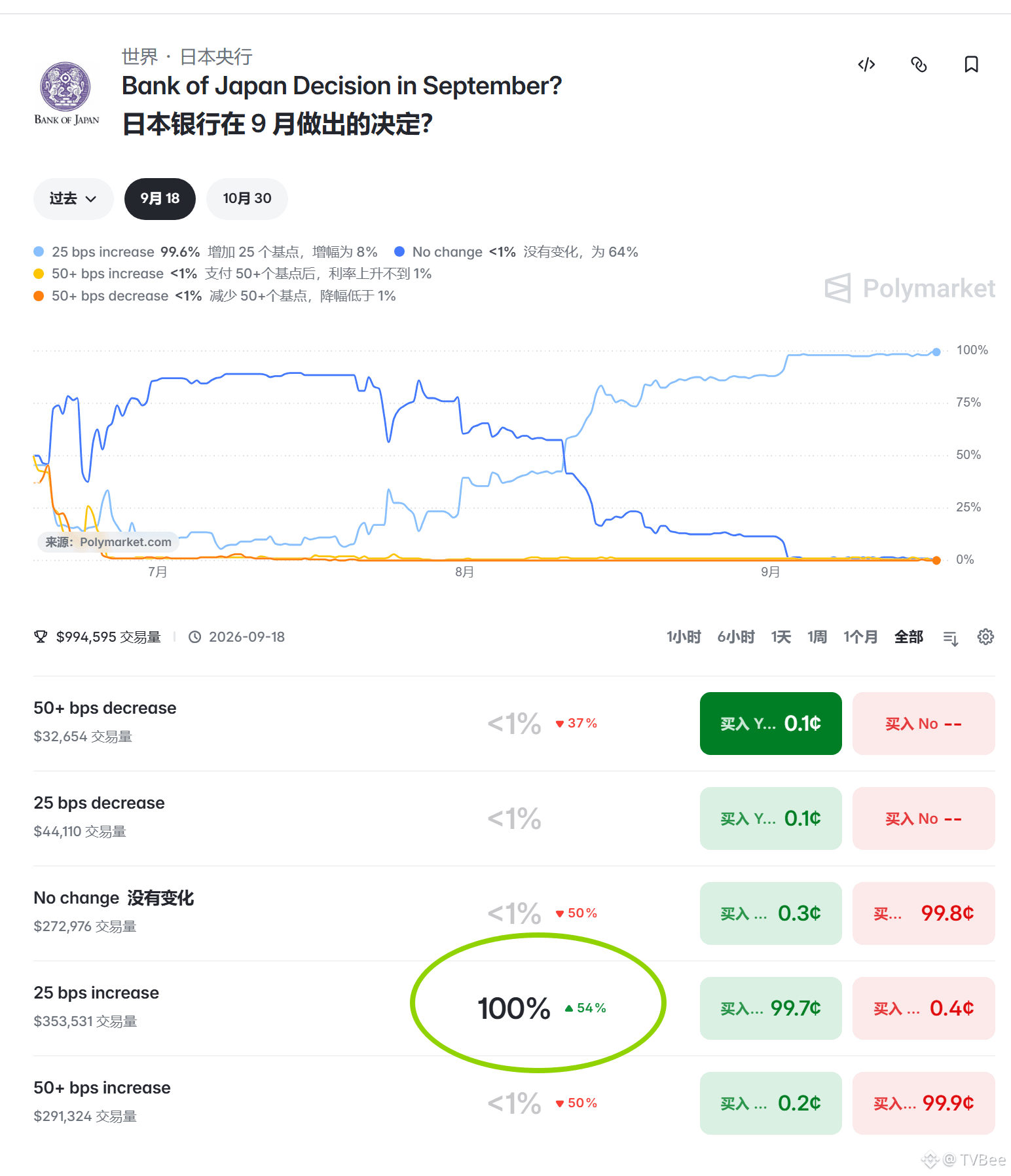
◆ On September 18, Japan’s interest rate decision: the probability of Japan hiking rates on Polymarket is 100%.
How will BTC move?
It didn’t pass; BTC briefly dipped below 75,000 and then returned above 75,000.
◆ The FOMC meeting at the Federal Reserve that night: the probability of not hiking rates on @polymarket was 11%~14%.
As a result, the Federal Reserve raised rates by 25 basis points, and BTC never dropped below 75,000 even briefly.
◆ On September 18, Japan’s interest rate decision: the probability of Japan hiking rates on Polymarket is 100%.
How will BTC move?
3
1
2k
·
--
Partly True
Are dot plots about hawks or doves? A tightening trend—or is there a risk?
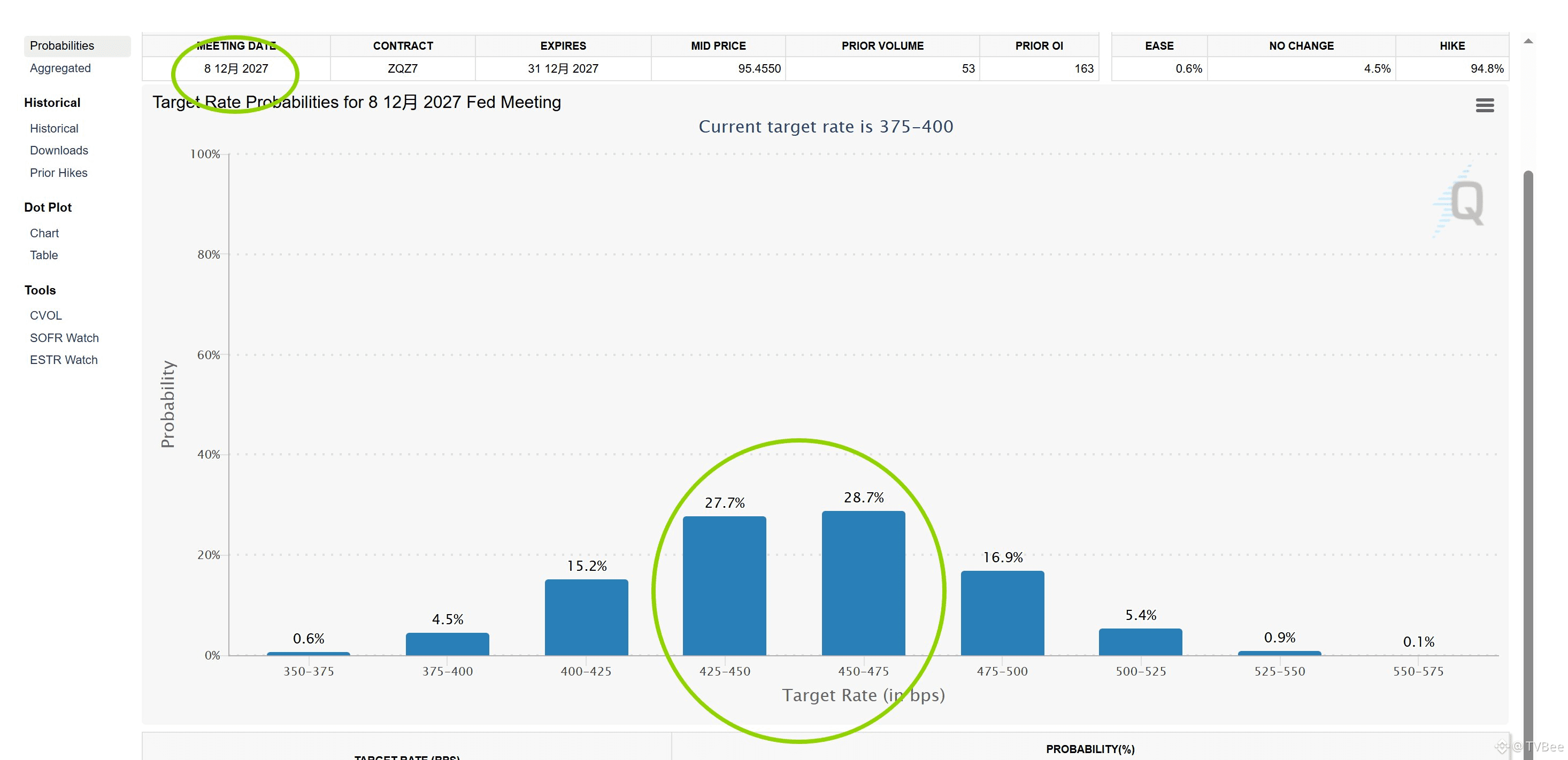
In a broad sense, dot plots show that as of the end of next year, there will be a total of 10 FOMC meetings, with a possibility of another 1 to 2 rate hikes—so it’s slightly hawkish.
But compared with market expectations, the dot plot is actually more dovish.
CME interest rate futures indicate that as of the end of next year, the market expects 2 to 3 rate hikes.
So it makes sense that the dot plot is somewhat dovish as well. The Federal Reserve still has to weigh long-term economic growth, employment, and U.S. Treasury yields.
If we go by market expectations, there is a possibility of 3 rate hikes.
A single rate hike might lift the market, but with 3 rate hikes, it’s not necessarily the case…
Are dot plots about hawks or doves? A tightening trend—or is there a risk?
In a broad sense, dot plots show that as of the end of next year, there will be a total of 10 FOMC meetings, with a possibility of another 1 to 2 rate hikes—so it’s slightly hawkish.
But compared with market expectations, the dot plot is actually more dovish.
CME interest rate futures indicate that as of the end of next year, the market expects 2 to 3 rate hikes.
So it makes sense that the dot plot is somewhat dovish as well. The Federal Reserve still has to weigh long-term economic growth, employment, and U.S. Treasury yields.
If we go by market expectations, there is a possibility of 3 rate hikes.
A single rate hike might lift the market, but with 3 rate hikes, it’s not necessarily the case…
In a broad sense, dot plots show that as of the end of next year, there will be a total of 10 FOMC meetings, with a possibility of another 1 to 2 rate hikes—so it’s slightly hawkish.
But compared with market expectations, the dot plot is actually more dovish.
CME interest rate futures indicate that as of the end of next year, the market expects 2 to 3 rate hikes.
So it makes sense that the dot plot is somewhat dovish as well. The Federal Reserve still has to weigh long-term economic growth, employment, and U.S. Treasury yields.
If we go by market expectations, there is a possibility of 3 rate hikes.
A single rate hike might lift the market, but with 3 rate hikes, it’s not necessarily the case…
1
1
4.2k
·
--
Verified
◆ Encryption Clarity Act, the night it passed, the prediction probability that the Polymarket bill would pass was about 18%~30%.
It didn’t pass; BTC briefly dipped below 75,000 and then returned above 75,000.
◆ The FOMC meeting at the Federal Reserve that night: the probability of not hiking rates on @polymarket was 11%~14%.
As a result, the Federal Reserve raised rates by 25 basis points, and BTC never dropped below 75,000 even briefly.
◆ On September 18, Japan’s interest rate decision: the probability of Japan hiking rates on Polymarket is 100%.
How will BTC move?
◆ Encryption Clarity Act, the night it passed, the prediction probability that the Polymarket bill would pass was about 18%~30%.
It didn’t pass; BTC briefly dipped below 75,000 and then returned above 75,000.
◆ The FOMC meeting at the Federal Reserve that night: the probability of not hiking rates on @polymarket was 11%~14%.
As a result, the Federal Reserve raised rates by 25 basis points, and BTC never dropped below 75,000 even briefly.
◆ On September 18, Japan’s interest rate decision: the probability of Japan hiking rates on Polymarket is 100%.
How will BTC move?
It didn’t pass; BTC briefly dipped below 75,000 and then returned above 75,000.
◆ The FOMC meeting at the Federal Reserve that night: the probability of not hiking rates on @polymarket was 11%~14%.
As a result, the Federal Reserve raised rates by 25 basis points, and BTC never dropped below 75,000 even briefly.
◆ On September 18, Japan’s interest rate decision: the probability of Japan hiking rates on Polymarket is 100%.
How will BTC move?
1
1
1.9k
·
--
Launch Day 1—ARC seems to have opened a bit high and then dipped
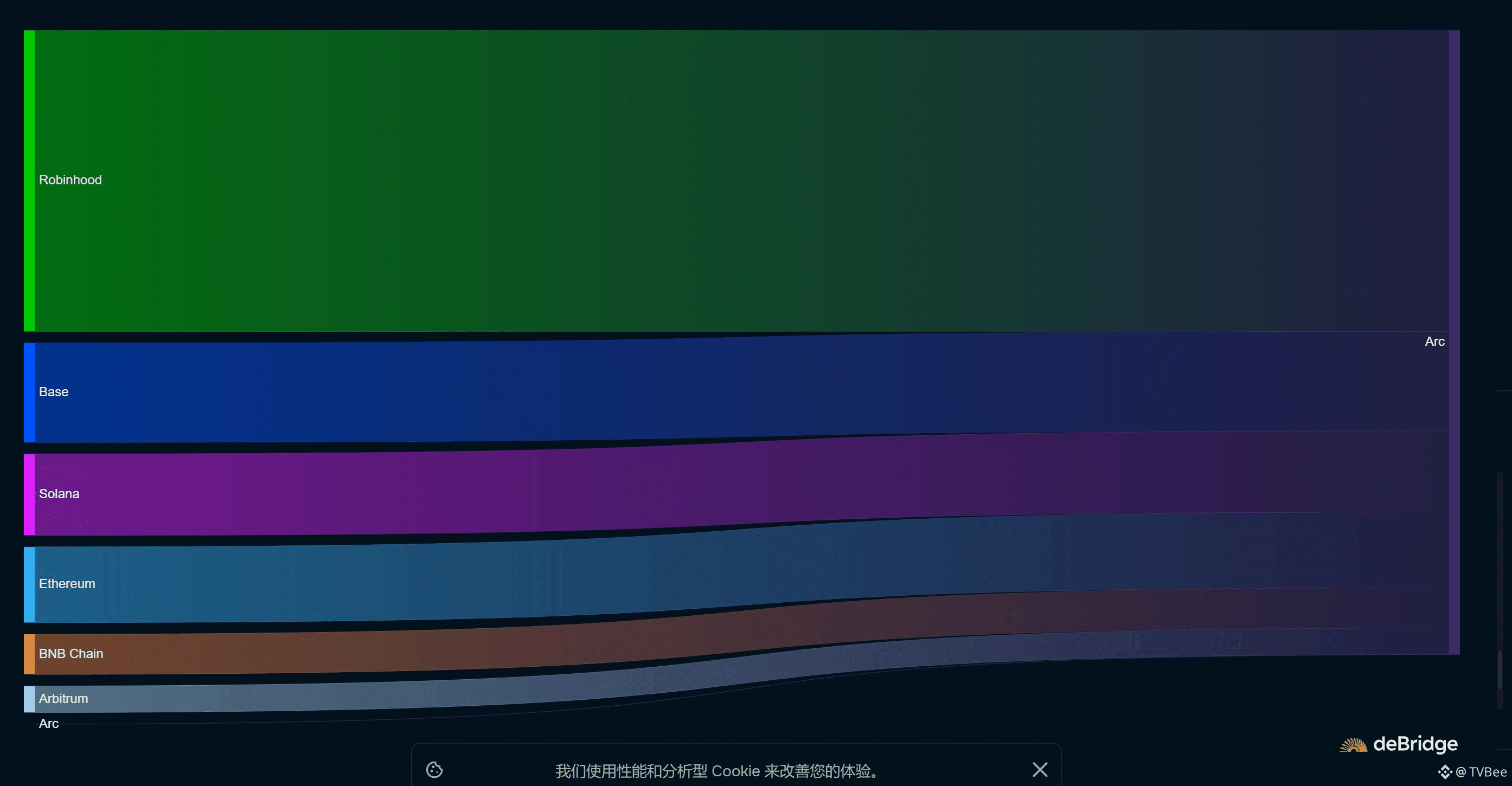
According to deBridge cross-chain data, over roughly the past 1 day:
$273,908.53 in funds flowed into ARC via deBridge,
while $263,134.2 flowed out of ARC via deBridge.
Net inflow was only $10,774.33.
In terms of inflow composition, the largest source is Robinhood, followed by Base, Solana, Ethereum, BSC, and Arbitrum.
Inflows from chains like Robinhood and Solana are likely mostly MEME players. And some smaller/less-established P “newbies” appear to have come to ARC on Day 1 and left disappointed.
For inflows from the Base chain, my guess is that it may be related to stablecoin-payment-type ecosystems—unclear whether ARC will have a new breakout point in the stablecoin payment ecosystem. Currently, the total stablecoin market cap on the ARC chain is $660 million, of which 98.93% is USDC.
That said, ARC’s ecosystem currently has only 18 DeFi protocols, with DeFi TVL of $334 million. It likely still takes time for developers to deploy to the ARC chain.
Bee Brother just brought it back a bit: $CRCL .
Launch Day 1—ARC seems to have opened a bit high and then dipped
According to deBridge cross-chain data, over roughly the past 1 day:
$273,908.53 in funds flowed into ARC via deBridge,
while $263,134.2 flowed out of ARC via deBridge.
Net inflow was only $10,774.33.
In terms of inflow composition, the largest source is Robinhood, followed by Base, Solana, Ethereum, BSC, and Arbitrum.
Inflows from chains like Robinhood and Solana are likely mostly MEME players. And some smaller/less-established P “newbies” appear to have come to ARC on Day 1 and left disappointed.
For inflows from the Base chain, my guess is that it may be related to stablecoin-payment-type ecosystems—unclear whether ARC will have a new breakout point in the stablecoin payment ecosystem. Currently, the total stablecoin market cap on the ARC chain is $660 million, of which 98.93% is USDC.
That said, ARC’s ecosystem currently has only 18 DeFi protocols, with DeFi TVL of $334 million. It likely still takes time for developers to deploy to the ARC chain.
Bee Brother just brought it back a bit: $CRCL .
According to deBridge cross-chain data, over roughly the past 1 day:
$273,908.53 in funds flowed into ARC via deBridge,
while $263,134.2 flowed out of ARC via deBridge.
Net inflow was only $10,774.33.
In terms of inflow composition, the largest source is Robinhood, followed by Base, Solana, Ethereum, BSC, and Arbitrum.
Inflows from chains like Robinhood and Solana are likely mostly MEME players. And some smaller/less-established P “newbies” appear to have come to ARC on Day 1 and left disappointed.
For inflows from the Base chain, my guess is that it may be related to stablecoin-payment-type ecosystems—unclear whether ARC will have a new breakout point in the stablecoin payment ecosystem. Currently, the total stablecoin market cap on the ARC chain is $660 million, of which 98.93% is USDC.
That said, ARC’s ecosystem currently has only 18 DeFi protocols, with DeFi TVL of $334 million. It likely still takes time for developers to deploy to the ARC chain.
Bee Brother just brought it back a bit: $CRCL .
TVBee
·
--
As expected!
The drop of $CRCL was within expectations, and the logic that good news would land and turn into bad news holds—Bee Brother already cleared out at 101.
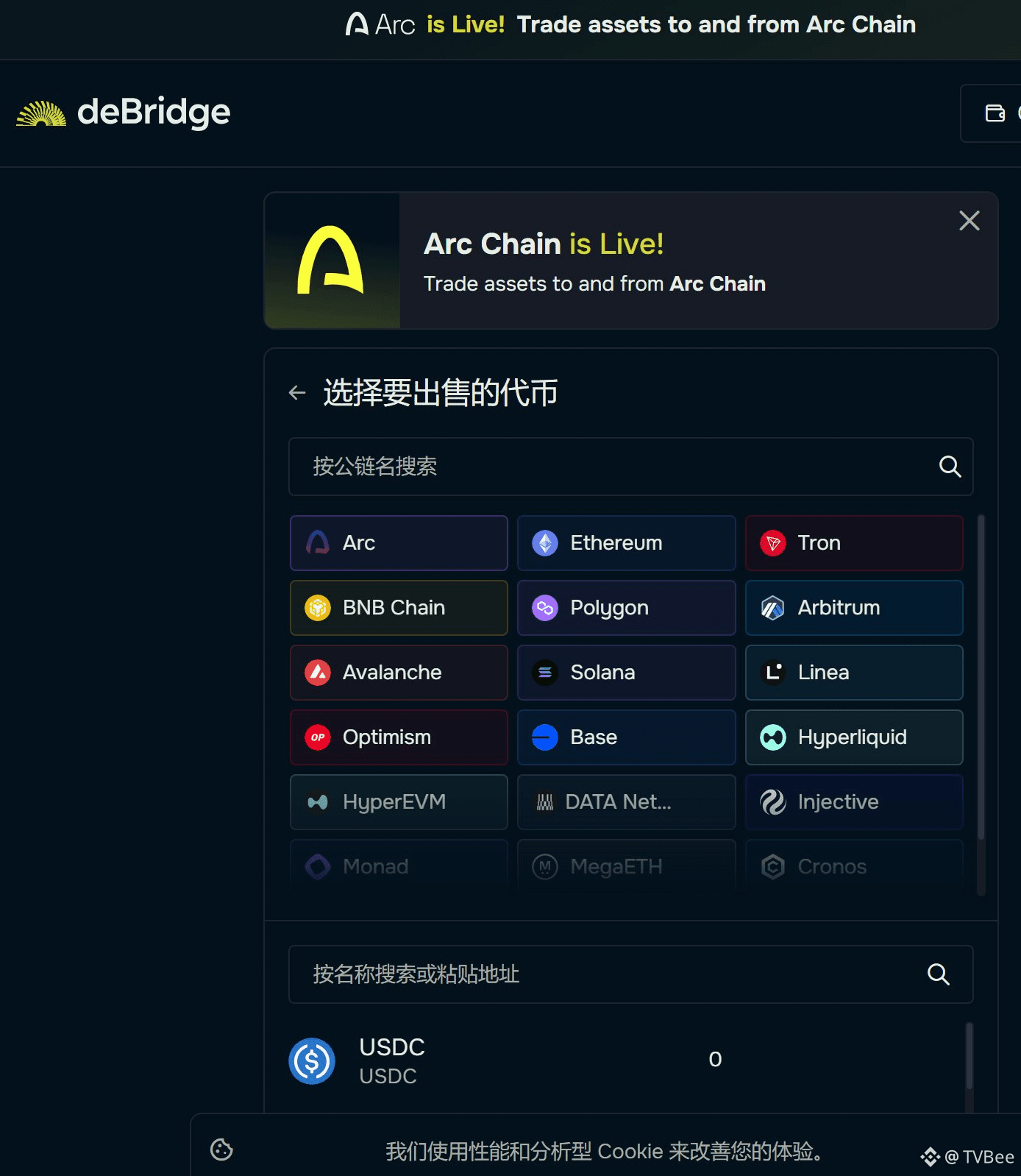
After OK Wallet and Binance Wallet rushed to integrate the ARC chain, it was also to be expected that deBridge quickly followed suit.
deBridge is extremely sharp when it comes to public chain ecosystems—it had already integrated with the HyperEVM and Hyperliquid ecosystems very early on. Back then, Hyperliquid hadn’t really taken off yet. And when it launched on robinhood, it was integrated right away. Just… wait.
deBridge supports ARC—this is a bit hard to just dismiss.
But with wallet support, ARC gains a massive user ecosystem and traffic entry point.
And with deBridge, ARC gains smooth and massive capital inflows from 18 ecosystem chains.
So the ARC ecosystem isn’t just daydreaming anymore…
The drop of $CRCL was within expectations, and the logic that good news would land and turn into bad news holds—Bee Brother already cleared out at 101.
After OK Wallet and Binance Wallet rushed to integrate the ARC chain, it was also to be expected that deBridge quickly followed suit.
deBridge is extremely sharp when it comes to public chain ecosystems—it had already integrated with the HyperEVM and Hyperliquid ecosystems very early on. Back then, Hyperliquid hadn’t really taken off yet. And when it launched on robinhood, it was integrated right away. Just… wait.
deBridge supports ARC—this is a bit hard to just dismiss.
But with wallet support, ARC gains a massive user ecosystem and traffic entry point.
And with deBridge, ARC gains smooth and massive capital inflows from 18 ecosystem chains.
So the ARC ecosystem isn’t just daydreaming anymore…
2.6k
·
--
Partly True
Excellent— the Federal Reserve’s independence has been proven, and it continues to disrupt market expectations with a slightly hawkish dot plot. By the end of next year, there may be 1–2 more rate hikes.
┈➤12:0 rate-hike decision
12 Federal Reserve officials—none had concerns about U.S. Treasury yields, and none paid attention to Trump’s request to cut rates...
Of course, they still worry about the impact of rate hikes on the economy and employment. So the dot plot should be considered slightly hawkish, but not too hawkish.
┈➤Slightly hawkish dot plot
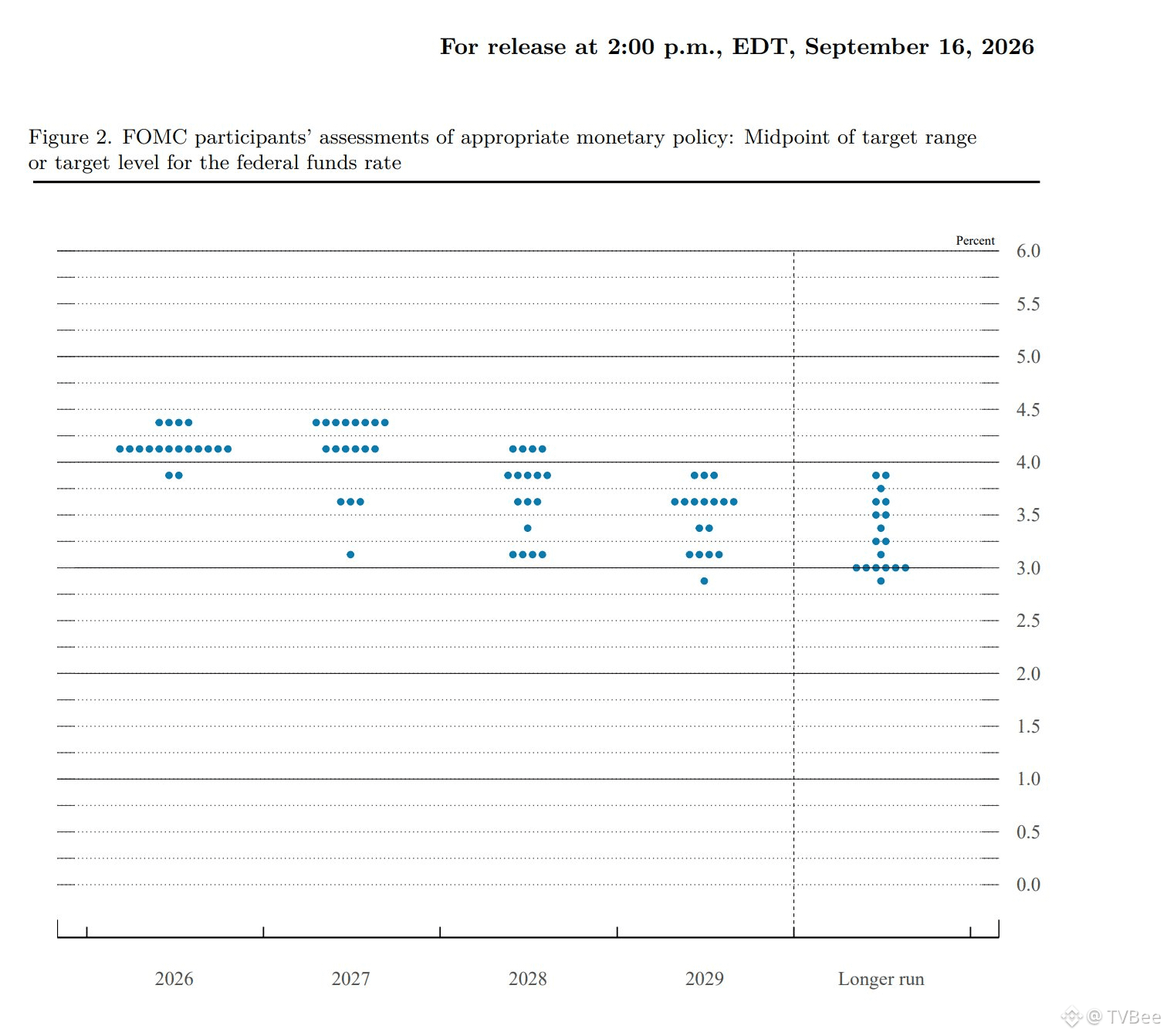
The dot plot has only 18 dots. Waller should have abstained again and did not participate in the forecast.
╰✦ A major forecast for 2026: one more rate hike
Based on the dot plot forecast, most likely (12 people, 66.67%) expect another rate hike in 2026 (by 25 basis points).
4 people expect two more hikes, and 2 people expect rates to remain unchanged.
╰✦ 2027 forecast: 0–1 rate hike
As for 2027, on top of the one hike already expected in 2026:
8 people (44.4%) think there will be one more hike (25 basis points), 6 people (33.33%) think rates will stay unchanged, 3 people think there will be two rate cuts, and 1 person thinks there will be four rate cuts.
If we consider the mode, there should be one more rate hike in 2027.
If we consider the median, rates should remain unchanged in 2027.
╰✦ Possible rate cuts in 2028
After 2028, the dot plot shows expectations for rate cuts—which also seems reasonable. By 2028, Trump is set to leave office, and the U.S. and Iran may enter a reconciliation process after Trump’s departure, with expectations brought forward; on the other hand, Venezuela’s oil infrastructure is gradually improving and should continue to grow, so global oil supply may increase. As a result, oil prices and inflation in 2028 are expected to decline.
Up to the end of next year, according to the September dot plot, the Federal Reserve may still hike rates 1–2 more times (strictly speaking, one scenario cannot be ruled out: more than two hikes, followed by subsequent rate cuts later). Ultimately, it will still depend on the trend of oil prices and inflation.
As of the end of next year, under normal circumstances there are still 10 FOMC meetings left, implying 1–2 more hikes. Brother Feng thinks this is slightly hawkish—possibly even weaker than “slightly hawkish.” (In the media’s wording system, it includes: dovish, slightly dovish, neutral, slightly hawkish, hawkish.)
Excellent— the Federal Reserve’s independence has been proven, and it continues to disrupt market expectations with a slightly hawkish dot plot. By the end of next year, there may be 1–2 more rate hikes.
┈➤12:0 rate-hike decision
12 Federal Reserve officials—none had concerns about U.S. Treasury yields, and none paid attention to Trump’s request to cut rates...
Of course, they still worry about the impact of rate hikes on the economy and employment. So the dot plot should be considered slightly hawkish, but not too hawkish.
┈➤Slightly hawkish dot plot
The dot plot has only 18 dots. Waller should have abstained again and did not participate in the forecast.
╰✦ A major forecast for 2026: one more rate hike
Based on the dot plot forecast, most likely (12 people, 66.67%) expect another rate hike in 2026 (by 25 basis points).
4 people expect two more hikes, and 2 people expect rates to remain unchanged.
╰✦ 2027 forecast: 0–1 rate hike
As for 2027, on top of the one hike already expected in 2026:
8 people (44.4%) think there will be one more hike (25 basis points), 6 people (33.33%) think rates will stay unchanged, 3 people think there will be two rate cuts, and 1 person thinks there will be four rate cuts.
If we consider the mode, there should be one more rate hike in 2027.
If we consider the median, rates should remain unchanged in 2027.
╰✦ Possible rate cuts in 2028
After 2028, the dot plot shows expectations for rate cuts—which also seems reasonable. By 2028, Trump is set to leave office, and the U.S. and Iran may enter a reconciliation process after Trump’s departure, with expectations brought forward; on the other hand, Venezuela’s oil infrastructure is gradually improving and should continue to grow, so global oil supply may increase. As a result, oil prices and inflation in 2028 are expected to decline.
Up to the end of next year, according to the September dot plot, the Federal Reserve may still hike rates 1–2 more times (strictly speaking, one scenario cannot be ruled out: more than two hikes, followed by subsequent rate cuts later). Ultimately, it will still depend on the trend of oil prices and inflation.
As of the end of next year, under normal circumstances there are still 10 FOMC meetings left, implying 1–2 more hikes. Brother Feng thinks this is slightly hawkish—possibly even weaker than “slightly hawkish.” (In the media’s wording system, it includes: dovish, slightly dovish, neutral, slightly hawkish, hawkish.)
┈➤12:0 rate-hike decision
12 Federal Reserve officials—none had concerns about U.S. Treasury yields, and none paid attention to Trump’s request to cut rates...
Of course, they still worry about the impact of rate hikes on the economy and employment. So the dot plot should be considered slightly hawkish, but not too hawkish.
┈➤Slightly hawkish dot plot
The dot plot has only 18 dots. Waller should have abstained again and did not participate in the forecast.
╰✦ A major forecast for 2026: one more rate hike
Based on the dot plot forecast, most likely (12 people, 66.67%) expect another rate hike in 2026 (by 25 basis points).
4 people expect two more hikes, and 2 people expect rates to remain unchanged.
╰✦ 2027 forecast: 0–1 rate hike
As for 2027, on top of the one hike already expected in 2026:
8 people (44.4%) think there will be one more hike (25 basis points), 6 people (33.33%) think rates will stay unchanged, 3 people think there will be two rate cuts, and 1 person thinks there will be four rate cuts.
If we consider the mode, there should be one more rate hike in 2027.
If we consider the median, rates should remain unchanged in 2027.
╰✦ Possible rate cuts in 2028
After 2028, the dot plot shows expectations for rate cuts—which also seems reasonable. By 2028, Trump is set to leave office, and the U.S. and Iran may enter a reconciliation process after Trump’s departure, with expectations brought forward; on the other hand, Venezuela’s oil infrastructure is gradually improving and should continue to grow, so global oil supply may increase. As a result, oil prices and inflation in 2028 are expected to decline.
Up to the end of next year, according to the September dot plot, the Federal Reserve may still hike rates 1–2 more times (strictly speaking, one scenario cannot be ruled out: more than two hikes, followed by subsequent rate cuts later). Ultimately, it will still depend on the trend of oil prices and inflation.
As of the end of next year, under normal circumstances there are still 10 FOMC meetings left, implying 1–2 more hikes. Brother Feng thinks this is slightly hawkish—possibly even weaker than “slightly hawkish.” (In the media’s wording system, it includes: dovish, slightly dovish, neutral, slightly hawkish, hawkish.)
2
3
4.4k
·
--
Verified
As expected!
The drop of $CRCL was within expectations, and the logic that good news would land and turn into bad news holds—Bee Brother already cleared out at 101.
After OK Wallet and Binance Wallet rushed to integrate the ARC chain, it was also to be expected that deBridge quickly followed suit.
deBridge is extremely sharp when it comes to public chain ecosystems—it had already integrated with the HyperEVM and Hyperliquid ecosystems very early on. Back then, Hyperliquid hadn’t really taken off yet. And when it launched on robinhood, it was integrated right away. Just… wait.
deBridge supports ARC—this is a bit hard to just dismiss.
But with wallet support, ARC gains a massive user ecosystem and traffic entry point.
And with deBridge, ARC gains smooth and massive capital inflows from 18 ecosystem chains.
So the ARC ecosystem isn’t just daydreaming anymore…
As expected!
The drop of $CRCL was within expectations, and the logic that good news would land and turn into bad news holds—Bee Brother already cleared out at 101.
After OK Wallet and Binance Wallet rushed to integrate the ARC chain, it was also to be expected that deBridge quickly followed suit.
deBridge is extremely sharp when it comes to public chain ecosystems—it had already integrated with the HyperEVM and Hyperliquid ecosystems very early on. Back then, Hyperliquid hadn’t really taken off yet. And when it launched on robinhood, it was integrated right away. Just… wait.
deBridge supports ARC—this is a bit hard to just dismiss.
But with wallet support, ARC gains a massive user ecosystem and traffic entry point.
And with deBridge, ARC gains smooth and massive capital inflows from 18 ecosystem chains.
So the ARC ecosystem isn’t just daydreaming anymore…
The drop of $CRCL was within expectations, and the logic that good news would land and turn into bad news holds—Bee Brother already cleared out at 101.
After OK Wallet and Binance Wallet rushed to integrate the ARC chain, it was also to be expected that deBridge quickly followed suit.
deBridge is extremely sharp when it comes to public chain ecosystems—it had already integrated with the HyperEVM and Hyperliquid ecosystems very early on. Back then, Hyperliquid hadn’t really taken off yet. And when it launched on robinhood, it was integrated right away. Just… wait.
deBridge supports ARC—this is a bit hard to just dismiss.
But with wallet support, ARC gains a massive user ecosystem and traffic entry point.
And with deBridge, ARC gains smooth and massive capital inflows from 18 ecosystem chains.
So the ARC ecosystem isn’t just daydreaming anymore…
3
1
3
7.5k
·
--
《Clear Act》 procedural vote failed, with no substantive negative impact
#美参议院否决CLARITY法案
┈➤ Actually it was 50 yes votes, not 49
45 Democratic lawmakers, 1 abstained, and 44 voted against.
2 independent lawmakers, all voted against.
53 Republican lawmakers, 3 voted against.
Originally it was 49 votes against, but one Republican, Thom Tillis, changed his vote to “against.”
At this point, the opposition already had more than 40 votes, so the opposition side would be the winning side. Therefore, Thom Tillis switched his vote to “against,” because only members of the winning side can initiate a “motion to reconsider.”
After Thom Tillis voted, he immediately proposed the “motion to reconsider.” Then what? As long as the Senate has 51 votes in favor of the “reconsideration,” they can vote again—of course still needing 60 votes to pass.
So in reality, the “yes” votes were 50, not the 49 shown on the surface. A one-vote difference, but it accounts for half of the Senate.
┈➤ What was opposed was not crypto
It’s not that cryptocurrency itself was opposed.
Previously, prosecutors from 18 states jointly opposed the “Clear Act” because the current version of the bill has unfavorable factors in enforcement. So what was being opposed was the bill’s content, not crypto.
And what the Democrats opposed were the ethical provisions of the “Clear Act,” such as stablecoin yield, etc. These ethical terms and stablecoin yield are directly tied to the interests of the Trump group.
┈➤ Regulatory plans
Although the “Clear Act” cannot be passed for now, the SEC and CFTC have long been preparing regulatory plans.
For example:
SEC and CFTC are jointly pushing forward Project Crypto. Its main content is to classify tokens—what is a security, what is a commodity, what is a collectible, and so on—clarifying the jurisdictions of the SEC and CFTC.
The SEC’s Regulation Crypto Assets is in the draft stage, providing a dedicated financing regulatory framework for investment contracts involving crypto assets.
Although this kind of regulation is at the administrative level and cannot replace the “Clear Act” at the legal level, compliance pathways for cryptocurrencies are still moving forward.
So there’s no substantive negative impact—at most only emotional negative sentiment.
《Clear Act》 procedural vote failed, with no substantive negative impact
#美参议院否决CLARITY法案
┈➤ Actually it was 50 yes votes, not 49
45 Democratic lawmakers, 1 abstained, and 44 voted against.
2 independent lawmakers, all voted against.
53 Republican lawmakers, 3 voted against.
Originally it was 49 votes against, but one Republican, Thom Tillis, changed his vote to “against.”
At this point, the opposition already had more than 40 votes, so the opposition side would be the winning side. Therefore, Thom Tillis switched his vote to “against,” because only members of the winning side can initiate a “motion to reconsider.”
After Thom Tillis voted, he immediately proposed the “motion to reconsider.” Then what? As long as the Senate has 51 votes in favor of the “reconsideration,” they can vote again—of course still needing 60 votes to pass.
So in reality, the “yes” votes were 50, not the 49 shown on the surface. A one-vote difference, but it accounts for half of the Senate.
┈➤ What was opposed was not crypto
It’s not that cryptocurrency itself was opposed.
Previously, prosecutors from 18 states jointly opposed the “Clear Act” because the current version of the bill has unfavorable factors in enforcement. So what was being opposed was the bill’s content, not crypto.
And what the Democrats opposed were the ethical provisions of the “Clear Act,” such as stablecoin yield, etc. These ethical terms and stablecoin yield are directly tied to the interests of the Trump group.
┈➤ Regulatory plans
Although the “Clear Act” cannot be passed for now, the SEC and CFTC have long been preparing regulatory plans.
For example:
SEC and CFTC are jointly pushing forward Project Crypto. Its main content is to classify tokens—what is a security, what is a commodity, what is a collectible, and so on—clarifying the jurisdictions of the SEC and CFTC.
The SEC’s Regulation Crypto Assets is in the draft stage, providing a dedicated financing regulatory framework for investment contracts involving crypto assets.
Although this kind of regulation is at the administrative level and cannot replace the “Clear Act” at the legal level, compliance pathways for cryptocurrencies are still moving forward.
So there’s no substantive negative impact—at most only emotional negative sentiment.
#美参议院否决CLARITY法案
┈➤ Actually it was 50 yes votes, not 49
45 Democratic lawmakers, 1 abstained, and 44 voted against.
2 independent lawmakers, all voted against.
53 Republican lawmakers, 3 voted against.
Originally it was 49 votes against, but one Republican, Thom Tillis, changed his vote to “against.”
At this point, the opposition already had more than 40 votes, so the opposition side would be the winning side. Therefore, Thom Tillis switched his vote to “against,” because only members of the winning side can initiate a “motion to reconsider.”
After Thom Tillis voted, he immediately proposed the “motion to reconsider.” Then what? As long as the Senate has 51 votes in favor of the “reconsideration,” they can vote again—of course still needing 60 votes to pass.
So in reality, the “yes” votes were 50, not the 49 shown on the surface. A one-vote difference, but it accounts for half of the Senate.
┈➤ What was opposed was not crypto
It’s not that cryptocurrency itself was opposed.
Previously, prosecutors from 18 states jointly opposed the “Clear Act” because the current version of the bill has unfavorable factors in enforcement. So what was being opposed was the bill’s content, not crypto.
And what the Democrats opposed were the ethical provisions of the “Clear Act,” such as stablecoin yield, etc. These ethical terms and stablecoin yield are directly tied to the interests of the Trump group.
┈➤ Regulatory plans
Although the “Clear Act” cannot be passed for now, the SEC and CFTC have long been preparing regulatory plans.
For example:
SEC and CFTC are jointly pushing forward Project Crypto. Its main content is to classify tokens—what is a security, what is a commodity, what is a collectible, and so on—clarifying the jurisdictions of the SEC and CFTC.
The SEC’s Regulation Crypto Assets is in the draft stage, providing a dedicated financing regulatory framework for investment contracts involving crypto assets.
Although this kind of regulation is at the administrative level and cannot replace the “Clear Act” at the legal level, compliance pathways for cryptocurrencies are still moving forward.
So there’s no substantive negative impact—at most only emotional negative sentiment.
5
4
2k
Log in to explore more content
Join global crypto users on Binance Square
⚡️ Get latest and useful information about crypto.
💬 Trusted by the world’s largest crypto exchange.
👍 Discover real insights from verified creators.
Email / Phone number
Trending Topics
AIStocksWhatNext
752,533 views
5,802 Discussing
Share & Win Traffic Reward in our Trending Hashtag Campaign
✨Topic: What Other Investment Opportunities Remain as AI Stocks Keep Rising?
👉How to Join:
Publish a short post or article with hashtag #AIStocksWhatNext
Share whether you’re bullish or bearish, and post your AI stock holdings or trade — using the trade widget may improve your eligibility.
You can also strengthen your post by sharing data or charts, and avoiding AI-generated images.
✍️Create content based on the below angles:
- Nvidia says chip sales will double next year, and top AI companies keep hitting record revenue, the compute spend behind it is just as staggering. Is AI demand really taking off? And how long can it last? AI stocks are up across the board. Is this a real breakout, or just a short-term bounce?
- Industry leaders are calling to slow down AI development, while Trump plans to build an “AI Force”, claiming AI could account for 25% of U.S. GDP in the future. Whose side are you on? Will state-level backing be a long-term win for AI stocks?
- Are you buying AI stocks? Share your AI-related trade/holdings with our trade sharing widget.
⏰Campaign Period:
- 2026-09-22 7:00 - 2026-09-24 4:00 UTC
🎁Reward:
- Qualified posts that comply with the above guidelines and contain more than 100 words will be reviewed and may receive a random traffic boost of 500 to 3,000 views. You will receive a notification from your feed secretary if your post is selected.
- Get a chance to have your article featured on Binance Square Official
Need ideas for your post? Visit the topic page #AIStocksWhatNext or the Square Guide on How to Post for Better Reach.
Binance Square Official
·552 Likes
·1.5M views
BitcoinRejectedAt$87,300Twice
0 views
0 Discussing
BCHJumps28%OnCMEFuturesListing
753 views
146 Discussing