

朱老师区块链
4.4k Posts

朱老师区块链
 Square Verified+
Report
Block User
价值投资社区,项目投研专家,返佣码:BC3001。2项国家级区块链重点研发项目核心成员,10年讲3000个项目。公众号:共识偏差(新)书中自有大饼屋,油管:朱老师区块链3000问,b站知乎,喜马拉雅同名节目,推特:朱老师区块链

2025 Blockchain 100 — Independent Researcher

原创之星

ETH Holder
Frequent Trader
8.2 Years
491 Following
38.2K+ Followers
32.1K+ Liked
2 Badges
Posts
All
Quotes
Videos
Live
PINNED
·
--

Article
《The 'Rebate Secrets' Used by Everyone in the Circle, Are You Still Giving Money to the Platform?》Recently, more and more people have been asking me how to trade without paying fees, and even make money?
The answer is actually: activate the Binance commission rebate feature, also known as the ‘Super Commission’ plan.
What is Binance commission rebate?
In simple terms: you register on Binance using my exclusive invitation code, and then for every transaction fee generated, the platform will return a portion to me, and I'm willing to share up to 20% of that with you!
This is equivalent to using a “discount trading account”👇
Here's a simple example:
You trade 100,000 yuan (equivalent to USDT) every month
Transaction fee = 1,000 yuan
《The 'Rebate Secrets' Used by Everyone in the Circle, Are You Still Giving Money to the Platform?》
Recently, more and more people have been asking me how to trade without paying fees, and even make money?
The answer is actually: activate the Binance commission rebate feature, also known as the ‘Super Commission’ plan.
What is Binance commission rebate?
In simple terms: you register on Binance using my exclusive invitation code, and then for every transaction fee generated, the platform will return a portion to me, and I'm willing to share up to 20% of that with you!
This is equivalent to using a “discount trading account”👇
Here's a simple example:
You trade 100,000 yuan (equivalent to USDT) every month
Transaction fee = 1,000 yuan
The answer is actually: activate the Binance commission rebate feature, also known as the ‘Super Commission’ plan.
What is Binance commission rebate?
In simple terms: you register on Binance using my exclusive invitation code, and then for every transaction fee generated, the platform will return a portion to me, and I'm willing to share up to 20% of that with you!
This is equivalent to using a “discount trading account”👇
Here's a simple example:
You trade 100,000 yuan (equivalent to USDT) every month
Transaction fee = 1,000 yuan
40
9
59
3.4k
PINNED
·
--
Partly True

Article
The strongest project research report collection in the universe - Portal (All)Here is all the research report on blockchain projects you want to know, fundamental analysis! Not finished yet, there are still a lot of projects that have not moved into the square! Like and bookmark, we have already done research reports on over 800 projects, good projects are easy to identify from bad ones. Although many projects are added to the crypto space every day, quality projects are few and far between. I hope we are all value investors, finding projects that can withstand market fluctuations. You can follow me!
Public Chain:
[国产公链之光-CFX超强潜力分析](https://www.binance.com/zh-CN/square/post/956987)
[波卡上的以太坊-GLMR目前进入到了价值洼地了吗?](https://www.binance.com/zh-CN/square/post/960591)
The strongest project research report collection in the universe - Portal (All)
Here is all the research report on blockchain projects you want to know, fundamental analysis! Not finished yet, there are still a lot of projects that have not moved into the square! Like and bookmark, we have already done research reports on over 800 projects, good projects are easy to identify from bad ones. Although many projects are added to the crypto space every day, quality projects are few and far between. I hope we are all value investors, finding projects that can withstand market fluctuations. You can follow me!
Public Chain:
国产公链之光-CFX超强潜力分析
波卡上的以太坊-GLMR目前进入到了价值洼地了吗?
Public Chain:
国产公链之光-CFX超强潜力分析
波卡上的以太坊-GLMR目前进入到了价值洼地了吗?
12
5
43
4.1k
·
--
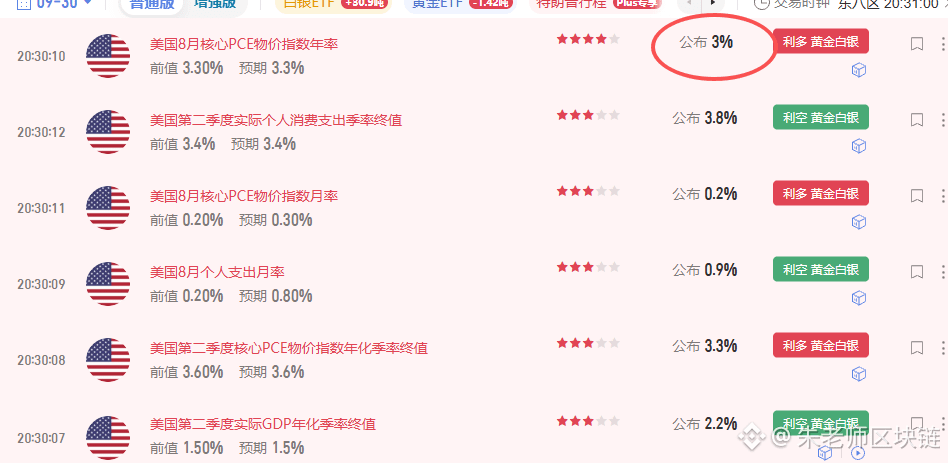
Below expectations, because it is corrected data!
$NVDAB
Below expectations, because it is corrected data!
$NVDAB
$NVDAB
1
2.6k
·
--
Partly True
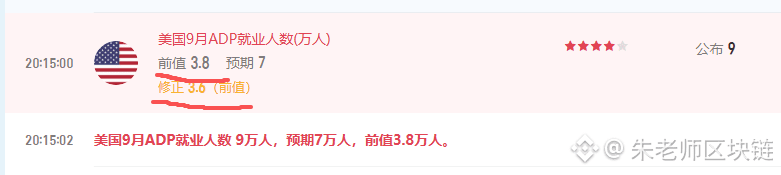
ADP employment data 9: the previous value was 3.8, and it’s now revised to 3.6—this 9 is pretty watered down.
😂
Do Americans have any point in cooking up fake data every day? Take a look at PCE—PCE has also been adjusted forward to data from 2021. The institutions say it’s likely to be revised downward. I guess over these years, the data has been messed up and they need to go back and fix it, then rebalance again. To be fair, the Americans really know how to play with data.
$QQQ
ADP employment data 9: the previous value was 3.8, and it’s now revised to 3.6—this 9 is pretty watered down.
😂
Do Americans have any point in cooking up fake data every day? Take a look at PCE—PCE has also been adjusted forward to data from 2021. The institutions say it’s likely to be revised downward. I guess over these years, the data has been messed up and they need to go back and fix it, then rebalance again. To be fair, the Americans really know how to play with data.
$QQQ
😂
Do Americans have any point in cooking up fake data every day? Take a look at PCE—PCE has also been adjusted forward to data from 2021. The institutions say it’s likely to be revised downward. I guess over these years, the data has been messed up and they need to go back and fix it, then rebalance again. To be fair, the Americans really know how to play with data.
$QQQ
3
3.8k
·
--
Article
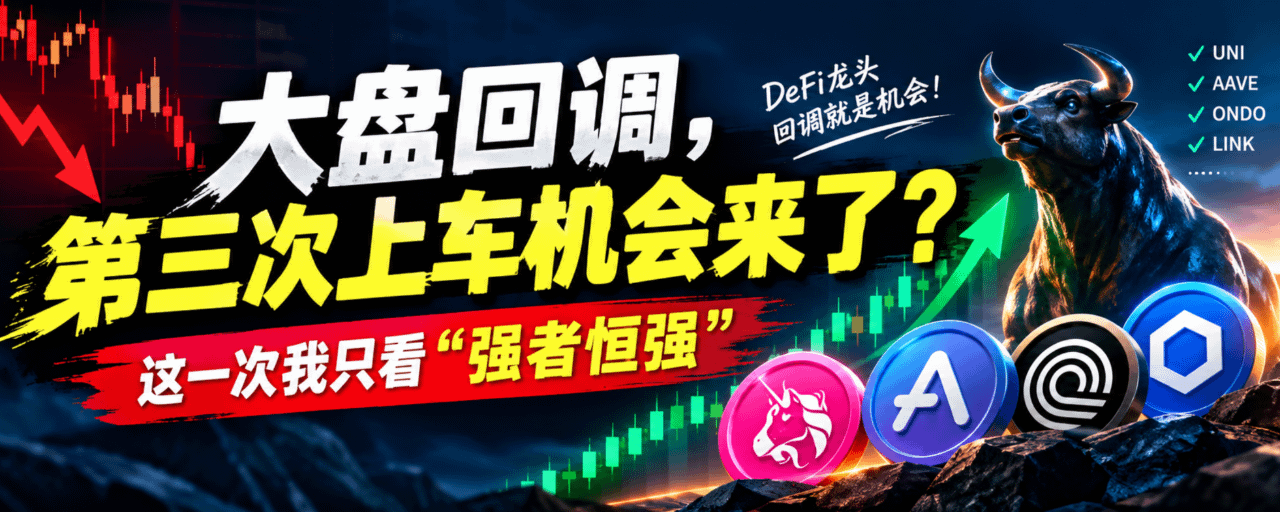
The market is pulling back—has the third chance to get in arrived? This time, I only look at “the strong always getting stronger”Recently, the DeFi sector has been performing very well—especially some leading DeFi projects. At the beginning of 2026, I actually rebuilt the investment research special for 2026. I covered about a dozen issues. Each underlying asset was a high-quality blue-chip leader.
For example, the uni in the 11th issue. At that time, it broke below $4. If you look at the price, you absolutely wouldn't dare to buy. And then there's the aave from the 14th issue—at that time, it was attacked by hackers, and the TVL plummeted. I still think it's the best lending platform.
image
And then the ondo from the 13th issue. Back then, the price was only 0.25, and so far it's still a doubled行情.
image
And also link. I specifically covered link in two issues. At that time, link was also in a bottom range.
The market is pulling back—has the third chance to get in arrived? This time, I only look at “the strong always getting stronger”
Recently, the DeFi sector has been performing very well—especially some leading DeFi projects. At the beginning of 2026, I actually rebuilt the investment research special for 2026. I covered about a dozen issues. Each underlying asset was a high-quality blue-chip leader.
For example, the uni in the 11th issue. At that time, it broke below $4. If you look at the price, you absolutely wouldn't dare to buy. And then there's the aave from the 14th issue—at that time, it was attacked by hackers, and the TVL plummeted. I still think it's the best lending platform.
image
And then the ondo from the 13th issue. Back then, the price was only 0.25, and so far it's still a doubled行情.
image
And also link. I specifically covered link in two issues. At that time, link was also in a bottom range.
For example, the uni in the 11th issue. At that time, it broke below $4. If you look at the price, you absolutely wouldn't dare to buy. And then there's the aave from the 14th issue—at that time, it was attacked by hackers, and the TVL plummeted. I still think it's the best lending platform.
image
And then the ondo from the 13th issue. Back then, the price was only 0.25, and so far it's still a doubled行情.
image
And also link. I specifically covered link in two issues. At that time, link was also in a bottom range.
4
7
9.5k
·
--
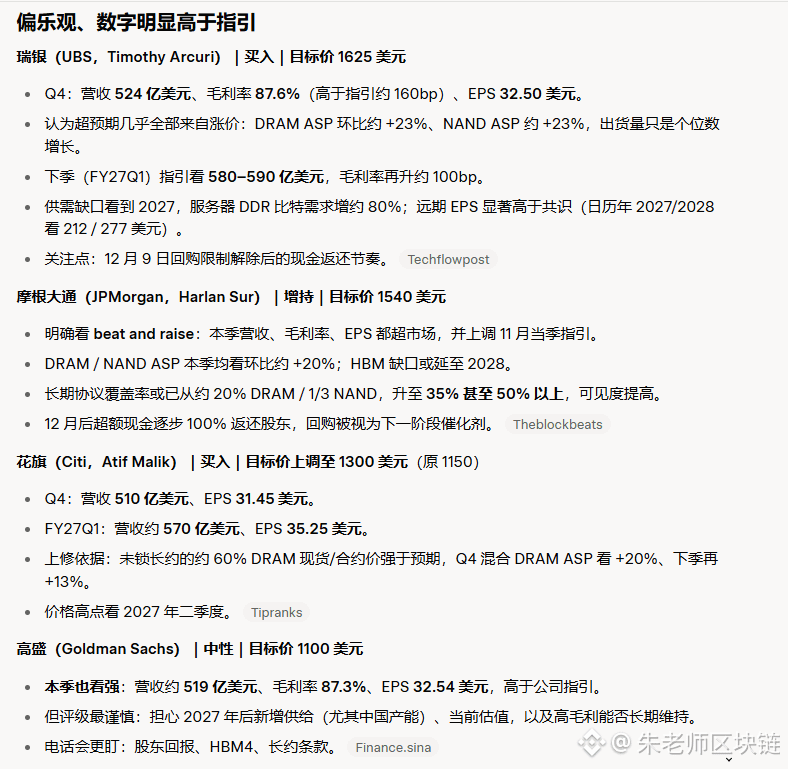
Tonight’s big drama: Micron has released its financial report. I’ve looked into what various institutions think about this Micron earnings report. Overall, they’re bullish, but the period they’re looking at is relatively long. In prior earnings releases, the stock fell after the announcement because expectations had already been priced in. After the last release, it rose by 10 percentage points and then reached the peak of this round.
$MU
Tonight’s big drama: Micron has released its financial report. I’ve looked into what various institutions think about this Micron earnings report. Overall, they’re bullish, but the period they’re looking at is relatively long. In prior earnings releases, the stock fell after the announcement because expectations had already been priced in. After the last release, it rose by 10 percentage points and then reached the peak of this round.
$MU
$MU
5
5.3k
·
--

Article
National Day Market? Will the MEME wave hit again?National Day is just around the corner—do you know there’s a saying in the industry called the “National Day行情” (National Day market)?
Why do I say that? The general consensus is that when “Big A” (the traditional markets) is on vacation, money comes into the crypto market, because crypto trades 24 hours a day. You can look back at the National Day market over the past two years: on October 1st, 2025, it was at the peak of the bull market, but after the holiday, things switched into a crashing downtrend.
But the wildest National Day in 2025 should be the meme boom on the BSC chain. Back then, things like “4 and 1” appeared, and BSC was pushing a meme launch platform, etc.
Picture
On October 1st, 2024, although the big pie didn’t show particularly wild performance, it also kicked off a meme frenzy. Back then, it was the Sol chain’s meme mode. The pump was really hot—there were projects like Neiro and SPX6900, etc.
National Day Market? Will the MEME wave hit again?
National Day is just around the corner—do you know there’s a saying in the industry called the “National Day行情” (National Day market)?
Why do I say that? The general consensus is that when “Big A” (the traditional markets) is on vacation, money comes into the crypto market, because crypto trades 24 hours a day. You can look back at the National Day market over the past two years: on October 1st, 2025, it was at the peak of the bull market, but after the holiday, things switched into a crashing downtrend.
But the wildest National Day in 2025 should be the meme boom on the BSC chain. Back then, things like “4 and 1” appeared, and BSC was pushing a meme launch platform, etc.
Picture
On October 1st, 2024, although the big pie didn’t show particularly wild performance, it also kicked off a meme frenzy. Back then, it was the Sol chain’s meme mode. The pump was really hot—there were projects like Neiro and SPX6900, etc.
Why do I say that? The general consensus is that when “Big A” (the traditional markets) is on vacation, money comes into the crypto market, because crypto trades 24 hours a day. You can look back at the National Day market over the past two years: on October 1st, 2025, it was at the peak of the bull market, but after the holiday, things switched into a crashing downtrend.
But the wildest National Day in 2025 should be the meme boom on the BSC chain. Back then, things like “4 and 1” appeared, and BSC was pushing a meme launch platform, etc.
Picture
On October 1st, 2024, although the big pie didn’t show particularly wild performance, it also kicked off a meme frenzy. Back then, it was the Sol chain’s meme mode. The pump was really hot—there were projects like Neiro and SPX6900, etc.
2
2
1.5k
·
--
Will this year’s National Day spark a MEME frenzy? Looking back at the past two years, the same thing has happened—just on different chains.
In 2024, there was a crazy meme wave [最近疯狂的meme还能不能搞?(二)Nerio再分析&SPX6900分](https://www.binance.com/zh-CN/square/post/14630361503418)
In 2025, there was a BSC meme wave [火爆BSC MEME周期链上“打新”怎么玩(风险巨高!慎入!)](https://www.binance.com/zh-CN/square/post/30645844817465)
$BNB
Will this year’s National Day spark a MEME frenzy? Looking back at the past two years, the same thing has happened—just on different chains.
In 2024, there was a crazy meme wave 最近疯狂的meme还能不能搞?(二)Nerio再分析&SPX6900分
In 2025, there was a BSC meme wave 火爆BSC MEME周期链上“打新”怎么玩(风险巨高!慎入!)
$BNB
In 2024, there was a crazy meme wave 最近疯狂的meme还能不能搞?(二)Nerio再分析&SPX6900分
In 2025, there was a BSC meme wave 火爆BSC MEME周期链上“打新”怎么玩(风险巨高!慎入!)
$BNB
1.8k
·
--
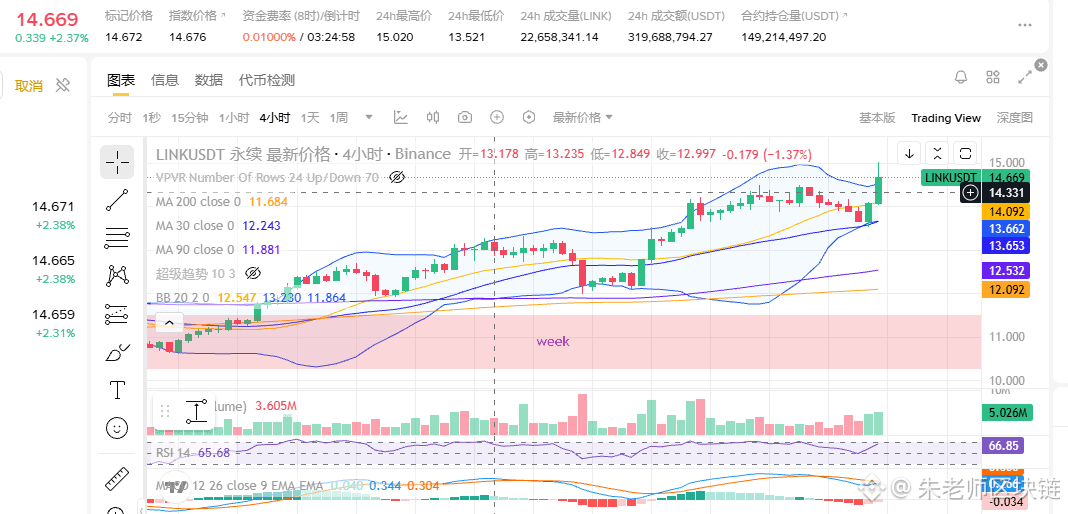
linkThis rebound is extremely strong—Big Bitcoin can’t be pushed down, and several copycat coins have also shown remarkable strength, rising while BTC is falling, like Pump. The altcoin season’s highlight moment!
$LINK
{future}(LINKUSDT)
linkThis rebound is extremely strong—Big Bitcoin can’t be pushed down, and several copycat coins have also shown remarkable strength, rising while BTC is falling, like Pump. The altcoin season’s highlight moment!
$LINK
$LINK
1
1
3.2k
·
--
Article
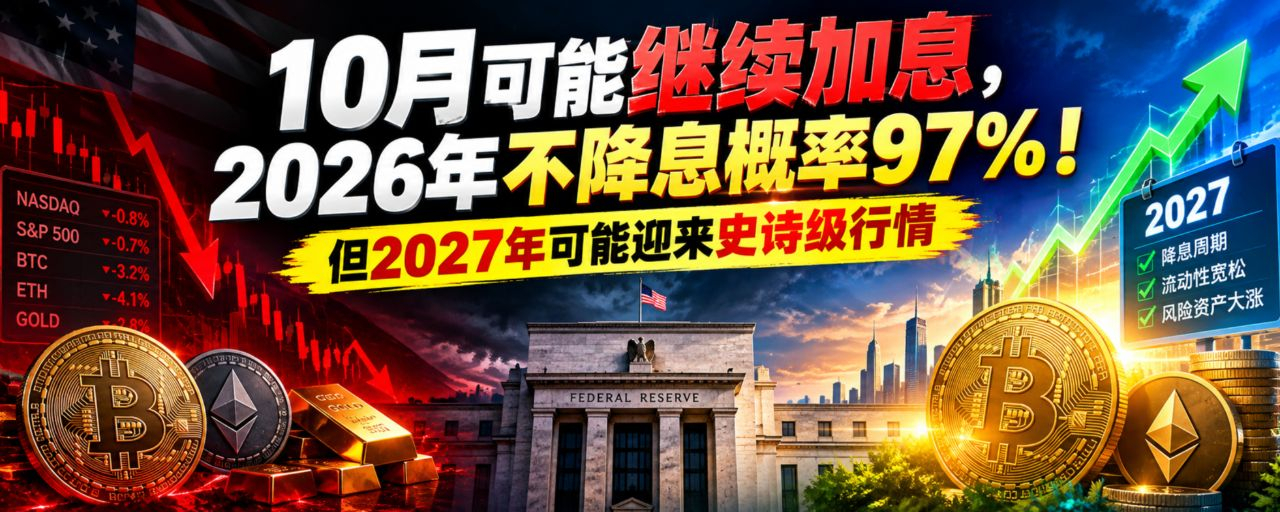
There may be more rate hikes in October; a 97% chance that rates won’t be cut in 2026! But 2027 could bring an epic market行情On Monday at the open, the market suddenly sold off across the board.
US stocks fell in the early trading session; the Nasdaq once dropped nearly 0.8%. Gold slipped below $4,200, and Bitcoin also fell below $83,000.
Well, look at that—feels like we’re back to the familiar moment of “the whole market dropping together.”
So the question is:
Why did it suddenly drop? Will it keep falling next?
I think there are mainly two reasons.
First, it had risen too much earlier—pullbacks are completely normal.
This point actually doesn’t need much explanation.
No matter whether it’s US stocks, gold, or the crypto market—everything has already risen quite a bit beforehand. Especially Bitcoin, which had been pulled up from low levels; in the short term, taking profits is very normal.
There may be more rate hikes in October; a 97% chance that rates won’t be cut in 2026! But 2027 could bring an epic market行情
On Monday at the open, the market suddenly sold off across the board.
US stocks fell in the early trading session; the Nasdaq once dropped nearly 0.8%. Gold slipped below $4,200, and Bitcoin also fell below $83,000.
Well, look at that—feels like we’re back to the familiar moment of “the whole market dropping together.”
So the question is:
Why did it suddenly drop? Will it keep falling next?
I think there are mainly two reasons.
First, it had risen too much earlier—pullbacks are completely normal.
This point actually doesn’t need much explanation.
No matter whether it’s US stocks, gold, or the crypto market—everything has already risen quite a bit beforehand. Especially Bitcoin, which had been pulled up from low levels; in the short term, taking profits is very normal.
US stocks fell in the early trading session; the Nasdaq once dropped nearly 0.8%. Gold slipped below $4,200, and Bitcoin also fell below $83,000.
Well, look at that—feels like we’re back to the familiar moment of “the whole market dropping together.”
So the question is:
Why did it suddenly drop? Will it keep falling next?
I think there are mainly two reasons.
First, it had risen too much earlier—pullbacks are completely normal.
This point actually doesn’t need much explanation.
No matter whether it’s US stocks, gold, or the crypto market—everything has already risen quite a bit beforehand. Especially Bitcoin, which had been pulled up from low levels; in the short term, taking profits is very normal.
3
1
10
17.5k
·
--
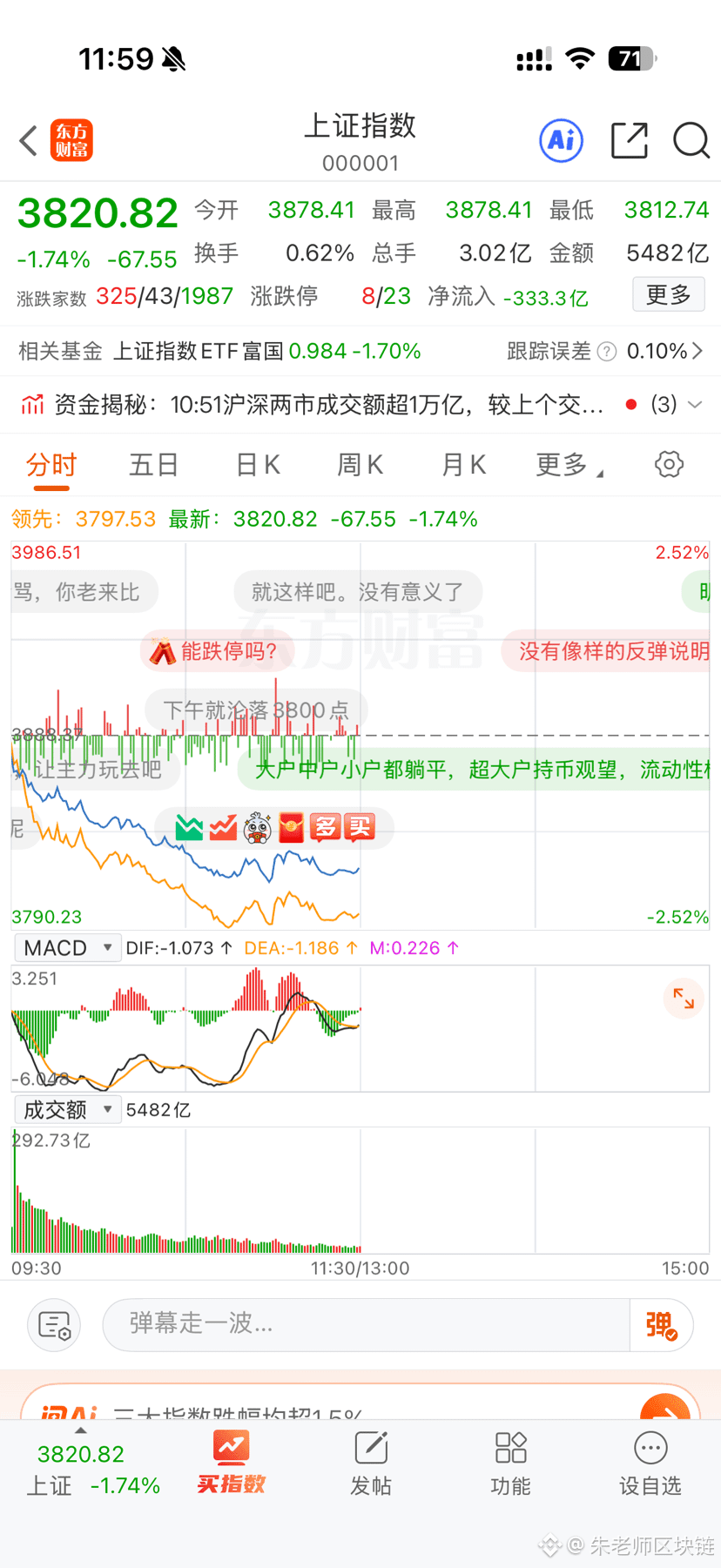
I think I finally get it. When the US stock market drops pre-market, the A-shares drop too; after that, if the US stock market drops overnight, the next day A-shares drop again!
But if the US stock market drops pre-market, the probability of a repair at night is higher. Then again, A-shares don’t have an overnight session. 😂
$QQQB
I think I finally get it. When the US stock market drops pre-market, the A-shares drop too; after that, if the US stock market drops overnight, the next day A-shares drop again!
But if the US stock market drops pre-market, the probability of a repair at night is higher. Then again, A-shares don’t have an overnight session. 😂
$QQQB
But if the US stock market drops pre-market, the probability of a repair at night is higher. Then again, A-shares don’t have an overnight session. 😂
$QQQB
2
2.1k
·
--
Verified
Why have so many good news stories about public chains exploded recently? QNT was also used by the U.S. Securities Clearance Office, and QNT surged 100%. A few days ago, AVAX was also exposed as being used by the NYSE to provide infrastructure for more than a year.
Why wasn't this reported before? I seriously suspect that some market-maker paid for the news.😅$QNT
{future}(QNTUSDT)
Why have so many good news stories about public chains exploded recently? QNT was also used by the U.S. Securities Clearance Office, and QNT surged 100%. A few days ago, AVAX was also exposed as being used by the NYSE to provide infrastructure for more than a year.
Why wasn't this reported before? I seriously suspect that some market-maker paid for the news.😅$QNT
Why wasn't this reported before? I seriously suspect that some market-maker paid for the news.😅$QNT

8
24
21.7k
·
--
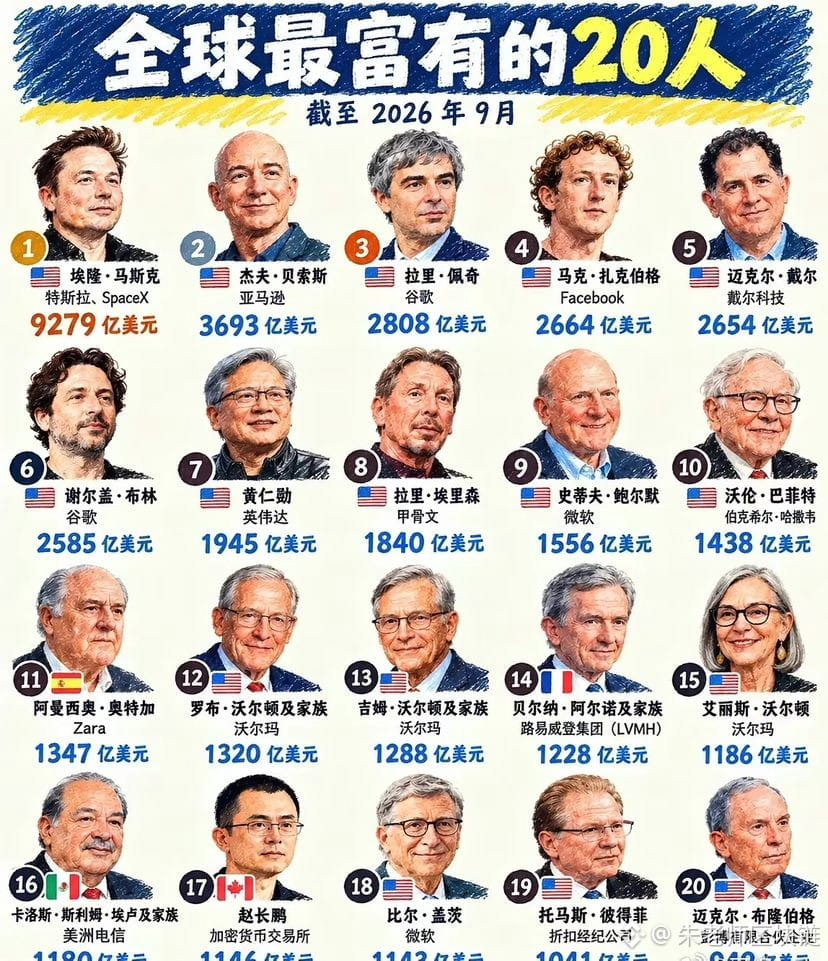
Global top 20 billionaires; cz currently ranks 17th, with no compatriot listed.
$BNB
Global top 20 billionaires; cz currently ranks 17th, with no compatriot listed.
$BNB
$BNB
23
1
13
22.1k
·
--
Verified
AAVE moves into RWA? Can anything be used as collateral—batteries, solar power, robots, space infrastructure?
It somehow feels a bit like Musk, though. But at least it's better than just promising things. If you draw it up, you'll only know whether it can be done once it's actually done.
$AAVE
{spot}(AAVEUSDT)
AAVE moves into RWA? Can anything be used as collateral—batteries, solar power, robots, space infrastructure?
It somehow feels a bit like Musk, though. But at least it's better than just promising things. If you draw it up, you'll only know whether it can be done once it's actually done.
$AAVE
It somehow feels a bit like Musk, though. But at least it's better than just promising things. If you draw it up, you'll only know whether it can be done once it's actually done.
$AAVE

4
4.6k
·
--
Albert Einstein once said: This world has two kinds of life attitudes.
One sees everything as a miracle, and the other sees everything as ordinary.
Which one will you choose?
$BTC
Albert Einstein once said: This world has two kinds of life attitudes.
One sees everything as a miracle, and the other sees everything as ordinary.
Which one will you choose?
$BTC
One sees everything as a miracle, and the other sees everything as ordinary.
Which one will you choose?
$BTC


1
3
2.5k
·
--
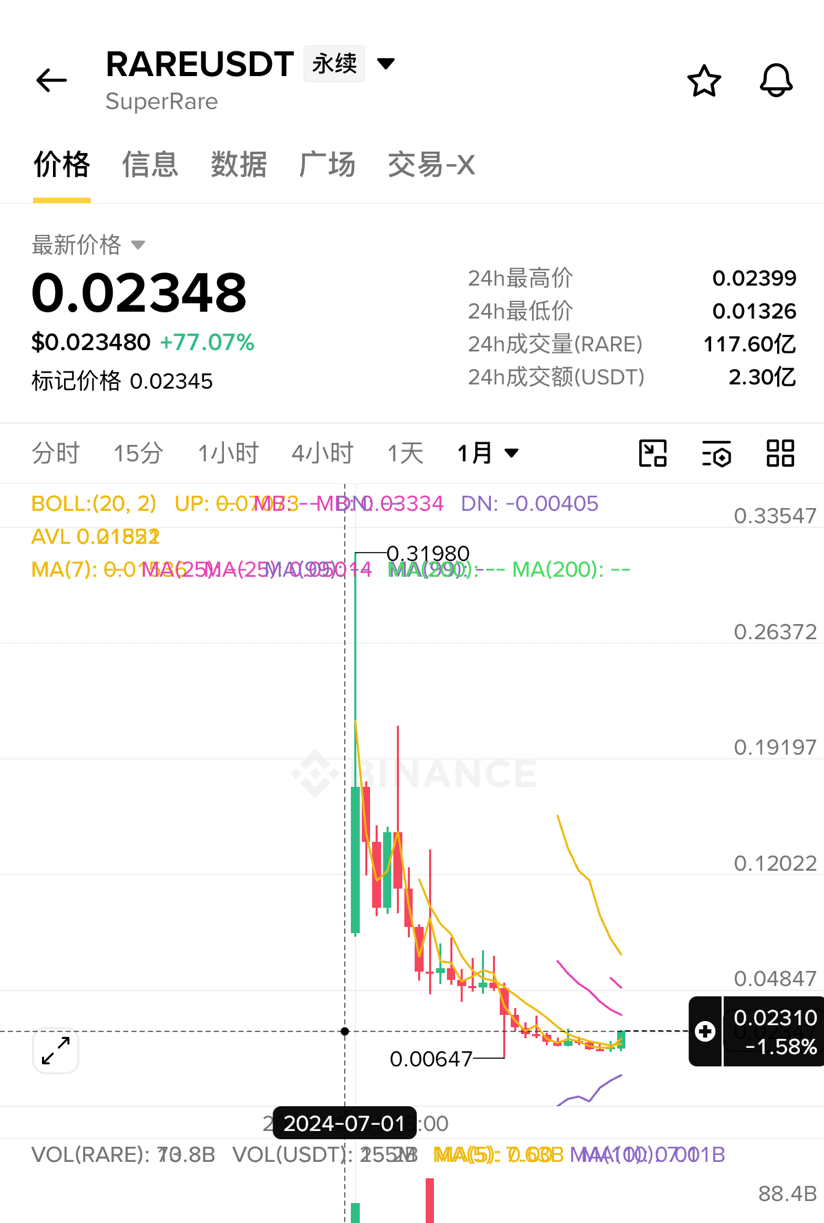
Even rare has taken off—this is an old NFT platform. Based on the current level of NFT activity, shouldn’t this site have already died by now?
Back during the NFT boom in 2021, a lot of platforms came out to siphon off OpenSea traffic. I remember things like LooksRare and x2y2.
The gist was that they would either airdrop to whales or to everyone, including retail users—but I can’t quite remember the exact order. For example, Rare would raid OpenSea, and then x2y2 would raid Rare.
Nowadays, it looks like those NFT platforms are all gone—only OpenSea is still worth watching.
Time is a killing knife; it’s also a test of both the good and the bad. Great projects can survive through bull and bear markets.
$RARE
Even rare has taken off—this is an old NFT platform. Based on the current level of NFT activity, shouldn’t this site have already died by now?
Back during the NFT boom in 2021, a lot of platforms came out to siphon off OpenSea traffic. I remember things like LooksRare and x2y2.
The gist was that they would either airdrop to whales or to everyone, including retail users—but I can’t quite remember the exact order. For example, Rare would raid OpenSea, and then x2y2 would raid Rare.
Nowadays, it looks like those NFT platforms are all gone—only OpenSea is still worth watching.
Time is a killing knife; it’s also a test of both the good and the bad. Great projects can survive through bull and bear markets.
$RARE
Back during the NFT boom in 2021, a lot of platforms came out to siphon off OpenSea traffic. I remember things like LooksRare and x2y2.
The gist was that they would either airdrop to whales or to everyone, including retail users—but I can’t quite remember the exact order. For example, Rare would raid OpenSea, and then x2y2 would raid Rare.
Nowadays, it looks like those NFT platforms are all gone—only OpenSea is still worth watching.
Time is a killing knife; it’s also a test of both the good and the bad. Great projects can survive through bull and bear markets.
$RARE
2
4
4.2k
·
--
by the way, anyone who got on at this spot? In July, I found it might need to start up—tenfold in two months.
I only ate one bite; the dishes got so dirty—it turned out you still have to hold on to make the big money.
$BTW
{future}(BTWUSDT)
by the way, anyone who got on at this spot? In July, I found it might need to start up—tenfold in two months.
I only ate one bite; the dishes got so dirty—it turned out you still have to hold on to make the big money.
$BTW
I only ate one bite; the dishes got so dirty—it turned out you still have to hold on to make the big money.
$BTW
朱老师区块链
·
--
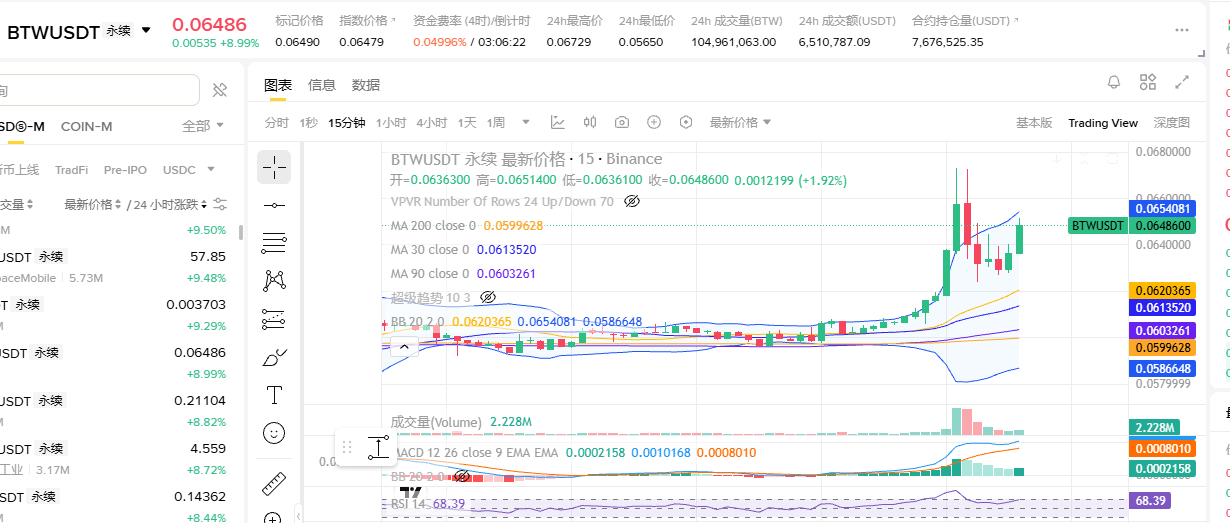
BTW, maybe, perhaps need to start, it has been going sideways for nearly a month. Just guessing, not providing investment advice, after all, I’m not the boss!
$BTW
$BTW
3
1
2.4k
·
--
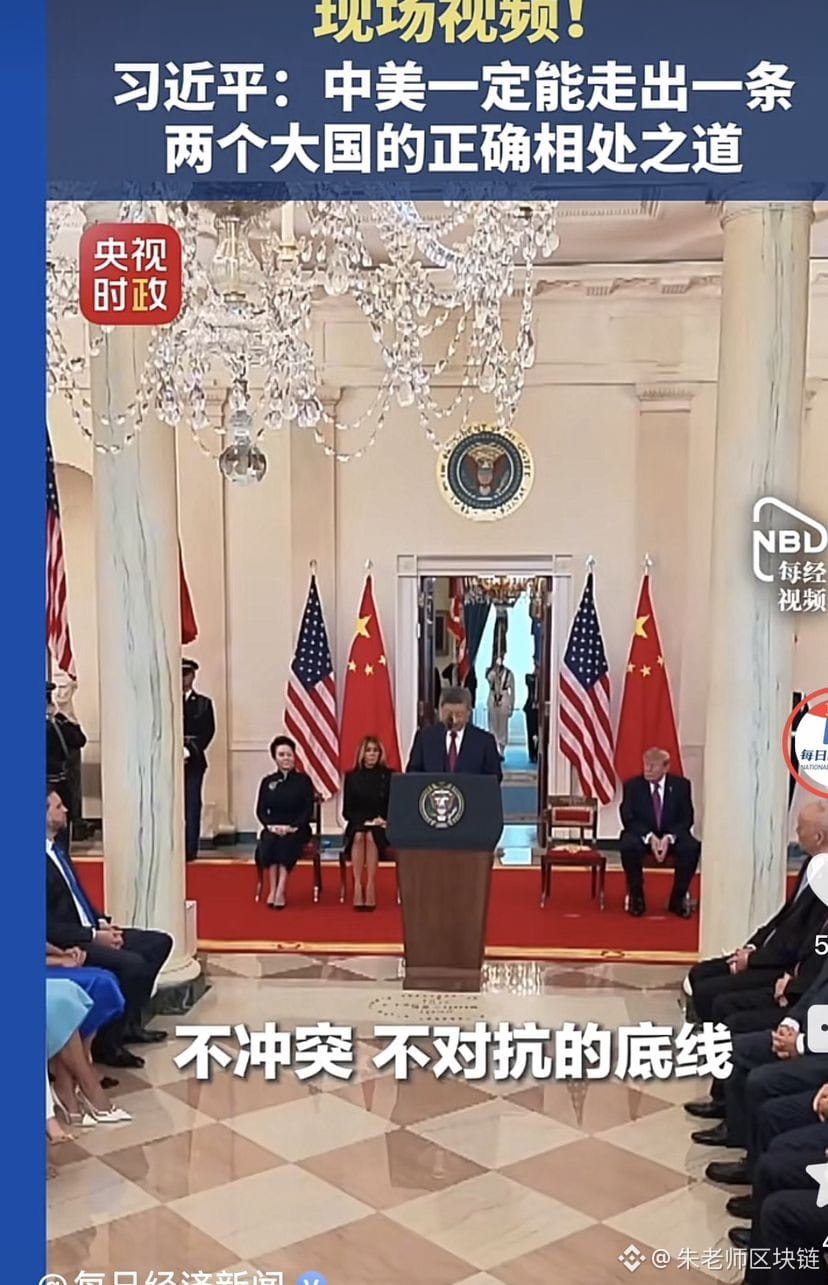
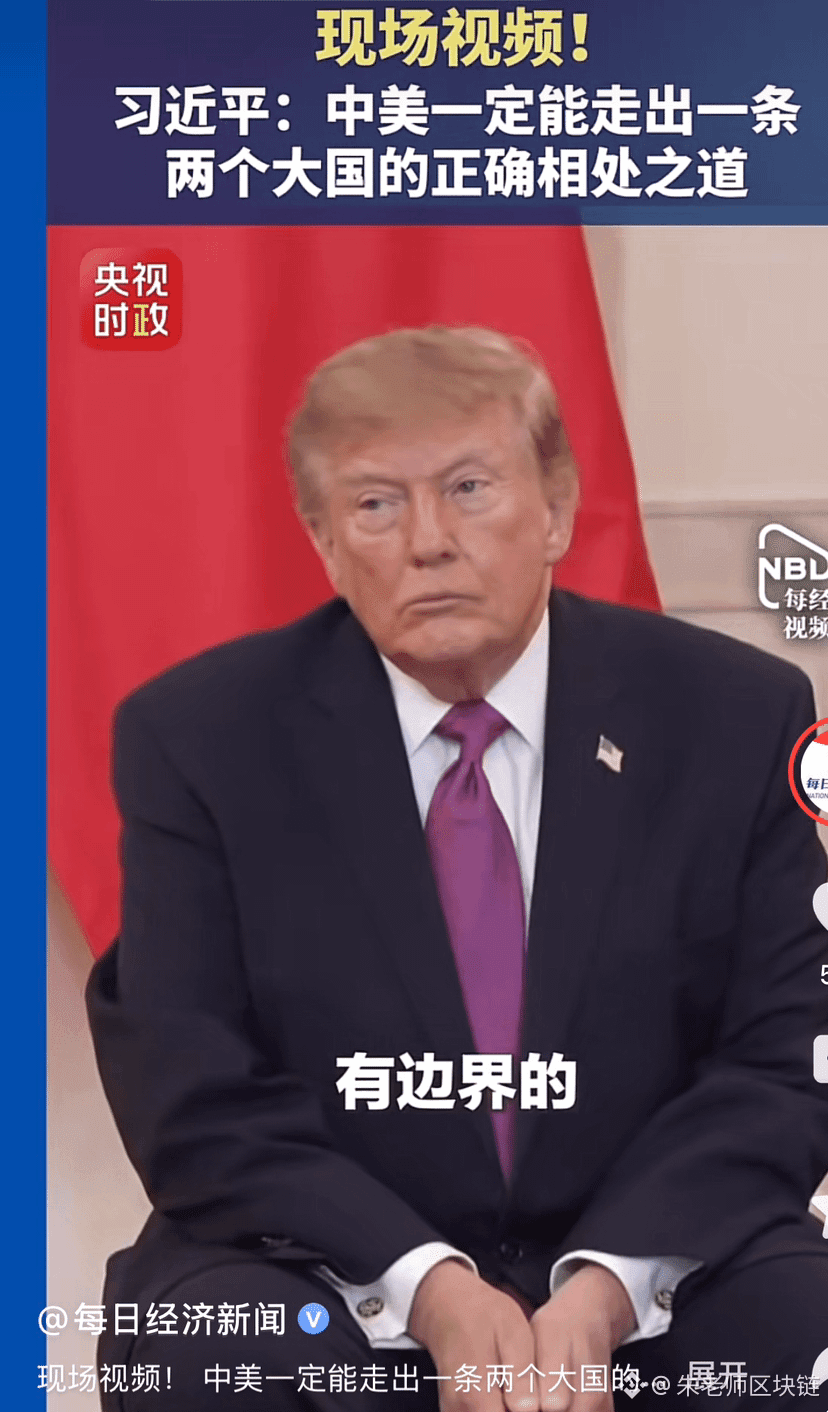
It's rare for Kawako to be so honest, and her overall strength is also strong!
$QQQB
It's rare for Kawako to be so honest, and her overall strength is also strong!
$QQQB
$QQQB
142
69
108k
·
--
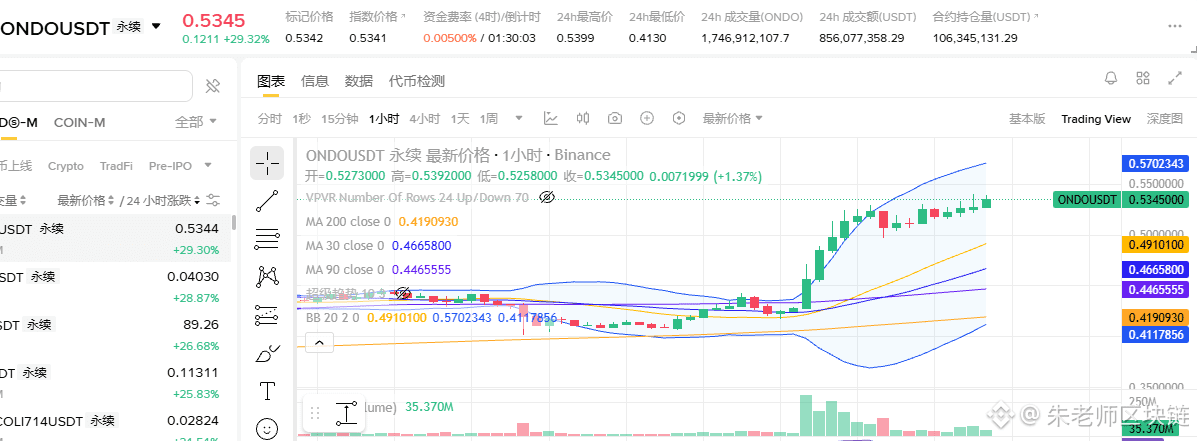
On the other hand, Onda has also started to take off—rotation in the RWA sector? What other sectors haven’t moved yet? It seems like everything has already rotated, and then apocalyptic tank Ltc, and other garbage coins like etc have already started rising. Is this round about over? What do you think!
$ONDO
{future}(ONDOUSDT)
On the other hand, Onda has also started to take off—rotation in the RWA sector? What other sectors haven’t moved yet? It seems like everything has already rotated, and then apocalyptic tank Ltc, and other garbage coins like etc have already started rising. Is this round about over? What do you think!
$ONDO
$ONDO
朱老师区块链
·
--
Very important! New king of RWA!
26 years of a brand new investment research journey - Season 13, this round's new king of RWA - Ondo Finance.
Before discussing the project, let's first talk about today's hot news, which is the sudden passing of Zhang Xuefeng at the age of 41, a long-time athlete, marathon runner, successful entrepreneur, and someone who treated his employees very well, who just left us so suddenly.
This matter is actually very simple, but it is worth everyone reflecting on - health and life are the 'underlying assets' of all investment logic.
You may miss a round of the market, but you cannot overdraw your life. Making money from investments is essentially just a 'copy' of life, not the main storyline.
Before discussing the project, let's first talk about today's hot news, which is the sudden passing of Zhang Xuefeng at the age of 41, a long-time athlete, marathon runner, successful entrepreneur, and someone who treated his employees very well, who just left us so suddenly.
This matter is actually very simple, but it is worth everyone reflecting on - health and life are the 'underlying assets' of all investment logic.
You may miss a round of the market, but you cannot overdraw your life. Making money from investments is essentially just a 'copy' of life, not the main storyline.
3
2k
·
--

Article
Standard Chartered Took Me Flying?In this round, Standard Chartered’s callout picked several projects that really took off—like UNI, ARB, etc. So here we’ll sort things out: what projects has Standard Chartered called out so far, and how are these projects doing right now!
Actually, these projects are based on research reports and some core target prices written in 2026 by Geoffrey Kendrick, the head of digital asset research.
The projects he has called out so far are as follows:
Image
Step-by-step path (as written in the research report):
AAVE: 2026 $180 → 2027 $600 → 2028 $1,200 → 2029 $2,200 → 2030 $3,500 (about 50x)
MORPHO: 2026 $3.50 → 2027 $11 → 2028 $22 → 2029 $40 → 2030 $60 (about 30x)
Standard Chartered Took Me Flying?
In this round, Standard Chartered’s callout picked several projects that really took off—like UNI, ARB, etc. So here we’ll sort things out: what projects has Standard Chartered called out so far, and how are these projects doing right now!
Actually, these projects are based on research reports and some core target prices written in 2026 by Geoffrey Kendrick, the head of digital asset research.
The projects he has called out so far are as follows:
Image
Step-by-step path (as written in the research report):
AAVE: 2026 $180 → 2027 $600 → 2028 $1,200 → 2029 $2,200 → 2030 $3,500 (about 50x)
MORPHO: 2026 $3.50 → 2027 $11 → 2028 $22 → 2029 $40 → 2030 $60 (about 30x)
Actually, these projects are based on research reports and some core target prices written in 2026 by Geoffrey Kendrick, the head of digital asset research.
The projects he has called out so far are as follows:
Image
Step-by-step path (as written in the research report):
AAVE: 2026 $180 → 2027 $600 → 2028 $1,200 → 2029 $2,200 → 2030 $3,500 (about 50x)
MORPHO: 2026 $3.50 → 2027 $11 → 2028 $22 → 2029 $40 → 2030 $60 (about 30x)
3
11
16.7k
Log in to explore more content
Join global crypto users on Binance Square
⚡️ Get latest and useful information about crypto.
💬 Trusted by the world’s largest crypto exchange.
👍 Discover real insights from verified creators.
Email / Phone number