

區塊客
9.1k Posts

區塊客
 Square Verified+
Report
Block User
「區塊客 blockcast.it」於 2017 年 4 月正式成立,旨在廣泛整理全球區塊鏈資訊,增進全球中文閱聽眾及投資人對區塊鏈趨勢的了解。
0 Following
19.8K+ Followers
91.0K+ Liked
Posts
·
--
Article
Bitcoin’s $80,000 Defense Faces a “Super Week”! Fed Rate Decision, Google and Microsoft Earnings, and PCE Inflation All Set to HitGlobal financial markets are heading into a pivotal “super week” this week!
The U.S. Federal Reserve (Fed) will announce its interest rate decision in the early hours of Thursday (the 29th), Taiwan time. Soon after, tech giants including Google parent Alphabet, Microsoft, and Amazon will release their earnings, while U.S. third-quarter gross domestic product (GDP) and the September Personal Consumption Expenditures (PCE) price index will also follow.
As Bitcoin (BTC) briefly fell below $80,000 and risk assets came under pressure, a packed slate of interest rate, inflation, and corporate earnings news could become a major volatility catalyst for crypto markets this week.
Bitcoin’s $80,000 Defense Faces a “Super Week”! Fed Rate Decision, Google and Microsoft Earnings, and PCE Inflation All Set to Hit
Global financial markets are heading into a pivotal “super week” this week!
The U.S. Federal Reserve (Fed) will announce its interest rate decision in the early hours of Thursday (the 29th), Taiwan time. Soon after, tech giants including Google parent Alphabet, Microsoft, and Amazon will release their earnings, while U.S. third-quarter gross domestic product (GDP) and the September Personal Consumption Expenditures (PCE) price index will also follow.
As Bitcoin (BTC) briefly fell below $80,000 and risk assets came under pressure, a packed slate of interest rate, inflation, and corporate earnings news could become a major volatility catalyst for crypto markets this week.
1
222
·
--
Verified
Article
CZ touts “multiple chains, one coin”! BNB Chain plans to launch a brand-new L1 next year without issuing a new token, further expanding BNB’s utilityBNB Chain is preparing an entirely new high-performance public blockchain, with Binance founder Changpeng Zhao (CZ) describing its future direction as “multiple chains, one coin.”
According to the latest technical documentation released by BNB Chain, the next-generation Layer 1 (“New L1”) will operate alongside the existing BNB Smart Chain (BSC). It will not issue a separate token, and will continue to use BNB to pay transaction fees, participate in staking, and take part in on-chain governance. The development team plans to launch a testnet by the end of 2026, with the mainnet targeted for early 2027.
CZ touts “multiple chains, one coin”! BNB Chain plans to launch a brand-new L1 next year without issuing a new token, further expanding BNB’s utility
BNB Chain is preparing an entirely new high-performance public blockchain, with Binance founder Changpeng Zhao (CZ) describing its future direction as “multiple chains, one coin.”
According to the latest technical documentation released by BNB Chain, the next-generation Layer 1 (“New L1”) will operate alongside the existing BNB Smart Chain (BSC). It will not issue a separate token, and will continue to use BNB to pay transaction fees, participate in staking, and take part in on-chain governance. The development team plans to launch a testnet by the end of 2026, with the mainnet targeted for early 2027.
According to the latest technical documentation released by BNB Chain, the next-generation Layer 1 (“New L1”) will operate alongside the existing BNB Smart Chain (BSC). It will not issue a separate token, and will continue to use BNB to pay transaction fees, participate in staking, and take part in on-chain governance. The development team plans to launch a testnet by the end of 2026, with the mainnet targeted for early 2027.
1
7
2.5k
·
--

Article
[Opposition grows to 22 companies] Backlash against U.S. stock tokenization spreads! Wells Fargo, Cisco and Arm “refuse to be listed” on OKX ICEThe U.S. stock tokenization wave faces renewed resistance from major companies!
After Microsoft, Google parent Alphabet, Goldman Sachs and others raised objections, Wells Fargo, Cisco and chip designer Arm have also joined the opposition. According to a public notice updated by OKX ICE on the 23rd, the number of companies opposing the tokenized trading of their stocks on the platform has risen to 22. In just eight days, the figure has more than doubled from an initial nine, adding to the obstacles facing the 24-hour on-chain U.S. stock trading plan being advanced by OKX and Intercontinental Exchange (ICE), the parent company of the New York Stock Exchange.
[Opposition grows to 22 companies] Backlash against U.S. stock tokenization spreads! Wells Fargo, Cisco and Arm “refuse to be listed” on OKX ICE
The U.S. stock tokenization wave faces renewed resistance from major companies!
After Microsoft, Google parent Alphabet, Goldman Sachs and others raised objections, Wells Fargo, Cisco and chip designer Arm have also joined the opposition. According to a public notice updated by OKX ICE on the 23rd, the number of companies opposing the tokenized trading of their stocks on the platform has risen to 22. In just eight days, the figure has more than doubled from an initial nine, adding to the obstacles facing the 24-hour on-chain U.S. stock trading plan being advanced by OKX and Intercontinental Exchange (ICE), the parent company of the New York Stock Exchange.
After Microsoft, Google parent Alphabet, Goldman Sachs and others raised objections, Wells Fargo, Cisco and chip designer Arm have also joined the opposition. According to a public notice updated by OKX ICE on the 23rd, the number of companies opposing the tokenized trading of their stocks on the platform has risen to 22. In just eight days, the figure has more than doubled from an initial nine, adding to the obstacles facing the 24-hour on-chain U.S. stock trading plan being advanced by OKX and Intercontinental Exchange (ICE), the parent company of the New York Stock Exchange.
277
·
--
Article
CoinDCX Hit by $16 Million Hack! CEO Calls It a “False Alarm,” Then Admits Losses Three Days Later—Why Was the Hacked Legacy Wallet Still Receiving Funds?India’s cryptocurrency exchange CoinDCX is embroiled in controversy over its cybersecurity and operational management. After suffering losses of around $44 million in a 2025 hack, the platform officially admitted on October 25 that unauthorized access to its legacy wallet infrastructure, combined with a malfunction in its automated fund-sweeping system, led to the loss of 15.99 million USDT (around $16 million). CEO Sumit Gupta had previously publicly denied a new hacking incident, saying the alerts might be a “false alarm,” before on-chain investigator ZachXBT challenged his claim with transaction records.
On October 22, co-founder and CEO Sumit Gupta denied on-chain alerts reporting the theft of around $16 million, saying the incident might be a “false alarm.” But on the 25th, the exchange officially admitted that its legacy wallet system had indeed been exploited, resulting in losses of around $16 million.
CoinDCX Hit by $16 Million Hack! CEO Calls It a “False Alarm,” Then Admits Losses Three Days Later—Why Was the Hacked Legacy Wallet Still Receiving Funds?
India’s cryptocurrency exchange CoinDCX is embroiled in controversy over its cybersecurity and operational management. After suffering losses of around $44 million in a 2025 hack, the platform officially admitted on October 25 that unauthorized access to its legacy wallet infrastructure, combined with a malfunction in its automated fund-sweeping system, led to the loss of 15.99 million USDT (around $16 million). CEO Sumit Gupta had previously publicly denied a new hacking incident, saying the alerts might be a “false alarm,” before on-chain investigator ZachXBT challenged his claim with transaction records.
On October 22, co-founder and CEO Sumit Gupta denied on-chain alerts reporting the theft of around $16 million, saying the incident might be a “false alarm.” But on the 25th, the exchange officially admitted that its legacy wallet system had indeed been exploited, resulting in losses of around $16 million.
On October 22, co-founder and CEO Sumit Gupta denied on-chain alerts reporting the theft of around $16 million, saying the incident might be a “false alarm.” But on the 25th, the exchange officially admitted that its legacy wallet system had indeed been exploited, resulting in losses of around $16 million.
225
·
--
Article
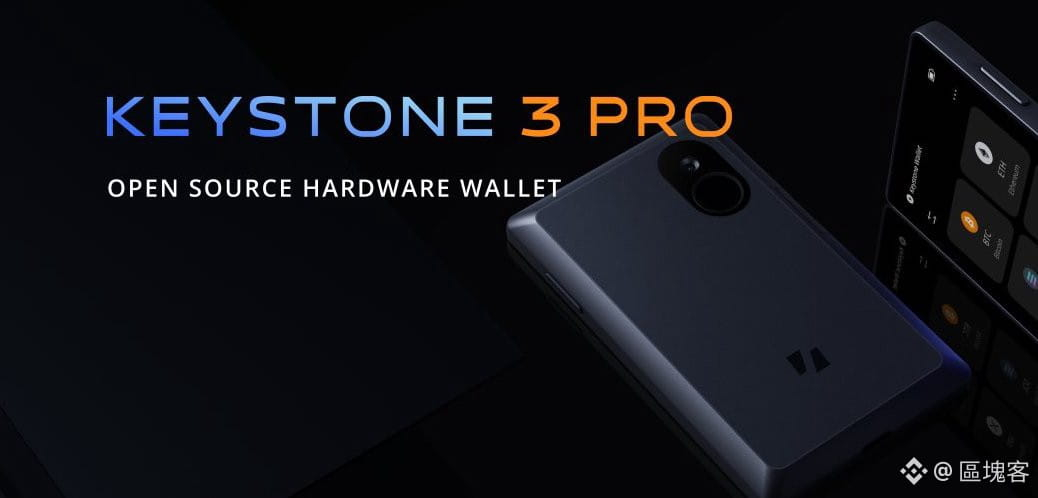
Keystone Hardware Wallet Data Breach! “180-Day Deletion” Promise Questioned as Old Orders May Be AffectedCryptocurrency hardware wallet brand Keystone hit by customer data breach!
On October 25, Keystone confirmed that an unauthorized third party accessed its official online store, stealing customers’ names, email addresses, phone numbers, shipping addresses, and order information. More controversially, Keystone had previously touted “automatic deletion of shipping data after 180 days” as a privacy protection feature. Now, some users say order information from hardware wallet purchases made two years ago may also have been affected, prompting questions about whether Keystone truly followed through on its data deletion promise.
Keystone Hardware Wallet Data Breach! “180-Day Deletion” Promise Questioned as Old Orders May Be Affected
Cryptocurrency hardware wallet brand Keystone hit by customer data breach!
On October 25, Keystone confirmed that an unauthorized third party accessed its official online store, stealing customers’ names, email addresses, phone numbers, shipping addresses, and order information. More controversially, Keystone had previously touted “automatic deletion of shipping data after 180 days” as a privacy protection feature. Now, some users say order information from hardware wallet purchases made two years ago may also have been affected, prompting questions about whether Keystone truly followed through on its data deletion promise.
On October 25, Keystone confirmed that an unauthorized third party accessed its official online store, stealing customers’ names, email addresses, phone numbers, shipping addresses, and order information. More controversially, Keystone had previously touted “automatic deletion of shipping data after 180 days” as a privacy protection feature. Now, some users say order information from hardware wallet purchases made two years ago may also have been affected, prompting questions about whether Keystone truly followed through on its data deletion promise.
213
·
--
Bitcoin Falls Below $80,000 Again! Hits a Low of $79,200, Long Liquidation Pressure PersistsBitcoin (BTC) has once again fallen below the $80,000 psychological level!
According to the latest market data from Binance at midday Asian time on October 26, BTC fell to a low of $79,278 over the past 24 hours before rebounding slightly to around $79,966, down 1.02% in the last 24 hours. As U.S. spot ETFs continue to see capital outflows, the derivatives market is also under sustained long liquidation pressure, making the defense of the $80,000 level a key market focus once again.
Previously, on October 24, when Bitcoin fell below $80,000, the crypto market saw $436 million in leveraged liquidations within just four hours, with more than 90% coming from long positions.
Bitcoin Falls Below $80,000 Again! Hits a Low of $79,200, Long Liquidation Pressure Persists
Bitcoin (BTC) has once again fallen below the $80,000 psychological level!
According to the latest market data from Binance at midday Asian time on October 26, BTC fell to a low of $79,278 over the past 24 hours before rebounding slightly to around $79,966, down 1.02% in the last 24 hours. As U.S. spot ETFs continue to see capital outflows, the derivatives market is also under sustained long liquidation pressure, making the defense of the $80,000 level a key market focus once again.
Previously, on October 24, when Bitcoin fell below $80,000, the crypto market saw $436 million in leveraged liquidations within just four hours, with more than 90% coming from long positions.
1
180
·
--

Article
Traveling to South Korea without exchanging money? Shinhan and SBI to test yen stablecoin for direct card paymentsJapanese tourists traveling to South Korea may no longer need to exchange money for Korean won in advance!
Shinhan Card, a subsidiary of South Korea’s Shinhan Financial Group, announced a partnership with SBI VC Trade and SBI XDC Network APAC, both part of Japanese financial giant SBI Group. The companies plan to test integrating a yen stablecoin with the credit card payment system, potentially allowing Japanese travelers to pay directly with yen stablecoins at merchants in South Korea. They will also explore applications for cross-border remittances and corporate trade settlements. However, the project is still at the proof-of-concept stage, and no official commercial launch date has been announced.
Traveling to South Korea without exchanging money? Shinhan and SBI to test yen stablecoin for direct card payments
Japanese tourists traveling to South Korea may no longer need to exchange money for Korean won in advance!
Shinhan Card, a subsidiary of South Korea’s Shinhan Financial Group, announced a partnership with SBI VC Trade and SBI XDC Network APAC, both part of Japanese financial giant SBI Group. The companies plan to test integrating a yen stablecoin with the credit card payment system, potentially allowing Japanese travelers to pay directly with yen stablecoins at merchants in South Korea. They will also explore applications for cross-border remittances and corporate trade settlements. However, the project is still at the proof-of-concept stage, and no official commercial launch date has been announced.
Shinhan Card, a subsidiary of South Korea’s Shinhan Financial Group, announced a partnership with SBI VC Trade and SBI XDC Network APAC, both part of Japanese financial giant SBI Group. The companies plan to test integrating a yen stablecoin with the credit card payment system, potentially allowing Japanese travelers to pay directly with yen stablecoins at merchants in South Korea. They will also explore applications for cross-border remittances and corporate trade settlements. However, the project is still at the proof-of-concept stage, and no official commercial launch date has been announced.
399
·
--
Article
Bitcoin ETFs Rake in $1.07 Billion in Three Days, Then See $636 Million Pulled in One Day! BTC Falls Back to $81,000—Are Institutional Buyers Turning Away?U.S. spot Bitcoin ETFs have staged another dramatic reversal in fund flows!
According to the latest figures, U.S. spot Bitcoin ETFs attracted around $1.075 billion in net inflows over three consecutive trading days from October 19 to 21. But on the 22nd, flows suddenly reversed, with $636 million in net outflows—nearly 60% of the previous three days’ inflows wiped out in a single day. Meanwhile, Bitcoin (BTC) failed to extend its rebound and has recently fallen back to around $81,654, showing that both institutional fund flows and market prices remain volatile.
$1.075 billion poured in over three days, led by BlackRock
According to data from Farside Investors, U.S. spot Bitcoin ETFs saw net inflows of $526.7 million on October 19, $23.2 million on October 20, and another $524.8 million on October 21, bringing the three-day total to $1.0747 billion.
Bitcoin ETFs Rake in $1.07 Billion in Three Days, Then See $636 Million Pulled in One Day! BTC Falls Back to $81,000—Are Institutional Buyers Turning Away?
U.S. spot Bitcoin ETFs have staged another dramatic reversal in fund flows!
According to the latest figures, U.S. spot Bitcoin ETFs attracted around $1.075 billion in net inflows over three consecutive trading days from October 19 to 21. But on the 22nd, flows suddenly reversed, with $636 million in net outflows—nearly 60% of the previous three days’ inflows wiped out in a single day. Meanwhile, Bitcoin (BTC) failed to extend its rebound and has recently fallen back to around $81,654, showing that both institutional fund flows and market prices remain volatile.
$1.075 billion poured in over three days, led by BlackRock
According to data from Farside Investors, U.S. spot Bitcoin ETFs saw net inflows of $526.7 million on October 19, $23.2 million on October 20, and another $524.8 million on October 21, bringing the three-day total to $1.0747 billion.
233
·
--
Article
HSBC RedCoin launches today! 3.3 million PayMe users will be able to make transfers with a Hong Kong dollar stablecoin, accepted by 100,000 merchantsA major development for Hong Kong’s stablecoin market!
HSBC officially launched its first Hong Kong dollar stablecoin, HSBC RedCoin (RCHKD), on October 23. In its first phase, it will be integrated into the PayMe e-payment platform. Over the coming days, more than 3.3 million users will gradually gain access to stablecoin wallets, which they can use for personal transfers and everyday payments at over 100,000 merchants. This marks an important step for a traditional bank in bringing regulated stablecoins to the retail payments market, following the Hong Kong Monetary Authority’s issuance of its first stablecoin licenses this April.
330 million PayMe users gain access to stablecoin payments, with over 100,000 participating merchants
HSBC RedCoin launches today! 3.3 million PayMe users will be able to make transfers with a Hong Kong dollar stablecoin, accepted by 100,000 merchants
A major development for Hong Kong’s stablecoin market!
HSBC officially launched its first Hong Kong dollar stablecoin, HSBC RedCoin (RCHKD), on October 23. In its first phase, it will be integrated into the PayMe e-payment platform. Over the coming days, more than 3.3 million users will gradually gain access to stablecoin wallets, which they can use for personal transfers and everyday payments at over 100,000 merchants. This marks an important step for a traditional bank in bringing regulated stablecoins to the retail payments market, following the Hong Kong Monetary Authority’s issuance of its first stablecoin licenses this April.
330 million PayMe users gain access to stablecoin payments, with over 100,000 participating merchants
1
342
·
--

Article
【The Madman on Market Trends】Bitcoin’s support range is 75–80k; a break below it is extremely unlikelyThe Madman Says…
Markets around the world are falling. The longer crude oil stays at elevated levels, the more severe the collapse in capital markets will be. Iran is stubbornly refusing to back down and trying to drag the whole world down with it, forcing the U.S. to make concessions and reach a deal. Gold, Bitcoin, and stocks are all selling off hard. Central banks have accelerated their gold buying fourfold, while Bitcoin ETFs have seen inflows of over a billion in just three days. When some people panic, others are happily buying. Gold below 4,000 is basically a no-brainer buy; the odds of it falling to 3,500 are very low. Bitcoin is in a similar range at 75–80k, with large buy walls placed there, making a break below that range extremely difficult. Opportunities always come from downturns. If you have spare money sitting around, start building your portfolio.
【The Madman on Market Trends】Bitcoin’s support range is 75–80k; a break below it is extremely unlikely
The Madman Says…
Markets around the world are falling. The longer crude oil stays at elevated levels, the more severe the collapse in capital markets will be. Iran is stubbornly refusing to back down and trying to drag the whole world down with it, forcing the U.S. to make concessions and reach a deal. Gold, Bitcoin, and stocks are all selling off hard. Central banks have accelerated their gold buying fourfold, while Bitcoin ETFs have seen inflows of over a billion in just three days. When some people panic, others are happily buying. Gold below 4,000 is basically a no-brainer buy; the odds of it falling to 3,500 are very low. Bitcoin is in a similar range at 75–80k, with large buy walls placed there, making a break below that range extremely difficult. Opportunities always come from downturns. If you have spare money sitting around, start building your portfolio.
Markets around the world are falling. The longer crude oil stays at elevated levels, the more severe the collapse in capital markets will be. Iran is stubbornly refusing to back down and trying to drag the whole world down with it, forcing the U.S. to make concessions and reach a deal. Gold, Bitcoin, and stocks are all selling off hard. Central banks have accelerated their gold buying fourfold, while Bitcoin ETFs have seen inflows of over a billion in just three days. When some people panic, others are happily buying. Gold below 4,000 is basically a no-brainer buy; the odds of it falling to 3,500 are very low. Bitcoin is in a similar range at 75–80k, with large buy walls placed there, making a break below that range extremely difficult. Opportunities always come from downturns. If you have spare money sitting around, start building your portfolio.
1
3
1.5k
·
--
Article
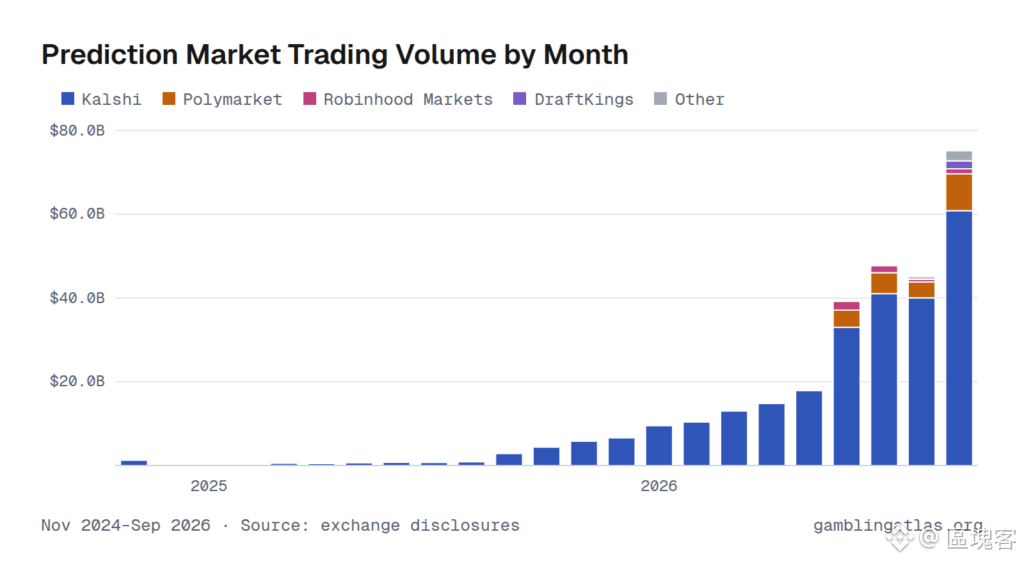
Prediction market monthly volume hits $72 billion! Binance and Coinbase rush in—is “betting on future events” a new gold mine for exchanges?Cryptocurrency exchanges are turning their attention to another rapidly growing market!
According to a report by the Financial Times on the 21st, monthly trading volume in prediction markets surged from about $17 billion in January this year to $72 billion in September, a rise of more than 300%. As the Bitcoin (BTC) and Ethereum (ETH) markets languish, trading platforms such as Binance.US, Blockchain.com, and Coinbase are accelerating their push into prediction markets, seeking to expand revenue beyond transaction fees from cryptocurrency trading to include contracts on political, sports, economic data, and other future events.
Monthly trading volume surges to $72 billion as Kalshi and Polymarket fuel the boom
Prediction market monthly volume hits $72 billion! Binance and Coinbase rush in—is “betting on future events” a new gold mine for exchanges?
Cryptocurrency exchanges are turning their attention to another rapidly growing market!
According to a report by the Financial Times on the 21st, monthly trading volume in prediction markets surged from about $17 billion in January this year to $72 billion in September, a rise of more than 300%. As the Bitcoin (BTC) and Ethereum (ETH) markets languish, trading platforms such as Binance.US, Blockchain.com, and Coinbase are accelerating their push into prediction markets, seeking to expand revenue beyond transaction fees from cryptocurrency trading to include contracts on political, sports, economic data, and other future events.
Monthly trading volume surges to $72 billion as Kalshi and Polymarket fuel the boom
394
·
--
Verified
Article
Microsoft, Google and Goldman Sachs say no too! OKX and ICE face rejection from 16 giants as tokenized U.S. stocks hit a roadblockTokenized U.S. stocks face renewed backlash from major companies!
After nine companies, including Broadcom and CoreWeave, voiced objections, seven more—including Microsoft, Alphabet, Google's parent company, and Goldman Sachs—have formally joined the opposition.
According to an official notice updated by OKX and ICE on the 19th, the number of companies opposing the tokenized trading of their shares on the platform has risen to 16—about a quarter of the companies originally slated to be listed. This poses a new obstacle to the round-the-clock stock trading plan being developed through a partnership between OKX and Intercontinental Exchange (ICE), the parent company of the New York Stock Exchange.
Microsoft, Google and Goldman Sachs say no too! OKX and ICE face rejection from 16 giants as tokenized U.S. stocks hit a roadblock
Tokenized U.S. stocks face renewed backlash from major companies!
After nine companies, including Broadcom and CoreWeave, voiced objections, seven more—including Microsoft, Alphabet, Google's parent company, and Goldman Sachs—have formally joined the opposition.
According to an official notice updated by OKX and ICE on the 19th, the number of companies opposing the tokenized trading of their shares on the platform has risen to 16—about a quarter of the companies originally slated to be listed. This poses a new obstacle to the round-the-clock stock trading plan being developed through a partnership between OKX and Intercontinental Exchange (ICE), the parent company of the New York Stock Exchange.
1.9k
·
--
Switzerland approves its first retail Bitcoin ETF! FINMA makes rare exception to diversification rules; listing set for NovemberA major regulatory breakthrough for Switzerland’s Bitcoin investment market!
The Swiss Financial Market Supervisory Authority (FINMA) announced that it has officially approved the country’s first spot Bitcoin ETF open to retail investors. In a rare move, it has also waived some diversification requirements, allowing the fund to hold Bitcoin (BTC) directly as its sole concentrated investment.
According to an announcement by issuer BIT Asset Management, the fund, ticker BBIT, is expected to list on the SIX Swiss Exchange in November, giving retail investors Bitcoin exposure through a standard securities account.
FINMA makes rare exception to diversification rules, allowing an ETF to concentrate its holdings in BTC
Switzerland approves its first retail Bitcoin ETF! FINMA makes rare exception to diversification rules; listing set for November
A major regulatory breakthrough for Switzerland’s Bitcoin investment market!
The Swiss Financial Market Supervisory Authority (FINMA) announced that it has officially approved the country’s first spot Bitcoin ETF open to retail investors. In a rare move, it has also waived some diversification requirements, allowing the fund to hold Bitcoin (BTC) directly as its sole concentrated investment.
According to an announcement by issuer BIT Asset Management, the fund, ticker BBIT, is expected to list on the SIX Swiss Exchange in November, giving retail investors Bitcoin exposure through a standard securities account.
FINMA makes rare exception to diversification rules, allowing an ETF to concentrate its holdings in BTC
293
·
--

Article
Drift Hacker Strikes Again After 2-Month Dormancy! $61.56 Million in ETH Moved to Tornado Cash in Two Hours, Nearly $200 Million Still in Their HandsThe hacker behind the Solana ecosystem’s decentralized exchange Drift Protocol has moved another huge sum of stolen funds!
According to on-chain analytics firm Lookonchain, the address linked to the Drift hack in April this year became active again on October 20 after lying dormant for about two months. In just two hours, it deposited 25,700 ETH, worth approximately $61.56 million, into the mixing protocol Tornado Cash. More remarkably, the associated address still holds around 82,000 ETH, worth nearly $200 million, indicating that most of the traceable assets remain in the attacker’s hands.
Image source: Lookonchain. Hacker moves 25,700 ETH in two hours, resumes mixing operations
Drift Hacker Strikes Again After 2-Month Dormancy! $61.56 Million in ETH Moved to Tornado Cash in Two Hours, Nearly $200 Million Still in Their Hands
The hacker behind the Solana ecosystem’s decentralized exchange Drift Protocol has moved another huge sum of stolen funds!
According to on-chain analytics firm Lookonchain, the address linked to the Drift hack in April this year became active again on October 20 after lying dormant for about two months. In just two hours, it deposited 25,700 ETH, worth approximately $61.56 million, into the mixing protocol Tornado Cash. More remarkably, the associated address still holds around 82,000 ETH, worth nearly $200 million, indicating that most of the traceable assets remain in the attacker’s hands.
Image source: Lookonchain. Hacker moves 25,700 ETH in two hours, resumes mixing operations
5
3.9k
·
--
Article
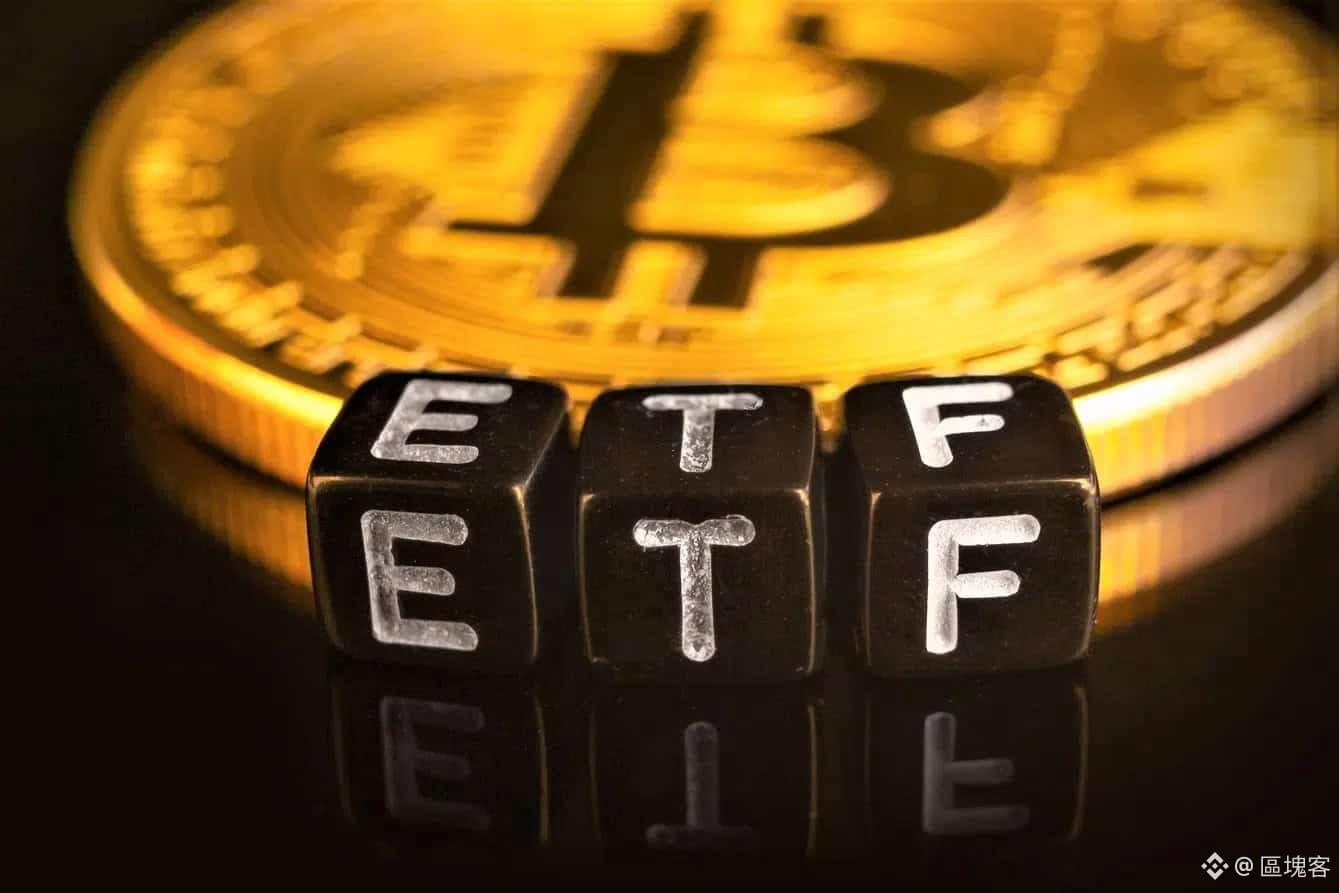
BlackRock unveils another new take on a Bitcoin ETF! PBIT offers downside protection—but at the cost of BTC’s upside?The world’s largest asset manager, BlackRock, is expanding its lineup of Bitcoin investment products once again!
According to a filing submitted to the U.S. Securities and Exchange Commission (SEC) on October 19, BlackRock plans to launch the iShares Bitcoin Managed Protection ETF (PBIT). Using options and fixed-income assets, the fund aims to let investors participate in Bitcoin (BTC) price gains while reducing some downside risk. However, this protection comes at a cost: investors must give up Bitcoin gains above a certain cap, and their principal is not fully protected.
BlackRock unveils another new take on a Bitcoin ETF! PBIT offers downside protection—but at the cost of BTC’s upside?
The world’s largest asset manager, BlackRock, is expanding its lineup of Bitcoin investment products once again!
According to a filing submitted to the U.S. Securities and Exchange Commission (SEC) on October 19, BlackRock plans to launch the iShares Bitcoin Managed Protection ETF (PBIT). Using options and fixed-income assets, the fund aims to let investors participate in Bitcoin (BTC) price gains while reducing some downside risk. However, this protection comes at a cost: investors must give up Bitcoin gains above a certain cap, and their principal is not fully protected.
According to a filing submitted to the U.S. Securities and Exchange Commission (SEC) on October 19, BlackRock plans to launch the iShares Bitcoin Managed Protection ETF (PBIT). Using options and fixed-income assets, the fund aims to let investors participate in Bitcoin (BTC) price gains while reducing some downside risk. However, this protection comes at a cost: investors must give up Bitcoin gains above a certain cap, and their principal is not fully protected.
413
·
--
Article
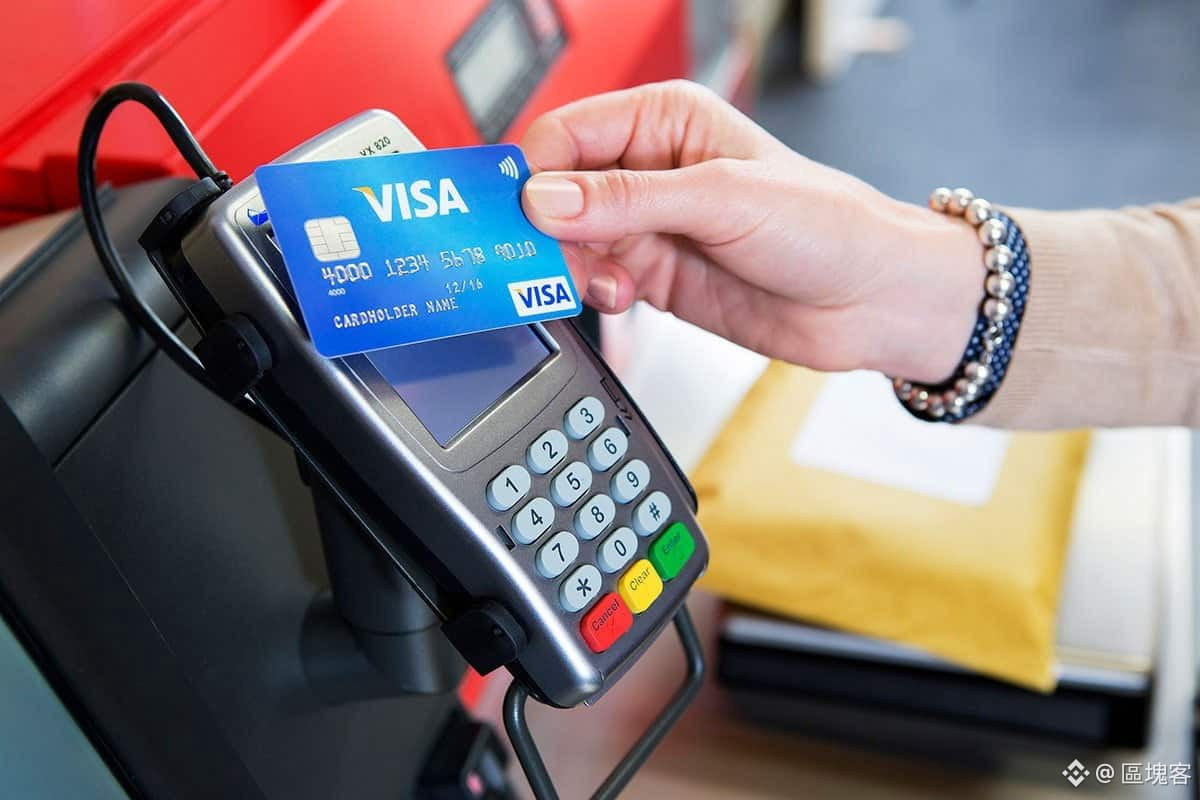
Can You Pay Worldwide With a Crypto Wallet Without Getting a Card? Visa Teams Up With Mesh to Connect to 175 Million Merchant LocationsCryptocurrency is one step closer to everyday spending!
Global payments giant Visa and crypto payment infrastructure company Mesh have announced a strategic partnership that aims to let users pay with digital assets such as Bitcoin and stablecoins directly from their existing crypto wallets at more than 175 million Visa-accepting locations worldwide—without first transferring the assets to a bank account or applying for a separate physical crypto debit card. The partnership could help overcome the barriers that have long hindered everyday cryptocurrency payments, but the launch date and the first supported wallets have yet to be announced.
No need to sell crypto first or get a separate card—your wallet balance becomes purchasing power directly.
Can You Pay Worldwide With a Crypto Wallet Without Getting a Card? Visa Teams Up With Mesh to Connect to 175 Million Merchant Locations
Cryptocurrency is one step closer to everyday spending!
Global payments giant Visa and crypto payment infrastructure company Mesh have announced a strategic partnership that aims to let users pay with digital assets such as Bitcoin and stablecoins directly from their existing crypto wallets at more than 175 million Visa-accepting locations worldwide—without first transferring the assets to a bank account or applying for a separate physical crypto debit card. The partnership could help overcome the barriers that have long hindered everyday cryptocurrency payments, but the launch date and the first supported wallets have yet to be announced.
No need to sell crypto first or get a separate card—your wallet balance becomes purchasing power directly.
387
·
--
BlackRock’s IBIT Attracts $665 Million in a Day! Bitcoin ETF Flows Reverse Sharply, but Can BTC Break Above $83,000?A major reversal in flows for U.S. spot Bitcoin ETFs!
According to the latest data from Farside Investors, U.S. spot Bitcoin ETFs recorded net inflows of $526.7 million on October 19. BlackRock’s IBIT alone attracted $665.2 million, reversing the outflows seen in the previous trading session. However, Bitcoin (BTC) quickly pulled back after reaching a high of $83,155 that day. During the Asian session on October 20, it was still hovering around $82,000, suggesting that the return of institutional funds has yet to help the price firmly break above $83,000.
BlackRock’s IBIT Attracts $665 Million in a Day! Bitcoin ETF Flows Reverse Sharply, but Can BTC Break Above $83,000?
A major reversal in flows for U.S. spot Bitcoin ETFs!
According to the latest data from Farside Investors, U.S. spot Bitcoin ETFs recorded net inflows of $526.7 million on October 19. BlackRock’s IBIT alone attracted $665.2 million, reversing the outflows seen in the previous trading session. However, Bitcoin (BTC) quickly pulled back after reaching a high of $83,155 that day. During the Asian session on October 20, it was still hovering around $82,000, suggesting that the return of institutional funds has yet to help the price firmly break above $83,000.
According to the latest data from Farside Investors, U.S. spot Bitcoin ETFs recorded net inflows of $526.7 million on October 19. BlackRock’s IBIT alone attracted $665.2 million, reversing the outflows seen in the previous trading session. However, Bitcoin (BTC) quickly pulled back after reaching a high of $83,155 that day. During the Asian session on October 20, it was still hovering around $82,000, suggesting that the return of institutional funds has yet to help the price firmly break above $83,000.
334
·
--
Verified
Article
JPMorgan’s JPM Coin Officially Arrives on Ethereum Mainnet! Kinexys Processes $7 Billion in Transactions Daily—Why Is Wall Street Choosing Ethereum?Wall Street banking giant JPMorgan is bringing its bank deposit token to the Ethereum mainnet!
Kinexys, JPMorgan’s blockchain division, announced on the 19th that its US dollar deposit token, JPM Coin (JPMD), has officially expanded to Ethereum Layer 1, allowing eligible institutional clients to transfer and settle funds directly on a public blockchain. JPMorgan said Ethereum’s deep on-chain liquidity and tokenized asset ecosystem were key reasons for choosing the Ethereum mainnet.
JPM Coin Expands from Base to Ethereum Mainnet—What Does JPMorgan See in It?
JPM Coin first officially launched on Base, the Ethereum Layer 2 network developed by Coinbase, in November 2025. B2C2, Coinbase, and Mastercard had already completed test transactions at the time. Now, JPMD is expanding to the Ethereum mainnet, meaning JPMorgan is no longer relying solely on Layer 2 networks and is bringing its institutional payment tool directly to Ethereum’s primary settlement layer.
JPMorgan’s JPM Coin Officially Arrives on Ethereum Mainnet! Kinexys Processes $7 Billion in Transactions Daily—Why Is Wall Street Choosing Ethereum?
Wall Street banking giant JPMorgan is bringing its bank deposit token to the Ethereum mainnet!
Kinexys, JPMorgan’s blockchain division, announced on the 19th that its US dollar deposit token, JPM Coin (JPMD), has officially expanded to Ethereum Layer 1, allowing eligible institutional clients to transfer and settle funds directly on a public blockchain. JPMorgan said Ethereum’s deep on-chain liquidity and tokenized asset ecosystem were key reasons for choosing the Ethereum mainnet.
JPM Coin Expands from Base to Ethereum Mainnet—What Does JPMorgan See in It?
JPM Coin first officially launched on Base, the Ethereum Layer 2 network developed by Coinbase, in November 2025. B2C2, Coinbase, and Mastercard had already completed test transactions at the time. Now, JPMD is expanding to the Ethereum mainnet, meaning JPMorgan is no longer relying solely on Layer 2 networks and is bringing its institutional payment tool directly to Ethereum’s primary settlement layer.
1
1.7k
·
--

Article
Can stablecoins earn 8% a year? Michael Saylor proposes a “BTC-backed dollar” to challenge USDT’s dominanceMichael Saylor, executive chairman of Strategy, the largest corporate holder of Bitcoin, has once again proposed an idea that could upend traditional finance.
Speaking at ParaFi Investor Day, Saylor said an ideal digital currency should combine the price stability of the U.S. dollar, capital backing from Bitcoin, and the ability to generate annual returns of 6% to 8%. He believes that if stablecoins could pay yields to holders, they might reshape a market currently dominated by USDT and USDC. However, the product remains at the conceptual stage, with no formal launch plans yet.
Saylor wants to create the “perfect dollar”: Can stablecoins also earn 8%?
Can stablecoins earn 8% a year? Michael Saylor proposes a “BTC-backed dollar” to challenge USDT’s dominance
Michael Saylor, executive chairman of Strategy, the largest corporate holder of Bitcoin, has once again proposed an idea that could upend traditional finance.
Speaking at ParaFi Investor Day, Saylor said an ideal digital currency should combine the price stability of the U.S. dollar, capital backing from Bitcoin, and the ability to generate annual returns of 6% to 8%. He believes that if stablecoins could pay yields to holders, they might reshape a market currently dominated by USDT and USDC. However, the product remains at the conceptual stage, with no formal launch plans yet.
Saylor wants to create the “perfect dollar”: Can stablecoins also earn 8%?
396
·
--

Article
U.S. Stock Tokenization Hits a Wall! 9 Giants, Including Broadcom and CoreWeave, Reject OKXICE Listings—Why Is Wall Street Saying No?U.S. Stock Tokenization Wave Faces Corporate Backlash!
According to the latest notice published by OKXICE on the 15th, nine U.S. companies—including Broadcom, CoreWeave, Verizon, and UnitedHealth—have formally objected to their stocks being tokenized and traded on the OKXICE platform. OKXICE is a joint venture between cryptocurrency exchange OKX and Intercontinental Exchange (ICE), the parent company of the New York Stock Exchange. It had originally planned to bring 63 U.S. stocks onto the platform, offering around-the-clock trading on the blockchain.
9 Companies Say No! New SEC Rules Give Issuers Veto Power
U.S. Stock Tokenization Hits a Wall! 9 Giants, Including Broadcom and CoreWeave, Reject OKXICE Listings—Why Is Wall Street Saying No?
U.S. Stock Tokenization Wave Faces Corporate Backlash!
According to the latest notice published by OKXICE on the 15th, nine U.S. companies—including Broadcom, CoreWeave, Verizon, and UnitedHealth—have formally objected to their stocks being tokenized and traded on the OKXICE platform. OKXICE is a joint venture between cryptocurrency exchange OKX and Intercontinental Exchange (ICE), the parent company of the New York Stock Exchange. It had originally planned to bring 63 U.S. stocks onto the platform, offering around-the-clock trading on the blockchain.
9 Companies Say No! New SEC Rules Give Issuers Veto Power
221
Log in to explore more content
Join global crypto users on Binance Square
⚡️ Get latest and useful information about crypto.
💬 Trusted by the world’s largest crypto exchange.
👍 Discover real insights from verified creators.
Email / Phone number