
محمد GLH
30 Posts

محمد GLH
 Square Verified
Report
Block User
متخصص في متابعة الأسواق المالية وتحليل حركة السيولة
Open Trade
High-Frequency Trader
11.3 Months
1 Following
6 Followers
13 Liked
Posts
Portfolio
All
Quotes
PINNED
·
--
🚨👀 Did you miss the NVIDIA train? Don’t ignore what’s happening in the world of RWA!
A name worth putting on your radar: SECURITIZE (SECZ) 🔥
Imagine going back to 2020, when AI was still a bet on the future, and deciding to invest in NVIDIA before it became the talk of the world!
A single share you bought back then would now be worth about 40 shares after successive stock splits! 🤯
Big opportunities don’t always announce themselves loudly… and sometimes the market doesn’t realize the scale of a transformation until the numbers start speaking.
Now, there’s a sector worth watching closely:
🚀 RWA – tokenization of real-world assets.
Imagine real estate, bonds, and financial assets moving onto the blockchain!
That’s where Securitize comes in, one of the companies working in digital asset tokenization.
📊 The question worth exploring:
Could RWA be one of the biggest investment shifts to come?
And can Securitize capitalize on this shift and achieve significant growth?
⚡ I’m not saying it’s the next NVIDIA, nor am I guaranteeing that the stock will repeat any past performance, but I believe this sector is worth studying and monitoring.
Follow me… the most important investment opportunity may be the one we study before it becomes the talk of the town!
#SECZ #Securitize #RWA #BlackRock #Ondo #NVIDIA #Oracle #Amazon #Tokenization #Blockchain #RealWorldAssets #DigitalAssets #Crypto #Web3 #AI #Investing #Trading #BinanceSquare
1
70
·
--
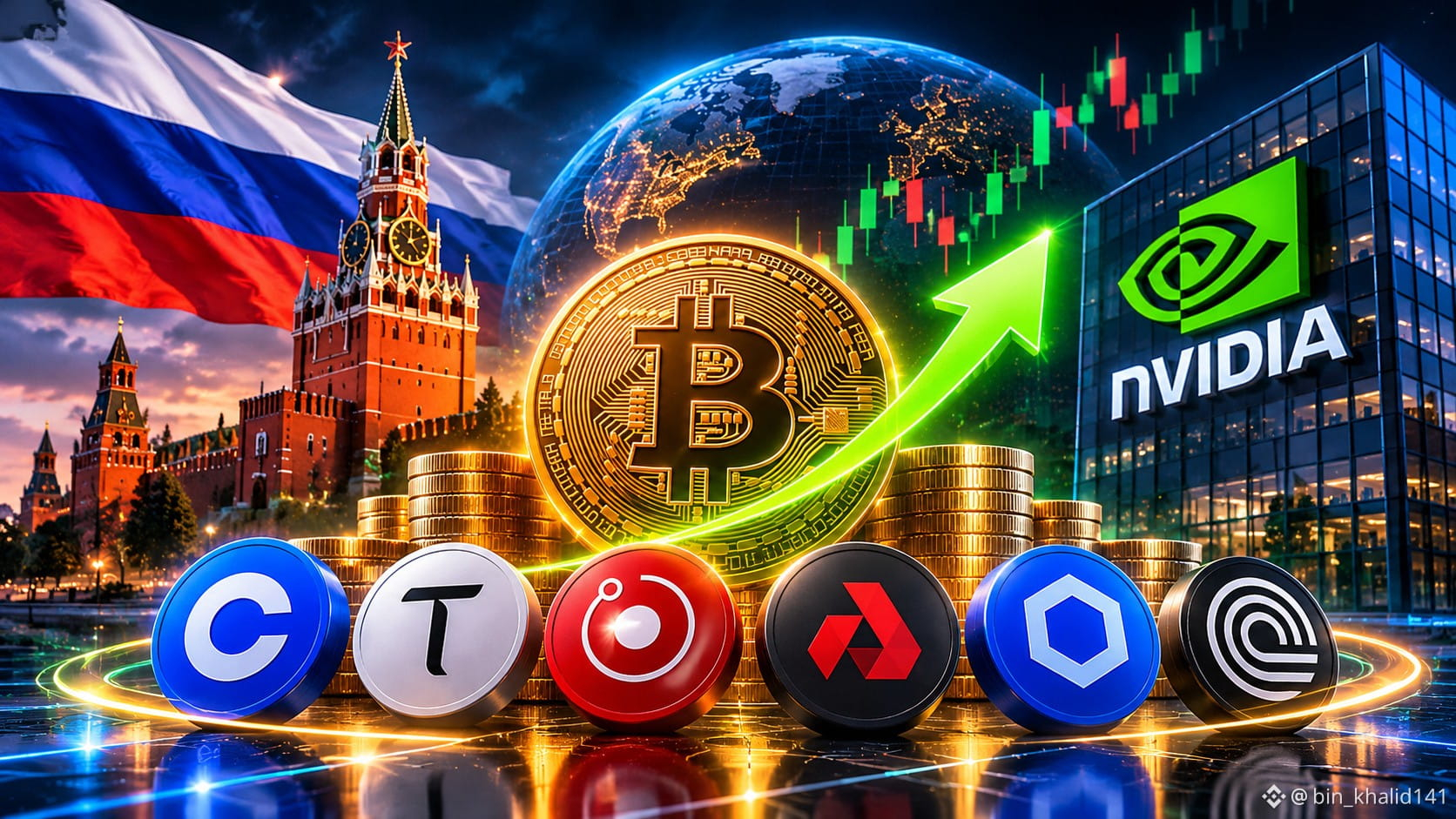
Starting today, November 17, Russia is beginning to implement new rules that allow individual investors to access Bitcoin, Ethereum, and USDT through regulated channels.
Imagine new markets entering the world of crypto just as we await NVIDIA’s results, which could shift the direction of liquidity in technology markets.
If NVIDIA’s results disappoint, we could see liquidity rotate and investors search for alternative opportunities—and the cryptocurrency market may be one of the beneficiaries.
But there’s another factor worth watching: Anthropic’s anticipated IPO, which could draw some liquidity toward the AI sector and create volatility as investment opportunities compete for capital.
Will some liquidity flow into cryptocurrencies, or will investors steer clear of high-risk assets altogether?
COIN_TAO_RENDER_AKT_LINK_ONDO
101
·
--
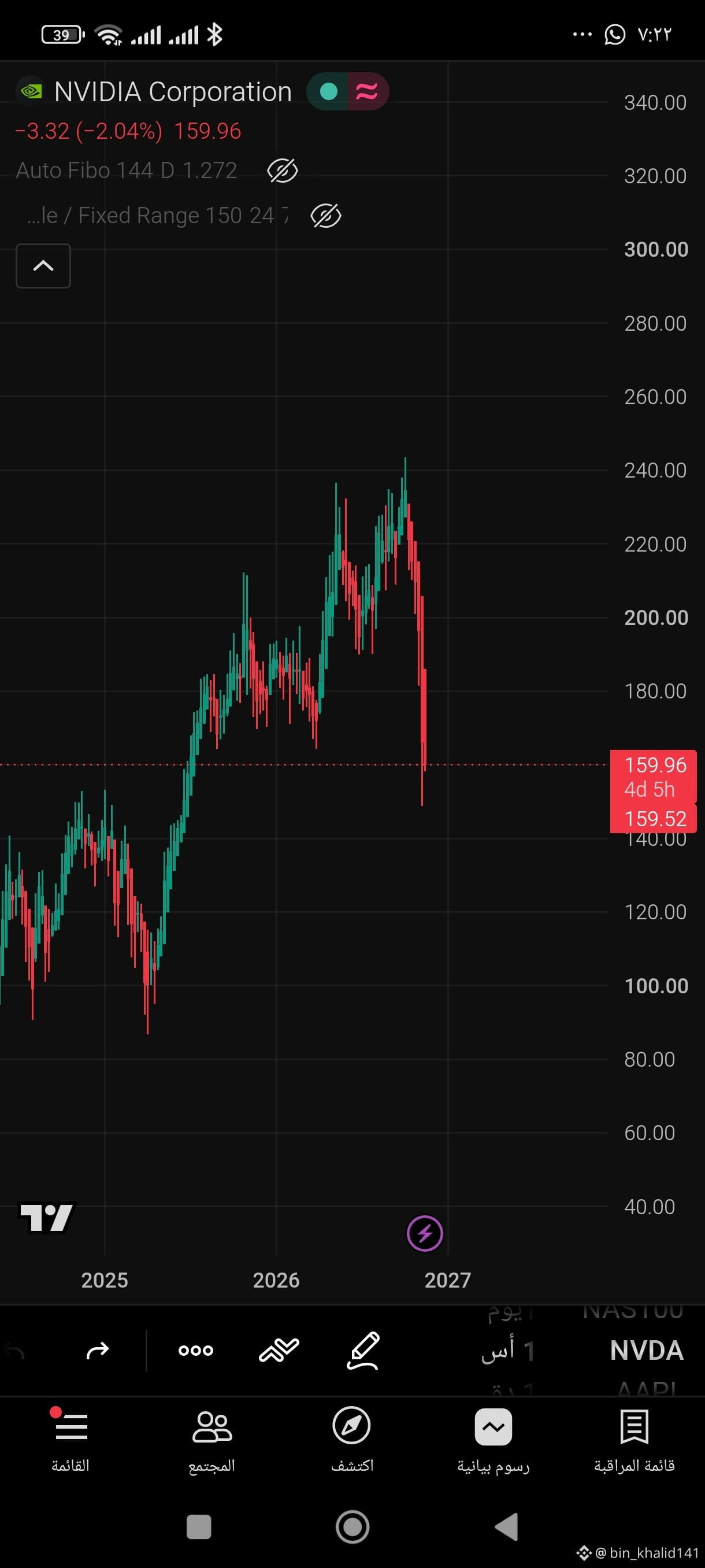
One day left until NVIDIA announces its earnings 👀
The most important question isn’t just how NVIDIA performs, but where the money will flow next.
Focus on these 3 scenarios:
🟢 Scenario 1: Strong results and positive guidance, with money flowing back into semiconductors, AI, and energy. Confirmation would come from rising sector stocks and a broadening rally.
🟡 Scenario 2: Excellent results, but the market sells the news, and we see a rotation into defensive sectors and gold. We’ll watch how these sectors perform and whether money flows into them.
🔴 Scenario 3: Disappointing results or forecasts, with money continuing to flow out of tech and crypto into cash and bonds. Confirmation would come from increased selling pressure and higher demand for Treasury securities.
Don’t watch NVIDIA’s price alone—watch the flow of money between sectors and trading volume.
Where do you expect money to flow next: AI, gold, energy, or crypto?
#NVIDIA #SmartMoney #Crypto #AI
98
·
--
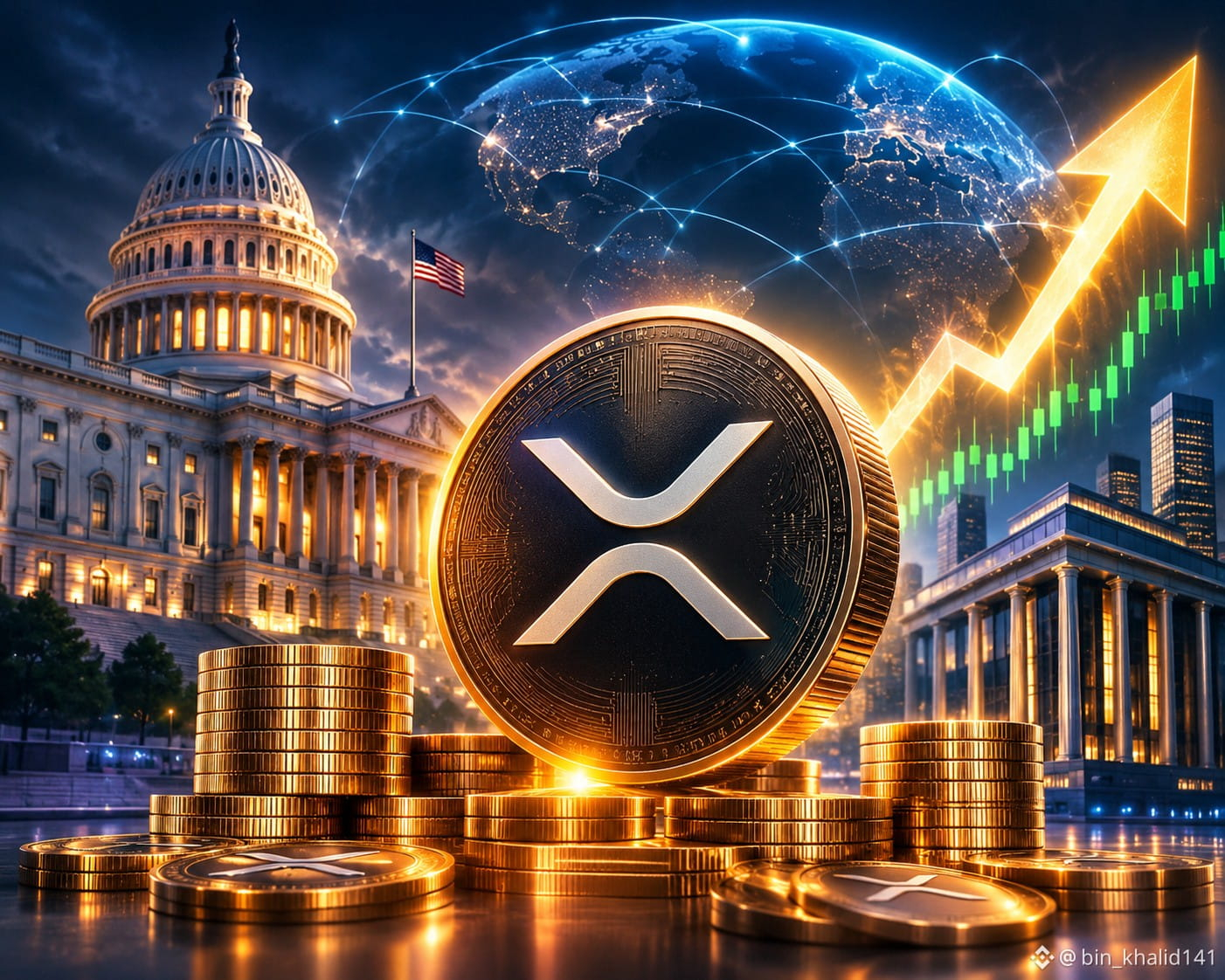
XRP could be facing a huge opportunity!
Remember a few months ago, there was a lot of buzz around the crypto market and crypto regulation legislation in the U.S. There was significant and notable accumulation of XRP, because it’s considered one of the cryptocurrencies that could benefit most from regulating the crypto market.
But the failed vote in the House doesn’t mean the bill is dead or the law has been buried. There are disagreements and suspicions of conflicts of interest related to projects associated with the Trump family.
I believe crypto regulation legislation will eventually pass, one way or another, because the market and financial institutions need clear rules.
Banks and the financial system handle flows and liquidity worth trillions of dollars, and there’s talk of a figure as high as $27 trillion.
Imagine if even a small portion of that liquidity gradually moved into the world of blockchain, and XRP were among the currencies used to provide liquidity and facilitate transfers between institutions!
At that point, we could see a major price explosion in XRP.
The coin’s maximum supply is 100 billion, and I think we’re in an area worth quietly accumulating in before the picture becomes clear to everyone.
My advice to those who believe in the project’s future and are investing for the long term: buying on the spot market is better than entering contracts and using leverage.
1
1.9k
·
--
Verified
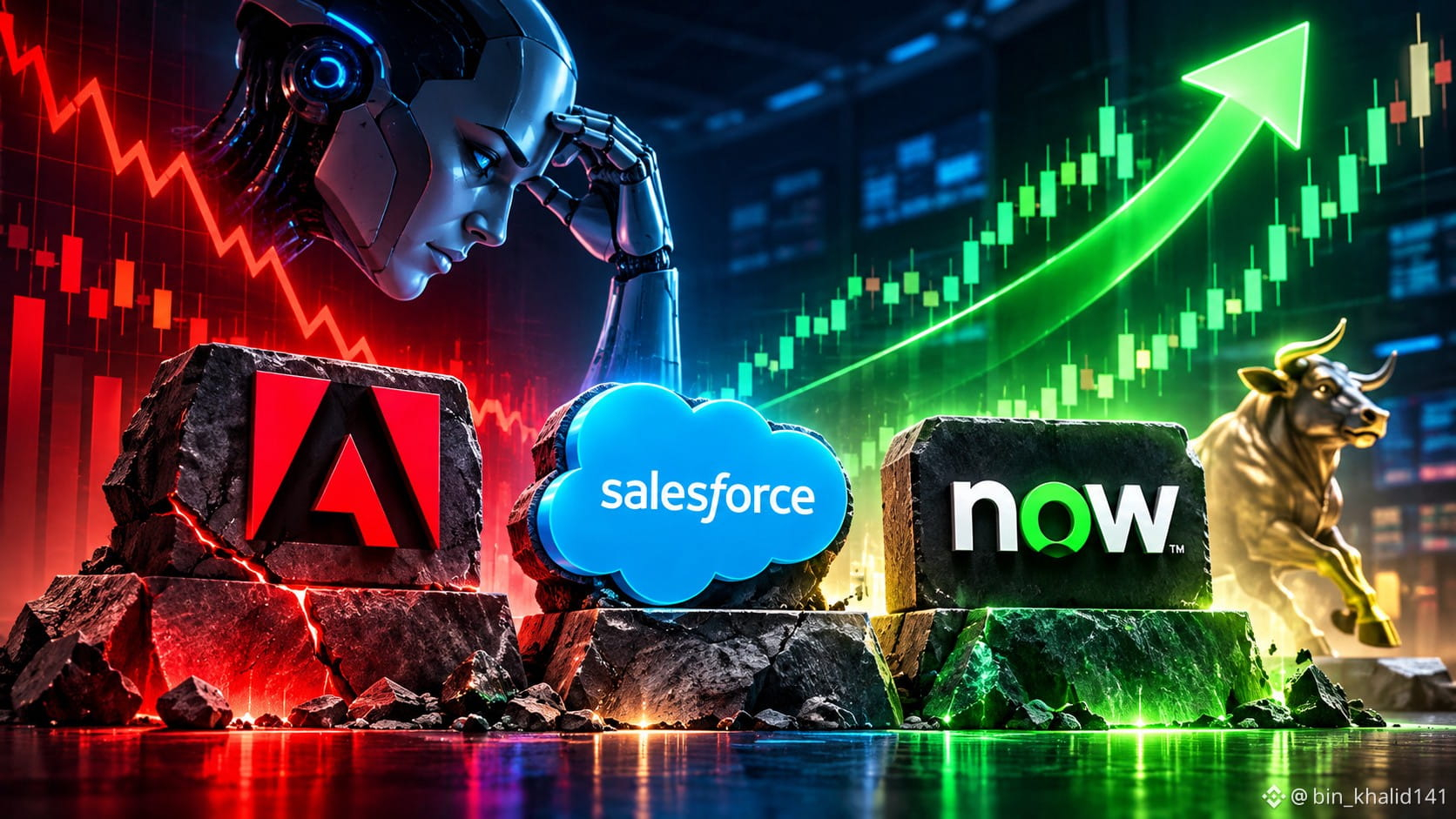
The stocks punished by AI at the start of the boom, and hit by steep crashes amid fears that new technologies would replace their businesses, are now back in the spotlight and shining once again!
Some companies are worth taking another look at and considering as investment opportunities. The standouts include:
- ADBE – Adobe
- CRM – Salesforce
- NOW – ServiceNow
But there’s another angle that many people are overlooking!
Companies like OpenAI and Anthropic develop AI technologies and sell them to businesses.
That’s where software companies come in: they take these technologies and integrate them into their software, then offer them to users as ready-to-use, easy-to-use products for a monthly or annual subscription.
For example, instead of going to an AI company and trying to build their own tools, a customer can subscribe to Adobe and use its AI-powered design tools, or use Salesforce to manage sales, customer service, and AI agents.
In other words, AI companies provide the technology, and software companies turn it into ready-made products that customers can buy.
And that could be where the big profits lie!
Sometimes the market punishes companies out of fear of the future, before the real picture becomes clear.
98
·
--
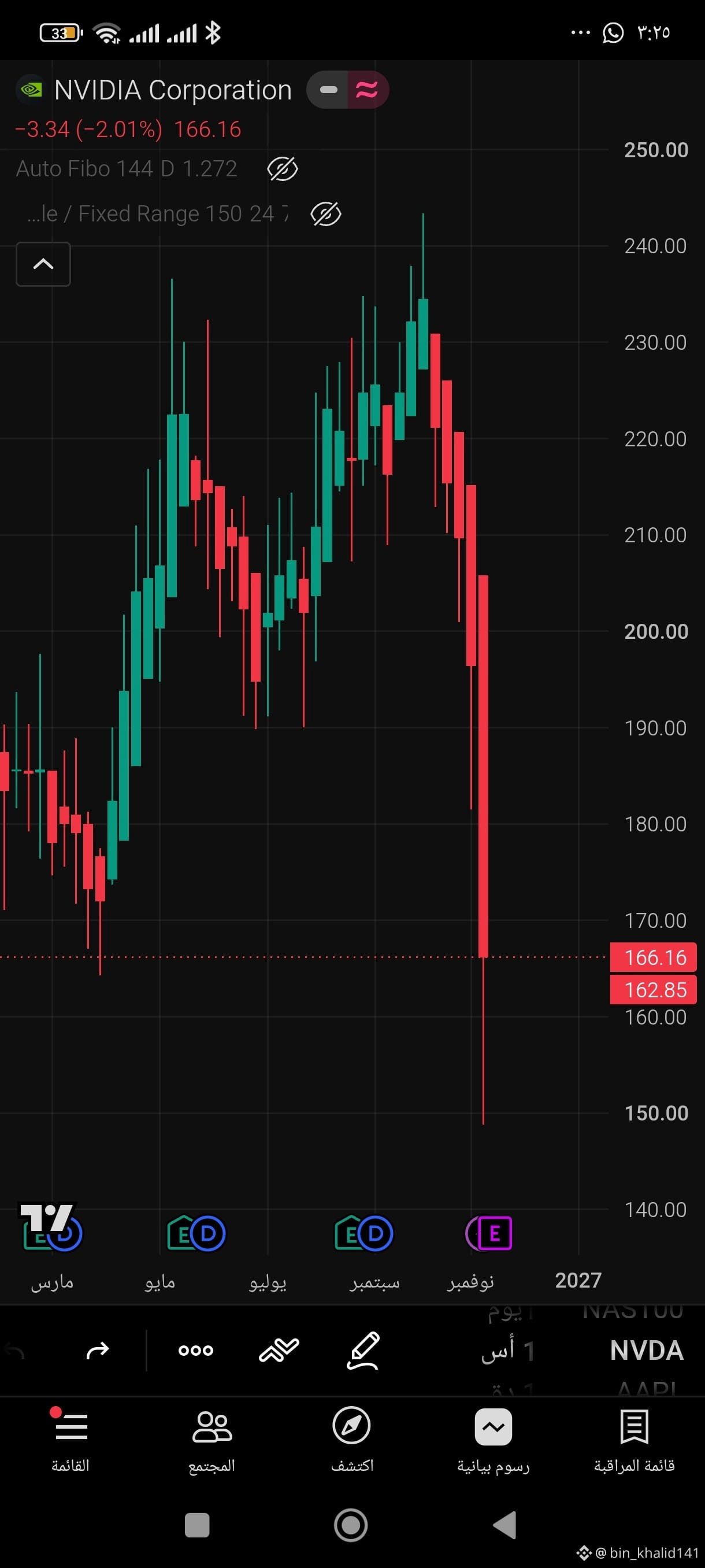
👀 NVIDIA (NVDA) under the spotlight!
November 17 is the date of NVIDIA’s earnings announcement.
The market is watching revenue figures, AI sector growth, and demand for Blackwell chips.
The question isn’t just: Will NVIDIA beat analysts’ expectations?
More importantly: Will the results be strong enough to push the stock to a new high? Or have elevated expectations already priced in the news?
📊 I’m watching the stock ahead of the announcement and not rushing into a position.
Do you expect a positive surprise from NVIDIA, or profit-taking after the announcement?
131
·
--
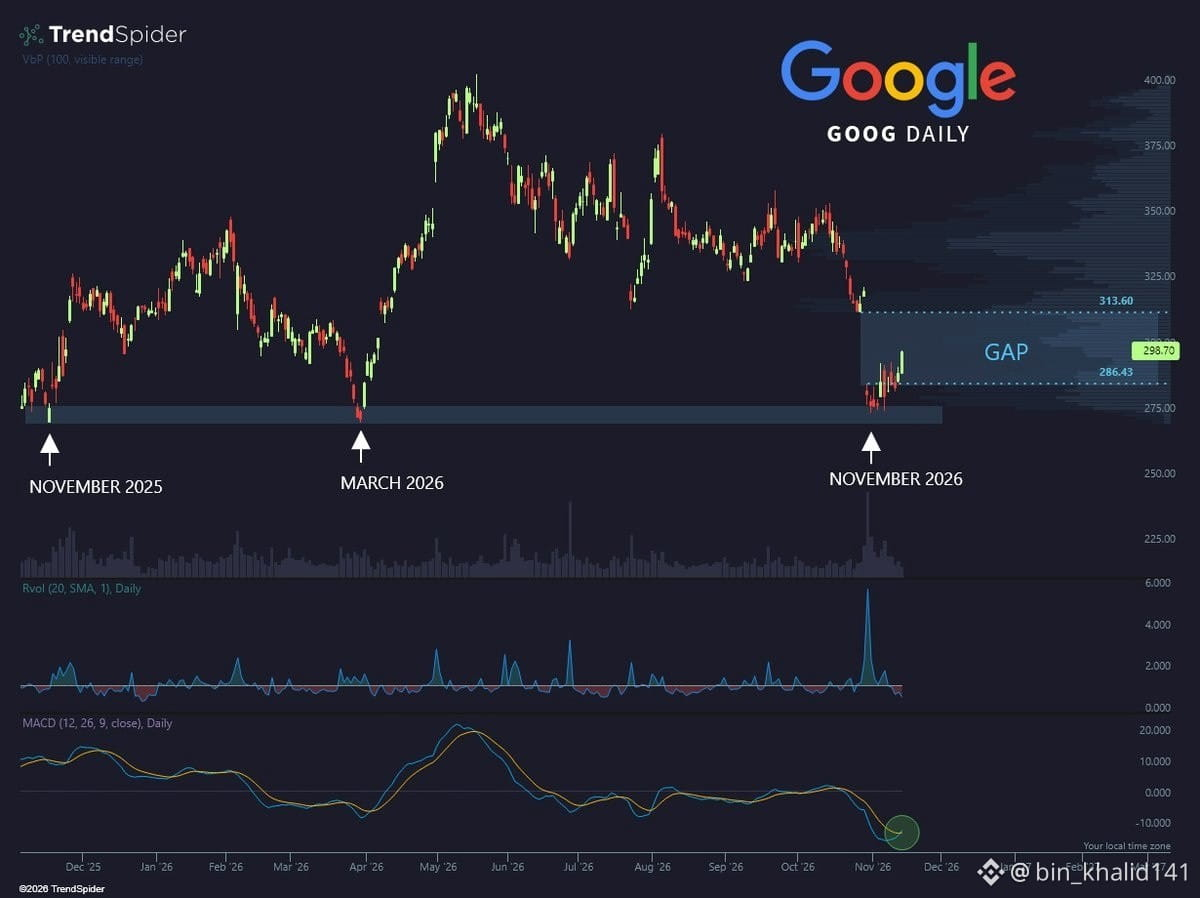
Even more attractive financially: Google’s $GOOG stock has a price-to-earnings (P/E) ratio of around 15.4, compared with a three-year historical average of about 24. This highlights that the stock’s valuation has fallen below its historical average.
Even more attractive financially: Google’s $GOOG stock has a price-to-earnings (P/E) ratio of around 15.4, compared with a three-year historical average of about 24. This highlights that the stock’s valuation has fallen below its historical average.
GOOGL-2.51%
GOOGUS+0.11%
127
·
--
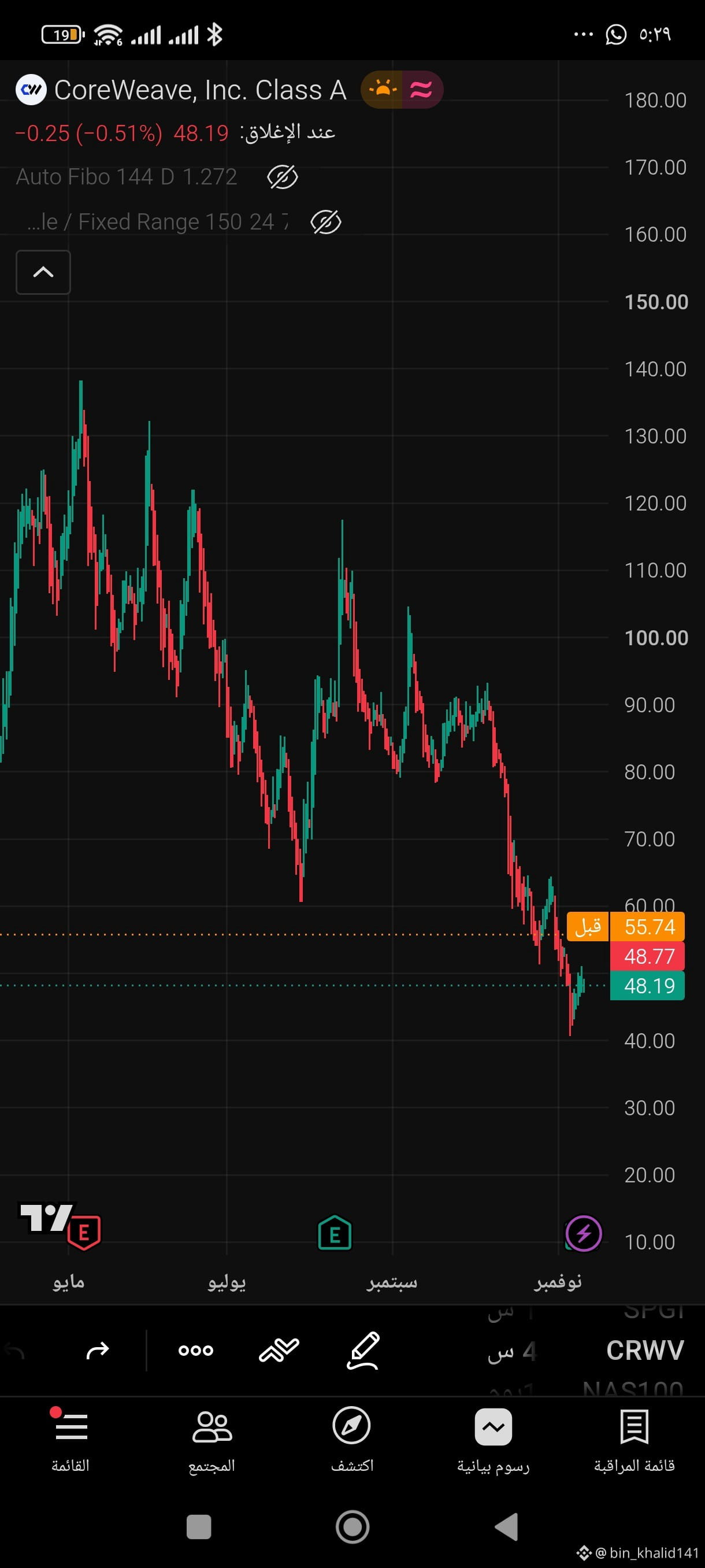
For those asking why the CoreWeave ($CRWV) stock isn’t taking off:
The company has huge demand for its AI services, and its revenue is growing quickly, but it has a major problem: scaling up is extremely expensive!
It needs billions to build data centers, buy NVIDIA processors, and run them. On top of that, it has substantial debt and interest payments.
So the company is growing quickly, but the cost of growth eats up a large chunk of its profits.
The point I want to make is that institutions analyze individual behavior. They know people expect to make a profit overnight, so they make the stock’s climb boring—even when earnings are great. Just look at Microsoft (MSFT): they pushed it up and brought it down, pushed it up and brought it down until investors went crazy. Then there was no big explosion; it rose slowly until it broke its previous high. The same goes for META.
1
1
152
·
--
Remember the dot-com bubble in 2000? Cisco was one of the big stocks back then, and after the bubble burst, it crashed hard.
Today, with the AI boom, we’ve seen stocks like Dell, Micron, and SanDisk skyrocket and get their share of the boom.
But here’s the question that caught my attention: Is it networking giant Cisco’s turn? 👀
Will we see it benefit from the AI boom this time and get its share, like the others?
💣💣
Today, with the AI boom, we’ve seen stocks like Dell, Micron, and SanDisk skyrocket and get their share of the boom.
But here’s the question that caught my attention: Is it networking giant Cisco’s turn? 👀
Will we see it benefit from the AI boom this time and get its share, like the others?
💣💣
151
·
--
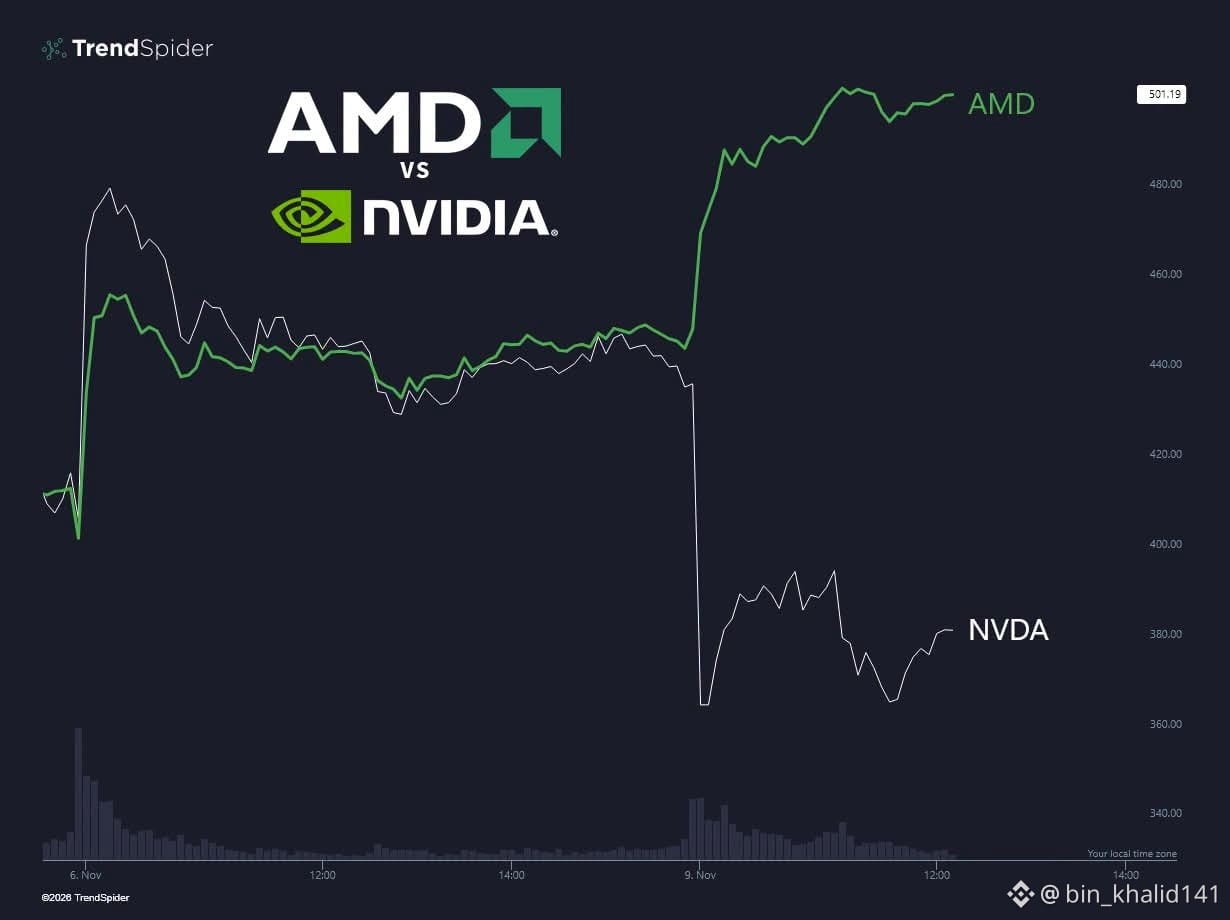
Guys, look at what's happening between AMD and NVDA 👀🔥
They’re both in the semiconductor sector, but their performance is completely different!
AMD has clearly attracted the money and surged ahead, while NVDA has come under heavy pressure and is still trying to recover.
The question worth watching: Has money started shifting from Nvidia to AMD, or is this just a temporary move?
Keep an eye on AMD and NVDA... the competition is getting exciting! 🔥
144
·
--
We may see another correction in the Nasdaq and semiconductor stocks, and a dip to 22,800—and then 22,140 points—is not out of the question.
If you got in at lower levels and have made profits, don't get too greedy. Locking in profits and protecting your positions is more important than waiting for more. 👀
And if you're thinking of buying now, hold off for a bit—don't let lower prices tempt you.
The market may give us better prices than these!
Stocks and tickers to watch:
$QQQ $NVDA $AMD $AVGO $MU $TSM $ASML $AMAT $SMCI $ARM $SOXX $SOXL
371
·
--
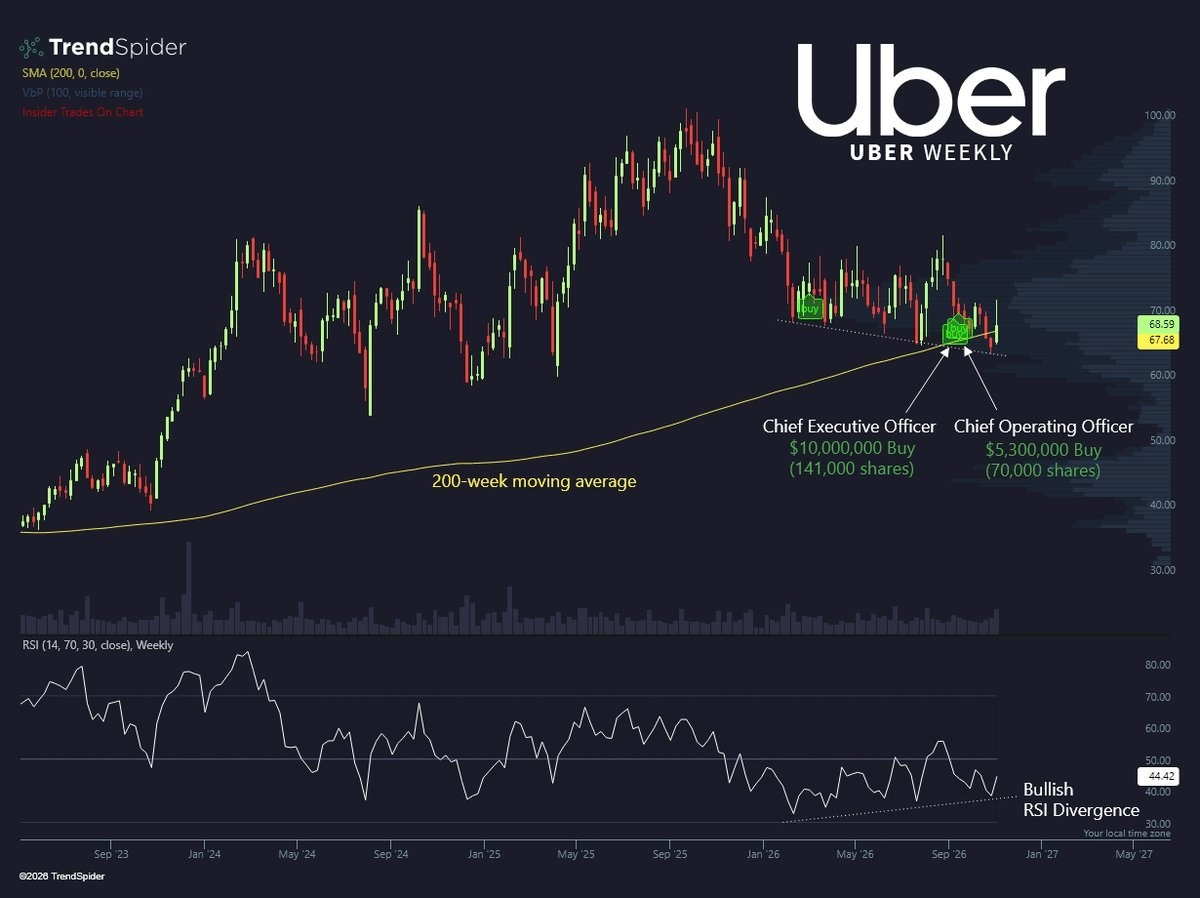
As Uber’s stock falls and approaches its 200-week moving average, many traders might find the move alarming, but some are starting to watch the area differently. 👀
Look at what stands out in the image: the CEO bought $10 million worth of shares, and the COO bought $5.3 million worth, while positive divergence appeared on the weekly indicator.
But there’s a big difference between buying a stock just because it has fallen and buying one that has reached historical support and is starting to show signs of interest.
Sometimes the market offers the best opportunities when most traders are fearful, but confirmation still comes from price action.
132
·
--
Lately, I’ve been keeping a closer eye on two sectors…
In AI, I’m interested in $TAO, $AKT, and $NOS.
And in real-world asset tokenization (RWA), I’m watching $ONDO, $CFG, and $PLUME.
For me, the question isn’t which coin is cheaper, but which project could become a key part of the market’s infrastructure in the years ahead.
The next opportunity might be in a sector that many people still haven’t paid enough attention to.
I’m watching both… Are you betting on AI or asset tokenization?
174
·
--
With the market correction we’re experiencing right now, and after the Democrats’ election victory, greed has started to take hold of many traders.
They see every dip as a buying opportunity, call every red stock a bottom, and rush to buy collapsing cryptocurrencies on the grounds that they’ve become cheap.
But there’s a big difference between buying fear and catching a falling knife!
Not every dip is an opportunity, and not every stock that’s down 30% is worth buying.
Liquidity shifts, sectors rotate, and sometimes the market punishes those who rush in before rewarding the patient.
I’d rather wait for signs that selling pressure is being absorbed and demand is returning than be the first to buy during a crash.
The question is: Are you using the correction to buy, or waiting for the market’s bleeding to stop?
3
1.9k
·
--
In the market, not every dip means the rally is over, and not every rise means the opportunity has passed.
Sometimes, money flows out of semiconductors and into defensive stocks and healthcare; other times, it leaves gold in search of opportunities in other sectors.
I watch the footprint of institutions and whales, because the movement of money matters more to me than price movements themselves.
Smart money doesn’t disappear… it just changes direction.
109
·
--
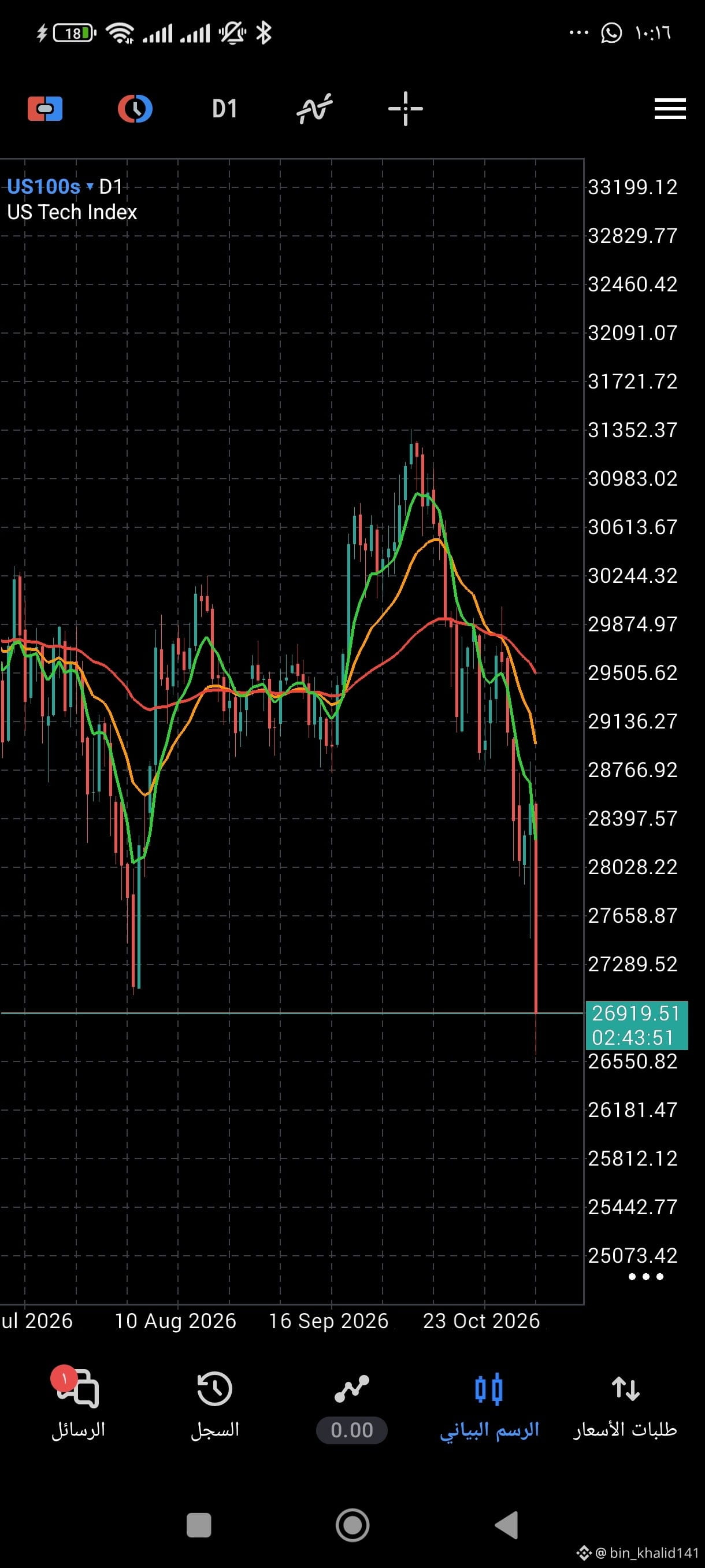
Nasdaq holding at 27,000 strongly boosts technology and growth stocks, but it typically puts downward pressure on safe havens like gold or drains liquidity from them. It may also temporarily slow liquidity flowing into crypto as it shifts toward traditional stocks.
QQQ-SOXL-NAS100
Nasdaq holding at 27,000 strongly boosts technology and growth stocks, but it typically puts downward pressure on safe havens like gold or drains liquidity from them. It may also temporarily slow liquidity flowing into crypto as it shifts toward traditional stocks.
QQQ-SOXL-NAS100
QQQ-SOXL-NAS100
181
·
--
A trading opportunity on the Nasdaq NAS100
Buy at 27050
Stop loss: 26600
Target: 28840
If the Nasdaq index isn't available on the platform, enter the semiconductor ETF
ETF symbol: SOXL
Buy between 42 and 44
Stop loss at 39.79
Target: 83
Open-ended target
A trading opportunity on the Nasdaq NAS100
Buy at 27050
Stop loss: 26600
Target: 28840
If the Nasdaq index isn't available on the platform, enter the semiconductor ETF
ETF symbol: SOXL
Buy between 42 and 44
Stop loss at 39.79
Target: 83
Open-ended target
Buy at 27050
Stop loss: 26600
Target: 28840
If the Nasdaq index isn't available on the platform, enter the semiconductor ETF
ETF symbol: SOXL
Buy between 42 and 44
Stop loss at 39.79
Target: 83
Open-ended target
76
·
--
📉 Semiconductor stocks to watch
Oracle, Nvidia, SanDisk, Micron, Broadcom, and AMAT…
These stocks have reached strong support levels worth watching 👀
Are we seeing a rebound that will bring liquidity back to the sector, or is the decline not over yet?
Opportunities emerge during times of fear, but entering requires confirmation.
#ORCL #NVDA #SNDK #MU #AVGO #AMAT #AI #Stocks
130
·
--
🚀
$ORCL
The price is incredible—seize the opportunity NOW
🚀
$ORCL
The price is incredible—seize the opportunity NOW
$ORCL
The price is incredible—seize the opportunity NOW
1
·
--
A sharp selloff is hitting chip and AI stocks, while attention is beginning to shift toward healthcare and defensive consumer companies.
The market shows no mercy to those chasing the rally... and liquidity always leaves us signals worth watching.
#LLY #EliLilly #ADBE #Adobe #PEP #PepsiCo #MCD #McDonalds #NVDA #Nvidia #INTC #Intel #SNDK #SanDisk #USStocks #Semiconductors #ArtificialIntelligence #HealthcareSector #SmartMoney #Trading
The market shows no mercy to those chasing the rally... and liquidity always leaves us signals worth watching.
#LLY #EliLilly #ADBE #Adobe #PEP #PepsiCo #MCD #McDonalds #NVDA #Nvidia #INTC #Intel #SNDK #SanDisk #USStocks #Semiconductors #ArtificialIntelligence #HealthcareSector #SmartMoney #Trading
125
Log in to explore more content
Join global crypto users on Binance Square
⚡️ Get latest and useful information about crypto.
💬 Trusted by the world’s largest crypto exchange.
👍 Discover real insights from verified creators.
Email / Phone number
Trending Topics
A Packed Week of Earnings and Data Tests Markets
81,486 views
488 Discussing
Nvidia Earnings, Fed Minutes and Anthropic IPO Set to Test AI Stocks and Crypto
Binance News
·148 Likes
·25.4k views
AnthropicIPOTestsInvestorAppetiteForAI
160,908 views
1,717 Discussing
NvidiaBoardNotConsideringHuang’sReturnasCEO
15,437 views
213 Discussing