Binance Square

Big dog127

Open Trade
Frequent Trader
5.9 Years
Follow me for more!!!!!!!! 50% signals 🚀🚀🔥🔥🍻
48 Following
7.1K+ Followers
11.0K+ Liked
1.9K+ Shared
All Content
Portfolio
PINNED
--
The Hardest Crypto Lesson I Ever Learned My Story: In 2021, I aped into LUNA at $80 because “everyone said it’s the next big thing.” I thought, this is it — my Lambo moment. A month later? LUNA = $0.0001 Result: – Portfolio down -80% – The rest? Saved by a miracle. – Lesson: Bull markets are the most dangerous time to FOMO. Now, I’m flipping the mic to you: 1. What was your most painful crypto loss? (LUNA? FTX? Meme coins?) 2. What lesson did it teach you? 3. Who’s to blame: You, the market, or the “guru”? Let’s be honest — your story could save someone else. And be real… How much have you lost to these 3 deadly mistakes: 1. Trusting “100% guaranteed” Telegram signals 2. Holding to zero out of pride 3. Sending crypto to the wrong chain Drop your number in the comments. You’re not alone. #CryptoLessons #LUNA #BTC #BearMarketWisdom #HODLwithSense
The Hardest Crypto Lesson I Ever Learned

My Story:
In 2021, I aped into LUNA at $80 because “everyone said it’s the next big thing.”
I thought, this is it — my Lambo moment.

A month later?
LUNA = $0.0001

Result:
– Portfolio down -80%
– The rest? Saved by a miracle.
– Lesson: Bull markets are the most dangerous time to FOMO.

Now, I’m flipping the mic to you:
1. What was your most painful crypto loss? (LUNA? FTX? Meme coins?)
2. What lesson did it teach you?
3. Who’s to blame: You, the market, or the “guru”?

Let’s be honest — your story could save someone else.

And be real…
How much have you lost to these 3 deadly mistakes:
1. Trusting “100% guaranteed” Telegram signals
2. Holding to zero out of pride
3. Sending crypto to the wrong chain

Drop your number in the comments.

You’re not alone.

#CryptoLessons #LUNA #BTC #BearMarketWisdom #HODLwithSense
PINNED
After 4 years in the crypto market, I've learned some key insights that you can grasp in just 2 minutes: 🤏 1. Regardless of market conditions, only 8% of people will own 21 million Bitcoin. 2. Financial, capital, and risk management skills are far more crucial—100 times more—than technical analysis or crypto research. 3. You can earn passive income in crypto without active trading. While Bitcoin has averaged over 100% growth per year for the past 15 years, the majority fail to profit due to a mindset focused on quick riches. If you can't commit at least 4 hours a day to crypto, consider allocating 70% to Bitcoin and 30% to Ethereum. Trust no one: It often leads to hope, disappointment, and mistakes. Educate yourself and take responsibility for your decisions to gain valuable experience. The goal of investing should be to enhance life’s meaning. If crypto helps you achieve that, pursue it; if not, reconsider your approach. Crypto has evolved into a financial market influenced by macroeconomics and linked to mainstream finance. Don’t be swayed by naysayers; when something becomes widely accepted, the best opportunities may be lost. Act while you can! Invest wisely, make meaningful decisions, and let crypto lead you to a brighter future. #CryptoInvesting #ethbeta #Write2Earn! #BinanceTurns7 $BTC $ETH $SOL {spot}(ETHUSDT) {spot}(SOLUSDT)
After 4 years in the crypto market, I've learned some key insights that you can grasp in just 2 minutes: 🤏

1. Regardless of market conditions, only 8% of people will own 21 million Bitcoin.
2. Financial, capital, and risk management skills are far more crucial—100 times more—than technical analysis or crypto research.
3. You can earn passive income in crypto without active trading.

While Bitcoin has averaged over 100% growth per year for the past 15 years, the majority fail to profit due to a mindset focused on quick riches. If you can't commit at least 4 hours a day to crypto, consider allocating 70% to Bitcoin and 30% to Ethereum.

Trust no one: It often leads to hope, disappointment, and mistakes. Educate yourself and take responsibility for your decisions to gain valuable experience.

The goal of investing should be to enhance life’s meaning. If crypto helps you achieve that, pursue it; if not, reconsider your approach.

Crypto has evolved into a financial market influenced by macroeconomics and linked to mainstream finance.

Don’t be swayed by naysayers; when something becomes widely accepted, the best opportunities may be lost. Act while you can!

Invest wisely, make meaningful decisions, and let crypto lead you to a brighter future.

#CryptoInvesting #ethbeta #Write2Earn! #BinanceTurns7 $BTC $ETH $SOL
--
Bullish
🚨 POWELL JUST SHOCKED THE MARKETS — WITHOUT EVEN RAISING HIS VOICE 🔥 Jerome Powell didn’t need a dramatic speech or breaking news headline. All it took was a single phrase investors have been waiting months to hear: “We’re seeing clear progress on inflation.” That one line sent shockwaves across every market within seconds. Crypto spiked. Stocks ripped higher. Bonds surged. Charts across the board lit up like a Fourth of July screen saver. It was instant, aggressive, and global. But then came the reality check — and Powell delivered it with perfect timing. He warned that while inflation progress is happening, celebrating too early could lead to a painful reversal. No victory lap yet. No guarantees. No promises of rate cuts. Just a reminder that the Fed is watching the data, not the hype. This mix of hope + caution is exactly what fuels volatility. Analysts on Wall Street immediately scrambled to rewrite their forecasts. Powell’s tone alone has now become the biggest catalyst for how 2024 could end — with either: 🔥 A year-end melt-up fueled by rate-cut optimism or ❄️ A sharp correction if the Fed decides inflation isn’t cooling fast enough Right now, Powell’s every pause, every phrase, every microscopic hint is steering the macro narrative. He’s not just giving speeches — he’s moving trillions in real time with subtle signals the market is trying desperately to decode. And while the macro world is reacting, look at who’s stealing the spotlight in the middle of all this chaos: 💛 $PENGU — up +33.73% and still showing strong momentum 💜 $PARTI — gaining traction as buyers rotate in 🟡 $TURBO — tightening up and setting the stage for a breakout move The market isn’t sleeping anymore. Liquidity is flowing. Sentiment is shifting. Powell didn’t just speak — he flipped the entire playbook. Stay sharp. The volume is turning up, volatility is here, and smart money is already positioning for what comes next. 📈🔥 {spot}(TURBOUSDT) {spot}(PARTIUSDT) {spot}(PENGUUSDT)
🚨 POWELL JUST SHOCKED THE MARKETS — WITHOUT EVEN RAISING HIS VOICE 🔥

Jerome Powell didn’t need a dramatic speech or breaking news headline. All it took was a single phrase investors have been waiting months to hear:

“We’re seeing clear progress on inflation.”

That one line sent shockwaves across every market within seconds.

Crypto spiked. Stocks ripped higher. Bonds surged.
Charts across the board lit up like a Fourth of July screen saver. It was instant, aggressive, and global.

But then came the reality check — and Powell delivered it with perfect timing.

He warned that while inflation progress is happening, celebrating too early could lead to a painful reversal. No victory lap yet. No guarantees. No promises of rate cuts. Just a reminder that the Fed is watching the data, not the hype.

This mix of hope + caution is exactly what fuels volatility. Analysts on Wall Street immediately scrambled to rewrite their forecasts. Powell’s tone alone has now become the biggest catalyst for how 2024 could end — with either:

🔥 A year-end melt-up fueled by rate-cut optimism
or
❄️ A sharp correction if the Fed decides inflation isn’t cooling fast enough

Right now, Powell’s every pause, every phrase, every microscopic hint is steering the macro narrative. He’s not just giving speeches — he’s moving trillions in real time with subtle signals the market is trying desperately to decode.

And while the macro world is reacting, look at who’s stealing the spotlight in the middle of all this chaos:

💛 $PENGU — up +33.73% and still showing strong momentum
💜 $PARTI — gaining traction as buyers rotate in
🟡 $TURBO — tightening up and setting the stage for a breakout move

The market isn’t sleeping anymore. Liquidity is flowing. Sentiment is shifting.
Powell didn’t just speak — he flipped the entire playbook.

Stay sharp. The volume is turning up, volatility is here, and smart money is already positioning for what comes next. 📈🔥
Today marks a major moment for Binance, and I wanted to take a moment to highlight and reshare this important update: @Yi He, one of the original co-founders of Binance, has officially stepped into the role of Co-CEO. From the earliest days of Binance, Yi has played a foundational role in shaping the company’s direction, culture, and long-term vision. Her ability to understand users, anticipate industry shifts, and consistently push for innovation has been at the core of Binance’s growth. Her leadership has influenced every chapter of the company’s journey, and this new role reflects the work she has already been doing behind the scenes for years. This announcement underscores Binance’s commitment to strengthening its leadership team during a time of important evolution for the cryptocurrency industry. Yi’s appointment signals a continued focus on building trust, expanding regulatory alignment, and enhancing user protections worldwide. It also highlights Binance’s intention to remain a responsible leader in the global digital-asset ecosystem. As the organization moves forward, it’s clear that both CEOs share a unified mission: reinforcing the company’s foundations, advancing cutting-edge innovation, and ensuring that users always remain at the center of every decision. Their joint leadership aims to guide Binance into a future that is more transparent, resilient, and accessible to people everywhere. Resharing this announcement is a reminder of how far the crypto space has come — and how important strong, visionary leadership is for the road ahead. With Yi stepping into this role, Binance is positioning itself for long-term growth and a continued commitment to responsible global crypto adoption.
Today marks a major moment for Binance, and I wanted to take a moment to highlight and reshare this important update: @Yi He, one of the original co-founders of Binance, has officially stepped into the role of Co-CEO.

From the earliest days of Binance, Yi has played a foundational role in shaping the company’s direction, culture, and long-term vision. Her ability to understand users, anticipate industry shifts, and consistently push for innovation has been at the core of Binance’s growth. Her leadership has influenced every chapter of the company’s journey, and this new role reflects the work she has already been doing behind the scenes for years.

This announcement underscores Binance’s commitment to strengthening its leadership team during a time of important evolution for the cryptocurrency industry. Yi’s appointment signals a continued focus on building trust, expanding regulatory alignment, and enhancing user protections worldwide. It also highlights Binance’s intention to remain a responsible leader in the global digital-asset ecosystem.

As the organization moves forward, it’s clear that both CEOs share a unified mission: reinforcing the company’s foundations, advancing cutting-edge innovation, and ensuring that users always remain at the center of every decision. Their joint leadership aims to guide Binance into a future that is more transparent, resilient, and accessible to people everywhere.

Resharing this announcement is a reminder of how far the crypto space has come — and how important strong, visionary leadership is for the road ahead. With Yi stepping into this role, Binance is positioning itself for long-term growth and a continued commitment to responsible global crypto adoption.
🇺🇸 PRESIDENT TRUMP EXPLAINS WHY HE’S OPEN TO MEETING WITH 🇻🇪 MADURO — EVEN AFTER CALLING HIM A TERRORIST 🗣️ In a moment that immediately ignited debate across geopolitical circles, President Trump clarified why he’s willing to sit down with Venezuela’s Nicolás Maduro — a man he has previously criticized sharply and even labeled as a terrorist threat. His explanation was direct, strategic, and unmistakably Trump: “If we can save lives and do things the easy way, that’s good. If we have to do it the hard way, that’s fine too. You know what my goal is.” These words reveal a familiar theme in Trump’s foreign-policy style: flexibility paired with pressure, diplomacy wrapped in hardline messaging, and a consistent refusal to rule out any pathway if it leads to what he sees as a better outcome for the United States. This potential meeting doesn’t come in a vacuum. Relations between Washington and Caracas remain tense, shaped by years of sanctions, accusations of corruption, humanitarian concerns, and disputes over Venezuela’s internal political legitimacy. Many analysts view Trump’s latest comments as part of a broader strategic recalibration — a signal that he’s willing to explore direct engagement if it produces faster, safer, or more efficient results. Critics argue that meeting with Maduro could be seen as legitimizing a controversial leader. Supporters counter that diplomacy often requires speaking with adversaries, not allies, and that refusing dialogue can prolong suffering for ordinary citizens caught in political crossfire. Trump’s remarks sit squarely in the middle of that debate: a blend of pragmatism and pressure, leaving all options on the table. What’s clear is this: Trump is emphasizing outcomes over optics. He’s signaling that America’s goals in Venezuela — whether related to stability, democracy, humanitarian conditions, or regional security — matter more than rigid diplomatic traditions. As tensions continue to rise between the U.S. and Venezuela, Trump’s message echoes loudly:
🇺🇸 PRESIDENT TRUMP EXPLAINS WHY HE’S OPEN TO MEETING WITH 🇻🇪 MADURO — EVEN AFTER CALLING HIM A TERRORIST 🗣️

In a moment that immediately ignited debate across geopolitical circles, President Trump clarified why he’s willing to sit down with Venezuela’s Nicolás Maduro — a man he has previously criticized sharply and even labeled as a terrorist threat. His explanation was direct, strategic, and unmistakably Trump:

“If we can save lives and do things the easy way, that’s good.
If we have to do it the hard way, that’s fine too.
You know what my goal is.”

These words reveal a familiar theme in Trump’s foreign-policy style: flexibility paired with pressure, diplomacy wrapped in hardline messaging, and a consistent refusal to rule out any pathway if it leads to what he sees as a better outcome for the United States.

This potential meeting doesn’t come in a vacuum. Relations between Washington and Caracas remain tense, shaped by years of sanctions, accusations of corruption, humanitarian concerns, and disputes over Venezuela’s internal political legitimacy. Many analysts view Trump’s latest comments as part of a broader strategic recalibration — a signal that he’s willing to explore direct engagement if it produces faster, safer, or more efficient results.

Critics argue that meeting with Maduro could be seen as legitimizing a controversial leader. Supporters counter that diplomacy often requires speaking with adversaries, not allies, and that refusing dialogue can prolong suffering for ordinary citizens caught in political crossfire. Trump’s remarks sit squarely in the middle of that debate: a blend of pragmatism and pressure, leaving all options on the table.

What’s clear is this: Trump is emphasizing outcomes over optics.
He’s signaling that America’s goals in Venezuela — whether related to stability, democracy, humanitarian conditions, or regional security — matter more than rigid diplomatic traditions.

As tensions continue to rise between the U.S. and Venezuela, Trump’s message echoes loudly:
Guys… I need your full attention for just 4 minutes. $BTC is extremely volatile right now, mainly due to the typical weekend market conditions. This kind of movement can trap anyone who jumps in blindly, no matter how experienced they are. Avoid looking for long entries on any hot pair at this moment — it’s simply not the right setup. I’m monitoring the market hour by hour, and I’ll only share setups that meet the safest, most reliable criteria. #crypto markets become unpredictable on weekends — liquidity drops, volume becomes unstable, and fake breakouts show up repeatedly. That’s exactly why patience is our strongest strategy right now. If you rush, you expose yourself to unnecessary losses, and I refuse to let even a single follower get caught in this volatility. So just wait… The moment I see real volume stepping in or a clean breakout/reversal pattern forming on any hot coin, I’ll share the signal immediately. We trade with discipline, not emotion. When the market respects our conditions, we enter. When it’s unstable like this… we stay out. Simple. Stay active. Stay alert. Trust the process. The safe trades are coming — and we’ll catch them with clarity and precision like always. Your safety and profit matter more than anything. {spot}(BTCUSDT)
Guys… I need your full attention for just 4 minutes.

$BTC is extremely volatile right now, mainly due to the typical weekend market conditions. This kind of movement can trap anyone who jumps in blindly, no matter how experienced they are. Avoid looking for long entries on any hot pair at this moment — it’s simply not the right setup.

I’m monitoring the market hour by hour, and I’ll only share setups that meet the safest, most reliable criteria.

#crypto markets become unpredictable on weekends — liquidity drops, volume becomes unstable, and fake breakouts show up repeatedly. That’s exactly why patience is our strongest strategy right now. If you rush, you expose yourself to unnecessary losses, and I refuse to let even a single follower get caught in this volatility.

So just wait…
The moment I see real volume stepping in or a clean breakout/reversal pattern forming on any hot coin, I’ll share the signal immediately. We trade with discipline, not emotion. When the market respects our conditions, we enter. When it’s unstable like this… we stay out. Simple.

Stay active. Stay alert. Trust the process.
The safe trades are coming — and we’ll catch them with clarity and precision like always. Your safety and profit matter more than anything.
💥 WHAT. THE. HECK. 🔥 Trump just dropped a bombshell about how he chooses the Fed Chair — and the internet is losing its mind. At a rally, he grabs the mic and goes: “Whoever promises to lower interest rates — that position belongs to them!” 😨 Whether he meant it literally or as political theatrics, the reaction was instant. Comments exploded: • “So Powell got the job by pledging rate cuts?” • “The only qualification now is: do you lower rates or not?” • “This is the loudest quiet part ever said.” 😳 People are pointing out that during Trump’s first term, the switch from Yellen → Powell happened in a period when rate direction was a major political pressure point. Now he’s publicly suggesting that if he wins again, he’ll pick someone “more aligned” with his economic agenda — which many are interpreting as code for more willing to slash rates. On Wall Street? Total meltdown. Traders are joking (but not joking) that they’re adding a “Presidential Pressure Index” to their models just to keep up with this mix of politics and monetary policy. This isn’t your grandpa’s central banking — it’s Currency Wars: Live Edition 🐶💥 So the next time you skim FOMC minutes… maybe peek at the White House call logs first 👀 $PLUME $ENA $LAYER {spot}(PLUMEUSDT) {spot}(ENAUSDT) {spot}(LAYERUSDT)
💥 WHAT. THE. HECK.

🔥 Trump just dropped a bombshell about how he chooses the Fed Chair — and the internet is losing its mind.

At a rally, he grabs the mic and goes:

“Whoever promises to lower interest rates — that position belongs to them!” 😨

Whether he meant it literally or as political theatrics, the reaction was instant. Comments exploded:

• “So Powell got the job by pledging rate cuts?”
• “The only qualification now is: do you lower rates or not?”
• “This is the loudest quiet part ever said.” 😳

People are pointing out that during Trump’s first term, the switch from Yellen → Powell happened in a period when rate direction was a major political pressure point. Now he’s publicly suggesting that if he wins again, he’ll pick someone “more aligned” with his economic agenda — which many are interpreting as code for more willing to slash rates.

On Wall Street? Total meltdown.
Traders are joking (but not joking) that they’re adding a “Presidential Pressure Index” to their models just to keep up with this mix of politics and monetary policy.

This isn’t your grandpa’s central banking — it’s Currency Wars: Live Edition 🐶💥

So the next time you skim FOMC minutes…
maybe peek at the White House call logs first 👀

$PLUME $ENA $LAYER
I’ve seen #bitcoin weather every seismic move this market can generate. I’ve watched it collapse from $200 to $50, $1,200 to $200, $20,000 to $3,000, $60,000 to $15,000, and now $126,000 to $82,000. Every cycle looks different on the surface, but the deeper pattern is unmistakable. Look closely and the rhythm becomes obvious: • $200 → $50 was a brutal -75% correction. • $1,200 → $200 crushed the market with an -84% drawdown. • $20,000 → $3,000 delivered an -85% reset. • $60,000 → $15,000 matched the early cycles with another -75% drop. Now compare that to the current move: $126,000 → $82,000 is only about -35%, which is far smaller than every major bottom in Bitcoin’s history. If the long-term pattern continues, the “deep value zone” many long-term observers look for would require a much larger flush—roughly another 40% lower—to align with prior cycle behavior. This isn’t a prediction, a guarantee, or a call to act. It’s an observation repeated across more than a decade of chart history. Every cycle has had the same core structure: parabolic rise → leverage overload → violent unwinding → accumulation window → next expansion. The percentages change slightly, the catalysts change a lot, but the architecture stays eerily consistent. And it’s not just Bitcoin. The same rhythm has echoed through $ETH, $BNB, and the broader market. When liquidity floods in, everything climbs together; when the unwind arrives, everything contracts in synchronized waves. Recognizing patterns doesn’t replace analysis, research, or risk management. It simply gives context—an understanding of where the market has been and how it has reacted during every major cycle. ⛔ Not Financial Advice | Always DYOR Patterns don’t dictate the future, but they reveal the history that every investor should understand.
I’ve seen #bitcoin weather every seismic move this market can generate. I’ve watched it collapse from $200 to $50, $1,200 to $200, $20,000 to $3,000, $60,000 to $15,000, and now $126,000 to $82,000. Every cycle looks different on the surface, but the deeper pattern is unmistakable.

Look closely and the rhythm becomes obvious:
• $200 → $50 was a brutal -75% correction.
• $1,200 → $200 crushed the market with an -84% drawdown.
• $20,000 → $3,000 delivered an -85% reset.
• $60,000 → $15,000 matched the early cycles with another -75% drop.

Now compare that to the current move:
$126,000 → $82,000 is only about -35%, which is far smaller than every major bottom in Bitcoin’s history. If the long-term pattern continues, the “deep value zone” many long-term observers look for would require a much larger flush—roughly another 40% lower—to align with prior cycle behavior.

This isn’t a prediction, a guarantee, or a call to act. It’s an observation repeated across more than a decade of chart history. Every cycle has had the same core structure: parabolic rise → leverage overload → violent unwinding → accumulation window → next expansion. The percentages change slightly, the catalysts change a lot, but the architecture stays eerily consistent.

And it’s not just Bitcoin. The same rhythm has echoed through $ETH, $BNB, and the broader market. When liquidity floods in, everything climbs together; when the unwind arrives, everything contracts in synchronized waves.

Recognizing patterns doesn’t replace analysis, research, or risk management. It simply gives context—an understanding of where the market has been and how it has reacted during every major cycle.

⛔ Not Financial Advice | Always DYOR

Patterns don’t dictate the future, but they reveal the history that every investor should understand.
READ THIS CAREFULLY… THIS POST IS ABOUT TO SHAKE THE ENTIRE #CRYPTO WORLD ⚡🔥 What happened on November 21, 2025 wasn’t a “dip.” It was the moment the foundation of Bitcoin’s market structure finally cracked. Prices didn’t crash because traders panicked—they crashed because the math holding everything together stopped working. Just $200 million in real selling triggered over $2 billion in forced liquidations. For every real dollar in the system, ten borrowed dollars vanished instantly. This wasn’t a dump. It was a leverage reset on a massive scale. And here’s the reality most analysts will never admit: Roughly 90% of Bitcoin’s market is leverage, not cash. Your “$1.6T crypto market cap”? Supported by barely a fraction of that in real capital. When someone twitches, the entire structure wobbles. Then enters Owen Gunden—one of Bitcoin’s earliest believers. Bought under $10 in 2011. Turned it into $1.3B. And exited before the crash… not out of fear, but because he spotted a macro signal lighting up overseas. The warning didn’t begin in crypto—it began in Japan. Japan’s aggressive stimulus destabilized their bond market. Yields spiked. Global leverage buckled. And suddenly, $20 trillion in borrowed money shifted—dragging Bitcoin, equities, and everything else with it. The numbers told the story: BTC: -10.9% S&P: -1.6% Nasdaq: -2.2% Different markets. Same hour. Same shockwave. This was the moment Bitcoin proved it isn’t separate from the global system anymore. When Japan shakes, Bitcoin moves. When the Fed expands liquidity, Bitcoin follows. The myth of isolation is gone. And now something even bigger is taking shape: Each crash removes fragile leverage. Each recovery brings in buyers—institutions and even nations—who accumulate quietly and rarely sell. El Salvador’s $100M buy on the crash wasn’t a meme. It was a preview of what the future looks like. Most people still think they’re holding a rebellion. In reality, they’re holding an asset powerful players are beginning to treat as system-critical.
READ THIS CAREFULLY… THIS POST IS ABOUT TO SHAKE THE ENTIRE #CRYPTO WORLD ⚡🔥

What happened on November 21, 2025 wasn’t a “dip.” It was the moment the foundation of Bitcoin’s market structure finally cracked. Prices didn’t crash because traders panicked—they crashed because the math holding everything together stopped working.

Just $200 million in real selling triggered over $2 billion in forced liquidations.
For every real dollar in the system, ten borrowed dollars vanished instantly.
This wasn’t a dump. It was a leverage reset on a massive scale.

And here’s the reality most analysts will never admit:
Roughly 90% of Bitcoin’s market is leverage, not cash.
Your “$1.6T crypto market cap”? Supported by barely a fraction of that in real capital.
When someone twitches, the entire structure wobbles.

Then enters Owen Gunden—one of Bitcoin’s earliest believers.
Bought under $10 in 2011.
Turned it into $1.3B.
And exited before the crash… not out of fear, but because he spotted a macro signal lighting up overseas. The warning didn’t begin in crypto—it began in Japan.

Japan’s aggressive stimulus destabilized their bond market.
Yields spiked.
Global leverage buckled.
And suddenly, $20 trillion in borrowed money shifted—dragging Bitcoin, equities, and everything else with it.

The numbers told the story:
BTC: -10.9%
S&P: -1.6%
Nasdaq: -2.2%
Different markets. Same hour. Same shockwave.

This was the moment Bitcoin proved it isn’t separate from the global system anymore.
When Japan shakes, Bitcoin moves.
When the Fed expands liquidity, Bitcoin follows.
The myth of isolation is gone.

And now something even bigger is taking shape:
Each crash removes fragile leverage.
Each recovery brings in buyers—institutions and even nations—who accumulate quietly and rarely sell.

El Salvador’s $100M buy on the crash wasn’t a meme.
It was a preview of what the future looks like.

Most people still think they’re holding a rebellion.
In reality, they’re holding an asset powerful players are beginning to treat as system-critical.
--
Bullish
🚨 BREAKING XRP ALERT 🚨 The most explosive week in XRP’s entire history is officially underway — and the momentum building right now is nothing short of insane. ⚡🔥 From November 18 to November 25, crypto markets are bracing for a massive surge of institutional capital as multiple Spot XRP ETFs begin launching in rapid succession. For the first time ever, XRP is stepping directly into the world of large-scale, Wall Street–driven financial products — and that alone marks a turning point the crypto market has never seen before. 📈🔥 Here’s what is happening in real time: • Franklin Templeton has triggered the starting gun, with its XRP ETF (EZRP) scheduled to go live this week. • Bitwise, 21Shares, CoinShares, Grayscale, and WisdomTree are preparing their own Spot XRP ETF launches immediately after. • Market analysts are already calling this “the largest institutional liquidity event XRP has experienced in years.” This isn’t social media hype. This isn’t speculation. This is the beginning of a coordinated institutional entry into XRP — something the crypto community has been anticipating for more than a decade. ⚠️🔥 For years, XRP has been positioned as one of the most utility-focused digital assets, but it has lacked the large, regulated investment vehicles that drive serious capital inflows. That barrier is now breaking — and once ETF pipelines open, capital tends to move with speed and size. If this rollout continues smoothly, XRP could experience a structural shift in liquidity, visibility, and long-term investor participation. The broader crypto market is already heating up, but XRP is entering a completely different realm — a level of exposure usually reserved for Bitcoin and Ethereum. This week marks the transition from retail-dominated trading to a landscape shaped by institutions, asset managers, and professional capital allocators. If the momentum we’re seeing right now continues through the week, the next few days won’t just be “big” they could redefine XRP’s trajectory for years to com
🚨 BREAKING XRP ALERT 🚨
The most explosive week in XRP’s entire history is officially underway — and the momentum building right now is nothing short of insane. ⚡🔥

From November 18 to November 25, crypto markets are bracing for a massive surge of institutional capital as multiple Spot XRP ETFs begin launching in rapid succession. For the first time ever, XRP is stepping directly into the world of large-scale, Wall Street–driven financial products — and that alone marks a turning point the crypto market has never seen before. 📈🔥

Here’s what is happening in real time:

• Franklin Templeton has triggered the starting gun, with its XRP ETF (EZRP) scheduled to go live this week.
• Bitwise, 21Shares, CoinShares, Grayscale, and WisdomTree are preparing their own Spot XRP ETF launches immediately after.
• Market analysts are already calling this “the largest institutional liquidity event XRP has experienced in years.”

This isn’t social media hype.
This isn’t speculation.
This is the beginning of a coordinated institutional entry into XRP — something the crypto community has been anticipating for more than a decade. ⚠️🔥

For years, XRP has been positioned as one of the most utility-focused digital assets, but it has lacked the large, regulated investment vehicles that drive serious capital inflows. That barrier is now breaking — and once ETF pipelines open, capital tends to move with speed and size. If this rollout continues smoothly, XRP could experience a structural shift in liquidity, visibility, and long-term investor participation.

The broader crypto market is already heating up, but XRP is entering a completely different realm — a level of exposure usually reserved for Bitcoin and Ethereum. This week marks the transition from retail-dominated trading to a landscape shaped by institutions, asset managers, and professional capital allocators.

If the momentum we’re seeing right now continues through the week, the next few days won’t just be “big”
they could redefine XRP’s trajectory for years to com
JUST IN: 🇺🇸 President Trump has stated that he would “love to replace Fed Chair Jerome Powell right now.” That single remark is heavier than it sounds — and the markets know it. When a sitting or incoming president openly signals dissatisfaction with the Federal Reserve Chair, it introduces a layer of uncertainty that traders immediately factor into their models. Even though Powell remains in his position and no formal action has been taken, the perception of instability at the top of the Fed can ripple through nearly every asset class. Why? Because the Fed Chair isn’t just a symbolic role — it’s the anchor of U.S. monetary policy. Traders build their 12–18 month forecasts around the Chair’s communication style, credibility, reaction function, and policy tendencies. If that position looks shaky, the assumptions behind those forecasts start to wobble too. If markets begin pricing in the possibility of Powell being removed or replaced, expect movement across the board. Bond yields could jump as traders start factoring in policy swings or uncertainty in the Fed’s rate path. The U.S. dollar might strengthen or weaken sharply depending on how the market interprets the potential shift in policy direction. Risk assets — especially equities and crypto — could become more volatile as investors decide whether a new Chair would lean dovish, hawkish, or unpredictably somewhere in between. It’s important to understand: comments like this from a president don’t actually remove Powell. His position is protected by statutory terms, and dismissing a Fed Chair is legally complex and historically unprecedented. But what the comment does accomplish is shaking confidence. And when confidence in the Fed’s continuity wavers, liquidity, pricing, and sentiment react almost instantly. So while nothing has officially changed at the Federal Reserve, the market psychology around it absolutely has. Statements like this one may sound political on the surface, but they carry real economic weight — especially in an environment already hypersensitive
JUST IN: 🇺🇸 President Trump has stated that he would “love to replace Fed Chair Jerome Powell right now.”
That single remark is heavier than it sounds — and the markets know it.

When a sitting or incoming president openly signals dissatisfaction with the Federal Reserve Chair, it introduces a layer of uncertainty that traders immediately factor into their models. Even though Powell remains in his position and no formal action has been taken, the perception of instability at the top of the Fed can ripple through nearly every asset class.

Why? Because the Fed Chair isn’t just a symbolic role — it’s the anchor of U.S. monetary policy. Traders build their 12–18 month forecasts around the Chair’s communication style, credibility, reaction function, and policy tendencies. If that position looks shaky, the assumptions behind those forecasts start to wobble too.

If markets begin pricing in the possibility of Powell being removed or replaced, expect movement across the board. Bond yields could jump as traders start factoring in policy swings or uncertainty in the Fed’s rate path. The U.S. dollar might strengthen or weaken sharply depending on how the market interprets the potential shift in policy direction. Risk assets — especially equities and crypto — could become more volatile as investors decide whether a new Chair would lean dovish, hawkish, or unpredictably somewhere in between.

It’s important to understand: comments like this from a president don’t actually remove Powell. His position is protected by statutory terms, and dismissing a Fed Chair is legally complex and historically unprecedented. But what the comment does accomplish is shaking confidence. And when confidence in the Fed’s continuity wavers, liquidity, pricing, and sentiment react almost instantly.

So while nothing has officially changed at the Federal Reserve, the market psychology around it absolutely has. Statements like this one may sound political on the surface, but they carry real economic weight — especially in an environment already hypersensitive
Bro, you’re not gonna believe this—Jeff Bezos just dropped $6.2 billion on something absolutely insane. And no, it’s not Amazon 2.0. It’s something way bigger, way bolder, and potentially way more disruptive. He’s calling it Project Prometheus—an AI-driven manufacturing revolution. Not software. Not chatbots. We’re talking fully autonomous factories that can build rockets, cars, semiconductors, satellites—basically anything—with almost zero human labor. While everyone else has been arguing about whether AI can write homework, Bezos has been quietly assembling the blueprint for the next industrial era. And he didn’t just invest money—he went talent-hunting. He pulled in over 100 elite researchers from OpenAI, DeepMind, Tesla, and top robotics labs. Blue Origin’s rockets? Turns out they were just training wheels. Prometheus is the real mission. Imagine this: • Your next iPhone produced at 70% lower cost. • Cars designed, prototyped, and manufactured in weeks, not years. • Chips produced domestically without relying on global supply chains. Sounds unreal, right? Here’s where it gets wild: China currently makes about 29% of the world’s goods. The U.S.? Only 12%. Prometheus is Bezos’ attempt to flip that completely—using AI systems that understand materials, physics, and engineering constraints better than human experts. Economically, the implications are massive. Manufacturing growth has crawled at roughly 0.5% for decades. Bezos is targeting 3–5% annual growth, which could unlock $8 trillion in new wealth by 2045. But there’s a dark side: analysts predict that up to 40 million jobs could be automated away by 2040 if this tech matures. And geopolitically? If America can produce chips, EV batteries, missiles, aircraft, and consumer tech in fully automated factories on U.S. soil, China’s manufacturing advantage evaporates. It’s like the CHIPS Act—but multiplied by a thousand.
Bro, you’re not gonna believe this—Jeff Bezos just dropped $6.2 billion on something absolutely insane. And no, it’s not Amazon 2.0. It’s something way bigger, way bolder, and potentially way more disruptive.

He’s calling it Project Prometheus—an AI-driven manufacturing revolution. Not software. Not chatbots. We’re talking fully autonomous factories that can build rockets, cars, semiconductors, satellites—basically anything—with almost zero human labor.
While everyone else has been arguing about whether AI can write homework, Bezos has been quietly assembling the blueprint for the next industrial era.

And he didn’t just invest money—he went talent-hunting. He pulled in over 100 elite researchers from OpenAI, DeepMind, Tesla, and top robotics labs. Blue Origin’s rockets? Turns out they were just training wheels. Prometheus is the real mission.

Imagine this:
• Your next iPhone produced at 70% lower cost.
• Cars designed, prototyped, and manufactured in weeks, not years.
• Chips produced domestically without relying on global supply chains.

Sounds unreal, right?

Here’s where it gets wild:

China currently makes about 29% of the world’s goods.
The U.S.? Only 12%.

Prometheus is Bezos’ attempt to flip that completely—using AI systems that understand materials, physics, and engineering constraints better than human experts.

Economically, the implications are massive. Manufacturing growth has crawled at roughly 0.5% for decades. Bezos is targeting 3–5% annual growth, which could unlock $8 trillion in new wealth by 2045.

But there’s a dark side: analysts predict that up to 40 million jobs could be automated away by 2040 if this tech matures.

And geopolitically? If America can produce chips, EV batteries, missiles, aircraft, and consumer tech in fully automated factories on U.S. soil, China’s manufacturing advantage evaporates. It’s like the CHIPS Act—but multiplied by a thousand.
What if the traditional 4-year cycle is already over? If that’s true, then what we’re seeing right now isn’t weakness… It’s not the start of a long winter… It’s not the end of the story… It might be one of the biggest bear traps the market has ever produced. Think about it. For years, everyone has been conditioned to expect the same rhythm: • Halving → accumulation → breakout → euphoria → crash → repeat. A neat, predictable cycle. But markets rarely stay predictable forever. When too many people expect the same pattern, the market loves to flip the script. That’s how it catches the majority off guard—by doing the exact opposite of what the crowd is positioned for. Right now, fear is creeping in. People are questioning the rally. Some are calling for extended downside. Others are convinced the cycle must follow old rules. And that’s exactly when the market, historically, has sprung its traps. Because here’s the thing about bear traps: They’re not designed to fool beginners. They’re designed to fool everyone—including smart money, including analysts, including people who “know” how the cycle works. If this really is a massive bear trap, it means something big is brewing beneath the surface. It means price action is shaking out the impatient, flushing out leveraged positions, and clearing the path for something stronger. After that? That’s when you get the real bull market. Not the warm-up rally. Not the “maybe we’re going up?” consolidation. I’m talking about the true momentum wave—the one that doesn’t just break resistance but destroys it… the kind that carries price into new territory and never looks back. So the real question becomes: Are we witnessing the end of the 4-year pattern? Or are we witnessing its evolution? Personally, I think the next major move is going to surprise a lot of people. What about you? What do you think is coming next?
What if the traditional 4-year cycle is already over?

If that’s true, then what we’re seeing right now isn’t weakness…
It’s not the start of a long winter…
It’s not the end of the story…

It might be one of the biggest bear traps the market has ever produced.

Think about it.
For years, everyone has been conditioned to expect the same rhythm:
• Halving → accumulation → breakout → euphoria → crash → repeat.
A neat, predictable cycle.

But markets rarely stay predictable forever.
When too many people expect the same pattern, the market loves to flip the script. That’s how it catches the majority off guard—by doing the exact opposite of what the crowd is positioned for.

Right now, fear is creeping in. People are questioning the rally. Some are calling for extended downside. Others are convinced the cycle must follow old rules.

And that’s exactly when the market, historically, has sprung its traps.

Because here’s the thing about bear traps:
They’re not designed to fool beginners.
They’re designed to fool everyone—including smart money, including analysts, including people who “know” how the cycle works.

If this really is a massive bear trap, it means something big is brewing beneath the surface. It means price action is shaking out the impatient, flushing out leveraged positions, and clearing the path for something stronger.

After that?
That’s when you get the real bull market.
Not the warm-up rally.
Not the “maybe we’re going up?” consolidation.
I’m talking about the true momentum wave—the one that doesn’t just break resistance but destroys it… the kind that carries price into new territory and never looks back.

So the real question becomes:

Are we witnessing the end of the 4-year pattern?
Or are we witnessing its evolution?

Personally, I think the next major move is going to surprise a lot of people.

What about you? What do you think is coming next?
Let me tell you something every trader eventually learns the hard way— never try to catch a falling knife. When a coin or asset starts crashing fast, your brain loves to play tricks on you. It whispers in your ear with that overconfident voice: “Come on… this dip is too perfect. Just buy a little. It can’t go much lower.” But here’s the painful truth: That “perfect dip” often becomes a deeper dip… and then another… and sometimes another after that. Before you know it, your so-called genius entry turns into a position you’re emotionally trapped in, watching the red candles stack up like a slow-motion car crash while your portfolio quietly begs for mercy. A rapidly falling market doesn’t care about your confidence, optimism, intuition, or the number of motivational quotes you’ve read. The market moves on its own timeline. Price needs time to stabilize. Support needs time to form. Momentum needs time to cool off. Jumping in while the market is in full-blown panic mode is how countless traders lose money quickly—not because they’re dumb, but because they’re impatient. Smart traders don’t treat the market like a slot machine. They don’t assume they can outsmart a trend with “just one quick buy.” They respect market structure and wait for confirmation: • A slowdown in volatility • A clear support zone holding • A shift in momentum • A reversal pattern forming • Volume returning with strength instead of fear These signals aren’t glamorous. They don’t give you the adrenaline rush of buying the exact bottom. But they protect your capital—and in trading, protecting your capital is half the game. Here’s what most beginners don’t realize: You’re not late just because you didn’t buy the dip. You’re wise because you protected yourself. Success isn’t about catching the knife mid-air. It’s about waiting for the market to place it gently on the floor… and then picking it up safely. So remember this every time that seductive little voice returns:
Let me tell you something every trader eventually learns the hard way—
never try to catch a falling knife.

When a coin or asset starts crashing fast, your brain loves to play tricks on you. It whispers in your ear with that overconfident voice:

“Come on… this dip is too perfect. Just buy a little. It can’t go much lower.”

But here’s the painful truth:
That “perfect dip” often becomes a deeper dip…
and then another…
and sometimes another after that.

Before you know it, your so-called genius entry turns into a position you’re emotionally trapped in, watching the red candles stack up like a slow-motion car crash while your portfolio quietly begs for mercy.

A rapidly falling market doesn’t care about your confidence, optimism, intuition, or the number of motivational quotes you’ve read.
The market moves on its own timeline.
Price needs time to stabilize.
Support needs time to form.
Momentum needs time to cool off.

Jumping in while the market is in full-blown panic mode is how countless traders lose money quickly—not because they’re dumb, but because they’re impatient.

Smart traders don’t treat the market like a slot machine.
They don’t assume they can outsmart a trend with “just one quick buy.”
They respect market structure and wait for confirmation:

• A slowdown in volatility
• A clear support zone holding
• A shift in momentum
• A reversal pattern forming
• Volume returning with strength instead of fear

These signals aren’t glamorous. They don’t give you the adrenaline rush of buying the exact bottom. But they protect your capital—and in trading, protecting your capital is half the game.

Here’s what most beginners don’t realize:
You’re not late just because you didn’t buy the dip.
You’re wise because you protected yourself.

Success isn’t about catching the knife mid-air.
It’s about waiting for the market to place it gently on the floor…
and then picking it up safely.

So remember this every time that seductive little voice returns:
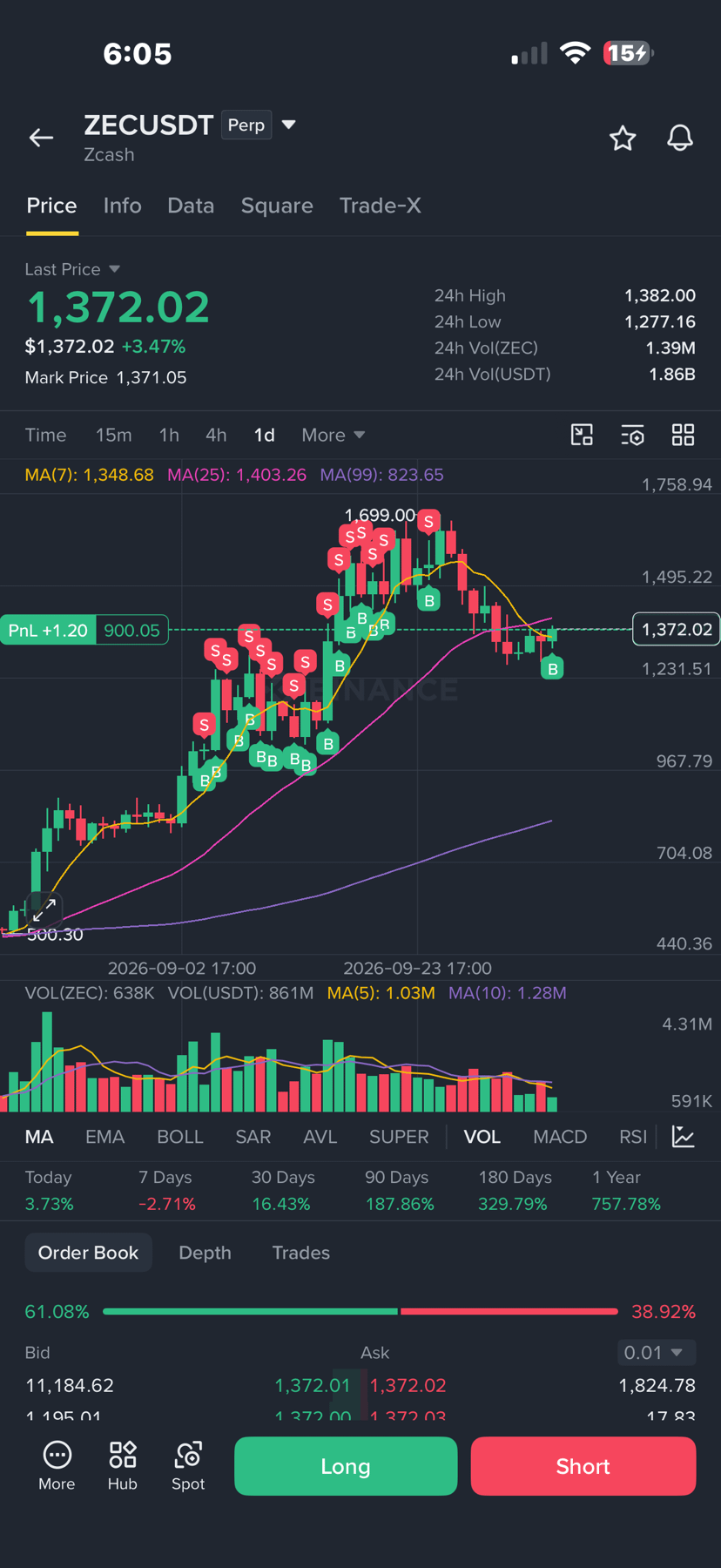
🚨 $ZEC – A Decade in Crypto, A Lifetime of Lessons 🚨 I’m turning 35 this year, and sometimes I look back and laugh at how it all started. I entered crypto at 25 — young, broke, ambitious, and willing to take risks most people around me were terrified of. In the last ten years, I’ve survived every kind of market nightmare and miracle: brutal dumps, euphoric pumps, black swan crashes, exchange collapses, and the kind of recovery rallies that make headlines. People always ask me the same question: “Bro… did you actually make money?” Let me put it to you straight. From 2020 to 2022, my portfolio blasted past eight digits. Today, I book $2,000-a-night hotel rooms without blinking. Meanwhile, people older than me are still trapped in 9–5 jobs inside industries that peaked twenty years ago. Was it luck? Genius? Some secret insider advantage? No. My success came from something so boring that most traders laugh when they hear it. A simple, disciplined rule I built for myself: The 3-4-3 Compounding Ladder. This system alone pushed me past $20M without chasing calls, worshipping influencers, or gambling on every candle. Here’s how it works — using Bitcoin as the example: Step 1 — “3”: Start small. Protect your capital. If I have $120k, I only deploy 30% ($36k). Small entries = small emotions = small mistakes. Step 2 — “4”: Build slowly, with intention. Price pumps? I wait for a proper dip. Price dumps? I add 10% for every 10% drop until I finish a 40% position. The goal: reduce fear through cost-averaging and control. Step 3 — “3”: Finish strong. Once the trend becomes clear and chaos fades, I deploy the final 30%. No panic. No chasing. Pure structure. People laugh and call my system slow, boring, or “stupid.” But slow strategies survive. And survivors end up wealthy. Most traders lose not because they’re dumb — but because they can’t control greed and fear. They chase pumps. They panic-sell dips. They gamble instead of plan. {spot}(ZECUSDT)
🚨 $ZEC – A Decade in Crypto, A Lifetime of Lessons 🚨

I’m turning 35 this year, and sometimes I look back and laugh at how it all started. I entered crypto at 25 — young, broke, ambitious, and willing to take risks most people around me were terrified of. In the last ten years, I’ve survived every kind of market nightmare and miracle: brutal dumps, euphoric pumps, black swan crashes, exchange collapses, and the kind of recovery rallies that make headlines.

People always ask me the same question:
“Bro… did you actually make money?”

Let me put it to you straight.
From 2020 to 2022, my portfolio blasted past eight digits. Today, I book $2,000-a-night hotel rooms without blinking. Meanwhile, people older than me are still trapped in 9–5 jobs inside industries that peaked twenty years ago.

Was it luck? Genius? Some secret insider advantage?

No.
My success came from something so boring that most traders laugh when they hear it.
A simple, disciplined rule I built for myself:
The 3-4-3 Compounding Ladder.

This system alone pushed me past $20M without chasing calls, worshipping influencers, or gambling on every candle.

Here’s how it works — using Bitcoin as the example:

Step 1 — “3”: Start small. Protect your capital.
If I have $120k, I only deploy 30% ($36k).
Small entries = small emotions = small mistakes.

Step 2 — “4”: Build slowly, with intention.
Price pumps? I wait for a proper dip.
Price dumps? I add 10% for every 10% drop until I finish a 40% position.
The goal: reduce fear through cost-averaging and control.

Step 3 — “3”: Finish strong.
Once the trend becomes clear and chaos fades, I deploy the final 30%.
No panic. No chasing. Pure structure.

People laugh and call my system slow, boring, or “stupid.”
But slow strategies survive.
And survivors end up wealthy.

Most traders lose not because they’re dumb — but because they can’t control greed and fear.
They chase pumps.
They panic-sell dips.
They gamble instead of plan.
🚨 BOB Listing Date Update – Let’s Clear the Air Properly 🚨 Over the past few days, the community has been buzzing with speculation, rumors, and predictions about when BOB will officially list. It’s natural for excitement to build, especially when a project starts gaining momentum again — but let’s be absolutely clear: there is no confirmed listing date announced yet. 👀 This doesn’t mean things are stagnant. In fact, the opposite is true. Here’s what we can confidently acknowledge right now based on the project’s visible progress and market behavior: • The team has been quietly but consistently moving forward, delivering updates, strengthening infrastructure, and positioning the project for bigger moves ahead. • Hype and community interest are rising again, with more eyes returning to the charts and discussions heating up across platforms. • The price structure remains in a strong accumulation zone, a place where smart money typically loads before momentum-driven expansions. • And historically — and this is key — BOB tends to explode after periods of silence, catching outsiders off guard while rewarding the patient holders who understood the pattern. 🐂🔥 Instead of entertaining speculation or locking onto random dates, the smartest strategy right now is to stay focused and disciplined: ✔️ Rely on official announcements only — not guesses, not “insider” rumors. ✔️ Do thorough research, so every move you make has purpose and reason. ✔️ Look for strategic entry points and maintain solid risk management. ✔️ Prepare yourself mentally and financially so that when the real news hits, you’re already positioned, not scrambling to catch up. Patience isn’t just a virtue in crypto — it’s a profit generator. When the listing is officially confirmed, trust one thing: It won’t be subtle, and it won’t be quiet. 🚀✨ #Bob #bnb
🚨 BOB Listing Date Update – Let’s Clear the Air Properly 🚨

Over the past few days, the community has been buzzing with speculation, rumors, and predictions about when BOB will officially list. It’s natural for excitement to build, especially when a project starts gaining momentum again — but let’s be absolutely clear: there is no confirmed listing date announced yet. 👀

This doesn’t mean things are stagnant. In fact, the opposite is true. Here’s what we can confidently acknowledge right now based on the project’s visible progress and market behavior:

• The team has been quietly but consistently moving forward, delivering updates, strengthening infrastructure, and positioning the project for bigger moves ahead.
• Hype and community interest are rising again, with more eyes returning to the charts and discussions heating up across platforms.
• The price structure remains in a strong accumulation zone, a place where smart money typically loads before momentum-driven expansions.
• And historically — and this is key — BOB tends to explode after periods of silence, catching outsiders off guard while rewarding the patient holders who understood the pattern. 🐂🔥

Instead of entertaining speculation or locking onto random dates, the smartest strategy right now is to stay focused and disciplined:

✔️ Rely on official announcements only — not guesses, not “insider” rumors.
✔️ Do thorough research, so every move you make has purpose and reason.
✔️ Look for strategic entry points and maintain solid risk management.
✔️ Prepare yourself mentally and financially so that when the real news hits, you’re already positioned, not scrambling to catch up.

Patience isn’t just a virtue in crypto — it’s a profit generator.
When the listing is officially confirmed, trust one thing:
It won’t be subtle, and it won’t be quiet. 🚀✨

#Bob #bnb
🔥 $PEPE LONG-TERM VISION — THE TARGETS NO ONE IS READY FOR 🔥 PEPE has officially evolved far beyond being a simple meme-fueled market trend. What started as a playful experiment has grown into a cultural force—one that continues to attract serious attention from traders, analysts, and entire communities across the crypto landscape. The energy behind PEPE is no longer just hype; it’s momentum backed by a massive, loyal movement that refuses to slow down. If this acceleration continues, the next phases could redefine expectations across the entire altcoin market. Below are the long-term speculative milestones that bold traders and early-cycle visionaries are quietly discussing: 📅 2026: $0.00020 📅 2027: $0.0025 📅 2028: $0.030 📅 2029: $0.50 📅 2030: $1.00 Every bull cycle produces its frontrunner—an asset that breaks narratives, captures the spotlight, and rises from an unexpected place. History shows that these breakout tokens are rarely the ones the mainstream predicts. Instead, they are the ones powered by a community that refuses to let the momentum die. Right now, PEPE is shaping up to be that wildcard—the coin with the potential to shift sentiment, dominate conversations, and surprise investors who underestimated its reach. The combination of cultural relevance, meme power, liquidity growth, and increasing market presence is creating the kind of pressure that often precedes explosive expansion. For anyone still on the sidelines, this moment may feel quiet—but silence is often the final calm before the charts rewrite themselves. Those who recognize early momentum typically position themselves long before the rest of the market wakes up. 👉 Stay focused. Stay early. The biggest moves in crypto—and the biggest wins—historically reward those who understand the narrative before it becomes obvious to everyone else. 🐸🔥 The next chapter of PEPE might just be the one nobody saw coming. {spot}(PEPEUSDT)
🔥 $PEPE LONG-TERM VISION — THE TARGETS NO ONE IS READY FOR 🔥

PEPE has officially evolved far beyond being a simple meme-fueled market trend. What started as a playful experiment has grown into a cultural force—one that continues to attract serious attention from traders, analysts, and entire communities across the crypto landscape. The energy behind PEPE is no longer just hype; it’s momentum backed by a massive, loyal movement that refuses to slow down. If this acceleration continues, the next phases could redefine expectations across the entire altcoin market.

Below are the long-term speculative milestones that bold traders and early-cycle visionaries are quietly discussing:

📅 2026: $0.00020
📅 2027: $0.0025
📅 2028: $0.030
📅 2029: $0.50
📅 2030: $1.00

Every bull cycle produces its frontrunner—an asset that breaks narratives, captures the spotlight, and rises from an unexpected place. History shows that these breakout tokens are rarely the ones the mainstream predicts. Instead, they are the ones powered by a community that refuses to let the momentum die.

Right now, PEPE is shaping up to be that wildcard—the coin with the potential to shift sentiment, dominate conversations, and surprise investors who underestimated its reach. The combination of cultural relevance, meme power, liquidity growth, and increasing market presence is creating the kind of pressure that often precedes explosive expansion.

For anyone still on the sidelines, this moment may feel quiet—but silence is often the final calm before the charts rewrite themselves. Those who recognize early momentum typically position themselves long before the rest of the market wakes up.

👉 Stay focused. Stay early.
The biggest moves in crypto—and the biggest wins—historically reward those who understand the narrative before it becomes obvious to everyone else.

🐸🔥 The next chapter of PEPE might just be the one nobody saw coming.
🚨 Attention $ZEC, $DASH, and $ZK Holders! 🚨 If you’re holding privacy-focused cryptocurrencies like $ZEC, $DASH, or $ZK, this news is extremely important for you. The European Union has decided to ban these tokens by 2027, citing concerns that they could facilitate money laundering and other illicit financial activities. Why the EU Is Taking Action Privacy coins are designed to obscure transaction details on the blockchain, making it difficult to trace the flow of funds. While this feature is appealing for legitimate privacy reasons, regulators are concerned that it can also be exploited for malicious purposes, such as illegal money transfers, tax evasion, and cybercrime. The EU believes that banning these tokens is a preventive measure to protect the financial system and curb potential criminal misuse. This doesn’t mean the tokens will disappear overnight, but it does signal a regulatory crackdown on privacy coins in Europe. What This Means for Investors Many investors are wondering: Will these coins crash before the ban takes effect? 🤔 There’s a strong possibility that market sentiment could shift in 2026, as traders anticipate the upcoming restrictions. Historically, psychological price resistance levels—like $1,000 for certain tokens—can trigger large sell-offs. It’s estimated that up to 90% of holders might sell when these levels are reached, leading to significant volatility. Key Takeaways • Privacy coins like $ZEC, $DASH, and $ZK are under regulatory scrutiny in the EU. • Their ability to hide transactions is seen as a risk for money laundering. • A ban is expected by 2027, but market reactions could happen sooner. • Investors should monitor price resistance levels and regulatory news closely to make informed decisions. In short, if you’re holding these tokens, now is the time to stay informed and plan your strategy. While privacy coins offer unique features, regulatory risks are real, and being prepared could make all the difference.
🚨 Attention $ZEC, $DASH, and $ZK Holders! 🚨

If you’re holding privacy-focused cryptocurrencies like $ZEC, $DASH, or $ZK, this news is extremely important for you. The European Union has decided to ban these tokens by 2027, citing concerns that they could facilitate money laundering and other illicit financial activities.

Why the EU Is Taking Action

Privacy coins are designed to obscure transaction details on the blockchain, making it difficult to trace the flow of funds. While this feature is appealing for legitimate privacy reasons, regulators are concerned that it can also be exploited for malicious purposes, such as illegal money transfers, tax evasion, and cybercrime.

The EU believes that banning these tokens is a preventive measure to protect the financial system and curb potential criminal misuse. This doesn’t mean the tokens will disappear overnight, but it does signal a regulatory crackdown on privacy coins in Europe.

What This Means for Investors

Many investors are wondering: Will these coins crash before the ban takes effect? 🤔 There’s a strong possibility that market sentiment could shift in 2026, as traders anticipate the upcoming restrictions. Historically, psychological price resistance levels—like $1,000 for certain tokens—can trigger large sell-offs. It’s estimated that up to 90% of holders might sell when these levels are reached, leading to significant volatility.

Key Takeaways
• Privacy coins like $ZEC, $DASH, and $ZK are under regulatory scrutiny in the EU.
• Their ability to hide transactions is seen as a risk for money laundering.
• A ban is expected by 2027, but market reactions could happen sooner.
• Investors should monitor price resistance levels and regulatory news closely to make informed decisions.

In short, if you’re holding these tokens, now is the time to stay informed and plan your strategy. While privacy coins offer unique features, regulatory risks are real, and being prepared could make all the difference.
🐦 BREAKING MICHAEL BURRY SOUNDS THE ALARM AGAIN The financial world is buzzing after a new warning from Michael Burry, the legendary investor who predicted the 2008 housing market crash and became widely known through the book and film The Big Short. Burry is famous for making extremely rare but highly strategic bearish bets when he believes markets have become dangerously irrational — and this time, his warning targets the Artificial Intelligence sector. 🔵 Why does Burry’s warning matter? Burry has built a reputation for seeing bubbles long before they burst. He is not an analyst who comments daily — he speaks only when he believes the stakes are enormous. And right now, he claims the financial markets are experiencing “systemic overheating” similar to the pre-crash conditions of 2008. In his latest announcement, Burry revealed that he is shutting down his hedge fund by the end of the year, explaining that he “no longer understands today’s market.” For an investor known for deep analytical precision, that statement alone has shaken confidence among many institutional players. 🔵 Burry’s massive new bet: At the same time, Burry has placed a huge bearish position against the AI industry, specifically targeting Palantir Technologies — one of the most widely followed and hyped AI-focused companies in the United States, known for major government contracts and national security data systems. Burry has purchased put options on Palantir worth $9.2 million, with the potential to return up to $240 million if Palantir collapses during an AI market correction. For clarity, put options are financial instruments that increase in value when a stock price drops — meaning Burry is betting boldly that Palantir is significantly overvalued. 🔵 Why Palantir? Critics argue the company’s valuation is inflated by hype rather than fundamentals: • expensive operating costs, • stretched profit margins, • extreme growth expectations priced into the stock, • speculative optimism surrounding AI dominance.
🐦 BREAKING MICHAEL BURRY SOUNDS THE ALARM AGAIN

The financial world is buzzing after a new warning from Michael Burry, the legendary investor who predicted the 2008 housing market crash and became widely known through the book and film The Big Short. Burry is famous for making extremely rare but highly strategic bearish bets when he believes markets have become dangerously irrational — and this time, his warning targets the Artificial Intelligence sector.

🔵 Why does Burry’s warning matter?
Burry has built a reputation for seeing bubbles long before they burst. He is not an analyst who comments daily — he speaks only when he believes the stakes are enormous. And right now, he claims the financial markets are experiencing “systemic overheating” similar to the pre-crash conditions of 2008.

In his latest announcement, Burry revealed that he is shutting down his hedge fund by the end of the year, explaining that he “no longer understands today’s market.” For an investor known for deep analytical precision, that statement alone has shaken confidence among many institutional players.

🔵 Burry’s massive new bet:
At the same time, Burry has placed a huge bearish position against the AI industry, specifically targeting Palantir Technologies — one of the most widely followed and hyped AI-focused companies in the United States, known for major government contracts and national security data systems.

Burry has purchased put options on Palantir worth $9.2 million, with the potential to return up to $240 million if Palantir collapses during an AI market correction.
For clarity, put options are financial instruments that increase in value when a stock price drops — meaning Burry is betting boldly that Palantir is significantly overvalued.

🔵 Why Palantir?
Critics argue the company’s valuation is inflated by hype rather than fundamentals:
• expensive operating costs,
• stretched profit margins,
• extreme growth expectations priced into the stock,
• speculative optimism surrounding AI dominance.
🚨 BREAKING SCIENCE SHOCKWAVE 🚨 The global scientific community is in disbelief after Harvard astrophysicist Avi Loeb issued a dramatic warning directed at the United Nations, urging immediate international coordination regarding the mysterious interstellar object 3I/ATLAS, currently approaching the inner Solar System. Loeb’s message was chilling: “The United Nations must act urgently. If extraterrestrials emerge from the object 3I/ATLAS approaching Earth, we have no global plan.” So what exactly is happening with 3I/ATLAS? 3I/ATLAS, the third confirmed interstellar object to enter our Solar System, has stunned observers with behavior that defies the typical physics of a comet: • Despite moving closer to the Sun, the object remains surprisingly intact, with none of the expected fragmentation, • It is releasing a strange stream of material aimed directly toward the Sun, instead of trailing away as normal comets do, • Scientists have classified this rare feature as a “sunward anti-tail” — an extremely unusual formation almost never observed in natural celestial bodies, • The energy required to generate this anti-tail far exceeds what an object of its size should be capable of producing, • This mysterious behavior has triggered speculation that the object could be powered or guided by advanced technology rather than natural cosmic forces, • Several researchers have openly theorized that 3I/ATLAS might be under intelligent control, rather than behaving like a typical icy space rock. 👾 Avi Loeb has gone further, publicly suggesting the possibility that 3I/ATLAS could be an “alien craft” or a probe sent by an extraterrestrial civilization. 🔴 As a result, NASA and space-watching agencies worldwide are now on high alert, intensifying observation efforts and allocating resources to gather real-time data. 📡 Unverified reports also claim that radio-like signals have been detected emanating from the object — a detail fueling both excitement and fear.
🚨 BREAKING SCIENCE SHOCKWAVE 🚨
The global scientific community is in disbelief after Harvard astrophysicist Avi Loeb issued a dramatic warning directed at the United Nations, urging immediate international coordination regarding the mysterious interstellar object 3I/ATLAS, currently approaching the inner Solar System.

Loeb’s message was chilling:

“The United Nations must act urgently.
If extraterrestrials emerge from the object 3I/ATLAS approaching Earth, we have no global plan.”

So what exactly is happening with 3I/ATLAS?

3I/ATLAS, the third confirmed interstellar object to enter our Solar System, has stunned observers with behavior that defies the typical physics of a comet:

• Despite moving closer to the Sun, the object remains surprisingly intact, with none of the expected fragmentation,
• It is releasing a strange stream of material aimed directly toward the Sun, instead of trailing away as normal comets do,
• Scientists have classified this rare feature as a “sunward anti-tail” — an extremely unusual formation almost never observed in natural celestial bodies,
• The energy required to generate this anti-tail far exceeds what an object of its size should be capable of producing,
• This mysterious behavior has triggered speculation that the object could be powered or guided by advanced technology rather than natural cosmic forces,
• Several researchers have openly theorized that 3I/ATLAS might be under intelligent control, rather than behaving like a typical icy space rock.

👾 Avi Loeb has gone further, publicly suggesting the possibility that 3I/ATLAS could be an “alien craft” or a probe sent by an extraterrestrial civilization.

🔴 As a result, NASA and space-watching agencies worldwide are now on high alert, intensifying observation efforts and allocating resources to gather real-time data.

📡 Unverified reports also claim that radio-like signals have been detected emanating from the object — a detail fueling both excitement and fear.
Login to explore more contents
Explore the latest crypto news
⚡️ Be a part of the latests discussions in crypto
💬 Interact with your favorite creators
👍 Enjoy content that interests you
Email / Phone number

Latest News

--
View More
Sitemap
Cookie Preferences
Platform T&Cs