
苯哥
15 Posts

苯哥
聚焦 Solana 生態與高效能公鏈趨勢。追蹤 Firedancer 進度與 ZK 隱私應用,致力於將複雜的底層邏輯轉化為易懂的市場洞察。拒絕資訊噪音,分享具備硬核乾貨的跨幣種調研筆記,覺得內容不錯請按讚、追蹤、分享 🚀,感謝支持。

Top traders by profit in 30D

BNSOL Holder
Occasional Trader
4.9 Years
9 Following
41 Followers
39 Liked
1 Badges
Posts
Don’t just look at the K-line! $SOL is entering the biggest “supply-demand scissors gap” in history
Solana’s governance team is pushing forward two major proposals that directly reshape the circulating supply structure of $SOL at its source:
1. Accelerate supply reduction (SIMD-0550): The annual inflation decay rate will be doubled from 15% to 30%, reaching the ultimate low inflation of 1.5% ahead of schedule by 2029. Over the next 6 years, it will directly reduce the release of 18.9 million $SOL .
2. Burn at full throttle (SIMD-0553): Introduce the computational unit (CU) resource fee and implement 100% full-balance burning. The estimated daily burn amount will jump from a few hundred tokens to 7,500–9,000 per day, with a 10x increase in burn efficiency!
By turning down the inflation faucet by half while widening the burning drain by 10x, this supply tightening may not look obvious during oscillating consolidation and wash trading—but once market momentum returns, the breakout power from a liquidity supply-demand imbalance will be very significant.
Hold your spot positions firmly—the key is to understand the on-chain fundamentals and how the underlying token holdings are changing.
Click the label below to view the live market and order-book depth. Do you think this tokenomics restructuring can break into a trend?
Leave your thoughts in the comments!
#Solana
#sol
#索拉拉
Solana’s governance team is pushing forward two major proposals that directly reshape the circulating supply structure of $SOL at its source:
1. Accelerate supply reduction (SIMD-0550): The annual inflation decay rate will be doubled from 15% to 30%, reaching the ultimate low inflation of 1.5% ahead of schedule by 2029. Over the next 6 years, it will directly reduce the release of 18.9 million $SOL .
2. Burn at full throttle (SIMD-0553): Introduce the computational unit (CU) resource fee and implement 100% full-balance burning. The estimated daily burn amount will jump from a few hundred tokens to 7,500–9,000 per day, with a 10x increase in burn efficiency!
By turning down the inflation faucet by half while widening the burning drain by 10x, this supply tightening may not look obvious during oscillating consolidation and wash trading—but once market momentum returns, the breakout power from a liquidity supply-demand imbalance will be very significant.
Hold your spot positions firmly—the key is to understand the on-chain fundamentals and how the underlying token holdings are changing.
Click the label below to view the live market and order-book depth. Do you think this tokenomics restructuring can break into a trend?
Leave your thoughts in the comments!
#Solana
#sol
#索拉拉
Regulatory Breakthrough: SEC Officially Defines SOL as a 'Digital Commodity'
The U.S. Securities and Exchange Commission (SEC) has released the latest classification framework, officially determining Solana (SOL) as a 'digital commodity', alongside BTC, ETH, and 14 other assets, clearly declaring: SOL is not a security.
【Three Key Points】
Legal Definition: It is recognized that the value of SOL comes from 'functional networks' and 'market supply and demand', rather than the operational efforts of a specific organization.
Beneficiary List: In addition to the three major cryptocurrencies, 17 assets including XRP, ADA, LINK, DOGE, and SHIB have obtained compliant status.
Policy Shift: Marks the transition of regulators from 'suppression' to 'definition', officially providing a clear legal pathway for the crypto industry.
【Market Impact】
ETF Green Light: Has cleared the biggest legal obstacle for the approval of SOL spot ETFs.
Institutional Entry: Eliminating compliance concerns, Wall Street funds will be able to allocate related assets on a large scale.
Industry Benefits: Allegations of illegal listings faced by exchanges (such as Coinbase) are expected to be withdrawn.
The U.S. Securities and Exchange Commission (SEC) has released the latest classification framework, officially determining Solana (SOL) as a 'digital commodity', alongside BTC, ETH, and 14 other assets, clearly declaring: SOL is not a security.
【Three Key Points】
Legal Definition: It is recognized that the value of SOL comes from 'functional networks' and 'market supply and demand', rather than the operational efforts of a specific organization.
Beneficiary List: In addition to the three major cryptocurrencies, 17 assets including XRP, ADA, LINK, DOGE, and SHIB have obtained compliant status.
Policy Shift: Marks the transition of regulators from 'suppression' to 'definition', officially providing a clear legal pathway for the crypto industry.
【Market Impact】
ETF Green Light: Has cleared the biggest legal obstacle for the approval of SOL spot ETFs.
Institutional Entry: Eliminating compliance concerns, Wall Street funds will be able to allocate related assets on a large scale.
Industry Benefits: Allegations of illegal listings faced by exchanges (such as Coinbase) are expected to be withdrawn.
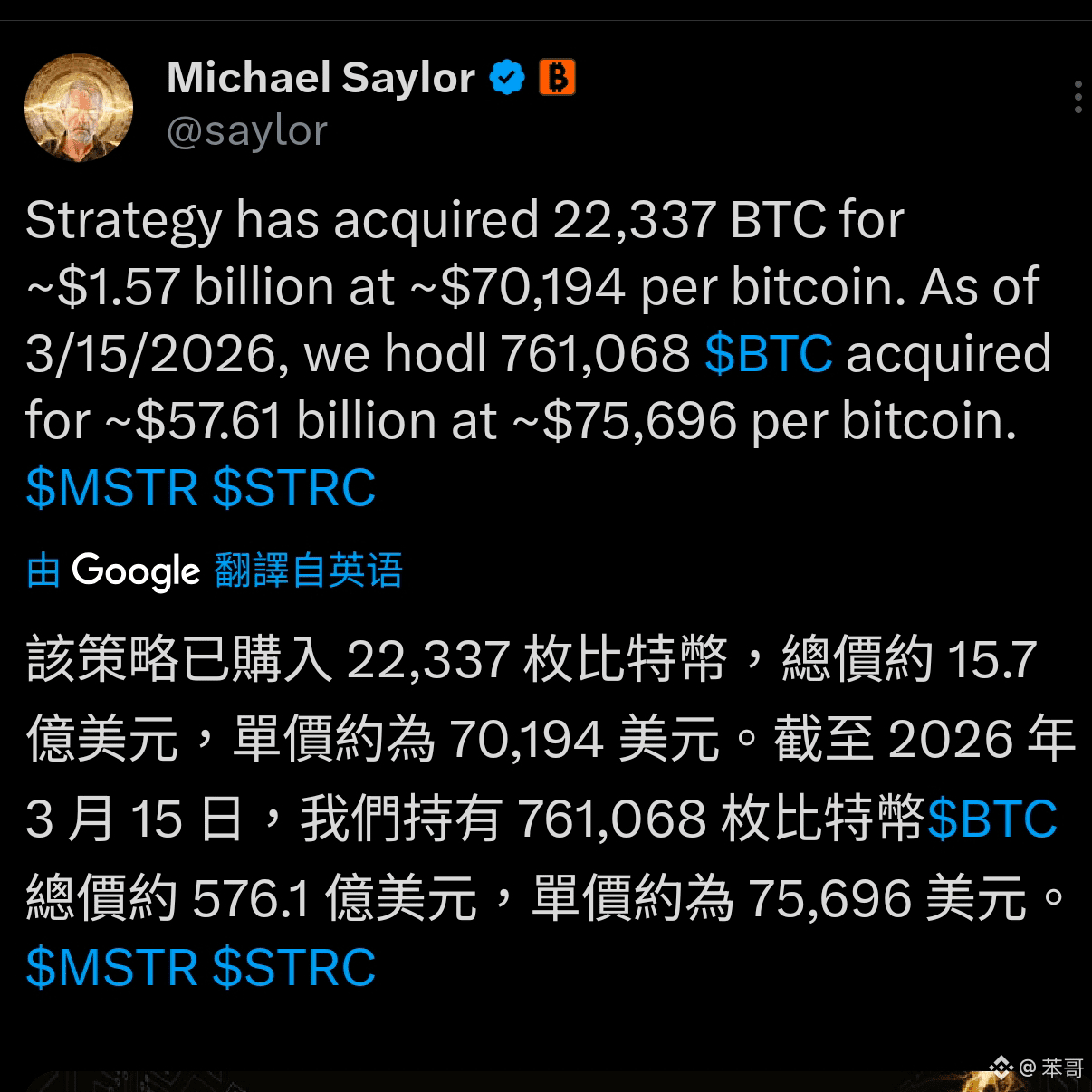
From now on, believe that $BTC is the best choice.
After all, there are not many people who can buy lower than Sailer..
$BTC
After all, there are not many people who can buy lower than Sailer..
$BTC
How does it feel like $UP has a chance to explode like $BTW in a week, as predicted $...
$ROBO How is it getting softer?
First, the airdrop of @Fabric Foundation should continue until March 13. During this period, it is a profit digestion phase of 'sell after receiving', so the market naturally cannot harden. Additionally, on March 2, a new high of over 0.06 was just created, and now a pullback to around 0.04 to wash the market is a very typical trend. From the chart, the RSI(6) has already dropped to around 38, and there is indeed heavy selling pressure in the short term, but it has started to enter the oversold area. If you believe in the long-term narrative of the robot economy like #ROBO , this 'soft' state is actually a good opportunity to observe support levels. As long as the support at 0.04 holds, after the airdrop wave ends on the 13th, the market may regain control. It is better to wait for clear bottom signals rather than entering now to hard press against selling pressure...
Price forecast for 3/13
First, the airdrop of @Fabric Foundation should continue until March 13. During this period, it is a profit digestion phase of 'sell after receiving', so the market naturally cannot harden. Additionally, on March 2, a new high of over 0.06 was just created, and now a pullback to around 0.04 to wash the market is a very typical trend. From the chart, the RSI(6) has already dropped to around 38, and there is indeed heavy selling pressure in the short term, but it has started to enter the oversold area. If you believe in the long-term narrative of the robot economy like #ROBO , this 'soft' state is actually a good opportunity to observe support levels. As long as the support at 0.04 holds, after the airdrop wave ends on the 13th, the market may regain control. It is better to wait for clear bottom signals rather than entering now to hard press against selling pressure...
Price forecast for 3/13
$>0.5
0%
$<0.5
100%
2 votes • Voting closed
$SOL Quietly recovering, are you still on the bus during this rebound?
Recently watching SOL slowly climb back to $87 from around $80, I actually feel quite secure. Although there is still a distance from the three-digit milestone, this kind of quiet wealth accumulation trend is more reassuring than wild fluctuations.
$SOL In addition to the sweet spot of continuous net inflow into ETFs these days, the most hardcore aspects are the following practical applications:
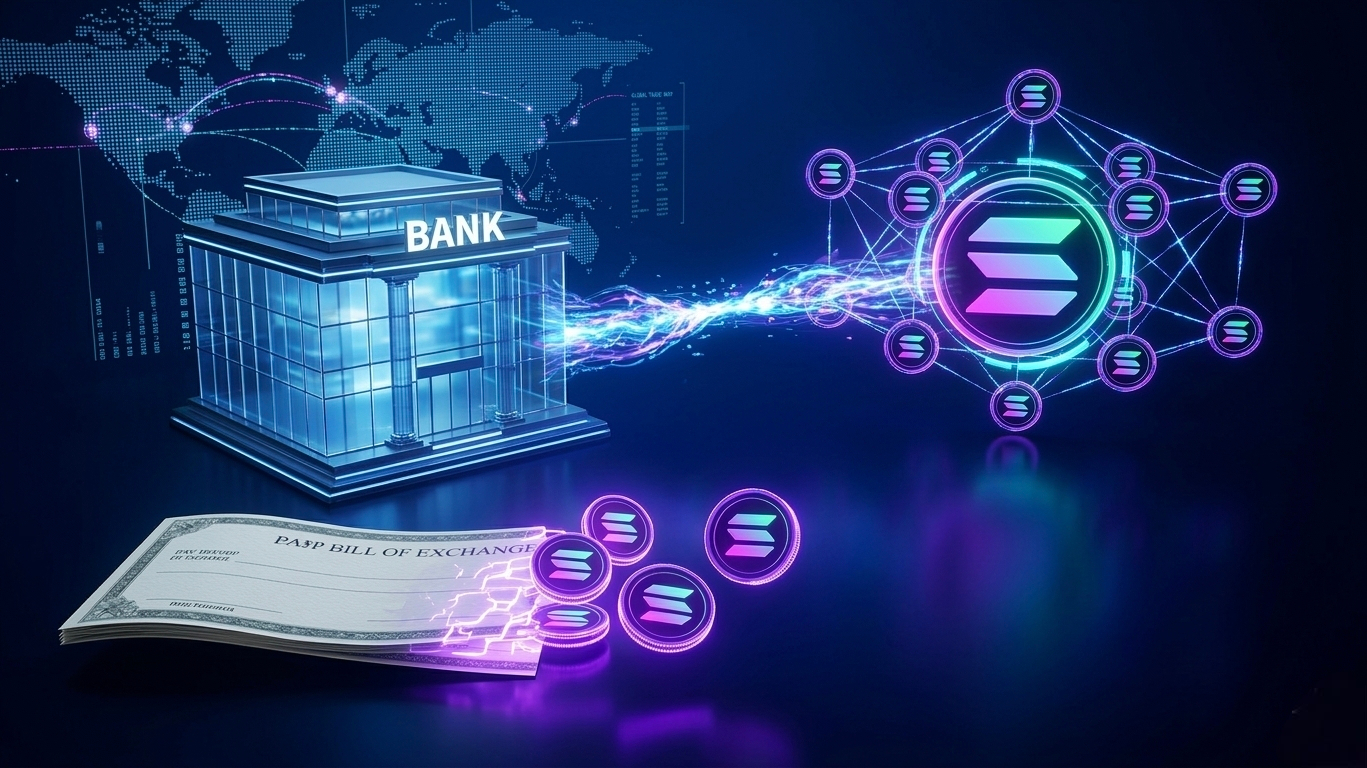
1. Western Union has officially announced plans to conduct stablecoin settlements on Solana, expected to be implemented in the first half of this year.
2. SoFi (a licensed bank in the U.S.) has opened deposits in Solana.
3. After Firedancer stabilizes, the Alpenglow upgrade is also coming soon, and network latency might be faster than your blink.
With strong technology and prominent applications, being bullish right now doesn’t need to be overly arrogant. Do you think this wave can directly break the $100 resistance level? Or should we wait a few more days? Or will it continue to drop, haha XD
Let’s communicate in the comment area, I only look at the facts and simply share my views.
#solana #SOL $SOL #Crypto2026🔥 #CreatorPad #Firedancer
Recently watching SOL slowly climb back to $87 from around $80, I actually feel quite secure. Although there is still a distance from the three-digit milestone, this kind of quiet wealth accumulation trend is more reassuring than wild fluctuations.
$SOL In addition to the sweet spot of continuous net inflow into ETFs these days, the most hardcore aspects are the following practical applications:
1. Western Union has officially announced plans to conduct stablecoin settlements on Solana, expected to be implemented in the first half of this year.
2. SoFi (a licensed bank in the U.S.) has opened deposits in Solana.
3. After Firedancer stabilizes, the Alpenglow upgrade is also coming soon, and network latency might be faster than your blink.
With strong technology and prominent applications, being bullish right now doesn’t need to be overly arrogant. Do you think this wave can directly break the $100 resistance level? Or should we wait a few more days? Or will it continue to drop, haha XD
Let’s communicate in the comment area, I only look at the facts and simply share my views.
#solana #SOL $SOL #Crypto2026🔥 #CreatorPad #Firedancer
#robo $ROBO @My crypto person
Why do we have high hopes for $ROBO ?
Practicality at its best: $ROBO is the soul of the Fabric ecosystem, from robot identity registration to task payments, all of which require it.
Deflationary expectations: The protocol plans to use 20% of its revenue for buybacks, which is a very solid economic model in the current AI race.
Technical moat: They are not just developing software; they are also promoting a 'skill chip' store for robots, which gives $ROBO strong RWA (real-world asset) properties.
Price expectations:
Although the market has significant short-term volatility, $ROBO possesses the dual hotspots of AI + Robotics. With the expectation of the L1 mainnet migration by the end of 2026, along with currently low unlocking pressure (large-scale unlocking won't happen until 2027), I believe this is a long-term target worth gradually accumulating.
Why do we have high hopes for $ROBO ?
Practicality at its best: $ROBO is the soul of the Fabric ecosystem, from robot identity registration to task payments, all of which require it.
Deflationary expectations: The protocol plans to use 20% of its revenue for buybacks, which is a very solid economic model in the current AI race.
Technical moat: They are not just developing software; they are also promoting a 'skill chip' store for robots, which gives $ROBO strong RWA (real-world asset) properties.
Price expectations:
Although the market has significant short-term volatility, $ROBO possesses the dual hotspots of AI + Robotics. With the expectation of the L1 mainnet migration by the end of 2026, along with currently low unlocking pressure (large-scale unlocking won't happen until 2027), I believe this is a long-term target worth gradually accumulating.

Put aside $XPL price fluctuations, what is the real value of @plasma?
Recently, many people have been paying attention to $XPL , and its price fluctuations have indeed been very dramatic. But beyond the K-line, we should look at what @plasma is actually building.
Its positioning is very clear: a Layer 1 public chain designed specifically for "stablecoin payments."
The biggest highlight, and what I believe to be the "killer feature," is the realization of zero transaction fees for USDT transfers. This addresses a huge pain point— in the future, whether it's small payments or cross-border transfers, theoretically, there will be no need to pre-purchase or hold $XPL for Gas Fees.
Data shows that Plasma handled a large amount of USDT transfers shortly after going online, indicating a real market demand for "zero Gas to U." $XPL tokens are used for network PoS staking and driving smart contracts.
Although the market is still searching for a price equilibrium point for $XPL , this public chain focused on stablecoin infrastructure is definitely worth long-term attention.
#plasma
Recently, many people have been paying attention to $XPL , and its price fluctuations have indeed been very dramatic. But beyond the K-line, we should look at what @plasma is actually building.
Its positioning is very clear: a Layer 1 public chain designed specifically for "stablecoin payments."
The biggest highlight, and what I believe to be the "killer feature," is the realization of zero transaction fees for USDT transfers. This addresses a huge pain point— in the future, whether it's small payments or cross-border transfers, theoretically, there will be no need to pre-purchase or hold $XPL for Gas Fees.
Data shows that Plasma handled a large amount of USDT transfers shortly after going online, indicating a real market demand for "zero Gas to U." $XPL tokens are used for network PoS staking and driving smart contracts.
Although the market is still searching for a price equilibrium point for $XPL , this public chain focused on stablecoin infrastructure is definitely worth long-term attention.
#plasma
Bitlayer 作為比特幣的第一層擴展解決方案,正在引領比特幣生態走向更高效的未來。它專注於安全性與可擴展性,讓開發者能在比特幣網路上建構真正的 DeFi 與創新應用。這不僅僅是一個 Layer2,而是開啟 BTC 新時代的基礎。🚀
Bitlayer, as the first Bitcoin expansion solution, is leading the BTC ecosystem into a more efficient future. By focusing on security and scalability, it empowers developers to build true DeFi and innovative applications on Bitcoin. This is not just another Layer2—it’s the foundation for Bitcoin’s new era. 🚀
@BitlayerLabs #Bitlayer
Bitlayer, as the first Bitcoin expansion solution, is leading the BTC ecosystem into a more efficient future. By focusing on security and scalability, it empowers developers to build true DeFi and innovative applications on Bitcoin. This is not just another Layer2—it’s the foundation for Bitcoin’s new era. 🚀
@BitlayerLabs #Bitlayer
Log in to explore more content