
码农阿伟
165 Posts

码农阿伟
Report
Block User
Frequent Trader
1.3 Years
10 Following
82 Followers
73 Liked
Posts
All
Quotes
·
--
Bullish
A lot of blockchain games think that a bigger map equals a higher level, but they end up creating a massive space and dropping thousands of players in it, only to walk for ten minutes without seeing anyone. Open spaces aren't freedom; they're just boring. Pixels has a smaller, even somewhat cramped map, but it's this density that gives it a richness that larger worlds can't achieve—there's always someone next to the public farmland, and you can bump into people while walking down the street. These little things hold a lot of value in the virtual world because humans are social animals; when you see others moving, it makes you less inclined to log off. $PIXEL benefits from this density in a subtle way: more people means more trades, stable prices, and identity display has an audience. #pixel If they expand the world later, the biggest concern shouldn't be whether there's enough content, but whether the player base will get diluted. A little crowding brings warmth. #pixel $PIXEL #社交
A lot of blockchain games think that a bigger map equals a higher level, but they end up creating a massive space and dropping thousands of players in it, only to walk for ten minutes without seeing anyone. Open spaces aren't freedom; they're just boring. Pixels has a smaller, even somewhat cramped map, but it's this density that gives it a richness that larger worlds can't achieve—there's always someone next to the public farmland, and you can bump into people while walking down the street. These little things hold a lot of value in the virtual world because humans are social animals; when you see others moving, it makes you less inclined to log off. $PIXEL benefits from this density in a subtle way: more people means more trades, stable prices, and identity display has an audience. #pixel If they expand the world later, the biggest concern shouldn't be whether there's enough content, but whether the player base will get diluted. A little crowding brings warmth. #pixel $PIXEL #社交
118
·
--
Article
An infinite map is a lie!An infinite map is a lie! Cramping players together is the ultimate social hack.
An open world is a nice term, but in chain games, it’s often misused. Many projects think that the bigger and more open the map, the better, so they create an infinitely sprawling space and dump tens of thousands of players in. The result is that you can walk for ten minutes without running into anyone.
Empty space is not freedom. Empty space is just boring.
Pixels' map isn’t very big. Compared to those competitors that constantly boast about 'metaverse-level worlds,' its space might even be considered cramped. But it’s precisely this compactness that gives it a social density that many large worlds can’t achieve.
An infinite map is a lie!
An infinite map is a lie! Cramping players together is the ultimate social hack.
An open world is a nice term, but in chain games, it’s often misused. Many projects think that the bigger and more open the map, the better, so they create an infinitely sprawling space and dump tens of thousands of players in. The result is that you can walk for ten minutes without running into anyone.
Empty space is not freedom. Empty space is just boring.
Pixels' map isn’t very big. Compared to those competitors that constantly boast about 'metaverse-level worlds,' its space might even be considered cramped. But it’s precisely this compactness that gives it a social density that many large worlds can’t achieve.
An open world is a nice term, but in chain games, it’s often misused. Many projects think that the bigger and more open the map, the better, so they create an infinitely sprawling space and dump tens of thousands of players in. The result is that you can walk for ten minutes without running into anyone.
Empty space is not freedom. Empty space is just boring.
Pixels' map isn’t very big. Compared to those competitors that constantly boast about 'metaverse-level worlds,' its space might even be considered cramped. But it’s precisely this compactness that gives it a social density that many large worlds can’t achieve.
308
·
--
Bullish
Most traders are glued to the task board thinking about what today’s grind can net them, but this board's true identity is that of a central bank-level supply and demand regulator. In traditional blockchain games, daily quests are hardcoded, leading to everyone flocking to do the same thing, causing a crash in related assets.
Pixels’ dynamic task board adjusts in real-time based on overall server resource stock and $PIXEL rewards—when a certain material is overstocked, it lowers the rewards for related tasks, and when a resource is running low, it subtly increases the returns. This is almost identical to how central banks manage interest rates: not directly pricing, but indirectly stabilizing purchasing power by shifting behavioral directions.
#pixel The effectiveness of this regulation isn't immediately apparent; it will be seen in six months when the volatility of core asset prices has genuinely decreased. The best monetary policy is one where people don’t even feel like they’re being managed.
#pixel $PIXEL #动态收益基金 #链游
Most traders are glued to the task board thinking about what today’s grind can net them, but this board's true identity is that of a central bank-level supply and demand regulator. In traditional blockchain games, daily quests are hardcoded, leading to everyone flocking to do the same thing, causing a crash in related assets.
Pixels’ dynamic task board adjusts in real-time based on overall server resource stock and $PIXEL rewards—when a certain material is overstocked, it lowers the rewards for related tasks, and when a resource is running low, it subtly increases the returns. This is almost identical to how central banks manage interest rates: not directly pricing, but indirectly stabilizing purchasing power by shifting behavioral directions.
#pixel The effectiveness of this regulation isn't immediately apparent; it will be seen in six months when the volatility of core asset prices has genuinely decreased. The best monetary policy is one where people don’t even feel like they’re being managed.
#pixel $PIXEL #动态收益基金 #链游
Pixels’ dynamic task board adjusts in real-time based on overall server resource stock and $PIXEL rewards—when a certain material is overstocked, it lowers the rewards for related tasks, and when a resource is running low, it subtly increases the returns. This is almost identical to how central banks manage interest rates: not directly pricing, but indirectly stabilizing purchasing power by shifting behavioral directions.
#pixel The effectiveness of this regulation isn't immediately apparent; it will be seen in six months when the volatility of core asset prices has genuinely decreased. The best monetary policy is one where people don’t even feel like they’re being managed.
#pixel $PIXEL #动态收益基金 #链游
113
·
--
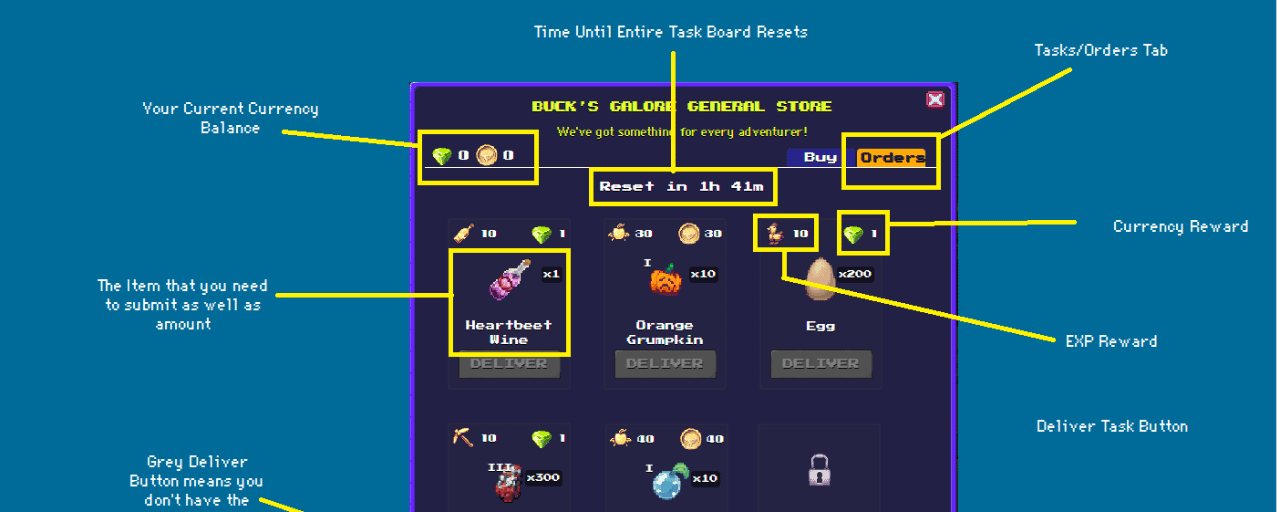
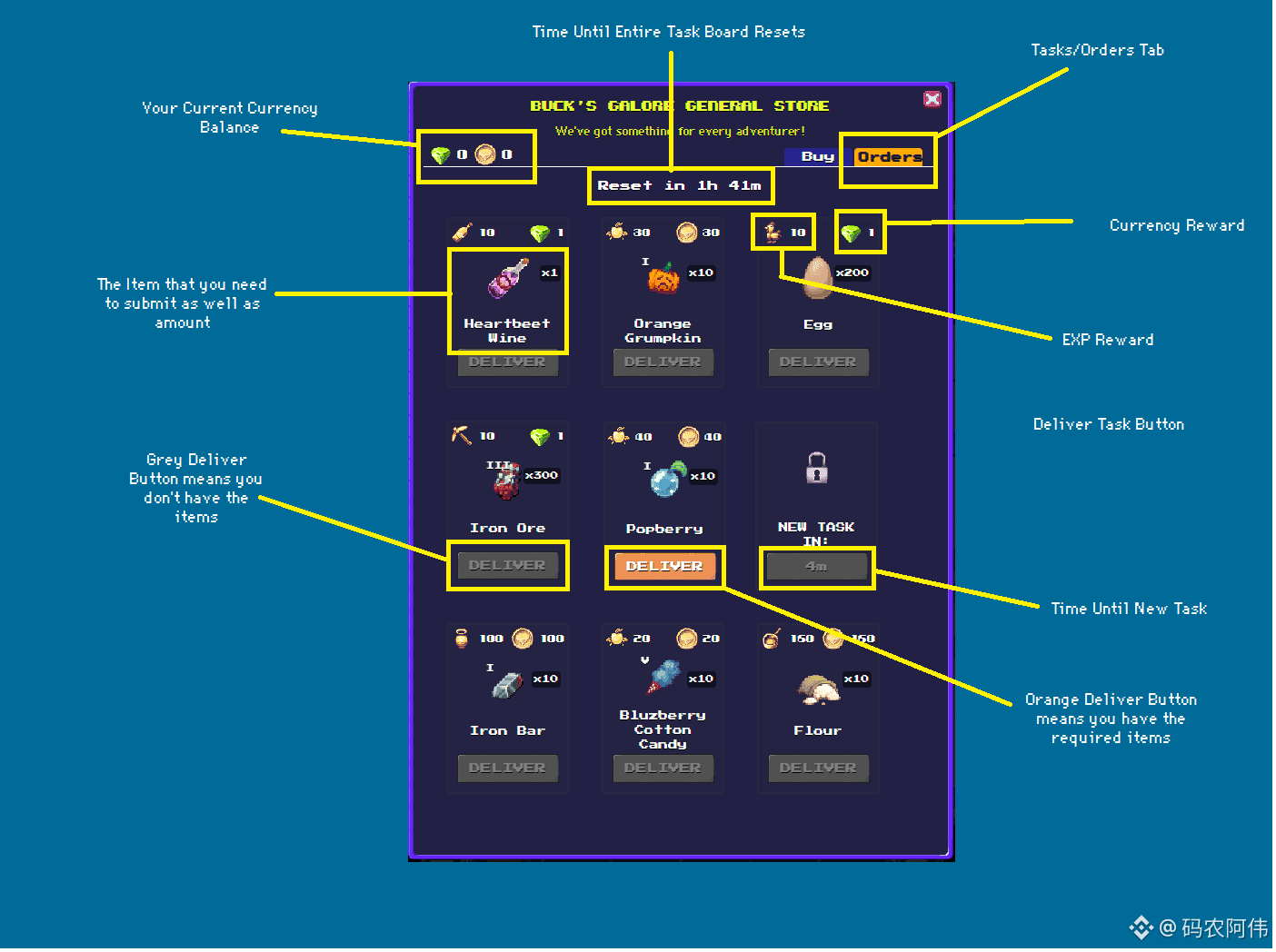
The task board looks like game design, but it's actually more like monetary policyMost players opening the Pixels task board think: what can I do today to earn a bit more? But if you look at this board from the perspective of a system designer, its true function isn't to assign tasks. It's a central bank-level supply and demand regulator.
Daily missions in traditional games are usually set in stone. Kill three monsters, gather five trees, turn in two items; the rewards are hardcoded and the same every day. This design is simple but risky because it can't adapt to changes in player behavior. Once the community figures out the optimal path for a specific task, everyone rushes to complete the same one, causing a crash in related resources and economic imbalance.
The task board looks like game design, but it's actually more like monetary policy
Most players opening the Pixels task board think: what can I do today to earn a bit more? But if you look at this board from the perspective of a system designer, its true function isn't to assign tasks. It's a central bank-level supply and demand regulator.
Daily missions in traditional games are usually set in stone. Kill three monsters, gather five trees, turn in two items; the rewards are hardcoded and the same every day. This design is simple but risky because it can't adapt to changes in player behavior. Once the community figures out the optimal path for a specific task, everyone rushes to complete the same one, causing a crash in related resources and economic imbalance.
Daily missions in traditional games are usually set in stone. Kill three monsters, gather five trees, turn in two items; the rewards are hardcoded and the same every day. This design is simple but risky because it can't adapt to changes in player behavior. Once the community figures out the optimal path for a specific task, everyone rushes to complete the same one, causing a crash in related resources and economic imbalance.
112
·
--
Bullish
Tools breaking down sounds annoying, but a world without breakdowns can be even messier. If everything is non-consumable, the result is that nothing holds any value, prices keep plummeting, and newcomers find that even mining can't cover their electricity bills. Pixels give tools durability, and repairs cost resources and $PIXEL . This design might seem very old school on the surface, but in the on-chain economy, it actually serves as the quietest deflationary engine.
It's not a flashy limited-time burn announcement, nor a voting-based community coin burn, but rather a micro-consumption where players voluntarily spend little by little in their daily usage. This embedded sink in behavior isn't scary, but it's the most enduring. Whether #pixel can stabilize the price floor may depend on how dense these invisible little wear-and-tear expenses are.
#pixel $PIXEL #代币经济学 #GameFi
Tools breaking down sounds annoying, but a world without breakdowns can be even messier. If everything is non-consumable, the result is that nothing holds any value, prices keep plummeting, and newcomers find that even mining can't cover their electricity bills. Pixels give tools durability, and repairs cost resources and $PIXEL . This design might seem very old school on the surface, but in the on-chain economy, it actually serves as the quietest deflationary engine.
It's not a flashy limited-time burn announcement, nor a voting-based community coin burn, but rather a micro-consumption where players voluntarily spend little by little in their daily usage. This embedded sink in behavior isn't scary, but it's the most enduring. Whether #pixel can stabilize the price floor may depend on how dense these invisible little wear-and-tear expenses are.
#pixel $PIXEL #代币经济学 #GameFi
It's not a flashy limited-time burn announcement, nor a voting-based community coin burn, but rather a micro-consumption where players voluntarily spend little by little in their daily usage. This embedded sink in behavior isn't scary, but it's the most enduring. Whether #pixel can stabilize the price floor may depend on how dense these invisible little wear-and-tear expenses are.
#pixel $PIXEL #代币经济学 #GameFi
90
·
--
The fact that tools can break is actually saving the system's life.What chain games fear the most isn't players refusing to join, but rather everyone joins and never spends a dime. With unlimited output, endless stockpiling, and prices continuously dropping, the whole economy ends up like a pot of mush—nothing holds value anymore. Many projects have tried to patch this issue; the usual methods include forced buybacks, mandatory burnings, or launching a new mine to dilute the value of the old one. These tactics can be effective, but players can easily see when a project is going under the knife, and trust will take a hit.
Pixels has a unique approach. It gives tools durability, meaning after a certain number of uses, they break and need to be repaired or remade. This might sound like the oldest trick in game design, but in the blockchain economy, it means something entirely different.
The fact that tools can break is actually saving the system's life.
What chain games fear the most isn't players refusing to join, but rather everyone joins and never spends a dime. With unlimited output, endless stockpiling, and prices continuously dropping, the whole economy ends up like a pot of mush—nothing holds value anymore. Many projects have tried to patch this issue; the usual methods include forced buybacks, mandatory burnings, or launching a new mine to dilute the value of the old one. These tactics can be effective, but players can easily see when a project is going under the knife, and trust will take a hit.
Pixels has a unique approach. It gives tools durability, meaning after a certain number of uses, they break and need to be repaired or remade. This might sound like the oldest trick in game design, but in the blockchain economy, it means something entirely different.
Pixels has a unique approach. It gives tools durability, meaning after a certain number of uses, they break and need to be repaired or remade. This might sound like the oldest trick in game design, but in the blockchain economy, it means something entirely different.
108
·
--
Bullish
Breaking down everyday circulation and high-tier spending into two layers is definitely better than making one coin shoulder all the dirty work. The real value of a dual coin lies not in just adding a name, but in whether the pressure is genuinely distributed. Everyday transactions, basic consumption, and normal trading shouldn't be lumped together with high-tier thresholds, identity-based spending, and advanced privileges on the same coin. If Pixels can hold the line, $BERRY and $PIXEL will gradually evolve into two different asset classes; if not, the dual coin will ultimately devolve into just two names taking turns covering the structural mess.
#pixel $PIXEL #双币模型 #Web3游戏
Breaking down everyday circulation and high-tier spending into two layers is definitely better than making one coin shoulder all the dirty work. The real value of a dual coin lies not in just adding a name, but in whether the pressure is genuinely distributed. Everyday transactions, basic consumption, and normal trading shouldn't be lumped together with high-tier thresholds, identity-based spending, and advanced privileges on the same coin. If Pixels can hold the line, $BERRY and $PIXEL will gradually evolve into two different asset classes; if not, the dual coin will ultimately devolve into just two names taking turns covering the structural mess.
#pixel $PIXEL #双币模型 #Web3游戏
#pixel $PIXEL #双币模型 #Web3游戏
1
99
·
--
What caught my attention with Pixels this timeWhen I look at dual coins, the first question I ask isn’t whether it looks flashy, but whether it clearly defines its boundaries.
If a coin is expected to handle daily transactions, manage price expectations, and also cater to high-end spending and identity expression, over time it’ll end up all twisted. It’ll start to resemble a master switch that tries to control everything, and the result isn't stronger but rather more prone to volatility.
What caught my attention with Pixels this time is that it at least layers $BERRY and $PIXEL . Low-frequency, everyday use, and basic transactions are placed in a softer layer; while higher threshold, more valuable, and more identity-driven expenditures are given to a tougher layer. The core of this approach isn’t about new formats, but about ensuring that pressure isn’t all funneled through one single interface.
What caught my attention with Pixels this time
When I look at dual coins, the first question I ask isn’t whether it looks flashy, but whether it clearly defines its boundaries.
If a coin is expected to handle daily transactions, manage price expectations, and also cater to high-end spending and identity expression, over time it’ll end up all twisted. It’ll start to resemble a master switch that tries to control everything, and the result isn't stronger but rather more prone to volatility.
What caught my attention with Pixels this time is that it at least layers $BERRY and $PIXEL . Low-frequency, everyday use, and basic transactions are placed in a softer layer; while higher threshold, more valuable, and more identity-driven expenditures are given to a tougher layer. The core of this approach isn’t about new formats, but about ensuring that pressure isn’t all funneled through one single interface.
If a coin is expected to handle daily transactions, manage price expectations, and also cater to high-end spending and identity expression, over time it’ll end up all twisted. It’ll start to resemble a master switch that tries to control everything, and the result isn't stronger but rather more prone to volatility.
What caught my attention with Pixels this time is that it at least layers $BERRY and $PIXEL . Low-frequency, everyday use, and basic transactions are placed in a softer layer; while higher threshold, more valuable, and more identity-driven expenditures are given to a tougher layer. The core of this approach isn’t about new formats, but about ensuring that pressure isn’t all funneled through one single interface.
111
·
--
Bullish
A lot of people think that chain games are most afraid of having no users, but in reality, they're more afraid of a bunch of scalper bots and mercenary capital that just come in and out. Pixels has raised the exit cost of liquidity $PIXEL , making rewards stay longer within the ecosystem. Projects that can keep the water in the reservoir are the ones that can talk about longevity.
#pixel #Circle拒冻结被盗USDC #美SEC称部分DeFi界面可免经纪商注册
A lot of people think that chain games are most afraid of having no users, but in reality, they're more afraid of a bunch of scalper bots and mercenary capital that just come in and out. Pixels has raised the exit cost of liquidity $PIXEL , making rewards stay longer within the ecosystem. Projects that can keep the water in the reservoir are the ones that can talk about longevity.
#pixel #Circle拒冻结被盗USDC #美SEC称部分DeFi界面可免经纪商注册
#pixel #Circle拒冻结被盗USDC #美SEC称部分DeFi界面可免经纪商注册
67
·
--
Pixels is blocking one of the dirtiest arbitrages: grab and cash outWhat really annoys regular players isn’t just that they’re not great but that after grinding, running maps, and completing quests, their earnings get snatched up by another group using scripts and scale advantages. Many blockchain games claim to be community-driven, but in reality, they operate like airport duty-free shops—those who run faster cash out first, leaving everyone else with sell pressure.
What’s most interesting in the Pixels whitepaper isn’t just how well it talks about open worlds, but how it starts to tackle this quick in-and-out arbitrage head-on. $PIXEL It no longer encourages players to treat liquidity rewards as something to grab and go; instead, it focuses more on holding value through in-ecosystem assets and usage rights. If you want to move more liquid assets, you often have to deal with exit friction like Farmer Fees.
Pixels is blocking one of the dirtiest arbitrages: grab and cash out
What really annoys regular players isn’t just that they’re not great but that after grinding, running maps, and completing quests, their earnings get snatched up by another group using scripts and scale advantages. Many blockchain games claim to be community-driven, but in reality, they operate like airport duty-free shops—those who run faster cash out first, leaving everyone else with sell pressure.
What’s most interesting in the Pixels whitepaper isn’t just how well it talks about open worlds, but how it starts to tackle this quick in-and-out arbitrage head-on. $PIXEL It no longer encourages players to treat liquidity rewards as something to grab and go; instead, it focuses more on holding value through in-ecosystem assets and usage rights. If you want to move more liquid assets, you often have to deal with exit friction like Farmer Fees.
What’s most interesting in the Pixels whitepaper isn’t just how well it talks about open worlds, but how it starts to tackle this quick in-and-out arbitrage head-on. $PIXEL It no longer encourages players to treat liquidity rewards as something to grab and go; instead, it focuses more on holding value through in-ecosystem assets and usage rights. If you want to move more liquid assets, you often have to deal with exit friction like Farmer Fees.
54
·
--
Bullish
I'm not afraid of the complexities of dual tokens; what I dread more is when the team gets antsy and tries to shove split projects back into a single coin. Whether Pixels can hold its ground moving forward really hinges on whether the roles can maintain their focus over the long haul. $BERRY handles the daily grind, while $PIXEL oversees high-tier consumption. If this line gets blurred, we're going to see some shake-ups down the road.
#pixel #Circle拒冻结被盗USDC #美SEC称部分DeFi界面可免经纪商注册
I'm not afraid of the complexities of dual tokens; what I dread more is when the team gets antsy and tries to shove split projects back into a single coin. Whether Pixels can hold its ground moving forward really hinges on whether the roles can maintain their focus over the long haul. $BERRY handles the daily grind, while $PIXEL oversees high-tier consumption. If this line gets blurred, we're going to see some shake-ups down the road.
#pixel #Circle拒冻结被盗USDC #美SEC称部分DeFi界面可免经纪商注册
#pixel #Circle拒冻结被盗USDC #美SEC称部分DeFi界面可免经纪商注册
67
·
--
Once the dual-coin system reclaims its tasks, no matter how pretty the division looks, it’s all for nothing.Here's an old question I see with dual-coin models: Did you really break down the tasks, or just swap a tangle of yarn for two different colors?
This point is super crucial.
A lot of projects have clear roles when drafting their whitepapers, pushing one coin, high-end consumption for another, and they talk a big game. But once it hits the field, the team often gets a bit too eager. They have to watch the price, manage sentiment, attract new users, and also keep consumption in check. In the end, all that pressure gradually lands back on the same coin.
The earlier breakdown is essentially wasted effort.
Therefore, when I assess the Pixels dual-coin system, I won’t give it extra points just because they have $BERRY and $PIXEL . What I’m really watching for is whether these two coins are truly handling their own tasks. Daily progress, maintenance, production, and regular consumption should fall under the soft currency layer; higher barrier consumption, identity, and additional access rights should be directed towards $P$PIXEL .
Once the dual-coin system reclaims its tasks, no matter how pretty the division looks, it’s all for nothing.
Here's an old question I see with dual-coin models: Did you really break down the tasks, or just swap a tangle of yarn for two different colors?
This point is super crucial.
A lot of projects have clear roles when drafting their whitepapers, pushing one coin, high-end consumption for another, and they talk a big game. But once it hits the field, the team often gets a bit too eager. They have to watch the price, manage sentiment, attract new users, and also keep consumption in check. In the end, all that pressure gradually lands back on the same coin.
The earlier breakdown is essentially wasted effort.
Therefore, when I assess the Pixels dual-coin system, I won’t give it extra points just because they have $BERRY and $PIXEL . What I’m really watching for is whether these two coins are truly handling their own tasks. Daily progress, maintenance, production, and regular consumption should fall under the soft currency layer; higher barrier consumption, identity, and additional access rights should be directed towards $P$PIXEL .
This point is super crucial.
A lot of projects have clear roles when drafting their whitepapers, pushing one coin, high-end consumption for another, and they talk a big game. But once it hits the field, the team often gets a bit too eager. They have to watch the price, manage sentiment, attract new users, and also keep consumption in check. In the end, all that pressure gradually lands back on the same coin.
The earlier breakdown is essentially wasted effort.
Therefore, when I assess the Pixels dual-coin system, I won’t give it extra points just because they have $BERRY and $PIXEL . What I’m really watching for is whether these two coins are truly handling their own tasks. Daily progress, maintenance, production, and regular consumption should fall under the soft currency layer; higher barrier consumption, identity, and additional access rights should be directed towards $P$PIXEL .
61
·
--
Bullish
The money being recovered is only the first half of the statement; the key is whether the ecosystem can continue to grow afterward. If this funding line for Pixels goes smoothly, $PIXEL will transform from 'reducing circulation' into a real business flywheel. If it can't be done, it will just be an aesthetically pleasing financial move. #pixel
#RheaFinance发布攻击事件调查 #比特币价格走势
The money being recovered is only the first half of the statement; the key is whether the ecosystem can continue to grow afterward. If this funding line for Pixels goes smoothly, $PIXEL will transform from 'reducing circulation' into a real business flywheel. If it can't be done, it will just be an aesthetically pleasing financial move. #pixel
#RheaFinance发布攻击事件调查 #比特币价格走势
#RheaFinance发布攻击事件调查 #比特币价格走势
51
·
--

Article
If recycling doesn't grow back, the flywheel is fake.Many projects are very good at talking about recycling.
Whenever this word is mentioned, the tone immediately becomes very certain, as if the stability afterwards has already been written as long as the value is brought back. But I increasingly feel that what is truly difficult about recycling is not 'bringing it back', but 'what to do after bringing it back'.
The money returns to the project, which can only be considered the first half.
What is even more difficult is whether this money will continue to be reinvested into the ecosystem, becoming a slightly thicker experience in the next round, more stable content, and stronger reasons for consumption.
If it doesn't work, then at most it is just a nice-looking financial action diagram.
If recycling doesn't grow back, the flywheel is fake.
Many projects are very good at talking about recycling.
Whenever this word is mentioned, the tone immediately becomes very certain, as if the stability afterwards has already been written as long as the value is brought back. But I increasingly feel that what is truly difficult about recycling is not 'bringing it back', but 'what to do after bringing it back'.
The money returns to the project, which can only be considered the first half.
What is even more difficult is whether this money will continue to be reinvested into the ecosystem, becoming a slightly thicker experience in the next round, more stable content, and stronger reasons for consumption.
If it doesn't work, then at most it is just a nice-looking financial action diagram.
Whenever this word is mentioned, the tone immediately becomes very certain, as if the stability afterwards has already been written as long as the value is brought back. But I increasingly feel that what is truly difficult about recycling is not 'bringing it back', but 'what to do after bringing it back'.
The money returns to the project, which can only be considered the first half.
What is even more difficult is whether this money will continue to be reinvested into the ecosystem, becoming a slightly thicker experience in the next round, more stable content, and stronger reasons for consumption.
If it doesn't work, then at most it is just a nice-looking financial action diagram.
58
·
--
Article
After this step is priced separately, the logic changes.From my perspective on the dual currency model, the first thing to guard against is: the project clearly states the division of labor, but as things progress, all pressures are shoved back into the same currency. For #pixel it means,
Such things are very common.
During the initial documentation, it was explained very clearly that the basic circulation currency ($BERRY) is responsible for daily use, while the advanced consumption currency ($PIXEL) is responsible for higher-level consumption; however, once there is volatility or growth pressure, the team cannot help but let the main currency take on all tasks related to promotion, emotion, identity, and speculation. In the end, the so-called dual currency only has two names representing the same anxiety.
After this step is priced separately, the logic changes.
From my perspective on the dual currency model, the first thing to guard against is: the project clearly states the division of labor, but as things progress, all pressures are shoved back into the same currency. For #pixel it means,
Such things are very common.
During the initial documentation, it was explained very clearly that the basic circulation currency ($BERRY) is responsible for daily use, while the advanced consumption currency ($PIXEL ) is responsible for higher-level consumption; however, once there is volatility or growth pressure, the team cannot help but let the main currency take on all tasks related to promotion, emotion, identity, and speculation. In the end, the so-called dual currency only has two names representing the same anxiety.
Such things are very common.
During the initial documentation, it was explained very clearly that the basic circulation currency ($BERRY) is responsible for daily use, while the advanced consumption currency ($PIXEL ) is responsible for higher-level consumption; however, once there is volatility or growth pressure, the team cannot help but let the main currency take on all tasks related to promotion, emotion, identity, and speculation. In the end, the so-called dual currency only has two names representing the same anxiety.
1
1
159
·
--
Bullish
The dual-currency model is not afraid of complexity, but afraid of the team changing their minds on the spot. For #pixel , daily expenses should be categorized as daily expenses, and high-level expenses should be categorized as high-level expenses. As long as both sides re-allocate the work, the structure will quickly deform.
Whether this set from Pixels is worth looking at, I'm only focused on one point: can the boundary between basic circulating currency ($BERRY) and high-level consumption currency ($PIXEL ) be maintained.
#比特币价格走势
The dual-currency model is not afraid of complexity, but afraid of the team changing their minds on the spot. For #pixel , daily expenses should be categorized as daily expenses, and high-level expenses should be categorized as high-level expenses. As long as both sides re-allocate the work, the structure will quickly deform.
Whether this set from Pixels is worth looking at, I'm only focused on one point: can the boundary between basic circulating currency ($BERRY) and high-level consumption currency ($PIXEL ) be maintained.
#比特币价格走势
Whether this set from Pixels is worth looking at, I'm only focused on one point: can the boundary between basic circulating currency ($BERRY) and high-level consumption currency ($PIXEL ) be maintained.
#比特币价格走势
230
·
--
Bullish
When I look at this set of designs from Pixel, my attention is not on the addition of a few consumption points, but rather on whether these consumption points can change 'go first' to 'invest a little more'. If this step is valid, $PIXEL will no longer be a paycheck, but rather resemble a high-level usage right in the world.
When it comes to judgment, repeated payments indicate issues more than a single impulsive purchase. In the future, if we really want to assess strength, I will only focus on repurchases and renewals. #pixel #加密市场回调 #Strategy增持比特币
When I look at this set of designs from Pixel, my attention is not on the addition of a few consumption points, but rather on whether these consumption points can change 'go first' to 'invest a little more'. If this step is valid, $PIXEL will no longer be a paycheck, but rather resemble a high-level usage right in the world.
When it comes to judgment, repeated payments indicate issues more than a single impulsive purchase. In the future, if we really want to assess strength, I will only focus on repurchases and renewals. #pixel #加密市场回调 #Strategy增持比特币
When it comes to judgment, repeated payments indicate issues more than a single impulsive purchase. In the future, if we really want to assess strength, I will only focus on repurchases and renewals. #pixel #加密市场回调 #Strategy增持比特币
49
·
--
Repeat purchases cannot stand firm; the liveliness at the front will ultimately seem borrowed.Now I look at blockchain games, and I'm increasingly not asking how many people it can attract first.
Let me ask another question: after these people receive benefits, will they still be willing to spend money?
Many projects place too much importance on the fact that 'someone is coming,' to the point where it seems that as long as the traffic is large enough, the subsequent matters will naturally happen. But reality is usually not like that. The fact that people can enter the door only indicates that it is lively at the entrance; only when people are willing to pay repeatedly does it indicate that there is really life inside the house.
So I have always felt that the most difficult and worthwhile layer to focus on for Pixels is not whether it can become more popular, but whether it has the opportunity to slowly change the habit of 'first take, first sell, first leave.'
Repeat purchases cannot stand firm; the liveliness at the front will ultimately seem borrowed.
Now I look at blockchain games, and I'm increasingly not asking how many people it can attract first.
Let me ask another question: after these people receive benefits, will they still be willing to spend money?
Many projects place too much importance on the fact that 'someone is coming,' to the point where it seems that as long as the traffic is large enough, the subsequent matters will naturally happen. But reality is usually not like that. The fact that people can enter the door only indicates that it is lively at the entrance; only when people are willing to pay repeatedly does it indicate that there is really life inside the house.
So I have always felt that the most difficult and worthwhile layer to focus on for Pixels is not whether it can become more popular, but whether it has the opportunity to slowly change the habit of 'first take, first sell, first leave.'
Let me ask another question: after these people receive benefits, will they still be willing to spend money?
Many projects place too much importance on the fact that 'someone is coming,' to the point where it seems that as long as the traffic is large enough, the subsequent matters will naturally happen. But reality is usually not like that. The fact that people can enter the door only indicates that it is lively at the entrance; only when people are willing to pay repeatedly does it indicate that there is really life inside the house.
So I have always felt that the most difficult and worthwhile layer to focus on for Pixels is not whether it can become more popular, but whether it has the opportunity to slowly change the habit of 'first take, first sell, first leave.'
1
92
·
--
It's not difficult to pull people in for a short term; the challenge is why they would still be willing to spend in the system after they receive benefits. For me, this is much closer to the true location of $PIXEL than any single event's popularity. If players' first reaction is still just to sell, then the consumption layer of Pixels is thin; if they are willing to buy efficiency, identity, and deeper participation rights, the experience is completely different. Moving forward, I will only recognize repurchase rates, renewal rates, and reinvestment ratios. #pixel #加密市场回暖 #Strategy增持比特币
It's not difficult to pull people in for a short term; the challenge is why they would still be willing to spend in the system after they receive benefits. For me, this is much closer to the true location of $PIXEL than any single event's popularity. If players' first reaction is still just to sell, then the consumption layer of Pixels is thin; if they are willing to buy efficiency, identity, and deeper participation rights, the experience is completely different. Moving forward, I will only recognize repurchase rates, renewal rates, and reinvestment ratios. #pixel #加密市场回暖 #Strategy增持比特币
38
·
--
His willingness to continue spending shows that Pixels is starting to feel like a real world.A couple of days ago, I asked a friend who has been playing blockchain games if he was looking for new projects to jump in and out of recently.
He replied, no, I'm still playing #pixel .
My first reaction was a bit of surprise. Because this person used to play very simply; he would rush in when a project was just getting hot, withdraw rewards whenever possible, and leave after that. He doesn't dislike games; he just doesn't believe that most blockchain games are truly worth sticking around for.
So I followed up with, why haven't you left yet.
He said, other projects just want me to take my stuff away, but Pixels is one of the few that keeps trying to get me to spend my stuff back.
His willingness to continue spending shows that Pixels is starting to feel like a real world.
A couple of days ago, I asked a friend who has been playing blockchain games if he was looking for new projects to jump in and out of recently.
He replied, no, I'm still playing #pixel .
My first reaction was a bit of surprise. Because this person used to play very simply; he would rush in when a project was just getting hot, withdraw rewards whenever possible, and leave after that. He doesn't dislike games; he just doesn't believe that most blockchain games are truly worth sticking around for.
So I followed up with, why haven't you left yet.
He said, other projects just want me to take my stuff away, but Pixels is one of the few that keeps trying to get me to spend my stuff back.
He replied, no, I'm still playing #pixel .
My first reaction was a bit of surprise. Because this person used to play very simply; he would rush in when a project was just getting hot, withdraw rewards whenever possible, and leave after that. He doesn't dislike games; he just doesn't believe that most blockchain games are truly worth sticking around for.
So I followed up with, why haven't you left yet.
He said, other projects just want me to take my stuff away, but Pixels is one of the few that keeps trying to get me to spend my stuff back.
115
Log in to explore more content
Join global crypto users on Binance Square
⚡️ Get latest and useful information about crypto.
💬 Trusted by the world’s largest crypto exchange.
👍 Discover real insights from verified creators.
Email / Phone number
Trending Topics
USAugustPPIRisesLessThanExpected
5,156 views
209 Discussing
🚨 US AUG PPI: Rises LESS Than Expected! Bullish for Crypto? 🚀
PPI +0.4% MoM as expected, but CORE PPI only +0.2% vs +0.3% expected - cooling!
What it means:
• Wholesale inflation softer than feared
• Fed rate hike chance now 62% - but dovish signals coming
• Core PCE revisions expected downward - bullish
• BTC usually pumps on softer PPI
Fed meeting Sep 15-16 - Market now expects pause, not hike?
Is this the green light for Q4 rally?
#Bitcoin #PPI #Fed #CryptoNews #BTC#usaugustppiriseslessthanexpected
True News
·1 Likes
·1.1k views
SECApprovesNasdaqTexasCommodityTrustRule
5,171 views
233 Discussing
ECBRaisesRatesSecondTimeTo2.5%
2,759 views
164 Discussing