

Keep 1
67 Posts

Keep 1
Report
Block User
RWA evangelist | Marketing Web3 & IRL | Ambassador Magic Newton, ONDO | Rialo Regional Representative | X - https://x.com/keepyourpixel
0 Following
7 Followers
12 Liked
Posts
·
--
WHALES MOVING $ONDO A major long-term investor (mcaavebank.eth) just offloaded 9 million ONDO tokens worth approximately $4.4 million after five months of providing liquidity on Uniswap. While a whale exit like this usually triggers panic, the broader market data tells a completely different story. ONDO's spot netflow flipped positive by +$810,000 on October 9, 2026, and analysts are tracking a potential technical reversal as the token holds strong near key support levels. Keep a close eye on the order books to see if this whale exit marks a local bottom or just the start of a broader distribution phase.
WHALES MOVING $ONDO A major long-term investor (mcaavebank.eth) just offloaded 9 million ONDO tokens worth approximately $4.4 million after five months of providing liquidity on Uniswap. While a whale exit like this usually triggers panic, the broader market data tells a completely different story. ONDO's spot netflow flipped positive by +$810,000 on October 9, 2026, and analysts are tracking a potential technical reversal as the token holds strong near key support levels. Keep a close eye on the order books to see if this whale exit marks a local bottom or just the start of a broader distribution phase.

29
·
--
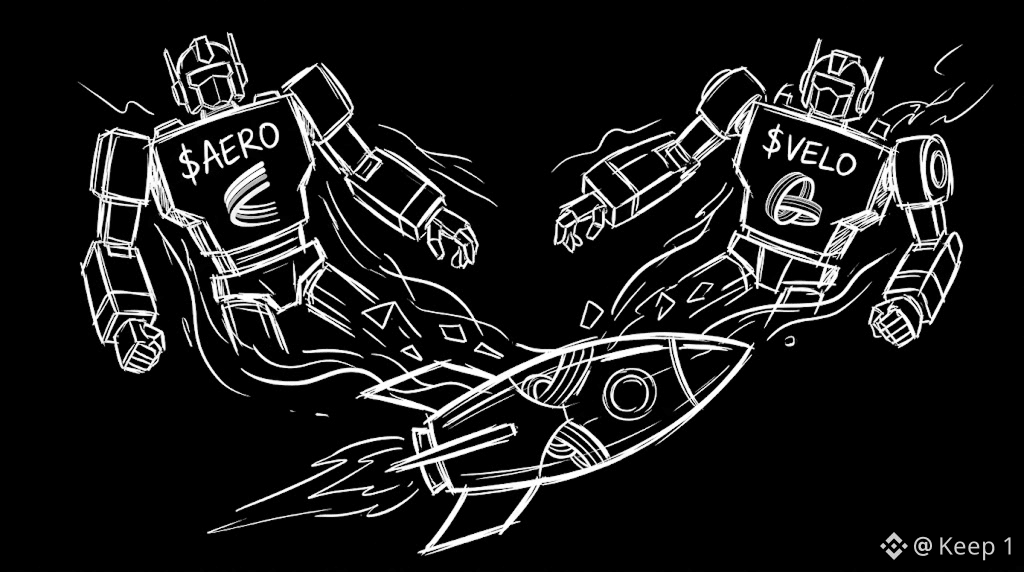
BREAKING: AERODROME & VELODROME UNIFY INTO $AERO A massive consolidation is hitting DeFi. Aerodrome Finance and Velodrome Finance are officially merging into a single, unified protocol: $AERO The core token migration window takes place from November 2 to November 4, 2026. During these 48 hours, legacy Aero transitions to the upgraded token contract, with cross-chain bridges and transfer rails temporarily paused to take balance snapshots. Why This Could Be a Major Price Catalyst This merger isn't just cosmetic = it fundamentally alters the tokenomics and market dynamics of $AERO . Crucially, merging the two protocols consolidates dual token emissions into a single governance framework. veAERO lockers will absorb protocol-wide cash flow without competing against redundant inflation pools. With deep cross-chain liquidity concentrated into one vehicle and emission efficiency drastically improved, supply absorption could rapidly outpace new circulation once post-migration trading stabilizes
BREAKING: AERODROME & VELODROME UNIFY INTO $AERO A massive consolidation is hitting DeFi. Aerodrome Finance and Velodrome Finance are officially merging into a single, unified protocol: $AERO The core token migration window takes place from November 2 to November 4, 2026. During these 48 hours, legacy Aero transitions to the upgraded token contract, with cross-chain bridges and transfer rails temporarily paused to take balance snapshots. Why This Could Be a Major Price Catalyst This merger isn't just cosmetic = it fundamentally alters the tokenomics and market dynamics of $AERO . Crucially, merging the two protocols consolidates dual token emissions into a single governance framework. veAERO lockers will absorb protocol-wide cash flow without competing against redundant inflation pools. With deep cross-chain liquidity concentrated into one vehicle and emission efficiency drastically improved, supply absorption could rapidly outpace new circulation once post-migration trading stabilizes
68
·
--
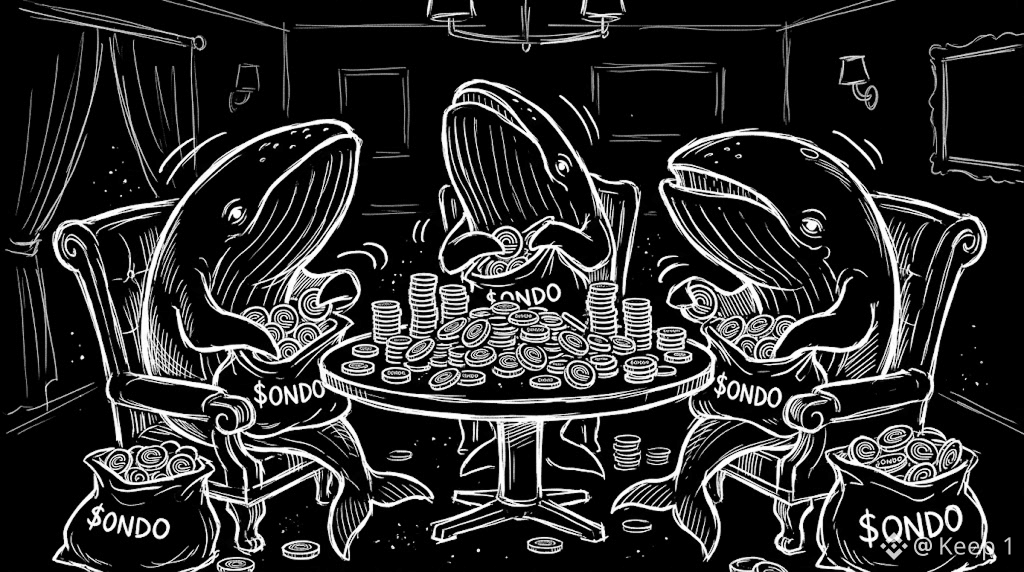
Time to accumulate$ONDO ! Institutional demand for tokenized real-world assets is accelerating, and Ondo Finance ($ONDO ) is positioned at the center of this shift. Here is why current on-chain data and market partnerships point to a strategic accumulation window. 3 reasons why I hold this gem: > BlackRock Integration: Ondo leverages fund strategies developed by BlackRock, validating its infrastructure as a trusted bridge between traditional finance and decentralized networks. > On-Chain Accumulation: Large Ethereum wallets and institutional buyers continue to show significant net inflows, indicating sustained buying pressure from major market participants. > Sector Tailwinds: Financial institutions project massive expansion for tokenized assets through 2030, placing Ondo's yield-generating products in front of a substantial addressable market. HODL or sell?
Time to accumulate$ONDO ! Institutional demand for tokenized real-world assets is accelerating, and Ondo Finance ($ONDO ) is positioned at the center of this shift. Here is why current on-chain data and market partnerships point to a strategic accumulation window. 3 reasons why I hold this gem: > BlackRock Integration: Ondo leverages fund strategies developed by BlackRock, validating its infrastructure as a trusted bridge between traditional finance and decentralized networks. > On-Chain Accumulation: Large Ethereum wallets and institutional buyers continue to show significant net inflows, indicating sustained buying pressure from major market participants. > Sector Tailwinds: Financial institutions project massive expansion for tokenized assets through 2030, placing Ondo's yield-generating products in front of a substantial addressable market. HODL or sell?
64
·
--
Reminder - $BILL has a key token unlock scheduled for October 31. Quick look at the numbers: > Down ~94% from its ~$0.23 ATH (now hovering near $0.013) > Locked/auto-staked allocations hitting liquidity end of next month With the price already heavily discounted from launch highs, the big question is recipients dump at current levels or if the supply overhang is already front-run. Watch the order books closely as we head into late October.
Reminder - $BILL has a key token unlock scheduled for October 31. Quick look at the numbers: > Down ~94% from its ~$0.23 ATH (now hovering near $0.013) > Locked/auto-staked allocations hitting liquidity end of next month With the price already heavily discounted from launch highs, the big question is recipients dump at current levels or if the supply overhang is already front-run. Watch the order books closely as we head into late October.

75
·
--
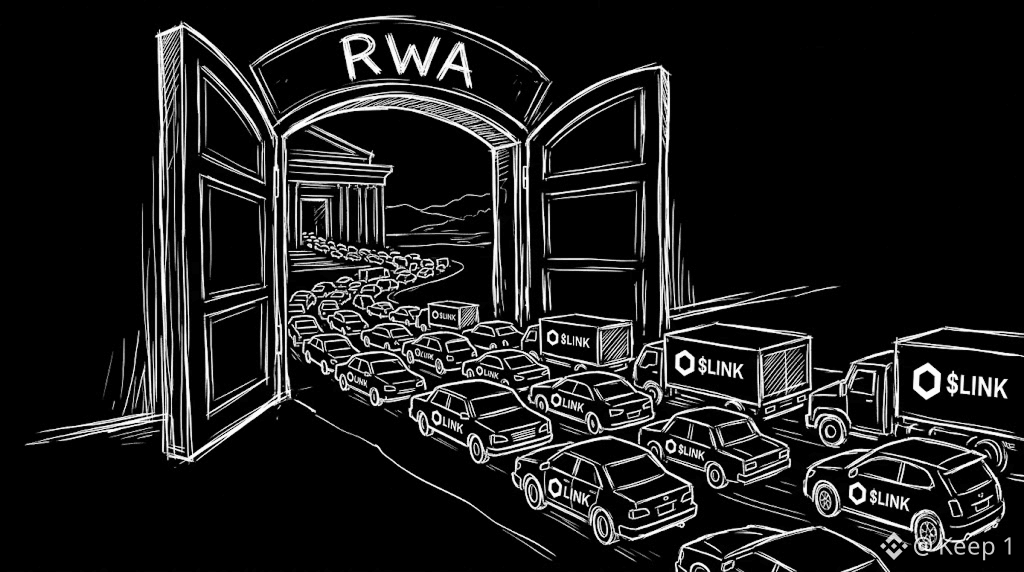
$LINK is the undisputed RWA gem, and its unstoppable growth comes down to massive real-world utility. The recent Infosys partnership is a prime example, introducing Payment Abstraction so enterprise giants can seamlessly settle fees using fiat or stablecoins. On top of that, over 50 international banks are driving heavy network volume through Project Pangea for international FX settlements, while the DTCC utilizes Chainlink to power 24/7 collateral workflows for U.S. Treasuries. The network effects are scaling rapidly because major platforms like Coinbase are using Chainlink to bring exchange data and tokenized stocks onchain, and the newly launched Robinhood Chain has fully adopted it as its core data infrastructure. With daily active addresses surging by 25% and Standard Chartered setting a long-term target of $200, the massive demand for node staking is going to trigger a serious supply shock. $LINK keeps growing because it has become the mandatory foundation connecting traditional finance to the blockchain.
$LINK is the undisputed RWA gem, and its unstoppable growth comes down to massive real-world utility. The recent Infosys partnership is a prime example, introducing Payment Abstraction so enterprise giants can seamlessly settle fees using fiat or stablecoins. On top of that, over 50 international banks are driving heavy network volume through Project Pangea for international FX settlements, while the DTCC utilizes Chainlink to power 24/7 collateral workflows for U.S. Treasuries. The network effects are scaling rapidly because major platforms like Coinbase are using Chainlink to bring exchange data and tokenized stocks onchain, and the newly launched Robinhood Chain has fully adopted it as its core data infrastructure. With daily active addresses surging by 25% and Standard Chartered setting a long-term target of $200, the massive demand for node staking is going to trigger a serious supply shock. $LINK keeps growing because it has become the mandatory foundation connecting traditional finance to the blockchain.
74
·
--
Found a screenshot in my phone's gallery from August 2025.
Notification:
$123,633.25 for a single $BTC
.
At the time, those numbers felt absolutely cosmic.
Do you think we will ever see this price again
Found a screenshot in my phone's gallery from August 2025.
Notification:
$123,633.25 for a single $BTC
.
At the time, those numbers felt absolutely cosmic.
Do you think we will ever see this price again
Notification:
$123,633.25 for a single $BTC
.
At the time, those numbers felt absolutely cosmic.
Do you think we will ever see this price again

74
·
--
This $ZEC season is either gonna retire pur bloodline or be the massive rug.
no in-between.
This $ZEC season is either gonna retire pur bloodline or be the massive rug.
no in-between.
no in-between.
67
·
--
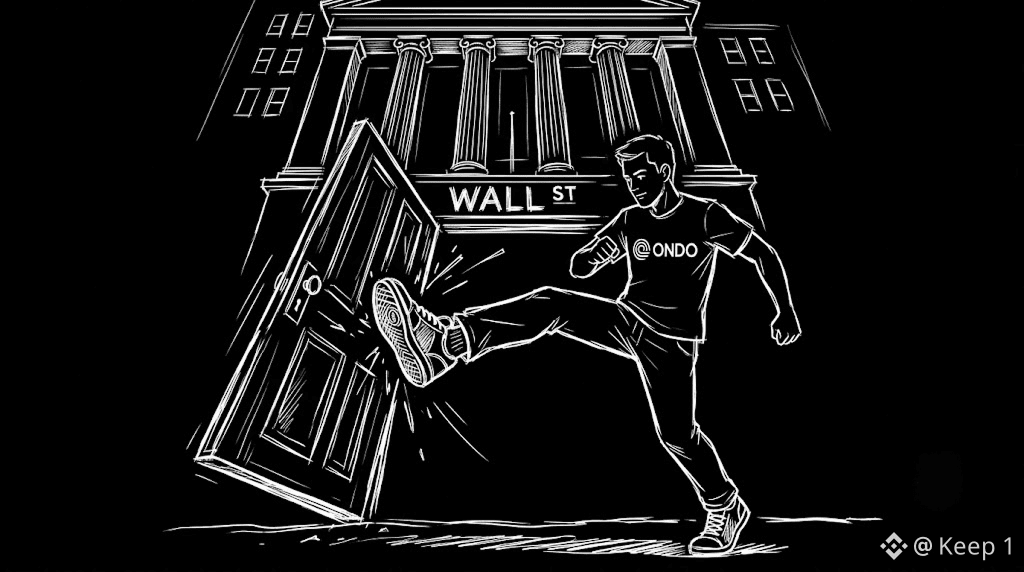
$ONDO just plugged directly into Wall Street’s core infrastructure. Its broker-dealer subsidiary (Oasis Pro Markets) officially joined the DTCC Fund/SERV network. For context, the DTCC processes over 85% of all U.S. mutual fund transactions.Why this is a big deal:Instead of trying to replace the traditional financial system, Ondo is building a direct bridge into it. This means major wealth platforms and traditional funds can eventually interact with tokenized assets using the exact same standard pipelines they've used for decades. No products or official launch dates are live on the network just yet. It’s a pure infrastructure play for now, but it's a massive step toward mainstream institutional scale. Ondo’s TVL is already sitting at over $3.5 Billion. This integration just set the stage for what comes next. Are we finally moving past the "crypto sandbox" phase for RWAs?
$ONDO just plugged directly into Wall Street’s core infrastructure. Its broker-dealer subsidiary (Oasis Pro Markets) officially joined the DTCC Fund/SERV network. For context, the DTCC processes over 85% of all U.S. mutual fund transactions.Why this is a big deal:Instead of trying to replace the traditional financial system, Ondo is building a direct bridge into it. This means major wealth platforms and traditional funds can eventually interact with tokenized assets using the exact same standard pipelines they've used for decades. No products or official launch dates are live on the network just yet. It’s a pure infrastructure play for now, but it's a massive step toward mainstream institutional scale. Ondo’s TVL is already sitting at over $3.5 Billion. This integration just set the stage for what comes next. Are we finally moving past the "crypto sandbox" phase for RWAs?
73
·
--
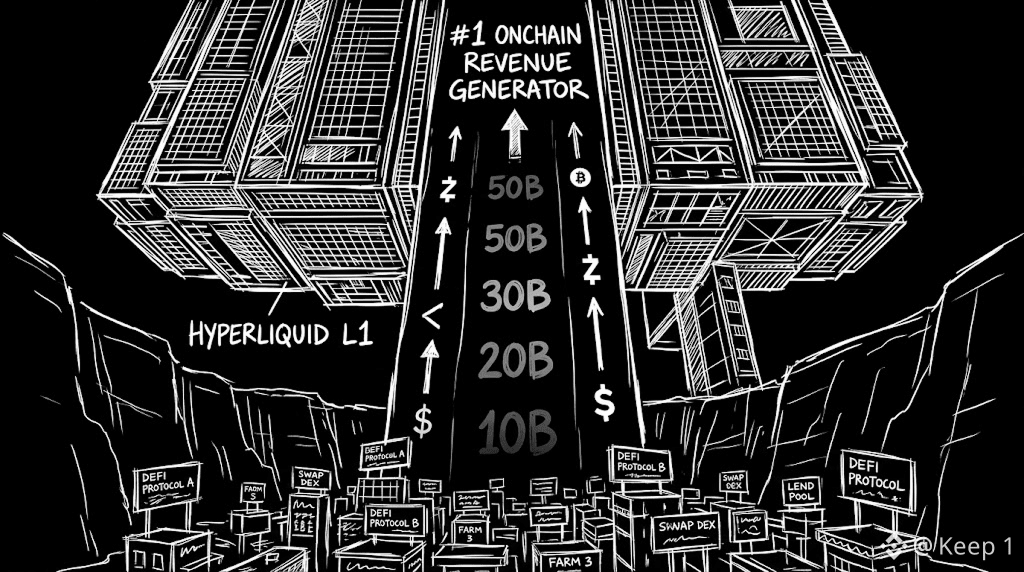
Almost none of current crypto projects show actual cash flow. $HYPE is the rare exception where real business metrics speak for themselves. In a recent CoinGecko report tracking protocol performance, Hyperliquid officially took the number one spot as the highest on-chain revenue generator, raking in over $429 million in protocol fees this year. It blew past major DeFi platforms and speculative launchpads by simply operating a blisteringly fast, decentralized order book where serious traders move genuine size. What makes this truly matter for holders is where that money goes. Instead of routing millions into private venture funds or sitting idle, the platform channels trading fees directly into buying back and burning $HYPE . Every spike in trading volume actively shrinks the circulating supply. Hyperliquid proves that an on-chain perpetual DEX can deliver TradFi-scale execution and massive fee generation without sacrificing decentralization. Capital always flows to real yield in the end.
Almost none of current crypto projects show actual cash flow. $HYPE is the rare exception where real business metrics speak for themselves. In a recent CoinGecko report tracking protocol performance, Hyperliquid officially took the number one spot as the highest on-chain revenue generator, raking in over $429 million in protocol fees this year. It blew past major DeFi platforms and speculative launchpads by simply operating a blisteringly fast, decentralized order book where serious traders move genuine size. What makes this truly matter for holders is where that money goes. Instead of routing millions into private venture funds or sitting idle, the platform channels trading fees directly into buying back and burning $HYPE . Every spike in trading volume actively shrinks the circulating supply. Hyperliquid proves that an on-chain perpetual DEX can deliver TradFi-scale execution and massive fee generation without sacrificing decentralization. Capital always flows to real yield in the end.
75
·
--
Enter $ZEC But Bitcoin has a younger brother most people are sleeping on - $ZEC . Zcash runs on the exact same base math as Bitcoin: → Hard cap of 21 million coins. → Halvings every 4 years. → Proof of work. But what is the difference? Bitcoin is a public ledger. If you send money, the whole world can see your wallet balance and where it went. That works for a global reserve asset, but in real life, nobody wants their competitors or random strangers snooping on their bank accounts. Zcash fixes this with zero-knowledge tech. It gives you the scarcity of Bitcoin, but with an invisible shield. Right now, the market treats privacy like it’s a crime. That’s dead wrong. Privacy is just basic defense. My take - as governments and giant institutions pile into Bitcoin, the demand to hide sensitive transactions will explode. Zcash isn't trying to replace Bitcoin - it backs it up. Once people realize privacy is actual property, $ZEC won't stay cheap. Watch the math.
Enter $ZEC But Bitcoin has a younger brother most people are sleeping on - $ZEC . Zcash runs on the exact same base math as Bitcoin: → Hard cap of 21 million coins. → Halvings every 4 years. → Proof of work. But what is the difference? Bitcoin is a public ledger. If you send money, the whole world can see your wallet balance and where it went. That works for a global reserve asset, but in real life, nobody wants their competitors or random strangers snooping on their bank accounts. Zcash fixes this with zero-knowledge tech. It gives you the scarcity of Bitcoin, but with an invisible shield. Right now, the market treats privacy like it’s a crime. That’s dead wrong. Privacy is just basic defense. My take - as governments and giant institutions pile into Bitcoin, the demand to hide sensitive transactions will explode. Zcash isn't trying to replace Bitcoin - it backs it up. Once people realize privacy is actual property, $ZEC won't stay cheap. Watch the math.

59
·
--
Why $ARB didn't make it?
Arbitrum won the Layer-2 war on paper, but $ARB completely lost the token game.
The truth is that great technology does not guarantee a high-performing asset.
Every single transaction on the network settles in ETH, not ARB. That means zero sequencer revenue flows back to holders through buybacks or yield leaving ARB as little more than a governance badge in a market that demands real cash flow.
Pair that lack of utility with relentless monthly VC token unlocks through 2027, and retail essentially became exit liquidity.
Throw in Base stealing retail mindshare and post dencun margin compression, and momentum vanished.
Without a real fee-switch or burned supply $ARB is just a utility without value capture.
Dead weight or deep-value reversal?
Why $ARB didn't make it?
Arbitrum won the Layer-2 war on paper, but $ARB completely lost the token game.
The truth is that great technology does not guarantee a high-performing asset.
Every single transaction on the network settles in ETH, not ARB. That means zero sequencer revenue flows back to holders through buybacks or yield leaving ARB as little more than a governance badge in a market that demands real cash flow.
Pair that lack of utility with relentless monthly VC token unlocks through 2027, and retail essentially became exit liquidity.
Throw in Base stealing retail mindshare and post dencun margin compression, and momentum vanished.
Without a real fee-switch or burned supply $ARB is just a utility without value capture.
Dead weight or deep-value reversal?
Arbitrum won the Layer-2 war on paper, but $ARB completely lost the token game.
The truth is that great technology does not guarantee a high-performing asset.
Every single transaction on the network settles in ETH, not ARB. That means zero sequencer revenue flows back to holders through buybacks or yield leaving ARB as little more than a governance badge in a market that demands real cash flow.
Pair that lack of utility with relentless monthly VC token unlocks through 2027, and retail essentially became exit liquidity.
Throw in Base stealing retail mindshare and post dencun margin compression, and momentum vanished.
Without a real fee-switch or burned supply $ARB is just a utility without value capture.
Dead weight or deep-value reversal?

47
·
--
If you’re holding $PEAQ right now, pay close attention: the chart is breaking down, support levels are failing, and this drop is cutting deeper than expected.
Don’t get caught bagholding hoping for a bounce while liquidity drains. If your risk tolerance is low, now is the time to manage exposure, lock in whatever capital you have left, and step aside.
Protect your money first. The market will always offer another entry, but you can’t play if your capital is wiped out.
If you’re holding $PEAQ right now, pay close attention: the chart is breaking down, support levels are failing, and this drop is cutting deeper than expected.
Don’t get caught bagholding hoping for a bounce while liquidity drains. If your risk tolerance is low, now is the time to manage exposure, lock in whatever capital you have left, and step aside.
Protect your money first. The market will always offer another entry, but you can’t play if your capital is wiped out.
Don’t get caught bagholding hoping for a bounce while liquidity drains. If your risk tolerance is low, now is the time to manage exposure, lock in whatever capital you have left, and step aside.
Protect your money first. The market will always offer another entry, but you can’t play if your capital is wiped out.

73
·
--
Why I Moved My $BTC Assets to River from Coinbase (And Why You Should Too) - PART 1
For years, Coinbase was my default gateway to crypto. It’s convenient, household name familiar, and has a clean UI.
Like millions of people, I set up my automated $BTC Dollar-Cost Averaging (DCA), let it run on autopilot, and assumed I was executing the best long-term wealth strategy.
Then I pulled my transaction history and actually audited the numbers.
What I found was shocking: I was literally bleeding hundreds of dollars every single year to exchange friction. That was the day I packed up my assets, migrated my entire accumulation strategy to River, and never looked back.
Here is why I made the switch and why sticking with Coinbase is actively hurting your stack.
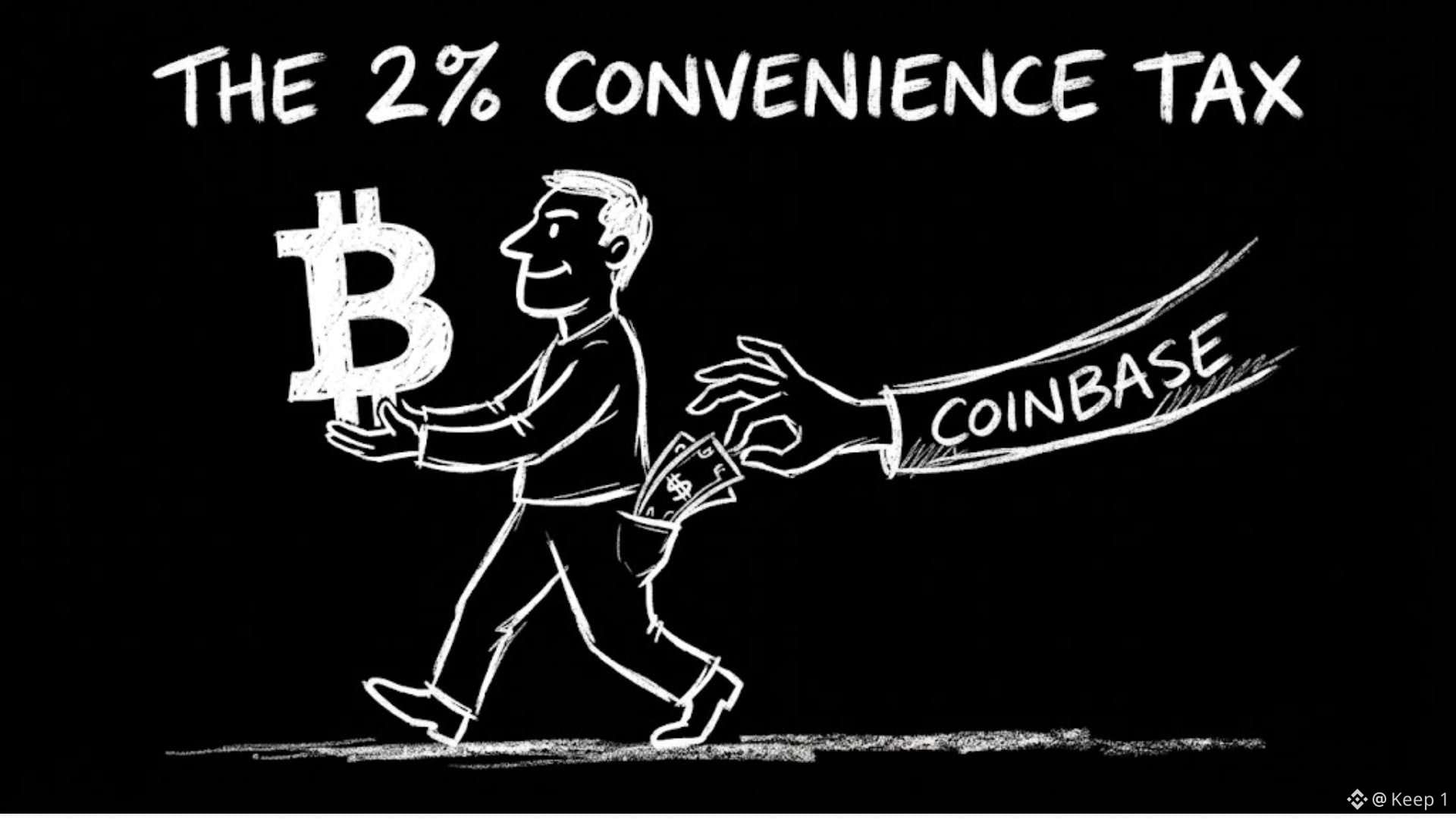
1. The "Convenience Tax": The Math Coinbase Hides from You
When you set up a recurring buy on Coinbase, they treat you like a retail cash cow.
Here is what DCA actually costs on standard retail exchanges:
> Fixed Execution Fees. Buying $250 weekly triggers a flat fee of ~$1.99 to $2.99 on every single transaction.
> The Hidden Spread. On top of the flat fee, retail orders face a built-in price markup (spread) of 0.5% to 1.5%.
> The Compounded Bleed. On a $1k/month DCA ($12k/year), you are losing $200 to $350+ annually purely to platform fees.
Over a standard 4 year halving cycle, that adds up to $800 to $1400+ taken directly out of your cost basis before price appreciation even begins. Those aren't just fees - that is pure Bitcoin that should have compounded in your wallet.
2. River Economic Model - True 0.0% Recurring Fees
The main reason I migrated is River is built specifically for Bitcoiners, not altcoins or meme casinos.
0.0% Recurring Fees!
Once you set up an automated order recurring buy after the first executes with zero trading fees.
Every single dollar from your bank account buys pure $BTC at the true market price. No hidden retail penalties. No spread traps.
Why I Moved My $BTC Assets to River from Coinbase (And Why You Should Too) - PART 1
For years, Coinbase was my default gateway to crypto. It’s convenient, household name familiar, and has a clean UI.
Like millions of people, I set up my automated $BTC Dollar-Cost Averaging (DCA), let it run on autopilot, and assumed I was executing the best long-term wealth strategy.
Then I pulled my transaction history and actually audited the numbers.
What I found was shocking: I was literally bleeding hundreds of dollars every single year to exchange friction. That was the day I packed up my assets, migrated my entire accumulation strategy to River, and never looked back.
Here is why I made the switch and why sticking with Coinbase is actively hurting your stack.
1. The "Convenience Tax": The Math Coinbase Hides from You
When you set up a recurring buy on Coinbase, they treat you like a retail cash cow.
Here is what DCA actually costs on standard retail exchanges:
> Fixed Execution Fees. Buying $250 weekly triggers a flat fee of ~$1.99 to $2.99 on every single transaction.
> The Hidden Spread. On top of the flat fee, retail orders face a built-in price markup (spread) of 0.5% to 1.5%.
> The Compounded Bleed. On a $1k/month DCA ($12k/year), you are losing $200 to $350+ annually purely to platform fees.
Over a standard 4 year halving cycle, that adds up to $800 to $1400+ taken directly out of your cost basis before price appreciation even begins. Those aren't just fees - that is pure Bitcoin that should have compounded in your wallet.
2. River Economic Model - True 0.0% Recurring Fees
The main reason I migrated is River is built specifically for Bitcoiners, not altcoins or meme casinos.
0.0% Recurring Fees!
Once you set up an automated order recurring buy after the first executes with zero trading fees.
Every single dollar from your bank account buys pure $BTC at the true market price. No hidden retail penalties. No spread traps.
For years, Coinbase was my default gateway to crypto. It’s convenient, household name familiar, and has a clean UI.
Like millions of people, I set up my automated $BTC Dollar-Cost Averaging (DCA), let it run on autopilot, and assumed I was executing the best long-term wealth strategy.
Then I pulled my transaction history and actually audited the numbers.
What I found was shocking: I was literally bleeding hundreds of dollars every single year to exchange friction. That was the day I packed up my assets, migrated my entire accumulation strategy to River, and never looked back.
Here is why I made the switch and why sticking with Coinbase is actively hurting your stack.
1. The "Convenience Tax": The Math Coinbase Hides from You
When you set up a recurring buy on Coinbase, they treat you like a retail cash cow.
Here is what DCA actually costs on standard retail exchanges:
> Fixed Execution Fees. Buying $250 weekly triggers a flat fee of ~$1.99 to $2.99 on every single transaction.
> The Hidden Spread. On top of the flat fee, retail orders face a built-in price markup (spread) of 0.5% to 1.5%.
> The Compounded Bleed. On a $1k/month DCA ($12k/year), you are losing $200 to $350+ annually purely to platform fees.
Over a standard 4 year halving cycle, that adds up to $800 to $1400+ taken directly out of your cost basis before price appreciation even begins. Those aren't just fees - that is pure Bitcoin that should have compounded in your wallet.
2. River Economic Model - True 0.0% Recurring Fees
The main reason I migrated is River is built specifically for Bitcoiners, not altcoins or meme casinos.
0.0% Recurring Fees!
Once you set up an automated order recurring buy after the first executes with zero trading fees.
Every single dollar from your bank account buys pure $BTC at the true market price. No hidden retail penalties. No spread traps.
71
·
--
This is TRUST looks like: $AAVE V4 just crossed $800M in deposits.
This is TRUST looks like: $AAVE V4 just crossed $800M in deposits.

75
·
--
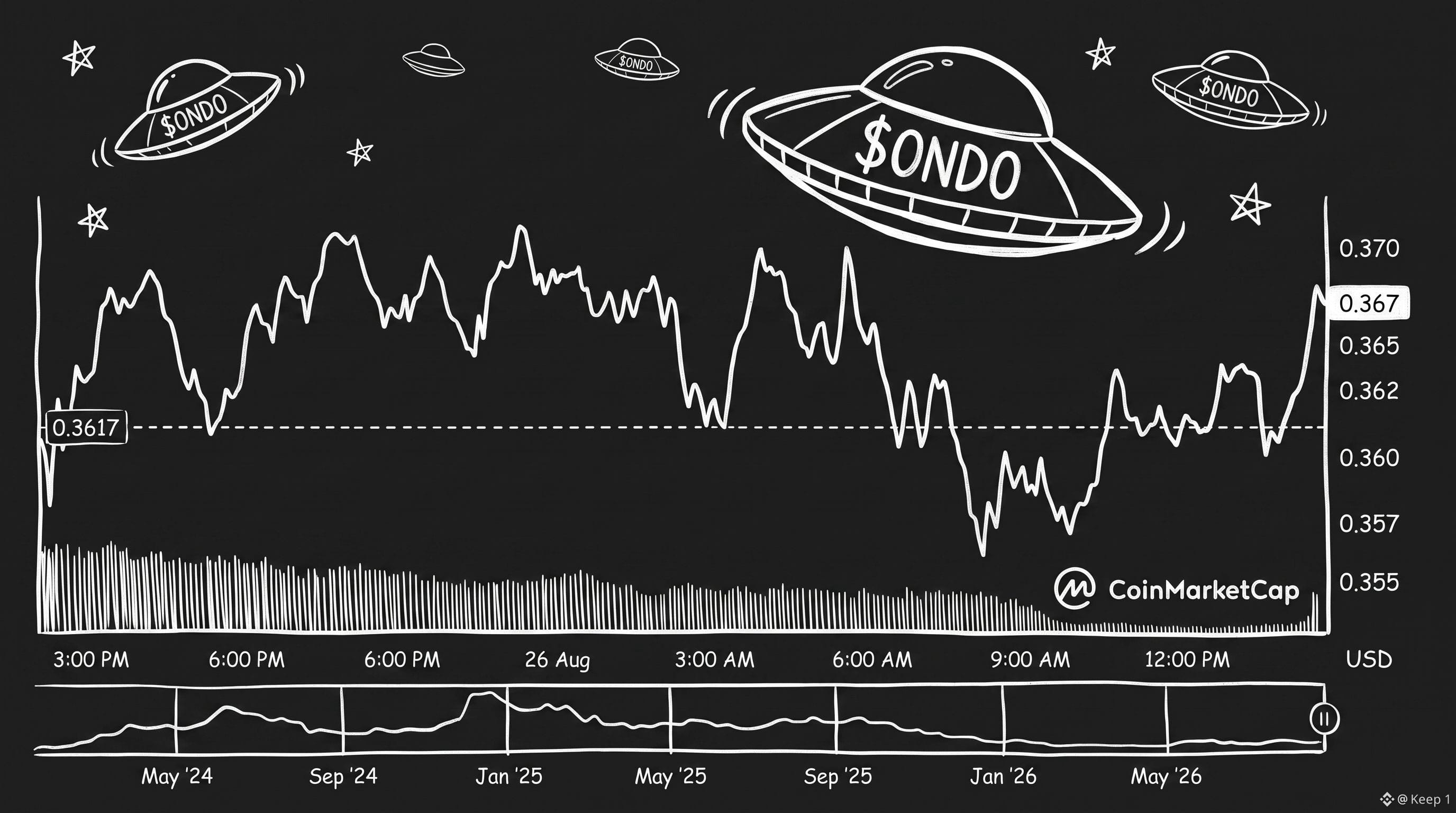
Greed is quietly creeping back into the market, and fresh retail capital is scanning for the next real bet. When new liquidity enters, it chases two things: institutional credibility and clear narrative dominance. In the RWA sector, $ONDO checks every single box. Looking at the intraday chart: $ONDO swept local liquidity down at the $0.356–$0.357 zone earlier today, shaking out impatient sellers. We got an aggressive V-shape reversal, reclaiming the $0.3617 baseline and ripping straight to $0.367 on surging intraday position. The structure is forming a clean bottom, setting up a breakout leg. Backing from heavyweights like BlackRock is the bridge connecting multi-trillion-dollar traditional assets directly onchain. From these compressed accumulation levels, a 150%–200% expansion toward the $0.90–$1 target zone is well within scope once the RWA rotation kicks into full gear.
Greed is quietly creeping back into the market, and fresh retail capital is scanning for the next real bet. When new liquidity enters, it chases two things: institutional credibility and clear narrative dominance. In the RWA sector, $ONDO checks every single box. Looking at the intraday chart: $ONDO swept local liquidity down at the $0.356–$0.357 zone earlier today, shaking out impatient sellers. We got an aggressive V-shape reversal, reclaiming the $0.3617 baseline and ripping straight to $0.367 on surging intraday position. The structure is forming a clean bottom, setting up a breakout leg. Backing from heavyweights like BlackRock is the bridge connecting multi-trillion-dollar traditional assets directly onchain. From these compressed accumulation levels, a 150%–200% expansion toward the $0.90–$1 target zone is well within scope once the RWA rotation kicks into full gear.
69
·
--
Can we get more transparency from Ondo team? We would like to know how things are evolving after Nathan passed away. What is direction of $ONDO ? Why in the green market Ondo losing positions and dropped to 42 place by MC?
Can we get more transparency from Ondo team? We would like to know how things are evolving after Nathan passed away. What is direction of $ONDO ? Why in the green market Ondo losing positions and dropped to 42 place by MC?

82
·
--
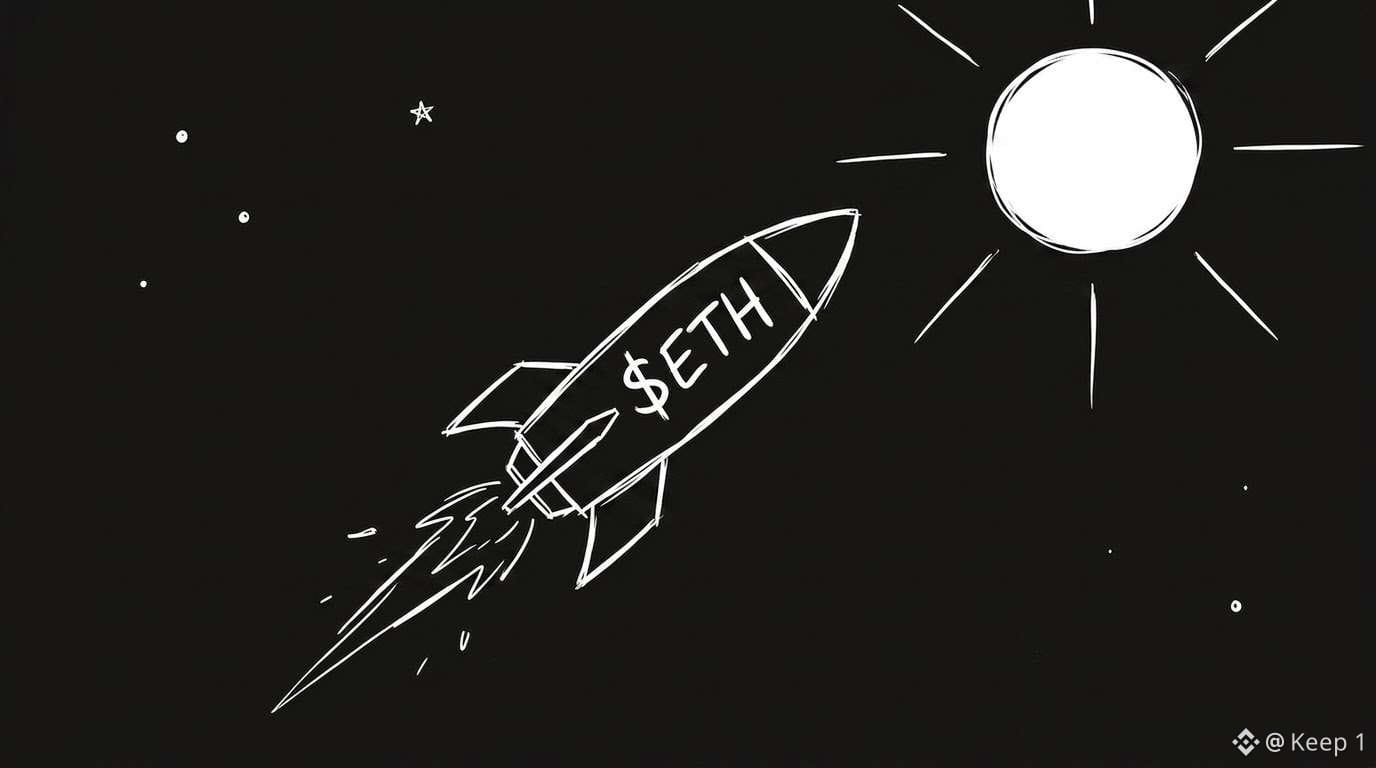
Imaging you did not sell $ETH during this deep.
Now find yourself inside this rocket.
Imaging you did not sell $ETH during this deep.
Now find yourself inside this rocket.
Now find yourself inside this rocket.
64
·
--
If you missed $NEWT
- there is a couple updates:
- Magic Labs sold their wallet business to Kraken and fully switched focus to Newton Protocol.
- The team is building an authorization layer that checks every transaction for risk, compliance, and policy rules before it settles.
- Mainnet beta is already live on Base and Ethereum.
- The first product is VaultKit.
It lets DeFi vault curators enforce real policies directly on capital movement.
In recent Newton explains how a stablecoin depeg can quickly drain a vault and why a regular oracle is no longer enough.
Overall Newton went quiet but logical evolution: from 60+ million wallets to infrastructure designed to make onchain capital safer.
$NEWT
is currently trading around $0.037-0.04 with a market cap of roughly $ 8-12M.
If you missed $NEWT
- there is a couple updates:
- Magic Labs sold their wallet business to Kraken and fully switched focus to Newton Protocol.
- The team is building an authorization layer that checks every transaction for risk, compliance, and policy rules before it settles.
- Mainnet beta is already live on Base and Ethereum.
- The first product is VaultKit.
It lets DeFi vault curators enforce real policies directly on capital movement.
In recent Newton explains how a stablecoin depeg can quickly drain a vault and why a regular oracle is no longer enough.
Overall Newton went quiet but logical evolution: from 60+ million wallets to infrastructure designed to make onchain capital safer.
$NEWT
is currently trading around $0.037-0.04 with a market cap of roughly $ 8-12M.
- there is a couple updates:
- Magic Labs sold their wallet business to Kraken and fully switched focus to Newton Protocol.
- The team is building an authorization layer that checks every transaction for risk, compliance, and policy rules before it settles.
- Mainnet beta is already live on Base and Ethereum.
- The first product is VaultKit.
It lets DeFi vault curators enforce real policies directly on capital movement.
In recent Newton explains how a stablecoin depeg can quickly drain a vault and why a regular oracle is no longer enough.
Overall Newton went quiet but logical evolution: from 60+ million wallets to infrastructure designed to make onchain capital safer.
$NEWT
is currently trading around $0.037-0.04 with a market cap of roughly $ 8-12M.

52
·
--
Why is $LIT holding its ground?
The protocol feeds on its own chaos.
Trading fees flow directly into automated on-chain buybacks.
Every time leveraged positions get opened or liquidated, the exchange turns around and gobbles up its own floating supply.
Combine CEX-speed execution on a zk-rollup with large holders quietly locking up float instead of dumping, and a structural price floor emerges.
Protocol prints cash, shrinks supply, and keeps the machine spinning.
Why is $LIT holding its ground?
The protocol feeds on its own chaos.
Trading fees flow directly into automated on-chain buybacks.
Every time leveraged positions get opened or liquidated, the exchange turns around and gobbles up its own floating supply.
Combine CEX-speed execution on a zk-rollup with large holders quietly locking up float instead of dumping, and a structural price floor emerges.
Protocol prints cash, shrinks supply, and keeps the machine spinning.
The protocol feeds on its own chaos.
Trading fees flow directly into automated on-chain buybacks.
Every time leveraged positions get opened or liquidated, the exchange turns around and gobbles up its own floating supply.
Combine CEX-speed execution on a zk-rollup with large holders quietly locking up float instead of dumping, and a structural price floor emerges.
Protocol prints cash, shrinks supply, and keeps the machine spinning.

75
·
--
$CYS is jumping for a simple reason - actual utility.
Many tokens run on pure hype, Cysic just launched InferBench, a platform that helps run AI models on a shared network.
Think of it like renting supercomputers without paying big tech.
Real AI demand boosts token usage, which sparked a surge in trading volume and pushed prices higher.
When real tech meets high demand, price follows!
$CYS is jumping for a simple reason - actual utility.
Many tokens run on pure hype, Cysic just launched InferBench, a platform that helps run AI models on a shared network.
Think of it like renting supercomputers without paying big tech.
Real AI demand boosts token usage, which sparked a surge in trading volume and pushed prices higher.
When real tech meets high demand, price follows!
Many tokens run on pure hype, Cysic just launched InferBench, a platform that helps run AI models on a shared network.
Think of it like renting supercomputers without paying big tech.
Real AI demand boosts token usage, which sparked a surge in trading volume and pushed prices higher.
When real tech meets high demand, price follows!

72
Log in to explore more content
Join global crypto users on Binance Square
⚡️ Get latest and useful information about crypto.
💬 Trusted by the world’s largest crypto exchange.
👍 Discover real insights from verified creators.
Email / Phone number
Trending Topics
BinancePick
3.2M views
160,066 Discussing
Join #EarningsSeason: Predict Earnings on Binance Pick, Share Your Take on Binance Square!
Binance Square Official
·417 Likes
·344.4k views
EarningsSeason
5.4M views
26,442 Discussing
StrategySkipsBitcoinPurchasesSpends$205MOnSTRCBuybacks
0 views
1 Discussing