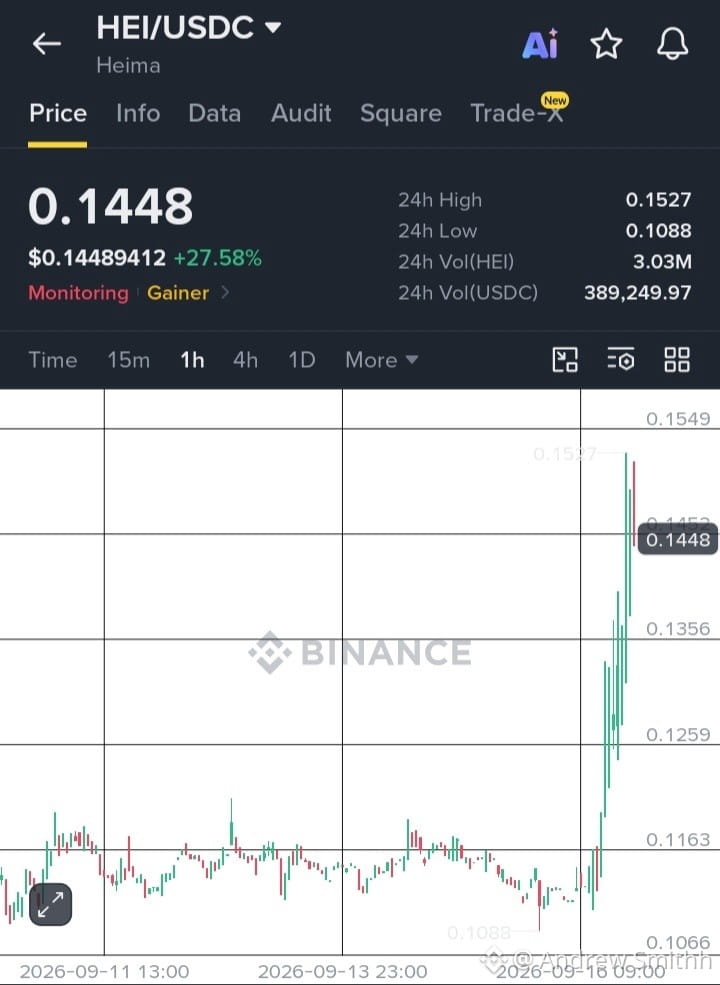
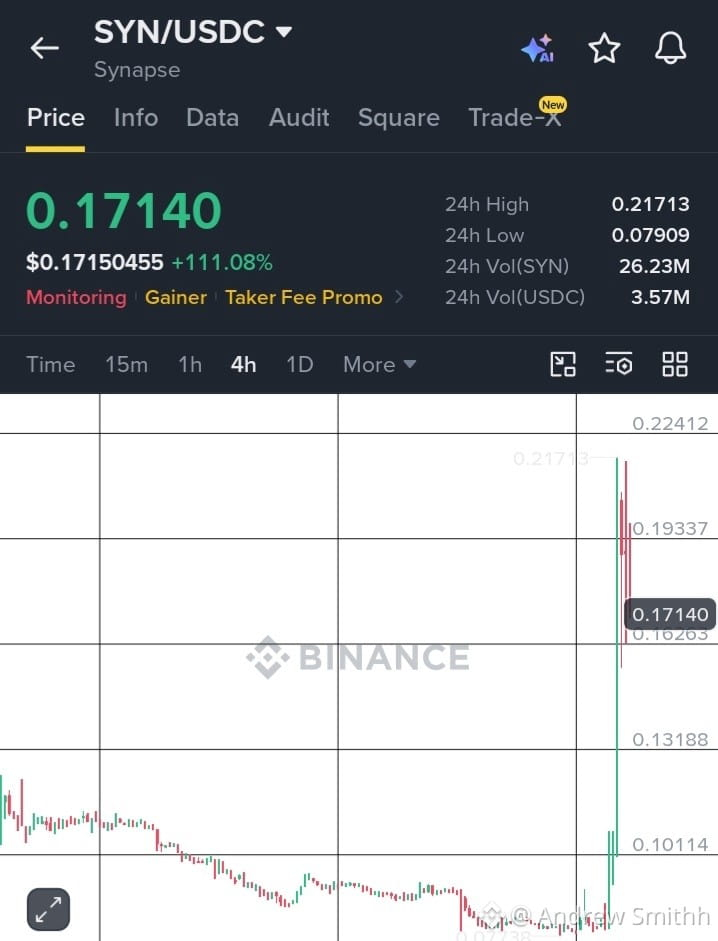
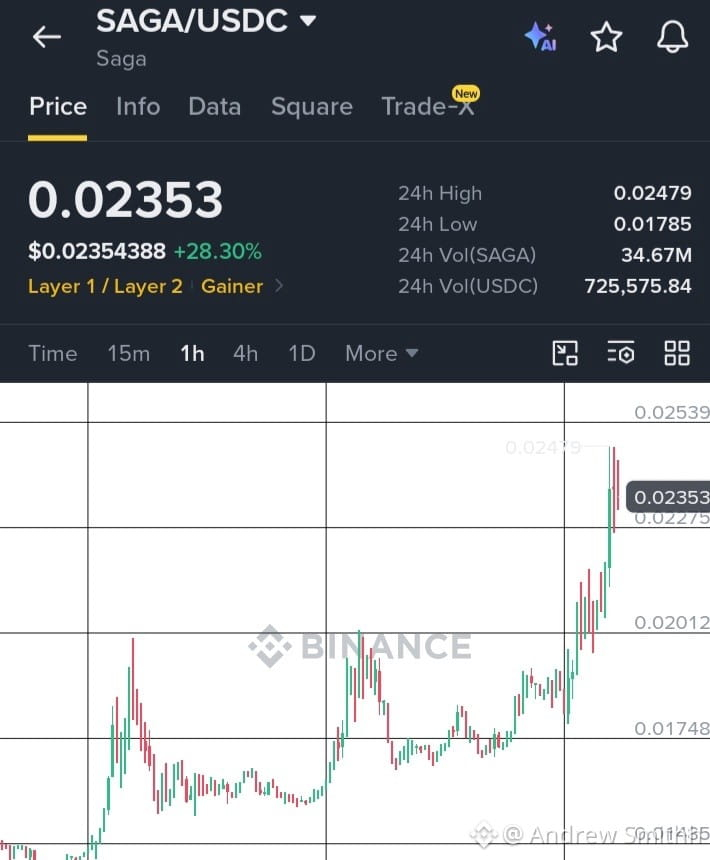
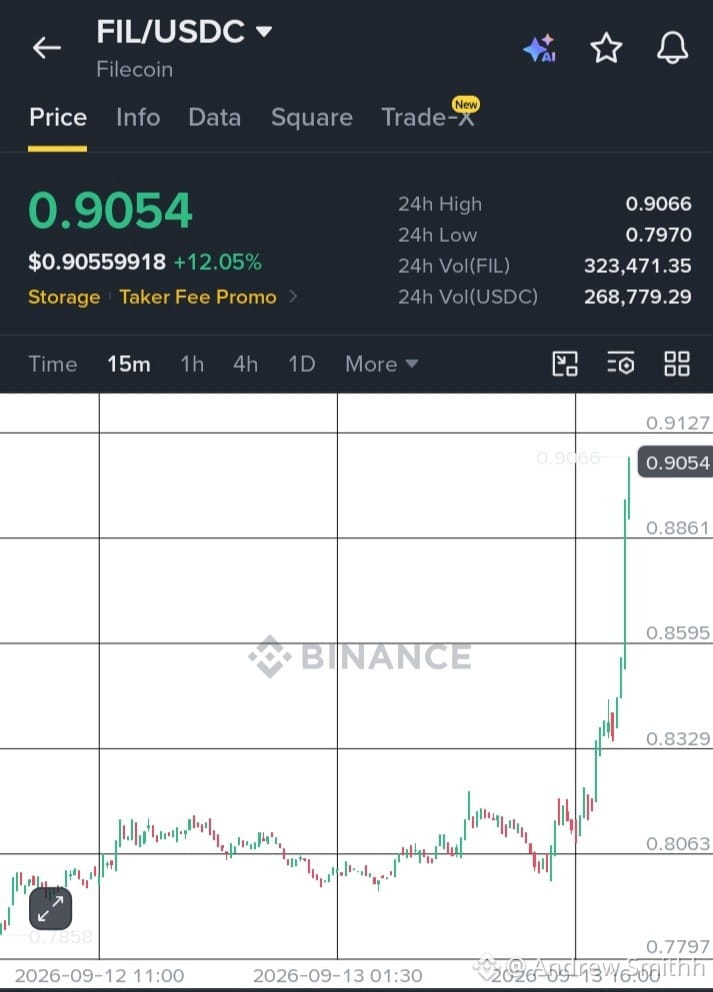
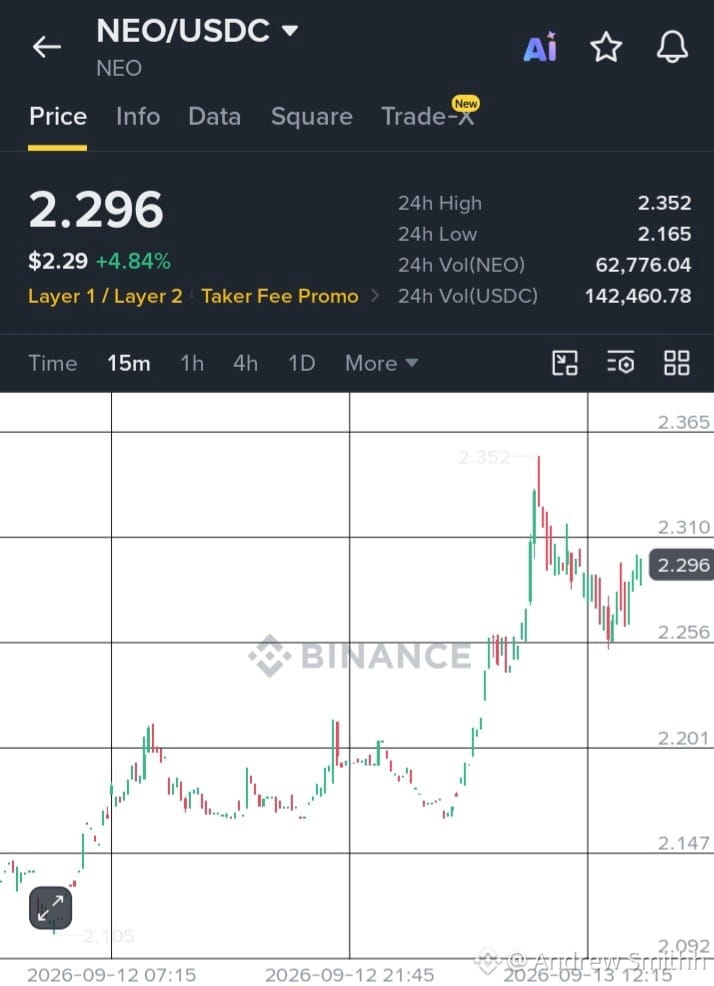
$RARE just pulled a sharp breakout, tapping $0.0298 before cooling to $0.0255. 24h volume surged past 21.5M RARE as volatility spiked, showing strong trader interest despite the pullback.
Watching for a reclaim of the $0.0270 zone momentum could ignite another push if buyers step back in.
If you want a more bullish, neutral, or technical tone, I can refine it.
Trust Becomes Technology: APRO Oracle Is Quietly Redefining Data Integrity for Web3
The next era of blockchain isn’t being built by the chains with the fastest TPS, nor by the dApps with the flashiest tokenomics it is being built by the invisible trust layer that powers everything underneath. And at the center of that silent revolution sits APRO Oracle, a secure and reliable data network engineered to give Web3 its missing backbone: verifiable truth at scale.
While most infrastructures compete on narratives, APRO competes on accuracy, consistency, and resilience the three qualities every decentralized ecosystem needs but rarely advertises. In a world drowning in unreliable off-chain feeds, manipulated prices, synthetic metrics, and opaque APIs, APRO offers something refreshingly simple: data that never lies.
This is more than an oracle. APRO is the architecture of reliability for Web3’s most critical systems.
A Network Born to Solve the Old Oracle Problem
Since the early days of DeFi, the oracle problem has been a looming threat. Protocols needed real-world data prices, feeds, events, proofs but the pipelines that delivered that data weren’t trustless, distributed, or secure enough. The “solutions” were band-aids, not reinforcements.
Most oracles fell short because they:
Relied on centralized aggregators or a handful of trusted nodes
Were vulnerable to front-running, MEV extraction, and latency gaps
Could not detect or prevent data poisoning
Delivered updates too slowly for modern liquidity systems
Struggled with cross-chain uniformity
APRO Oracle was designed from the ground up to solve these structural weaknesses. Instead of patching existing models, it rebuilt the entire oracle architecture on three pillars: precision cryptography, distributed consensus, and programmable intelligence.
The result is a network that doesn’t just fetch data it verifies, correlates, stabilizes, and audits every data point before it ever touches an on-chain contract.
What Makes APRO Oracle Distinct in a Crowded Market
Most oracle networks talk about trust. APRO practices it at the protocol level.
1. A Multi-Layer Verification Engine
APRO uses a multilayer validation framework where every feed passes through:
Source authentication
Cross-node consensus comparison
Anomaly rejection filters
Cryptographic proof packing
Instead of trusting a single source, the network builds a mathematical confidence score based on decentralized inputs. If even one node reports suspicious variance, the entire feed triggers a recalibration cycle.
This creates a dynamic security model that adapts to market volatility and malicious behavior.
2. AI-Enhanced Data Integrity
APRO integrates lightweight, deterministic AI models directly into its validation logic. These models:
Detect outliers
Forecast short-term volatility for proactive defense
This AI-assisted verification drastically reduces false positives and prevents exploits before they impact protocols.
3. Cross-Chain Data Uniformity
Different chains operate at different speeds, fee structures, and confirmation times. APRO abstracts that complexity with a unified data distribution layer that ensures:
Identical data across all chains
Synchronized timestamps
Uniform update cadence
No more mismatched price data between L1 and L2. APRO guarantees deterministic truth.
4. Zero-Downtime Architecture
The network runs on a hybrid decentralized structure with:
Fallback nodes
Hot-swap feeds
Redundant data clusters
Geo-distributed validators
Even if one region or feed goes down, APRO maintains continuity. The result is a modern oracle with industrial-grade reliability.
Why Secure Oracles Matter More Today Than Ever
The more Web3 expands into institutional finance, real-world assets, derivatives, tokenized credit, and automation, the more catastrophic a data failure becomes.
A single inaccurate price feed can:
Liquidate millions in user assets
Trigger cascading insolvencies
Drain AMMs
Create systemic instability
Encourage manipulation by sophisticated actors
APRO Oracle mitigates that risk by ensuring every on-chain decision is grounded in provable truth not approximations.
This is critical for ecosystems such as:
Money markets
Perpetual DEXs
RWAs and tokenized treasuries
Prediction and insurance markets
Autonomous agents and DeFAI
Payment networks
In the high-stakes world of programmable finance, secure data isn’t a feature. It is survival.
Inside the APRO Infrastructure: How It Really Works
1. Source Diversity Layer
APRO connects to a wide spectrum of off-chain data sources:
Institutional market APIs
Exchange aggregates
Real-world information providers
IoT proof networks
Custom enterprise datasets
The broader the diversity, the stronger the reliability.
2. Consensus Layer
Here, APRO nodes run parallel computations to verify:
Consistency
Source variance
Latency
Cryptographic proof integrity
Only when a majority consensus emerges does the feed advance.
3. Proof Packaging
Approved data is wrapped in:
Data attestations
Merkle proofs
Integrity stamps
This creates verifiable packets that cannot be tampered with during cross-chain transmission.
4. On-Chain Delivery
The oracle sends optimized updates to smart contracts via:
Minimal gas overhead
High-frequency push cycles
Or demand-based pull modules
This ensures precision without overloading users with fees.
The Reliability Advantage: What APRO Enables for Builders
Developers don’t just need data they need data they can trust under extreme conditions. APRO meets that requirement with features built for real-world resilience:
High-Frequency Price Updates
Perfect for perpetual exchanges and liquidation engines.
Stable Feeds for RWAs
Crucial for tokenized bonds, commodities, energy markets, and real estate valuations.
Secure Automation Signals
Ideal for DeFAI agents, autonomous liquidity systems, and AI-driven execution logic.
Custom Enterprise Feeds
Corporations can integrate proprietary datasets into APRO’s verification and receive tamper-proof on-chain delivery.
Regulatory-Friendly Data Controls
Institutional users gain audit trails and deterministic proofs to meet compliance requirements.
APRO’s Growth Flywheel: Why Adoption Is Accelerating
Oracle networks scale by trust, not hype. The more protocols depend on APRO, the more robust the system becomes. And APRO has engineered a growth mechanism that compounds over time.
1. New Feed Types Drive New Use Cases
As APRO expands into:
FX rates
Weather datasets
Carbon metrics
RWA financial curves
AI inference proofs
each vertical unlocks a new class of DeFi and enterprise applications.
2. Multi-Chain Expansion
APRO’s universal relay system allows instant integration across:
EVM chains
Non-EVM L1s
Rollups
App-specific chains
This blanket coverage attracts developers seeking uniform infrastructure.
3. Security Reputation Compounding
Every flawless delivery strengthens APRO’s reliability track record. Every prevented attack enhances its credibility. Every ecosystem integration reinforces network dependency.
Security is a reputation game and APRO is quietly building the strongest reputation in the oracle sector.
Where APRO Is Heading: The Next Stage of the Oracle Revolution
The future of oracles isn’t just about sourcing data it’s about reasoning with it. APRO is now exploring:
AI-Native Feeds
Where verified off-chain inference results are delivered as on-chain truth.
Agent-to-Oracle Communication
Allowing DeFAI agents to request feeds, verify signals, and automate outcomes autonomously.
Programmable Data Pipelines
Developers will be able to customize:
Update frequency
Verification parameters
Source weighting
Proof types
This turns APRO into a full data-control platform.
Cross-Oracle Collaboration
APRO aims to standardize data proofs across networks, enabling an interoperable oracle ecosystem.
Conclusion: APRO Oracle Is Becoming the Reliability Standard of Web3
In a digital economy governed by smart contracts, truth is the most valuable commodity. APRO Oracle isn’t just delivering data it is restoring trust, reinforcing infrastructure, and enabling a new generation of secure blockchain applications.
As Web3 scales into global finance, only networks built on uncompromising reliability will survive. APRO Oracle stands ready to lead that future quietly, securely, and with mathematical precision.
Finance Becomes Code: How Injective’s Tokenization Stack Is Rewiring Global Assets On-Chain
The last decade of blockchain innovation laid the foundations for faster payments, self-custody, and decentralized financial rails. But a new frontier is now emerging.one where traditional assets, structured instruments, and real-world financial logic are minted, managed, and transacted directly on-chain. At the center of this shift stands Injective, whose integrated asset tokenization suite is rapidly becoming one of the most sophisticated infrastructures for institutional-grade digital finance.
Unlike generic networks where tokenization remains fragmented across multiple layers, Injective delivers a purpose-built, vertically optimized stack designed for high-performance financial applications. Its unique architecture has allowed it to build tools, execution environments, and compliance-driven modules that turn the concept of on-chain assets into a complete, plug-and-play ecosystem.
Today, Injective is no longer just a fast chain—it is becoming the asset engine that developers, institutions, and fintech companies rely on to create scalable, programmable, and composable financial products.
A New Foundation for Digital Asset Life-Cycles
Traditional asset issuance often involves multiple intermediaries.custodians, brokers, compliance vendors, settlement layers, and data providers. Injective collapses this complexity by offering an all-in-one tokenization lifecycle, covering:
Asset issuance
Compliance-aware configuration
Oracle-integrated data feeds
Lifecycle management and settlement
Programmable logic for structured products
Transparent market execution
This means assets that traditionally took weeks to issue or settle can now be minted, managed, and traded in seconds, all while meeting the requirements of institutions seeking predictability and compliance.
At the core is Injective’s Web3-native finance engine, which includes modules for:
On-chain orderbooks
Interoperability across IBC and Ethereum
Institutional-level security and data integrity
High-speed execution without relying on centralized sequencers
This architecture ensures that any asset brought on-chain behaves not as a symbolic representation but as a fully functional and programmable financial instrument.
Tokenization That Understands Structure, Not Just Ownership
Most chains treat tokenized assets as simple ownership units. Injective goes further by enabling structured financial logic at the token level. This allows developers and institutions to issue:
Yield-bearing structured notes
Tranches and collateralized baskets
Synthetic indices
Tokenized treasuries and short-term credit
Derivatives with custom payoffs
Liquidity-wrapped RWAs
Programmable compliance layers
These are not abstract possibilities the ecosystem already includes full frameworks that allow institutions to mirror traditional, legally recognized financial instruments.
The result is a form of tokenization that goes beyond mere digitization. It creates software-based assets whose behavior, yield, risk exposure, and capital flows can be programmed and audited on-chain.
A Breakthrough in Real-World Asset (RWA) Integration
RWAs used to be one of the most hyped yet hardest-to-execute concepts in crypto. Fragmented regulation, inconsistent data pipelines, and lack of institutional tooling kept adoption stuck at the experimentation level.
Injective’s tokenization suite changes this through:
1. Compliance-aware asset modules Built-in logic ensuring assets follow regulatory constraints during issuance, transfer, or redemption.
2. Native oracle infrastructure Partnerships with Pyth, Chronicle, and other high-integrity data networks ensure verifiable price feeds.
3. Cross-chain liquidity routing RWAs issued on Injective can circulate across IBC, Layer-2s, and Ethereum, making markets deeper and more flexible.
4. Capital-efficient collateral frameworks Tokenized assets become usable within lending protocols, derivatives, and structured products unlocking true liquidity.
This turns Injective into a central settlement and issuance layer for digitized assets ranging from U.S. Treasuries and corporate credit to commodities and revenue-sharing instruments.
Compliance: The Cornerstone Rather Than a Patchwork Add-On
For institutions, tokenization without compliance is simply unusable. Injective acknowledges this by embedding compliance logic at the protocol level, rather than relying on application-level patches.
Its suite includes:
Permissioned asset functionality
Transfer restrictions based on jurisdiction
Wallet-level KYC/AML workflows
Automated reporting hooks
Programmable disclosure frameworks
Audit-friendly transaction layers
This creates a regulatory-ready environment where financial entities can issue and manage digitized products with confidence.
By integrating compliance directly into the issuance and lifecycle modules, Injective becomes one of the few chains where institutional tokenization can scale safely.
Programmable Financial Composability A New Frontier
Tokenized assets on Injective are not isolated units; they plug seamlessly into an entire on-chain financial ecosystem.
1. Collateralization
RWAs, structured notes, or synthetic baskets can be used as collateral across DeFi applications.
2. Automated Yield Strategies
Assets can be fed into yield-generation modules that build predictable, transparent cashflows.
3. Market-wide Liquidity
Injective’s orderbook infrastructure offers institutional execution standards with low latency.
4. Cross-Chain DeFi
IBC and Ethereum interoperability ensure assets interact beyond Injective’s boundaries.
5. AI-Powered Risk Engines
Because Injective allows AI agents and logic layers, asset risk scoring and automated rebalancing can be executed algorithmically.
This creates a powerful abstraction: assets are now programmable components, capable of interacting with any layer of the financial stack.
Why Injective’s Tokenization Suite Represents a Jump in Capital Efficiency
A tokenized system becomes valuable when assets are both easy to issue and deeply usable. Injective excels at both.
Faster Issuance → Quicker Capital Deployment
Institutions can bring products on-chain in minutes, turning slow legacy workflows into continuous financial operations.
Liquidity Across Chains → Reduced Fragmentation
Tokens issued on Injective can tap liquidity on Cosmos, Ethereum, Solana bridges, and other emerging chains.
Composability → Higher Asset Productivity
Tokenized assets can simultaneously serve as yield instruments, collateral, and settlement units something nearly impossible in traditional finance.
Transparent and Auditable Logic → Lower Operational Risk
Every event—from issuance to redemption—is traceable and verifiable.
This fundamentally transforms how institutions evaluate capital allocation. Tokenized assets become multi-purpose, yield-optimized tools, not static holdings.
A Platform Designed for the Next Wave of Tokenized Markets
Never before has the industry seen a chain with such a holistic approach to digital asset infrastructure. Injective’s tokenization suite is enabling:
Banks exploring structured financial instruments
Fintech companies issuing credit and revenue-sharing notes
Developers experimenting with programmable yield engines
This positions Injective at the epicenter of the global shift from paper-based assets to programmable, on-chain finance.
The Road Ahead: When Every Asset Lives as Code
The financial world is converging toward a future where every asset is digitized, programmable, and instantly exchangeable. Injective is not waiting for this moment it is actively building the infrastructure that will define it.
As institutions accelerate their tokenization programs and developers embrace programmable financial logic, Injective stands out as one of the only ecosystems with the speed, structure, compliance, and composability needed to make global on-chain finance a reality.
In this new era, assets don’t just move faster they think, interact, and live in a programmable environment.
Injective’s asset tokenization suite is the blueprint for that future.
When Coordination Becomes a Superpower: The Rise of Onchain Guilds in the YGG Era
For most of Web3’s short history, communities have been little more than Discord servers with tokens attached. People gathered, chatted, speculated, and occasionally organized but the coordination itself stayed off-chain, intangible, and fragile. But a new primitive is emerging, one built not on vibes but on verifiable participation, shared incentives, and programmable collaboration: Onchain Guilds. And leading this transformation is Yield Guild Games (YGG) with its pioneering Guild Protocol, a framework that turns loose online groups into coordinated, autonomous, economically aligned onchain entities.
This new model reshapes what it means to participate in Web3 gaming, digital labor, social identity, and community-driven achievement. It introduces a powerful idea: people don’t just join a community they join an onchain organization capable of earning, building, and evolving together. YGG didn’t simply build a guild; it built the infrastructure for millions of guilds to form and operate with crypto-native efficiency.
Below is a deep exploration of how Onchain Guilds work, why they matter, and how YGG is turning collective participation into one of Web3’s most potent superpowers.
The Shift from Social Communities to Onchain Coordination
Traditional gaming guilds and Web3 communities have always faced a fundamental limitation: coordination relies on unverifiable, off-chain behavior.
A member claims they completed a task who verifies it?
Contributions happen inside chats how are they tracked?
Rewards must be distributed who ensures fairness?
Leaders make decisions ⁹how are they accountable?
The result? Communities become noisy, fragile, and inefficient. Effort gets lost, free-riders proliferate, and contributors burn out.
Onchain Guilds fix this by encoding structure, incentives, and accountability directly into chain-level logic.
An Onchain Guild is:
Permissionless to create
Programmable through smart contracts
Composable with games and apps
Evolving based on member actions
Rewarded based on verifiable onchain proof of contribution
This makes communities not just social spaces, but operational units with measurable output.
YGG’s Guild Protocol is the engine that makes this transition both seamless and scalable.
What Exactly Is the YGG Guild Protocol?
The Guild Protocol is a modular, permissionless system that allows any group of people to form, manage, and grow an Onchain Guild tied to shared interests, skills, or playstyles.
Think of it as a next-generation DAO toolkit built specifically for gaming and player coordination.
Core capabilities of the Guild Protocol
1. Guild Creation Anyone can spin up an onchain guild—no technical expertise required. Guilds can focus on:
specific games
competitive play
quest completion
content creation
learning and skill development
regional or cultural communities
2. Membership Verification Membership is provable through wallets, credentials, badges, and onchain participation.
3. Quest & Activity Coordination Guilds can coordinate tasks, objectives, and multi-step activities with onchain tracking.
4. Automated Reward Distribution Contributions are tracked onchain, allowing transparent payouts.
5. Reputation Systems Members accumulate verifiable reputation tied to completed activities.
6. Inter-Guild Composability Guilds can collaborate, merge, compete, or share achievements.
In short: the protocol upgrades informal communities into verifiable, accountable, reward-driven organizations.
Why Onchain Guilds Are a Breakthrough for Web3 Gaming
Gaming has always been about forming teams, clans, and guilds. But Web3 gaming multiplies the value of coordination because in-game achievements often have real-world economic weight.
Here’s why Onchain Guilds change everything:
1. They turn gameplay into shared economic value
In Web2 games, guild achievements bring status. In Web3 games, guild achievements bring status AND assets.
With Onchain Guilds:
in-game items, skins, and rewards become shared value
coordinated play generates better yields
group strategies can be encoded into smart contracts
earnings flow transparently and automatically
performance becomes a measurable, tradable asset
A coordinated group becomes more powerful than any individual player.
2. They allow players to specialize, organize, and compete more effectively
Not all gamers are the same. Some excel at strategy, others at grinding, min-maxing, crafting, PvP, or leadership.
Onchain Guilds let players:
cluster around their strengths
define roles with onchain credentials
build identity and reputation
scale coordinated gameplay
contribute meaningfully regardless of skill type
Contribution is no longer vague it's recorded, measurable, and rewardable.
3. They create a new layer of interoperability across games
One of YGG’s strongest principles has always been metagame interoperability.
A player’s reputation, guild membership, and skills should move with them across titles.
The Guild Protocol makes this real:
A member who cleared 100 quests in Game A is recognized in Game B
A guild known for PvP excellence can port its ranking into other ecosystems
Projects can reward guilds based on verified multi-game activity
This creates an “interoperable identity layer” for gaming achievement.
4. They solve the problem of unorganized player liquidity
Players are stakeholders. They spend time, effort, and sometimes money. But without structure, their value is scattered.
Onchain Guilds consolidate players into organized talent pools that projects can activate:
campaigns
tournaments
beta tests
content missions
ecosystem quests
The result is a deeper, more engaged, more reliable player base.
How Guilds Form and Operate: A Practical Walkthrough
To understand the innovation, let's imagine forming an Onchain Guild.
Step 1: Create the Guild Onchain
A user mints a guild contract. They pick a name, a purpose, and optional parameters.
No approvals. No gatekeepers.
Step 2: Members Join with Onchain Credentials
Players connect wallets and verify participation through:
quest completions
game-linked NFTs
skills badges
soulbound tokens
prior guild histories
This allows decentralized yet provable membership identity.
Step 3: The Guild Takes On Activities
Members coordinate to complete missions such as:
battle passes
grinding quests
tournament participation
content creation
testing games
onboarding new players
Each quest is tracked by the protocol.
Step 4: Rewards Auto-Distribute
Using programmable logic:
rewards flow to participants
bonuses go to high performers
guild treasury accumulates assets
distributions adjust dynamically
Everything runs frictionlessly.
Step 5: Guild Reputation Evolves
Guilds gain:
ranking
badges
special access
project-level rewards
preferential treatment from game devs
shared prestige between members
This reputation becomes a powerful asset.
Why YGG Is the Right Pioneer for Onchain Guilds
YGG isn’t a newcomer. It’s the most battle-tested gaming DAO in Web3, known for coordination at global scale.
The Guild Protocol is a culmination of YGG’s years of learning:
operating in dozens of games
organizing hundreds of thousands of players
building regional communities across Asia and beyond
cultivating a culture of collaboration and achievement
rewarding participation with transparency
This protocol turns YGG’s experiences into a public good.anyone can build a guild, not just YGG.
YGG becomes an infrastructure layer, not just a single organization.
The Broader Vision: A Network of Guilds Building the Future of Digital Work
Onchain Guilds are not just for gaming. Their design unlocks a new paradigm of onchain digital labor coordination.
Imagine:
creator guilds
AI trainer guilds
esports guilds
strategy guilds
metaverse builder guilds
language learning guilds
regional grassroots guilds
research guilds
Any activity that can be tracked onchain can be coordinated through a guild.
This is bigger than play-to-earn, bigger than gaming, and bigger than Web3 entertainment.
It’s the emergence of a new structure for global collaboration.
People coordinate digitally. Their proof-of-work is onchain. Their identity grows. Their rewards accumulate. Their guild evolves.
This is digital meritocracy mad
The Era of Onchain Guilds Has Just Begun
With YGG’s Guild Protocol, the fragmented communities of Web3 are finally receiving the missing infrastructure—coordination at scale.
Contributors become stakeholders
Guilds become economic units
Games become collaboration hubs
Identity becomes portable
Reputation becomes verifiable
Rewards become automatic
Onchain Guilds are not a trend. They are a structural upgrade to how people gather, coordinate, and achieve things online.
YGG didn’t just bring guilds onchain. It brought coordination onchain, turning community action into an unstoppable force.
And in this new era, the most powerful players won’t be individuals they will be guilds who understand how to use coordination as a superpower.
Where Fun Meets On-Chain Freedom: How YGG Play Is Forging Web3’s Casual Degen Era
Web3 gaming has spent years chasing the next breakthrough, the next genre-defining moment, the next on-chain experience capable of pulling millions into blockchain-based entertainment. Many builders targeted high-complexity ecosystems, ultra-financialized strategies, or hardcore mechanics that catered to a thin slice of crypto-native power users. What Web3 never truly cracked until now was the vast space between mass-market casual fun and blockchain-enabled economic empowerment.
This is the void YGG Play, the publishing arm of Yield Guild Games, is stepping into with precision. And with the launch of its first title, LOL Land, the team is creating a brand-new category: Casual Degen games that are simple, joyful, fast-paced, and frictionless, yet deeply Web3 at their core.
YGG has spent years building one of the most influential gaming communities in the industry. Now, YGG Play expands that mission: making Web3 gaming accessible, exciting, and rewarding for everyone, everywhere, from crypto newcomers to seasoned on-chain explorers.
This isn’t merely a publishing initiative. It is the convergence of global communities, on-chain economies, and gaming culture compressed into an ecosystem that blends accessibility with meaningful economic upside.
The Birth of the “Casual Degen” Category
Game categories in Web3 have historically leaned toward either extreme depth or extreme speculation. For many players, the barrier to entry grew too heavy. Wallet setups, token complexities, asset risks, and high learning curves diluted what gaming is supposed to be: fun.
YGG Play’s answer is the concept of Casual Degen an ethos more than a genre.
A Casual Degen game is:
Instantly understandable
Lightweight and mobile-friendly
Social by design
Playable in short bursts
Rewarding with on-chain progression and ownership
Built to scale to hundreds of millions of players
It embraces everything gamers love about casual titles simplicity, humor, unpredictable fun while integrating the Web3 mechanics players actually want: digital ownership, community-driven progression, and open participation.
By merging these worlds, YGG Play is not just publishing games. It is reshaping what Web3 gaming can be.
LOL Land: The First Beacon of the Casual Degen Movement
At the heart of YGG Play’s new direction is LOL Land, the first game to embody the Casual Degen identity. More than a title, LOL Land is a playful ecosystem engineered to make Web3 gaming both hilarious and empowering.
From the start, LOL Land embraces what makes casual games addictive: quick action, clever twists, quirky characters, and unexpected outcomes. But everything is powered by on-chain infrastructure designed for real digital ownership.
Players are pulled into a world where:
Fast-paced fun meets on-chain collectibility
Humor drives engagement
Skill meets randomness in perfect balance
Community competition becomes the main event
Rewards extend far beyond the screen
LOL Land captures the spirit of Web3’s early days freedom, creativity, culture, and memes yet packages it into a modern, polished, endlessly replayable experience.
And at the center of it all stands YGG Play, curating content, creating opportunities, and enabling players to turn entertainment into empowerment.
YGG Play’s Mission: Global Opportunity Through Web3 Games
While LOL Land sets the tone, YGG Play’s core mission extends far deeper: to create opportunities for people worldwide through Web3 games.
This mission was born from Yield Guild Games’ origins as a pioneering play-to-earn guild. YGG became a lifeline for thousands, helping players earn income, acquire skills, and join global digital economies. But YGG Play evolves this mission into something more sustainable, more scalable, and more human-centered.
1. Equal Opportunity
Web3 games should not be gated by wealth or location. YGG Play makes access universal whether someone is in Manila, Lagos, São Paulo, Jakarta, or Karachi. Games published under YGG Play are deliberately designed to be:
Low-cost or free to start
Mobile-first
Accessible with simple onboarding
Flexible regardless of device or background
This removes barriers and empowers anyone to join and grow.
2. Community First, Always
Playing together is in YGG’s DNA. YGG Play builds on that legacy by creating:
Community tournaments
Regional events
Social-led challenges
Localized onboarding programs
Guild-based competitive structures
The goal: strengthen global social bonds through games that feel communal, not isolating.
3. Access to Web3 Ecosystems
Instead of overwhelming new players with complex crypto concepts, YGG Play integrates everything seamlessly. Players learn by doing.earning, trading, owning, and participating in the Web3 ecosystem through simple, enjoyable gameplay loops.
4. Training and Skill Development
YGG Play acts as both a publisher and an educator. Players gain:
Web3 literacy
In-game strategic skills
Digital asset management experience
Competitive gaming fundamentals
Access to workshops, live sessions, and mentoring
This mirrors YGG’s original mission: uplift individuals through gaming, but with a more modern, more scalable framework.
From Players to Participants: How YGG Play Reshapes Player Identity
Traditional games treat players as consumers. Web3 games treat them as stakeholders. YGG Play goes further it treats players as participants in a shared digital economy.
A player in the YGG Play ecosystem is not just someone who logs in. They are:
A co-creator
A community builder
A contributor to game culture
A skilled participant in an evolving economy
A potential leader in a larger movement
This identity shift is powerful. And it is why YGG Play builds not just games, but ecosystems built on participation, contribution, and collective progress.
Publishing With Purpose: YGG Play as a Curator of the New Web3 Fun Economy
YGG Play is not simply releasing games—it is curating a pipeline of titles aligned with the Casual Degen ethos.
Games selected for the YGG Play catalog must meet specific criteria:
Easy to start, hard to master
Socially engaging
Reward-driven
Fast-paced and fun
On-chain enabled with real ownership
Built to scale globally
YGG Play operates as a full-spectrum publisher:
Providing ecosystem support
Helping developers build Web3 integrations
Facilitating community growth
Partnering with guilds, influencers, and esports leaders
Building reward systems that feel meaningful and balanced
Offering global distribution and marketing
This is where YGG’s legacy shines. No one understands Web3 gaming communities better.
LOL Land’s Role as a Cultural Entry Point
LOL Land is not only a game.it is a cultural doorway. For millions of players, LOL Land will be their first Web3 experience. That demands intuitive design, seamless onboarding, and an environment that feels welcoming rather than intimidating.
Its humor-driven world serves as a “soft landing” into blockchain gaming. Players do not need to be crypto experts—they simply need curiosity, a phone, and a desire to have fun.
This is how mainstream adoption begins: with games that spark joy first and introduce on-chain mechanics naturally.
Why “Casual Degen” Matters for the Future of Web3 Gaming
The industry has tried many models—Play-to-Earn, Play-and-Earn, asset-heavy ecosystems, NFT-first titles, ultra-complex DeFi integrations. But none captured mainstream players sustainably.
Casual Degen gaming solves the core challenges:
It removes friction
It broadens reach
It introduces Web3 lightly
It attaches real value to time spent
It encourages social participation
It retains users through fun, not speculation
For developers, this is the model with the highest potential global impact. For players, it offers the perfect balance of entertainment and empowerment.
And for the Web3 ecosystem, it unlocks a massive new demographic: the billions of casual players who love quick, joyful games but have never touched on-chain mechanics.
The Road Ahead: YGG Play as a Global Gaming Force
As YGG Play grows its publishing catalog, expands regional communities, and builds new educational programs, the impact will multiply.
The Casual Degen movement is only the beginning. LOL Land is just the first spark.
But the mission remains clear and unwavering:
To create opportunities for people worldwide through Web3 games. To make fun accessible, communal, and rewarding. To transform players into empowered participants.
YGG Play is not just shaping a category it is shaping the next chapter of Web3 gaming.
Where Finance Finds Its New Engine: Injective’s Integrated Infrastructure Revolution
Integrated infrastructure is no longer a luxury in Web3 it is the foundation that determines whether an application can scale, compete, and ultimately survive. Fragmentation slows builders down, inefficiencies kill innovation, and the lack of financial-grade interoperability continues to limit what decentralized finance can truly become. Amid this evolving landscape, Injective emerges not just as another blockchain but as the finance engine the industry has been waiting for.
Injective is reimagining what a purpose-built ecosystem for financial applications should look like. It brings together ultra-fast architecture, modular financial primitives, programmable artificial intelligence, and ever-expanding real-world assets to create a seamless environment where any idea from trading infrastructure to AI-driven asset management can be built faster and smarter.
This isn’t just infrastructure; it’s the new operating system for decentralized finance.
A Foundation Engineered for High-Performance Finance
Injective distinguishes itself with one bold commitment: finance deserves its own chain. Instead of retrofitting general-purpose blockchains to handle financial logic, Injective is built from the ground up with the requirements of exchanges, brokerages, derivatives platforms, liquidity networks, and AI-based routing systems baked into the protocol itself.
Speed Without Compromise
Injective leverages an optimized PoS architecture built with the Cosmos SDK, enabling: Instant finality, eliminating the latency that cripples CeFi-to-DeFi migration Ultra-low fees, making high-frequency strategies actually viable High throughput, supporting complex financial workloads at scale
This performance is not theoretical it is live today. Builders gain infrastructure that doesn’t force trade-offs between scalability and decentralization.
A Chain That Understands Markets
Unlike generic ecosystems, Injective comes with native on-chain order books, verifiable exchange logic, and plug-and-play modules for spot, derivatives, and structured products. This cuts development time significantly; teams no longer reinvent critical components.
Injective doesn’t just support financial apps it anticipates what they need.
Integrated Infrastructure: The Power of a Unified Financial Layer
Injective’s true breakthrough lies in its integrated approach. Web3 today is full of disjointed components oracles here, settlement there, liquidity elsewhere, and bridges that barely hold it together. Injective flips this model by offering a vertically integrated, deeply interconnected ecosystem.
1. Web3 Primitives That Builders Actually Need
Injective provides a library of ready-to-deploy, highly customizable financial primitives, including:
Instead of working around limitations, developers build with purpose-made modules that are battle-tested and optimized for performance.
2. Real-World Assets (RWAs) Without the Typical Friction
Injective’s RWA layer is rapidly expanding, enabling secure issuance, trading, and settlement of tokenized assets. This removes barriers that previously slowed RWA adoption and opens the door to:
Injective’s infrastructure brings RWAs into DeFi not as a novelty, but as a seamless part of the financial fabric.
3. Programmable Artificial Intelligence Embedded into the Stack
Injective doesn’t bolt AI onto its chain as an afterthought. Instead, it introduces a programmable AI layer that interacts with on-chain data, executes logic, and enhances user and developer experience.
AI on Injective can:
Predict liquidity requirements Optimize order routingAdjust asset strategies autonomously Support smart trading agents Automate portfolio balancingPower AI-native DeFi applications
This transforms Injective from a static infrastructure into an intelligent, adaptive environment.
Supercharging Builders: Why Developers Flock to Injective
A finance-focused chain works only if it can deliver an unparalleled building experience and Injective does exactly that.
Modular Architecture for Maximum Flexibility
Injective gives builders fine-grained control:
Build apps using pre-existing financial module Customize modules at the protocol leve⁰ Deploy sovereign appchains through the Injective ecosystem Interact with IBC-enabled liquidity across Cosmos Tap into cross-chain assets from Ethereum, Solana, Polygon, and more
The result? An unrestricted innovation environment where teams can scale vertically or horizontally.
Liquidity as Public Infrastructure
Injective believes liquidity should not depend on private monopolies. Instead, it provides:
Public order books Open liquidity pools Network-wide composability Transparent access for all applications
Apps built on Injective share liquidity like cities share public utilities benefiting everyone and raising baseline efficiency.
A Network That Grows With You
Injective’s ecosystem is thriving, with rising developer activity, growing liquidity, expanding RWA offerings, and increasing adoption of AI-driven systems. Every new project strengthens the entire network, creating a compounding growth effect.
Unlocking Infinite Possibilities for the Next Generation of Finance
The real magic of Injective is what developers can create with this infrastructure.
Here are the finance verticals that Injective empowers more effectively than any other chain:
AI doesn’t just enhance apps8 it becomes part of the application logic itself.
4. Institutional-Grade DeFi Applications
With its speed, composability, and regulatory-aligned design, Injective supports:
Prime brokerage models Inter-exchange settlement systems Custodial & non-custodial asset rails Multi-asset cross-chain trading venues
Institutions gain familiar tools without sacrificing decentralization.
Why Injective Stands Apart in a Crowded Industry
In a space where every chain claims to be fast, scalable, and efficient, Injective’s significance lies in its purpose. It isn’t trying to be everything for everyone it is shaped around one domain where precision and performance matter most: finance.
Here’s what makes it different:
Purpose-built for financial logic End-to-end infrastructure no fragmentation Native trading and market primitives Intelligent layer for AI-native applications Seamless RWA integrationShared liquidity across the entire ecosystem Cross-chain by design, not by extension
Injective is not another general-purpose blockchain trying to attract financial applications. It is a financial blockchain shaping the next generation of global markets.
The Future: Finance Powered by Integrated Intelligence
Finance is evolving into an intelligent, hyper-connected system where on-chain logic, off-chain data, asset tokenization, and AI agents converge. Injective is the infrastructure where this transformation will take place.
With its unified toolkit, programmable AI, RWA capabilities, cross-chain reach, and lightning-fast performance, Injective empowers builders to challenge the limits of what was previously possible.
This is the chain where markets move at the speed of code, where liquidity becomes public infrastructure, and where finance finally gets an environment worthy of its complexity.
Injective isn’t just reimagining infrastructure it’s redefining the entire canvas of decentralized finance.
Blockchain Meets Its Missing Half: How APRO’s Off-Chain + On-Chain Fusion Rewrites Data Trust
The blockchain industry has spent years trying to answer a brutally simple question: How can decentralized systems verify the world outside their own walls? Oracles tried. Bridges tried. Custom middleware tried. But every attempt so far has carried the same flaws centralized chokepoints, unverifiable computation, data opacity, and security trade-offs that contradicted the very purpose of blockchain.
This is where APRO enters the story with a design philosophy that feels less like an upgrade and more like a structural correction. APRO doesn’t simply pass data between off-chain and on-chain layers. Instead, it fuses off-chain high-performance computing with on-chain cryptographic verification, creating a trust model in which speed, scale, and security reinforce each other.
This hybrid design isn’t a convenience it’s a breakthrough. Below is a deep exploration of why APRO’s combination of off-chain execution and on-chain verification is becoming one of the most powerful architectural advantages across DeFi, RWAs, AI-enabled protocols, and next-generation data networks.
A COMBINED MODEL THAT SOLVES WHAT ORACLES COULDN’T
Traditional oracles solved data delivery. APRO solves data truth.
For years, smart contracts relied on external actors to report prices, event outcomes, or computational outputs. These inputs were taken at face value because chains couldn’t challenge or inspect the process behind them. APRO’s architecture flips that model. The computation happens off-chain, but the proof of correctness is posted on-chain using cryptography, enabling nodes and contracts to verify:
Was the data computed correctly?
Was the process tamper-resistant?
Was the data source authentic?
Was the execution reproducible and transparent?
This resolves the oldest oracle problem: trust by assumption. With APRO, contracts no longer trust data because it was delivered by a reputable party. They trust it because they can mathematically prove its correctness.
ADVANTAGE 1: MASSIVE COMPUTATION WITHOUT BLOCKCHAIN LIMITATIONS
Blockchains are deterministic, secure, and decentralized but they are terrible at heavy computation.
Gas costs, block size, and consensus slow everything down. That’s why DeFi protocols avoid complex risk modeling, why on-chain AI is nearly impossible, and why large-scale financial simulations are impractical.
APRO solves this with an execution layer that operates off-chain using:
parallel compute
high-bandwidth processing
hardware-accelerated workloads
scalable execution clusters
The result?
Smart contracts can access computation thousands of times heavier than what blockchains could ever execute natively. APRO enables:
AI inference
quant models
risk engines
RWA audit computations
actuarial simulations
dynamic collateral calculations
complex authentication logic
And all of this happens without congesting the chain or punishing users with gas fees.
This is off-chain power with on-chain integrity.
ADVANTAGE 2: CRYPTOGRAPHIC VERIFICATION BRINGS ABSOLUTE DATA ASSURANCE
The magic of APRO isn’t off-chain computing many systems can compute off-chain. The magic is verifying it on-chain.
APRO uses tamperproof methods like:
verifiable computation proof systems
deterministic output commitments
cryptographic signatures and attestations
challenge-response verification
multi-source validation
These aren’t just buzzwords they create an execution environment in which:
1. Nodes verify correctness, not identity
2. Outputs become trustless, not trusted
3. Smart contracts get proofs, not promises
This is critical in industries like DeFi where a single bad data feed can liquidate millions. With APRO, every input can be independently authenticated, making systemic oracle manipulation essentially impossible.
ADVANTAGE 3: END-TO-END AUDITABILITY FROM DATA SOURCE TO CONTRACT
APRO’s verification architecture introduces something the industry has wanted for years: complete lifecycle transparency.
Every step from data ingestion to model execution to contract submission can be traced, proving:
where data originated
how it was processed
which transformations occurred
what computation was executed
that results weren’t altered
This is invaluable for:
RWA asset audits
compliance-heavy protocols
insurance and actuarial systems
identity and credential networks
institutional liquidity providers
On-chain applications gain forensic-level visibility, turning data from a black box into an open verifiable pipeline.
ADVANTAGE 4: NEAR-ZERO LATENCY FOR HIGH-FREQUENCY APPLICATIONS
On-chain systems operate at block speed. Markets don’t.
DeFi protocols depending on AMMs, perps, lending markets, and liquidation engines require millisecond-level response times—far faster than blockchain settlement cycles.
APRO’s off-chain execution layer delivers:
ultra-low latency calculations
high-frequency data updates
real-time price aggregation
instant risk recalculations
fast failure detection
This allows on-chain markets to behave like traditional high-speed financial systems without sacrificing trustlessness.
The combination simply wasn’t possible before.
ADVANTAGE 5: MULTI-CHAIN COMPATIBILITY WITH UNIFORM DATA TRUTH
In a multi-chain world, data fragmentation is devastating.
Different chains receiving different versions of the same data causes:
cross-chain arbitrage exploits
inconsistent lending logic
broken collateralization
oracle desynchronization
interoperability failures
APRO solves this with a shared verification layer that publishes proofs to multiple chains, ensuring a single, canonical source of truth across ecosystems.
Whether a protocol lives on:
Ethereum
BNB Chain
Solana
Avalanche
Base
Cosmos
L2 rollups
APRO guarantees data consistency, eliminating one of the largest systemic risks in modern DeFi.
ADVANTAGE 6: ENTERPRISE-GRADE SECURITY WITHOUT SACRIFICING DECENTRALIZATION
Enterprises and institutions historically avoided blockchain oracles because they required trusting third-party operators. APRO removes this concern by allowing:
off-chain computation in secure hardware
multi-party attestation
decentralized validation nodes
cryptographic signatures
reproducible execution environments
This structure satisfies:
compliance teams
auditors
regulatory bodies
security researchers
enterprise risk departments
APRO provides provable trust, making it viable for real-world assets, institutional liquidity pools, and corporate blockchain integrations.
ADVANTAGE 7: AI + BLOCKCHAIN FINALLY BECOME COMPATIBLE
AI models are too heavy for on-chain execution. Blockchain integrity is too strict for black-box AI outputs.
APRO merges the two:
AI models run off-chain at full performance
The outputs are verified on-chain
The entire computation path remains auditable
This unlocks:
AI-powered trading agents
adaptive risk engines
automated asset management
intelligent verification networks
real-time credit scoring
generative workflows with on-chain proofs
AI becomes a trustless compute partner, not an unpredictable black box.
ADVANTAGE 8: COST REDUCTION THROUGH COMPUTATIONAL EFFICIENCY
Blockchain computation is expensive. Cloud computation is cheap.
APRO uses the second to enhance the first, reducing:
operational costs
gas fees
oracle expenses
infrastructure overhead
verification costs
Protocols can run more complex systems at a fraction of the historical cost, making advanced financial applications economically viable for the first time.
ADVANTAGE 9: UNIVERSAL DATA ACCESS FOR ANY ON-CHAIN APPLICATION
APRO gives smart contracts seamless access to:
real-world data
API feeds
market prices
AI-generated data
enterprise systems
off-chain databases
authenticated web content
This alone transforms what blockchains can do. The on-chain world is no longer isolated it becomes an active participant in global data flow.
THE FUTURE: APRO AS THE DEFAULT TRUST LAYER OF DEFI AND AI SYSTEMS
The combination of off-chain computation and on-chain verification is not just an incremental improvement it’s a new trust architecture. APRO makes blockchain systems:
faster
smarter
cheaper
safer
more interconnected
more adaptable
more real-world compatible
It achieves what the oracle category always promised but never truly delivered: trustless data, trustless computation, trustless verification.
As DeFi evolves, as AI matures, and as multi-chain ecosystems expand, protocols will increasingly demand exactly what APRO provides a data layer capable of bridging global information into cryptographic truth.
APRO isn’t an add-on to decentralized finance. It’s becoming the foundation beneath it.
The Invisible Engine of DeFi: How APRO Data Service Secures the World Between Chains
In decentralized finance, most systems break not because of code but because of data. Feeds get manipulated, latency creates arbitrage, centralized signers fail, and protocols that appear rock-solid suddenly collapse from a single bad price. As DeFi scales, data has become the invisible infrastructure bottleneck. Every app from derivatives to RWAs to stablecoins still depends on a fragile backbone of oracles built for a much smaller world.
This is where APRO Data Service enters: not as another “price feed provider,” but as a full-spectrum data infrastructure layer combining secure off-chain computation, verifiable on-chain delivery, and an architecture that eliminates the classic oracle weaknesses. APRO doesn’t simply deliver data it guarantees integrity, ensures cryptographic verifiability, and manages the entire lifecycle from source to settlement.
Below is an in-depth breakdown of how APRO works, why it’s becoming DeFi’s default oracle, and what makes its Data Service uniquely suited for the next generation of financial applications. APRO Data Service: A Dual-Layer Oracle for a Multi-Chain World
APRO operates on a dual-layer model designed to bridge off-chain data and on-chain logic without exposing the system to manipulation or latency issues.
Layer 1: Off-Chain Computation & Aggregation
This layer performs: Data collection from multiple independent, signed sourcesNoise filtering, manipulation detection, and outlier removalWitness-based verification to validate data integrityPre-computation for high-performance protocols (options, perps, RWAs It turns raw, unverified external feeds into secure, aggregated, cryptographically-signed data packages.
Layer 2: On-Chain Delivery & Validation
Once processed, data is delivered to smart contracts through: Trust-minimized relayersMulti-signature enforcementOn-chain verification logicVersioned data pipelines and update proofs
This dual model is crucial: it provides the power of scalable computation without the fragility of centralized signers or the slowness of purely on-chain reporting. Why APRO Matters Now
The DeFi landscape has changed dramatically: Derivatives markets demand millisecond-level updatesRWAs require highly reliable reference dataStablecoins must defend against manipulation vectorsMulti-chain ecosystems need consistent cross-network price reportingAI-driven protocols need massive off-chain computation verified on-chain
Existing oracles were never designed for this complexity.
APRO Data Service fills this gap by offering a system that is fast, verifiable, secure, and scalable without compromising decentralization. Key Benefits of APRO Data Service
Below is a detailed breakdown of the major advantages APRO brings to protocols across DeFi, CeFi, AI networks, and real-world applications.
1. Multi-Source Data Integrity (Protection Against Manipulation)
APRO aggregates data from a wide array of authenticated sources across: ExchangesInstitutional APIsData marketplacesIndependent validatorsAggregated oracle committees
Each incoming data point is: SignedTime-stampedVerified against historical patternsChecked for outlier manipulation
This eliminates classic attack vectors such as: Flash-loan inspired price distortionsThin-order-book manipulationSingle-source dependencyMalicious validator tampering
For any protocol relying on high-value data perpetuals, options vaults, lending markets.this integrity model dramatically increases security.
2. Ultra-Low Latency for High-Frequency DeFi
Most oracle systems struggle with throughput and update speed. APRO uses: Optimized off-chain computationParallelized aggregationPre-signed batch reportsGas-optimized delivery pipelines
This reduces response time significantly and allows: High-frequency trading systemsReal-time liquidation enginesDynamic AMMsLow-latency perpetuals
to function with far higher efficiency. APRO isn’t just accurate it’s fast enough to support the fastest-growing category in DeFi: derivatives. 3. Verifiable Data Delivery (Provable, Not Trusted)
A major innovation in APRO’s system is that every data packet comes with a verifiability proof, allowing smart contracts to independently confirm: The originThe aggregation logicThe timestampThe cryptographic signatures
This introduces a “trust-minimized oracle pipeline,” meaning protocols no longer take APRO’s word they verify every update themselves.
This is essential for: RWA valuation updatesStablecoin collateralization checksDAO treasury risk monitoringLending or borrowing modules
APRO acts as a cryptographic truth layer, not a centralized data middleman. 4. Cross-Chain Native Design
Most oracles act as per chain integrations.
APRO acts as a network-wide fabric.
Using its cross-chain message layer, APRO ensures: Consistent prices across networksUnified data for Omnichain DeFiUpdate coherence across L1s, L2 rollups, sidechains, and appchains
This is especially important as: Multi-chain restakingUnified liquidity layersModular execution environments
become mainstream.
Protocols no longer need to stitch together fragmented data they plug into APRO’s unified fabric. 5. Oracle Customization for Specialized Data
This gives developers an infrastructure layer that adapts to their protocol logic.not the other way around.
For example: An options vault can request IV, Greek parameters, and skew modelsA prediction market can request specific event dataAn AI protocol can request model scoring validated on-chainAn RWA stablecoin can request NAV data for baskets APRO becomes a Swiss-army knife oracle, not a one-dimensional feed provider. 6. Manipulation Defense Through Witness Nodes
APRO introduces an innovative idea: witness nodes.
These nodes: Independently confirm data before it is finalizedValidate aggregation logicReproduce the computation to ensure honestyFlag anomalies or potential tampering
This creates a two-step verification process: Off-chain aggregation signs the resultWitness nodes validate that signature independently
It’s the equivalent of a peer-reviewed oracle result, massively raising the security bar. 7. Modular Data Pipelines for Institutions & Developers
APRO’s Data Service is modular: Private data pipelines for enterprise clientsPermissionless public feeds for all DeFi protocolsHybrid pipelines combining public + proprietary dataCustom data computation modules
Institutions or specialized protocols can build custom integrations without sacrificing decentralization. This makes APRO suitable for: ExchangesAsset managersLiquidity providersAI networksPayment rails
Every workflow.from sourcing to settlement can be customized through the APRO framework. 8. Future-Proof Design for AI-Enhanced DeFi
AI-driven protocols increasingly need: Large off-chain computationsModel inference validationData scoring proofsReputation indexesBehavior-based scoring systems
APRO provides the infrastructure for AI outputs to be: Computed off-chainVerified through witness nodesDelivered on-chainAudited via cryptographic proofs
This turns AI from a black box into a verifiable on-chain component.
9. Oracle Resilience Through Redundancy
APRO is built with: Multi-relayer redundancyFailover data providersDistributed witness committeesMultiple on-chain verification layers
This ensures: Zero single point of failureContinuous uptimeNo disruption during congestionGeo-distributed reliability
In DeFi, uptime is everything.APRO delivers enterprise-grade resilience. APRO Data Service: Built for the Protocols That Matter Most
APRO already aligns with the needs of the most demanding ecosystems:
Derivatives Platforms Funding ratesReal-time index pricingVolatility metrics
Lending and Borrowing Markets Manipulation resistanceLiquidation accuracyReal-time collateral marking
Stablecoins NAV updatesPeg defense mechanisms
RWA Platforms Verified reference dataTimestamped valuation records
AI Networks Inference verificationScoring delivery
APRO is not an add-on it’s core DeFi infrastructure.
Closing Thoughts: APRO as the Default Oracle Layer for the Next Cycle
As DeFi grows into a global financial system, the need for secure, verifiable, low-latency data becomes unavoidable. APRO Data Service arrives not as a plug-in but as a foundational infrastructure layer built for the next wave of trading, treasury management, RWAs, derivatives, and AI-integrated protocols.
Where old oracles delivered “feeds,” APRO delivers truth cryptographically verifiable, manipulation-resistant, cross-chain-native truth that protocols can rely on at scale.
DeFi doesn’t just need more data.
It needs better data, trust-minimized data, future-proof data.
€1.6T banking giant BPCE just opened the doors for its customers to buy and sell cryptocurrencies one of Europe’s biggest financial institutions stepping fully into digital assets.
Traditional finance isn’t resisting anymore it’s integrating.
BREAKING: Grayscale has officially filed to launch a spot $SUI ETF another major step in expanding crypto exposure to mainstream markets. Institutional demand keeps widening the playing field.