
- 大洋
141 Posts

- 大洋
x:@Anchornode 一个撸毛的中年大叔 欢迎交流更多学习内容 所有内容均不构成投资建议
Open Trade
High-Frequency Trader
1.5 Years
141 Following
540 Followers
108 Liked
Posts
Portfolio
All
Quotes
Live
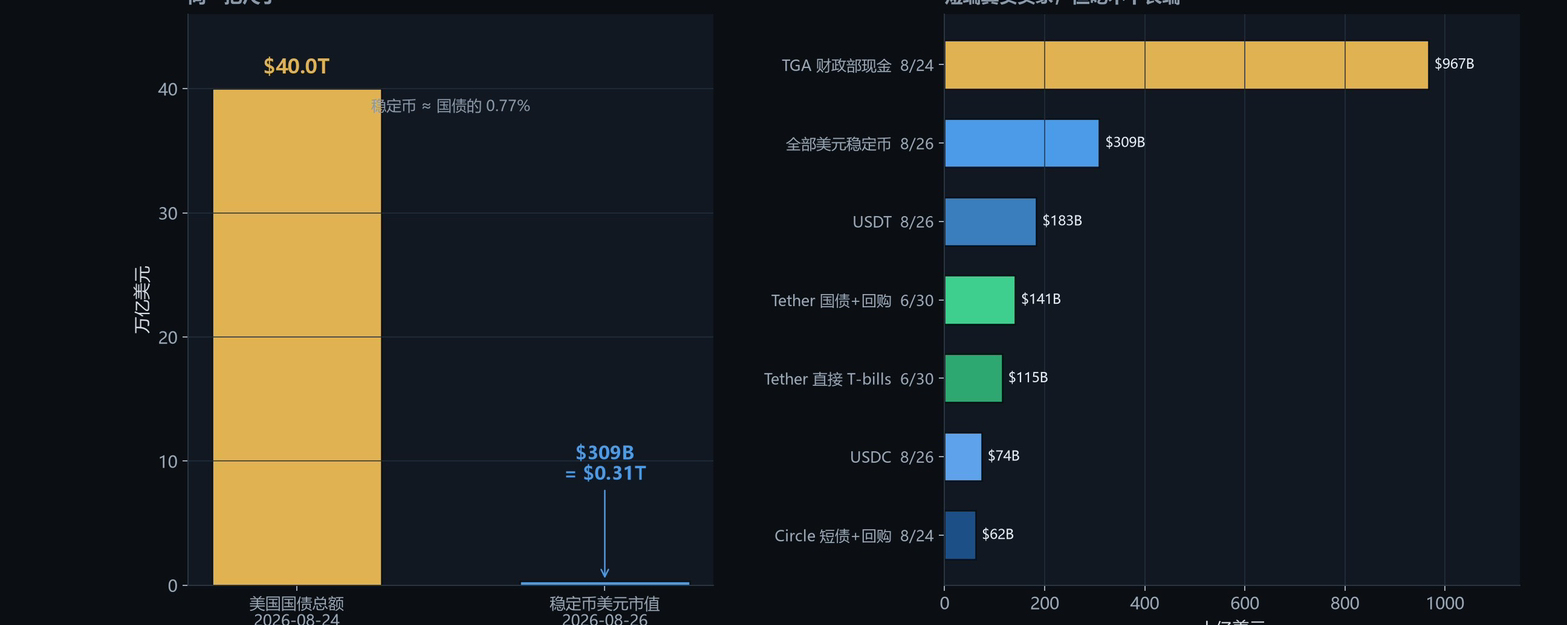
Brothers, this week is really lively—messages are flying everywhere.
Huang Mao is proposing to impose a new $100,000 fee on H-1B workers employed in the United States.
The U.S. Treasury has outlined potential secondary sanctions for five industries, including digital assets, technology, gold, aviation, and shipping; it will pause general licenses for certain transfers to Iran.
Trade talks between the U.S. and Canada also fell apart at the last moment.
Japan’s central bank’s core inflation indicator is above target, supporting expectations for a rate hike in September.
Bessent says the Treasury bond buyback has not yet started, and the market is questioning the consistency of policy signals.
From the news flow, this doesn’t seem to be anything good.
Tomorrow, <$NVDA >’s earnings report will also be released.
On Wednesday 08/26: Nvidia Q2 FY2027 earnings (after the close in U.S. Eastern Time; early Thursday Beijing time). Expectations: revenue $91B; Q3 guidance $104B. | Impact: extremely high (AI narrative as a full-scale test; Vera Rubin’s ramp-up cadence).
Tomorrow night: Nvidia earnings ($91B delivered + $104B Q3 guidance) will be the first bomb; then comes Jackson Hole (Warsh’s debut) and Friday’s PCE.
Before and after the meetings, remember to keep positions light.
The above are my personal trading notes and do not constitute any investment advice.
Huang Mao is proposing to impose a new $100,000 fee on H-1B workers employed in the United States.
The U.S. Treasury has outlined potential secondary sanctions for five industries, including digital assets, technology, gold, aviation, and shipping; it will pause general licenses for certain transfers to Iran.
Trade talks between the U.S. and Canada also fell apart at the last moment.
Japan’s central bank’s core inflation indicator is above target, supporting expectations for a rate hike in September.
Bessent says the Treasury bond buyback has not yet started, and the market is questioning the consistency of policy signals.
From the news flow, this doesn’t seem to be anything good.
Tomorrow, <$NVDA >’s earnings report will also be released.
On Wednesday 08/26: Nvidia Q2 FY2027 earnings (after the close in U.S. Eastern Time; early Thursday Beijing time). Expectations: revenue $91B; Q3 guidance $104B. | Impact: extremely high (AI narrative as a full-scale test; Vera Rubin’s ramp-up cadence).
Tomorrow night: Nvidia earnings ($91B delivered + $104B Q3 guidance) will be the first bomb; then comes Jackson Hole (Warsh’s debut) and Friday’s PCE.
Before and after the meetings, remember to keep positions light.
The above are my personal trading notes and do not constitute any investment advice.
Partly True
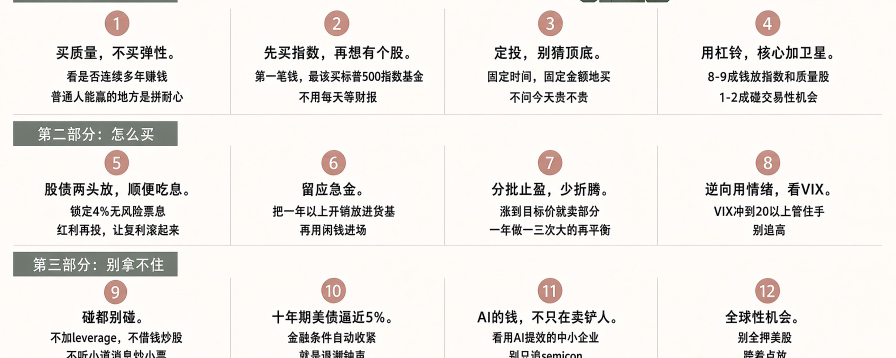
Brothers, after-hours for growth stocks mostly spiked and then pulled back.
$SNDK
It once climbed above 1820. In the next couple of days, everyone still needs to watch out for the taco risk mentioned yesterday—especially since tensions between the US and Iran have started to intensify again.
Key events today
The main focus this week: Iran geopolitics, oil-price stagflation risk, the risk of a hawkish FOMC minutes, and the retail earnings week that will test consumption.
· July housing starts + building permits + industrial output | Impact: Medium
· Home Depot earnings | Impact: High
Yesterday’s feedback
· The New York Fed manufacturing index has been released. It’s weak data, consistent with our view from soft data.
--------------------
On Monday, oil prices broke $90 and the 30Y yield broke 5.3% (a new high since 2007) + weak consumption—three blows in one. But the SOX held up against the trend, up +1.64%, and the AI hardware theme hasn’t died.
On the technical side, the S&P 7,745 pulled back to the 7,744 low. It hasn’t broken down, but the structure is relatively weak. The VIX jumped from an extremely low 14.25 back to 15.19 (+6.6%). Long-end yields, and geopolitics are both potential triggers.
Wednesday’s FOMC minutes are the biggest variable this week. Soft data has already pushed down the probability of further rate hikes, but oil-price inflation is reigniting. If the minutes are hawkish, growth stocks may pull back. Let’s see tonight’s HD earnings report for validation.
#USStocks #TradingNotes
The above is my personal trading journal and does not constitute any investment advice. The market is risky—invest cautiously.
@TermMax
$SNDK
It once climbed above 1820. In the next couple of days, everyone still needs to watch out for the taco risk mentioned yesterday—especially since tensions between the US and Iran have started to intensify again.
Key events today
The main focus this week: Iran geopolitics, oil-price stagflation risk, the risk of a hawkish FOMC minutes, and the retail earnings week that will test consumption.
· July housing starts + building permits + industrial output | Impact: Medium
· Home Depot earnings | Impact: High
Yesterday’s feedback
· The New York Fed manufacturing index has been released. It’s weak data, consistent with our view from soft data.
--------------------
On Monday, oil prices broke $90 and the 30Y yield broke 5.3% (a new high since 2007) + weak consumption—three blows in one. But the SOX held up against the trend, up +1.64%, and the AI hardware theme hasn’t died.
On the technical side, the S&P 7,745 pulled back to the 7,744 low. It hasn’t broken down, but the structure is relatively weak. The VIX jumped from an extremely low 14.25 back to 15.19 (+6.6%). Long-end yields, and geopolitics are both potential triggers.
Wednesday’s FOMC minutes are the biggest variable this week. Soft data has already pushed down the probability of further rate hikes, but oil-price inflation is reigniting. If the minutes are hawkish, growth stocks may pull back. Let’s see tonight’s HD earnings report for validation.
#USStocks #TradingNotes
The above is my personal trading journal and does not constitute any investment advice. The market is risky—invest cautiously.
@TermMax
Verified
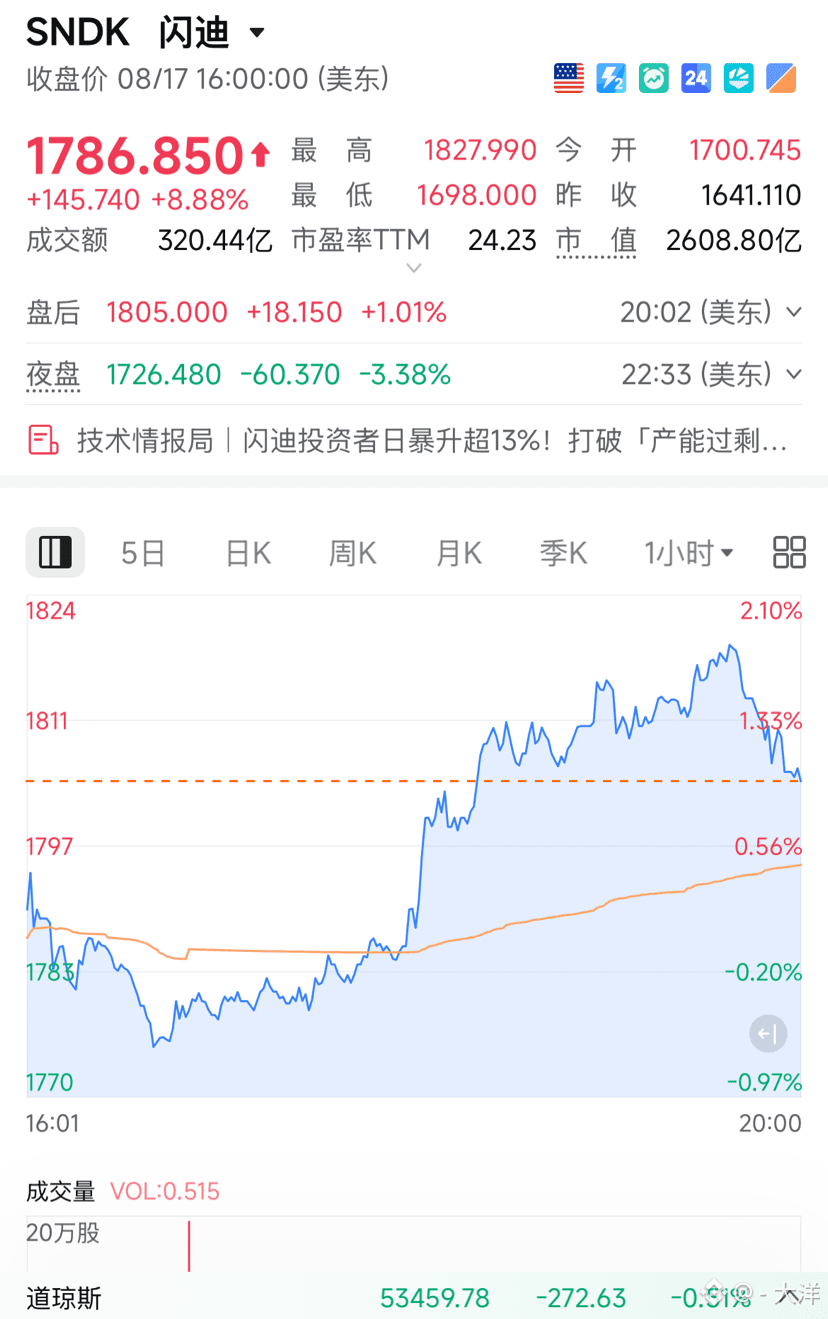
Who are the protagonists of the US stock market in the second half of the year? In a newly released research note, Michael Wilson, a stock strategist at Morgan Stanley, points out that the focus is shifting from semiconductors to quality stocks. For the S&P 8000 level, the market needs companies with solid earnings, high profit margins, and strong operating efficiency.
In the coming three months, Morgan Stanley is more bullish on five cloud names: Microsoft, Amazon, Google, Meta, and Oracle. These businesses have resilience in their core operations; the AI application layer can gain room to move up; and even if the business environment deteriorates, costs can be cut. However, cloud leaders will likely diverge—those that can’t clearly explain capital expenditure and the path to monetization still face valuation downside risk.
Wilson judges that the US economy is moving from the early cycle into the mid cycle, and that the benefits from operating leverage are fading. The market will increasingly value earnings stability, profit margins, and free cash flow.
The breadth of high-frequency earnings estimate revisions for the S&P 500 is also rebounding at the same time. This is called earnings dispersion—money is moving from a handful of companies to a larger group.
The underlying reason: the market is starting to price capital expenditures by quality.
There is still room in the AI capital expenditure cycle, but the market has become more selective. Google’s results are strong and it is also increasing capital spending—while semiconductors are falling. Microsoft is benefiting from Azure growth; Copilot adoption is accelerating; and capital expenditure communication is in balance—while semiconductors surge. Spend the same money, but one gets penalized and the other gets rewarded—the market is grading capital expenditures by quality.
If you spend it unreasonably, the money you collect won’t be sustainable.
If the credit bond market doesn’t crash and the financing market stays stable, and PMI and interest rates rise together, historically that has been the strongest environment for stock returns: nominal growth lifts, and companies’ revenue and earnings are supported.
If the yield on the 10-year US Treasury approaches 5% within a short period, the bond market will automatically tighten financial conditions, raising the cost of capital and pressuring S&P valuation—this, in turn, pushes investors to expect more dovish signals from the Fed.
I think if the Fed chair doesn’t respond with a reaction function, it is probably deliberate. Reducing forward guidance and using vague wording to keep the market on edge is itself an indirect form of tightening. So at this stage, rather than guessing what the Fed will do, it’s better to watch 10-year Treasury yields and market pricing. This is the new normal. It won’t derail the bull market, but it will periodically tap the market to keep the bubble from growing too fast.
I believe the wild/chaotic era is nearing the end. As long as the “yellow-haired” doesn’t taco every day, the S&P 8000 level is the direction—not an illusion. The direction needs to be followed step by step: first assess the quality of this semiconductor-driven tradable rebound, then see whether quality stocks can pick up the baton.
$GOOGL
In the coming three months, Morgan Stanley is more bullish on five cloud names: Microsoft, Amazon, Google, Meta, and Oracle. These businesses have resilience in their core operations; the AI application layer can gain room to move up; and even if the business environment deteriorates, costs can be cut. However, cloud leaders will likely diverge—those that can’t clearly explain capital expenditure and the path to monetization still face valuation downside risk.
Wilson judges that the US economy is moving from the early cycle into the mid cycle, and that the benefits from operating leverage are fading. The market will increasingly value earnings stability, profit margins, and free cash flow.
The breadth of high-frequency earnings estimate revisions for the S&P 500 is also rebounding at the same time. This is called earnings dispersion—money is moving from a handful of companies to a larger group.
The underlying reason: the market is starting to price capital expenditures by quality.
There is still room in the AI capital expenditure cycle, but the market has become more selective. Google’s results are strong and it is also increasing capital spending—while semiconductors are falling. Microsoft is benefiting from Azure growth; Copilot adoption is accelerating; and capital expenditure communication is in balance—while semiconductors surge. Spend the same money, but one gets penalized and the other gets rewarded—the market is grading capital expenditures by quality.
If you spend it unreasonably, the money you collect won’t be sustainable.
If the credit bond market doesn’t crash and the financing market stays stable, and PMI and interest rates rise together, historically that has been the strongest environment for stock returns: nominal growth lifts, and companies’ revenue and earnings are supported.
If the yield on the 10-year US Treasury approaches 5% within a short period, the bond market will automatically tighten financial conditions, raising the cost of capital and pressuring S&P valuation—this, in turn, pushes investors to expect more dovish signals from the Fed.
I think if the Fed chair doesn’t respond with a reaction function, it is probably deliberate. Reducing forward guidance and using vague wording to keep the market on edge is itself an indirect form of tightening. So at this stage, rather than guessing what the Fed will do, it’s better to watch 10-year Treasury yields and market pricing. This is the new normal. It won’t derail the bull market, but it will periodically tap the market to keep the bubble from growing too fast.
I believe the wild/chaotic era is nearing the end. As long as the “yellow-haired” doesn’t taco every day, the S&P 8000 level is the direction—not an illusion. The direction needs to be followed step by step: first assess the quality of this semiconductor-driven tradable rebound, then see whether quality stocks can pick up the baton.
$GOOGL
- 大洋
·
--
Remainder of this week (NFP day):
· Friday 08/07 Beijing time 20:30 | July Non-Farm Payrolls employment report | Forecast: +120–160K, unemployment rate 3.6–3.7% | Impact: Very high
The ultimate showdown: ADP came in at just 44K (vs. the expected 68K), sending an extremely strong downside signal, but initial jobless claims at 199K (better than the expected 203K) partially eased the panic.
Next week preview:
· Tuesday 08/12 | July CPI inflation | Forecast: TBD | Impact: Very high, the next major macro catalyst after NFP.
· Wednesday 08/13 | July PPI | Forecast: TBD | Impact: Medium, day-before CPI leading signal
· Thursday 08/14 | July retail sales | Impact: High, a test of consumer resilience.
ADP employment is weak, but if retail is strong → a resilience narrative led by consumption.
NFP will determine the entire trading framework for next week. With the current VIX at 15.15 extremely low, the market is pricing a soft landing. Any surprise in either direction will be amplified—this is the single most important data point of August 2026.
Inside Mag7:
$AAPLB +0.45% the only gainer, $GOOGL -1.29% the weakest. $NVDA flat at $219; inside chips: $AMD -7% + $ALAB -12% (disaster), but SOX still +0.33%.
Tonight at 8:30 PM—Non-Farm Payrolls, the ultimate judge of the week. ADP 44K, initial claims 199K—who should you trust? NFP <100K → recession trade; NFP >160K → soft-landing confirmation. The direction depends entirely on that one number.
Don’t bet on direction before the NFP. VIX is extremely low, giving options buyers asymmetric returns. If NFP is strong → chase value/growth/cyclicals/small caps next week. If NFP is weak → defense + gold + US Treasuries.
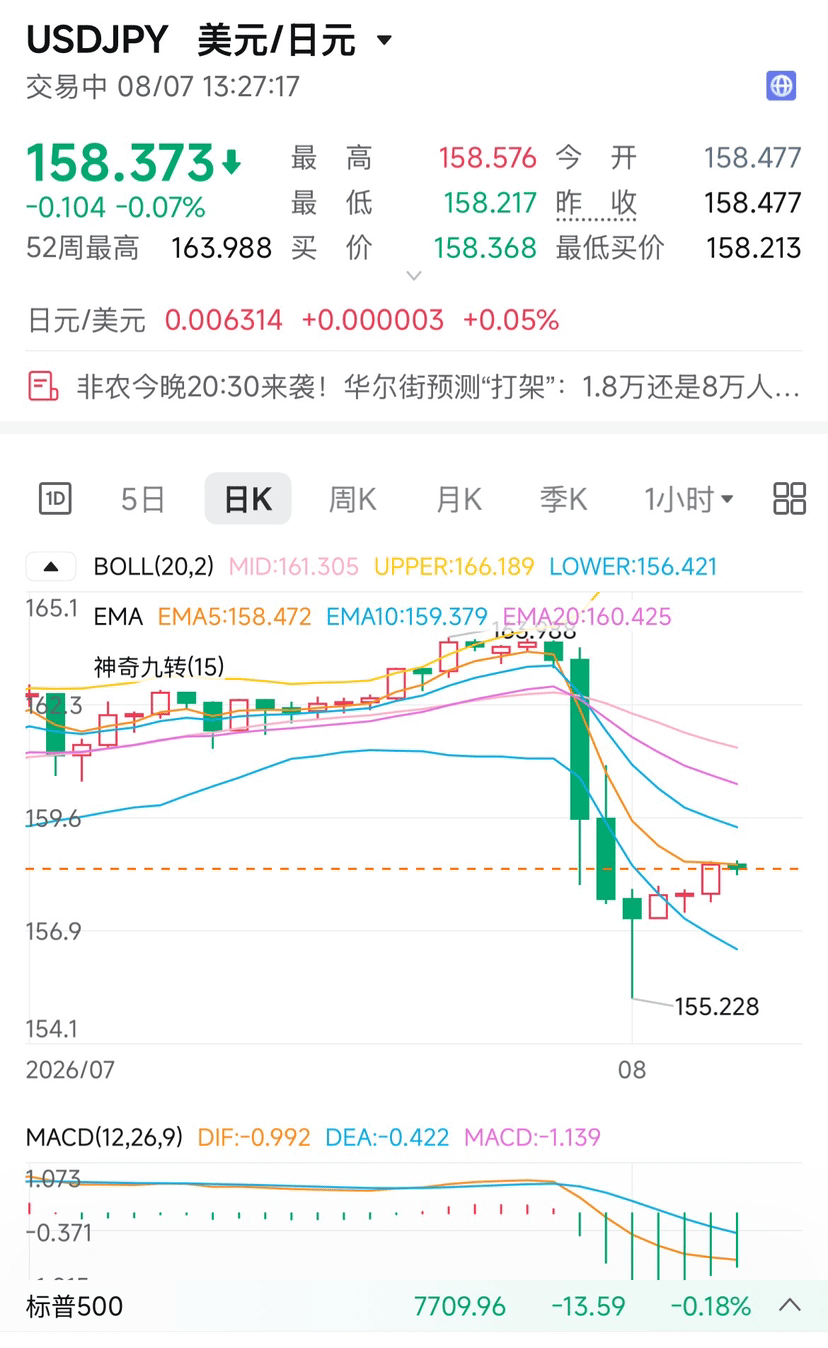
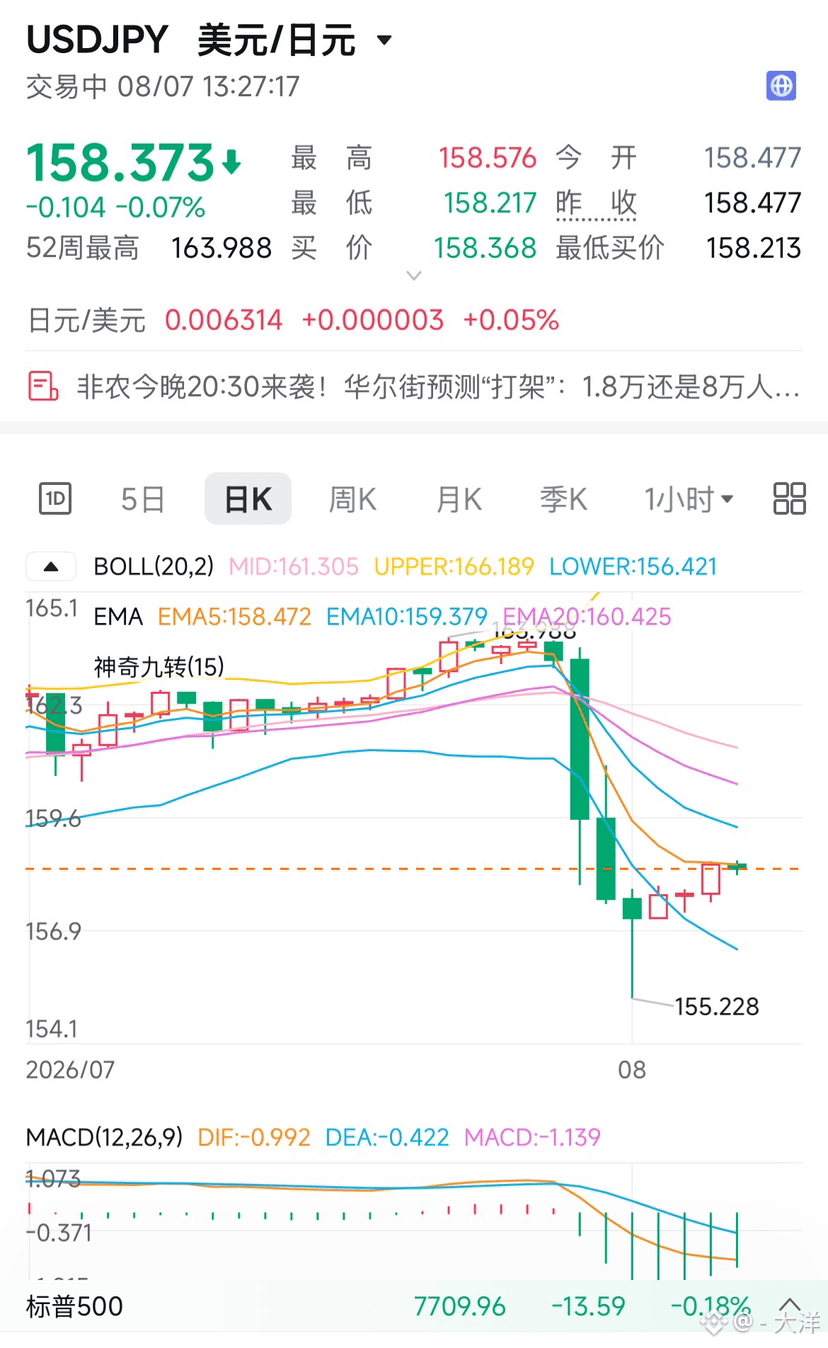
The USD vs. JPY fell to around 155 on Monday; it has recovered somewhat to 158 today, indicating Japan is not selling large amounts of US Treasuries again and is buying yen.
The above are personal trading notes and do not constitute any investment advice. The market is risky; invest with caution.
#USStocks #TradingNotes #NFP
· Friday 08/07 Beijing time 20:30 | July Non-Farm Payrolls employment report | Forecast: +120–160K, unemployment rate 3.6–3.7% | Impact: Very high
The ultimate showdown: ADP came in at just 44K (vs. the expected 68K), sending an extremely strong downside signal, but initial jobless claims at 199K (better than the expected 203K) partially eased the panic.
Next week preview:
· Tuesday 08/12 | July CPI inflation | Forecast: TBD | Impact: Very high, the next major macro catalyst after NFP.
· Wednesday 08/13 | July PPI | Forecast: TBD | Impact: Medium, day-before CPI leading signal
· Thursday 08/14 | July retail sales | Impact: High, a test of consumer resilience.
ADP employment is weak, but if retail is strong → a resilience narrative led by consumption.
NFP will determine the entire trading framework for next week. With the current VIX at 15.15 extremely low, the market is pricing a soft landing. Any surprise in either direction will be amplified—this is the single most important data point of August 2026.
Inside Mag7:
$AAPLB +0.45% the only gainer, $GOOGL -1.29% the weakest. $NVDA flat at $219; inside chips: $AMD -7% + $ALAB -12% (disaster), but SOX still +0.33%.
Tonight at 8:30 PM—Non-Farm Payrolls, the ultimate judge of the week. ADP 44K, initial claims 199K—who should you trust? NFP <100K → recession trade; NFP >160K → soft-landing confirmation. The direction depends entirely on that one number.
Don’t bet on direction before the NFP. VIX is extremely low, giving options buyers asymmetric returns. If NFP is strong → chase value/growth/cyclicals/small caps next week. If NFP is weak → defense + gold + US Treasuries.
The USD vs. JPY fell to around 155 on Monday; it has recovered somewhat to 158 today, indicating Japan is not selling large amounts of US Treasuries again and is buying yen.
The above are personal trading notes and do not constitute any investment advice. The market is risky; invest with caution.
#USStocks #TradingNotes #NFP
Verified
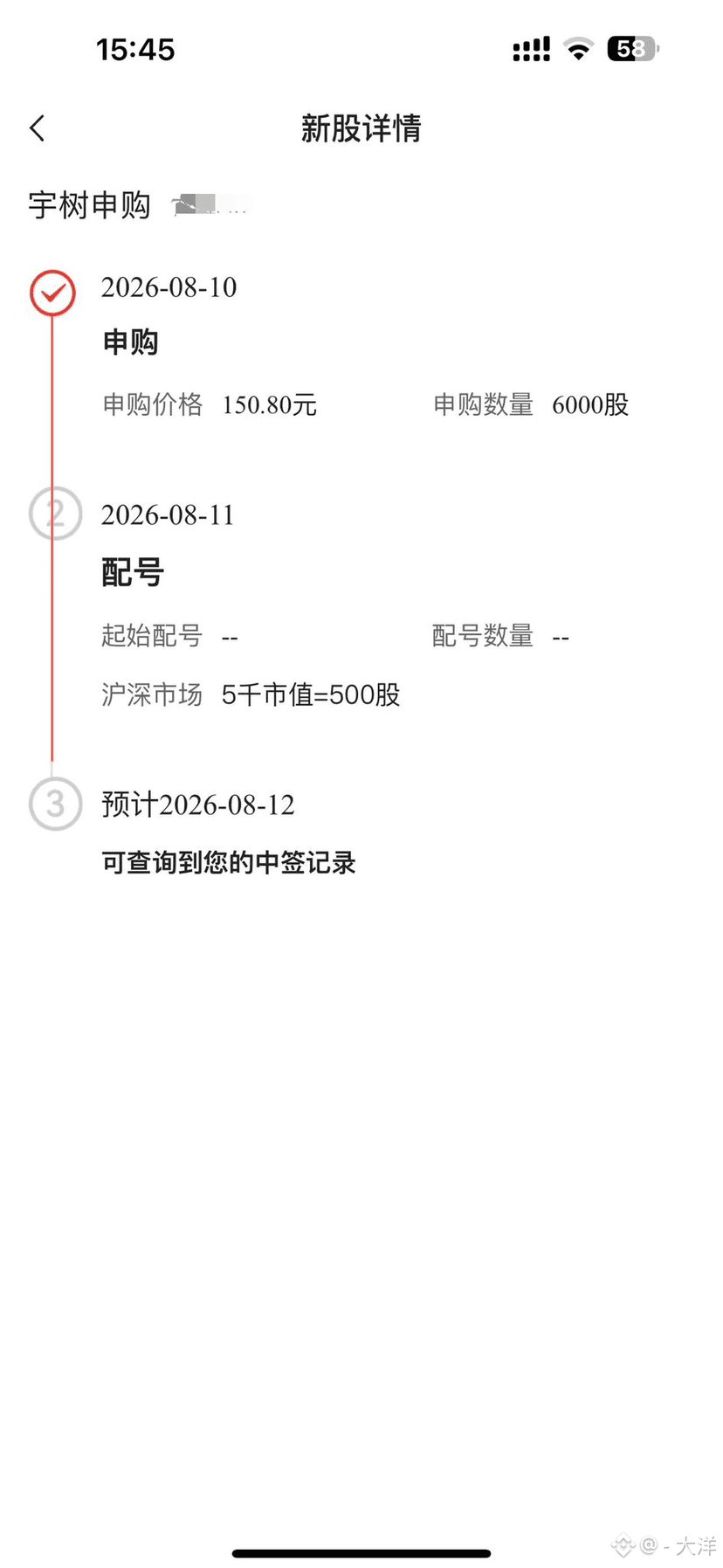
Brothers, all of you at Unitree are either doing a few ten-thousands of U for the pre-IPO
Or you’ve already started cashing out (going empty)
Brothers, I’ve got difficulties, so I can only obediently apply through the broker
This time the winning rate is estimated to be only 0.02%-0.04%—it all comes down to luck
You can apply starting in the morning. Brothers, remember to apply!!!
Or you’ve already started cashing out (going empty)
Brothers, I’ve got difficulties, so I can only obediently apply through the broker
This time the winning rate is estimated to be only 0.02%-0.04%—it all comes down to luck
You can apply starting in the morning. Brothers, remember to apply!!!
Brothers, first-hand news. As the casino, we have been waiting for @HertzFlow ’s summer gift box.
Thank you all, the casino brothers, for your guidance and help these past two months. There are no words to express my gratitude.
“I have a dream”—may all the brothers of the casino become MM.
We’re just waiting for the mainnet so we can go in and become the casino.
So what exactly is this mysterious gift, @thecryptoskanda_ ? Hahahahahaha
@HertzFlow
Thank you all, the casino brothers, for your guidance and help these past two months. There are no words to express my gratitude.
“I have a dream”—may all the brothers of the casino become MM.
We’re just waiting for the mainnet so we can go in and become the casino.
So what exactly is this mysterious gift, @thecryptoskanda_ ? Hahahahahaha
@HertzFlow


Verified
Remainder of this week (NFP day):
· Friday 08/07 Beijing time 20:30 | July Non-Farm Payrolls employment report | Forecast: +120–160K, unemployment rate 3.6–3.7% | Impact: Very high
The ultimate showdown: ADP came in at just 44K (vs. the expected 68K), sending an extremely strong downside signal, but initial jobless claims at 199K (better than the expected 203K) partially eased the panic.
Next week preview:
· Tuesday 08/12 | July CPI inflation | Forecast: TBD | Impact: Very high, the next major macro catalyst after NFP.
· Wednesday 08/13 | July PPI | Forecast: TBD | Impact: Medium, day-before CPI leading signal
· Thursday 08/14 | July retail sales | Impact: High, a test of consumer resilience.
ADP employment is weak, but if retail is strong → a resilience narrative led by consumption.
NFP will determine the entire trading framework for next week. With the current VIX at 15.15 extremely low, the market is pricing a soft landing. Any surprise in either direction will be amplified—this is the single most important data point of August 2026.
Inside Mag7:
$AAPLB +0.45% the only gainer, $GOOGL -1.29% the weakest. $NVDA flat at $219; inside chips: $AMD -7% + $ALAB -12% (disaster), but SOX still +0.33%.
Tonight at 8:30 PM—Non-Farm Payrolls, the ultimate judge of the week. ADP 44K, initial claims 199K—who should you trust? NFP <100K → recession trade; NFP >160K → soft-landing confirmation. The direction depends entirely on that one number.
Don’t bet on direction before the NFP. VIX is extremely low, giving options buyers asymmetric returns. If NFP is strong → chase value/growth/cyclicals/small caps next week. If NFP is weak → defense + gold + US Treasuries.
The USD vs. JPY fell to around 155 on Monday; it has recovered somewhat to 158 today, indicating Japan is not selling large amounts of US Treasuries again and is buying yen.
The above are personal trading notes and do not constitute any investment advice. The market is risky; invest with caution.
#USStocks #TradingNotes #NFP
· Friday 08/07 Beijing time 20:30 | July Non-Farm Payrolls employment report | Forecast: +120–160K, unemployment rate 3.6–3.7% | Impact: Very high
The ultimate showdown: ADP came in at just 44K (vs. the expected 68K), sending an extremely strong downside signal, but initial jobless claims at 199K (better than the expected 203K) partially eased the panic.
Next week preview:
· Tuesday 08/12 | July CPI inflation | Forecast: TBD | Impact: Very high, the next major macro catalyst after NFP.
· Wednesday 08/13 | July PPI | Forecast: TBD | Impact: Medium, day-before CPI leading signal
· Thursday 08/14 | July retail sales | Impact: High, a test of consumer resilience.
ADP employment is weak, but if retail is strong → a resilience narrative led by consumption.
NFP will determine the entire trading framework for next week. With the current VIX at 15.15 extremely low, the market is pricing a soft landing. Any surprise in either direction will be amplified—this is the single most important data point of August 2026.
Inside Mag7:
$AAPLB +0.45% the only gainer, $GOOGL -1.29% the weakest. $NVDA flat at $219; inside chips: $AMD -7% + $ALAB -12% (disaster), but SOX still +0.33%.
Tonight at 8:30 PM—Non-Farm Payrolls, the ultimate judge of the week. ADP 44K, initial claims 199K—who should you trust? NFP <100K → recession trade; NFP >160K → soft-landing confirmation. The direction depends entirely on that one number.
Don’t bet on direction before the NFP. VIX is extremely low, giving options buyers asymmetric returns. If NFP is strong → chase value/growth/cyclicals/small caps next week. If NFP is weak → defense + gold + US Treasuries.
The USD vs. JPY fell to around 155 on Monday; it has recovered somewhat to 158 today, indicating Japan is not selling large amounts of US Treasuries again and is buying yen.
The above are personal trading notes and do not constitute any investment advice. The market is risky; invest with caution.
#USStocks #TradingNotes #NFP
Today’s key events
· Wed 08/05 Beijing time 20:15 | ADP Employment (July) | Forecast: 150-180K | Impact: Medium
· Wed 08/05 Beijing time 22:00 | ISM Services PMI (July) | Forecast: 53-54 | Impact: High
Monday’s ISM Manufacturing beat by 55.6. Services make up 70% of GDP and carry a higher weight.
Note: If the ISM Services price sub-index spikes → a stagflation trade → pressure on growth stocks
Yesterday’s feedback
· JOLTS: June job openings fell to 7.359M, below the forecast of 7.44M and the prior value of 7.594M (revised). It’s the second consecutive month of decline (May 7.594M → June 7.359M, -235K). The job openings rate fell from 4.6% to 4.4%. Overall, it shows a gentle cooling rather than a sharp deterioration.
· The market interpreted the JOLTS miss as a clear positive. Logic chain: labor cooling → wage pressure easing → inflation trending lower → Fed rate-cut room opens up → discount rates for growth stocks fall → tech stocks benefit.
After the earnings of AMD and SPACEX, both fell about 8% in after-hours trading.
AMD revenue +52% YoY, data center doubled, and the Q3 guidance also beat expectations.
There are only two reasons
① GAAP gross margin is 54%, missing by 2 percentage points. Market expected 56%, actual 54%.
MI450 shipments are imminent. In the early stage of mass production of the new architecture, the initial costs are high. Lisa Su and the CFO had already warned that the Helios ramp would compress margins.
② It was already up 7.7% pre-market.
AMD jumped from $460 to $513 pre-market.
It’s as if the market had already bought the pricing up front, and then you turned in a very good but not perfect exam.
Also, AMD’s valuation is 53x forward PE. NVDA is only 20x, and AVGO is only 25x.
SpaceX revenue +92% YoY, crushing expectations.
Last night’s earnings weren’t bad by themselves.
The first risk: the lock-up expires on Aug 6.
911,500,000 shares become unencumbered; at the current price, that’s $110 billion worth of potential selling pressure.
Early employees, VC, and pre-IPO investors waited for over a decade—cost could be just a few dollars, even a few tens of cents. If it were you, would you sell or not?
The second risk: burn rate speed.
Capex is $18.4B in a single quarter. That’s a pace of $70B+ per year.
Starlink is profitable (Q2 connectivity is the only profitable segment), but the AI business (xAI) is still losing $2B+ every quarter. The money they earn can’t keep up with what they’re burning.
The third risk: the valuation “faith” is unraveling.
At IPO: $1.77T valuation, 94x sales multiple. Now: $1.4T, still 73x sales multiple.
· Wed 08/05 Beijing time 20:15 | ADP Employment (July) | Forecast: 150-180K | Impact: Medium
· Wed 08/05 Beijing time 22:00 | ISM Services PMI (July) | Forecast: 53-54 | Impact: High
Monday’s ISM Manufacturing beat by 55.6. Services make up 70% of GDP and carry a higher weight.
Note: If the ISM Services price sub-index spikes → a stagflation trade → pressure on growth stocks
Yesterday’s feedback
· JOLTS: June job openings fell to 7.359M, below the forecast of 7.44M and the prior value of 7.594M (revised). It’s the second consecutive month of decline (May 7.594M → June 7.359M, -235K). The job openings rate fell from 4.6% to 4.4%. Overall, it shows a gentle cooling rather than a sharp deterioration.
· The market interpreted the JOLTS miss as a clear positive. Logic chain: labor cooling → wage pressure easing → inflation trending lower → Fed rate-cut room opens up → discount rates for growth stocks fall → tech stocks benefit.
After the earnings of AMD and SPACEX, both fell about 8% in after-hours trading.
AMD revenue +52% YoY, data center doubled, and the Q3 guidance also beat expectations.
There are only two reasons
① GAAP gross margin is 54%, missing by 2 percentage points. Market expected 56%, actual 54%.
MI450 shipments are imminent. In the early stage of mass production of the new architecture, the initial costs are high. Lisa Su and the CFO had already warned that the Helios ramp would compress margins.
② It was already up 7.7% pre-market.
AMD jumped from $460 to $513 pre-market.
It’s as if the market had already bought the pricing up front, and then you turned in a very good but not perfect exam.
Also, AMD’s valuation is 53x forward PE. NVDA is only 20x, and AVGO is only 25x.
SpaceX revenue +92% YoY, crushing expectations.
Last night’s earnings weren’t bad by themselves.
The first risk: the lock-up expires on Aug 6.
911,500,000 shares become unencumbered; at the current price, that’s $110 billion worth of potential selling pressure.
Early employees, VC, and pre-IPO investors waited for over a decade—cost could be just a few dollars, even a few tens of cents. If it were you, would you sell or not?
The second risk: burn rate speed.
Capex is $18.4B in a single quarter. That’s a pace of $70B+ per year.
Starlink is profitable (Q2 connectivity is the only profitable segment), but the AI business (xAI) is still losing $2B+ every quarter. The money they earn can’t keep up with what they’re burning.
The third risk: the valuation “faith” is unraveling.
At IPO: $1.77T valuation, 94x sales multiple. Now: $1.4T, still 73x sales multiple.
Verified
Today’s Key Events
Last night’s ISM Manufacturing 55.6 big beat set a good tone
· Tuesday 08/04 Beijing time 22:00 | JOLTS job openings (June) | Forecast: ~8.0 million | Impact: Medium
The first pre-signal of Non-Farm week. If JOLTS is below 8.0 million → the labor market accelerates cooling → Non-Farm on Friday may miss. If it stays above 8.0 million → labor-market resilience is confirmed → Non-Farm may beat
Yesterday’s feedback
· Monday 08/03 ISM Manufacturing PMI | Forecast 53.3 | Actual 55.6 (a big beat, highest since 2022)
· ISM Manufacturing 55.6 far exceeded the 53.3 forecast and the prior 53.3. This is the highest reading since September 2022. All sub-indices strengthened across the board—new orders, production, and employment all accelerated in expansion. This data directly demolishes the bearish narrative that Q2 GDP of 1.5% means the economy is rapidly worsening
· After the data release, the three major indices accelerated higher. The Dow ultimately closed up +693 points (+1.32%), reaching a new all-time high. Meanwhile, the 10Y yield only inched up slightly from 4.73% to 4.75% before falling back to 4.69%. The bond market’s unexpectedly mild reaction to the ISM beat suggests the market has already partially priced in a manufacturing recovery
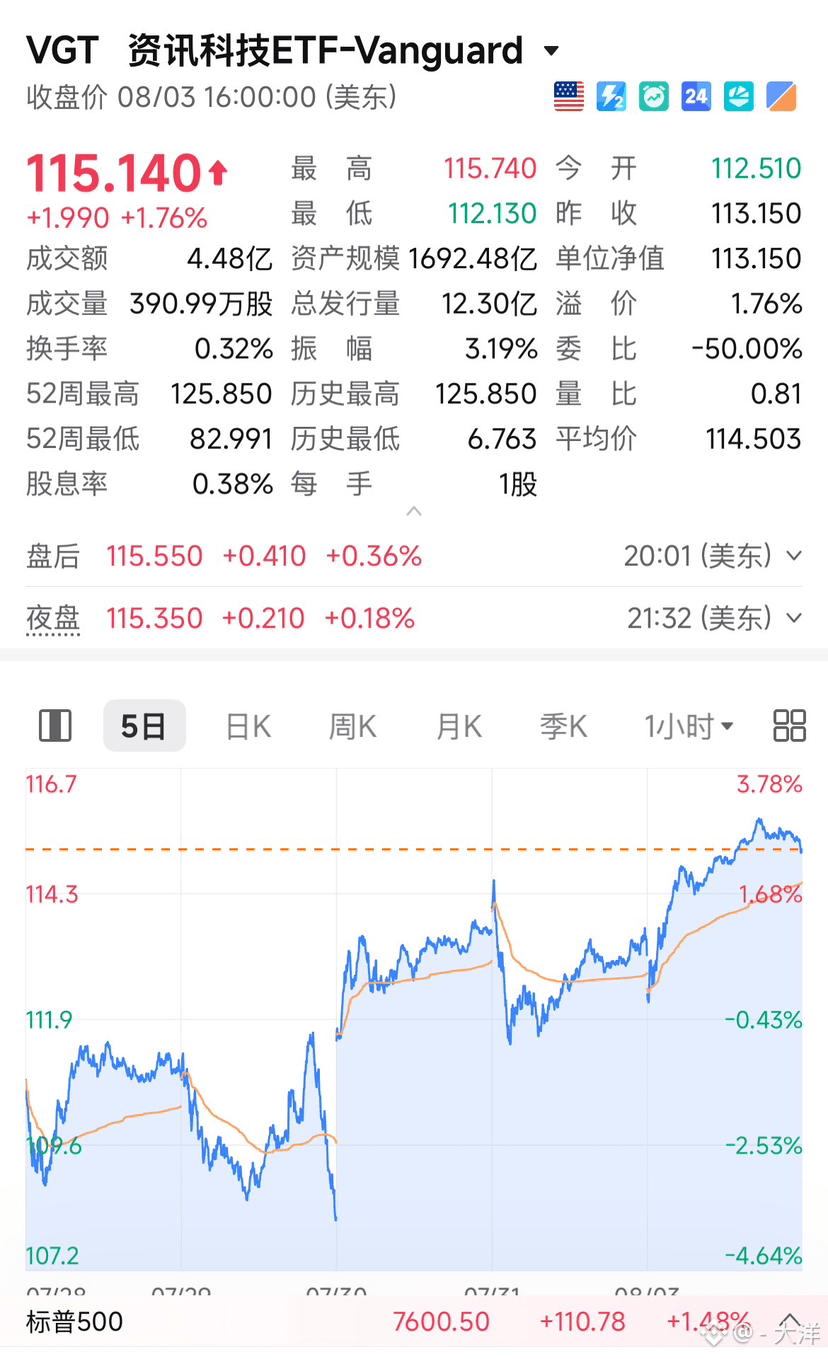
Today’s ETF: VGT (Vanguard Information Technology ETF)
· Price: ~US$115
· Fee: 0.09% (Expense Ratio)
· Number of holdings: 318
· NVIDIA weight: 16.10% (largest holding)
· Coverage: covers the entire U.S. tech industry chain—from chips (NVDA/AMD/INTC) to software (MSFT/ADBE) to hardware (AAPL) to cloud services
· Market: U.S. equities (NYSE Arca)
· Theme: Technology / Information Technology
Key focus: chasing at a level where SPX is only 0.27% away from ATH—upside is limited and asymmetric risk is tilted downward. VIX 15.86 tells the market has already priced it perfectly. The Monday rally was the best start to Non-Farm week—there’s still no rush to enter again until Non-Farm confirms.
The above is personal trading commentary and does not constitute any investment advice. The market is risky—invest with caution.
#USStocks #TradingNotes
Last night’s ISM Manufacturing 55.6 big beat set a good tone
· Tuesday 08/04 Beijing time 22:00 | JOLTS job openings (June) | Forecast: ~8.0 million | Impact: Medium
The first pre-signal of Non-Farm week. If JOLTS is below 8.0 million → the labor market accelerates cooling → Non-Farm on Friday may miss. If it stays above 8.0 million → labor-market resilience is confirmed → Non-Farm may beat
Yesterday’s feedback
· Monday 08/03 ISM Manufacturing PMI | Forecast 53.3 | Actual 55.6 (a big beat, highest since 2022)
· ISM Manufacturing 55.6 far exceeded the 53.3 forecast and the prior 53.3. This is the highest reading since September 2022. All sub-indices strengthened across the board—new orders, production, and employment all accelerated in expansion. This data directly demolishes the bearish narrative that Q2 GDP of 1.5% means the economy is rapidly worsening
· After the data release, the three major indices accelerated higher. The Dow ultimately closed up +693 points (+1.32%), reaching a new all-time high. Meanwhile, the 10Y yield only inched up slightly from 4.73% to 4.75% before falling back to 4.69%. The bond market’s unexpectedly mild reaction to the ISM beat suggests the market has already partially priced in a manufacturing recovery
Today’s ETF: VGT (Vanguard Information Technology ETF)
· Price: ~US$115
· Fee: 0.09% (Expense Ratio)
· Number of holdings: 318
· NVIDIA weight: 16.10% (largest holding)
· Coverage: covers the entire U.S. tech industry chain—from chips (NVDA/AMD/INTC) to software (MSFT/ADBE) to hardware (AAPL) to cloud services
· Market: U.S. equities (NYSE Arca)
· Theme: Technology / Information Technology
Key focus: chasing at a level where SPX is only 0.27% away from ATH—upside is limited and asymmetric risk is tilted downward. VIX 15.86 tells the market has already priced it perfectly. The Monday rally was the best start to Non-Farm week—there’s still no rush to enter again until Non-Farm confirms.
The above is personal trading commentary and does not constitute any investment advice. The market is risky—invest with caution.
#USStocks #TradingNotes

Partly True
Brothers, first-hand news: @HertzFlow is preparing for the mainnet.
Yesterday, we already reset the data.
Invite points will be kept until the mainnet.
---
1/ Why the points are preserved
To be frank, a lot of projects wipe everything right before going live on the mainnet. On the testnet, no matter how much you farmed or how many invites you got, it all disappears.
HertzFlow doesn’t do that.
Inviting is something you helped us with in the early days.
You did it—we remember.
That’s it, that’s all.
2/ The big logic behind the final incentives will be announced
We won’t wait until the last moment to publish a rule and make you guess.
Anything we can confirm, we’ll announce directly.
For example, how points will be converted, the timing rhythm for distributing incentives, and whether there’s any lock-up—will all be written clearly in black and white.
If we can’t confirm something, we’ll say so plainly.
We won’t make up an answer that looks perfect just to placate people.
---
Now that you’re here, your contribution will be recognized.
Real, tangible, no fluff.
---
In the next few days, you’ll see the announcements.
They’ll include terms that can be fully confirmed, as well as parts that are clearly marked as updates to come.
Don’t overestimate your own certainty, and don’t underestimate users’ judgment.
We’ll publish the final points distribution and the overall logic for final incentives. Anything we can confirm will be announced; anything we can’t confirm, we’ll clearly tell everyone that we don’t know yet. This is @thecrypto’s exact wording. I really like this kind of reassuring response and this kind of project.
So I’ll keep playing the testnet.
See you in early August.
@HertzFlow
Yesterday, we already reset the data.
Invite points will be kept until the mainnet.
---
1/ Why the points are preserved
To be frank, a lot of projects wipe everything right before going live on the mainnet. On the testnet, no matter how much you farmed or how many invites you got, it all disappears.
HertzFlow doesn’t do that.
Inviting is something you helped us with in the early days.
You did it—we remember.
That’s it, that’s all.
2/ The big logic behind the final incentives will be announced
We won’t wait until the last moment to publish a rule and make you guess.
Anything we can confirm, we’ll announce directly.
For example, how points will be converted, the timing rhythm for distributing incentives, and whether there’s any lock-up—will all be written clearly in black and white.
If we can’t confirm something, we’ll say so plainly.
We won’t make up an answer that looks perfect just to placate people.
---
Now that you’re here, your contribution will be recognized.
Real, tangible, no fluff.
---
In the next few days, you’ll see the announcements.
They’ll include terms that can be fully confirmed, as well as parts that are clearly marked as updates to come.
Don’t overestimate your own certainty, and don’t underestimate users’ judgment.
We’ll publish the final points distribution and the overall logic for final incentives. Anything we can confirm will be announced; anything we can’t confirm, we’ll clearly tell everyone that we don’t know yet. This is @thecrypto’s exact wording. I really like this kind of reassuring response and this kind of project.
So I’ll keep playing the testnet.
See you in early August.
@HertzFlow

- 大洋
·
--
What if the market-maker were there on day 519 too
Brothers, last night the US stock market crashed hard, and the after-hours session this morning and the night session also saw a massive plunge. SanDisk almost broke below 1. KOSPI briefly hit a circuit breaker down 11%. It made me think of the day of 519, and I went back to re-read what the market-maker wrote about 519.
I thought about it: if on the day of 519, this gambling match were on @HertzFlow , what would it look like?
1/
On that day of 519, almost all CEXs went down.
Binance, OKX, FTX (it was still alive then), Bybit—everything. Short as a few minutes, long as half an hour.
Back then, you were holding your phone, watching the price get smashed through by forced liquidations. You couldn’t even add margin to top it up.
What if, that day, the betting table had been on HertzFlow, on the BNB chain—what would happen?
I thought about it: if on the day of 519, this gambling match were on @HertzFlow , what would it look like?
1/
On that day of 519, almost all CEXs went down.
Binance, OKX, FTX (it was still alive then), Bybit—everything. Short as a few minutes, long as half an hour.
Back then, you were holding your phone, watching the price get smashed through by forced liquidations. You couldn’t even add margin to top it up.
What if, that day, the betting table had been on HertzFlow, on the BNB chain—what would happen?
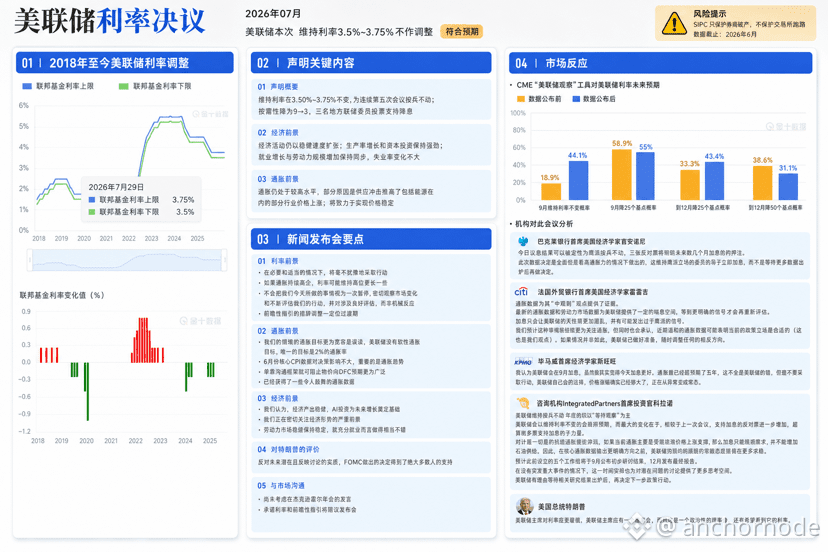
Today, one chart to help you understand the FOMC statement
All earnings reports are meaningless in front of the FOMC. Even if earnings are great, they can’t break out of an independent trading trend. I can only say that this month’s market is for software stocks. Everyone, go take a look. And remember to diversify sectors—keep the “supermarket” open—your capital will be safer.
There’s another important thing: this time, there were 3 votes in favor of a rate hike. Everyone should pay attention—at the September FOMC, a rate hike is highly likely.
Key events for the rest of this week:
· Thursday 07/30 Beijing time 20:30 | GDP Q2 first estimate + June core PCE | Forecast: GDP around 2.0%, core PCE around 3.4% | Impact: Very high (the most important data of the week)
· Thursday 07/30 after market close | AAPL Q3 FY2026 earnings | Forecast: revenue growth 14–17% YoY | Impact: Very high (Cook’s last CEO earnings report + MacBook Neo supply data)
· Friday 07/31 Beijing time 20:30 | Initial jobless claims + University of Michigan consumer sentiment July final | Forecast: claims remain at a low level | Impact: Medium
GDP + PCE + AAPL—triple blasts on the same day. If GDP is below 2% → the probability of rate cuts spikes → growth stocks rebound. If PCE unexpectedly rises → growth stocks face renewed pressure. AAPL’s earnings are the last long stronghold among Mag7. If it misses, the already fragile sentiment after the FOMC will take another hit.
Yesterday’s feedback
· The FOMC held steady and kept the interest rate at 3.50–3.75%. A split Federal Reserve (3 votes supported a rate hike). Warsh clearly stated he would not waver in the face of inflation.
Market reaction: SOX -5.33% (yesterday’s projection: “If hawkish → SOX tests 10,500.” The actual close was 10,447; the forecast was accurate). All three major indices fell across the board. The VIX broke above 20. The Nasdaq 100 entered a correction range. The split FOMC was more hawkish than expected.
SOX’s four-day decline of -10% has already deeply priced in hawkishness. With technical oversold conditions plus a data day, two-way volatility will be intense. Don’t chase shorts or bottom-pick—wait until GDP + PCE land, then decide direction. VIX > 20 + a data day = cash is king.
#USStocks #TradingNotes
The above is my personal trading journal and does not constitute any investment advice. The market is risky—invest cautiously.
All earnings reports are meaningless in front of the FOMC. Even if earnings are great, they can’t break out of an independent trading trend. I can only say that this month’s market is for software stocks. Everyone, go take a look. And remember to diversify sectors—keep the “supermarket” open—your capital will be safer.
There’s another important thing: this time, there were 3 votes in favor of a rate hike. Everyone should pay attention—at the September FOMC, a rate hike is highly likely.
Key events for the rest of this week:
· Thursday 07/30 Beijing time 20:30 | GDP Q2 first estimate + June core PCE | Forecast: GDP around 2.0%, core PCE around 3.4% | Impact: Very high (the most important data of the week)
· Thursday 07/30 after market close | AAPL Q3 FY2026 earnings | Forecast: revenue growth 14–17% YoY | Impact: Very high (Cook’s last CEO earnings report + MacBook Neo supply data)
· Friday 07/31 Beijing time 20:30 | Initial jobless claims + University of Michigan consumer sentiment July final | Forecast: claims remain at a low level | Impact: Medium
GDP + PCE + AAPL—triple blasts on the same day. If GDP is below 2% → the probability of rate cuts spikes → growth stocks rebound. If PCE unexpectedly rises → growth stocks face renewed pressure. AAPL’s earnings are the last long stronghold among Mag7. If it misses, the already fragile sentiment after the FOMC will take another hit.
Yesterday’s feedback
· The FOMC held steady and kept the interest rate at 3.50–3.75%. A split Federal Reserve (3 votes supported a rate hike). Warsh clearly stated he would not waver in the face of inflation.
Market reaction: SOX -5.33% (yesterday’s projection: “If hawkish → SOX tests 10,500.” The actual close was 10,447; the forecast was accurate). All three major indices fell across the board. The VIX broke above 20. The Nasdaq 100 entered a correction range. The split FOMC was more hawkish than expected.
SOX’s four-day decline of -10% has already deeply priced in hawkishness. With technical oversold conditions plus a data day, two-way volatility will be intense. Don’t chase shorts or bottom-pick—wait until GDP + PCE land, then decide direction. VIX > 20 + a data day = cash is king.
#USStocks #TradingNotes
The above is my personal trading journal and does not constitute any investment advice. The market is risky—invest cautiously.
- 大洋
·
--
Woke up to find the whole market had collapsed—today’s lunch really tasted like cardboard.
This week is the most important trading week of 2026 Q3. Triple “nuclear-level” events stacked together.
· Tue–Wed 07/28–29 | FOMC meeting | Expected: keep 3.50–3.75% unchanged (probability ~65%) | Impact: extremely high
Warsh is chairing the full quarterly FOMC for the first time. Watch the wording of the statement (inflation vs. data-dependence), the dot plot, and the tone of the press conference.
The U.S. halts airstrikes on Iran → ceasefire talks restart → WTI plunges 6.9% to $83 → USO -8.73%. This is a geopolitical pivot that was not anticipated in the outlook, directly driving a rotation: the energy sector -2.11% and discretionary consumption +1.31%.
Key signals
· NVDA -5% over three days, down -10% total: with volume at 144 million shares, panic selling; the $200 level is breached
· Iran ceasefire → WTI crashes from $100+ to $83: USO -8.73% in a single day, the largest daily drop of the year
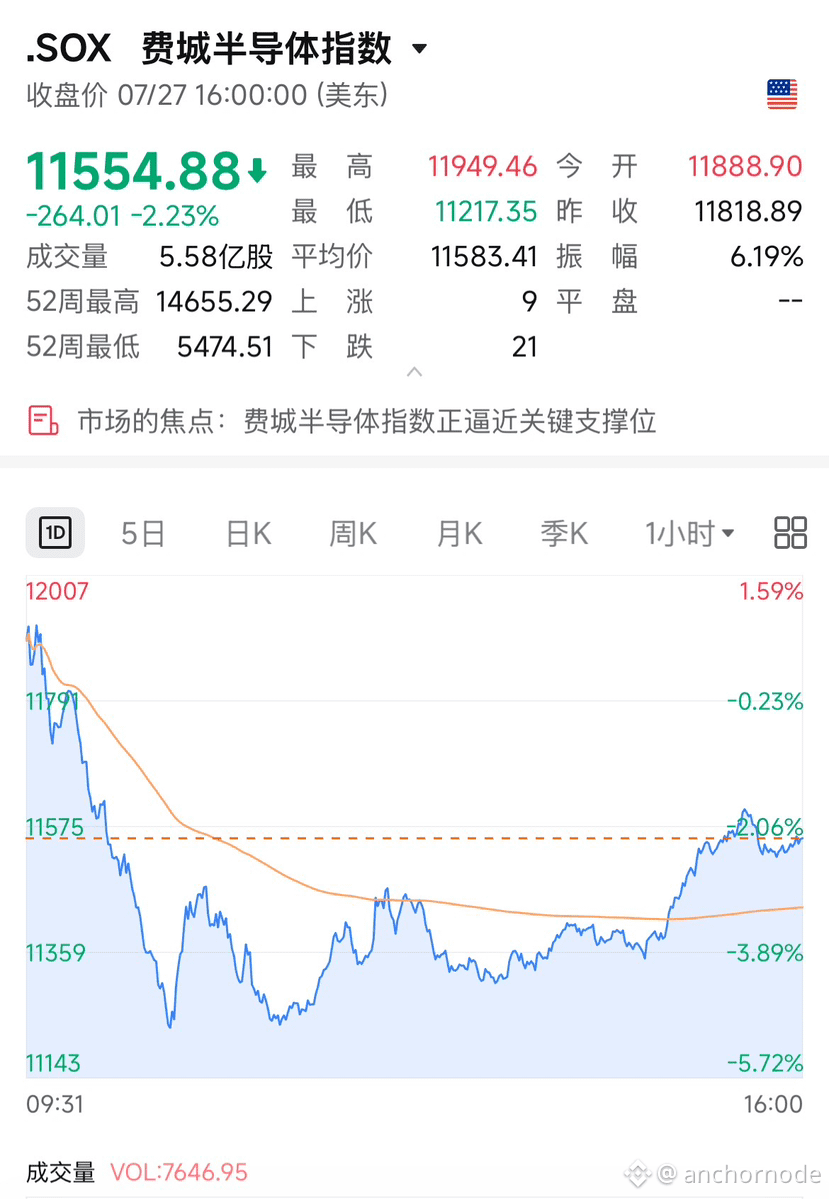
· IGV +3.33% vs SOX -2.23%: AI trading has moved fully from hardware to software; capital is “voting with its feet.”
Keep exposure below 50%, save ammunition for Thursday’s confirmation after GDP + PCE + AAPL.
#USStocks
This week is the most important trading week of 2026 Q3. Triple “nuclear-level” events stacked together.
· Tue–Wed 07/28–29 | FOMC meeting | Expected: keep 3.50–3.75% unchanged (probability ~65%) | Impact: extremely high
Warsh is chairing the full quarterly FOMC for the first time. Watch the wording of the statement (inflation vs. data-dependence), the dot plot, and the tone of the press conference.
The U.S. halts airstrikes on Iran → ceasefire talks restart → WTI plunges 6.9% to $83 → USO -8.73%. This is a geopolitical pivot that was not anticipated in the outlook, directly driving a rotation: the energy sector -2.11% and discretionary consumption +1.31%.
Key signals
· NVDA -5% over three days, down -10% total: with volume at 144 million shares, panic selling; the $200 level is breached
· Iran ceasefire → WTI crashes from $100+ to $83: USO -8.73% in a single day, the largest daily drop of the year
· IGV +3.33% vs SOX -2.23%: AI trading has moved fully from hardware to software; capital is “voting with its feet.”
Keep exposure below 50%, save ammunition for Thursday’s confirmation after GDP + PCE + AAPL.
#USStocks
Verifying my Binance Square account for YZi Labs Amplify via EchoHunt: EH-APVQ7P
Woke up to find the whole market had collapsed—today’s lunch really tasted like cardboard.
This week is the most important trading week of 2026 Q3. Triple “nuclear-level” events stacked together.
· Tue–Wed 07/28–29 | FOMC meeting | Expected: keep 3.50–3.75% unchanged (probability ~65%) | Impact: extremely high
Warsh is chairing the full quarterly FOMC for the first time. Watch the wording of the statement (inflation vs. data-dependence), the dot plot, and the tone of the press conference.
The U.S. halts airstrikes on Iran → ceasefire talks restart → WTI plunges 6.9% to $83 → USO -8.73%. This is a geopolitical pivot that was not anticipated in the outlook, directly driving a rotation: the energy sector -2.11% and discretionary consumption +1.31%.
Key signals
· NVDA -5% over three days, down -10% total: with volume at 144 million shares, panic selling; the $200 level is breached
· Iran ceasefire → WTI crashes from $100+ to $83: USO -8.73% in a single day, the largest daily drop of the year
· IGV +3.33% vs SOX -2.23%: AI trading has moved fully from hardware to software; capital is “voting with its feet.”
Keep exposure below 50%, save ammunition for Thursday’s confirmation after GDP + PCE + AAPL.
#USStocks
This week is the most important trading week of 2026 Q3. Triple “nuclear-level” events stacked together.
· Tue–Wed 07/28–29 | FOMC meeting | Expected: keep 3.50–3.75% unchanged (probability ~65%) | Impact: extremely high
Warsh is chairing the full quarterly FOMC for the first time. Watch the wording of the statement (inflation vs. data-dependence), the dot plot, and the tone of the press conference.
The U.S. halts airstrikes on Iran → ceasefire talks restart → WTI plunges 6.9% to $83 → USO -8.73%. This is a geopolitical pivot that was not anticipated in the outlook, directly driving a rotation: the energy sector -2.11% and discretionary consumption +1.31%.
Key signals
· NVDA -5% over three days, down -10% total: with volume at 144 million shares, panic selling; the $200 level is breached
· Iran ceasefire → WTI crashes from $100+ to $83: USO -8.73% in a single day, the largest daily drop of the year
· IGV +3.33% vs SOX -2.23%: AI trading has moved fully from hardware to software; capital is “voting with its feet.”
Keep exposure below 50%, save ammunition for Thursday’s confirmation after GDP + PCE + AAPL.
#USStocks
Partly True
Today’s Events:
· Tuesday 07/21 After the Close | TSLA Q2 Earnings | Consensus: EPS $0.68 | Impact: Extremely High Auto gross margin + FSD subscription + Robotaxi timeline
· Tuesday 07/21 After the Close | GOOGL Q2 Earnings | Consensus: EPS $1.95 | Impact: Extremely High AI search monetization + Google Cloud growth
If TSLA misses but GOOGL beats, then the narrative of “AI wins all” will be further reinforced, and the pressure on hardware may mean any SOX rebound could be short-lived.
The situation between Iran and Israel has become tense again these past two days, and Russia and Ukraine have also reignited fighting.
However, last night’s SOX oversold rebound gave bulls a brief window to catch their breath.
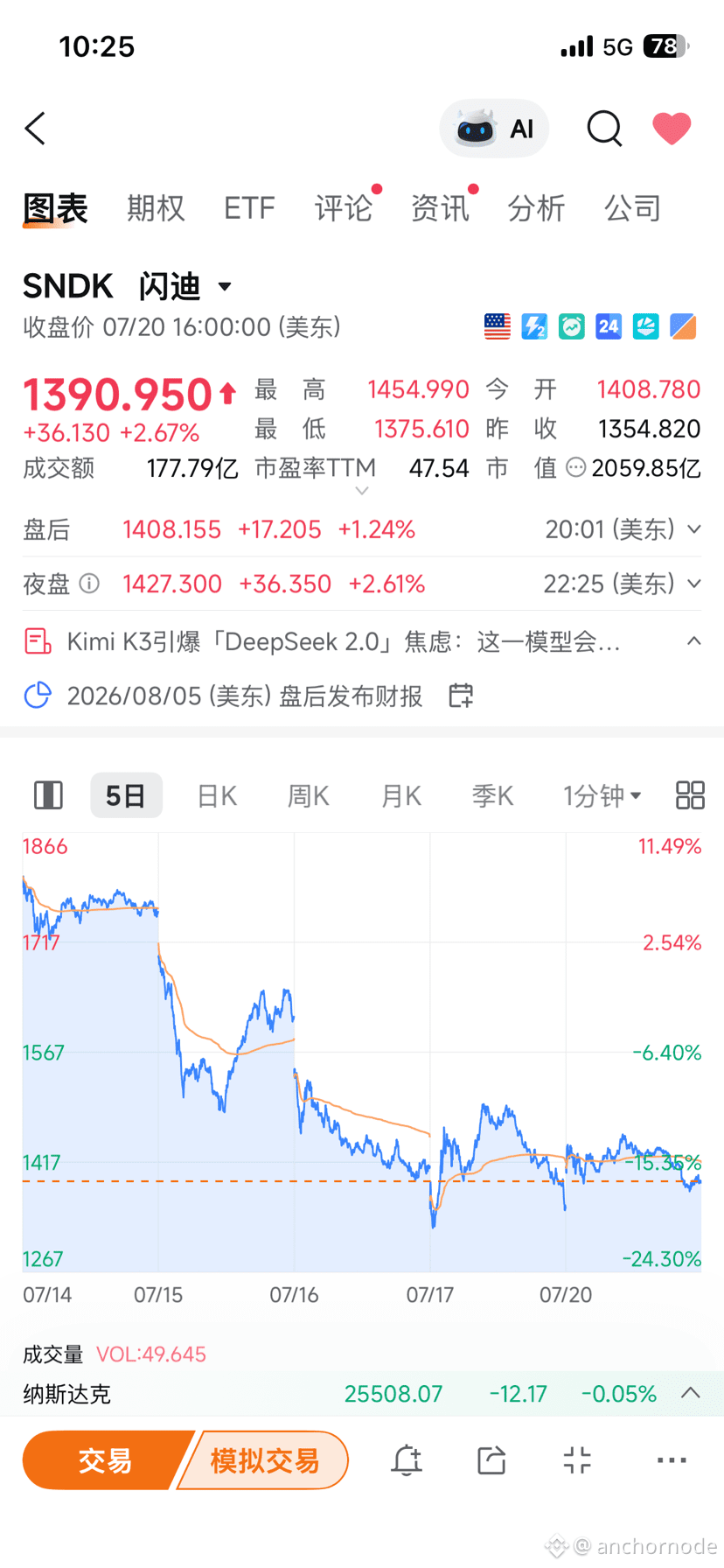
In the past, although I reduced holdings in Sandisk, it was still in my core position. These days I’ve been in a state of frenzied “buying and selling” (doing T trades), lowering my cost basis to around 1600, but I’m still stuck underwater.
#USStocks #TradingNotes
The above is my personal trading journal and does not constitute any investment advice. The market involves risks; invest prudently. Please comply with the laws and regulations of your location.
· Tuesday 07/21 After the Close | TSLA Q2 Earnings | Consensus: EPS $0.68 | Impact: Extremely High Auto gross margin + FSD subscription + Robotaxi timeline
· Tuesday 07/21 After the Close | GOOGL Q2 Earnings | Consensus: EPS $1.95 | Impact: Extremely High AI search monetization + Google Cloud growth
If TSLA misses but GOOGL beats, then the narrative of “AI wins all” will be further reinforced, and the pressure on hardware may mean any SOX rebound could be short-lived.
The situation between Iran and Israel has become tense again these past two days, and Russia and Ukraine have also reignited fighting.
However, last night’s SOX oversold rebound gave bulls a brief window to catch their breath.
In the past, although I reduced holdings in Sandisk, it was still in my core position. These days I’ve been in a state of frenzied “buying and selling” (doing T trades), lowering my cost basis to around 1600, but I’m still stuck underwater.
#USStocks #TradingNotes
The above is my personal trading journal and does not constitute any investment advice. The market involves risks; invest prudently. Please comply with the laws and regulations of your location.
Today’s events:
U.S. leading economic indicators for June | expected unchanged | impact: medium
China PBoC LPR interest rate decision | expected to keep 3.00% unchanged | impact: medium
Ongoing | Iran Hormuz crisis + oil price direction | WTI $83.7+; if it breaks above $85 → the stagflation narrative fully returns | impact: very high
Triple uncertainties make it unsuitable to add new positions:
1) SOX has entered a technical bear market (from the ATH 14,635 down more than 20% to 11,673); the downtrend is not over
2) The Iran Hormuz crisis has pushed WTI to $81+; geopolitical risk premium is hard to price
3) This week’s earnings for four major tech giants—TSLA / GOOGL / INTC / IBM—are tightly packed; any miss could trigger the second wave of chip sell-off
July preliminary University of Michigan consumer sentiment index + inflation expectations
Sentiment 54.4 (five-month high, well above the expected 50–52); 1-year inflation expectations edged down to 3.3% due to a decline in gasoline prices during the survey window
Tuesday after the close: TSLA + GOOGL earnings. Wednesday: INTC + IBM take the baton. Thursday: Flash PMI + initial jobless claims. AMD AI conference—Lisa Su presents the MI400 roadmap, debuting mid-week.
#USStocks #TradingNotes
The above is personal trading notes and does not constitute any investment advice. The market carries risk; investment requires caution. Please comply with local laws and regulations.
U.S. leading economic indicators for June | expected unchanged | impact: medium
China PBoC LPR interest rate decision | expected to keep 3.00% unchanged | impact: medium
Ongoing | Iran Hormuz crisis + oil price direction | WTI $83.7+; if it breaks above $85 → the stagflation narrative fully returns | impact: very high
Triple uncertainties make it unsuitable to add new positions:
1) SOX has entered a technical bear market (from the ATH 14,635 down more than 20% to 11,673); the downtrend is not over
2) The Iran Hormuz crisis has pushed WTI to $81+; geopolitical risk premium is hard to price
3) This week’s earnings for four major tech giants—TSLA / GOOGL / INTC / IBM—are tightly packed; any miss could trigger the second wave of chip sell-off
July preliminary University of Michigan consumer sentiment index + inflation expectations
Sentiment 54.4 (five-month high, well above the expected 50–52); 1-year inflation expectations edged down to 3.3% due to a decline in gasoline prices during the survey window
Tuesday after the close: TSLA + GOOGL earnings. Wednesday: INTC + IBM take the baton. Thursday: Flash PMI + initial jobless claims. AMD AI conference—Lisa Su presents the MI400 roadmap, debuting mid-week.
#USStocks #TradingNotes
The above is personal trading notes and does not constitute any investment advice. The market carries risk; investment requires caution. Please comply with local laws and regulations.
- 大洋
·
--
Two bad news, one is that last night the US stock market’s early session saw a rebound, but the afternoon saw another pullback. Total bait-and-switch.
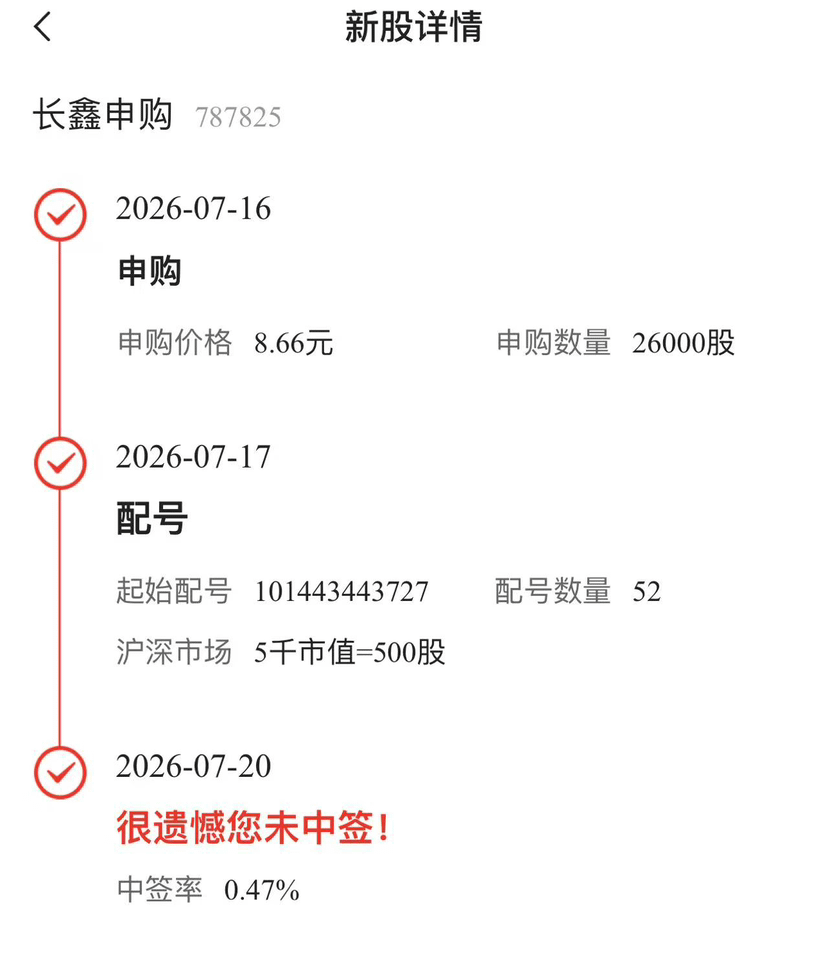
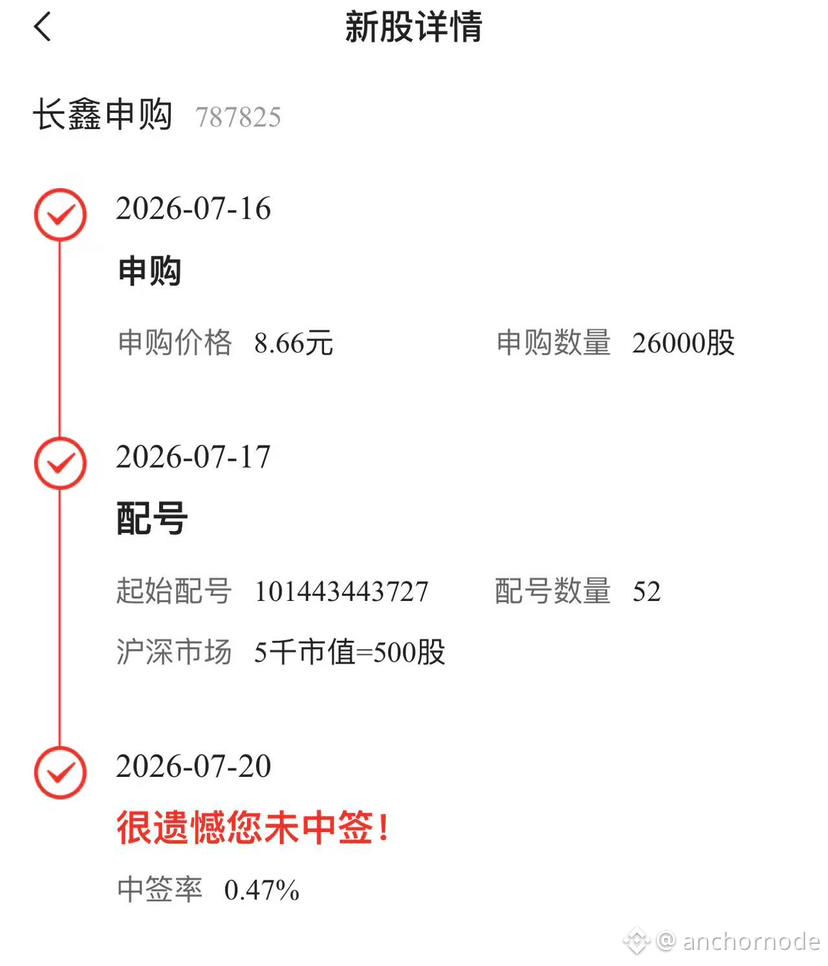
The other is that Changxin’s subscription didn’t get a winning lot. Hahaha.
The key focus is next Thursday: the last full trading week before the FOMC (7/29-30). If the PMI shows economic resilience on 7/24, but you’re positioning over the weekend to bet on this direction, the risk is extremely high.
No clear ETF recommendation today—stand by.
Yesterday’s feedback
Next up:
· Weekend Iran news—any diplomatic breakthrough could cause Monday oil prices to crash by 10%+ and reverse rate-cut expectations
· Thursday Initial Jobless Claims: if it’s again below 220,000, the hawkish narrative ahead of the FOMC will be locked in
· Friday Flash PMI—final growth data before the FOMC. If resilience is strong, chips will continue to face pressure
· FOMC 7/29-30: market pricing for a September rate cut has already pulled back significantly. Warsh is likely to remain hawkish
Personally, I lean toward waiting for direction confirmation at the open on Monday, rather than gambling on weekend news. Three scenarios: Iran diplomatic breakthrough → oil price plunges → rate-cut expectations repaired → higher open on Monday (prob. ~25%); Iran standoff → oil price steady → flat or slightly down open and sell-off on Monday (prob. ~45%); Iran escalation → oil price surges above $85 → full risk-off (prob. ~30%).
No matter which scenario, Monday offers a better entry point.
The above is my personal trading notes and does not constitute any investment advice. The market is risky—invest cautiously.
#US stocks #交易笔记
The other is that Changxin’s subscription didn’t get a winning lot. Hahaha.
The key focus is next Thursday: the last full trading week before the FOMC (7/29-30). If the PMI shows economic resilience on 7/24, but you’re positioning over the weekend to bet on this direction, the risk is extremely high.
No clear ETF recommendation today—stand by.
Yesterday’s feedback
Next up:
· Weekend Iran news—any diplomatic breakthrough could cause Monday oil prices to crash by 10%+ and reverse rate-cut expectations
· Thursday Initial Jobless Claims: if it’s again below 220,000, the hawkish narrative ahead of the FOMC will be locked in
· Friday Flash PMI—final growth data before the FOMC. If resilience is strong, chips will continue to face pressure
· FOMC 7/29-30: market pricing for a September rate cut has already pulled back significantly. Warsh is likely to remain hawkish
Personally, I lean toward waiting for direction confirmation at the open on Monday, rather than gambling on weekend news. Three scenarios: Iran diplomatic breakthrough → oil price plunges → rate-cut expectations repaired → higher open on Monday (prob. ~25%); Iran standoff → oil price steady → flat or slightly down open and sell-off on Monday (prob. ~45%); Iran escalation → oil price surges above $85 → full risk-off (prob. ~30%).
No matter which scenario, Monday offers a better entry point.
The above is my personal trading notes and does not constitute any investment advice. The market is risky—invest cautiously.
#US stocks #交易笔记
TSLAUS+5.08%
INTCUS+0.24%
GOOGLUS-2.13%
Two bad news, one is that last night the US stock market’s early session saw a rebound, but the afternoon saw another pullback. Total bait-and-switch.
The other is that Changxin’s subscription didn’t get a winning lot. Hahaha.
The key focus is next Thursday: the last full trading week before the FOMC (7/29-30). If the PMI shows economic resilience on 7/24, but you’re positioning over the weekend to bet on this direction, the risk is extremely high.
No clear ETF recommendation today—stand by.
Yesterday’s feedback
Next up:
· Weekend Iran news—any diplomatic breakthrough could cause Monday oil prices to crash by 10%+ and reverse rate-cut expectations
· Thursday Initial Jobless Claims: if it’s again below 220,000, the hawkish narrative ahead of the FOMC will be locked in
· Friday Flash PMI—final growth data before the FOMC. If resilience is strong, chips will continue to face pressure
· FOMC 7/29-30: market pricing for a September rate cut has already pulled back significantly. Warsh is likely to remain hawkish
Personally, I lean toward waiting for direction confirmation at the open on Monday, rather than gambling on weekend news. Three scenarios: Iran diplomatic breakthrough → oil price plunges → rate-cut expectations repaired → higher open on Monday (prob. ~25%); Iran standoff → oil price steady → flat or slightly down open and sell-off on Monday (prob. ~45%); Iran escalation → oil price surges above $85 → full risk-off (prob. ~30%).
No matter which scenario, Monday offers a better entry point.
The above is my personal trading notes and does not constitute any investment advice. The market is risky—invest cautiously.
#US stocks #交易笔记
The other is that Changxin’s subscription didn’t get a winning lot. Hahaha.
The key focus is next Thursday: the last full trading week before the FOMC (7/29-30). If the PMI shows economic resilience on 7/24, but you’re positioning over the weekend to bet on this direction, the risk is extremely high.
No clear ETF recommendation today—stand by.
Yesterday’s feedback
Next up:
· Weekend Iran news—any diplomatic breakthrough could cause Monday oil prices to crash by 10%+ and reverse rate-cut expectations
· Thursday Initial Jobless Claims: if it’s again below 220,000, the hawkish narrative ahead of the FOMC will be locked in
· Friday Flash PMI—final growth data before the FOMC. If resilience is strong, chips will continue to face pressure
· FOMC 7/29-30: market pricing for a September rate cut has already pulled back significantly. Warsh is likely to remain hawkish
Personally, I lean toward waiting for direction confirmation at the open on Monday, rather than gambling on weekend news. Three scenarios: Iran diplomatic breakthrough → oil price plunges → rate-cut expectations repaired → higher open on Monday (prob. ~25%); Iran standoff → oil price steady → flat or slightly down open and sell-off on Monday (prob. ~45%); Iran escalation → oil price surges above $85 → full risk-off (prob. ~30%).
No matter which scenario, Monday offers a better entry point.
The above is my personal trading notes and does not constitute any investment advice. The market is risky—invest cautiously.
#US stocks #交易笔记
- 大洋
·
--
Brothers, let’s win the bid together! Get the meat and drink the soup!
Log in to explore more content