
栗子Liz
916 Posts

栗子Liz
Report
Block User
广场活跃分子🌰,请求关注!!! 掘金赚钱做加密朋友,从狗庄那拿回属于我们的一切,不喜套路。
Open Trade
High-Frequency Trader
5.9 Years
51 Following
297 Followers
734 Liked
1 Badges
Posts
Portfolio
All
Quotes
·
--
What happened with $XAG ? I made a few hundred in the beginning but didn't close the position, and now I have to endure until now.
What happened with $XAG ? I made a few hundred in the beginning but didn't close the position, and now I have to endure until now.
5
1
2
1.3k
·
--
Can $XAG be pulled up? I've been waiting for a long time.
Can $XAG be pulled up? I've been waiting for a long time.
1
229
·
--
Both are engagements, but why is one listless and the other all smiles? The answer is on the table; count it and you'll understand!!
Both are engagements, but why is one listless and the other all smiles? The answer is on the table; count it and you'll understand!!


1
14
7.1k
·
--
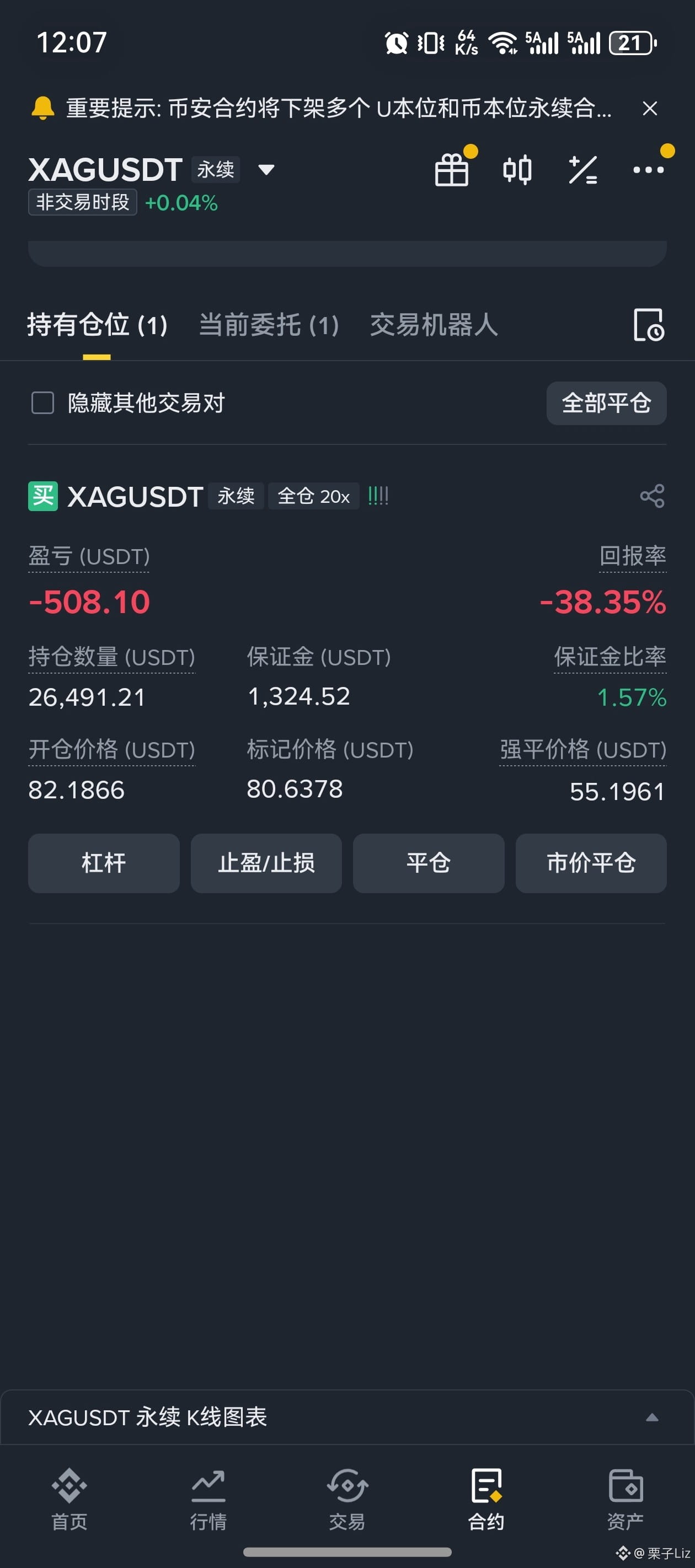
$XAG How will the market open tonight, should I take a gamble?
$XAG How will the market open tonight, should I take a gamble?
2
3
1.7k
·
--
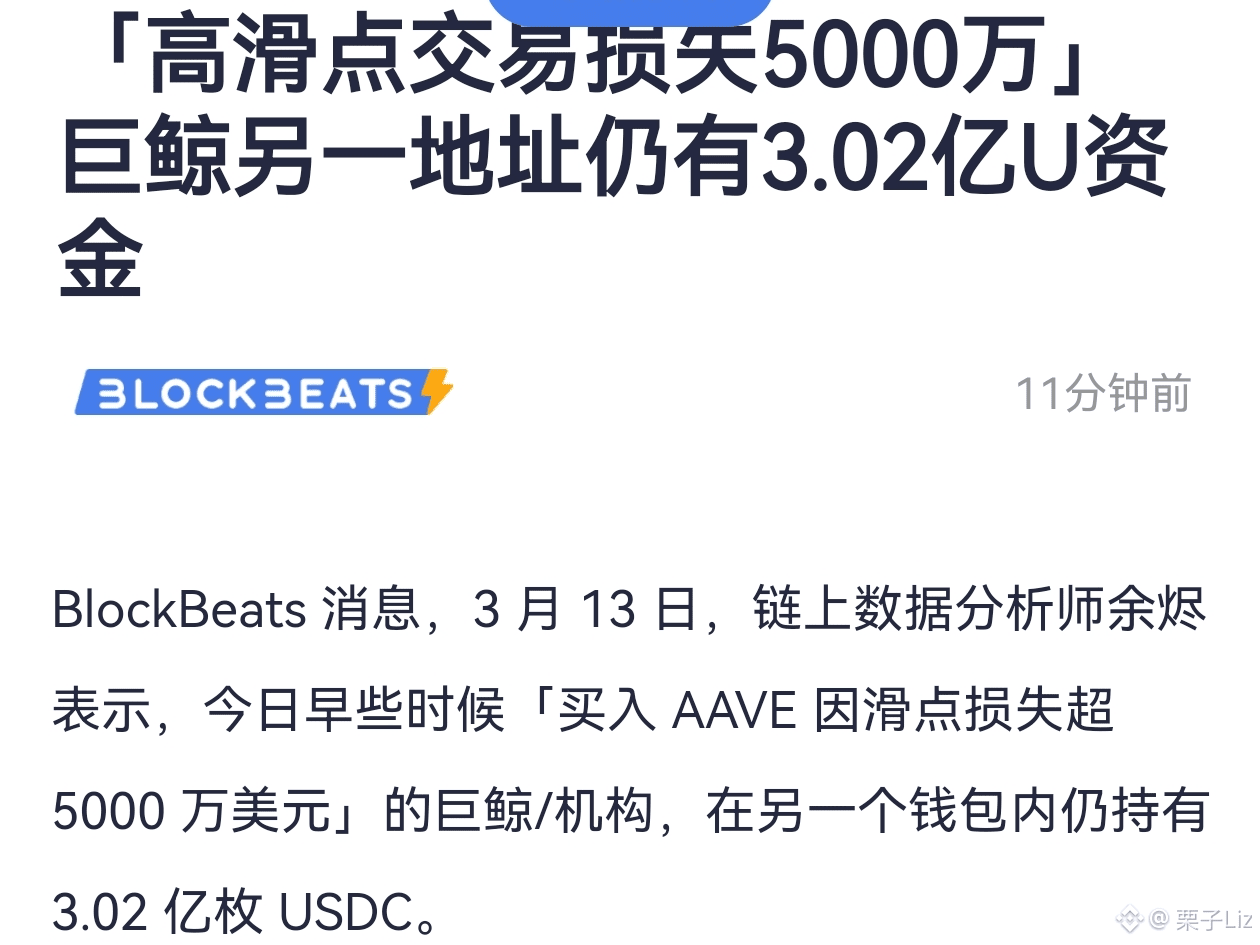
A giant whale on the Aave protocol (one of the largest lending/DeFi platforms on Ethereum) attempted to buy AAVE tokens with approximately $50.43 million USDT.
As a result, due to the extremely large size of the single order, the liquidity simply could not support it, leading to extreme slippage — the price instantly collapsed under its own weight, ultimately only resulting in about 324–327 AAVE (worth approximately $36,000 at the time), equivalent to a direct loss of nearly $50 million (99.9%+ of the funds evaporated instantly).
A giant whale on the Aave protocol (one of the largest lending/DeFi platforms on Ethereum) attempted to buy AAVE tokens with approximately $50.43 million USDT.
As a result, due to the extremely large size of the single order, the liquidity simply could not support it, leading to extreme slippage — the price instantly collapsed under its own weight, ultimately only resulting in about 324–327 AAVE (worth approximately $36,000 at the time), equivalent to a direct loss of nearly $50 million (99.9%+ of the funds evaporated instantly).
As a result, due to the extremely large size of the single order, the liquidity simply could not support it, leading to extreme slippage — the price instantly collapsed under its own weight, ultimately only resulting in about 324–327 AAVE (worth approximately $36,000 at the time), equivalent to a direct loss of nearly $50 million (99.9%+ of the funds evaporated instantly).
154
·
--
1 The entertainment industry has new gossip, Ma Sichun and Zhang Zhexuan have broken up! Now the whole internet is congratulating them! Ma Sichun has finally broken up, who still remembers when their relationship was exposed, the whole internet was shouting 'Ma Sichun, run fast'.
1 The entertainment industry has new gossip, Ma Sichun and Zhang Zhexuan have broken up! Now the whole internet is congratulating them! Ma Sichun has finally broken up, who still remembers when their relationship was exposed, the whole internet was shouting 'Ma Sichun, run fast'.

8
1.6k
·
--
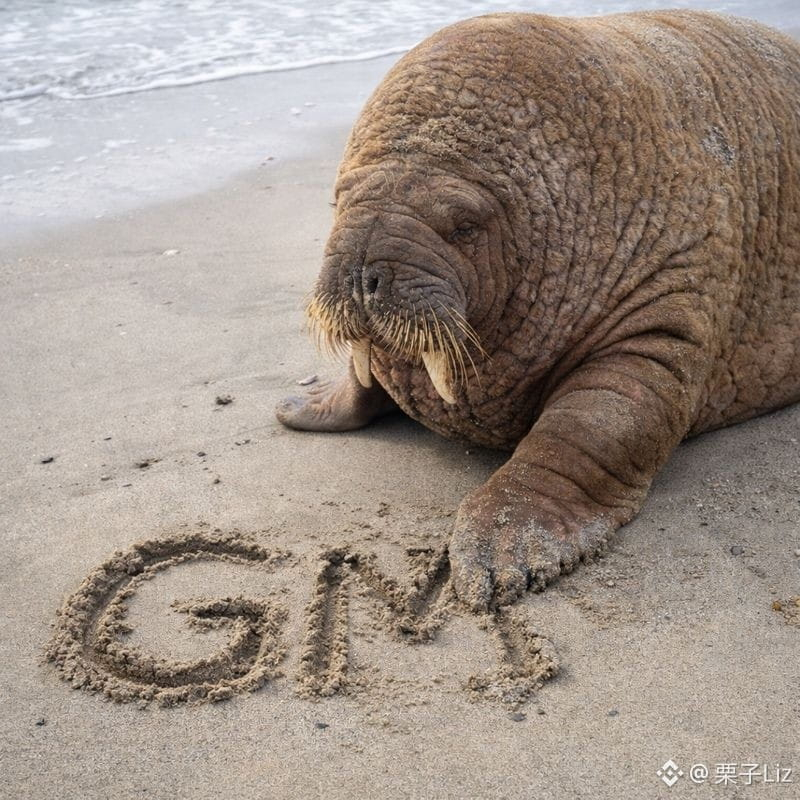
Chestnut Daily Update Fifty Post Plan for 30 Days
Not updated by midnight🕛, send 50 dollar red envelope posts, follow to share
Day One
Chestnut Daily Update Fifty Post Plan for 30 Days
Not updated by midnight🕛, send 50 dollar red envelope posts, follow to share
Day One
Not updated by midnight🕛, send 50 dollar red envelope posts, follow to share
Day One
10
·
--
From the perspective of the funding fee indicator of mainstream CEX and DEX, the current market sentiment shows a bearish tendency.
Is anyone short?
From the perspective of the funding fee indicator of mainstream CEX and DEX, the current market sentiment shows a bearish tendency.
Is anyone short?
Is anyone short?

153
·
--
Trader CBB lays out 18 million CL short positions, WTI crude oil
Average holding price 77.2, currently floating profit of 390,000 dollars💵
WTI crude oil prices briefly fell before the US stock market opened (down about 2.8% in 1 hour, dropping to around 75 dollars)
Trader CBB lays out 18 million CL short positions, WTI crude oil
Average holding price 77.2, currently floating profit of 390,000 dollars💵
WTI crude oil prices briefly fell before the US stock market opened (down about 2.8% in 1 hour, dropping to around 75 dollars)
Average holding price 77.2, currently floating profit of 390,000 dollars💵
WTI crude oil prices briefly fell before the US stock market opened (down about 2.8% in 1 hour, dropping to around 75 dollars)

77
·
--
Brother Ma Ji increased the position by 150 pieces $ETH , the clearing price is 2036
Brother, this forced liquidation price is very dangerous.
Brother Ma Ji increased the position by 150 pieces $ETH , the clearing price is 2036
Brother, this forced liquidation price is very dangerous.
Brother, this forced liquidation price is very dangerous.
261
·
--
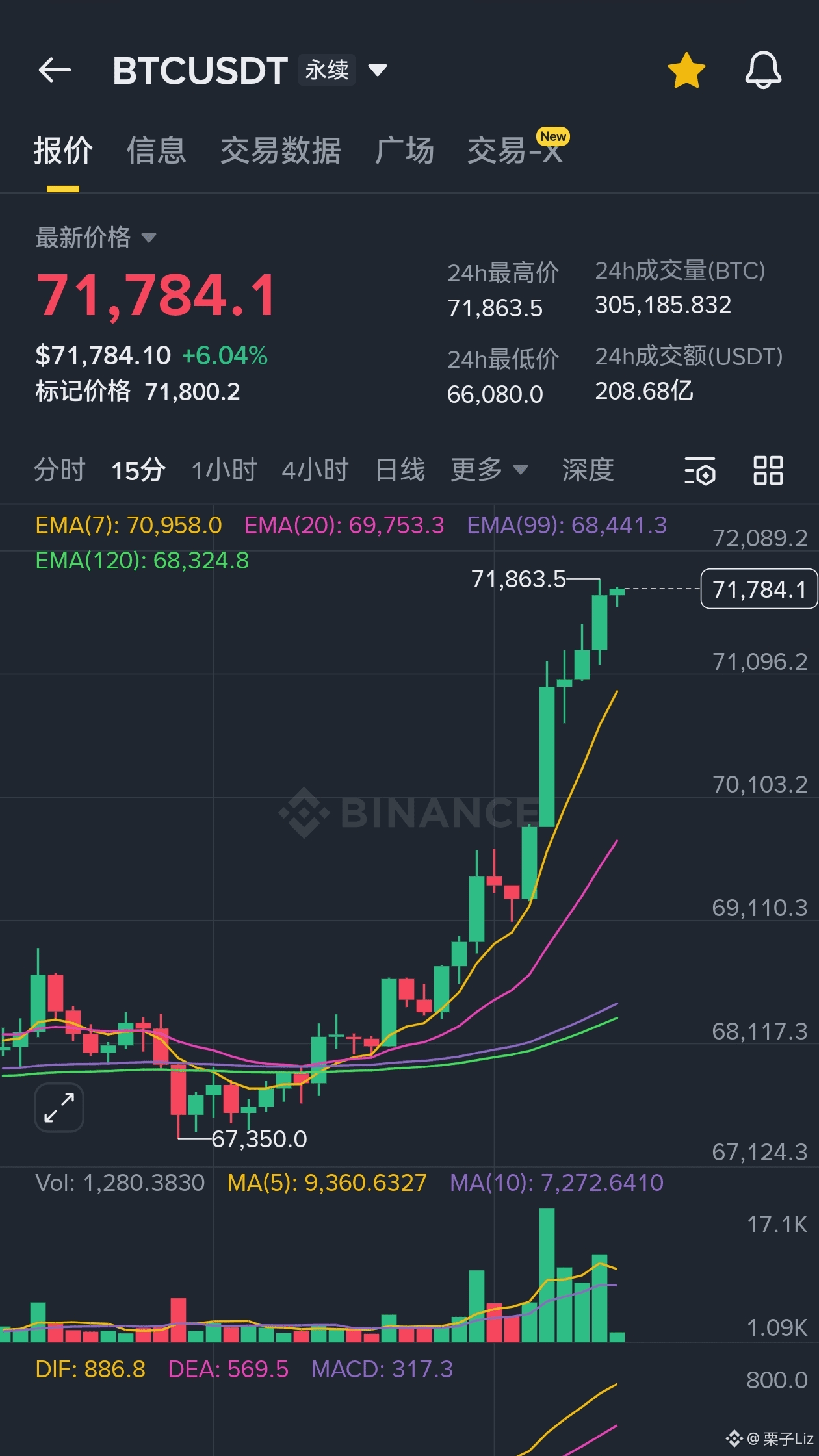
$BTC leads the cryptocurrency market to a strong rebound today, with the total contract positions reaching the largest single-day increase since July last year. Several institutions have also increased their cryptocurrency holdings.
Is it rebounding so quickly? Isn't there any volatility?
$BTC leads the cryptocurrency market to a strong rebound today, with the total contract positions reaching the largest single-day increase since July last year. Several institutions have also increased their cryptocurrency holdings.
Is it rebounding so quickly? Isn't there any volatility?
Is it rebounding so quickly? Isn't there any volatility?
412
·
--
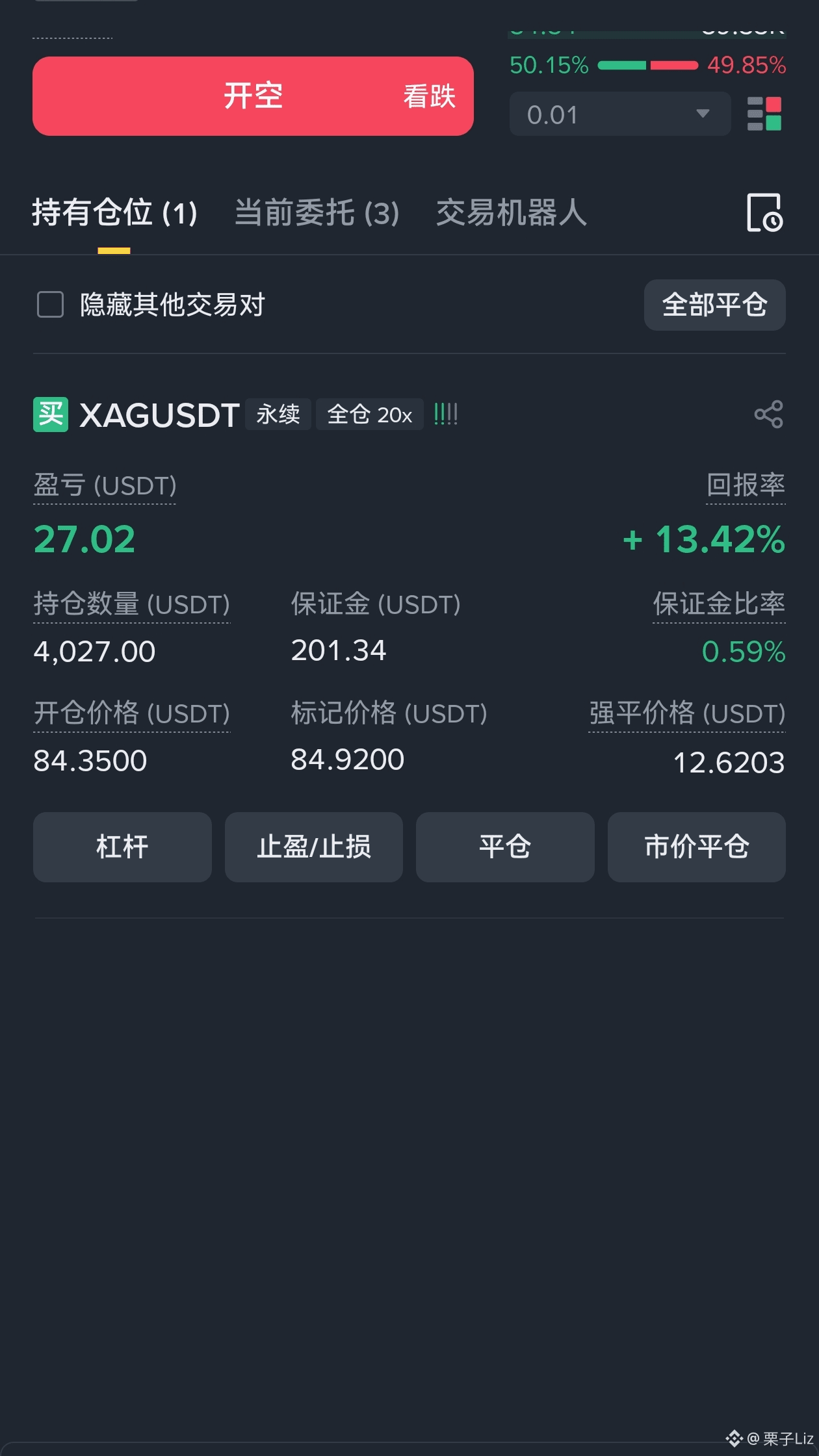
Recently, I have been accustomed to trading $XAG, and I hope it won't disappoint me,
Silver Brother
Recently, I have been accustomed to trading $XAG, and I hope it won't disappoint me,
Silver Brother
Silver Brother
537
·
--
I need to work—otherwise I’m going to lose it. I just want to ask: who can get along well with their mother-in-law?
Over the past two years, I’ve felt like I’ve aged ten years. I’ve been working hard to make money in the crypto world and even moved to Yunnan for a while.
The New Year is over—let me wish Old Te a happy new year and ask if there’s any insider info that could help me realize my dream of freedom sooner!
Stay tuned, guys—I’ll let you know as soon as I have news: #中东局势升级
I need to work—otherwise I’m going to lose it. I just want to ask: who can get along well with their mother-in-law?
Over the past two years, I’ve felt like I’ve aged ten years. I’ve been working hard to make money in the crypto world and even moved to Yunnan for a while.
The New Year is over—let me wish Old Te a happy new year and ask if there’s any insider info that could help me realize my dream of freedom sooner!
Stay tuned, guys—I’ll let you know as soon as I have news: #中东局势升级
Over the past two years, I’ve felt like I’ve aged ten years. I’ve been working hard to make money in the crypto world and even moved to Yunnan for a while.
The New Year is over—let me wish Old Te a happy new year and ask if there’s any insider info that could help me realize my dream of freedom sooner!
Stay tuned, guys—I’ll let you know as soon as I have news: #中东局势升级

86
·
--
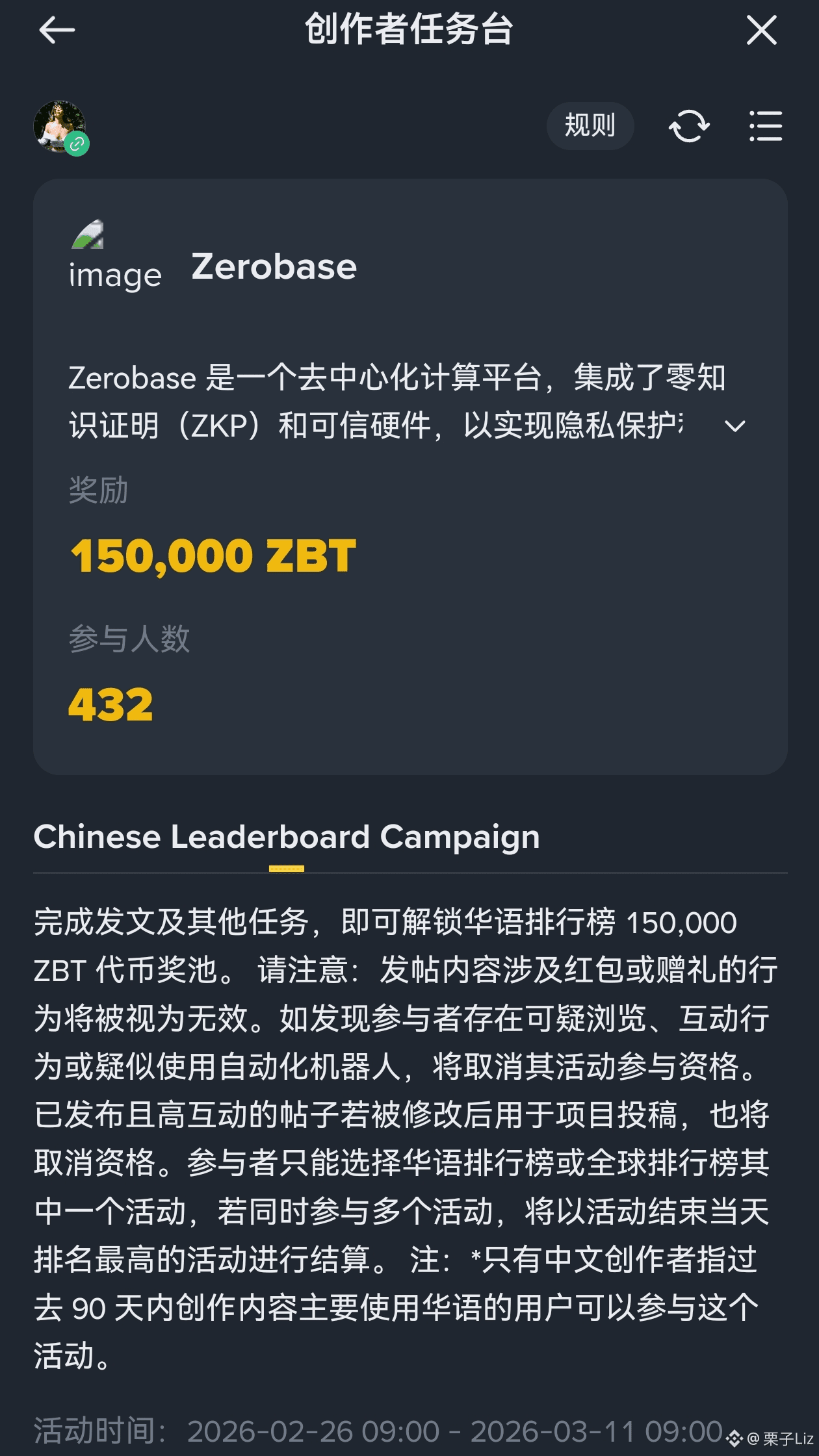
The task of posting in the square is back again, this time the duration is shorter, from the 26th to March 11th. Those interested can participate, the task is still quite simple.
Just enter the creator task to see it!
Zerobase ($ZBT) is a decentralized zero-knowledge proof infrastructure network that utilizes zero-knowledge proofs (ZKPs) and trusted execution environments (TEEs) to achieve verifiable privacy-preserving off-chain computation, mainly applied in the financial sector, such as zkStaking, privacy-preserving DeFi, institutional-grade applications, etc. It provides millisecond-level proof generation, low-cost, and high-privacy solutions. The ZBT token is used for paying network services, node incentives, and governance, with a total fixed supply of 1 billion.
#zerobase $ZBT
{spot}(ZBTUSDT)
The task of posting in the square is back again, this time the duration is shorter, from the 26th to March 11th. Those interested can participate, the task is still quite simple.
Just enter the creator task to see it!
Zerobase ($ZBT ) is a decentralized zero-knowledge proof infrastructure network that utilizes zero-knowledge proofs (ZKPs) and trusted execution environments (TEEs) to achieve verifiable privacy-preserving off-chain computation, mainly applied in the financial sector, such as zkStaking, privacy-preserving DeFi, institutional-grade applications, etc. It provides millisecond-level proof generation, low-cost, and high-privacy solutions. The ZBT token is used for paying network services, node incentives, and governance, with a total fixed supply of 1 billion.
#zerobase $ZBT
Just enter the creator task to see it!
Zerobase ($ZBT ) is a decentralized zero-knowledge proof infrastructure network that utilizes zero-knowledge proofs (ZKPs) and trusted execution environments (TEEs) to achieve verifiable privacy-preserving off-chain computation, mainly applied in the financial sector, such as zkStaking, privacy-preserving DeFi, institutional-grade applications, etc. It provides millisecond-level proof generation, low-cost, and high-privacy solutions. The ZBT token is used for paying network services, node incentives, and governance, with a total fixed supply of 1 billion.
#zerobase $ZBT
98
·
--
First order after $RIVER years, it was too early to be flat, feeling uncomfortable 😣
First order after $RIVER years, it was too early to be flat, feeling uncomfortable 😣
235
·
--
$RIVER didn't hold on, who knew he had to wait two days to take off, still thought it wouldn't work.
$RIVER didn't hold on, who knew he had to wait two days to take off, still thought it wouldn't work.
304
·
--
The official background report "Ready Player One" states that the U.S. has profited nearly $20 billion from CZ and the Chen Zhi case through technological hegemony??
Specifically names two major typical cases:
The Chen Zhi case (founder of the Cambodian Prince Group, involved in large-scale "pig slaughtering" scams, telecom fraud, money laundering, human trafficking, etc.)
In October 2025, the U.S. Attorney for the Eastern District of New York announced the confiscation of approximately 127,000 bitcoins controlled by Chen Zhi (then valued at about $15 billion)
This has been called by the U.S. itself the largest virtual asset confiscation action in history
The report considers this a typical example of the U.S. "technology + judicial" combination, effectively equating to "black eating black" or directly harvesting from criminals
Zhao Changpeng (CZ)/Binance case
The U.S. imposed both civil and criminal dual accountability, ultimately forcing Binance to pay a $4.3 billion fine
The report indicates that the U.S. used comprehensive technological surveillance, even infiltrating servers to gather evidence, pressuring global platforms to accept U.S. rules
The report has just come out and so far no Western media has followed up or refuted it.
The official background report "Ready Player One" states that the U.S. has profited nearly $20 billion from CZ and the Chen Zhi case through technological hegemony??
Specifically names two major typical cases:
The Chen Zhi case (founder of the Cambodian Prince Group, involved in large-scale "pig slaughtering" scams, telecom fraud, money laundering, human trafficking, etc.)
In October 2025, the U.S. Attorney for the Eastern District of New York announced the confiscation of approximately 127,000 bitcoins controlled by Chen Zhi (then valued at about $15 billion)
This has been called by the U.S. itself the largest virtual asset confiscation action in history
The report considers this a typical example of the U.S. "technology + judicial" combination, effectively equating to "black eating black" or directly harvesting from criminals
Zhao Changpeng (CZ)/Binance case
The U.S. imposed both civil and criminal dual accountability, ultimately forcing Binance to pay a $4.3 billion fine
The report indicates that the U.S. used comprehensive technological surveillance, even infiltrating servers to gather evidence, pressuring global platforms to accept U.S. rules
The report has just come out and so far no Western media has followed up or refuted it.
Specifically names two major typical cases:
The Chen Zhi case (founder of the Cambodian Prince Group, involved in large-scale "pig slaughtering" scams, telecom fraud, money laundering, human trafficking, etc.)
In October 2025, the U.S. Attorney for the Eastern District of New York announced the confiscation of approximately 127,000 bitcoins controlled by Chen Zhi (then valued at about $15 billion)
This has been called by the U.S. itself the largest virtual asset confiscation action in history
The report considers this a typical example of the U.S. "technology + judicial" combination, effectively equating to "black eating black" or directly harvesting from criminals
Zhao Changpeng (CZ)/Binance case
The U.S. imposed both civil and criminal dual accountability, ultimately forcing Binance to pay a $4.3 billion fine
The report indicates that the U.S. used comprehensive technological surveillance, even infiltrating servers to gather evidence, pressuring global platforms to accept U.S. rules
The report has just come out and so far no Western media has followed up or refuted it.

10
·
--
$SOL last night did not have much sol, unexpectedly chose a river with the least increase 😅
$SOL last night did not have much sol, unexpectedly chose a river with the least increase 😅
243
Log in to explore more content
Join global crypto users on Binance Square
⚡️ Get latest and useful information about crypto.
💬 Trusted by the world’s largest crypto exchange.
👍 Discover real insights from verified creators.
Email / Phone number
Trending Topics
AppleDebutsFoldablePhone
28,651 views
614 Discussing
Apple just dropped the foldable iPhone — and the market is paying attention. This isn't just another product cycle; it's a new product category, a new CEO on stage, and a $1,999 price tag that pushes $AAPL further into ultra-premium territory. Foldables are the narrative, and Apple is now the headline.
#appledebutsfoldablephone #EUExtendsCentralContactPointToCASPs #US10YTreasuryYieldHitsHighestSinceNov2023 #BrentCrudeTops$100 #USTreasuryToBuyBackUpTo$6BLongDatedDebt
KimHotbae
·2 Likes
·2.8k views
TSMCAugustRevenueUp53.3%YoY
1,800 views
112 Discussing
IranSaysReadyToEscalateWarWithUS
5,394 views
157 Discussing