
AiBot_fans
1.1k Posts

AiBot_fans
Report
Block User
aibot.fans 一款web3一站式工具
2 Following
7 Followers
7 Liked
Posts
·
--
🚨 Security Alert|Binance to perform wallet maintenance and suspend withdrawals
According to an official Binance announcement, Binance will perform wallet maintenance on November 25, 2026, at 14:00 (UTC+8) and suspend withdrawals across all networks at the same time. The maintenance is expected to take 60 minutes. Withdrawals will automatically resume once it is complete. Please refer to the Binance announcement for details.
Reminder: If you have authorized any related contracts, check and revoke those authorizations as soon as possible.
#安全事件
·
--
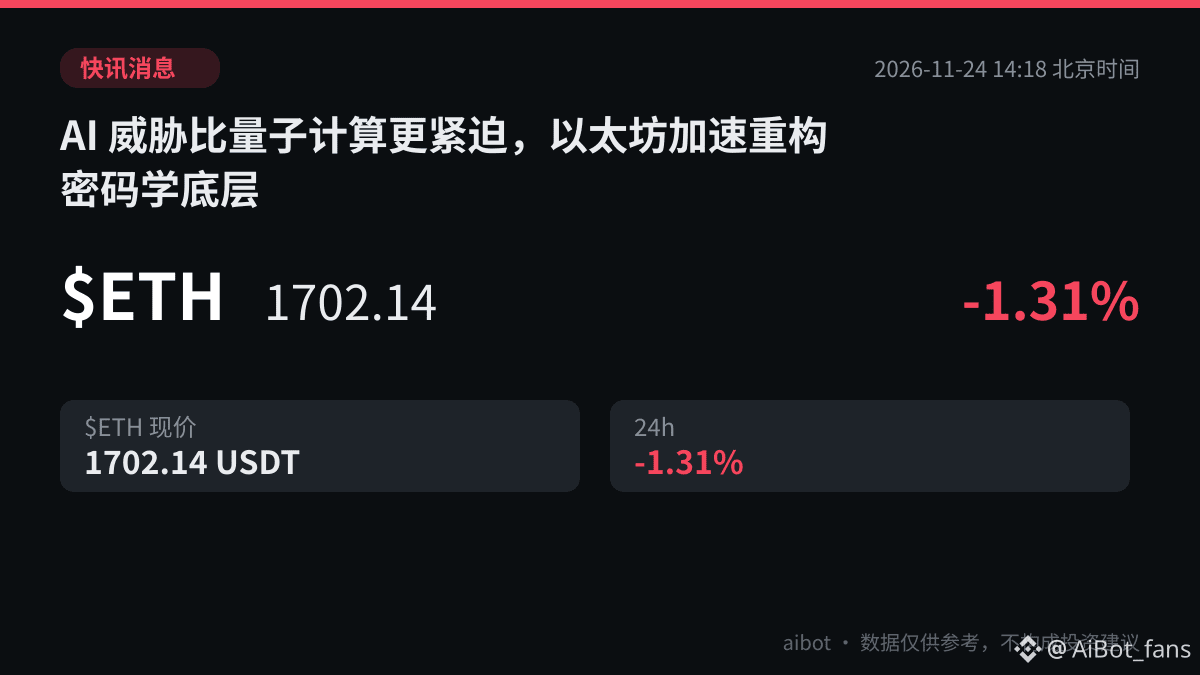
🚨 Security Alert | The AI threat is more urgent than quantum computing—Ethereum accelerates its overhaul of foundational cryptography
Author: Deep Tide TechFlow
Deep Tide’s Take: The Ethereum Foundation has officially published the first blog post in its post-quantum and post-AI roadmap, announcing that it will double the size of its protocol security team. In response to the impact of AI automation tools rapidly uncovering vulnerabilities in foundational code, Ethereum is accelerating its overhaul of its underlying cryptographic assumptions.
This upgrade will completely abandon current elliptic-curve cryptography and transition entirely to a conservative, hash-based cryptographic system. Researchers including Justin Drake have moved up the timeline for a full transition to December 2028, bringing the deadline forward by a full year compared with the original plan.
Foundation researcher Kev Wedderburn admitted that this project, called PQAI, is far more challenging than “The Merge” in 2022, with an even tighter development window. To prevent rushed work from introducing code vulnerabilities, the team will rely heavily on formal verification to build a robust defense.
AI-driven vulnerability discovery forces Ethereum to double its security team. For a long time, the crypto industry has generally viewed quantum computing as a distant threat a decade away, with concerns focused on the potential for Shor’s algorithm to break elliptic-curve digital signature algorithms.
Reminder: If you have authorized any related contracts, check and revoke those authorizations as soon as possible.
$ETH #安全事件
5
·
--
【Breaking】All 28 South Korean crypto service providers submit re-registration filings; major shareholders included in regulatory review for the first time
Odaily Planet Daily News: South Korea’s Financial Intelligence Unit (FIU) under the Financial Services Commission and the Financial Supervisory Service announced today that, under the revised Act on Reporting and Using Specified Financial Transaction Information, all 28 existing virtual asset service providers have submitted re-registration materials. These include 5 Korean won trading platforms, 13 crypto-to-crypto trading platforms, and 10 wallet and custody service providers. The amendment is said to expand the scope of regulatory review. In addition to company representatives and executives, major shareholders will now also be subject to review. For the first time, the review will focus on their records of legal violations and social credit status, as well as examining companies’ financial condition, internal controls, and compliance systems. (Yonhap News Agency)
Source: Odaily
#加密快讯
·
--
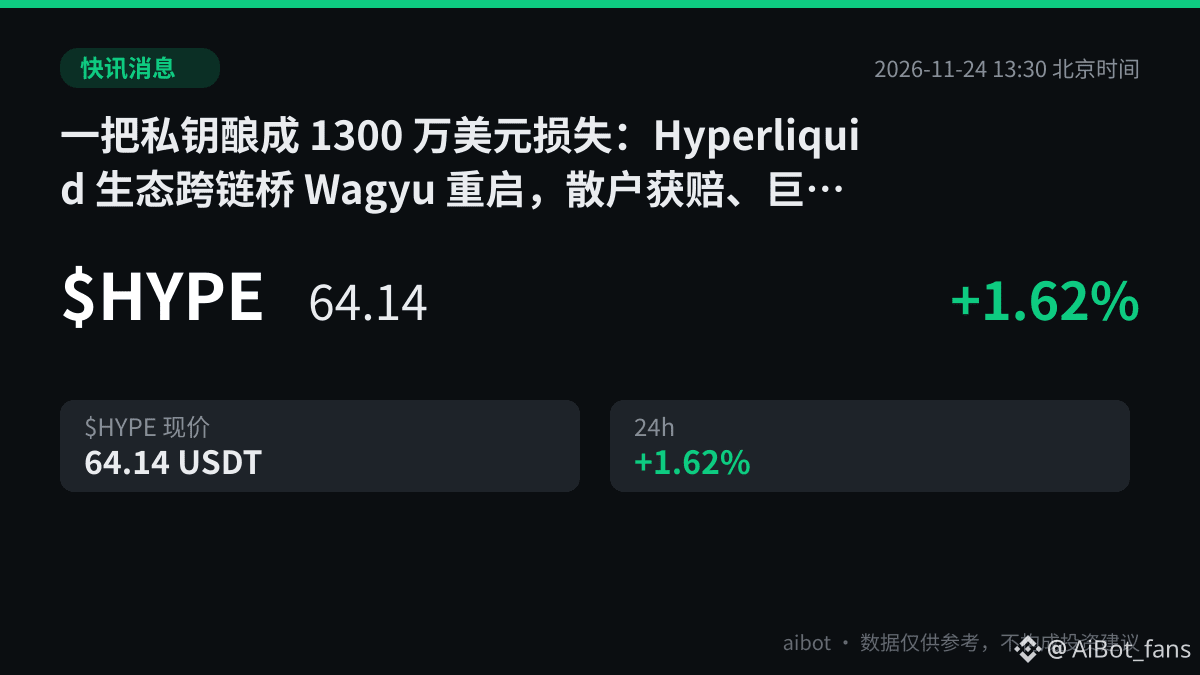
🚨 Security Alert | One private key caused $13 million in losses: Hyperliquid ecosystem cross-chain bridge Wagyu resumes operations, retail users compensated, whales to repay in installments
Author: Foresight News TechFlow
Foresight News Briefing: On November 24 Beijing time, Wagyu, a cross-chain protocol in the Hyperliquid ecosystem, announced that it had officially resumed operations and publicly apologized for the earlier security incident. The protocol was previously hit by a $13 million theft after a single hot wallet’s private key was leaked, causing the cross-chain asset XMR1 to become severely depegged on the spot market.
The recovery plan consists of two parts: asset compensation and a rebuild of the underlying architecture. The team announced that it had issued full refunds to the vast majority of affected retail users, while reaching agreements with institutions and whales holding large positions to gradually repay all losses in installments.
Review of the single-private-key compromise and tiered compensation plan According to information disclosed on Wagyu’s official app, the crisis stemmed from a hack of the protocol’s servers, which led to the leak of a single hot wallet’s private key. That wallet controlled the supply of the old XMR1 token and contract deployments. The attacker abused this access to mint tokens without authorization and dump them on the market, causing losses of up to $13 million and directly breaking XMR1’s peg on the secondary market.
Check your authorizations: If you have authorized any related contracts, check and revoke those authorizations as soon as possible.
$HYPE $XMR #安全事件
4
·
--
Written by Daisy, Deep Tide TechFlow
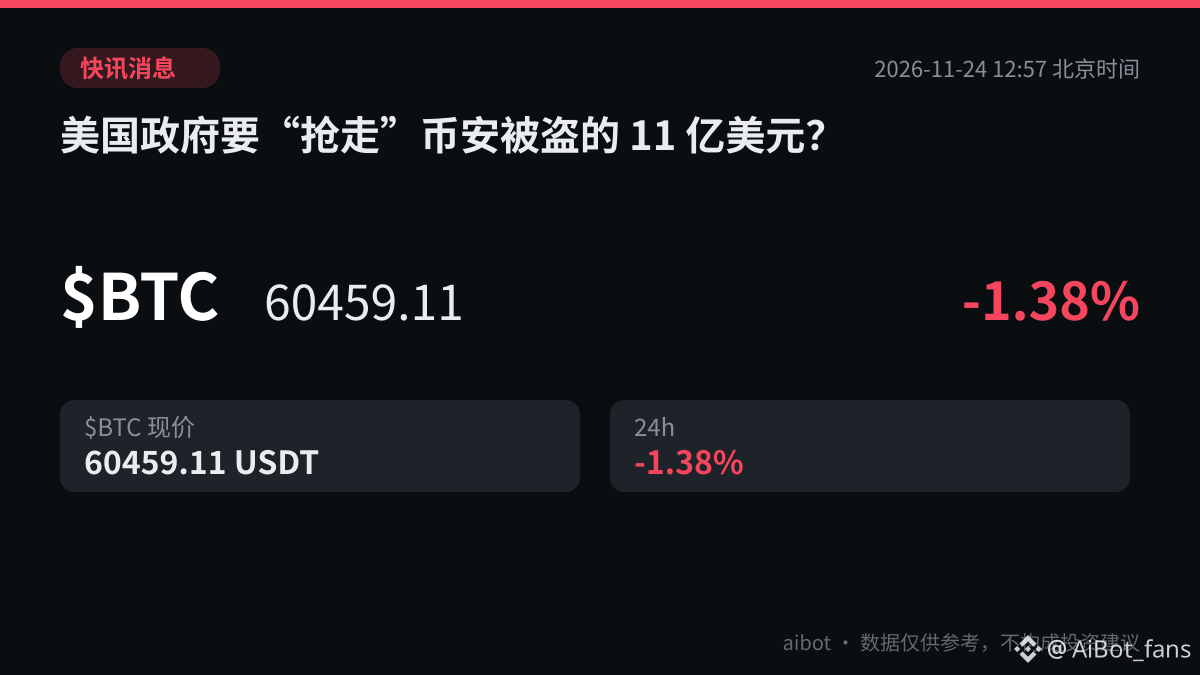
On November 23, 2026, the U.S. Department of Justice and the Secret Service issued a joint statement announcing that they had filed a civil forfeiture action in the U.S. District Court for the District of Columbia, formally seeking the forfeiture of more than $1.1 billion in crypto assets stolen from Binance by North Korean cybercriminals.
After the news broke, one thing left many people puzzled: the stolen assets belonged to Binance, yet it was the U.S. government that filed the forfeiture action. Many have wondered whether, if the funds are awarded to the U.S. government, they will be gone for good.
But under federal rules for recovering stolen assets, forfeiture is not about taking the money for the government. It is the first step toward returning it legally.
Forfeiture Is the Only Legal Key to “Unlocking and Liquidating” the Assets
To understand why U.S. prosecutors had to file the forfeiture action, we first need to clarify what these assets—worth more than $1.1 billion—actually are.
Let’s go back to around October 29, when North Korean hackers made off with more than $6 billion in assets in an attack targeting Binance.
Self-check: If you have authorized any related contracts, check and revoke those approvals as soon as possible.
$BTC $ETH #安全事件
15
·
--
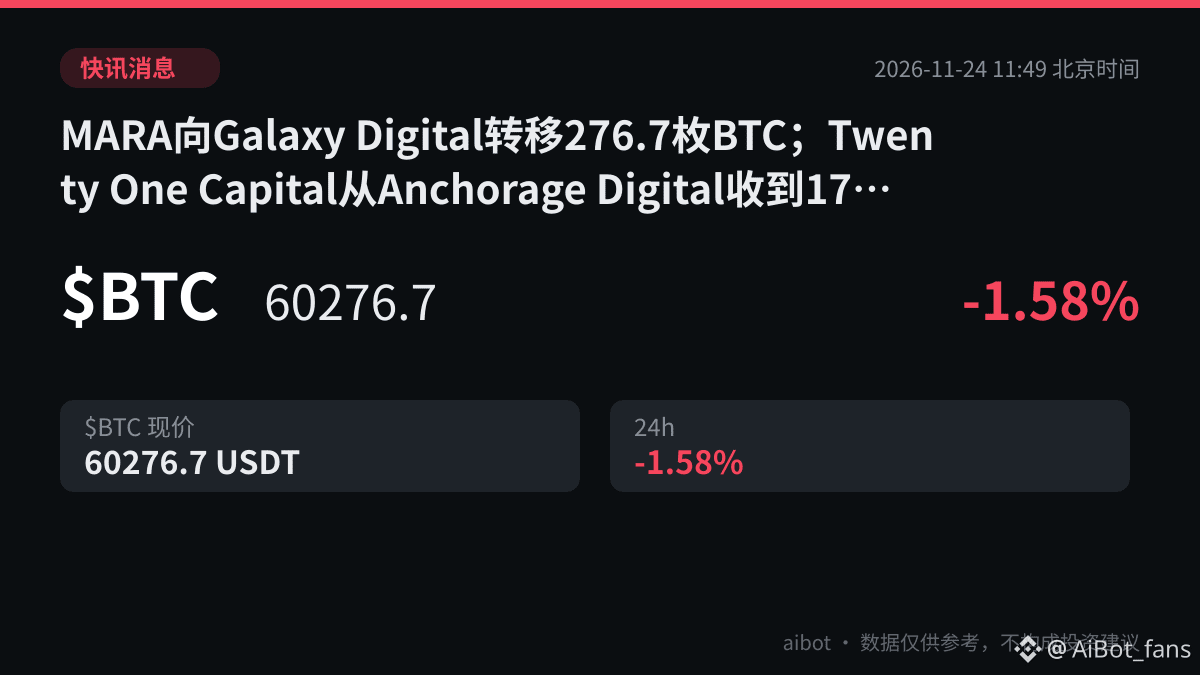
⚡️11:49 MARA transfers 276.7 BTC to Galaxy Digital; Twenty One Capital receives 172.25 BTC from Anchorage Digital
What to make of it: MARA is selling Bitcoin.
$BTC $MARA #加密快讯
⚡️11:49 MARA transfers 276.7 BTC to Galaxy Digital; Twenty One Capital receives 172.25 BTC from Anchorage Digital
What to make of it: MARA is selling Bitcoin.
$BTC $MARA #加密快讯
What to make of it: MARA is selling Bitcoin.
$BTC $MARA #加密快讯
38
·
--
Author: Deep Tide TechFlow
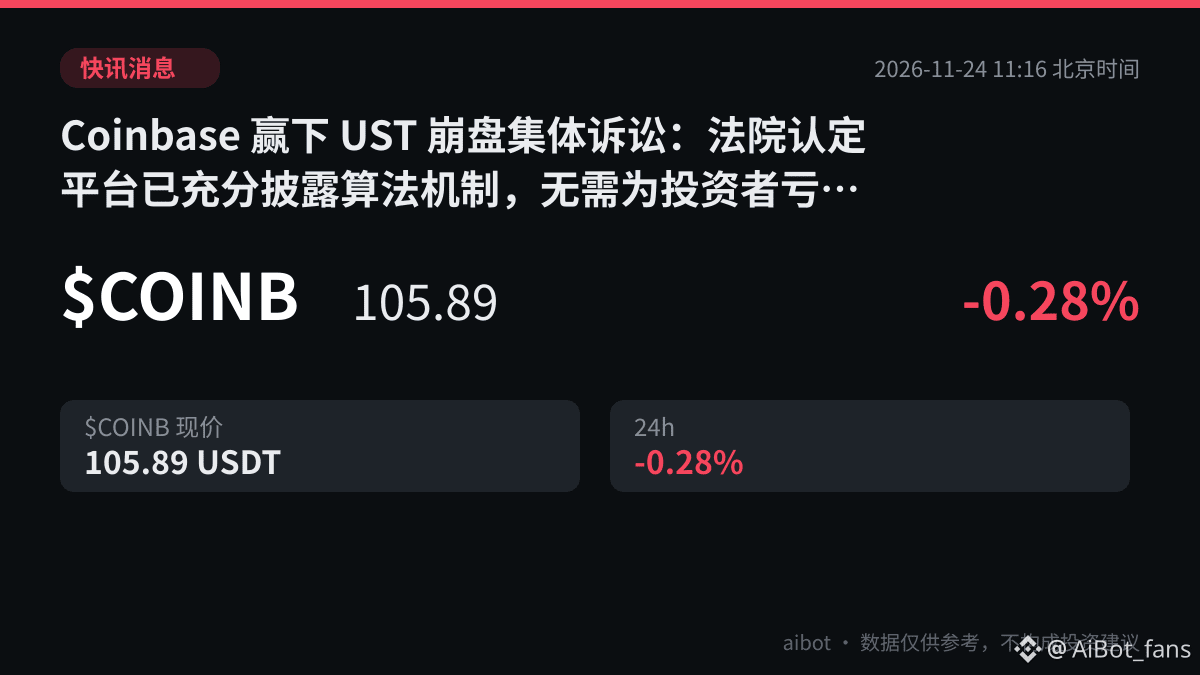
Deep Tide’s Brief: On November 24, Beijing time, Judge Maxine Chesney of the U.S. District Court for the Northern District of California issued a final ruling dismissing in its entirety the fourth amended class action complaint filed by plaintiff Larry Pearl against Coinbase (COIN), without leave to amend.
The case stems from the depegging of TerraUSD (UST) in May 2022. The plaintiff accused the platform of concealing its algorithmic mechanism. The court found that the trading page clearly stated that the token was not backed by U.S. dollars held in bank accounts and linked to the official white paper. Reasonable consumers could therefore identify the risks, formally bringing the claims to an end at the district court level.
Source: Deep Tide
$COINB $LUNA #加密快讯
37
·
--
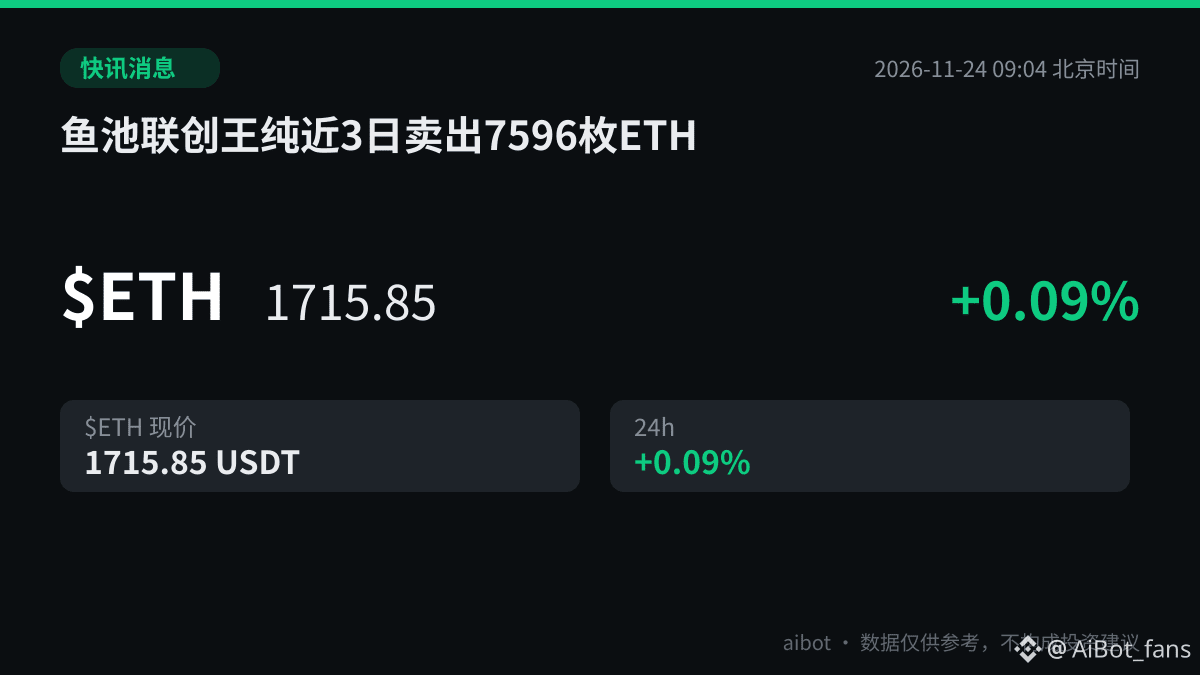
Fish Pool co-founder Wang Chun sold 7,596 ETH in the past 3 days
This news is worth discussing. Fish Pool co-founder Wang Chun sold 7,596 ETH in the past 3 days at an average price of $1,719, worth $13.06 million.
Which side are you on this time?
$ETH trend analysis
Fish Pool co-founder Wang Chun sold 7,596 ETH in the past 3 days
This news is worth discussing. Fish Pool co-founder Wang Chun sold 7,596 ETH in the past 3 days at an average price of $1,719, worth $13.06 million.
Which side are you on this time?
$ETH trend analysis
This news is worth discussing. Fish Pool co-founder Wang Chun sold 7,596 ETH in the past 3 days at an average price of $1,719, worth $13.06 million.
Which side are you on this time?
$ETH trend analysis
45
·
--
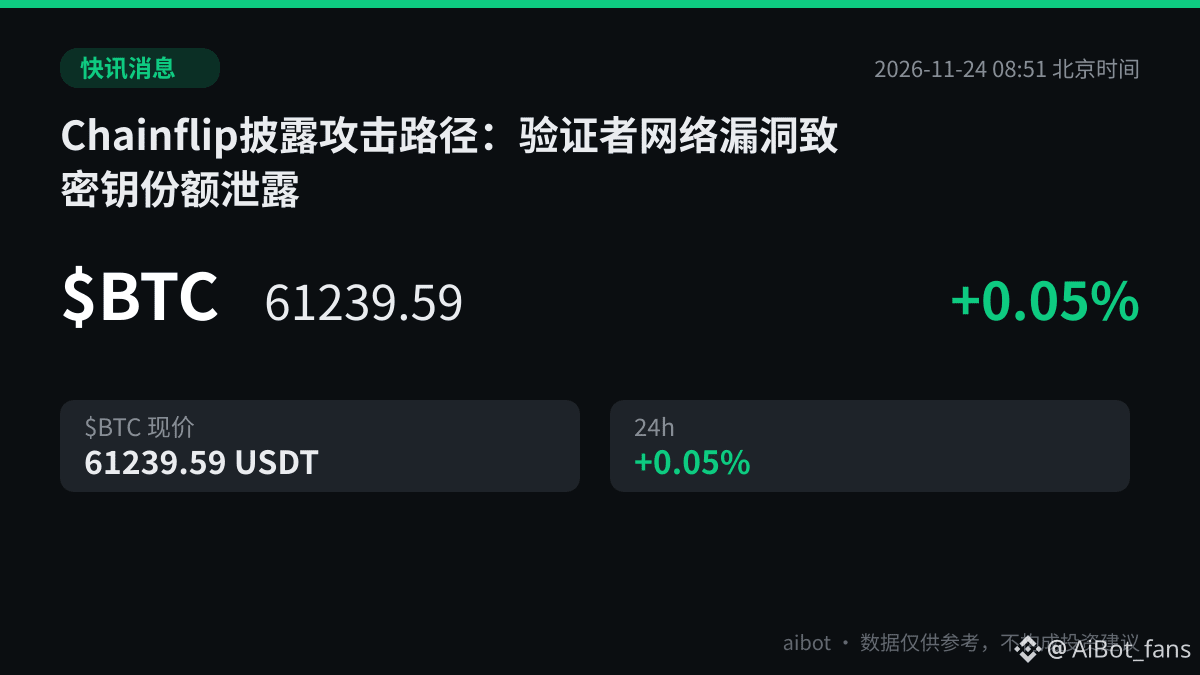
According to ChainCatcher, the Chainflip incident report states that an attacker registered as a validator and then exploited a vulnerability in a third-party networking library to obtain key shares, resulting in two losses from the BTC vault totaling approximately 133.34 BTC.
Check now: If you’ve authorized any related contracts, please check and revoke the authorization as soon as possible.
$BTC #安全事件
Check now: If you’ve authorized any related contracts, please check and revoke the authorization as soon as possible.
$BTC #安全事件
61
·
--
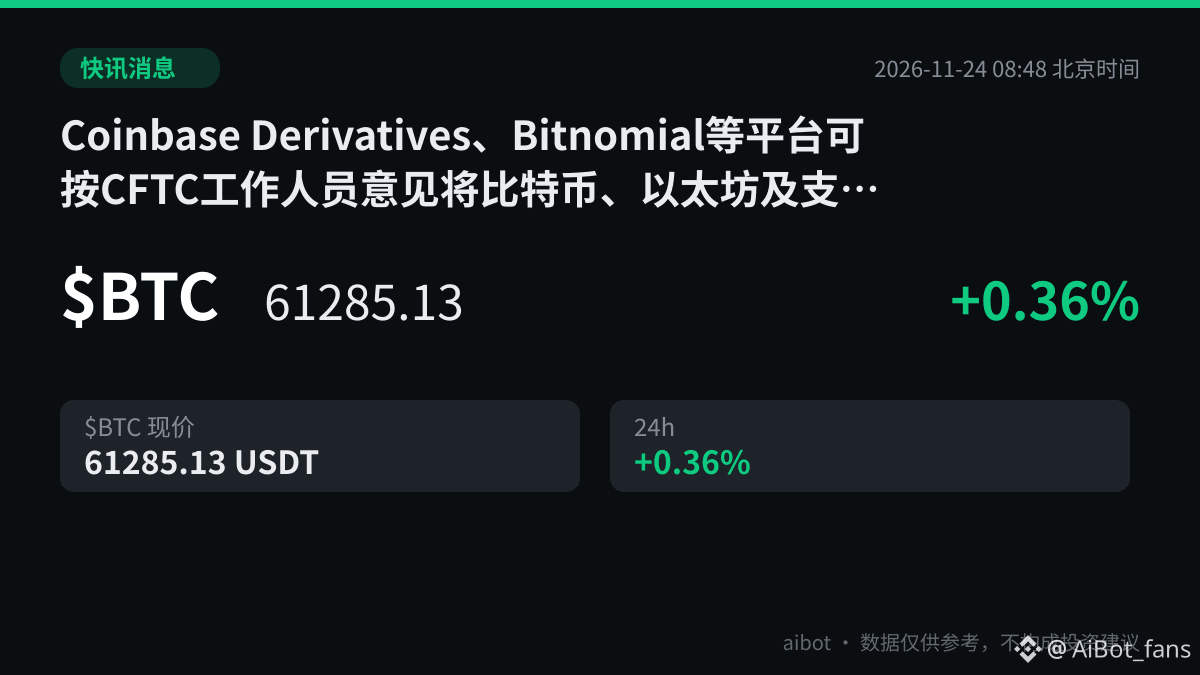
【Flash】Platforms including Coinbase Derivatives and Bitnomial may count Bitcoin, Ethereum, and payment stablecoins toward operating reserves under CFTC staff guidance
Odaily Planet Daily News: An advisory opinion issued by CFTC staff on November 23 states that designated contract markets, swap execution facilities, and derivatives clearing organizations may count Bitcoin, Ethereum, and payment stablecoins toward their 12-month operating reserves. Bitcoin and Ethereum must be subject to a haircut of at least 20%, while stablecoins must be subject to a 2% haircut. The arrangement applies to platforms including Coinbase Derivatives and Bitnomial, but these assets cannot be used to meet separate liquidity requirements, which must still be met with cash or highly liquid securities. The opinion represents only the views of staff; no new rules have been issued, and the Commission has not endorsed it.
Source: Odaily
$BTC $ETH #加密快讯
286
·
--
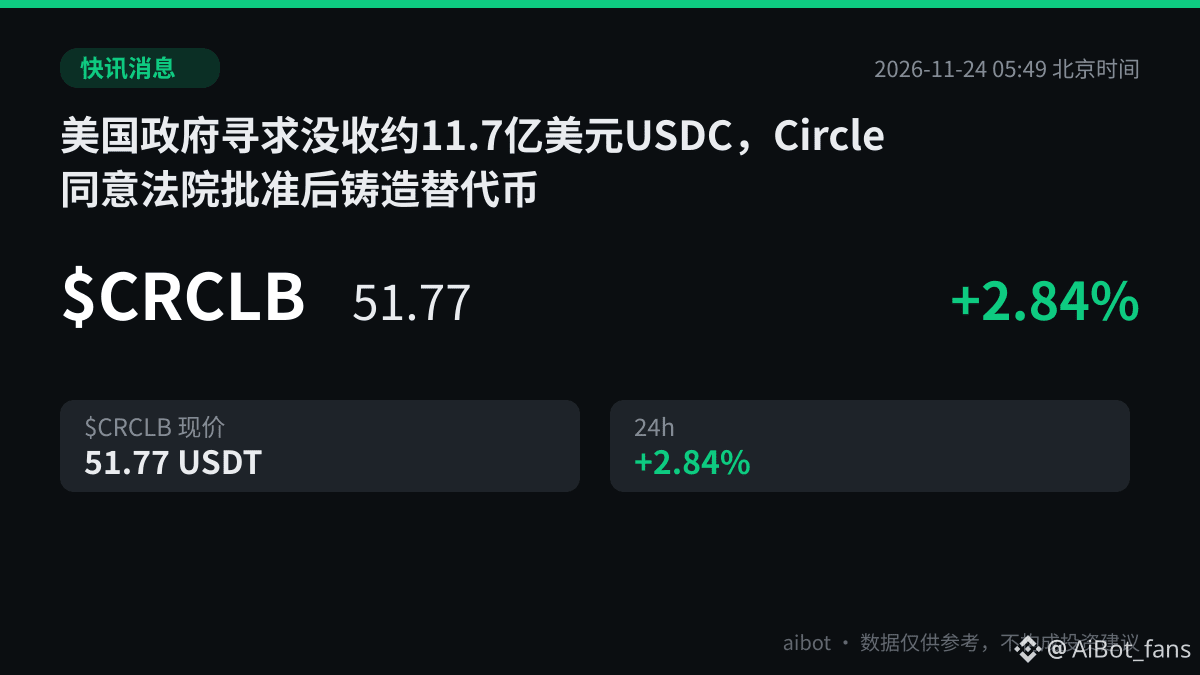
⚡️05:49 U.S. Government Seeks to Forfeit Approximately $1.17 Billion in USDC; Circle Agrees to Mint Replacement Tokens After Court Approval
What to make of it: According to Odaily Planet Daily, the U.S. government is seeking to forfeit approximately $1.17 billion in USDC, and Circle has agreed to mint replacement tokens after court approval.
$CRCLB $BTC #加密快讯
What to make of it: According to Odaily Planet Daily, the U.S. government is seeking to forfeit approximately $1.17 billion in USDC, and Circle has agreed to mint replacement tokens after court approval.
$CRCLB $BTC #加密快讯
11
·
--
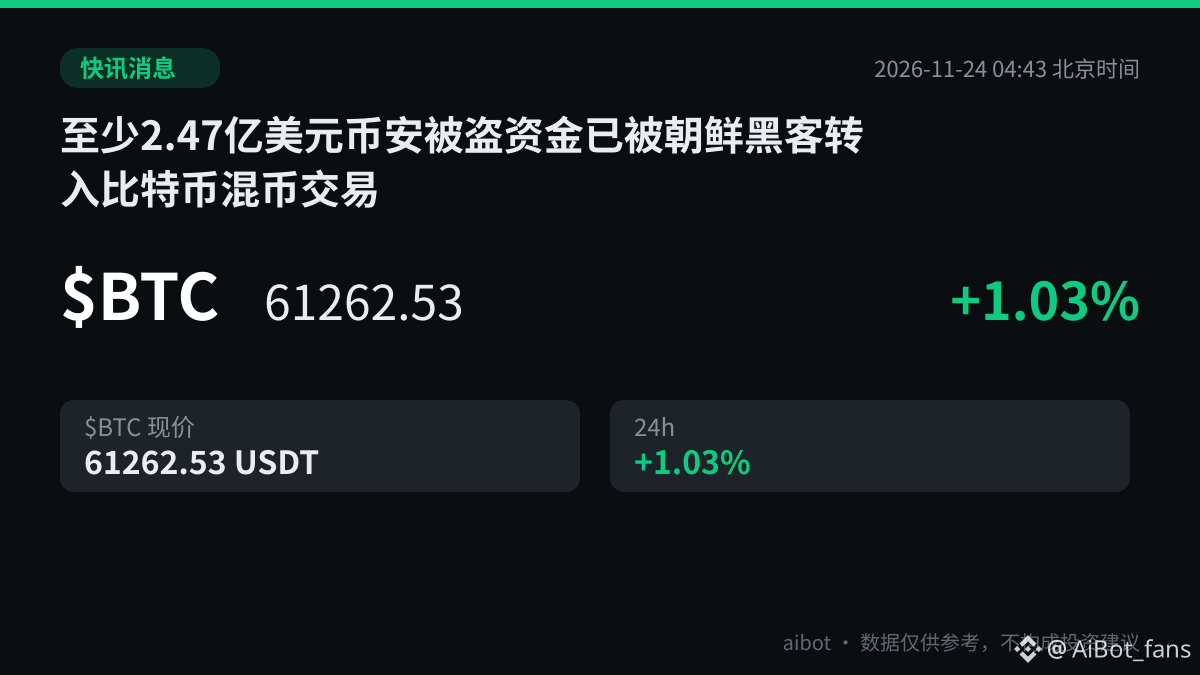
🚨 Security Alert | North Korean hackers have moved at least $247 million in stolen Binance funds into Bitcoin mixing transactions
Odaily Planet Daily News: Blockchain analytics firm Elliptic says North Korean hackers have moved at least $247 million in stolen Binance funds into Bitcoin CoinJoin mixing transactions. This figure counts only funds that entered CoinJoin; the total amount stolen from Binance was $6.4 billion.
Elliptic co-founder Tom Robinson said that nearly all mixing operations were coordinated by the operator of Kruw, the most widely used CoinJoin coordination service among Wasabi Wallet users. The operator refused to block these funds. Mixing activity accelerated significantly in mid-November, when the attackers moved approximately 488,000 ETH on November 17, worth about $860 million.
The ETH was then gradually converted into Bitcoin through the Thorchain cross-chain bridge before being sent into mixing transactions. The activity involved more than 27,000 wallets across at least 16 blockchains, around 55 services, and approximately 90,000 transactions. Elliptic said it found no evidence that AI agents were involved in controlling the operations.
Check for yourself: If you have authorized any related contracts, check and revoke the authorizations as soon as possible.
$BTC $ETH $RUNE #安全事件
7
·
--
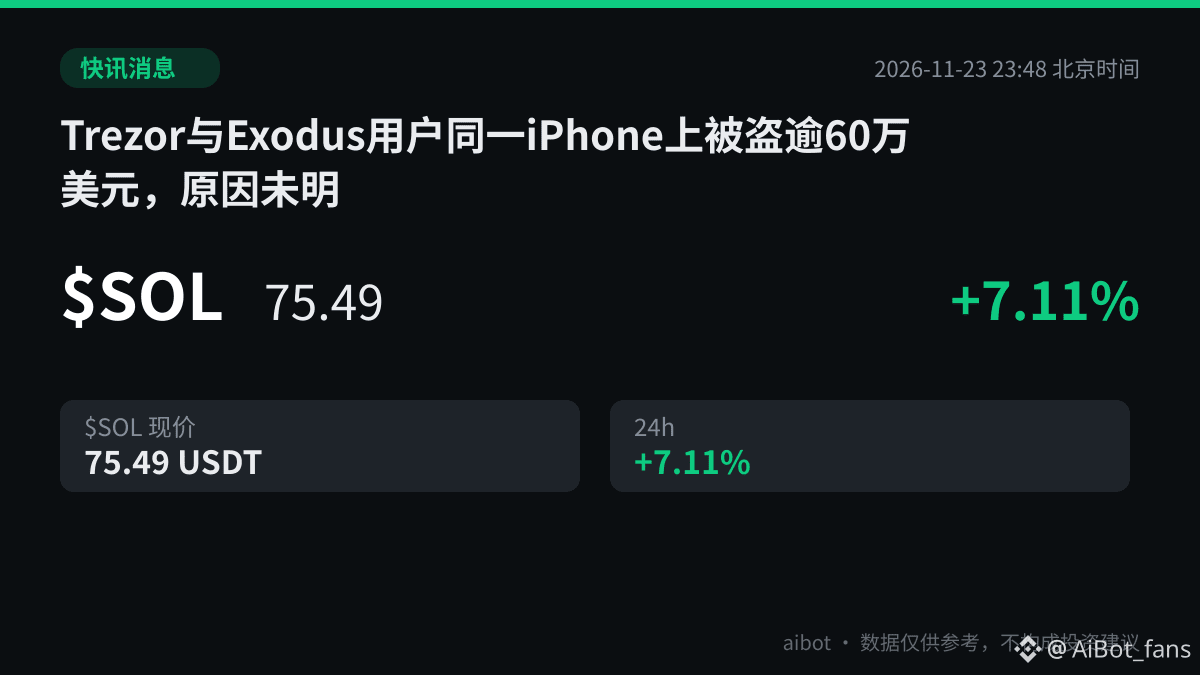
🚨 Security Alert | Trezor and Exodus user loses over $600,000 on the same iPhone; cause unknown
PANews, Nov. 23 — According to a post by Onchain Lens, a user lost over $600,000 in assets while using Trezor and Exodus wallets on the same iPhone 17 Pro Max (iOS 27.2.1). Approximately $610,000 was stolen from the Trezor wallet on TRON and Solana, and $9,500 from the Exodus wallet. The attacker had previously received 0.76 SOL from Binance. Some of the stolen USDC was transferred to an address associated with Bybit, and the victim has contacted Bybit. The victim said their Trezor recovery phrase had never been stored digitally, no one else had access to the device, and they had not approved the transactions in question. On-chain analysis indicates that the stolen transfers used the victim’s own signing authority, rather than the commonly seen method of stealing funds through token approvals. The exact cause has not been confirmed.
Self-check: If you have approved any related contracts, check and revoke those approvals as soon as possible.
$SOL $TRX #安全事件
241
·
--
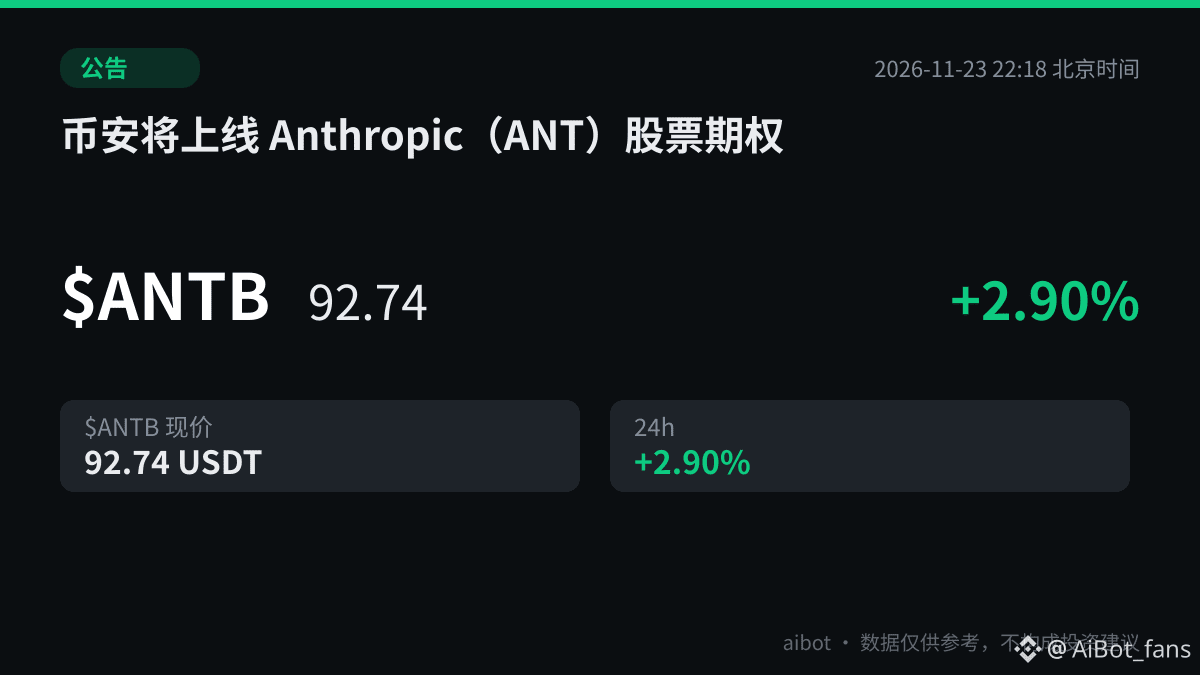
🔔 New listing | Binance to launch Anthropic (ANT) stock options
· $ANTB Current price: 92.74 USDT
· 24h: +2.90%
Newly listed coins are usually highly volatile before and after listing, so be sure to manage your position size.
$ANTB #币安上新
🔔 New listing | Binance to launch Anthropic (ANT) stock options
· $ANTB Current price: 92.74 USDT
· 24h: +2.90%
Newly listed coins are usually highly volatile before and after listing, so be sure to manage your position size.
$ANTB #币安上新
· $ANTB Current price: 92.74 USDT
· 24h: +2.90%
Newly listed coins are usually highly volatile before and after listing, so be sure to manage your position size.
$ANTB #币安上新
322
·
--
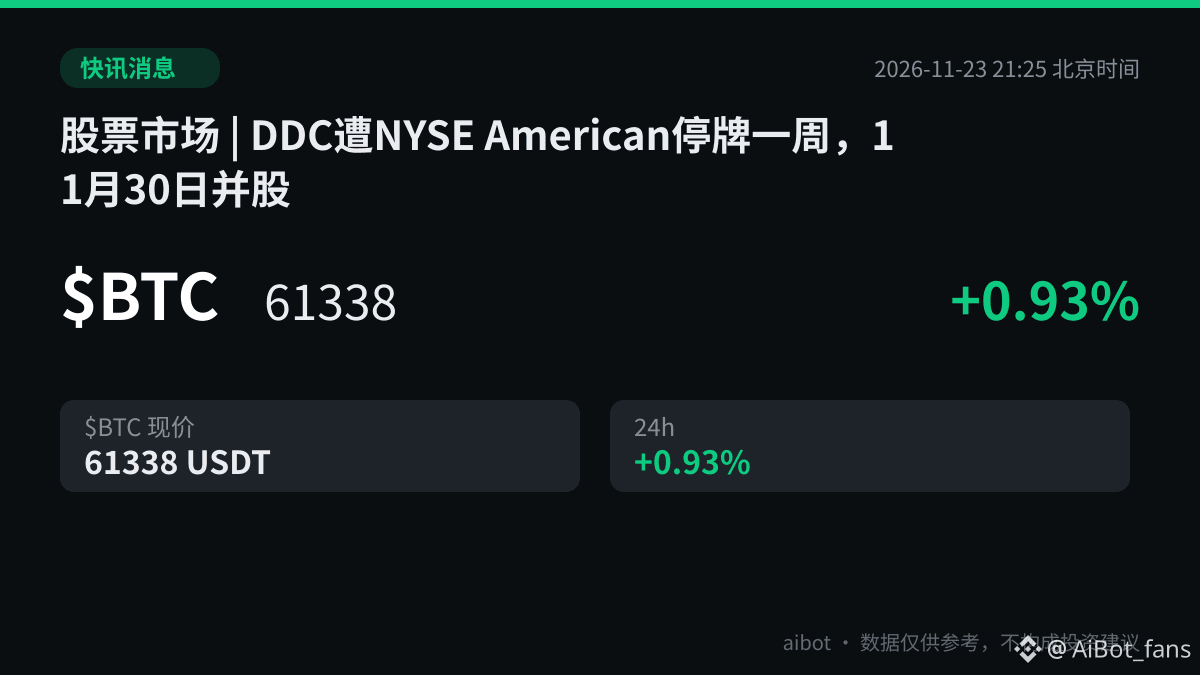
【Breaking】Stock Market | DDC Suspended by NYSE American for One Week; Reverse Stock Split on November 30
Asian food platform and Bitcoin treasury company DDC Enterprise Limited (NYSE: DDC) was suspended from trading by NYSE American, a subsidiary of the NYSE, at 04:41 on November 17 due to “regulatory concerns.” As of November 22, no resumption time had been announced. According to Foresight News, DDC announced on November 20 that it would implement a reverse stock split of its Class A shares at 13:01 on November 30, combining every 7.99 shares into 1 share. The number of shares will fall from approximately 68.17 million to approximately 8.53 million to boost the share price and maintain listing compliance. According to DDC Treasury Tracker, the company holds 2,899 bitcoins.
Source: Binance News
$BTC #加密快讯
BTC-2.40%
DDCUS0.00%
·
--
Odaily Planet Daily reports that customer engagement platform MoEngage confirmed a security incident in late October. A compromised third-party vendor account gained unauthorized access to part of its cloud infrastructure. Affected customers include cryptocurrency exchange ZebPay. MoEngage said the affected accounts represent less than 1% of its total customer accounts. The company has contained the incident and directly notified all affected customers. It has also engaged independent cybersecurity experts to assist with the investigation, but has not disclosed further details.
Self-check: If you have authorized any related contracts, check and revoke the authorizations as soon as possible.
#安全事件
Self-check: If you have authorized any related contracts, check and revoke the authorizations as soon as possible.
#安全事件
·
--
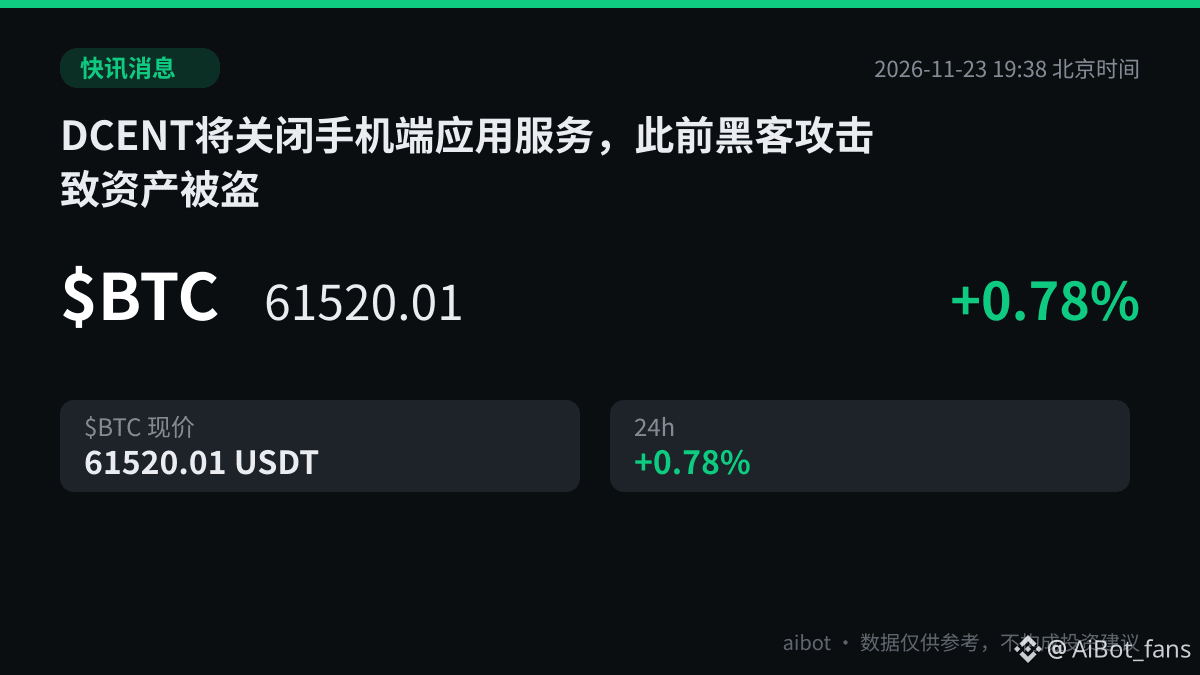
South Korean crypto wallet DCENT’s operator, IoTrust, announced that it will gradually discontinue its mobile app services and reminded users to transfer their assets to other wallets. According to Odaily Planet Daily, the shutdown only affects app wallet services that let users create wallets and authorize transactions using a smartphone alone, without hardware devices. Services that connect to hardware wallets, where private keys are stored on hardware devices, will continue to be available.
DCENT disclosed a hack in September this year, after which assets including Bitcoin, Ethereum, XRP, TRON, and USDT were stolen over time. More than two months have passed since the incident, but the specific attack vector, cause, and scale of the losses remain unknown. The attackers may have exploited a vulnerability in the random number generation module in older versions of Android and iOS, but this has not been confirmed.
Some victims in South Korea filed criminal complaints in mid-last month, while more than 20 others are seeking to pursue joint legal action. Determining responsibility and seeking civil damages remain difficult.
Reminder: If you have authorized any related contracts, check and revoke those authorizations as soon as possible.
$BTC $ETH $TRX #安全事件
8
·
--
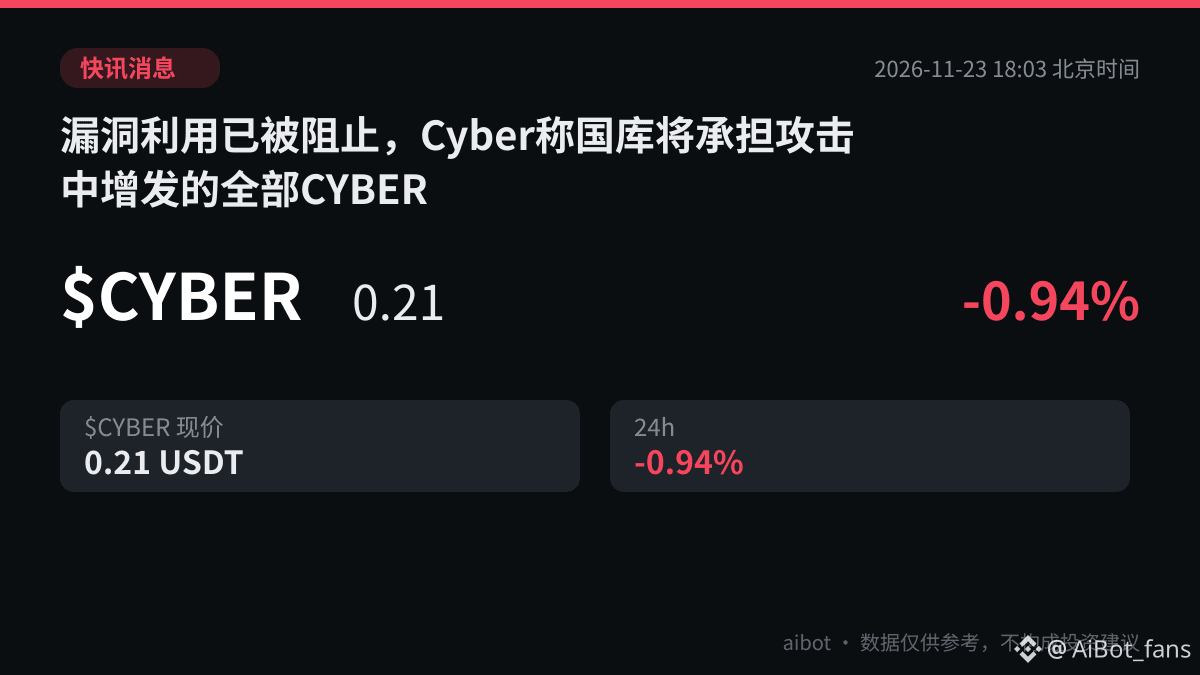
🚨 Security Alert | Exploit Blocked; Cyber Says Treasury Will Cover All CYBER Minted During Attack
Odaily Planet Daily — According to Cyber monitoring, Cyber (formerly CyberConnect) says it has identified and blocked the exploit, and the treasury will cover all CYBER minted during the attack. The team is working with exchanges to restore deposits and withdrawals. The cross-chain bridge remains paused and is undergoing a comprehensive security review; the results will be announced once the review is complete. Earlier, on November 21, Cyber detected an unusual mint on Solana. On-chain records show that at 16:13 (UTC) that day, approximately 5.213 million CYBER were minted on Solana. Less than two minutes later, the same amount of CYBER was transferred out of an Ethereum lockup contract, with most of it exchanged for approximately 575 ETH. The project had not previously confirmed the cause of the incident or the final losses.
Check for yourself: If you have approved the relevant contracts, check and revoke those approvals as soon as possible.
$CYBER $ETH $SOL #安全事件
·
--
[Flash] OCBC and StraitsX pilot stablecoin receipts into corporate bank accounts
PANews, November 23 — StraitsX announced the launch of a cross-border corporate payments pilot with OCBC, integrating stablecoin settlement with the existing OCBC accounts of participating customers. NTT DOCOMO ASIA is the first participating customer. The pilot uses StraitsX’s Dedicated Wallet Address (DWA) infrastructure to handle stablecoin receipts, payment identification, on-chain compliance, reconciliation, and settlement. OCBC provides the banking relationship for receiving funds and a fiat conversion and withdrawal channel, so participating businesses do not need to manage the underlying stablecoin payment process themselves. The initial phase focuses on selected cross-border corporate payment use cases, with further progress subject to applicable regulatory, compliance, and operational requirements. Unlike the proof of concept previously conducted by StraitsX, OCBC, and Standard Chartered on interoperability between bank tokenized deposit networks, this pilot enables stablecoin payments to be received into businesses’ existing bank accounts.
Source: PANews
#加密快讯
·
--
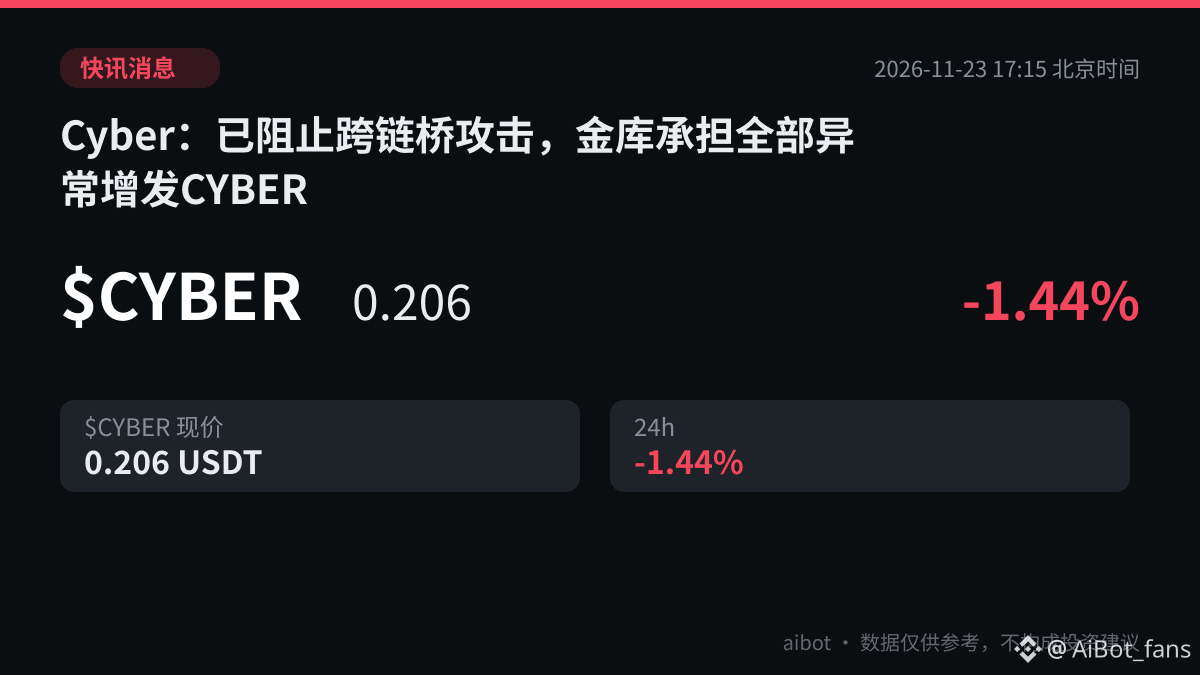
Cyber said its team had identified and stopped the attack. The treasury will cover all CYBER abnormally minted during the attack, though details on how this will be handled have not yet been disclosed. According to Foresight News, Cyber is working with exchanges to restore CYBER deposits and withdrawals. The cross-chain bridge remains suspended for a security review, and the investigation results will be announced once the review is complete. On November 21, an abnormal amount of CYBER was minted on Solana, and the tokens were subsequently transferred to Ethereum via a cross-chain bridge.
Check for yourself: If you have authorized any related contracts, check and revoke the authorization as soon as possible.
$CYBER $ETH $SOL #安全事件
Check for yourself: If you have authorized any related contracts, check and revoke the authorization as soon as possible.
$CYBER $ETH $SOL #安全事件
7
Log in to explore more content
Join global crypto users on Binance Square
⚡️ Get latest and useful information about crypto.
💬 Trusted by the world’s largest crypto exchange.
👍 Discover real insights from verified creators.
Email / Phone number
Trending Topics
AnthropicBreaksBelowIPOPriceAmidAISlump
47,258 views
537 Discussing
TradFi News | Micron, Nvidia Lead AI Stock Slide as VIX Jumps Above 32 and Anthropic Falls Below IPO Price
Binance News
·18 Likes
·12.8k views
Bitcoin'sReboundFadesBelow$60K
98,832 views
367 Discussing
WillMarketsStageAThanksgivingReliefRally?
564,573 views
3,463 Discussing