
Bronu Silva 1
132 Posts
Bronu Silva 1
Report
Block User
Crypto Shiller, Ambassador, Marketer, #BTC, #ETH, #SOL
0 Following
3 Followers
2 Liked
Posts
Holder Rewards Built Into The Contract 🧪
$ARB is where Bankr tests launch mechanics before they reach its main chains, and the current experiments change who a token pays.
On Arbitrum and Arc, a Bankr launch can now vest a set allocation of tokens directly to holders. It can route trading fees to those holders in the quote token, the base token or both. And it goes into v3 pools that aggregators can route to from the first block.
Both holder features sit in the token's smart contract rather than a platform policy. A rule in the contract can be read and built on by anyone, and a policy can be edited.
The founder has called fees to holders table stakes for the next wave of launchpads, alongside the stock pairings Bankr was early to. The team has said that if people like these features, Base and Robinhood Chain come next, so Arbitrum is the preview.
Vesting from supply still dilutes someone, while the fee route pays from trading activity. Which one a project picks says a lot about what it thinks its token is for. Both features are experimental.
Watch what launches in Arbitrum DeFi this month, because it is where Bankr's next defaults get tested.
#DeFi #Arbitrum
69
The GPU Revenue Illusion 🖥️
Venice ($VVV ) | B3IQ ($B3 )
A GPU operator has 1,000 GPUs available for rent.
Looks like 1,000 GPUs generating revenue, right?
Not if customers are only using 200.
Venice has demonstrated the demand for private AI access. But growing AI usage doesn't automatically mean all the hardware behind it is being monetized.
I've been watching the compute ownership narrative around B3, and I think investors often overlook the difference between owning GPU capacity and actually putting it to work.
Through B3IQ, customers can finance dedicated NVIDIA GPU systems while B3 handles hosting and operations. Owners get priority access and can make unused capacity available for rental through Earn Mode.
Of course, available capacity isn't guaranteed revenue. Actual rental income depends on utilization, demand, rates, and operating costs.
That's the infrastructure opportunity B3 is addressing.
Because as AI demand grows, owning the hardware is only part of the equation. Making that hardware productive is what matters.
#AI #Altcoin Season#
88
The $4M Illusion 🏦
A vault grows from $10M to $14M.
Looks like $4M in profit, right?
Not when investors deposited another $3M during the same period.
This is exactly the kind of problem Space and Time highlighted in its October 28 breakdown of performance fees for onchain investment vaults.
I've been watching the tokenization narrative around $ONDO and I think investors often overlook the accounting infrastructure behind these products.
Performance fees need to distinguish actual investment gains from deposits and withdrawals.
Space and Time can bring historical vault activity, valuation records, and fee parameters together, allowing supported calculations to be independently verified.
That's a much more interesting infrastructure problem than simply putting an asset onchain.
Because if finance is moving onchain, investors should be able to examine how their fees were calculated.
#Altcoin Season#
63
Liquidity Is The Real Test 💧
A token can have thousands of holders and still be difficult to trade efficiently.
That's something anyone familiar with liquidity-focused ecosystems like $AERO and $UNI should understand.
Market capitalization alone doesn't tell the full story.
Consider two tokens with similar valuations.
One has substantial liquidity and consistent trading activity.
The other has limited depth and relies on occasional bursts of buying.
Their charts might look similar.
Their actual trading conditions can be completely different.
This is especially important as more platforms make token creation accessible to everyone.
Zora has introduced richer token pages showing information such as charts, activity and holders.
Its Explore interface also allows users to filter markets by paired asset and browse different categories.
I see these improvements as increasingly important.
Because as the number of available markets increases, traders need better ways to distinguish genuine activity from temporary attention.
A popular creator doesn't automatically guarantee sufficient market depth.
Neither does a trending token.
The interesting opportunity for Zora is to combine accessible token creation with increasingly useful trading information.
I'm bullish on platforms that help users make better-informed decisions rather than simply encouraging more speculation.
That's where long-term trading activity becomes more plausible.
#DeFi #Altcoin Season#
69
In Fast Markets, Information Is The First Advantage ⚡
$2Z focuses on how quickly market information reaches trading systems. $HYPE demonstrates why that becomes increasingly important in active perpetual markets.
A market can change before a trading system finishes processing its previous update.
Prices move.
Orders appear.
Liquidity disappears.
The opportunity is not simply to receive more information.
It's to receive relevant information efficiently enough to act on it.
DoubleZero Edge provides real-time market-data distribution through infrastructure designed for demanding use cases.
This gives trading systems more room to process information before making their next decision.
As markets become faster and more competitive, every improvement in data delivery matters.
#Trading #DeFi
71
Global communities cannot copy-paste culture 🌏
Communities around $GRAM and $AVAX can scale globally online, but IRL culture faces a harder test because every city has its own rhythm.
Repeating the same event in every market may preserve the branding, but it can make the experience feel disconnected from the destination.
The recent $Trump Coin Club activity across Korea and Singapore took two different approaches.
Seoul centered on a large party during KBW featuring Mike Tyson and Korean Zombie, while Singapore focused on a multi-day hospitality experience across the city.
I think that contrast matters because global community does not require identical local execution.
Each destination can bring out a different side of the same Club without losing the wider identity.
To me, the strongest travelling communities allow every city to change the story 🔥
#Altcoin Season#
56
A Fund Cannot Rebalance In Public 📊
Index funds and treasuries rebalance on schedules, and in traditional markets the size gets worked carefully because anyone who learns it early can trade in front of it.
$ONDO showed how fast tokenized RWA funds arrive once the rails work, and on $SOL every holding and every move is readable in the same block it lands in.
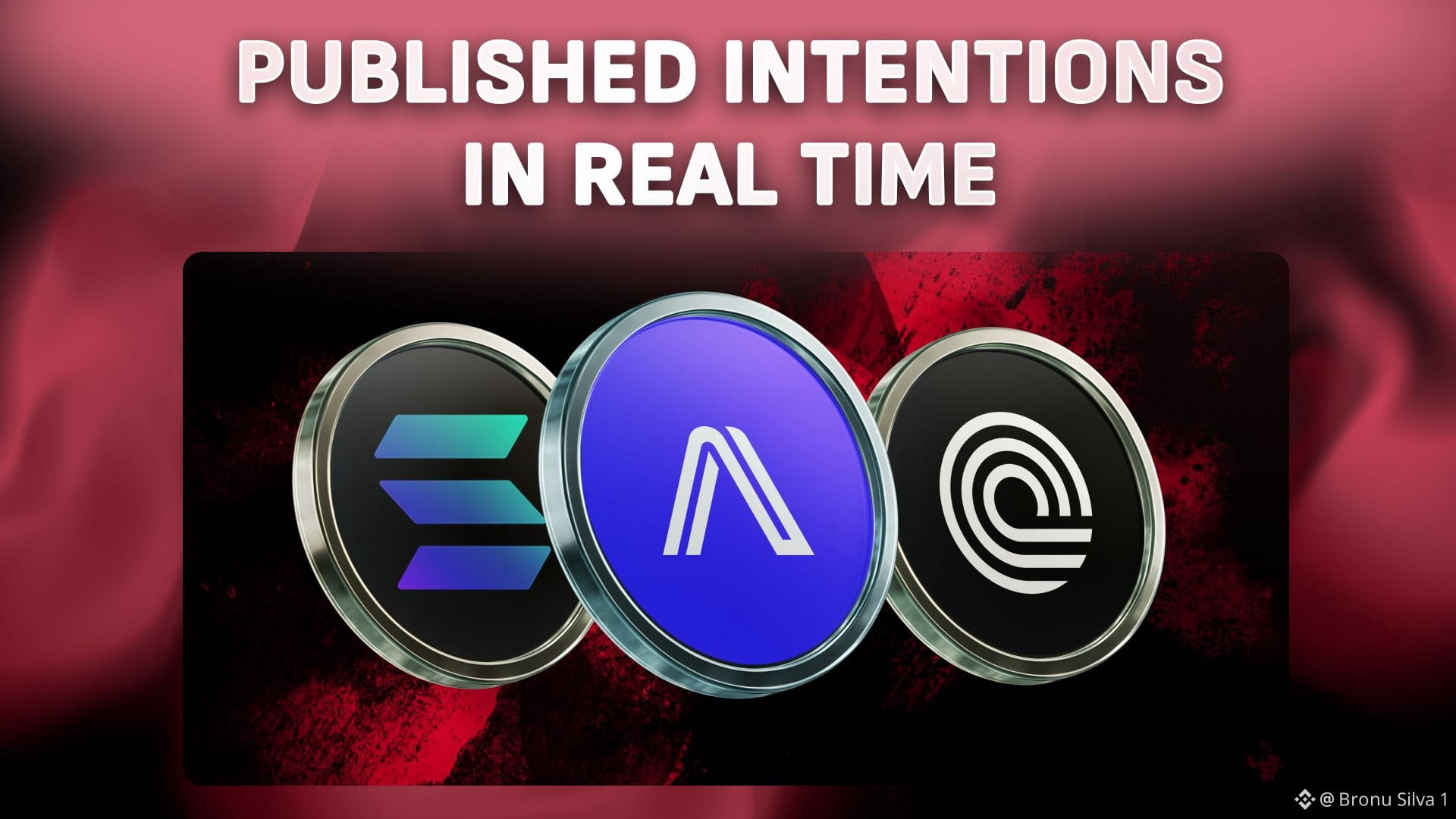
So an onchain fund publishes its intentions in real time to a market that reacts in milliseconds, which is the single clearest reason mandates stay with custodians instead.
That cost is not theoretical. It is the spread between what the fund should have paid and what it paid once everyone saw it coming, charged to the people in the fund.
Arcium moves the decision off the tape. The holdings and the targets go in as fragments across a cluster of nodes, no single node holds a readable copy, and the computation still returns the correct orders.
Those trades settle on Solana as ordinary public transactions, so the fund stays auditable after the fact and is not readable before it.
Confidential computation has been live on Mainnet Alpha since February 2, and C-SPL, which seals the amount inside a transfer, has not shipped yet.
Tokenized funds are being sold on settlement speed, and the thing that decides whether real mandates move is whether a manager can act without the market reading over their shoulder.
#RWA #Solana
70
Midnight's Token Model Changes How Network Usage Works 🔋
$ADA uses a familiar native-token fee model. $NIGHT sits at the center of a different architecture.
Midnight separates its public token from the resource used to pay for transactions.
Holding NIGHT generates DUST.
DUST is non-transferable, regenerates over time and provides the resource used to pay for network activity.
That creates a different model:
Hold NIGHT
→ Generate DUST
→ Use Midnight applications
→ Spend DUST
→ Capacity regenerates
The public asset and the transaction resource serve distinct purposes.
And that separation matters.
It gives applications a different way to manage access to network capacity without requiring NIGHT itself to be consumed for every transaction.
This is one of Midnight's most important architectural distinctions.
A new generation of blockchain applications needs a new approach to network resources.
Midnight has built that distinction into its foundation.
#Privacy #DeFi
65
A Fund Cannot Rebalance In Public 📊
Index funds and treasuries rebalance on schedules, and in traditional markets the size gets worked carefully because anyone who learns it early can trade in front of it.
$ONDO showed how fast tokenized RWA funds arrive once the rails work, and on $SOL every holding and every move is readable in the same block it lands in.
So an onchain fund publishes its intentions in real time to a market that reacts in milliseconds, which is the single clearest reason mandates stay with custodians instead.
That cost is not theoretical. It is the spread between what the fund should have paid and what it paid once everyone saw it coming, charged to the people in the fund.
Arcium moves the decision off the tape. The holdings and the targets go in as fragments across a cluster of nodes, no single node holds a readable copy, and the computation still returns the correct orders.
Those trades settle on Solana as ordinary public transactions, so the fund stays auditable after the fact and is not readable before it.
Confidential computation has been live on Mainnet Alpha since February 2, and C-SPL, which seals the amount inside a transfer, has not shipped yet.
Tokenized funds are being sold on settlement speed, and the thing that decides whether real mandates move is whether a manager can act without the market reading over their shoulder.
#RWA #Solana
86
Not Every Spike Matters 📊
I've learned to be skeptical whenever a blockchain project celebrates a sudden increase in activity.
Big numbers look impressive, but they don't always tell the full story.
Here's what I actually want to understand:
→ Are transaction fees increasing alongside activity?
→ Is revenue growing consistently?
→ Are users returning after incentive campaigns?
→ How much activity remains once rewards disappear?
For ecosystems like $ARB , these questions can help separate temporary excitement from more sustainable participation.
That's one reason Space and Time's approach to verifiable analytics interests me.
Its infrastructure enables applications to query historical datasets and cryptographically verify supported calculations.
Instead of relying exclusively on reported figures, developers can build systems that verify the computations behind their metrics.
I care less about the biggest number on a dashboard and more about whether the underlying activity makes sense.
#Altcoin Season#
71
Losing Money On Purpose, With A Receipt 🧪
$RAY and $BNKR both live or die on whether new users survive their first month, which is the problem Bankr's papertrade mode is pointed at.
You trade without capital at risk. The mechanic that makes it interesting is what happens when you lose.
A losing paper trade mints PAPER, which is staked and earns in USDC. Your mistakes produce a position rather than nothing.
Read that as behavioural design rather than as a yield product.
The reason paper trading fails as a learning tool is that nothing is at stake, including attention. People click through simulations without the engagement that makes experience stick, then size up in real markets having learned very little.
Attaching any consequence to the simulated outcome changes how it is played. Not because the amounts matter, but because a result that persists is a result you remember.
The honest framing is that this does not replicate the thing it is teaching. No simulation reproduces what it feels like to watch real money move against you, and anyone who papers well should expect to behave differently live.
But a practice mode that leaves a trace is a better practice mode than one that does not, and almost nobody offers it.
#DeFi #AI
65
Supply changes after the launch too 🔥
Following $INJ and $AVAX taught me to keep watching token structure long after the launch headlines disappear.
The original supply model is only the starting point.
What a protocol does with fees, supply, and staking over time matters more to me than how the token looked on day one, and burning + staking also tell different parts of that story.
One removes tokens permanently while the other shows how much supply holders are willing to commit for a defined period.
Aevo for example currently has both moving together.
AGP-3 and the monthly buyback program have now removed 78m AEVO, equal to 7.8% of the original supply, and at the same time, more than 27m AEVO is staked.
That is what I want to see from an established DeFi project still rebuilding its token model 🔮
#Altcoin Season#
62
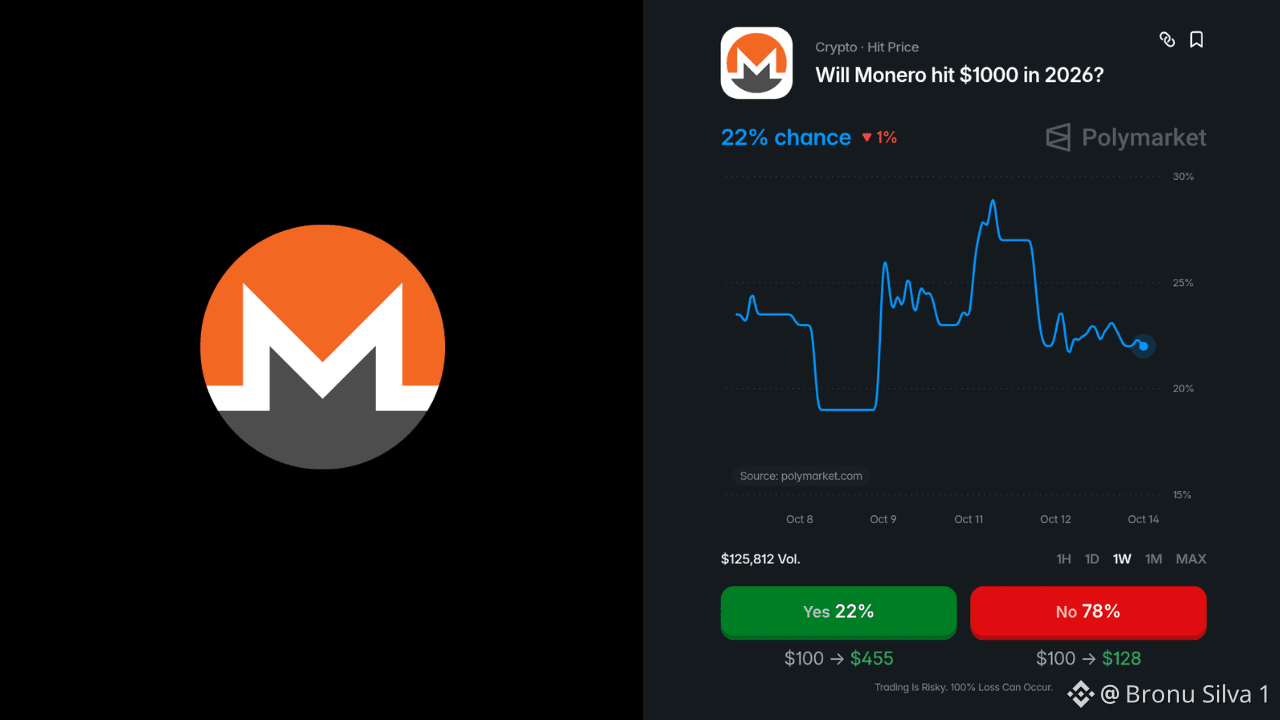
$XMR To $1,000 In 2026? 🔥
Only 22% of Polymarket traders believe Monero will reach four figures before the end of the year.
That means nearly 8 out of 10 are betting against it.
Personally, I find these low-probability markets interesting because the potential returns can be significant when sentiment changes.
📊 Current YES probability: 22%
💰 Potential payout: Approximately 4.5x
👀 Weekly movement: Down 1 percentage point
Now imagine the market suddenly becomes more optimistic about privacy coins.
If the probability climbs from 22% to 40%, a YES position could gain approximately 82% in implied value before fees.
And that's without Monero actually reaching $1,000.
Of course, if the market continues moving against the target, those shares could lose value just as quickly.
That's what makes Polymarket different from simply buying and holding a cryptocurrency.
You're trading the market's confidence in a particular outcome.
#Altcoin Season#
70
Most People Learn Zero Knowledge Backwards 🧠
I used to think zero knowledge simply meant hiding information.
$ZEC made that privacy use case easier to understand. $VFY belongs to the next part of the process, where the resulting proof must be checked.
Imagine proving you have enough funds for a purchase without showing your balance or transaction history.
The application runs that test privately.
It then creates a ZK proof showing that the encoded requirement was satisfied.
The proof reveals the result without exposing the private inputs used to reach it.
That is where the privacy comes from.
zkVerify does not create the proof or decide which requirement should be tested.
It acts as an independent verification layer, checking whether the submitted proof is cryptographically valid.
That separation is important.
If the same service creates a proof and gives it the final stamp of approval, users are still relying heavily on that service.
Independent verification makes the result more useful to merchants, protocols and other applications that were not involved in producing it.
My takeaway is simple.
ZK allows applications to make private claims verifiable.
zkVerify specializes in checking the receipts those applications produce.
As proof-based systems spread, that checking layer starts looking less like a feature and more like infrastructure.
#Altcoin Season# #Privacy
84
IPs Could Broaden This Market’s Audience 📣
$XRP has a clear place in discussions about payments and the XRP Ledger.
Recognizable use cases help people enter a complicated market.
Recognizable IP can do something similar.
That is why I think established brands could become a much larger part of the crypto conversation.
DeLorean gives the argument a concrete example.
The name carries an automotive identity, and DMC is available on Solana and Sui.
There are existing crypto communities to reach and a familiar brand to build experiences around.
The opportunity is substantial enough to deserve attention on its own terms.
Execution will determine how far it goes.
My Altcoin Season thesis includes IP projects introducing fresh audiences to products they can understand.
DeLorean fits that discussion naturally.
#Altcoin Season#
64
Why Zora should be on your radar 👇
Launchpad activity is fragmenting across ecosystems, with $JUP and $CAKE sitting inside two of the biggest battlegrounds for onchain traders.
Current sector data tracks 98 active launchpad protocols and over $41 million in fees across seven days. The demand is obvious.
The user experience is still painfully fragmented.
Different chains usually mean different apps, wallets, liquidity and communities.
Zora is attacking that problem from mobile.
Users can create Custom Pairs and trade across Solana, BNB Chain, Robinhood Chain and Base without treating every ecosystem like a separate universe.
That changes the Zora thesis for me.
It is evolving from a creator-focused app into a crosschain launch and discovery layer where culture, memes and DeFi can meet.
Zora does not need to beat every launchpad at its own game.
It can become the place where users access all of those markets through one social interface.
If the new leadership converts this shipping velocity into distribution, Zora could be one of the strongest platform reratings of the cycle.
#DeFi #Altcoin Season#
66
Communities Have A Bandwidth Problem Too 🧠
AI conversations around $TAO and $RENDER often focus on compute and network capacity, but communities have their own bandwidth limits.
A feed can distribute a message instantly while losing much of the tone and context behind it.
That becomes obvious in fast-moving crypto communities, where people often react to fragments and fill in the missing details themselves.
I think IRL experiences address a different side of this problem.
Spending time together gives people more information than any post can carry about personalities, intentions and how others think.
The $Trump Coin Club Singapore experience is now underway, bringing eligible attendees together across a three-day programme.
That format gives conversations more space to develop and allows people to understand the community beyond its online identity 🌎
#Altcoin Season#

67
This Is The Kind Of Adoption I'm Watching 🏦
$ONDO helped put tokenized finance at the center of the crypto conversation. $NIGHT is tackling one of the harder questions that comes with bringing real finance on-chain: what should remain private?
Monument Bank, a UK regulated bank, is working to tokenize up to £250M in customer deposits on Midnight.
That's where programmable privacy becomes much easier to understand.
A bank needs records that can be verified.
It doesn't need every customer's balance and transaction history exposed to the public.
Financial activity happens
→ Required facts remain verifiable
→ Customer information stays protected
→ Authorized parties receive what they legitimately need
That's a much more realistic model for regulated finance.
If financial products are going to move on-chain, confidentiality can't remain an unusual feature added afterward.
It has to become part of the infrastructure.
#RWA #Privacy
62
The Capital That Never Came Onchain 🏦
Everyone counts the money that arrived and almost nobody counts the money that looked and left, which is the larger number by a distance.
$CC exists because of exactly that, with institutions settling tokenized RWA volume on a network where each firm runs its own domain and a counterparty only receives its own slice of a deal.
They did not build that for fun. A fund cannot have its position read while it is still building it, a desk cannot show its inventory, and a company cannot publish payroll, so on $SOL all of that stays off the public tape by default.
That is not a reluctance problem or an education problem. It is an architecture problem, because a Solana program has to be handed a whole input before it can act on it.
Arcium changes the condition rather than the chain. The inputs go in as fragments across a cluster of nodes, no single node holds a readable copy, and the correct result comes back to the program that asked.
What lands on Solana is that result, recorded as an ordinary public transaction, which is the part an auditor or a supervisor can point at later.
Confidential computation has been live on Mainnet Alpha since February 2, with fifteen teams building on it.
The next wave of onchain volume is not retail deciding to come back, it is the capital that has been waiting for somewhere it can operate without broadcasting, and that arrives at the compute layer first.
#RWA #Solana
57
AI Agents Will Test Blockchains Differently Than Humans 🤖
$FET has spent years building toward autonomous agents. $NIGHT introduces another question for that future: what happens when those agents need privacy too?
A human might make a handful of blockchain transactions in a day.
Autonomous software could eventually make hundreds before its owner even checks what happened.
That makes permanent public activity much more consequential.
Midnight City demonstrates an environment where autonomous agents can generate transactions and zero-knowledge proofs while different participants can receive different views of the resulting information.
Agent executes action
→ Private information stays protected
→ Proof confirms rules were followed
→ Public information remains public
→ Authorized parties receive what they need
An auditor and a random blockchain observer don't necessarily need the same view of an AI agent's activity.
We've spent years asking how many transactions a blockchain can process.
AI may force us to ask something different:How much private, provable computation can it handle?
#AI #AI Agents 🤖#
79
Log in to explore more content
Join global crypto users on Binance Square
⚡️ Get latest and useful information about crypto.
💬 Trusted by the world’s largest crypto exchange.
👍 Discover real insights from verified creators.
Email / Phone number