
Bit Beacon
14.8k Posts

Bit Beacon
 Square Verified+
Building trust on the blockchain. HODLer since 2017• Let's go!
Open Trade
High-Frequency Trader
1.8 Years
31 Following
40.3K+ Followers
48.8K+ Liked
Posts
Portfolio
All
Quotes
Live
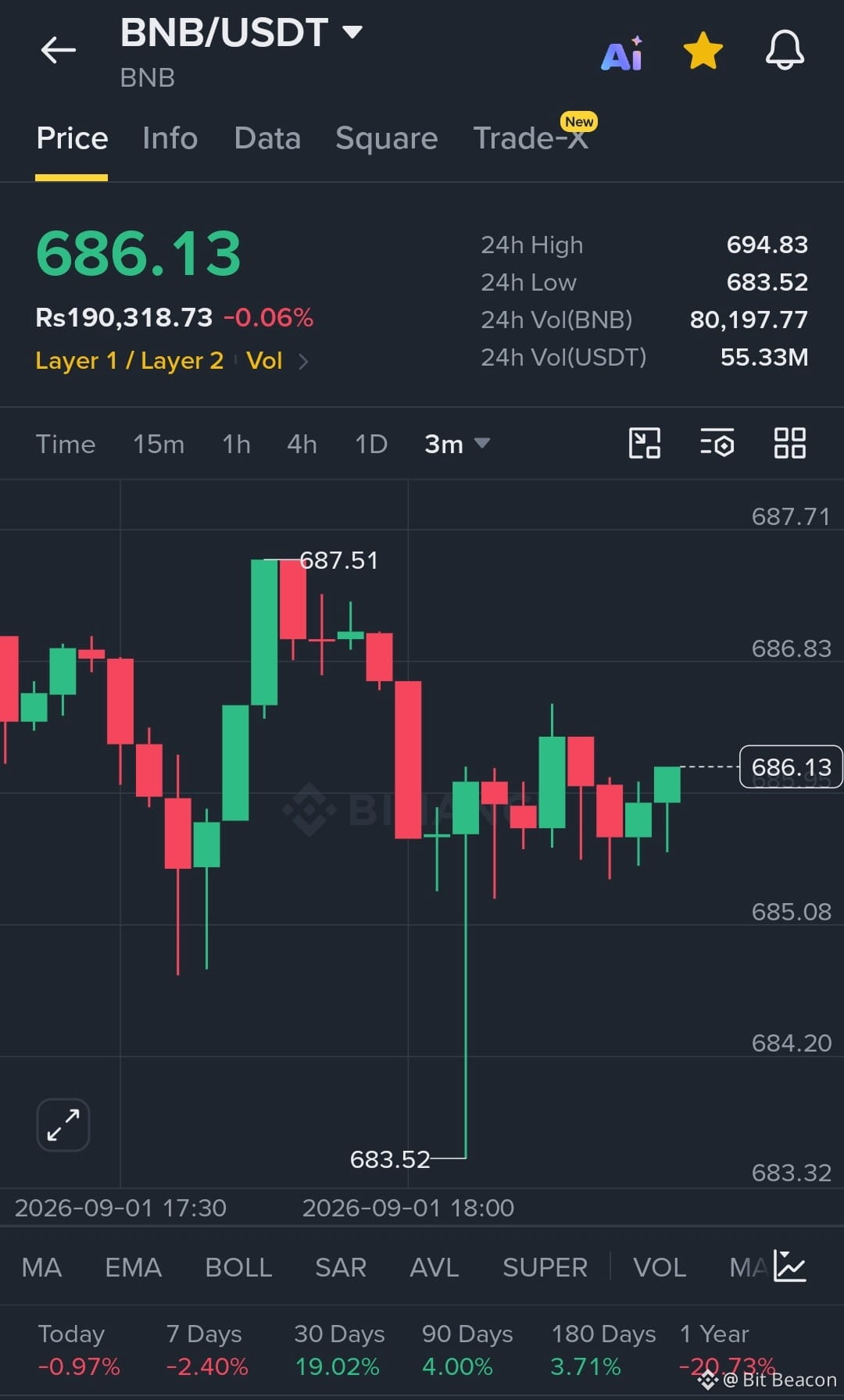
$BNB — Price is stabilizing around 686 after sweeping the 683.52 low. Buyers are rebuilding momentum, with 687.51 as the immediate resistance to reclaim.
Entry: 685.80–686.30
Stop Loss: 683.40
TP1: 687.50
TP2: 689.00
TP3: 692.00
The setup is constructive above 685. A clean breakout through 687.51 could bring stronger continuation toward the 24h high at 694.83.
Risk managed. Eyes on the targets. Let's go $BNB
#ARBRises30%OnRobinhoodChainRevenue #HangSengFalls1% #XRPRises40%InTwoWeeksAsOpenInterestFalls #GoldFalls5.5%From3MonthHigh #EtherETFsExtendInflowStreakTo11Days
Entry: 685.80–686.30
Stop Loss: 683.40
TP1: 687.50
TP2: 689.00
TP3: 692.00
The setup is constructive above 685. A clean breakout through 687.51 could bring stronger continuation toward the 24h high at 694.83.
Risk managed. Eyes on the targets. Let's go $BNB
#ARBRises30%OnRobinhoodChainRevenue #HangSengFalls1% #XRPRises40%InTwoWeeksAsOpenInterestFalls #GoldFalls5.5%From3MonthHigh #EtherETFsExtendInflowStreakTo11Days
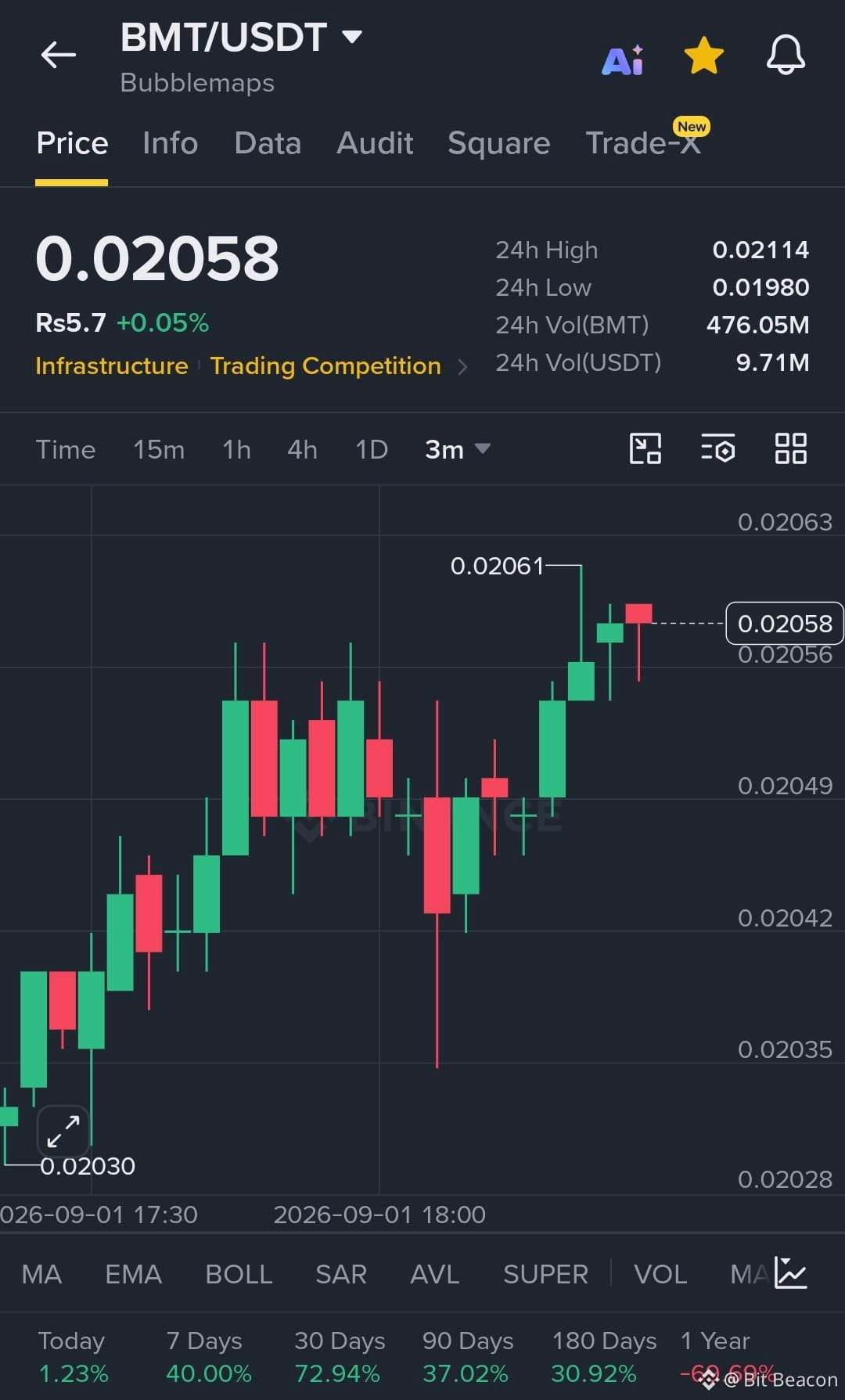
$BMT — Momentum is pushing higher after reclaiming 0.02050. Price is holding near 0.02058, with the recent 0.02061 high now the key breakout level.
Entry: 0.02052–0.02059
Stop Loss: 0.02035
TP1: 0.02061
TP2: 0.02075
TP3: 0.02090
Buyer strength is improving, but confirmation above 0.02061 would make the setup cleaner. Hold the structure and watch for volume expansion.
Risk managed. Eyes on the targets. Let's go $BMT
#ARBRises30%OnRobinhoodChainRevenue #HangSengFalls1% #XRPRises40%InTwoWeeksAsOpenInterestFalls #GoldFalls5.5%From3MonthHigh #EtherETFsExtendInflowStreakTo11Days
Entry: 0.02052–0.02059
Stop Loss: 0.02035
TP1: 0.02061
TP2: 0.02075
TP3: 0.02090
Buyer strength is improving, but confirmation above 0.02061 would make the setup cleaner. Hold the structure and watch for volume expansion.
Risk managed. Eyes on the targets. Let's go $BMT
#ARBRises30%OnRobinhoodChainRevenue #HangSengFalls1% #XRPRises40%InTwoWeeksAsOpenInterestFalls #GoldFalls5.5%From3MonthHigh #EtherETFsExtendInflowStreakTo11Days
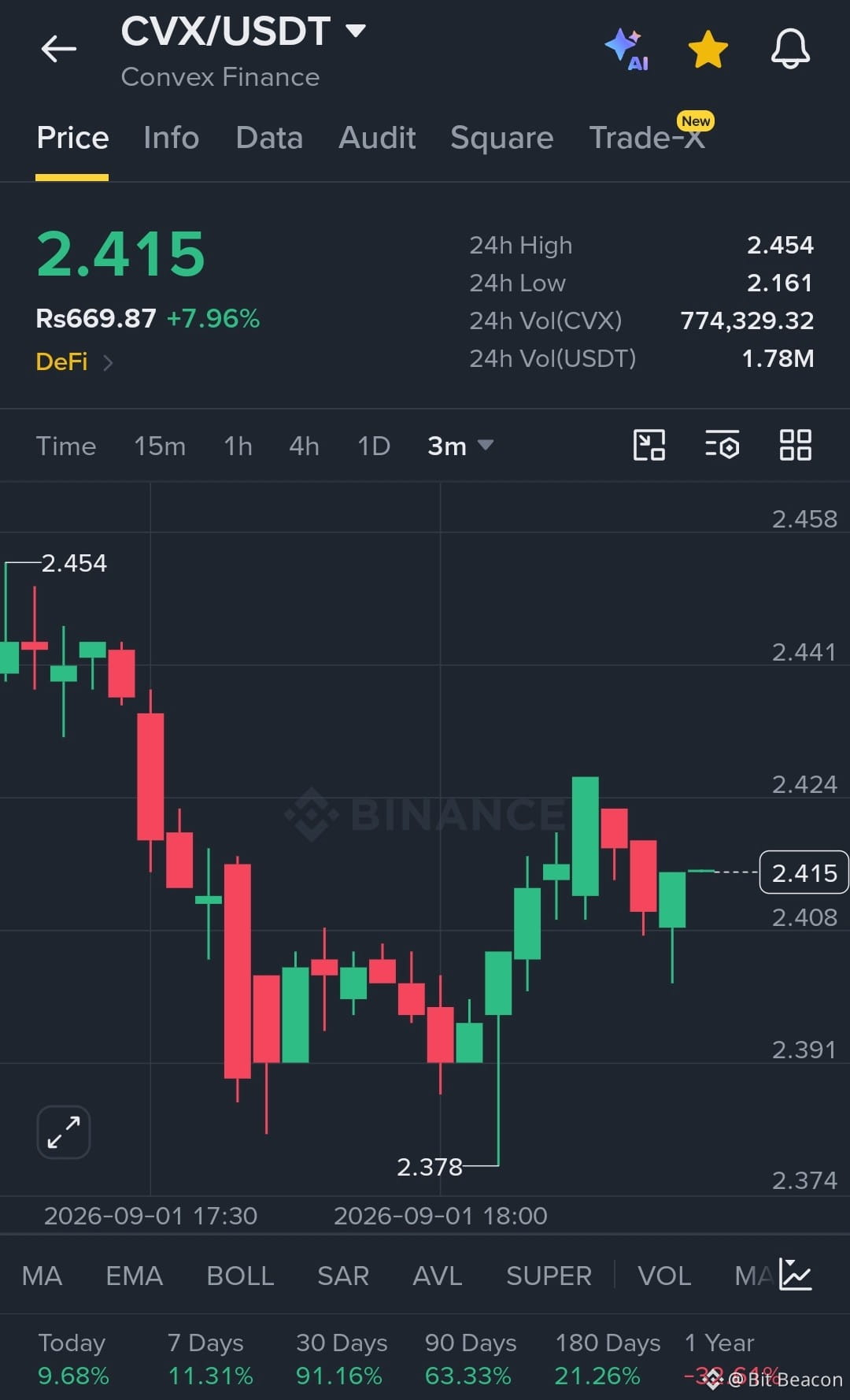
$CVX — Momentum is holding after the sharp rebound from 2.378. Price is consolidating near 2.415, with 2.424 acting as the key resistance for the next move.
Entry: 2.408–2.416
Stop Loss: 2.388
TP1: 2.424
TP2: 2.441
TP3: 2.454
Strong short-term buyer strength remains visible. A clean reclaim of 2.424 with volume could push CVX toward the recent high.
Risk managed. Eyes on the targets. Let's go $CVX
#ARBRises30%OnRobinhoodChainRevenue #Japan10YYieldHits3%FirstSince1996 #WTIOilRisesAsOpenInterestShrinks #EtherETFsExtendInflowStreakTo11Days #GoldFalls5.5%From3MonthHigh
Entry: 2.408–2.416
Stop Loss: 2.388
TP1: 2.424
TP2: 2.441
TP3: 2.454
Strong short-term buyer strength remains visible. A clean reclaim of 2.424 with volume could push CVX toward the recent high.
Risk managed. Eyes on the targets. Let's go $CVX
#ARBRises30%OnRobinhoodChainRevenue #Japan10YYieldHits3%FirstSince1996 #WTIOilRisesAsOpenInterestShrinks #EtherETFsExtendInflowStreakTo11Days #GoldFalls5.5%From3MonthHigh
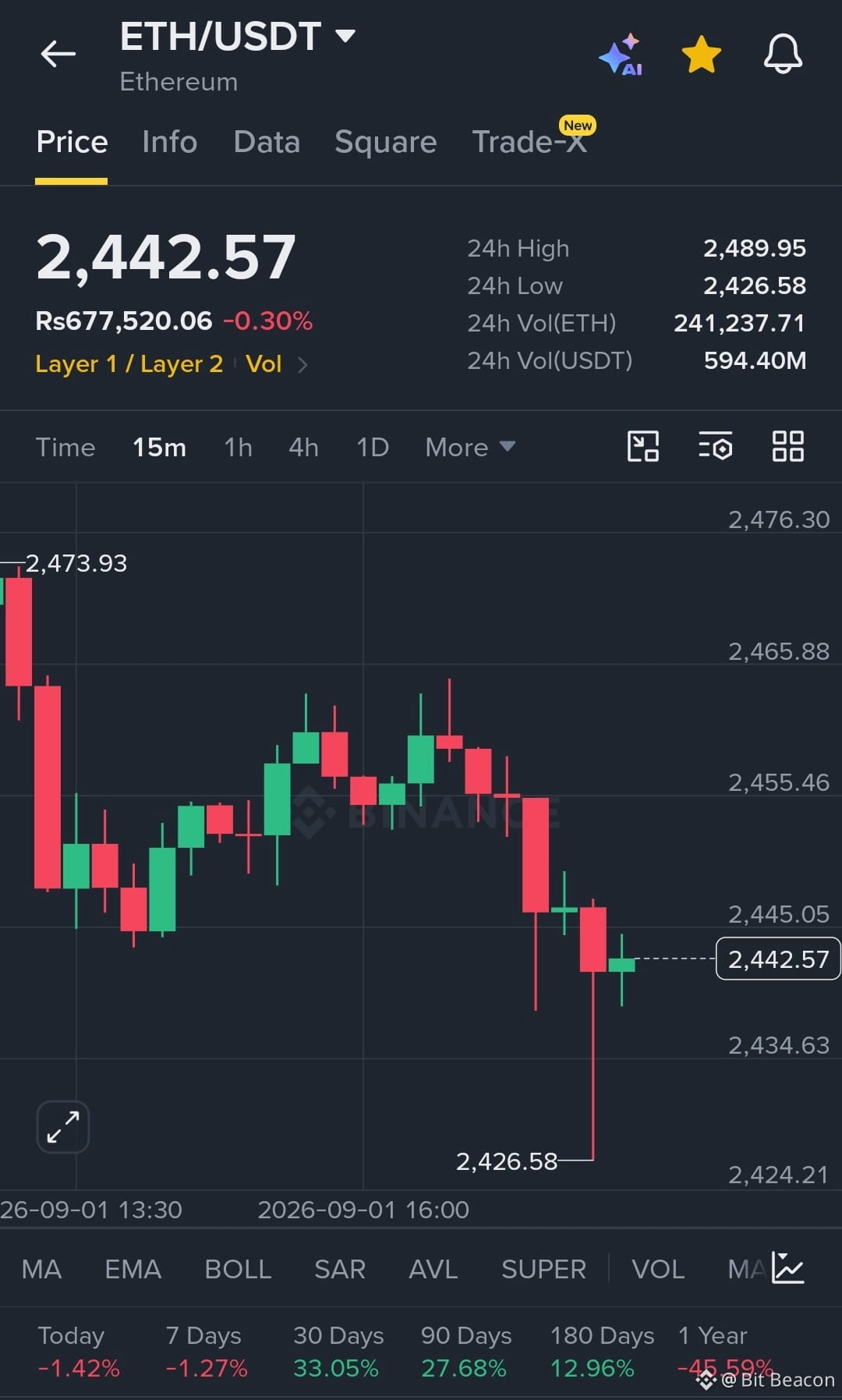
$ETH — A sharp flush into 2,426.58 has brought buyers back into the 2,440 area. Price is stabilizing, but the 15m structure still needs a resistance reclaim for stronger confirmation.
Entry: 2,438–2,445
Stop Loss: 2,425
TP1: 2,455
TP2: 2,465
TP3: 2,476
Buyer strength is showing after the liquidity sweep. Holding the entry zone and reclaiming 2,455 could open the way toward the next resistance levels.
Risk managed. Eyes on the targets. Let's go $ETH
#ARBRises30%OnRobinhoodChainRevenue #Japan10YYieldHits3%FirstSince1996 #WTIOilRisesAsOpenInterestShrinks #EtherETFsExtendInflowStreakTo11Days #GoldFalls5.5%From3MonthHigh
Entry: 2,438–2,445
Stop Loss: 2,425
TP1: 2,455
TP2: 2,465
TP3: 2,476
Buyer strength is showing after the liquidity sweep. Holding the entry zone and reclaiming 2,455 could open the way toward the next resistance levels.
Risk managed. Eyes on the targets. Let's go $ETH
#ARBRises30%OnRobinhoodChainRevenue #Japan10YYieldHits3%FirstSince1996 #WTIOilRisesAsOpenInterestShrinks #EtherETFsExtendInflowStreakTo11Days #GoldFalls5.5%From3MonthHigh
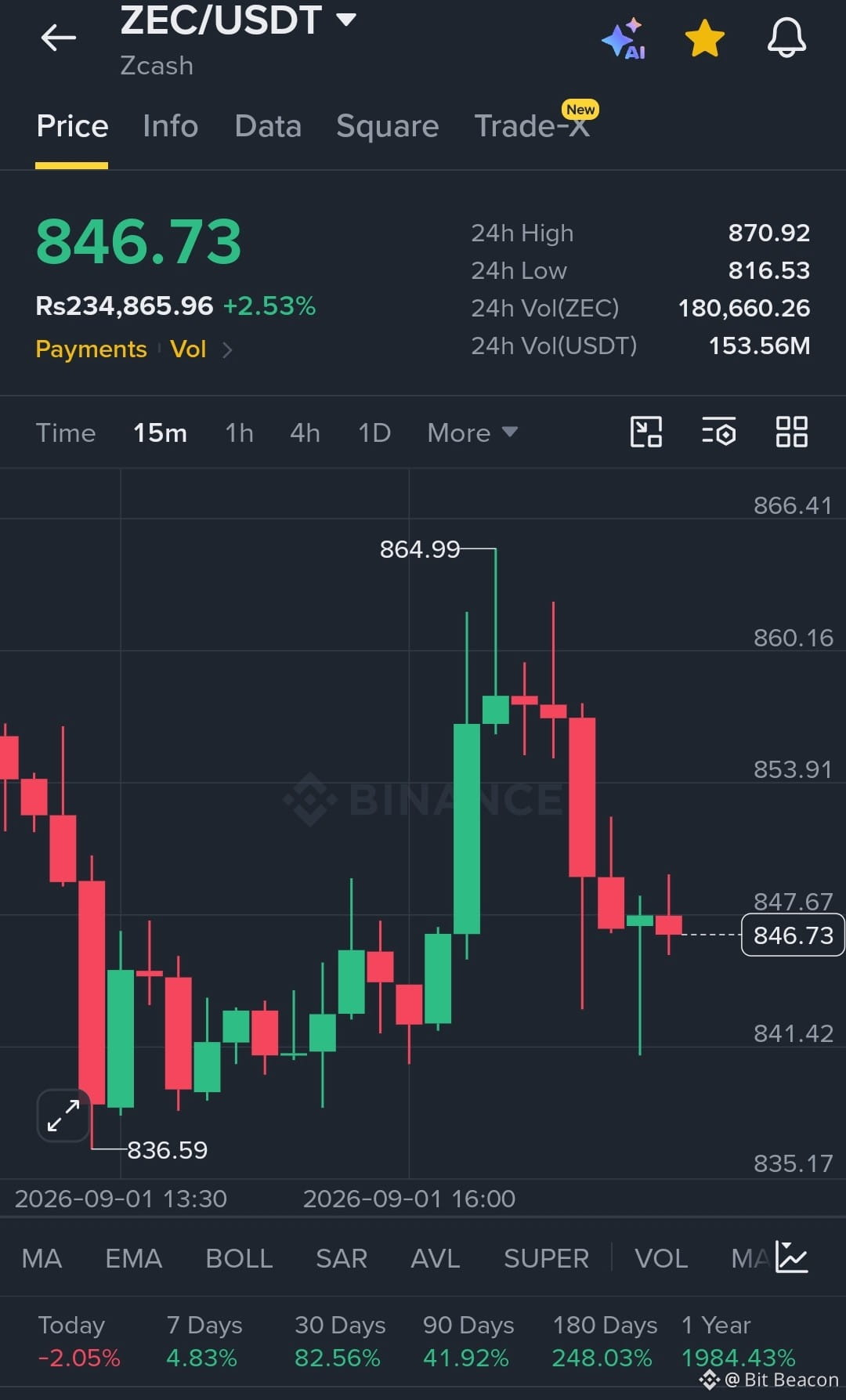
$ZEC — Momentum is building after the sharp rebound from the 836.59 area. Price is holding near 846.73, with buyers now looking to reclaim the 853.91–860.16 resistance zone.
Entry: 844–849
Stop Loss: 836
TP1: 854
TP2: 862
TP3: 870
The setup stays constructive while price holds the entry zone. A clean resistance reclaim with volume could confirm stronger buyer strength toward the upper targets.
Risk managed. Eyes on the targets. Let's go $ZEC
#ARBRises30%OnRobinhoodChainRevenue #Japan10YYieldHits3%FirstSince1996 #WTIOilRisesAsOpenInterestShrinks #EtherETFsExtendInflowStreakTo11Days #GoldFalls5.5%From3MonthHigh
Entry: 844–849
Stop Loss: 836
TP1: 854
TP2: 862
TP3: 870
The setup stays constructive while price holds the entry zone. A clean resistance reclaim with volume could confirm stronger buyer strength toward the upper targets.
Risk managed. Eyes on the targets. Let's go $ZEC
#ARBRises30%OnRobinhoodChainRevenue #Japan10YYieldHits3%FirstSince1996 #WTIOilRisesAsOpenInterestShrinks #EtherETFsExtendInflowStreakTo11Days #GoldFalls5.5%From3MonthHigh
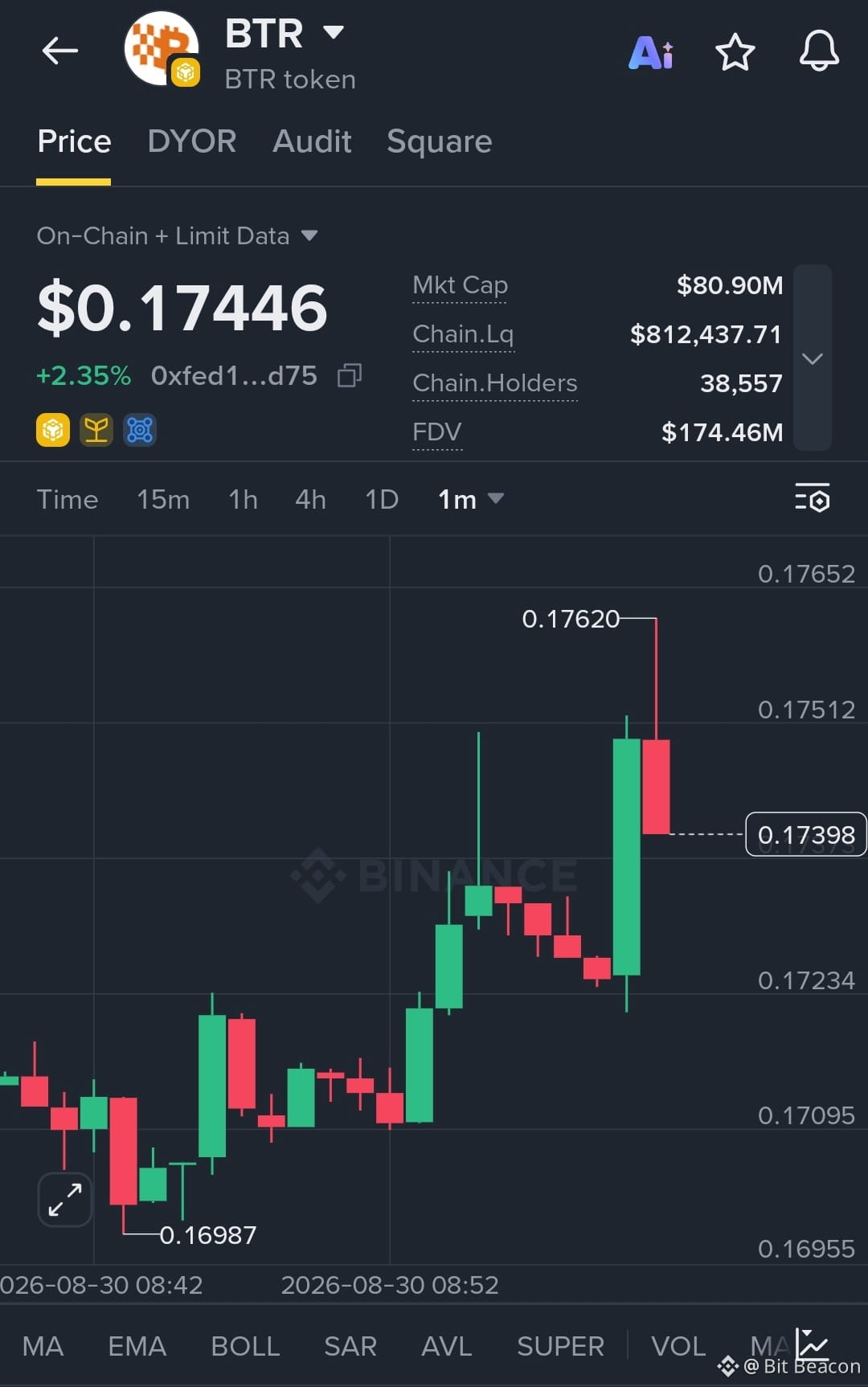
$BTR breakout setup is showing strong buyer strength, with momentum building after the resistance push.
Entry: $0.1735–$0.1742
Stop Loss: $0.1722
TP1: $0.1751
TP2: $0.1762
TP3: $0.1780
A clean reclaim above $0.1751 could confirm further continuation. Keep risk tight and let price action confirm the move.
Risk managed. Eyes on the targets. Let's go $BTR
#TrumpReachesVenezuelaOilDealOn17Fields #AfghanistanTalibanReportedlyBansCryptoNationwide #ICBAOpposesCLARITYActOverStablecoinLoophole #XRPETFsBiggestWeeklyHaulOf2026 #AntiQuantumBitcoinTransactionMinedOnMainnet
Entry: $0.1735–$0.1742
Stop Loss: $0.1722
TP1: $0.1751
TP2: $0.1762
TP3: $0.1780
A clean reclaim above $0.1751 could confirm further continuation. Keep risk tight and let price action confirm the move.
Risk managed. Eyes on the targets. Let's go $BTR
#TrumpReachesVenezuelaOilDealOn17Fields #AfghanistanTalibanReportedlyBansCryptoNationwide #ICBAOpposesCLARITYActOverStablecoinLoophole #XRPETFsBiggestWeeklyHaulOf2026 #AntiQuantumBitcoinTransactionMinedOnMainnet
Verified
$BTC at 78,212 (+0.76%)
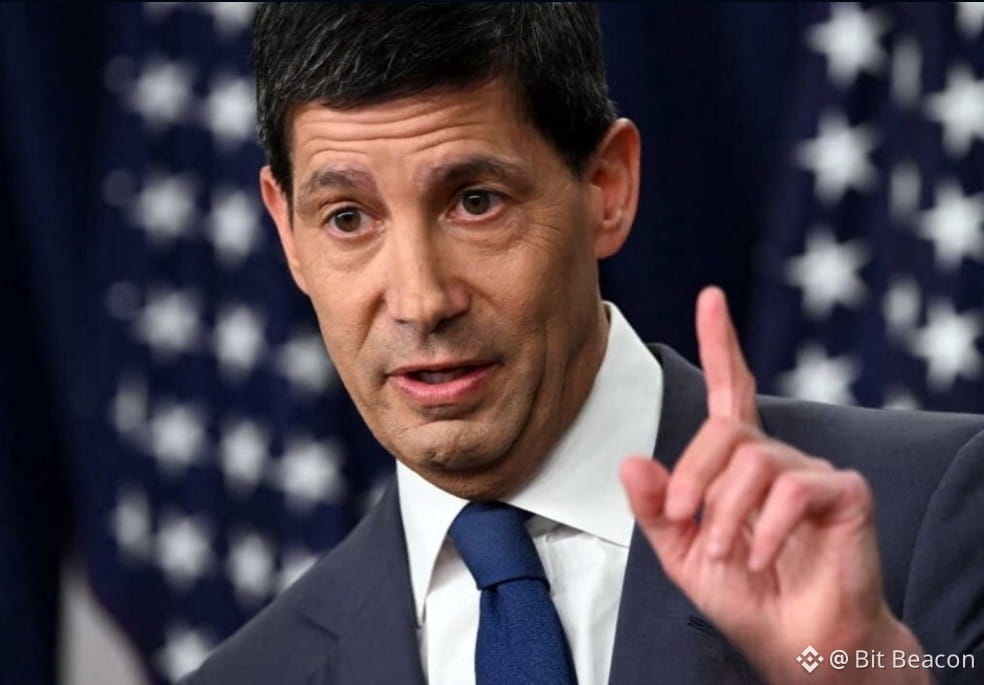
Warsh just delivered a hawkish message: inflation is still too high, 2% remains the target, and no rate cuts are promised.
But no rate hikes either. The economy and AI-driven growth remain strong.
Now the real test: can BTC hold 78K despite the Fed pressure?
If it does, that’s serious strength.
$ETH
#KevinWarshDisclosedCryptoInvestments #Fed #Market_Update
Warsh just delivered a hawkish message: inflation is still too high, 2% remains the target, and no rate cuts are promised.
But no rate hikes either. The economy and AI-driven growth remain strong.
Now the real test: can BTC hold 78K despite the Fed pressure?
If it does, that’s serious strength.
$ETH
#KevinWarshDisclosedCryptoInvestments #Fed #Market_Update
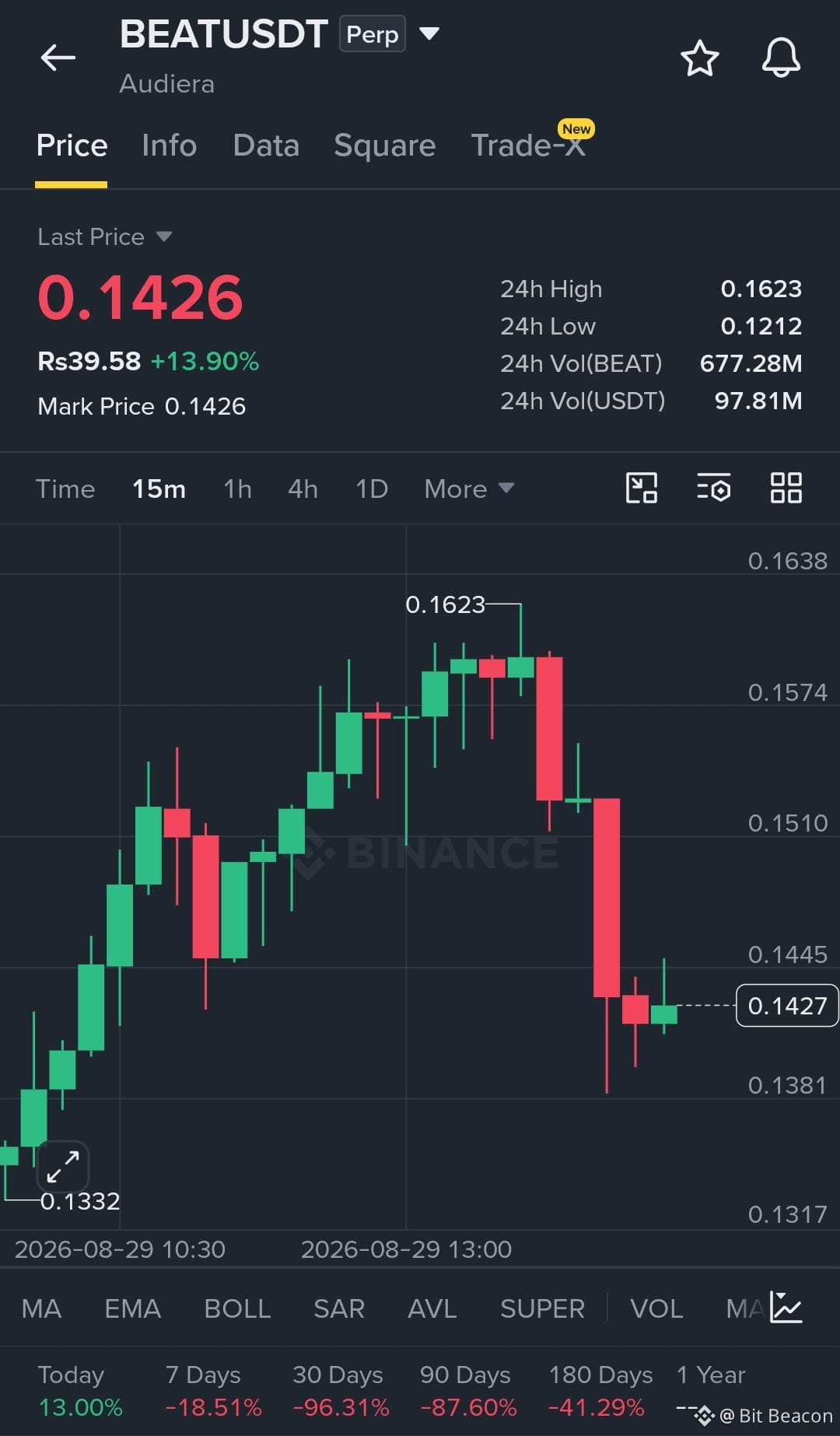
$BEAT is showing a strong bullish reclaim with momentum building as buyers regain control.
Entry: $0.153–$0.159
SL: $0.135
TP1: $0.165
TP2: $0.175
TP3: $0.188
The setup looks constructive, but 25x leverage requires disciplined risk management. Let price confirm the continuation.
Risk managed. Eyes on the targets. Let's go $BEAT
#NYSilverFuturesDrop3% #SchwabPlansToAddSOLAVAXLINKTrading #USShortTermTreasuryYieldsJump #TrumpSaysUSReachedVenezuelaOilDeal #WarshSaysInflationIsFedTopFocus
Entry: $0.153–$0.159
SL: $0.135
TP1: $0.165
TP2: $0.175
TP3: $0.188
The setup looks constructive, but 25x leverage requires disciplined risk management. Let price confirm the continuation.
Risk managed. Eyes on the targets. Let's go $BEAT
#NYSilverFuturesDrop3% #SchwabPlansToAddSOLAVAXLINKTrading #USShortTermTreasuryYieldsJump #TrumpSaysUSReachedVenezuelaOilDeal #WarshSaysInflationIsFedTopFocus
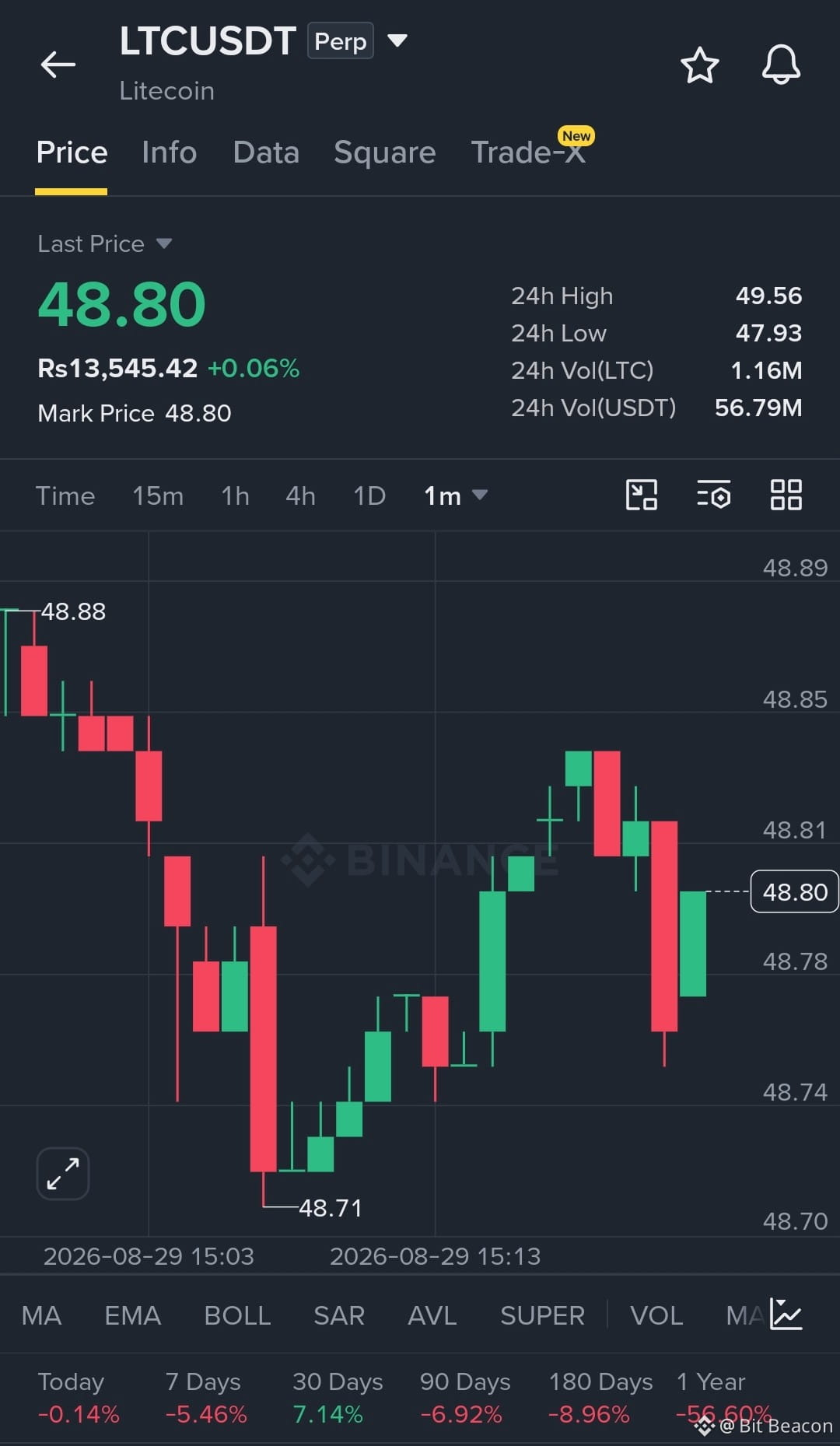
$LTC remains under pressure, printing lower highs and lower lows beneath the descending trendline.
Entry: $48.90–$48.95
SL: $49.33
TP1: $48.60
TP2: $48.20
TP3: $47.97
A confirmed 15M close below $48.90 could open the door toward $47.97. Momentum still favors sellers, but confirmation matters.
Controlled risk, small position size. Respect the stop.
Risk managed. Eyes on the targets. Let's go $LTC
#NYSilverFuturesDrop3% #SchwabPlansToAddSOLAVAXLINKTrading #USShortTermTreasuryYieldsJump #TrumpSaysUSReachedVenezuelaOilDeal #FedSeptRateHikeOddsRiseTo57%
Entry: $48.90–$48.95
SL: $49.33
TP1: $48.60
TP2: $48.20
TP3: $47.97
A confirmed 15M close below $48.90 could open the door toward $47.97. Momentum still favors sellers, but confirmation matters.
Controlled risk, small position size. Respect the stop.
Risk managed. Eyes on the targets. Let's go $LTC
#NYSilverFuturesDrop3% #SchwabPlansToAddSOLAVAXLINKTrading #USShortTermTreasuryYieldsJump #TrumpSaysUSReachedVenezuelaOilDeal #FedSeptRateHikeOddsRiseTo57%
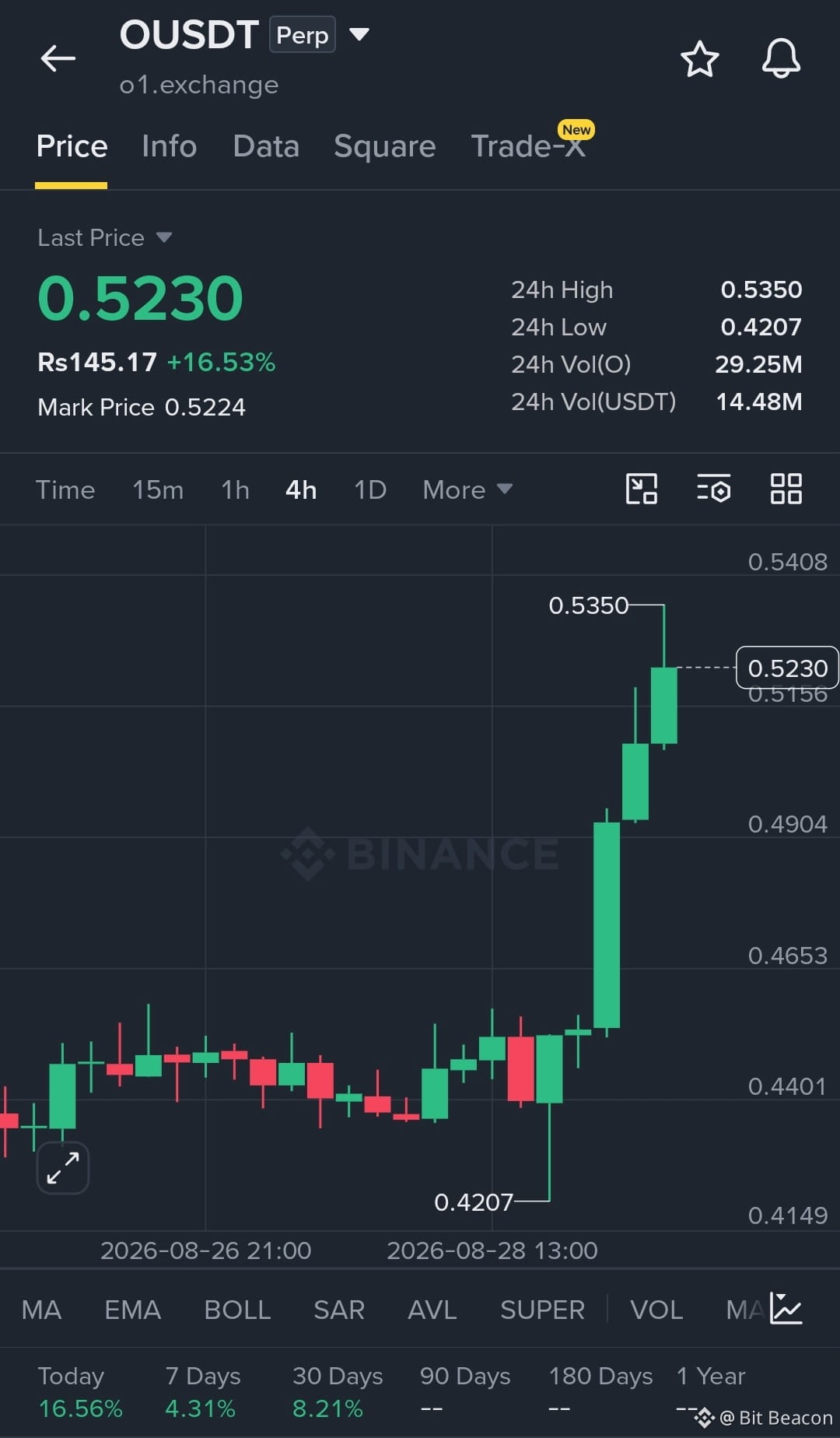
$O showing strong momentum as buyers push through the range and keep the bullish continuation setup alive.
Entry: $0.510–$0.530
SL: $0.450
TP1: $0.545
TP2: $0.565
TP3: $0.590
Buyer strength is clear, but 30x leverage demands strict risk control. Let the price action confirm the move.
Risk managed. Eyes on the targets. Let's go
#NYSilverFuturesDrop3% #SchwabPlansToAddSOLAVAXLINKTrading #USShortTermTreasuryYieldsJump #TrumpSaysUSReachedVenezuelaOilDeal #FedSeptRateHikeOddsRiseTo57%
Entry: $0.510–$0.530
SL: $0.450
TP1: $0.545
TP2: $0.565
TP3: $0.590
Buyer strength is clear, but 30x leverage demands strict risk control. Let the price action confirm the move.
Risk managed. Eyes on the targets. Let's go
#NYSilverFuturesDrop3% #SchwabPlansToAddSOLAVAXLINKTrading #USShortTermTreasuryYieldsJump #TrumpSaysUSReachedVenezuelaOilDeal #FedSeptRateHikeOddsRiseTo57%
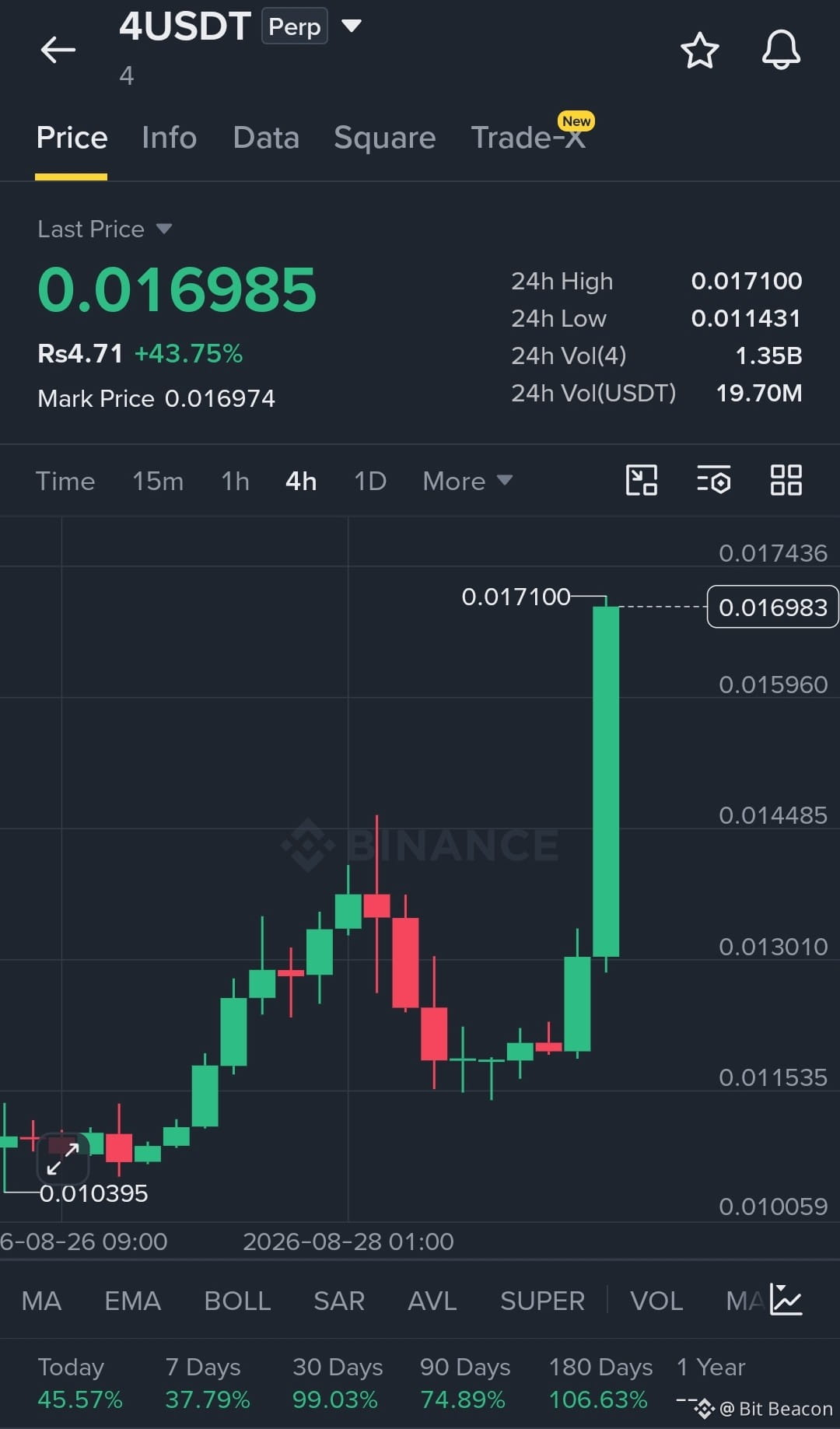
$TOKEN bullish momentum is building as buyers defend the reversal zone and look for another leg higher.
Entry: $0.0152–$0.0158
SL: $0.0134
TP1: $0.0165
TP2: $0.0175
TP3: $0.0188
Trend confirmation and buyer strength keep the setup interesting, but risk management comes first.
Risk managed. Eyes on the targets. Let's go $TOKEN
#NYSilverFuturesDrop3% #SchwabPlansToAddSOLAVAXLINKTrading #USShortTermTreasuryYieldsJump #TrumpSaysUSReachedVenezuelaOilDeal #FedSeptRateHikeOddsRiseTo57%
Entry: $0.0152–$0.0158
SL: $0.0134
TP1: $0.0165
TP2: $0.0175
TP3: $0.0188
Trend confirmation and buyer strength keep the setup interesting, but risk management comes first.
Risk managed. Eyes on the targets. Let's go $TOKEN
#NYSilverFuturesDrop3% #SchwabPlansToAddSOLAVAXLINKTrading #USShortTermTreasuryYieldsJump #TrumpSaysUSReachedVenezuelaOilDeal #FedSeptRateHikeOddsRiseTo57%
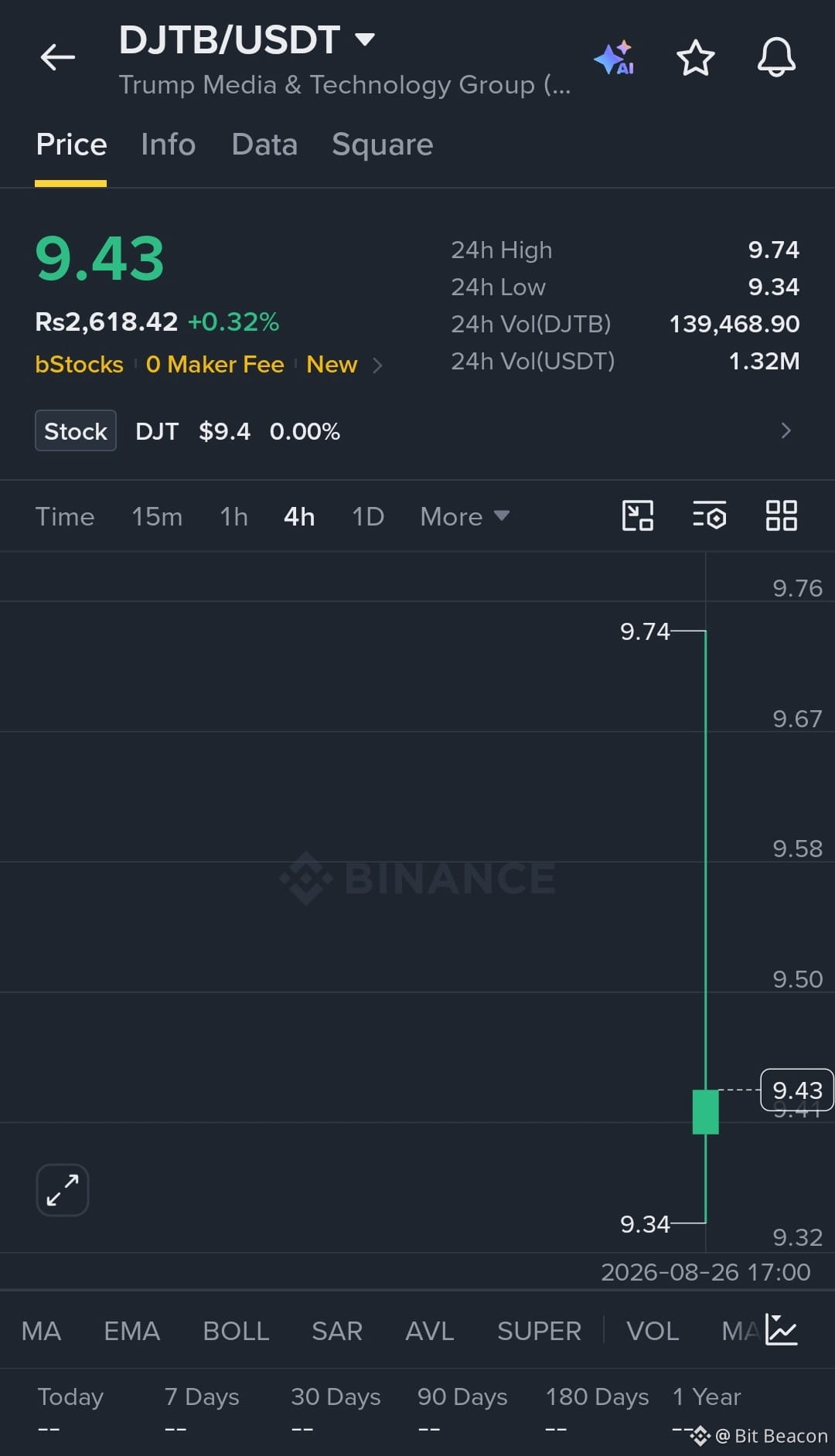
$DJTB is holding near $9.43 after testing $9.74, with buyers defending the $9.34 area. A clean reclaim of $9.50 could confirm bullish continuation.
Entry: $9.40–$9.48
Stop Loss: $9.28
TP1: $9.60
TP2: $9.74
TP3: $10.00
Buyer strength is building, but $9.50–$9.74 remains the key resistance zone. Stay disciplined and watch volume for confirmation.
Risk managed. Eyes on the targets. Let's go $DJTB
#XRPRallies44%InAWeek #CryptoFearGreedIndexHits74 #USBitcoinETFsExtendInflowsToSixthDay #USStocksCloseHigherNvidiaGains2% #KoreaMemoryChipStocksReverseLate
Entry: $9.40–$9.48
Stop Loss: $9.28
TP1: $9.60
TP2: $9.74
TP3: $10.00
Buyer strength is building, but $9.50–$9.74 remains the key resistance zone. Stay disciplined and watch volume for confirmation.
Risk managed. Eyes on the targets. Let's go $DJTB
#XRPRallies44%InAWeek #CryptoFearGreedIndexHits74 #USBitcoinETFsExtendInflowsToSixthDay #USStocksCloseHigherNvidiaGains2% #KoreaMemoryChipStocksReverseLate
Verified
...I’ve been digging through Dusk for a while, and one thing keeps standing out.
It’s not just another chain adding “privacy” to the pitch. Dusk is built as a Layer-1 for confidential financial applications, with XSC supporting privacy-focused security tokens, DuskEVM bringing Solidity compatibility, and Hedger using zero-knowledge proofs and homomorphic encryption for confidential transactions.
That’s the part I find interesting.
I’m not watching DUSK just because of the chart. I’m watching to see if real usage starts catching up with what the technology is already capable of.
That’s where this gets interesting.
@Dusk #dusk $DUSK
$TMX
$BMT
It’s not just another chain adding “privacy” to the pitch. Dusk is built as a Layer-1 for confidential financial applications, with XSC supporting privacy-focused security tokens, DuskEVM bringing Solidity compatibility, and Hedger using zero-knowledge proofs and homomorphic encryption for confidential transactions.
That’s the part I find interesting.
I’m not watching DUSK just because of the chart. I’m watching to see if real usage starts catching up with what the technology is already capable of.
That’s where this gets interesting.
@Dusk #dusk $DUSK
$TMX
$BMT
Gaming❤️
41%
Confidential finance💯
36%
Meme culture✅
9%
Payments💖
14%
22 votes • Voting closed
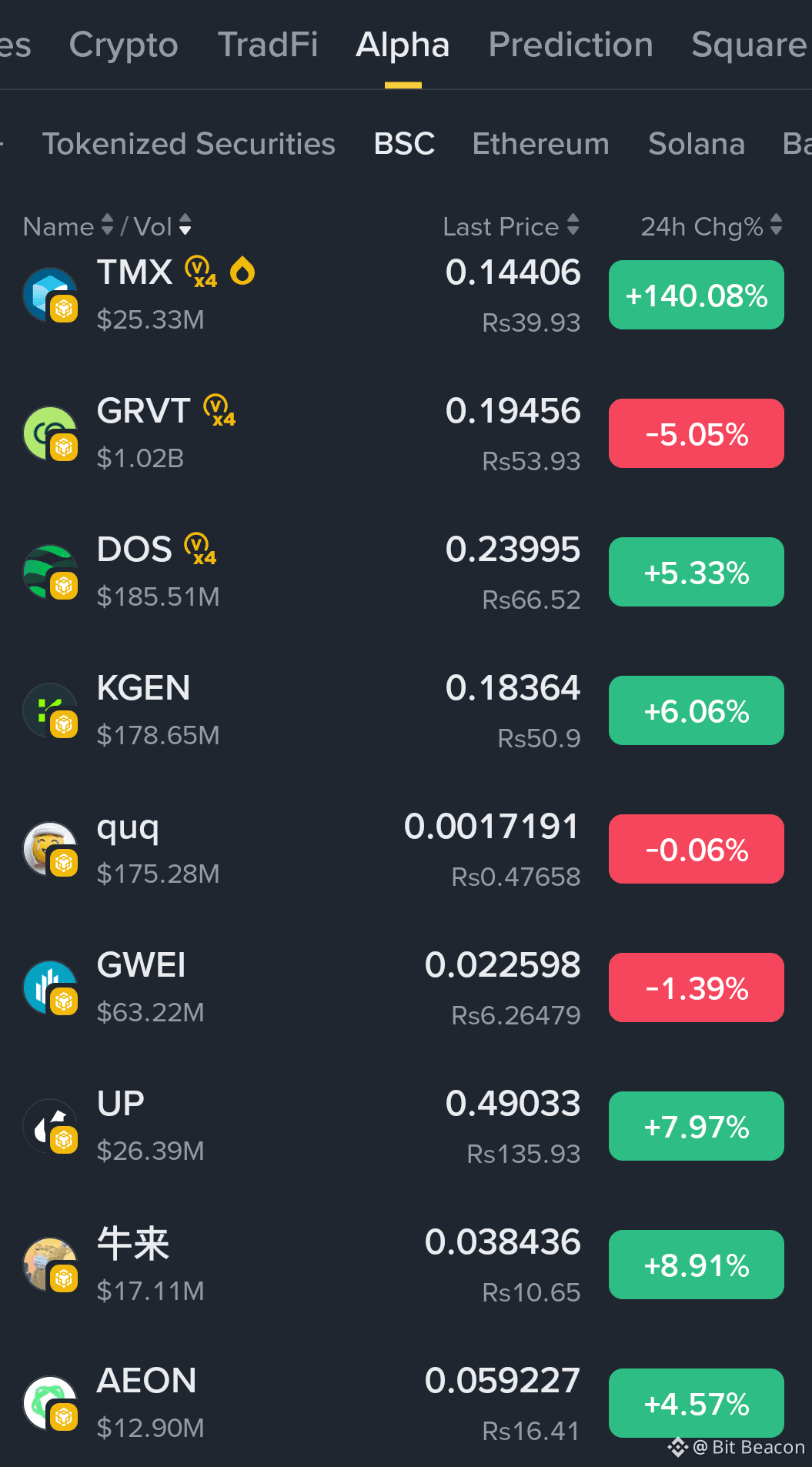
🔥 BSC ALPHA WATCHLIST — BIG MOVES TODAY 🚀
Coin| USD Price| PKR Price| 24H| Signal
🟢 $TMX $0.14406| Rs 39.93| +140.08%| 🟢 LONG
$GRVT | $0.19456| Rs 53.93| -5.05%| 🔴 SHORT
DOS| $0.23995| Rs 66.52| +5.33%| 🟢 LONG
KGEN| $0.18364| Rs 50.90| +6.06%| 🟢 LONG
QUQ| $0.0017191| Rs 0.47658| -0.06%| 🔴 SHORT
$GWEI | $0.022598| Rs 6.26479| -1.39%| 🔴 SHORT
UP| $0.49033| Rs 135.93| +7.97%| 🟢 LONG
牛来| $0.038436| Rs 10.65| +8.91%| 🟢
LONG.
AEON| $0.059227| Rs 16.41| +4.57%| 🟢 LONG
👀 TMX is the clear standout with a huge +140.08% move.
The board is mostly green, but volatility is high — trade with a plan, not emotions. ⚡📈
Signals are based only on the 24H move shown in the screenshot, not a guaranteed prediction.
#KazakhstanCutsOilOutputForecastTo96MTons #HKJulyGoldNetExportsToMainland56.193Tons #CanadaImposesUpTo50%CounterTariffsOnUSGoods
Coin| USD Price| PKR Price| 24H| Signal
🟢 $TMX $0.14406| Rs 39.93| +140.08%| 🟢 LONG
$GRVT | $0.19456| Rs 53.93| -5.05%| 🔴 SHORT
DOS| $0.23995| Rs 66.52| +5.33%| 🟢 LONG
KGEN| $0.18364| Rs 50.90| +6.06%| 🟢 LONG
QUQ| $0.0017191| Rs 0.47658| -0.06%| 🔴 SHORT
$GWEI | $0.022598| Rs 6.26479| -1.39%| 🔴 SHORT
UP| $0.49033| Rs 135.93| +7.97%| 🟢 LONG
牛来| $0.038436| Rs 10.65| +8.91%| 🟢
LONG.
AEON| $0.059227| Rs 16.41| +4.57%| 🟢 LONG
👀 TMX is the clear standout with a huge +140.08% move.
The board is mostly green, but volatility is high — trade with a plan, not emotions. ⚡📈
Signals are based only on the 24H move shown in the screenshot, not a guaranteed prediction.
#KazakhstanCutsOilOutputForecastTo96MTons #HKJulyGoldNetExportsToMainland56.193Tons #CanadaImposesUpTo50%CounterTariffsOnUSGoods
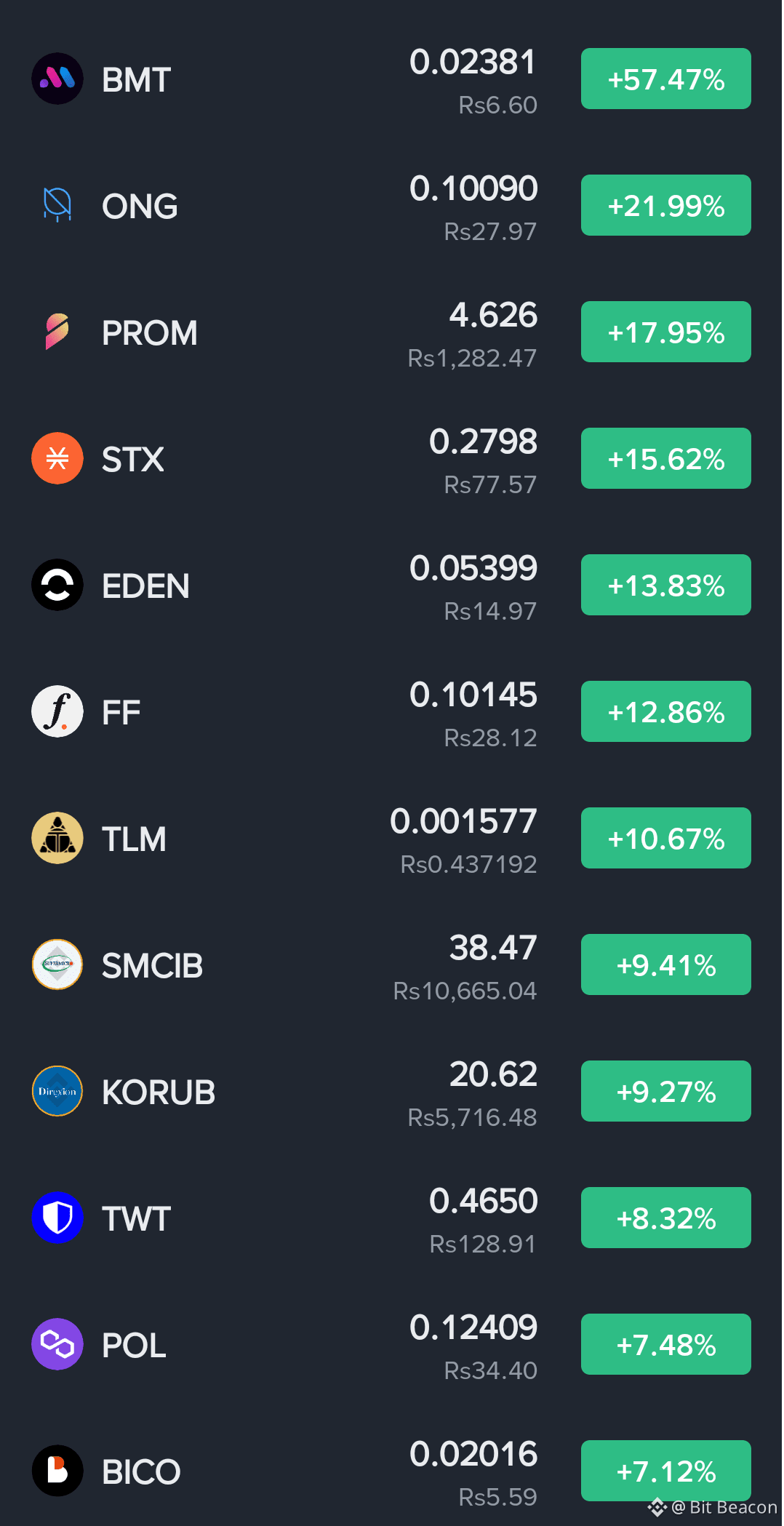
🙋🔥 Happy Gainer Day! 📈💚
Green candles, big moves & winning vibes! 🚀💰
Celebrate every gain, every breakout, and every step forward. 📊⚡
Keep growing. Keep gaining. Keep winning! 🏆💚
$OGN
$PROM
$FF
Green candles, big moves & winning vibes! 🚀💰
Celebrate every gain, every breakout, and every step forward. 📊⚡
Keep growing. Keep gaining. Keep winning! 🏆💚
$OGN
$PROM
$FF
$HOME USDT - Trade Setup
SHORT SCENARIO
Entry: 0.00613 - 0.006196
SL: 0.006477
TP: 0.005927 / 0.00577 / 0.005534
Reason: SHORT favored because the broader trend is bearish and 4h is not oversold.
SHORT SCENARIO
Entry: 0.00613 - 0.006196
SL: 0.006477
TP: 0.005927 / 0.00577 / 0.005534
Reason: SHORT favored because the broader trend is bearish and 4h is not oversold.
Verified
I keep coming back to one detail: Dusk is sitting around 210M+ DUSK staked, while the network is built around roughly 10-second deterministic finality. That caught my attention.
Then I dug deeper.
Dusk isn’t just adding privacy around transactions. Its L1 supports native ZK smart contracts, shielded transfers, and selective disclosure. The XSC standard is designed for confidential smart contracts that can enforce things like eligibility, transfer limits, compliance rules, dividends and voting.
That combination is what I’m watching: privacy without removing the controls regulated assets actually need.
The interesting part isn’t what Dusk claims.
It’s whether the market has started pricing in what this architecture can actually do yet.
@Dusk #dusk $DUSK
$TMX
$HANA
Then I dug deeper.
Dusk isn’t just adding privacy around transactions. Its L1 supports native ZK smart contracts, shielded transfers, and selective disclosure. The XSC standard is designed for confidential smart contracts that can enforce things like eligibility, transfer limits, compliance rules, dividends and voting.
That combination is what I’m watching: privacy without removing the controls regulated assets actually need.
The interesting part isn’t what Dusk claims.
It’s whether the market has started pricing in what this architecture can actually do yet.
@Dusk #dusk $DUSK
$TMX
$HANA
Confidential smart contracts💖
27%
10-second finality✅
32%
210M+ DUSK staked💯
27%
All of the above❤️
14%
22 votes • Voting closed
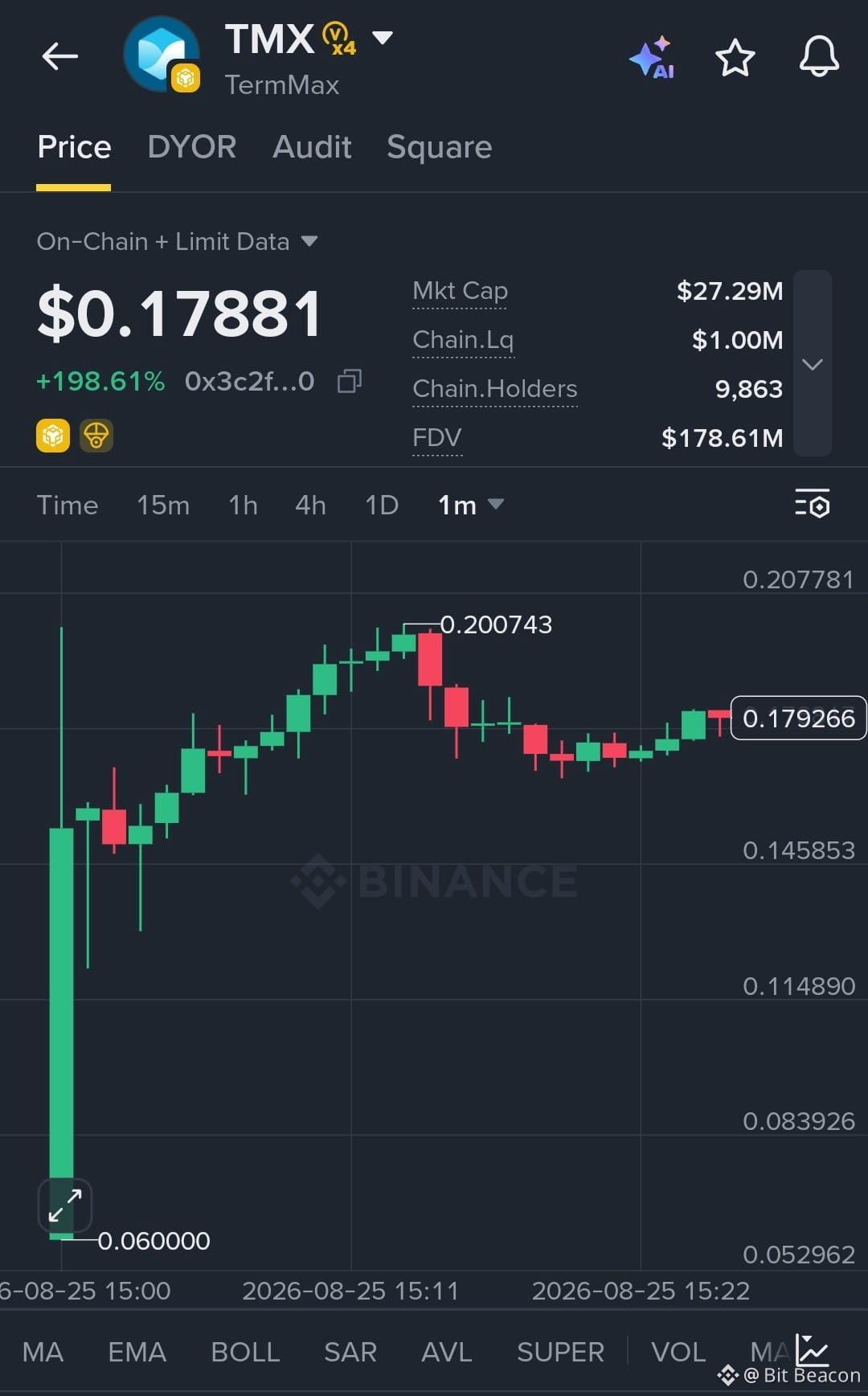
⚡ I'm watching $TMX holding near $0.179 after a massive pump — but it still looks strong. 📉
After running up to $0.2007, $TMX dropped 10.9% from the peak. I’m not worried — it’s still above key support around $0.17.
📊 My Trade Plan:
Buy: $0.175–0.179
TP1: $0.190
TP2: $0.200
SL: $0.168
$TMX just cooled off after a big move. If bulls hold $0.17–0.175, we might see the next breakout soon. 🚀
I’m watching this zone closely — could be the best dip-buy chance before the next run.
👉 Follow me for more updates and share this with your friends!
#SKHynixFalls5.63%AfterUnionRejectsWageDeal #KOSPI200NightFuturesFall1.77% #ZECBreaksKeyResistanceUp75.5% #OilHoldsLosses #ThailandToExpandSECDigitalAssetProbePowers
After running up to $0.2007, $TMX dropped 10.9% from the peak. I’m not worried — it’s still above key support around $0.17.
📊 My Trade Plan:
Buy: $0.175–0.179
TP1: $0.190
TP2: $0.200
SL: $0.168
$TMX just cooled off after a big move. If bulls hold $0.17–0.175, we might see the next breakout soon. 🚀
I’m watching this zone closely — could be the best dip-buy chance before the next run.
👉 Follow me for more updates and share this with your friends!
#SKHynixFalls5.63%AfterUnionRejectsWageDeal #KOSPI200NightFuturesFall1.77% #ZECBreaksKeyResistanceUp75.5% #OilHoldsLosses #ThailandToExpandSECDigitalAssetProbePowers
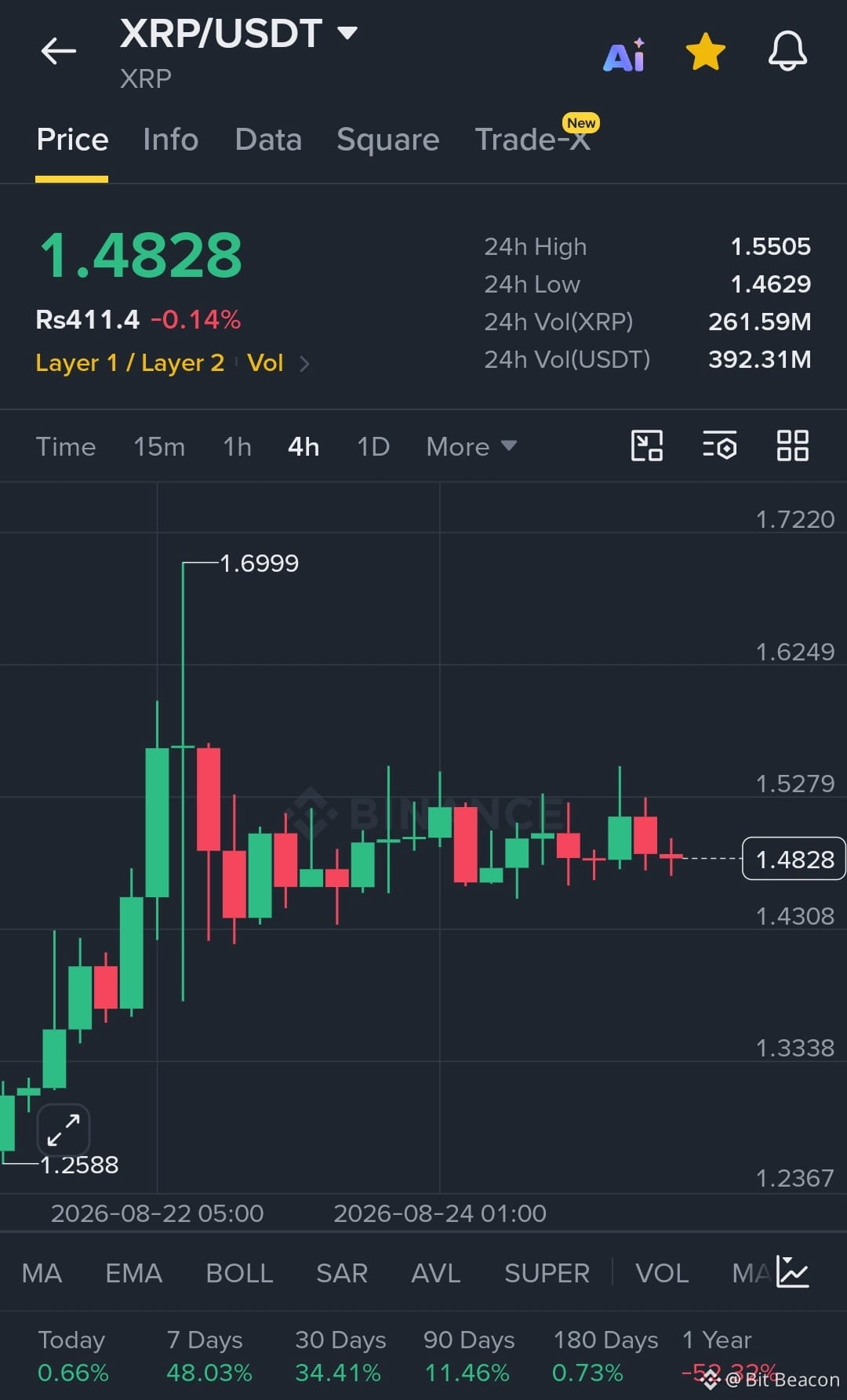
⚡ I'm watching $XRP holding around $1.48 after a strong run — but it still looks strong. 📉
After running up to $1.5505, $XRP dropped 4.36% in 24h. I’m not worried — it’s still above key support around $1.43.
📊 My Trade Plan:
Buy: $1.46–1.48
TP1: $1.53
TP2: $1.60
SL: $1.42
$XRP just cooled off after a big move. If bulls hold $1.43–1.46, we might see the next breakout soon. 🚀
I’m watching this zone closely — could be the best dip-buy chance before the next run.
👉 Follow me for more updates and share this with your friends!
#KazakhstanCutsOilOutputForecastTo96MTons #JapanNoAdditionalOilReserveReleaseInSepOct #SamsungSKHynixLeveragedETFsPostFirstMonthlyOutflow #ThailandToExpandSECDigitalAssetProbePowers #OilHoldsLosses
After running up to $1.5505, $XRP dropped 4.36% in 24h. I’m not worried — it’s still above key support around $1.43.
📊 My Trade Plan:
Buy: $1.46–1.48
TP1: $1.53
TP2: $1.60
SL: $1.42
$XRP just cooled off after a big move. If bulls hold $1.43–1.46, we might see the next breakout soon. 🚀
I’m watching this zone closely — could be the best dip-buy chance before the next run.
👉 Follow me for more updates and share this with your friends!
#KazakhstanCutsOilOutputForecastTo96MTons #JapanNoAdditionalOilReserveReleaseInSepOct #SamsungSKHynixLeveragedETFsPostFirstMonthlyOutflow #ThailandToExpandSECDigitalAssetProbePowers #OilHoldsLosses
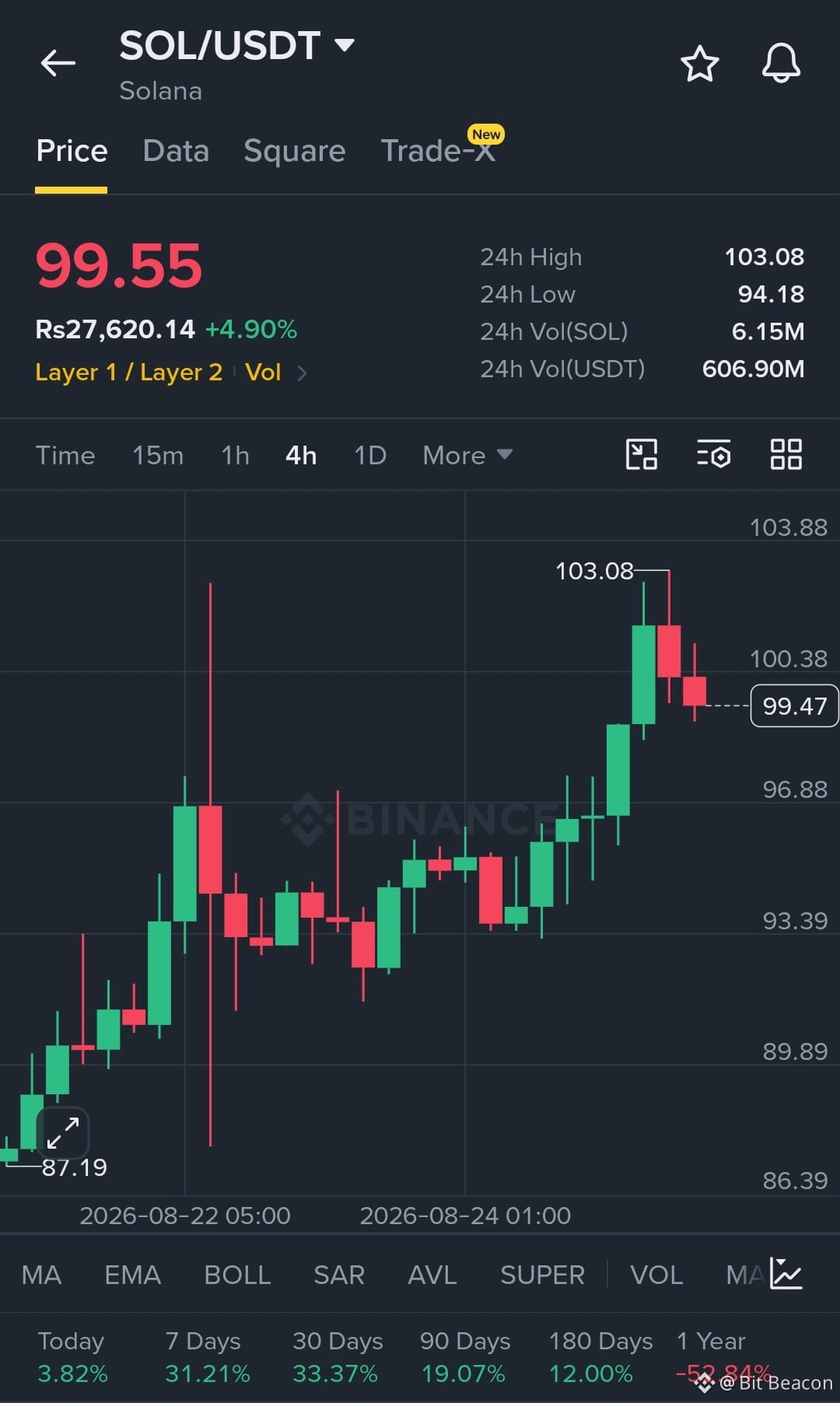
⚡ I'm watching $SOL holding near $100 after a strong breakout — but it still looks strong. 📉
After running up to $103.08, $SOL dropped 3.42% in 24h. I’m not worried — it’s still above key support around $96.88.
📊 My Trade Plan:
Buy: $98–99.50
TP1: $101
TP2: $103
SL: $96.50
$SOL just cooled off after a big move. If bulls hold $96.88–98, we might see the next breakout soon. 🚀
I’m watching this zone closely — could be the best dip-buy chance before the next run.
👉 Follow me for more updates and share this with your friends!
#SKHynixFalls5.63%AfterUnionRejectsWageDeal #KOSPI200NightFuturesFall1.77% #ZECBreaksKeyResistanceUp75.5% #OilHoldsLosses #ThailandToExpandSECDigitalAssetProbePowers
After running up to $103.08, $SOL dropped 3.42% in 24h. I’m not worried — it’s still above key support around $96.88.
📊 My Trade Plan:
Buy: $98–99.50
TP1: $101
TP2: $103
SL: $96.50
$SOL just cooled off after a big move. If bulls hold $96.88–98, we might see the next breakout soon. 🚀
I’m watching this zone closely — could be the best dip-buy chance before the next run.
👉 Follow me for more updates and share this with your friends!
#SKHynixFalls5.63%AfterUnionRejectsWageDeal #KOSPI200NightFuturesFall1.77% #ZECBreaksKeyResistanceUp75.5% #OilHoldsLosses #ThailandToExpandSECDigitalAssetProbePowers
Log in to explore more content