
大晖哥Whdysseus
1.2k Posts
大晖哥Whdysseus
Report
Block User
X@Whdysseus|1783DAO和博链BroadChain创始人|Crypto Since 2014|二级市场投研与行业研究|币安全球区块链百强创作者入围|原证券/基金从业者|关注Crypto、美股、港股、全球科技与新兴产业|香港|新加坡|东京|首尔|迪拜|阿布扎比…

原创之星
Frequent Trader
8.8 Years
101 Following
2.2K+ Followers
3.2K+ Liked
1 Badges
Posts
All
Quotes
Videos
Live
PINNED

PINNED
·
--
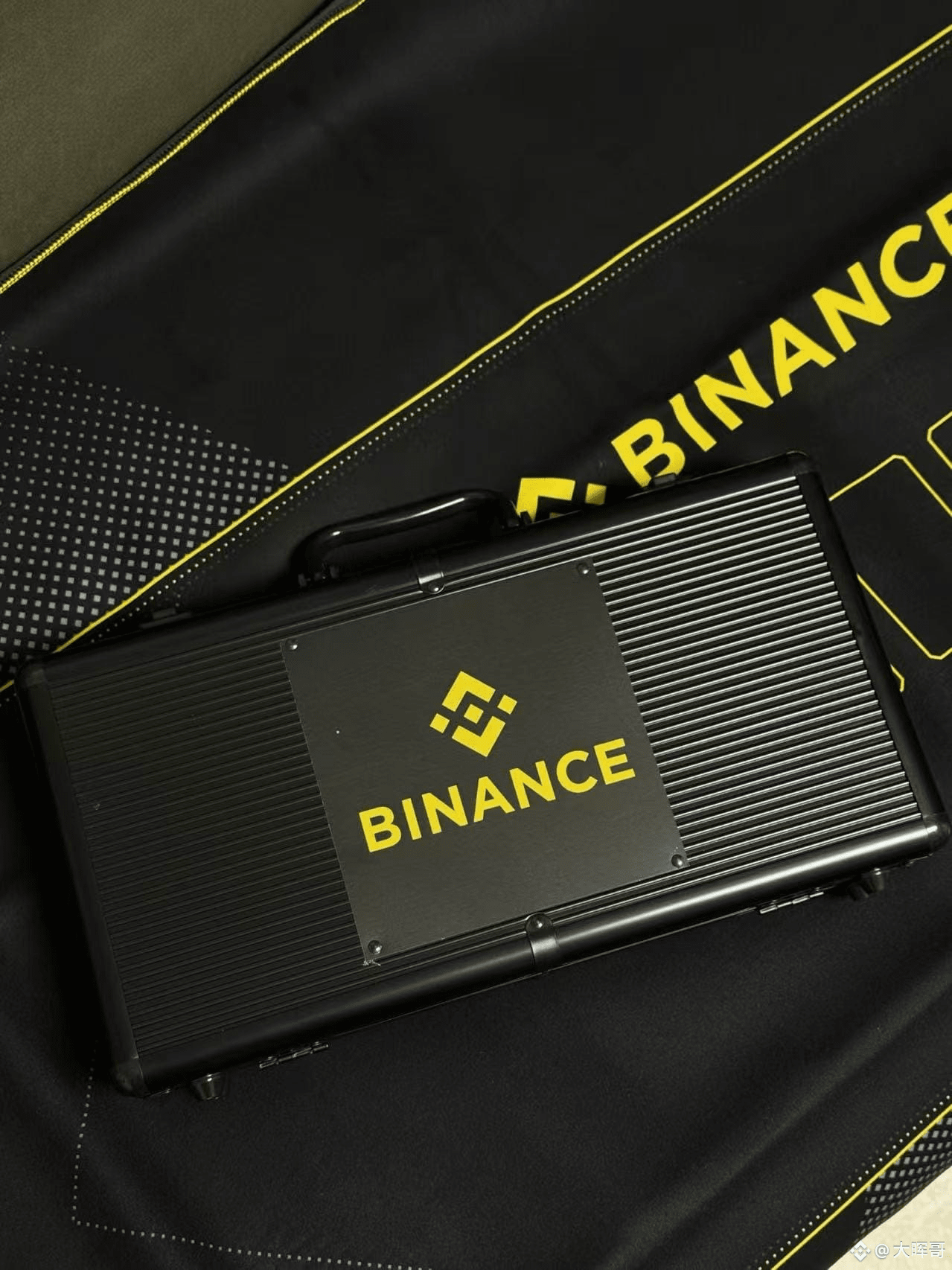
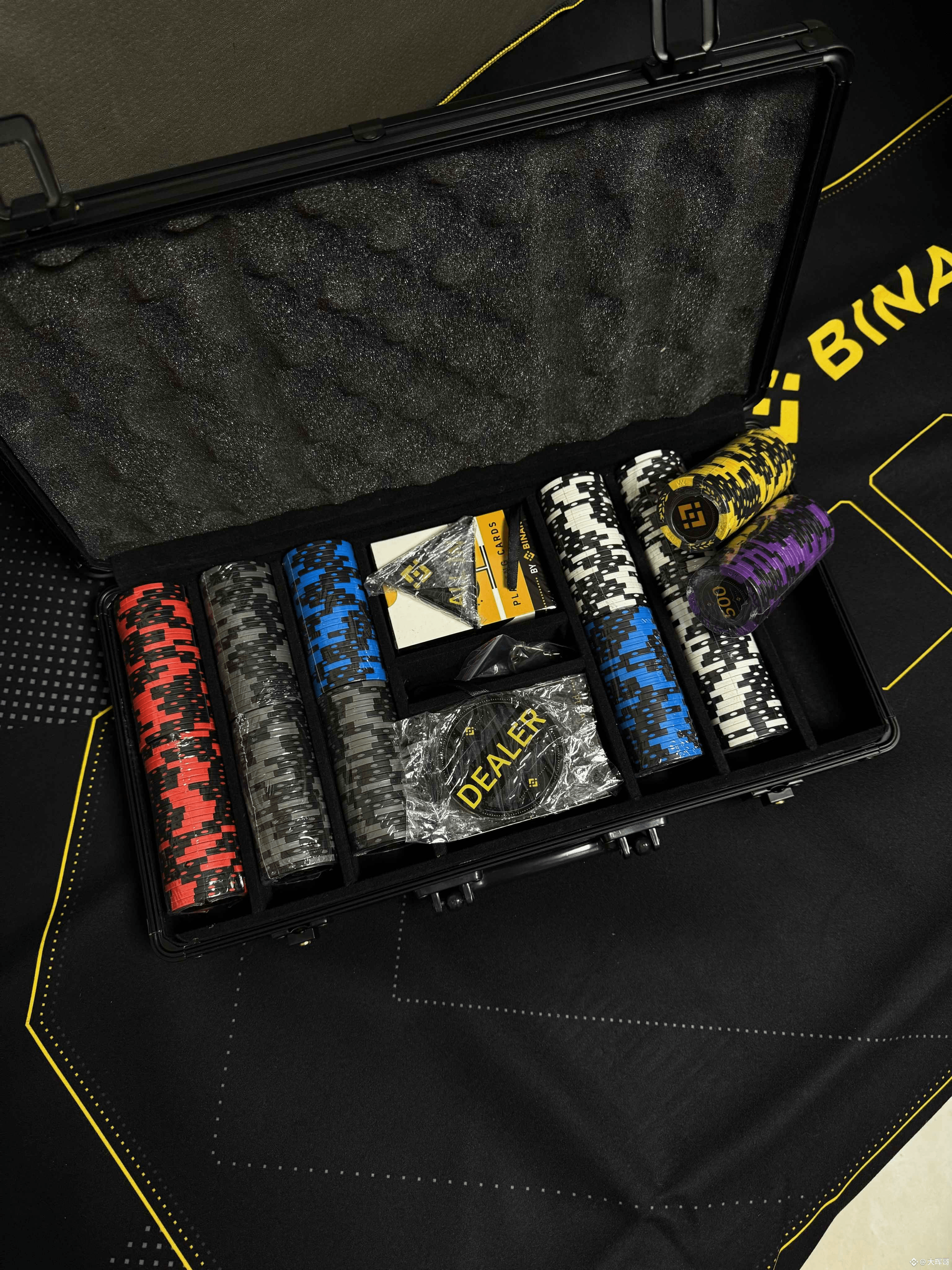
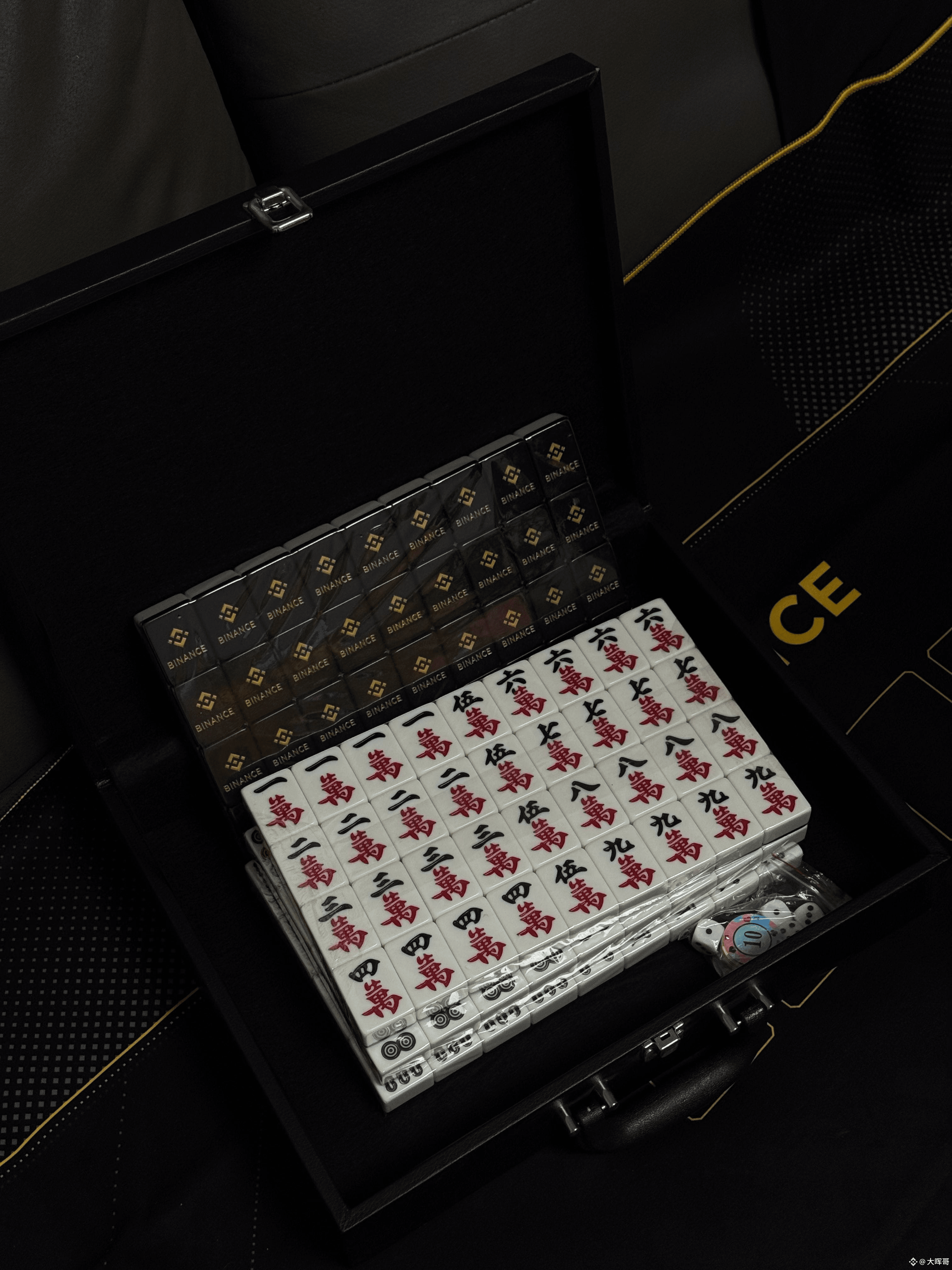
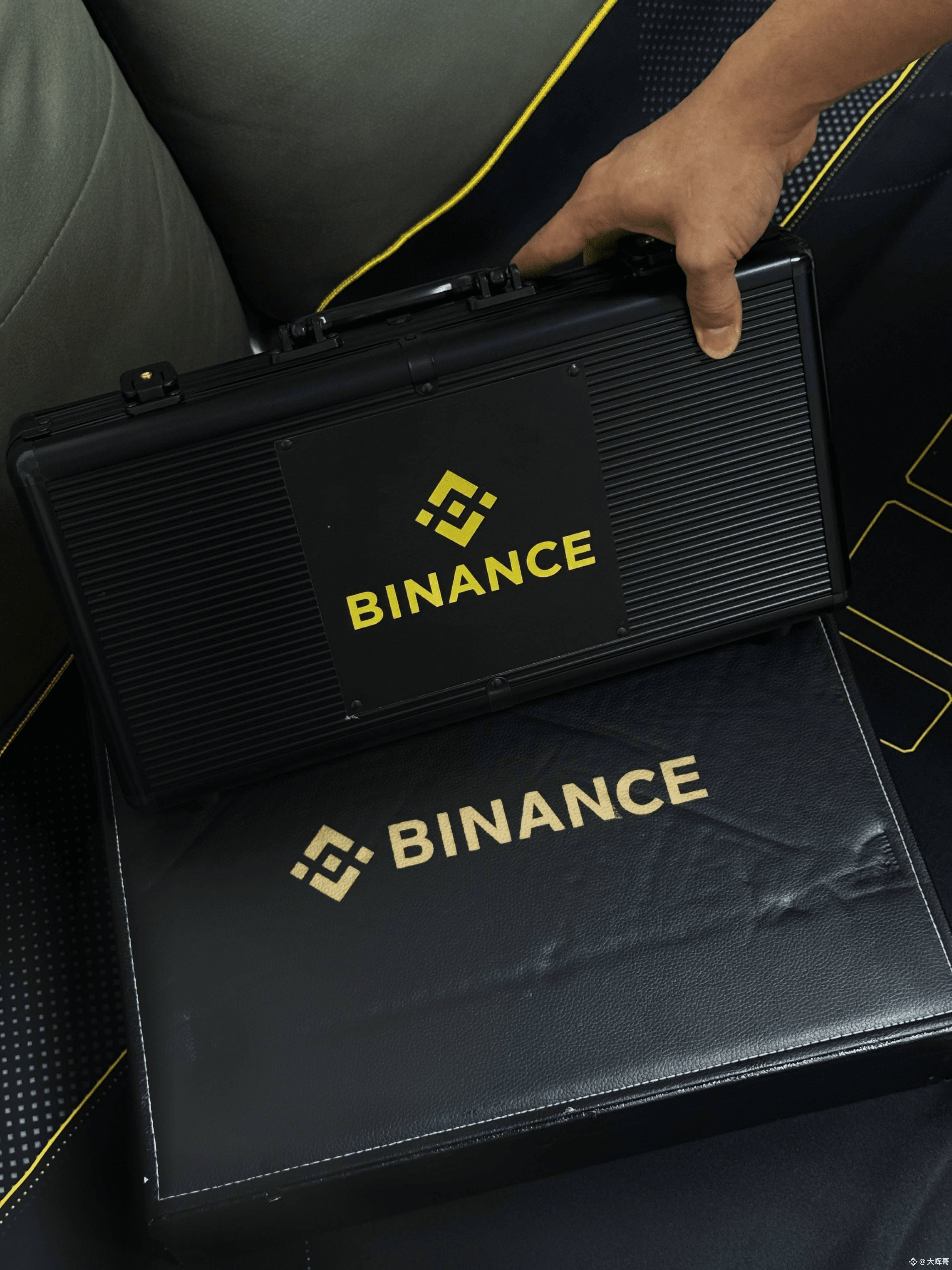
Binance VIP 9 Customer Exclusive
Global Limited Edition of 50 Sets
Texas + Mahjong Set
The family of 1783DAO is so powerful
Binance VIP 9 Customer Exclusive
Global Limited Edition of 50 Sets
Texas + Mahjong Set
The family of 1783DAO is so powerful
Global Limited Edition of 50 Sets
Texas + Mahjong Set
The family of 1783DAO is so powerful
39
11
103
38.4k
·
--
Article
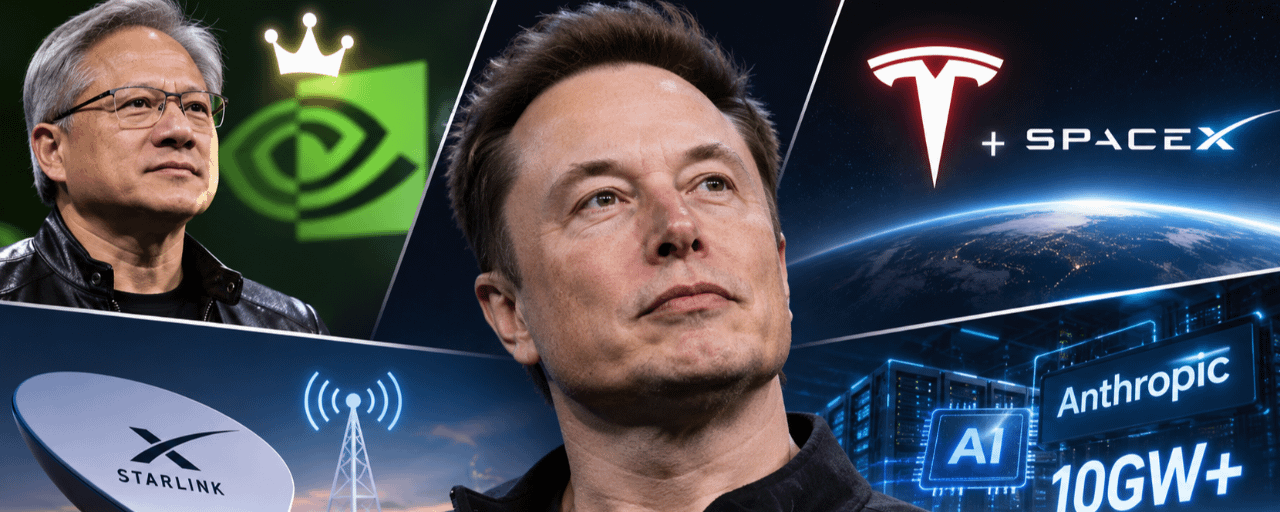
Musk’s latest interview: Jensen Huang is irreplaceable; SpaceX and Tesla may merge; Anthropic seeks 10 GW of computing powerOn November 19, Tesla and SpaceX founder Elon Musk joined the New York Times DealBook Summit remotely from Shenzhen, China, during APEC, and sat for an in-depth interview with host Andrew Ross Sorkin.
This was one of Musk’s rare lengthy public interviews since Nvidia founder Jensen Huang stepped down. The interview covered topics including changes to Nvidia’s leadership, a potential merger between SpaceX and Tesla, and Anthropic’s demand for AI computing power.
Musk compared Jensen Huang to Michael Jordan at the peak of his career, saying it would be a mistake for Nvidia’s board to replace Huang. He also discussed the business case for merging SpaceX and Tesla, and revealed that Anthropic hopes to obtain an additional approximately 10 GW of computing power from SpaceX.
Musk’s latest interview: Jensen Huang is irreplaceable; SpaceX and Tesla may merge; Anthropic seeks 10 GW of computing power
On November 19, Tesla and SpaceX founder Elon Musk joined the New York Times DealBook Summit remotely from Shenzhen, China, during APEC, and sat for an in-depth interview with host Andrew Ross Sorkin.
This was one of Musk’s rare lengthy public interviews since Nvidia founder Jensen Huang stepped down. The interview covered topics including changes to Nvidia’s leadership, a potential merger between SpaceX and Tesla, and Anthropic’s demand for AI computing power.
Musk compared Jensen Huang to Michael Jordan at the peak of his career, saying it would be a mistake for Nvidia’s board to replace Huang. He also discussed the business case for merging SpaceX and Tesla, and revealed that Anthropic hopes to obtain an additional approximately 10 GW of computing power from SpaceX.
This was one of Musk’s rare lengthy public interviews since Nvidia founder Jensen Huang stepped down. The interview covered topics including changes to Nvidia’s leadership, a potential merger between SpaceX and Tesla, and Anthropic’s demand for AI computing power.
Musk compared Jensen Huang to Michael Jordan at the peak of his career, saying it would be a mistake for Nvidia’s board to replace Huang. He also discussed the business case for merging SpaceX and Tesla, and revealed that Anthropic hopes to obtain an additional approximately 10 GW of computing power from SpaceX.
533
·
--
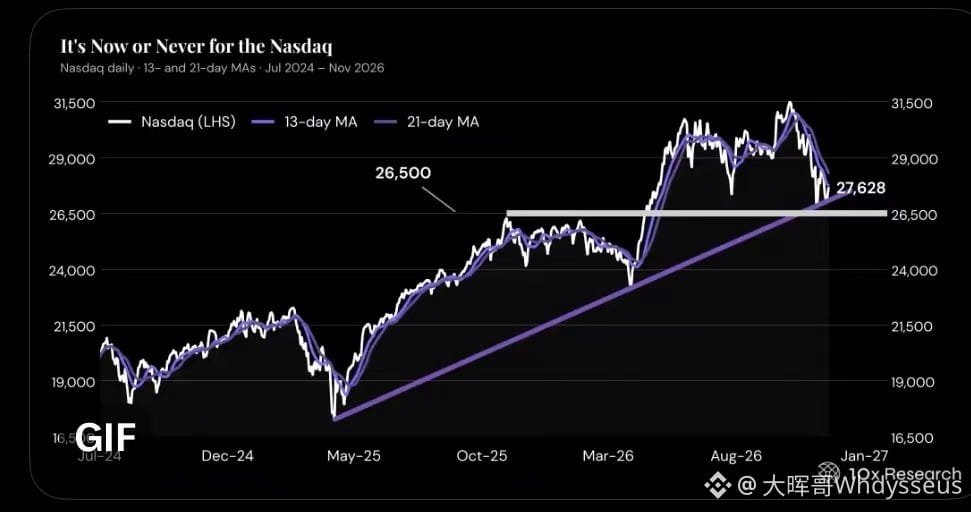
The Nasdaq may be at a critical juncture that will determine its direction over the next few months.
Since April 2025, the Nasdaq has tracked a long-term uptrend line for about 19 months.
Now that trend line is being tested, and several levels are worth watching:
27,628: The index is already nearing the long-term trend line.
26,500: An important support level below, just about 4% from the level shown on the chart.
If it holds, this may simply be a deep correction within a bull market.
If it breaks decisively, especially if the index fails to reclaim it after a rebound, be alert to a potential shift in the medium-term trend.
What Xiaohuihui is more concerned about right now is not technicals, but the macro environment.
AI capital spending remains massive, but rising Treasury yields, continued Fed rate hikes, and tightening liquidity expectations are putting pressure on tech stock valuations.
Over the past two years, the market has repeatedly rewarded AI growth with higher valuations. Going forward, companies may have to justify those valuations with real profits and cash flow.
The Nasdaq may be at a critical juncture that will determine its direction over the next few months.
Since April 2025, the Nasdaq has tracked a long-term uptrend line for about 19 months.
Now that trend line is being tested, and several levels are worth watching:
27,628: The index is already nearing the long-term trend line.
26,500: An important support level below, just about 4% from the level shown on the chart.
If it holds, this may simply be a deep correction within a bull market.
If it breaks decisively, especially if the index fails to reclaim it after a rebound, be alert to a potential shift in the medium-term trend.
What Xiaohuihui is more concerned about right now is not technicals, but the macro environment.
AI capital spending remains massive, but rising Treasury yields, continued Fed rate hikes, and tightening liquidity expectations are putting pressure on tech stock valuations.
Over the past two years, the market has repeatedly rewarded AI growth with higher valuations. Going forward, companies may have to justify those valuations with real profits and cash flow.
Since April 2025, the Nasdaq has tracked a long-term uptrend line for about 19 months.
Now that trend line is being tested, and several levels are worth watching:
27,628: The index is already nearing the long-term trend line.
26,500: An important support level below, just about 4% from the level shown on the chart.
If it holds, this may simply be a deep correction within a bull market.
If it breaks decisively, especially if the index fails to reclaim it after a rebound, be alert to a potential shift in the medium-term trend.
What Xiaohuihui is more concerned about right now is not technicals, but the macro environment.
AI capital spending remains massive, but rising Treasury yields, continued Fed rate hikes, and tightening liquidity expectations are putting pressure on tech stock valuations.
Over the past two years, the market has repeatedly rewarded AI growth with higher valuations. Going forward, companies may have to justify those valuations with real profits and cash flow.
256
·
--
Verified
That’s relatively early, right? The U.S. stock market opens at 22:30.
At 22:50 Beijing time on November 19, Anthropic (ANT) opened for trading on Nasdaq.
The IPO price is $83. Let’s see if it can go straight to $100.
That’s relatively early, right? The U.S. stock market opens at 22:30.
At 22:50 Beijing time on November 19, Anthropic (ANT) opened for trading on Nasdaq.
The IPO price is $83. Let’s see if it can go straight to $100.
At 22:50 Beijing time on November 19, Anthropic (ANT) opened for trading on Nasdaq.
The IPO price is $83. Let’s see if it can go straight to $100.
783
·
--
On the seventh day after Jensen Huang left Nvidia, 80,000 employees held their first all-hands meeting without him.
Interim CEO Colette Kress emphasized just one thing: “Let’s look ahead.” She then announced that compensation adjustments originally scheduled for March would be brought forward to December.
How does a company led by its founder for 33 years keep morale steady after suddenly losing its soul?
Nvidia had three answers:
First, financial results. Quarterly revenue was $115.8 billion, up 103% year over year, and net income was $65.3 billion, up 105%.
Second, products. Vera Rubin has shipped, and revenue guidance for the next quarter is $130 billion.
Third, employees. Less talk about sentiment; first address what matters most to everyone: compensation and equity incentives.
Nvidia’s board also made clear that it does not intend to bring Jensen Huang back as CEO.
On the seventh day after Jensen Huang left Nvidia, 80,000 employees held their first all-hands meeting without him.
Interim CEO Colette Kress emphasized just one thing: “Let’s look ahead.” She then announced that compensation adjustments originally scheduled for March would be brought forward to December.
How does a company led by its founder for 33 years keep morale steady after suddenly losing its soul?
Nvidia had three answers:
First, financial results. Quarterly revenue was $115.8 billion, up 103% year over year, and net income was $65.3 billion, up 105%.
Second, products. Vera Rubin has shipped, and revenue guidance for the next quarter is $130 billion.
Third, employees. Less talk about sentiment; first address what matters most to everyone: compensation and equity incentives.
Nvidia’s board also made clear that it does not intend to bring Jensen Huang back as CEO.
Interim CEO Colette Kress emphasized just one thing: “Let’s look ahead.” She then announced that compensation adjustments originally scheduled for March would be brought forward to December.
How does a company led by its founder for 33 years keep morale steady after suddenly losing its soul?
Nvidia had three answers:
First, financial results. Quarterly revenue was $115.8 billion, up 103% year over year, and net income was $65.3 billion, up 105%.
Second, products. Vera Rubin has shipped, and revenue guidance for the next quarter is $130 billion.
Third, employees. Less talk about sentiment; first address what matters most to everyone: compensation and equity incentives.
Nvidia’s board also made clear that it does not intend to bring Jensen Huang back as CEO.
1
1
2.2k
·
--
The most surreal financial phenomenon of 2026: Bitcoin is actually more stable than semiconductor stocks.
A few figures from DWF Labs’ latest report are extremely counterintuitive:
1. Volatility: BTC’s annualized volatility is 44%, compared with 52% for the semiconductor sector. For the first time in nearly a decade, semiconductors have been more volatile than BTC.
2. Returns: Since September 2025, semiconductors have surged 85%, while BTC has fallen 39%. AI has nearly drained the entire tech market of its capital and limelight.
3. Correlation: Since March 2026, after removing the influence of the Nasdaq, BTC has been positively correlated with software stocks (+0.20), but negatively correlated with chip stocks (-0.30). BTC’s 90-day correlation with gold hit a ten-year high of 0.59 in September and still stands at 0.49.
In the past, people viewed crypto as a high-risk asset and semiconductors as a tech growth play. What about now?
AI has taken over BTC’s growth narrative, and gold is influencing how BTC is valued as an asset. But BTC hasn’t completely shed its risk-asset characteristics yet (when the Nasdaq falls more than 1% in a day, BTC has a 75% chance of falling too).
People used to say crypto was too volatile for ordinary investors.
Looking back now, the most thrilling and wildest trades may have left the crypto world behind long ago.
The most surreal financial phenomenon of 2026: Bitcoin is actually more stable than semiconductor stocks.
A few figures from DWF Labs’ latest report are extremely counterintuitive:
1. Volatility: BTC’s annualized volatility is 44%, compared with 52% for the semiconductor sector. For the first time in nearly a decade, semiconductors have been more volatile than BTC.
2. Returns: Since September 2025, semiconductors have surged 85%, while BTC has fallen 39%. AI has nearly drained the entire tech market of its capital and limelight.
3. Correlation: Since March 2026, after removing the influence of the Nasdaq, BTC has been positively correlated with software stocks (+0.20), but negatively correlated with chip stocks (-0.30). BTC’s 90-day correlation with gold hit a ten-year high of 0.59 in September and still stands at 0.49.
In the past, people viewed crypto as a high-risk asset and semiconductors as a tech growth play. What about now?
AI has taken over BTC’s growth narrative, and gold is influencing how BTC is valued as an asset. But BTC hasn’t completely shed its risk-asset characteristics yet (when the Nasdaq falls more than 1% in a day, BTC has a 75% chance of falling too).
People used to say crypto was too volatile for ordinary investors.
Looking back now, the most thrilling and wildest trades may have left the crypto world behind long ago.
A few figures from DWF Labs’ latest report are extremely counterintuitive:
1. Volatility: BTC’s annualized volatility is 44%, compared with 52% for the semiconductor sector. For the first time in nearly a decade, semiconductors have been more volatile than BTC.
2. Returns: Since September 2025, semiconductors have surged 85%, while BTC has fallen 39%. AI has nearly drained the entire tech market of its capital and limelight.
3. Correlation: Since March 2026, after removing the influence of the Nasdaq, BTC has been positively correlated with software stocks (+0.20), but negatively correlated with chip stocks (-0.30). BTC’s 90-day correlation with gold hit a ten-year high of 0.59 in September and still stands at 0.49.
In the past, people viewed crypto as a high-risk asset and semiconductors as a tech growth play. What about now?
AI has taken over BTC’s growth narrative, and gold is influencing how BTC is valued as an asset. But BTC hasn’t completely shed its risk-asset characteristics yet (when the Nasdaq falls more than 1% in a day, BTC has a 75% chance of falling too).
People used to say crypto was too volatile for ordinary investors.
Looking back now, the most thrilling and wildest trades may have left the crypto world behind long ago.
134
·
--
Is Musk jumping ship? No longer going all-in on the Republican Party.
In 2024, he loudly proclaimed himself “Dark MAGA.”
In the 2026 midterm elections, he poured nearly $500 million into supporting Republicans, only for Democrats to win control of both the House and Senate.
These past few days, Musk suddenly changed his tune:
“I’m not MAGA. My political views are actually pretty moderate.”
He also said he regrets spending so much on political donations, given how little they achieved.
Musk’s companies include Tesla, SpaceX, and xAI, with business spanning cars, aerospace, AI, and government contracts.
You can have political convictions, but in business, you can’t have just one friend.
From Dark MAGA to political moderate—is Musk changing his beliefs, or starting to position himself for the next political cycle?
Is Musk jumping ship? No longer going all-in on the Republican Party.
In 2024, he loudly proclaimed himself “Dark MAGA.”
In the 2026 midterm elections, he poured nearly $500 million into supporting Republicans, only for Democrats to win control of both the House and Senate.
These past few days, Musk suddenly changed his tune:
“I’m not MAGA. My political views are actually pretty moderate.”
He also said he regrets spending so much on political donations, given how little they achieved.
Musk’s companies include Tesla, SpaceX, and xAI, with business spanning cars, aerospace, AI, and government contracts.
You can have political convictions, but in business, you can’t have just one friend.
From Dark MAGA to political moderate—is Musk changing his beliefs, or starting to position himself for the next political cycle?
In 2024, he loudly proclaimed himself “Dark MAGA.”
In the 2026 midterm elections, he poured nearly $500 million into supporting Republicans, only for Democrats to win control of both the House and Senate.
These past few days, Musk suddenly changed his tune:
“I’m not MAGA. My political views are actually pretty moderate.”
He also said he regrets spending so much on political donations, given how little they achieved.
Musk’s companies include Tesla, SpaceX, and xAI, with business spanning cars, aerospace, AI, and government contracts.
You can have political convictions, but in business, you can’t have just one friend.
From Dark MAGA to political moderate—is Musk changing his beliefs, or starting to position himself for the next political cycle?
456
·
--
The rate-hiking cycle was brutal—especially its final stretch, when they actually started accelerating the hikes.
Next came the Fed’s more aggressive-than-expected rate hikes. Pessimism reached unprecedented levels, and liquidity dried up for a time. In particular, over the weekend of November 14 and 15, Xiao Huihui published a dedicated article on their official WeChat account.
By Thursday, November 19, U.S. stocks had started to rebound after testing the lows several times.
Anthropic’s IPO subscription had previously tied up at least $500 billion.
Only $60–80 billion actually secured allocations, with redemptions of around $4,200–4,400 trillion.
Some of these funds may become new buying demand.
Going forward, prioritize the leading assets in U.S. stocks and crypto.
The rate-hiking cycle was brutal—especially its final stretch, when they actually started accelerating the hikes.
Next came the Fed’s more aggressive-than-expected rate hikes. Pessimism reached unprecedented levels, and liquidity dried up for a time. In particular, over the weekend of November 14 and 15, Xiao Huihui published a dedicated article on their official WeChat account.
By Thursday, November 19, U.S. stocks had started to rebound after testing the lows several times.
Anthropic’s IPO subscription had previously tied up at least $500 billion.
Only $60–80 billion actually secured allocations, with redemptions of around $4,200–4,400 trillion.
Some of these funds may become new buying demand.
Going forward, prioritize the leading assets in U.S. stocks and crypto.
Next came the Fed’s more aggressive-than-expected rate hikes. Pessimism reached unprecedented levels, and liquidity dried up for a time. In particular, over the weekend of November 14 and 15, Xiao Huihui published a dedicated article on their official WeChat account.
By Thursday, November 19, U.S. stocks had started to rebound after testing the lows several times.
Anthropic’s IPO subscription had previously tied up at least $500 billion.
Only $60–80 billion actually secured allocations, with redemptions of around $4,200–4,400 trillion.
Some of these funds may become new buying demand.
Going forward, prioritize the leading assets in U.S. stocks and crypto.
111
·
--
The most-downloaded app overseas is... a two-minute drama?
One of the strongest products China’s internet industry has taken global has turned out to be a short drama with episodes just two minutes long.
Take a look at the overseas micro-drama app download rankings for January–September 2026. The numbers are staggering:
1. FreeReels: over 230 million downloads
2. ReelShort: over 190 million downloads
3. NetShort: over 180 million downloads
4. PineDrama (launched by ByteDance in January 2026): over 100 million downloads in nine months, with around 7 million daily active users.
Behind this are three hugely significant business shifts:
First, China’s global expansion is no longer just about “selling products”—it’s starting to “export content.”
From e-commerce and games to short dramas, Chinese teams are taking their highly developed content production model and rolling it out around the world with a decisive edge.
Second, short dramas are becoming an “industrialized business.”
From scripts and filming to paid promotion and data feedback, the entire process is highly standardized. Every stage can be quickly replicated and refined. At its core, this is a victory for the internet playbook.
Third, downloads don’t equal profits.
That’s the harsh reality. User acquisition costs, paid conversion rates, and retention are what determine whether these short-drama companies can actually make money.
In the past, when Chinese internet companies expanded overseas, most were trying to catch up with Silicon Valley.
Now, Chinese teams are beginning to export their own business models to the world.
Could the next global content giant emerge from the short-drama industry?
The most-downloaded app overseas is... a two-minute drama?
One of the strongest products China’s internet industry has taken global has turned out to be a short drama with episodes just two minutes long.
Take a look at the overseas micro-drama app download rankings for January–September 2026. The numbers are staggering:
1. FreeReels: over 230 million downloads
2. ReelShort: over 190 million downloads
3. NetShort: over 180 million downloads
4. PineDrama (launched by ByteDance in January 2026): over 100 million downloads in nine months, with around 7 million daily active users.
Behind this are three hugely significant business shifts:
First, China’s global expansion is no longer just about “selling products”—it’s starting to “export content.”
From e-commerce and games to short dramas, Chinese teams are taking their highly developed content production model and rolling it out around the world with a decisive edge.
Second, short dramas are becoming an “industrialized business.”
From scripts and filming to paid promotion and data feedback, the entire process is highly standardized. Every stage can be quickly replicated and refined. At its core, this is a victory for the internet playbook.
Third, downloads don’t equal profits.
That’s the harsh reality. User acquisition costs, paid conversion rates, and retention are what determine whether these short-drama companies can actually make money.
In the past, when Chinese internet companies expanded overseas, most were trying to catch up with Silicon Valley.
Now, Chinese teams are beginning to export their own business models to the world.
Could the next global content giant emerge from the short-drama industry?
One of the strongest products China’s internet industry has taken global has turned out to be a short drama with episodes just two minutes long.
Take a look at the overseas micro-drama app download rankings for January–September 2026. The numbers are staggering:
1. FreeReels: over 230 million downloads
2. ReelShort: over 190 million downloads
3. NetShort: over 180 million downloads
4. PineDrama (launched by ByteDance in January 2026): over 100 million downloads in nine months, with around 7 million daily active users.
Behind this are three hugely significant business shifts:
First, China’s global expansion is no longer just about “selling products”—it’s starting to “export content.”
From e-commerce and games to short dramas, Chinese teams are taking their highly developed content production model and rolling it out around the world with a decisive edge.
Second, short dramas are becoming an “industrialized business.”
From scripts and filming to paid promotion and data feedback, the entire process is highly standardized. Every stage can be quickly replicated and refined. At its core, this is a victory for the internet playbook.
Third, downloads don’t equal profits.
That’s the harsh reality. User acquisition costs, paid conversion rates, and retention are what determine whether these short-drama companies can actually make money.
In the past, when Chinese internet companies expanded overseas, most were trying to catch up with Silicon Valley.
Now, Chinese teams are beginning to export their own business models to the world.
Could the next global content giant emerge from the short-drama industry?

54
·
--
An 11-page anonymous whistleblower report circulated in crypto circles, making a number of allegations involving client funds, related-party transactions, and internal management scandals.
A few days later, Amber began laying off employees and further scaling back its crypto-related businesses, especially its most profitable ones, such as market making and asset management, as it continued to double down on AI.
Amber’s move reveals several key points:
1. It will further focus on AI investments and project incubation, shifting more business and resources toward AI.
2. It will optimize the scale of its market-making and trading businesses, reducing related capital investment.
3. The strategic adjustment will affect some employees, and the company will provide transition support.
#Amber $AMBR
An 11-page anonymous whistleblower report circulated in crypto circles, making a number of allegations involving client funds, related-party transactions, and internal management scandals.
A few days later, Amber began laying off employees and further scaling back its crypto-related businesses, especially its most profitable ones, such as market making and asset management, as it continued to double down on AI.
Amber’s move reveals several key points:
1. It will further focus on AI investments and project incubation, shifting more business and resources toward AI.
2. It will optimize the scale of its market-making and trading businesses, reducing related capital investment.
3. The strategic adjustment will affect some employees, and the company will provide transition support.
#Amber $AMBR
A few days later, Amber began laying off employees and further scaling back its crypto-related businesses, especially its most profitable ones, such as market making and asset management, as it continued to double down on AI.
Amber’s move reveals several key points:
1. It will further focus on AI investments and project incubation, shifting more business and resources toward AI.
2. It will optimize the scale of its market-making and trading businesses, reducing related capital investment.
3. The strategic adjustment will affect some employees, and the company will provide transition support.
#Amber $AMBR
181
·
--
Verified
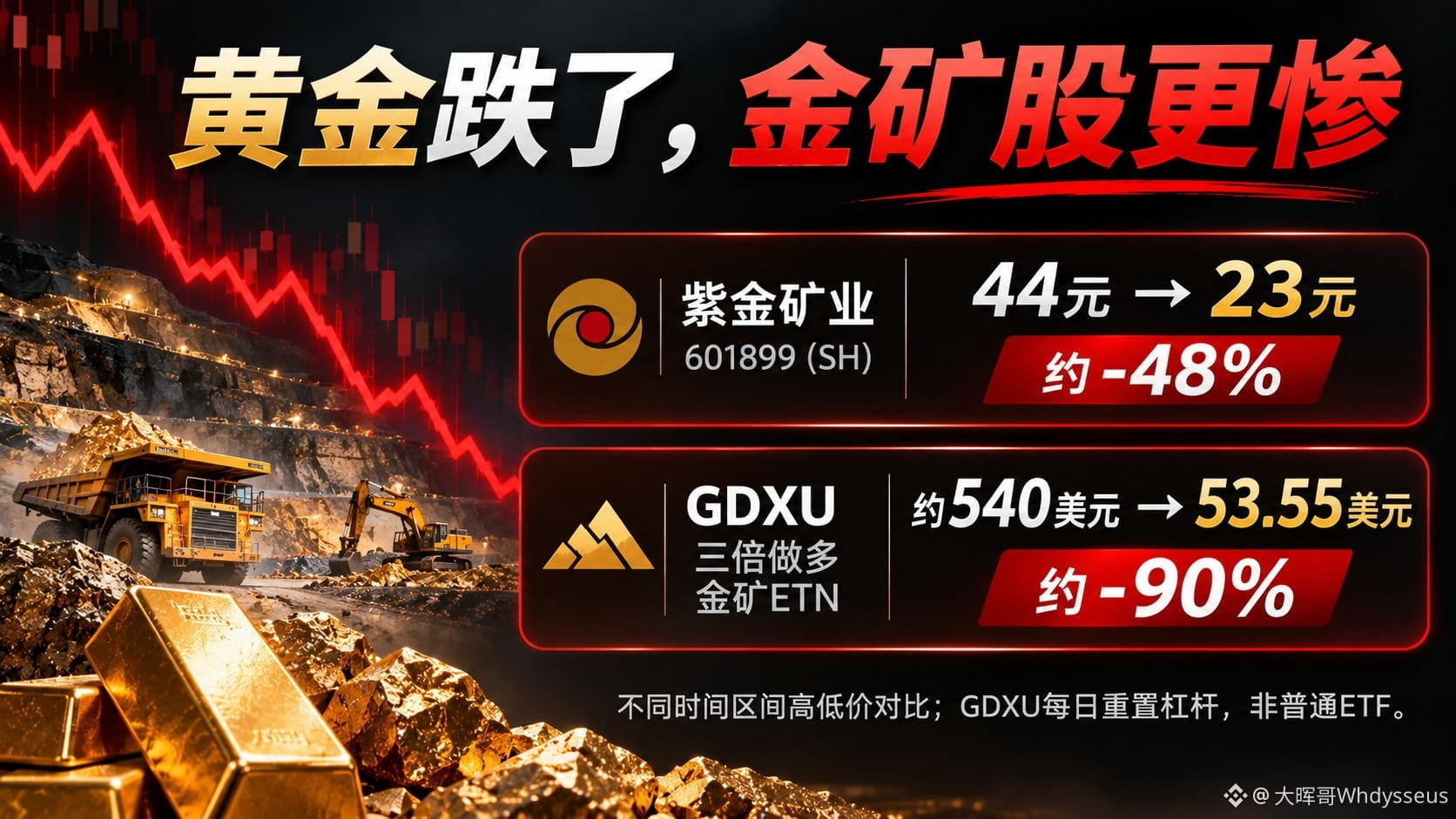
Gold plunged from a peak of $5,600 to around $3,700, a total drawdown of about 34%.
Gold mining stocks and leveraged ETFs were truly “brutal”:
Gold itself: fell from $5,600 to $3,700, a drop of about 34%.
Zijin Mining (601899): fell from 44 yuan to around 23 yuan, a drop of about 48%—nearly halved.
Triple-leveraged gold miners ETF (GDXU): plunged from around $540 to $53.55, a drop of more than 90%.
The most staggering truth is mathematical: after a 90% loss, you need a 900% gain just to break even.
Many people may think GDXU is simply a gold miners index multiplied by 3, but it’s nowhere near that simple. It uses daily triple leverage and is subject to extremely severe volatility decay. During a choppy decline, that decay can be magnified enormously. Even if the gold miners index moves sideways, the fund’s net asset value can slowly be eaten away.
When gold was rising before, people complained that it was moving too slowly and switched to gold mining stocks. When those weren’t exciting enough, they added triple leverage.
Then, when gold corrected, the first positions to get wiped out were these highly volatile leveraged bets.
This market move has taught everyone a lesson: many people thought they were buying into a “gold bull market,” when in reality, they were betting that “the gold bull market could not have any pullbacks.”
Once the trend reverses, leverage will teach you a harsh lesson. Respect the market, and never gamble your principal on a market cycle.
Gold plunged from a peak of $5,600 to around $3,700, a total drawdown of about 34%.
Gold mining stocks and leveraged ETFs were truly “brutal”:
Gold itself: fell from $5,600 to $3,700, a drop of about 34%.
Zijin Mining (601899): fell from 44 yuan to around 23 yuan, a drop of about 48%—nearly halved.
Triple-leveraged gold miners ETF (GDXU): plunged from around $540 to $53.55, a drop of more than 90%.
The most staggering truth is mathematical: after a 90% loss, you need a 900% gain just to break even.
Many people may think GDXU is simply a gold miners index multiplied by 3, but it’s nowhere near that simple. It uses daily triple leverage and is subject to extremely severe volatility decay. During a choppy decline, that decay can be magnified enormously. Even if the gold miners index moves sideways, the fund’s net asset value can slowly be eaten away.
When gold was rising before, people complained that it was moving too slowly and switched to gold mining stocks. When those weren’t exciting enough, they added triple leverage.
Then, when gold corrected, the first positions to get wiped out were these highly volatile leveraged bets.
This market move has taught everyone a lesson: many people thought they were buying into a “gold bull market,” when in reality, they were betting that “the gold bull market could not have any pullbacks.”
Once the trend reverses, leverage will teach you a harsh lesson. Respect the market, and never gamble your principal on a market cycle.
Gold mining stocks and leveraged ETFs were truly “brutal”:
Gold itself: fell from $5,600 to $3,700, a drop of about 34%.
Zijin Mining (601899): fell from 44 yuan to around 23 yuan, a drop of about 48%—nearly halved.
Triple-leveraged gold miners ETF (GDXU): plunged from around $540 to $53.55, a drop of more than 90%.
The most staggering truth is mathematical: after a 90% loss, you need a 900% gain just to break even.
Many people may think GDXU is simply a gold miners index multiplied by 3, but it’s nowhere near that simple. It uses daily triple leverage and is subject to extremely severe volatility decay. During a choppy decline, that decay can be magnified enormously. Even if the gold miners index moves sideways, the fund’s net asset value can slowly be eaten away.
When gold was rising before, people complained that it was moving too slowly and switched to gold mining stocks. When those weren’t exciting enough, they added triple leverage.
Then, when gold corrected, the first positions to get wiped out were these highly volatile leveraged bets.
This market move has taught everyone a lesson: many people thought they were buying into a “gold bull market,” when in reality, they were betting that “the gold bull market could not have any pullbacks.”
Once the trend reverses, leverage will teach you a harsh lesson. Respect the market, and never gamble your principal on a market cycle.
5
3.7k
·
--
Verified
The money that should be holding stocks for the long term is surprisingly starting to pull out.
Insurance funds are, in theory, among the most patient long-term investors in the capital market.
With policies often lasting ten, twenty, or even more years, insurance companies naturally need to allocate funds to long-term assets.
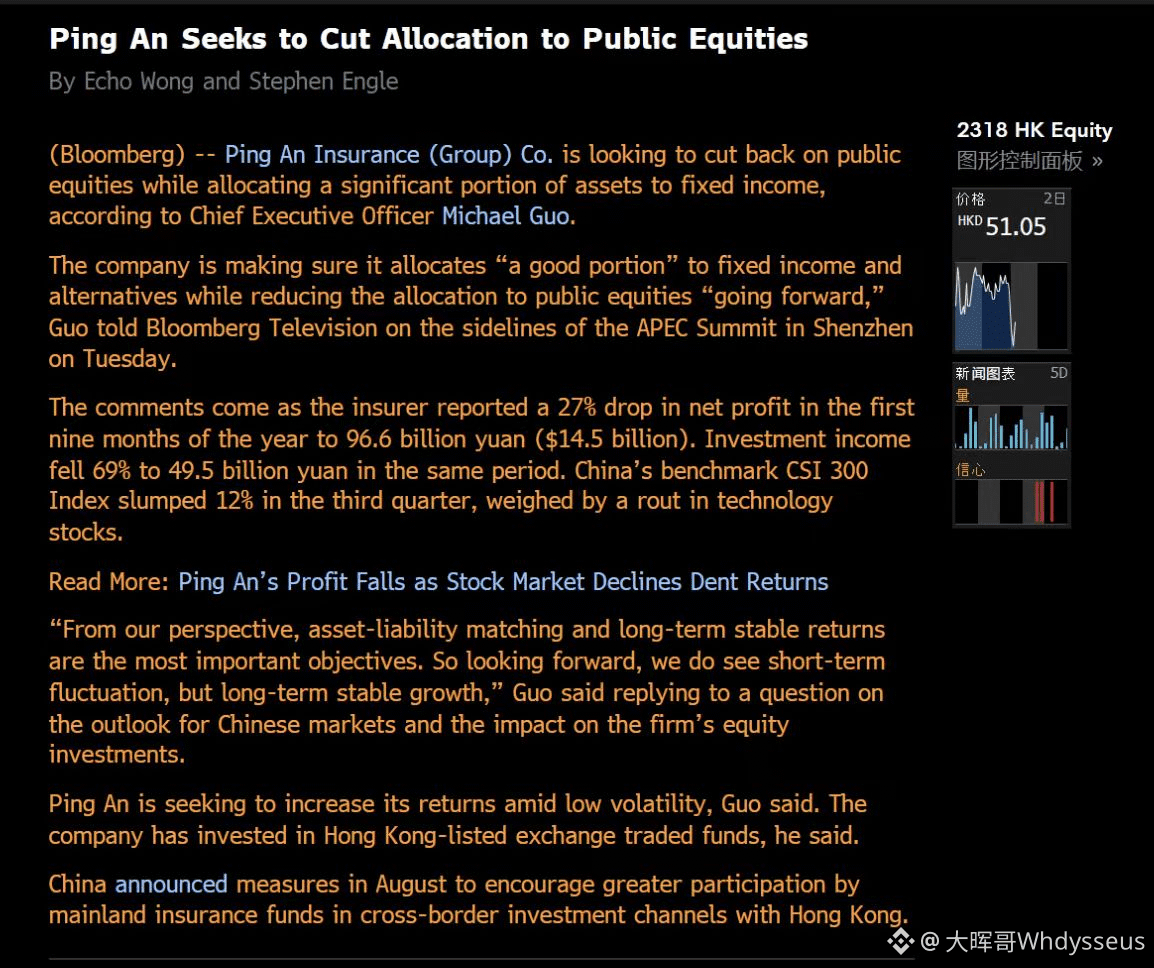
In an interview with Bloomberg during the APEC summit in Shenzhen, Guo Xiaotao, CEO of Ping An Insurance, said the company would reduce its allocation to publicly traded stocks in the future and shift toward fixed-income and alternative investments.
The context for Guo’s remarks was that in the first nine months of 2026, Ping An’s net profit fell 27% year on year, while investment income plunged 69%.
When retail investors pull out, you could say they can’t withstand the volatility; when funds pull out, you could say they’re facing redemption pressure.
But now even insurance funds—the kind of money that truly invests for the long term—are unwilling to bear market volatility.
The money that should be holding stocks for the long term is surprisingly starting to pull out.
Insurance funds are, in theory, among the most patient long-term investors in the capital market.
With policies often lasting ten, twenty, or even more years, insurance companies naturally need to allocate funds to long-term assets.
In an interview with Bloomberg during the APEC summit in Shenzhen, Guo Xiaotao, CEO of Ping An Insurance, said the company would reduce its allocation to publicly traded stocks in the future and shift toward fixed-income and alternative investments.
The context for Guo’s remarks was that in the first nine months of 2026, Ping An’s net profit fell 27% year on year, while investment income plunged 69%.
When retail investors pull out, you could say they can’t withstand the volatility; when funds pull out, you could say they’re facing redemption pressure.
But now even insurance funds—the kind of money that truly invests for the long term—are unwilling to bear market volatility.
Insurance funds are, in theory, among the most patient long-term investors in the capital market.
With policies often lasting ten, twenty, or even more years, insurance companies naturally need to allocate funds to long-term assets.
In an interview with Bloomberg during the APEC summit in Shenzhen, Guo Xiaotao, CEO of Ping An Insurance, said the company would reduce its allocation to publicly traded stocks in the future and shift toward fixed-income and alternative investments.
The context for Guo’s remarks was that in the first nine months of 2026, Ping An’s net profit fell 27% year on year, while investment income plunged 69%.
When retail investors pull out, you could say they can’t withstand the volatility; when funds pull out, you could say they’re facing redemption pressure.
But now even insurance funds—the kind of money that truly invests for the long term—are unwilling to bear market volatility.
1.9k
·
--
Article
Behind Tencent’s Q3 Results: Revenue 3.2 Billion Yuan Below Expectations, Capital Expenditure 26 Billion Yuan AboveTencent’s third-quarter 2026 financial results revealed two figures that stood in stark contrast:
Revenue was 207.3 billion yuan, 3.2 billion yuan below market expectations.
Capital expenditure (buying equipment and building data centers) reached 81.4 billion yuan, 26 billion yuan more than the market expected.
Revenue fell short of expectations, while spending wildly exceeded them.
Put these two figures together, and Tencent’s current hand is laid bare: its traditional cash cows are still making money, but every yuan they earn is being poured into AI.
1. 3.2 Billion Yuan Less Than Expected
Third-quarter revenue grew 8% year over year
Advertising: revenue of 43 billion yuan, up 19%
Behind Tencent’s Q3 Results: Revenue 3.2 Billion Yuan Below Expectations, Capital Expenditure 26 Billion Yuan Above
Tencent’s third-quarter 2026 financial results revealed two figures that stood in stark contrast:
Revenue was 207.3 billion yuan, 3.2 billion yuan below market expectations.
Capital expenditure (buying equipment and building data centers) reached 81.4 billion yuan, 26 billion yuan more than the market expected.
Revenue fell short of expectations, while spending wildly exceeded them.
Put these two figures together, and Tencent’s current hand is laid bare: its traditional cash cows are still making money, but every yuan they earn is being poured into AI.
1. 3.2 Billion Yuan Less Than Expected
Third-quarter revenue grew 8% year over year
Advertising: revenue of 43 billion yuan, up 19%
Revenue was 207.3 billion yuan, 3.2 billion yuan below market expectations.
Capital expenditure (buying equipment and building data centers) reached 81.4 billion yuan, 26 billion yuan more than the market expected.
Revenue fell short of expectations, while spending wildly exceeded them.
Put these two figures together, and Tencent’s current hand is laid bare: its traditional cash cows are still making money, but every yuan they earn is being poured into AI.
1. 3.2 Billion Yuan Less Than Expected
Third-quarter revenue grew 8% year over year
Advertising: revenue of 43 billion yuan, up 19%
1
508
·
--

Article
Behind the Amber Revelations: Who Filed the Report? Why Is Management Silent? How Far Can the AI Pivot Go?Amber’s 11-page whistleblower letter this week is arguably the most explosive piece of gossip in the crypto world this year.
Based on the latest information I’ve obtained, Xiaohuihui is here to dig into the key players and the bizarre details behind the scenes:
1. Who filed the report? The timing was absolutely spot-on.
The whistleblower is likely a woman, probably an executive or employee laid off by Amber. As early as January 2020, someone filed a report that disrupted the proceedings at a press conference Amber held at the Westin Beijing. We don’t know whether this time it was the same “former employee.”
Even more intriguing is when the email was sent. The whistleblower chose 1 a.m. Beijing time on Monday (9 a.m. Sunday on the U.S. West Coast). As luck would have it, Vicky, the key executive named in the report, was vacationing on a beach in California at the time. This perfectly timed “fire in the backyard” suggests the whistleblower knew Vicky’s itinerary inside out—or was trying to provoke them.
Behind the Amber Revelations: Who Filed the Report? Why Is Management Silent? How Far Can the AI Pivot Go?
Amber’s 11-page whistleblower letter this week is arguably the most explosive piece of gossip in the crypto world this year.
Based on the latest information I’ve obtained, Xiaohuihui is here to dig into the key players and the bizarre details behind the scenes:
1. Who filed the report? The timing was absolutely spot-on.
The whistleblower is likely a woman, probably an executive or employee laid off by Amber. As early as January 2020, someone filed a report that disrupted the proceedings at a press conference Amber held at the Westin Beijing. We don’t know whether this time it was the same “former employee.”
Even more intriguing is when the email was sent. The whistleblower chose 1 a.m. Beijing time on Monday (9 a.m. Sunday on the U.S. West Coast). As luck would have it, Vicky, the key executive named in the report, was vacationing on a beach in California at the time. This perfectly timed “fire in the backyard” suggests the whistleblower knew Vicky’s itinerary inside out—or was trying to provoke them.
Based on the latest information I’ve obtained, Xiaohuihui is here to dig into the key players and the bizarre details behind the scenes:
1. Who filed the report? The timing was absolutely spot-on.
The whistleblower is likely a woman, probably an executive or employee laid off by Amber. As early as January 2020, someone filed a report that disrupted the proceedings at a press conference Amber held at the Westin Beijing. We don’t know whether this time it was the same “former employee.”
Even more intriguing is when the email was sent. The whistleblower chose 1 a.m. Beijing time on Monday (9 a.m. Sunday on the U.S. West Coast). As luck would have it, Vicky, the key executive named in the report, was vacationing on a beach in California at the time. This perfectly timed “fire in the backyard” suggests the whistleblower knew Vicky’s itinerary inside out—or was trying to provoke them.
102
·
--
Bitdeer has been having a rough time lately, with its stock falling to a three-year low and briefly dropping below $4.50.
Bitdeer used to take a hit only when Bitcoin fell. Now it has pivoted to AI data centers and is getting squeezed from both sides.
A few key risks:
1. Regulatory pressure from both sides: The U.S. is tightening oversight of advanced GPUs and remote computing capacity overseas. Bitdeer's AI data centers are in Malaysia, while its operations center is in Singapore. Compliance costs and customer scrutiny are likely to increase.
2. Hidden borrowing: Bitdeer has substantial collateralized loans with crypto finance platform BIT. As of the end of September, the outstanding balance was about $423 million, plus loans of around 3,669 BTC. Having collateral doesn't mean there's no risk.
3. Burning cash on both fronts: Mining used to depend on electricity and coin prices. Now, running AI data centers also means dealing with GPU procurement, data center construction, utilization rates, and export controls.
The worst-case scenario: Bitcoin falls, putting continued pressure on mining cash flow, while the AI data center business has yet to turn a profit and capital spending keeps going.
Although Bitdeer has about $2.9 billion in AI data center contracts in its pipeline, whether those contracts can translate into cash flow is what will determine its fate in the next phase.
Bull markets reward transformation stories; bear markets test balance sheets.
$BTDR #Bitdeer #Bitdeer #DataCenters #Mining #Bitcoin
Bitdeer has been having a rough time lately, with its stock falling to a three-year low and briefly dropping below $4.50.
Bitdeer used to take a hit only when Bitcoin fell. Now it has pivoted to AI data centers and is getting squeezed from both sides.
A few key risks:
1. Regulatory pressure from both sides: The U.S. is tightening oversight of advanced GPUs and remote computing capacity overseas. Bitdeer's AI data centers are in Malaysia, while its operations center is in Singapore. Compliance costs and customer scrutiny are likely to increase.
2. Hidden borrowing: Bitdeer has substantial collateralized loans with crypto finance platform BIT. As of the end of September, the outstanding balance was about $423 million, plus loans of around 3,669 BTC. Having collateral doesn't mean there's no risk.
3. Burning cash on both fronts: Mining used to depend on electricity and coin prices. Now, running AI data centers also means dealing with GPU procurement, data center construction, utilization rates, and export controls.
The worst-case scenario: Bitcoin falls, putting continued pressure on mining cash flow, while the AI data center business has yet to turn a profit and capital spending keeps going.
Although Bitdeer has about $2.9 billion in AI data center contracts in its pipeline, whether those contracts can translate into cash flow is what will determine its fate in the next phase.
Bull markets reward transformation stories; bear markets test balance sheets.
$BTDR #Bitdeer #Bitdeer #DataCenters #Mining #Bitcoin
Bitdeer used to take a hit only when Bitcoin fell. Now it has pivoted to AI data centers and is getting squeezed from both sides.
A few key risks:
1. Regulatory pressure from both sides: The U.S. is tightening oversight of advanced GPUs and remote computing capacity overseas. Bitdeer's AI data centers are in Malaysia, while its operations center is in Singapore. Compliance costs and customer scrutiny are likely to increase.
2. Hidden borrowing: Bitdeer has substantial collateralized loans with crypto finance platform BIT. As of the end of September, the outstanding balance was about $423 million, plus loans of around 3,669 BTC. Having collateral doesn't mean there's no risk.
3. Burning cash on both fronts: Mining used to depend on electricity and coin prices. Now, running AI data centers also means dealing with GPU procurement, data center construction, utilization rates, and export controls.
The worst-case scenario: Bitcoin falls, putting continued pressure on mining cash flow, while the AI data center business has yet to turn a profit and capital spending keeps going.
Although Bitdeer has about $2.9 billion in AI data center contracts in its pipeline, whether those contracts can translate into cash flow is what will determine its fate in the next phase.
Bull markets reward transformation stories; bear markets test balance sheets.
$BTDR #Bitdeer #Bitdeer #DataCenters #Mining #Bitcoin
112
·
--
The Solana Foundation announced that it had acquired a controlling stake in CoinGecko, the second-largest crypto market data platform, which reaches tens of millions of users every month.
Back in 2029, Binance had already fully acquired CoinMarketCap, the number-one crypto market data platform.
Xiaohuihui thinks the most noteworthy thing about this deal isn’t the acquisition of a market data platform, but that Solana is beginning to compete for Crypto’s user entry point.
The Solana ecosystem has never lacked assets or on-chain trading volume.
But it lacks a comprehensive trading platform like Binance—one that can reach a large number of everyday users and connect asset issuance with trading.
Jupiter, Raydium, and Pump . fun are doing well on-chain, but reaching a broader audience with assets like stocks, RWAs, and derivatives takes more than just native on-chain users.
CoinGecko’s next phase will focus on three things:
1. Expanding data coverage for stocks, RWAs, and derivatives.
2. Strengthening market analysis, asset discovery, and market intelligence.
3. Exploring trading and DeFi experiences within the platform.
CoinGecko used to tell you which assets were worth watching; in the future, it may let you trade them directly.
However, traffic isn’t the same as liquidity, and a market data platform isn’t the same as a trading platform. The real test is whether CoinGecko can convert tens of millions of market data users into actual traders.
The two biggest entry points for Crypto market data: one is backed by Binance, the other by Solana. When you look at market rankings in the future, will you be seeing neutral data or part of an ecosystem rivalry?
The Solana Foundation announced that it had acquired a controlling stake in CoinGecko, the second-largest crypto market data platform, which reaches tens of millions of users every month.
Back in 2029, Binance had already fully acquired CoinMarketCap, the number-one crypto market data platform.
Xiaohuihui thinks the most noteworthy thing about this deal isn’t the acquisition of a market data platform, but that Solana is beginning to compete for Crypto’s user entry point.
The Solana ecosystem has never lacked assets or on-chain trading volume.
But it lacks a comprehensive trading platform like Binance—one that can reach a large number of everyday users and connect asset issuance with trading.
Jupiter, Raydium, and Pump . fun are doing well on-chain, but reaching a broader audience with assets like stocks, RWAs, and derivatives takes more than just native on-chain users.
CoinGecko’s next phase will focus on three things:
1. Expanding data coverage for stocks, RWAs, and derivatives.
2. Strengthening market analysis, asset discovery, and market intelligence.
3. Exploring trading and DeFi experiences within the platform.
CoinGecko used to tell you which assets were worth watching; in the future, it may let you trade them directly.
However, traffic isn’t the same as liquidity, and a market data platform isn’t the same as a trading platform. The real test is whether CoinGecko can convert tens of millions of market data users into actual traders.
The two biggest entry points for Crypto market data: one is backed by Binance, the other by Solana. When you look at market rankings in the future, will you be seeing neutral data or part of an ecosystem rivalry?
Back in 2029, Binance had already fully acquired CoinMarketCap, the number-one crypto market data platform.
Xiaohuihui thinks the most noteworthy thing about this deal isn’t the acquisition of a market data platform, but that Solana is beginning to compete for Crypto’s user entry point.
The Solana ecosystem has never lacked assets or on-chain trading volume.
But it lacks a comprehensive trading platform like Binance—one that can reach a large number of everyday users and connect asset issuance with trading.
Jupiter, Raydium, and Pump . fun are doing well on-chain, but reaching a broader audience with assets like stocks, RWAs, and derivatives takes more than just native on-chain users.
CoinGecko’s next phase will focus on three things:
1. Expanding data coverage for stocks, RWAs, and derivatives.
2. Strengthening market analysis, asset discovery, and market intelligence.
3. Exploring trading and DeFi experiences within the platform.
CoinGecko used to tell you which assets were worth watching; in the future, it may let you trade them directly.
However, traffic isn’t the same as liquidity, and a market data platform isn’t the same as a trading platform. The real test is whether CoinGecko can convert tens of millions of market data users into actual traders.
The two biggest entry points for Crypto market data: one is backed by Binance, the other by Solana. When you look at market rankings in the future, will you be seeing neutral data or part of an ecosystem rivalry?
711
·
--
Verified
The latest holdings of Wall Street’s top funds are out, and the most crowded trade may not be Nvidia, but Amazon.
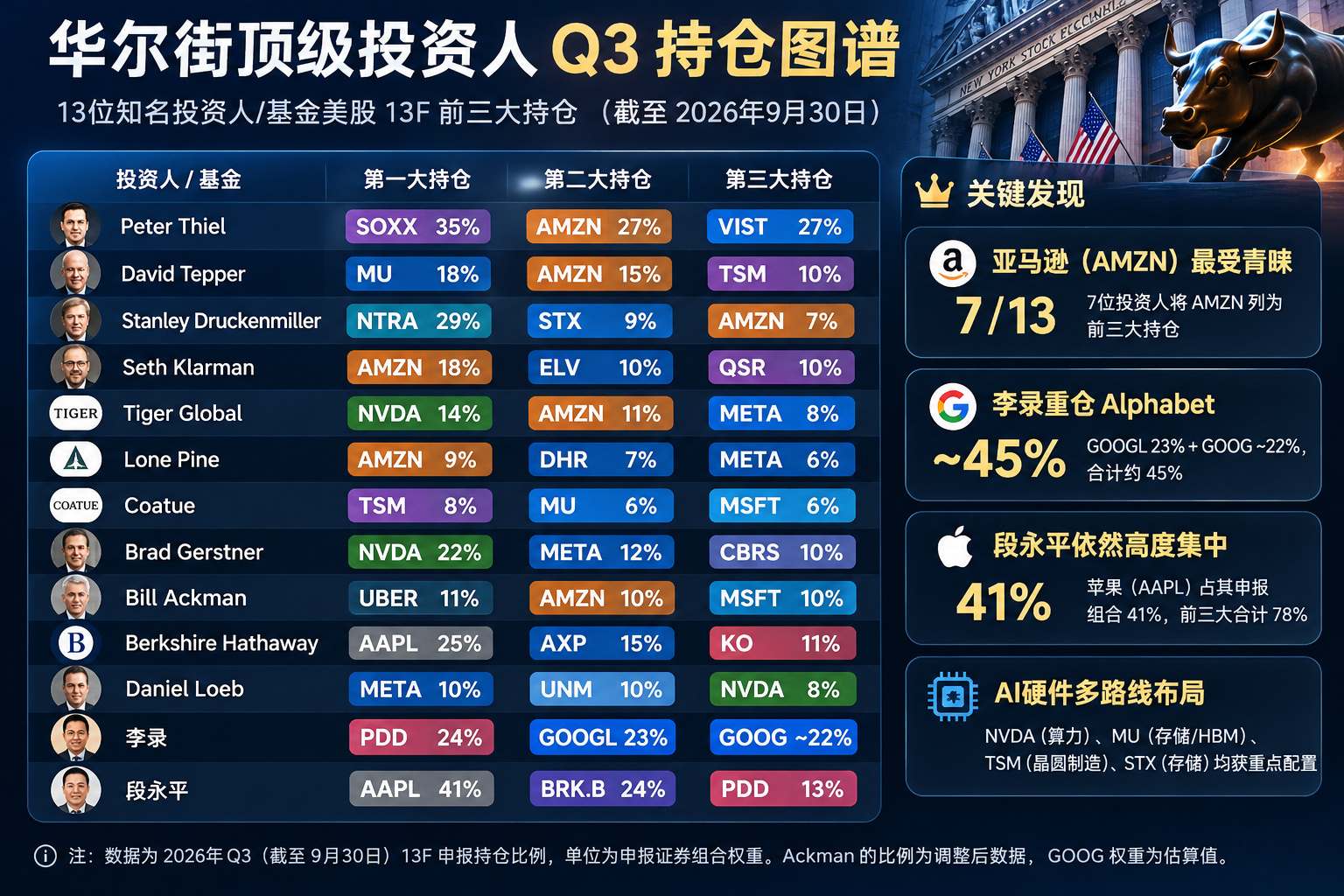
A look at the Q3 2026 U.S. 13F holdings of 13 well-known investors and funds reveals a few interesting details:
1. Amazon (AMZN) is the biggest consensus pick
7 of the 13 investors or funds list Amazon among their top three holdings.
Thiel: 27%, Klarman: 18%, Tepper: 15%, Tiger Global: 11%.
In the AI era, Wall Street isn’t just betting on companies that sell GPUs. It’s also betting on giants with cloud computing, AI infrastructure, and mature cash flows.
2. AI hardware investments have clearly diverged
Gerstner: Nvidia (NVDA), 22%.
Tepper: Micron (MU), 18%; TSMC (TSM), 10%.
Coatue: TSMC, 8%; Micron, 6%.
Druckenmiller: Seagate (STX), 9%.
GPUs, HBM, wafer fabrication, and storage: everyone is looking for opportunities in the AI supply chain, but they’re not all placing their bets in the same areas.
3. Li Lu’s biggest holding is actually Google
PDD Holdings (PDD), 24%; GOOGL, 23%; GOOG, about 22%.
Combined, GOOGL and GOOG make up about 45% of the reported portfolio, in Alphabet.
4. Duan Yongping is sticking to his familiar style
Apple, 41%; Berkshire Hathaway, 24%; PDD Holdings, 13%.
His top three holdings account for 78% of the portfolio.
While others study every link in the AI supply chain, he remains highly concentrated in companies he knows well.
5. Peter Thiel’s SOXX position is as high as 35%
Rather than taking a large position in any one chipmaker, he gets exposure to the sector through a semiconductor ETF.
Of course, these are 13F-reported holdings as of September 30. They don’t represent current positions as of November 17, nor do they include complete short positions or derivatives exposure.
Xiaohuihui’s biggest takeaway is that AI has become a major consensus view on Wall Street. The real disagreement is about who will make the most money from the AI supply chain over the long term.
The latest holdings of Wall Street’s top funds are out, and the most crowded trade may not be Nvidia, but Amazon.
A look at the Q3 2026 U.S. 13F holdings of 13 well-known investors and funds reveals a few interesting details:
1. Amazon (AMZN) is the biggest consensus pick
7 of the 13 investors or funds list Amazon among their top three holdings.
Thiel: 27%, Klarman: 18%, Tepper: 15%, Tiger Global: 11%.
In the AI era, Wall Street isn’t just betting on companies that sell GPUs. It’s also betting on giants with cloud computing, AI infrastructure, and mature cash flows.
2. AI hardware investments have clearly diverged
Gerstner: Nvidia (NVDA), 22%.
Tepper: Micron (MU), 18%; TSMC (TSM), 10%.
Coatue: TSMC, 8%; Micron, 6%.
Druckenmiller: Seagate (STX), 9%.
GPUs, HBM, wafer fabrication, and storage: everyone is looking for opportunities in the AI supply chain, but they’re not all placing their bets in the same areas.
3. Li Lu’s biggest holding is actually Google
PDD Holdings (PDD), 24%; GOOGL, 23%; GOOG, about 22%.
Combined, GOOGL and GOOG make up about 45% of the reported portfolio, in Alphabet.
4. Duan Yongping is sticking to his familiar style
Apple, 41%; Berkshire Hathaway, 24%; PDD Holdings, 13%.
His top three holdings account for 78% of the portfolio.
While others study every link in the AI supply chain, he remains highly concentrated in companies he knows well.
5. Peter Thiel’s SOXX position is as high as 35%
Rather than taking a large position in any one chipmaker, he gets exposure to the sector through a semiconductor ETF.
Of course, these are 13F-reported holdings as of September 30. They don’t represent current positions as of November 17, nor do they include complete short positions or derivatives exposure.
Xiaohuihui’s biggest takeaway is that AI has become a major consensus view on Wall Street. The real disagreement is about who will make the most money from the AI supply chain over the long term.
A look at the Q3 2026 U.S. 13F holdings of 13 well-known investors and funds reveals a few interesting details:
1. Amazon (AMZN) is the biggest consensus pick
7 of the 13 investors or funds list Amazon among their top three holdings.
Thiel: 27%, Klarman: 18%, Tepper: 15%, Tiger Global: 11%.
In the AI era, Wall Street isn’t just betting on companies that sell GPUs. It’s also betting on giants with cloud computing, AI infrastructure, and mature cash flows.
2. AI hardware investments have clearly diverged
Gerstner: Nvidia (NVDA), 22%.
Tepper: Micron (MU), 18%; TSMC (TSM), 10%.
Coatue: TSMC, 8%; Micron, 6%.
Druckenmiller: Seagate (STX), 9%.
GPUs, HBM, wafer fabrication, and storage: everyone is looking for opportunities in the AI supply chain, but they’re not all placing their bets in the same areas.
3. Li Lu’s biggest holding is actually Google
PDD Holdings (PDD), 24%; GOOGL, 23%; GOOG, about 22%.
Combined, GOOGL and GOOG make up about 45% of the reported portfolio, in Alphabet.
4. Duan Yongping is sticking to his familiar style
Apple, 41%; Berkshire Hathaway, 24%; PDD Holdings, 13%.
His top three holdings account for 78% of the portfolio.
While others study every link in the AI supply chain, he remains highly concentrated in companies he knows well.
5. Peter Thiel’s SOXX position is as high as 35%
Rather than taking a large position in any one chipmaker, he gets exposure to the sector through a semiconductor ETF.
Of course, these are 13F-reported holdings as of September 30. They don’t represent current positions as of November 17, nor do they include complete short positions or derivatives exposure.
Xiaohuihui’s biggest takeaway is that AI has become a major consensus view on Wall Street. The real disagreement is about who will make the most money from the AI supply chain over the long term.
1
1
7.6k
·
--
Partly True
Even China’s top private equity funds got a harsh lesson from the market in October.
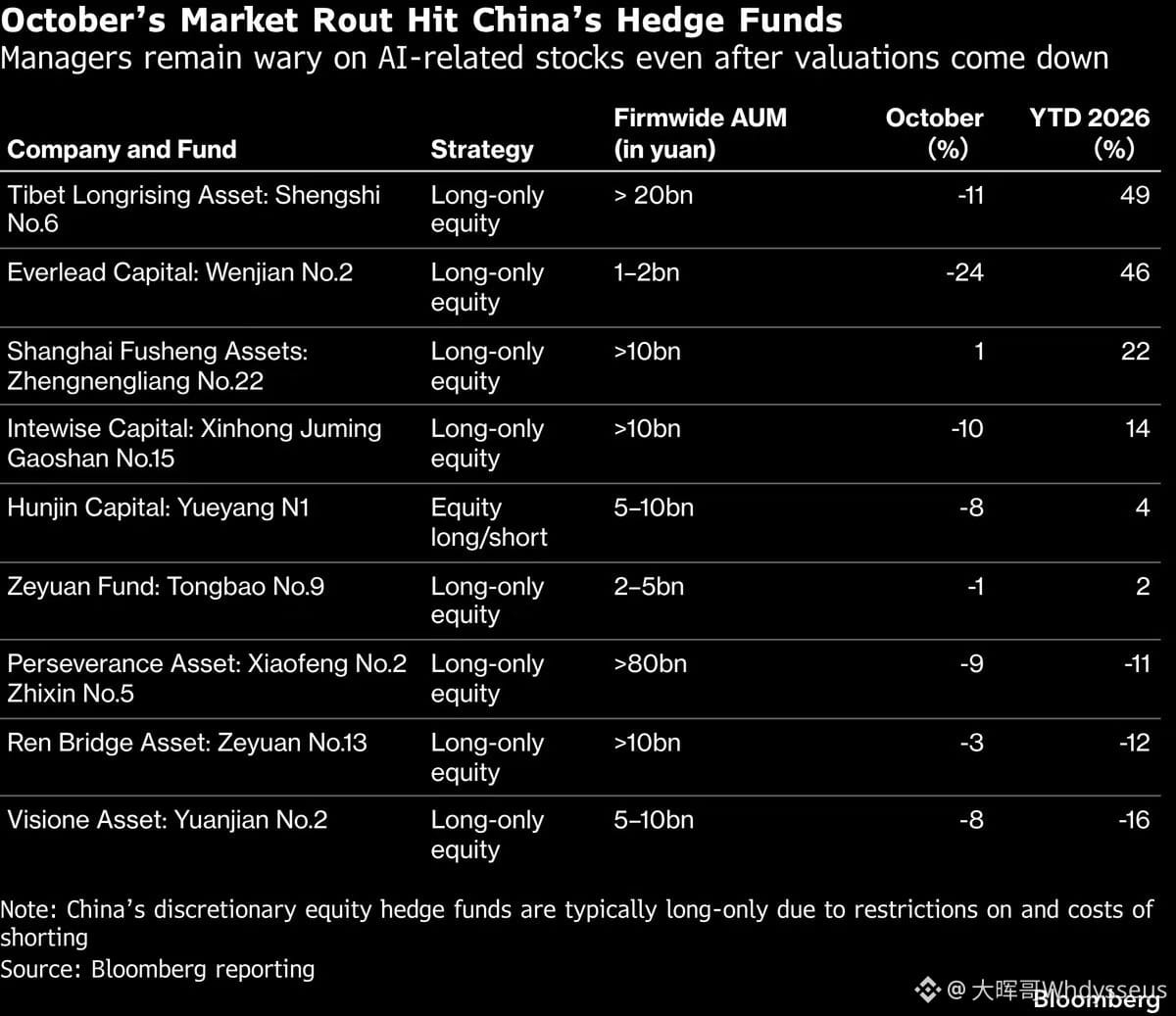
Bloomberg tracked the flagship products of nine well-known Chinese private equity firms. Eight lost money in October, with some plunging 24% in a single month.
Here are the results:
· Shanghai Everlead Capital: plunged 24% in October, but still up 46% for 2026
· Tibet Longrising Asset: fell 11% in October, but still up 49% year to date
· Shanghai Fusheng Assets: bucked the trend, rising 1% in October and gaining 22% year to date
· Intevise Capital: fell 10% in October, but gained 14% year to date
· Hunjin Capital: fell 8% in October, but gained 4% year to date
· Zeyuan Fund: fell 1% in October, but gained 2% year to date
· Perseverance Asset: fell 9% in October and was down 11% year to date
· Ren Bridge Asset: fell 3% in October and was down 12% year to date
· Visione Asset: fell 8% in October and was down 16% year to date
Shanghai Everlead gave back nearly half of its cumulative gains in just one month. Its flagship product had returned about 92% through the end of September, nearly doubling investors’ money. Then it fell 24% in October alone, cutting its year-to-date return to 46%.
Most of these products use long-only equity strategies. When the market falls across the board, fund managers must not only judge the market’s direction, but also decide when to cut positions and when to protect their gains.
Even though valuations of AI-related stocks have come down, some fund managers remain cautious about the AI sector.
When markets are rising, it’s all about who has the biggest positions, who dares to chase the rally, and who makes money the fastest.
It’s only when a real correction hits that you realize making money and holding on to it require two completely different skills.
Xiaohui believes that bull markets test offense and bear markets test defense. You can only tell who the truly outstanding fund managers are after they’ve been through a full market cycle.
Even China’s top private equity funds got a harsh lesson from the market in October.
Bloomberg tracked the flagship products of nine well-known Chinese private equity firms. Eight lost money in October, with some plunging 24% in a single month.
Here are the results:
· Shanghai Everlead Capital: plunged 24% in October, but still up 46% for 2026
· Tibet Longrising Asset: fell 11% in October, but still up 49% year to date
· Shanghai Fusheng Assets: bucked the trend, rising 1% in October and gaining 22% year to date
· Intevise Capital: fell 10% in October, but gained 14% year to date
· Hunjin Capital: fell 8% in October, but gained 4% year to date
· Zeyuan Fund: fell 1% in October, but gained 2% year to date
· Perseverance Asset: fell 9% in October and was down 11% year to date
· Ren Bridge Asset: fell 3% in October and was down 12% year to date
· Visione Asset: fell 8% in October and was down 16% year to date
Shanghai Everlead gave back nearly half of its cumulative gains in just one month. Its flagship product had returned about 92% through the end of September, nearly doubling investors’ money. Then it fell 24% in October alone, cutting its year-to-date return to 46%.
Most of these products use long-only equity strategies. When the market falls across the board, fund managers must not only judge the market’s direction, but also decide when to cut positions and when to protect their gains.
Even though valuations of AI-related stocks have come down, some fund managers remain cautious about the AI sector.
When markets are rising, it’s all about who has the biggest positions, who dares to chase the rally, and who makes money the fastest.
It’s only when a real correction hits that you realize making money and holding on to it require two completely different skills.
Xiaohui believes that bull markets test offense and bear markets test defense. You can only tell who the truly outstanding fund managers are after they’ve been through a full market cycle.
Bloomberg tracked the flagship products of nine well-known Chinese private equity firms. Eight lost money in October, with some plunging 24% in a single month.
Here are the results:
· Shanghai Everlead Capital: plunged 24% in October, but still up 46% for 2026
· Tibet Longrising Asset: fell 11% in October, but still up 49% year to date
· Shanghai Fusheng Assets: bucked the trend, rising 1% in October and gaining 22% year to date
· Intevise Capital: fell 10% in October, but gained 14% year to date
· Hunjin Capital: fell 8% in October, but gained 4% year to date
· Zeyuan Fund: fell 1% in October, but gained 2% year to date
· Perseverance Asset: fell 9% in October and was down 11% year to date
· Ren Bridge Asset: fell 3% in October and was down 12% year to date
· Visione Asset: fell 8% in October and was down 16% year to date
Shanghai Everlead gave back nearly half of its cumulative gains in just one month. Its flagship product had returned about 92% through the end of September, nearly doubling investors’ money. Then it fell 24% in October alone, cutting its year-to-date return to 46%.
Most of these products use long-only equity strategies. When the market falls across the board, fund managers must not only judge the market’s direction, but also decide when to cut positions and when to protect their gains.
Even though valuations of AI-related stocks have come down, some fund managers remain cautious about the AI sector.
When markets are rising, it’s all about who has the biggest positions, who dares to chase the rally, and who makes money the fastest.
It’s only when a real correction hits that you realize making money and holding on to it require two completely different skills.
Xiaohui believes that bull markets test offense and bear markets test defense. You can only tell who the truly outstanding fund managers are after they’ve been through a full market cycle.
1.7k
·
--
The Megaspeed case has escalated: the U.S. Department of Justice has formally launched a criminal investigation. Behind it lies a power struggle in Washington.
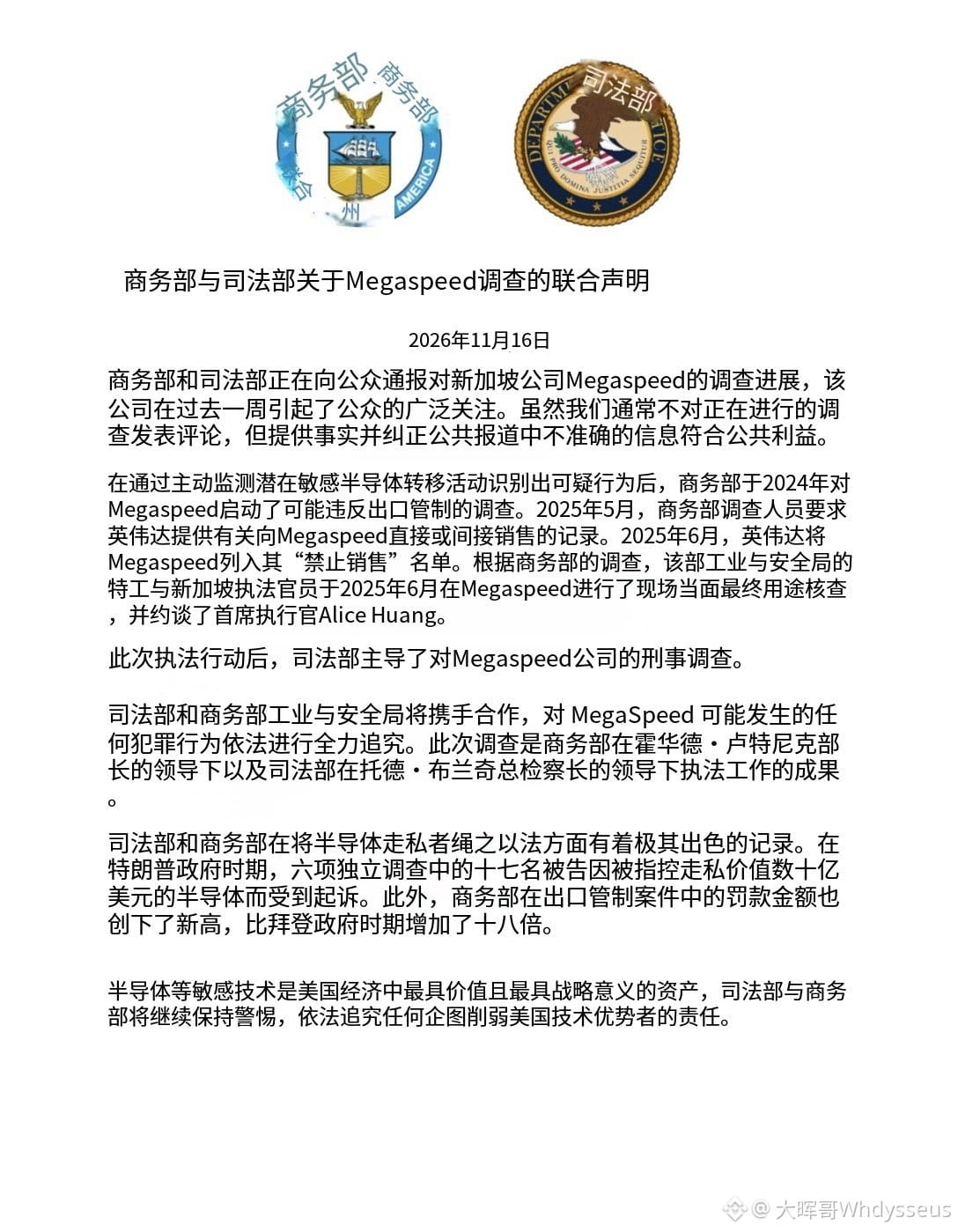
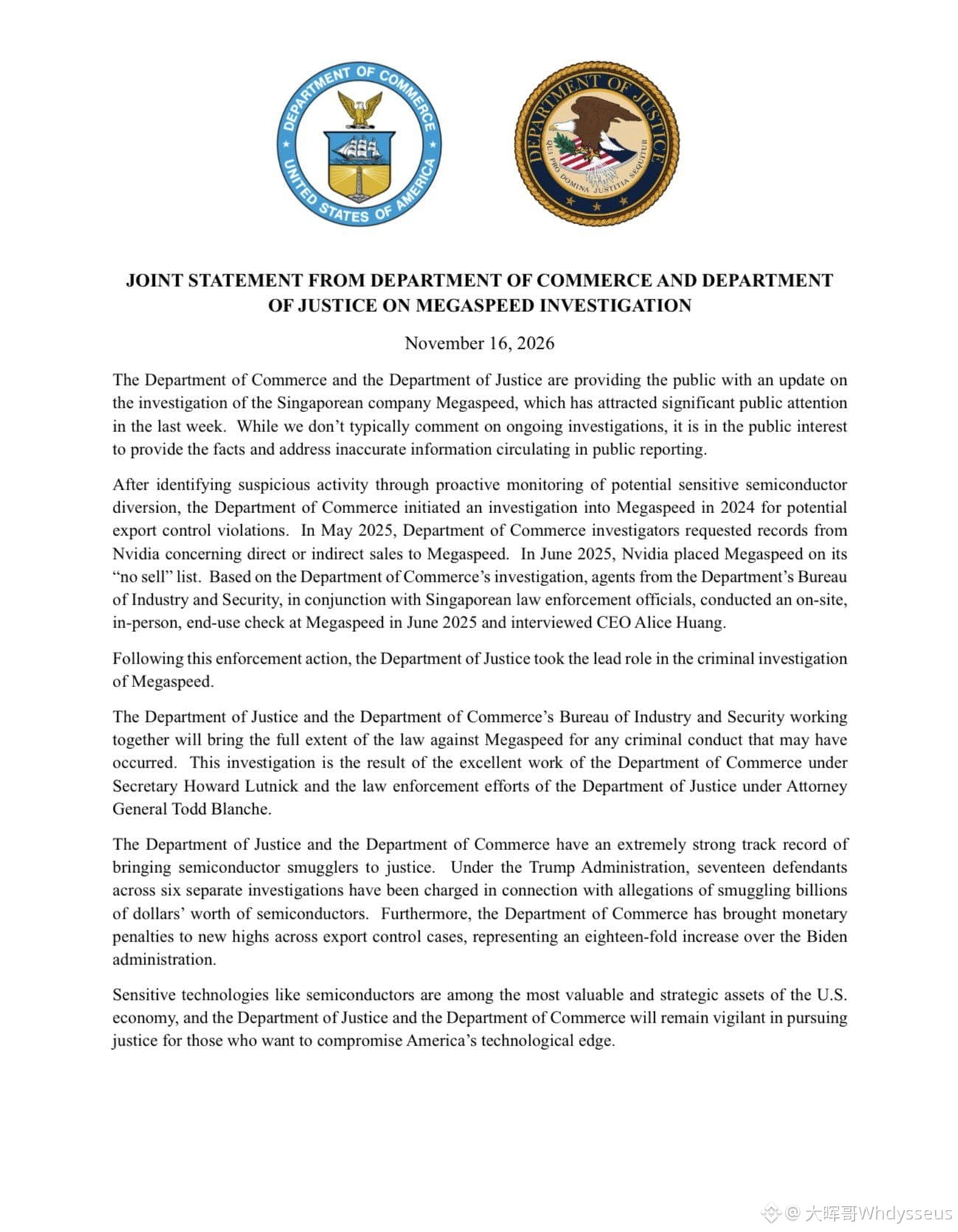
On November 16, the U.S. Departments of Commerce and Justice issued a rare joint statement, revealing new details about their investigation into Megaspeed, a Singapore-based GPU computing company.
A few details are worth noting:
1. Legal: The case has escalated from an export control investigation to a criminal investigation.
The U.S. Department of Commerce began investigating Megaspeed in 2024. In May 2025, it asked Nvidia to provide sales records; in June, Nvidia added Megaspeed to its internal no-sale list.
The Department of Justice subsequently took over and led the criminal investigation.
Note that a criminal investigation does not mean a crime has been established. But this is clearly no longer an ordinary commercial compliance dispute.
2. Political: A subtle power struggle between Bessent and Lutnick.
Previously, U.S. Treasury Secretary Bessent publicly questioned why the Department of Commerce had taken so long to put Megaspeed on a trade blacklist.
Now, the Departments of Commerce and Justice have issued a joint statement, laying out a detailed timeline of the investigation and stressing that it proceeded under Commerce Secretary Lutnick's leadership.
Interestingly, the two accounts are not entirely contradictory: investigating a company does not mean putting it on a blacklist.
But who knew what, and when? Who took action? Who did not?
The debate within Washington over regulatory responsibility is probably far from over.
3. Industry: The Southeast Asian GPU arbitrage business may have to rethink its numbers.
In the past, the GPU business revolved around price, distribution channel, and supply-and-demand differences between China and the U.S.
The U.S. is now paying attention not only to who buys chips and where they are shipped, but increasingly to who ultimately uses them—and who ultimately receives the computing power supplied by data centers overseas.
This could have far-reaching effects on B300 and H200 traders, Southeast Asian data centers, and GPU rental platforms.
In the past, the most important thing in GPU arbitrage was finding the inventory. Going forward, it may be proving who the inventory ultimately serves.
On the surface, the Megaspeed case is an export control investigation. Behind it, however, are disagreements over regulatory oversight among U.S. government agencies, as well as changing rules for the global AI computing business.
On one side is a power struggle in Washington; on the other, a GPU supply chain worth tens of billions of dollars.
What may truly matter is not the fate of Megaspeed alone, but who gets to decide where the world's most advanced computing power goes.
The Megaspeed case has escalated: the U.S. Department of Justice has formally launched a criminal investigation. Behind it lies a power struggle in Washington.
On November 16, the U.S. Departments of Commerce and Justice issued a rare joint statement, revealing new details about their investigation into Megaspeed, a Singapore-based GPU computing company.
A few details are worth noting:
1. Legal: The case has escalated from an export control investigation to a criminal investigation.
The U.S. Department of Commerce began investigating Megaspeed in 2024. In May 2025, it asked Nvidia to provide sales records; in June, Nvidia added Megaspeed to its internal no-sale list.
The Department of Justice subsequently took over and led the criminal investigation.
Note that a criminal investigation does not mean a crime has been established. But this is clearly no longer an ordinary commercial compliance dispute.
2. Political: A subtle power struggle between Bessent and Lutnick.
Previously, U.S. Treasury Secretary Bessent publicly questioned why the Department of Commerce had taken so long to put Megaspeed on a trade blacklist.
Now, the Departments of Commerce and Justice have issued a joint statement, laying out a detailed timeline of the investigation and stressing that it proceeded under Commerce Secretary Lutnick's leadership.
Interestingly, the two accounts are not entirely contradictory: investigating a company does not mean putting it on a blacklist.
But who knew what, and when? Who took action? Who did not?
The debate within Washington over regulatory responsibility is probably far from over.
3. Industry: The Southeast Asian GPU arbitrage business may have to rethink its numbers.
In the past, the GPU business revolved around price, distribution channel, and supply-and-demand differences between China and the U.S.
The U.S. is now paying attention not only to who buys chips and where they are shipped, but increasingly to who ultimately uses them—and who ultimately receives the computing power supplied by data centers overseas.
This could have far-reaching effects on B300 and H200 traders, Southeast Asian data centers, and GPU rental platforms.
In the past, the most important thing in GPU arbitrage was finding the inventory. Going forward, it may be proving who the inventory ultimately serves.
On the surface, the Megaspeed case is an export control investigation. Behind it, however, are disagreements over regulatory oversight among U.S. government agencies, as well as changing rules for the global AI computing business.
On one side is a power struggle in Washington; on the other, a GPU supply chain worth tens of billions of dollars.
What may truly matter is not the fate of Megaspeed alone, but who gets to decide where the world's most advanced computing power goes.
On November 16, the U.S. Departments of Commerce and Justice issued a rare joint statement, revealing new details about their investigation into Megaspeed, a Singapore-based GPU computing company.
A few details are worth noting:
1. Legal: The case has escalated from an export control investigation to a criminal investigation.
The U.S. Department of Commerce began investigating Megaspeed in 2024. In May 2025, it asked Nvidia to provide sales records; in June, Nvidia added Megaspeed to its internal no-sale list.
The Department of Justice subsequently took over and led the criminal investigation.
Note that a criminal investigation does not mean a crime has been established. But this is clearly no longer an ordinary commercial compliance dispute.
2. Political: A subtle power struggle between Bessent and Lutnick.
Previously, U.S. Treasury Secretary Bessent publicly questioned why the Department of Commerce had taken so long to put Megaspeed on a trade blacklist.
Now, the Departments of Commerce and Justice have issued a joint statement, laying out a detailed timeline of the investigation and stressing that it proceeded under Commerce Secretary Lutnick's leadership.
Interestingly, the two accounts are not entirely contradictory: investigating a company does not mean putting it on a blacklist.
But who knew what, and when? Who took action? Who did not?
The debate within Washington over regulatory responsibility is probably far from over.
3. Industry: The Southeast Asian GPU arbitrage business may have to rethink its numbers.
In the past, the GPU business revolved around price, distribution channel, and supply-and-demand differences between China and the U.S.
The U.S. is now paying attention not only to who buys chips and where they are shipped, but increasingly to who ultimately uses them—and who ultimately receives the computing power supplied by data centers overseas.
This could have far-reaching effects on B300 and H200 traders, Southeast Asian data centers, and GPU rental platforms.
In the past, the most important thing in GPU arbitrage was finding the inventory. Going forward, it may be proving who the inventory ultimately serves.
On the surface, the Megaspeed case is an export control investigation. Behind it, however, are disagreements over regulatory oversight among U.S. government agencies, as well as changing rules for the global AI computing business.
On one side is a power struggle in Washington; on the other, a GPU supply chain worth tens of billions of dollars.
What may truly matter is not the fate of Megaspeed alone, but who gets to decide where the world's most advanced computing power goes.
178
Log in to explore more content
Join global crypto users on Binance Square
⚡️ Get latest and useful information about crypto.
💬 Trusted by the world’s largest crypto exchange.
👍 Discover real insights from verified creators.
Email / Phone number
Trending Topics
IsAnthropic’s$1.5TMarketCapJustified?
7,455 views
66 Discussing
Anthropic Set to Open at $105 in Record Nasdaq Debut
Binance News
·10 Likes
·9.4k views
BTCRemainsUnderPressureAfterHawkishFOMCMinutes
207,954 views
1,980 Discussing
NvidiaBoardReportedlySplitOverHuang’sReturn
101,286 views
1,062 Discussing