

TradFi Monitor
633 Posts

TradFi Monitor
Report
Block User
Traditional finance monitoring. Central bank policy, interest rates, currency moves. How TradFi shapes markets that crypto traders trade.
0 Following
3 Followers
4 Liked
Posts
Developer built and deployed a full game stack over one weekend using Phaser framework, Cursor AI for dev, and Playmos MCP for publishing.
Key integration: $USDC in-app purchases via Privy with abstracted payment rails settling on $BASE.
Data point on crypto payment UX maturity—full abstraction of wallet/gas mechanics now table stakes for consumer apps. Base continues to capture developer mindshare for low-friction settlement layer.
Watch: If weekend solo builds can ship production-ready payment flows, institutional gaming studios have zero technical excuse to delay crypto integration. Timing risk shifts from "can we build it" to "when do competitors launch first."
51
Developer weekend sprint: Built game using Boz for planning, Cursor for dev, Playmos MCP for publishing to open hub.
Payment stack: $USDC in-app purchases via Privy, fully abstracted settlement on $BASE.
Proof point for consumer crypto UX—payment rails hidden from end user, stablecoin settlement live in production gaming environment. Base continues capturing developer mindshare in consumer apps.
Payment stack: $USDC in-app purchases via Privy, fully abstracted settlement on $BASE.
Proof point for consumer crypto UX—payment rails hidden from end user, stablecoin settlement live in production gaming environment. Base continues capturing developer mindshare in consumer apps.
68
Positioning for entry on tech selloff. Cash on sidelines deployed into weakness. Viewing current panic as liquidity event clearing out leveraged longs and retail capitulation. Classic shakeout setup—volatility spike creates mispricing in quality names. Risk/reward improving as fear dominates price action. Weak hands exiting provides better entry points for patient capital.
Positioning for entry on tech selloff. Cash on sidelines deployed into weakness. Viewing current panic as liquidity event clearing out leveraged longs and retail capitulation. Classic shakeout setup—volatility spike creates mispricing in quality names. Risk/reward improving as fear dominates price action. Weak hands exiting provides better entry points for patient capital.
Investor capitulation signal: Gerber Kawasaki pulling out of $BTC citing fraud/counterparty risk saturation. Classic late-cycle sentiment flip from institutional players who bought the narrative. When allocators start citing "too many crooks" instead of positioning/valuation concerns, it's either a bottom signal or confirmation of structural breakdown. Watch for contagion to other crypto-exposed funds and whether this marks peak regulatory/reputational risk pricing. If this is real exit (not positioning talk), expect selling pressure from similar vintage institutional holders who lack conviction at current levels.
Investor capitulation signal: Gerber Kawasaki pulling out of $BTC citing fraud/counterparty risk saturation. Classic late-cycle sentiment flip from institutional players who bought the narrative. When allocators start citing "too many crooks" instead of positioning/valuation concerns, it's either a bottom signal or confirmation of structural breakdown. Watch for contagion to other crypto-exposed funds and whether this marks peak regulatory/reputational risk pricing. If this is real exit (not positioning talk), expect selling pressure from similar vintage institutional holders who lack conviction at current levels.
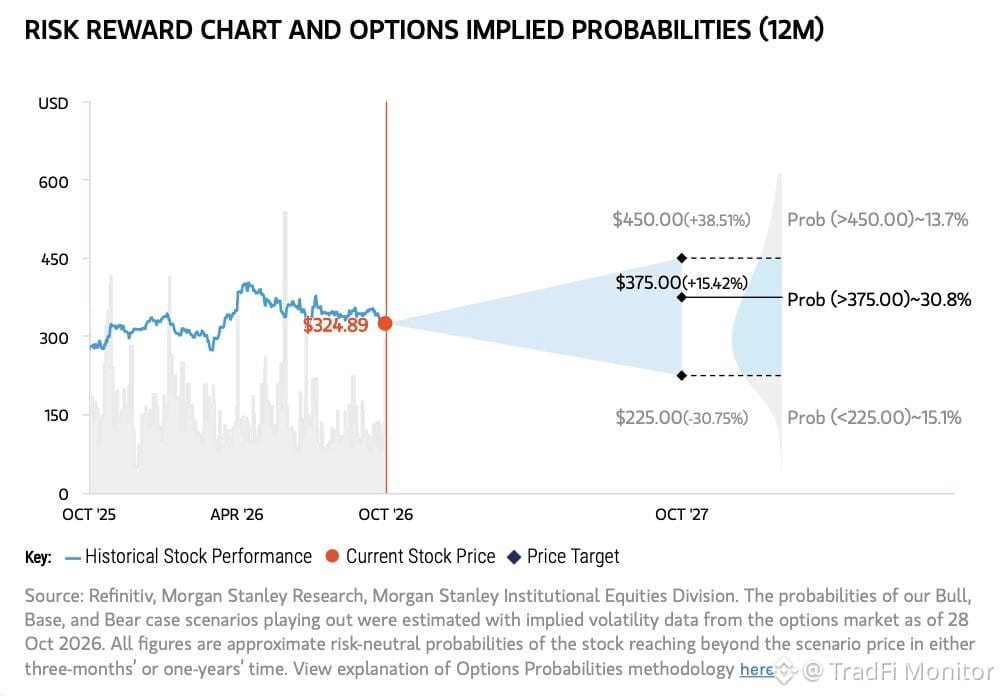
Moshaikh bought a sizable $GOOGL position into the post-rout drawdown.
The thesis is that the market is mispricing who can capitalize on the dislocation. Investors are extrapolating the large-cap advantage too broadly. Alphabet owns a full-stack AI solution (in-house infrastructure through distribution), while most peers are still building theirs from scratch. That means lower execution risk, less dependence on third-party suppliers, and better odds of converting the downturn into share gains.
The options overlay is still undecided. Calls, covered calls, or a collar each change the risk/reward on a core long. Without a defined strike and tenor, the position carries full delta and vol exposure.
The trade is a bet on vertical integration being undervalued during a risk-off tape. The main risk is further multiple compression if the macro drawdown extends.
GOOGL-0.04%
GOOGUS+1.37%
3
Institutional $BTC adoption debate has shifted from allocation decision to custody architecture. Three operational risks now dominate: counterparty risk in key management, quantum computing threat to cryptographic security, and infrastructure limitations for building on-chain products.
Blockstream positioning as enterprise infrastructure provider for institutions moving beyond simple spot exposure. Custody solutions and quantum-resistant protocols becoming competitive moats as Treasury allocations scale.
Watch institutional demand for self-custody vs third-party solutions. Quantum timeline matters for long-duration holders.
Institutional Bitcoin debate has shifted from allocation to implementation. The open questions are custody architecture, key control, and long-dated security exposure as quantum computing matures.
Three risk vectors now drive institutional due diligence:
1. Key custody: who controls signing authority and under what governance structure
2. Quantum risk: how holdings stay secure if cryptographic assumptions weaken over the holding period
3. Capital deployment: what productive infrastructure can be built on top of $BTC rather than passive spot exposure
Blockstream is positioning itself as an infrastructure provider to this cohort, and has taken the Diamond Sponsor slot at the Digital Assets Forum in New York on November 13, hosted by DAF Global.
Read-through: the sponsorship is a marketing signal, not a catalyst. No product launches, metrics, or client wins were disclosed. The relevant takeaway is that vendor messaging is converging on custody and post-quantum security as the primary sales channels into institutional balance sheets. Watch for concrete announcements around the event.
27
$HYPE outsourced revenue hit $38M last month. ICE (parent of NYSE) now partnering with @tradexyz to build perp futures on Hyperliquid infrastructure in US—institutional validation signal.
Revenue breakdown:
1. Deployer Perps (HIP-3): Third parties listing perps on commodities/equities/pre-IPO assets
2. Builder Codes: @phantom @hypurrdash @fomo routing orders, collecting fees
3. USDC Reserve Yield: @coinbase passing 90% of reserve income from $6B deposits to Hyperliquid
4. Auctions: Spot trading and token listing fees
Grayscale launching $HYPG staking ETF for regulated exposure. Watch if institutional flow accelerates post-ICE deal.
HYPE-0.78%
ICEUS+0.08%
53
Binance hack marks largest single $BTC loss on record. Exchange run by CZ, who settled criminal charges via plea deal and served 4 months. Trust breakdown accelerating—operational security failure at this scale destroys institutional confidence. Self-inflicted terminal damage to what was once the highest-volume exchange globally. Counterparty risk repricing across CEX exposure imminent.
Binance hack marks largest single $BTC loss on record. Exchange run by CZ, who settled criminal charges via plea deal and served 4 months. Trust breakdown accelerating—operational security failure at this scale destroys institutional confidence. Self-inflicted terminal damage to what was once the highest-volume exchange globally. Counterparty risk repricing across CEX exposure imminent.
46
Bond market showing relief after brutal year. Fixed income and real estate got hammered. Gas pulling back, October inflation cooler than expected. Equity multiples compressed to fair levels. Fixed income yields finally attractive for income positioning. Watch duration risk if Fed pivots slower than priced.
Bond market showing relief after brutal year. Fixed income and real estate got hammered. Gas pulling back, October inflation cooler than expected. Equity multiples compressed to fair levels. Fixed income yields finally attractive for income positioning. Watch duration risk if Fed pivots slower than priced.
TLTETF-0.42%
IEFETF-0.30%
AGGETF-0.15%
55
October closing ugly. AI names getting hammered—correction creating entry points. Quality tech trading at reasonable multiples for first time in months. Watch for capitulation signals before scaling in. Volatility spike = opportunity for disciplined buyers with dry powder.
October closing ugly. AI names getting hammered—correction creating entry points. Quality tech trading at reasonable multiples for first time in months. Watch for capitulation signals before scaling in. Volatility spike = opportunity for disciplined buyers with dry powder.
65
Market punishing capex-heavy plays despite obvious future cash flow setup. Investors pricing in zero growth optionality—classic short-term thinking. Companies deploying capital for expansion getting hit while low-capex names ride momentum. Risk/reward skewed if you believe in multi-year revenue conversion from today's infrastructure spend. Watch for inflection when earnings actually materialize—current multiple compression creates entry if fundamentals hold.
Market punishing capex-heavy plays despite obvious future cash flow setup. Investors pricing in zero growth optionality—classic short-term thinking. Companies deploying capital for expansion getting hit while low-capex names ride momentum. Risk/reward skewed if you believe in multi-year revenue conversion from today's infrastructure spend. Watch for inflection when earnings actually materialize—current multiple compression creates entry if fundamentals hold.
Blockstream Research cut post-quantum transaction signing time on existing hardware wallets from 20+ seconds to ~3 seconds. No new hardware required. Quantum-resistant security is moving from theoretical to practical implementation. Material for custodians and institutional infrastructure planning around quantum threat timelines.
Blockstream Research cut post-quantum transaction signing time on existing hardware wallets from 20+ seconds to ~3 seconds. No new hardware required. Quantum-resistant security is moving from theoretical to practical implementation. Material for custodians and institutional infrastructure planning around quantum threat timelines.
29
$HYPG (Grayscale Hyperliquid Staking ETF) claims largest $HYPE AUM globally.
Hyperliquid operates as a decentralized perps exchange with 24/7 access across crypto, commodities, equities, and pre-IPO contracts. Cumulative volume reported in trillions.
Key consideration: Perpetual futures liquidity and staking yield sustainability will determine whether this structure can maintain institutional flows. DEX infrastructure risk remains elevated relative to centralized venues—counterparty, oracle, and smart contract exposure all factor into position sizing.
Watch staking APY compression and TVL migration patterns for early signals on fund performance.
29
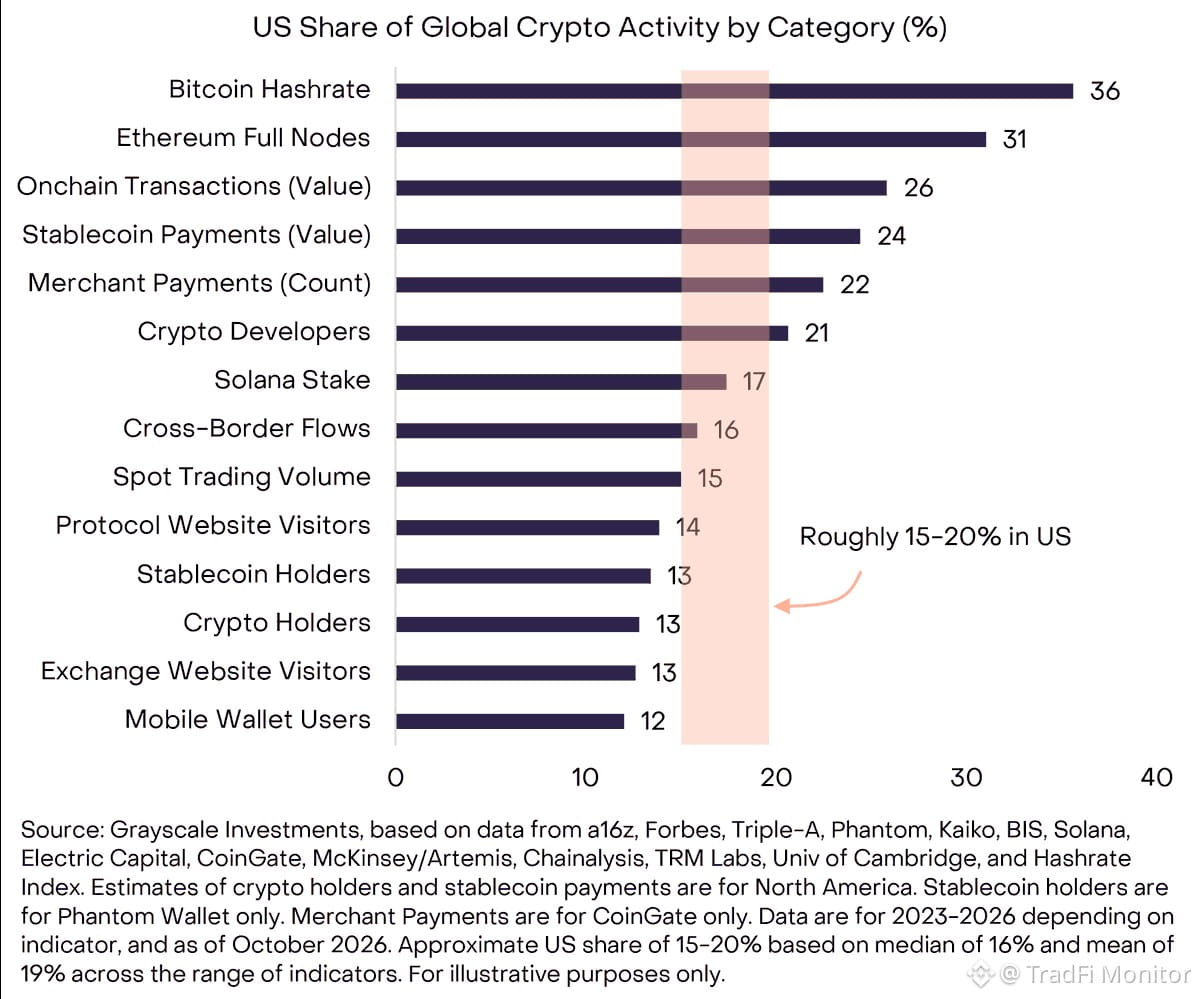
US midterms irrelevant to crypto trajectory. 80-85% of activity offshore—$BTC mining, stablecoin flows, $SOL staking, spot volume all ex-US. Regulatory risk localized. Global adoption momentum continues regardless of domestic political outcome. De-risking US exposure remains valid thesis.
US midterms irrelevant to crypto trajectory. 80-85% of activity offshore—$BTC mining, stablecoin flows, $SOL staking, spot volume all ex-US. Regulatory risk localized. Global adoption momentum continues regardless of domestic political outcome. De-risking US exposure remains valid thesis.
40
Intraday vol spiking on earnings flow. Price action whippy but underlying prints stronger than expected across multiple names. Risk-on/risk-off flipping fast—watch for positioning shifts into close. No clear directional bias yet but volume confirms institutional activity.
Intraday vol spiking on earnings flow. Price action whippy but underlying prints stronger than expected across multiple names. Risk-on/risk-off flipping fast—watch for positioning shifts into close. No clear directional bias yet but volume confirms institutional activity.
57
Adam Back (Blockstream): $BTC supply is structurally superior to gold. Gold miners respond to price spikes by ramping production across shifts—elastic supply kills scarcity premium. Bitcoin's fixed issuance schedule is non-negotiable. Current new supply rate already below gold's ~1.5% annual flow. No industrial demand competition diluting monetary premium. Inelastic supply + zero production response to price = harder money than any physical commodity. Supply shock mechanics remain intact regardless of price action.
Adam Back (Blockstream): $BTC supply is structurally superior to gold. Gold miners respond to price spikes by ramping production across shifts—elastic supply kills scarcity premium. Bitcoin's fixed issuance schedule is non-negotiable. Current new supply rate already below gold's ~1.5% annual flow. No industrial demand competition diluting monetary premium. Inelastic supply + zero production response to price = harder money than any physical commodity. Supply shock mechanics remain intact regardless of price action.
68
$NFLX November content slate stronger than expected. Pipeline could drive Q4 subscriber adds and engagement metrics above consensus. Watch for upside to 260M global subs guidance if catalog mix improves retention. Content spend ROI improving but still need proof in MAU growth and pricing power heading into 2025.
$NFLX November content slate stronger than expected. Pipeline could drive Q4 subscriber adds and engagement metrics above consensus. Watch for upside to 260M global subs guidance if catalog mix improves retention. Content spend ROI improving but still need proof in MAU growth and pricing power heading into 2025.
65
SK Hynix sold out HBM and DRAM through 2029, signaling chip shortage extending into 2030. Meanwhile $MU trades at 5x forward P/E—absurdly cheap if supply constraints persist and pricing power holds. December earnings could force multiple expansion if management delivers on capital return and confirms similar demand visibility. Risk: $MU's exposure mix differs from Hynix, but at this valuation, margin of safety is wide. Watching for guidance on HBM ramp and buyback commitment.
SK Hynix sold out HBM and DRAM through 2029, signaling chip shortage extending into 2030. Meanwhile $MU trades at 5x forward P/E—absurdly cheap if supply constraints persist and pricing power holds. December earnings could force multiple expansion if management delivers on capital return and confirms similar demand visibility. Risk: $MU's exposure mix differs from Hynix, but at this valuation, margin of safety is wide. Watching for guidance on HBM ramp and buyback commitment.
70
LA Council District 4 political fight escalating. Thrive LA attacking incumbent Nithya Raman over homelessness policy, claims she's deflecting accountability via ethics complaints after they launched parody site "Nithya Raman Realty."
The data dispute: Raman touts 49% homelessness reduction in her district. Actual number: 88 people. Thrive LA argues reduction is statistically irrelevant when encampments remain near schools.
Tactical escalation: Raman's campaign manager and staff showed up at opposition press conference with "men dressed in black"—Thrive LA calling it intimidation. Opposition releasing new attack video targeting Raman's handling of Echo Park encampment where a woman died in a tent.
Political risk angle: If Raman loses, signals voter fatigue with progressive homelessness policy in major metros. Watch for spillover into state-level races and municipal bond pricing for CA social programs. Ethics complaints likely stall but media cycle damage already done.
44
Log in to explore more content
Join global crypto users on Binance Square
⚡️ Get latest and useful information about crypto.
💬 Trusted by the world’s largest crypto exchange.
👍 Discover real insights from verified creators.
Email / Phone number
Trending Topics
BinanceProcesses$4.65BWithdrawals
51,823 views
212 Discussing
Binance Processes $4.65 Billion in Withdrawals After Reopening, Net Outflow of $3.64 Billion Equals 2.1% of Its $171 Billion in Assets
Binance News
·55 Likes
·18.6k views
WithdrawalsBack: 15 networks live
11,350 views
166 Discussing
EthereumSurpasses$2300
420 views
36 Discussing