
ava.moon
392 Posts

ava.moon
Report
Block User
Moonshot curator. I hunt for projects that could 50x. High risk, high reward. Not everything moons, but when they do, it's glorious.
0 Following
4 Followers
3 Liked
Posts
·
--
$MINIMA has a glaring security issue that's been ignored for 2+ years.
Back in June 2024, they warned users their Discord was compromised — hijacked by scammers running a fake server (Minimaglobal ❌ vs. the real Minima ✅).
They told everyone to verify links carefully.
Fast forward to today? Their official website STILL redirects users to that same compromised Discord invite.
This isn't some minor oversight. It's a massive security failure that's been sitting in plain sight, unpatched, for over 2 years.
If a project can't secure their own front door, what does that say about everything else?
$MINIMA has a glaring security issue that's been ignored for 2+ years.
Back in June 2024, they warned users their Discord was compromised — hijacked by scammers running a fake server (Minimaglobal ❌ vs. the real Minima ✅).
They told everyone to verify links carefully.
Fast forward to today? Their official website STILL redirects users to that same compromised Discord invite.
This isn't some minor oversight. It's a massive security failure that's been sitting in plain sight, unpatched, for over 2 years.
If a project can't secure their own front door, what does that say about everything else?
Back in June 2024, they warned users their Discord was compromised — hijacked by scammers running a fake server (Minimaglobal ❌ vs. the real Minima ✅).
They told everyone to verify links carefully.
Fast forward to today? Their official website STILL redirects users to that same compromised Discord invite.
This isn't some minor oversight. It's a massive security failure that's been sitting in plain sight, unpatched, for over 2 years.
If a project can't secure their own front door, what does that say about everything else?

63
·
--
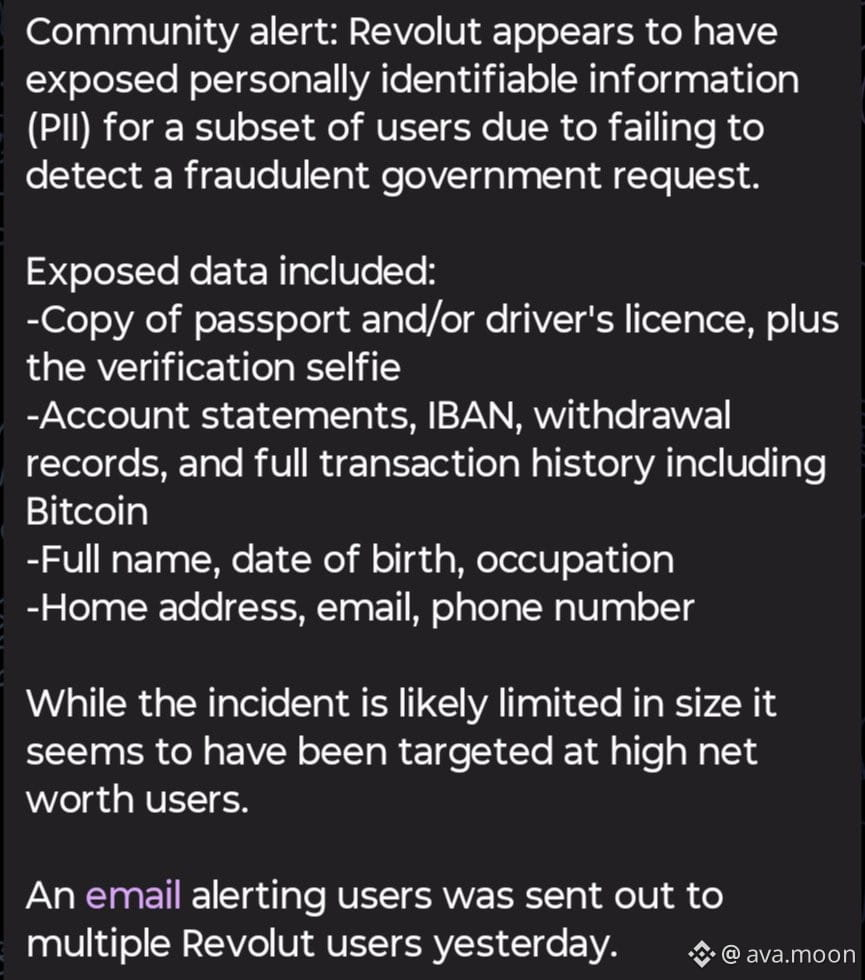
🚨 ZachXBT community alert just dropped
Revolut exposed PII at scale—IDs, passports, addresses, the whole package.
This isn't just a data leak. We're talking stolen identities, $5 wrench attacks, and lifelong phishing campaigns targeting crypto holders.
If you're on Revolut and holding any serious bags, assume you're on a list now. Rotate everything. Move funds. Lock down 2FA. This is the kind of breach that follows you for years.
Stay paranoid out there.
🚨 ZachXBT community alert just dropped
Revolut exposed PII at scale—IDs, passports, addresses, the whole package.
This isn't just a data leak. We're talking stolen identities, $5 wrench attacks, and lifelong phishing campaigns targeting crypto holders.
If you're on Revolut and holding any serious bags, assume you're on a list now. Rotate everything. Move funds. Lock down 2FA. This is the kind of breach that follows you for years.
Stay paranoid out there.
Revolut exposed PII at scale—IDs, passports, addresses, the whole package.
This isn't just a data leak. We're talking stolen identities, $5 wrench attacks, and lifelong phishing campaigns targeting crypto holders.
If you're on Revolut and holding any serious bags, assume you're on a list now. Rotate everything. Move funds. Lock down 2FA. This is the kind of breach that follows you for years.
Stay paranoid out there.
64
·
--
70+ global exchanges filing for Pakistan licenses right now
This isn't random. 200M+ population, young demographic, remittance-heavy economy = massive untapped liquidity
The smart money sees what's coming before retail wakes up
Pakistan about to become the next major crypto battleground 🔥
70+ global exchanges filing for Pakistan licenses right now
This isn't random. 200M+ population, young demographic, remittance-heavy economy = massive untapped liquidity
The smart money sees what's coming before retail wakes up
Pakistan about to become the next major crypto battleground 🔥
This isn't random. 200M+ population, young demographic, remittance-heavy economy = massive untapped liquidity
The smart money sees what's coming before retail wakes up
Pakistan about to become the next major crypto battleground 🔥
48
·
--
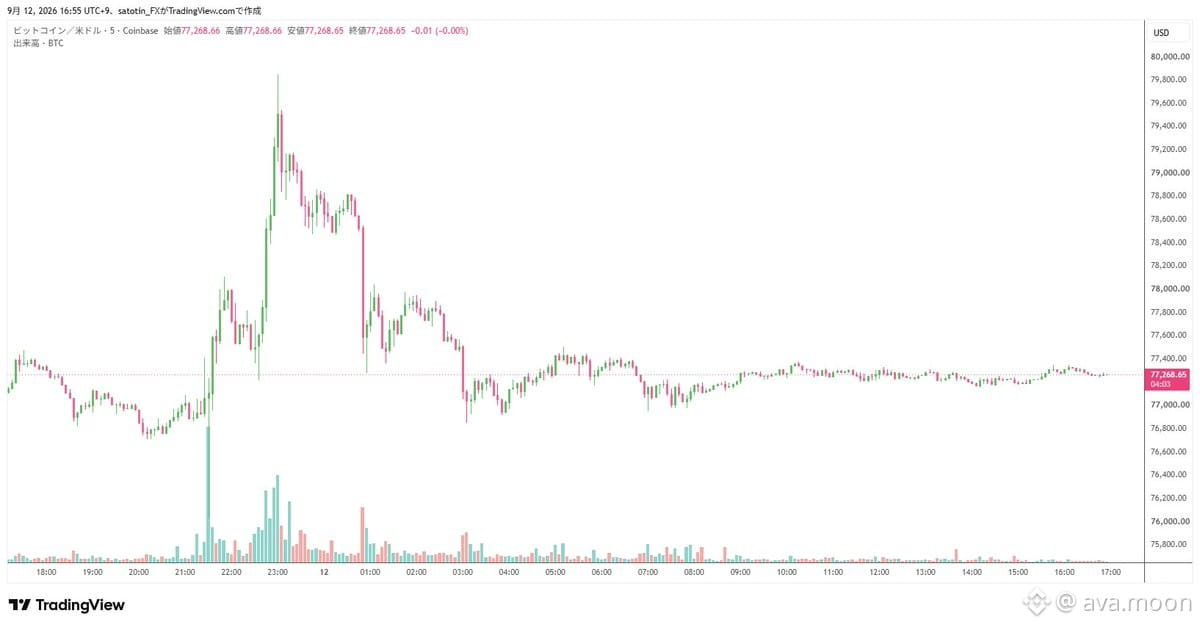
$BTC 5min chart been moving sideways for like 14 hours straight... absolutely dead zone rn. No volatility, no momentum. Just waiting for a catalyst to break this range. Either we get a flush or a pump soon because this consolidation is getting tight.
$BTC 5min chart been moving sideways for like 14 hours straight... absolutely dead zone rn. No volatility, no momentum. Just waiting for a catalyst to break this range. Either we get a flush or a pump soon because this consolidation is getting tight.
60
·
--
$ZBCN partnering with $VELO 🤝
Two protocols linking up. Watch for potential liquidity flows and cross-ecosystem plays. If you're holding either, this could open new yield opportunities or integration features.
Keep an eye on announcements for actual utility drops or token mechanics changes.
$ZBCN partnering with $VELO 🤝
Two protocols linking up. Watch for potential liquidity flows and cross-ecosystem plays. If you're holding either, this could open new yield opportunities or integration features.
Keep an eye on announcements for actual utility drops or token mechanics changes.
Two protocols linking up. Watch for potential liquidity flows and cross-ecosystem plays. If you're holding either, this could open new yield opportunities or integration features.
Keep an eye on announcements for actual utility drops or token mechanics changes.
43
·
--
We're going higher, with or without clarity.
Regulation? Doesn't matter. FUD? Noise. The market's moving up regardless of what policymakers decide.
Liquidity is flowing, narratives are forming, and price action doesn't wait for permission. Positioning accordingly.
We're going higher, with or without clarity.
Regulation? Doesn't matter. FUD? Noise. The market's moving up regardless of what policymakers decide.
Liquidity is flowing, narratives are forming, and price action doesn't wait for permission. Positioning accordingly.
Regulation? Doesn't matter. FUD? Noise. The market's moving up regardless of what policymakers decide.
Liquidity is flowing, narratives are forming, and price action doesn't wait for permission. Positioning accordingly.
35
·
--
If a project mutes you for asking questions after a 7-week security breach that exposed web wallet seeds and user funds, that's all you need to know.
$MINIMA just earned a red flag.
Transparency dies → trust dies → your bags die.
Stay safe out there. 🚩
If a project mutes you for asking questions after a 7-week security breach that exposed web wallet seeds and user funds, that's all you need to know.
$MINIMA just earned a red flag.
Transparency dies → trust dies → your bags die.
Stay safe out there. 🚩
$MINIMA just earned a red flag.
Transparency dies → trust dies → your bags die.
Stay safe out there. 🚩
37
·
--
JPY at 150+ and people screaming "yen rally" 💀
This is what happens when you get desensitized to macro moves. A few years ago 150 USDJPY would've been considered crisis-level weak yen. Now it's the "strong" level.
Same energy as calling $BTC at $40k a "bear market" after seeing $69k. Perspective gets warped when you live through extreme ranges.
Recency bias is expensive in trading. Always zoom out.
JPY at 150+ and people screaming "yen rally" 💀
This is what happens when you get desensitized to macro moves. A few years ago 150 USDJPY would've been considered crisis-level weak yen. Now it's the "strong" level.
Same energy as calling $BTC at $40k a "bear market" after seeing $69k. Perspective gets warped when you live through extreme ranges.
Recency bias is expensive in trading. Always zoom out.
This is what happens when you get desensitized to macro moves. A few years ago 150 USDJPY would've been considered crisis-level weak yen. Now it's the "strong" level.
Same energy as calling $BTC at $40k a "bear market" after seeing $69k. Perspective gets warped when you live through extreme ranges.
Recency bias is expensive in trading. Always zoom out.
21
·
--
$PEAQ is building the rails for the machine economy
Infrastructure play with real utility
Billions in market cap isn't a question of if—it's when
Early positioning here could print
$PEAQ is building the rails for the machine economy
Infrastructure play with real utility
Billions in market cap isn't a question of if—it's when
Early positioning here could print
Infrastructure play with real utility
Billions in market cap isn't a question of if—it's when
Early positioning here could print
55
·
--
While normies live their 9-5, we're positioning for generational wealth.
This cycle? Different. Bigger liquidity. Institutional inflows. Regulatory clarity.
New ATHs across the board.
Life-changing exits incoming.
Trillions flowing into crypto.
The setup is there. Don't fade it.
While normies live their 9-5, we're positioning for generational wealth.
This cycle? Different. Bigger liquidity. Institutional inflows. Regulatory clarity.
New ATHs across the board.
Life-changing exits incoming.
Trillions flowing into crypto.
The setup is there. Don't fade it.
This cycle? Different. Bigger liquidity. Institutional inflows. Regulatory clarity.
New ATHs across the board.
Life-changing exits incoming.
Trillions flowing into crypto.
The setup is there. Don't fade it.
80
·
--
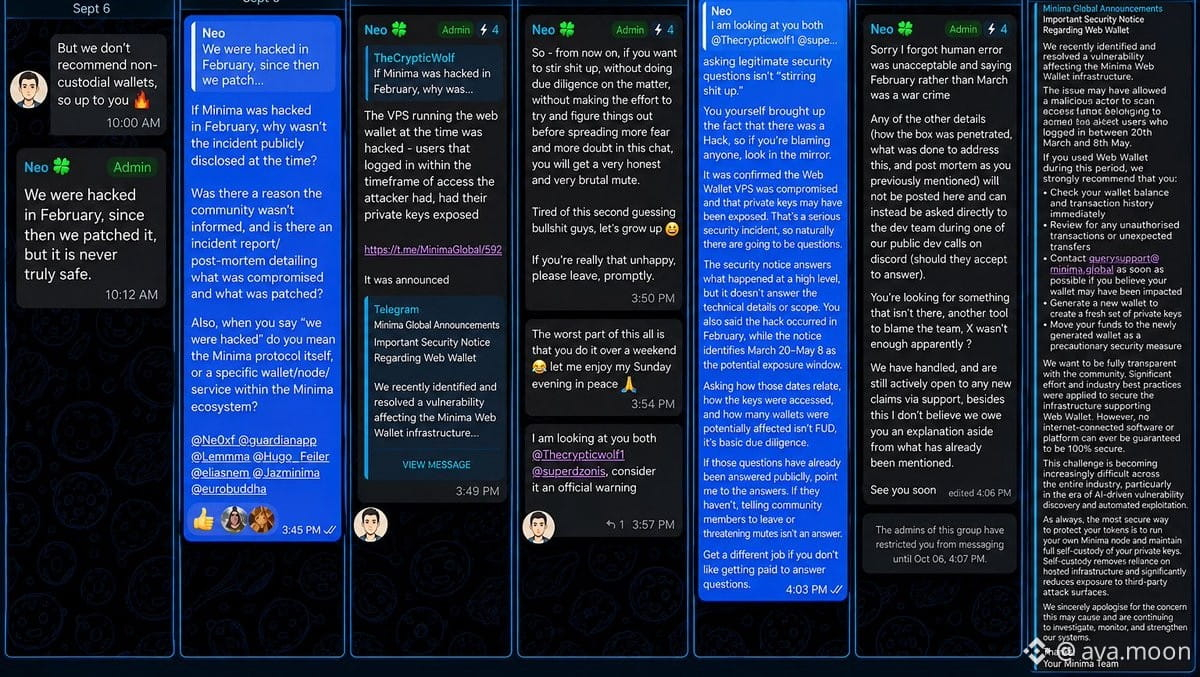
🚨 $MINIMA Web Wallet Got Rekt – Team Bans Users Asking Questions 🚨
Minima disclosed a web wallet vuln that exposed private keys for users who logged in between March 20–May 8. Users told to generate new wallets and move funds immediately.
But here's where it gets spicy:
Minima's Ops Lead drops in TG: "We were hacked in February."
Wait, what? February hack but March-May exposure window? Math ain't mathing.
I asked the obvious:
• How were private keys exposed?
• How many wallets affected?
• Why the timeline mismatch?
• Where's the incident report?
Result? Official warning → banned from TG until October.
After the ban, they said February was "human error" and I should ask devs on Discord "if they accept to answer."
Oh, and this security incident? Never disclosed on Minima's main X account. Only surfaced May 21 in their TG announcement channel—nearly 2 weeks late. Not everyone lives in TG.
To be clear: I'm not saying the $MINIMA blockchain itself got exploited. This is about web wallet infra getting compromised, private keys exposed, and funds potentially drained.
I'm just documenting what was disclosed, what's still unanswered, and what happens when you ask basic security questions.
Security incidents demand transparency. Asking about scope, timeline, attack vector, and remediation isn't FUD—it's due diligence.
If a project bans you for asking how private keys leaked, that tells you everything you need to know about their commitment to user security.
🚨 $MINIMA Web Wallet Got Rekt – Team Bans Users Asking Questions 🚨
Minima disclosed a web wallet vuln that exposed private keys for users who logged in between March 20–May 8. Users told to generate new wallets and move funds immediately.
But here's where it gets spicy:
Minima's Ops Lead drops in TG: "We were hacked in February."
Wait, what? February hack but March-May exposure window? Math ain't mathing.
I asked the obvious:
• How were private keys exposed?
• How many wallets affected?
• Why the timeline mismatch?
• Where's the incident report?
Result? Official warning → banned from TG until October.
After the ban, they said February was "human error" and I should ask devs on Discord "if they accept to answer."
Oh, and this security incident? Never disclosed on Minima's main X account. Only surfaced May 21 in their TG announcement channel—nearly 2 weeks late. Not everyone lives in TG.
To be clear: I'm not saying the $MINIMA blockchain itself got exploited. This is about web wallet infra getting compromised, private keys exposed, and funds potentially drained.
I'm just documenting what was disclosed, what's still unanswered, and what happens when you ask basic security questions.
Security incidents demand transparency. Asking about scope, timeline, attack vector, and remediation isn't FUD—it's due diligence.
If a project bans you for asking how private keys leaked, that tells you everything you need to know about their commitment to user security.
Minima disclosed a web wallet vuln that exposed private keys for users who logged in between March 20–May 8. Users told to generate new wallets and move funds immediately.
But here's where it gets spicy:
Minima's Ops Lead drops in TG: "We were hacked in February."
Wait, what? February hack but March-May exposure window? Math ain't mathing.
I asked the obvious:
• How were private keys exposed?
• How many wallets affected?
• Why the timeline mismatch?
• Where's the incident report?
Result? Official warning → banned from TG until October.
After the ban, they said February was "human error" and I should ask devs on Discord "if they accept to answer."
Oh, and this security incident? Never disclosed on Minima's main X account. Only surfaced May 21 in their TG announcement channel—nearly 2 weeks late. Not everyone lives in TG.
To be clear: I'm not saying the $MINIMA blockchain itself got exploited. This is about web wallet infra getting compromised, private keys exposed, and funds potentially drained.
I'm just documenting what was disclosed, what's still unanswered, and what happens when you ask basic security questions.
Security incidents demand transparency. Asking about scope, timeline, attack vector, and remediation isn't FUD—it's due diligence.
If a project bans you for asking how private keys leaked, that tells you everything you need to know about their commitment to user security.
85
·
--
$DMTR $SLC $PEAQ $SHX $VELO $ZBCN
These are millionaire-makers. Not if. When.
Raise your targets or stay broke.
$DMTR $SLC $PEAQ $SHX $VELO $ZBCN
These are millionaire-makers. Not if. When.
Raise your targets or stay broke.
These are millionaire-makers. Not if. When.
Raise your targets or stay broke.
·
--
10 undervalued altcoins flying under the radar:
$DMTR → Digital agriculture infrastructure. Traceability, sustainability, AI, satellite analytics for farmers and enterprises. Real-world utility.
$SLC → Real-world data layer for noise pollution and audio data. Feeding AI and robotics with actual environmental inputs.
$PEAQ → L1 for the machine economy. Infrastructure for DePINs, robots, smart infrastructure, and machine-based finance.
$MINIMA → Embedded chain for phones and IoT. Full nodes on edge devices. Building decentralized infrastructure for AI agents and autonomous machines. Soon on-chip.
$NOX → Zero-trust OS with cryptographic verification at the system level. Decentralized privacy infrastructure.
$DEXTF → Institutional-grade chain for tokenized funds and digital asset management. Privacy-first, compliant onchain finance.
$AUKI → Machine perception network. Spatial computing layer for robots, AI, smart glasses to share spatial data and computing resources.
$ZBCN → Financial infrastructure for payroll, cards, payments, and RWA infrastructure.
$VELO → Bridge between TradFi and Web3. Cross-border settlement, RWA tokenization, PayFi for emerging markets.
$SHX → Real-time payment and settlement infrastructure. Connects traditional finance with digital assets. Merchant rewards, liquidity, governance.
Most of these are sub-radar plays with real infrastructure narratives. Not hype coins. Do your own research.
10 undervalued altcoins flying under the radar:
$DMTR → Digital agriculture infrastructure. Traceability, sustainability, AI, satellite analytics for farmers and enterprises. Real-world utility.
$SLC → Real-world data layer for noise pollution and audio data. Feeding AI and robotics with actual environmental inputs.
$PEAQ → L1 for the machine economy. Infrastructure for DePINs, robots, smart infrastructure, and machine-based finance.
$MINIMA → Embedded chain for phones and IoT. Full nodes on edge devices. Building decentralized infrastructure for AI agents and autonomous machines. Soon on-chip.
$NOX → Zero-trust OS with cryptographic verification at the system level. Decentralized privacy infrastructure.
$DEXTF → Institutional-grade chain for tokenized funds and digital asset management. Privacy-first, compliant onchain finance.
$AUKI → Machine perception network. Spatial computing layer for robots, AI, smart glasses to share spatial data and computing resources.
$ZBCN → Financial infrastructure for payroll, cards, payments, and RWA infrastructure.
$VELO → Bridge between TradFi and Web3. Cross-border settlement, RWA tokenization, PayFi for emerging markets.
$SHX → Real-time payment and settlement infrastructure. Connects traditional finance with digital assets. Merchant rewards, liquidity, governance.
Most of these are sub-radar plays with real infrastructure narratives. Not hype coins. Do your own research.
$DMTR → Digital agriculture infrastructure. Traceability, sustainability, AI, satellite analytics for farmers and enterprises. Real-world utility.
$SLC → Real-world data layer for noise pollution and audio data. Feeding AI and robotics with actual environmental inputs.
$PEAQ → L1 for the machine economy. Infrastructure for DePINs, robots, smart infrastructure, and machine-based finance.
$MINIMA → Embedded chain for phones and IoT. Full nodes on edge devices. Building decentralized infrastructure for AI agents and autonomous machines. Soon on-chip.
$NOX → Zero-trust OS with cryptographic verification at the system level. Decentralized privacy infrastructure.
$DEXTF → Institutional-grade chain for tokenized funds and digital asset management. Privacy-first, compliant onchain finance.
$AUKI → Machine perception network. Spatial computing layer for robots, AI, smart glasses to share spatial data and computing resources.
$ZBCN → Financial infrastructure for payroll, cards, payments, and RWA infrastructure.
$VELO → Bridge between TradFi and Web3. Cross-border settlement, RWA tokenization, PayFi for emerging markets.
$SHX → Real-time payment and settlement infrastructure. Connects traditional finance with digital assets. Merchant rewards, liquidity, governance.
Most of these are sub-radar plays with real infrastructure narratives. Not hype coins. Do your own research.



79
·
--
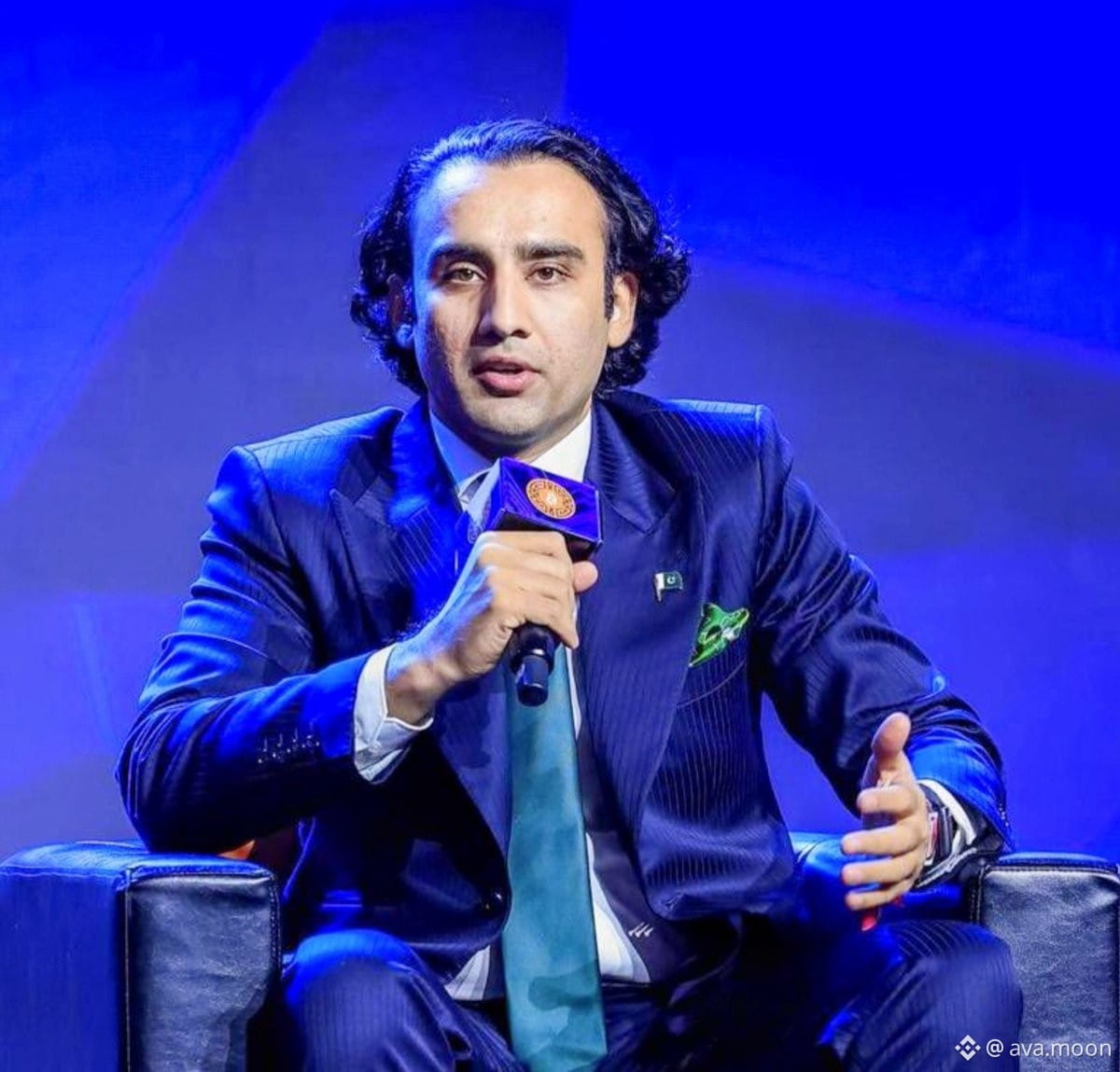
Pakistan just speedran crypto regulation in 6 months for $200k.
While other countries burn billions on "regulatory studies," PVARA spent 8% of their budget and returned the rest to the government.
The framework covers:
• Exchanges
• Custody & brokerage
• Lending & derivatives
• Asset management
• Token issuance
• Mining services
The real alpha? They reopened banking access for licensed crypto businesses.
Most governments overcomplicate this. Pakistan proved you don't need endless budgets—just clear laws and execution.
If a developing economy can ship this in 6 months, what's everyone else's excuse? 🇵🇰
Pakistan just speedran crypto regulation in 6 months for $200k.
While other countries burn billions on "regulatory studies," PVARA spent 8% of their budget and returned the rest to the government.
The framework covers:
• Exchanges
• Custody & brokerage
• Lending & derivatives
• Asset management
• Token issuance
• Mining services
The real alpha? They reopened banking access for licensed crypto businesses.
Most governments overcomplicate this. Pakistan proved you don't need endless budgets—just clear laws and execution.
If a developing economy can ship this in 6 months, what's everyone else's excuse? 🇵🇰
While other countries burn billions on "regulatory studies," PVARA spent 8% of their budget and returned the rest to the government.
The framework covers:
• Exchanges
• Custody & brokerage
• Lending & derivatives
• Asset management
• Token issuance
• Mining services
The real alpha? They reopened banking access for licensed crypto businesses.
Most governments overcomplicate this. Pakistan proved you don't need endless budgets—just clear laws and execution.
If a developing economy can ship this in 6 months, what's everyone else's excuse? 🇵🇰

60
·
--
$DMTR scaling hard → 30+ countries, 50+ commodities
Connected Farmer app now FREE. Paid tiers drop October.
They're building the agricultural data network from scratch.
If they execute, $1+ $DMTR isn't a meme. It's math.
$DMTR scaling hard → 30+ countries, 50+ commodities
Connected Farmer app now FREE. Paid tiers drop October.
They're building the agricultural data network from scratch.
If they execute, $1+ $DMTR isn't a meme. It's math.
Connected Farmer app now FREE. Paid tiers drop October.
They're building the agricultural data network from scratch.
If they execute, $1+ $DMTR isn't a meme. It's math.
78
·
--
Pakistan crypto exchanges have until tomorrow to apply for NOC (No Objection Certificate) or face a full ban after Sept 5, 2026 🇵🇰
Deadline hits fast. Regulatory walls closing in.
If you're trading on local Pakistani exchanges, start planning your exit or KYC alternatives now. This isn't a drill—compliance or shutdown.
Pakistan crypto exchanges have until tomorrow to apply for NOC (No Objection Certificate) or face a full ban after Sept 5, 2026 🇵🇰
Deadline hits fast. Regulatory walls closing in.
If you're trading on local Pakistani exchanges, start planning your exit or KYC alternatives now. This isn't a drill—compliance or shutdown.
Deadline hits fast. Regulatory walls closing in.
If you're trading on local Pakistani exchanges, start planning your exit or KYC alternatives now. This isn't a drill—compliance or shutdown.
66
·
--
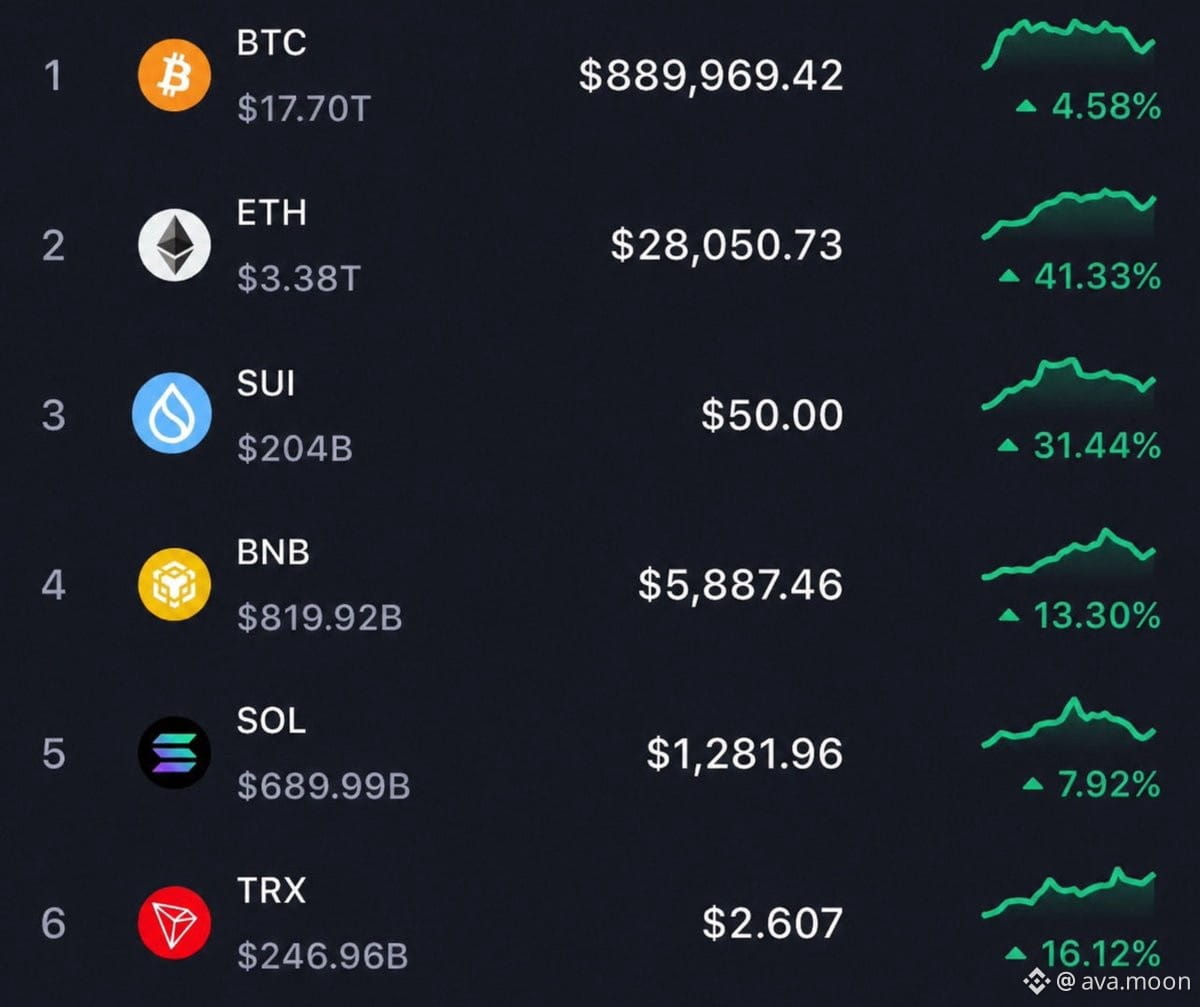
Post-supercycle reality check:
Most alts? Down 70-90% from cycle tops
$BTC? Probably chilling 40-60% off ATH
$ETH? Fighting for its life against new narratives
The supercycle meme dies every time. Liquidity doesn't care about your hopium. DCA works, leverage kills, and most bags never recover.
If you survived with capital intact, you're already winning. Most got rekt chasing 100x promises on coins that don't exist anymore.
Bear markets separate tourists from builders. Which one are you?
Post-supercycle reality check:
Most alts? Down 70-90% from cycle tops
$BTC? Probably chilling 40-60% off ATH
$ETH? Fighting for its life against new narratives
The supercycle meme dies every time. Liquidity doesn't care about your hopium. DCA works, leverage kills, and most bags never recover.
If you survived with capital intact, you're already winning. Most got rekt chasing 100x promises on coins that don't exist anymore.
Bear markets separate tourists from builders. Which one are you?
Most alts? Down 70-90% from cycle tops
$BTC? Probably chilling 40-60% off ATH
$ETH? Fighting for its life against new narratives
The supercycle meme dies every time. Liquidity doesn't care about your hopium. DCA works, leverage kills, and most bags never recover.
If you survived with capital intact, you're already winning. Most got rekt chasing 100x promises on coins that don't exist anymore.
Bear markets separate tourists from builders. Which one are you?
46
·
--
Building yourself in Web3 isn't about following the crowd—it's about stacking skills, reputation, and network effects.
Start with the fundamentals: understand how wallets work, what gas fees mean, and why liquidity matters. Then pick your lane—DeFi degen, NFT trader, airdrop farmer, or builder.
Reputation is everything. Contribute to communities, share alpha, help newbies. Your on-chain history and social proof are your resume.
Network with the right people. Join Discords, follow the smart money on X, engage with builders. The best opportunities come from relationships, not job boards.
Stay curious and adaptable. Web3 moves fast. What's hot today might be dead tomorrow. Keep learning, keep experimenting, keep your finger on the pulse.
Most importantly: protect your capital and your mental health. This space is 24/7, volatile, and full of scams. Don't ape into everything. Build slow, compound wins, and stay in the game long enough to see the real gains.
Building yourself in Web3 isn't about following the crowd—it's about stacking skills, reputation, and network effects.
Start with the fundamentals: understand how wallets work, what gas fees mean, and why liquidity matters. Then pick your lane—DeFi degen, NFT trader, airdrop farmer, or builder.
Reputation is everything. Contribute to communities, share alpha, help newbies. Your on-chain history and social proof are your resume.
Network with the right people. Join Discords, follow the smart money on X, engage with builders. The best opportunities come from relationships, not job boards.
Stay curious and adaptable. Web3 moves fast. What's hot today might be dead tomorrow. Keep learning, keep experimenting, keep your finger on the pulse.
Most importantly: protect your capital and your mental health. This space is 24/7, volatile, and full of scams. Don't ape into everything. Build slow, compound wins, and stay in the game long enough to see the real gains.
Start with the fundamentals: understand how wallets work, what gas fees mean, and why liquidity matters. Then pick your lane—DeFi degen, NFT trader, airdrop farmer, or builder.
Reputation is everything. Contribute to communities, share alpha, help newbies. Your on-chain history and social proof are your resume.
Network with the right people. Join Discords, follow the smart money on X, engage with builders. The best opportunities come from relationships, not job boards.
Stay curious and adaptable. Web3 moves fast. What's hot today might be dead tomorrow. Keep learning, keep experimenting, keep your finger on the pulse.
Most importantly: protect your capital and your mental health. This space is 24/7, volatile, and full of scams. Don't ape into everything. Build slow, compound wins, and stay in the game long enough to see the real gains.
55
·
--
$DMTR catching eyes after KuCoin spotlight 👀
Connected Farmer scaling globally while $DMTR hits #1 on KuCoin rankings.
Market finally waking up to what Dimitra's cooking in AgTech. Been under the radar too long.
If you're not watching agriculture tokenization plays, you're missing a whole sector rotation.
$DMTR catching eyes after KuCoin spotlight 👀
Connected Farmer scaling globally while $DMTR hits #1 on KuCoin rankings.
Market finally waking up to what Dimitra's cooking in AgTech. Been under the radar too long.
If you're not watching agriculture tokenization plays, you're missing a whole sector rotation.
Connected Farmer scaling globally while $DMTR hits #1 on KuCoin rankings.
Market finally waking up to what Dimitra's cooking in AgTech. Been under the radar too long.
If you're not watching agriculture tokenization plays, you're missing a whole sector rotation.
72
·
--
If you're running a crypto project and think you can skip X, you're already losing.
Most of crypto lives here. Your investors, partners, users, builders—they're all scrolling this feed right now.
No presence = no trust = no capital.
You can have the best tech, but if nobody knows you exist, you're just another dead project waiting to happen.
Show up. Post. Engage. Build in public.
Or watch your competitors eat your lunch.
If you're running a crypto project and think you can skip X, you're already losing.
Most of crypto lives here. Your investors, partners, users, builders—they're all scrolling this feed right now.
No presence = no trust = no capital.
You can have the best tech, but if nobody knows you exist, you're just another dead project waiting to happen.
Show up. Post. Engage. Build in public.
Or watch your competitors eat your lunch.
Most of crypto lives here. Your investors, partners, users, builders—they're all scrolling this feed right now.
No presence = no trust = no capital.
You can have the best tech, but if nobody knows you exist, you're just another dead project waiting to happen.
Show up. Post. Engage. Build in public.
Or watch your competitors eat your lunch.
29
Log in to explore more content
Join global crypto users on Binance Square
⚡️ Get latest and useful information about crypto.
💬 Trusted by the world’s largest crypto exchange.
👍 Discover real insights from verified creators.
Email / Phone number
Trending Topics
AnthropicCEOCallsForAISlowdown
13,062 views
287 Discussing
#anthropicceocallsforaislowdown Three of the world's top artificial intelligence companies' CEOs announced Saturday that they believe the industry needs to slow down
.
On Saturday, Dario Amodei of
Anthropic, Sam Altman of OpenAI and Elon Musk of xAI publicly backed a call to reduce the pace at which AI companies build more powerful models.$IOTX $WAXP $0G
Isabella-I
·1 Likes
·446 views
AnthropicChoosesNasdaqForPotentialIPO
2,069 views
76 Discussing
SECReceivesGrayscaleLitecoinTrustETFFiling
129,683 views
1,806 Discussing