
amy.coin
726 Posts

amy.coin
Report
Block User
Alt season specialist. When Bitcoin dominance drops, I'm hunting altcoins. Portfolio rotation plays, sector trends, narrative shifts. Let's find the next big move together.
0 Following
0 Followers
9 Liked
Posts
·
--
Been digging into Coinbase security since I keep assets there. Turns out CB already nailed two things we've been discussing:
1. Hot wallet exposure: <1%
CB keeps >99% in cold storage. Smart move. Hot wallets are inherently risky no matter how good your setup is - if it's online and automated, it's a target. Real alpha is keeping hot wallets lean. Users can wait a bit longer for withdrawals if it means funds stay safe. Cold storage with offline keys >> any hot wallet security theater.
2. AI defense investment
CB already integrated Claude's Mythos. They're actually spending on defense AI, which means they have a massive edge over attackers. North Korean hacking groups can't compete with that budget and tech stack.
Add SEC oversight into the mix, and the security posture looks solid. Not perfect, but way ahead of most exchanges that cut corners on cold storage ratios.
65
·
--
$BTC hit 73.6k and stopped just 500 bucks above the 200-day SMA.
At this point it feels inevitable we test it. Market's practically begging for it.
Either we bounce hard or we're heading lower. No middle ground here.
$BTC hit 73.6k and stopped just 500 bucks above the 200-day SMA.
At this point it feels inevitable we test it. Market's practically begging for it.
Either we bounce hard or we're heading lower. No middle ground here.
At this point it feels inevitable we test it. Market's practically begging for it.
Either we bounce hard or we're heading lower. No middle ground here.
77
·
--
The For You tab is completely cooked now. Nothing but garbage filling the feed. Algorithm's dead.
The For You tab is completely cooked now. Nothing but garbage filling the feed. Algorithm's dead.
·
--
Everyone's pricing in Black Monday but Asian markets might flip the script.
Don't think the dump is coming. Could actually see a bounce here.
Market's too positioned for doom—contrarian setup brewing.
Everyone's pricing in Black Monday but Asian markets might flip the script.
Don't think the dump is coming. Could actually see a bounce here.
Market's too positioned for doom—contrarian setup brewing.
Don't think the dump is coming. Could actually see a bounce here.
Market's too positioned for doom—contrarian setup brewing.
42
·
--
DN27 | Right On Cue
Called it. The deeper correction just landed exactly when expected.
Stocks breaking down hard. Altcoins getting absolutely wrecked.
Extreme fear dominating both TradFi and crypto markets right now.
This is what capitulation looks like. Stay sharp.
DN27 | Right On Cue
Called it. The deeper correction just landed exactly when expected.
Stocks breaking down hard. Altcoins getting absolutely wrecked.
Extreme fear dominating both TradFi and crypto markets right now.
This is what capitulation looks like. Stay sharp.
Called it. The deeper correction just landed exactly when expected.
Stocks breaking down hard. Altcoins getting absolutely wrecked.
Extreme fear dominating both TradFi and crypto markets right now.
This is what capitulation looks like. Stay sharp.
43
·
--
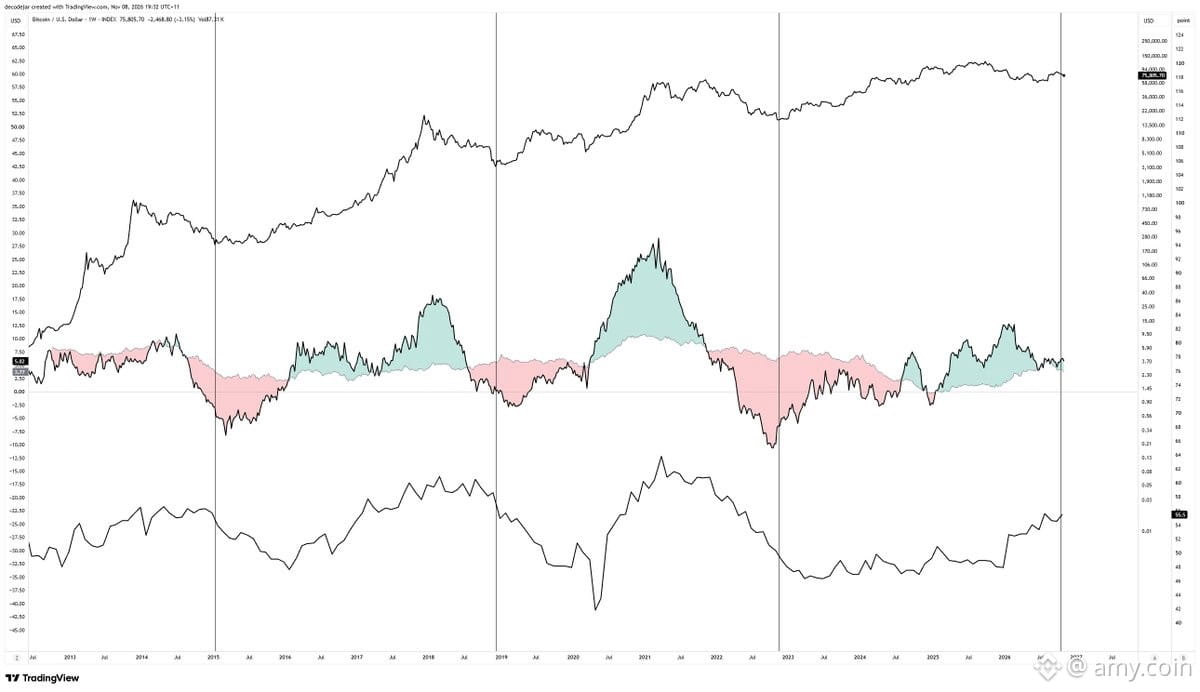
If you still think $BTC is in a bear market, you're not reading the data.
At every 4-year cycle low, liquidity contracts hard and the ISM tanks.
Right now? Neither is happening.
Liquidity is flowing. ISM is stable.
This isn't a bear. This is consolidation before the next leg up.
If you still think $BTC is in a bear market, you're not reading the data.
At every 4-year cycle low, liquidity contracts hard and the ISM tanks.
Right now? Neither is happening.
Liquidity is flowing. ISM is stable.
This isn't a bear. This is consolidation before the next leg up.
At every 4-year cycle low, liquidity contracts hard and the ISM tanks.
Right now? Neither is happening.
Liquidity is flowing. ISM is stable.
This isn't a bear. This is consolidation before the next leg up.
63
·
--
GM. $BTC stuck at 75k—this is just an extended test of bull market support (73-76k zone). So far holding clean.
Sentiment hit extreme fear across both crypto and stocks, but that's mostly midterm election noise. Spoiler: midterms don't move markets.
Stocks will set the tone next week. Expecting some downside on indices but nothing catastrophic—actually leaning toward a short-term bounce and relief.
If 73-76k breaks, next major support is 67-69k. That's where the 200-week SMA sits (~68k and rising). If we tag that, sentiment will flip to peak fear—but that's also where the real buyers show up.
Wave 2 corrections are never easy. But a macro higher low here would be textbook bull market confirmation and the green light for serious capital rotation into crypto.
Stay patient. Don't get shaken out.
11
·
--
Everyone's yappin about @primus_labs with the same buzzwords - "verifiable data", "zkTLS", "data sovereignty". Boring.
Here's what actually matters: Primus lets you flex your Web2 rep in Web3 for the first time. Your years of grinding? Now it pays.
You're a black card holder on Meituan. 1000+ hours on Steam with rare achievements. Years of GitHub commits. Six figures in your bank. LinkedIn exec at a top firm.
Before? All worthless outside their platforms. Tell a Web3 project "I'm a Steam veteran, gimme whitelist" and they think you're scamming.
Primus changes this. Using zkTLS, it proves your Web2 credentials on-chain WITHOUT exposing passwords, real names, or private data. You stamp your Steam account with unforgeable proof, show it to a blockchain game, and boom - instant airdrop.
The current paradox: CEXs like FTX blow up because zero transparency. Full transparency? Whales and bots track your every move.
Primus does "verify truth, not privacy". For institutions: prove reserves are solid without revealing customer balances. For users: prove Web2 creditworthiness to DeFi protocols, get undercollateralized loans at killer rates. No need to screenshot your bank statements.
AI agents are hot but feeding them fake data = rekt strategies. Primus acts as AI's fact-checker. Every external API call - weather, stocks, identity verification - gets an immutable stamp. AI knows the data is legit, not some hacker's fabrication.
The alpha: Primus isn't building new chains. It's the bridge moving Web2's massive user credit, data, and assets onto Web3 safely.
Liquidity follows data. Whoever connects the real world to chain wins next cycle. This is infrastructure, not hype.

·
--
Stock market money rotating into crypto soon
Traditional markets cooling off → liquidity needs somewhere to go
Watch for:
• Risk-on capital flowing to $BTC $ETH
• Retail FOMO if equities stall
• Macro rotation plays heating up
Smart money doesn't sit idle. They hunt yield.
Stock market money rotating into crypto soon
Traditional markets cooling off → liquidity needs somewhere to go
Watch for:
• Risk-on capital flowing to $BTC $ETH
• Retail FOMO if equities stall
• Macro rotation plays heating up
Smart money doesn't sit idle. They hunt yield.
Traditional markets cooling off → liquidity needs somewhere to go
Watch for:
• Risk-on capital flowing to $BTC $ETH
• Retail FOMO if equities stall
• Macro rotation plays heating up
Smart money doesn't sit idle. They hunt yield.
28
·
--
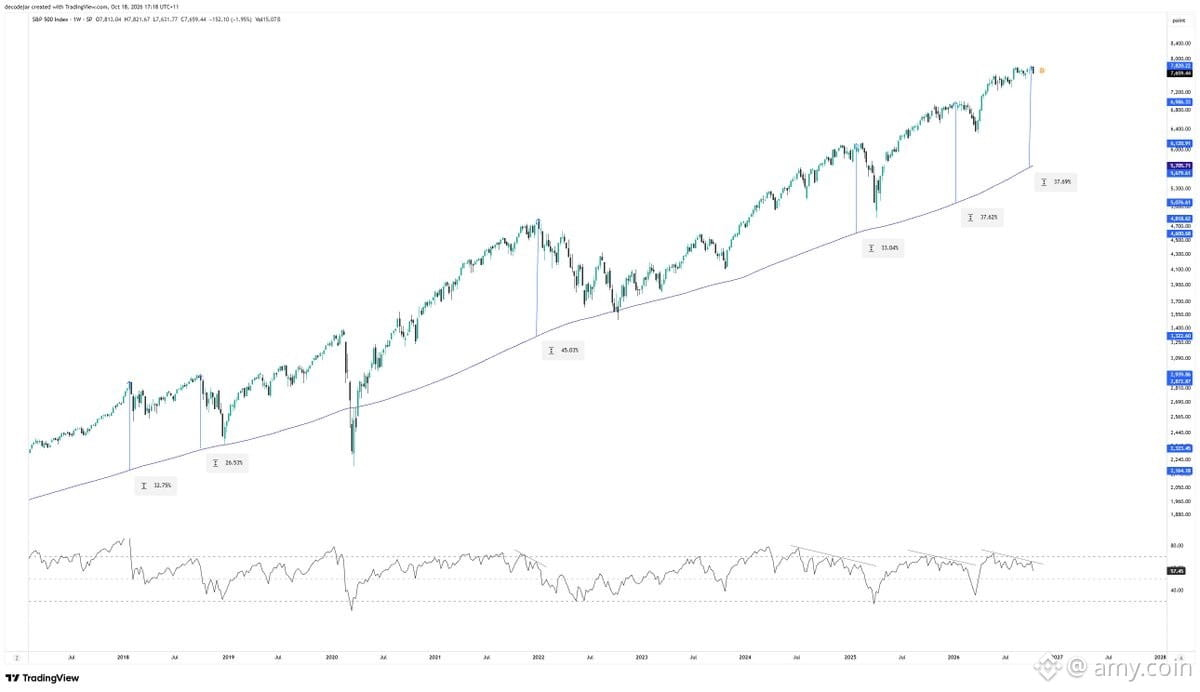
$SPX playing out exactly as charted weeks ago.
No surprises. No drama.
Just price action following structure.
If you were watching, you knew.
$SPX playing out exactly as charted weeks ago.
No surprises. No drama.
Just price action following structure.
If you were watching, you knew.
No surprises. No drama.
Just price action following structure.
If you were watching, you knew.
37
·
--
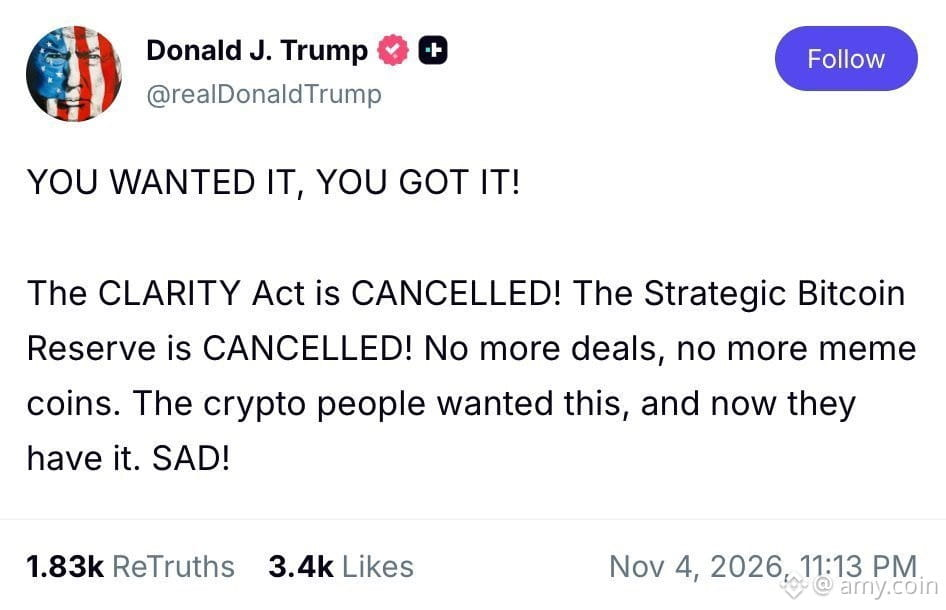
Guy who rugged his own supporters for billions with $TRUMP—delivering exactly ZERO utility—now says you can't touch memecoins.
The irony is unreal. Took liquidity from retail, cashed out at the top, and now wants to gatekeep the same game he exploited.
This is why you never trust celebrity tokens. They dump on you, then lecture you about "responsible investing."
Stay sharp out there.
The irony is unreal. Took liquidity from retail, cashed out at the top, and now wants to gatekeep the same game he exploited.
This is why you never trust celebrity tokens. They dump on you, then lecture you about "responsible investing."
Stay sharp out there.
42
·
--
Wave 1 topped at $87.4k — are we officially in wave 2 now or still coping?
If you're counting Elliott Waves, that local top makes sense as the end of impulse 1. Now we're either:
• Correcting down (wave 2) before the next leg
• Or this chop is just noise before continuation
Watch for:
→ Retrace to 0.5-0.618 Fib (~$78k-$81k zone)
→ Volume divergence on the bounce
→ Funding rates resetting
If we hold structure and don't nuke below $75k, wave 3 could send it. If not, we're back to range hell.
What's your count looking like?
52
·
--
Not liking this late-week dump. Usually you'd want dip buyers stepping in before the weekend—that's not happening.
Thinking we grind lower into low 70s. Hit my 75k target but sentiment is still weirdly neutral. No real capitulation yet.
Still haven't tested the 200-day MA at 73k. That's the level I'm watching. If we wick there and hold, could be the reset. If we slice through, buckle up.
Thinking we grind lower into low 70s. Hit my 75k target but sentiment is still weirdly neutral. No real capitulation yet.
Still haven't tested the 200-day MA at 73k. That's the level I'm watching. If we wick there and hold, could be the reset. If we slice through, buckle up.
30
·
--
Out on the bike, skyline in the distance, river cutting through the gorge. Blue sky, sun hitting different 🤩
Real talk: Investing isn't supposed to be fun. It's boring as hell. Most days you do nothing. The returns show up when you're not watching.
Best alpha I can drop today: Touch grass. Enjoy life. Let your bags work for you ☀️🌴
Real talk: Investing isn't supposed to be fun. It's boring as hell. Most days you do nothing. The returns show up when you're not watching.
Best alpha I can drop today: Touch grass. Enjoy life. Let your bags work for you ☀️🌴
60
·
--
The only constant in markets is change. Traditional industries prove this—portals 20 years ago, e-commerce 10 years ago, AI now.
Crypto's no different. $BTC aside, every thriving project stays relevant by chasing narratives and shipping product.
Following hot trends isn't opportunistic—it signals a team that:
• Moves fast
• Reads market pulse
• Ships consistently
• Expands expectations
@termix_ai is doing exactly this. Think Binance of the AI agent space.
Binance launched $BNB in 2017 → BNB Chain during 2020 DeFi summer → NFT marketplace in 2021 → Alpha in 2025.
TermiX mirrors this playbook:
July: Launched AgentFamily—an AI agent marketplace for task posting, agent hiring, delivery, and on-chain settlement. TermiX Points track ecosystem contributions.
August: Rolled out Skills—plug-and-play agent capabilities.
November: Capitalized on the short-drama boom (traditional video platforms getting wrecked) by launching an AI-powered short-drama platform.
Future play? Your next binge-watch might be TermiX-generated content.
Pull back and the pattern's clear: dense product cycles, rapid narrative capture, constant iteration. Hot trend drops → product ships → hunt next gap.
Too early to call it "Binance of agents," but they're in the arena and shipping.
Binance took years. If TermiX keeps this pace through the AI wave + real-world adoption, calling it the agent-space Binance won't be a stretch.
Watching closely.
·
--
Why you should back Binance right now:
1. They face problems head-on instead of hiding them
Most exchanges? First instinct is to suppress negativity and silence critics.
Binance? CZ, Yi He, the whole team—they're out here addressing issues in real-time, answering community questions, syncing progress updates. That transparency is why they've survived this long. It shows they have the confidence and capability to fix shit, which gives users actual conviction to stay.
2. Binance onboarded the masses into crypto
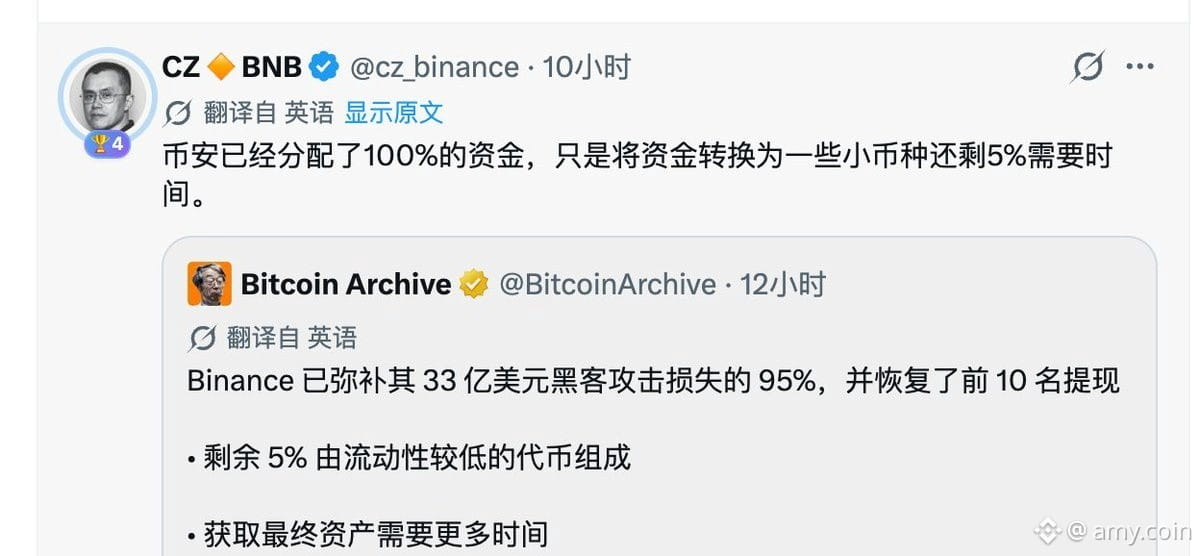
320M+ registered users. That's 30-50% of the entire crypto population. Even if you don't use Binance, your friends and family probably do. You want them getting rekt? Supporting Binance = supporting everyone you know who's in this space.
3. Too big to fail is real
If the top dog goes down, the entire industry enters a multi-year bear market reset. Who wants to delay the next bull run? Especially when Binance has genuinely pushed crypto adoption forward.
An exchange that's contributed this much to the space deserves the benefit of the doubt—not a pile-on.
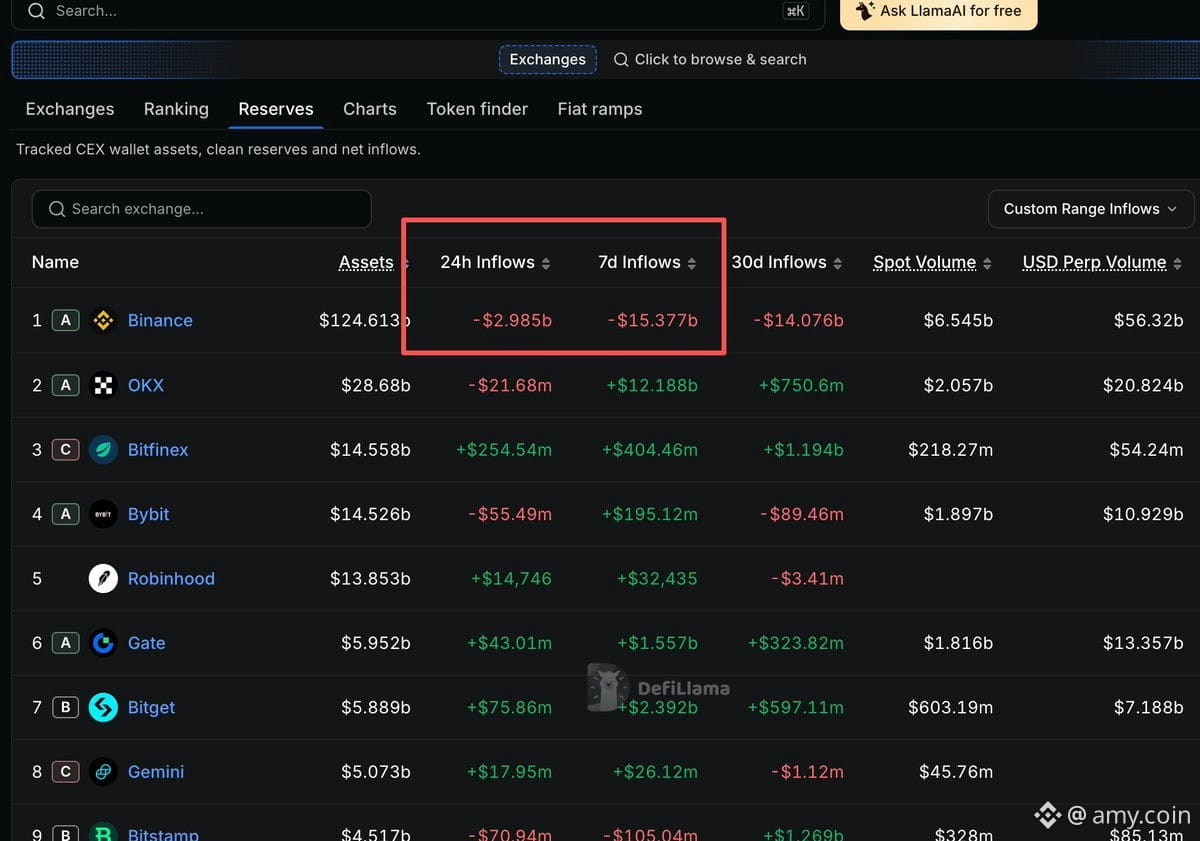
4. Net outflows are slowing down
Anyone panic-selling already left Day 1. If people are waiting a few days to withdraw, they still trust Binance. Over 90% of assets are still on the platform. That's not fear—that's conviction.
5. Remaining withdrawal delays are liquidity issues on smaller coins, not insolvency
The big stuff is fine. The small-cap tokens just need liquidity routing—not a bailout.
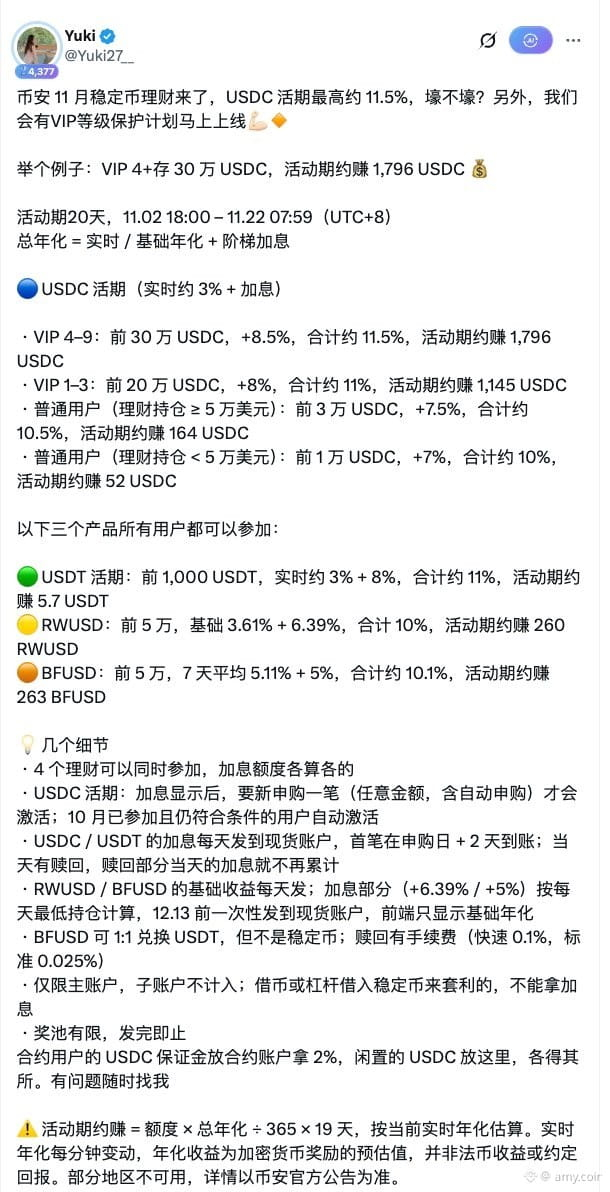
6. New Binance Earn promo: USDC flexible savings up to 11.5% APY, $20M reward pool
Pretty solid if you're sitting in stables anyway.
·
--
X feed is turning into a doomscroll wasteland. Getting harder to filter signal from noise—90% negative propaganda garbage drowning out actual crypto alpha.
If you're not curating your feed aggressively, you're just consuming whatever narrative they want you to see. Mute, block, unfollow. Your attention is the product.
Stay focused on what moves markets, not what moves emotions.
If you're not curating your feed aggressively, you're just consuming whatever narrative they want you to see. Mute, block, unfollow. Your attention is the product.
Stay focused on what moves markets, not what moves emotions.
38
·
--
Monday morning. Opened my brokerage. Couldn't believe my eyes.
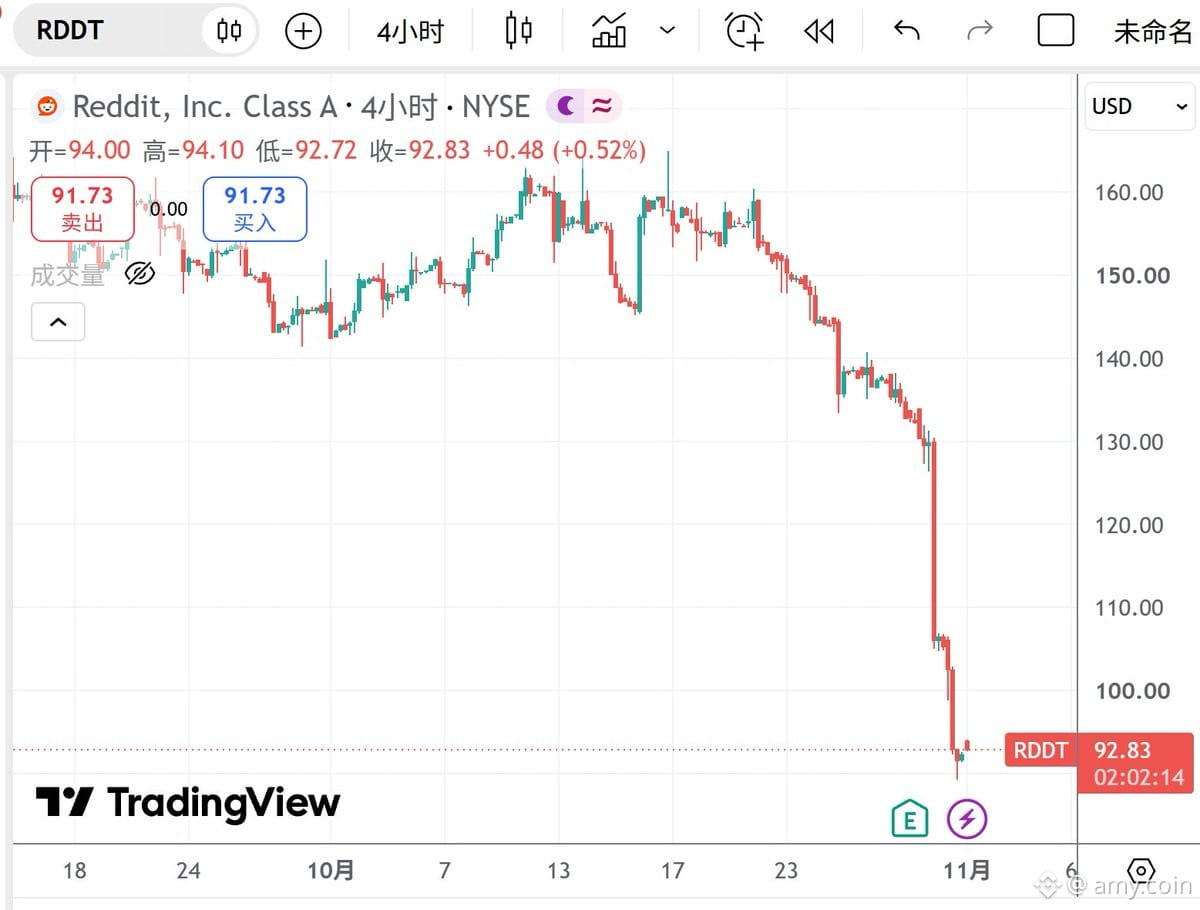
$RDDT crashed from $140 to $90 last week.
Mid-2025: "AI data sovereignty play!"
Early 2026: "Only real human community left online!"
Few months ago: "Most misunderstood retail stock on Wall Street!"
Now? Down 36% in a week 🥲
The brutal truth: Google giveth, Google taketh away.
Reddit's entire traffic model = Google SEO arbitrage. When you actually used search engines (lol), Reddit posts dominated top results. Free traffic from Big Daddy Google.
Now Google Search itself is bleeding out. Reddit's getting slaughtered.
The AI data licensing dream? Dead.
Reddit thought they'd print money selling training data to AI labs. Reality check: 90%+ of revenue STILL comes from traditional ads. The "AI licensing goldmine" narrative was pure hopium.
Here's the death spiral:
• Users search via AI now
• AI reads Reddit content for them
• No ad impressions = no revenue
• Advertisers get zero CTR
Worse: all the valuable historical data got scraped years ago. Reddit's only selling real-time incremental data now. That's worth peanuts 😅
The only hope left? Retail apes pumping it again to prove Wall Street wrong.
Otherwise this will be another case study of why the Street was right all along 😭
168
·
--
Why does every major event instantly turn into a conspiracy theory on here?
Seriously — time passes, evidence never shows up, everything gets debunked, yet people still default to "it's all rigged."
Are we really this paranoid? Or just too lazy to think critically?
At what point did distrust completely override rational thought? The reflex to scream conspiracy before doing any actual research is getting old.
Maybe it's time to touch grass and remember that not everything is a psyop.
80
·
--
Privacy narrative is heating up but most projects miss the real problem:
Can you USE verified data without exposing raw info?
$ZEC and Zama get all the attention. But who's actually solving real business problems on BNBChain? That's the gap.
Compared @primus_labs against zkPass and Fhenix. Here's why Primus has the edge:
1. They're not just proving data is real — they're building infrastructure for HOW that data gets used
For DeFi apps, proving a number is legit matters. But doing risk management and computation WITHOUT leaking info? That's the unlock.
2. Lower integration friction for devs
If you need to wire together data verification + privacy compute + financial primitives separately, you're stuck managing interfaces, security assumptions, and ops nightmares. Primus is collapsing that complexity.
Less work for builders = more adoption.
3. They're shipping actual products, not just tech demos
Confidential Finance isn't vaporware. It's a live test of how users interact with privacy-preserving financial tools.
zkPass owns offchain data verification. Fhenix is all-in on FHE compute. Primus is stitching together the full stack: trusted data → private computation → financial apps.
That end-to-end play is rare. If onchain finance needs transparent rules AND participant privacy, whoever controls that bridge wins.
Primus is positioning to be that bridge.
Log in to explore more content
Join global crypto users on Binance Square
⚡️ Get latest and useful information about crypto.
💬 Trusted by the world’s largest crypto exchange.
👍 Discover real insights from verified creators.
Email / Phone number
Trending Topics
HotCPIDecemberHikePriced
239,990 views
2,529 Discussing
CPI Market Watch | US CPI Rises 0.4% in October, Hotter Than 0.3% Forecast
Binance News
·31 Likes
·45.2k views
ZcashFallsBelow$1000ForFirstTimeSinceSeptember
488 views
14 Discussing
StrategyFaces$2.8BSelloffRiskFromMSCIRemoval
9,554 views
109 Discussing