



As the crypto market gradually picks up, the halving of tokens such as BCH and LTC is imminent, and the market has begun to speculate on the concept of halving...
As one of the important issues that have attracted much attention in the current cryptocurrency field, the cryptocurrency halving mechanism has had a profound impact on the cryptocurrency market and participants. By having an in-depth understanding of the cryptocurrency halving, we can better understand the operating mechanism and future development trends of the cryptocurrency market.
Will the halving be the starting point for a new bull market narrative?
Will the historical chances of halving repeat itself?
For traders, how to grasp the halving market?
After reading this research report, you can fully understand the concept, background, related principles and mechanisms, industry impact and historical evolution of cryptocurrency halving. Most importantly, the opportunities and risks of the halving market are also hinted at.
This article also sorts out the halving schedule of key tokens, which cryptocurrency traders must not miss. It is worth mentioning that the Huobi trading platform has launched a halving token trading competition. Details can be viewed on the Huobi platform official website.
1. Halving concept and background
Cryptocurrency halving refers to the halving event of block rewards on the blockchain in a specific cryptocurrency protocol. The main goal of the halving is to curb the inflation rate of cryptocurrencies by proportionally reducing the issuance of new coins. In some cryptocurrency networks, such as the well-known Bitcoin, the block reward is halved every time a certain number of blocks are mined.
Taking Bitcoin as an example, normally, Bitcoin’s block reward halving event occurs approximately every four years. Bitcoin's halving event will cause the number of new Bitcoins miners receive to mine to be halved. Initially, the reward for each mined block was 50 Bitcoins, but was first halved to 25 Bitcoins in 2012, again to 12.5 Bitcoins in 2016, and to 6.25 Bitcoins in 2020. This halving process is designed to control the supply of Bitcoin and bring it gradually closer to its maximum issuance limit.
By halving the block reward, the Bitcoin network encourages miners to continue mining and causes the supply of Bitcoin to gradually decrease. Since the halving event will reduce the economic incentives for mining, it may have an impact on miners' profits. However, the halving will also increase Bitcoin’s scarcity to some extent, which could have a positive impact on the price.
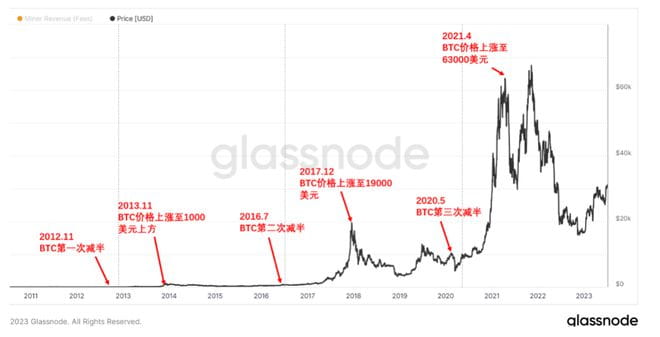
The halving event is often of concern to the cryptocurrency community because of its impact on the mining industry and the market as a whole, and the potential for price fluctuations. Therefore, the halving is regarded as an important milestone event in the life cycle of Bitcoin.
In addition to Bitcoin, there are many other cryptocurrencies that have adopted the halving mechanism. Here are some common halving coins:
l Litecoin: Litecoin is a fork project of Bitcoin, and its halving mechanism is similar to Bitcoin. Litecoin’s halving event usually takes place approximately four years after Bitcoin’s halving.
lBitcoin Cash: Bitcoin Cash is another fork of Bitcoin, and its halving mechanism is similar to Bitcoin. Bitcoin Cash’s halving event usually takes place approximately four years after Bitcoin’s halving.
l Dogecoin: Dogecoin is a Litecoin-based cryptocurrency that uses a rapid halving mechanism. According to Dogecoin’s design, Dogecoin’s mining rewards are halved every approximately 60,000 blocks.
lZcash: Zcash is a privacy-focused cryptocurrency whose halving mechanism is slightly different from Bitcoin. Zcash halving events usually occur approximately every 4 years.
2. Principles and mechanisms related to halving
Halving is a cryptocurrency supply regulation mechanism in which mining rewards are halved at specific intervals. It controls the rate of supply growth by reducing the amount of newly issued cryptocurrencies.
Usually involves the following related concepts:
(1) Initial reward: When the cryptocurrency network is launched, an initial mining reward will be set. This is the reward miners receive when they successfully solve a mathematical puzzle and create a new block, usually in units of that cryptocurrency.
(2) Halving cycle: The halving of cryptocurrency is based on a fixed time interval or a specific block height. This cycle determines how often halving events occur. For example, Bitcoin’s halving cycle is approximately four years, or approximately every 210,000 blocks.
(3) Halving event: When the halving cycle arrives, the cryptocurrency network will automatically trigger the halving event. During this event, mining rewards will be halved. Taking Bitcoin as an example, the initial reward is 50 Bitcoins, which will be reduced to half of the previous cycle after each halving. So after the first halving, the reward becomes 25 Bitcoins, after the second halving it is 12.5 Bitcoins, and so on.
(4) Reward adjustment: After the halving event, mining rewards will be distributed according to the new post-halving amount. This means miners receive new coins half as slowly. After the halving, miners must acquire the same amount of cryptocurrency through more computing power and investment.
(5) Scarcity and supply control: The halving mechanism creates scarcity by gradually reducing the supply of new coins. Over time, new coins are issued more slowly and supply growth slows. This helps maintain the stability and value of cryptocurrencies.
Through the halving mechanism, cryptocurrency networks can achieve a balance of economic incentives and supply control. The occurrence of a halving event heralds an important milestone in the cryptocurrency ecosystem, often attracting market attention and affecting cryptocurrency prices and the mining industry.
3. Industry impact
3.1 Impact on supply
The most intuitive impact of the cryptocurrency halving is the supply of tokens. This brings two results:
l Reduction in the supply of new coins: One of the main purposes of the halving mechanism is to gradually reduce the supply of new coins. As the halving event occurs, the issuance of new coins slows down, causing supply growth to slow down. This reduction in supply helps maintain the cryptocurrency’s scarcity, potentially having a positive impact on price.
l Reduced inflation rate: Due to the reduction in the supply of new coins, the halving mechanism can reduce the inflation rate of cryptocurrencies. This means that cryptocurrency inflation slows down and the number of new coins on the market grows slowly. This helps maintain the stability and value of cryptocurrencies to a certain extent.
3.2 Impact of Mining
Another impact of the cryptocurrency halving is on mining. Halving helps to increase the decentralization of digital asset blockchains because after the reduction in the number of rewards for each block mined in the network, miners have to work harder and more efficiently to obtain the same number of blocks as before award. With the cryptocurrency mining industry growing rapidly, the halving will also help increase the number of miners, thereby improving the security and reliability of the entire network. For miners, there are mainly four impacts:
l Reduced income: The halving event causes the mining reward to be halved, and the number of new coins that miners receive after successfully mining a new block is reduced. This directly affects miners' profits. Before the halving, mining can get a certain number of new coins as rewards, but with the occurrence of the halving event, the number of new coins is halved, and the benefits obtained by the miners are also reduced. This is a significant change for miners who rely on mining revenue to maintain operations and may have an impact on their profitability.
l Competition intensifies: As mining rewards are halved, the economic incentives for mining are reduced, causing competition among miners to become more intense. In order to maintain the same level of income, miners need to increase computing resources and investment to increase their chances of obtaining new coins. This may lead to more miners participating in mining, increasing mining difficulty, and intensifying competition for computing power.
lHash power distribution: The halving event may have an impact on the distribution of mining power. After the mining reward is halved, it may become unattractive for some miners with limited resources to continue mining. This could lead to a shift in computing power from smaller miners to larger mines and mining pools for better economics. This may lead to the centralization of computing power and the differentiation of miners.
lTechnological progress: The halving event may also promote the advancement of mining equipment and technology. In order to cope with the decline in profits caused by the halving of mining rewards, miners may seek more efficient mining equipment to increase computing power and efficiency. This may promote the innovation and development of mining technology and bring higher efficiency and competitiveness.
3.3 Market impact
Halving events usually have a positive impact on the price of cryptocurrencies. Increased scarcity and expectations of reduced supply can lead to increased demand for cryptocurrencies from investors and traders. This could trigger a trend of rising prices, especially if supply and demand are relatively tight. This situation will have a certain impact on participants in the crypto market.
First of all, the halving event has a certain impact on traders' behavior. On the one hand, some traders may hold cryptocurrencies to obtain higher returns due to expectations of rising prices. This could lead to increased trading volumes and increased market activity. On the other hand, some traders may adopt a more conservative strategy and wait to see market changes and price fluctuations to determine the best time to buy or sell.
The halving event will also have an impact on the activities and strategies of market makers. Market makers are liquidity providers in the market, providing traders with the bid-ask spread of a trading pair by simultaneously quoting the buying and selling prices. When a halving event occurs, price volatility may increase and market liquidity may become more unstable. This will place higher demands on market makers’ risk management and pricing strategies. Market makers may need to adjust quotation ranges and increase risk premiums to adapt to a more uncertain market environment.
3.4 Ecological impact of public chain
The halving of public chain tokens is mostly good news. The community and developers usually cooperate with the halving to upgrade some ecological projects or operate operations. If the economic model of public chain tokens is strongly related to the on-chain ecology, it may further promote the development of good news. Specifically, there are the following two aspects:
lThe halving may have an impact on the economic sustainability of the project. The halving of tokens will cause mining rewards to be halved, which will affect the economic incentive mechanism in ecological projects, causing the profitability of some DeFi projects to change. Based on this, on-chain ecological projects may undergo some changes in their economic models or governance.
lHalving events usually attract community attention and increased participation. Community members may discuss the impact and future development of the halving event and actively participate in project decisions and activities. This active participation of the community is of great significance to the development of the project and the prosperity of the ecology.
4. Will the history of the halving market repeat itself?
Will the halving definitely cause the token price to rise? When will the token rise?
Take LTC as an example. When LTC was halved for the first time, the halving effect started 3 months in advance, and the price of LTC also rose all the way, with an increase of 420% in 3 months. However, the price fell sharply in the later period, and the price did not rise again near the halving time, but was in a long-term low and volatile state. The reason may be that the block reward is halved and the mining output of miners is halved, resulting in increased costs, so miners will selectively stop operations. This will also lead to a decrease in the amount of LTC circulating into the market. According to the theory of supply and demand, the halving of LTC will lead to an increase in its price if demand remains unchanged.
In order to further understand the halving market, we can also take BTC as an example. BTC did not see a major increase near the time of the third halving, and there was no bull market in the crypto market until a year later.
Historical data shows that halving will indeed promote the rise of token prices, but the reason is not a simple change in the supply and demand relationship of tokens. It is more likely to be the benefits of halving and market sentiment, or it may be short-term speculation caused by the intervention of external funds. Secondly, it is difficult to grasp the specific time of the token price increase, so we need more comprehensive analysis to guide transactions. For example, project progress, community popularity, project side operations, miner-related data, etc.
Judging from past historical data, the price changes of halving tokens have the following characteristics:
1. Before the official halving, the price of the halving token will rise several months in advance;
2. The price will reach a high before the halving day, and then decline. There may be a low near the halving day, so it is recommended to plan in advance;
3. After the official halving, the price of halved tokens will be less affected by the halving, and the main fluctuations will still change with the broader market.
The above characteristics do not apply to BTC. The BTC bull market is most likely to occur one year after the halving. This is also a bull market in the encryption industry and is related to industry progress and macroeconomics. Investors need to accurately grasp the rising period of tokens and stop profits in time to avoid capital losses.
5. Risk and Opportunity Tips
As the crypto market gradually picks up, the halving of tokens such as BCH and LTC is imminent, and the market will gradually begin to speculate on the concept of halving.
Here are the halving schedules for key coins:
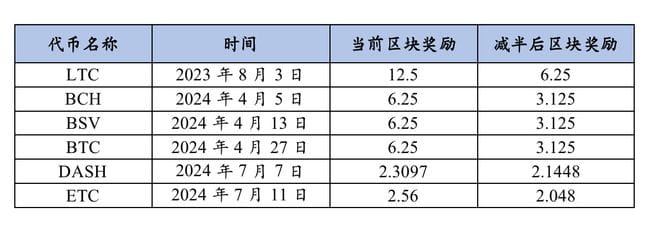
The halving market will indeed bring many opportunities for traders:
(1) Token price rises
Halving events usually draw market attention to the scarcity of tokens, which in turn increases the likelihood of price increases. Reduced supply and increased market demand may lead to an increase in the price of the token.
(2) Increased market activity
Halving events usually attract more attention and participants, leading to increased market activity. Increased trading volume and improved market liquidity provide traders with more buying and selling opportunities.
(3) Increased price fluctuations
For traders who are good at taking advantage of volatile markets, this means more opportunities for short-term trading and profit-making. Increased price volatility provides traders with more buying and selling opportunities that can be traded through technical analysis and risk management strategies.
It should be noted that although the halving market may bring opportunities, there are still risks and uncertainties in the market. The impact of halving on the crypto market is complex, such as market sentiment, global economic environment and policy changes. Additionally, different cryptocurrencies may react differently to the halving event. Therefore, investors, traders and market makers should make informed decisions and strategic adjustments based on reference to relevant factors and market conditions.
Since the entire crypto market is still in a bear market, the news of the halving may attract more retail investors' attention. Historical experience shows that halving does bring greater instability to already volatile markets. Traders need to be aware of the following risks:
(1) Market volatility increases
Halving events usually trigger market volatility, which can lead to drastic fluctuations in token prices. This market uncertainty can increase the risk of trading, especially for short-term traders. Rapid price increases or decreases can cause traders to buy or sell at the wrong time, resulting in losses.
(2) Reduced liquidity
The halving event may lead to reduced liquidity in the market. Due to increased price volatility and trading activity, markets may become more volatile and widening bid-ask spreads may occur. This may increase transaction costs and difficulty in executing transactions.
(3) Information asymmetry
The halving event may trigger various rumors and inaccurate information both inside and outside the market. This information asymmetry can lead traders to make poor decisions. Traders need to treat various information sources with caution and conduct sufficient research and analysis to obtain accurate and reliable information.
It is important for traders to understand and recognize these risks. In the halving market, traders should take the following measures to deal with risks:
l Conduct sufficient research and due diligence to understand the impact and expected effects of the token halving event.
lDevelop a clear risk management strategy, including setting stop loss and take profit levels, and follow a disciplined trading plan.
l Pay attention to market liquidity and price differences, and choose the trading platform and tools that suit you.
lBe cautious about rumors and inaccurate information, and ensure that the sources of information you rely on are reliable and authoritative.
l Pay attention to market changes and trends at any time and flexibly adjust trading strategies.
Overall, traders should evaluate and seize opportunities in the halving market based on their risk tolerance, investment goals, and trading strategies to maximize the market's potential.