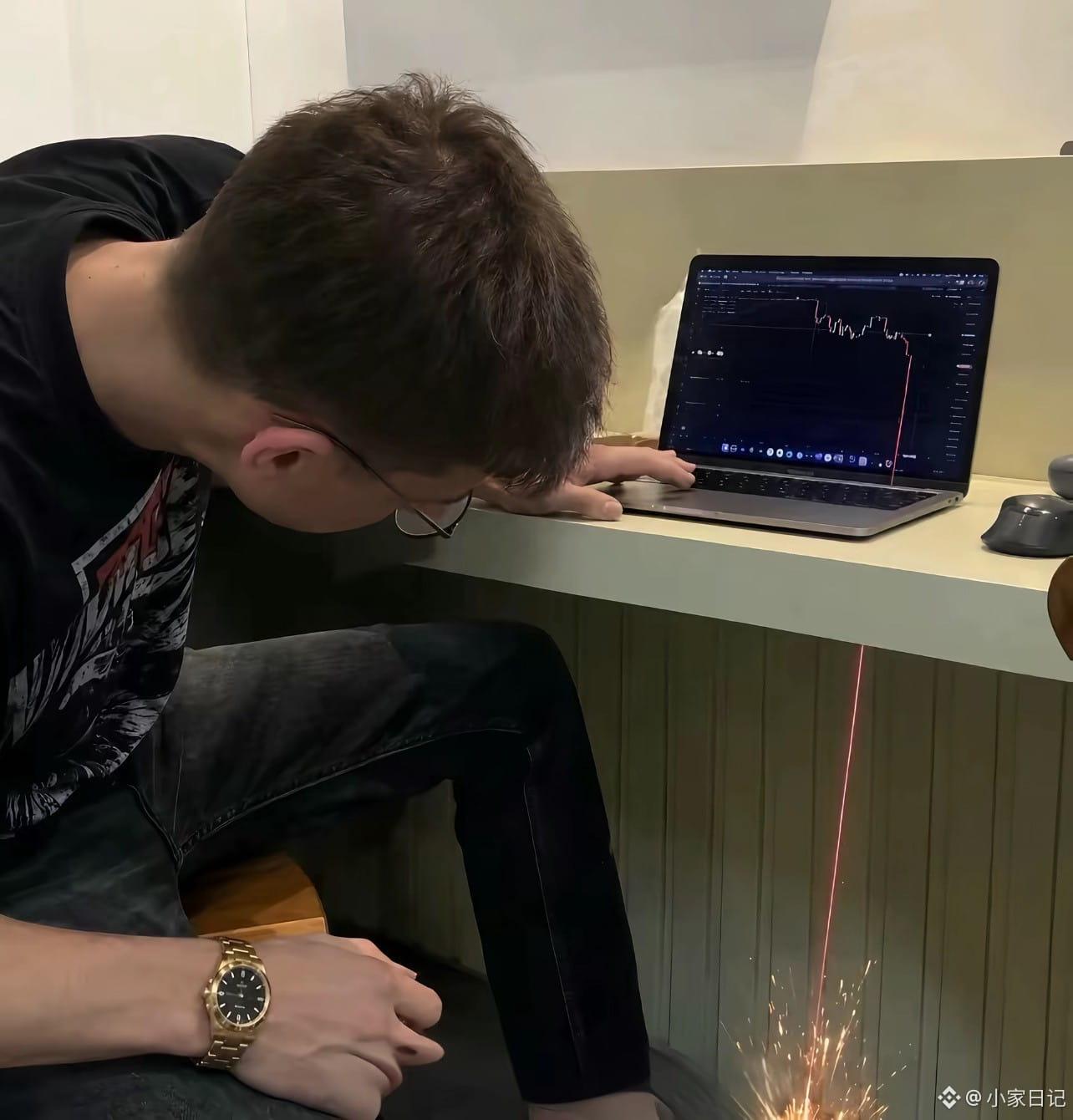
At 30, you finally have a trading system of your own.
Your computer holds a complete trading model, with macro cycles, market structure, capital flows, technical indicators, and risk management organized into separate folders.
You no longer hunt every day for so-called 100x opportunities, or change your plans because of profit screenshots on social media.
But the real test comes during a major market move.
Bitcoin keeps rising. Your analysis is on the right track, and you build your position according to plan. Yet when the price pulls back, you still can’t resist opening your phone and checking your unrealized profits over and over.
In the end, you choose to exit.
The next morning, the price breaks through the target zone you had originally set. You sit at the dining table, facing a bowl of porridge that has gone cold.
Your wife asks, “Did you make money yesterday?”
You say, “I did.”
She smiles and says, “That’s good.”
But you don’t tell her that you could have made much more.
At 35, AI starts to change the crypto market.
Market analysis that once took hours can now be generated by artificial intelligence in just a few minutes.
On-chain data, funding rates, open interest, market sentiment, and macro indicators are integrated into various intelligent trading systems. Young traders start using algorithms to find tiny pricing inefficiencies in the market, while traditional technical analysis gradually becomes basic knowledge that anyone can master.
Your daughter is hunched over her homework beside the desk. She looks up at your screen and asks, “Dad, can you really make money from all those lines you look at every day?”
You pause, then close your computer and put the now-yellowed copy of Technical Analysis back on the bookshelf.
Suddenly, you realize that you’ve spent more than a decade studying the market, yet you’ve never seriously answered one question: If you stopped trading, what else would you do?@小家日记