

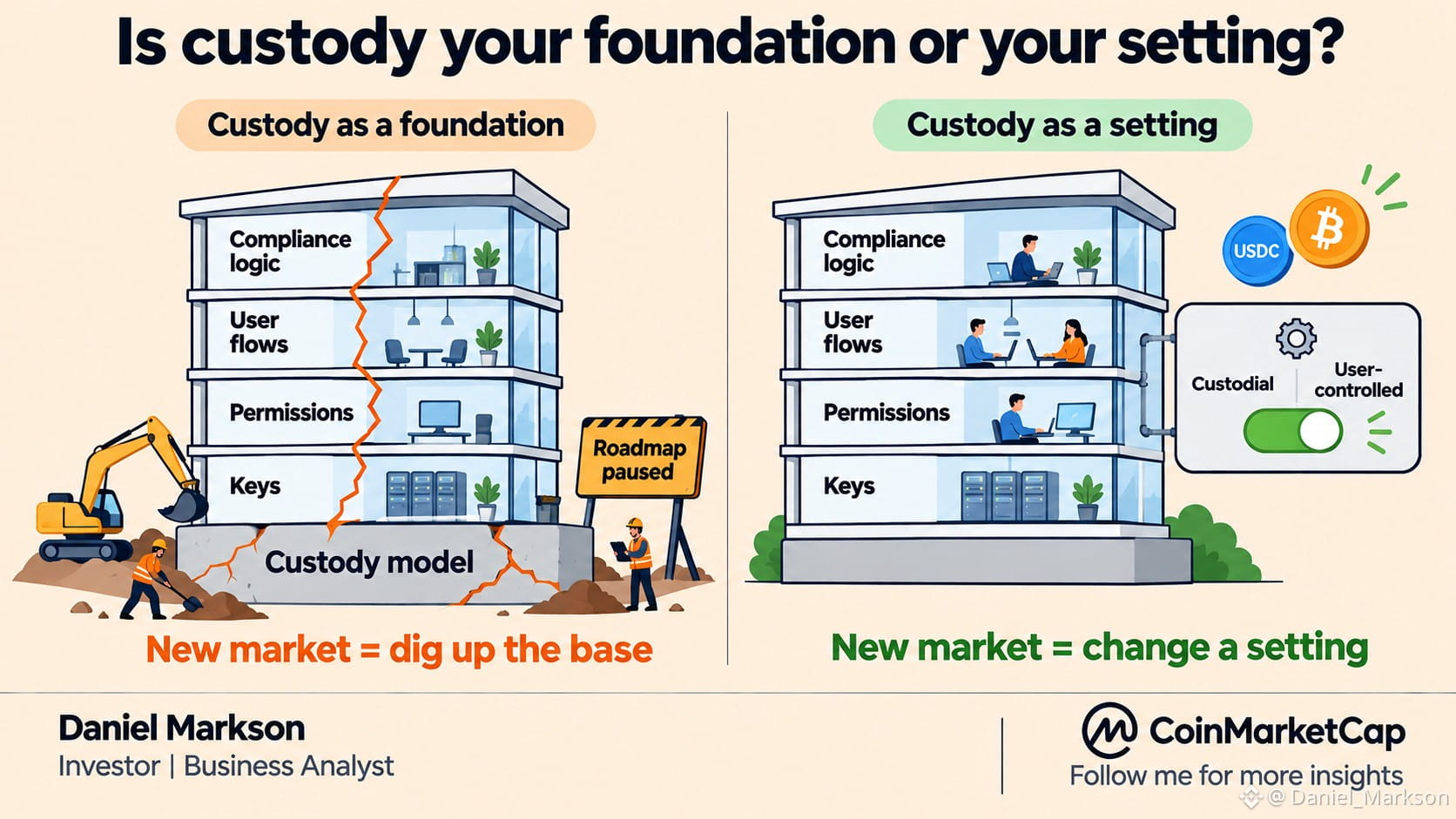
Are You Treating Wallet Custody as a Permanent Foundation or a Dynamic Setting? 🤔 It surprises me how often custody gets decided in one launch meeting, before anyone asks which market comes second. A fintech ships a product around USDC and $BTC balances in one country. The company holds the keys, or the user does, and everything gets built on that choice. It works, so nobody revisits it. That’s custody treated as a foundation: poured once, deciding the shape of the building. The team expands, and the new jurisdiction expects the opposite arrangement. 🔑 Keys, permissions, user flows and compliance logic move together, legal and security sign off and the roadmap waits while the base is dug up. That bill skips launch and arrives with the first regulatory change. The alternative is custody as a setting, something you can change while the building stays in use ⚙️ 👇 I have checked and found the Privy https://www.privy.io/fintech?utm_source=coinmarketcap&utm_medium=caas_dan&utm_campaign=post It supports passkeys, multi-sig, and fully custodial or user-controlled wallets, and Privy describes its custody guide as helping teams switch models for local requirements without rearchitecting. Keys are never stored whole (TEE plus key sharding), so a model change doesn’t reopen how signatures are protected. Integrations with Chainalysis, Elliptic and TRM Labs keep compliance checks in place as the model shifts. If your largest target market changed its custody rules next quarter, which part of your product would have to be rebuilt? Disclaimer: This is not financial or investment advice. DYOR before making any decisions. Use at your own risk. #BTC Price Analysis# #Bitcoin Price Prediction: What is Bitcoins next move?#
Join global crypto users on Binance Square
⚡️ Get latest and useful information about crypto.
💬 Trusted by the world’s largest crypto exchange.
👍 Discover real insights from verified creators.
Email / Phone number