

November 12, 2026, is destined to go down in financial history.
Just as the market was still digesting the aftershocks of MSCI kicking Strategy out of its index, Nvidia dropped a bombshell—Jensen Huang officially stepped down as CEO. The stock plunged as much as 13% in premarket trading. Although the losses narrowed during the session, the market-cap wipeout was still staggering. Meanwhile, Bitcoin seesawed around the $74,000 mark, ETF outflows continued, and market sentiment hit rock bottom.
This is more than just turmoil in a single stock; it is a reshuffling of global capital liquidity.
I. Nvidia: The End of an Era and the Growing Pains of the “Post-Jensen Huang” Era
On November 12, Nvidia's board of directors officially announced that Jensen Huang had resigned as president, CEO, and board member, effective immediately. CFO Colette Kress was appointed interim CEO.
The market reaction was dramatic:
* Share price plunge: The stock was down more than 10% at one point in premarket trading, and the decline widened to 13% after the open. It ultimately closed down 4.34%, wiping $182 billion off its market value in a single day.
* Crisis of confidence: Investment banks including Citi and Bernstein cut their price targets overnight. Bernstein went further, slashing its target from $400 to $200 and saying, “It will be difficult for a successor to shoulder the burden.”
* Ripple effect: While Nvidia fell, competitors such as Broadcom and AMD surged more than 5% against the trend, as money frantically searches for “alternatives.”
The deeper story:
Jensen Huang is not just the CEO; he is Nvidia's soul. He secured CoWoS capacity at TSMC and wielded influence over allocations to cloud giants. His departure means Nvidia is moving from “one-man rule” to the era of professional managers. The discount for this uncertainty is substantial. But note that demand for AI computing power has not disappeared, and Nvidia's moat (the CUDA ecosystem and hardware barriers) remains solid in the near term. It's just that the “kingmaker” aura has faded, and the valuation framework needs to be rebuilt.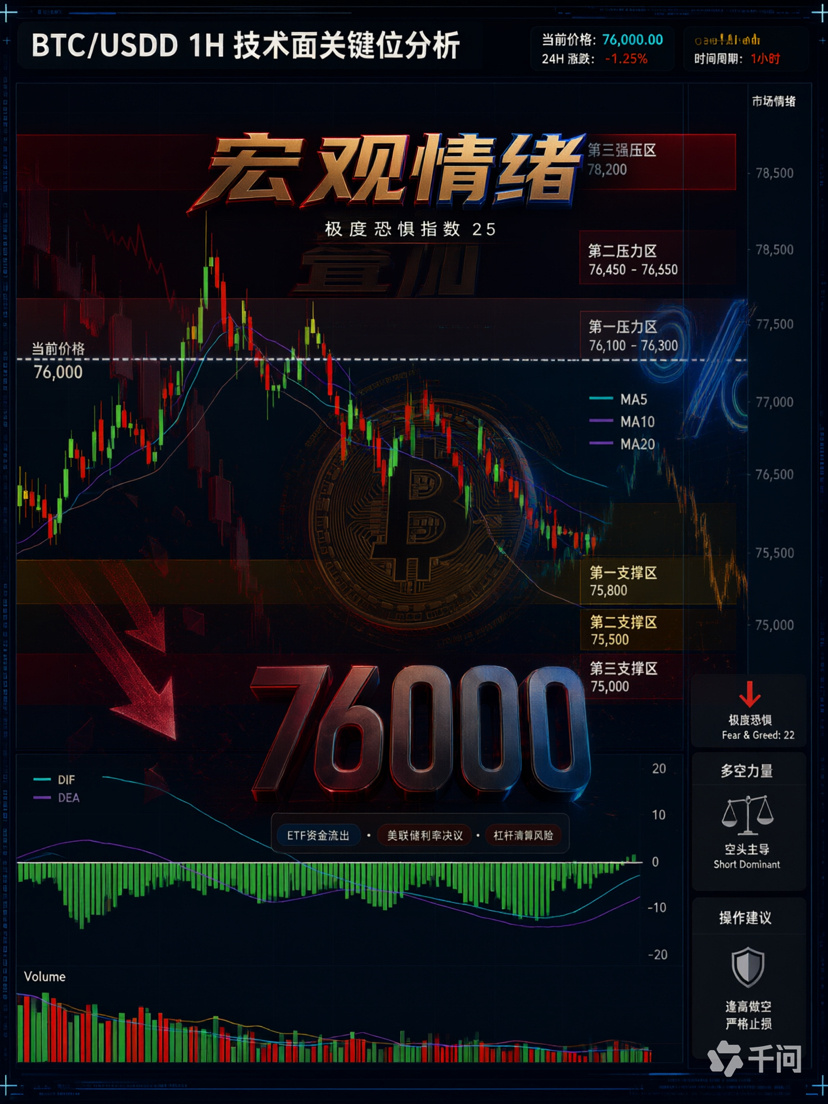
II. Bitcoin: Buyer base collapses; $74,000 is the line between life and death
While Nvidia's negative catalyst is out in the open, the crypto market is experiencing a slow, “boiling frog” style liquidity drain.
1. The buyer base has changed: from “unlimited ammo” to tightening belts
* Strategy's predicament: MSCI confirmed that Strategy will be removed from its index on November 30, triggering around $2.8 billion in passive selling. More critically, Strategy's mNAV (market-to-net-asset-value ratio) has approached 1.08x, and the “flywheel” of issuing shares to buy Bitcoin is about to stop turning.
* ETF outflows continue: Since the start of November, Bitcoin ETFs have seen cumulative outflows of more than $1.8 billion, with BlackRock's IBIT accounting for 90% of that total. The Coinbase premium has been negative for 70 consecutive days, indicating extremely weak U.S. spot demand.
2. On-chain data warning: Short-term holders' cost basis has been breached
Glassnode data shows that Bitcoin has fallen below the short-term holders' cost basis (around $75,600). This means most of the money that entered the market over the past few months is sitting on unrealized losses. A break below $71,000 could trigger a fresh wave of stop-loss selling.
3. Macroeconomic headwinds: Rate hike expectations return
Although Fed officials are sending mixed signals, markets are pricing in a 91% probability of a 25-basis-point rate hike in December. The U.S. Dollar Index has hit a 19-month high, and Treasury yields are surging, putting direct pressure on risk assets, including BTC.
Trading strategy:
* Spot: Hold, but don't add. $74,000 is the dividing line between bulls and bears. If Bitcoin falls below $71,000, cut your position by half without hesitation and exit altcoins.
* Futures: Keep risk tightly controlled and wait for confirmation. Volatility is extremely high and direction is unclear, so high leverage can easily get stopped out by sharp moves in either direction. Consider lowering leverage and patiently waiting for ETF flows to turn positive or for the price to reclaim and hold above $75,000 before adding back to your position.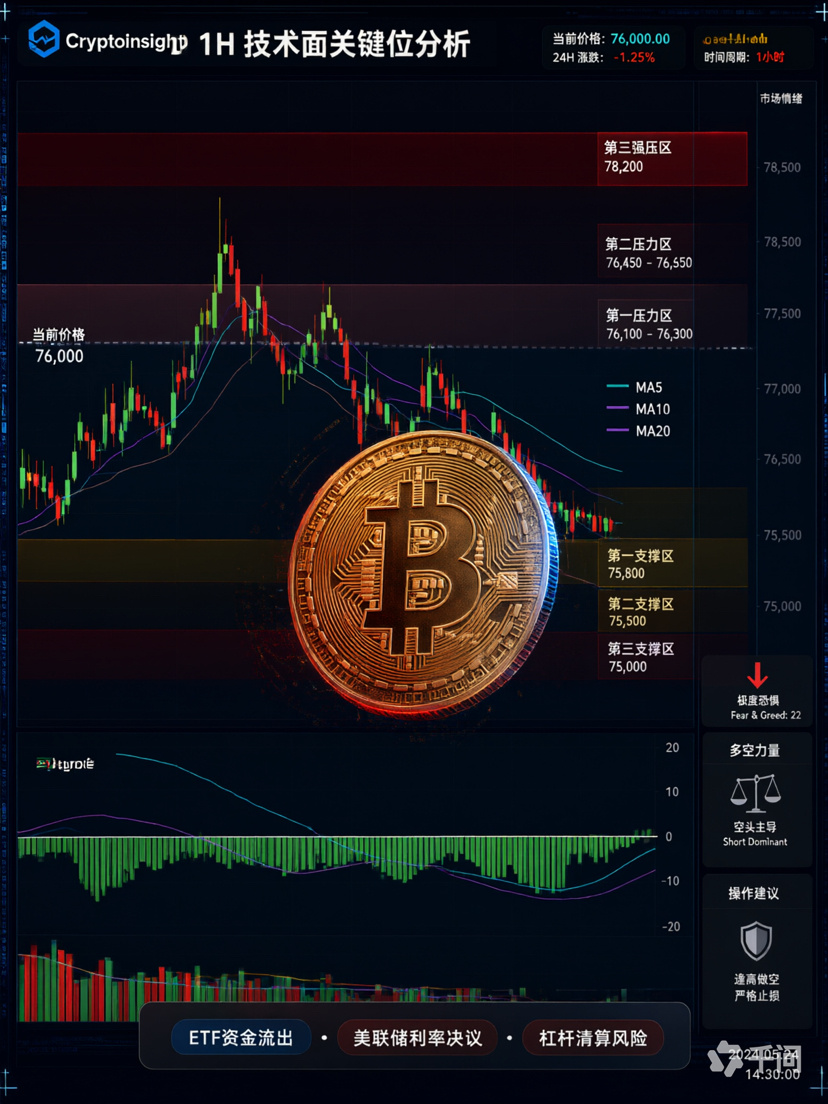
III. Macro and commodities: The specter of inflation and geopolitical maneuvering
* Crude oil: Brent crude has broken above $93 and is approaching $96. Geopolitical tensions (the Iran situation) and winter demand are the main drivers. Rising oil prices will stoke inflation expectations and further limit the Fed's room to cut rates.
* Gold: It has fallen below the $4,000 mark, down 1%. Rising real interest rates are gold's biggest enemy. Until rate hike expectations fade, gold is unlikely to mount a meaningful rebound.
IV. Summary and outlook: Finding certainty amid uncertainty
Today's market is full of “black swans” and “gray rhinos.”
* Nvidia: Avoid in the near term and wait for clarity on the new CEO or for the share price to stabilize.
* Bitcoin: Bearish in the short term, bullish in the medium term. $74,000 is key support; below that, watch $71,000.
* U.S. tech stocks: Money is shifting from “single leaders” to the “entire value chain.” Infrastructure segments such as memory (Micron, SK Hynix) and optical modules (Coherent) may see catch-up gains.
In a nutshell:
Don't try to catch Nvidia's falling knife, and don't blindly buy the dip in Bitcoin when liquidity is drying up. Cash is king—wait for the market to give a clear signal.#黄仁勋辞任CEO,英伟达战略走向受关注 #Anthropic拒绝延期IPO,本周路演估值几何? #Bitmine2026财年净亏损63亿美元 #英伟达突发换帅,美国芯片股跌幅扩大 #泰国拟限稳定币每日充提14.8万美元 $BTC


