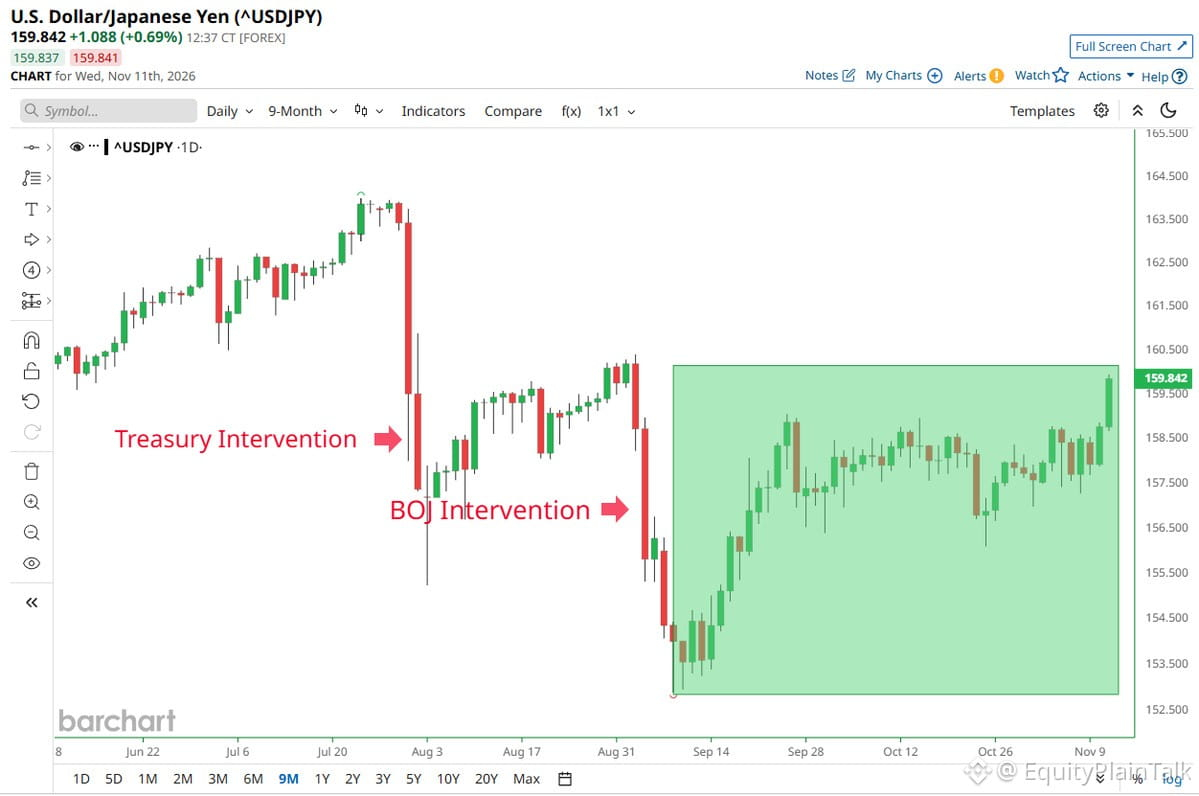
The yen just gave back everything.
Both U.S. Treasury intervention and the BOJ's latest moves? Completely erased. We're back where we started.
This tells you something about the underlying forces at work. When central bank action gets wiped out this fast, it's not just about policy anymore—it's about capital flows, rate differentials, and market structure overpowering official attempts to stabilize.
For U.S. stock investors, watch this closely. A weaker yen often correlates with:
• Stronger dollar pressure on multinationals
• Shift in global liquidity conditions
• Potential volatility in tech and export-heavy sectors
Currency moves like this don't happen in isolation. They ripple through equity valuations, especially for companies with heavy international exposure.
If interventions keep failing, expect more volatility ahead.