

币圈小贝贝
212 Posts

币圈小贝贝
Report
Block User
X:XiaoKongLong_88 , 6 年加密市场经历 , 牛市里见过疯狂,熊市里见过人性
11 Following
1.7K+ Followers
1.1K+ Liked
Posts
All
Live
·
--
Hong Kong has gone over its crypto licensing timeline again. Many will dismiss it as the same old refrain.. But what has really changed this time isn’t the date—it’s who the licenses are meant for. The scope has expanded from exchanges to people who manage money..
[📢 盘面异动群里说](https://app.binance.com/uni-qr/F6dwNqgx)
Let’s start with the facts.. On Monday, Christopher Hui, Hong Kong’s Secretary for Financial Services and the Treasury, said at a policy briefing that the government would submit an amendment bill this year to establish a licensing regime for four types of activity: digital asset trading, custody, advisory services, and asset management.. He had already raised this plan in January, when the timeline was to submit the bill by the end of 2026. That same month, the Hong Kong Monetary Authority was already processing license applications from stablecoin issuers. By April, the first stablecoin issuer licenses had gone to Anchorpoint Financial and HSBC..
Most people see this as another step forward for crypto compliance in Hong Kong.. But looking at the four categories separately, the picture is a little different..
Trading and custody are the gateway to the market; advisory and asset management are the gateway to capital.. The first two address whether a platform can open its doors. The latter two address whether people can entrust their money to a licensed firm to allocate.. In other words, the regulatory focus is shifting from whether trading is compliant to who exactly is managing the money..
That’s what Hong Kong is really trying to capture.. In the past, much of Asia’s money entered and exited the crypto world through offshore channels—unregulated on paper, and with no one to turn to if something went wrong.. The approach now is to bring those channels into the open, using licenses to bring custody and asset management within the regulatory framework, and give family offices and institutions somewhere they can list in their compliance reports..
The other side of the story offers a useful comparison.. What U.S. regulators have been doing in recent days is scrapping the long-pending rule requiring reports on private wallets holding $10,000.. One side is tightening the gates, the other is letting people through. In reality, both are focused on the same pool of money; they’ve just chosen different valves..
For the market, news like this won’t move prices immediately.. But the direction of capital rotation is often written into the rules first.. Once custody and asset management have compliant structures, the character of incoming money changes: it shifts from hot money chasing short-term gains to capital willing to stay..
Two things are really worth watching.. First, whether the amendment bill is actually submitted this year. Second, who receives the first licenses across these four categories.. If traditional financial institutions, rather than crypto-native platforms, appear on the list, then Hong Kong isn’t looking for a few exchanges—it wants to be the gateway for Asian capital moving into and out of digital assets..
One final twist.. The higher the bar, the greater the cost of compliance. Smaller firms may not be able to bear it and could be pushed back offshore.. When that happens, whether this gateway is inviting capital in or quietly taking away people’s choices will depend on the list of licensees, not the policy documents..
Hong Kong has gone over its crypto licensing timeline again. Many will dismiss it as the same old refrain.. But what has really changed this time isn’t the date—it’s who the licenses are meant for. The scope has expanded from exchanges to people who manage money..
📢 盘面异动群里说
Let’s start with the facts.. On Monday, Christopher Hui, Hong Kong’s Secretary for Financial Services and the Treasury, said at a policy briefing that the government would submit an amendment bill this year to establish a licensing regime for four types of activity: digital asset trading, custody, advisory services, and asset management.. He had already raised this plan in January, when the timeline was to submit the bill by the end of 2026. That same month, the Hong Kong Monetary Authority was already processing license applications from stablecoin issuers. By April, the first stablecoin issuer licenses had gone to Anchorpoint Financial and HSBC..
Most people see this as another step forward for crypto compliance in Hong Kong.. But looking at the four categories separately, the picture is a little different..
Trading and custody are the gateway to the market; advisory and asset management are the gateway to capital.. The first two address whether a platform can open its doors. The latter two address whether people can entrust their money to a licensed firm to allocate.. In other words, the regulatory focus is shifting from whether trading is compliant to who exactly is managing the money..
That’s what Hong Kong is really trying to capture.. In the past, much of Asia’s money entered and exited the crypto world through offshore channels—unregulated on paper, and with no one to turn to if something went wrong.. The approach now is to bring those channels into the open, using licenses to bring custody and asset management within the regulatory framework, and give family offices and institutions somewhere they can list in their compliance reports..
The other side of the story offers a useful comparison.. What U.S. regulators have been doing in recent days is scrapping the long-pending rule requiring reports on private wallets holding $10,000.. One side is tightening the gates, the other is letting people through. In reality, both are focused on the same pool of money; they’ve just chosen different valves..
For the market, news like this won’t move prices immediately.. But the direction of capital rotation is often written into the rules first.. Once custody and asset management have compliant structures, the character of incoming money changes: it shifts from hot money chasing short-term gains to capital willing to stay..
Two things are really worth watching.. First, whether the amendment bill is actually submitted this year. Second, who receives the first licenses across these four categories.. If traditional financial institutions, rather than crypto-native platforms, appear on the list, then Hong Kong isn’t looking for a few exchanges—it wants to be the gateway for Asian capital moving into and out of digital assets..
One final twist.. The higher the bar, the greater the cost of compliance. Smaller firms may not be able to bear it and could be pushed back offshore.. When that happens, whether this gateway is inviting capital in or quietly taking away people’s choices will depend on the list of licensees, not the policy documents..
📢 盘面异动群里说
Let’s start with the facts.. On Monday, Christopher Hui, Hong Kong’s Secretary for Financial Services and the Treasury, said at a policy briefing that the government would submit an amendment bill this year to establish a licensing regime for four types of activity: digital asset trading, custody, advisory services, and asset management.. He had already raised this plan in January, when the timeline was to submit the bill by the end of 2026. That same month, the Hong Kong Monetary Authority was already processing license applications from stablecoin issuers. By April, the first stablecoin issuer licenses had gone to Anchorpoint Financial and HSBC..
Most people see this as another step forward for crypto compliance in Hong Kong.. But looking at the four categories separately, the picture is a little different..
Trading and custody are the gateway to the market; advisory and asset management are the gateway to capital.. The first two address whether a platform can open its doors. The latter two address whether people can entrust their money to a licensed firm to allocate.. In other words, the regulatory focus is shifting from whether trading is compliant to who exactly is managing the money..
That’s what Hong Kong is really trying to capture.. In the past, much of Asia’s money entered and exited the crypto world through offshore channels—unregulated on paper, and with no one to turn to if something went wrong.. The approach now is to bring those channels into the open, using licenses to bring custody and asset management within the regulatory framework, and give family offices and institutions somewhere they can list in their compliance reports..
The other side of the story offers a useful comparison.. What U.S. regulators have been doing in recent days is scrapping the long-pending rule requiring reports on private wallets holding $10,000.. One side is tightening the gates, the other is letting people through. In reality, both are focused on the same pool of money; they’ve just chosen different valves..
For the market, news like this won’t move prices immediately.. But the direction of capital rotation is often written into the rules first.. Once custody and asset management have compliant structures, the character of incoming money changes: it shifts from hot money chasing short-term gains to capital willing to stay..
Two things are really worth watching.. First, whether the amendment bill is actually submitted this year. Second, who receives the first licenses across these four categories.. If traditional financial institutions, rather than crypto-native platforms, appear on the list, then Hong Kong isn’t looking for a few exchanges—it wants to be the gateway for Asian capital moving into and out of digital assets..
One final twist.. The higher the bar, the greater the cost of compliance. Smaller firms may not be able to bear it and could be pushed back offshore.. When that happens, whether this gateway is inviting capital in or quietly taking away people’s choices will depend on the list of licensees, not the policy documents..

18
·
--
The whole market is waiting for Bitcoin to pick a direction—will it break below 84,000? But the money that was really moving over the past 24 hours wasn’t in this order book at all.
[🔄 进群看资金动向](https://app.binance.com/uni-qr/F6dwNqgx)
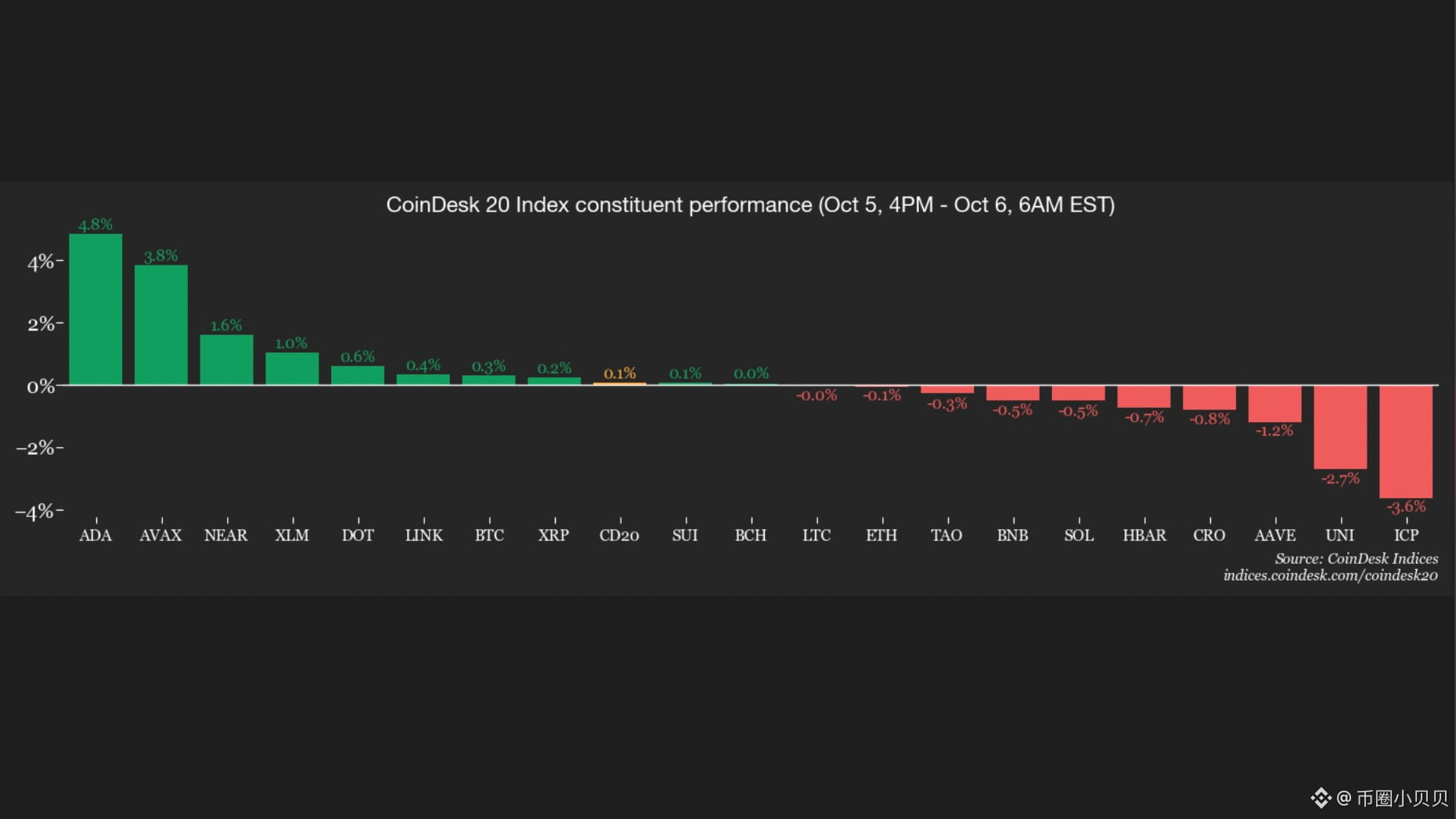
Most people are watching BTC, stuck around 85,900 after touching a low of 85,000 today. Analyst Kuptsikevich put it bluntly: a break below 84,000 would mean the bears have won; below 83,000 would pretty much confirm it, and Bitcoin could soon head for 80,000.
But at the same time, small-cap coins have been quietly taking off. Bitway’s BTW gained 25% in 24 hours and is up 170% over the past 30 days. It’s a Bitcoin-compatible L1 with PoS and DeFi. Filecoin’s FIL also gained 12%, LayerZero’s ZRO rose 10%—both are up more than 50% over the past four weeks—and Midnight’s NIGHT added 8%.
There’s a detail many people have missed: BTC open interest on exchanges has stayed nearly flat at $21.9 billion, while funding rates have fallen from a 4–10% range to an annualized 0–5%. In other words, this rally wasn’t fueled by piling on leverage; existing capital is changing positions. The money hasn’t left the market—it’s simply moved from the large-cap leaders to the smaller names in search of more upside.
Even within the smaller-cap segment, there’s a clear pecking order. Privacy coins have held steady rather than falling over the past couple of days: Monero rose to $557, and Zcash reclaimed $1,350. NEAR gained 4.5% in a day to $5.25. By contrast, RAIN fell more than 5% on token unlocks and profit-taking, making it the day’s biggest loser. In the same rotation, some coins are gaining while others are just getting dragged down along the way.
Two price levels are really worth watching. One is 84,000: if Bitcoin breaks below it first, the highest-beta small coins are often the first to give back their gains, and this independent rally could unwind within days. The other is 87,150, marked on the liquidation heatmap, where a lot of positions are clustered. If price breaks above that level first, the capital rotation could spread back from smaller coins to the broader market.
So the question now isn’t whether Bitcoin will fall, but how long this wave of capital intends to stay in smaller coins. When the broader market moves sideways, money always seems to seek out the far end of the market for more upside—but volatility cuts both ways.
The whole market is waiting for Bitcoin to pick a direction—will it break below 84,000? But the money that was really moving over the past 24 hours wasn’t in this order book at all.
🔄 进群看资金动向
Most people are watching BTC, stuck around 85,900 after touching a low of 85,000 today. Analyst Kuptsikevich put it bluntly: a break below 84,000 would mean the bears have won; below 83,000 would pretty much confirm it, and Bitcoin could soon head for 80,000.
But at the same time, small-cap coins have been quietly taking off. Bitway’s BTW gained 25% in 24 hours and is up 170% over the past 30 days. It’s a Bitcoin-compatible L1 with PoS and DeFi. Filecoin’s FIL also gained 12%, LayerZero’s ZRO rose 10%—both are up more than 50% over the past four weeks—and Midnight’s NIGHT added 8%.
There’s a detail many people have missed: BTC open interest on exchanges has stayed nearly flat at $21.9 billion, while funding rates have fallen from a 4–10% range to an annualized 0–5%. In other words, this rally wasn’t fueled by piling on leverage; existing capital is changing positions. The money hasn’t left the market—it’s simply moved from the large-cap leaders to the smaller names in search of more upside.
Even within the smaller-cap segment, there’s a clear pecking order. Privacy coins have held steady rather than falling over the past couple of days: Monero rose to $557, and Zcash reclaimed $1,350. NEAR gained 4.5% in a day to $5.25. By contrast, RAIN fell more than 5% on token unlocks and profit-taking, making it the day’s biggest loser. In the same rotation, some coins are gaining while others are just getting dragged down along the way.
Two price levels are really worth watching. One is 84,000: if Bitcoin breaks below it first, the highest-beta small coins are often the first to give back their gains, and this independent rally could unwind within days. The other is 87,150, marked on the liquidation heatmap, where a lot of positions are clustered. If price breaks above that level first, the capital rotation could spread back from smaller coins to the broader market.
So the question now isn’t whether Bitcoin will fall, but how long this wave of capital intends to stay in smaller coins. When the broader market moves sideways, money always seems to seek out the far end of the market for more upside—but volatility cuts both ways.
🔄 进群看资金动向
Most people are watching BTC, stuck around 85,900 after touching a low of 85,000 today. Analyst Kuptsikevich put it bluntly: a break below 84,000 would mean the bears have won; below 83,000 would pretty much confirm it, and Bitcoin could soon head for 80,000.
But at the same time, small-cap coins have been quietly taking off. Bitway’s BTW gained 25% in 24 hours and is up 170% over the past 30 days. It’s a Bitcoin-compatible L1 with PoS and DeFi. Filecoin’s FIL also gained 12%, LayerZero’s ZRO rose 10%—both are up more than 50% over the past four weeks—and Midnight’s NIGHT added 8%.
There’s a detail many people have missed: BTC open interest on exchanges has stayed nearly flat at $21.9 billion, while funding rates have fallen from a 4–10% range to an annualized 0–5%. In other words, this rally wasn’t fueled by piling on leverage; existing capital is changing positions. The money hasn’t left the market—it’s simply moved from the large-cap leaders to the smaller names in search of more upside.
Even within the smaller-cap segment, there’s a clear pecking order. Privacy coins have held steady rather than falling over the past couple of days: Monero rose to $557, and Zcash reclaimed $1,350. NEAR gained 4.5% in a day to $5.25. By contrast, RAIN fell more than 5% on token unlocks and profit-taking, making it the day’s biggest loser. In the same rotation, some coins are gaining while others are just getting dragged down along the way.
Two price levels are really worth watching. One is 84,000: if Bitcoin breaks below it first, the highest-beta small coins are often the first to give back their gains, and this independent rally could unwind within days. The other is 87,150, marked on the liquidation heatmap, where a lot of positions are clustered. If price breaks above that level first, the capital rotation could spread back from smaller coins to the broader market.
So the question now isn’t whether Bitcoin will fall, but how long this wave of capital intends to stay in smaller coins. When the broader market moves sideways, money always seems to seek out the far end of the market for more upside—but volatility cuts both ways.
499
·
--
Everyone is talking about why BTC can’t break through 87,000. What I’m more interested in is something else that quietly happened on-chain at the same time..
[📊 进群看我盯的点](https://app.binance.com/uni-qr/F6dwNqgx)
Over the past week, more than 23,137 BTC flowed out of Binance—the largest weekly net outflow since June 2023.. Looking at a longer timeframe, Binance’s Bitcoin reserves have fallen by nearly 40,000 BTC since September 20..
Many people’s first reaction is to panic, thinking that the whales are getting out.. But it’s actually the opposite: historically, withdrawing Bitcoin from exchanges has more often been seen as a sign of long-term holding than short-term selling.. CryptoQuant sees it the same way: withdrawals mean coins are being locked away in cold wallets, which reduces the selling pressure on the market..
Even more important is another data point.. During the same period, the amount of stablecoins deposited into Binance by large addresses increased noticeably. The 30-day rolling inflow rose from $21.7 billion in mid-August to $30.5 billion by the end of September, an increase of around 40%..
On one side, Bitcoin is leaving exchanges; on the other, stablecoins are lining up to enter.. Put these two things together, and the picture looks different: the money hasn’t left—it has just moved somewhere else to wait.. Stablecoins are dry powder; depositing them is like getting ready to pull the trigger..
The last time we saw a similar picture was in June 2023. Back then, weekly outflows came close to 45,000 BTC, and BTC then climbed from 26,300 to 30,500. That’s why some people are now comparing this market phase to the accumulation stage near the end of a bear market..
But there’s one detail we shouldn’t overlook.. Whale stablecoin inflows surged to a high of $61 billion in October, then declined steadily. The current rebound is climbing back up from a low, so its pace isn’t exactly the same as last time..
In other words, this looks more like a second entry than a first scramble to accumulate.. If stablecoins keep flowing in while the price remains stuck, that’s when we should be cautious—it could mean large investors are quietly transferring their holdings..
The level truly worth watching is 87,570, the 2026 opening price.. It has capped BTC several times already. If BTC breaks through, the capital waiting on the sidelines above could very well move in..
On the other hand, if the lower boundary of the 82,500 zone breaks first, this story will take a different turn..
Everyone is talking about why BTC can’t break through 87,000. What I’m more interested in is something else that quietly happened on-chain at the same time..
📊 进群看我盯的点
Over the past week, more than 23,137 BTC flowed out of Binance—the largest weekly net outflow since June 2023.. Looking at a longer timeframe, Binance’s Bitcoin reserves have fallen by nearly 40,000 BTC since September 20..
Many people’s first reaction is to panic, thinking that the whales are getting out.. But it’s actually the opposite: historically, withdrawing Bitcoin from exchanges has more often been seen as a sign of long-term holding than short-term selling.. CryptoQuant sees it the same way: withdrawals mean coins are being locked away in cold wallets, which reduces the selling pressure on the market..
Even more important is another data point.. During the same period, the amount of stablecoins deposited into Binance by large addresses increased noticeably. The 30-day rolling inflow rose from $21.7 billion in mid-August to $30.5 billion by the end of September, an increase of around 40%..
On one side, Bitcoin is leaving exchanges; on the other, stablecoins are lining up to enter.. Put these two things together, and the picture looks different: the money hasn’t left—it has just moved somewhere else to wait.. Stablecoins are dry powder; depositing them is like getting ready to pull the trigger..
The last time we saw a similar picture was in June 2023. Back then, weekly outflows came close to 45,000 BTC, and BTC then climbed from 26,300 to 30,500. That’s why some people are now comparing this market phase to the accumulation stage near the end of a bear market..
But there’s one detail we shouldn’t overlook.. Whale stablecoin inflows surged to a high of $61 billion in October, then declined steadily. The current rebound is climbing back up from a low, so its pace isn’t exactly the same as last time..
In other words, this looks more like a second entry than a first scramble to accumulate.. If stablecoins keep flowing in while the price remains stuck, that’s when we should be cautious—it could mean large investors are quietly transferring their holdings..
The level truly worth watching is 87,570, the 2026 opening price.. It has capped BTC several times already. If BTC breaks through, the capital waiting on the sidelines above could very well move in..
On the other hand, if the lower boundary of the 82,500 zone breaks first, this story will take a different turn..
📊 进群看我盯的点
Over the past week, more than 23,137 BTC flowed out of Binance—the largest weekly net outflow since June 2023.. Looking at a longer timeframe, Binance’s Bitcoin reserves have fallen by nearly 40,000 BTC since September 20..
Many people’s first reaction is to panic, thinking that the whales are getting out.. But it’s actually the opposite: historically, withdrawing Bitcoin from exchanges has more often been seen as a sign of long-term holding than short-term selling.. CryptoQuant sees it the same way: withdrawals mean coins are being locked away in cold wallets, which reduces the selling pressure on the market..
Even more important is another data point.. During the same period, the amount of stablecoins deposited into Binance by large addresses increased noticeably. The 30-day rolling inflow rose from $21.7 billion in mid-August to $30.5 billion by the end of September, an increase of around 40%..
On one side, Bitcoin is leaving exchanges; on the other, stablecoins are lining up to enter.. Put these two things together, and the picture looks different: the money hasn’t left—it has just moved somewhere else to wait.. Stablecoins are dry powder; depositing them is like getting ready to pull the trigger..
The last time we saw a similar picture was in June 2023. Back then, weekly outflows came close to 45,000 BTC, and BTC then climbed from 26,300 to 30,500. That’s why some people are now comparing this market phase to the accumulation stage near the end of a bear market..
But there’s one detail we shouldn’t overlook.. Whale stablecoin inflows surged to a high of $61 billion in October, then declined steadily. The current rebound is climbing back up from a low, so its pace isn’t exactly the same as last time..
In other words, this looks more like a second entry than a first scramble to accumulate.. If stablecoins keep flowing in while the price remains stuck, that’s when we should be cautious—it could mean large investors are quietly transferring their holdings..
The level truly worth watching is 87,570, the 2026 opening price.. It has capped BTC several times already. If BTC breaks through, the capital waiting on the sidelines above could very well move in..
On the other hand, if the lower boundary of the 82,500 zone breaks first, this story will take a different turn..

777
·
--
Putting a company that hasn’t gone public on-chain sounds like giving ordinary people a ticket to get in early.. But what’s actually being issued this time isn’t shares in the company—it’s a note that only pays out at a specific moment..
[📢 进群蹲一手消息](https://app.binance.com/uni-qr/F6dwNqgx)
Asset tokenization platform Ondo Finance has launched Ondo Private Markets. The first offering is tied to an unnamed pre-IPO AI company.. The note’s returns don’t come from real-time fluctuations in the share price. Instead, they’re linked to the value ultimately realized per common share in a qualifying liquidity event for the company—that is, an IPO or an acquisition..
In other words, buyers get economic exposure, not shareholder status.. They have no voting rights and aren’t entered in the shareholder register.. Qualified investors can hold the notes in self-custody wallets or trade them on a 24/7 secondary market.. Ondo says the first notes will begin trading this week, with robotics, cybersecurity, and biotech companies to follow..
Most people see this as just another new tokenized product.. What’s really worth watching is the shift in what’s on the shelf.. Over the past two years, on-chain markets have mostly held public-market assets: U.S. Treasuries, money market funds, stocks, and ETFs. Ondo’s own tokenized U.S. stocks and ETFs already cover more than 450 assets, with over $1 billion in total value locked. At least these assets have public prices available every day..
Now the market is moving into private equity, putting its most opaque and least liquid segment on a shelf that trades 24/7.. At the same time, Robinhood invested $75 million this April to buy common shares in OpenAI and give retail investors exposure, while Citi is also building a blockchain market for shares in private companies. They’re all heading in the same direction..
The nature of the risks changes too.. When you buy a spot token, you worry about the price.. With this note, you have two things to worry about: first, who sets its value and by what rules; second, when you’ll actually be able to exit.. Returns only materialize after a qualifying liquidity event, which could happen next year—or three or four years from now. Yet in your wallet, the note looks like something you can sell at any time..
From the perspective of capital rotation, this is essentially slicing the high valuations of the primary market into small, transferable portions.. Ordinary people couldn’t get access to the AI primary market before. Now they have a way to get in early, so it’s natural for marginal capital to flow in..
So what may really be worth watching isn’t who the first AI company is.. It’s whether the prices of these notes on the secondary market will signal sooner and more directly than the primary market that AI valuations are starting to soften.. Once people realize that being able to sell and actually being able to find a buyer are two different things, the premium in this segment is often the first to come and go..
Putting a company that hasn’t gone public on-chain sounds like giving ordinary people a ticket to get in early.. But what’s actually being issued this time isn’t shares in the company—it’s a note that only pays out at a specific moment..
📢 进群蹲一手消息
Asset tokenization platform Ondo Finance has launched Ondo Private Markets. The first offering is tied to an unnamed pre-IPO AI company.. The note’s returns don’t come from real-time fluctuations in the share price. Instead, they’re linked to the value ultimately realized per common share in a qualifying liquidity event for the company—that is, an IPO or an acquisition..
In other words, buyers get economic exposure, not shareholder status.. They have no voting rights and aren’t entered in the shareholder register.. Qualified investors can hold the notes in self-custody wallets or trade them on a 24/7 secondary market.. Ondo says the first notes will begin trading this week, with robotics, cybersecurity, and biotech companies to follow..
Most people see this as just another new tokenized product.. What’s really worth watching is the shift in what’s on the shelf.. Over the past two years, on-chain markets have mostly held public-market assets: U.S. Treasuries, money market funds, stocks, and ETFs. Ondo’s own tokenized U.S. stocks and ETFs already cover more than 450 assets, with over $1 billion in total value locked. At least these assets have public prices available every day..
Now the market is moving into private equity, putting its most opaque and least liquid segment on a shelf that trades 24/7.. At the same time, Robinhood invested $75 million this April to buy common shares in OpenAI and give retail investors exposure, while Citi is also building a blockchain market for shares in private companies. They’re all heading in the same direction..
The nature of the risks changes too.. When you buy a spot token, you worry about the price.. With this note, you have two things to worry about: first, who sets its value and by what rules; second, when you’ll actually be able to exit.. Returns only materialize after a qualifying liquidity event, which could happen next year—or three or four years from now. Yet in your wallet, the note looks like something you can sell at any time..
From the perspective of capital rotation, this is essentially slicing the high valuations of the primary market into small, transferable portions.. Ordinary people couldn’t get access to the AI primary market before. Now they have a way to get in early, so it’s natural for marginal capital to flow in..
So what may really be worth watching isn’t who the first AI company is.. It’s whether the prices of these notes on the secondary market will signal sooner and more directly than the primary market that AI valuations are starting to soften.. Once people realize that being able to sell and actually being able to find a buyer are two different things, the premium in this segment is often the first to come and go..
📢 进群蹲一手消息
Asset tokenization platform Ondo Finance has launched Ondo Private Markets. The first offering is tied to an unnamed pre-IPO AI company.. The note’s returns don’t come from real-time fluctuations in the share price. Instead, they’re linked to the value ultimately realized per common share in a qualifying liquidity event for the company—that is, an IPO or an acquisition..
In other words, buyers get economic exposure, not shareholder status.. They have no voting rights and aren’t entered in the shareholder register.. Qualified investors can hold the notes in self-custody wallets or trade them on a 24/7 secondary market.. Ondo says the first notes will begin trading this week, with robotics, cybersecurity, and biotech companies to follow..
Most people see this as just another new tokenized product.. What’s really worth watching is the shift in what’s on the shelf.. Over the past two years, on-chain markets have mostly held public-market assets: U.S. Treasuries, money market funds, stocks, and ETFs. Ondo’s own tokenized U.S. stocks and ETFs already cover more than 450 assets, with over $1 billion in total value locked. At least these assets have public prices available every day..
Now the market is moving into private equity, putting its most opaque and least liquid segment on a shelf that trades 24/7.. At the same time, Robinhood invested $75 million this April to buy common shares in OpenAI and give retail investors exposure, while Citi is also building a blockchain market for shares in private companies. They’re all heading in the same direction..
The nature of the risks changes too.. When you buy a spot token, you worry about the price.. With this note, you have two things to worry about: first, who sets its value and by what rules; second, when you’ll actually be able to exit.. Returns only materialize after a qualifying liquidity event, which could happen next year—or three or four years from now. Yet in your wallet, the note looks like something you can sell at any time..
From the perspective of capital rotation, this is essentially slicing the high valuations of the primary market into small, transferable portions.. Ordinary people couldn’t get access to the AI primary market before. Now they have a way to get in early, so it’s natural for marginal capital to flow in..
So what may really be worth watching isn’t who the first AI company is.. It’s whether the prices of these notes on the secondary market will signal sooner and more directly than the primary market that AI valuations are starting to soften.. Once people realize that being able to sell and actually being able to find a buyer are two different things, the premium in this segment is often the first to come and go..

103
·
--
#币安推出binanceintelligence
People have been saying at all kinds of conferences lately that AI will become the new interface for wallets. But Vitalik’s example this time was different: he shared a real-world test that had already been completed, not just a vision..
[🤖 进群聊市场](https://app.binance.com/uni-qr/F6dwNqgx)
About a month ago, he had a locally running AI agent write a script, and it updated his ENS records. He never opened a web interface—not once. The whole thing took five minutes..
Most people see this as yet another familiar AI-meets-crypto narrative.. What’s really worth noting is the set of figures he mentioned in passing: a Safe-related theft resulted in losses of around $1.4 billion, and the attack targeted not an on-chain contract, but the interface layer between users and on-chain systems..
That statement matters because it redraws the map of where the risks lie.. For years, the industry has focused on fixing contracts, audits, and multisigs. But funds are often stolen somewhere between the browser and the signing prompt.. If AI takes over that step directly, web phishing may stop working—but new vulnerabilities will immediately emerge: prompt injection, misunderstandings of user intent, and models being misled..
From a capital perspective, this gives the AI-plus-on-chain narrative a concrete point of entry.. It’s no longer just empty talk: people will need to build things like intent execution, verifiable AI actions, and account abstraction—the layers in between.. In the previous AI boom, most of the money went into compute and applications, while the on-chain side remained underdeveloped..
The bigger narrative is that whoever defines how AI agents can safely sign on people’s behalf will gain the right to collect rent on the next generation of entry points.. There’s no obvious winner yet, so this area is especially prone to both outsized premiums and bubbles..
But what we should really be watching may not be whether AI keeps getting smarter.. It’s whether people will still understand what they’re signing once the interface disappears.. If that gap isn’t addressed, the greater the efficiency, the greater the risk..
#币安推出binanceintelligence
People have been saying at all kinds of conferences lately that AI will become the new interface for wallets. But Vitalik’s example this time was different: he shared a real-world test that had already been completed, not just a vision..
🤖 进群聊市场
About a month ago, he had a locally running AI agent write a script, and it updated his ENS records. He never opened a web interface—not once. The whole thing took five minutes..
Most people see this as yet another familiar AI-meets-crypto narrative.. What’s really worth noting is the set of figures he mentioned in passing: a Safe-related theft resulted in losses of around $1.4 billion, and the attack targeted not an on-chain contract, but the interface layer between users and on-chain systems..
That statement matters because it redraws the map of where the risks lie.. For years, the industry has focused on fixing contracts, audits, and multisigs. But funds are often stolen somewhere between the browser and the signing prompt.. If AI takes over that step directly, web phishing may stop working—but new vulnerabilities will immediately emerge: prompt injection, misunderstandings of user intent, and models being misled..
From a capital perspective, this gives the AI-plus-on-chain narrative a concrete point of entry.. It’s no longer just empty talk: people will need to build things like intent execution, verifiable AI actions, and account abstraction—the layers in between.. In the previous AI boom, most of the money went into compute and applications, while the on-chain side remained underdeveloped..
The bigger narrative is that whoever defines how AI agents can safely sign on people’s behalf will gain the right to collect rent on the next generation of entry points.. There’s no obvious winner yet, so this area is especially prone to both outsized premiums and bubbles..
But what we should really be watching may not be whether AI keeps getting smarter.. It’s whether people will still understand what they’re signing once the interface disappears.. If that gap isn’t addressed, the greater the efficiency, the greater the risk..
People have been saying at all kinds of conferences lately that AI will become the new interface for wallets. But Vitalik’s example this time was different: he shared a real-world test that had already been completed, not just a vision..
🤖 进群聊市场
About a month ago, he had a locally running AI agent write a script, and it updated his ENS records. He never opened a web interface—not once. The whole thing took five minutes..
Most people see this as yet another familiar AI-meets-crypto narrative.. What’s really worth noting is the set of figures he mentioned in passing: a Safe-related theft resulted in losses of around $1.4 billion, and the attack targeted not an on-chain contract, but the interface layer between users and on-chain systems..
That statement matters because it redraws the map of where the risks lie.. For years, the industry has focused on fixing contracts, audits, and multisigs. But funds are often stolen somewhere between the browser and the signing prompt.. If AI takes over that step directly, web phishing may stop working—but new vulnerabilities will immediately emerge: prompt injection, misunderstandings of user intent, and models being misled..
From a capital perspective, this gives the AI-plus-on-chain narrative a concrete point of entry.. It’s no longer just empty talk: people will need to build things like intent execution, verifiable AI actions, and account abstraction—the layers in between.. In the previous AI boom, most of the money went into compute and applications, while the on-chain side remained underdeveloped..
The bigger narrative is that whoever defines how AI agents can safely sign on people’s behalf will gain the right to collect rent on the next generation of entry points.. There’s no obvious winner yet, so this area is especially prone to both outsized premiums and bubbles..
But what we should really be watching may not be whether AI keeps getting smarter.. It’s whether people will still understand what they’re signing once the interface disappears.. If that gap isn’t addressed, the greater the efficiency, the greater the risk..
27
·
--
#以太坊q3涨70%流动性下降
To get straight to the point: the real thing to watch in this cross-chain test may not be that it worked, but who could gradually be sidelined now that it has..
[💬 想聊行情的进群](https://app.binance.com/uni-qr/F6dwNqgx)
The Ethereum Economic Zone project has just completed an atomic transaction between mainnet and a Layer 2 network.. A cross-chain call carried 0.001 ETH and included a Layer 2 state update: either everything succeeded, or everything rolled back. No cross-chain bridge was needed in between..
Most people see this as yet another technical milestone that feels far removed from everyday users.. But from another angle, it takes direct aim at the core business model of every Layer 2 network in recent years.. Liquidity has been split into isolated islands, users have to bridge every time they switch chains, and protocols have had to deploy the same code over and over to serve different Layer 2s..
The co-founder of Gnosis had already called this out: the lack of synchronous composability is what forces protocols to split liquidity across multiple markets.. In other words, the more Layer 2s flourish, the more Ethereum mainnet looks like a hollowed-out transit hub..
If this approach really takes off, capital may have to rethink the math.. The premium on highly valued Layer 2 tokens built on fragmented liquidity and incentive-driven volume could be repriced, while the ETH settled on mainnet could once again become an indispensable settlement layer.. One DeFi protocol co-founder went so far as to call it one of the most important milestones in crypto, precisely because it directly benefits Ethereum itself..
The next step is what’s worth watching: can this go from a one-off demo to infrastructure developers actually trust enough to use?.. Once atomic transactions between mainnet and Layer 2 become the norm, the premium currently attached to the Layer 2 narrative may have to find a new home..
#以太坊q3涨70%流动性下降
To get straight to the point: the real thing to watch in this cross-chain test may not be that it worked, but who could gradually be sidelined now that it has..
💬 想聊行情的进群
The Ethereum Economic Zone project has just completed an atomic transaction between mainnet and a Layer 2 network.. A cross-chain call carried 0.001 ETH and included a Layer 2 state update: either everything succeeded, or everything rolled back. No cross-chain bridge was needed in between..
Most people see this as yet another technical milestone that feels far removed from everyday users.. But from another angle, it takes direct aim at the core business model of every Layer 2 network in recent years.. Liquidity has been split into isolated islands, users have to bridge every time they switch chains, and protocols have had to deploy the same code over and over to serve different Layer 2s..
The co-founder of Gnosis had already called this out: the lack of synchronous composability is what forces protocols to split liquidity across multiple markets.. In other words, the more Layer 2s flourish, the more Ethereum mainnet looks like a hollowed-out transit hub..
If this approach really takes off, capital may have to rethink the math.. The premium on highly valued Layer 2 tokens built on fragmented liquidity and incentive-driven volume could be repriced, while the ETH settled on mainnet could once again become an indispensable settlement layer.. One DeFi protocol co-founder went so far as to call it one of the most important milestones in crypto, precisely because it directly benefits Ethereum itself..
The next step is what’s worth watching: can this go from a one-off demo to infrastructure developers actually trust enough to use?.. Once atomic transactions between mainnet and Layer 2 become the norm, the premium currently attached to the Layer 2 narrative may have to find a new home..
To get straight to the point: the real thing to watch in this cross-chain test may not be that it worked, but who could gradually be sidelined now that it has..
💬 想聊行情的进群
The Ethereum Economic Zone project has just completed an atomic transaction between mainnet and a Layer 2 network.. A cross-chain call carried 0.001 ETH and included a Layer 2 state update: either everything succeeded, or everything rolled back. No cross-chain bridge was needed in between..
Most people see this as yet another technical milestone that feels far removed from everyday users.. But from another angle, it takes direct aim at the core business model of every Layer 2 network in recent years.. Liquidity has been split into isolated islands, users have to bridge every time they switch chains, and protocols have had to deploy the same code over and over to serve different Layer 2s..
The co-founder of Gnosis had already called this out: the lack of synchronous composability is what forces protocols to split liquidity across multiple markets.. In other words, the more Layer 2s flourish, the more Ethereum mainnet looks like a hollowed-out transit hub..
If this approach really takes off, capital may have to rethink the math.. The premium on highly valued Layer 2 tokens built on fragmented liquidity and incentive-driven volume could be repriced, while the ETH settled on mainnet could once again become an indispensable settlement layer.. One DeFi protocol co-founder went so far as to call it one of the most important milestones in crypto, precisely because it directly benefits Ethereum itself..
The next step is what’s worth watching: can this go from a one-off demo to infrastructure developers actually trust enough to use?.. Once atomic transactions between mainnet and Layer 2 become the norm, the premium currently attached to the Layer 2 narrative may have to find a new home..

114
·
--
Two U.S. regulators are vying for jurisdiction over the same thing. On the surface, it looks like a turf war over bureaucratic responsibilities... But the outcome of this fight could determine whether ordinary people will be able to buy highly leveraged crypto products in the future..
[📢 最新消息群里说](https://app.binance.com/uni-qr/F6dwNqgx)
On Monday, the U.S. Commodity Futures Trading Commission opened a public comment period on a type of retail crypto trading involving margin, leverage, and buying on credit.. In other words, it wants to use its existing authority to stake its claim to this territory..
Most people see yet another regulatory framework going through the motions.. What’s more worth paying attention to is that the opposition isn’t coming from an exchange, but from a financial reform advocacy group called Better Markets.. Its director of securities policy put it bluntly: the CFTC is the wrong agency..
The reasoning is straightforward.. The CFTC has no investor-protection mandate; its mission is to regulate commodity and derivatives markets, which have traditionally been dominated by large institutions, with very little retail participation.. The legal authority it cites was originally intended to crack down on leveraged precious-metals fraud in the last century. That’s a very different thing from making it the lead regulator for retail crypto..
This is where the real divide emerges.. If the CFTC writes the rules, the products will hew more closely to the commodity and derivatives model, with less disclosure and more room for market makers and affiliated parties.. If the SEC steps in, things will move much more slowly, with stronger protections but higher compliance costs..
For investors, this is no small matter.. Regulatory jurisdiction determines the form leveraged products take and how quickly they reach retail traders.. Whichever set of standards gets up and running first will define the pace at which the next wave of perpetual and leveraged trading expands in emerging markets.. Under such a framework, exchanges and market makers often get what amounts to a legal fast pass..
So don’t treat this dispute as bad news.. When two agencies fight over jurisdiction, it usually means a path to legalizing a product is being opened.. The real question isn’t whether it will be regulated, but who will regulate it.. The less-protective framework will move faster—and is more likely to leave retail traders holding the bag..
What’s worth watching next is whether the CFTC actually moves forward after public comments come in, and whether the SEC steps in to pull it back.. Once the two sides start testing the boundaries, the launch timeline for leveraged products will shift too..
Two U.S. regulators are vying for jurisdiction over the same thing. On the surface, it looks like a turf war over bureaucratic responsibilities... But the outcome of this fight could determine whether ordinary people will be able to buy highly leveraged crypto products in the future..
📢 最新消息群里说
On Monday, the U.S. Commodity Futures Trading Commission opened a public comment period on a type of retail crypto trading involving margin, leverage, and buying on credit.. In other words, it wants to use its existing authority to stake its claim to this territory..
Most people see yet another regulatory framework going through the motions.. What’s more worth paying attention to is that the opposition isn’t coming from an exchange, but from a financial reform advocacy group called Better Markets.. Its director of securities policy put it bluntly: the CFTC is the wrong agency..
The reasoning is straightforward.. The CFTC has no investor-protection mandate; its mission is to regulate commodity and derivatives markets, which have traditionally been dominated by large institutions, with very little retail participation.. The legal authority it cites was originally intended to crack down on leveraged precious-metals fraud in the last century. That’s a very different thing from making it the lead regulator for retail crypto..
This is where the real divide emerges.. If the CFTC writes the rules, the products will hew more closely to the commodity and derivatives model, with less disclosure and more room for market makers and affiliated parties.. If the SEC steps in, things will move much more slowly, with stronger protections but higher compliance costs..
For investors, this is no small matter.. Regulatory jurisdiction determines the form leveraged products take and how quickly they reach retail traders.. Whichever set of standards gets up and running first will define the pace at which the next wave of perpetual and leveraged trading expands in emerging markets.. Under such a framework, exchanges and market makers often get what amounts to a legal fast pass..
So don’t treat this dispute as bad news.. When two agencies fight over jurisdiction, it usually means a path to legalizing a product is being opened.. The real question isn’t whether it will be regulated, but who will regulate it.. The less-protective framework will move faster—and is more likely to leave retail traders holding the bag..
What’s worth watching next is whether the CFTC actually moves forward after public comments come in, and whether the SEC steps in to pull it back.. Once the two sides start testing the boundaries, the launch timeline for leveraged products will shift too..
📢 最新消息群里说
On Monday, the U.S. Commodity Futures Trading Commission opened a public comment period on a type of retail crypto trading involving margin, leverage, and buying on credit.. In other words, it wants to use its existing authority to stake its claim to this territory..
Most people see yet another regulatory framework going through the motions.. What’s more worth paying attention to is that the opposition isn’t coming from an exchange, but from a financial reform advocacy group called Better Markets.. Its director of securities policy put it bluntly: the CFTC is the wrong agency..
The reasoning is straightforward.. The CFTC has no investor-protection mandate; its mission is to regulate commodity and derivatives markets, which have traditionally been dominated by large institutions, with very little retail participation.. The legal authority it cites was originally intended to crack down on leveraged precious-metals fraud in the last century. That’s a very different thing from making it the lead regulator for retail crypto..
This is where the real divide emerges.. If the CFTC writes the rules, the products will hew more closely to the commodity and derivatives model, with less disclosure and more room for market makers and affiliated parties.. If the SEC steps in, things will move much more slowly, with stronger protections but higher compliance costs..
For investors, this is no small matter.. Regulatory jurisdiction determines the form leveraged products take and how quickly they reach retail traders.. Whichever set of standards gets up and running first will define the pace at which the next wave of perpetual and leveraged trading expands in emerging markets.. Under such a framework, exchanges and market makers often get what amounts to a legal fast pass..
So don’t treat this dispute as bad news.. When two agencies fight over jurisdiction, it usually means a path to legalizing a product is being opened.. The real question isn’t whether it will be regulated, but who will regulate it.. The less-protective framework will move faster—and is more likely to leave retail traders holding the bag..
What’s worth watching next is whether the CFTC actually moves forward after public comments come in, and whether the SEC steps in to pull it back.. Once the two sides start testing the boundaries, the launch timeline for leveraged products will shift too..

17
8.1k
·
--
Verified
#以太坊q3涨70%流动性下降
A message about a testnet patch is something most people would scroll right past.. It says nothing about token prices or any flow of funds. It changes just one number: 200 million.. But that number will determine whether Ethereum’s most important scaling dress rehearsal becomes a dry run..
[💬 想听真话的进群](https://app.binance.com/uni-qr/F6dwNqgx)
Ethereum’s next major upgrade is called Glamsterdam, and it will be trialed first on the Sepolia testnet.. One part of the trial involves raising the gas limit per block from around 60 million straight to 200 million.. Gas is the unit Ethereum uses to measure how much work a block can do. The higher the limit, the more transactions and complex operations can fit into a block..
The problem lies at the software level.. A validator client called Prysm only recognized a limit of 60 million under its old settings.. Just hours before the test began, developers rushed out a new version that set the default to 200 million.. Otherwise, some validators would have continued producing blocks under the old limit, diluting the entire capacity test..
Most people read this as another sign that Ethereum is about to get faster.. But what may really be worth paying attention to isn’t the capacity figure itself, but what it reveals along the way: Ethereum’s scaling increasingly depends on software coordination—a very hands-on, very fragile process.. Protocol parameters are one thing; whether validators around the world have caught up is another..
Look at it from the perspective of capital, and it gets even more interesting.. More block space directly benefits the applications that use the most of it: stablecoin transfers, tokenized assets, and increasingly expensive on-chain transactions.. The narrative behind Ethereum’s latest rally is shifting from trading to settlement and infrastructure, and every increase in capacity adds another brick to that story..
But there’s a twist.. Bigger blocks mean higher barriers to running a validator and more expensive hardware.. If the benefits of scaling ultimately go only to a handful of large nodes that can bear the costs, and to large assets packed onto the chain, then however much the gas limit rises, it may still be someone else’s story for ordinary token holders..
What really matters isn’t whether this test passes.. It’s how much Ethereum dares to raise the mainnet limit afterward—and who benefits first from that extra capacity..
#以太坊q3涨70%流动性下降
A message about a testnet patch is something most people would scroll right past.. It says nothing about token prices or any flow of funds. It changes just one number: 200 million.. But that number will determine whether Ethereum’s most important scaling dress rehearsal becomes a dry run..
💬 想听真话的进群
Ethereum’s next major upgrade is called Glamsterdam, and it will be trialed first on the Sepolia testnet.. One part of the trial involves raising the gas limit per block from around 60 million straight to 200 million.. Gas is the unit Ethereum uses to measure how much work a block can do. The higher the limit, the more transactions and complex operations can fit into a block..
The problem lies at the software level.. A validator client called Prysm only recognized a limit of 60 million under its old settings.. Just hours before the test began, developers rushed out a new version that set the default to 200 million.. Otherwise, some validators would have continued producing blocks under the old limit, diluting the entire capacity test..
Most people read this as another sign that Ethereum is about to get faster.. But what may really be worth paying attention to isn’t the capacity figure itself, but what it reveals along the way: Ethereum’s scaling increasingly depends on software coordination—a very hands-on, very fragile process.. Protocol parameters are one thing; whether validators around the world have caught up is another..
Look at it from the perspective of capital, and it gets even more interesting.. More block space directly benefits the applications that use the most of it: stablecoin transfers, tokenized assets, and increasingly expensive on-chain transactions.. The narrative behind Ethereum’s latest rally is shifting from trading to settlement and infrastructure, and every increase in capacity adds another brick to that story..
But there’s a twist.. Bigger blocks mean higher barriers to running a validator and more expensive hardware.. If the benefits of scaling ultimately go only to a handful of large nodes that can bear the costs, and to large assets packed onto the chain, then however much the gas limit rises, it may still be someone else’s story for ordinary token holders..
What really matters isn’t whether this test passes.. It’s how much Ethereum dares to raise the mainnet limit afterward—and who benefits first from that extra capacity..
A message about a testnet patch is something most people would scroll right past.. It says nothing about token prices or any flow of funds. It changes just one number: 200 million.. But that number will determine whether Ethereum’s most important scaling dress rehearsal becomes a dry run..
💬 想听真话的进群
Ethereum’s next major upgrade is called Glamsterdam, and it will be trialed first on the Sepolia testnet.. One part of the trial involves raising the gas limit per block from around 60 million straight to 200 million.. Gas is the unit Ethereum uses to measure how much work a block can do. The higher the limit, the more transactions and complex operations can fit into a block..
The problem lies at the software level.. A validator client called Prysm only recognized a limit of 60 million under its old settings.. Just hours before the test began, developers rushed out a new version that set the default to 200 million.. Otherwise, some validators would have continued producing blocks under the old limit, diluting the entire capacity test..
Most people read this as another sign that Ethereum is about to get faster.. But what may really be worth paying attention to isn’t the capacity figure itself, but what it reveals along the way: Ethereum’s scaling increasingly depends on software coordination—a very hands-on, very fragile process.. Protocol parameters are one thing; whether validators around the world have caught up is another..
Look at it from the perspective of capital, and it gets even more interesting.. More block space directly benefits the applications that use the most of it: stablecoin transfers, tokenized assets, and increasingly expensive on-chain transactions.. The narrative behind Ethereum’s latest rally is shifting from trading to settlement and infrastructure, and every increase in capacity adds another brick to that story..
But there’s a twist.. Bigger blocks mean higher barriers to running a validator and more expensive hardware.. If the benefits of scaling ultimately go only to a handful of large nodes that can bear the costs, and to large assets packed onto the chain, then however much the gas limit rises, it may still be someone else’s story for ordinary token holders..
What really matters isn’t whether this test passes.. It’s how much Ethereum dares to raise the mainnet limit afterward—and who benefits first from that extra capacity..

1
234
·
--
Verified
#ada涨10%突破0.27美元
Everyone is watching HYPE surge past $93, but the numbers that really matter in this story have little to do with its price..
[🔄 进群聊仓位](https://app.binance.com/uni-qr/F6dwNqgx)
On October 3, Hyperliquid received its first interest payment since enabling the AQAv2 framework: $14.5 million in USDC, which was then transferred in full to the protocol’s Assistance Fund.. This wasn’t fee revenue, but interest earned on idle USDC on the platform, with 90% allocated to the protocol under the agreement..
Over the past 24 hours, the protocol used the funds to buy back and burn 112,580 HYPE on the open market, worth $10.15 million. The tokens were permanently burned, and another $4.4 million remains to be put to work.. HYPE broke through resistance at $91, reaching a high of $93.7. It’s now trading at around $93.4, up 3.5% over 24 hours, with trading volume up 52%..
Most people see this as another bullish catalyst driving the price up.. But viewed from another angle, what’s really changing is the relationship between the token and protocol revenue.. In the past, whether token holders benefited when the platform made money depended on the team’s willingness.. Now it’s a fixed process: idle funds earn interest, the interest flows back to the protocol, and the protocol uses it for buybacks and burns.. The token is changing from a narrative-driven asset into one with a source of cash flow..
In the broader context of capital rotation, BTC is still hovering around $86,000, and investors willing to take on volatility are starting to shift toward assets with real sources of revenue.. HYPE is one of the clearest examples this cycle.. The question isn’t how high it will go, but whether its cash flow can be consistently verified..
There’s another side to the ledger, too.. On October 5, HYPE spot net inflows were $4.3 million, suggesting that some investors are taking profits amid the rally.. Technically, holding above $94 could open the way to $98 or even $100. If it falls below $91, support lies at $86..
What’s really worth watching is the pace of interest settlements in the coming periods.. If interest continues to flow back into buybacks and burns consistently each cycle, this won’t be a one-off catalyst but a machine that keeps running.. Conversely, if interest shrinks in any period, the market will immediately reprice HYPE based on its narrative again..
#ada涨10%突破0.27美元
Everyone is watching HYPE surge past $93, but the numbers that really matter in this story have little to do with its price..
🔄 进群聊仓位
On October 3, Hyperliquid received its first interest payment since enabling the AQAv2 framework: $14.5 million in USDC, which was then transferred in full to the protocol’s Assistance Fund.. This wasn’t fee revenue, but interest earned on idle USDC on the platform, with 90% allocated to the protocol under the agreement..
Over the past 24 hours, the protocol used the funds to buy back and burn 112,580 HYPE on the open market, worth $10.15 million. The tokens were permanently burned, and another $4.4 million remains to be put to work.. HYPE broke through resistance at $91, reaching a high of $93.7. It’s now trading at around $93.4, up 3.5% over 24 hours, with trading volume up 52%..
Most people see this as another bullish catalyst driving the price up.. But viewed from another angle, what’s really changing is the relationship between the token and protocol revenue.. In the past, whether token holders benefited when the platform made money depended on the team’s willingness.. Now it’s a fixed process: idle funds earn interest, the interest flows back to the protocol, and the protocol uses it for buybacks and burns.. The token is changing from a narrative-driven asset into one with a source of cash flow..
In the broader context of capital rotation, BTC is still hovering around $86,000, and investors willing to take on volatility are starting to shift toward assets with real sources of revenue.. HYPE is one of the clearest examples this cycle.. The question isn’t how high it will go, but whether its cash flow can be consistently verified..
There’s another side to the ledger, too.. On October 5, HYPE spot net inflows were $4.3 million, suggesting that some investors are taking profits amid the rally.. Technically, holding above $94 could open the way to $98 or even $100. If it falls below $91, support lies at $86..
What’s really worth watching is the pace of interest settlements in the coming periods.. If interest continues to flow back into buybacks and burns consistently each cycle, this won’t be a one-off catalyst but a machine that keeps running.. Conversely, if interest shrinks in any period, the market will immediately reprice HYPE based on its narrative again..
Everyone is watching HYPE surge past $93, but the numbers that really matter in this story have little to do with its price..
🔄 进群聊仓位
On October 3, Hyperliquid received its first interest payment since enabling the AQAv2 framework: $14.5 million in USDC, which was then transferred in full to the protocol’s Assistance Fund.. This wasn’t fee revenue, but interest earned on idle USDC on the platform, with 90% allocated to the protocol under the agreement..
Over the past 24 hours, the protocol used the funds to buy back and burn 112,580 HYPE on the open market, worth $10.15 million. The tokens were permanently burned, and another $4.4 million remains to be put to work.. HYPE broke through resistance at $91, reaching a high of $93.7. It’s now trading at around $93.4, up 3.5% over 24 hours, with trading volume up 52%..
Most people see this as another bullish catalyst driving the price up.. But viewed from another angle, what’s really changing is the relationship between the token and protocol revenue.. In the past, whether token holders benefited when the platform made money depended on the team’s willingness.. Now it’s a fixed process: idle funds earn interest, the interest flows back to the protocol, and the protocol uses it for buybacks and burns.. The token is changing from a narrative-driven asset into one with a source of cash flow..
In the broader context of capital rotation, BTC is still hovering around $86,000, and investors willing to take on volatility are starting to shift toward assets with real sources of revenue.. HYPE is one of the clearest examples this cycle.. The question isn’t how high it will go, but whether its cash flow can be consistently verified..
There’s another side to the ledger, too.. On October 5, HYPE spot net inflows were $4.3 million, suggesting that some investors are taking profits amid the rally.. Technically, holding above $94 could open the way to $98 or even $100. If it falls below $91, support lies at $86..
What’s really worth watching is the pace of interest settlements in the coming periods.. If interest continues to flow back into buybacks and burns consistently each cycle, this won’t be a one-off catalyst but a machine that keeps running.. Conversely, if interest shrinks in any period, the market will immediately reprice HYPE based on its narrative again..
1
297
·
--
#全网爆仓6.74亿美元
A company has bought another 2,000 bitcoins. This news will most likely be filed under “institutions are still buying”... But if you zoom out, what really reveals something isn’t how much it bought this time—it’s that you have to go back four months to find the last time it made a purchase this large.
[📊 进群看下一步](https://app.binance.com/uni-qr/F6dwNqgx)
First, the facts. Nasdaq-listed Strive (ASST) bought 2,000 BTC in this latest round, spending about $169 million. It was the company’s biggest purchase since June... After the purchase, its holdings are nearing 30,000 coins, putting it right behind MARA on the list of publicly traded companies with the largest crypto treasuries.
The first reaction, of course, is “corporate crypto hoarding is still going strong”... But the words worth thinking about are “biggest since June”—over the four months from June to early October, it barely made any large purchases. Corporate crypto buying has never been steady; it comes in bursts.
Where the money comes from is what matters. Companies like these don’t fund their crypto purchases with operating cash flow; they rely on the stock market... When the share price is holding up and investors are willing to buy new stock, they have the firepower to snap up coins. When the share price weakens, the buying plans go quiet almost immediately. So the buying rhythm you see is really the rhythm of capital markets opening up—not companies repeatedly changing their views on long-term value.
Seen this way, “closing in on MARA” is the key point. This is a leaderboard game. It’s not about who believes in Bitcoin more, but whose fundraising window stays open longer... Whoever can find buyers for their stock can move up another spot.
What to watch next is straightforward: if crypto prices keep rising, these companies’ windows for issuing new shares will reopen, and marginal buying will return. On the other hand, once those windows close, the names on the leaderboard will all go quiet together—and that’s when the market will realize that some of the buying over this past period was done with borrowed money.
#全网爆仓6.74亿美元
A company has bought another 2,000 bitcoins. This news will most likely be filed under “institutions are still buying”... But if you zoom out, what really reveals something isn’t how much it bought this time—it’s that you have to go back four months to find the last time it made a purchase this large.
📊 进群看下一步
First, the facts. Nasdaq-listed Strive (ASST) bought 2,000 BTC in this latest round, spending about $169 million. It was the company’s biggest purchase since June... After the purchase, its holdings are nearing 30,000 coins, putting it right behind MARA on the list of publicly traded companies with the largest crypto treasuries.
The first reaction, of course, is “corporate crypto hoarding is still going strong”... But the words worth thinking about are “biggest since June”—over the four months from June to early October, it barely made any large purchases. Corporate crypto buying has never been steady; it comes in bursts.
Where the money comes from is what matters. Companies like these don’t fund their crypto purchases with operating cash flow; they rely on the stock market... When the share price is holding up and investors are willing to buy new stock, they have the firepower to snap up coins. When the share price weakens, the buying plans go quiet almost immediately. So the buying rhythm you see is really the rhythm of capital markets opening up—not companies repeatedly changing their views on long-term value.
Seen this way, “closing in on MARA” is the key point. This is a leaderboard game. It’s not about who believes in Bitcoin more, but whose fundraising window stays open longer... Whoever can find buyers for their stock can move up another spot.
What to watch next is straightforward: if crypto prices keep rising, these companies’ windows for issuing new shares will reopen, and marginal buying will return. On the other hand, once those windows close, the names on the leaderboard will all go quiet together—and that’s when the market will realize that some of the buying over this past period was done with borrowed money.
A company has bought another 2,000 bitcoins. This news will most likely be filed under “institutions are still buying”... But if you zoom out, what really reveals something isn’t how much it bought this time—it’s that you have to go back four months to find the last time it made a purchase this large.
📊 进群看下一步
First, the facts. Nasdaq-listed Strive (ASST) bought 2,000 BTC in this latest round, spending about $169 million. It was the company’s biggest purchase since June... After the purchase, its holdings are nearing 30,000 coins, putting it right behind MARA on the list of publicly traded companies with the largest crypto treasuries.
The first reaction, of course, is “corporate crypto hoarding is still going strong”... But the words worth thinking about are “biggest since June”—over the four months from June to early October, it barely made any large purchases. Corporate crypto buying has never been steady; it comes in bursts.
Where the money comes from is what matters. Companies like these don’t fund their crypto purchases with operating cash flow; they rely on the stock market... When the share price is holding up and investors are willing to buy new stock, they have the firepower to snap up coins. When the share price weakens, the buying plans go quiet almost immediately. So the buying rhythm you see is really the rhythm of capital markets opening up—not companies repeatedly changing their views on long-term value.
Seen this way, “closing in on MARA” is the key point. This is a leaderboard game. It’s not about who believes in Bitcoin more, but whose fundraising window stays open longer... Whoever can find buyers for their stock can move up another spot.
What to watch next is straightforward: if crypto prices keep rising, these companies’ windows for issuing new shares will reopen, and marginal buying will return. On the other hand, once those windows close, the names on the leaderboard will all go quiet together—and that’s when the market will realize that some of the buying over this past period was done with borrowed money.
2
1.1k
·
--
#比特币现货etf三季度净流入63.4亿美元
Looking at this week’s ETF data side by side, the picture is split: Bitcoin saw net inflows of $241 million, while Ethereum saw net outflows of $138 million.. But what’s really worth thinking about isn’t which one is stronger or weaker—it’s why money is switching sides right now.
[🔄 进群看风向](https://app.binance.com/uni-qr/F6dwNqgx)
First, let’s lay out the numbers: For the week ending October 2, U.S. spot Bitcoin ETFs recorded net inflows of about $241.1 million, while spot Ethereum ETFs saw net redemptions of about $138 million.. One saw inflows, the other outflows—their directions were completely opposite. Meanwhile, Bitcoin rebounded from its lows to around $86,000.
Most people would read this as “Bitcoin is outperforming Ethereum again”.. But if you focus only on which one is rising or falling, you miss how the money is actually moving.
These two ETFs are essentially two gateways for the same pool of institutional capital.. Over the past few weeks, treasury companies have been continuously buying ETH, supporting its price alongside ETF inflows. Now that this marginal buying has weakened, redemptions have emerged. In other words, money isn’t leaving crypto; it’s moving from the higher-beta asset back to the more resilient one.
And it’s not all new money on the Bitcoin side either.. More likely, after the probability of a rate hike in October fell from 64% to around 20%, institutions shifted their positions away from more volatile assets and back to the one with the deepest liquidity.
So what’s really worth watching isn’t “which one has inflows and which has outflows”.. It’s that ETFs have turned capital rotation into a chart we can read every week. For Ethereum and altcoins to attract buying again, risk appetite needs to warm back up—not simply wait for Bitcoin to climb another leg higher.
Keep an eye on two signals next: Will redemptions from Ethereum ETFs continue for a second week? Can inflows into Bitcoin ETFs grow from $200 million in a single week to an average of more than $500 million per week? If the former stops and the latter grows, that’s a broad-based rally; if only the latter grows, it means capital is huddling for warmth in BTC.
#比特币现货etf三季度净流入63.4亿美元
Looking at this week’s ETF data side by side, the picture is split: Bitcoin saw net inflows of $241 million, while Ethereum saw net outflows of $138 million.. But what’s really worth thinking about isn’t which one is stronger or weaker—it’s why money is switching sides right now.
🔄 进群看风向
First, let’s lay out the numbers: For the week ending October 2, U.S. spot Bitcoin ETFs recorded net inflows of about $241.1 million, while spot Ethereum ETFs saw net redemptions of about $138 million.. One saw inflows, the other outflows—their directions were completely opposite. Meanwhile, Bitcoin rebounded from its lows to around $86,000.
Most people would read this as “Bitcoin is outperforming Ethereum again”.. But if you focus only on which one is rising or falling, you miss how the money is actually moving.
These two ETFs are essentially two gateways for the same pool of institutional capital.. Over the past few weeks, treasury companies have been continuously buying ETH, supporting its price alongside ETF inflows. Now that this marginal buying has weakened, redemptions have emerged. In other words, money isn’t leaving crypto; it’s moving from the higher-beta asset back to the more resilient one.
And it’s not all new money on the Bitcoin side either.. More likely, after the probability of a rate hike in October fell from 64% to around 20%, institutions shifted their positions away from more volatile assets and back to the one with the deepest liquidity.
So what’s really worth watching isn’t “which one has inflows and which has outflows”.. It’s that ETFs have turned capital rotation into a chart we can read every week. For Ethereum and altcoins to attract buying again, risk appetite needs to warm back up—not simply wait for Bitcoin to climb another leg higher.
Keep an eye on two signals next: Will redemptions from Ethereum ETFs continue for a second week? Can inflows into Bitcoin ETFs grow from $200 million in a single week to an average of more than $500 million per week? If the former stops and the latter grows, that’s a broad-based rally; if only the latter grows, it means capital is huddling for warmth in BTC.
Looking at this week’s ETF data side by side, the picture is split: Bitcoin saw net inflows of $241 million, while Ethereum saw net outflows of $138 million.. But what’s really worth thinking about isn’t which one is stronger or weaker—it’s why money is switching sides right now.
🔄 进群看风向
First, let’s lay out the numbers: For the week ending October 2, U.S. spot Bitcoin ETFs recorded net inflows of about $241.1 million, while spot Ethereum ETFs saw net redemptions of about $138 million.. One saw inflows, the other outflows—their directions were completely opposite. Meanwhile, Bitcoin rebounded from its lows to around $86,000.
Most people would read this as “Bitcoin is outperforming Ethereum again”.. But if you focus only on which one is rising or falling, you miss how the money is actually moving.
These two ETFs are essentially two gateways for the same pool of institutional capital.. Over the past few weeks, treasury companies have been continuously buying ETH, supporting its price alongside ETF inflows. Now that this marginal buying has weakened, redemptions have emerged. In other words, money isn’t leaving crypto; it’s moving from the higher-beta asset back to the more resilient one.
And it’s not all new money on the Bitcoin side either.. More likely, after the probability of a rate hike in October fell from 64% to around 20%, institutions shifted their positions away from more volatile assets and back to the one with the deepest liquidity.
So what’s really worth watching isn’t “which one has inflows and which has outflows”.. It’s that ETFs have turned capital rotation into a chart we can read every week. For Ethereum and altcoins to attract buying again, risk appetite needs to warm back up—not simply wait for Bitcoin to climb another leg higher.
Keep an eye on two signals next: Will redemptions from Ethereum ETFs continue for a second week? Can inflows into Bitcoin ETFs grow from $200 million in a single week to an average of more than $500 million per week? If the former stops and the latter grows, that’s a broad-based rally; if only the latter grows, it means capital is huddling for warmth in BTC.
6
2.9k
·
--
#比特币现货etf三季度净流入63.4亿美元
At first glance, this approval looks like another victory for crypto’s regulatory mainstreaming. Look closer, and it’s a little different..
[💥 盘面异动群里说](https://app.binance.com/uni-qr/F6dwNqgx)
On October 2, the SEC approved a rule change by Cboe allowing it to list six triple-leveraged products tracking Bitcoin, Ethereum, gold, silver, crude oil, and natural gas.. Look at that list: crypto accounts for just two spots; the rest are commodities. The issuer, Volatility Shares, is already a veteran of the U.S. leveraged crypto ETF market—it launched the first leveraged Bitcoin product in 2023.
On the surface, retail investors have a new set of tools.. What’s really worth watching is the timeline. Last December, the SEC had just blocked all products with leverage above 2x and sent warning letters to nine issuers; in March this year, it specifically told them to steer clear of 5x products.. Now it has approved 3x products itself. The stance has shifted from “block them all” to “approve selectively,” suggesting that leverage hasn’t been taken off the table—it’s simply been brought within a manageable framework.
There’s also a catch in how these products are structured. These funds track the daily moves of futures and reset every day.. So “3x” only applies for a single day. Over a week or a month, the effects of compounding can gradually eat into returns. The SEC and FINRA have both issued warnings about this. Put simply, these products are designed for short-term traders, not people planning to hold them for three months.
So where will the money flow.. Previously, anyone seeking high-leverage exposure had to turn to offshore platforms or perpetual futures. Now there’s also a way to amplify exposure through regulated channels, giving some speculative capital a reason to stay. And by placing crypto alongside crude oil and gold in the same lineup, the products put crypto on the “major asset classes” shelf—a shift that runs deeper than leverage itself.
Here’s the twist: when volatility picks up, the more popular these products become, the more liquidations cluster around the opening and closing hours of the U.S. stock market.. The higher the leverage, the more often the blowback comes not from the price of crypto, but from everyone making the same move at the same time.
#比特币现货etf三季度净流入63.4亿美元
At first glance, this approval looks like another victory for crypto’s regulatory mainstreaming. Look closer, and it’s a little different..
💥 盘面异动群里说
On October 2, the SEC approved a rule change by Cboe allowing it to list six triple-leveraged products tracking Bitcoin, Ethereum, gold, silver, crude oil, and natural gas.. Look at that list: crypto accounts for just two spots; the rest are commodities. The issuer, Volatility Shares, is already a veteran of the U.S. leveraged crypto ETF market—it launched the first leveraged Bitcoin product in 2023.
On the surface, retail investors have a new set of tools.. What’s really worth watching is the timeline. Last December, the SEC had just blocked all products with leverage above 2x and sent warning letters to nine issuers; in March this year, it specifically told them to steer clear of 5x products.. Now it has approved 3x products itself. The stance has shifted from “block them all” to “approve selectively,” suggesting that leverage hasn’t been taken off the table—it’s simply been brought within a manageable framework.
There’s also a catch in how these products are structured. These funds track the daily moves of futures and reset every day.. So “3x” only applies for a single day. Over a week or a month, the effects of compounding can gradually eat into returns. The SEC and FINRA have both issued warnings about this. Put simply, these products are designed for short-term traders, not people planning to hold them for three months.
So where will the money flow.. Previously, anyone seeking high-leverage exposure had to turn to offshore platforms or perpetual futures. Now there’s also a way to amplify exposure through regulated channels, giving some speculative capital a reason to stay. And by placing crypto alongside crude oil and gold in the same lineup, the products put crypto on the “major asset classes” shelf—a shift that runs deeper than leverage itself.
Here’s the twist: when volatility picks up, the more popular these products become, the more liquidations cluster around the opening and closing hours of the U.S. stock market.. The higher the leverage, the more often the blowback comes not from the price of crypto, but from everyone making the same move at the same time.
At first glance, this approval looks like another victory for crypto’s regulatory mainstreaming. Look closer, and it’s a little different..
💥 盘面异动群里说
On October 2, the SEC approved a rule change by Cboe allowing it to list six triple-leveraged products tracking Bitcoin, Ethereum, gold, silver, crude oil, and natural gas.. Look at that list: crypto accounts for just two spots; the rest are commodities. The issuer, Volatility Shares, is already a veteran of the U.S. leveraged crypto ETF market—it launched the first leveraged Bitcoin product in 2023.
On the surface, retail investors have a new set of tools.. What’s really worth watching is the timeline. Last December, the SEC had just blocked all products with leverage above 2x and sent warning letters to nine issuers; in March this year, it specifically told them to steer clear of 5x products.. Now it has approved 3x products itself. The stance has shifted from “block them all” to “approve selectively,” suggesting that leverage hasn’t been taken off the table—it’s simply been brought within a manageable framework.
There’s also a catch in how these products are structured. These funds track the daily moves of futures and reset every day.. So “3x” only applies for a single day. Over a week or a month, the effects of compounding can gradually eat into returns. The SEC and FINRA have both issued warnings about this. Put simply, these products are designed for short-term traders, not people planning to hold them for three months.
So where will the money flow.. Previously, anyone seeking high-leverage exposure had to turn to offshore platforms or perpetual futures. Now there’s also a way to amplify exposure through regulated channels, giving some speculative capital a reason to stay. And by placing crypto alongside crude oil and gold in the same lineup, the products put crypto on the “major asset classes” shelf—a shift that runs deeper than leverage itself.
Here’s the twist: when volatility picks up, the more popular these products become, the more liquidations cluster around the opening and closing hours of the U.S. stock market.. The higher the leverage, the more often the blowback comes not from the price of crypto, but from everyone making the same move at the same time.
3k
·
--
#solana代币化股票9月交易量破44亿美元
The bottom line: bringing Nvidia and Tesla on-chain may be less about “being able to trade U.S. stocks 24/7 from now on” and more about who gets to set the rules.
[🤖 进群看机构动作](https://app.binance.com/uni-qr/F6dwNqgx)
A leading crypto exchange and the parent company of the New York Stock Exchange have just filed regulatory documents for their joint venture. The documents list more than 60 U.S. stocks that are set to be traded on the blockchain as tokens. The list ranges from Nvidia, Tesla, Apple, Microsoft, and Amazon to JPMorgan Chase, Goldman Sachs, Walmart, and Netflix—and even includes a few crypto-related stocks.
Most people see this as “one more way to buy U.S. stocks.” But what’s really worth watching is that the machinery underneath is being replaced.
Each stock token represents one real share, held one-to-one by a registered broker-dealer. Dividends and voting rights remain intact. But trades will no longer be settled in dollars; stablecoins will be used instead. And rather than matching buy and sell orders, the system puts cash and shares into an on-chain liquidity pool, where trades are executed against the pool. The technical foundation is the exchange’s own blockchain, combined with the underlying technology of a decentralized trading protocol.
In other words, trading hours, the matching method, and the settlement currency—the three things Wall Street would normally control—are all being handed over to a crypto-based system. And it never closes: you’ll be able to trade Nvidia on a weekend night, too.
The implications for capital markets go far beyond “one more platform.” For the first time, stablecoins are being positioned as an “intermediary currency for buying stocks.” Until now, their main use cases have been payments and hedging. Now they’re moving into securities settlement. If this model takes off, it will reshape both the drivers of stablecoin demand and the sources of on-chain liquidity.
But the filing also contains a counter-signal. During a 30-day window, companies can object to having their stock brought on-chain, and some have already explicitly refused. TD Securities also sounded a note of caution, saying the initiative has “limited near-term relevance” for institutional investors. After all, U.S. investors can already buy these stocks easily, and the regulatory approval is a five-year exemption—not a permanent rule.
The real thing to watch is the time horizon. Whoever can keep on-chain prices over weekends and late at night close to their Nasdaq prices when the market is closed will capture the market structure for “on-chain U.S. stocks.” If liquidity falls behind, this model will most likely retreat to a niche use case.
So don’t just focus on which big names are on the list. Watch for the first company on that list to say “no”—and for the permanent rule that has yet to materialize.
#solana代币化股票9月交易量破44亿美元
The bottom line: bringing Nvidia and Tesla on-chain may be less about “being able to trade U.S. stocks 24/7 from now on” and more about who gets to set the rules.
🤖 进群看机构动作
A leading crypto exchange and the parent company of the New York Stock Exchange have just filed regulatory documents for their joint venture. The documents list more than 60 U.S. stocks that are set to be traded on the blockchain as tokens. The list ranges from Nvidia, Tesla, Apple, Microsoft, and Amazon to JPMorgan Chase, Goldman Sachs, Walmart, and Netflix—and even includes a few crypto-related stocks.
Most people see this as “one more way to buy U.S. stocks.” But what’s really worth watching is that the machinery underneath is being replaced.
Each stock token represents one real share, held one-to-one by a registered broker-dealer. Dividends and voting rights remain intact. But trades will no longer be settled in dollars; stablecoins will be used instead. And rather than matching buy and sell orders, the system puts cash and shares into an on-chain liquidity pool, where trades are executed against the pool. The technical foundation is the exchange’s own blockchain, combined with the underlying technology of a decentralized trading protocol.
In other words, trading hours, the matching method, and the settlement currency—the three things Wall Street would normally control—are all being handed over to a crypto-based system. And it never closes: you’ll be able to trade Nvidia on a weekend night, too.
The implications for capital markets go far beyond “one more platform.” For the first time, stablecoins are being positioned as an “intermediary currency for buying stocks.” Until now, their main use cases have been payments and hedging. Now they’re moving into securities settlement. If this model takes off, it will reshape both the drivers of stablecoin demand and the sources of on-chain liquidity.
But the filing also contains a counter-signal. During a 30-day window, companies can object to having their stock brought on-chain, and some have already explicitly refused. TD Securities also sounded a note of caution, saying the initiative has “limited near-term relevance” for institutional investors. After all, U.S. investors can already buy these stocks easily, and the regulatory approval is a five-year exemption—not a permanent rule.
The real thing to watch is the time horizon. Whoever can keep on-chain prices over weekends and late at night close to their Nasdaq prices when the market is closed will capture the market structure for “on-chain U.S. stocks.” If liquidity falls behind, this model will most likely retreat to a niche use case.
So don’t just focus on which big names are on the list. Watch for the first company on that list to say “no”—and for the permanent rule that has yet to materialize.
The bottom line: bringing Nvidia and Tesla on-chain may be less about “being able to trade U.S. stocks 24/7 from now on” and more about who gets to set the rules.
🤖 进群看机构动作
A leading crypto exchange and the parent company of the New York Stock Exchange have just filed regulatory documents for their joint venture. The documents list more than 60 U.S. stocks that are set to be traded on the blockchain as tokens. The list ranges from Nvidia, Tesla, Apple, Microsoft, and Amazon to JPMorgan Chase, Goldman Sachs, Walmart, and Netflix—and even includes a few crypto-related stocks.
Most people see this as “one more way to buy U.S. stocks.” But what’s really worth watching is that the machinery underneath is being replaced.
Each stock token represents one real share, held one-to-one by a registered broker-dealer. Dividends and voting rights remain intact. But trades will no longer be settled in dollars; stablecoins will be used instead. And rather than matching buy and sell orders, the system puts cash and shares into an on-chain liquidity pool, where trades are executed against the pool. The technical foundation is the exchange’s own blockchain, combined with the underlying technology of a decentralized trading protocol.
In other words, trading hours, the matching method, and the settlement currency—the three things Wall Street would normally control—are all being handed over to a crypto-based system. And it never closes: you’ll be able to trade Nvidia on a weekend night, too.
The implications for capital markets go far beyond “one more platform.” For the first time, stablecoins are being positioned as an “intermediary currency for buying stocks.” Until now, their main use cases have been payments and hedging. Now they’re moving into securities settlement. If this model takes off, it will reshape both the drivers of stablecoin demand and the sources of on-chain liquidity.
But the filing also contains a counter-signal. During a 30-day window, companies can object to having their stock brought on-chain, and some have already explicitly refused. TD Securities also sounded a note of caution, saying the initiative has “limited near-term relevance” for institutional investors. After all, U.S. investors can already buy these stocks easily, and the regulatory approval is a five-year exemption—not a permanent rule.
The real thing to watch is the time horizon. Whoever can keep on-chain prices over weekends and late at night close to their Nasdaq prices when the market is closed will capture the market structure for “on-chain U.S. stocks.” If liquidity falls behind, this model will most likely retreat to a niche use case.
So don’t just focus on which big names are on the list. Watch for the first company on that list to say “no”—and for the permanent rule that has yet to materialize.
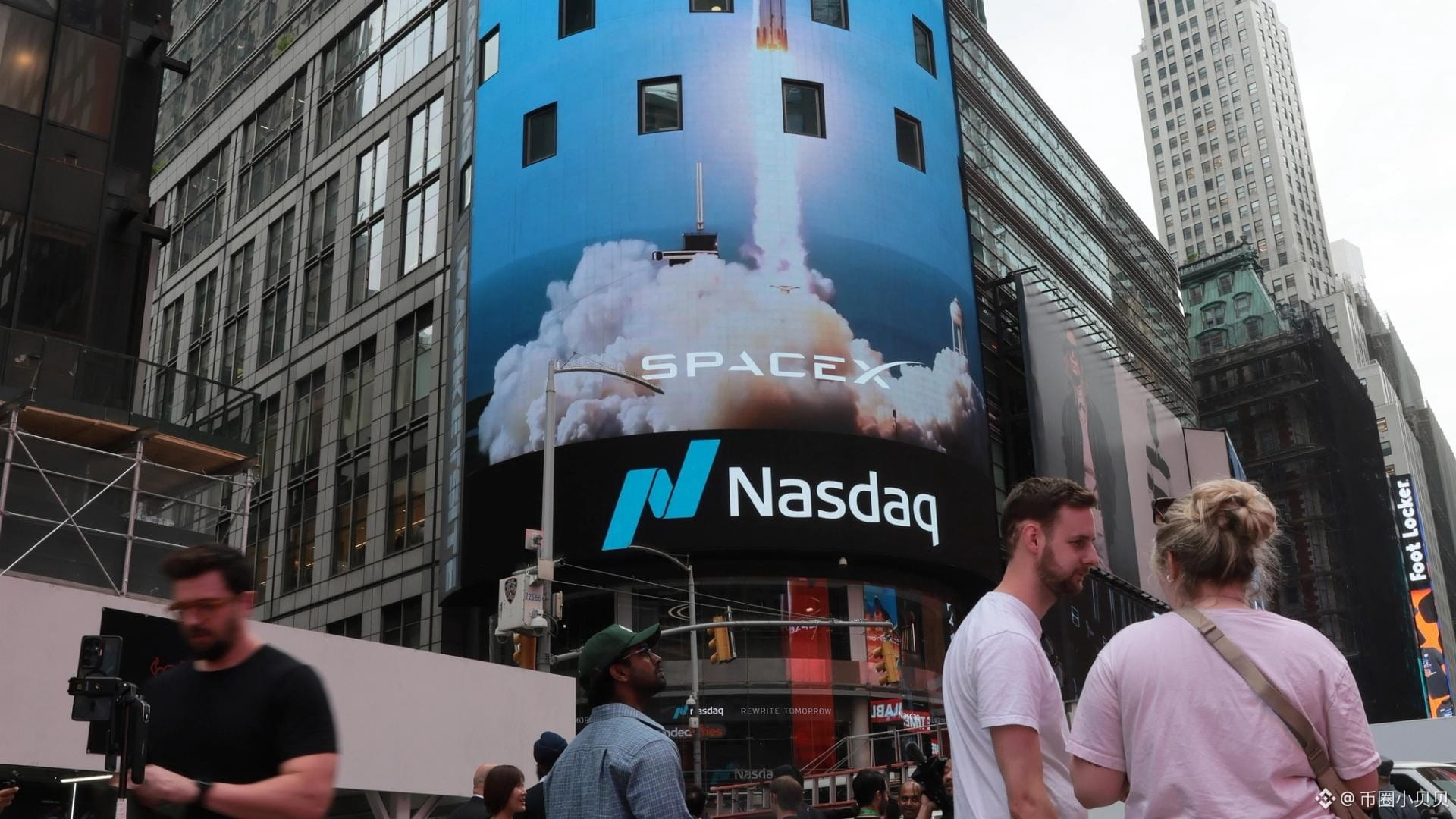
1.6k
·
--
#美联储10月维持利率概率升至82.3%
Last Friday’s jobs report was one of the ugliest of the year.. But Bitcoin needed just one weekend to read it as good news for itself.
[🔄 进群看叙事](https://app.binance.com/uni-qr/F6dwNqgx)
The U.S. added just 29,000 jobs in September, about a third of what the market expected, and the unemployment rate rose to 4.2%.. Even more striking were the revisions: July’s figure was flipped from a gain of 21,000 to a loss of 10,000, August’s was revised down from 162,000 to 133,000, and wage growth also slowed to 3.0%. By the usual economic measures, this was a grim report.
But the market runs on a different calculation.. Before the data came out, bond traders put the odds of a rate hike in October at 64%; afterward, that figure fell to around 16% to 22%. That shift lifted the ceiling for risk assets.
Keep in mind, the Fed had just raised rates by 25 basis points on September 16, bringing them to 3.75%–4%.. And in early September, an overheated jobs report was enough to knock Bitcoin down 2% in a day, to around $79,300. Now it’s hovering near $86,100, about 8% above that low. The same jobs report, read in two completely opposite ways.
So what’s driving Bitcoin’s price this time isn’t “how well the economy is doing,” but “how expensive money is”.. As the economy cools and rate-hike expectations fade, the denominator loosens—and these non-yielding assets are among the first to move. The market sentiment index is back at 68, still in “Greed” territory, but not as extreme as last month.
The technical picture is also lining up.. On the daily chart, Bitcoin has just formed a stronger “golden cross.” This confirms a trend; it isn’t a forecasting tool. It shows that the direction of the recent move has taken shape, but doesn’t guarantee the next leg will accelerate.
The flow of funds is even more telling.. U.S. spot Bitcoin ETFs saw about $190 million in net inflows in a single day. Altcoins rose across the board, but almost none gained more than 1%—only one token in the on-chain perpetuals sector rose nearly 3.7% in a day. The major players are steady, while money at the margins is beginning to test the higher-volatility end of the market.
The real thing to watch is the Fed’s October 28 meeting.. If the Fed really does pause, this “bad data equals good assets” trend could continue. But if inflation data or long-term yields start climbing again, this whole calculation could reverse immediately—and the assets that tend to get hit hardest are often the ones currently rising most smoothly.
#美联储10月维持利率概率升至82.3%
Last Friday’s jobs report was one of the ugliest of the year.. But Bitcoin needed just one weekend to read it as good news for itself.
🔄 进群看叙事
The U.S. added just 29,000 jobs in September, about a third of what the market expected, and the unemployment rate rose to 4.2%.. Even more striking were the revisions: July’s figure was flipped from a gain of 21,000 to a loss of 10,000, August’s was revised down from 162,000 to 133,000, and wage growth also slowed to 3.0%. By the usual economic measures, this was a grim report.
But the market runs on a different calculation.. Before the data came out, bond traders put the odds of a rate hike in October at 64%; afterward, that figure fell to around 16% to 22%. That shift lifted the ceiling for risk assets.
Keep in mind, the Fed had just raised rates by 25 basis points on September 16, bringing them to 3.75%–4%.. And in early September, an overheated jobs report was enough to knock Bitcoin down 2% in a day, to around $79,300. Now it’s hovering near $86,100, about 8% above that low. The same jobs report, read in two completely opposite ways.
So what’s driving Bitcoin’s price this time isn’t “how well the economy is doing,” but “how expensive money is”.. As the economy cools and rate-hike expectations fade, the denominator loosens—and these non-yielding assets are among the first to move. The market sentiment index is back at 68, still in “Greed” territory, but not as extreme as last month.
The technical picture is also lining up.. On the daily chart, Bitcoin has just formed a stronger “golden cross.” This confirms a trend; it isn’t a forecasting tool. It shows that the direction of the recent move has taken shape, but doesn’t guarantee the next leg will accelerate.
The flow of funds is even more telling.. U.S. spot Bitcoin ETFs saw about $190 million in net inflows in a single day. Altcoins rose across the board, but almost none gained more than 1%—only one token in the on-chain perpetuals sector rose nearly 3.7% in a day. The major players are steady, while money at the margins is beginning to test the higher-volatility end of the market.
The real thing to watch is the Fed’s October 28 meeting.. If the Fed really does pause, this “bad data equals good assets” trend could continue. But if inflation data or long-term yields start climbing again, this whole calculation could reverse immediately—and the assets that tend to get hit hardest are often the ones currently rising most smoothly.
Last Friday’s jobs report was one of the ugliest of the year.. But Bitcoin needed just one weekend to read it as good news for itself.
🔄 进群看叙事
The U.S. added just 29,000 jobs in September, about a third of what the market expected, and the unemployment rate rose to 4.2%.. Even more striking were the revisions: July’s figure was flipped from a gain of 21,000 to a loss of 10,000, August’s was revised down from 162,000 to 133,000, and wage growth also slowed to 3.0%. By the usual economic measures, this was a grim report.
But the market runs on a different calculation.. Before the data came out, bond traders put the odds of a rate hike in October at 64%; afterward, that figure fell to around 16% to 22%. That shift lifted the ceiling for risk assets.
Keep in mind, the Fed had just raised rates by 25 basis points on September 16, bringing them to 3.75%–4%.. And in early September, an overheated jobs report was enough to knock Bitcoin down 2% in a day, to around $79,300. Now it’s hovering near $86,100, about 8% above that low. The same jobs report, read in two completely opposite ways.
So what’s driving Bitcoin’s price this time isn’t “how well the economy is doing,” but “how expensive money is”.. As the economy cools and rate-hike expectations fade, the denominator loosens—and these non-yielding assets are among the first to move. The market sentiment index is back at 68, still in “Greed” territory, but not as extreme as last month.
The technical picture is also lining up.. On the daily chart, Bitcoin has just formed a stronger “golden cross.” This confirms a trend; it isn’t a forecasting tool. It shows that the direction of the recent move has taken shape, but doesn’t guarantee the next leg will accelerate.
The flow of funds is even more telling.. U.S. spot Bitcoin ETFs saw about $190 million in net inflows in a single day. Altcoins rose across the board, but almost none gained more than 1%—only one token in the on-chain perpetuals sector rose nearly 3.7% in a day. The major players are steady, while money at the margins is beginning to test the higher-volatility end of the market.
The real thing to watch is the Fed’s October 28 meeting.. If the Fed really does pause, this “bad data equals good assets” trend could continue. But if inflation data or long-term yields start climbing again, this whole calculation could reverse immediately—and the assets that tend to get hit hardest are often the ones currently rising most smoothly.
4
5.9k
·
--
What the SEC approved this time looks at first glance like a second chance for people who missed the boat... But break down the product structure, and it looks more like packaging up “volatility” itself and selling it—while buyers have to bear the slow bleed themselves..
[💰 爆点新闻](https://app.binance.com/uni-qr/F6dwNqgx)
On October 2, the SEC approved a rule change by Cboe BZX, clearing the way for Volatility Shares to issue six 3x leveraged ETFs.. Their underlying assets include not only Bitcoin and Ethereum, but also gold, silver, crude oil, and natural gas.. This is the first time U.S. crypto funds have been allowed to offer 3x leverage; until now, the ceiling had remained stuck at 2x..
One detail is easy to miss: these products don’t hold spot assets. They use regulated Bitcoin and Ethereum futures.. And they still can’t be traded yet—the issuer must wait for the SEC to declare the registration statement effective, and the approval didn’t even include a deadline..
What’s really worth looking at is how these products work.. To keep leverage firmly pegged at 3x, they have to rebalance every day: add futures positions when prices rise, and cut them when prices fall.. This mechanical buying and selling typically happens near the close, and the larger the fund, the more pronounced its pull on intraday prices..
Even more troublesome is volatility decay.. Suppose Bitcoin rises 10% on day one and falls 10% on day two: spot ends down 1%.. Over that same stretch, a 3x product first rises 30% and then falls 30%, for a net loss of 9%.. The longer the market keeps swinging back and forth without a clear trend, the faster these products bleed value.. Blockstream’s Adam Back puts it more bluntly: automated re-leveraging strategies bleed continuously in sideways, choppy markets..
So it’s actually quite clear who these products are for.. Bloomberg ETF analyst Eric Balchunas summed it up in one line: leveraged ETFs are for trading, not holding.. The issuers themselves also state in their prospectuses that these products are suitable only for people who can withstand a total loss..
That’s the real signal here.. Crypto is being slotted into the same shelves as traditional assets, with the same packaging, the same exposure, and the same erosion built into the structure.. For short-term traders, it’s a new tool; for people looking to hold, spot ETFs may still be the more cost-effective option..
The next thing to watch is whether the mechanical flows around the close become a new source of intraday noise once these products start trading.. If one day a 3x fund grows large enough to move futures basis, volatility itself will have become the thing being traded.. By then, what people are making up for may not be a missed trade, but tuition..
What the SEC approved this time looks at first glance like a second chance for people who missed the boat... But break down the product structure, and it looks more like packaging up “volatility” itself and selling it—while buyers have to bear the slow bleed themselves..
💰 爆点新闻
On October 2, the SEC approved a rule change by Cboe BZX, clearing the way for Volatility Shares to issue six 3x leveraged ETFs.. Their underlying assets include not only Bitcoin and Ethereum, but also gold, silver, crude oil, and natural gas.. This is the first time U.S. crypto funds have been allowed to offer 3x leverage; until now, the ceiling had remained stuck at 2x..
One detail is easy to miss: these products don’t hold spot assets. They use regulated Bitcoin and Ethereum futures.. And they still can’t be traded yet—the issuer must wait for the SEC to declare the registration statement effective, and the approval didn’t even include a deadline..
What’s really worth looking at is how these products work.. To keep leverage firmly pegged at 3x, they have to rebalance every day: add futures positions when prices rise, and cut them when prices fall.. This mechanical buying and selling typically happens near the close, and the larger the fund, the more pronounced its pull on intraday prices..
Even more troublesome is volatility decay.. Suppose Bitcoin rises 10% on day one and falls 10% on day two: spot ends down 1%.. Over that same stretch, a 3x product first rises 30% and then falls 30%, for a net loss of 9%.. The longer the market keeps swinging back and forth without a clear trend, the faster these products bleed value.. Blockstream’s Adam Back puts it more bluntly: automated re-leveraging strategies bleed continuously in sideways, choppy markets..
So it’s actually quite clear who these products are for.. Bloomberg ETF analyst Eric Balchunas summed it up in one line: leveraged ETFs are for trading, not holding.. The issuers themselves also state in their prospectuses that these products are suitable only for people who can withstand a total loss..
That’s the real signal here.. Crypto is being slotted into the same shelves as traditional assets, with the same packaging, the same exposure, and the same erosion built into the structure.. For short-term traders, it’s a new tool; for people looking to hold, spot ETFs may still be the more cost-effective option..
The next thing to watch is whether the mechanical flows around the close become a new source of intraday noise once these products start trading.. If one day a 3x fund grows large enough to move futures basis, volatility itself will have become the thing being traded.. By then, what people are making up for may not be a missed trade, but tuition..
💰 爆点新闻
On October 2, the SEC approved a rule change by Cboe BZX, clearing the way for Volatility Shares to issue six 3x leveraged ETFs.. Their underlying assets include not only Bitcoin and Ethereum, but also gold, silver, crude oil, and natural gas.. This is the first time U.S. crypto funds have been allowed to offer 3x leverage; until now, the ceiling had remained stuck at 2x..
One detail is easy to miss: these products don’t hold spot assets. They use regulated Bitcoin and Ethereum futures.. And they still can’t be traded yet—the issuer must wait for the SEC to declare the registration statement effective, and the approval didn’t even include a deadline..
What’s really worth looking at is how these products work.. To keep leverage firmly pegged at 3x, they have to rebalance every day: add futures positions when prices rise, and cut them when prices fall.. This mechanical buying and selling typically happens near the close, and the larger the fund, the more pronounced its pull on intraday prices..
Even more troublesome is volatility decay.. Suppose Bitcoin rises 10% on day one and falls 10% on day two: spot ends down 1%.. Over that same stretch, a 3x product first rises 30% and then falls 30%, for a net loss of 9%.. The longer the market keeps swinging back and forth without a clear trend, the faster these products bleed value.. Blockstream’s Adam Back puts it more bluntly: automated re-leveraging strategies bleed continuously in sideways, choppy markets..
So it’s actually quite clear who these products are for.. Bloomberg ETF analyst Eric Balchunas summed it up in one line: leveraged ETFs are for trading, not holding.. The issuers themselves also state in their prospectuses that these products are suitable only for people who can withstand a total loss..
That’s the real signal here.. Crypto is being slotted into the same shelves as traditional assets, with the same packaging, the same exposure, and the same erosion built into the structure.. For short-term traders, it’s a new tool; for people looking to hold, spot ETFs may still be the more cost-effective option..
The next thing to watch is whether the mechanical flows around the close become a new source of intraday noise once these products start trading.. If one day a 3x fund grows large enough to move futures basis, volatility itself will have become the thing being traded.. By then, what people are making up for may not be a missed trade, but tuition..
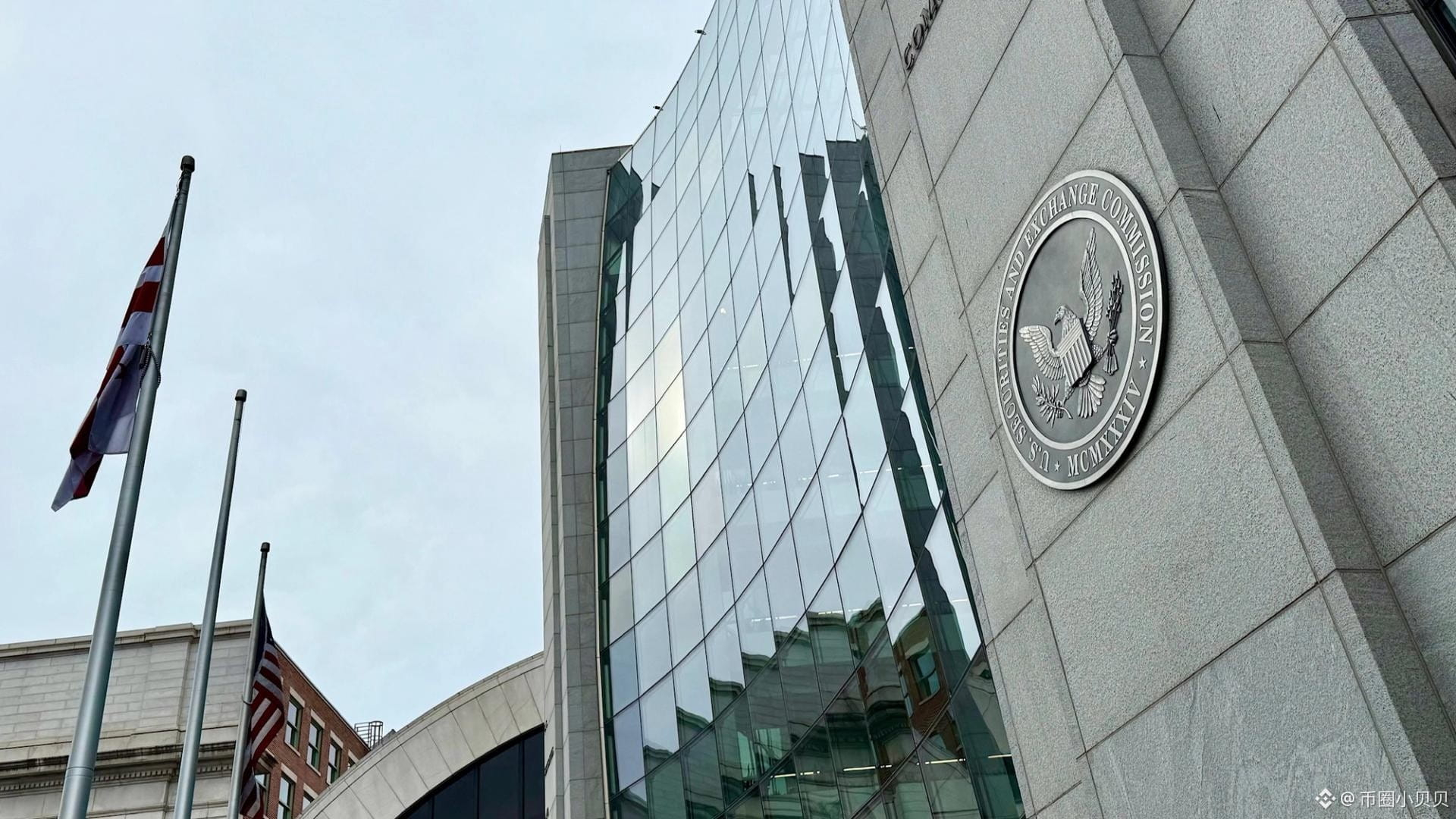
2
463
·
--
#比特币冲击8.7万美元遇阻回落
Markets are watching to see whether Bitcoin can reclaim $87,000, but the interesting part is elsewhere..
[🏛️ 进群蹲一手消息](https://app.binance.com/uni-qr/F6dwNqgx)
Many people see crypto grinding sideways these past few days. What’s really worth watching is that money itself is getting more expensive..
On Monday, the U.S. Dollar Index (DXY) surged to around 102.5, its highest level in nearly 18 months. It has climbed steadily from 99 in early September and is now firmly above its 200-day moving average (around 99). The last time it was at this level was in the spring of last year..
A strong dollar has always been a headwind for risk assets. Dollar-denominated debt costs more outside the U.S., and overseas buyers’ purchasing power is eroded. Add to that U.S. Treasury yields returning to levels last seen more than two decades ago, and cash and Treasuries are competing for capital. Non-yielding assets are often the first to come under pressure..
But Bitcoin hasn’t collapsed along with them; it has held around $86,000. The denominator is rising, but the numerator hasn’t fallen—that’s what really matters in this news..
The main driver of this dollar strength isn’t actually the U.S.; it’s Europe. The euro makes up 57.6% of the DXY basket, and it has now fallen to a 17-month low of 1.12. France’s deficit and the pressure of next year’s election, along with Spain’s announcement of an early election on November 29, have directly priced a political premium into the exchange rate. The dollar is strengthening to some extent by default..
Meanwhile, the Fed raised rates by 25 basis points in September, to 3.75%–4%. Markets expect a further increase to 4.5%–4.75% by June 2027..
If the dollar keeps strengthening while Bitcoin holds at $86,000, that suggests the support isn’t coming from leveraged traders, but from money allocated as part of a portfolio. This kind of capital is less sensitive to short-term interest rates and doesn’t leave easily once it comes in. Conversely, if the dollar peaks, the assets with the most upside are often the high-beta names that have been hit hardest..
The two signals to watch are whether DXY can hold above 102.5, and whether Bitcoin falls behind while the dollar is strengthening. If it does, that suggests the buyers are still fast money; if it doesn’t, it suggests a different group of investors is behind this wave of capital..
#比特币冲击8.7万美元遇阻回落
Markets are watching to see whether Bitcoin can reclaim $87,000, but the interesting part is elsewhere..
🏛️ 进群蹲一手消息
Many people see crypto grinding sideways these past few days. What’s really worth watching is that money itself is getting more expensive..
On Monday, the U.S. Dollar Index (DXY) surged to around 102.5, its highest level in nearly 18 months. It has climbed steadily from 99 in early September and is now firmly above its 200-day moving average (around 99). The last time it was at this level was in the spring of last year..
A strong dollar has always been a headwind for risk assets. Dollar-denominated debt costs more outside the U.S., and overseas buyers’ purchasing power is eroded. Add to that U.S. Treasury yields returning to levels last seen more than two decades ago, and cash and Treasuries are competing for capital. Non-yielding assets are often the first to come under pressure..
But Bitcoin hasn’t collapsed along with them; it has held around $86,000. The denominator is rising, but the numerator hasn’t fallen—that’s what really matters in this news..
The main driver of this dollar strength isn’t actually the U.S.; it’s Europe. The euro makes up 57.6% of the DXY basket, and it has now fallen to a 17-month low of 1.12. France’s deficit and the pressure of next year’s election, along with Spain’s announcement of an early election on November 29, have directly priced a political premium into the exchange rate. The dollar is strengthening to some extent by default..
Meanwhile, the Fed raised rates by 25 basis points in September, to 3.75%–4%. Markets expect a further increase to 4.5%–4.75% by June 2027..
If the dollar keeps strengthening while Bitcoin holds at $86,000, that suggests the support isn’t coming from leveraged traders, but from money allocated as part of a portfolio. This kind of capital is less sensitive to short-term interest rates and doesn’t leave easily once it comes in. Conversely, if the dollar peaks, the assets with the most upside are often the high-beta names that have been hit hardest..
The two signals to watch are whether DXY can hold above 102.5, and whether Bitcoin falls behind while the dollar is strengthening. If it does, that suggests the buyers are still fast money; if it doesn’t, it suggests a different group of investors is behind this wave of capital..
Markets are watching to see whether Bitcoin can reclaim $87,000, but the interesting part is elsewhere..
🏛️ 进群蹲一手消息
Many people see crypto grinding sideways these past few days. What’s really worth watching is that money itself is getting more expensive..
On Monday, the U.S. Dollar Index (DXY) surged to around 102.5, its highest level in nearly 18 months. It has climbed steadily from 99 in early September and is now firmly above its 200-day moving average (around 99). The last time it was at this level was in the spring of last year..
A strong dollar has always been a headwind for risk assets. Dollar-denominated debt costs more outside the U.S., and overseas buyers’ purchasing power is eroded. Add to that U.S. Treasury yields returning to levels last seen more than two decades ago, and cash and Treasuries are competing for capital. Non-yielding assets are often the first to come under pressure..
But Bitcoin hasn’t collapsed along with them; it has held around $86,000. The denominator is rising, but the numerator hasn’t fallen—that’s what really matters in this news..
The main driver of this dollar strength isn’t actually the U.S.; it’s Europe. The euro makes up 57.6% of the DXY basket, and it has now fallen to a 17-month low of 1.12. France’s deficit and the pressure of next year’s election, along with Spain’s announcement of an early election on November 29, have directly priced a political premium into the exchange rate. The dollar is strengthening to some extent by default..
Meanwhile, the Fed raised rates by 25 basis points in September, to 3.75%–4%. Markets expect a further increase to 4.5%–4.75% by June 2027..
If the dollar keeps strengthening while Bitcoin holds at $86,000, that suggests the support isn’t coming from leveraged traders, but from money allocated as part of a portfolio. This kind of capital is less sensitive to short-term interest rates and doesn’t leave easily once it comes in. Conversely, if the dollar peaks, the assets with the most upside are often the high-beta names that have been hit hardest..
The two signals to watch are whether DXY can hold above 102.5, and whether Bitcoin falls behind while the dollar is strengthening. If it does, that suggests the buyers are still fast money; if it doesn’t, it suggests a different group of investors is behind this wave of capital..
2
3k
·
--
First the conclusion: the point of this exchange filing with the SEC is probably not “it wants to enter the US,” but rather “it needs to go back and改 (revise) its product.”..
[📢 盘面异动群里说](https://app.binance.com/uni-qr/F6dwNqgx)
Bloomberg reported that this exchange has already filed an application with the U.S. SEC, looking to bring its tokenized stock business to the U.S. market.. But what’s truly worth looking at is whether what it’s selling now actually matches the new rules..
It launched its tokenized stocks line in July, starting with 40-plus U.S. stocks and ETFs, then expanding to more than 70 by September.. Trading is 24/7, priced in USDT, settlement runs on-chain, and the underlying stocks are held by a third party with 1:1 backing, while the platform itself only handles distribution.. It sounds like “stocks on-chain,” but the details hinge on two issues: these products are only available outside the U.S. under Regulation S—so neither U.S. users nor EU users can access them; and they’re classified as “synthetic instruments”—you have price exposure, but no dividends and no voting rights..
Most people will read this news as “yet another exchange is rushing into the U.S.”.. But if you put it through the doorway of September 17, the logic flips.. On that day, the SEC granted a five-year innovation exemption that allows qualified tokenized securities trading venues to move exchange-listed stocks of the NYSE/Nasdaq type onto the blockchain for trading using AMMs and liquidity pools, with eligibility running all the way through September 2031.. The conditions are written very strictly: the tokens must retain real shareholder rights—dividends and voting, both can’t be missing..
So the question isn’t “can it enter the U.S.,” but “before it enters, it needs to convert the synthetic instrument into real equity tokenization”.. Simply opening a loophole isn’t enough—if the structure doesn’t change, the filing won’t pass that requirement.. That’s also why it’s pursuing another path at the same time—forming a joint venture in June with NYSE’s parent company ICE to specifically do tokenized U.S. stocks..
The rotation of capital is already leaning toward this track.. In the first half of RWA, you bring bonds and funds onto-chain; in the second half, it’s about equity: whoever can truly embed shareholder rights into the token will be the one that can obtain the U.S. license.. The hard part isn’t the technology—it’s custody, rights mapping, and how brokerage and the on-chain order book are integrated..
The twist is this: this current batch of products is still “synthetic,” and once real equity tokens work end-to-end, on-chain trading and traditional brokerage may end up using the same order book.. But the exemption is time-limited: if by before 2031 no one produces a replicable compliant template, this wave will end up stuck at the application and press release..
First the conclusion: the point of this exchange filing with the SEC is probably not “it wants to enter the US,” but rather “it needs to go back and改 (revise) its product.”..
📢 盘面异动群里说
Bloomberg reported that this exchange has already filed an application with the U.S. SEC, looking to bring its tokenized stock business to the U.S. market.. But what’s truly worth looking at is whether what it’s selling now actually matches the new rules..
It launched its tokenized stocks line in July, starting with 40-plus U.S. stocks and ETFs, then expanding to more than 70 by September.. Trading is 24/7, priced in USDT, settlement runs on-chain, and the underlying stocks are held by a third party with 1:1 backing, while the platform itself only handles distribution.. It sounds like “stocks on-chain,” but the details hinge on two issues: these products are only available outside the U.S. under Regulation S—so neither U.S. users nor EU users can access them; and they’re classified as “synthetic instruments”—you have price exposure, but no dividends and no voting rights..
Most people will read this news as “yet another exchange is rushing into the U.S.”.. But if you put it through the doorway of September 17, the logic flips.. On that day, the SEC granted a five-year innovation exemption that allows qualified tokenized securities trading venues to move exchange-listed stocks of the NYSE/Nasdaq type onto the blockchain for trading using AMMs and liquidity pools, with eligibility running all the way through September 2031.. The conditions are written very strictly: the tokens must retain real shareholder rights—dividends and voting, both can’t be missing..
So the question isn’t “can it enter the U.S.,” but “before it enters, it needs to convert the synthetic instrument into real equity tokenization”.. Simply opening a loophole isn’t enough—if the structure doesn’t change, the filing won’t pass that requirement.. That’s also why it’s pursuing another path at the same time—forming a joint venture in June with NYSE’s parent company ICE to specifically do tokenized U.S. stocks..
The rotation of capital is already leaning toward this track.. In the first half of RWA, you bring bonds and funds onto-chain; in the second half, it’s about equity: whoever can truly embed shareholder rights into the token will be the one that can obtain the U.S. license.. The hard part isn’t the technology—it’s custody, rights mapping, and how brokerage and the on-chain order book are integrated..
The twist is this: this current batch of products is still “synthetic,” and once real equity tokens work end-to-end, on-chain trading and traditional brokerage may end up using the same order book.. But the exemption is time-limited: if by before 2031 no one produces a replicable compliant template, this wave will end up stuck at the application and press release..
📢 盘面异动群里说
Bloomberg reported that this exchange has already filed an application with the U.S. SEC, looking to bring its tokenized stock business to the U.S. market.. But what’s truly worth looking at is whether what it’s selling now actually matches the new rules..
It launched its tokenized stocks line in July, starting with 40-plus U.S. stocks and ETFs, then expanding to more than 70 by September.. Trading is 24/7, priced in USDT, settlement runs on-chain, and the underlying stocks are held by a third party with 1:1 backing, while the platform itself only handles distribution.. It sounds like “stocks on-chain,” but the details hinge on two issues: these products are only available outside the U.S. under Regulation S—so neither U.S. users nor EU users can access them; and they’re classified as “synthetic instruments”—you have price exposure, but no dividends and no voting rights..
Most people will read this news as “yet another exchange is rushing into the U.S.”.. But if you put it through the doorway of September 17, the logic flips.. On that day, the SEC granted a five-year innovation exemption that allows qualified tokenized securities trading venues to move exchange-listed stocks of the NYSE/Nasdaq type onto the blockchain for trading using AMMs and liquidity pools, with eligibility running all the way through September 2031.. The conditions are written very strictly: the tokens must retain real shareholder rights—dividends and voting, both can’t be missing..
So the question isn’t “can it enter the U.S.,” but “before it enters, it needs to convert the synthetic instrument into real equity tokenization”.. Simply opening a loophole isn’t enough—if the structure doesn’t change, the filing won’t pass that requirement.. That’s also why it’s pursuing another path at the same time—forming a joint venture in June with NYSE’s parent company ICE to specifically do tokenized U.S. stocks..
The rotation of capital is already leaning toward this track.. In the first half of RWA, you bring bonds and funds onto-chain; in the second half, it’s about equity: whoever can truly embed shareholder rights into the token will be the one that can obtain the U.S. license.. The hard part isn’t the technology—it’s custody, rights mapping, and how brokerage and the on-chain order book are integrated..
The twist is this: this current batch of products is still “synthetic,” and once real equity tokens work end-to-end, on-chain trading and traditional brokerage may end up using the same order book.. But the exemption is time-limited: if by before 2031 no one produces a replicable compliant template, this wave will end up stuck at the application and press release..
3
4.4k
·
--
#比特币冲击8.7万美元遇阻回落
Everyone keeps saying Bitcoin has surged back to 86,000—but the real question isn’t that move onto the level itself. It has happened more than once in the past few days.
[📢 进群蹲一手消息](https://app.binance.com/uni-qr/F6dwNqgx)
According to data from Sina Finance, Bitcoin is up 1.49% intraday, having risen back above $86,000. Put that alongside the official line in the topic—“The attempt to break through $87,000 meets resistance and pulls back”—and the picture becomes clear: it isn’t making new highs; it’s repeatedly looking up under the same ceiling again and again.
Most people interpret this as “the bull market is back.” But if you extend the timeline a bit: in the range from 85,000 to 87,400, it has already gone back and forth several times. Last Friday it surged to 87,173, only about 200 points shy of the September high of 87,354—then it was pushed back down. A 1.49% rise intraday, put inside the trading box, really explains very little.
What’s truly worth watching is why this ceiling is so “hard.” 87,000 is the spot where every upward attempt since September has failed. Above it sit both the earlier trapped positions and the supply of coins from people trying to break even and leave. Repeated probing and repeated pullbacks are, by themselves, a signal that a dispute hasn’t been resolved—both bulls and bears actually agree that things are expensive right here.
Even capital rotation is getting stuck behind this ceiling… As long as BTC can’t break through the upper edge of the box, money won’t dare to truly move into ETH, XRP, and altcoins. Today’s +1.49% is Bitcoin’s move, not theirs—and that detail tells more than the percentage increase itself: this is a “repair,” not a spread.
Looking at it in a broader sense, this round seems more like macro pricing than anything driven by crypto’s own fundamentals… The probability of a Fed rate hike in October has fallen to 17%, and risk assets overall can breathe a little easier—BTC benefits along with them. But this kind of money arrives quickly and leaves quickly too; it doesn’t look at on-chain activity, it only looks at data.
The turning point is here: the real breakout is when, above 87.4万, it surges with volume and holds—turning the top of the box from resistance into support. Before that, every time it “stands at 86,000” is just a turnaround within the box. So going forward, don’t just watch how much it rose today—watch whether it can truly punch through that ceiling once, for real..
#比特币冲击8.7万美元遇阻回落
Everyone keeps saying Bitcoin has surged back to 86,000—but the real question isn’t that move onto the level itself. It has happened more than once in the past few days.
📢 进群蹲一手消息
According to data from Sina Finance, Bitcoin is up 1.49% intraday, having risen back above $86,000. Put that alongside the official line in the topic—“The attempt to break through $87,000 meets resistance and pulls back”—and the picture becomes clear: it isn’t making new highs; it’s repeatedly looking up under the same ceiling again and again.
Most people interpret this as “the bull market is back.” But if you extend the timeline a bit: in the range from 85,000 to 87,400, it has already gone back and forth several times. Last Friday it surged to 87,173, only about 200 points shy of the September high of 87,354—then it was pushed back down. A 1.49% rise intraday, put inside the trading box, really explains very little.
What’s truly worth watching is why this ceiling is so “hard.” 87,000 is the spot where every upward attempt since September has failed. Above it sit both the earlier trapped positions and the supply of coins from people trying to break even and leave. Repeated probing and repeated pullbacks are, by themselves, a signal that a dispute hasn’t been resolved—both bulls and bears actually agree that things are expensive right here.
Even capital rotation is getting stuck behind this ceiling… As long as BTC can’t break through the upper edge of the box, money won’t dare to truly move into ETH, XRP, and altcoins. Today’s +1.49% is Bitcoin’s move, not theirs—and that detail tells more than the percentage increase itself: this is a “repair,” not a spread.
Looking at it in a broader sense, this round seems more like macro pricing than anything driven by crypto’s own fundamentals… The probability of a Fed rate hike in October has fallen to 17%, and risk assets overall can breathe a little easier—BTC benefits along with them. But this kind of money arrives quickly and leaves quickly too; it doesn’t look at on-chain activity, it only looks at data.
The turning point is here: the real breakout is when, above 87.4万, it surges with volume and holds—turning the top of the box from resistance into support. Before that, every time it “stands at 86,000” is just a turnaround within the box. So going forward, don’t just watch how much it rose today—watch whether it can truly punch through that ceiling once, for real..
Everyone keeps saying Bitcoin has surged back to 86,000—but the real question isn’t that move onto the level itself. It has happened more than once in the past few days.
📢 进群蹲一手消息
According to data from Sina Finance, Bitcoin is up 1.49% intraday, having risen back above $86,000. Put that alongside the official line in the topic—“The attempt to break through $87,000 meets resistance and pulls back”—and the picture becomes clear: it isn’t making new highs; it’s repeatedly looking up under the same ceiling again and again.
Most people interpret this as “the bull market is back.” But if you extend the timeline a bit: in the range from 85,000 to 87,400, it has already gone back and forth several times. Last Friday it surged to 87,173, only about 200 points shy of the September high of 87,354—then it was pushed back down. A 1.49% rise intraday, put inside the trading box, really explains very little.
What’s truly worth watching is why this ceiling is so “hard.” 87,000 is the spot where every upward attempt since September has failed. Above it sit both the earlier trapped positions and the supply of coins from people trying to break even and leave. Repeated probing and repeated pullbacks are, by themselves, a signal that a dispute hasn’t been resolved—both bulls and bears actually agree that things are expensive right here.
Even capital rotation is getting stuck behind this ceiling… As long as BTC can’t break through the upper edge of the box, money won’t dare to truly move into ETH, XRP, and altcoins. Today’s +1.49% is Bitcoin’s move, not theirs—and that detail tells more than the percentage increase itself: this is a “repair,” not a spread.
Looking at it in a broader sense, this round seems more like macro pricing than anything driven by crypto’s own fundamentals… The probability of a Fed rate hike in October has fallen to 17%, and risk assets overall can breathe a little easier—BTC benefits along with them. But this kind of money arrives quickly and leaves quickly too; it doesn’t look at on-chain activity, it only looks at data.
The turning point is here: the real breakout is when, above 87.4万, it surges with volume and holds—turning the top of the box from resistance into support. Before that, every time it “stands at 86,000” is just a turnaround within the box. So going forward, don’t just watch how much it rose today—watch whether it can truly punch through that ceiling once, for real..
2
6
9.1k
·
--
At first glance, it looks like a niche digital niche on Solana—but underneath, it may be a different story..
[🤖 进群看风向](https://app.binance.com/uni-qr/F6dwNqgx)
According to data from Blockworks, in September 2026, the monthly trading volume of on-chain tokenized stocks on the Solana network surpassed $4.4 billion, setting a new all-time high.. The core driving this surge is the two DEXs Raydium and Orca. In the charts, you can see that since June 2025, this kind of trading has been trending upward—only this month has it truly come into view.
Most people see $4.4 billion and think, “Oh, here’s another pretty number from the Solana ecosystem,” and swipe past.. But if you place it within the broader RWA narrative, its position changes: tokenized stocks don’t just tell a story about a new coin—they move real-world stocks onto the blockchain for trading, directly connecting to assets in traditional finance.
What’s really worth watching is who is doing this.. Not some new protocol, but the DEX infrastructure on Solana that has already been battle-tested. Raydium and Orca originally focused on memes and various fringe assets; now, among their trades, “serious assets” like stocks are starting to appear. This suggests that the structure of on-chain traded assets is shifting—from pure speculation toward something with real utility.
The rotation of capital points the same way.. Over the past year, money has flowed from BTC ETFs to AI compute, and then spillover from AI narratives into RWA. Tokenized stocks are the hardest-to-digest segment within RWA, but also the part most closely connected to traditional capital. It doesn’t require new participants to open new accounts—only that they know how to use wallets.
The twist here: $4.4 billion sounds big, but put it in the context of the global stock market and it’s not even a rounding error.. Plus, it is highly concentrated among just a few DEXs, and liquidity is relatively thin—so a large buy or sell could easily skew prices. Right now, it looks more like a demonstration than a mature market.
What to keep an eye on next: if, in the coming months, the trading volume of tokenized stocks continues to rise—and institutional market makers start showing up—then Solana’s $4.4 billion may only be the starting point.. Conversely, if it keeps staying at the scale of “retail doing it for fun,” the ceiling for this track could be much lower than people might imagine.
At first glance, it looks like a niche digital niche on Solana—but underneath, it may be a different story..
🤖 进群看风向
According to data from Blockworks, in September 2026, the monthly trading volume of on-chain tokenized stocks on the Solana network surpassed $4.4 billion, setting a new all-time high.. The core driving this surge is the two DEXs Raydium and Orca. In the charts, you can see that since June 2025, this kind of trading has been trending upward—only this month has it truly come into view.
Most people see $4.4 billion and think, “Oh, here’s another pretty number from the Solana ecosystem,” and swipe past.. But if you place it within the broader RWA narrative, its position changes: tokenized stocks don’t just tell a story about a new coin—they move real-world stocks onto the blockchain for trading, directly connecting to assets in traditional finance.
What’s really worth watching is who is doing this.. Not some new protocol, but the DEX infrastructure on Solana that has already been battle-tested. Raydium and Orca originally focused on memes and various fringe assets; now, among their trades, “serious assets” like stocks are starting to appear. This suggests that the structure of on-chain traded assets is shifting—from pure speculation toward something with real utility.
The rotation of capital points the same way.. Over the past year, money has flowed from BTC ETFs to AI compute, and then spillover from AI narratives into RWA. Tokenized stocks are the hardest-to-digest segment within RWA, but also the part most closely connected to traditional capital. It doesn’t require new participants to open new accounts—only that they know how to use wallets.
The twist here: $4.4 billion sounds big, but put it in the context of the global stock market and it’s not even a rounding error.. Plus, it is highly concentrated among just a few DEXs, and liquidity is relatively thin—so a large buy or sell could easily skew prices. Right now, it looks more like a demonstration than a mature market.
What to keep an eye on next: if, in the coming months, the trading volume of tokenized stocks continues to rise—and institutional market makers start showing up—then Solana’s $4.4 billion may only be the starting point.. Conversely, if it keeps staying at the scale of “retail doing it for fun,” the ceiling for this track could be much lower than people might imagine.
🤖 进群看风向
According to data from Blockworks, in September 2026, the monthly trading volume of on-chain tokenized stocks on the Solana network surpassed $4.4 billion, setting a new all-time high.. The core driving this surge is the two DEXs Raydium and Orca. In the charts, you can see that since June 2025, this kind of trading has been trending upward—only this month has it truly come into view.
Most people see $4.4 billion and think, “Oh, here’s another pretty number from the Solana ecosystem,” and swipe past.. But if you place it within the broader RWA narrative, its position changes: tokenized stocks don’t just tell a story about a new coin—they move real-world stocks onto the blockchain for trading, directly connecting to assets in traditional finance.
What’s really worth watching is who is doing this.. Not some new protocol, but the DEX infrastructure on Solana that has already been battle-tested. Raydium and Orca originally focused on memes and various fringe assets; now, among their trades, “serious assets” like stocks are starting to appear. This suggests that the structure of on-chain traded assets is shifting—from pure speculation toward something with real utility.
The rotation of capital points the same way.. Over the past year, money has flowed from BTC ETFs to AI compute, and then spillover from AI narratives into RWA. Tokenized stocks are the hardest-to-digest segment within RWA, but also the part most closely connected to traditional capital. It doesn’t require new participants to open new accounts—only that they know how to use wallets.
The twist here: $4.4 billion sounds big, but put it in the context of the global stock market and it’s not even a rounding error.. Plus, it is highly concentrated among just a few DEXs, and liquidity is relatively thin—so a large buy or sell could easily skew prices. Right now, it looks more like a demonstration than a mature market.
What to keep an eye on next: if, in the coming months, the trading volume of tokenized stocks continues to rise—and institutional market makers start showing up—then Solana’s $4.4 billion may only be the starting point.. Conversely, if it keeps staying at the scale of “retail doing it for fun,” the ceiling for this track could be much lower than people might imagine.
2.6k
·
--
This message looks like routine Washington personnel shuffling, but given how the past two years in crypto have played out, it reads quite differently..
[🤖 进群看机构动作](https://app.binance.com/uni-qr/F6dwNqgx)
On Sunday, Trump announced on his social platform the formation of a small group called “Super Intelligent Force,” tasked specifically with coordinating how the federal government can stay ahead in AI. At the top of the list is the current Director of National Intelligence, Jay Clayton.. For the crypto world, this name is anything but unfamiliar.
Clayton is one of the architects of the “regulation as enforcement” playbook, and he served as SEC Chair during Trump’s first term. His final move before leaving—one that has been repeatedly cited since—came in December 2020: the SEC sued Ripple, accusing it of selling XRP as unregistered securities for $1.3 billion.. That case later became a template for a string of lawsuits in the Gensler era. During his tenure, he pushed 57 cases against crypto companies.
His path afterward has been a bit of a swing.. After leaving the SEC, he worked as a crypto advisor at One River, and also joined the advisory board of custodian Fireblocks. Later, he acted as the acting U.S. Attorney for the Southern District of New York, pushing the prosecution of Roman Storm, a developer of Tornado Cash. Same person—he’s fought XRP, stood on the podium for crypto institutions, and even sued privacy tools.
Now he’s been sent to oversee AI..
Most people, seeing this appointment, will treat it as just another ordinary personnel adjustment. But if you extend the timeline, the signal may be hiding elsewhere: Washington’s policy attention comes with quotas. Over the past two years, crypto and AI have been competing for the same pool of officials, the same budget, and the same cohort of lawmakers’ calendars.
When someone who previously took Ripple to court is reassigned to oversee AI, it suggests—at least to some extent—that in the U.S. policy agenda, crypto has shifted from “a new thing that needs to be targeted” to “old accounts that have already been handled.” Attention is moving.
The money follows the same logic.. Over the past year, hot money has rotated back and forth among segments like BTC ETFs, AI compute, and electricity. Where policy attention goes often leads capital by half a step. If federal money and personnel begin to systematically shift toward AI, then what comes next may not be how much any one chain is up—it may be how much policy bandwidth crypto can still receive that originally belonged to it.
The real twist is here: Clayton’s resume is a double-sided card—“prosecutor + advisor.” Putting him in an AI role doesn’t necessarily mean looser crypto regulation; it may simply be transplanting the same enforcement mindset directly into the AI domain. Today it looks like a personnel arrangement, but down the road, it could signal an entire shift in the direction of technology regulation.
What’s worth watching is the next step: when the scope of this group’s mandate and its budget actually get implemented. Once federal resources start tilting toward AI, the amount crypto can get will very likely be recalculated..
This message looks like routine Washington personnel shuffling, but given how the past two years in crypto have played out, it reads quite differently..
🤖 进群看机构动作
On Sunday, Trump announced on his social platform the formation of a small group called “Super Intelligent Force,” tasked specifically with coordinating how the federal government can stay ahead in AI. At the top of the list is the current Director of National Intelligence, Jay Clayton.. For the crypto world, this name is anything but unfamiliar.
Clayton is one of the architects of the “regulation as enforcement” playbook, and he served as SEC Chair during Trump’s first term. His final move before leaving—one that has been repeatedly cited since—came in December 2020: the SEC sued Ripple, accusing it of selling XRP as unregistered securities for $1.3 billion.. That case later became a template for a string of lawsuits in the Gensler era. During his tenure, he pushed 57 cases against crypto companies.
His path afterward has been a bit of a swing.. After leaving the SEC, he worked as a crypto advisor at One River, and also joined the advisory board of custodian Fireblocks. Later, he acted as the acting U.S. Attorney for the Southern District of New York, pushing the prosecution of Roman Storm, a developer of Tornado Cash. Same person—he’s fought XRP, stood on the podium for crypto institutions, and even sued privacy tools.
Now he’s been sent to oversee AI..
Most people, seeing this appointment, will treat it as just another ordinary personnel adjustment. But if you extend the timeline, the signal may be hiding elsewhere: Washington’s policy attention comes with quotas. Over the past two years, crypto and AI have been competing for the same pool of officials, the same budget, and the same cohort of lawmakers’ calendars.
When someone who previously took Ripple to court is reassigned to oversee AI, it suggests—at least to some extent—that in the U.S. policy agenda, crypto has shifted from “a new thing that needs to be targeted” to “old accounts that have already been handled.” Attention is moving.
The money follows the same logic.. Over the past year, hot money has rotated back and forth among segments like BTC ETFs, AI compute, and electricity. Where policy attention goes often leads capital by half a step. If federal money and personnel begin to systematically shift toward AI, then what comes next may not be how much any one chain is up—it may be how much policy bandwidth crypto can still receive that originally belonged to it.
The real twist is here: Clayton’s resume is a double-sided card—“prosecutor + advisor.” Putting him in an AI role doesn’t necessarily mean looser crypto regulation; it may simply be transplanting the same enforcement mindset directly into the AI domain. Today it looks like a personnel arrangement, but down the road, it could signal an entire shift in the direction of technology regulation.
What’s worth watching is the next step: when the scope of this group’s mandate and its budget actually get implemented. Once federal resources start tilting toward AI, the amount crypto can get will very likely be recalculated..
🤖 进群看机构动作
On Sunday, Trump announced on his social platform the formation of a small group called “Super Intelligent Force,” tasked specifically with coordinating how the federal government can stay ahead in AI. At the top of the list is the current Director of National Intelligence, Jay Clayton.. For the crypto world, this name is anything but unfamiliar.
Clayton is one of the architects of the “regulation as enforcement” playbook, and he served as SEC Chair during Trump’s first term. His final move before leaving—one that has been repeatedly cited since—came in December 2020: the SEC sued Ripple, accusing it of selling XRP as unregistered securities for $1.3 billion.. That case later became a template for a string of lawsuits in the Gensler era. During his tenure, he pushed 57 cases against crypto companies.
His path afterward has been a bit of a swing.. After leaving the SEC, he worked as a crypto advisor at One River, and also joined the advisory board of custodian Fireblocks. Later, he acted as the acting U.S. Attorney for the Southern District of New York, pushing the prosecution of Roman Storm, a developer of Tornado Cash. Same person—he’s fought XRP, stood on the podium for crypto institutions, and even sued privacy tools.
Now he’s been sent to oversee AI..
Most people, seeing this appointment, will treat it as just another ordinary personnel adjustment. But if you extend the timeline, the signal may be hiding elsewhere: Washington’s policy attention comes with quotas. Over the past two years, crypto and AI have been competing for the same pool of officials, the same budget, and the same cohort of lawmakers’ calendars.
When someone who previously took Ripple to court is reassigned to oversee AI, it suggests—at least to some extent—that in the U.S. policy agenda, crypto has shifted from “a new thing that needs to be targeted” to “old accounts that have already been handled.” Attention is moving.
The money follows the same logic.. Over the past year, hot money has rotated back and forth among segments like BTC ETFs, AI compute, and electricity. Where policy attention goes often leads capital by half a step. If federal money and personnel begin to systematically shift toward AI, then what comes next may not be how much any one chain is up—it may be how much policy bandwidth crypto can still receive that originally belonged to it.
The real twist is here: Clayton’s resume is a double-sided card—“prosecutor + advisor.” Putting him in an AI role doesn’t necessarily mean looser crypto regulation; it may simply be transplanting the same enforcement mindset directly into the AI domain. Today it looks like a personnel arrangement, but down the road, it could signal an entire shift in the direction of technology regulation.
What’s worth watching is the next step: when the scope of this group’s mandate and its budget actually get implemented. Once federal resources start tilting toward AI, the amount crypto can get will very likely be recalculated..

3
3.6k
Log in to explore more content
Join global crypto users on Binance Square
⚡️ Get latest and useful information about crypto.
💬 Trusted by the world’s largest crypto exchange.
👍 Discover real insights from verified creators.
Email / Phone number
Trending Topics
BinanceLaunchesBinanceIntelligence
178,845 views
1,622 Discussing
#BinanceLaunchesBinanceIntelligence
Binance is moving beyond being an exchange — it is building an intelligent financial ecosystem.
With Binance Intelligence, AI is being integrated directly into the Binance experience through three major layers: Binance AI for personalized market insights, Binance AI Pro for turning ideas into automated workflows, and Agent OS for developers building AI-powered financial applications.
What stands out is the direction: bringing market data, analysis, automation, and AI-driven tools closer together in one ecosystem.
The bigger picture is clear — the future of finance won’t just be about accessing markets. It will be about understanding them faster, making better-informed decisions, and giving users intelligent tools to navigate an increasingly complex financial world.
Binance Intelligence could be an important step toward that future.
$FET$BNB$TAO
Muhammad Riaz Chandio
·2 Likes
·856 views
StriveBuys2000BTCFor$169M
7,801 views
81 Discussing
EvernorthXRPTreasuryCompletesSPACMerger
102,364 views
1,002 Discussing