
A rare energy outage is rarely confined to the oil sector. The impact can move along a chain of costs that links transportation, industry, food, commerce, and consumption.
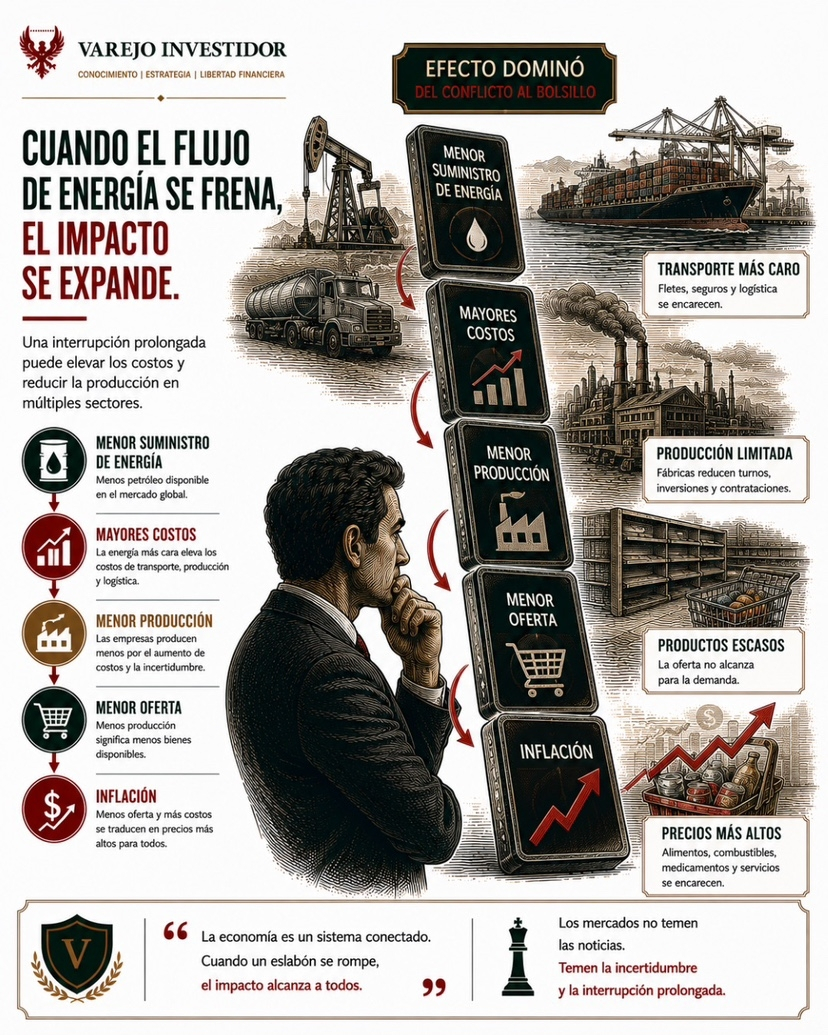
When the availability of oil and its derivatives declines, companies face higher fuel and logistics costs. Refineries may also have to operate with restrictions when crude supply is scarce or there are infrastructure problems. In 2026, the IEA recorded major disruptions to international oil flows and a reduction in refining activity during disruptions associated with the conflict in the Middle East.
The next link shows up in production. Energy-intensive sectors may reduce operations, while higher transportation costs affect both raw materials and finished goods.
The effect can ultimately reach consumers. The World Bank notes that oil price shocks have an important relationship with movements in global inflation. Its historical analysis estimates that oil shocks accounted for more than 38% of the variation in global inflation during the last five decades studied.
In 2026, international institutions also documented how energy disruptions linked to the conflict in the Middle East were transmitted to fertilizers, food, supply chains, and inflation.
That’s why oil should not be analyzed only as a commodity. It also functions as a cross-cutting input that links virtually the entire economy.
Explore assets related to oil, gas, refining, transportation, and energy to see how changes in supply can cut across different sectors.