


On July 22, 2026, a meme coin trader called Kimchi posted four photos: a resort in the desert, a rainbow-ring wristwatch, a swimming pool, and a Maybach. The post didn’t write a single word.
Three minutes later, someone asked underneath: Is this the guy who made $40 million off that single coin? By September 19, this post had racked up 29 million views.$BTC


People’s sayings are much the same: a college student studying in Los Angeles, on the day in 2025 when Trump’s coin was issued, made $40 million from a single transaction, then stopped and didn’t do any more. But in the public records and on-chain records that can be checked, none can be found. The number $40 million—left to right, from start to finish—is something others claim.
The people saying these things also all attached copy-trading links.

He himself didn’t respond—he just kept showing off his luxurious lifestyle. His apartment’s monthly rent is $4,000. He also bought a black Porsche outright, for $185,000 at the time of delivery.
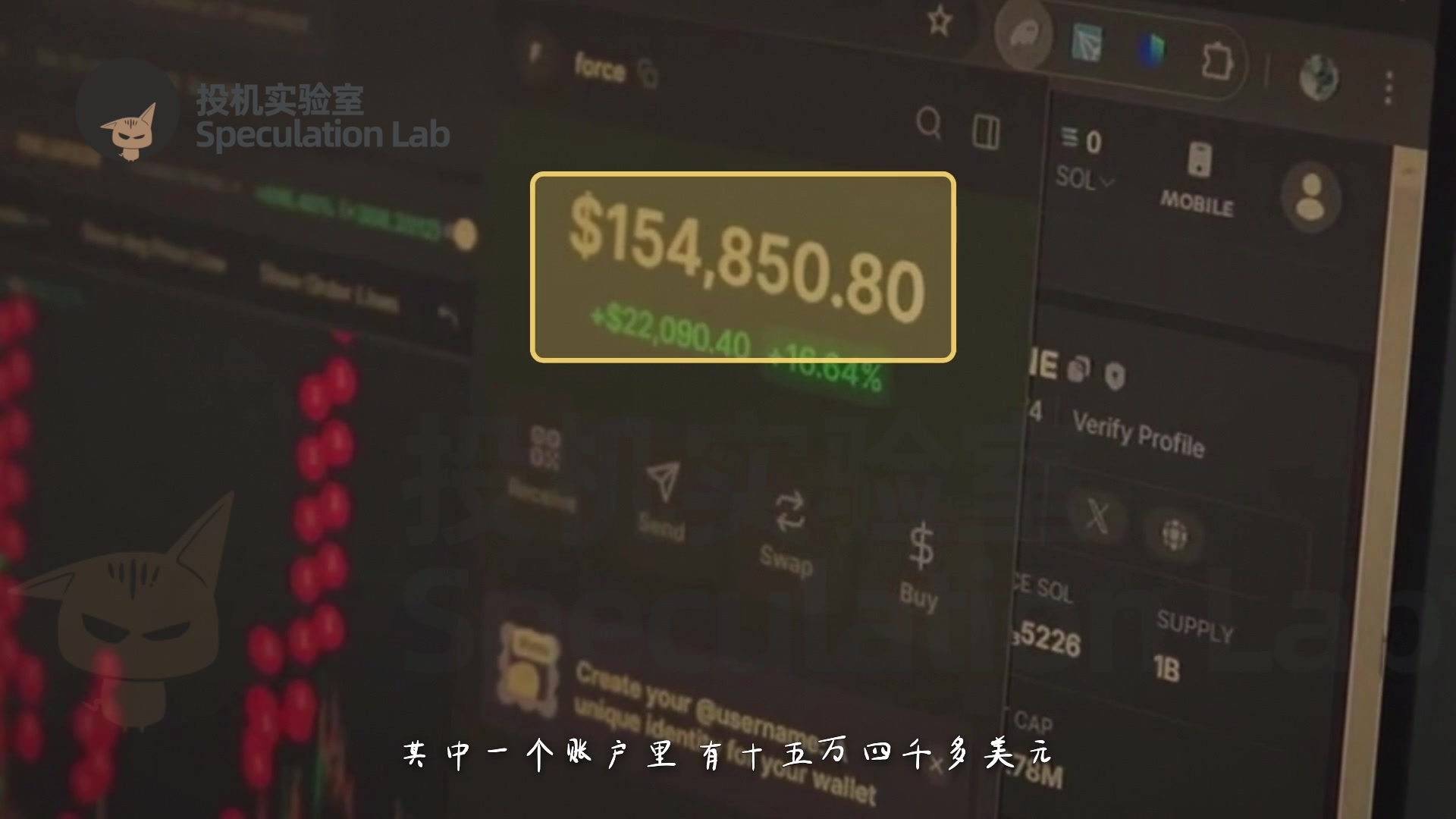
One interview shot showed: at a trading desk by the bedroom window, the monitor was on and a wallet plugin was displayed. In one account, there were more than $154,000. The other account he switched to a second earlier was empty. He had multiple accounts open at the same time, and the camera only captured two of them.
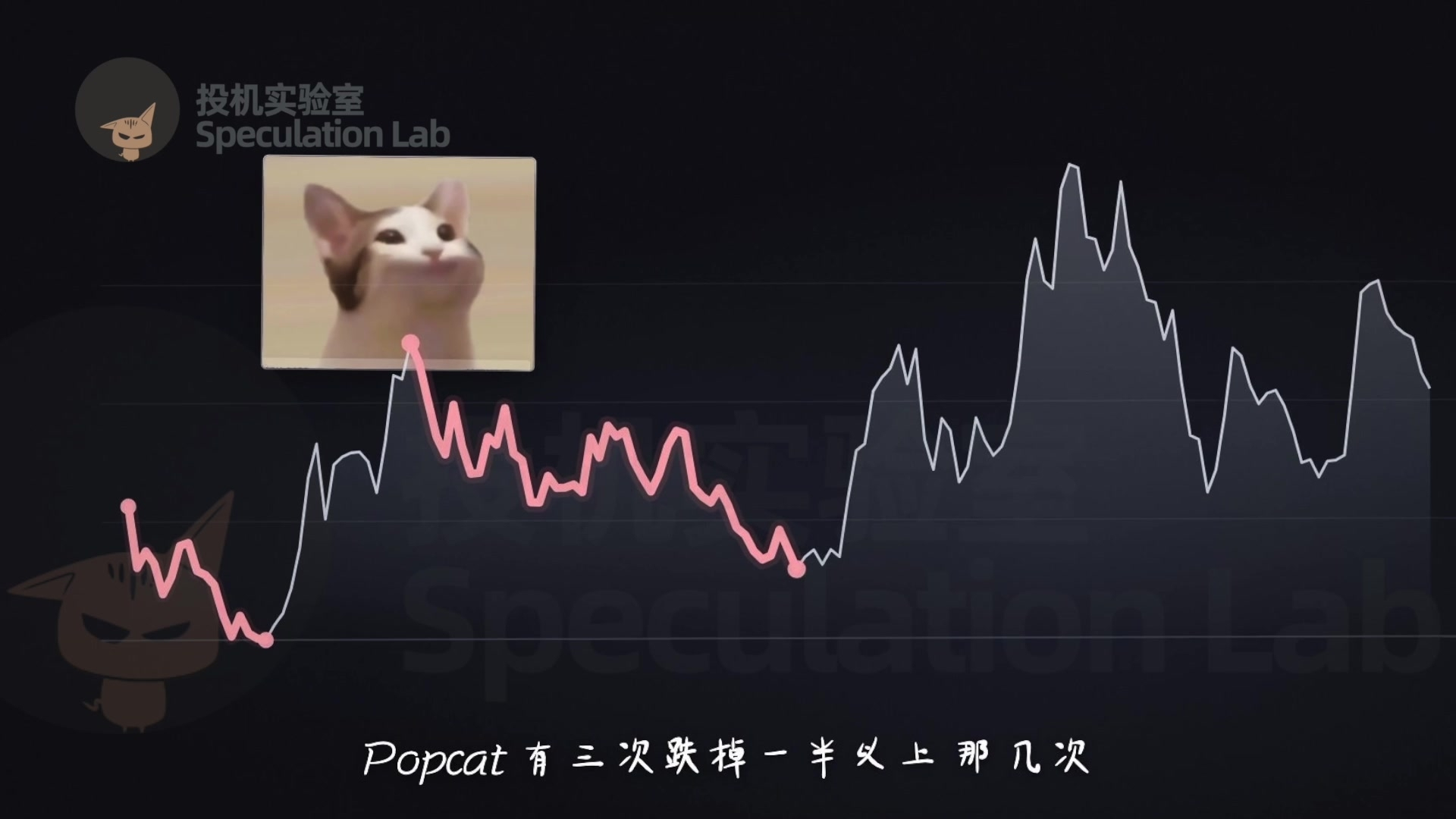
He started trading coins in early April 2024. Newcomers typically test the waters with a few hundred dollars. In the beginning, he didn’t really understand yet, so he put all his money into some coins with huge market caps—for example, Popcat—buying in and then holding until it went up again. Popcat is a cat-emoji meme coin.
In the months after he entered, Popcat dropped by more than half three times. Those dips left him with psychological scars.
In the meme-coin business, if you just hold still, it’s very easy to lose money.
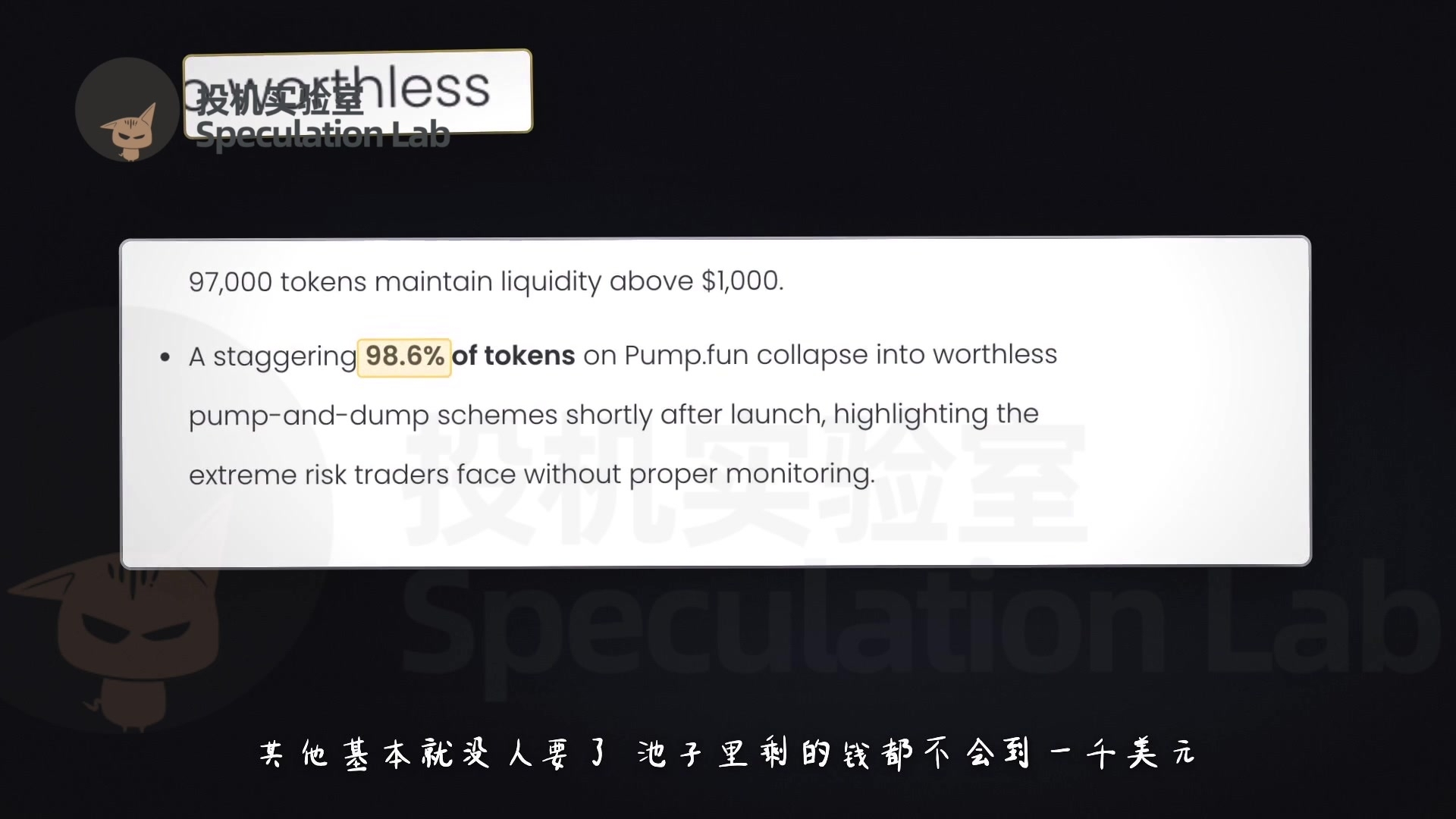
A large part of this Solana meme-coin wave came from pump.fun. You can launch a coin in under a minute, and the cost is less than two dollars. Since it’s so easy to create a coin, there are so many of them—basically thousands can be issued in a single day.
Out of a hundred, maybe only one or so can scrape together the threshold to move into a bigger trading pool. For everyone else, basically nobody wants it. And the money left in the pool won’t reach $1,000.
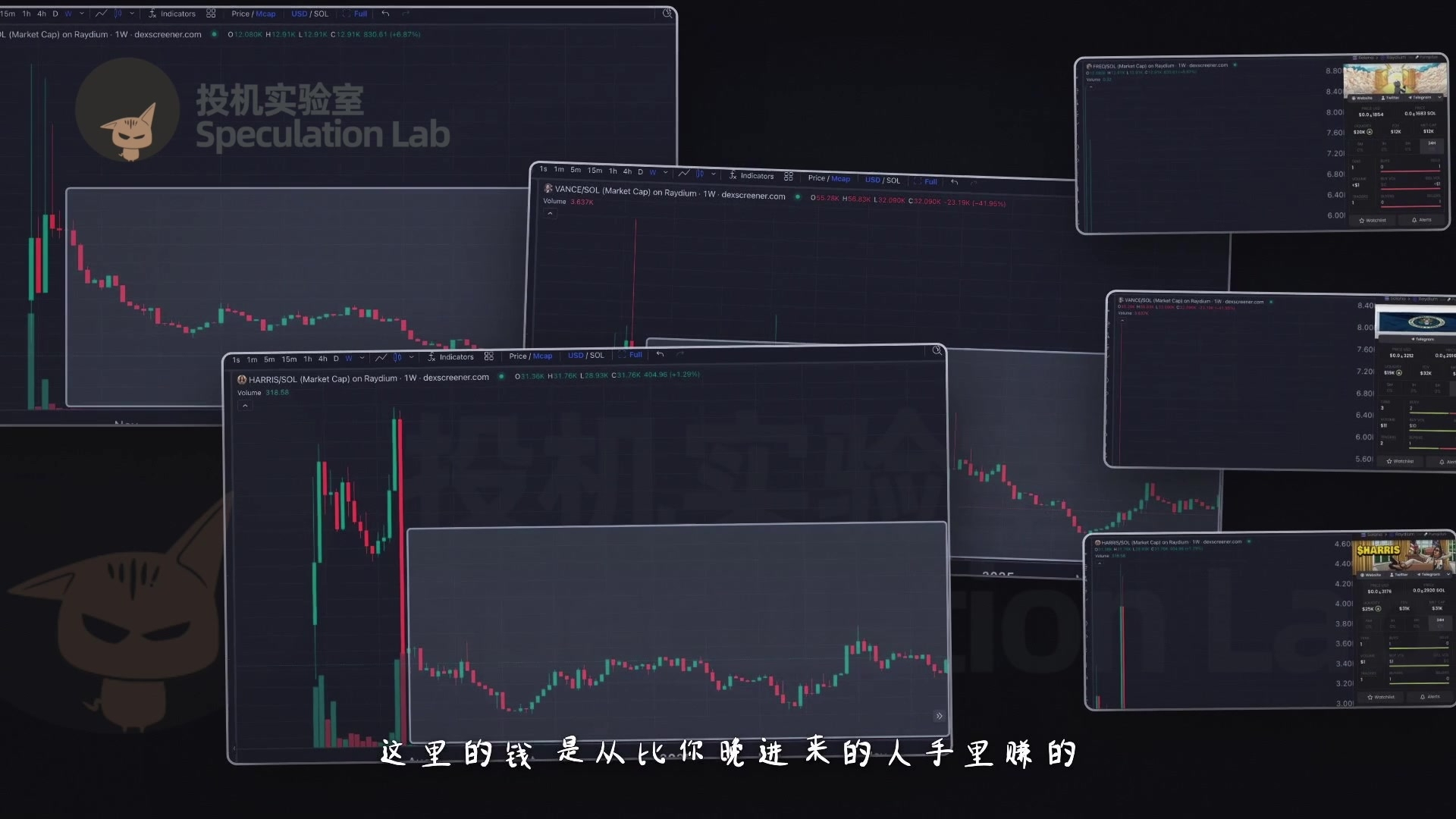
A coin can surge only during that short window right after it’s first released, when there are still people continuing to buy. If you hold and don’t sell, you’re just stuck digesting it yourself. The money here is earned from the people who entered later than you.
So he changed his strategy: whatever he bought, he’d sell it no later than the same day.
In November 2024, on average, he earned at least six figures per month—meaning over $100,000. And in December, he earned seven figures in a single month. Of course, both figures were things he said himself, with no records to verify them.
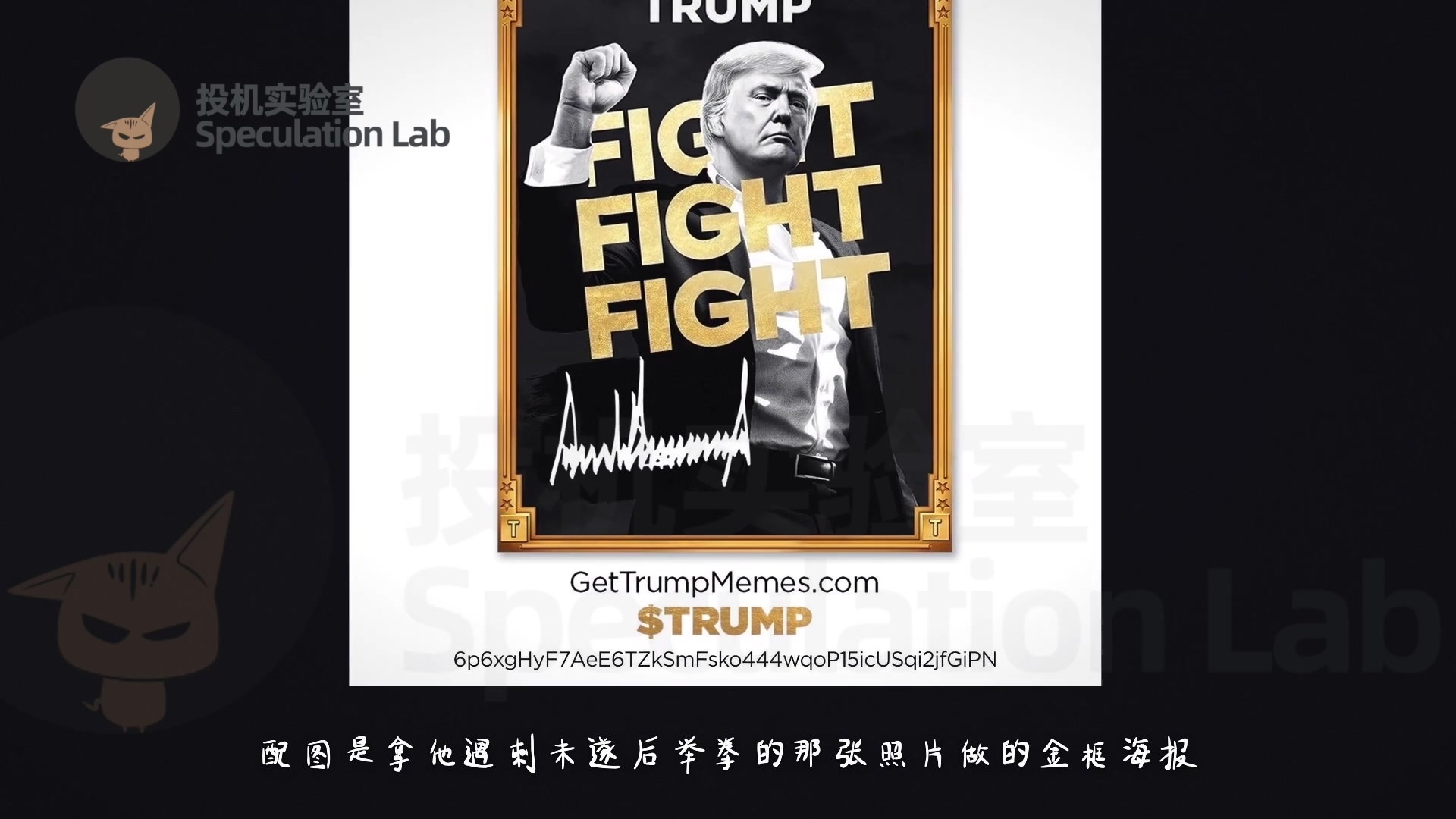
Back then, he was still a long way from the eight figures he claimed. What pushed him across that gap—according to the story—was a post he made on his own social platform, Truth Social, before Trump took office: “My official Trump meme coin is here.”
The picture uses the photo where he raised his fist after an assassination attempt, turning it into a gold-framed poster. It has three consecutive “battles” written on it.
Many people asked underneath: Was he hacked?
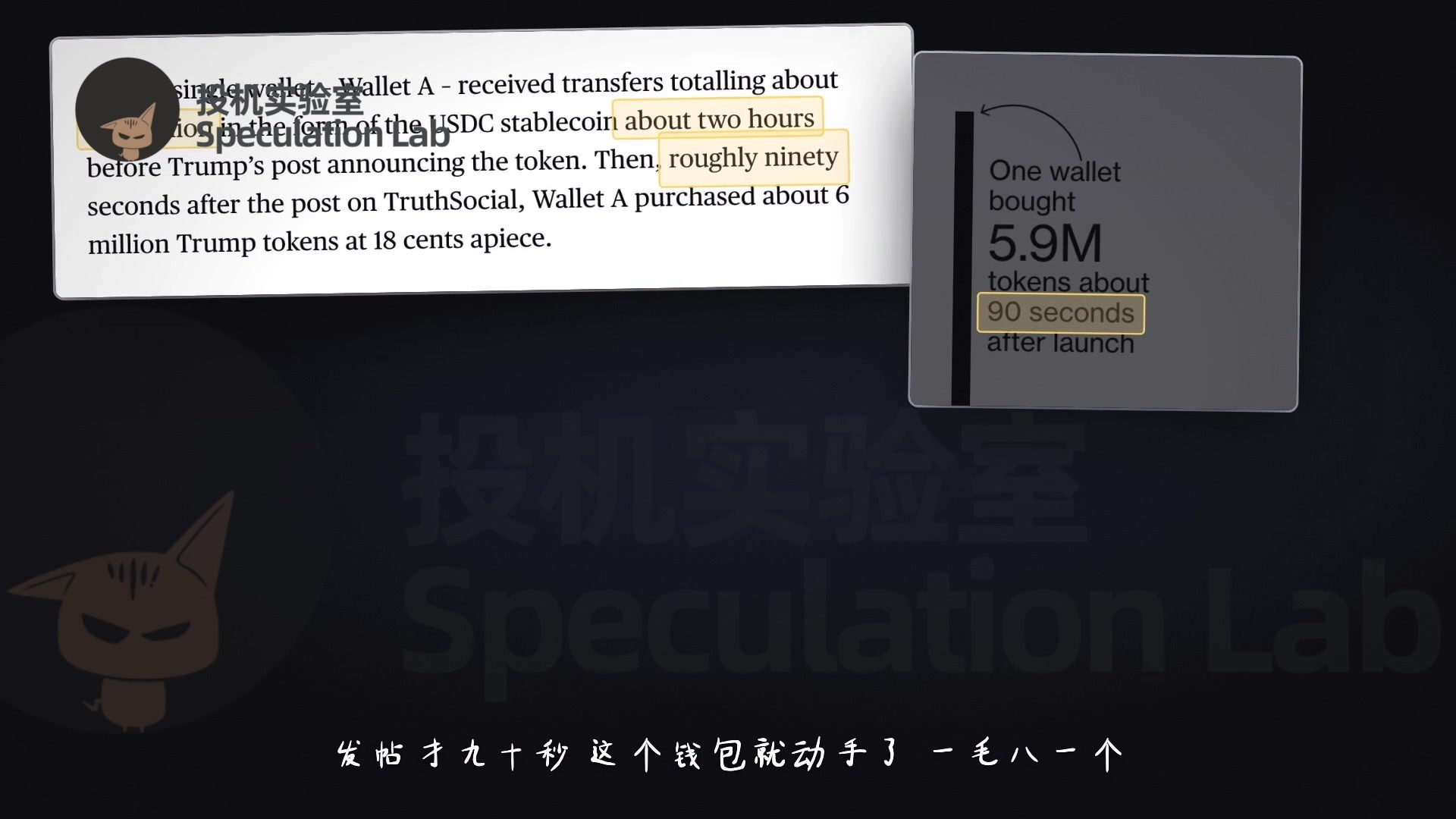
Bloomberg later went through the on-chain records transaction by transaction: about two hours before the post, a wallet had just received $1.1 million.
Only ninety seconds after the post, this wallet took action: at $0.018, it bought about 6 million coins.
In the first five minutes, 82% of the buy orders came from twenty-one large holders.
Forty-three minutes later, Trump finally posted the same post to X. During those forty-three minutes, anyone only watching X would know nothing.
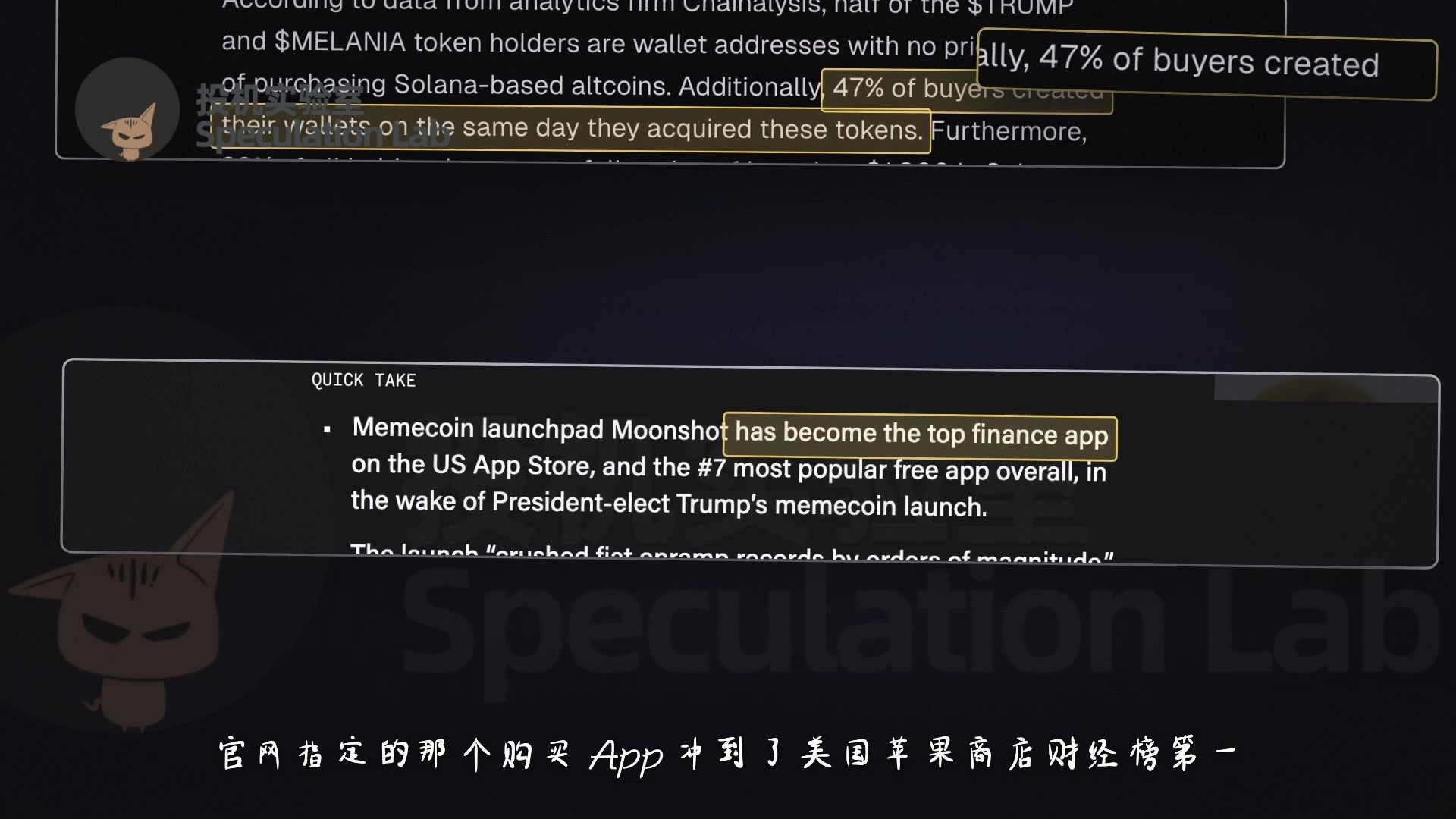
By Saturday morning, the price was already above $30. Of the wallets that bought this coin that weekend, 47% were created that very day. The official purchase app pointed to on the website shot to #1 on the U.S. Apple App Store’s finance chart.
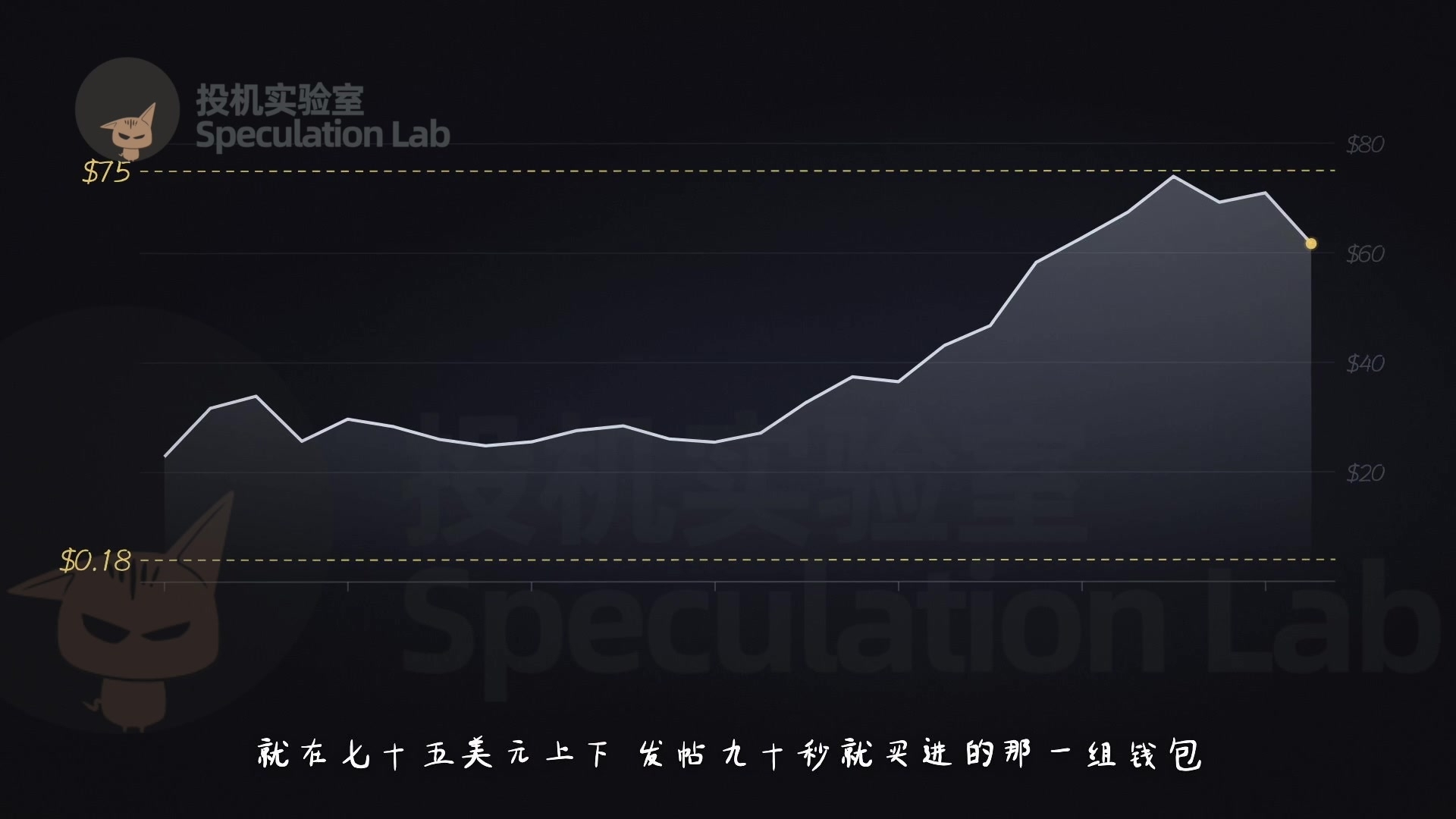
Just after midnight on Sunday, the price rose to around $75.
The earliest buyers on Friday night got in at $0.018. Then around $75, the wallets that bought about 90 seconds after posting sold 1.7 million coins within three hours. The ones who picked up the next batch were the people still buying in at that time.
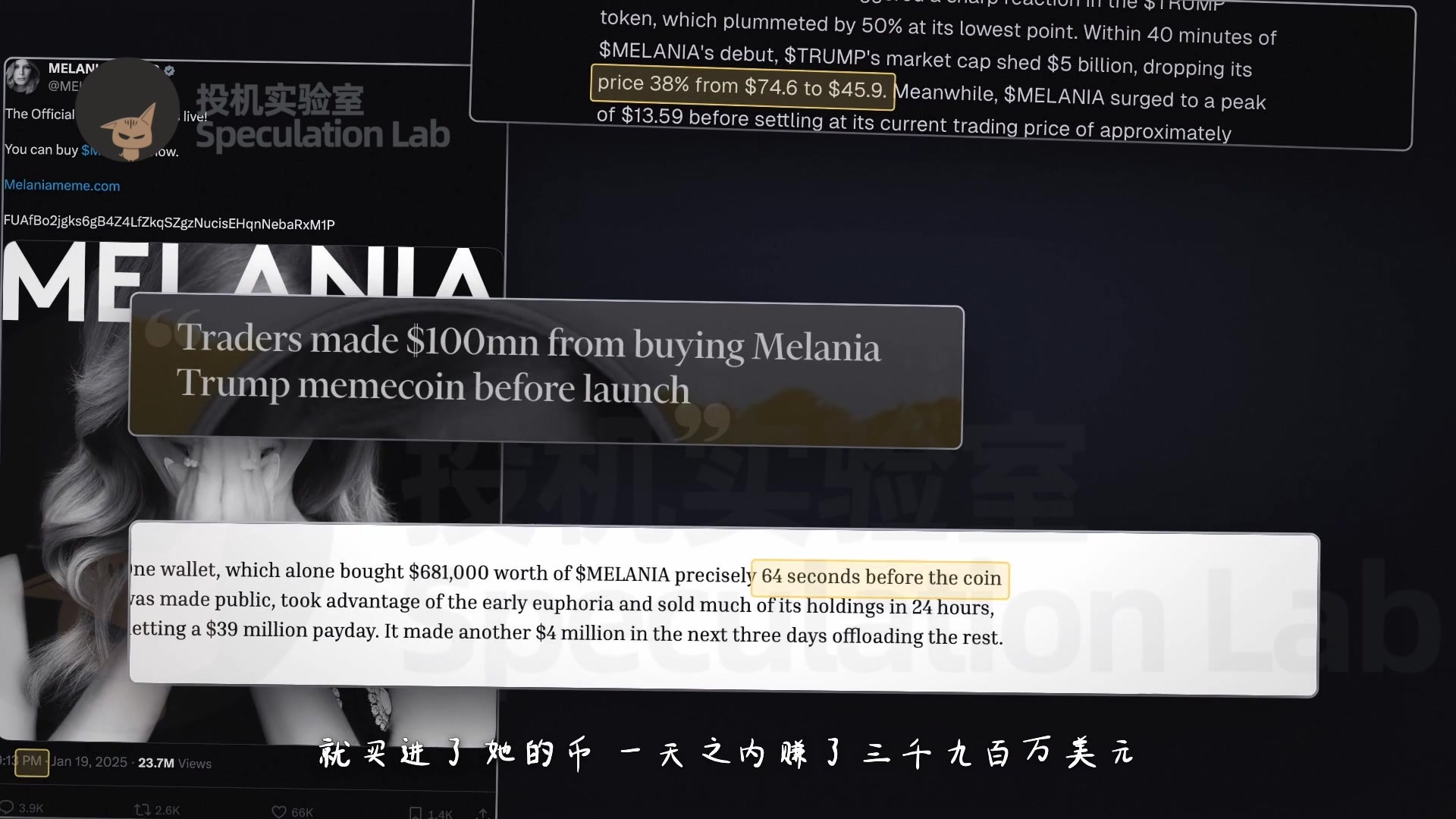
On Sunday afternoon, a little after 4 p.m., while Trump was still on stage holding a rally, his wife Melania also posted her own coin. In forty minutes, the Trump coin dropped by 38%.
(Financial Times) Later, it found that a wallet bought her coins sixty-four seconds before Melania posted. Within a day, it made $39 million.
On January 21st, the coin price had already fallen to around $42. When a reporter asked Trump about this coin at the White House, he said that besides being one he had posted, he didn’t know much else—he’d only heard that it was very successful.
Someone calculated that in the first two days alone, just the earliest set of related wallets that sold for profit pocketed $170 million.
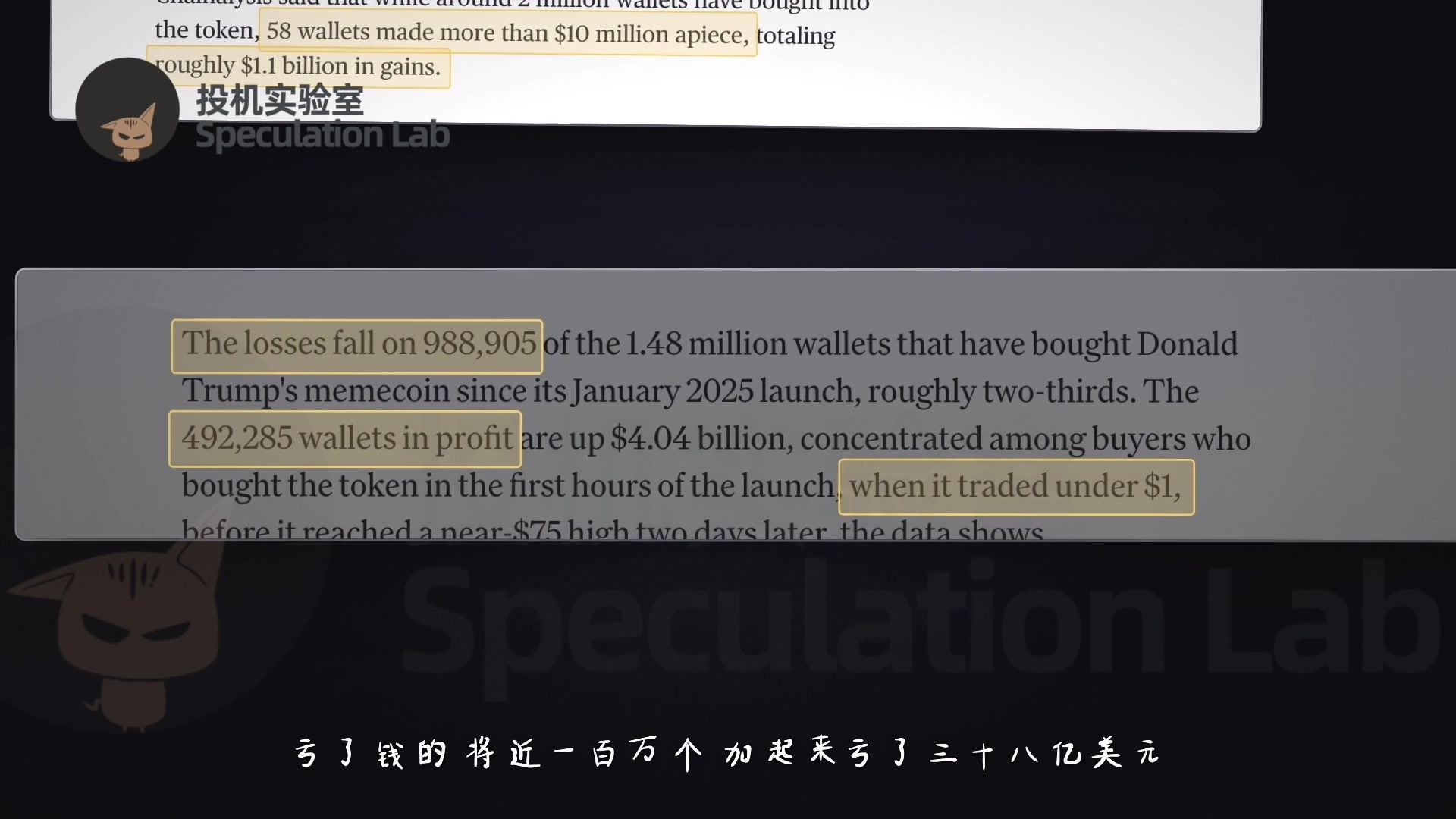
Chainalysis, an on-chain data company, estimated that by May 2025, there were 58 wallets on this coin that earned over $10 million each.
Another data company, Nansen, calculated by the end of June this year: There were 490,000 wallets that made money. Most bought in within the first few hours, when the price was still under $1. As for the ones that lost money—nearly a million wallets—combined losses totaled $3.8 billion.
By September 17th, this coin was under two dollars—down 97% from its peak.
So making an eight-figure profit off this coin isn’t a legend—there really are people who did it. It’s just very few.
If the legend about Kimchi is true, then he would be one of those big winners. But to this day, there’s no public evidence that can match him to any of those particular wallets.

The earliest place we can find telling his story is a TikTok edit posted on March 24th this year, with a caption saying he retired after just one deal.
On April 19th, another account posted something, with “forty million” in the title.
Two days later, someone released a clip of a live stream from a trader named Insentos. In it, he said Kimchi made about $50 million on the Trump coin.

Then there were those four photos on July 22nd, and the question posed three minutes later.
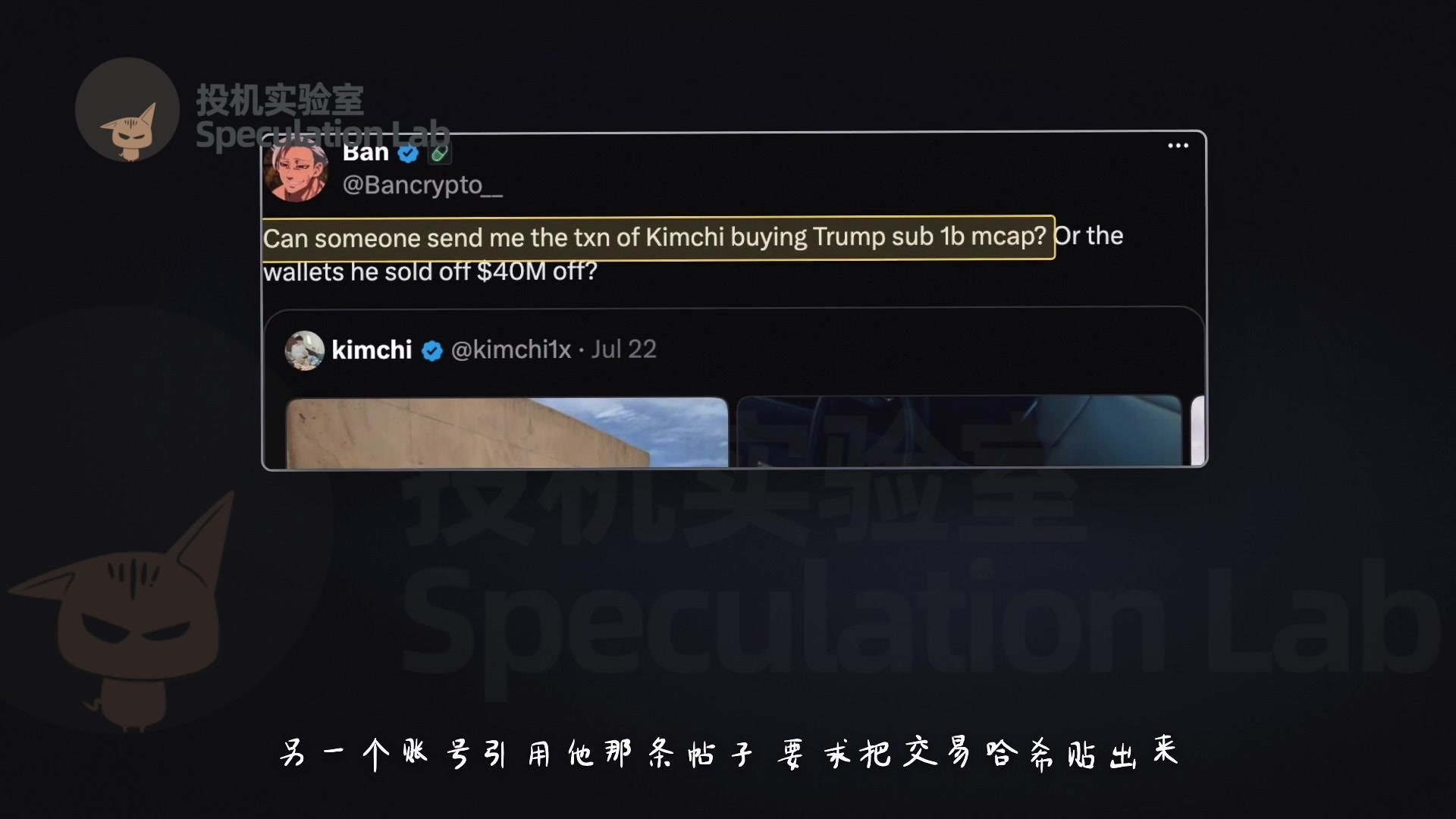
On July 26th, a batch of big accounts started reposting the story. One of them, in the same post, talked about $40–50 million and also wrote: No one has ever taken a wallet out. Another account quoted his post and demanded that the trade hashes be posted; that post had more than 500,000 views.
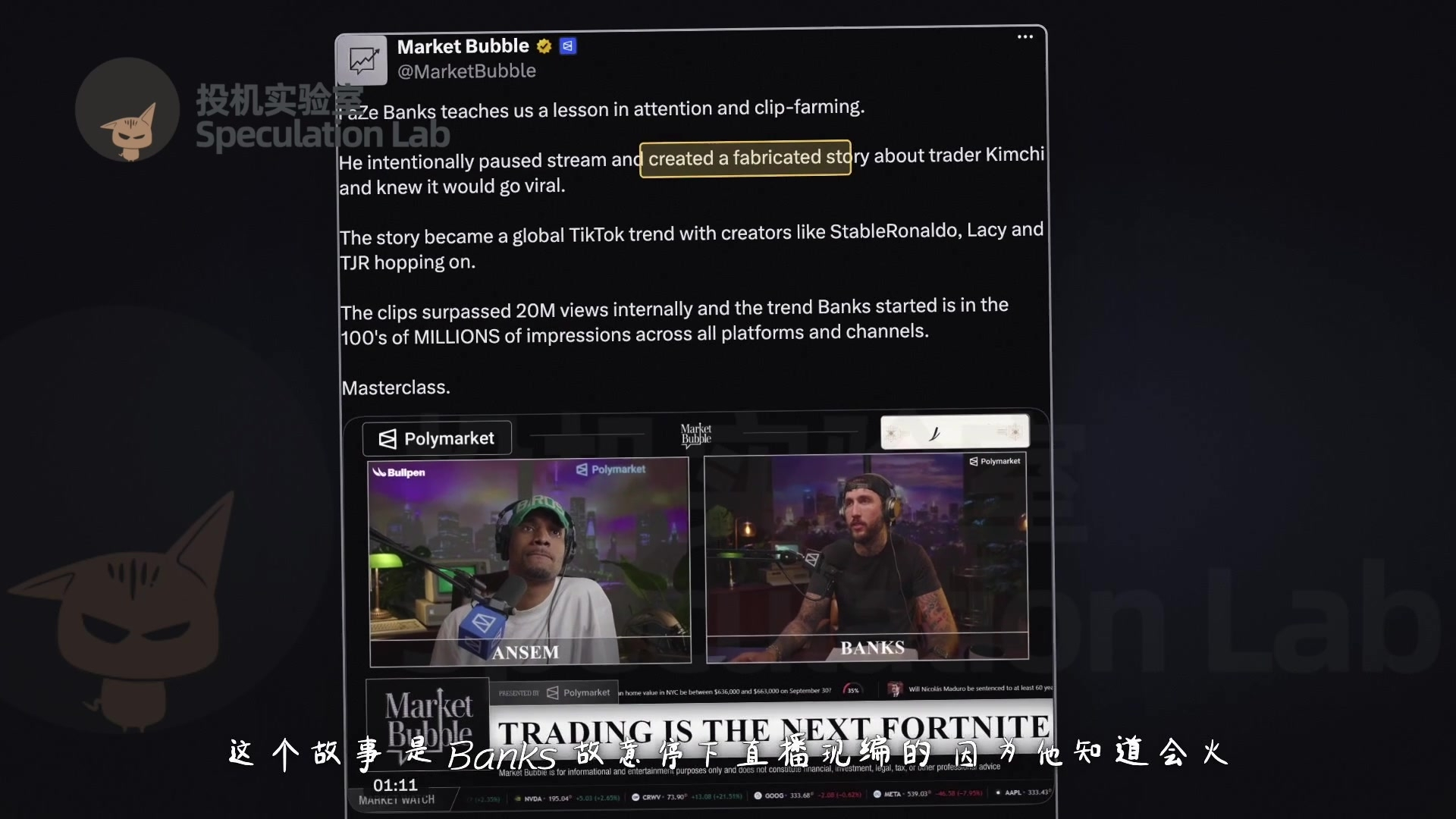
On August 3rd, FaZe Banks—a streamer who co-hosted Market Bubble with crypto big-name Ansem—told a story during a live broadcast.
He said he arranged to have lunch with Kimchi. Kimchi was half an hour late, drank only tap water, and while he went to the restroom, he placed the order. Then he drove away in a Maybach.

Three days later, the official Market Bubble account posted: this story was intentionally made up mid-stream by Banks, because he knew it would go viral. According to their own stats, the clip was played more than 20 million times.
In mid-August, Kimchi appeared in rapper Gunna’s Instagram story.
On August 21st, an auto-generated X “trending summary” said: Traders have already taken Kimchi as shorthand for “forty million in profit.” His nickname became a number.
When buying and selling on-chain, every transaction leaves a record anyone can look up. But the wallet doesn’t state a name—unless he says it himself, others can only guess which wallet is his.
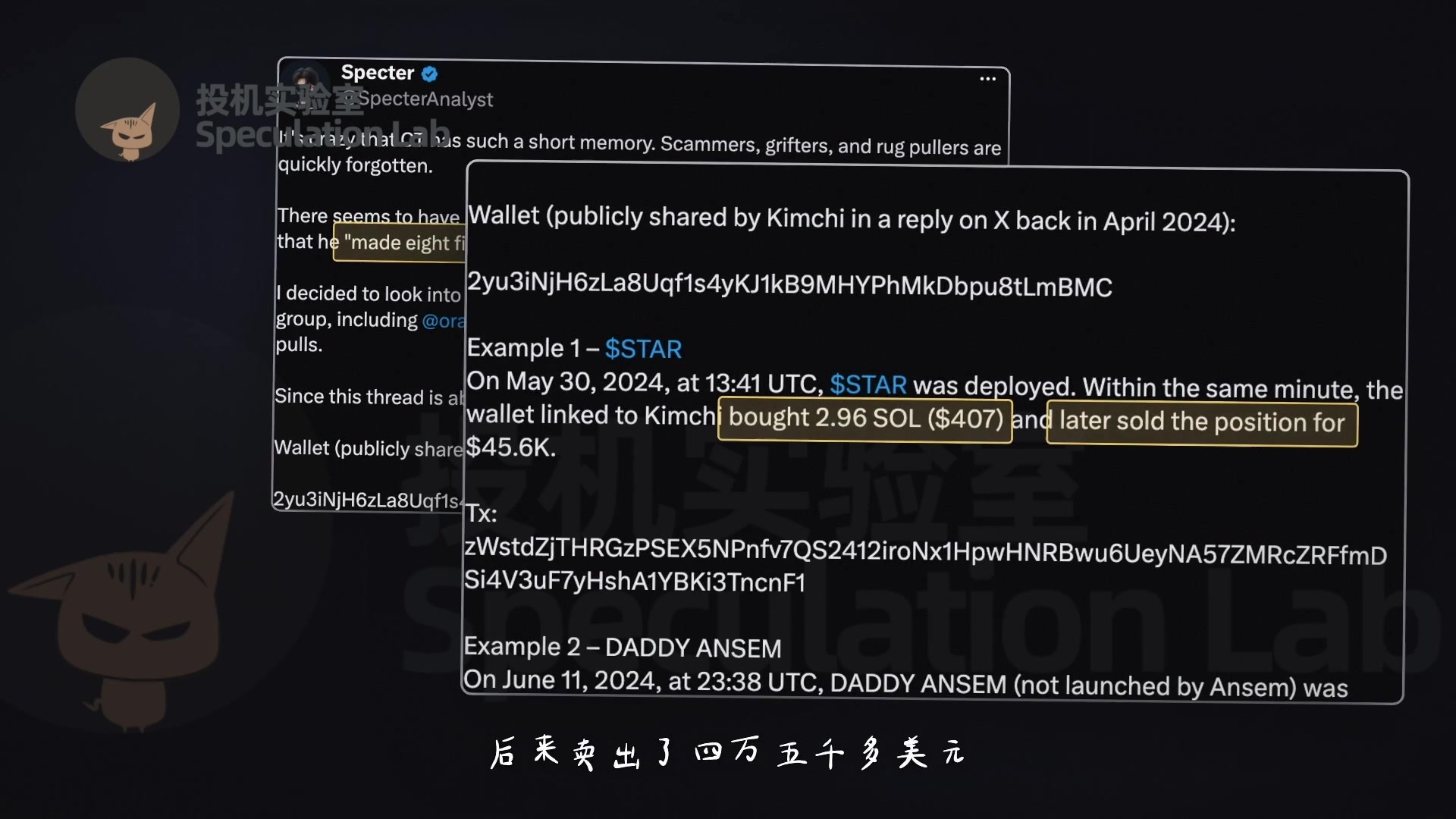
On July 27th, an on-chain analyst named Specter posted a long thread. He thought that people in the circle were helping Kimchi build hype together.
He found a wallet—one that Kimchi had posted on X in April 2024 when replying to someone. However, I couldn’t find that reply itself.

There’s a transaction in the wallet: in the same minute that a coin was just issued, it spent more than $400 to buy in, and later sold for over $45,000.
His conclusion was: People say Kimchi made eight figures off the Trump coin, but he never found proof. Also, the Trump coin itself can be bought and sold on some exchanges; orders placed on exchanges aren’t visible on-chain.
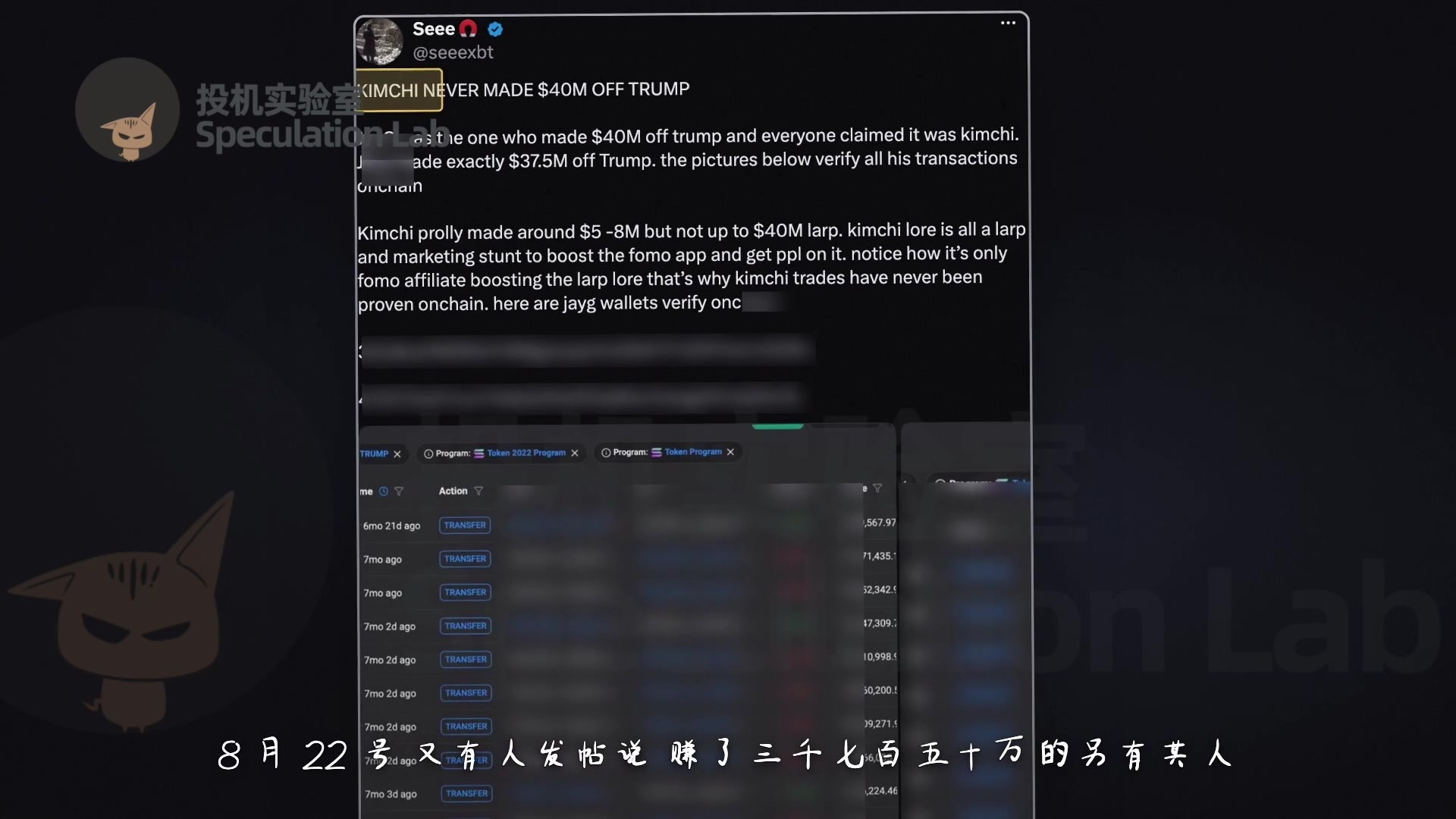
On August 22nd, someone else posted: The person who made $37.5 million was someone else—another trader. People had attributed the money-maker to the wrong person. But in truth, without that person saying it himself, nobody can be sure. And the argument hasn’t stopped.
After all, his story got a lot of traffic, so the story spread wider and wider—and became more and more bizarre. He also seemed to enjoy people discussing him.
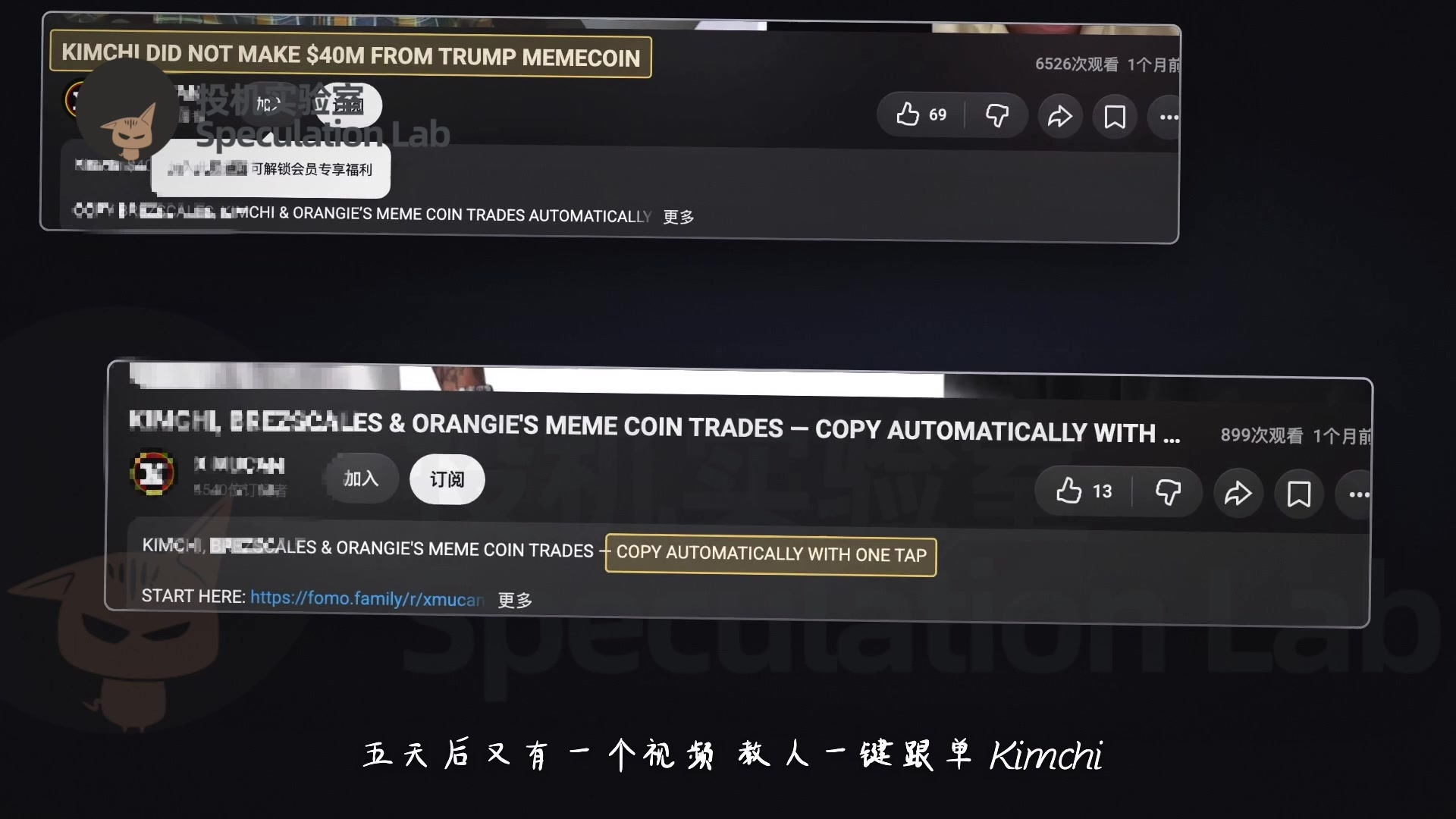
One channel posted a video titled: Kimchi didn’t make $40 million on the Trump coin. Five days later, another video appeared teaching people to copy-trade Kimchi with one click. In both videos, copy-trading links were attached to the bottom.
I looked through the handful of accounts that told the story about him the most, and almost all of them had links attached. Those links likely have nothing to do with Kimchi, but the posts were definitely getting a lot of attention.
On X, his followers were under 80,000 as of July 30th, but by September 17th they were already close to 150,000. The meme-coin market had already gone cold. By June this year, pump.fun’s activity dropped by 80% over three months.
Now that the “forty million” story has spread, could it be that some on-chain platforms are borrowing wealth stories to draw people into doing on-chain trades? It certainly seems possible.
Alright, this is all entertainment and no investment advice. Wishing you a good morning, good afternoon, and good evening. Bye-bye.