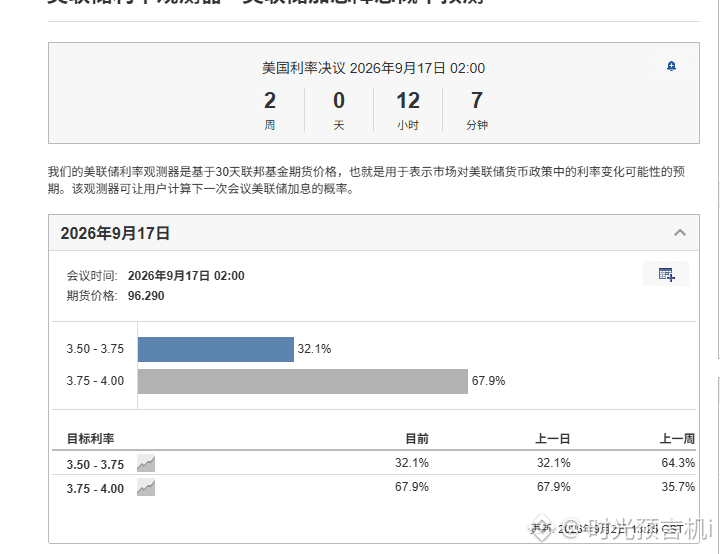
#美联储加息概率升至68%
I just took a look at the CME FedWatch: the Fed’s interest rate hike probability has jumped to 68%. A week ago, it was still under 40%
What exactly happened?
The key is last week’s hawkish remarks from Waller (the “hawkish speech”), which emphasized that the 12-month PCE inflation is 3.7% and the 6-month figure is 4.1%, both clearly above the 2% target. He also reiterated that the 2% goal is “firm and fixed,” and that interest rates remain the primary policy tool.
The takeaway is that unless inflation shows a clear retreat, a September rate hike is already on the agenda.
Impact on global assets
U.S. Treasuries: The policy-sensitive 2-year yield rose noticeably (at one point to around 4.34% and above). The 10-year yield climbed to roughly 4.75%–4.79%, hitting a multi-month high. Typically, short-end gains are larger than long-end gains, the yield curve flattens, reflecting the market pricing in near-term hikes. Meanwhile, some also believe the anti-inflation resolve may suppress forward inflation expectations.
U.S. equities: On September 1, the three major indexes fell: the Dow by about -0.8%, the S&P 500 by about -0.7%, and the Nasdaq by about -1%. Growth and tech stocks are more sensitive to discount rates, so they faced more pressure. Rising yields increase firms’ financing costs and reduce the valuation of forward earnings.
U.S. dollar: Strengthened, putting pressure on other currencies.
Gold and crypto assets: Gold dropped sharply from its highs (it fell more than 3% on the day of the Waller remarks, and then continued to weaken). Bitcoin also faced simultaneous pressure. Higher real yields raise the opportunity cost of holding non-yielding assets.
Crude oil: Geopolitical conflict often pushes oil higher, but that, in turn, reinforces inflation concerns—creating a feedback loop of “oil prices → inflation expectations → rate-hike pricing.”
The market’s reaction has already provided an answer to the September hike. In the next two weeks, we’ll watch the non-farm payrolls data and CPI closely. If inflation and employment remain strong, the probability of a September hike could rise further to over 80%. If inflation clearly cools, it could swing back toward “50-50” or even lower.
We’re at another moment of big volatility—don’t make things worse. Otherwise, it’s easy to get yourself wiped out.
I just took a look at the CME FedWatch: the Fed’s interest rate hike probability has jumped to 68%. A week ago, it was still under 40%
What exactly happened?
The key is last week’s hawkish remarks from Waller (the “hawkish speech”), which emphasized that the 12-month PCE inflation is 3.7% and the 6-month figure is 4.1%, both clearly above the 2% target. He also reiterated that the 2% goal is “firm and fixed,” and that interest rates remain the primary policy tool.
The takeaway is that unless inflation shows a clear retreat, a September rate hike is already on the agenda.
Impact on global assets
U.S. Treasuries: The policy-sensitive 2-year yield rose noticeably (at one point to around 4.34% and above). The 10-year yield climbed to roughly 4.75%–4.79%, hitting a multi-month high. Typically, short-end gains are larger than long-end gains, the yield curve flattens, reflecting the market pricing in near-term hikes. Meanwhile, some also believe the anti-inflation resolve may suppress forward inflation expectations.
U.S. equities: On September 1, the three major indexes fell: the Dow by about -0.8%, the S&P 500 by about -0.7%, and the Nasdaq by about -1%. Growth and tech stocks are more sensitive to discount rates, so they faced more pressure. Rising yields increase firms’ financing costs and reduce the valuation of forward earnings.
U.S. dollar: Strengthened, putting pressure on other currencies.
Gold and crypto assets: Gold dropped sharply from its highs (it fell more than 3% on the day of the Waller remarks, and then continued to weaken). Bitcoin also faced simultaneous pressure. Higher real yields raise the opportunity cost of holding non-yielding assets.
Crude oil: Geopolitical conflict often pushes oil higher, but that, in turn, reinforces inflation concerns—creating a feedback loop of “oil prices → inflation expectations → rate-hike pricing.”
The market’s reaction has already provided an answer to the September hike. In the next two weeks, we’ll watch the non-farm payrolls data and CPI closely. If inflation and employment remain strong, the probability of a September hike could rise further to over 80%. If inflation clearly cools, it could swing back toward “50-50” or even lower.
We’re at another moment of big volatility—don’t make things worse. Otherwise, it’s easy to get yourself wiped out.