
The global risk market experienced a dramatic 20 minutes. A rumor about 'the U.S. considering a tariff pause' spread like wildfire, triggering violent turbulence in global capital markets— the Dow surged 300 points in an instant, gold plummeted, and Bitcoin shot up to the $79,000 mark. However, when the White House spokesperson categorically denied it, all asset prices deflated like a punctured balloon, completing a heart-stopping cycle within half an hour.
The starting point of this farce was actually a 'creative misinterpretation' of an official's remarks:
When National Economic Council Director Hassett was asked if a tariff pause was being considered, his ambiguous response was edited by social media into 'the White House is considering a 90-day tariff pause.' This carefully edited 'news' went viral on Twitter and, propelled by algorithms, created a tsunami of information that made it difficult even for professional traders to distinguish truth from falsehood.
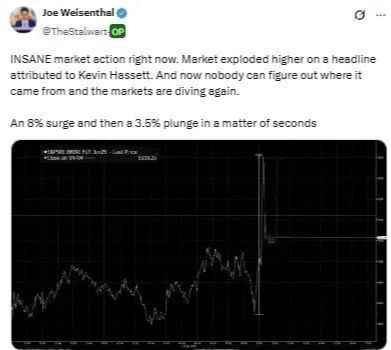
The market staged a modern version of 'three men make a tiger' with real capital. Gold fell below the psychological barrier of $3,000 in just 30 minutes, Bitcoin regained key support levels, and the Dow's gains instantly surpassed 1%. This collective frenzy exposed the fragility of capital markets—under the shadow of a trade war, any rumor of policy can trigger a herd effect. As hedge fund manager Peter said: 'The current market is like a startled bird; even a shadow can cause a stampede.'
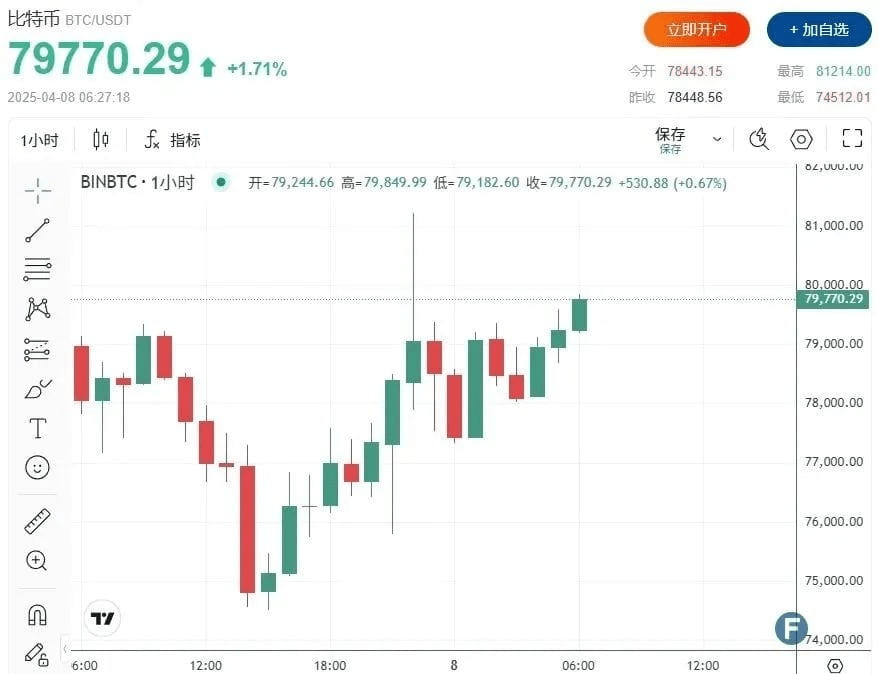
The most ironic twist of this farce occurred 20 minutes later. When the official White House account issued a statement about 'fake news', the dollar index immediately turned downward, and safe-haven funds rushed back into the bond market. This dramatic reversal reveals a new risk in the digital age: the boundary between 'fake news' spread by algorithms and real policies is becoming blurred, and the pricing mechanism of capital markets faces unprecedented challenges.
Interestingly, this uproar coincided with the eve of the U.S. CPI data release. The market's excessive sensitivity to inflation data is essentially a deep anxiety about policy uncertainty. Like a ship navigating through fog, traders have to steer through indistinguishable fragments of information. This 20-minute farce may be a preview of the new normal in capital markets in the digital age—when the speed of information dissemination surpasses verification capabilities, rational pricing is becoming a luxury.