


Original source: WTR Research Institute

Weekly Review
This week, from October 2 to October 9, the highest price of Bingtang Orange was around $28,580 and the lowest price was close to $27,160, with a fluctuation range of about 4.97%. Observing the chip distribution chart, there are a large number of chips traded around 27,000, which will have a certain support or pressure.
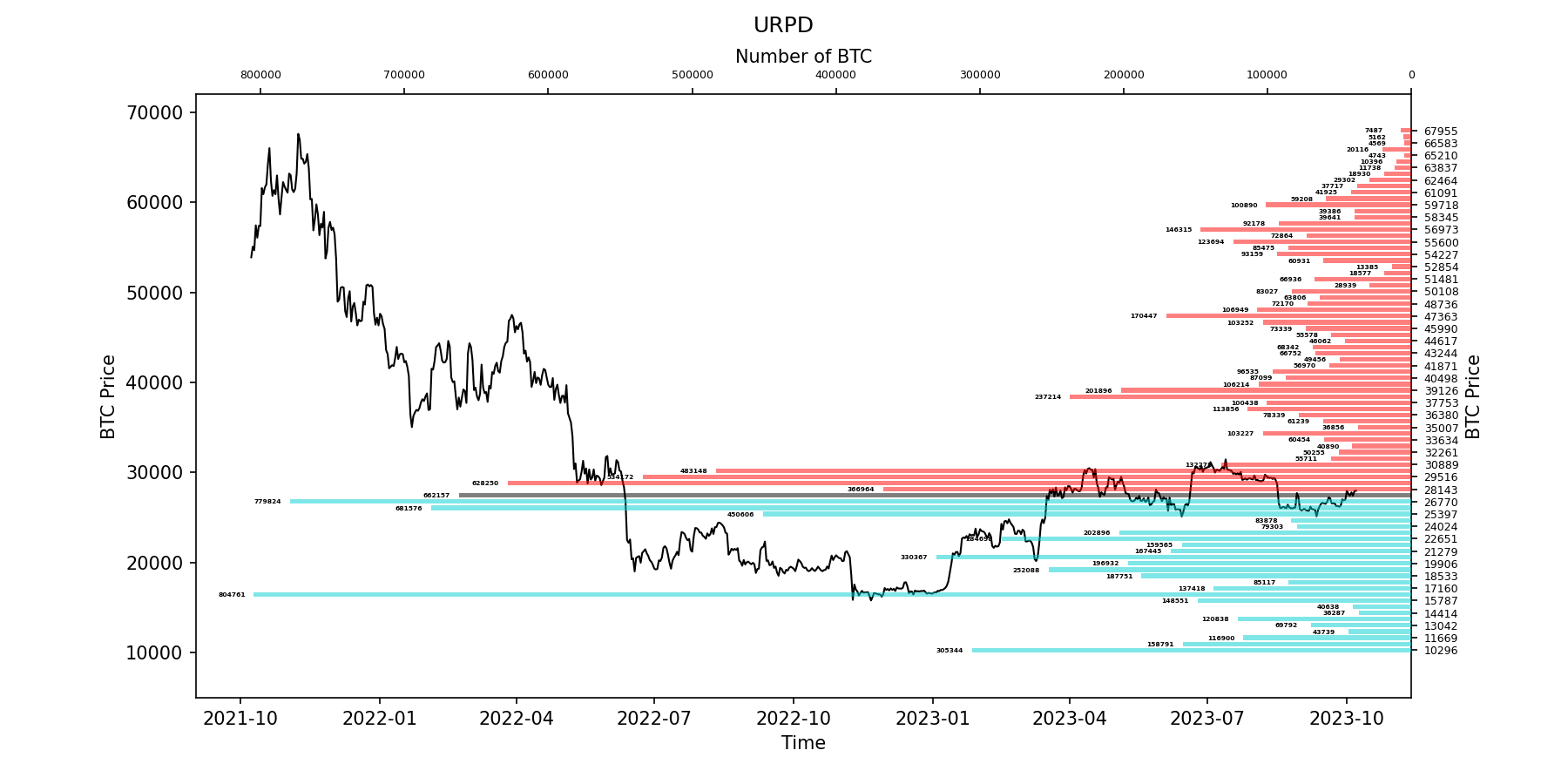
analyze:
1. 26000-31000, about 4.28 million pieces;
2. 20,000~25,000, about 1.63 million pieces;
• The probability of not falling below 24,000~26,000 in the short term is 79%;
• The probability that the price will not break through 32,000-34,000 in the short term is 65%.
Important news
Economic News
1. Fed's Mester: It may be necessary to raise interest rates again in 2023 and maintain it for a while.
2. The US non-farm data for September was nearly twice as high as expected, and the market expects the interest rate cut to be postponed from July next year to September.
3. Nonfarm payrolls increased by 336,000 in September, and the unemployment rate remained unchanged at 3.8%.
Encrypted Eco-Messages
1. The real-world asset protocol Backed Finance issued a tokenized U.S. short-term Treasury bond ETF on the Base chain, called blB01, which offers a 5.2% return.
2. A US judge rejected the SEC’s appeal of the $XRP ruling in the Ripple case.
3. Multiple Ethereum futures ETFs are listed, with total trading volume on the first trading day being less than $2 million.
4. Investment bank Jefferies: BTC is a key hedging tool against inflation, at the same level as gold.
5. U.S. House Speaker McCarthy was removed from office, and crypto-friendly congressman Patrick Mchenry took over temporarily.
6. Ripple was granted a major payment institution license by the Monetary Authority of Singapore.
7. The number of active developers in the crypto field has hit its lowest level since 2020.
8. DEX transaction volume in September continued to hit a new low since January 2021.
9. OpenAI founder Sam Altman recognized Bitcoin's potential to become a universal currency when he participated in Joe Rogan's podcast.
Long-term insights: used to observe our long-term situation; bull market/bear market/structural changes/neutral state
Mid-term exploration: used to analyze what stage we are currently in, how long this stage will last, and what situations we will face
Short-term observation: used to analyze short-term market conditions; the possibility of certain directions and certain events occurring under certain conditions
Long-term insights
• Market status of derivatives Derivatives often play an extremely important role in the market. Usually, when there is no external force in the market, there is a cycle within the derivative category.
(The following figure shows the market derivatives status)
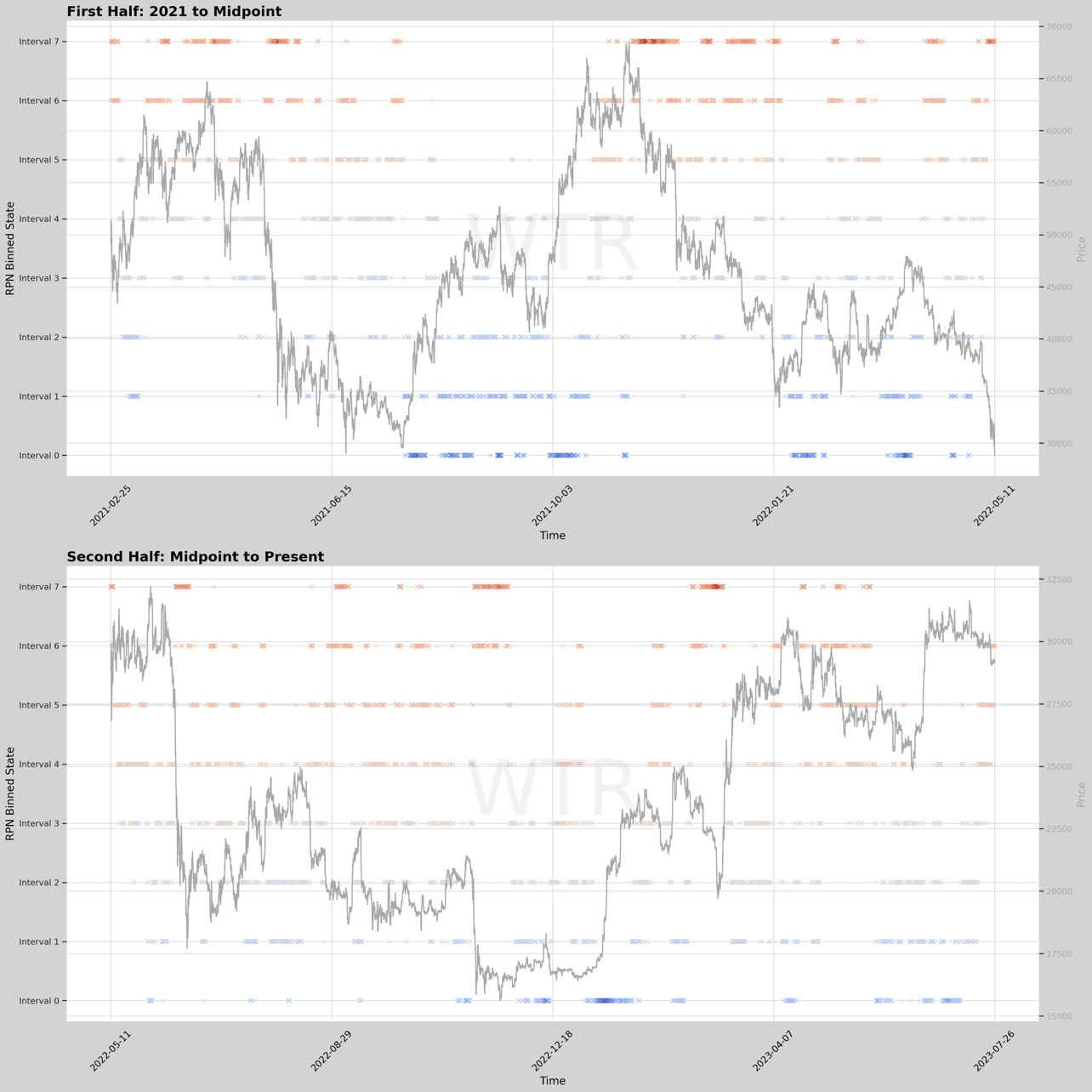
The figure shows a visualization after advanced data analysis and feature processing.
Going deeper into the structure of derivatives in the entire market, generally speaking, in the medium and long term, the market will have eight states.
From zero to seven states.
The third to fourth state is a dividing point. Generally, when the market is relatively good and derivatives do not have too many risks, or when a short squeeze is in progress, it is usually in the third state.
Generally speaking, if it drops below the second state, it is considered relatively safe.
Generally speaking, if it rises above the fifth state, it will be judged as relatively risky.
Risks are shown in red, and those with lower risks are shown in blue. Because the market derivatives status itself has a cyclical effect, it is generally a relatively good indicator for judging the market stage in the medium and long term.
There are many indications of mid- to long-term tops and bottoms.
Currently, the state of derivatives in the market is in the middle, and the derivatives in the market are relatively neutral.
Mid-term exploration
• Positive network sentiment
• Trends in perceptions of emerging forces
• High-weight selling pressure
• Profit percentage compounding model for short-term players
(Figure below: Network sentiment positivity)
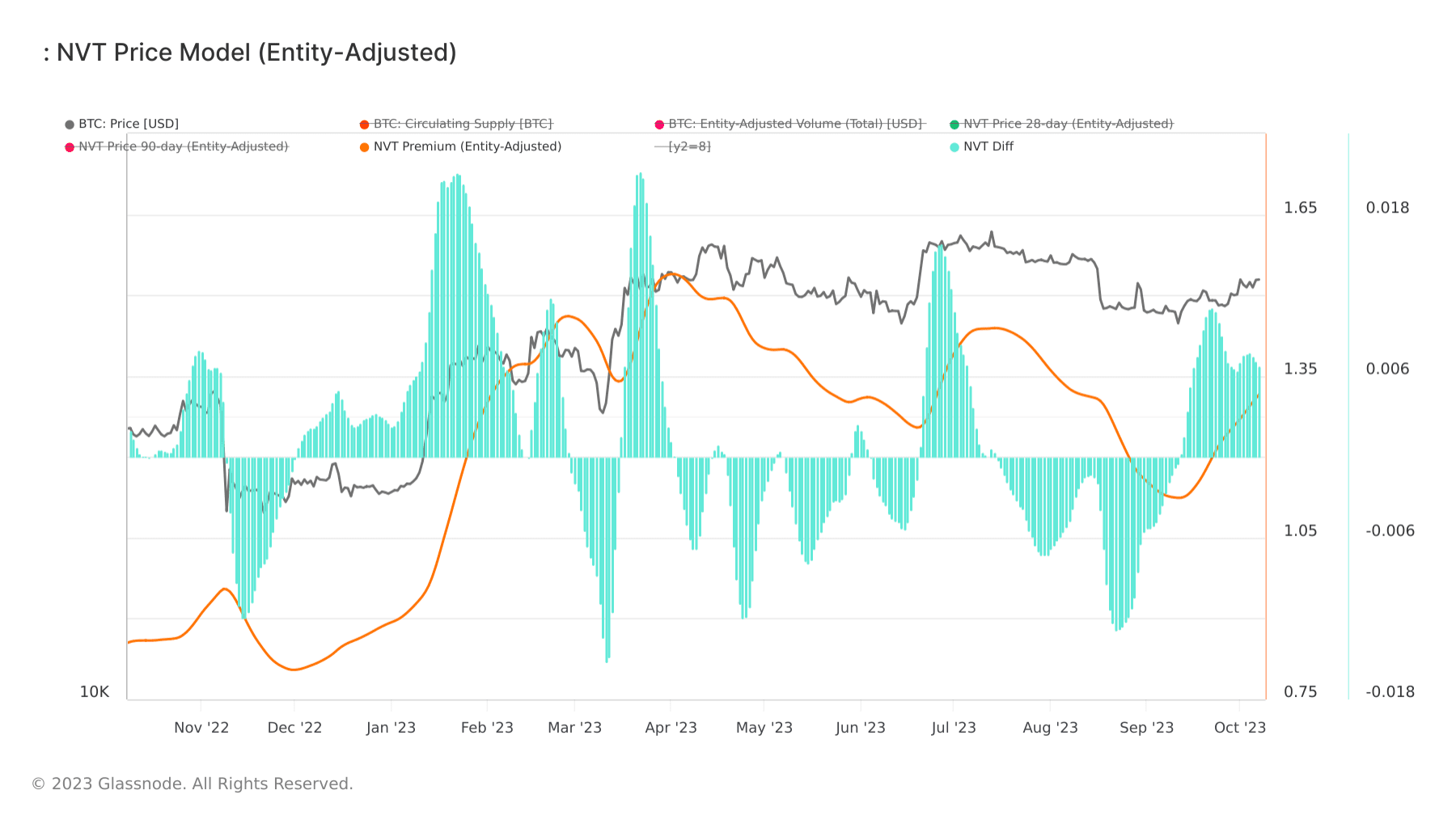
The liquidity of the market is slowly recovering, and this trend may still be maintained. Before it weakens, it may be slightly more difficult to short sell. From the previous situation, when the mid-term trend shows, there will be advance performance. It is possible that the market has chosen a positive attitude at a certain node, so the data will show a positive performance.
(The figure below shows the trend of new forces’ views)
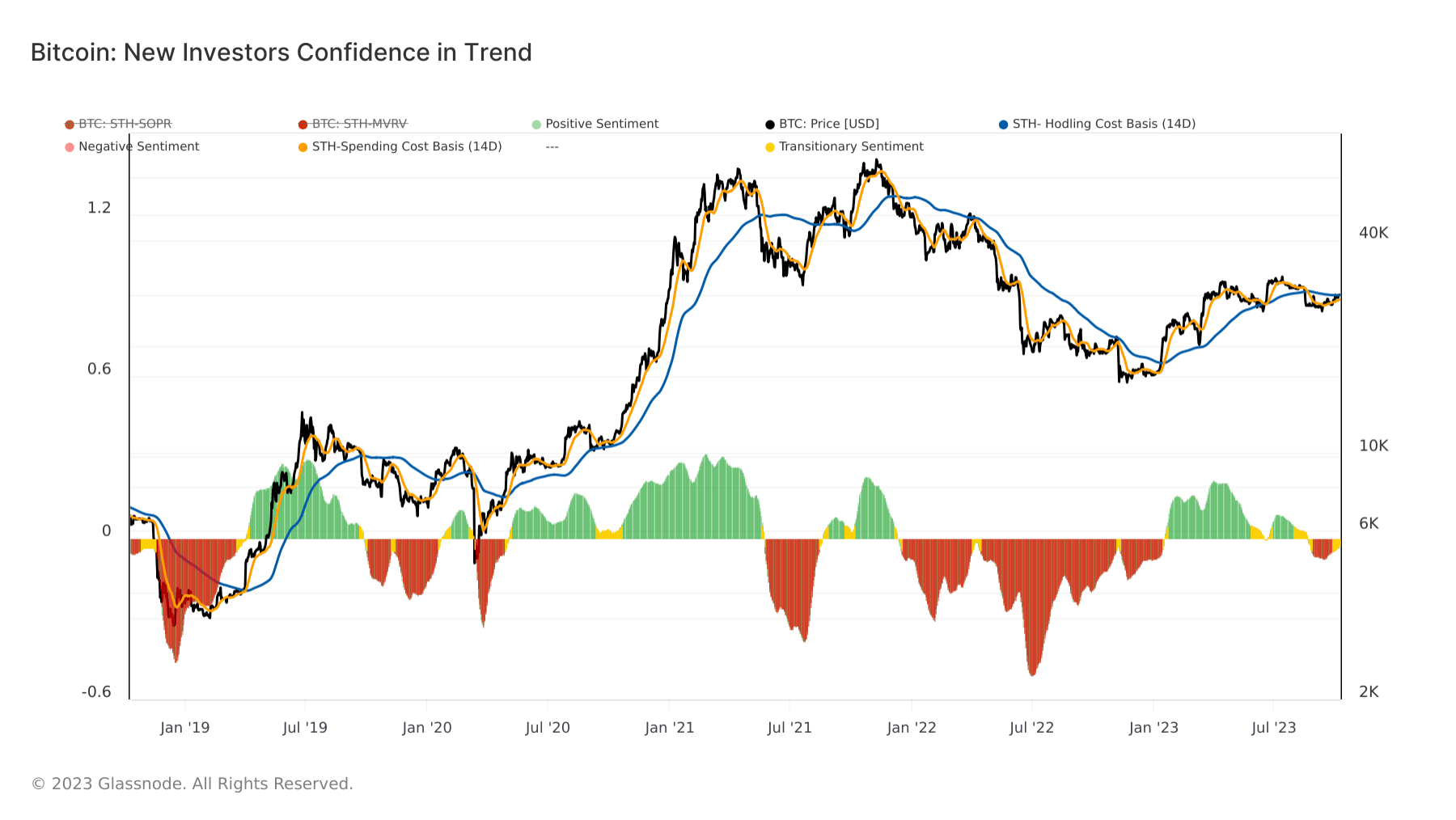
The short-term liquidity of the market cannot be separated from the support of new forces. This model examines the trend of new forces' views through the circulation status of market value and the spending status. Usually, in the case of long-term and short-term divergence, the increase in the proportion of long-term participants and the decrease in the proportion of short-term participants are judged as long-term and short-term turnover, but it is also possible that the market's enthusiasm for the participation of new forces has dropped sharply. At present, the willingness of new forces to participate is gradually recovering, that is, the circulation status of this group is slowly recovering, and there may not be much performance in the short term, which will take some time.
(Figure below shows high-weight selling pressure)
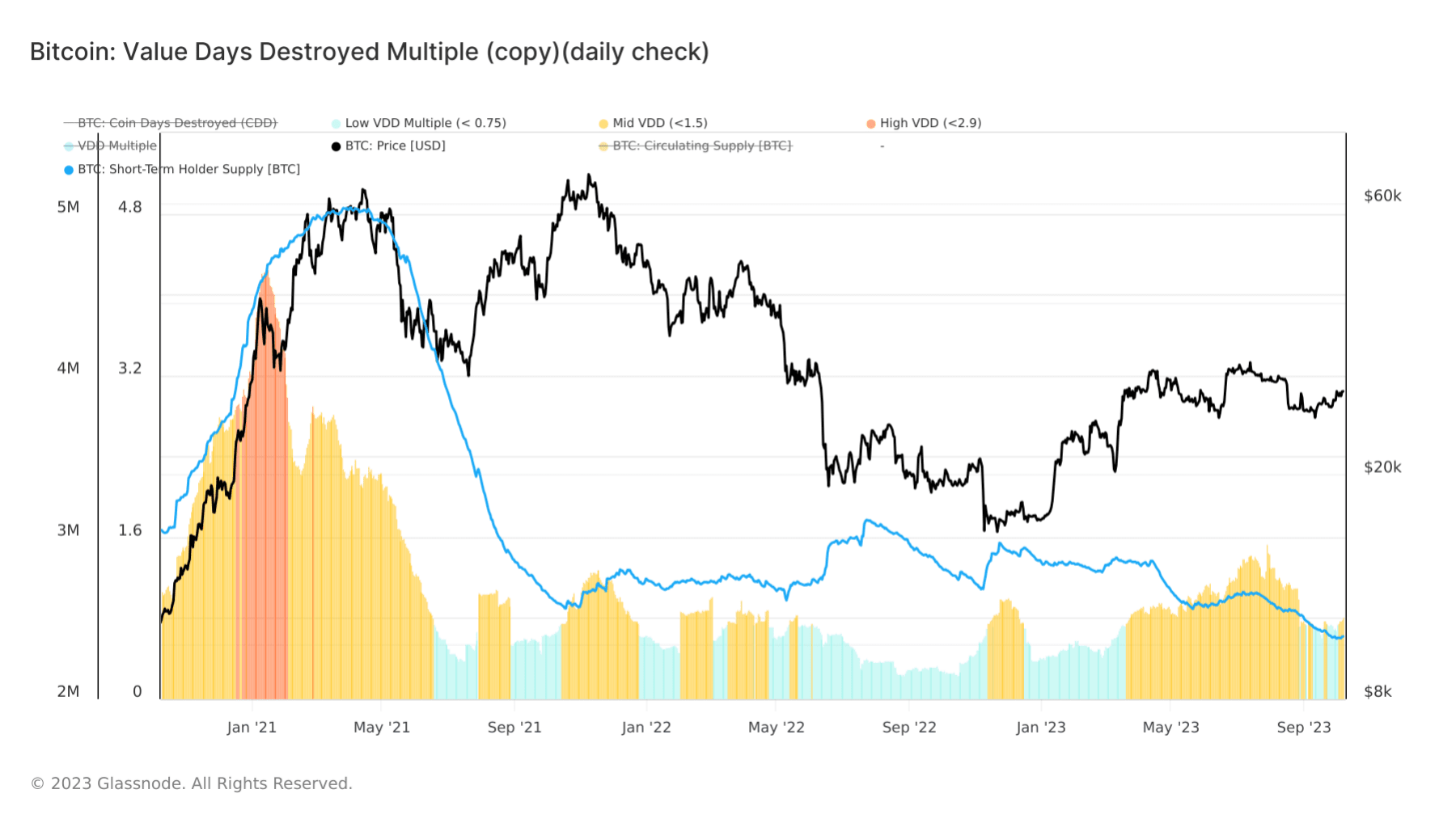
The heavy selling pressure has been exerted on the market, and it may take some time to digest. From the current performance, it is possible that there will be adjustments within a certain range, and this tone may be maintained before the market changes.
(The following figure shows the compound model of the profit percentage of short-term participants)
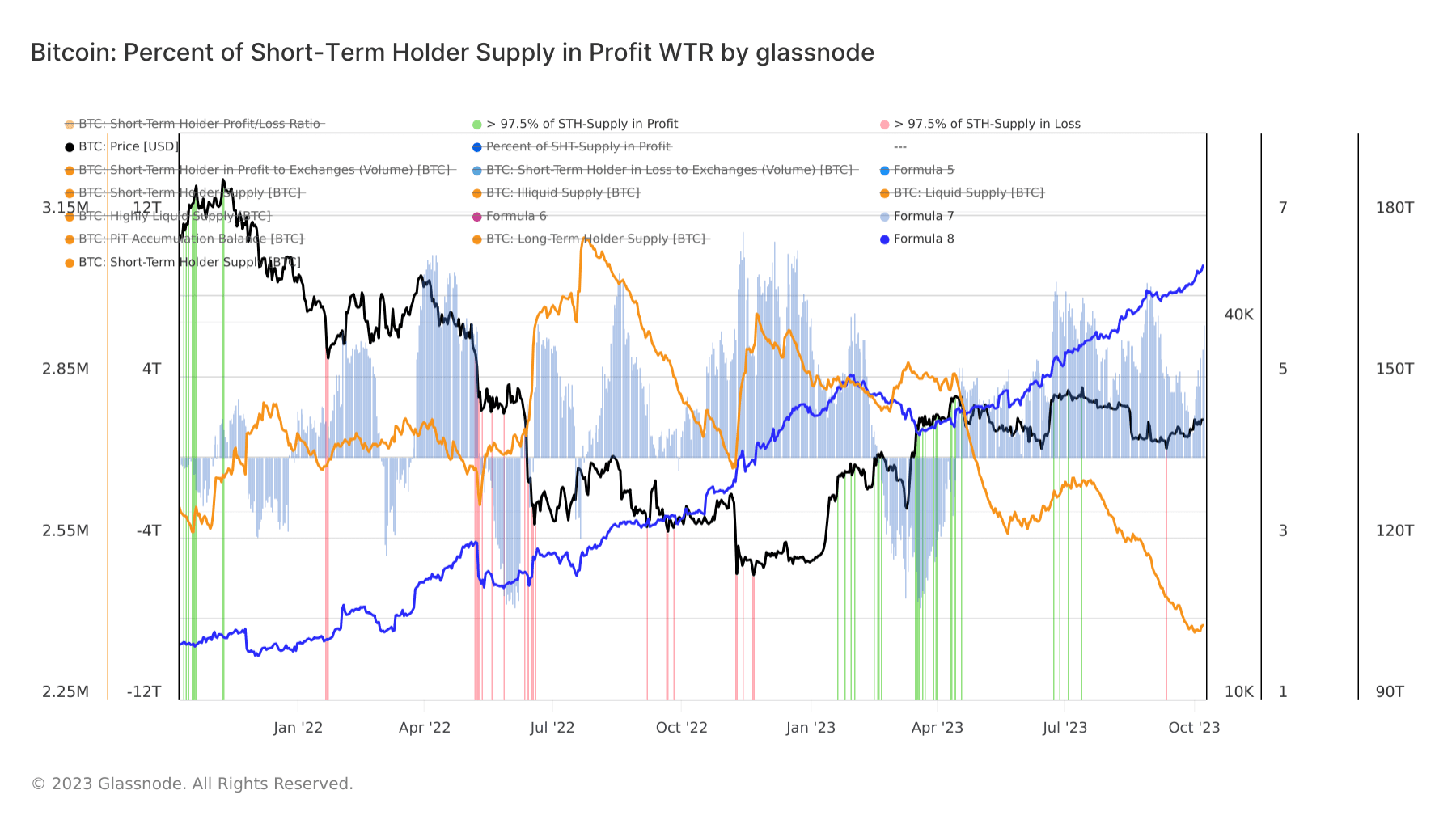
• Blue line: Accumulation group supply
• Yellow line: Supply from short-term participants The accumulation group shows a strong willingness to increase holdings, and the recent rush to buy is large. The current performance may mean that there are a certain number of buyers in the market.
At the same time, short-term participants are currently experiencing a certain degree of emotional easing, reducing their willingness to sell off.
Short-term observation
• Derivatives risk factor
• Option intention transaction ratio
• Derivatives trading volume
• Option implied volatility
• Profit and loss transfer volume
• New addresses and active addresses
• Net position of Sugar Orange Exchange
• Net position of the Auntie Exchange
• High-weight selling pressure
• Global purchasing power status
• Stablecoin exchange net positions
• Off-chain exchange data Derivatives rating: Risk factor is in the danger zone, risk increases
(The figure below shows the risk factor of derivatives)
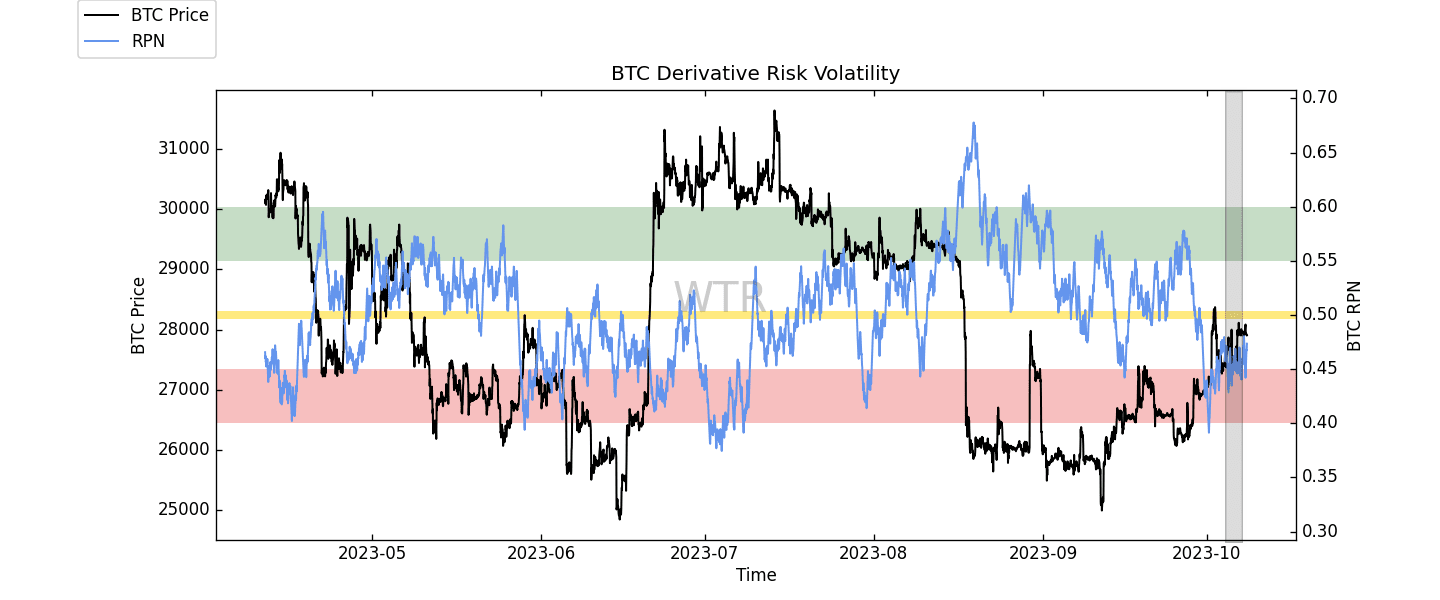
The risk factor has been hovering in the danger zone for the past week, and no large-scale short squeeze has yet occurred. It is expected to remain the same as last week.
(The figure below shows the option intention transaction ratio)
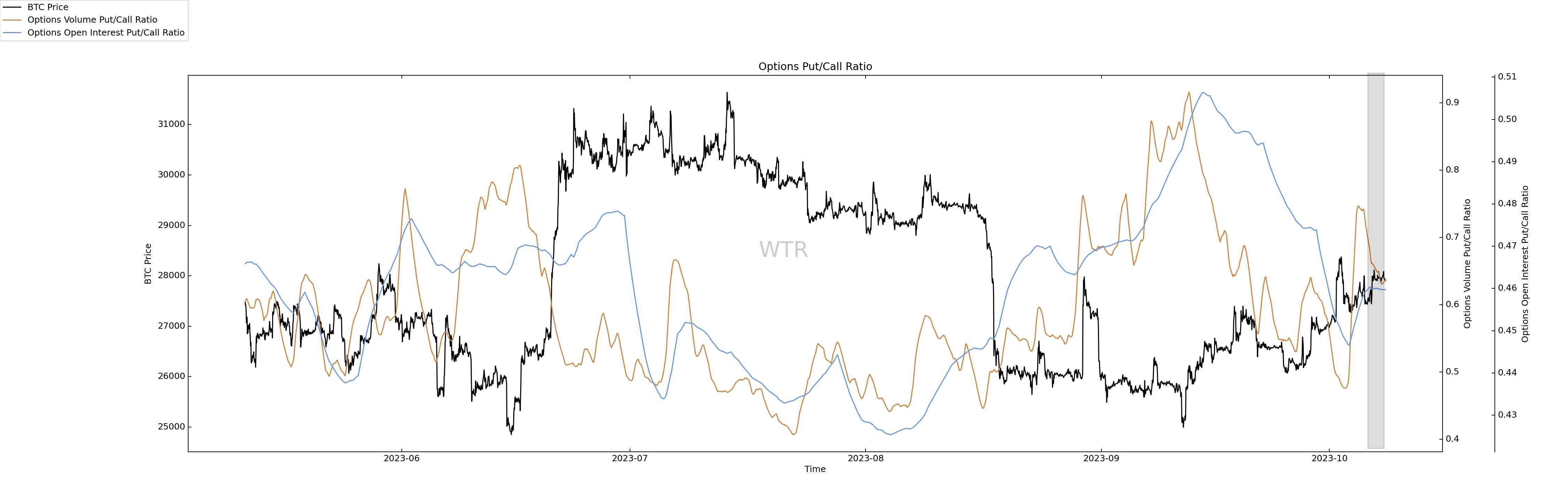
Options trading volume has increased slightly, and the proportion of put options has not changed much compared with last week and is currently at a medium level.
(Figure below shows derivatives trading volume)
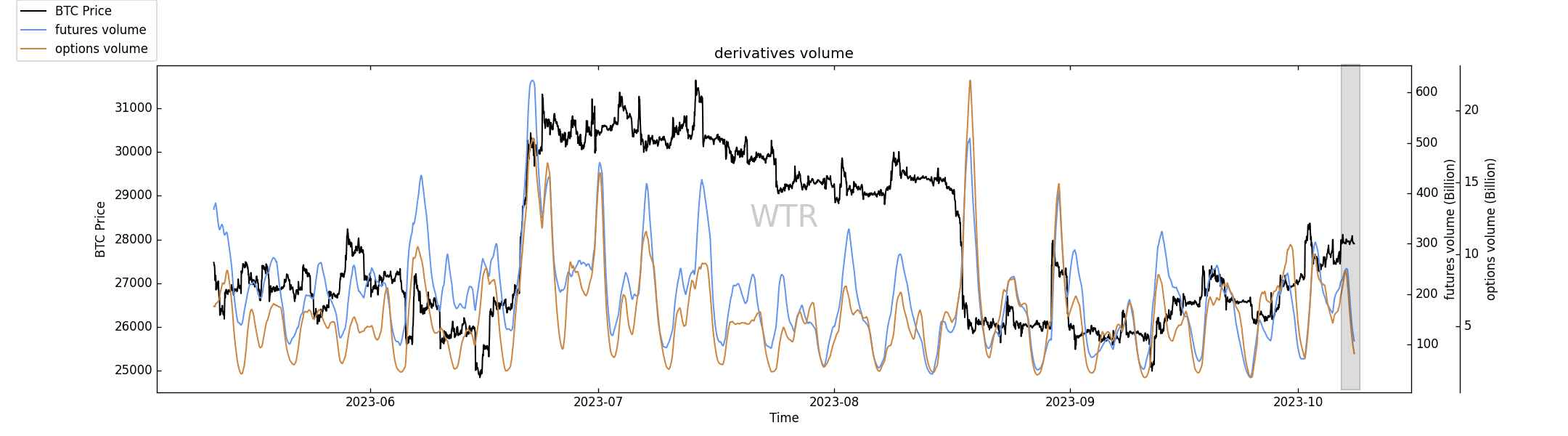
However, the current derivatives trading volume is still at a low level without much fluctuation, indicating that many derivatives traders are currently in a wait-and-see state, but it also indicates that fluctuations are not far away.
(The figure below shows the implied volatility of options)
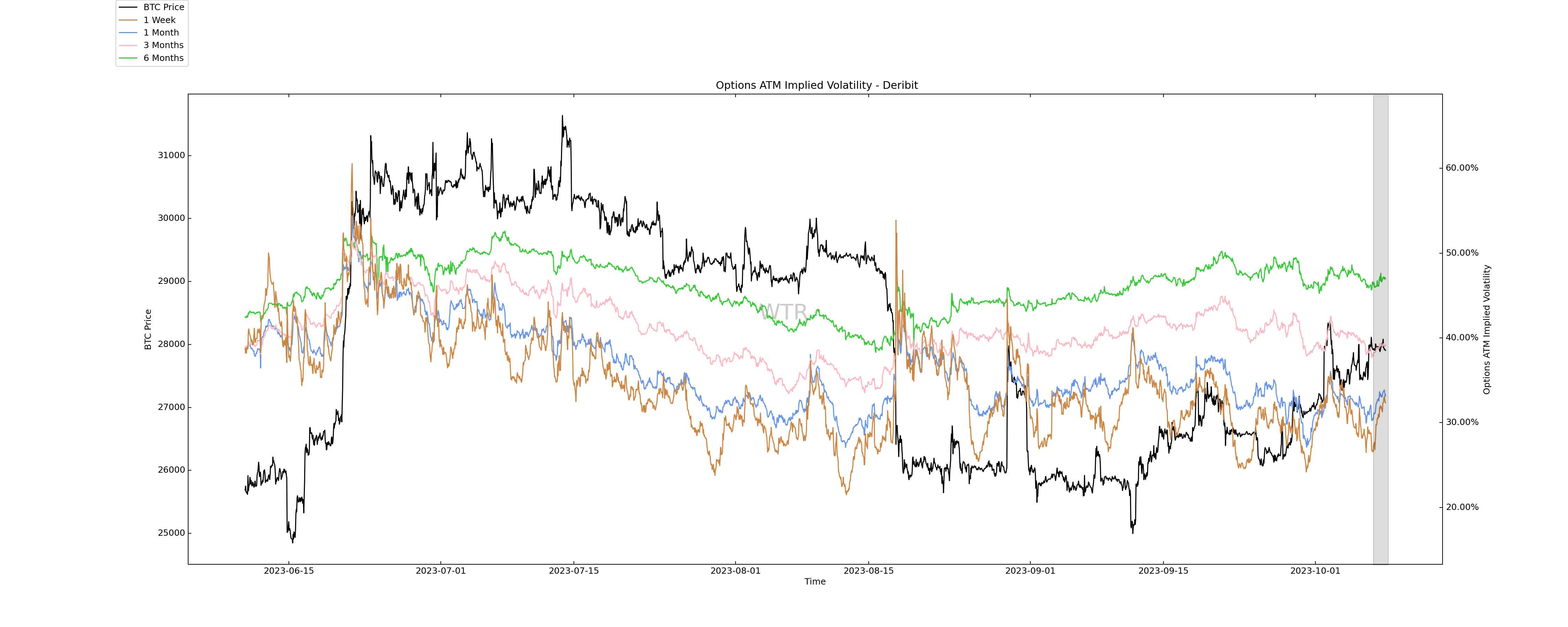
The implied volatility of options has not changed much compared with last week, and the activity of option traders is average.
Emotional state rating: Neutral
(The following figure shows the amount of profit and loss transfer)
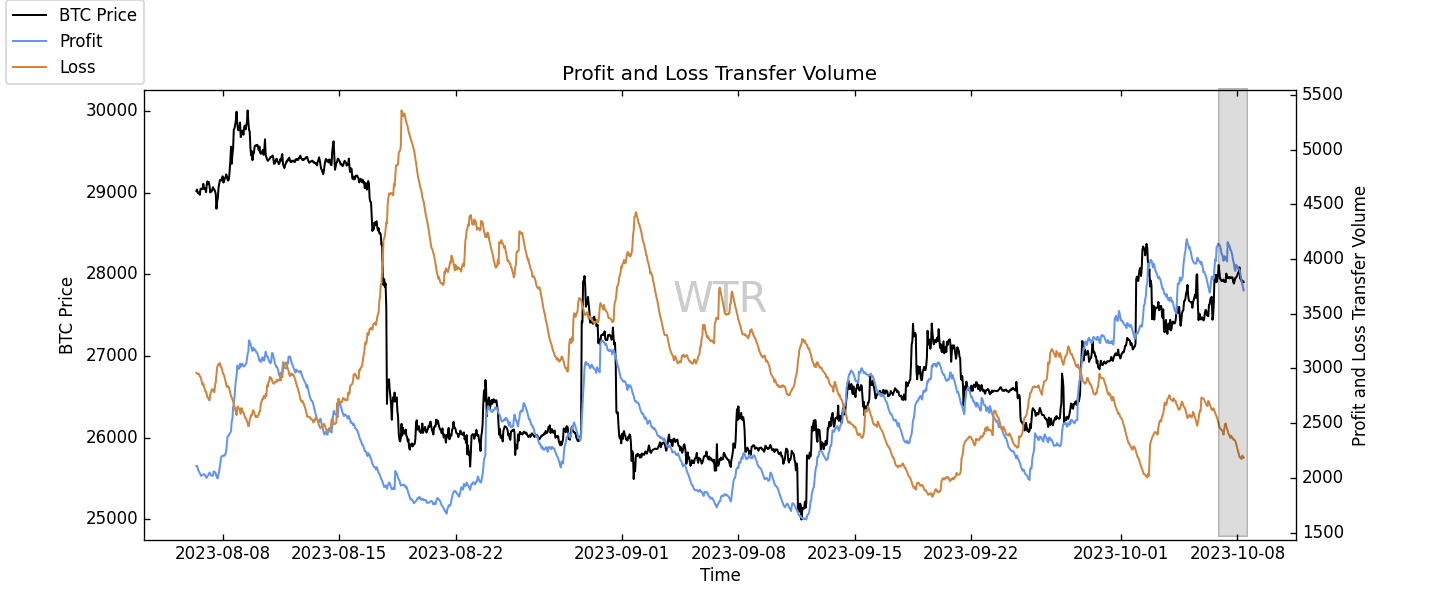
The rise in prices has led to an increase in positive sentiment, while panic sentiment remains low. The current price has reached the cost range for short-term holders. This week, we will continue to focus on market panic represented by loss transfer volume.
(Figure below shows newly added addresses and active addresses)
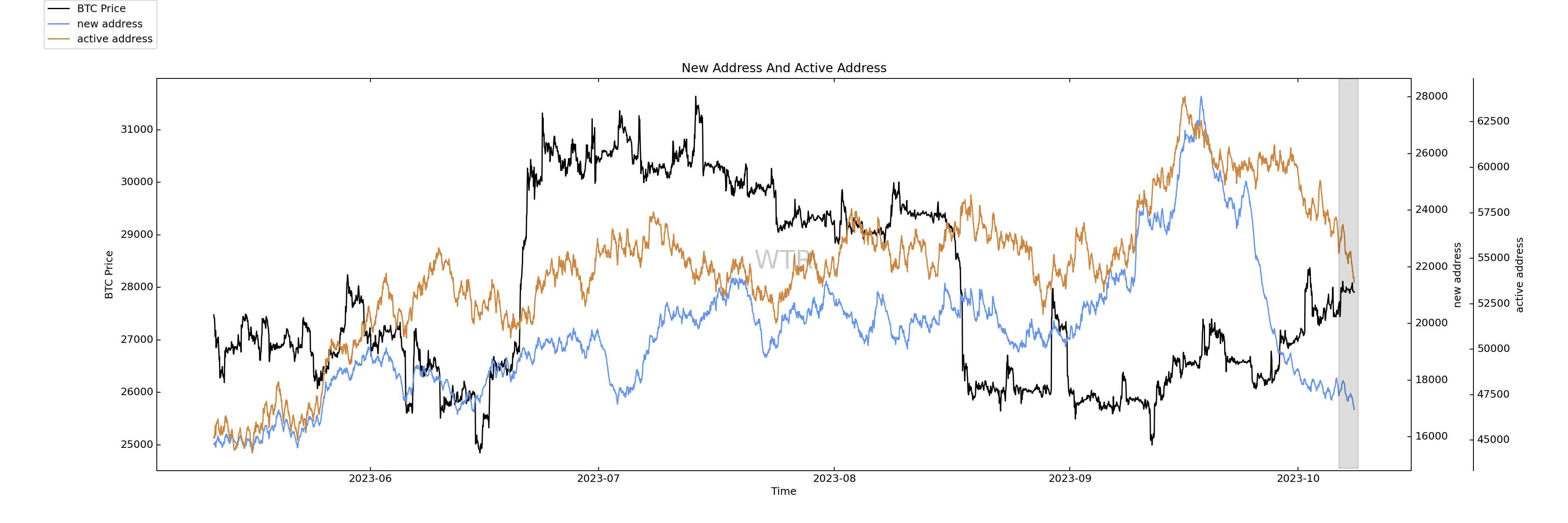
This week, the number of new addresses decreased slightly, and the number of active addresses also decreased slightly. The on-chain activity level is low.
Spot and selling pressure structure rating: The overall outflow is accumulated and the selling pressure is low.
(The following figure shows the net position of Bingtang Orange Exchange)
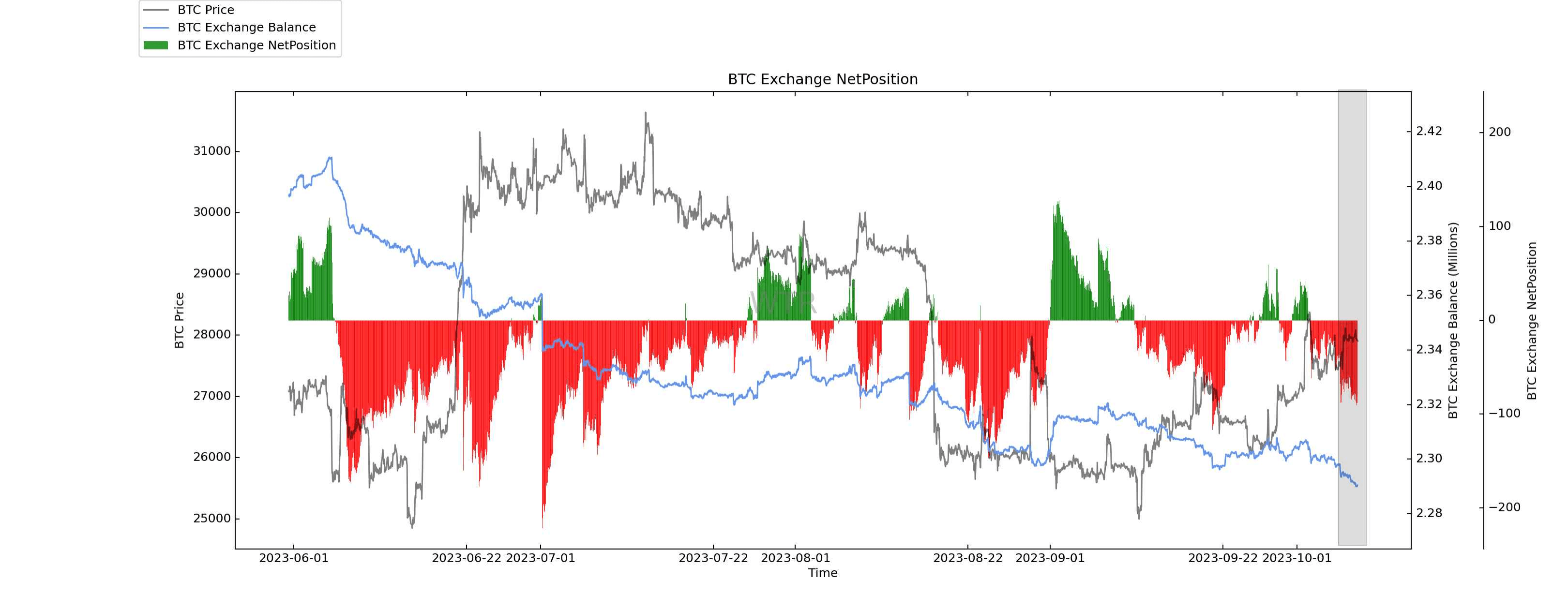
The current outflow of the big cake is moderate.
(The following figure shows the net position of E-Tai Exchange)
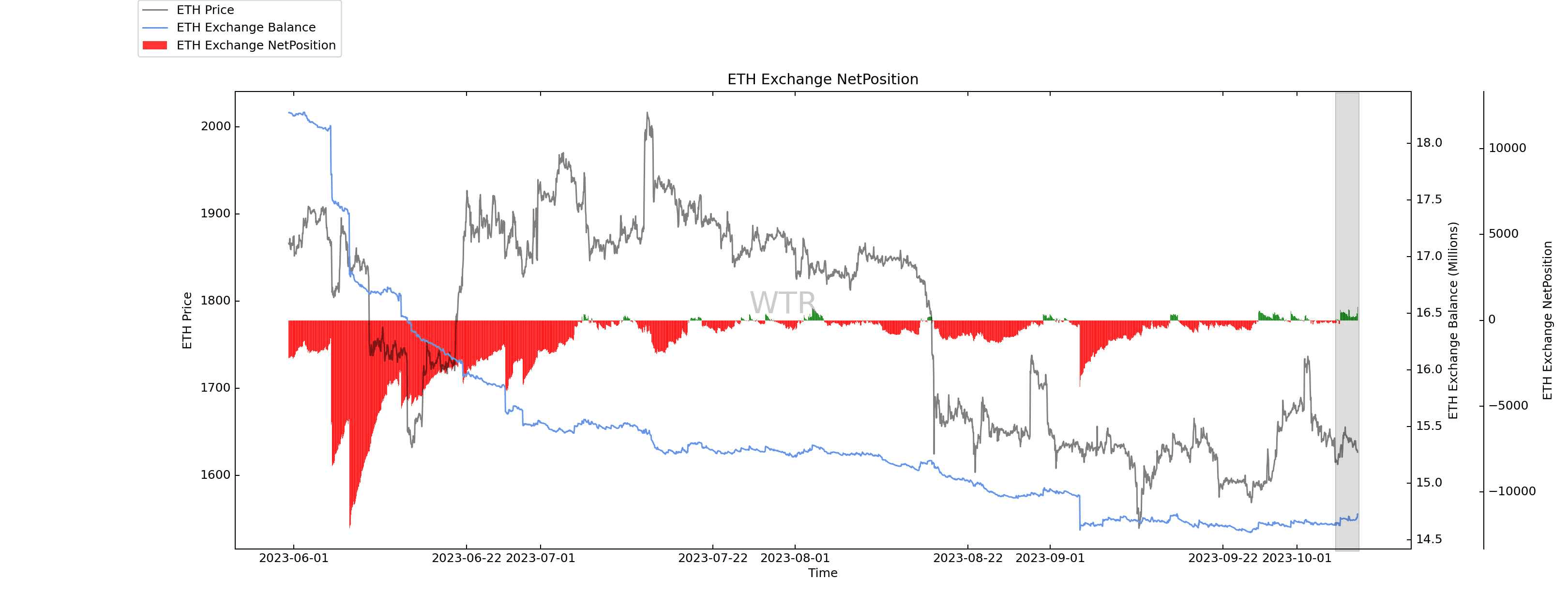
E is currently in a state of small inflow.
(Figure below shows high-weight selling pressure)
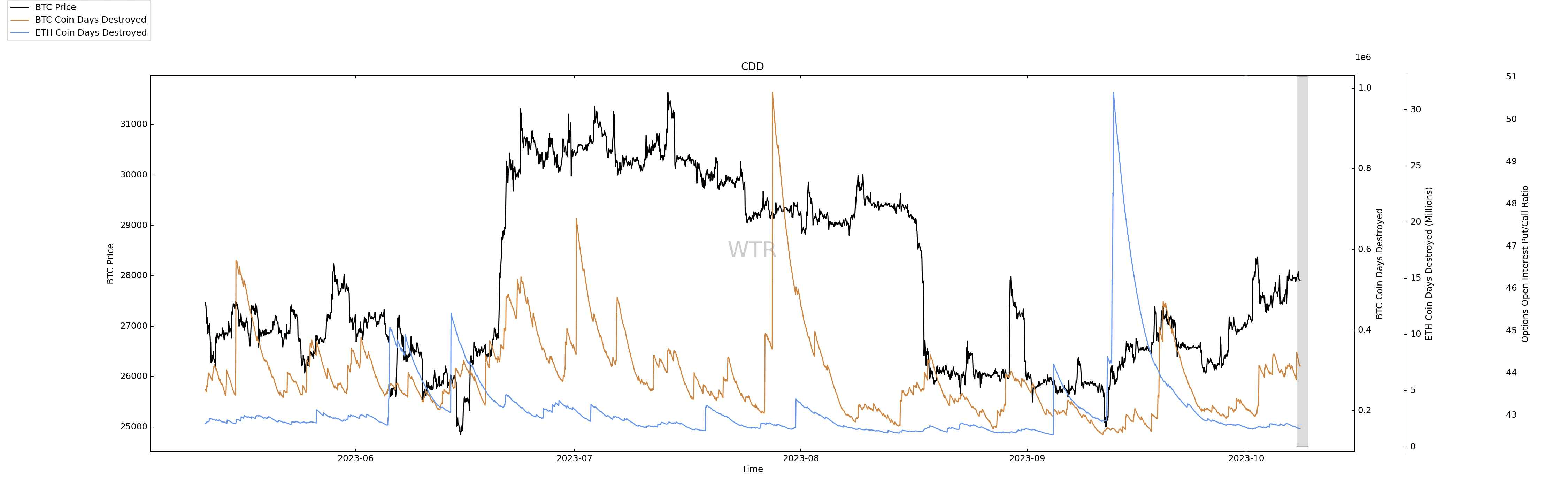
There is no high-weight selling pressure at present.
Purchasing power rating: Global purchasing power has slightly rebounded, and stablecoin purchasing power has also slightly rebounded.
(Figure below: Global purchasing power status)
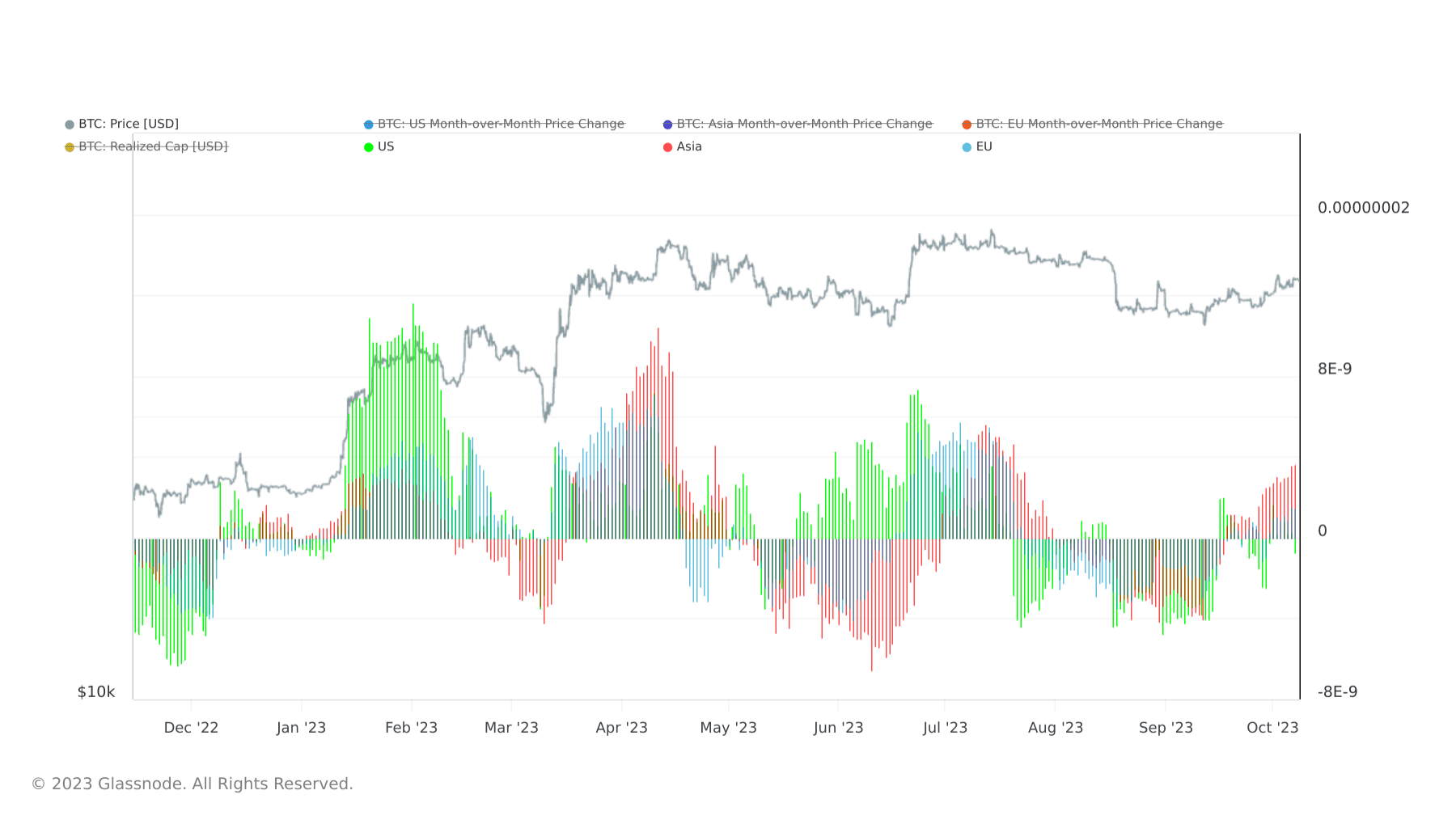
Purchasing power in Asia and Europe is still recovering, while purchasing power in America, which has a larger weight, has declined to a negative value.
(The following figure shows the net position of USDT exchanges)
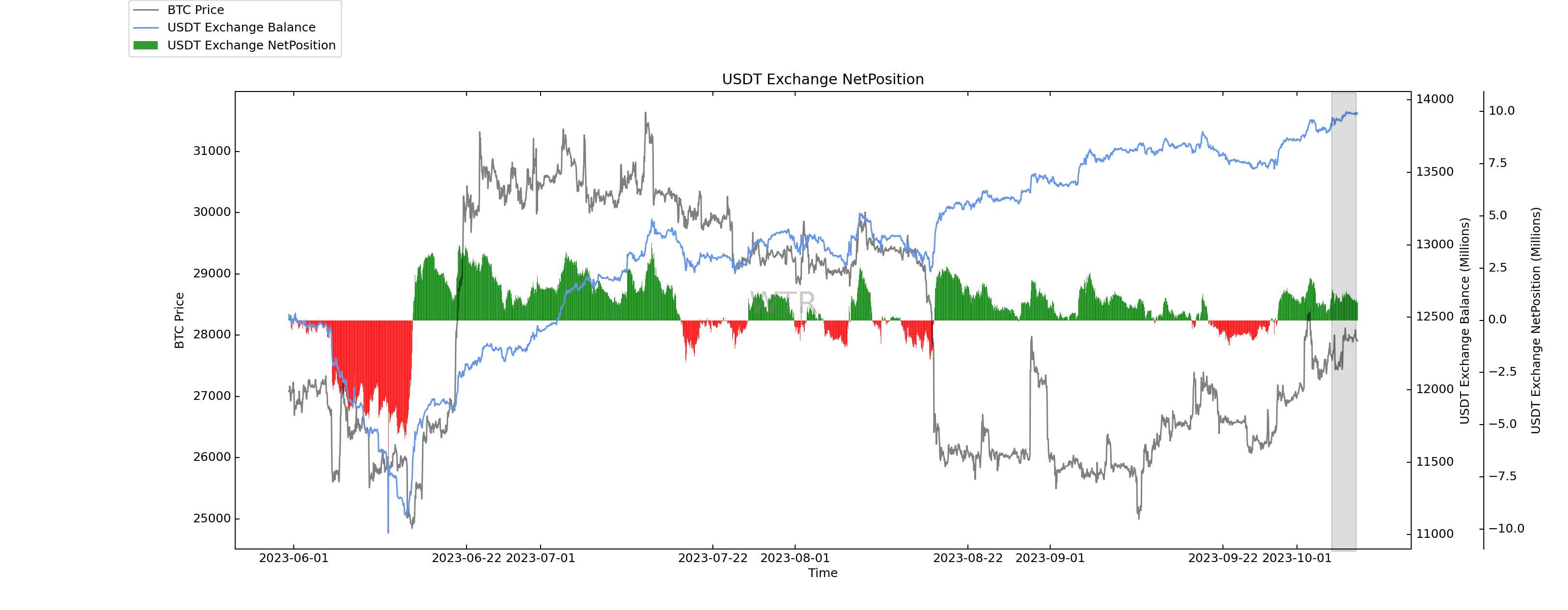
USDT is currently experiencing a small inflow.
Off-chain transaction data rating: There is a willingness to buy at 26,000; there is a willingness to sell at 29,000.
(The following figure shows Coinbase off-chain data)
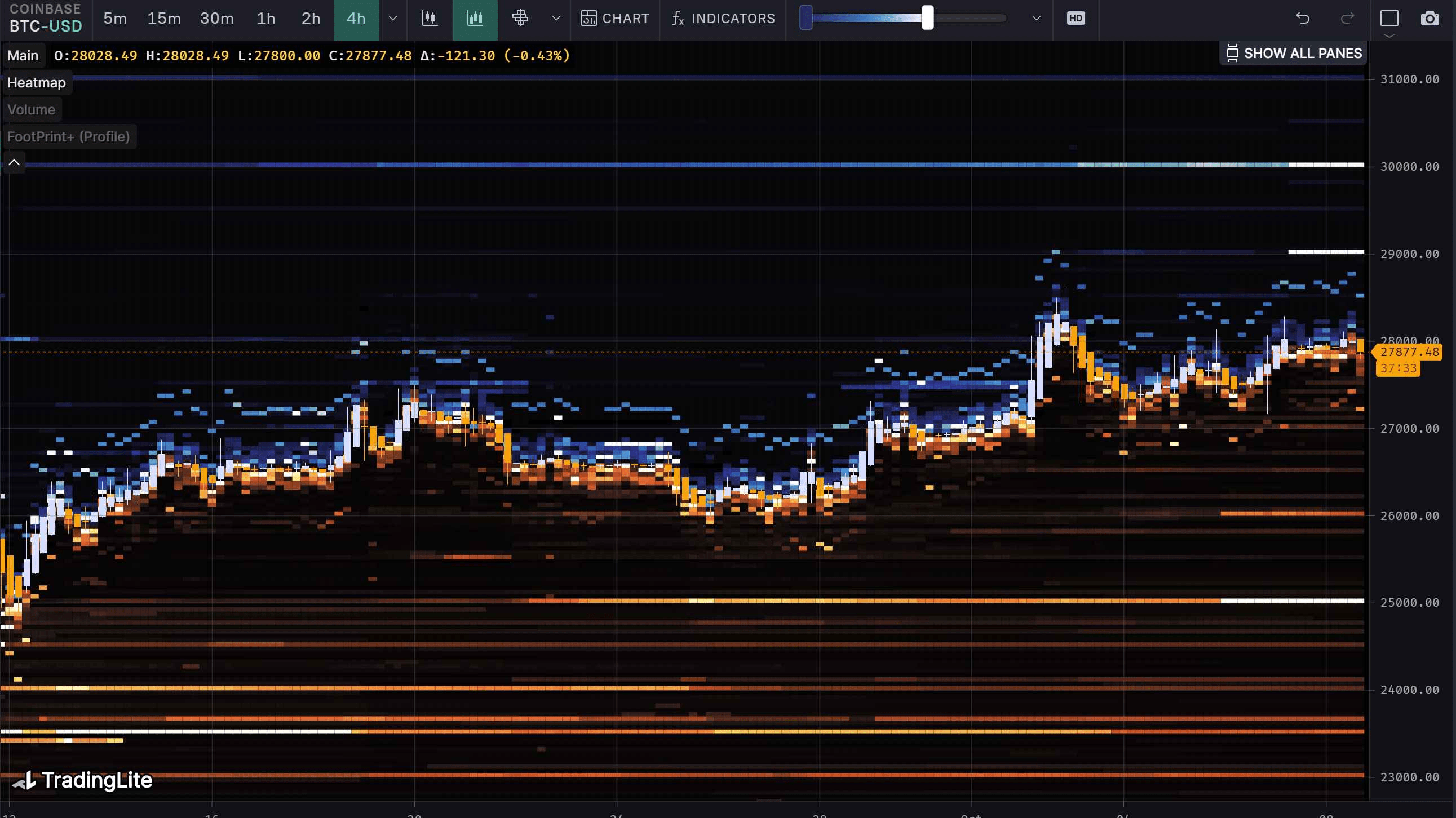
There is willingness to buy at prices around 23000, 24000, 25000, and 26000;
There is a willingness to sell at prices around 29000, 30000, and 31000.
(Binance off-chain data in the figure below)
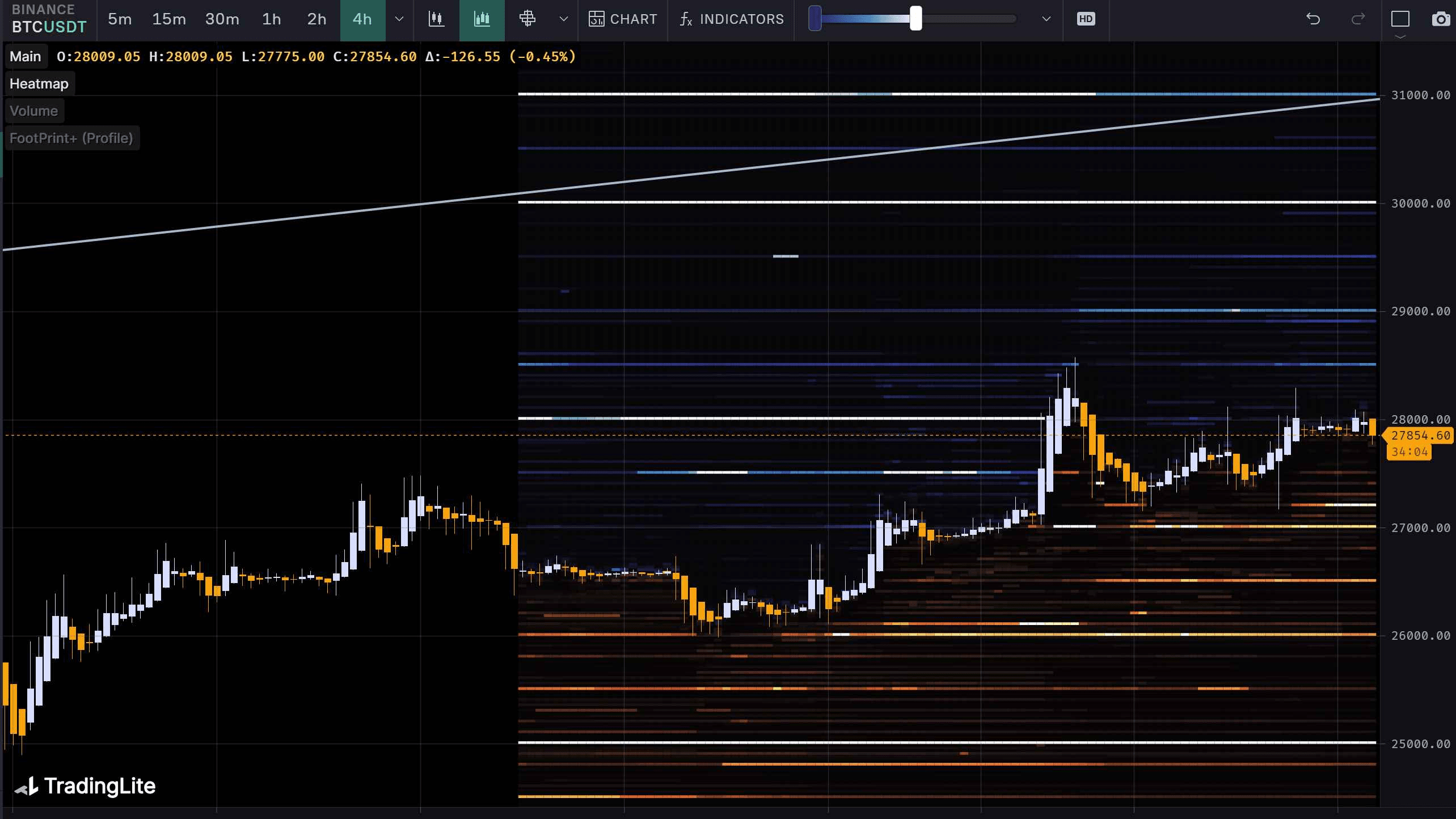
There is willingness to buy at prices around 25,000, 26,000, and 27,000;
There is a willingness to sell at prices around 29000, 30000, and 31000.
(Bitfinex off-chain data below)
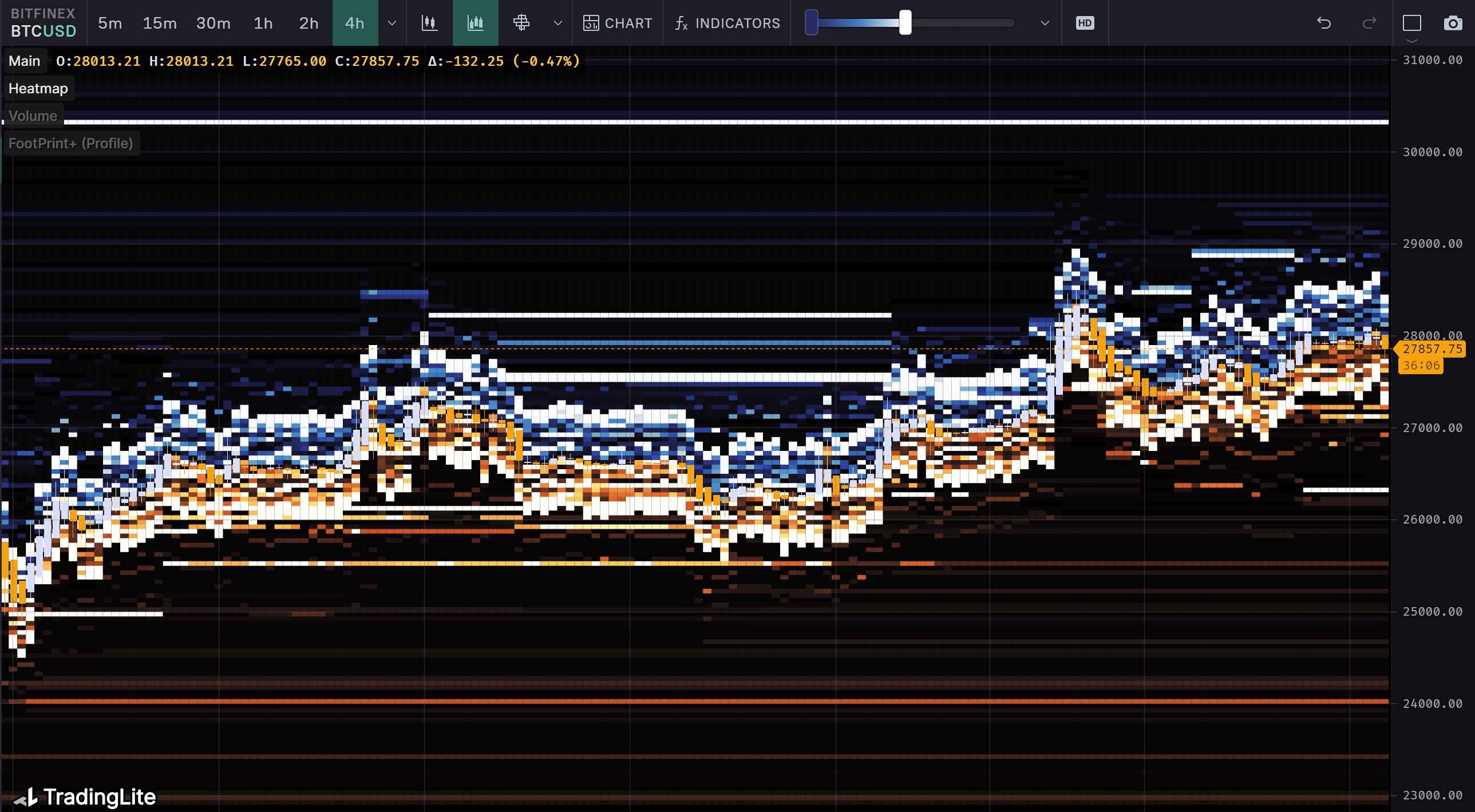
There is a willingness to buy at prices around 23000, 24000, and 26000; there is a willingness to sell at prices around 30000.
This week’s summary:

Summary of the news:
1. With the US non-farm data exceeding expectations, market traders seem to be betting on the expectation that the last rate hike this year will be in November. The world's attention is also increasing, because this may be the last rate hike this year or there will be no rate hike, all of which depends on the choice and advance remarks of the Federal Reserve itself.
From a cyclical perspective, the market’s ability to withstand the continuous negative impact has increased, and more people have begun to slowly shift from looking for evidence of negative impact to looking for evidence of positive impact. Among them, many people are paying attention to the halving in the near future.
The capital market is a game of expectations. When the most difficult time is over, it is conceivable that the long decline will become shorter in the future, and even usher in a special structural market.
Long-term insights on the chain:
1. The updated market derivatives situation provides a deeper understanding of the market cycle and is more predictive of the peaks and troughs of certain periods.
2. From a medium to long-term perspective, the current market situation for derivatives is neutral.
• Market tone: The derivative structure of the market is relatively stable and has not changed much. The next issue will focus on the data research from Black Swan.
On-chain mid-term exploration:
1. The liquidity of the market is good, and short selling is difficult at present;
2. The new energy is in a state of repair;
3. The market currently has selling pressure that needs to be digested;
4. The number of accumulators is increasing, and short-term participants are less willing to sell
• Market tone: Repair
The current liquidity of the market is relatively good, and it may not show signs of weakness, which would increase the difficulty of short selling.
On-chain short-term observations:
1. The risk factor is in the danger zone and the risk is increasing.
2. The number of newly added active addresses is at a relatively low level, and the market activity is low.
3. Market sentiment status rating: Neutral.
4. The net position of the exchange as a whole shows an outflow accumulation state, and the selling pressure is relatively low.
5. Global purchasing power has slightly rebounded, and the purchasing power of stablecoins has also slightly rebounded.
6. Off-chain transaction data shows that there is a willingness to buy at 26,000 and a willingness to sell at 29,000.
7. The probability that the price will not fall below 24,000-26,000 in the short term is 79%; the probability that the price will not rise below 32,000-34,000 in the short term is 65%.
• Market tone: Market sentiment is neutral, with slightly less positive sentiment than last week. In the short term, judging from the data alone, there is a high probability of a certain short squeeze, but this week we will pay more attention to the impact of news.
Strategy suggestion: Spot dynamic hedging