

#web3security
web3security
614,877 views
1,345 Discussing
Hot
Latest

·
--
What Do You Check Before Connecting to a DApp?Many Web3 users are accustomed to connecting their wallets to various decentralized applications.
But there are a few things worth checking carefully before connecting.
First, make sure you’re accessing the intended app, and avoid visiting lookalike websites through unfamiliar links.
Next, pay attention to connection, signing, or authorization requests that pop up in your wallet. Different actions come with different permissions and potential impacts.
Finally, before submitting an on-chain transaction, check the recipient, authorization amount, and network fees.
BNQ GLOBAL has already provided a DApp portal, allowing users to access relevant on-chain apps through the app.
What Do You Check Before Connecting to a DApp?
Many Web3 users are accustomed to connecting their wallets to various decentralized applications.
But there are a few things worth checking carefully before connecting.
First, make sure you’re accessing the intended app, and avoid visiting lookalike websites through unfamiliar links.
Next, pay attention to connection, signing, or authorization requests that pop up in your wallet. Different actions come with different permissions and potential impacts.
Finally, before submitting an on-chain transaction, check the recipient, authorization amount, and network fees.
BNQ GLOBAL has already provided a DApp portal, allowing users to access relevant on-chain apps through the app.
But there are a few things worth checking carefully before connecting.
First, make sure you’re accessing the intended app, and avoid visiting lookalike websites through unfamiliar links.
Next, pay attention to connection, signing, or authorization requests that pop up in your wallet. Different actions come with different permissions and potential impacts.
Finally, before submitting an on-chain transaction, check the recipient, authorization amount, and network fees.
BNQ GLOBAL has already provided a DApp portal, allowing users to access relevant on-chain apps through the app.
62

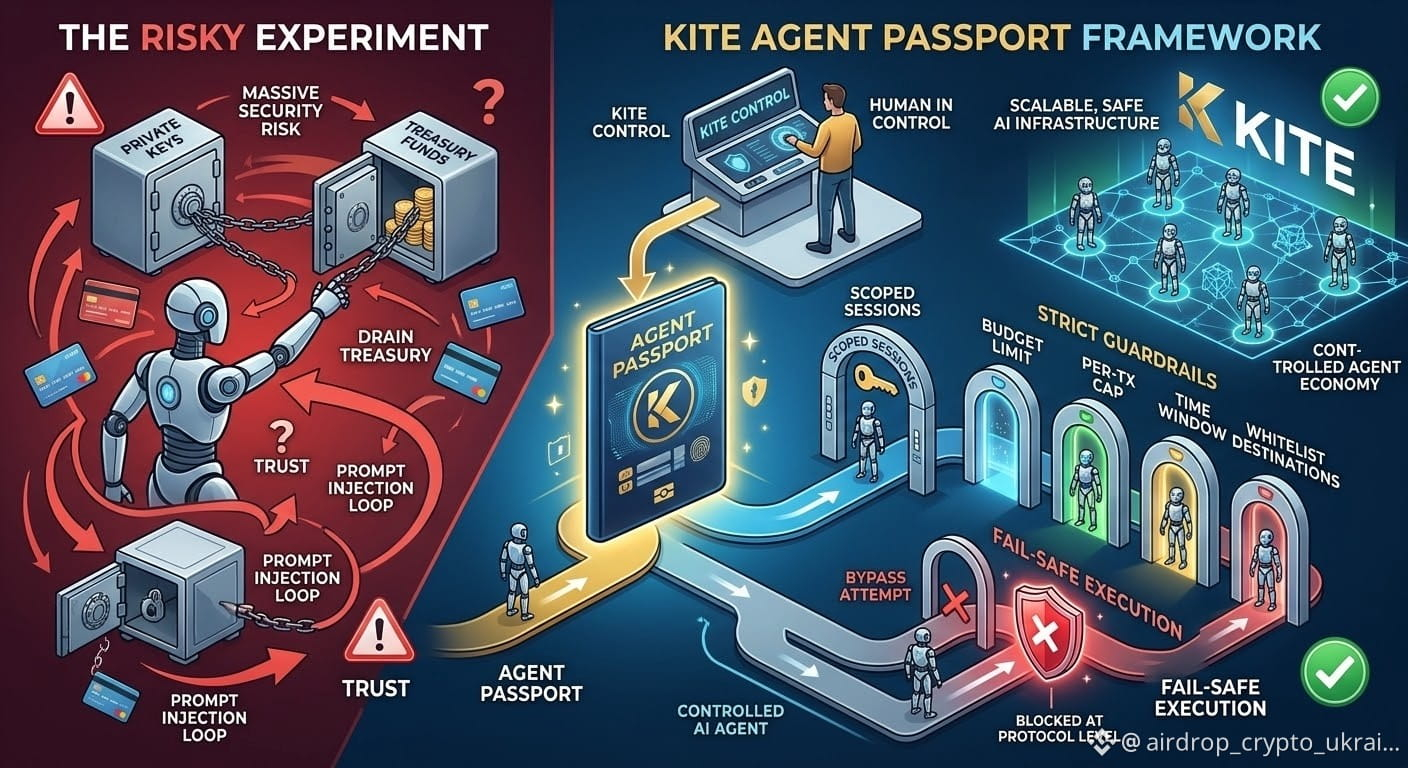
The biggest obstacle to the AI agent economy isn't intelligence - it's trust.
Allowing AI agents to execute tasks autonomously is powerful, but giving them unrestricted wallet access or credit card details creates serious security risks. What if a prompt injection triggers unintended actions? What if an agent drains an entire treasury?
This is where Kite aims to change the game with its Agent Passport system.
Instead of choosing between zero autonomy and total exposure, Kite introduces a Human-in-the-Loop / Human-in-Control framework:
1. Scoped Sessions: Approve actions using passkeys within predefined boundaries.
2. Strict Guardrails: Set hard limits on total budgets, per-transaction amounts, session expiration, and whitelisted destinations.
3. Fail-Safe Execution: Transactions that violate these parameters are rejected at the protocol level.
By keeping private keys out of the agent's memory and enforcing programmable boundaries, Kite aims to address this security dilemma. Humans retain control while agents gain the operational freedom they need to power the Web3 machine economy.
That's how we move from risky experiments toward scalable, secure AI infrastructure.
#KiteBBW $KITE #AIAgents #Web3Security #AgentEconomy
The biggest obstacle to the AI agent economy isn't intelligence - it's trust.
Allowing AI agents to execute tasks autonomously is powerful, but giving them unrestricted wallet access or credit card details creates serious security risks. What if a prompt injection triggers unintended actions? What if an agent drains an entire treasury?
This is where Kite aims to change the game with its Agent Passport system.
Instead of choosing between zero autonomy and total exposure, Kite introduces a Human-in-the-Loop / Human-in-Control framework:
1. Scoped Sessions: Approve actions using passkeys within predefined boundaries.
2. Strict Guardrails: Set hard limits on total budgets, per-transaction amounts, session expiration, and whitelisted destinations.
3. Fail-Safe Execution: Transactions that violate these parameters are rejected at the protocol level.
By keeping private keys out of the agent's memory and enforcing programmable boundaries, Kite aims to address this security dilemma. Humans retain control while agents gain the operational freedom they need to power the Web3 machine economy.
That's how we move from risky experiments toward scalable, secure AI infrastructure.
#KiteBBW $KITE #AIAgents #Web3Security #AgentEconomy
Allowing AI agents to execute tasks autonomously is powerful, but giving them unrestricted wallet access or credit card details creates serious security risks. What if a prompt injection triggers unintended actions? What if an agent drains an entire treasury?
This is where Kite aims to change the game with its Agent Passport system.
Instead of choosing between zero autonomy and total exposure, Kite introduces a Human-in-the-Loop / Human-in-Control framework:
1. Scoped Sessions: Approve actions using passkeys within predefined boundaries.
2. Strict Guardrails: Set hard limits on total budgets, per-transaction amounts, session expiration, and whitelisted destinations.
3. Fail-Safe Execution: Transactions that violate these parameters are rejected at the protocol level.
By keeping private keys out of the agent's memory and enforcing programmable boundaries, Kite aims to address this security dilemma. Humans retain control while agents gain the operational freedom they need to power the Web3 machine economy.
That's how we move from risky experiments toward scalable, secure AI infrastructure.
#KiteBBW $KITE #AIAgents #Web3Security #AgentEconomy
137
·
--
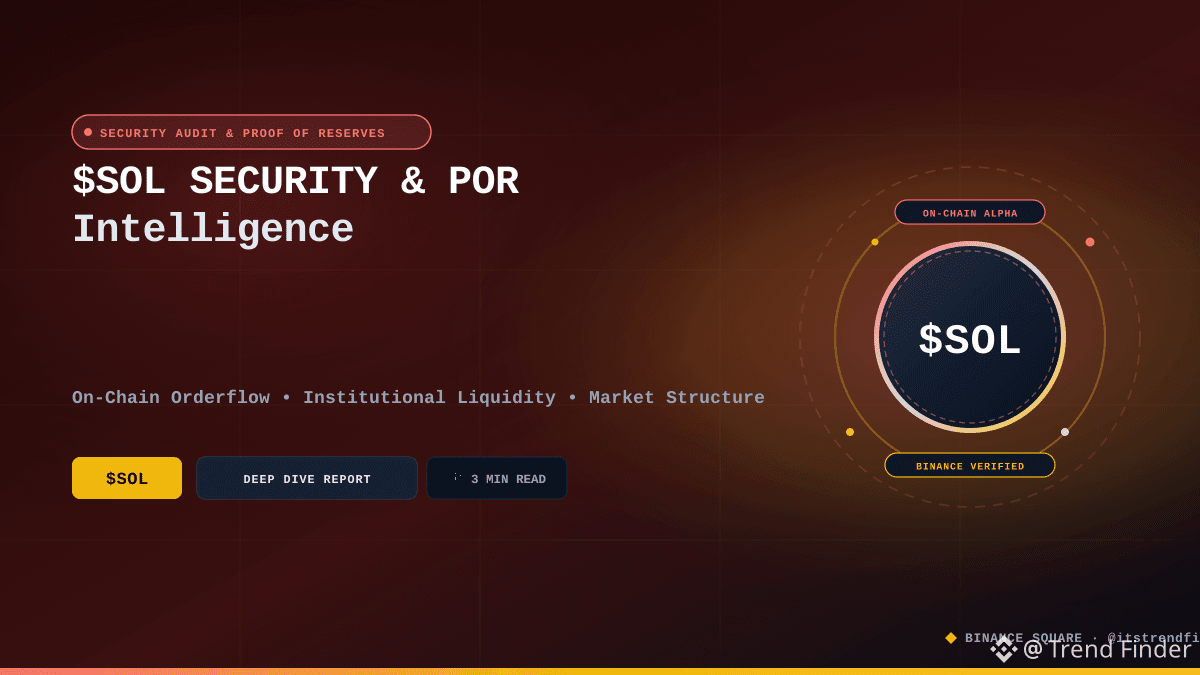
On-chain risk hygiene isn't flashy, but it is vital. With $SOL at 101.5, I’m reviewing protocol audit coverage and multisig timelocks. Seeing more projects lean into Merkle Tree verifications for Proof-of-Reserves is a huge win for transparency. If the security isn't solid, the yield doesn't matter. Stay safe. $BTC _
#ProofOfReserves #Web3Security #SOL
On-chain risk hygiene isn't flashy, but it is vital. With $SOL at 101.5, I’m reviewing protocol audit coverage and multisig timelocks. Seeing more projects lean into Merkle Tree verifications for Proof-of-Reserves is a huge win for transparency. If the security isn't solid, the yield doesn't matter. Stay safe. $BTC _
#ProofOfReserves #Web3Security #SOL
#ProofOfReserves #Web3Security #SOL
7

·
--
Why can DeFi projects still get hacked after passing an audit? 🔐
Because security isn’t just about code.
Vulnerabilities can stem from access controls, price oracles, cross-chain bridges, business logic, or even third-party services. A flaw in one area can also be amplified by the way funds move through the system.
Here are three things everyday users can do:
🔹 Verify contract addresses against official project announcements.
🔹 Understand token approvals, and don’t sign blindly.
🔹 Don’t focus only on yields—also check the audit’s scope, upgrade permissions, and how you can withdraw your assets.
Remember: an audit doesn’t guarantee complete security, and being able to trace funds on-chain doesn’t mean they can necessarily be recovered.
What do you think everyday users are most likely to overlook: contract vulnerabilities, or risks related to approvals and permissions?
#ONEANetwork #DeFi #Web3Security
Why can DeFi projects still get hacked after passing an audit? 🔐
Because security isn’t just about code.
Vulnerabilities can stem from access controls, price oracles, cross-chain bridges, business logic, or even third-party services. A flaw in one area can also be amplified by the way funds move through the system.
Here are three things everyday users can do:
🔹 Verify contract addresses against official project announcements.
🔹 Understand token approvals, and don’t sign blindly.
🔹 Don’t focus only on yields—also check the audit’s scope, upgrade permissions, and how you can withdraw your assets.
Remember: an audit doesn’t guarantee complete security, and being able to trace funds on-chain doesn’t mean they can necessarily be recovered.
What do you think everyday users are most likely to overlook: contract vulnerabilities, or risks related to approvals and permissions?
#ONEANetwork #DeFi #Web3Security
Because security isn’t just about code.
Vulnerabilities can stem from access controls, price oracles, cross-chain bridges, business logic, or even third-party services. A flaw in one area can also be amplified by the way funds move through the system.
Here are three things everyday users can do:
🔹 Verify contract addresses against official project announcements.
🔹 Understand token approvals, and don’t sign blindly.
🔹 Don’t focus only on yields—also check the audit’s scope, upgrade permissions, and how you can withdraw your assets.
Remember: an audit doesn’t guarantee complete security, and being able to trace funds on-chain doesn’t mean they can necessarily be recovered.
What do you think everyday users are most likely to overlook: contract vulnerabilities, or risks related to approvals and permissions?
#ONEANetwork #DeFi #Web3Security
3
7

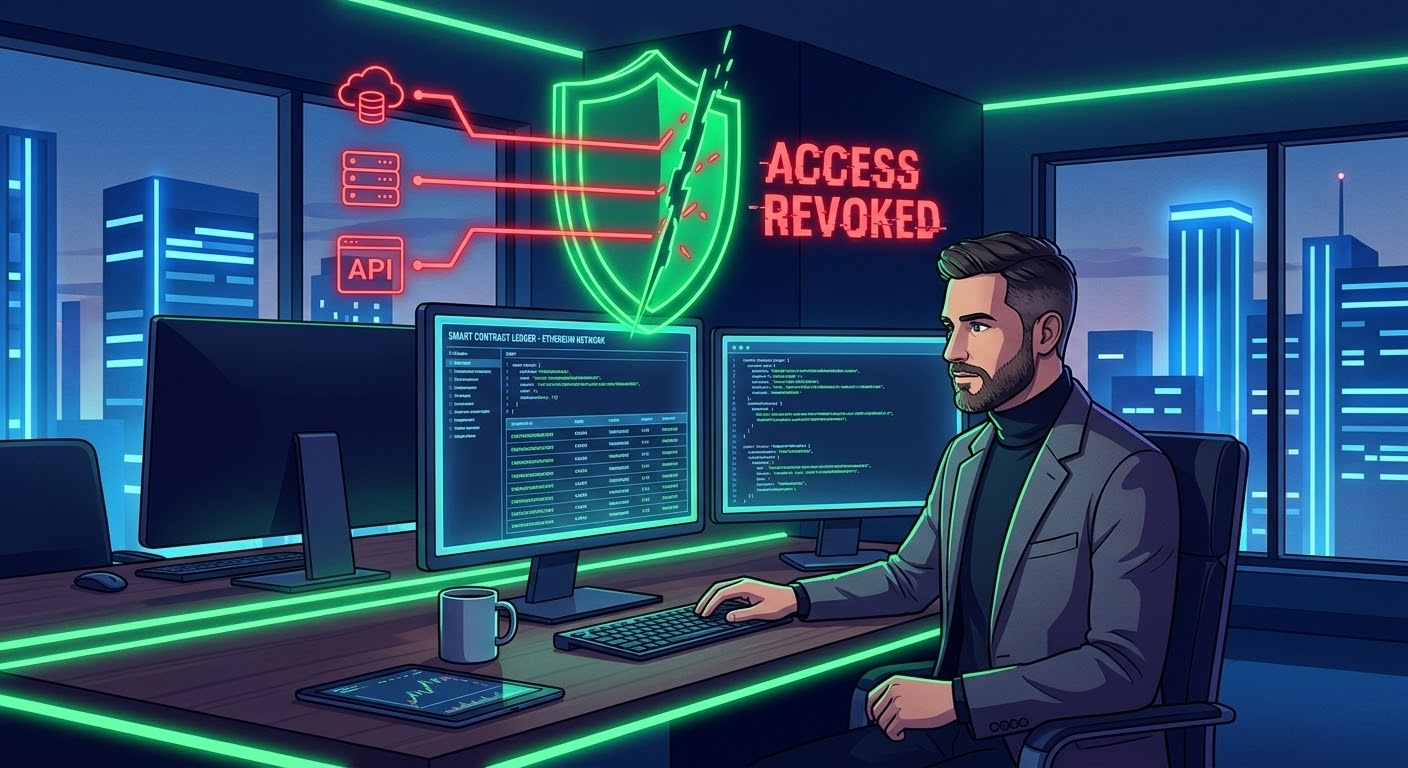
Security Alert: Clean Up Your Smart Contract Approvals! 🛡️
Content:
When was the last time you revoked smart contract permissions on your wallet? 🔒
Every time you approve a dApp or decentralized exchange, you might be leaving unlimited token allowances open. If that protocol ever gets exploited, your wallet could be drained!
Do this today:
🔹 Use tools like Revoke.cash or BscScan Token Approval Checker.
🔹 Revoke old or unused dApp permissions immediately.
Stay safe out there! 🤝
#Web3Security #CryptoSafety #Binance
Security Alert: Clean Up Your Smart Contract Approvals! 🛡️
Content:
When was the last time you revoked smart contract permissions on your wallet? 🔒
Every time you approve a dApp or decentralized exchange, you might be leaving unlimited token allowances open. If that protocol ever gets exploited, your wallet could be drained!
Do this today:
🔹 Use tools like Revoke.cash or BscScan Token Approval Checker.
🔹 Revoke old or unused dApp permissions immediately.
Stay safe out there! 🤝
#Web3Security #CryptoSafety #Binance
Content:
When was the last time you revoked smart contract permissions on your wallet? 🔒
Every time you approve a dApp or decentralized exchange, you might be leaving unlimited token allowances open. If that protocol ever gets exploited, your wallet could be drained!
Do this today:
🔹 Use tools like Revoke.cash or BscScan Token Approval Checker.
🔹 Revoke old or unused dApp permissions immediately.
Stay safe out there! 🤝
#Web3Security #CryptoSafety #Binance
8

·
--
My Crypto Safety Roadmap (Part 8): How I Manage and Revoke Risky Smart Contract Permissions🎈🎈
🔴Interacting with Decentralized Applications (DApps) and DeFi platforms is a major part of my crypto execution, but it introduces a hidden risk that many overlook. In my journey, I discovered that granting "unlimited token approval" to a platform allows its smart contracts to access my assets at any time. If that protocol gets exploited or turns out to be a scam, my connected wallet can be drained instantly. To secure my treasury, I established a strict inspection and cleanup routine.🚀
🔴Today, I never leave permanent or unlimited spending permissions active on my Web3 wallets. I routinely use blockchain scanners and revocation tools like Revoke.cash to audit every single smart contract connection I have made. Whenever I finish a transaction or interact with a new platform, I immediately revoke or minimize the allowed token allowance. Controlling exactly who and what can interact with my digital assets is my ultimate shield against smart contract exploits.🚀
#CryptoSafety #SmartContracts #Web3Security #DeFiSecurity $XAUT $BTC $BNB
💥Not Financial Advice
{spot}(XAUTUSDT)
My Crypto Safety Roadmap (Part 8): How I Manage and Revoke Risky Smart Contract Permissions🎈🎈
🔴Interacting with Decentralized Applications (DApps) and DeFi platforms is a major part of my crypto execution, but it introduces a hidden risk that many overlook. In my journey, I discovered that granting "unlimited token approval" to a platform allows its smart contracts to access my assets at any time. If that protocol gets exploited or turns out to be a scam, my connected wallet can be drained instantly. To secure my treasury, I established a strict inspection and cleanup routine.🚀
🔴Today, I never leave permanent or unlimited spending permissions active on my Web3 wallets. I routinely use blockchain scanners and revocation tools like Revoke.cash to audit every single smart contract connection I have made. Whenever I finish a transaction or interact with a new platform, I immediately revoke or minimize the allowed token allowance. Controlling exactly who and what can interact with my digital assets is my ultimate shield against smart contract exploits.🚀
#CryptoSafety #SmartContracts #Web3Security #DeFiSecurity $XAUT $BTC $BNB
💥Not Financial Advice
🔴Interacting with Decentralized Applications (DApps) and DeFi platforms is a major part of my crypto execution, but it introduces a hidden risk that many overlook. In my journey, I discovered that granting "unlimited token approval" to a platform allows its smart contracts to access my assets at any time. If that protocol gets exploited or turns out to be a scam, my connected wallet can be drained instantly. To secure my treasury, I established a strict inspection and cleanup routine.🚀
🔴Today, I never leave permanent or unlimited spending permissions active on my Web3 wallets. I routinely use blockchain scanners and revocation tools like Revoke.cash to audit every single smart contract connection I have made. Whenever I finish a transaction or interact with a new platform, I immediately revoke or minimize the allowed token allowance. Controlling exactly who and what can interact with my digital assets is my ultimate shield against smart contract exploits.🚀
#CryptoSafety #SmartContracts #Web3Security #DeFiSecurity $XAUT $BTC $BNB
💥Not Financial Advice
232

·
--
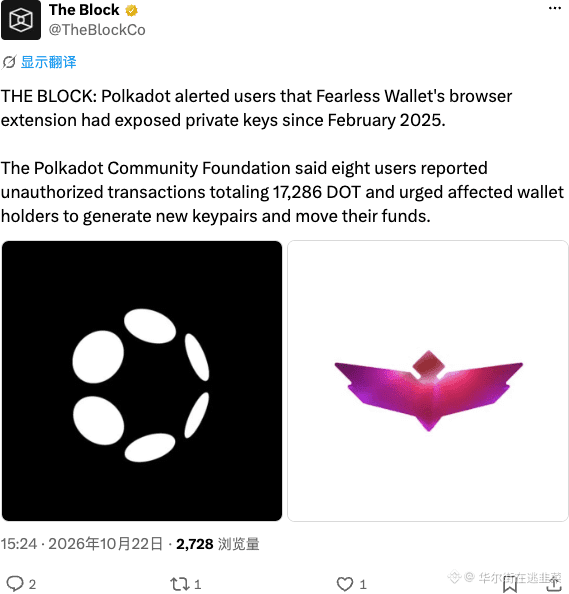
Fearless Wallet’s browser extension has been leaking private keys since last year, and 8 people have lost around 17,000 DOT.
With private keys exposed like this, what security is there to speak of? Its last shred of security has been stripped away, and DOT wallets are now just scrap metal.
$DOT #Web3Security
Fearless Wallet’s browser extension has been leaking private keys since last year, and 8 people have lost around 17,000 DOT.
With private keys exposed like this, what security is there to speak of? Its last shred of security has been stripped away, and DOT wallets are now just scrap metal.
$DOT #Web3Security
With private keys exposed like this, what security is there to speak of? Its last shred of security has been stripped away, and DOT wallets are now just scrap metal.
$DOT #Web3Security
184
·
--
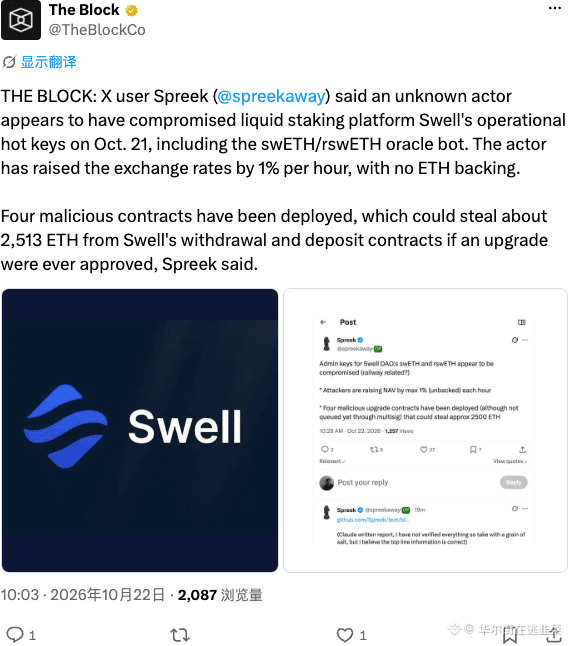
An X user reports that Swell’s hot wallet was hacked, and an oracle bot is maliciously pushing prices up by 1% every hour, with no ETH staking to back it.
The hot wallet was hacked, yet prices are still being pushed up by 1% every hour with no staking behind them. This makes a mockery of “security.” No matter how hot the LSD sector gets, it can’t withstand a collapse of trust like this. If on-chain data can be faked, who would still trust it?
$SWEEL #Web3Security
An X user reports that Swell’s hot wallet was hacked, and an oracle bot is maliciously pushing prices up by 1% every hour, with no ETH staking to back it.
The hot wallet was hacked, yet prices are still being pushed up by 1% every hour with no staking behind them. This makes a mockery of “security.” No matter how hot the LSD sector gets, it can’t withstand a collapse of trust like this. If on-chain data can be faked, who would still trust it?
$SWEEL #Web3Security
The hot wallet was hacked, yet prices are still being pushed up by 1% every hour with no staking behind them. This makes a mockery of “security.” No matter how hot the LSD sector gets, it can’t withstand a collapse of trust like this. If on-chain data can be faked, who would still trust it?
$SWEEL #Web3Security
85

Protect Your Crypto: 5 Security Rules Every DeFi User Should Know
Your crypto security depends on more than a strong password.
Remember these essential rules:
🔹 Verify websites before connecting your wallet.
🔹 Never share your seed phrase.
🔹 Read transaction requests before signing.
🔹 Avoid suspicious airdrops and guaranteed-profit promises.
🔹 Be cautious of fake support accounts.
As you explore TON DeFi and platforms like STON.fi, developing safe wallet habits is essential.
Want to make cybersecurity learning more interactive? Explore the STONverse CyberSec Game:
https://stonverse.com/cybersecgame/
Learn continuously, verify independently, and never sign a transaction you don't understand.
@stonfi #STONfi #TON #Web3Security #defi
Protect Your Crypto: 5 Security Rules Every DeFi User Should Know
Your crypto security depends on more than a strong password.
Remember these essential rules:
🔹 Verify websites before connecting your wallet.
🔹 Never share your seed phrase.
🔹 Read transaction requests before signing.
🔹 Avoid suspicious airdrops and guaranteed-profit promises.
🔹 Be cautious of fake support accounts.
As you explore TON DeFi and platforms like STON.fi, developing safe wallet habits is essential.
Want to make cybersecurity learning more interactive? Explore the STONverse CyberSec Game:
https://stonverse.com/cybersecgame/
Learn continuously, verify independently, and never sign a transaction you don't understand.
@STONfi DEX #STONfi #TON #Web3Security #defi
Your crypto security depends on more than a strong password.
Remember these essential rules:
🔹 Verify websites before connecting your wallet.
🔹 Never share your seed phrase.
🔹 Read transaction requests before signing.
🔹 Avoid suspicious airdrops and guaranteed-profit promises.
🔹 Be cautious of fake support accounts.
As you explore TON DeFi and platforms like STON.fi, developing safe wallet habits is essential.
Want to make cybersecurity learning more interactive? Explore the STONverse CyberSec Game:
https://stonverse.com/cybersecgame/
Learn continuously, verify independently, and never sign a transaction you don't understand.
@STONfi DEX #STONfi #TON #Web3Security #defi
1
31

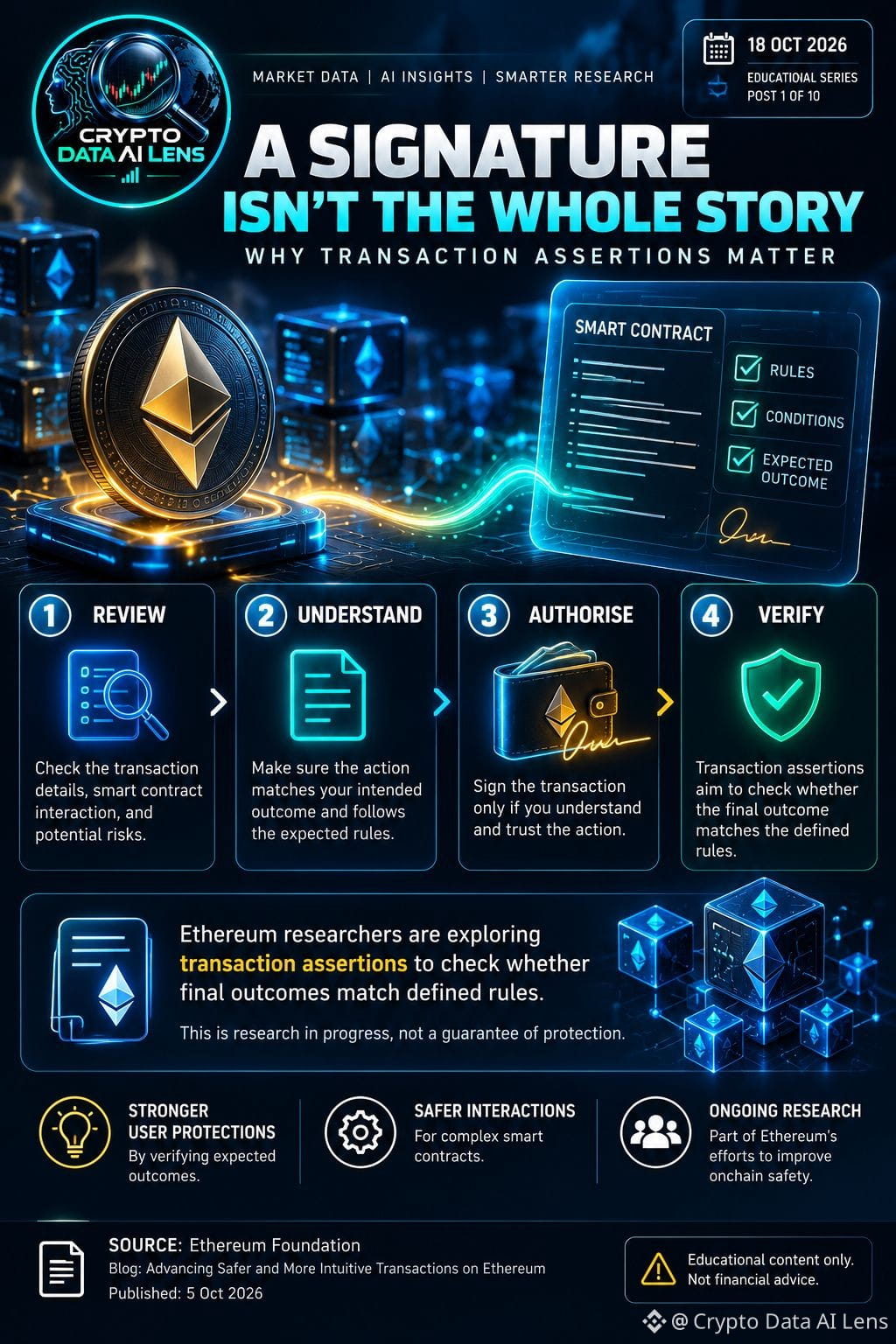
A VALID SIGNATURE DOESN'T ALWAYS MEAN THE RESULT YOU EXPECTED 🧾
Ethereum Foundation researchers have discussed native transaction assertions as one possible way to address transaction-outcome uncertainty.
Why is this worth understanding?
Signing a transaction is an authorisation step. Users still need to understand what the transaction is intended to do and what state changes may result.
A safer research habit is to:
• Read the transaction details before approving.
• Check the application and destination carefully.
• Be cautious when a wallet or interface asks you to approve something you cannot understand.
• Look for clear, verifiable transaction information rather than relying on a familiar-looking interface.
The broader design goal is to make transaction outcomes easier to understand and verify.
Ethereum Foundation | Native Transaction Assertions
https://blog.ethereum.org/2026/10/05/native-transaction-assertions
#Ethereum #Web3Security #BlockchainResearch #CryptoEducation
A VALID SIGNATURE DOESN'T ALWAYS MEAN THE RESULT YOU EXPECTED 🧾
Ethereum Foundation researchers have discussed native transaction assertions as one possible way to address transaction-outcome uncertainty.
Why is this worth understanding?
Signing a transaction is an authorisation step. Users still need to understand what the transaction is intended to do and what state changes may result.
A safer research habit is to:
• Read the transaction details before approving.
• Check the application and destination carefully.
• Be cautious when a wallet or interface asks you to approve something you cannot understand.
• Look for clear, verifiable transaction information rather than relying on a familiar-looking interface.
The broader design goal is to make transaction outcomes easier to understand and verify.
Ethereum Foundation | Native Transaction Assertions
https://blog.ethereum.org/2026/10/05/native-transaction-assertions
#Ethereum #Web3Security #BlockchainResearch #CryptoEducation
Ethereum Foundation researchers have discussed native transaction assertions as one possible way to address transaction-outcome uncertainty.
Why is this worth understanding?
Signing a transaction is an authorisation step. Users still need to understand what the transaction is intended to do and what state changes may result.
A safer research habit is to:
• Read the transaction details before approving.
• Check the application and destination carefully.
• Be cautious when a wallet or interface asks you to approve something you cannot understand.
• Look for clear, verifiable transaction information rather than relying on a familiar-looking interface.
The broader design goal is to make transaction outcomes easier to understand and verify.
Ethereum Foundation | Native Transaction Assertions
https://blog.ethereum.org/2026/10/05/native-transaction-assertions
#Ethereum #Web3Security #BlockchainResearch #CryptoEducation
11
·
--
The real alpha is often the most boring stuff. I'm spending more time reading audit reports and formal verification results than chasing candles on $GOLD. Bridge exploits are a constant threat; if there is no multisig or PoR, I'm staying away. On-chain hygiene is what keeps you in the game long-term. Stay safe. $GOLD BTC _
#ProofOfReserves #Web3Security #GOLD
The real alpha is often the most boring stuff. I'm spending more time reading audit reports and formal verification results than chasing candles on $GOLD. Bridge exploits are a constant threat; if there is no multisig or PoR, I'm staying away. On-chain hygiene is what keeps you in the game long-term. Stay safe. $GOLD BTC _
#ProofOfReserves #Web3Security #GOLD
#ProofOfReserves #Web3Security #GOLD

1
1
·
--
Audit volume tripled, yet losses remain high. It’s a wake-up call that code security is only half the battle; human errors and phishing are the real drains now. Beyond $ETH price, I’m watching PoR Merkle Trees. If collateral ratios aren't over 100%, the risk isn't worth it. Real-time monitoring is the new standard. _
#ProofOfReserves #Web3Security #ETH
Audit volume tripled, yet losses remain high. It’s a wake-up call that code security is only half the battle; human errors and phishing are the real drains now. Beyond $ETH price, I’m watching PoR Merkle Trees. If collateral ratios aren't over 100%, the risk isn't worth it. Real-time monitoring is the new standard. _
#ProofOfReserves #Web3Security #ETH
#ProofOfReserves #Web3Security #ETH
1
5

·
--
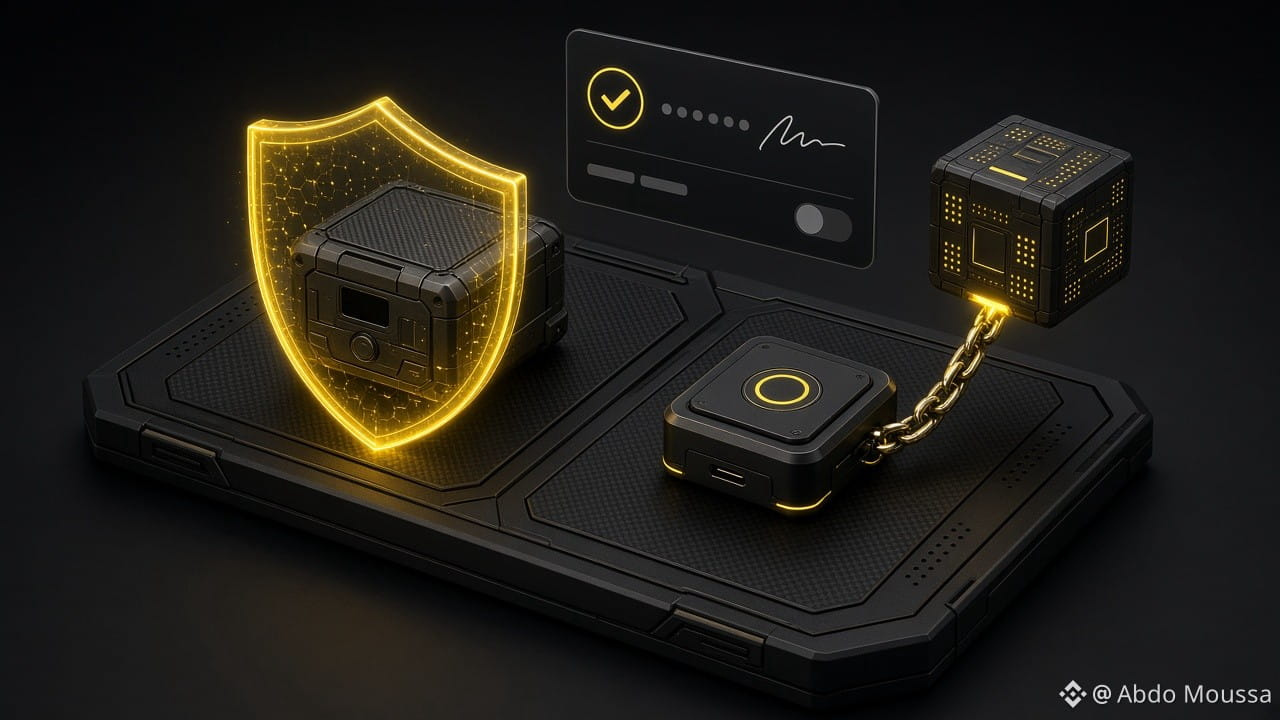
𝗜𝗻𝘁𝗲𝗿𝗮𝗰𝘁𝗶𝗻𝗴 𝘄𝗶𝘁𝗵 𝗱𝗲𝗰𝗲𝗻𝘁𝗿𝗮𝗹𝗶𝘇𝗲𝗱 𝗮𝗽𝗽𝘀 𝗮𝗻𝗱 𝘀𝗺𝗮𝗿𝘁 𝗰𝗼𝗻𝘁𝗿𝗮𝗰𝘁𝘀 𝗼𝗻 #Web3 𝗿𝗲𝗾𝘂𝗶𝗿𝗲𝘀 𝗻𝗲𝘅𝘁-𝗹𝗲𝘃𝗲𝗹 𝘀𝗲𝗰𝘂𝗿𝗶𝘁𝘆 𝗮𝘄𝗮𝗿𝗲𝗻𝗲𝘀𝘀 🛡️🔗
𝘗𝘳𝘰𝘵𝘦𝘤𝘵𝘪𝘯𝘨 𝘺𝘰𝘶𝘳 𝘴𝘦𝘭𝘧-𝘤𝘶𝘴𝘵𝘰𝘥𝘺 𝘸𝘢𝘭𝘭𝘦𝘵 𝘪𝘴𝘯'𝘵 𝘫𝘶𝘴𝘵 𝘢𝘣𝘰𝘶𝘵 𝘢 𝘴𝘵𝘳𝘰𝘯𝘨 𝘱𝘢𝘴𝘴𝘸𝘰𝘳𝘥, 𝘪𝘵'𝘴 𝘢𝘣𝘰𝘶𝘵 𝘶𝘯𝘥𝘦𝘳𝘴𝘵𝘢𝘯𝘥𝘪𝘯𝘨 𝘸𝘩𝘢𝘵 𝘺𝘰𝘶 𝘴𝘪𝘨𝘯.
𝗛𝗲𝗿𝗲 𝗶𝘀 𝘆𝗼𝘂𝗿 𝗲𝘀𝘀𝗲𝗻𝘁𝗶𝗮𝗹 𝗪𝗲𝗯3 𝘀𝗮𝗳𝗲𝘁𝘆 𝗰𝗵𝗲𝗰𝗸𝗹𝗶𝘀𝘁:
1️⃣ 𝘐𝘯𝘴𝘱𝘦𝘤𝘵 𝘚𝘮𝘢𝘳𝘵 𝘊𝘰𝘯𝘵𝘳𝘢𝘤𝘵 𝘈𝘱𝘱𝘳𝘰𝘷𝘢𝘭𝘴:
• Granting unlimited token approvals to untrusted decentralized applications (dApps) puts your entire balance at risk, Regularly revoke unused permissions using trusted tools.
• Only interact with audited and verified smart contracts.
2️⃣ 𝘝𝘦𝘳𝘪𝘧𝘺 𝘌𝘷𝘦𝘳𝘺 𝘛𝘳𝘢𝘯𝘴𝘢𝘤𝘵𝘪𝘰𝘯 𝘚𝘪𝘨𝘯𝘢𝘵𝘶𝘳𝘦:
• Never blindly click "Confirm" or "Sign" on pop-up wallet requests unless you fully understand the action, Malicious signatures can drain your funds without a traditional password transfer.
• Double-check website domain names to avoid sophisticated DNS spoofing and phishing clones.
3️⃣ 𝘚𝘦𝘱𝘢𝘳𝘢𝘵𝘦 𝘠𝘰𝘶𝘳 𝘈𝘴𝘴𝘦𝘵𝘴:
• Use a multi-wallet strategy: Keep your long-term holdings in cold storage or a secure vault wallet, and use a separate burner wallet for daily dApp interactions.
⚠️ 𝗘𝘀𝘀𝗲𝗻𝘁𝗶𝗮𝗹 𝗦𝗲𝗰𝘂𝗿𝗶𝘁𝘆 𝗗𝗶𝘀𝗰𝗹𝗮𝗶𝗺𝗲𝗿:
Self-custody security rests entirely with the user, Loss of private keys or unauthorized approvals cannot be reversed, This content is for educational purposes only.
https://www.binance.com/en/academy/articles/tags/security
Stay safe, audit your connections, and always DYOR (Do Your Own Research)💡
#Binance #Web3Security #SmartContracts #WalletSecurity
𝗜𝗻𝘁𝗲𝗿𝗮𝗰𝘁𝗶𝗻𝗴 𝘄𝗶𝘁𝗵 𝗱𝗲𝗰𝗲𝗻𝘁𝗿𝗮𝗹𝗶𝘇𝗲𝗱 𝗮𝗽𝗽𝘀 𝗮𝗻𝗱 𝘀𝗺𝗮𝗿𝘁 𝗰𝗼𝗻𝘁𝗿𝗮𝗰𝘁𝘀 𝗼𝗻 #Web3 𝗿𝗲𝗾𝘂𝗶𝗿𝗲𝘀 𝗻𝗲𝘅𝘁-𝗹𝗲𝘃𝗲𝗹 𝘀𝗲𝗰𝘂𝗿𝗶𝘁𝘆 𝗮𝘄𝗮𝗿𝗲𝗻𝗲𝘀𝘀 🛡️🔗
𝘗𝘳𝘰𝘵𝘦𝘤𝘵𝘪𝘯𝘨 𝘺𝘰𝘶𝘳 𝘴𝘦𝘭𝘧-𝘤𝘶𝘴𝘵𝘰𝘥𝘺 𝘸𝘢𝘭𝘭𝘦𝘵 𝘪𝘴𝘯'𝘵 𝘫𝘶𝘴𝘵 𝘢𝘣𝘰𝘶𝘵 𝘢 𝘴𝘵𝘳𝘰𝘯𝘨 𝘱𝘢𝘴𝘴𝘸𝘰𝘳𝘥, 𝘪𝘵'𝘴 𝘢𝘣𝘰𝘶𝘵 𝘶𝘯𝘥𝘦𝘳𝘴𝘵𝘢𝘯𝘥𝘪𝘯𝘨 𝘸𝘩𝘢𝘵 𝘺𝘰𝘶 𝘴𝘪𝘨𝘯.
𝗛𝗲𝗿𝗲 𝗶𝘀 𝘆𝗼𝘂𝗿 𝗲𝘀𝘀𝗲𝗻𝘁𝗶𝗮𝗹 𝗪𝗲𝗯3 𝘀𝗮𝗳𝗲𝘁𝘆 𝗰𝗵𝗲𝗰𝗸𝗹𝗶𝘀𝘁:
1️⃣ 𝘐𝘯𝘴𝘱𝘦𝘤𝘵 𝘚𝘮𝘢𝘳𝘵 𝘊𝘰𝘯𝘵𝘳𝘢𝘤𝘵 𝘈𝘱𝘱𝘳𝘰𝘷𝘢𝘭𝘴:
• Granting unlimited token approvals to untrusted decentralized applications (dApps) puts your entire balance at risk, Regularly revoke unused permissions using trusted tools.
• Only interact with audited and verified smart contracts.
2️⃣ 𝘝𝘦𝘳𝘪𝘧𝘺 𝘌𝘷𝘦𝘳𝘺 𝘛𝘳𝘢𝘯𝘴𝘢𝘤𝘵𝘪𝘰𝘯 𝘚𝘪𝘨𝘯𝘢𝘵𝘶𝘳𝘦:
• Never blindly click "Confirm" or "Sign" on pop-up wallet requests unless you fully understand the action, Malicious signatures can drain your funds without a traditional password transfer.
• Double-check website domain names to avoid sophisticated DNS spoofing and phishing clones.
3️⃣ 𝘚𝘦𝘱𝘢𝘳𝘢𝘵𝘦 𝘠𝘰𝘶𝘳 𝘈𝘴𝘴𝘦𝘵𝘴:
• Use a multi-wallet strategy: Keep your long-term holdings in cold storage or a secure vault wallet, and use a separate burner wallet for daily dApp interactions.
⚠️ 𝗘𝘀𝘀𝗲𝗻𝘁𝗶𝗮𝗹 𝗦𝗲𝗰𝘂𝗿𝗶𝘁𝘆 𝗗𝗶𝘀𝗰𝗹𝗮𝗶𝗺𝗲𝗿:
Self-custody security rests entirely with the user, Loss of private keys or unauthorized approvals cannot be reversed, This content is for educational purposes only.
https://www.binance.com/en/academy/articles/tags/security
Stay safe, audit your connections, and always DYOR (Do Your Own Research)💡
#Binance #Web3Security #SmartContracts #WalletSecurity
𝘗𝘳𝘰𝘵𝘦𝘤𝘵𝘪𝘯𝘨 𝘺𝘰𝘶𝘳 𝘴𝘦𝘭𝘧-𝘤𝘶𝘴𝘵𝘰𝘥𝘺 𝘸𝘢𝘭𝘭𝘦𝘵 𝘪𝘴𝘯'𝘵 𝘫𝘶𝘴𝘵 𝘢𝘣𝘰𝘶𝘵 𝘢 𝘴𝘵𝘳𝘰𝘯𝘨 𝘱𝘢𝘴𝘴𝘸𝘰𝘳𝘥, 𝘪𝘵'𝘴 𝘢𝘣𝘰𝘶𝘵 𝘶𝘯𝘥𝘦𝘳𝘴𝘵𝘢𝘯𝘥𝘪𝘯𝘨 𝘸𝘩𝘢𝘵 𝘺𝘰𝘶 𝘴𝘪𝘨𝘯.
𝗛𝗲𝗿𝗲 𝗶𝘀 𝘆𝗼𝘂𝗿 𝗲𝘀𝘀𝗲𝗻𝘁𝗶𝗮𝗹 𝗪𝗲𝗯3 𝘀𝗮𝗳𝗲𝘁𝘆 𝗰𝗵𝗲𝗰𝗸𝗹𝗶𝘀𝘁:
1️⃣ 𝘐𝘯𝘴𝘱𝘦𝘤𝘵 𝘚𝘮𝘢𝘳𝘵 𝘊𝘰𝘯𝘵𝘳𝘢𝘤𝘵 𝘈𝘱𝘱𝘳𝘰𝘷𝘢𝘭𝘴:
• Granting unlimited token approvals to untrusted decentralized applications (dApps) puts your entire balance at risk, Regularly revoke unused permissions using trusted tools.
• Only interact with audited and verified smart contracts.
2️⃣ 𝘝𝘦𝘳𝘪𝘧𝘺 𝘌𝘷𝘦𝘳𝘺 𝘛𝘳𝘢𝘯𝘴𝘢𝘤𝘵𝘪𝘰𝘯 𝘚𝘪𝘨𝘯𝘢𝘵𝘶𝘳𝘦:
• Never blindly click "Confirm" or "Sign" on pop-up wallet requests unless you fully understand the action, Malicious signatures can drain your funds without a traditional password transfer.
• Double-check website domain names to avoid sophisticated DNS spoofing and phishing clones.
3️⃣ 𝘚𝘦𝘱𝘢𝘳𝘢𝘵𝘦 𝘠𝘰𝘶𝘳 𝘈𝘴𝘴𝘦𝘵𝘴:
• Use a multi-wallet strategy: Keep your long-term holdings in cold storage or a secure vault wallet, and use a separate burner wallet for daily dApp interactions.
⚠️ 𝗘𝘀𝘀𝗲𝗻𝘁𝗶𝗮𝗹 𝗦𝗲𝗰𝘂𝗿𝗶𝘁𝘆 𝗗𝗶𝘀𝗰𝗹𝗮𝗶𝗺𝗲𝗿:
Self-custody security rests entirely with the user, Loss of private keys or unauthorized approvals cannot be reversed, This content is for educational purposes only.
https://www.binance.com/en/academy/articles/tags/security
Stay safe, audit your connections, and always DYOR (Do Your Own Research)💡
#Binance #Web3Security #SmartContracts #WalletSecurity
4
55
·
--
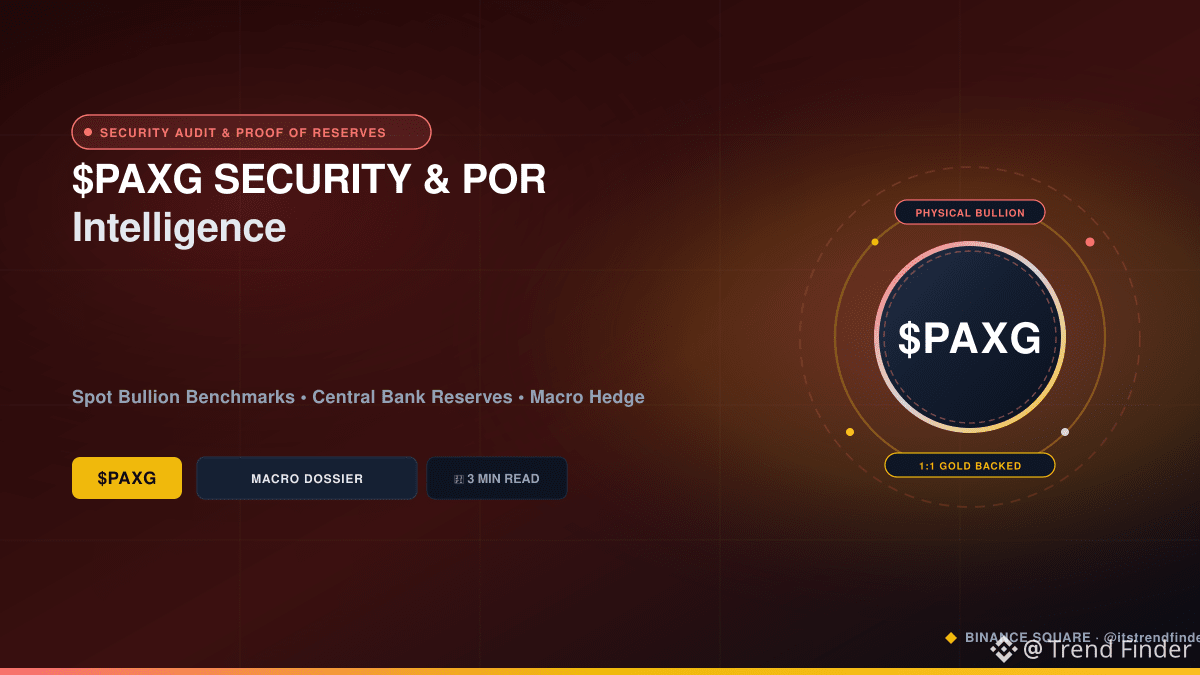
Just reflecting on the state of Web3 security. While $PAXG holds steady, the real strength comes from audited smart contracts, solid multisig governance, and transparent Proof-of-Reserves. Bridge security and real-time threat monitoring are non-negotiable for true ecosystem health. Stay safe out there!
#ProofOfReserves #Web3Security #PAXG
Just reflecting on the state of Web3 security. While $PAXG holds steady, the real strength comes from audited smart contracts, solid multisig governance, and transparent Proof-of-Reserves. Bridge security and real-time threat monitoring are non-negotiable for true ecosystem health. Stay safe out there!
#ProofOfReserves #Web3Security #PAXG
#ProofOfReserves #Web3Security #PAXG
1
8

·
--
🔐 Protect Your Crypto Before You Chase Profits!
Your first priority in crypto should be keeping your account and funds safe.
✅ Never share your password or OTP.
✅ Enable two-factor authentication.
✅ Verify website addresses before connecting your wallet.
✅ Never trust guaranteed-profit promises.
✅ Keep your recovery phrase private.
One careless click can cost you your savings.
Stay alert, stay informed, and protect your assets!
#CryptoSecurity #Blockchain #Web3Security #BinanceSquare
🔐 Protect Your Crypto Before You Chase Profits!
Your first priority in crypto should be keeping your account and funds safe.
✅ Never share your password or OTP.
✅ Enable two-factor authentication.
✅ Verify website addresses before connecting your wallet.
✅ Never trust guaranteed-profit promises.
✅ Keep your recovery phrase private.
One careless click can cost you your savings.
Stay alert, stay informed, and protect your assets!
#CryptoSecurity #Blockchain #Web3Security #BinanceSquare
Your first priority in crypto should be keeping your account and funds safe.
✅ Never share your password or OTP.
✅ Enable two-factor authentication.
✅ Verify website addresses before connecting your wallet.
✅ Never trust guaranteed-profit promises.
✅ Keep your recovery phrase private.
One careless click can cost you your savings.
Stay alert, stay informed, and protect your assets!
#CryptoSecurity #Blockchain #Web3Security #BinanceSquare
64

·
--
Most people spend years obsessing over the next market move while completely ignoring the simple vulnerabilities that can wipe out an entire balance overnight.
There is no worse feeling in crypto than waking up, opening your wallet, and watching years of discipline vanish because of a compromised signature. Having traded through multiple cycles, I have watched far too many sharp investors survive brutal bear markets only to lose everything to preventable security oversights.
When an $ETH researcher recently warned that future AI developments could eventually compromise traditional wallet signatures, it raised valid long-term concerns for on-chain cryptography. Advanced algorithms are evolving rapidly, and the security models we take for granted today will inevitably need to adapt.
Still, the greatest everyday risk is rarely distant tech breakthroughs. As CZ highlighted in his recent security principles, most $BTC and $BNB losses still stem from basic human error, malicious contract approvals, and careless key storage. Longevity in this space is never just about finding good entries, but maintaining the boring, consistent security habits that keep your capital safe for the next cycle.
How often do you actually audit your active wallet permissions and cold storage setup?
#CryptoSecurity #Web3Security #RiskManagement
Most people spend years obsessing over the next market move while completely ignoring the simple vulnerabilities that can wipe out an entire balance overnight.
There is no worse feeling in crypto than waking up, opening your wallet, and watching years of discipline vanish because of a compromised signature. Having traded through multiple cycles, I have watched far too many sharp investors survive brutal bear markets only to lose everything to preventable security oversights.
When an $ETH researcher recently warned that future AI developments could eventually compromise traditional wallet signatures, it raised valid long-term concerns for on-chain cryptography. Advanced algorithms are evolving rapidly, and the security models we take for granted today will inevitably need to adapt.
Still, the greatest everyday risk is rarely distant tech breakthroughs. As CZ highlighted in his recent security principles, most $BTC and $BNB losses still stem from basic human error, malicious contract approvals, and careless key storage. Longevity in this space is never just about finding good entries, but maintaining the boring, consistent security habits that keep your capital safe for the next cycle.
How often do you actually audit your active wallet permissions and cold storage setup?
#CryptoSecurity #Web3Security #RiskManagement
There is no worse feeling in crypto than waking up, opening your wallet, and watching years of discipline vanish because of a compromised signature. Having traded through multiple cycles, I have watched far too many sharp investors survive brutal bear markets only to lose everything to preventable security oversights.
When an $ETH researcher recently warned that future AI developments could eventually compromise traditional wallet signatures, it raised valid long-term concerns for on-chain cryptography. Advanced algorithms are evolving rapidly, and the security models we take for granted today will inevitably need to adapt.
Still, the greatest everyday risk is rarely distant tech breakthroughs. As CZ highlighted in his recent security principles, most $BTC and $BNB losses still stem from basic human error, malicious contract approvals, and careless key storage. Longevity in this space is never just about finding good entries, but maintaining the boring, consistent security habits that keep your capital safe for the next cycle.
How often do you actually audit your active wallet permissions and cold storage setup?
#CryptoSecurity #Web3Security #RiskManagement
19

·
--
🔐 One Small Mistake Can Cost You Your Crypto!
Three security habits every crypto user should practice:
✅ Never share your seed phrase or passwords.
✅ Verify website links before connecting your wallet.
✅ Be careful with fake giveaways and messages promising guaranteed returns.
Your first priority should be protecting your assets — not chasing every opportunity.
🛡️ What's the most common crypto scam you've seen?
$ZEC $BNB
#CryptoSecurity #Web3Security #Binance #BinanceSquare
🔐 One Small Mistake Can Cost You Your Crypto!
Three security habits every crypto user should practice:
✅ Never share your seed phrase or passwords.
✅ Verify website links before connecting your wallet.
✅ Be careful with fake giveaways and messages promising guaranteed returns.
Your first priority should be protecting your assets — not chasing every opportunity.
🛡️ What's the most common crypto scam you've seen?
$ZEC $BNB
#CryptoSecurity #Web3Security #Binance #BinanceSquare
Three security habits every crypto user should practice:
✅ Never share your seed phrase or passwords.
✅ Verify website links before connecting your wallet.
✅ Be careful with fake giveaways and messages promising guaranteed returns.
Your first priority should be protecting your assets — not chasing every opportunity.
🛡️ What's the most common crypto scam you've seen?
$ZEC $BNB
#CryptoSecurity #Web3Security #Binance #BinanceSquare
23
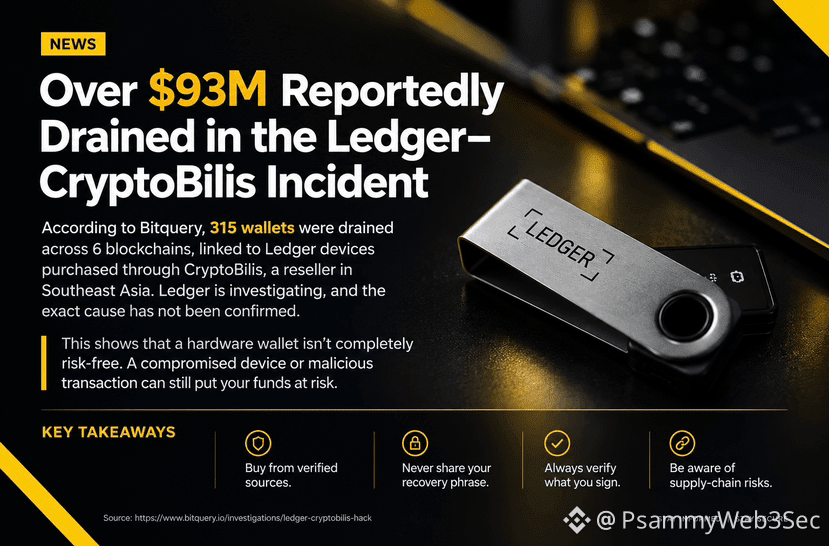
News: $92.9M reportedly drained from 311 crypto wallets.
According to Bitquery, the losses are linked to Ledger devices purchased through CryptoBilis, a reseller in Southeast Asia. Ledger is investigating, and the exact cause has not been confirmed.
What caught my attention is the possible supply-chain risk. If a device is compromised before it reaches its owner, even careful users could be exposed.
This is a reminder that in Web3, security starts before you even connect your wallet.
Always verify. Never trust blindly.
Source: https://www.bitquery.io/investigations/ledger-cryptobilis-hack
#Web3Security #CryptoSecurity $BTC $ETH $BNB
News: $92.9M reportedly drained from 311 crypto wallets.
According to Bitquery, the losses are linked to Ledger devices purchased through CryptoBilis, a reseller in Southeast Asia. Ledger is investigating, and the exact cause has not been confirmed.
What caught my attention is the possible supply-chain risk. If a device is compromised before it reaches its owner, even careful users could be exposed.
This is a reminder that in Web3, security starts before you even connect your wallet.
Always verify. Never trust blindly.
Source: https://www.bitquery.io/investigations/ledger-cryptobilis-hack
#Web3Security #CryptoSecurity $BTC $ETH $BNB
According to Bitquery, the losses are linked to Ledger devices purchased through CryptoBilis, a reseller in Southeast Asia. Ledger is investigating, and the exact cause has not been confirmed.
What caught my attention is the possible supply-chain risk. If a device is compromised before it reaches its owner, even careful users could be exposed.
This is a reminder that in Web3, security starts before you even connect your wallet.
Always verify. Never trust blindly.
Source: https://www.bitquery.io/investigations/ledger-cryptobilis-hack
#Web3Security #CryptoSecurity $BTC $ETH $BNB
1
145
Safety First in Web3: Protect Your Assets 🛡️
In Web3, security isn't just an option—it's your foundation! Here are 3 quick rules every user should follow:
1️⃣ Always verify dApps URLs before connecting your wallet to prevent phishing.
2️⃣ Keep gas money optimized for smooth transactions across network layers like Base.
3️⃣ Never share private keys or seed phrases with anyone—Binance support will never ask for them!
Stay safe and keep building! ⚡
$BTC $ETH
#BinanceSquare #Web3Security #CryptoTips #CryptoSafety
Safety First in Web3: Protect Your Assets 🛡️
In Web3, security isn't just an option—it's your foundation! Here are 3 quick rules every user should follow:
1️⃣ Always verify dApps URLs before connecting your wallet to prevent phishing.
2️⃣ Keep gas money optimized for smooth transactions across network layers like Base.
3️⃣ Never share private keys or seed phrases with anyone—Binance support will never ask for them!
Stay safe and keep building! ⚡
$BTC $ETH
#BinanceSquare #Web3Security #CryptoTips #CryptoSafety
In Web3, security isn't just an option—it's your foundation! Here are 3 quick rules every user should follow:
1️⃣ Always verify dApps URLs before connecting your wallet to prevent phishing.
2️⃣ Keep gas money optimized for smooth transactions across network layers like Base.
3️⃣ Never share private keys or seed phrases with anyone—Binance support will never ask for them!
Stay safe and keep building! ⚡
$BTC $ETH
#BinanceSquare #Web3Security #CryptoTips #CryptoSafety
107

·
--
🛡️ Europol's "Bunker Mode" and Cryptographic Shielding
Traditional cybersecurity in the global financial market is numbered among the days ahead, given the accelerated evolution of algorithms. The Livecoins portal revealed that Europol issued an official alert report against the threat of quantum computing posed to public keys exposed in digital wallets. At the same time, Ethereum Foundation researcher Justin Drake called on the industry to enter "bunker mode," moving funds after OpenAI exposed hundreds of mathematical breakthroughs that could break conventional cryptography sooner than expected.
The risk asymmetry here is brutal: the retail investor only thinks about security after suffering losses, while the strategic whale capital has already started a silent migration to shielded networks using zero-knowledge cryptography (ZK) and advanced post-quantum mathematical validity. Protocols built on strict mathematical proofs don’t bend under AI’s computational acceleration and earn an immediate liquidity premium for their cutting-edge security. Staying exposed in archaic structures is to serve as a target in the modern market.
The urgent push for cryptographic shielding and data security drives order flow toward three axes focused on privacy and validation:
A $STRK surges strongly in the market, driven by its STARK-based rollup technology, designed natively to provide top-tier resistance to computational attacks.
A $ZEC records significant gains as major fortunes seek protection for their shielded pools to execute fully anonymous transactions and capital movements.
A $DIA moves among the top daily gainers by providing audited and verifiable oracle feeds in real time to protect smart contracts from external manipulation.
🎯 Protect your capital on networks prepared to outlast technological progress.
#Livecoins #Web3Security #Starknet #Criptografia
🛡️ Europol's "Bunker Mode" and Cryptographic Shielding
Traditional cybersecurity in the global financial market is numbered among the days ahead, given the accelerated evolution of algorithms. The Livecoins portal revealed that Europol issued an official alert report against the threat of quantum computing posed to public keys exposed in digital wallets. At the same time, Ethereum Foundation researcher Justin Drake called on the industry to enter "bunker mode," moving funds after OpenAI exposed hundreds of mathematical breakthroughs that could break conventional cryptography sooner than expected.
The risk asymmetry here is brutal: the retail investor only thinks about security after suffering losses, while the strategic whale capital has already started a silent migration to shielded networks using zero-knowledge cryptography (ZK) and advanced post-quantum mathematical validity. Protocols built on strict mathematical proofs don’t bend under AI’s computational acceleration and earn an immediate liquidity premium for their cutting-edge security. Staying exposed in archaic structures is to serve as a target in the modern market.
The urgent push for cryptographic shielding and data security drives order flow toward three axes focused on privacy and validation:
A $STRK surges strongly in the market, driven by its STARK-based rollup technology, designed natively to provide top-tier resistance to computational attacks.
A $ZEC records significant gains as major fortunes seek protection for their shielded pools to execute fully anonymous transactions and capital movements.
A $DIA moves among the top daily gainers by providing audited and verifiable oracle feeds in real time to protect smart contracts from external manipulation.
🎯 Protect your capital on networks prepared to outlast technological progress.
#Livecoins #Web3Security #Starknet #Criptografia
Traditional cybersecurity in the global financial market is numbered among the days ahead, given the accelerated evolution of algorithms. The Livecoins portal revealed that Europol issued an official alert report against the threat of quantum computing posed to public keys exposed in digital wallets. At the same time, Ethereum Foundation researcher Justin Drake called on the industry to enter "bunker mode," moving funds after OpenAI exposed hundreds of mathematical breakthroughs that could break conventional cryptography sooner than expected.
The risk asymmetry here is brutal: the retail investor only thinks about security after suffering losses, while the strategic whale capital has already started a silent migration to shielded networks using zero-knowledge cryptography (ZK) and advanced post-quantum mathematical validity. Protocols built on strict mathematical proofs don’t bend under AI’s computational acceleration and earn an immediate liquidity premium for their cutting-edge security. Staying exposed in archaic structures is to serve as a target in the modern market.
The urgent push for cryptographic shielding and data security drives order flow toward three axes focused on privacy and validation:
A $STRK surges strongly in the market, driven by its STARK-based rollup technology, designed natively to provide top-tier resistance to computational attacks.
A $ZEC records significant gains as major fortunes seek protection for their shielded pools to execute fully anonymous transactions and capital movements.
A $DIA moves among the top daily gainers by providing audited and verifiable oracle feeds in real time to protect smart contracts from external manipulation.
🎯 Protect your capital on networks prepared to outlast technological progress.
#Livecoins #Web3Security #Starknet #Criptografia
209
Log in to explore more content
Join global crypto users on Binance Square
⚡️ Get latest and useful information about crypto.
💬 Trusted by the world’s largest crypto exchange.
👍 Discover real insights from verified creators.
Email / Phone number
Trending Topics
1
#CanMicrosoftDeliverOnAI
170,561 views
1,343 Discussing
2
#CanGoogleDefindItsCore
86,553 views
955 Discussing
3
#FOMCWatch
9.2M views
28,607 Discussing
4
#USGovSellsFTXLinkedAnthropicSharesFor$627M
117 views
11 Discussing
5
#SKHynixUnveils$45BShareholderReturns
415 views
13 Discussing
6
#OSMOPlansToBurn100MTokensFromCommunityPool
5,835 views
178 Discussing
7
#EthereumDropsBelow$2300
12,843 views
167 Discussing
8
#BitcoinSlipsBelow$80KAgain
36,637 views
137 Discussing
9
#ThailandLaunchesWORPTStablecoinToQRPaymentApp
83,263 views
987 Discussing
10
#StrategySkipsBitcoinPurchasesSpends$205MOnSTRCBuybacks
14,764 views
103 Discussing