

#mara
mara
157,816 views
747 Discussing
Hot
Latest

🚨 $BTC ALERT: Did MARA Move 1,000 BTC? 🐳
A notable Bitcoin transaction has caught traders’ attention! 👀 $MARA Holdings may have moved 1,000 BTC worth approximately $80.19M.
Is this profit-taking, liquidity management, or just a wallet transfer? 🤔 The transaction alone does not confirm a sale.
📊 BTCUSDT Watch: Monitor price action, trading volume, and key support levels before entering a trade.
🔥 Traders, are you bullish or bearish on BTC? Share your setup below! 👇
#BTC #BTCUSDT #Bitcoin #CryptoTrading #MARA
{spot}(BTCUSDT)
{future}(MARAUSDT)
🚨 $BTC ALERT: Did MARA Move 1,000 BTC? 🐳
A notable Bitcoin transaction has caught traders’ attention! 👀 $MARA Holdings may have moved 1,000 BTC worth approximately $80.19M.
Is this profit-taking, liquidity management, or just a wallet transfer? 🤔 The transaction alone does not confirm a sale.
📊 BTCUSDT Watch: Monitor price action, trading volume, and key support levels before entering a trade.
🔥 Traders, are you bullish or bearish on BTC? Share your setup below! 👇
#BTC #BTCUSDT #Bitcoin #CryptoTrading #MARA
A notable Bitcoin transaction has caught traders’ attention! 👀 $MARA Holdings may have moved 1,000 BTC worth approximately $80.19M.
Is this profit-taking, liquidity management, or just a wallet transfer? 🤔 The transaction alone does not confirm a sale.
📊 BTCUSDT Watch: Monitor price action, trading volume, and key support levels before entering a trade.
🔥 Traders, are you bullish or bearish on BTC? Share your setup below! 👇
#BTC #BTCUSDT #Bitcoin #CryptoTrading #MARA
2

·
--
【Market Update】A MARA-linked wallet flagged by Lookonchain transferred 1,000 Bitcoin to BitGo, worth approximately $80.19 million.
The transfer itself doesn’t necessarily mean a sale, and BitGo can also provide custody services. However, MARA disclosed that it had sold approximately 23,093 Bitcoin in the first half of the year, so the market is still interpreting this move as a possible sell signal. Wallet activity precedes an announcement—is this bullish or bearish for $BTC ? Share your thoughts in the comments.
$BTC $ETH $SOL
#MARA #比特币 #MiningCompanies
(Source: CryptoPotato)
⚠️Risk Disclaimer: The above is shared for market information purposes only and does not constitute investment advice. Investing involves risk; please exercise caution.
【Market Update】A MARA-linked wallet flagged by Lookonchain transferred 1,000 Bitcoin to BitGo, worth approximately $80.19 million.
The transfer itself doesn’t necessarily mean a sale, and BitGo can also provide custody services. However, MARA disclosed that it had sold approximately 23,093 Bitcoin in the first half of the year, so the market is still interpreting this move as a possible sell signal. Wallet activity precedes an announcement—is this bullish or bearish for $BTC ? Share your thoughts in the comments.
$BTC $ETH $SOL
#MARA #比特币 #MiningCompanies
(Source: CryptoPotato)
⚠️Risk Disclaimer: The above is shared for market information purposes only and does not constitute investment advice. Investing involves risk; please exercise caution.
The transfer itself doesn’t necessarily mean a sale, and BitGo can also provide custody services. However, MARA disclosed that it had sold approximately 23,093 Bitcoin in the first half of the year, so the market is still interpreting this move as a possible sell signal. Wallet activity precedes an announcement—is this bullish or bearish for $BTC ? Share your thoughts in the comments.
$BTC $ETH $SOL
#MARA #比特币 #MiningCompanies
(Source: CryptoPotato)
⚠️Risk Disclaimer: The above is shared for market information purposes only and does not constitute investment advice. Investing involves risk; please exercise caution.

554

·
--
Bullish
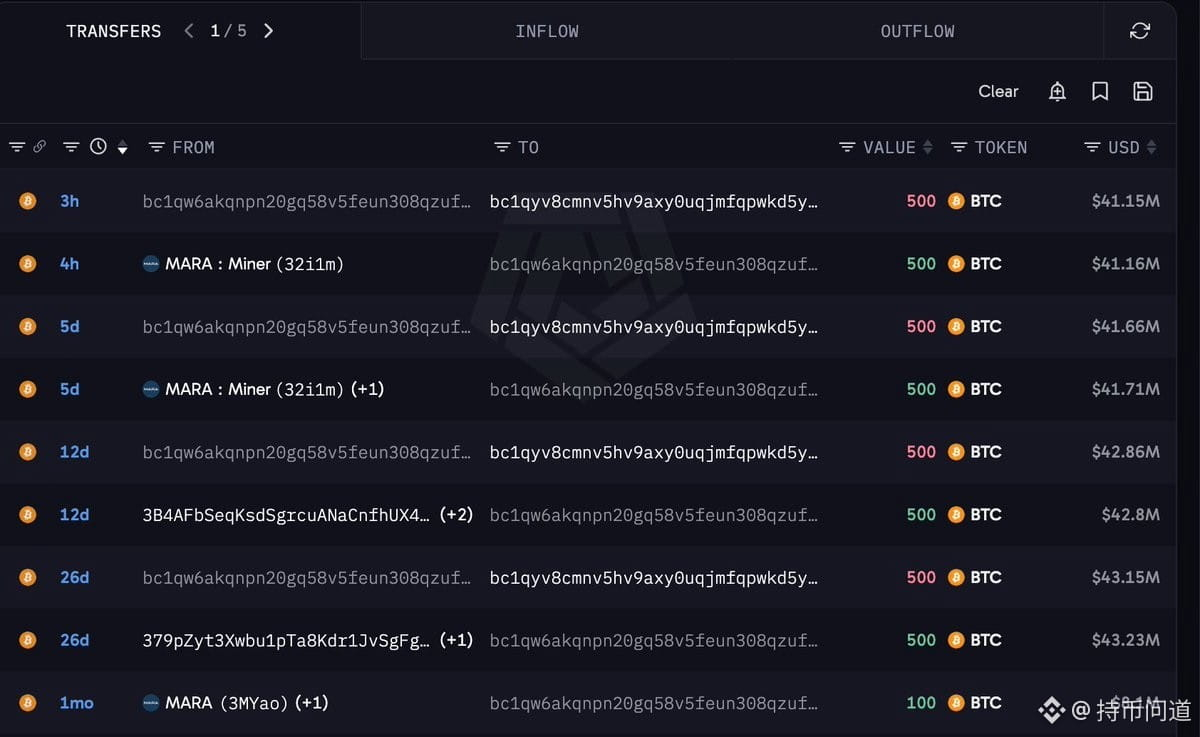
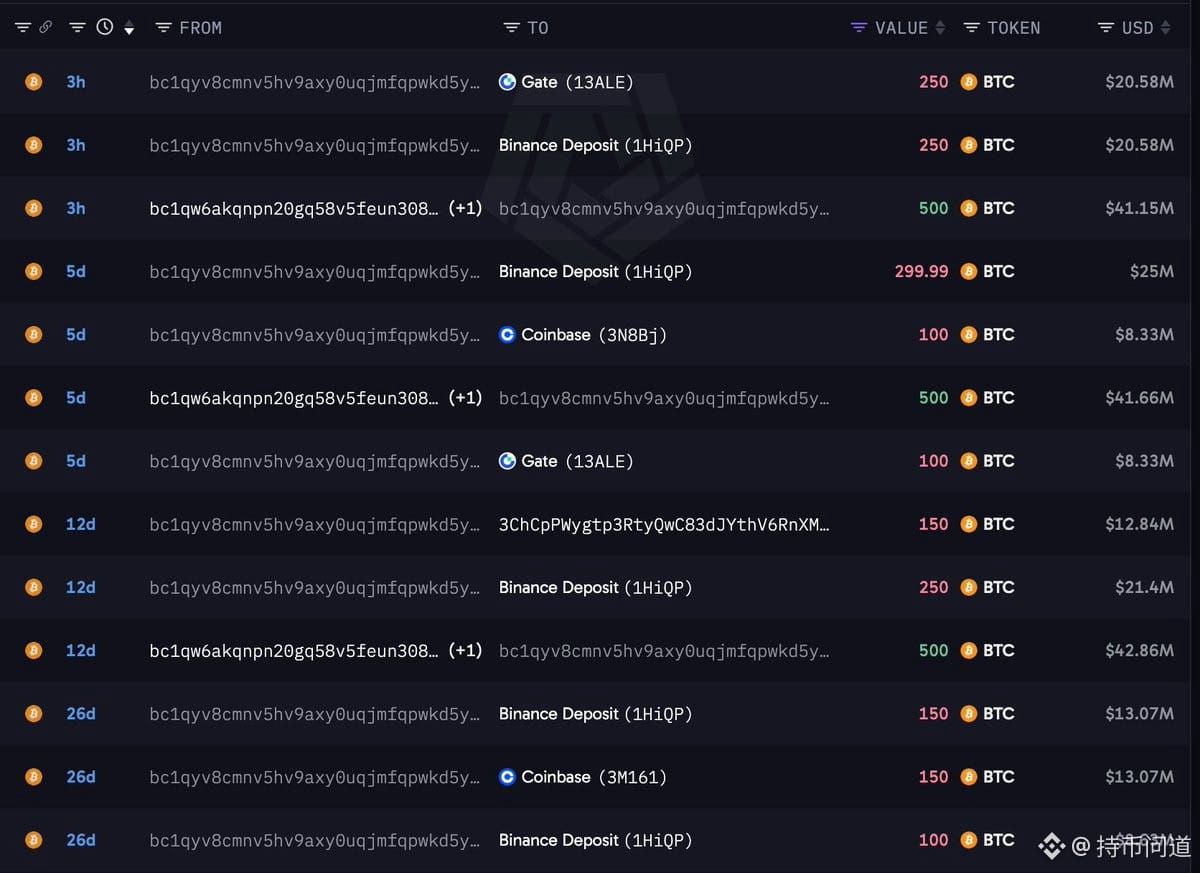
Strive bought 6182 BTC in a week. MARA transferred 1000 BTC to BitGo, its custodian
This is already MARA’s third such transfer since October 9, when I wrote about it:
- 996.105 $BTC
{future}(BTCUSDT)
to Galaxy
- 1000 BTC to Binance and Gate by October 19
- now BitGo
together, less than Strive bought in one week
A sale has never been confirmed
Some of MARA’s coins are also lent out and pledged as collateral
So a transfer isn’t a sale
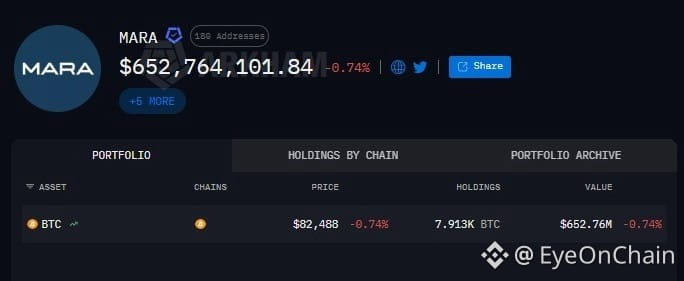
But the reserve is dwindling: 53822 BTC at the end of 2025, 35577 as of June 30
And Strive has grown to 43000 BTC, funded by preferred shares paying 15%
A miner that mines bitcoin transfers it out. A company that doesn’t mine buys it with money costing 15%. Someone’s getting the price wrong
No idea who
I don’t own any bitcoin. I’m watching $82732, Strive’s average: at 79671 USDT, the latest batch is below its entry price. Whose price do you trust more, the miner’s or the treasury’s?
#Strive #MARA
Strive bought 6182 BTC in a week. MARA transferred 1000 BTC to BitGo, its custodian
This is already MARA’s third such transfer since October 9, when I wrote about it:
- 996.105 $BTC
to Galaxy
- 1000 BTC to Binance and Gate by October 19
- now BitGo
together, less than Strive bought in one week
A sale has never been confirmed
Some of MARA’s coins are also lent out and pledged as collateral
So a transfer isn’t a sale
But the reserve is dwindling: 53822 BTC at the end of 2025, 35577 as of June 30
And Strive has grown to 43000 BTC, funded by preferred shares paying 15%
A miner that mines bitcoin transfers it out. A company that doesn’t mine buys it with money costing 15%. Someone’s getting the price wrong
No idea who
I don’t own any bitcoin. I’m watching $82732, Strive’s average: at 79671 USDT, the latest batch is below its entry price. Whose price do you trust more, the miner’s or the treasury’s?
#Strive #MARA
This is already MARA’s third such transfer since October 9, when I wrote about it:
- 996.105 $BTC
to Galaxy
- 1000 BTC to Binance and Gate by October 19
- now BitGo
together, less than Strive bought in one week
A sale has never been confirmed
Some of MARA’s coins are also lent out and pledged as collateral
So a transfer isn’t a sale
But the reserve is dwindling: 53822 BTC at the end of 2025, 35577 as of June 30
And Strive has grown to 43000 BTC, funded by preferred shares paying 15%
A miner that mines bitcoin transfers it out. A company that doesn’t mine buys it with money costing 15%. Someone’s getting the price wrong
No idea who
I don’t own any bitcoin. I’m watching $82732, Strive’s average: at 79671 USDT, the latest batch is below its entry price. Whose price do you trust more, the miner’s or the treasury’s?
#Strive #MARA
1
23

·
--
$MARA CRACKING LOCAL RESISTANCE AS BREAKOUT MOMENTUM FLIPS THE 1H CHART! ⚡ 📈
Entry: 11.30 - 11.45 ⚡
Target: 11.60 / 11.80 / 12.00 🚀
Stop Loss: 11.08 ⚠️
Buyers pushed $MARA off the $10.50 launchpad with aggressive volume, slicing through resistance to establish a firm foot near $11.42. 📊 The 1H chart is printing clean higher lows while momentum expands into overhead supply.
💡 Holding this breakout zone converts old resistance into a solid bid floor, clearing the path toward the $12.00 liquidity pocket. 📌 Risk remains tightly anchored under $11.08 to invalidate any sudden fakeouts. 💬 Are you riding this 1H momentum play or waiting for a deeper retest of support? 👇
⚠️ Not financial advice. Always manage your risk. 🛡️
🏷️ #MARA #LongSetup #Breakout #Crypto #Trading
🎯 ⚡
$MARA CRACKING LOCAL RESISTANCE AS BREAKOUT MOMENTUM FLIPS THE 1H CHART! ⚡ 📈
Entry: 11.30 - 11.45 ⚡
Target: 11.60 / 11.80 / 12.00 🚀
Stop Loss: 11.08 ⚠️
Buyers pushed $MARA off the $10.50 launchpad with aggressive volume, slicing through resistance to establish a firm foot near $11.42. 📊 The 1H chart is printing clean higher lows while momentum expands into overhead supply.
💡 Holding this breakout zone converts old resistance into a solid bid floor, clearing the path toward the $12.00 liquidity pocket. 📌 Risk remains tightly anchored under $11.08 to invalidate any sudden fakeouts. 💬 Are you riding this 1H momentum play or waiting for a deeper retest of support? 👇
⚠️ Not financial advice. Always manage your risk. 🛡️
🏷️ #MARA #LongSetup #Breakout #Crypto #Trading
🎯 ⚡
Entry: 11.30 - 11.45 ⚡
Target: 11.60 / 11.80 / 12.00 🚀
Stop Loss: 11.08 ⚠️
Buyers pushed $MARA off the $10.50 launchpad with aggressive volume, slicing through resistance to establish a firm foot near $11.42. 📊 The 1H chart is printing clean higher lows while momentum expands into overhead supply.
💡 Holding this breakout zone converts old resistance into a solid bid floor, clearing the path toward the $12.00 liquidity pocket. 📌 Risk remains tightly anchored under $11.08 to invalidate any sudden fakeouts. 💬 Are you riding this 1H momentum play or waiting for a deeper retest of support? 👇
⚠️ Not financial advice. Always manage your risk. 🛡️
🏷️ #MARA #LongSetup #Breakout #Crypto #Trading
🎯 ⚡
5

·
--
🚀 $MARA PRE‑MARKET SURGE: STOCKS RIDE THE CRYPTO WAVE! 🟢
📊 The latest BlockBeats snapshot shows crypto‑linked equities firing on all cylinders: CEA Industries up 13%+, American Bitcoin +3.5%, MARA +2.9% and the pack following suit. 🦈 Smart money is dumping liquidity into the equity arena, forcing a fresh demand zone that could spill over into on‑chain sentiment.
💡 With every bullish tick, the market narrative flips from “wait‑and‑see” to “full‑throttle buy‑in.” Volume on the 4‑hour chart is swelling, and the RSI is edging off oversold territory, hinting at a momentum build‑up that could echo into spot crypto. 🤔 How are you positioning ahead of the next wave—doubling down on the stocks or flipping to the underlying coins? 👇
⚠️ Not financial advice. Always manage your risk. 🛡️
🏷️ #MARA #CryptoStocks #PreMarket #Bullish #Crypto
🔥 🚀
🚀 $MARA PRE‑MARKET SURGE: STOCKS RIDE THE CRYPTO WAVE! 🟢
📊 The latest BlockBeats snapshot shows crypto‑linked equities firing on all cylinders: CEA Industries up 13%+, American Bitcoin +3.5%, MARA +2.9% and the pack following suit. 🦈 Smart money is dumping liquidity into the equity arena, forcing a fresh demand zone that could spill over into on‑chain sentiment.
💡 With every bullish tick, the market narrative flips from “wait‑and‑see” to “full‑throttle buy‑in.” Volume on the 4‑hour chart is swelling, and the RSI is edging off oversold territory, hinting at a momentum build‑up that could echo into spot crypto. 🤔 How are you positioning ahead of the next wave—doubling down on the stocks or flipping to the underlying coins? 👇
⚠️ Not financial advice. Always manage your risk. 🛡️
🏷️ #MARA #CryptoStocks #PreMarket #Bullish #Crypto
🔥 🚀
📊 The latest BlockBeats snapshot shows crypto‑linked equities firing on all cylinders: CEA Industries up 13%+, American Bitcoin +3.5%, MARA +2.9% and the pack following suit. 🦈 Smart money is dumping liquidity into the equity arena, forcing a fresh demand zone that could spill over into on‑chain sentiment.
💡 With every bullish tick, the market narrative flips from “wait‑and‑see” to “full‑throttle buy‑in.” Volume on the 4‑hour chart is swelling, and the RSI is edging off oversold territory, hinting at a momentum build‑up that could echo into spot crypto. 🤔 How are you positioning ahead of the next wave—doubling down on the stocks or flipping to the underlying coins? 👇
⚠️ Not financial advice. Always manage your risk. 🛡️
🏷️ #MARA #CryptoStocks #PreMarket #Bullish #Crypto
🔥 🚀
9

🚀 $MARA SURGES 2.95% AS PRE‑MARKET BUYING RUSHES IN! 🦈
📊 The latest pre‑market data shows crypto‑linked equities piling up fresh demand, with $MARA leading the pack. Institutional liquidity pools are being refilled as smart‑money hunters scoop up the dip, reinforcing the bullish order block that formed last week. ⚡ Volume spikes across the board signal a coordinated sweep, suggesting the market is primed for a short‑term thrust higher.
💡 With the broader crypto narrative still upside‑biased, the upside bias for these stocks remains intact—watch for a breakout above the 4‑hour high as the next catalyst. 💬 Which of these crypto‑exposure stocks are you adding to your watchlist? 👇
⚠️ Not financial advice. Always manage your risk. 🛡️
🏷️ #MARA #PreMarket #CryptoStocks #LongSetup #MarketStructure
🔥 🦈
🚀 $MARA SURGES 2.95% AS PRE‑MARKET BUYING RUSHES IN! 🦈
📊 The latest pre‑market data shows crypto‑linked equities piling up fresh demand, with $MARA leading the pack. Institutional liquidity pools are being refilled as smart‑money hunters scoop up the dip, reinforcing the bullish order block that formed last week. ⚡ Volume spikes across the board signal a coordinated sweep, suggesting the market is primed for a short‑term thrust higher.
💡 With the broader crypto narrative still upside‑biased, the upside bias for these stocks remains intact—watch for a breakout above the 4‑hour high as the next catalyst. 💬 Which of these crypto‑exposure stocks are you adding to your watchlist? 👇
⚠️ Not financial advice. Always manage your risk. 🛡️
🏷️ #MARA #PreMarket #CryptoStocks #LongSetup #MarketStructure
🔥 🦈
📊 The latest pre‑market data shows crypto‑linked equities piling up fresh demand, with $MARA leading the pack. Institutional liquidity pools are being refilled as smart‑money hunters scoop up the dip, reinforcing the bullish order block that formed last week. ⚡ Volume spikes across the board signal a coordinated sweep, suggesting the market is primed for a short‑term thrust higher.
💡 With the broader crypto narrative still upside‑biased, the upside bias for these stocks remains intact—watch for a breakout above the 4‑hour high as the next catalyst. 💬 Which of these crypto‑exposure stocks are you adding to your watchlist? 👇
⚠️ Not financial advice. Always manage your risk. 🛡️
🏷️ #MARA #PreMarket #CryptoStocks #LongSetup #MarketStructure
🔥 🦈
3

·
--
🚨 Is MARA getting ready to sell?
On-chain data shows 1,000 BTC (~$82.8M) linked to mining giant MARA moved to exchange deposits. While this sparks sell-off rumors, a direct sale hasn't been confirmed yet—it could simply be internal rebalancing or custody management.
Traders are watching the order books closely. Is this incoming sell pressure or just routine movement? Let us know below! 👇
#Bitcoin #CryptoNews #MARA
🚨 Is MARA getting ready to sell?
On-chain data shows 1,000 BTC (~$82.8M) linked to mining giant MARA moved to exchange deposits. While this sparks sell-off rumors, a direct sale hasn't been confirmed yet—it could simply be internal rebalancing or custody management.
Traders are watching the order books closely. Is this incoming sell pressure or just routine movement? Let us know below! 👇
#Bitcoin #CryptoNews #MARA
On-chain data shows 1,000 BTC (~$82.8M) linked to mining giant MARA moved to exchange deposits. While this sparks sell-off rumors, a direct sale hasn't been confirmed yet—it could simply be internal rebalancing or custody management.
Traders are watching the order books closely. Is this incoming sell pressure or just routine movement? Let us know below! 👇
#Bitcoin #CryptoNews #MARA
60

·
--
【🐋 Miner MARA transfers another $82.8 million worth of Bitcoin! BTC tests $82,500—are sell-offs on the way? 📉】
[🌟 加入X先生的粉丝群聊跟进行情](https://app.binance.com/uni-qr/MwYFhLo4)
Bitcoin is hovering around a key level, and a mining company has made another large transfer!
According to on-chain monitoring, wallets associated with Bitcoin miner MARA Holdings transferred 1,000 BTC, worth about $82.8 million, to Binance and Gate over the past five days.
This isn’t MARA’s first large transfer this month. Earlier, about 996 BTC worth roughly $81.13 million was sent to wallets associated with Galaxy Digital.
💡 Why is the market getting nervous?
After mining Bitcoin, miners need to cover electricity, equipment, and operating costs. Selling BTC provides cash, so large Bitcoin transfers by miners to exchanges often raise concerns about potential selling pressure.
MARA has already sold about 23,093 BTC in the first half of this year, raising around $1.63 billion, and continues to adjust its asset and financing strategies.
However, transferring BTC to an exchange doesn’t mean it has already been sold. The BTC could also be used for trading, collateral, or other treasury management purposes. There is currently no confirmation that all 1,000 BTC have been sold.
📌 Two things to watch next: whether MARA confirms a sale, and whether BTC can decisively break through resistance near $82,500. Whale transfers are worth tracking, but what really moves the market is actual selling and the market’s ability to absorb it.
#MARA #比特币突破8.3万美元
【🐋 Miner MARA transfers another $82.8 million worth of Bitcoin! BTC tests $82,500—are sell-offs on the way? 📉】
🌟 加入X先生的粉丝群聊跟进行情
Bitcoin is hovering around a key level, and a mining company has made another large transfer!
According to on-chain monitoring, wallets associated with Bitcoin miner MARA Holdings transferred 1,000 BTC, worth about $82.8 million, to Binance and Gate over the past five days.
This isn’t MARA’s first large transfer this month. Earlier, about 996 BTC worth roughly $81.13 million was sent to wallets associated with Galaxy Digital.
💡 Why is the market getting nervous?
After mining Bitcoin, miners need to cover electricity, equipment, and operating costs. Selling BTC provides cash, so large Bitcoin transfers by miners to exchanges often raise concerns about potential selling pressure.
MARA has already sold about 23,093 BTC in the first half of this year, raising around $1.63 billion, and continues to adjust its asset and financing strategies.
However, transferring BTC to an exchange doesn’t mean it has already been sold. The BTC could also be used for trading, collateral, or other treasury management purposes. There is currently no confirmation that all 1,000 BTC have been sold.
📌 Two things to watch next: whether MARA confirms a sale, and whether BTC can decisively break through resistance near $82,500. Whale transfers are worth tracking, but what really moves the market is actual selling and the market’s ability to absorb it.
#MARA #比特币突破8.3万美元
🌟 加入X先生的粉丝群聊跟进行情
Bitcoin is hovering around a key level, and a mining company has made another large transfer!
According to on-chain monitoring, wallets associated with Bitcoin miner MARA Holdings transferred 1,000 BTC, worth about $82.8 million, to Binance and Gate over the past five days.
This isn’t MARA’s first large transfer this month. Earlier, about 996 BTC worth roughly $81.13 million was sent to wallets associated with Galaxy Digital.
💡 Why is the market getting nervous?
After mining Bitcoin, miners need to cover electricity, equipment, and operating costs. Selling BTC provides cash, so large Bitcoin transfers by miners to exchanges often raise concerns about potential selling pressure.
MARA has already sold about 23,093 BTC in the first half of this year, raising around $1.63 billion, and continues to adjust its asset and financing strategies.
However, transferring BTC to an exchange doesn’t mean it has already been sold. The BTC could also be used for trading, collateral, or other treasury management purposes. There is currently no confirmation that all 1,000 BTC have been sold.
📌 Two things to watch next: whether MARA confirms a sale, and whether BTC can decisively break through resistance near $82,500. Whale transfers are worth tracking, but what really moves the market is actual selling and the market’s ability to absorb it.
#MARA #比特币突破8.3万美元

67


·
--
MARA Holdings is reportedly selling Bitcoin, having transferred 1,000 BTC to Binance and Gate over the past 5 days, worth approximately $82.8 million. Previously, MARA sold part of its Bitcoin reserves to support daily operations, manage debt, and fund its expansion into artificial intelligence and high-performance computing. #比特币 #MARA #Cryptocurrency
MARA Holdings is reportedly selling Bitcoin, having transferred 1,000 BTC to Binance and Gate over the past 5 days, worth approximately $82.8 million. Previously, MARA sold part of its Bitcoin reserves to support daily operations, manage debt, and fund its expansion into artificial intelligence and high-performance computing. #比特币 #MARA #Cryptocurrency
34

·
--
MARA Holdings is reportedly selling Bitcoin, having transferred 1,000 BTC worth approximately $82.8 million to Binance and Gate over the past 5 days. MARA has previously sold part of its Bitcoin reserves to support operations, manage debt, and fund its expansion into artificial intelligence and high-performance computing. #比特币 #MARA #Cryptocurrency
MARA Holdings is reportedly selling Bitcoin, having transferred 1,000 BTC worth approximately $82.8 million to Binance and Gate over the past 5 days. MARA has previously sold part of its Bitcoin reserves to support operations, manage debt, and fund its expansion into artificial intelligence and high-performance computing. #比特币 #MARA #Cryptocurrency
31


$MARA SHORT
🔹Entry zone: 7.43
🎯Take 1: 7.37398213 (+0.75%)
🎯Take 2: 7.29796425 (+1.78%)
🎯Take 3: 7.18393744 (+3.31%)
🛡Protection: 7.56402681 (-1.80%)
The targets form a sequence of milestones, each one step further from the present. The bearish thesis gains stability only with strict control of the scenario’s invalidation zone. If the upper boundary remains intact, holding the short position will allow all planned downside targets to be reached in sequence, without rushing or jumping to conclusions.
⚠️ This is not financial advice. Trade at your own risk. DYOR.
#MARA #эксперемент #ionet 📈
$MARA
$MARA SHORT
🔹Entry zone: 7.43
🎯Take 1: 7.37398213 (+0.75%)
🎯Take 2: 7.29796425 (+1.78%)
🎯Take 3: 7.18393744 (+3.31%)
🛡Protection: 7.56402681 (-1.80%)
The targets form a sequence of milestones, each one step further from the present. The bearish thesis gains stability only with strict control of the scenario’s invalidation zone. If the upper boundary remains intact, holding the short position will allow all planned downside targets to be reached in sequence, without rushing or jumping to conclusions.
⚠️ This is not financial advice. Trade at your own risk. DYOR.
#MARA #эксперемент #ionet 📈
$MARA
🔹Entry zone: 7.43
🎯Take 1: 7.37398213 (+0.75%)
🎯Take 2: 7.29796425 (+1.78%)
🎯Take 3: 7.18393744 (+3.31%)
🛡Protection: 7.56402681 (-1.80%)
The targets form a sequence of milestones, each one step further from the present. The bearish thesis gains stability only with strict control of the scenario’s invalidation zone. If the upper boundary remains intact, holding the short position will allow all planned downside targets to be reached in sequence, without rushing or jumping to conclusions.
⚠️ This is not financial advice. Trade at your own risk. DYOR.
#MARA #эксперемент #ionet 📈
$MARA
13


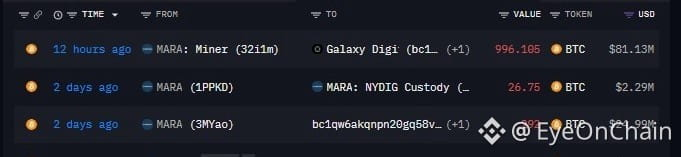
🚨 MARA IS MOVING $81 MILLION IN BITCOIN AS ITS AI AMBITION GROWS! 👀🔥Bitcoin miner MARA Holdings ($MARA ) has reportedly transferred approximately 996 BTC worth $81.13 million to an address identified as belonging to Galaxy Digital, according to Lookonchain.
But here's the bigger story: this isn't just about a Bitcoin transfer, it's about a changing business strategy. 🧠
MARA is expanding beyond Bitcoin mining into AI and high-performance computing (HPC), while using parts of its Bitcoin treasury to strengthen its balance sheet and support its transition.
📉 Its reported BTC holdings fell from 53,822 BTC in February to 35,577 BTC in August. In March, the company also sold 15,133 BTC for approximately $1.1 billion, primarily to fund convertible-debt repurchases.
💡 MARA is navigating a major strategic shift balancing Bitcoin exposure, debt management and investment in AI infrastructure.
⚠️ The latest transfer does not confirm a sale. The destination alone doesn't tell us what MARA intends to do with those coins.
👀 The real question: Can MARA build a successful AI business without giving up too much of its Bitcoin upside?
#bitcoin #BTC走势分析 #MARA #CryptoNews #AI
🚨 MARA IS MOVING $81 MILLION IN BITCOIN AS ITS AI AMBITION GROWS! 👀🔥
Bitcoin miner MARA Holdings ($MARA ) has reportedly transferred approximately 996 BTC worth $81.13 million to an address identified as belonging to Galaxy Digital, according to Lookonchain.
But here's the bigger story: this isn't just about a Bitcoin transfer, it's about a changing business strategy. 🧠
MARA is expanding beyond Bitcoin mining into AI and high-performance computing (HPC), while using parts of its Bitcoin treasury to strengthen its balance sheet and support its transition.
📉 Its reported BTC holdings fell from 53,822 BTC in February to 35,577 BTC in August. In March, the company also sold 15,133 BTC for approximately $1.1 billion, primarily to fund convertible-debt repurchases.
💡 MARA is navigating a major strategic shift balancing Bitcoin exposure, debt management and investment in AI infrastructure.
⚠️ The latest transfer does not confirm a sale. The destination alone doesn't tell us what MARA intends to do with those coins.
👀 The real question: Can MARA build a successful AI business without giving up too much of its Bitcoin upside?
#bitcoin #BTC走势分析 #MARA #CryptoNews #AI
But here's the bigger story: this isn't just about a Bitcoin transfer, it's about a changing business strategy. 🧠
MARA is expanding beyond Bitcoin mining into AI and high-performance computing (HPC), while using parts of its Bitcoin treasury to strengthen its balance sheet and support its transition.
📉 Its reported BTC holdings fell from 53,822 BTC in February to 35,577 BTC in August. In March, the company also sold 15,133 BTC for approximately $1.1 billion, primarily to fund convertible-debt repurchases.
💡 MARA is navigating a major strategic shift balancing Bitcoin exposure, debt management and investment in AI infrastructure.
⚠️ The latest transfer does not confirm a sale. The destination alone doesn't tell us what MARA intends to do with those coins.
👀 The real question: Can MARA build a successful AI business without giving up too much of its Bitcoin upside?
#bitcoin #BTC走势分析 #MARA #CryptoNews #AI
1
458

·
--
🎯 Mining giant MARA is also quietly selling its coins
📰 According to Lookonchain data, MARA transferred 996 BTC—worth about $81 million—to a Galaxy Digital wallet. From February to August, it cut its holdings by 18,245 BTC.
💬 Selling coins to buy AI GPUs—that’s a pretty slick move. Miners are switching from hoarding coins to hoarding computing power, and the little stockpile of faith in BTC is being gradually siphoned away by the AI narrative.
🏷️ #MARA #矿企 #GalaxyDigital #AI #BTC Selling Pressure
🎯 Mining giant MARA is also quietly selling its coins
📰 According to Lookonchain data, MARA transferred 996 BTC—worth about $81 million—to a Galaxy Digital wallet. From February to August, it cut its holdings by 18,245 BTC.
💬 Selling coins to buy AI GPUs—that’s a pretty slick move. Miners are switching from hoarding coins to hoarding computing power, and the little stockpile of faith in BTC is being gradually siphoned away by the AI narrative.
🏷️ #MARA #矿企 #GalaxyDigital #AI #BTC Selling Pressure
📰 According to Lookonchain data, MARA transferred 996 BTC—worth about $81 million—to a Galaxy Digital wallet. From February to August, it cut its holdings by 18,245 BTC.
💬 Selling coins to buy AI GPUs—that’s a pretty slick move. Miners are switching from hoarding coins to hoarding computing power, and the little stockpile of faith in BTC is being gradually siphoned away by the AI narrative.
🏷️ #MARA #矿企 #GalaxyDigital #AI #BTC Selling Pressure
105

🚨 MARA pivots to AI. The mining giant just moved $81.1M in $BTC to Galaxy Digital.
Here is the breakdown:
• MARA shifts $81.1M in Bitcoin to Galaxy.
• Funds support a strategic pivot toward AI computing.
• Mining treasury diversifies into tech infrastructure.
The hash rate game is evolving fast. 💻🚀
#Write2Earn #Bitcoin #ArtificialIntelligence #MARA
🚨 MARA pivots to AI. The mining giant just moved $81.1M in $BTC to Galaxy Digital.
Here is the breakdown:
• MARA shifts $81.1M in Bitcoin to Galaxy.
• Funds support a strategic pivot toward AI computing.
• Mining treasury diversifies into tech infrastructure.
The hash rate game is evolving fast. 💻🚀
#Write2Earn #Bitcoin #ArtificialIntelligence #MARA
Here is the breakdown:
• MARA shifts $81.1M in Bitcoin to Galaxy.
• Funds support a strategic pivot toward AI computing.
• Mining treasury diversifies into tech infrastructure.
The hash rate game is evolving fast. 💻🚀
#Write2Earn #Bitcoin #ArtificialIntelligence #MARA

1
45
·
--
Bullish
996.105 BTC moved from a MARA Miner wallet to Galaxy Digital and another address. According to Lookonchain and Arkham, that’s about $81.13 million.
The blockchain shows a transfer. It doesn’t show a market sale, and no one has provided proof of one.
Here’s what MARA’s Q2 report actually says:
- 35,577 BTC as of June 30
- They sold 2,213 BTC during the quarter, having mined 2,422
And in August, they took out loans from Coinbase and Two Prime, backed by 18,750 BTC as collateral—almost 53% of those holdings.
So a transfer from a wallet like that could mean three things: a sale, collateral, or a loan-related movement. The blockchain only sees “went from A to B.”
They’re not shy about selling; they’ve said themselves they’ll sell when it makes sense. But saying they “dumped” it without proof is speculation.
Personally, $BTC
{future}(BTCUSDT)
I’m not holding any right now, so I’m looking at this without getting worked up.
How do you read it: sale or collateral?
#MARA #bitcoin
996.105 BTC moved from a MARA Miner wallet to Galaxy Digital and another address. According to Lookonchain and Arkham, that’s about $81.13 million.
The blockchain shows a transfer. It doesn’t show a market sale, and no one has provided proof of one.
Here’s what MARA’s Q2 report actually says:
- 35,577 BTC as of June 30
- They sold 2,213 BTC during the quarter, having mined 2,422
And in August, they took out loans from Coinbase and Two Prime, backed by 18,750 BTC as collateral—almost 53% of those holdings.
So a transfer from a wallet like that could mean three things: a sale, collateral, or a loan-related movement. The blockchain only sees “went from A to B.”
They’re not shy about selling; they’ve said themselves they’ll sell when it makes sense. But saying they “dumped” it without proof is speculation.
Personally, $BTC
I’m not holding any right now, so I’m looking at this without getting worked up.
How do you read it: sale or collateral?
#MARA #bitcoin
The blockchain shows a transfer. It doesn’t show a market sale, and no one has provided proof of one.
Here’s what MARA’s Q2 report actually says:
- 35,577 BTC as of June 30
- They sold 2,213 BTC during the quarter, having mined 2,422
And in August, they took out loans from Coinbase and Two Prime, backed by 18,750 BTC as collateral—almost 53% of those holdings.
So a transfer from a wallet like that could mean three things: a sale, collateral, or a loan-related movement. The blockchain only sees “went from A to B.”
They’re not shy about selling; they’ve said themselves they’ll sell when it makes sense. But saying they “dumped” it without proof is speculation.
Personally, $BTC
I’m not holding any right now, so I’m looking at this without getting worked up.
How do you read it: sale or collateral?
#MARA #bitcoin

1
65

·
--
Bearish
Verified
Another big BTC move, this time from mining giant MARA Holdings.
The company reportedly transferred 996 BTC, worth around $81.13 million.
That’s a pretty hefty stack of Bitcoin changing hands, and with the market already under pressure, moves like this are bound to get traders talking😬.
Of course, a transfer alone doesn’t confirm that #MARA has sold the coins. The big question now is whether this is an actual sell-off or simply a wallet reshuffle. Either way, 996 $BTC is no small move.
{future}(BTCUSDT)
{spot}(BTCUSDT)
Another big BTC move, this time from mining giant MARA Holdings.
The company reportedly transferred 996 BTC, worth around $81.13 million.
That’s a pretty hefty stack of Bitcoin changing hands, and with the market already under pressure, moves like this are bound to get traders talking😬.
Of course, a transfer alone doesn’t confirm that #MARA has sold the coins. The big question now is whether this is an actual sell-off or simply a wallet reshuffle. Either way, 996 $BTC is no small move.
The company reportedly transferred 996 BTC, worth around $81.13 million.
That’s a pretty hefty stack of Bitcoin changing hands, and with the market already under pressure, moves like this are bound to get traders talking😬.
Of course, a transfer alone doesn’t confirm that #MARA has sold the coins. The big question now is whether this is an actual sell-off or simply a wallet reshuffle. Either way, 996 $BTC is no small move.
4
2.2k

MARA transfers $81.1 million in Bitcoin to Galaxy Digital as strategy shifts toward AI
- MARA transfers $81.1 million in Bitcoin to Galaxy Digital
- Transfer does not confirm a sale
- BTC treasury declines from 53,822 BTC (Feb) to 35,577 BTC (Aug)
- MARA pivots to AI
#BinanceSquare #CryptoNews #MARA #BTC #AI
$btc
vlikevn Titanbot
Source: CoinDesk
MARA transfers $81.1 million in Bitcoin to Galaxy Digital as strategy shifts toward AI
- MARA transfers $81.1 million in Bitcoin to Galaxy Digital
- Transfer does not confirm a sale
- BTC treasury declines from 53,822 BTC (Feb) to 35,577 BTC (Aug)
- MARA pivots to AI
#BinanceSquare #CryptoNews #MARA #BTC #AI
$btc
vlikevn Titanbot
Source: CoinDesk
- MARA transfers $81.1 million in Bitcoin to Galaxy Digital
- Transfer does not confirm a sale
- BTC treasury declines from 53,822 BTC (Feb) to 35,577 BTC (Aug)
- MARA pivots to AI
#BinanceSquare #CryptoNews #MARA #BTC #AI
$btc
vlikevn Titanbot
Source: CoinDesk
166

·
--
$MARA
{future}(MARAUSDT)
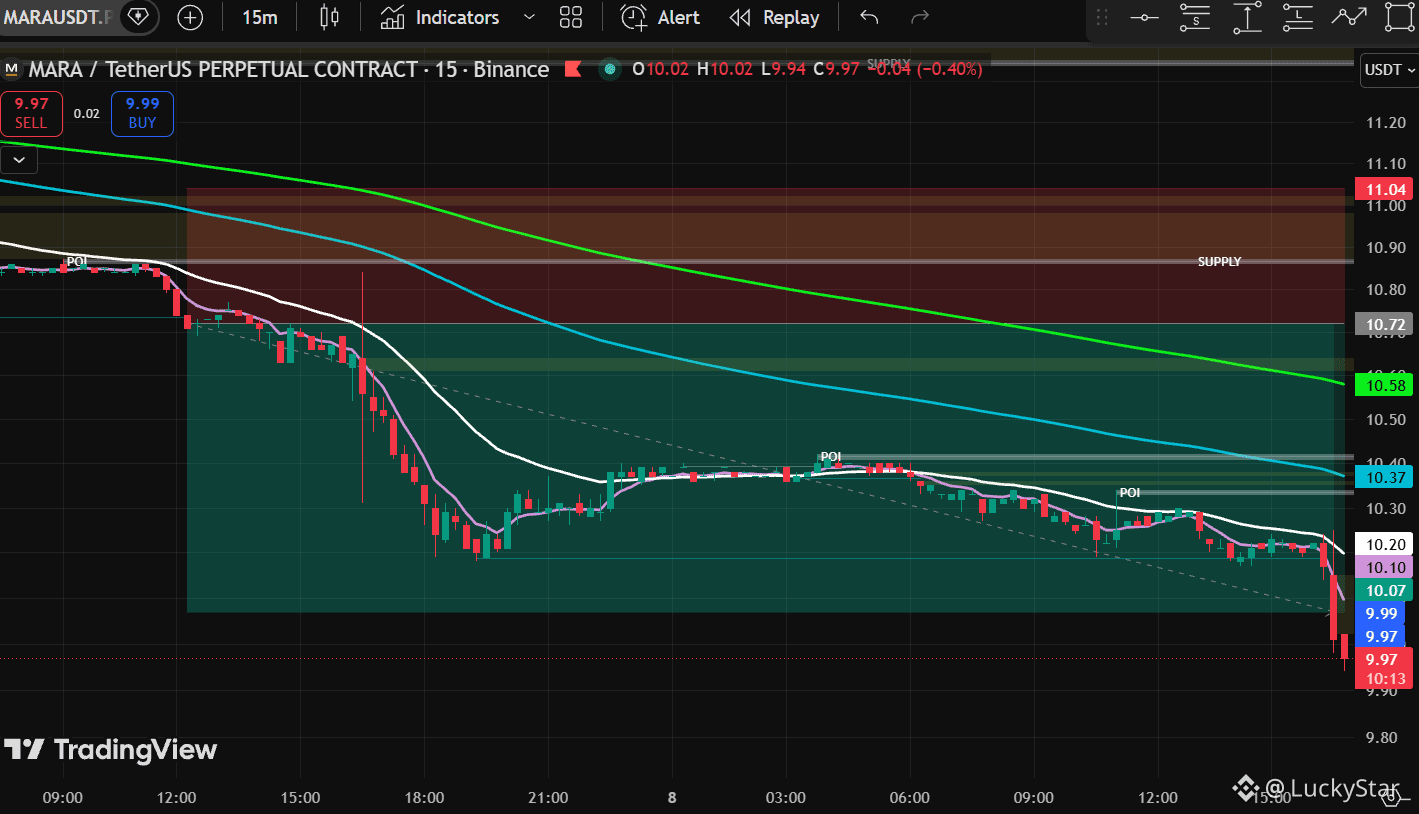
The move started almost immediately after the entry. The price easily reached the main targets. Another trade delivered a great result.
#MARA #profit #TradingSignals
$MARA
The move started almost immediately after the entry. The price easily reached the main targets. Another trade delivered a great result.
#MARA #profit #TradingSignals
The move started almost immediately after the entry. The price easily reached the main targets. Another trade delivered a great result.
#MARA #profit #TradingSignals
LuckyStar_
·
--
$MARA
📉 READY FOR THE NEXT DROP?
🔻 Sellers may take control.
#MARAUSDT #short #crypto
📉 READY FOR THE NEXT DROP?
🔻 Sellers may take control.
#MARAUSDT #short #crypto
7
Log in to explore more content
Join global crypto users on Binance Square
⚡️ Get latest and useful information about crypto.
💬 Trusted by the world’s largest crypto exchange.
👍 Discover real insights from verified creators.
Email / Phone number
Trending Topics
1
#CanMicrosoftDeliverOnAI
148,325 views
1,172 Discussing
2
#CanGoogleDefindItsCore
74,461 views
819 Discussing
3
#FOMCWatch
9.1M views
28,447 Discussing
4
#SKHynixUnveils$45BShareholderReturns
83 views
5 Discussing
5
#OSMOPlansToBurn100MTokensFromCommunityPool
3,099 views
111 Discussing
6
#EthereumDropsBelow$2300
12,547 views
166 Discussing
7
#BitcoinSlipsBelow$80KAgain
35,526 views
133 Discussing
8
#ThailandLaunchesWORPTStablecoinToQRPaymentApp
78,497 views
933 Discussing
9
#StrategySkipsBitcoinPurchasesSpends$205MOnSTRCBuybacks
14,114 views
101 Discussing
10
#BitmineAdds10452ETH
131,060 views
1,361 Discussing