
#jwst
jwst
45 views
6 Discussing
Hot
Latest

·
--
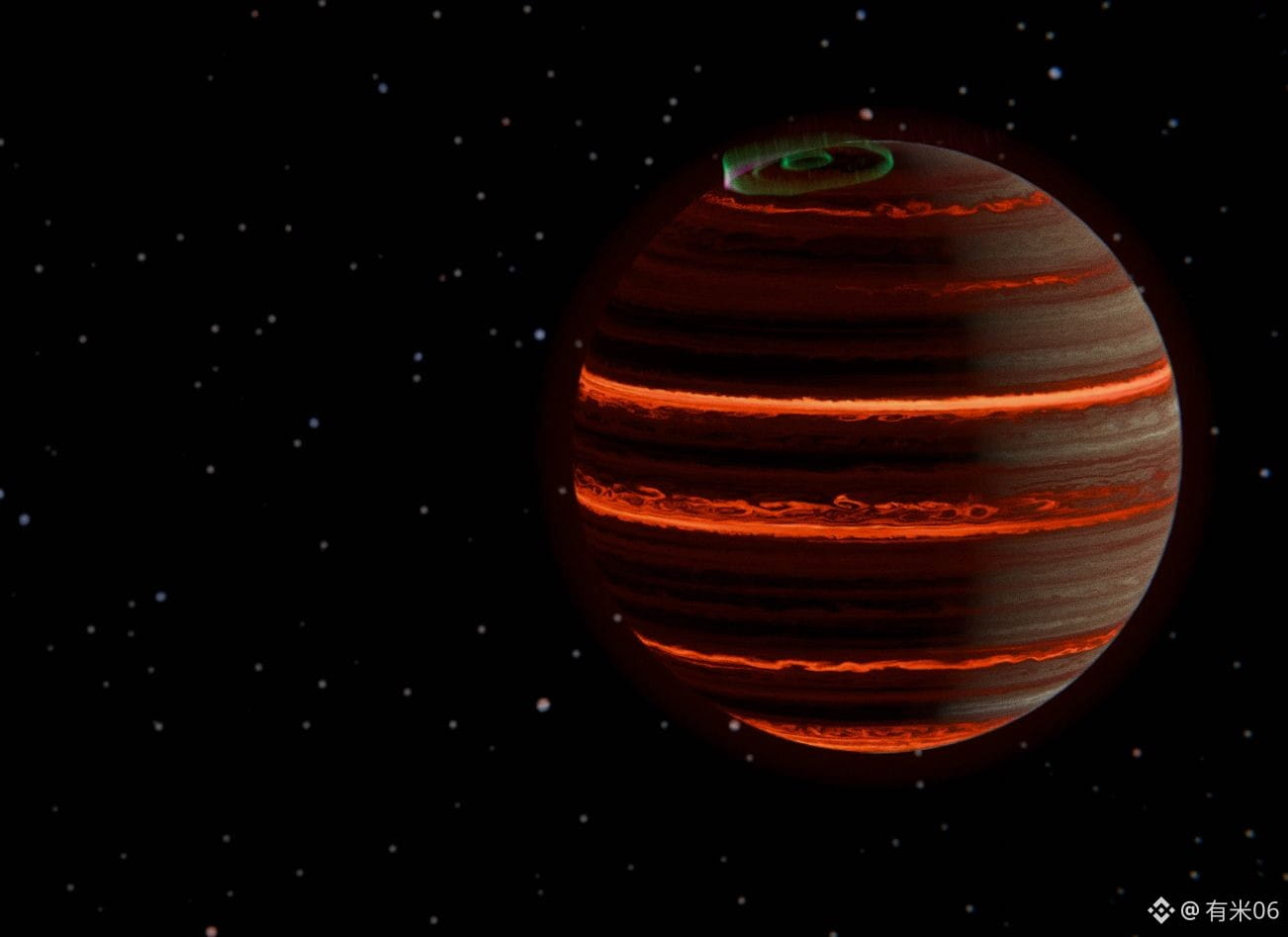
20 light-years away: that brown dwarf SIMP 0136. The weather there is actually surprisingly “organized”—more like the large-scale circulations you’d see on Jupiter, rather than a chaotic mix.
A team from Trinity College Dublin used JWST/NIRSpec to watch it through an entire rotation, then applied principal component analysis (PCA) to break down the spectral variations. Most of the changes can be explained by just two main factors: fluctuations in temperature and changes in the vertical structure of the clouds. When those two effects overlap, they amount to three recurring atmospheric “modes” cycling into view: in some regions it’s hotter and the clouds are thinner; in others it’s colder, with thicker clouds that seem to “grow upright.” The paper is published in Astronomy & Astrophysics. The authors say this approach can be used to survey other isolated substellar objects as well.
The independent press release follows the same line: Phys.org reposted a Trinity College Dublin news item on 2026-09-16 (published with a note indicating September 15). The target is this young brown dwarf—about 20 light-years away—right near the planetary-mass boundary. The image is an artistic illustration, not a real observation.
#天文 #JWST #Science
15
·
--
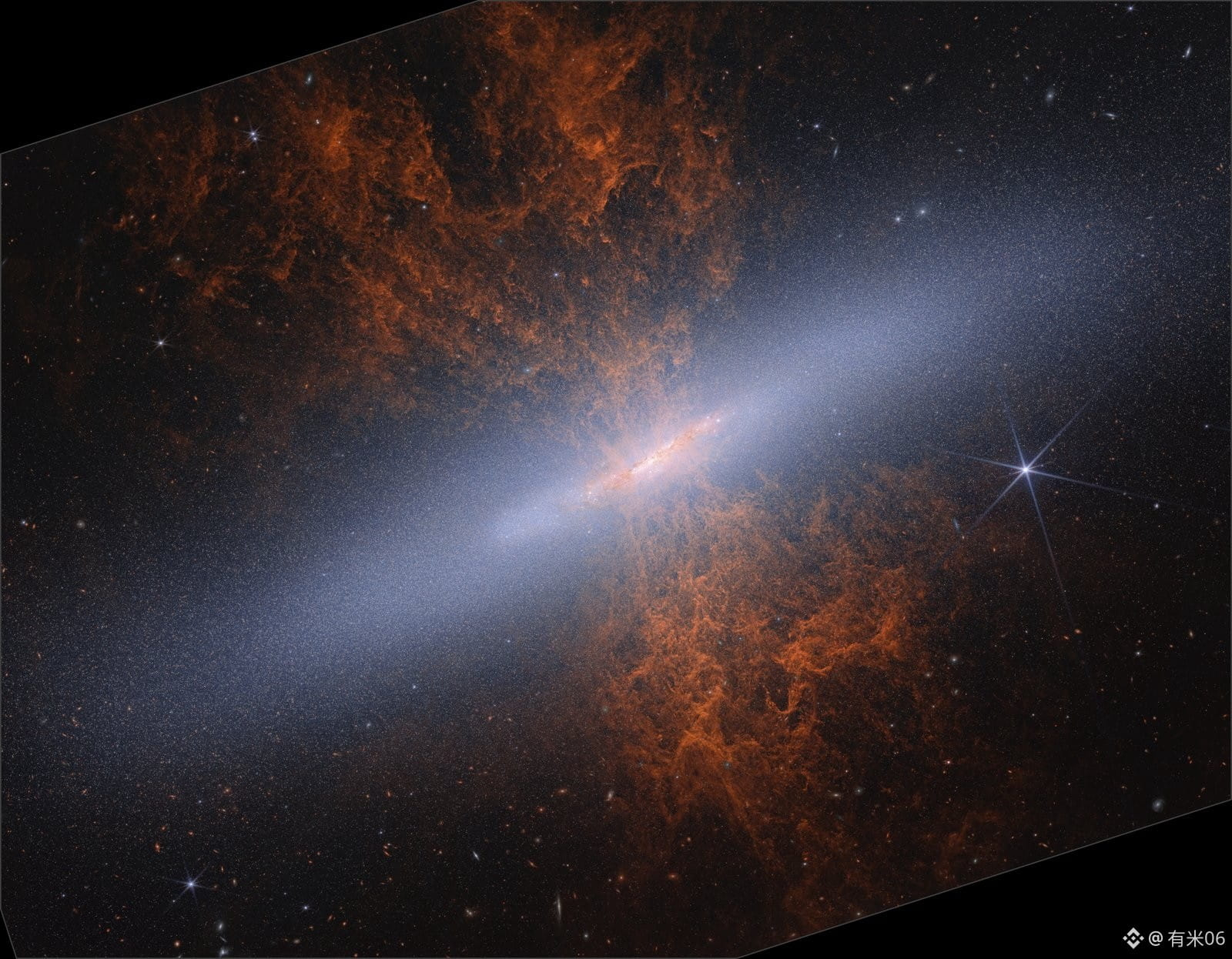
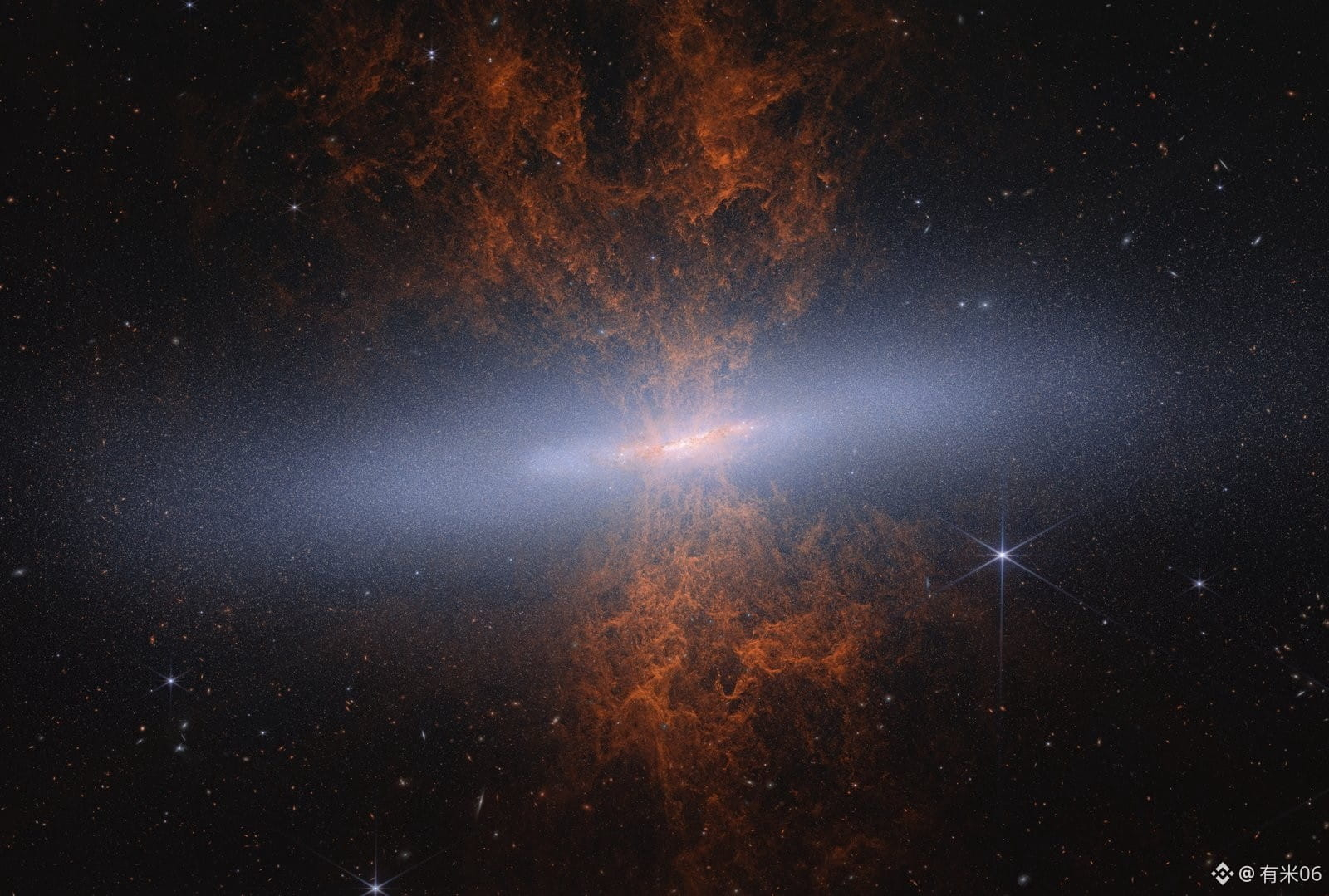
Webb “broke open” the dust of the Cigar Galaxy: in a single view, it pinpointed about 16.5 million stars across the disk, and captured the twin bipolar jets flowing above and below with striking clarity.
According to an ESA/Webb press release (weic2612) and a NASA Science related review dated 2026-06-23: Messier 82 (M82, the Cigar Galaxy) is about 12 million light-years from Earth. Over a cumulative ~65 hours with NIRCam, Webb resolved roughly 16.5 million individual stars in the near-infrared—dust couldn’t block the view. The star-formation rate is about 10 times that of the Milky Way. Above and below the disk, a bipolar “hourglass”-shaped jet structure is visible, containing both ionized gas and polycyclic aromatic hydrocarbon (PAH) dust; the disk is distorted, consistent with disturbances caused by merging.
Figure 1: NIRCam near-infrared main image
Figure 2: Webb + Hubble composite
Image source: ESA/Webb, NASA, CSA, STScI
Data as of: ESA/Webb and NASA Science press release dated 2026-06-23
#JWST #Astronomy
32
·
--
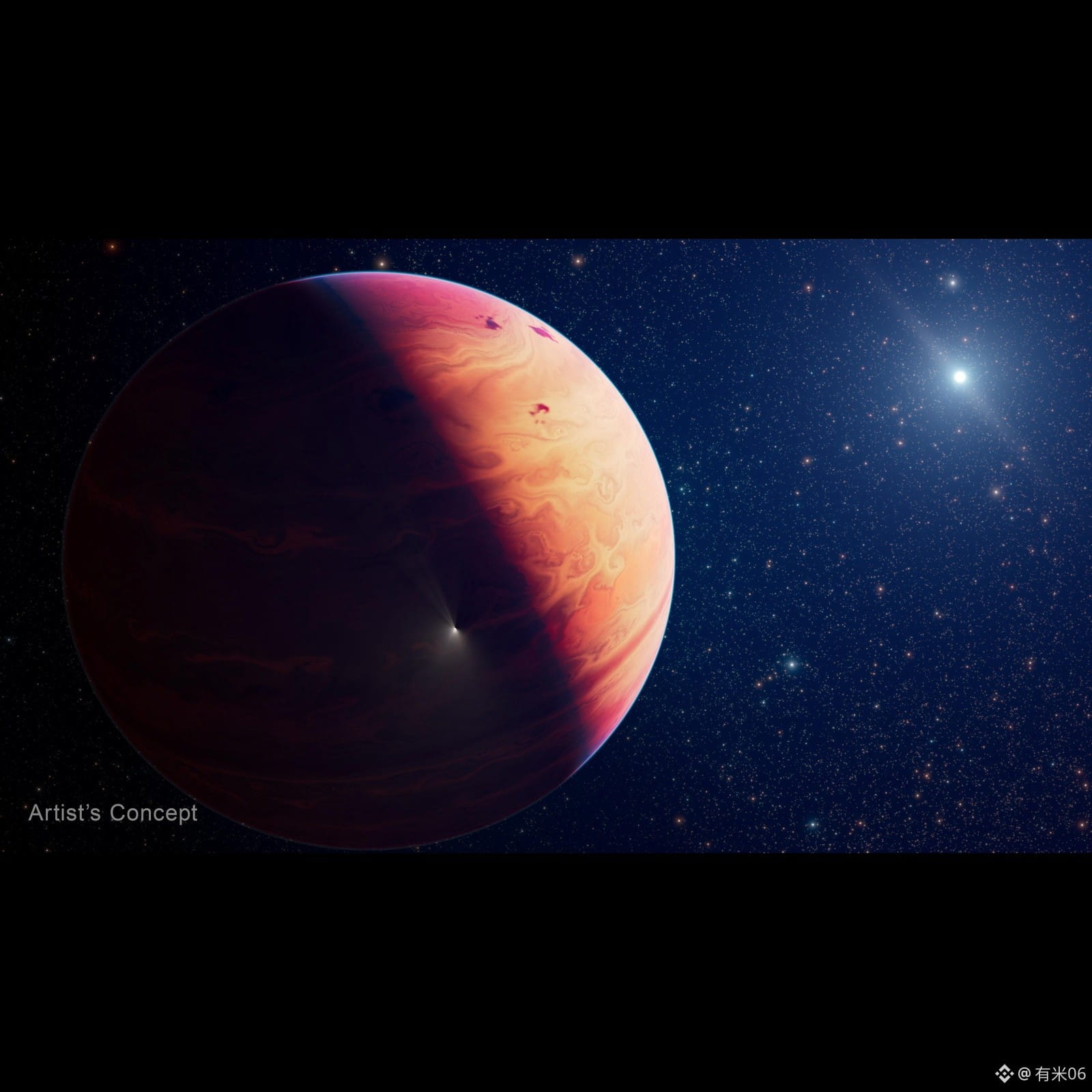
Instant conclusion: 29 Cygni b, with about 15 times Jupiter’s mass, appears more like a planet assembled in a “bottom-up” way than something that “top-down” fragments and collapses like a star.
Based on an ESA/Webb press release weic2607 (2026-04-14) and a related NASA Science story: using Webb’s NIRCam coronagraph mode, the planet-like object near the planet/star boundary is directly imaged. Absorption features from heavy elements in its atmosphere—such as carbon dioxide and carbon monoxide—were detected. Its metal abundance is clearly higher than that of its host star; by a rough mass estimate, the total heavy-element content is about that of 150 Earths. Observations from the ground-based CHARA array also show that its orbit is roughly coplanar with the host star’s rotation. Taken together, this strongly supports the idea that it rapidly accreted metal-rich material in the protoplanetary disk.
Independent verification: The NASA Science / STScI 2026-116 report is consistent with ESA’s description; the paper is published in The Astrophysical Journal Letters.
Image: NASA, ESA, CSA, William Balmer (JHU/STScI), Laurent Pueyo (STScI); image processing by Alyssa Pagan (STScI) — official artistic concept for weic2607a (not a real photograph)
Data as of: ESA/Webb / NASA press release dated 2026-04-14
#JWST #Astronomy
8
·
--
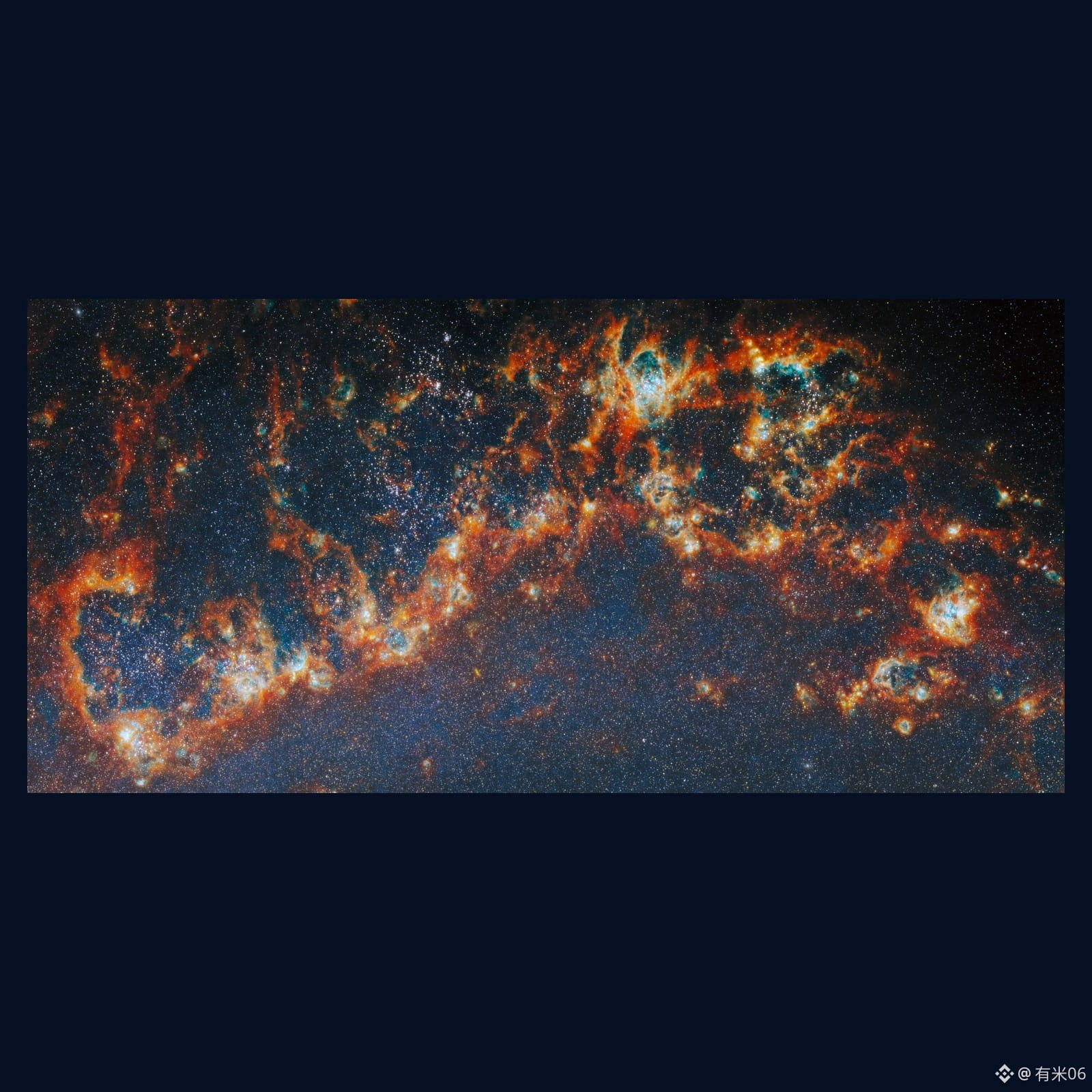
At a glance: Webb “splits open” the star-forming nebula in the spiral arms of the Whirlpool Galaxy (M51)—more massive star clusters clear out their natal gas faster.
Based on the ESA/Webb science press release weic2608 (2026-05-06) and NASA’s matching photo-story: Webb NIRCam and Hubble team up to inventory nearly 9,000 young star clusters at different evolutionary stages in four nearby galaxies (M51 / M83 / NGC 4449 / NGC 628). Conclusion: heavier clusters can disperse their birth clouds and start illuminating the galaxy in about 5 million years; lighter clusters usually take around 7–8 million years. The image shows a section of an arm in M51 (about 27 million light-years from Earth), where the star-forming complex spans nearly 800 light-years; the red-orange highlights are the infrared-bright emission from ionized gas and dust.
Independent verification: NASA’s official photo-story restates the FEAST project and the “more massive star clusters clear out gas faster” finding in the same wording; Phys.org, published the same day, also reports the timescales on the order of 5 Myr vs 7–8 Myr.
Image: ESA/Webb, NASA & CSA, A. Pedrini, A. Adamo (Stockholm University), and the FEAST JWST team (weic2608a)
Data as of: ESA/Webb / NASA press materials 2026-05-06
#JWST #Astronomy
64
·
--
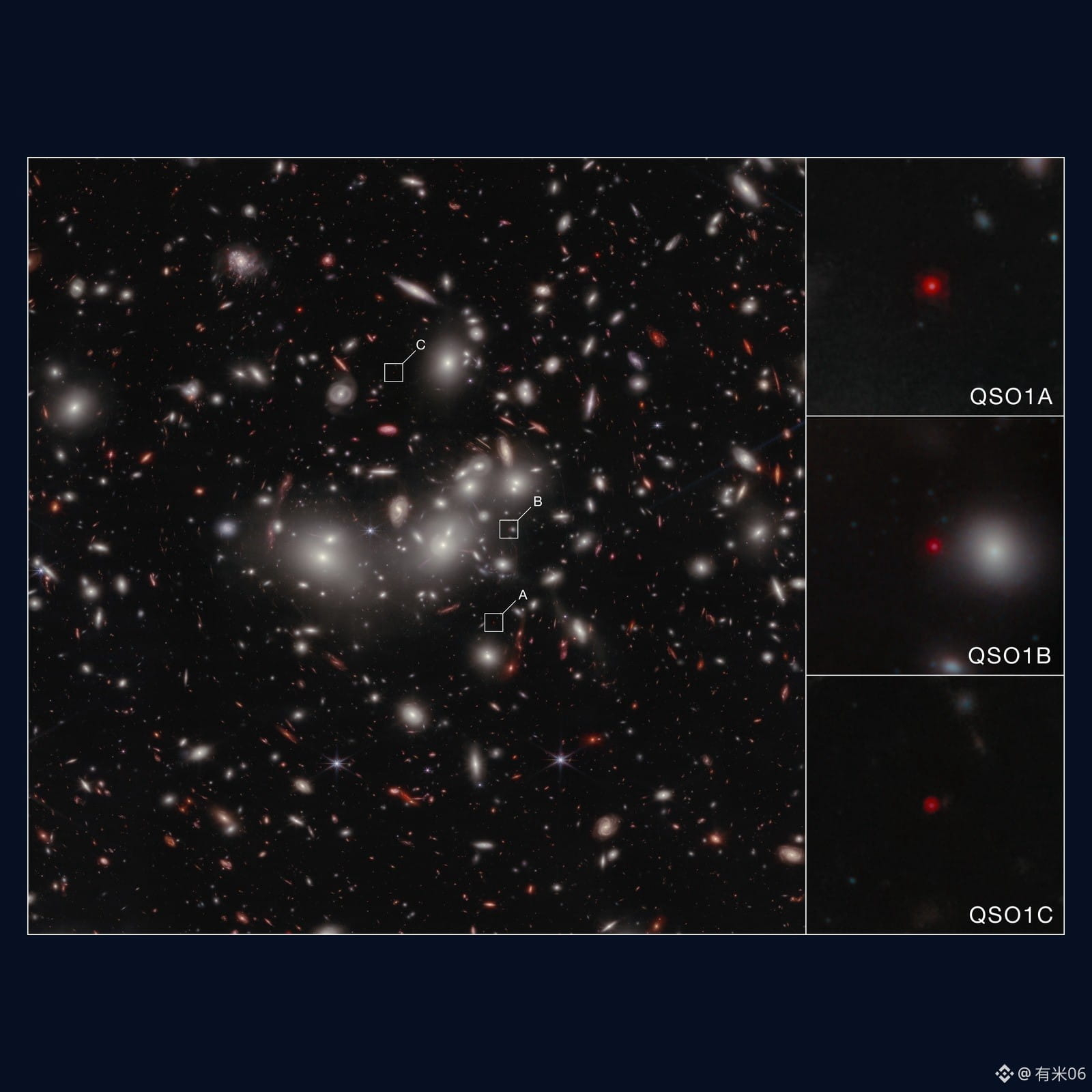
Just got an updated take on a paper by Weber on “Which came first, the chicken or the egg?”: in the small red-dot source Abell2744-QSO1, the black hole nearly fills the whole mass of the system—more like the black hole formed first, with the galaxies following later to gather up.
According to ESA/Webb weic2609 (2026-05-27) and the same prompt topic from NASA Science: the light from this object took over 13 billion years to reach Earth; its extent is about 1,300 light-years. It was magnified and split into three images by gravitational lensing from the Pandora Cluster (Abell 2744). Using the NIRSpec integral field spectroscopic data, the hydrogen gas velocity can be mapped—its trajectories come close to Keplerian rotation. The mass is highly concentrated in the center. Direct calculations give a black hole mass of about 50 million times the Sun, accounting for roughly two-thirds of the system’s total mass (several orders of magnitude higher than a typical local galaxy). The gas is nearly all hydrogen/helium; its metal abundance is under 0.5% of the Sun, so stellar remnants like oxygen are barely detectable.
Independent verification: the NASA Science and ESA accounts match; the paper is published in Nature and MNRAS. Reminder: the mass fraction refers to this source’s measured result, and doesn’t mean all early black holes must share the same formation pathway.
Image: NASA, ESA, CSA, Lukas Furtak (Ben-Gurion University); image processing by Alyssa Pagan (STScI) — weic2609a NIRCam original letterbox image (not AI)
Data as of: ESA/Webb / NASA press release 2026-05-27
#JWST #astronomy
40
Log in to explore more content
Join global crypto users on Binance Square
⚡️ Get latest and useful information about crypto.
💬 Trusted by the world’s largest crypto exchange.
👍 Discover real insights from verified creators.
Email / Phone number
Trending Topics
1
#NVIDIAReinstatesJensenHuangasCEO
7,467 views
356 Discussing
2
#WillMarketsStageAThanksgivingReliefRally?
107,806 views
1,551 Discussing
3
#WillOctCorePCEShiftFedHikeExpectations?
39,659 views
618 Discussing
4
#BitcoinEndsRecord17DayStreakOfLowerHighs
897 views
114 Discussing
5
#TradersPriceOut50bpDecemberFedHike
1,515 views
85 Discussing
6
#EvolveAtBinanceBlockchainWeek
92,197 views
903 Discussing
7
#TrumpBackedAmericanBitcoinRaisesHoldingsToOver8500BTC
624 views
28 Discussing
8
#MuskWarnsOfAICashCrunch
51,900 views
660 Discussing
9
#TradFiForBeginners
1.1M views
5,926 Discussing
10
#SkyPSMUSDCLiquidityReboundsTo$1.77B
397 views
9 Discussing