
#fincen
fincen
80,398 views
201 Discussing
Hot
Latest

Wild one out of Washington — the Treasury's own financial-crimes unit just got hacked.
FinCEN, the agency that tracks money laundering and holds banks' suspicious-activity reports, confirmed on Tuesday that hackers got unauthorized access to some of its systems. It's taken systems offline, brought in the FBI and CISA, and extended filing deadlines to Dec 30 for banks that can't submit reports.
Here's the part crypto people will notice: no evidence the Bank Secrecy Act database itself was breached, but FinCEN still hasn't said what was accessed, or who did it. And this is the same agency that writes the rules for crypto exchanges and watches the flows.
Meanwhile $BTC is sitting around $61,500, up a touch today, with about $7B in options expiring at 1:30pm IST. The market's barely flinching at the Washington chaos — for now.
Not financial advice. DYOR.
#Bitcoin #Crypto #FinCEN

·
--
Wild week in Washington. The US Treasury's FinCEN — the agency that tracks dirty money and polices crypto firms — just confirmed hackers got into its systems. It took some systems offline and pushed filing deadlines to Dec 30.
Same week, the CIA, ODNI and FBI got hit too. Nobody's saying who did it yet, and FinCEN says there's no sign its main databases were breached.
Meanwhile $BTC just keeps trading 24/7, sitting near $60,600, up about 3% in a day after bouncing off $57,300. No downtime, no filing extensions, no one to hack.
Centralized watchdogs go down. Bitcoin doesn't.
#Crypto #Bitcoin #FinCEN
Not financial advice. DYOR.
6
Honestly, you can't make this up.
FinCEN — the US Treasury unit that tracks money laundering and suspicious transactions, crypto included — just confirmed hackers got into some of its systems. It took them offline and pushed filing deadlines to Dec 30. Officials say there's no sign the main databases were touched. And it came the same week a separate breach hit an unclassified system used by the CIA and ODNI.
Meanwhile $BTC is just sitting above $60K at ~$60,900, up ~2% today after yesterday's $57,300 dip, like none of it happened. The money watchers need watching.
Not financial advice. DYOR.
#Bitcoin #Crypto #FinCEN
61

·
--
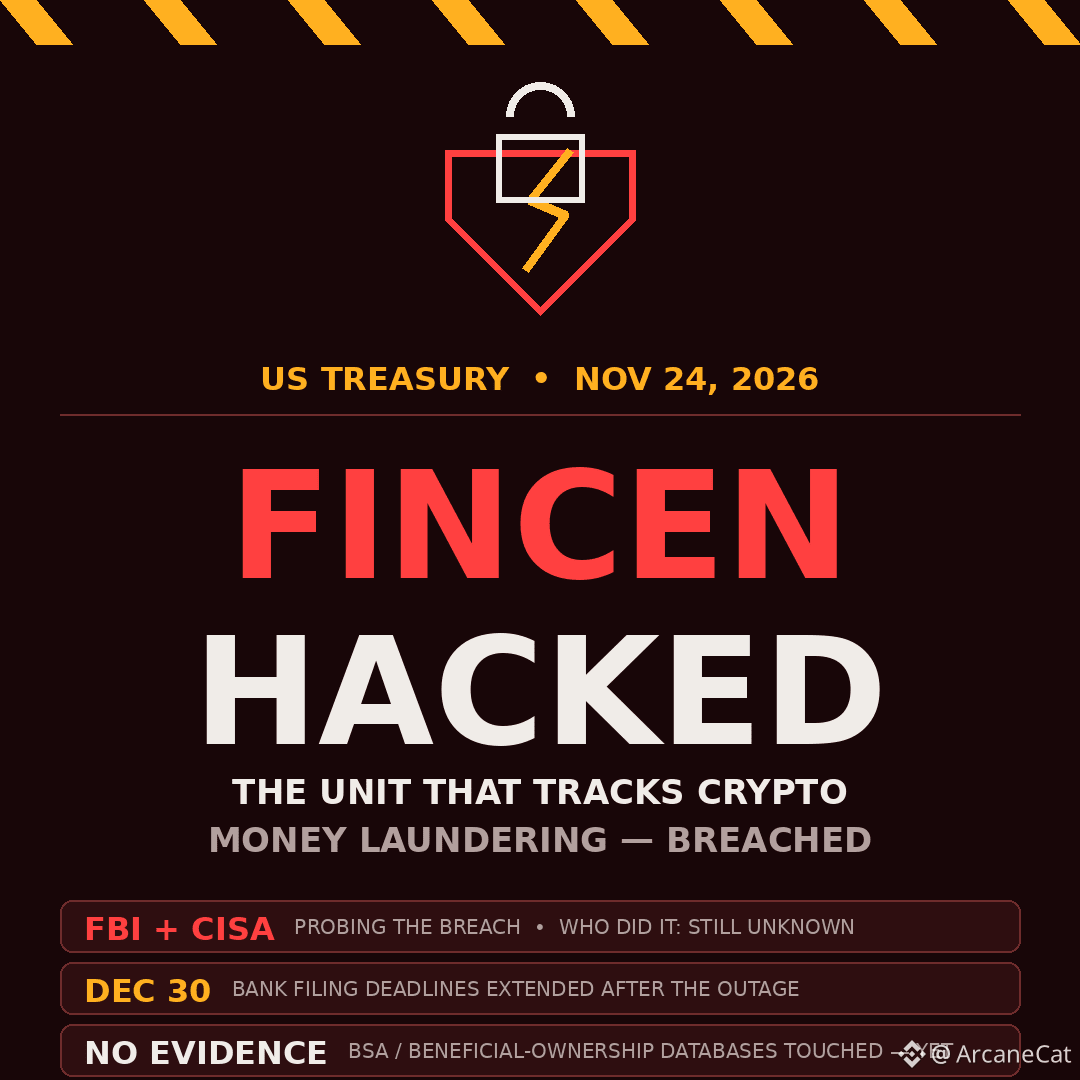
🚨 THEY WATCH EVERY DIRTY DOLLAR IN CRYPTO. NOW SOMEONE'S INSIDE THEIR SYSTEMS.
FinCEN — the US Treasury unit that tracks crypto money laundering — took systems offline after unauthorized access, disclosed Tuesday evening.
FBI + CISA are investigating. Who did it: still unknown. No evidence (yet) the Bank Secrecy Act database was touched.
Bank filing deadlines pushed to Dec 30. It comes the same week the CIA was hit too.
BTC ~$60,400, back above $60K after flushing to $57,300.
Not financial advice.
#FinCEN #Bitcoin $BTC
84

·
--
The agency that polices crypto money laundering just got hacked — and it still doesn't know what the intruders took.
The U.S. Treasury's FinCEN confirmed on Tuesday that hackers gained unauthorized access to a limited subset of its systems. It took several systems offline as a precaution and is now working with the FBI, CISA, and outside forensic examiners to determine the scope.
FinCEN collects the suspicious activity reports (SARs) that banks, brokers, and crypto exchanges file on suspect customers — about 4.8 million of them in fiscal 2025 alone. Officials say there is no evidence yet that the Bank Secrecy Act or beneficial-ownership databases were breached — but the investigation is ongoing, and that could change. Filing deadlines for affected institutions were extended to December 30, while the main BSA E-Filing site stays up.
The same day, an unclassified open-source intelligence system shared by the CIA, ODNI, and the National Geospatial-Intelligence Agency was also breached. Two federal intrusions in one day — and the watchdog that demands airtight reporting from crypto firms couldn't keep its own house secure.
The irony is hard to miss: this lands weeks after the $6.3B Binance hack, with enforcement already under strain. If SAR filings stall, the compliance net gets weaker — and if SAR data leaked, sensitive reports on exchange customers could be exposed.
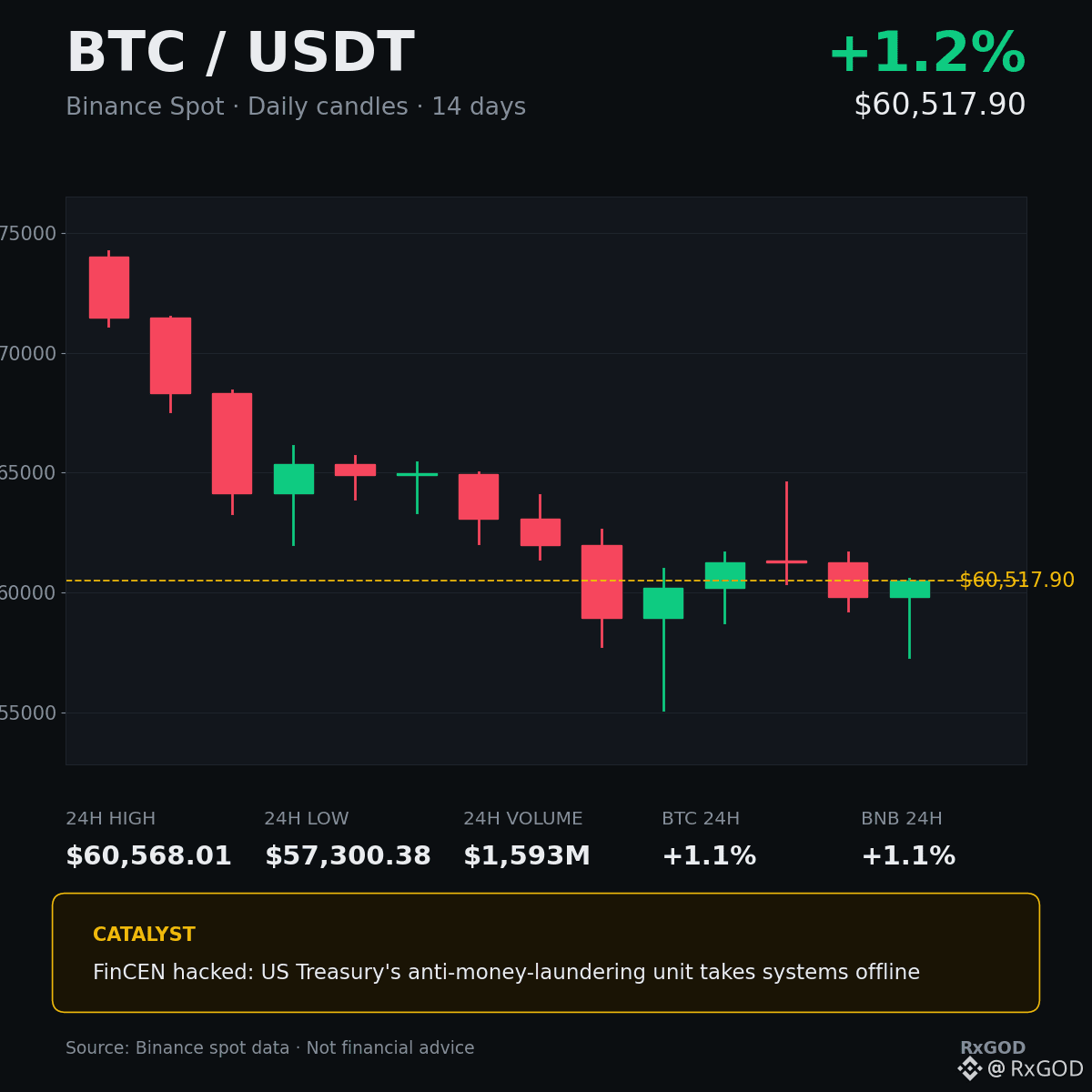
$BTC is holding its relief bounce at $60,552 (+1.21% in 24h), near the top of its daily range after dumping to $57,300 on the hot PCE print. But zoom out: still -15.3% over 14 days, just 28% up its 14-day range — a bounce inside a downtrend, not a reversal yet. Fear & Greed sits at 9, Extreme Fear.
Does a breach at the watchdog make you trust crypto regulation more or less — and should exchanges get reporting relief while FinCEN's own systems are down? What's the bigger risk: the data that may have leaked, or the enforcement gap while filings stall?
Not financial advice — DYOR.
#FinCEN #CryptoNews #ExtremeFear #Bitcoin
·
--
The irony writes itself: the US agency that polices crypto crime just got hacked.
FinCEN — the Treasury bureau collecting suspicious-activity reports from banks and crypto firms — disclosed on Nov 24 that hackers gained "unauthorized access to a limited subset of its systems." Some systems went offline as a precaution; BSA e-filing still works, and FinCEN extended certain filing deadlines (due Nov 18–Dec 29) to Dec 30 under Order FIN-2026-R002.
What it has NOT said: who did it, how they got in, when it started, or whether any records were copied. The disclosure landed the same day as reports of a separate breach at an unclassified CIA/ODNI system — no link established, and officials insist there is "zero evidence" of a coordinated attack.
Why crypto should care: FinCEN sits at the heart of crypto AML enforcement. If the watchdog guarding the financial-intelligence database can't guard itself, the "crypto is the risky part of finance" narrative takes a hit.
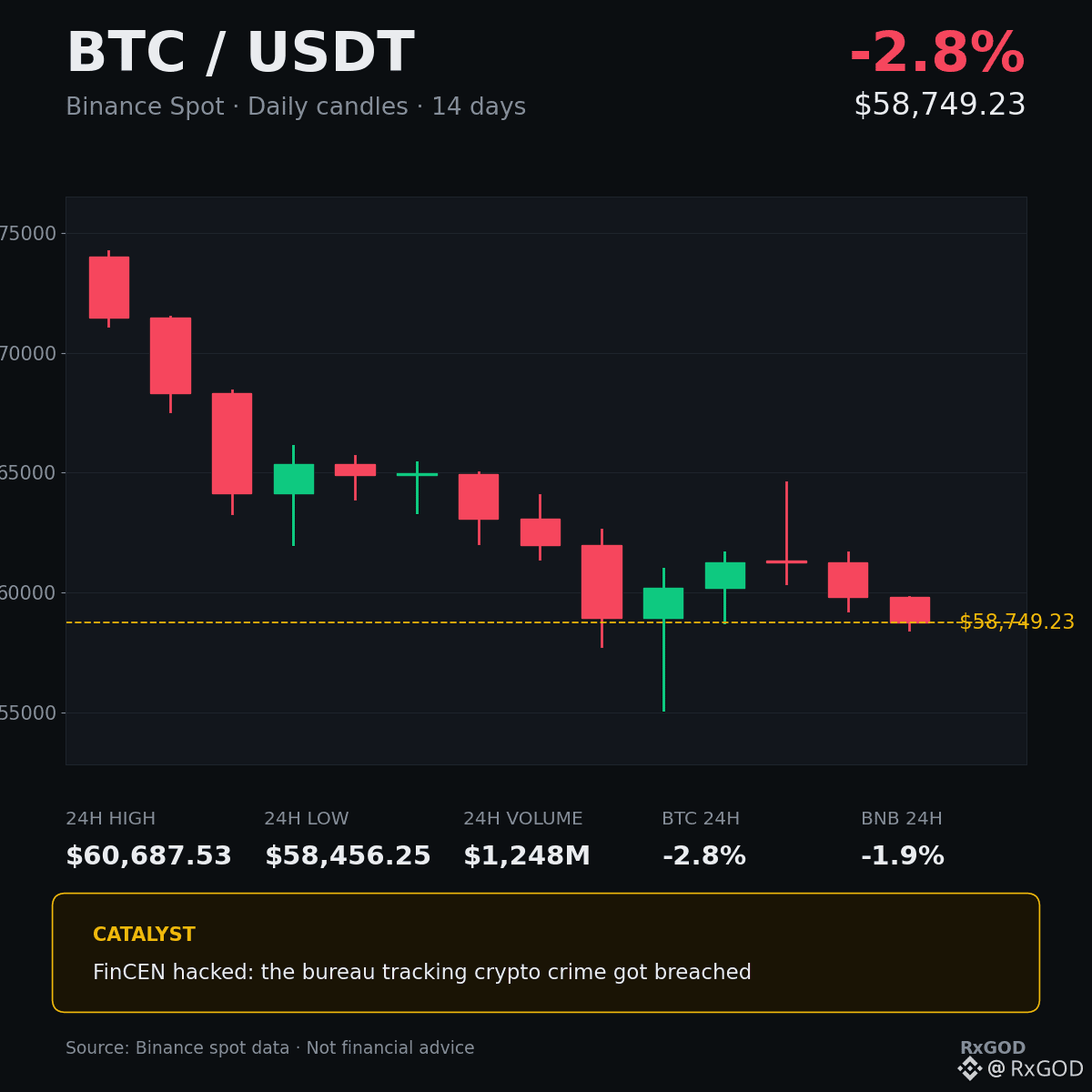
The market barely blinked: $BTC $58,749, -2.78% in 24h, near its $58,456 low and just 18% up its 14-day range ($55,130–$74,811). $ETH $1,648 (-3.17%), SOL $67.87 (-3.98%), Fear & Greed at 8 — Extreme Fear — with October PCE landing tonight at 20:30 WIB.
Honest caveat: no evidence any crypto data was touched, and BTC was already sliding on record ETF outflows and tariff headlines. A trust story, not a price driver — yet.
Does a hacked FinCEN make you more or less confident in crypto regulation? And after PCE tonight, $55K or $60K first?
Not financial advice — DYOR.
#FinCEN #CryptoNews #Bitcoin #WillOctCorePCEShiftFedHikeExpectations?
Okay, this one is wild. FinCEN — the US Treasury bureau that collects the suspicious-activity reports banks and crypto exchanges have to file — just disclosed a cybersecurity incident. Unauthorized access to a limited subset of its systems, some taken offline as a precaution, and filings due between Nov 18 and Dec 29 now get until Dec 30.
Nobody knows yet what was accessed or who did it. FinCEN hasn't said. The BSA E-Filing site itself is still up.
The irony writes itself: the watchdog that tracks dirty money got its own systems breached. And honestly, BTC didn't even blink at the headline — it's got bigger things on its mind. $BTC is at ~$58,871 right now, hovering just above today's $58,633 low, and tonight's PCE print at 7pm IST decides whether $60K comes back or the Nov 21 low near $55,130 gets tested.
Not financial advice. DYOR.
#Bitcoin #Crypto #FinCEN
1

·
--
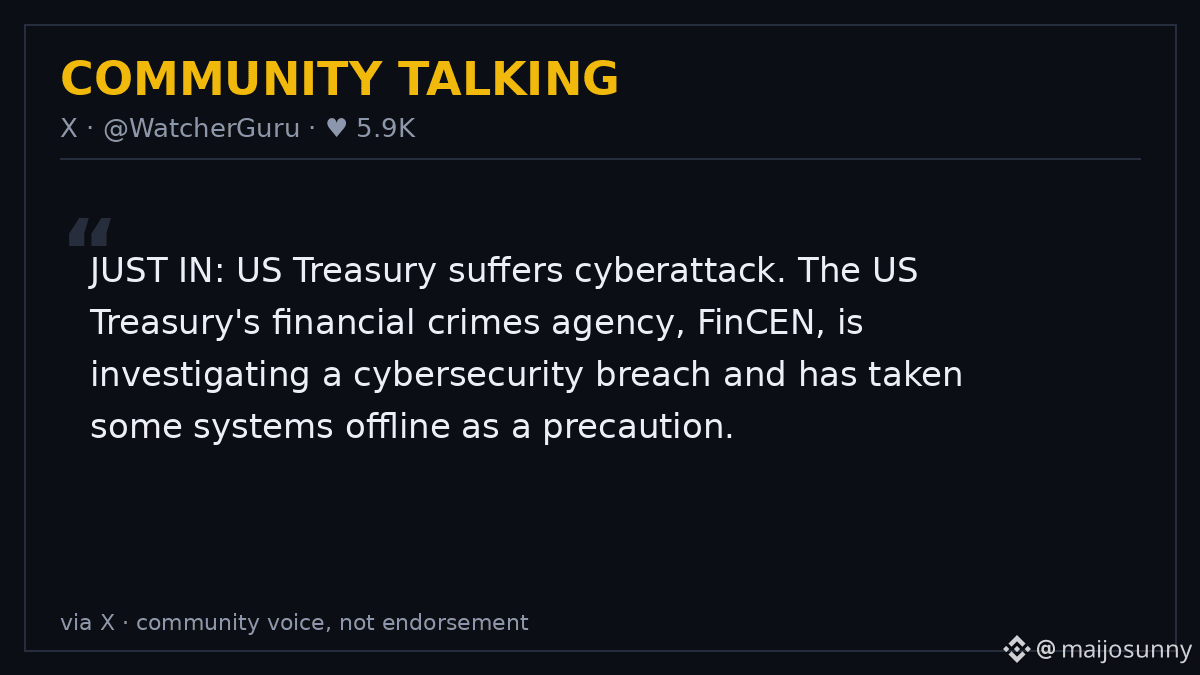
Traders on X are asking: how does the agency that polices crypto money flows get hacked?
FinCEN, the Treasury bureau collecting suspicious activity reports from banks and crypto exchanges, confirmed unauthorized access to some of its systems on Nov 24. BSA filing deadlines are extended to Dec 30.
Why it matters: exchanges file under the same rules FinCEN enforces. No data theft confirmed yet. If report data was exposed, this is a data story, not a delay story.
$BTC 58,787, down 2.8% in 24h, barely moved.
What are you watching for next? 👇
Not financial advice. DYOR.
#crypto #FinCEN
1
71


·
--
🚨 US TREASURY'S FINCEN JUST GOT BREACHED
FinCEN, the US Treasury bureau that collects financial crime data from banks and crypto exchanges, has confirmed a cybersecurity incident. Attackers gained unauthorized access to a limited subset of its systems, and some systems were taken offline as a precaution.
🔹 FinCEN issued an official BSA E-Filing alert and Order FIN-2026-R002, giving firms filing relief until Dec 30
🔹 The scope and source of the breach are still undisclosed
🔹 The hotline is unaffected and the e-filing site is still operational
WHY IT MATTERS
FinCEN sits on some of the most sensitive financial data in the US: suspicious activity reports, currency transaction reports, and compliance filings from nearly every regulated bank and exchange. A breach here is not a random hack headline. It touches the core of the US financial surveillance system.
⚠️ Honest part: nobody knows yet what data was accessed, or whether any crypto firm filings were exposed. FinCEN has not named the attackers, and the full impact may take weeks to surface.
The watchdog just got watched. Another government security failure, or a wake-up call for the whole compliance system? 🐂 / 🐻 👇
📌 Sharing personal opinions only, not financial advice or a recommendation to buy/sell. Crypto is highly risky; DYOR and you are solely responsible. No coin promotion.
#FinCEN #CyberSecurity #Crypto #Regulation #Binance
1
825

🚨 $BTC FINCEN BREACH COULD REWRITE LIQUIDITY MAP 🦈
FinCEN's data breach slices through the core of US financial surveillance, exposing a trove of SARs and CTRs that institutional traders rely on to gauge hidden liquidity. 🦈📊
Smart money may now scramble to re‑map order blocks as the unknown data leak could trigger a wave of repositioning across top‑tier exchanges. ⚡💡
💬 How do you anticipate the compliance shock will reshape crypto flow dynamics? 👇
⚠️ Not financial advice. Always manage your risk. 🛡️
🏷️ #BTC #FinCEN #Regulation #Crypto
🔥 💎
2

·
--
$BTC
The agency responsible for enforcing anti-money laundering rules got hacked first.
FinCEN, which is part of the U.S. Treasury Department, confirmed it yesterday.
Its systems were accessed without authorization, and some were taken offline.
The FBI and CISA are both investigating.
What does this agency do?
Suspicious activity reports from banks and exchanges all end up there.
It’s basically the agency overseeing anti-money laundering rules in the crypto world.
And now it’s been hit itself.
The official statement says there’s no evidence so far that the core database was accessed.
The filing deadline has been extended to December 30 for now, giving anyone who can’t file yet a little more time.
It wasn’t the only one.
That same week, the CIA, ODNI, and FBI were all hacked.
The U.S. government took a collective hit this time.
What impact will this have on the market?
Honestly, it’s too soon to tell.
$BTC 60400 is hovering above 60000, with no movement.
This incident has no direct connection to crypto prices.
But there’s one thing to keep in mind.
FinCEN holds suspicious transaction data from financial institutions across the U.S.
If investigators later find that the data was actually tampered with, tighter regulatory requirements are only a matter of time.
Exchanges’ compliance costs will only go up.
Just making a note of it for now. Keep an eye on what happens next.
Just my personal opinion, not investment advice
#FinCEN
134

·
--
The Treasury just confirmed that FinCEN, the bureau that collects every suspicious activity report in the US, got hit by hackers and pulled some systems offline. Not a crypto headline on paper, yet it matters.
What we know so far: unauthorized access to a subset of systems, no attribution, no word on whether data was copied. FinCEN pushed some filing deadlines out to December 30 and says SAR filing still works, with some services patchy. It also landed hours after reports of a separate breach at US intelligence agencies, so people are connecting dots. Nobody has proven they connect.
Here's how I read it. FinCEN sits on the data that exchanges, banks and stablecoin issuers like $USDT feed into every day. If that pipe gets disrupted, compliance teams get nervous, and regulators get louder about who holds sensitive data and how it's protected. I've seen cycles where a security scare turned into a rulebook within months.
Markets are already jumpy. Asia got hammered on tariff fears, and BTC is sitting near $59K, ETH around $1.65K. This is noise on top of noise.
What I'm watching:
• what FinCEN says was actually accessed
• any pause or delay in reporting rules
• whether exchanges tighten their own data handling
Do you think regulators lean harder on crypto after this, or get distracted by their own problems?
#FinCEN #CyberSecurity #aml #UStreasury
Not financial advice. DYOR.
141

·
--
The people fighting money laundering got hacked first.
On November 24, the U.S. Treasury Department’s Financial Crimes Enforcement Network (FinCEN) acknowledged that its systems had been accessed without authorization. Some services had to be taken offline, and the filing deadline was pushed straight back to December 30. The FBI and CISA are both investigating. Officials haven’t said a word about what data was lost or who was responsible, stressing only that there is “no evidence at this time” that the anti-money-laundering database was accessed.
The absurd part is, this wasn’t an isolated incident—in the same week, the CIA, the Office of the Director of National Intelligence, and the FBI were all hacked. The agencies handling money, intelligence, and law enforcement were hit one after another.
Put simply, FinCEN is the U.S. agency keeping an eye on crypto money laundering. Every suspicious transaction report from exchanges eventually ends up in its hands. Now part of that eye has gone blind. If hackers are willing to take on the very people who investigate financial records, can you really expect compliance to save the day?
The crypto world talks about decentralization every day. This time, reality has given that argument some support: one centralized security myth after another is crumbling.
#FinCEN #美国财政部 #网络安全 #加密监管 #BTC

111

FinCEN, part of the Treasury Department, admitted yesterday that someone had accessed “a small portion of its systems”; some systems have been taken offline.
That same day, the CIA and the Office of the Director of National Intelligence’s open-source systems were also reported to have been breached. Officials said no classified data was touched. They haven’t said whether the two incidents are connected, who was behind them, or whether any data was taken.
The busiest people are bank filers: some anti-money-laundering reports due between November 18 and December 29 have all been extended to December 30.
The crypto market hasn’t been quiet either. $BTC is still stuck below 59,000. Spot ETFs saw another $232 million in outflows on November 24, bringing November’s total to $4.94 billion—the largest monthly outflow since their launch. BlackRock’s IBIT alone accounted for $4.17 billion.
At 21:30 tonight, PCE and GDP data are due. Core PCE is expected to come in at 3.2% year over year, up from September’s 3.1%. Hackers, ETFs, and PCE all collide on the same day—will the market dump first or bounce first tonight? Comment 1 for dump first, 2 for bounce first.
$BTC #FinCEN #PCE #ETF
BTC+1.58%
BLKUS+1.32%
2

U.S. FinCEN Suffers Cyber Intrusion; Some Systems Taken Offline in Emergency, Compliance Filing Deadlines Extended
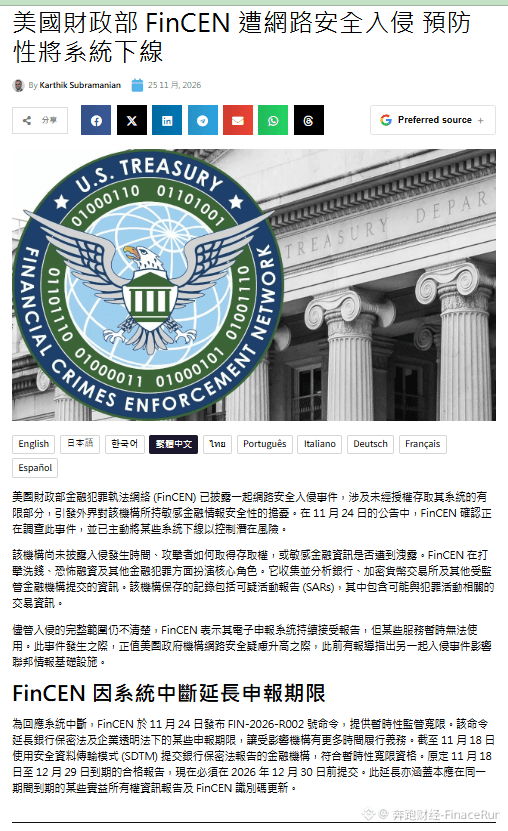
Nov. 25 — The U.S. Treasury Department’s Financial Crimes Enforcement Network (FinCEN) publicly disclosed on Tuesday that some of its systems had been accessed without authorization and that an investigation was underway.
To contain potential risks, the agency proactively took some systems offline. Although the Bank Secrecy Act electronic filing website remains able to receive reports, some services are temporarily unavailable.
As part of its response, FinCEN issued temporary regulatory exemption order FIN-2026-R002, extending filing deadlines for financial institutions submitting through the SDTM channel.
Under the exemption order, Bank Secrecy Act reports, beneficial ownership information, and FinCEN ID updates originally due between November 18 and December 29 this year are all due by December 30 instead.
FinCEN is responsible for combating money laundering and terrorist financing, and stores large amounts of sensitive financial intelligence, including suspicious activity reports submitted by banks and cryptocurrency platforms.
As of now, however, the timing of the intrusion, the point of entry, and the attackers’ identities and motives remain unknown. There is also no evidence yet confirming whether sensitive information was leaked, and the scope of the incident remains under investigation.
Moreover, before this cybersecurity incident came to light, the U.S. Central Intelligence Agency and the Office of the Director of National Intelligence also disclosed intrusions into unclassified intelligence systems. Officials have not confirmed whether the two attacks are connected.
As the anti-money-laundering regulator overseeing the crypto industry, FinCEN’s system shutdown has not only disrupted routine regulatory operations but could also force delays in compliance filings by cryptocurrency service providers.
#FinCEN #网络安全
615

·
--
The bureau overseeing illegal crypto flows in the US was hacked — and some of its systems were shut down.
Facts: FinCEN, a US Treasury Department bureau, confirmed on Tuesday, Nov. 24, that it is investigating a cybersecurity incident: there was unauthorized access to a small portion of its systems, and some systems were shut down as a precaution. The BSA filing portal remains operational, but some services may be temporarily disrupted. FinCEN also issued order FIN-2026-R002 (Nov. 24): the deadline for certain filings due between Nov. 18 and Dec. 29 has been moved to Dec. 30. What has not been disclosed: which systems were accessed, whether any data was taken, when the intrusion began, or who was behind it.
My take: This matters for crypto because FinCEN is the same bureau that designated MEXC a "primary money laundering concern" on Nov. 6 (the order takes effect Dec. 10) — and the bureau that receives suspicious activity reports from exchanges, including crypto exchanges. The irony is clear: the anti-money laundering gatekeeper itself was breached. But let's not overstate it: there has been no confirmation that any crypto-related reports were accessed, and filings can still be submitted through the online portal.
What I'm watching: whether FinCEN discloses which systems were affected, and whether crypto exchange reporting deadlines are impacted. BTC is around 59,390 as I write this, ahead of tonight's PCE and GDP data at 20:30 WIB.
What do you think: is an incident like this more concerning because of data that may have been leaked, or because crypto oversight could be disrupted?
This is my analysis, not financial advice — always DYOR.
#FinCEN #CryptoSecurity

·
--
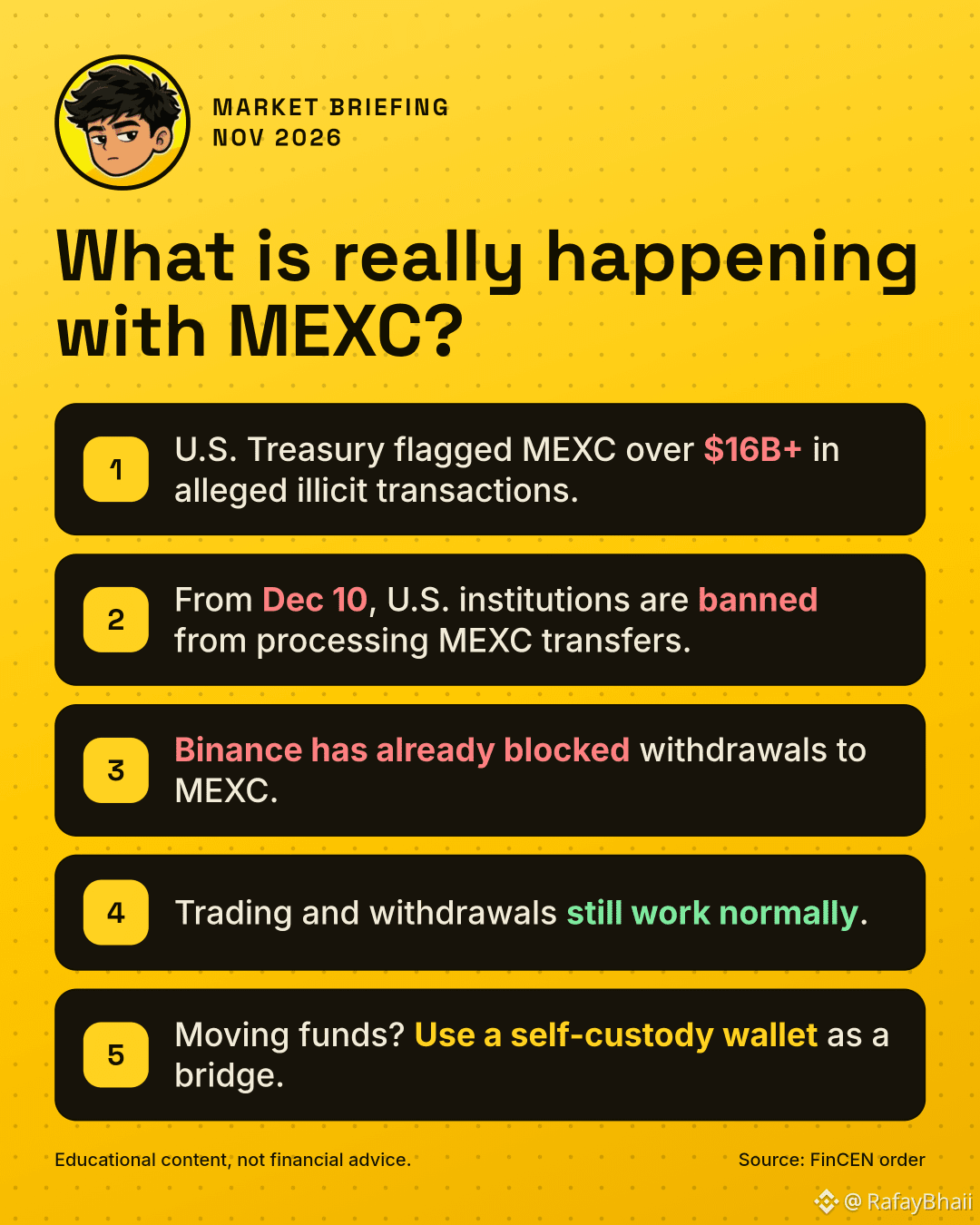
MEXC update: The U.S. Treasury (FinCEN) has banned U.S. financial institutions from processing MEXC transfers starting Dec 10, citing $16B+ in alleged illicit transactions.
Trading and withdrawals continue normally. When moving funds, use a self-custody wallet.
Educational content, not financial advice.
#MEXC #Crypto #FinCEN
Trading and withdrawals continue normally. When moving funds, use a self-custody wallet.
Educational content, not financial advice.
#MEXC #Crypto #FinCEN
124

·
--
Verified
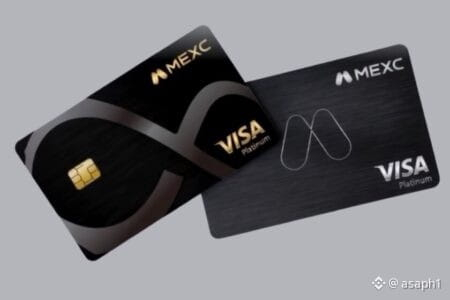
🚨 $MX BETRAYAL: MEXC KILLS ITS GLOBAL CARD TODAY
To me, this isn’t a “service adjustment”: MEXC shut down its Global Card today—the Visa card its users used to spend USDT with Apple Pay and Google Pay—less than 3 months after launching it. When an exchange takes your card away overnight, the problem isn’t the issuer: it’s trust.
Look at the detail no one is noticing:
→ The card was launched on August 31 and died today, November 18, at 15:30 UTC: just 79 days of life.
→ It’s the second card MEXC has buried in a week: the APAC Card already went down on November 11 for the same reason.
→ FinCEN flagged it on November 6 for $16.7 billion in illicit flows, and starting December 10, U.S. banks will be unable to process transfers with MEXC.
Will MEXC survive U.S. pressure, or is this just the beginning of the end? 👇
$MX $USDT
#MEXC #FinCEN #CryptoCard
1
7
10.3k

·
--
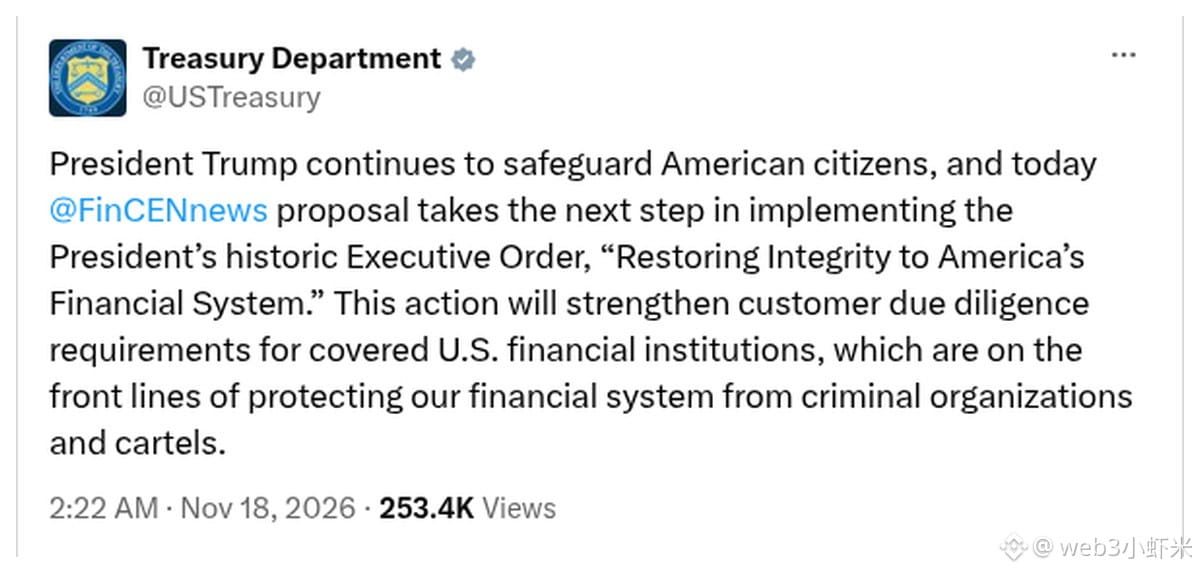
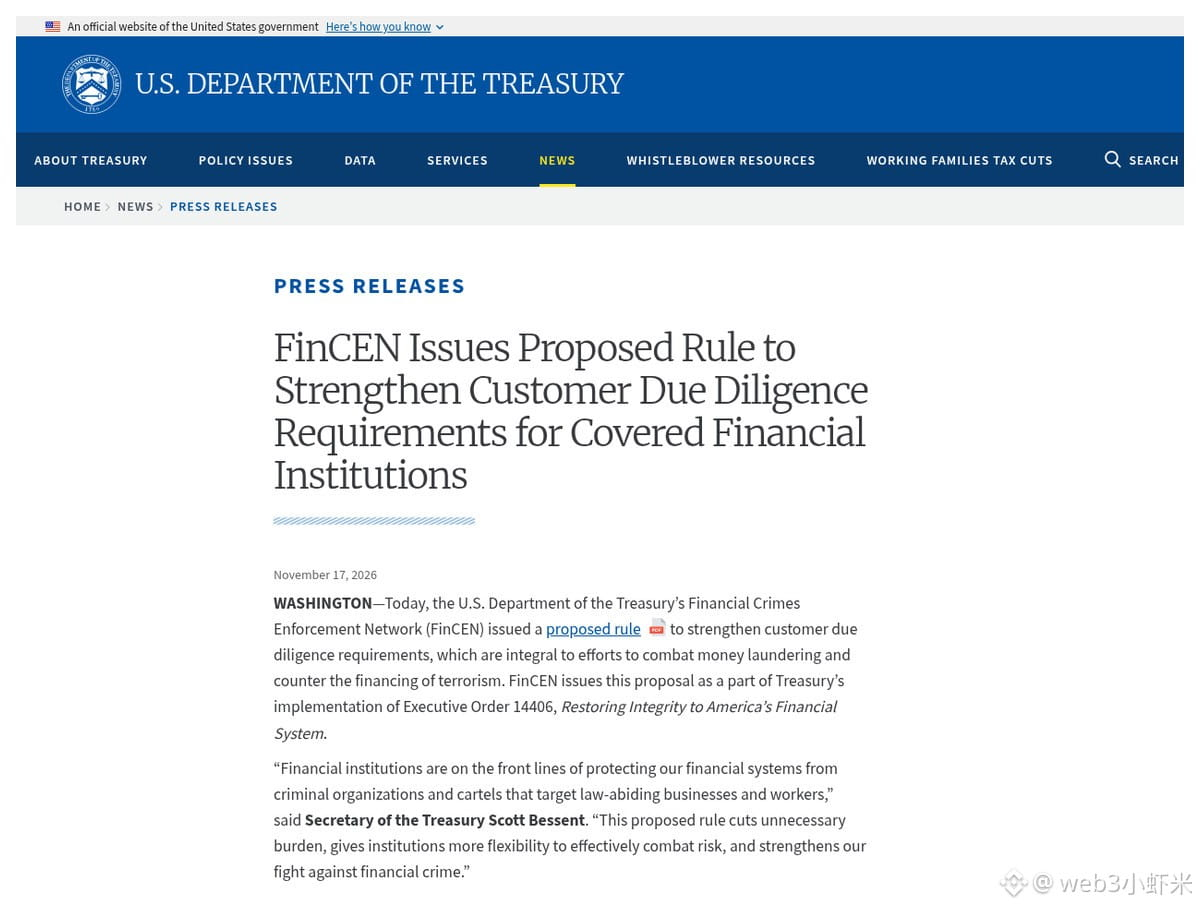
I came across the U.S. Treasury Department’s website: On November 17, FinCEN issued a proposed rule to strengthen customer due diligence (CDD) requirements for covered financial institutions. The agency said this is part of implementing Executive Order EO 14406, “Restoring Integrity to America’s Financial System,” and is intended to strengthen anti-money laundering and counter-terrorist financing efforts.
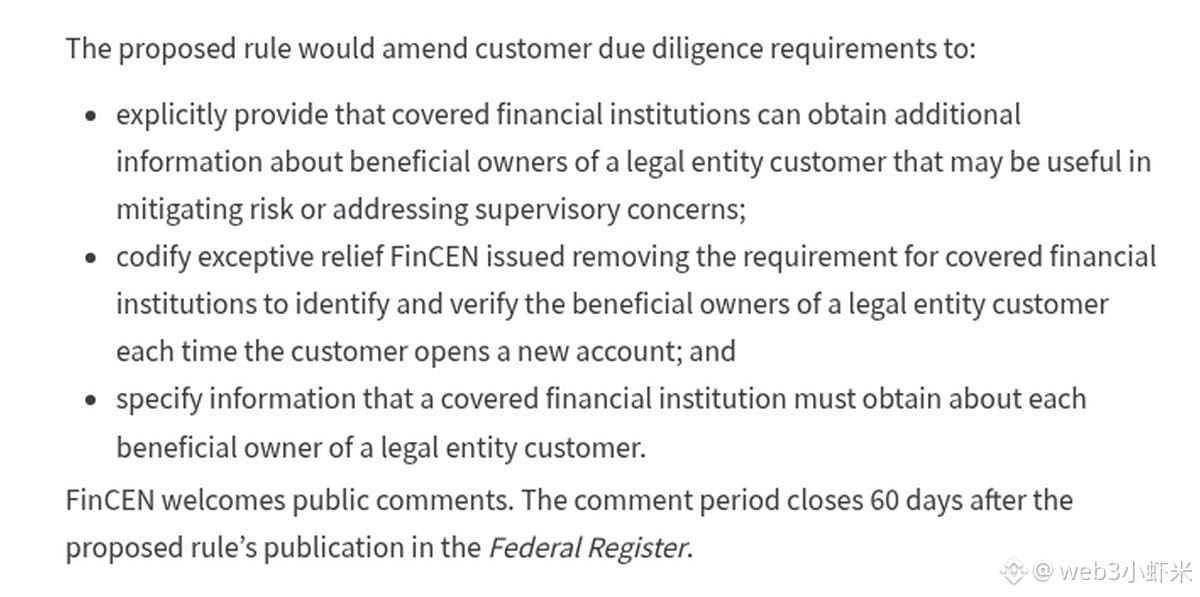
Treasury Secretary Scott Bessent said the proposed rule would reduce unnecessary burdens, give institutions more flexibility in responding to risks, and strengthen efforts to combat financial crime. It has three main elements: clarifying that institutions may collect additional beneficial ownership information about legal entity customers; incorporating FinCEN’s previous exemptions into the rule, so institutions are no longer required to re-identify and verify beneficial owners every time a new account is opened; and clarifying which beneficial ownership information must be collected.
This is still only a proposal for public comment, not a final rule in effect. The agency said the comment period will close 60 days after publication in the Federal Register.
#FinCEN #Regulatory
2

·
--
🚫 Binance, OKX and a string of CEXs block funds flowing to MEXC: do you still have assets there?
On November 6, 2026, FinCEN, part of the U.S. Treasury Department, issued a special order designating MEXC Global as a financial institution of primary money laundering concern, citing links to illicit financing involving Russia, Iran, and North Korea. According to the allegations, MEXC facilitated around $16 billion in illicit transactions over five years.
OKX was among the first exchanges to comply, refusing to accept funds from MEXC users.
As of the date this article was written (November 10, 2026), Binance announced:
1️⃣ It would not process transactions involving MEXC or its affiliated companies.
2️⃣ Withdrawals from Binance to MEXC would be rejected. In the opposite direction, funds would be held temporarily for review in accordance with regulations.
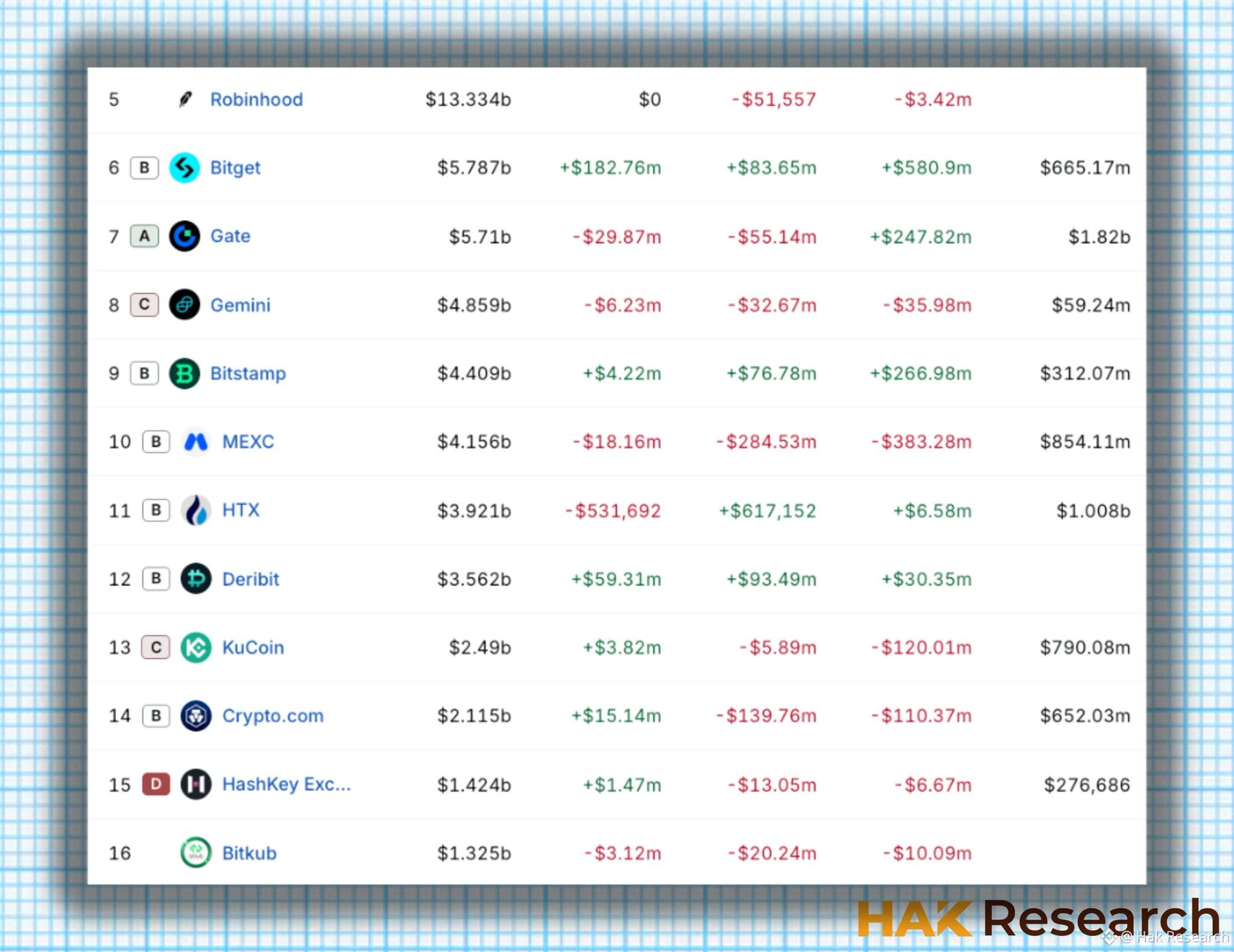
Funds are flowing out of MEXC at a significant pace: more than $18 million in 24 hours and nearly $300 million in 7 days. The image in the article (the exchange flow table) shows MEXC at around −$18.16 million and −$284.53 million over those respective periods.
MEXC says it is in contact and cooperating with FinCEN to clarify the matter. According to the original article as of November 10, withdrawals were still proceeding normally, and quite a few exchanges had yet to impose a ban.
Do you still have assets on MEXC? Have you taken steps to secure them, or are you waiting for more information? 👇
#MEXC #Binance #OKX #FinCEN
155
Log in to explore more content
Join global crypto users on Binance Square
⚡️ Get latest and useful information about crypto.
💬 Trusted by the world’s largest crypto exchange.
👍 Discover real insights from verified creators.
Email / Phone number
Trending Topics
1
#EvolveAtBinanceBlockchainWeek
970,398 views
12,020 Discussing
2
#CanMarketsReboundAfterThanksgiving?
293,343 views
2,497 Discussing
3
#Nasdaq100FiveDayAvgIntradayVolatilityHits3.8%
17,714 views
244 Discussing
4
#CorePCEBeatLiftsFedHikeOdds
360,209 views
1,936 Discussing
5
#CouldSpaceX’sOrbitalDataCentersBoostAIChipDemand?
135,038 views
1,456 Discussing
6
#ZcashDevelopersUrgeZECMoveToIronwood
64,511 views
338 Discussing
7
#XRPLedgerVaultGets29Votes
1,391 views
25 Discussing
8
#ASEANPlus3ToFormCrossBorderPaymentsCryptoWorkingGroup
5,040 views
11 Discussing
9
#StellarAdds$80.4MTokenizedFundsInOneDay
6,364 views
21 Discussing
10
#TudorInvestmentRaisesIBITHoldings98%
10,178 views
59 Discussing