

#ecb
ecb
788,564 views
1,032 Discussing
Hot
Latest

·
--
Article
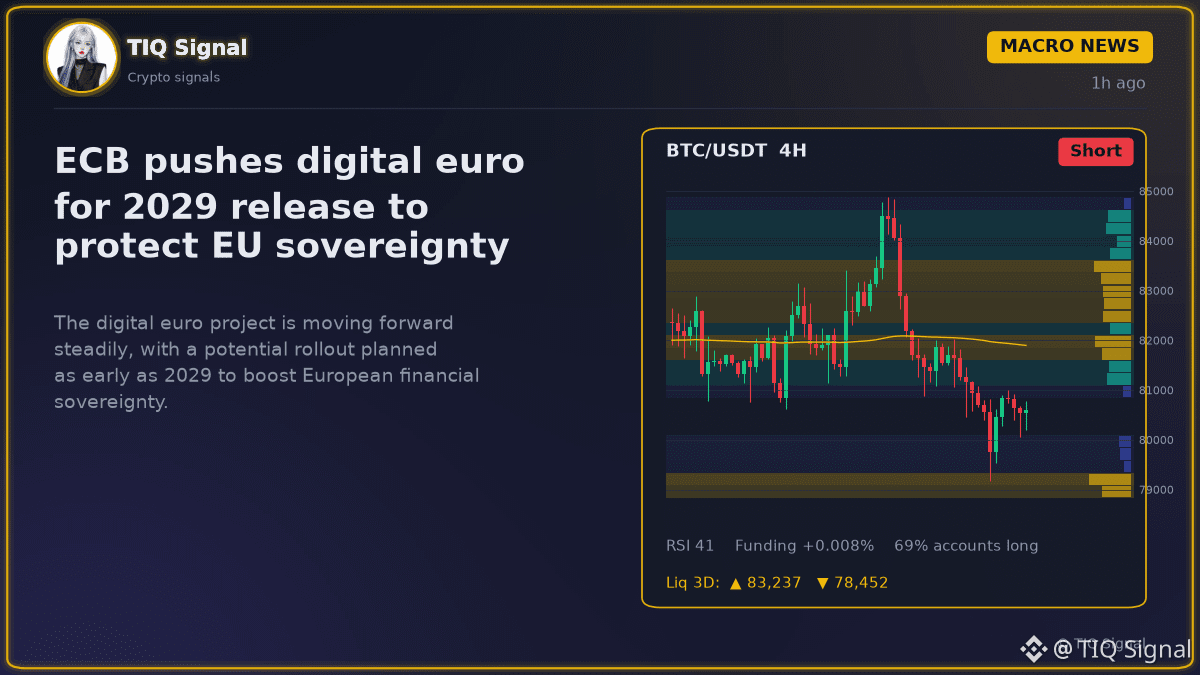
ECB pushes digital euro for 2029 release to protect EU sovereigntyThe digital euro project is moving forward steadily, with a potential rollout planned as early as 2029 to boost European financial sovereignty.
Piero Cipollone from the central bank recently shared that the bloc is aiming to test real transactions by 2027. This ambitious timeline naturally depends on lawmakers passing the necessary legislation within this year. Let's be honest, getting politicians to agree on tech timelines is a bit like herding cats in a digital thunderstorm.
The main goal here is keeping the region financially independent and secure in an increasingly digital world. Officials believe that having an official public digital currency will protect economic stability against foreign private payment systems.
While paper cash is not disappearing tomorrow, the central bank wants to make sure citizens have a modern, publ
Why it matters 💡
Crypto market participants keep a close eye on central bank digital currency developments because they shape global liquidity trends, regulatory standards, and overall risk appetite. Understanding these macro shifts helps everyone navigate how traditional finance and digital assets interact without needing a crystal ball.
4H signal view on $BTC 📊
Short 🔴
Entry 80,603 - 80,966
TP 78,777 - 77,607 - 75,754
SL 82,373
No fresh signal, direction follows MACD momentum.
RSI 41 still has room to move. MACD momentum is leaning down. Price is on the right side of EMA200.
#Macro #DigitalEuro #ECB #MacroEconomy #CryptoNews
ℹ️ News roundup from public sources, not financial advice.
ECB pushes digital euro for 2029 release to protect EU sovereignty
The digital euro project is moving forward steadily, with a potential rollout planned as early as 2029 to boost European financial sovereignty.
Piero Cipollone from the central bank recently shared that the bloc is aiming to test real transactions by 2027. This ambitious timeline naturally depends on lawmakers passing the necessary legislation within this year. Let's be honest, getting politicians to agree on tech timelines is a bit like herding cats in a digital thunderstorm.
The main goal here is keeping the region financially independent and secure in an increasingly digital world. Officials believe that having an official public digital currency will protect economic stability against foreign private payment systems.
While paper cash is not disappearing tomorrow, the central bank wants to make sure citizens have a modern, publ
Why it matters 💡
Crypto market participants keep a close eye on central bank digital currency developments because they shape global liquidity trends, regulatory standards, and overall risk appetite. Understanding these macro shifts helps everyone navigate how traditional finance and digital assets interact without needing a crystal ball.
4H signal view on $BTC 📊
Short 🔴
Entry 80,603 - 80,966
TP 78,777 - 77,607 - 75,754
SL 82,373
No fresh signal, direction follows MACD momentum.
RSI 41 still has room to move. MACD momentum is leaning down. Price is on the right side of EMA200.
#Macro #DigitalEuro #ECB #MacroEconomy #CryptoNews
ℹ️ News roundup from public sources, not financial advice.
Piero Cipollone from the central bank recently shared that the bloc is aiming to test real transactions by 2027. This ambitious timeline naturally depends on lawmakers passing the necessary legislation within this year. Let's be honest, getting politicians to agree on tech timelines is a bit like herding cats in a digital thunderstorm.
The main goal here is keeping the region financially independent and secure in an increasingly digital world. Officials believe that having an official public digital currency will protect economic stability against foreign private payment systems.
While paper cash is not disappearing tomorrow, the central bank wants to make sure citizens have a modern, publ
Why it matters 💡
Crypto market participants keep a close eye on central bank digital currency developments because they shape global liquidity trends, regulatory standards, and overall risk appetite. Understanding these macro shifts helps everyone navigate how traditional finance and digital assets interact without needing a crystal ball.
4H signal view on $BTC 📊
Short 🔴
Entry 80,603 - 80,966
TP 78,777 - 77,607 - 75,754
SL 82,373
No fresh signal, direction follows MACD momentum.
RSI 41 still has room to move. MACD momentum is leaning down. Price is on the right side of EMA200.
#Macro #DigitalEuro #ECB #MacroEconomy #CryptoNews
ℹ️ News roundup from public sources, not financial advice.

ECB sees digital euro as key to protecting EU sovereignty
- ECB official Piero Cipollone.
- Digital euro is key to protecting EU sovereignty.
- Live transaction testing area in 2027.
- Digital euro could be issued as early as 2029.
- Legislation needed this year.
#BinanceSquare #CryptoNews #ECB #DigitalEuro
$btc $eth
#vlikevn Titanbot
Source: CoinTelegraph
ECB sees digital euro as key to protecting EU sovereignty
- ECB official Piero Cipollone.
- Digital euro is key to protecting EU sovereignty.
- Live transaction testing area in 2027.
- Digital euro could be issued as early as 2029.
- Legislation needed this year.
#BinanceSquare #CryptoNews #ECB #DigitalEuro
$btc $eth
#vlikevn Titanbot
Source: CoinTelegraph
- ECB official Piero Cipollone.
- Digital euro is key to protecting EU sovereignty.
- Live transaction testing area in 2027.
- Digital euro could be issued as early as 2029.
- Legislation needed this year.
#BinanceSquare #CryptoNews #ECB #DigitalEuro
$btc $eth
#vlikevn Titanbot
Source: CoinTelegraph
316


·
--
Verified
💶💶💶💶💶💶💶 Preparations Underway for the Launch of the Digital Euro
On October 17, Christine Lagarde confirmed that the ECB is continuing preparations for a digital euro intended for everyday payments.
📊 Inflation in the Eurozone reached 3.8% in September, driven by higher energy costs.
The digital euro is intended to strengthen the EU’s payment autonomy and complement cash.
#ECB #Eu
$BNB
{spot}(BNBUSDT)
💶💶💶💶💶💶💶 Preparations Underway for the Launch of the Digital Euro
On October 17, Christine Lagarde confirmed that the ECB is continuing preparations for a digital euro intended for everyday payments.
📊 Inflation in the Eurozone reached 3.8% in September, driven by higher energy costs.
The digital euro is intended to strengthen the EU’s payment autonomy and complement cash.
#ECB #Eu
$BNB
On October 17, Christine Lagarde confirmed that the ECB is continuing preparations for a digital euro intended for everyday payments.
📊 Inflation in the Eurozone reached 3.8% in September, driven by higher energy costs.
The digital euro is intended to strengthen the EU’s payment autonomy and complement cash.
#ECB #Eu
$BNB

1
9
1k

·
--
European Central Bank President Christine Lagarde said on Saturday in Bangkok, while attending a meeting of central bank governors and finance ministers, that the recent global bond sell-off has driven up borrowing costs. This tightening of financial conditions will directly restrain economic growth in the eurozone and ultimately bring inflation down. She stressed in particular that the surge in yields, fueled by debt concerns and credit demand for AI investment, is putting heavy pressure on highly indebted countries such as France.
Her remarks drew significant market attention because they directly revise the European Central Bank’s September forecast model. With long-term interest rates rising more than expected and conflict in the Middle East pushing up the prices of crude oil and other fuels, European consumers’ purchasing power is being sharply squeezed. The broader economy faces more complex stagflationary pressures than previously anticipated.
From a macro-financial perspective, rising global government bond yields have effectively acted as a passive rate hike. Squeezed by surging borrowing costs and slowing economic growth, the U.S. dollar index and volatility in major U.S. and European sovereign bonds remain elevated, significantly limiting the scope for traditional risk assets to expand their valuations.
For crypto markets, tighter macro liquidity and higher borrowing costs mean that marginal over-the-counter funds remain cautious about entering the market. In the short term, market liquidity may continue to fluctuate amid competing forces. Investors are closely watching yields in traditional bond markets to assess the subsequent rebalancing of safe-haven flows and risk appetite.
#ECB #BondMarket #MacroEconomy
European Central Bank President Christine Lagarde said on Saturday in Bangkok, while attending a meeting of central bank governors and finance ministers, that the recent global bond sell-off has driven up borrowing costs. This tightening of financial conditions will directly restrain economic growth in the eurozone and ultimately bring inflation down. She stressed in particular that the surge in yields, fueled by debt concerns and credit demand for AI investment, is putting heavy pressure on highly indebted countries such as France.
Her remarks drew significant market attention because they directly revise the European Central Bank’s September forecast model. With long-term interest rates rising more than expected and conflict in the Middle East pushing up the prices of crude oil and other fuels, European consumers’ purchasing power is being sharply squeezed. The broader economy faces more complex stagflationary pressures than previously anticipated.
From a macro-financial perspective, rising global government bond yields have effectively acted as a passive rate hike. Squeezed by surging borrowing costs and slowing economic growth, the U.S. dollar index and volatility in major U.S. and European sovereign bonds remain elevated, significantly limiting the scope for traditional risk assets to expand their valuations.
For crypto markets, tighter macro liquidity and higher borrowing costs mean that marginal over-the-counter funds remain cautious about entering the market. In the short term, market liquidity may continue to fluctuate amid competing forces. Investors are closely watching yields in traditional bond markets to assess the subsequent rebalancing of safe-haven flows and risk appetite.
#ECB #BondMarket #MacroEconomy
Her remarks drew significant market attention because they directly revise the European Central Bank’s September forecast model. With long-term interest rates rising more than expected and conflict in the Middle East pushing up the prices of crude oil and other fuels, European consumers’ purchasing power is being sharply squeezed. The broader economy faces more complex stagflationary pressures than previously anticipated.
From a macro-financial perspective, rising global government bond yields have effectively acted as a passive rate hike. Squeezed by surging borrowing costs and slowing economic growth, the U.S. dollar index and volatility in major U.S. and European sovereign bonds remain elevated, significantly limiting the scope for traditional risk assets to expand their valuations.
For crypto markets, tighter macro liquidity and higher borrowing costs mean that marginal over-the-counter funds remain cautious about entering the market. In the short term, market liquidity may continue to fluctuate amid competing forces. Investors are closely watching yields in traditional bond markets to assess the subsequent rebalancing of safe-haven flows and risk appetite.
#ECB #BondMarket #MacroEconomy
54

European Central Bank President Christine Lagarde issued a public warning on Saturday at a meeting of central bank governors and finance ministers in Bangkok, saying that the recent sharp sell-off in global bond markets had pushed up long-term borrowing costs. This significant tightening of financial conditions is directly curbing economic expansion in the eurozone and weakening the inflation transmission mechanism seen previously.
Global bond yields have continued to surge in recent weeks, driven by concerns over sovereign debt worldwide, persistent inflation, and a sharp increase in credit demand from artificial intelligence investment. Lagarde stressed that high borrowing costs are putting pressure on the finances of heavily indebted countries such as France, and are also making it harder for consumers to cope with rising oil prices triggered by geopolitical conflict in the Middle East. The overall situation is more severe than the European Central Bank had projected in September.
The passive rise in long-term bond yields is equivalent to an additional tightening effect beyond central bank policy, dampening risk appetite across financial markets. Squeezed by mounting sovereign debt pressures and a rebound in energy costs, traditional capital markets are facing the harsh realities of an economic slowdown and liquidity being diverted elsewhere.
For crypto assets, persistently high global risk-free rates continue to weigh on macro liquidity and heighten investors’ risk aversion. If pressure on the eurozone economy and rising borrowing costs further weaken liquidity in global risk assets, major assets such as $BTC may remain under pressure and trade erratically in the short term. 📉
#ECB #BondMarket #GlobalEconomy
European Central Bank President Christine Lagarde issued a public warning on Saturday at a meeting of central bank governors and finance ministers in Bangkok, saying that the recent sharp sell-off in global bond markets had pushed up long-term borrowing costs. This significant tightening of financial conditions is directly curbing economic expansion in the eurozone and weakening the inflation transmission mechanism seen previously.
Global bond yields have continued to surge in recent weeks, driven by concerns over sovereign debt worldwide, persistent inflation, and a sharp increase in credit demand from artificial intelligence investment. Lagarde stressed that high borrowing costs are putting pressure on the finances of heavily indebted countries such as France, and are also making it harder for consumers to cope with rising oil prices triggered by geopolitical conflict in the Middle East. The overall situation is more severe than the European Central Bank had projected in September.
The passive rise in long-term bond yields is equivalent to an additional tightening effect beyond central bank policy, dampening risk appetite across financial markets. Squeezed by mounting sovereign debt pressures and a rebound in energy costs, traditional capital markets are facing the harsh realities of an economic slowdown and liquidity being diverted elsewhere.
For crypto assets, persistently high global risk-free rates continue to weigh on macro liquidity and heighten investors’ risk aversion. If pressure on the eurozone economy and rising borrowing costs further weaken liquidity in global risk assets, major assets such as $BTC may remain under pressure and trade erratically in the short term. 📉
#ECB #BondMarket #GlobalEconomy
Global bond yields have continued to surge in recent weeks, driven by concerns over sovereign debt worldwide, persistent inflation, and a sharp increase in credit demand from artificial intelligence investment. Lagarde stressed that high borrowing costs are putting pressure on the finances of heavily indebted countries such as France, and are also making it harder for consumers to cope with rising oil prices triggered by geopolitical conflict in the Middle East. The overall situation is more severe than the European Central Bank had projected in September.
The passive rise in long-term bond yields is equivalent to an additional tightening effect beyond central bank policy, dampening risk appetite across financial markets. Squeezed by mounting sovereign debt pressures and a rebound in energy costs, traditional capital markets are facing the harsh realities of an economic slowdown and liquidity being diverted elsewhere.
For crypto assets, persistently high global risk-free rates continue to weigh on macro liquidity and heighten investors’ risk aversion. If pressure on the eurozone economy and rising borrowing costs further weaken liquidity in global risk assets, major assets such as $BTC may remain under pressure and trade erratically in the short term. 📉
#ECB #BondMarket #GlobalEconomy
353

European Central Bank President Lagarde said on Saturday at a meeting of central bank governors and finance ministers in Bangkok that the recent global bond sell-off has pushed up borrowing costs in the euro area. This passive tightening of financial conditions will weigh on economic growth and ultimately curb inflation. She emphasized that long-term government bond yields have risen significantly amid sovereign debt concerns and competition for credit in the AI sector, putting heavily indebted countries such as France under considerable strain.
From a technical and macroeconomic perspective, the passive rise in long-term yields is equivalent to the market carrying out a “painless rate hike” on behalf of central banks. As rising borrowing costs independently suppress aggregate demand, the impact of inflation pass-through is substantially weakened. This objectively reduces the urgency for the European Central Bank to introduce further hawkish rate hikes and could bring forward the establishment of expectations for the terminal rate.
In traditional financial markets, benchmark European government bond yields are showing signs of losing momentum after their surge. Elevated borrowing costs are forcing central banks to shift toward a more dovish stance. If selling pressure in bonds peaks at key resistance levels, expectations of tighter liquidity will have been fully priced in. A marginal retreat in the US Dollar Index and major sovereign bond yields would create room for risk assets to rebound.
For crypto markets, $BTC and major assets have shown remarkable resilience after withstanding a stress test from macro discount-rate pressures. A peak in tightening expectations at the margin is typically a forward-looking signal of a liquidity reversal. If long-term interest rates peak and decline, a recovery in risk appetite will accelerate the return of sidelined capital to the crypto ecosystem, building a technical base for a medium- to long-term breakout to the upside. 📈
#ECB #BondMarket #MacroEconomics
European Central Bank President Lagarde said on Saturday at a meeting of central bank governors and finance ministers in Bangkok that the recent global bond sell-off has pushed up borrowing costs in the euro area. This passive tightening of financial conditions will weigh on economic growth and ultimately curb inflation. She emphasized that long-term government bond yields have risen significantly amid sovereign debt concerns and competition for credit in the AI sector, putting heavily indebted countries such as France under considerable strain.
From a technical and macroeconomic perspective, the passive rise in long-term yields is equivalent to the market carrying out a “painless rate hike” on behalf of central banks. As rising borrowing costs independently suppress aggregate demand, the impact of inflation pass-through is substantially weakened. This objectively reduces the urgency for the European Central Bank to introduce further hawkish rate hikes and could bring forward the establishment of expectations for the terminal rate.
In traditional financial markets, benchmark European government bond yields are showing signs of losing momentum after their surge. Elevated borrowing costs are forcing central banks to shift toward a more dovish stance. If selling pressure in bonds peaks at key resistance levels, expectations of tighter liquidity will have been fully priced in. A marginal retreat in the US Dollar Index and major sovereign bond yields would create room for risk assets to rebound.
For crypto markets, $BTC and major assets have shown remarkable resilience after withstanding a stress test from macro discount-rate pressures. A peak in tightening expectations at the margin is typically a forward-looking signal of a liquidity reversal. If long-term interest rates peak and decline, a recovery in risk appetite will accelerate the return of sidelined capital to the crypto ecosystem, building a technical base for a medium- to long-term breakout to the upside. 📈
#ECB #BondMarket #MacroEconomics
From a technical and macroeconomic perspective, the passive rise in long-term yields is equivalent to the market carrying out a “painless rate hike” on behalf of central banks. As rising borrowing costs independently suppress aggregate demand, the impact of inflation pass-through is substantially weakened. This objectively reduces the urgency for the European Central Bank to introduce further hawkish rate hikes and could bring forward the establishment of expectations for the terminal rate.
In traditional financial markets, benchmark European government bond yields are showing signs of losing momentum after their surge. Elevated borrowing costs are forcing central banks to shift toward a more dovish stance. If selling pressure in bonds peaks at key resistance levels, expectations of tighter liquidity will have been fully priced in. A marginal retreat in the US Dollar Index and major sovereign bond yields would create room for risk assets to rebound.
For crypto markets, $BTC and major assets have shown remarkable resilience after withstanding a stress test from macro discount-rate pressures. A peak in tightening expectations at the margin is typically a forward-looking signal of a liquidity reversal. If long-term interest rates peak and decline, a recovery in risk appetite will accelerate the return of sidelined capital to the crypto ecosystem, building a technical base for a medium- to long-term breakout to the upside. 📈
#ECB #BondMarket #MacroEconomics
114

·
--
ECB President Christine Lagarde issued a warning on Saturday in Bangkok during a meeting with central bank leaders and finance ministers. She stressed that the recent wave of bond sell-offs is driving up borrowing costs, tightening financial conditions and directly restraining economic growth in the Eurozone.
This message is particularly important because it highlights the double pressure from mounting public debt, credit demand for AI, and the risk of higher crude oil prices due to the conflict with Iran. Financial conditions are tightening faster and more dangerously than in the scenarios the ECB forecast in September.
For traditional financial markets, surging long-term bond yields are weighing heavily on countries with large debt burdens, such as France. Higher capital costs will also curb consumer purchasing power and put downward pressure on valuations in global stock markets.
In crypto markets, tight liquidity and persistently high risk-free yields often make large investors more cautious. $BTC and other risk assets may face a period of choppy, range-bound trading as investors rebalance their macro hedges.
#ECB #BondMarket #MacroEconomy
ECB President Christine Lagarde issued a warning on Saturday in Bangkok during a meeting with central bank leaders and finance ministers. She stressed that the recent wave of bond sell-offs is driving up borrowing costs, tightening financial conditions and directly restraining economic growth in the Eurozone.
This message is particularly important because it highlights the double pressure from mounting public debt, credit demand for AI, and the risk of higher crude oil prices due to the conflict with Iran. Financial conditions are tightening faster and more dangerously than in the scenarios the ECB forecast in September.
For traditional financial markets, surging long-term bond yields are weighing heavily on countries with large debt burdens, such as France. Higher capital costs will also curb consumer purchasing power and put downward pressure on valuations in global stock markets.
In crypto markets, tight liquidity and persistently high risk-free yields often make large investors more cautious. $BTC and other risk assets may face a period of choppy, range-bound trading as investors rebalance their macro hedges.
#ECB #BondMarket #MacroEconomy
This message is particularly important because it highlights the double pressure from mounting public debt, credit demand for AI, and the risk of higher crude oil prices due to the conflict with Iran. Financial conditions are tightening faster and more dangerously than in the scenarios the ECB forecast in September.
For traditional financial markets, surging long-term bond yields are weighing heavily on countries with large debt burdens, such as France. Higher capital costs will also curb consumer purchasing power and put downward pressure on valuations in global stock markets.
In crypto markets, tight liquidity and persistently high risk-free yields often make large investors more cautious. $BTC and other risk assets may face a period of choppy, range-bound trading as investors rebalance their macro hedges.
#ECB #BondMarket #MacroEconomy
201
The latest data released by Eurostat show that the euro area’s final September annual HICP inflation rate came in at 3.8%, in line with market expectations and unchanged from the previous reading, while the final annual core CPI rate remained at 2.2%. Notably, Italy’s annual HICP inflation rate climbed to 4.2% in September, above the expected 4.1%, highlighting the growing divergence in inflation across the region.
Although headline inflation has not accelerated for a second time, the 3.8% inflation level remains well above the European Central Bank’s policy target, reflecting extremely persistent price pressures. Combined with the weak economic fundamentals reflected in the sharp widening of the euro area’s seasonally adjusted trade deficit to €68 billion in August, the ECB is caught between curbing inflation and preventing a hard economic landing.
Persistent price pressures mean that a meaningful shift away from tight monetary conditions is unlikely in the short term, and eurozone bond yields and borrowing costs may remain elevated. With the shadow of macroeconomic stagflation looming, global risk aversion is rising, creating serious headwinds for a valuation recovery in traditional risk assets.
For crypto markets, continued tightening of liquidity in Europe will further dampen the willingness of incremental capital to enter the market. Unless external macro liquidity materially improves, $BTC and mainstream risk assets are unlikely to embark on independent rallies, and investors should remain alert to the risk of valuation pullbacks.⚠️
#Eurozone #Inflation #ECB
The latest data released by Eurostat show that the euro area’s final September annual HICP inflation rate came in at 3.8%, in line with market expectations and unchanged from the previous reading, while the final annual core CPI rate remained at 2.2%. Notably, Italy’s annual HICP inflation rate climbed to 4.2% in September, above the expected 4.1%, highlighting the growing divergence in inflation across the region.
Although headline inflation has not accelerated for a second time, the 3.8% inflation level remains well above the European Central Bank’s policy target, reflecting extremely persistent price pressures. Combined with the weak economic fundamentals reflected in the sharp widening of the euro area’s seasonally adjusted trade deficit to €68 billion in August, the ECB is caught between curbing inflation and preventing a hard economic landing.
Persistent price pressures mean that a meaningful shift away from tight monetary conditions is unlikely in the short term, and eurozone bond yields and borrowing costs may remain elevated. With the shadow of macroeconomic stagflation looming, global risk aversion is rising, creating serious headwinds for a valuation recovery in traditional risk assets.
For crypto markets, continued tightening of liquidity in Europe will further dampen the willingness of incremental capital to enter the market. Unless external macro liquidity materially improves, $BTC and mainstream risk assets are unlikely to embark on independent rallies, and investors should remain alert to the risk of valuation pullbacks.⚠️
#Eurozone #Inflation #ECB
Although headline inflation has not accelerated for a second time, the 3.8% inflation level remains well above the European Central Bank’s policy target, reflecting extremely persistent price pressures. Combined with the weak economic fundamentals reflected in the sharp widening of the euro area’s seasonally adjusted trade deficit to €68 billion in August, the ECB is caught between curbing inflation and preventing a hard economic landing.
Persistent price pressures mean that a meaningful shift away from tight monetary conditions is unlikely in the short term, and eurozone bond yields and borrowing costs may remain elevated. With the shadow of macroeconomic stagflation looming, global risk aversion is rising, creating serious headwinds for a valuation recovery in traditional risk assets.
For crypto markets, continued tightening of liquidity in Europe will further dampen the willingness of incremental capital to enter the market. Unless external macro liquidity materially improves, $BTC and mainstream risk assets are unlikely to embark on independent rallies, and investors should remain alert to the risk of valuation pullbacks.⚠️
#Eurozone #Inflation #ECB
30
·
--
The European Statistical Office (Eurostat) has just released official September CPI data for the Eurozone, reporting annual headline inflation of 3.8% and core CPI of 2.2%, both exactly in line with previous forecasts. Meanwhile, Italy’s harmonized CPI edged up to 4.2%, exceeding the 4.1% forecast and reflecting divergent price pressures.
The fact that headline inflation remains elevated at 3.8% shows that bringing prices down in Europe remains a persistent challenge. Price pressures have yet to ease quickly, leaving the European Central Bank (ECB) constrained to maintain tight monetary policy, with little prospect of easing anytime soon.
Inflation figures in line with expectations helped the euro and government bond yields across the single-currency area remain stable. However, combined with August trade deficit data that unexpectedly widened, sentiment in European stock markets continues to face some degree of caution.
For crypto markets, macroeconomic indicators coming in as forecast helps reduce the risk of sharp short-term volatility. However, with global interest rates remaining high, $BTC and risk assets still need fresh liquidity inflows to break out. 📊
#Eurozone #ECB #Inflation #CryptoMacro
The European Statistical Office (Eurostat) has just released official September CPI data for the Eurozone, reporting annual headline inflation of 3.8% and core CPI of 2.2%, both exactly in line with previous forecasts. Meanwhile, Italy’s harmonized CPI edged up to 4.2%, exceeding the 4.1% forecast and reflecting divergent price pressures.
The fact that headline inflation remains elevated at 3.8% shows that bringing prices down in Europe remains a persistent challenge. Price pressures have yet to ease quickly, leaving the European Central Bank (ECB) constrained to maintain tight monetary policy, with little prospect of easing anytime soon.
Inflation figures in line with expectations helped the euro and government bond yields across the single-currency area remain stable. However, combined with August trade deficit data that unexpectedly widened, sentiment in European stock markets continues to face some degree of caution.
For crypto markets, macroeconomic indicators coming in as forecast helps reduce the risk of sharp short-term volatility. However, with global interest rates remaining high, $BTC and risk assets still need fresh liquidity inflows to break out. 📊
#Eurozone #ECB #Inflation #CryptoMacro
The fact that headline inflation remains elevated at 3.8% shows that bringing prices down in Europe remains a persistent challenge. Price pressures have yet to ease quickly, leaving the European Central Bank (ECB) constrained to maintain tight monetary policy, with little prospect of easing anytime soon.
Inflation figures in line with expectations helped the euro and government bond yields across the single-currency area remain stable. However, combined with August trade deficit data that unexpectedly widened, sentiment in European stock markets continues to face some degree of caution.
For crypto markets, macroeconomic indicators coming in as forecast helps reduce the risk of sharp short-term volatility. However, with global interest rates remaining high, $BTC and risk assets still need fresh liquidity inflows to break out. 📊
#Eurozone #ECB #Inflation #CryptoMacro
145

Reports emerged on Friday indicating that European Central Bank President Christine Lagarde may be appointed as the new chair of the World Economic Forum as early as November. If confirmed, this move would trigger an early departure from her ECB presidency ahead of her October 2027 term end.
This potential leadership reshuffle creates uncertainty at the helm of European monetary policy. With Isabel Schnabel stepping down last month and Chief Economist Philip Lane departing in May, European leaders now face an accelerated timeline to restructure the ECB's top decision-makers.
Financial markets face heightened bond volatility as investors reassess the future trajectory of eurozone interest rates. The euro could also see renewed pressure until clear policy continuity is established.
For crypto, leadership turnover in major central banks reinforces the demand for neutral, hard-capped assets like Bitcoin ($BTC), as investors seek shelter from institutional fiat policy shifts. 🌐
#ECB #MonetaryPolicy #MacroEconomy
Reports emerged on Friday indicating that European Central Bank President Christine Lagarde may be appointed as the new chair of the World Economic Forum as early as November. If confirmed, this move would trigger an early departure from her ECB presidency ahead of her October 2027 term end.
This potential leadership reshuffle creates uncertainty at the helm of European monetary policy. With Isabel Schnabel stepping down last month and Chief Economist Philip Lane departing in May, European leaders now face an accelerated timeline to restructure the ECB's top decision-makers.
Financial markets face heightened bond volatility as investors reassess the future trajectory of eurozone interest rates. The euro could also see renewed pressure until clear policy continuity is established.
For crypto, leadership turnover in major central banks reinforces the demand for neutral, hard-capped assets like Bitcoin ($BTC ), as investors seek shelter from institutional fiat policy shifts. 🌐
#ECB #MonetaryPolicy #MacroEconomy
This potential leadership reshuffle creates uncertainty at the helm of European monetary policy. With Isabel Schnabel stepping down last month and Chief Economist Philip Lane departing in May, European leaders now face an accelerated timeline to restructure the ECB's top decision-makers.
Financial markets face heightened bond volatility as investors reassess the future trajectory of eurozone interest rates. The euro could also see renewed pressure until clear policy continuity is established.
For crypto, leadership turnover in major central banks reinforces the demand for neutral, hard-capped assets like Bitcoin ($BTC ), as investors seek shelter from institutional fiat policy shifts. 🌐
#ECB #MonetaryPolicy #MacroEconomy
63

·
--
Bullish
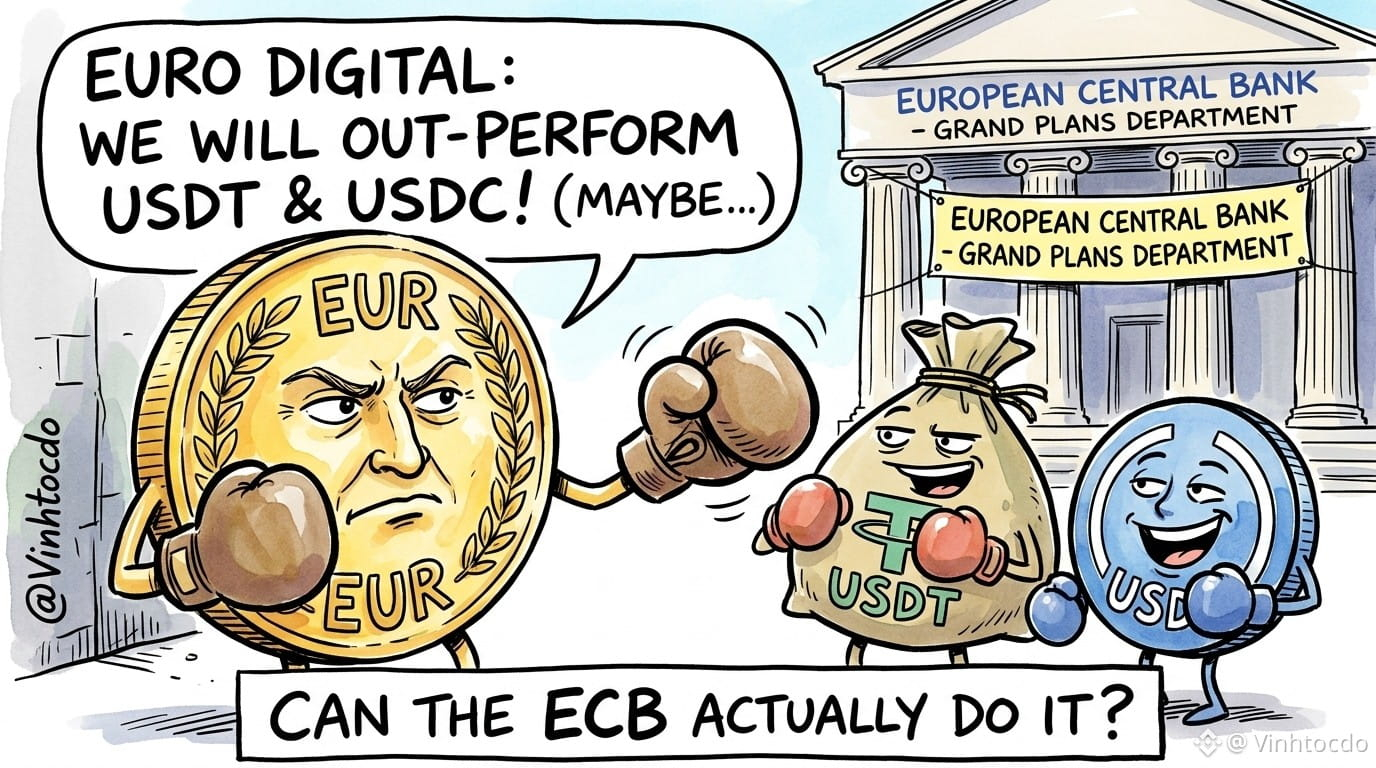
ECB launches the digital euro: determined to outperform USDT and USDC?
🇪🇺 The European Central Bank (ECB) has just revealed its ambition for Europeans to use the digital euro for grocery shopping, online purchases, and sending money to one another as soon as it launches!
Clearly, the ECB wants to create a force that can compete for market share with the two US-based stablecoin giants, USDT and USDC. But there’s a long way between “wanting to” and “being able to,” folks. Crypto users are used to their freedom—how could they possibly be expected to switch to a centralized product just like that!
What should traders do?
Take it easy: Keep trading with USDT/USDC and watch the two sides “fight it out” for market share before deciding what to do next.
⚠️ This is not financial advice!
When installing Binance, remember to enter my support code: VINHTOCDO
🔗 Link: [https://www.binance.com/register?ref=VINHTOCDO](https://www.binance.com/register?ref=VINHTOCDO)
👇 Click a trading link below to support me:
$BTC
{spot}(BTCUSDT)
$ETH
{spot}(ETHUSDT)
$BNB
{spot}(BNBUSDT)
#ECB #DigitalEuro #stablecoin #CryptoNews #TradingStrategy #VINHTOCDO
ECB launches the digital euro: determined to outperform USDT and USDC?
🇪🇺 The European Central Bank (ECB) has just revealed its ambition for Europeans to use the digital euro for grocery shopping, online purchases, and sending money to one another as soon as it launches!
Clearly, the ECB wants to create a force that can compete for market share with the two US-based stablecoin giants, USDT and USDC. But there’s a long way between “wanting to” and “being able to,” folks. Crypto users are used to their freedom—how could they possibly be expected to switch to a centralized product just like that!
What should traders do?
Take it easy: Keep trading with USDT/USDC and watch the two sides “fight it out” for market share before deciding what to do next.
⚠️ This is not financial advice!
When installing Binance, remember to enter my support code: VINHTOCDO
🔗 Link: https://www.binance.com/register?ref=VINHTOCDO
👇 Click a trading link below to support me:
$BTC
$ETH
$BNB
#ECB #DigitalEuro #stablecoin #CryptoNews #TradingStrategy #VINHTOCDO
🇪🇺 The European Central Bank (ECB) has just revealed its ambition for Europeans to use the digital euro for grocery shopping, online purchases, and sending money to one another as soon as it launches!
Clearly, the ECB wants to create a force that can compete for market share with the two US-based stablecoin giants, USDT and USDC. But there’s a long way between “wanting to” and “being able to,” folks. Crypto users are used to their freedom—how could they possibly be expected to switch to a centralized product just like that!
What should traders do?
Take it easy: Keep trading with USDT/USDC and watch the two sides “fight it out” for market share before deciding what to do next.
⚠️ This is not financial advice!
When installing Binance, remember to enter my support code: VINHTOCDO
🔗 Link: https://www.binance.com/register?ref=VINHTOCDO
👇 Click a trading link below to support me:
$BTC
$ETH
$BNB
#ECB #DigitalEuro #stablecoin #CryptoNews #TradingStrategy #VINHTOCDO
2
329
European Central Bank President Christine Lagarde addressed eurozone finance ministers today, noting that widespread inflation pressures have not yet materialized across the region. Her comments provide a clear signal on the central bank's current macroeconomic assessment.
This reassurance comes as markets debate whether lingering price stickiness will force major central banks into extended tightening cycles. By downplaying generalized inflation risks, the ECB signals it sees no urgent need to aggressively tighten policy further, aligning with dovish baseline expectations.
Traditional financial markets responded steadily, with European bond yields stabilizing and the euro holding firm against major currencies. A non-inflationary backdrop helps calm fears of an abrupt credit contraction across the European banking sector.
For digital asset markets, steady monetary policy expectations from major central banks typically support broader risk appetite. While $BTC trades primarily on global liquidity and dollar dynamics, reduced macro uncertainty in Europe removes an overhang for risk-on flows.
#ECB #Inflation #MacroEconomy
European Central Bank President Christine Lagarde addressed eurozone finance ministers today, noting that widespread inflation pressures have not yet materialized across the region. Her comments provide a clear signal on the central bank's current macroeconomic assessment.
This reassurance comes as markets debate whether lingering price stickiness will force major central banks into extended tightening cycles. By downplaying generalized inflation risks, the ECB signals it sees no urgent need to aggressively tighten policy further, aligning with dovish baseline expectations.
Traditional financial markets responded steadily, with European bond yields stabilizing and the euro holding firm against major currencies. A non-inflationary backdrop helps calm fears of an abrupt credit contraction across the European banking sector.
For digital asset markets, steady monetary policy expectations from major central banks typically support broader risk appetite. While $BTC trades primarily on global liquidity and dollar dynamics, reduced macro uncertainty in Europe removes an overhang for risk-on flows.
#ECB #Inflation #MacroEconomy
This reassurance comes as markets debate whether lingering price stickiness will force major central banks into extended tightening cycles. By downplaying generalized inflation risks, the ECB signals it sees no urgent need to aggressively tighten policy further, aligning with dovish baseline expectations.
Traditional financial markets responded steadily, with European bond yields stabilizing and the euro holding firm against major currencies. A non-inflationary backdrop helps calm fears of an abrupt credit contraction across the European banking sector.
For digital asset markets, steady monetary policy expectations from major central banks typically support broader risk appetite. While $BTC trades primarily on global liquidity and dollar dynamics, reduced macro uncertainty in Europe removes an overhang for risk-on flows.
#ECB #Inflation #MacroEconomy
47
The latest minutes of the European Central Bank’s monetary policy meeting show that all committee members agreed that upside risks to the inflation outlook remain elevated. At the same time, some officials noted that the current deposit facility rate of 2.50% remains within the range of neutral rates estimated by ECB staff, suggesting that policy has not yet reached deeply restrictive levels.
This signal indicates that the hawkish camp within the ECB remains dominant, and officials’ concerns about persistent inflation are far from dispelled. Market expectations that the ECB would soon shift to an easing cycle were clearly premature. Keeping rates around the neutral level means that tight monetary conditions are likely to persist for longer.
Macro assets quickly adopted a cautious stance. Amid renewed concerns about a rebound in inflation, yields on U.S. and European government bonds found strong support, while the dollar and euro remained range-bound. Investors face the twin pressures of persistently high borrowing costs and slowing economic growth, creating structural headwinds for risk-asset valuations overall.
For the cryptocurrency market, represented by $BTC , the central banks’ collective hawkish stance is draining liquidity from the market. If risk-free rates remain elevated for an extended period, additional speculative capital is more likely to stay on the sidelines. In the short term, crypto prices lack macroeconomic momentum for a sustained rebound, and downside risks remain a serious concern.
#ECB #Inflation #MacroEconomy
The latest minutes of the European Central Bank’s monetary policy meeting show that all committee members agreed that upside risks to the inflation outlook remain elevated. At the same time, some officials noted that the current deposit facility rate of 2.50% remains within the range of neutral rates estimated by ECB staff, suggesting that policy has not yet reached deeply restrictive levels.
This signal indicates that the hawkish camp within the ECB remains dominant, and officials’ concerns about persistent inflation are far from dispelled. Market expectations that the ECB would soon shift to an easing cycle were clearly premature. Keeping rates around the neutral level means that tight monetary conditions are likely to persist for longer.
Macro assets quickly adopted a cautious stance. Amid renewed concerns about a rebound in inflation, yields on U.S. and European government bonds found strong support, while the dollar and euro remained range-bound. Investors face the twin pressures of persistently high borrowing costs and slowing economic growth, creating structural headwinds for risk-asset valuations overall.
For the cryptocurrency market, represented by $BTC , the central banks’ collective hawkish stance is draining liquidity from the market. If risk-free rates remain elevated for an extended period, additional speculative capital is more likely to stay on the sidelines. In the short term, crypto prices lack macroeconomic momentum for a sustained rebound, and downside risks remain a serious concern.
#ECB #Inflation #MacroEconomy
This signal indicates that the hawkish camp within the ECB remains dominant, and officials’ concerns about persistent inflation are far from dispelled. Market expectations that the ECB would soon shift to an easing cycle were clearly premature. Keeping rates around the neutral level means that tight monetary conditions are likely to persist for longer.
Macro assets quickly adopted a cautious stance. Amid renewed concerns about a rebound in inflation, yields on U.S. and European government bonds found strong support, while the dollar and euro remained range-bound. Investors face the twin pressures of persistently high borrowing costs and slowing economic growth, creating structural headwinds for risk-asset valuations overall.
For the cryptocurrency market, represented by $BTC , the central banks’ collective hawkish stance is draining liquidity from the market. If risk-free rates remain elevated for an extended period, additional speculative capital is more likely to stay on the sidelines. In the short term, crypto prices lack macroeconomic momentum for a sustained rebound, and downside risks remain a serious concern.
#ECB #Inflation #MacroEconomy
90

The ECB is stepping up its push for a digital euro, arguing it is essential to prevent financial fragmentation across the bloc. Officials stress that a central bank digital currency isn't meant to sideline commercial banks, but rather to secure their integration into a modern monetary framework. While traditional institutions may fear disintermediation, the European regulatory push shows that digital fiat is becoming an inevitable reality for the future of European banking and payments. $EUR #ECB #CBDC #Regulation
The ECB is stepping up its push for a digital euro, arguing it is essential to prevent financial fragmentation across the bloc. Officials stress that a central bank digital currency isn't meant to sideline commercial banks, but rather to secure their integration into a modern monetary framework. While traditional institutions may fear disintermediation, the European regulatory push shows that digital fiat is becoming an inevitable reality for the future of European banking and payments. $EUR #ECB #CBDC #Regulation
47

·
--
ECB heavyweight Lane's latest remarks: no second-order effects detected! In plain English: the money that's been pumped into the system isn't flowing where it should. What impact could this have on the crypto market? It may mean liquidity isn't quite so "flooded," and $BTC and $ETH could still hold steady? #欧洲央行 #MonetaryPolicy
ECB's Lane drops truth bomb: no second-order effects spotted. Translation: money printing isn't hitting where it should. Crypto implications? Maybe liquidity isn't as flooded as feared, $BTC and $ETH staying strong? #ECB #MonetaryPolicy
ECB heavyweight Lane's latest remarks: no second-order effects detected! In plain English: the money that's been pumped into the system isn't flowing where it should. What impact could this have on the crypto market? It may mean liquidity isn't quite so "flooded," and $BTC and $ETH could still hold steady? #欧洲央行 #MonetaryPolicy
ECB's Lane drops truth bomb: no second-order effects spotted. Translation: money printing isn't hitting where it should. Crypto implications? Maybe liquidity isn't as flooded as feared, $BTC and $ETH staying strong? #ECB #MonetaryPolicy
ECB's Lane drops truth bomb: no second-order effects spotted. Translation: money printing isn't hitting where it should. Crypto implications? Maybe liquidity isn't as flooded as feared, $BTC and $ETH staying strong? #ECB #MonetaryPolicy
276

·
--
Bullish
$QNT is back in the digital euro conversation.
The European Central Bank is expanding its digital euro testing, with a new 12-month pilot expected to begin in late 2027.
Quant previously became an ECB pioneer partner, working on conditional payments that can release funds when predefined conditions are met.
The latest ECB developments are putting Quant back in the spotlight as institutional digital payments move closer to real-world testing.
The $QNT token itself is not confirmed to be used for the digital euro, but Quant's role in the underlying payment technology is getting renewed attention.
#QNT #Quant #ECB #digitaleuro
$QNT is back in the digital euro conversation.
The European Central Bank is expanding its digital euro testing, with a new 12-month pilot expected to begin in late 2027.
Quant previously became an ECB pioneer partner, working on conditional payments that can release funds when predefined conditions are met.
The latest ECB developments are putting Quant back in the spotlight as institutional digital payments move closer to real-world testing.
The $QNT token itself is not confirmed to be used for the digital euro, but Quant's role in the underlying payment technology is getting renewed attention.
#QNT #Quant #ECB #digitaleuro
The European Central Bank is expanding its digital euro testing, with a new 12-month pilot expected to begin in late 2027.
Quant previously became an ECB pioneer partner, working on conditional payments that can release funds when predefined conditions are met.
The latest ECB developments are putting Quant back in the spotlight as institutional digital payments move closer to real-world testing.
The $QNT token itself is not confirmed to be used for the digital euro, but Quant's role in the underlying payment technology is getting renewed attention.
#QNT #Quant #ECB #digitaleuro
418

If you're still treating ECB comments as background noise, stop now.
Regulatory shifts like this have caught traders off guard before. Positions that looked solid evaporated when liquidity vanished overnight.
Reports indicate the ECB and several national central banks are now open to a liquidity-based approach. This marks an unusual alignment with a major issuer instead of the expected confrontation.
Some will call it insufficient and point to ongoing questions around $USDT. Others believe it reflects a more realistic view of how crypto liquidity actually works.
I side with the second group. Moves like this have historically opened the door for greater participation, potentially lifting $USDC volumes and $BTC activity on European desks.
Where do you think this goes from here?
#Stablecoins #ECB #Crypto
If you're still treating ECB comments as background noise, stop now.
Regulatory shifts like this have caught traders off guard before. Positions that looked solid evaporated when liquidity vanished overnight.
Reports indicate the ECB and several national central banks are now open to a liquidity-based approach. This marks an unusual alignment with a major issuer instead of the expected confrontation.
Some will call it insufficient and point to ongoing questions around $USDT. Others believe it reflects a more realistic view of how crypto liquidity actually works.
I side with the second group. Moves like this have historically opened the door for greater participation, potentially lifting $USDC volumes and $BTC activity on European desks.
Where do you think this goes from here?
#Stablecoins #ECB #Crypto
Regulatory shifts like this have caught traders off guard before. Positions that looked solid evaporated when liquidity vanished overnight.
Reports indicate the ECB and several national central banks are now open to a liquidity-based approach. This marks an unusual alignment with a major issuer instead of the expected confrontation.
Some will call it insufficient and point to ongoing questions around $USDT. Others believe it reflects a more realistic view of how crypto liquidity actually works.
I side with the second group. Moves like this have historically opened the door for greater participation, potentially lifting $USDC volumes and $BTC activity on European desks.
Where do you think this goes from here?
#Stablecoins #ECB #Crypto

49

·
--
Central banks aligning directly with a private crypto issuer on liquidity is almost unheard of, yet that's exactly what reports say the ECB is considering.
Traders lose sleep over sudden liquidity crunches that wipe out positions overnight, especially when regulators get involved and nobody saw it coming.
The ECB and some national central banks are reportedly open to treating this more like traditional liquidity support. Unusual because it puts them in alignment with the issuer rather than just watching from the sidelines.
That sounds helpful on paper but the warning signs are there. If they get skin in the game they will want more say over how reserves work and when redemptions happen. $USDT has survived plenty of tests already, yet adding official backing could still backfire if the terms change overnight.
Same goes for $USDC flows in Europe. A misstep here might even pressure $BTC if traders start questioning the whole stablecoin layer.
What's your take on whether this helps or just adds another layer of risk?
#CryptoRegulation #Stablecoins #ECB
Central banks aligning directly with a private crypto issuer on liquidity is almost unheard of, yet that's exactly what reports say the ECB is considering.
Traders lose sleep over sudden liquidity crunches that wipe out positions overnight, especially when regulators get involved and nobody saw it coming.
The ECB and some national central banks are reportedly open to treating this more like traditional liquidity support. Unusual because it puts them in alignment with the issuer rather than just watching from the sidelines.
That sounds helpful on paper but the warning signs are there. If they get skin in the game they will want more say over how reserves work and when redemptions happen. $USDT has survived plenty of tests already, yet adding official backing could still backfire if the terms change overnight.
Same goes for $USDC flows in Europe. A misstep here might even pressure $BTC if traders start questioning the whole stablecoin layer.
What's your take on whether this helps or just adds another layer of risk?
#CryptoRegulation #Stablecoins #ECB
Traders lose sleep over sudden liquidity crunches that wipe out positions overnight, especially when regulators get involved and nobody saw it coming.
The ECB and some national central banks are reportedly open to treating this more like traditional liquidity support. Unusual because it puts them in alignment with the issuer rather than just watching from the sidelines.
That sounds helpful on paper but the warning signs are there. If they get skin in the game they will want more say over how reserves work and when redemptions happen. $USDT has survived plenty of tests already, yet adding official backing could still backfire if the terms change overnight.
Same goes for $USDC flows in Europe. A misstep here might even pressure $BTC if traders start questioning the whole stablecoin layer.
What's your take on whether this helps or just adds another layer of risk?
#CryptoRegulation #Stablecoins #ECB

37
ECB outlines 3 models for bringing central bank money onchain
- The ECB has unveiled three models for deploying central bank money onchain.
- Financial institutions are exploring payment infrastructure on blockchain.
- The RSS source has not provided specific details about the three models.
#BinanceSquare #CryptoNews #ECB #CBDC #Blockchain
$btc $eth
vlikevn Titanbot
Source: The Block
ECB outlines 3 models for bringing central bank money onchain
- The ECB has unveiled three models for deploying central bank money onchain.
- Financial institutions are exploring payment infrastructure on blockchain.
- The RSS source has not provided specific details about the three models.
#BinanceSquare #CryptoNews #ECB #CBDC #Blockchain
$btc $eth
vlikevn Titanbot
Source: The Block
- The ECB has unveiled three models for deploying central bank money onchain.
- Financial institutions are exploring payment infrastructure on blockchain.
- The RSS source has not provided specific details about the three models.
#BinanceSquare #CryptoNews #ECB #CBDC #Blockchain
$btc $eth
vlikevn Titanbot
Source: The Block
269
·
--
The latest inflation data released by the European Union’s statistics office for September in the euro area has been nothing short of striking. The preliminary year-on-year figure for the euro area’s September CPI came in at 3.8%, clearly above market expectations of 3.6% and the prior value of 3.20%. On a month-on-month basis, it rose by 0.6%, also exceeding expectations of 0.5%. Meanwhile, core CPI year-on-year also edged up to 2.2%.
These above-forecast inflation figures have put significant policy pressure on the European Central Bank. With energy, natural gas, and food costs rebounding, overall inflation is moving further away from the ECB’s 2% target. Market optimism about a rate-cut cycle may therefore be adjusted to some extent, and the tail end of the tightening cycle appears likely to be longer than previously imagined.
In traditional financial markets, stubborn inflation has delayed rate-cut expectations. Major bond yields in Europe and the U.S. have remained in high-range choppy trading, and the U.S. dollar index has continued to run somewhat stronger. As risk-averse and wait-and-see sentiment heats up, many institutional strategists have warned that high-risk trades may face deleveraging pressure, and the global liquidity environment overall remains relatively tight.
For the crypto market, a relatively tight macro liquidity backdrop implies that new on-the-ground liquidity entering from outside the market will be more cautious. $BTC and many mainstream altcoins may continue to follow the broader market into a consolidation and washout phase in the near term. However, in the long run, a rebound in inflation and the erosion of purchasing power may lead some capital to maintain allocation demand for decentralized assets.
#EurozoneCPI #InflationData #ECB
The latest inflation data released by the European Union’s statistics office for September in the euro area has been nothing short of striking. The preliminary year-on-year figure for the euro area’s September CPI came in at 3.8%, clearly above market expectations of 3.6% and the prior value of 3.20%. On a month-on-month basis, it rose by 0.6%, also exceeding expectations of 0.5%. Meanwhile, core CPI year-on-year also edged up to 2.2%.
These above-forecast inflation figures have put significant policy pressure on the European Central Bank. With energy, natural gas, and food costs rebounding, overall inflation is moving further away from the ECB’s 2% target. Market optimism about a rate-cut cycle may therefore be adjusted to some extent, and the tail end of the tightening cycle appears likely to be longer than previously imagined.
In traditional financial markets, stubborn inflation has delayed rate-cut expectations. Major bond yields in Europe and the U.S. have remained in high-range choppy trading, and the U.S. dollar index has continued to run somewhat stronger. As risk-averse and wait-and-see sentiment heats up, many institutional strategists have warned that high-risk trades may face deleveraging pressure, and the global liquidity environment overall remains relatively tight.
For the crypto market, a relatively tight macro liquidity backdrop implies that new on-the-ground liquidity entering from outside the market will be more cautious. $BTC and many mainstream altcoins may continue to follow the broader market into a consolidation and washout phase in the near term. However, in the long run, a rebound in inflation and the erosion of purchasing power may lead some capital to maintain allocation demand for decentralized assets.
#EurozoneCPI #InflationData #ECB
These above-forecast inflation figures have put significant policy pressure on the European Central Bank. With energy, natural gas, and food costs rebounding, overall inflation is moving further away from the ECB’s 2% target. Market optimism about a rate-cut cycle may therefore be adjusted to some extent, and the tail end of the tightening cycle appears likely to be longer than previously imagined.
In traditional financial markets, stubborn inflation has delayed rate-cut expectations. Major bond yields in Europe and the U.S. have remained in high-range choppy trading, and the U.S. dollar index has continued to run somewhat stronger. As risk-averse and wait-and-see sentiment heats up, many institutional strategists have warned that high-risk trades may face deleveraging pressure, and the global liquidity environment overall remains relatively tight.
For the crypto market, a relatively tight macro liquidity backdrop implies that new on-the-ground liquidity entering from outside the market will be more cautious. $BTC and many mainstream altcoins may continue to follow the broader market into a consolidation and washout phase in the near term. However, in the long run, a rebound in inflation and the erosion of purchasing power may lead some capital to maintain allocation demand for decentralized assets.
#EurozoneCPI #InflationData #ECB
14
Log in to explore more content
Join global crypto users on Binance Square
⚡️ Get latest and useful information about crypto.
💬 Trusted by the world’s largest crypto exchange.
👍 Discover real insights from verified creators.
Email / Phone number
Trending Topics
1
#CanMicrosoftDeliverOnAI
74,501 views
733 Discussing
2
#CanGoogleDefindItsCore
39,037 views
539 Discussing
3
#FOMCWatch
9.1M views
27,941 Discussing
4
#EthereumDropsBelow$2300
10,716 views
157 Discussing
5
#BitcoinSlipsBelow$80KAgain
30,151 views
119 Discussing
6
#ThailandLaunchesWORPTStablecoinToQRPaymentApp
61,136 views
788 Discussing
7
#StrategySkipsBitcoinPurchasesSpends$205MOnSTRCBuybacks
11,628 views
98 Discussing
8
#BitmineAdds10452ETH
105,657 views
1,189 Discussing
9
#SouthKoreaConsidersEducationTaxOnCryptoExchanges
62,531 views
843 Discussing
10
#OCCUrgesCommunityBanksToEnterStablecoinPayments
43,120 views
600 Discussing